
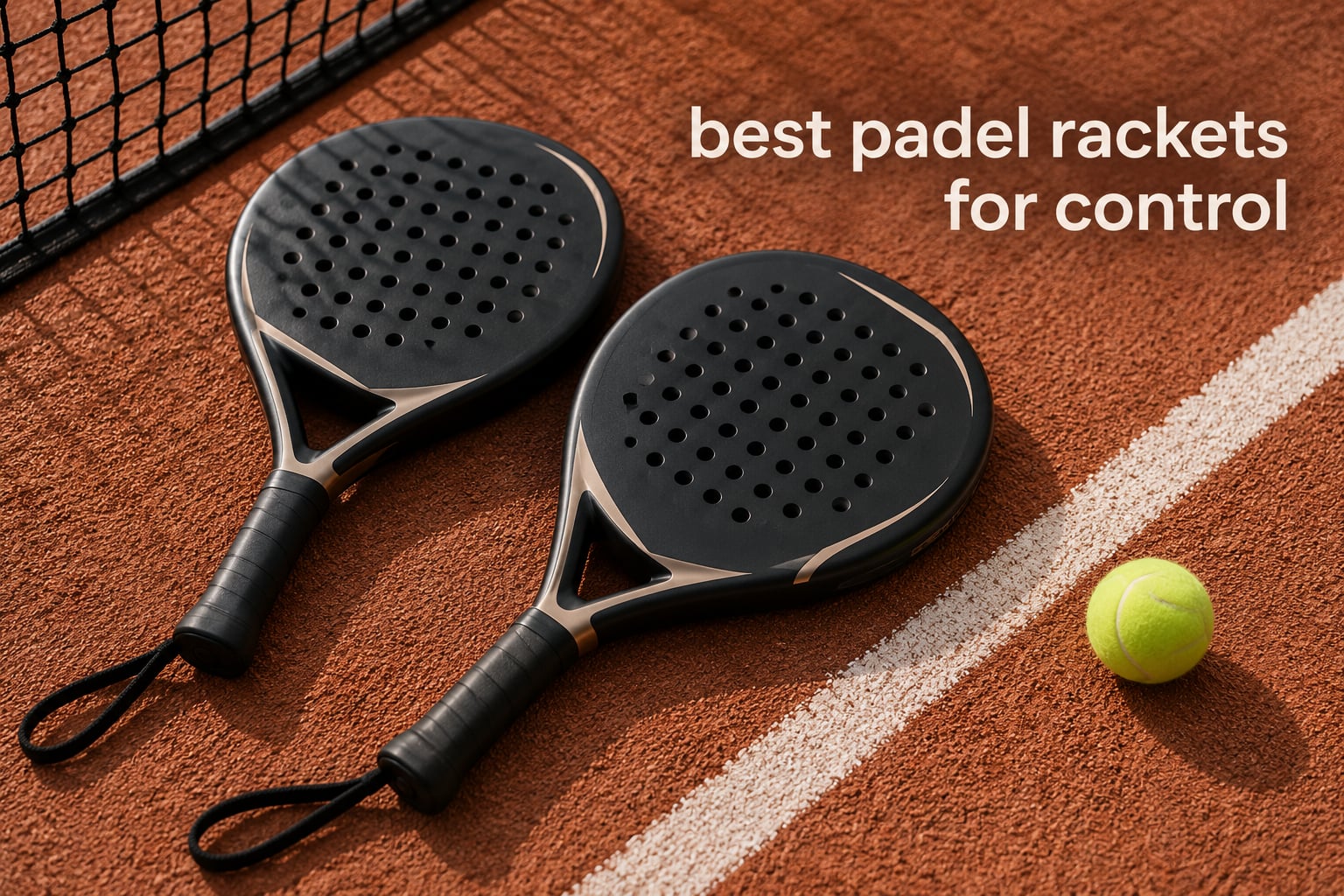
If you only read one line: the HEAD Graphene 360+ Zephyr is the best padel racket for control overall, because it pairs a true round shape with a published 273 mm balance point and a 365 g frame that stays quiet through long defensive rallies. Below it we rank ten rackets built around the same idea: put the sweet spot in the middle, push weight toward your hand, and let the core absorb the ball so you can place it.
Control is the most misunderstood word in padel. It is not the same as soft, and it is not the same as beginner. A control racket is one where the ball leaves the face where you aimed it, off-centre hits still land in, and your forearm does not ache after ninety minutes of lobs, blocks and chiquitas. That comes from three things working together: round geometry, low or medium-low balance, and a forgiving core.
Top 3 Padel Rackets for Control in October 2026

All 10 Control Rackets at a Glance in October 2026
Every racket below was picked for the same job: helping you place the ball and defend with confidence. Shape and balance are the two columns worth scanning first.
| Product | Specifications | Action |
|---|---|---|
 HEAD Graphene 360+ Zephyr HEAD Graphene 360+ Zephyr |
|
Check Latest Price |
| ianoni Carbon Fiber Padel Racket |
|
Check Latest Price |
 Babolat Air Vertuo 2.5 Babolat Air Vertuo 2.5 |
|
Check Latest Price |
 NOX AT10 Genius 18K Alum NOX AT10 Genius 18K Alum |
|
Check Latest Price |
 adidas Metalbone Ctrl 3.4 adidas Metalbone Ctrl 3.4 |
|
Check Latest Price |
 Wilson Optix V1 Wilson Optix V1 |
|
Check Latest Price |
 HEAD Vibe HEAD Vibe |
|
Check Latest Price |
 HEAD Extreme Evo HEAD Extreme Evo |
|
Check Latest Price |
 Babolat Contact Babolat Contact |
|
Check Latest Price |
 adidas Drive adidas Drive |
|
Check Latest Price |
1. HEAD Graphene 360+ Zephyr: the best padel racket for control overall
- Only racket on this list with a published balance figure
- Round shape with a centred sweet spot
- Light enough at 365 g for fast net reactions
- Graphene 360+ adds rebound off the face
- Grip length can feel short to larger hands
- Weighted more toward intermediate than advanced players
This is the one we keep coming back to. The spec sheet is unusually honest for the category: round shape, 490 cm2 head, 365 g, and a stated balance of 273 mm. That combination tells you everything a control buyer needs to know before a single ball is struck.
Because the sweet spot sits in the middle of the face, a ball that lands a few centimetres off-centre still comes off with reasonable pace and direction. On defence, that means lobs and chiquitas that drop into the right half of the court instead of sailing long. Off the net, the 365 g weight keeps the racket in your hand through fast exchanges.
Graphene 360+ is doing quiet work here rather than flashy work. The rebound is lively enough that you are not forced into a pure push game, which matters if you play doubles and need to punch a volley past an approaching opponent. Owners describe it as comfortable and controlled, and the 4.7 rating across 139 reviews reflects that consistency.
What you will notice in the first month
Round geometry feels inherently slower to swing than a teardrop, and that sensation is usually what convinces players the racket is a control frame. The 273 mm balance point keeps the head from wanting to drop on fast volleys. Practising placement on the two side glass panels is where the improvement shows up fastest.
Where it falls short
The most common owner comment is that the grip length can feel short for larger hands. A short grip is not a control problem, but it can create tension in the forearm on reach-volleys if you are constantly regripping. If your hands are big, check the grip circumference before you commit.
2. ianoni Carbon Fiber Padel Racket: the best balance of grip, control and feel
- Lightweight at 354 g for fast net reactions
- Plenty of face grip for generating spin
- Carbon face gives traction without a dry feel
- Highest review count on this list at 395
- Smooth face produces less raw spin than rough premium frames
- A few buyers report it feels heavier than expected
Out of the ten rackets here, this one carries 395 reviews, and the pattern in them is remarkably consistent. Owners keep mentioning that they progressed quickly with it, which is what a genuinely forgiving frame should produce.
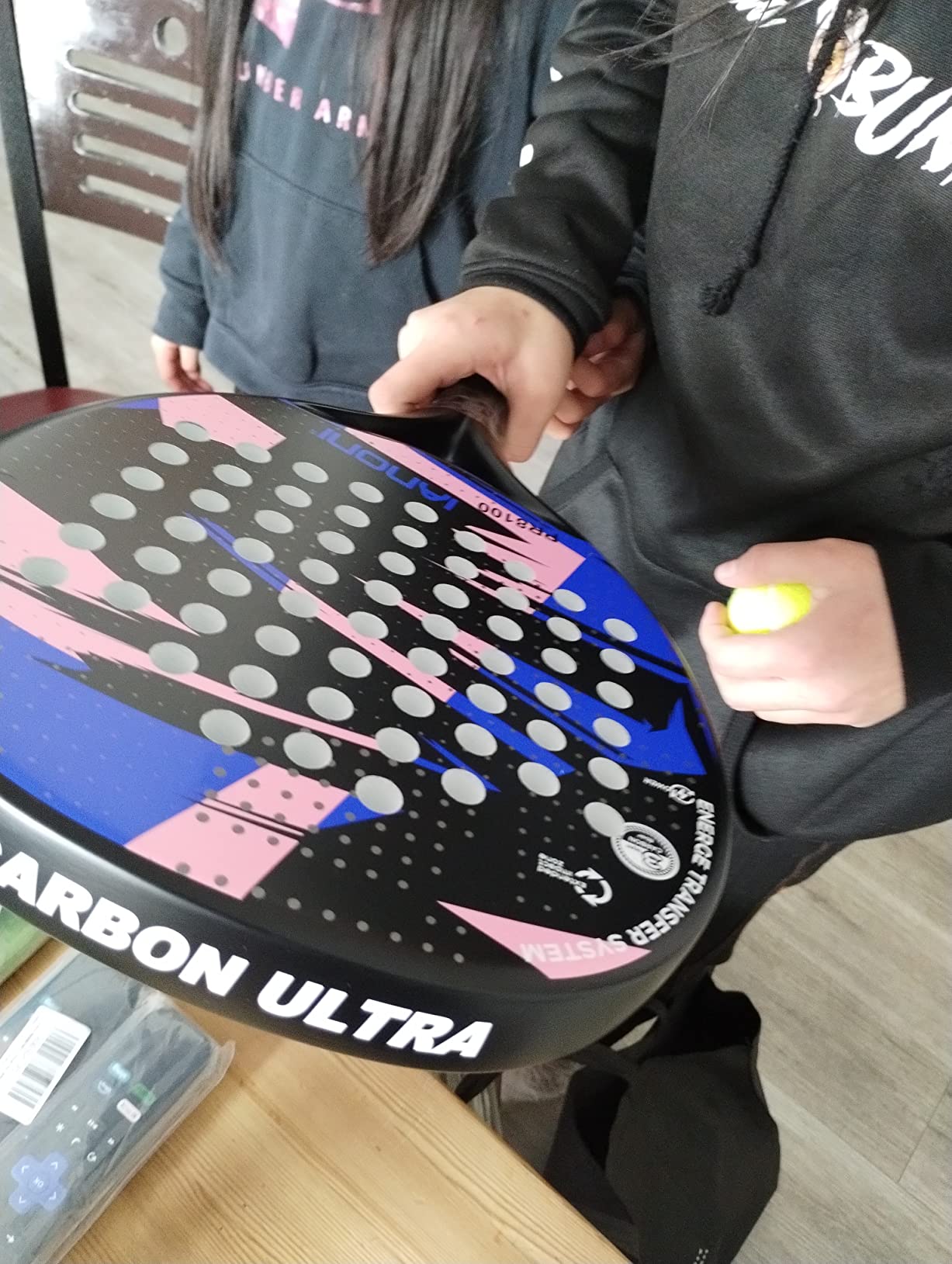
The carbon fiber face gives traction and accuracy without the stiff, dry hit you get from a full stiff carbon layup. Paired with the balanced weight distribution, it means you can hit flatter without the ball flying. At 354 g it is one of the lighter frames in this list, which reduces arm fatigue over a long evening.
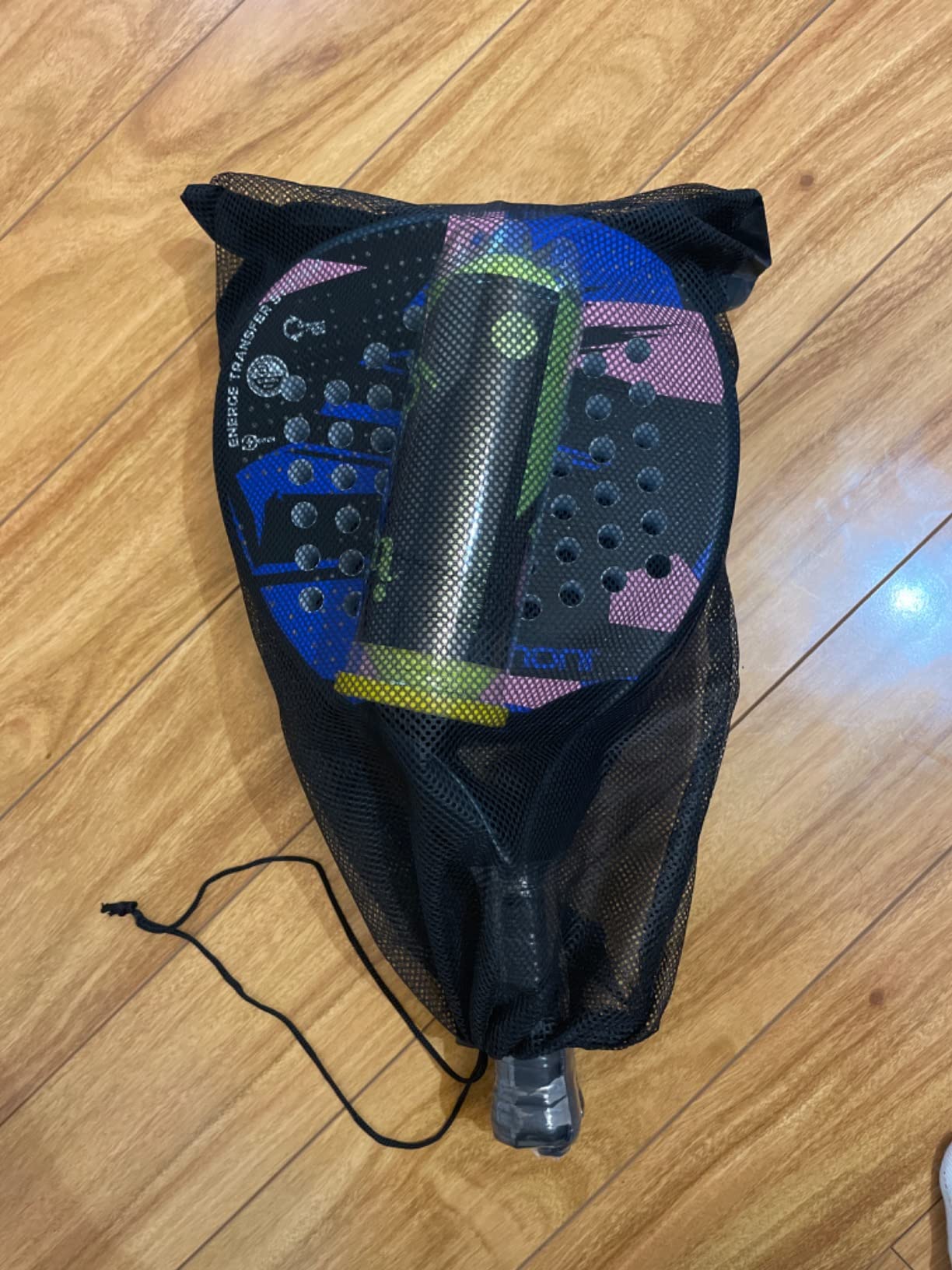
The EVA Memory Flex Foam core is the quiet hero. It takes the sting out of the ball on off-centre contact, which is precisely the feedback loop control players want: hit slightly late, get a forgiving response, keep your rally alive.
Who this frame suits
Anyone moving up from beach tennis or a very cheap first racket, and anyone who found stiff carbon too harsh on the forearm. The broad sweet spot is a genuine safety net for players who still mistime contact regularly.
What to watch out for
The face is smooth rather than rough, so if your game depends on heavy topspin you will generate less bite than you would from a textured surface. A minority of buyers also report more heft than they expected, so if you are used to a very light frame, try one first.
3. Babolat Air Vertuo 2.5: the best control racket that still finishes points
- Even balance at 265 mm is a textbook control setup
- Trampoline effect still delivers easy power
- Light at 345 g with a pleasant swing
- Vibrasorb System absorbs vibration
- Positioned as an advanced-player frame
- so it can feel mild for total beginners
- Control-focused with a moderate power ceiling
This is the entry for the single most common question in our research: can a racket give me control and still let me finish the point? The Air Vertuo 2.5 is the clearest answer on this list, and reviewers describe it almost exactly that way.
The teardrop shape keeps more of the frame mass above the sweet spot than a pure round, so there is more margin for error on aggressive volleys. The 38 mm beam and the 100 percent fiberglass surface give it a springy response. Owners report a comfortable trampoline effect that generates easy power without a heavy swing.
The Vibrasorb System, built on SMAC material, handles the sting on short balls, and the 3D Spin raised surface pattern adds grip. The 265 mm even balance is the number to note: it is the most neutral balance point we found, which is why it suits players who alternate between defence and attack rather than sitting in one zone.
When this is the right call
Choose it if your matches are mostly decided at the net and you want to block low balls then attack the rebound. The even balance means you do not have to re-grip or rethink your stroke for transition shots. Former tennis players moving across often land here.
When it is the wrong call
Babolat positions this as an advanced-player frame. A player still learning basic consistency may find the response too mild and end up over-hitting. If your priority is pure placement with maximum forgiveness, stay with a round frame further up this list.
4. NOX AT10 Genius 18K Alum: the best control racket for an experienced attacker
- Medium-hard EVA core gives confident
- precise ball contact
- Dual-texture rough finish produces strong spin
- NOX Custom Grip cuts vibration and improves grip strength
- Heavier feel than expected and takes time to adapt
- Not suited to complete beginners
- Sits in the premium tier
Most control frames use a soft core to absorb impact. This one does the opposite, and that is exactly why it appears on a control list. A medium-hard core gives you a firm, connected hit that makes it easier to direct the ball deliberately rather than reactively.
The 18K Carbon Alum construction is stiff and light for its class, and the SPIN dual rough finish combines a 3D hexagonal centre with a sand texture. That texture is what converts a controlled swing into a controlled spin shot, useful for lobs with heavy drop and volleys that dip.
The NOX Custom Grip with the Pulse System is a real differentiator for anyone who plays long sessions. Reviewers highlight reduced vibration and better grip strength, and the Smartstrap replaceable cord system means a snapped strap is not the end of the racket.
What makes it a control frame
Owners specifically report excellent control on serves, volleys and defensive play. The reason is the core: because it is medium-hard rather than soft, you get tactile feedback about where on the face you struck the ball. That feedback is what lets a confident player aim.
The catch
It is heavy in the hand for a control frame and reviewers consistently flag an adaptation period. Moving to a medium-hard core from a soft one feels harder at first, even though it is more accurate. Give it a few sessions before judging it.
5. adidas Metalbone Ctrl 3.4: the best padel racket for control you can tune
adidas Metalbone Ctrl 3.4 Racket – Black Champagne, Round Shape, EVA Soft Performance Foam, Carbon 16K
- Removable screws and plates allow 11.2 g of weight and balance adjustment
- Round shape with weight closer to the handle
- Strong sweet spot and good power-control balance
- Extra Power Grip extends the handle for swing speed
- Premium tier bracket
- Occasional reports of damaged packaging or grip on arrival
This is the racket to buy if you are not sure yet whether you want more control or more power. The Weight and Balance System lets you add up to 11.2 g using removable screws, plates and washers, which is an unusually open-ended way to find your feel.
Out of the box it is a genuine control frame: round shape, 360 g, EVA Soft Performance Foam core and a 16K carbon layup. The Power Groove rail around the head contour adds rigidity so the frame holds shape under repeated impact, and the round geometry keeps mass nearer the handle for control and agility.
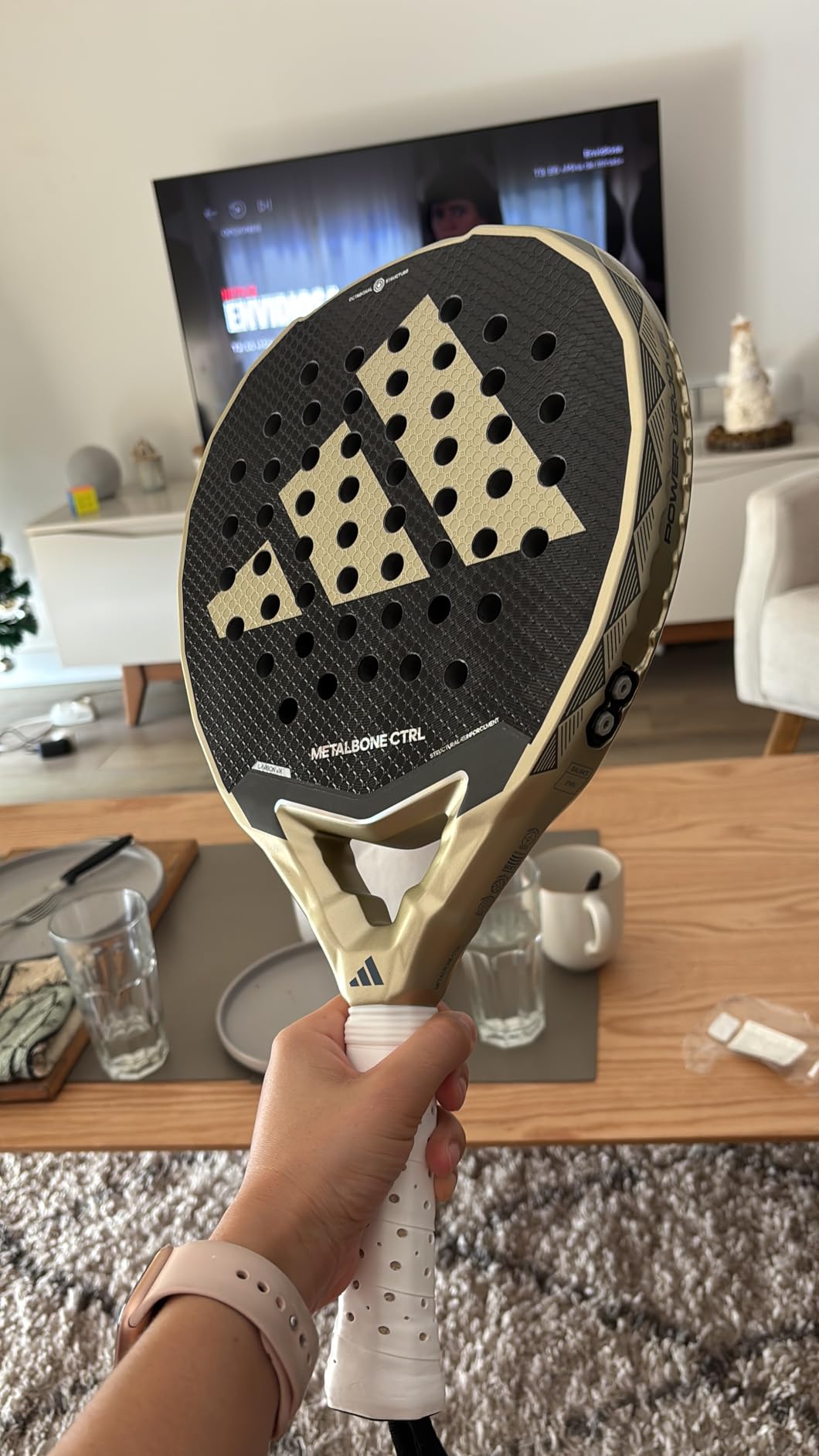
The Extra Power Grip extends the handle to raise swing speed, which matters if you are moving up from a short-grip frame. It is a sensible bridge between a pure control racket and a more aggressive model, and that is why it converts control players particularly well.
Why the adjustability matters more than it sounds
Most players buy a racket once and never think about the head weight again. Being able to shift weight by a few grams towards the handle lets you correct an off-centre hit pattern without buying a different racket. For a control-focused player, that is a cheaper and more precise fix.
What to consider first
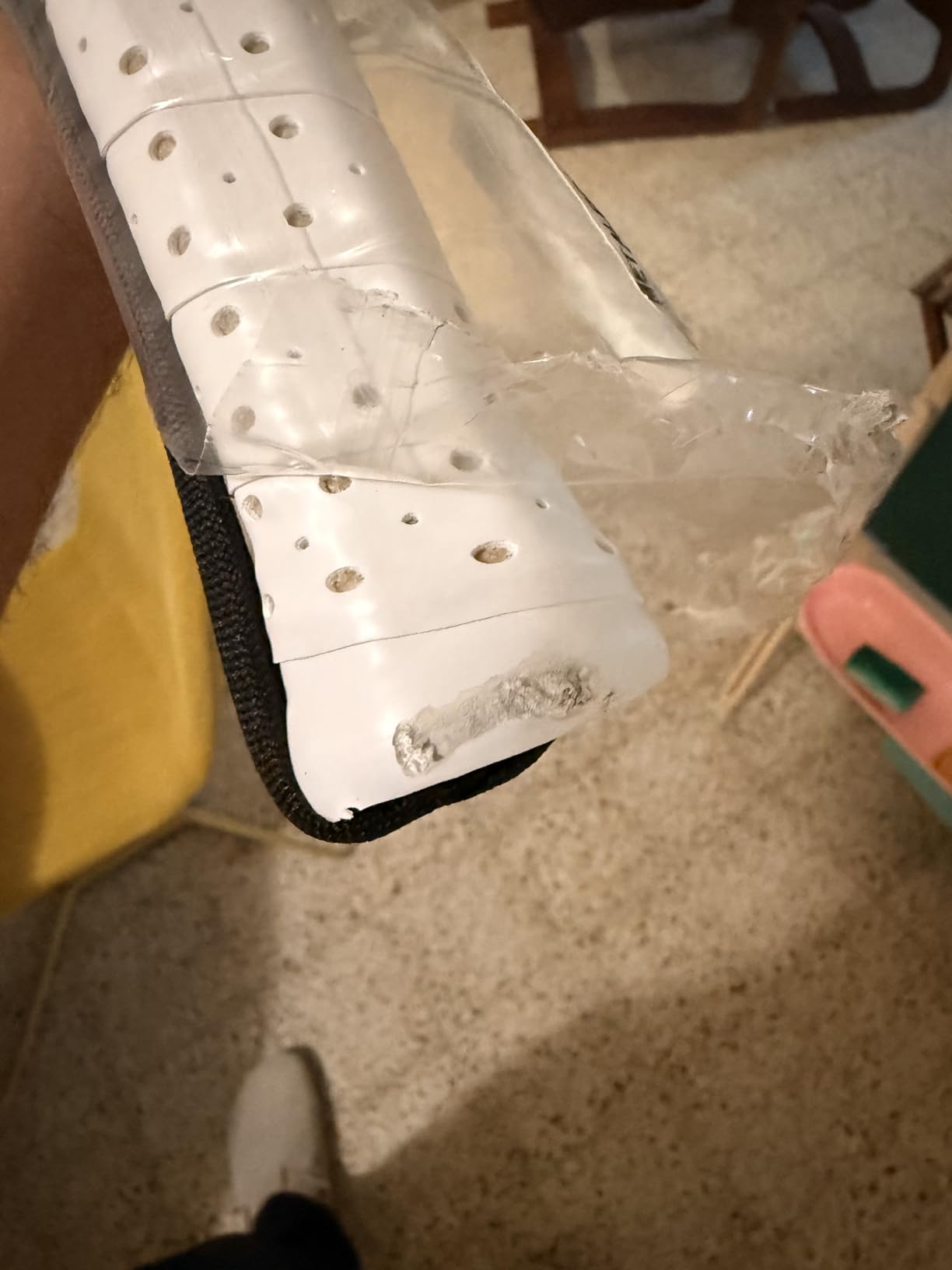
This sits at the top end of our list, and a few reviews mention damaged packaging or grip on arrival. Inspect the frame and grip as soon as it arrives. The review count is also the smallest on this list, so treat the rating as promising rather than definitive.
6. Wilson Optix V1: the best value padel racket for control
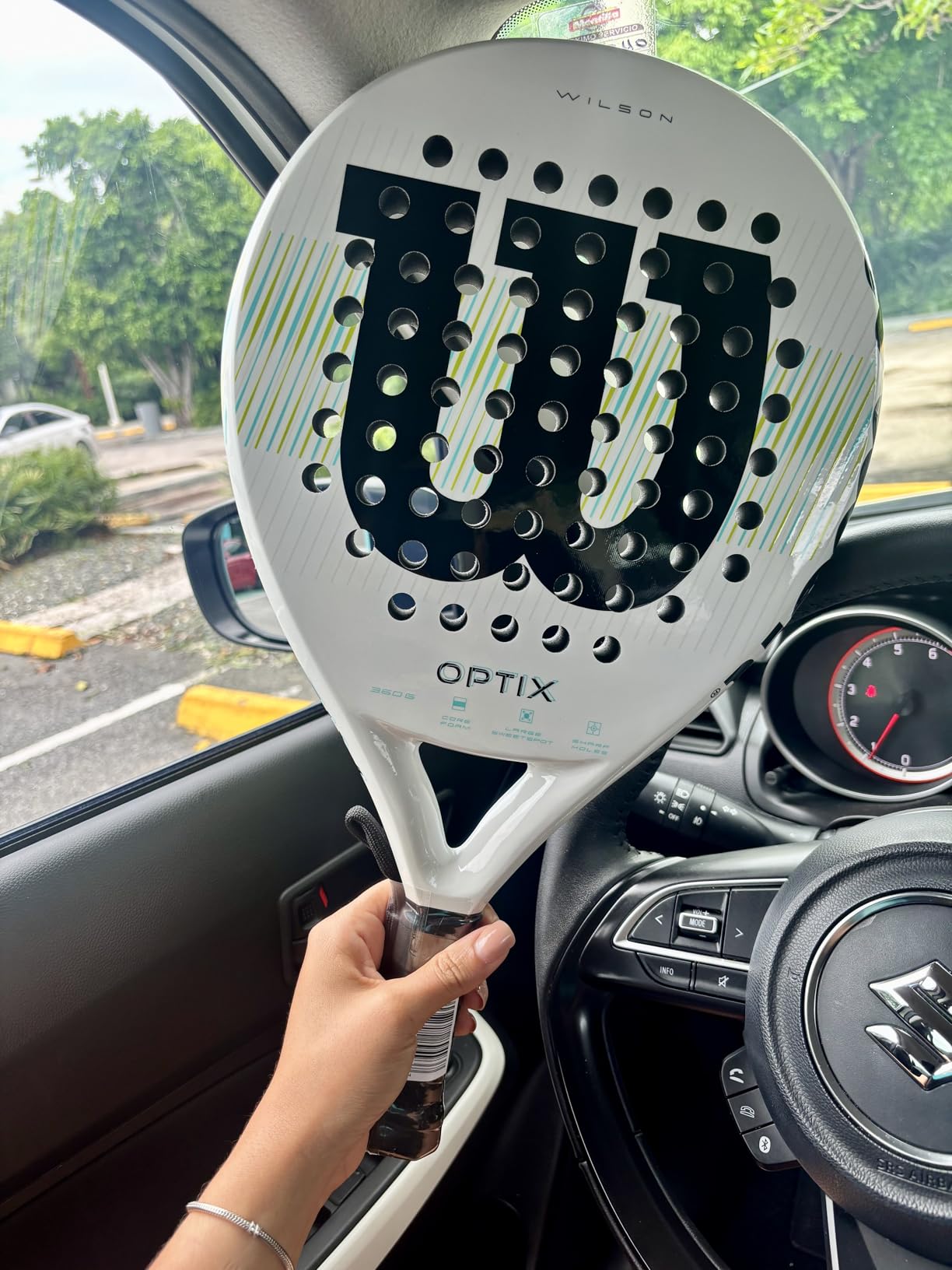
Wilson Optix V1 Padel Racket – Black/Green, Grip Size 2-4 1/4″
- Consistent 4.7 rating across 128 reviews
- Low density core foam gives a soft
- stable feel
- Sharp Hole Technology adds bite for spin
- Sized for kids and adults alike
- Fiberglass construction limits power for advanced players
- Recreational rather than tournament-grade design
The Wilson Optix V1 carries 128 reviews at a 4.7 average, and the feedback within them is unusually consistent for a racket at this level. That consistency is the reason it earns a place here rather than a generic spec-sheet entry.
At 355 g with a fiberglass weave frame and low density core foam, it behaves like a classic soft control paddle. The frame is stable and responsive without feeling dead, and the low-density core takes the edge off badly mistimed balls.
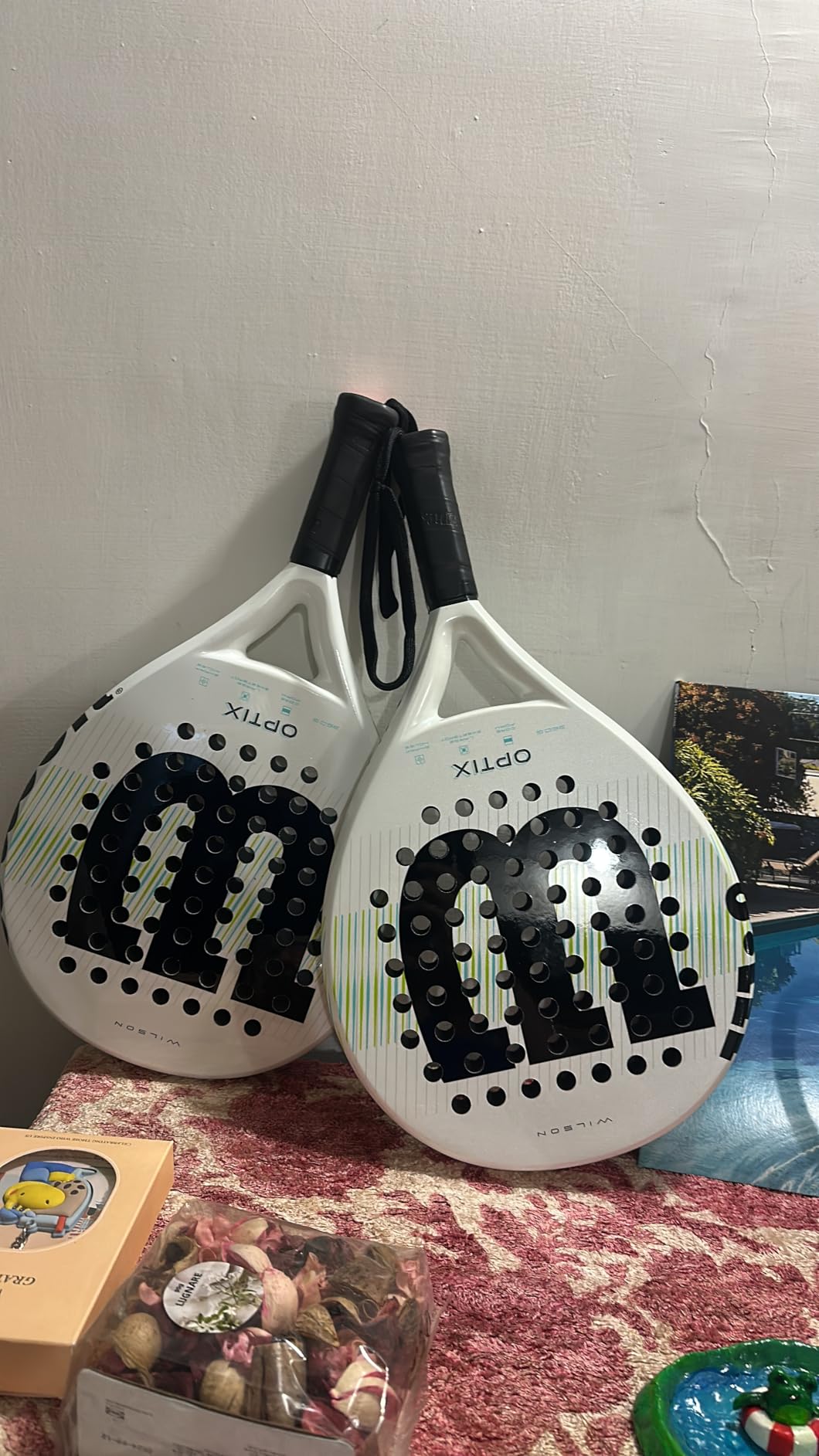
Sharp Hole Technology is the detail that separates it from a basic beginner paddle. The hole pattern increases bite on every stroke, so you get more spin from a modest swing. On a racket aimed at placement, that is a quiet advantage because spin is what lets you drop a volley short of the net reliably.
Best for recreational and club doubles
If you play two or three times a week and want to stop fighting your equipment, this is the shortest path to a more consistent game. It suits both younger players and adults, and it is available in more than one grip size, which matters because grip size drives forearm tension.
Where the ceiling is
Fiberglass is the trade-off for that softness. Players who already generate their own pace will find limited headroom, and the design is recreational rather than tournament-grade. If you are moving into competitive league play, one of the carbon frames higher up will hold up better.
7. HEAD Vibe: the best control padel racket for intermediate club players
- Light at 350 g with a genuinely easy swing
- Innegra carbon frame reduces vibration
- Forgiving oversized teardrop suits club play
- Good balance between control and power
- Fiberglass hitting surface is softer and less powerful than full carbon
- Occasional quality-control reports on arrival condition
The Vibe is the pick for players who have outgrown a beginner racket but do not yet want a stiff frame. The oversized teardrop with a 525 cm2 head gives you more surface to hit than a round frame, and the response stays neutral as you move between defence and attack.
At 350 g with a 38 mm beam, it is light enough for long rallies and stiff enough to return shape under pressure. The Innegra carbon frame is the headline technology here, and reviewers single out the reduction in vibration it brings to the handle.
The Dual Absorbing grip tape is a small detail that matters more than it sounds on a vibration-focused frame. Control players who take lots of short balls in the fingers benefit from anything that softens the impact before it reaches the elbow.
Why intermediates like it
Casual and club players rate this one very highly for the balance between control and power. It gives you enough forgiveness to keep points alive without feeling like a beginner frame, and the fiberglass hitting surface keeps a soft, dry-ish contact rather than a trampoline.
What to watch
The fiberglass face is less powerful than a full carbon face, so if your game is built on smashes you will feel the ceiling. There is also a single review reporting a damaged racket on arrival, so check the frame and grip immediately when it lands.
8. HEAD Extreme Evo: the best control racket for arm comfort
- Soft foam core and Innegra fibres cut vibration into the forearm
- 360 g weight and low balance make it easy to swing
- 511 cm2 head gives a large forgiving sweet spot
- Generates effortless power for newer players
- Fiberglass face is soft and offers limited power versus carbon
- Designed primarily for beginners rather than competitive play
If you have already felt tennis-elbow symptoms, this is the racket built with that in mind. The soft foam core combined with Innegra shock absorption fibres is specifically designed to reduce vibration travelling up the forearm.
The 511 cm2 head on an oversized teardrop gives a large sweet spot that reduces mishits, and the low balance at 360 g makes the racket easy to swing through short, compact volley motions. That combination is why owners report arm-friendly play over long sessions.
The Dual Absorbing grip is the second comfort layer, absorbing at the hand where a lot of impact energy would otherwise terminate. If your forearm tightens in the first fifteen minutes, that is usually a grip and core problem, and this frame addresses both.
Best for players with a history of arm pain
The advice from the forums we studied is blunt: do not spend more to fix an elbow problem, spend on softness. A low-density or soft EVA core with vibration-dampening fibres is the single most reliable change. This racket does both, and it is also light enough to swing without gripping hard.
The honest limitation
Fiberglass faces feel great through the hand but give up power at the top end. If you need pace through the glass rather than a soft landing, this is not the frame. It suits beginners and returning players far more than tournament competitors.
9. Babolat Contact: the best budget padel racket for control
- Lightest frame on this list at 340 g
- Very wide sweet spot adds tolerance for off-centre hits
- Soft flexible materials give a comfortable feel
- Solid grip and control for beginners
- Entry-level materials limit long-term performance potential
- Overgrip may need re-wrapping after extended use
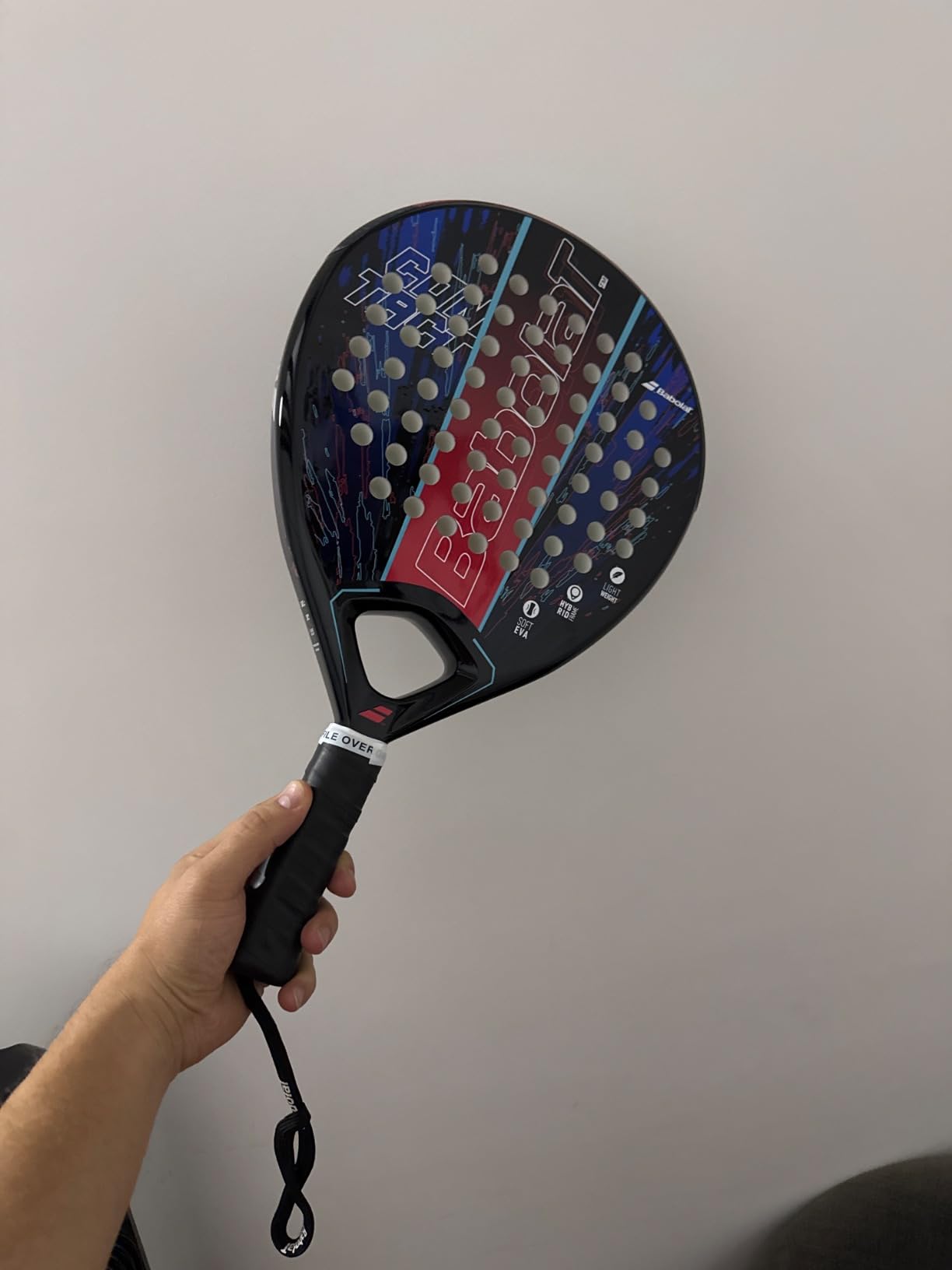
At 340 g this is the lightest frame in this round-up, and that weight is the whole point for a first serious control racket. A light frame lets you swing with the wrist rather than the arm, which is exactly the technique that produces placement.
The round shape and very wide sweet spot mean this is about as forgiving as it gets. Reviews consistently describe it as easy to maneuver with good grip and solid control for beginners. The 4 3/4 inch grip is one of the larger sizes here, which is worth noting if you have big hands.
Material-wise it is a carbon and fiberglass composite, which is a sensible middle ground between a pure fiberglass beginner frame and a stiff carbon model. It holds shape, returns the ball predictably and does not punish an off-centre hit.
Who should buy this one
A player buying their first padel racket, or a second racket for a partner who plays with less force. At this weight it also suits older players and anyone returning to racket sports after a long break. Control is basically handed to you here.
Where it will not take you
Entry-level materials limit the ceiling. Players who already generate pace and want to hit harder will outgrow it within a season. The other recurring note is that the supplied overgrip can need replacing after heavy use, which is a normal maintenance item rather than a defect.
10. adidas Drive: the best reinforced padel racket for durability
- Structural reinforcement in frame and heart for high-intensity impacts
- Round shape keeps weight near the handle for control
- Soft fiberglass and EVA feel with good ball output
- Smart Holes Lineal grouped spacing improves durability
- Fiberglass face delivers less power than carbon frames
- Aimed at beginner level rather than competitive play
The Drive is the most heavily built frame in this list, at 375 g, and the reinforcement is structural rather than cosmetic. There is extra material in the perimeter and at the heart of the frame, which is where a paddle fails when it gets scraped along a wall or dropped on a hard court.
Smart Holes Lineal, which spaces the holes in evenly grouped sets of three, improves durability around the perforations. That sounds minor until you notice how many pads crack around the hole pattern first. The round shape keeps the weight toward the handle for control and agility.
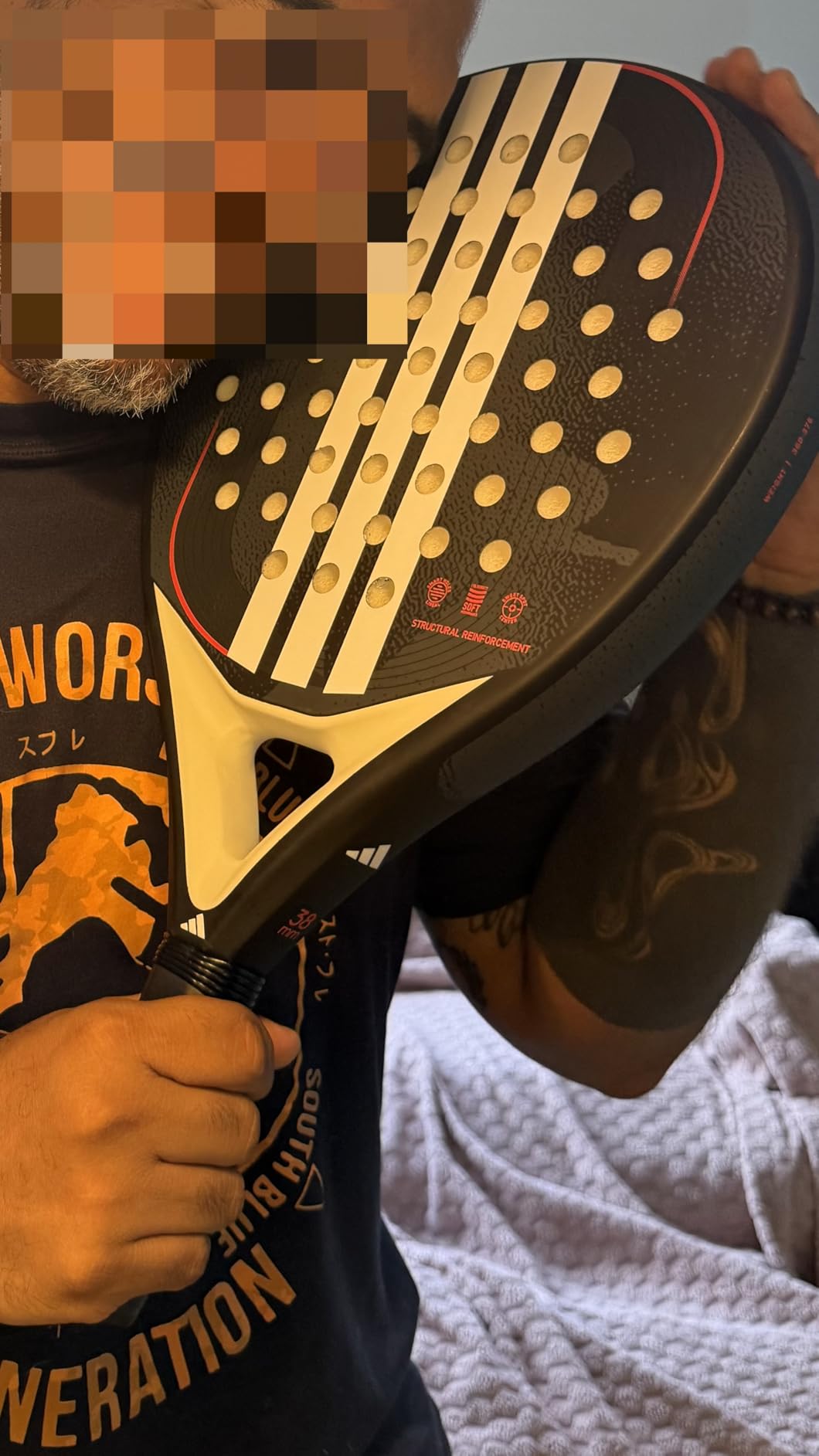
Fiberglass construction brings spring-like elasticity and a softer feel, and owners report good ball output on slower shots from the back of the court. For a player who retrieves a lot and defends deep, that response is easy to control.
Best for hard-wearing players
If you play on abrasive outdoor courts, share a racket, or simply drop things, this is the frame most likely to survive. The heavy build also adds stability, so off-centre contact does not twist the frame in your hand as easily as it would on a lighter model.
What it costs you
Power and level. The fiberglass face simply does not generate the pace of a carbon frame, and the design is aimed at beginner and recreational play. If you are moving up a competitive ladder, put your money into one of the carbon rackets higher up this list instead.
How to Choose a Control Padel Racket in 2026
Shape is the decision that matters most, and the community consensus we found on r/Padelracket is blunt about it: round shapes forgive, teardrops attack. If you are searching for the best padel rackets for control, a round frame is the default starting point.
Shape: round, hybrid, teardrop or diamond
A round shape puts the maximum-weight zone and the sweet spot together in the middle of the face, which spreads your effective hitting area. A teardrop shifts mass upward and reduces the sweet spot to a smaller, higher zone, trading forgiveness for power. A diamond is the extreme version of that trade. If you also want to finish points, a teardrop such as the Babolat Air Vertuo 2.5 gives you control plus finishing power, which is the most requested combination in the forum threads we studied.
Balance: what low balance actually does at the net
Balance is where the weight sits along the length of the racket. Lower balance, meaning mass nearer the handle, means the head does not want to lag behind your hands, so short reactions at the net become faster and the racket stays stable through quick volleys. The HEAD Graphene 360+ Zephyr publishes its balance at 273 mm, and the Babolat Air Vertuo 2.5 sits at 265 mm, which is neutral territory. Check the published figure where you can; plenty of manufacturers bury it.
Core and face: soft and dry versus stiff and powerful
This is the loudest complaint we found from buyers: control rackets feel spongy. A soft EVA or low-density foam core absorbs ball speed and vibration, which is comforting but mushy under a short swing. If you want a dry, firm touch instead, move toward a medium-hard core such as the MLD Black EVA in the NOX AT10. A rough face gives more spin for a given swing, which is how control converts into placement depth.
Rough or smooth face: which gives you more control?
Smooth faces feel cleaner on the hand and suit players with their own spin. Rough or textured faces grip the ball, so a softer swing still produces spin, and spin is what keeps a lob short and a volley dipping below the net. Control-seeking players who struggle to generate pace should lean rough; players with a heavy swing often prefer smooth.
Grip size and forearm comfort
Grip size is the most underrated control variable and the most common route to elbow tension. A grip that is too small makes you squeeze harder, which tires the forearm and destroys placement. Measure from the mid-palm crease to the ring fingertip and compare against the listed grip size. An overgrip adds about half a size and is the cheapest upgrade available to you.
Weight, and how long shape changes take
Most control frames sit between 340 g and 375 g, and staying inside that band matters more than chasing a number. Lighter frames reward wrist speed; heavier frames add stability against hard-hit balls. When you change shape, budget for adaptation. Players on the forums report that moving from a diamond to a round takes several weeks of reduced consistency before the new sweet spot becomes instinct. Buy mid-season, not two weeks before a tournament, and if you need more ball time in between, our padel practice machine guide covers the options.
Rackets we deliberately left out
We did not include pure diamond power frames, because they do the opposite of what this page is for. We also left out the Bullpadel Vertex Hybrid 04 and the Oxdog Pure Tour X, both of which are frequently recommended on r/Padelracket for players who want control with a hard, dry feel. They are worth a look, but neither is the simplest way to get a centred sweet spot today.
Frequently Asked Questions
What is the best padel racket for power and control?
A teardrop or hybrid shape gives you both. Unlike a pure round control frame, it keeps a higher concentration of mass above the sweet spot, so you keep placement on defence while retaining enough power to finish a point. The Babolat Air Vertuo 2.5 is our pick here, and the adidas Metalbone Ctrl 3.4 works if you want to dial the balance yourself.
Which padel racket is the most forgiving?
Forgiveness comes from a large, centred sweet spot, which means a round shape and an oversized head. The HEAD Graphene 360+ Zephyr pairs a round 490 cm2 face with a published 273 mm balance, while the Babolat Contact is the most forgiving of the budget frames thanks to its very wide sweet spot and 340 g weight. Both forgive off-centre contact instead of spraying it wide.
What weight padel racket is best for control?
Most control frames sit between 340 g and 375 g, and staying in that band matters more than hitting an exact figure. Lighter rackets reward wrist speed and cut arm fatigue; heavier rackets add stability when you are on the receiving end of hard-hit balls. The Babolat Contact at 340 g suits smaller builds, while the adidas Drive at 375 g suits players who take a lot of pace.
Should I get a rough or smooth padel racket?
Rough faces grip the ball, so you generate spin from a shorter, softer swing, which is how control players keep lobs short and volleys dipping. Smooth faces feel cleaner on the hand and suit players who already create their own spin. If your technique is still being built, rough is more forgiving because it hides small timing errors.
How long does it take to adapt to a new padel racket shape?
Expect several weeks of reduced consistency, particularly when moving from a diamond to a round shape, because the sweet spot relocates to the centre of the face. Players on r/Padelracket describe the first month as the hardest, with placement drifting until the new contact zone becomes instinct. Buy the racket mid-season rather than immediately before a competition.
How do I know if a padel racket is too advanced for me?
Three signs stand out: mishits feel harsh rather than forgiving, your forearm tires before your legs do, and your shot placement gets worse rather than better. Those usually point to a stiff core or a grip that is too small. Move to a soft EVA or low-density core such as the HEAD Extreme Evo, and check your grip size before changing rackets again.
Our Final Verdict on the Best Padel Rackets for Control in 2026
For most players, the HEAD Graphene 360+ Zephyr is the safest bet: round shape, a real balance figure, a weight that stays comfortable, and 139 reviews at 4.7 that describe it consistently. If you want control plus finishing power, take the Babolat Air Vertuo 2.5. If your forearm already complains, the HEAD Extreme Evo is built for that.
One last note before you buy. Check your grip size, not just the shape, and give any new frame two or three weeks before you judge it. If you are still working on consistency at the wall rather than on a court, we covered the basics in our padel practice machine guide to help you get more reps in. Prices change constantly, so use the buttons below to confirm the current figure.