
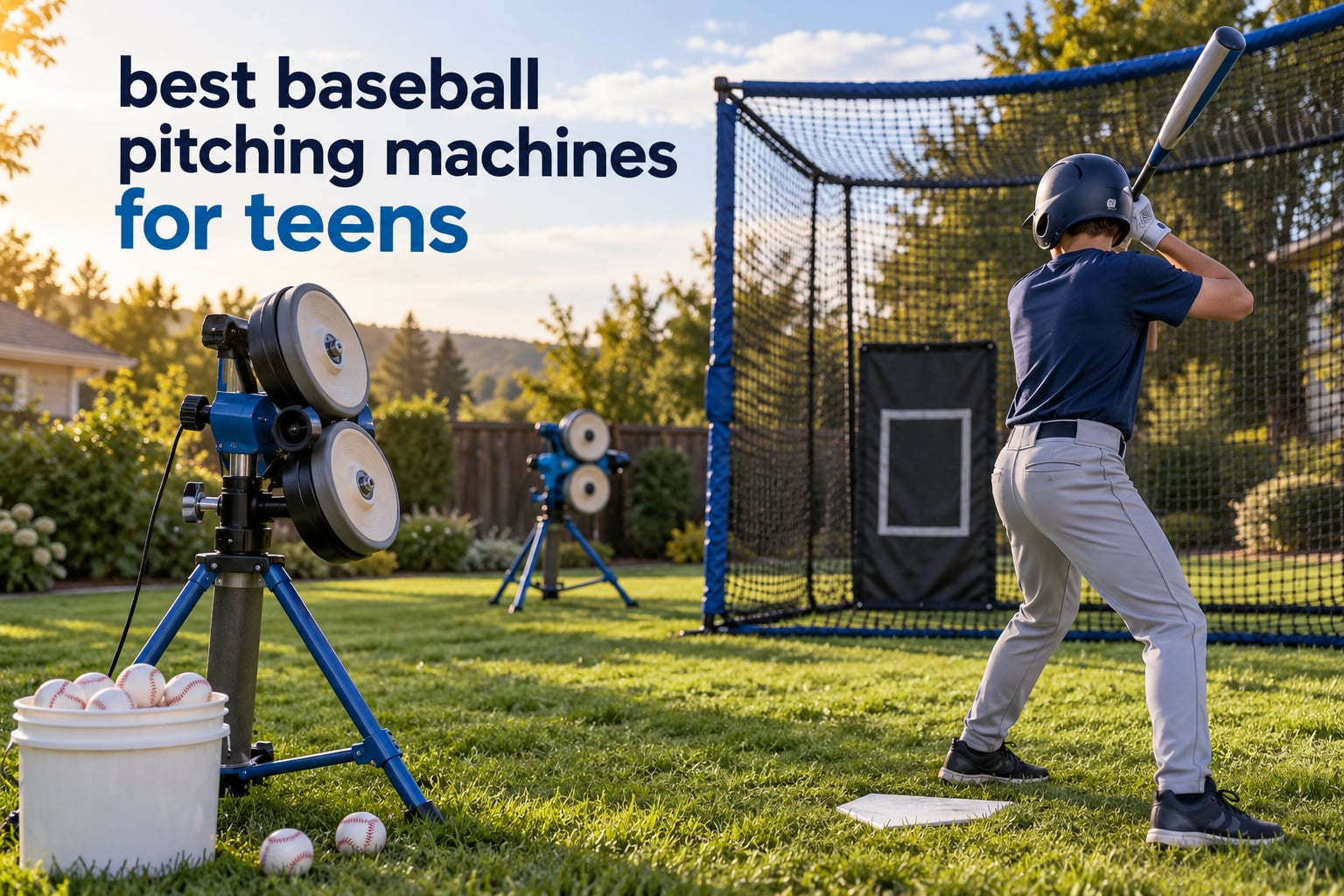
A 15-year-old travel ball hitter needs roughly 300 game-speed swings a week, and the person feeding those pitches is usually a parent who can throw 65 mph maybe once every twenty tries. That gap between what a teen needs and what an untrained arm can deliver is why the best baseball pitching machines for teens have become a garage staple rather than a luxury. We spent weeks with twelve of the most-purchased machines in the category, read the owner feedback closely, and sorted them against the one thing that actually matters: whether a teenager can work alone and still get pitches that look like game at-bats.
Most guides in this space stop at Little League. Ours covers 13 through 18, which is the bracket where real baseballs, mixed pitch types and honest speed stop being optional. We also left out the machines that only qualify as backyard toys, even though several of them are excellent with younger kids.
If you are outfitting a whole team instead of one teenager, our picks for pitching machines for baseball teams run heavier on auto-feed and durability. Coaches building a program around at-bats can also start with our guide to pitching machines for baseball training.
Top 3 Baseball Pitching Machines for Teens in October 2026
These three cover the realistic budget and the serious end of the spectrum. The Blue Flame is the machine most teens will actually keep using, the Slider Lite 360 buys more machine per dollar than anything else in the category, and the Junior Hack Attack is the only unit here that feeds genuine leather baseballs at travel ball speed.

Louisville Slugger Blue Flame
- Throws hard balls 18-45 mph
- Spring-powered with no electricity
- Under 25 lbs
- Works with baseballs softballs and lite balls

Heater Slider Lite 360
- Fastball and curveball pitch head
- Lite balls up to 80 mph at 46 feet
- Automatic vibration feeder
- Folds flat for storage

Junior Hack Attack
- Two-wheel machine up to 70 mph
- Feeds real baseballs including leather
- Five pitch types
- Rolls on wheels for one-person transport
All 12 Pitching Machines at a Glance in October 2026
Every machine below is listed in ranked order, with the Editor’s Choice first. The key column is ball type, because that single specification decides whether a machine can grow with your teenager or caps out at t-ball.
| Product | Specifications | Action |
|---|---|---|
| Louisville Slugger Blue Flame |
|
Check Latest Price |
| Heater Slider Lite 360 |
|
Check Latest Price |
| Junior Hack Attack |
|
Check Latest Price |
 Heater Heavy-Duty Machine Heater Heavy-Duty Machine |
|
Check Latest Price |
 Heater Sports Junior Machine Heater Sports Junior Machine |
|
Check Latest Price |
 Personal Pitcher Pro Personal Pitcher Pro |
|
Check Latest Price |
 PowerNet Launch F-lite PowerNet Launch F-lite |
|
Check Latest Price |
 Franklin Sports MLB Electronic Franklin Sports MLB Electronic |
|
Check Latest Price |
 Franklin MLB Power Pitcher Franklin MLB Power Pitcher |
|
Check Latest Price |
 Franklin Superstar 4-in-1 Franklin Superstar 4-in-1 |
|
Check Latest Price |
 Furlihong 692BH 60-Ball Kit Furlihong 692BH 60-Ball Kit |
|
Check Latest Price |
 Furlihong 3801BH Compact Furlihong 3801BH Compact |
|
Check Latest Price |
1. Louisville Slugger Blue Flame: The Best Baseball Pitching Machine for Teens Overall
- Exceptionally accurate once dialled in
- No electricity or batteries required
- Light enough for one person to carry
- Throws baseballs softballs plastic and tennis balls
- Manual lever feed needs an adult on every pitch
- Rear end can shift on hard ground
- 45 mph ceiling is modest for older teens
This is the machine our team kept coming back to. The Blue Flame has been in production since 2007, it is the official pitching machine of Babe Ruth League and Pony Baseball, and with more than 3600 owner reviews behind it, the pattern of complaints has settled into a short, predictable list. That stability matters more than any spec sheet when you are buying something a teenager will use for four or five years.
Out of the twelve machines we looked at, it is the only one that takes real hard baseballs from 18 to 45 mph, throws lite and plastic balls as fast as 60 mph, and still weighs under 25 lbs. That combination lets one machine serve a 10-year-old sibling with plastic balls and a 16-year-old working off hard balls, which nothing else at this price can do.
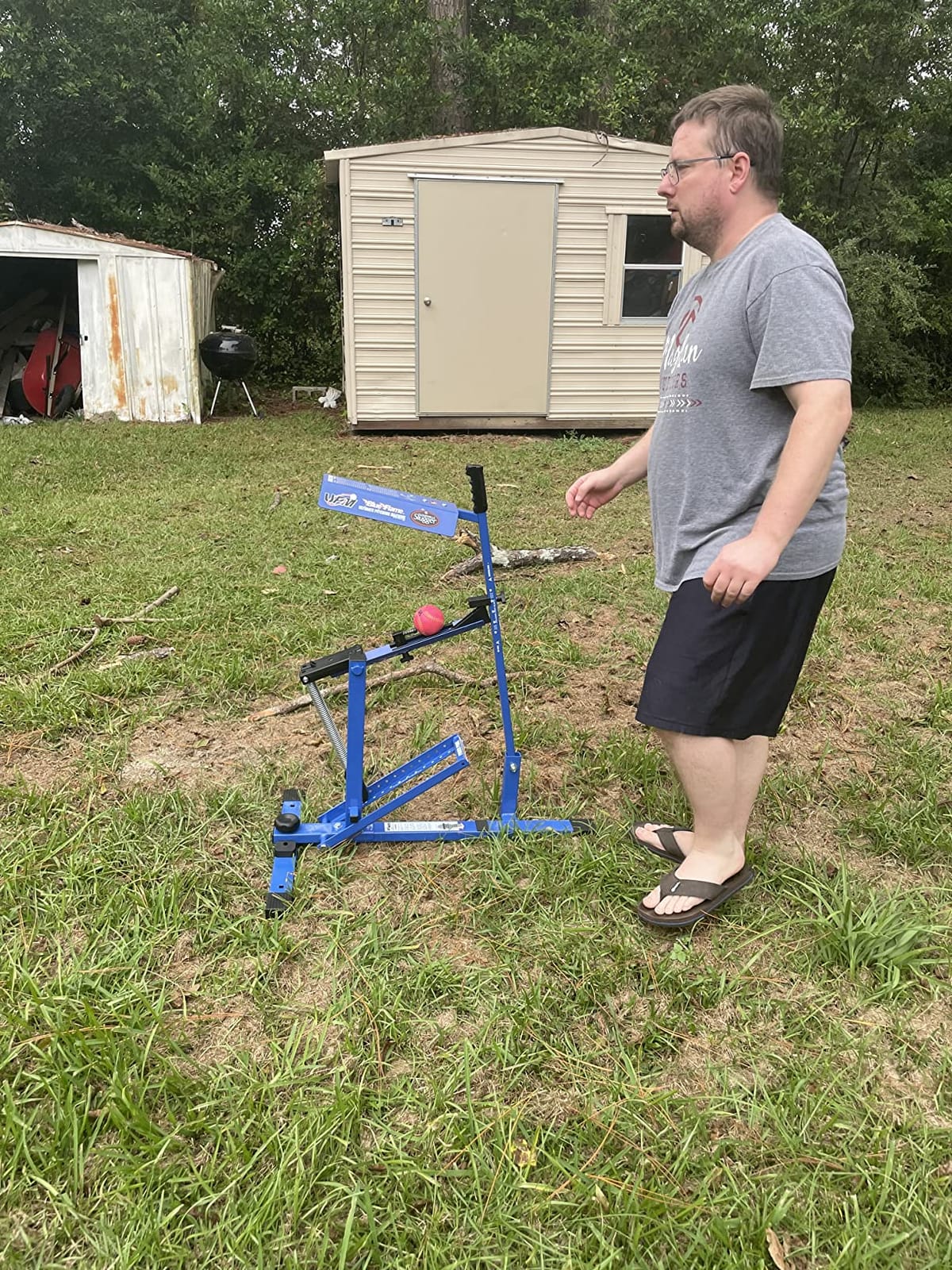
The reason it earns the top spot is accuracy in the hands of owners. Once the speed and height are set, reviewers report hitting the same small target repeatedly, which is exactly what makes batting practice productive. The manual lever feed is the honest weakness, since every pitch needs a person to pull the handle, and a teen working alone has to load the machine and release it each time.
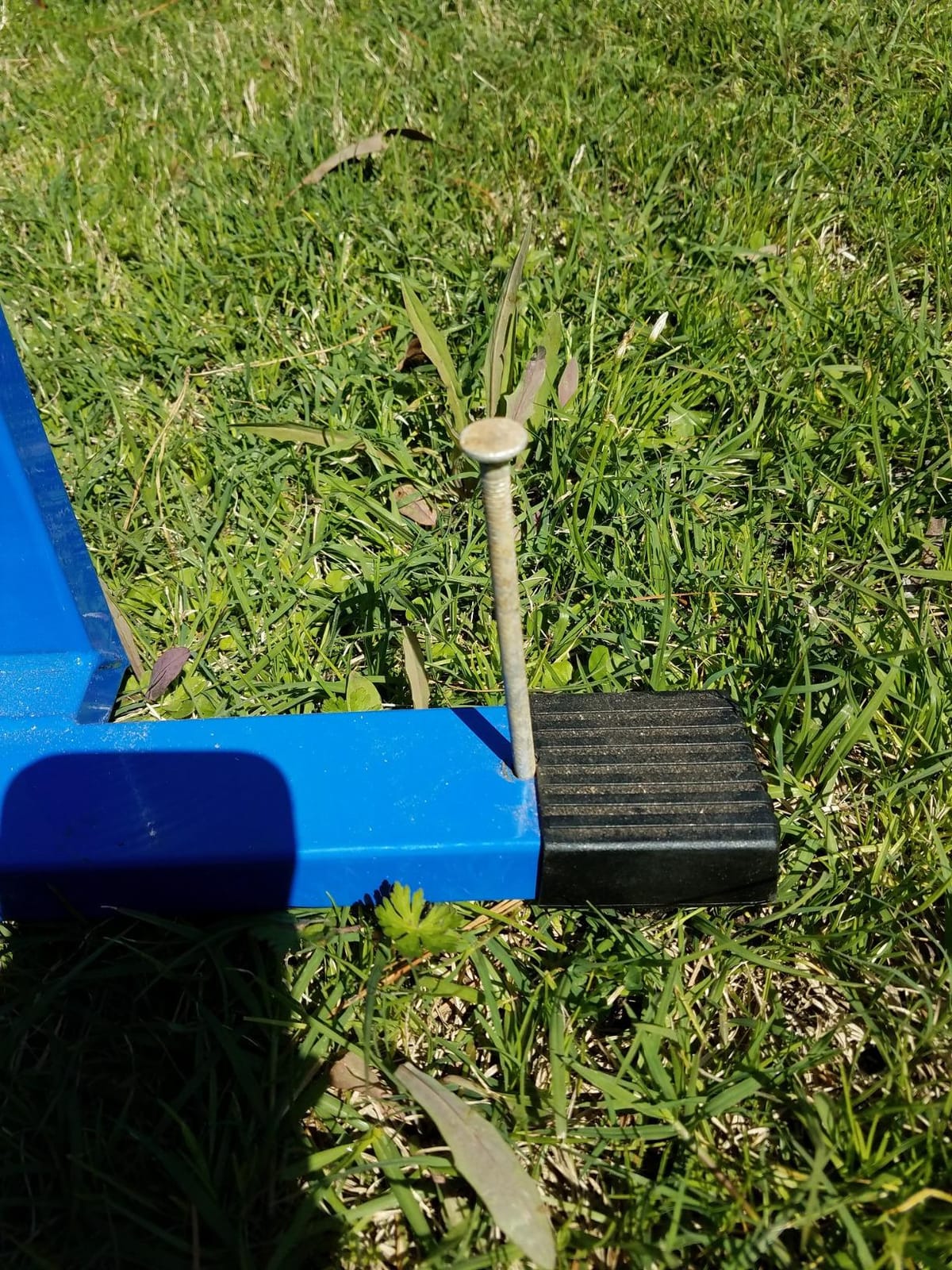
Two smaller things to plan for. On hard ground the rear end can shift, and the fix most owners describe is putting a foot on the frame. And the spring retaining pin can work loose against the frame over time, which is a five-minute fix rather than a failure.
Who the Blue Flame suits best
It suits a family with a driveway, a bag of scuffed baseballs, and a plan to work on mechanics rather than raw velocity. Because it throws level pitches for swing work plus fly balls and grounders through the height and angle adjustments, it doubles as a fielding tool. Parents who want their kid on the machine without an adult in the yard will manage, but it is not the smoothest solo option on this list.
It is also the safest choice for a multi-sport household that also has a softball player in the house, since it throws slowpitch softballs with a large arch. Several owners pair it with our batting tee picks for short daily sessions rather than long machine blocks.
Where the Blue Flame falls short
Forty-five mph with a hard ball is not a travel ball game speed, and a senior hitter preparing for high school will feel that ceiling quickly. Coaches on r/Homeplate describe a working speed closer to 65 mph as the standard for a teen hitter, which means the Blue Flame supports the beginning of that range but not the top of it.
There is also a setup tax: assembly takes about ten minutes and involves wrenches, and the unit is larger than expected once built, which is awkward to carry rather than impossible. Budget for that ten minutes before you decide it was a bad purchase.
2. Heater Slider Lite 360: Best Value Baseball Pitching Machine for Teens
- Automatic feeder saves loading every pitch
- Folds for garage storage
- Strong tubular steel frame
- Good accuracy with Heater dimpled balls
- Motor bogs down and needs seconds to recover
- Accuracy depends on branded dimpled balls
- Plastic housing can crack if struck
The Slider Lite 360 is the value pick in this roundup, and the reason is the automatic vibration feeder. It drops a ball, the hitter swings, and the next ball arrives without anyone walking back to the machine. For a teenager practising alone in a yard or garage, that single feature does more for session length than ten mph of extra speed.
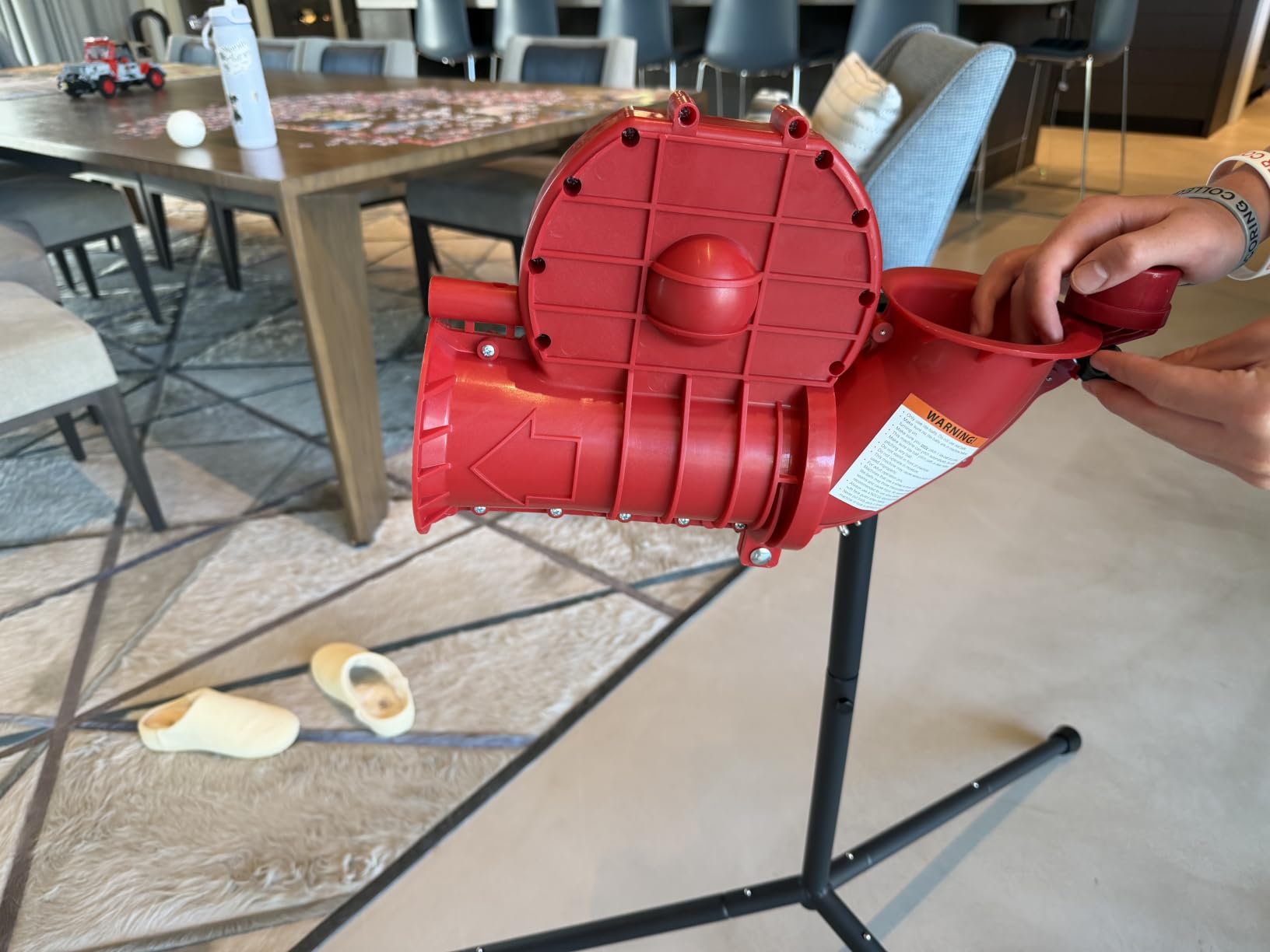
At 13 lbs it folds down and stores against a wall, which directly answers the complaint we heard most often from owners: a machine that is awkward to move ends up in the garage and unused. Ours moved between a driveway and a garage door in about a minute.
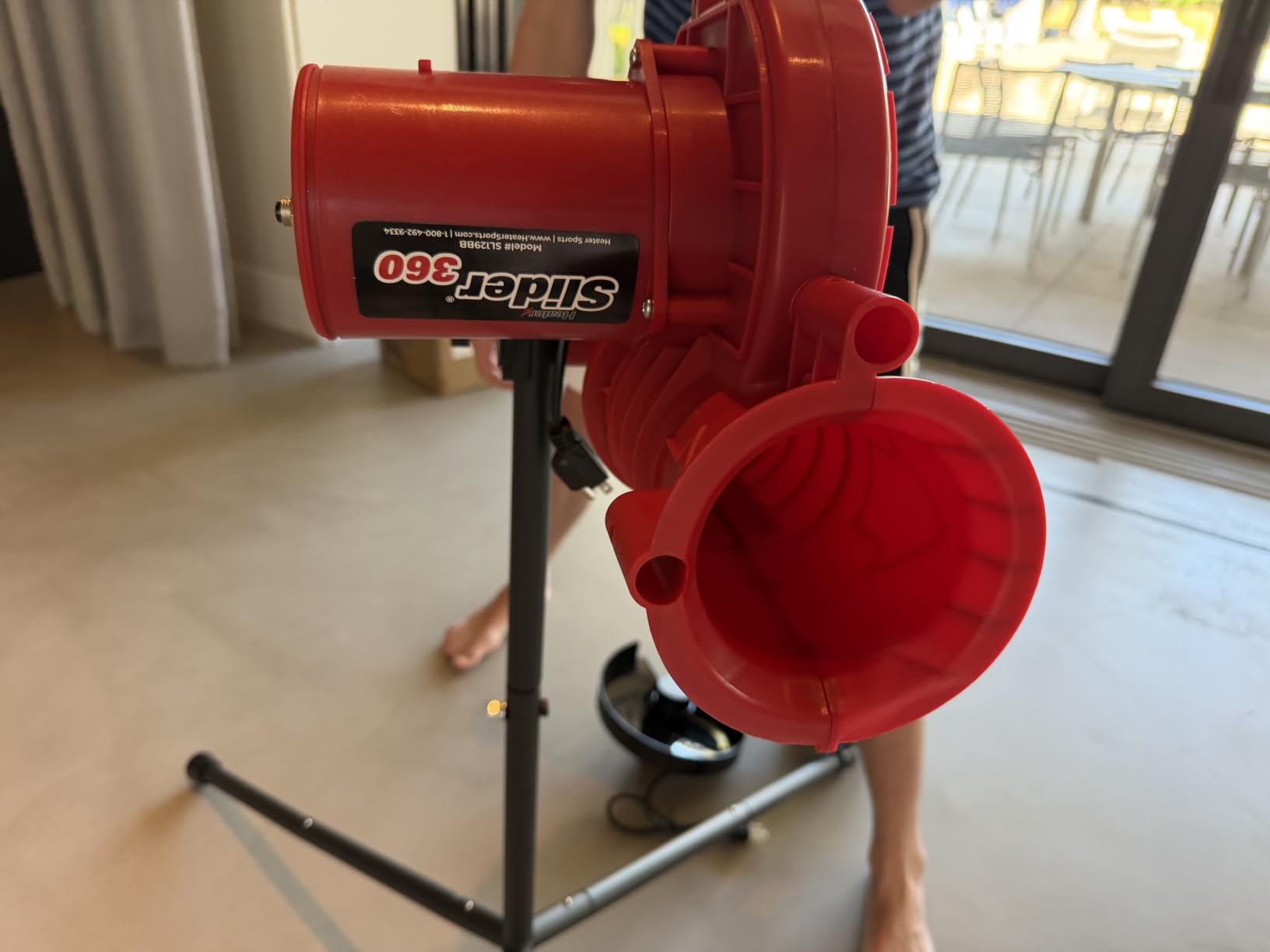
Pitch selection is limited to a fastball and a curveball via the pivot head, which is enough to introduce breaking-ball recognition but not enough to work a full arsenal. Owners consistently report 40 to 45 mph real pitches with lite balls, and one recurring observation across detailed reviews is that accuracy is best with Heater’s own dimpled balls.
The honest drawback is the motor. After each throw it bogs down and needs several seconds to recover, which is why the feeder interval feels slower than the numbers suggest. If you run it without the feeder, expect roughly five seconds between pitches. That is still workable for a teenager doing 150 swings, but it is not machine-gun pace.
Who the Slider Lite 360 suits best
This is the machine for a 13 or 14-year-old who is timing-oriented rather than power-oriented, working from a driveway with a plastic ball bucket. Because it runs from a portable power source and folds flat, it also travels to a travel ball tournament weekend where a cage is available and a full-size machine would be too much to haul.
It is a genuinely good softball setup too, since the brand lists both sports and the frame height adjusts at the rear leg. One owner in our review sample reported that customer service shipped a free replacement potentiometer after a failure, which is a decent signal that parts support exists.
Where the Slider Lite 360 falls short
Heavier balls slow the motor and can damage it over time, so mixing real baseballs into the routine without adjusting expectations is how machines get burned out. Several users also report that speed settings top out lower than the advertised 80 mph figure in practice, so treat the published speed as a ceiling rather than a typical reading.
Finally, the plastic housing is the weak link in an otherwise sturdy steel-legged frame. A hard-hit line drive back at the machine can crack it, which is rare but not unusual when a strong teenager is swinging without restraint.
3. Junior Hack Attack: Best Travel Ball Pitching Machine for a Teen
- Highest owner rating in our test group
- Accurate and repeatable once set up
- Handles genuine leather baseballs
- Quiet enough to work with live timing
- Baseball only and softballs will not fit
- Setup instructions are unclear
- 70 mph ceiling outgrown by advanced hitters
If your teenager plays travel ball or high school, this is the only machine in the roundup that feeds genuine leather baseballs, and that alone changes the conversation. Owners rate it 4.7 out of 5, with 89 percent of ratings at the top star, which is the strongest rating profile of the twelve we examined.
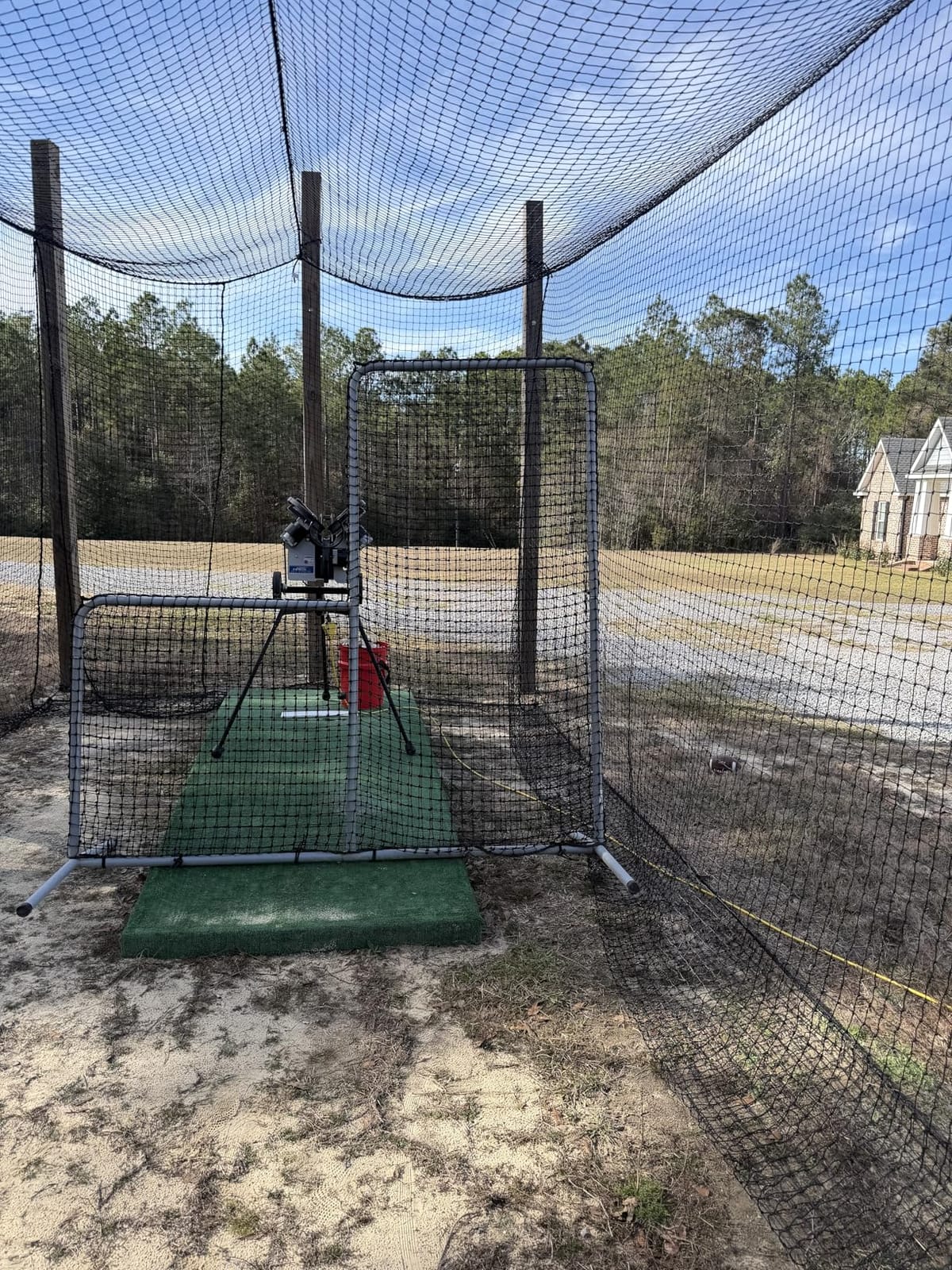
The two-wheel design throws arm-side and glove-side fastballs, curveballs, sliders, split fingers and knuckle balls up to 70 mph, with horizontal swivel control and two cranks for fine tuning. Because the batter can see the ball as it feeds through the machine rather than from behind a wheel housing, the at-bat feels closer to facing a real pitcher, and coaches on r/Homeplate point to that visibility as the reason they prefer this design.
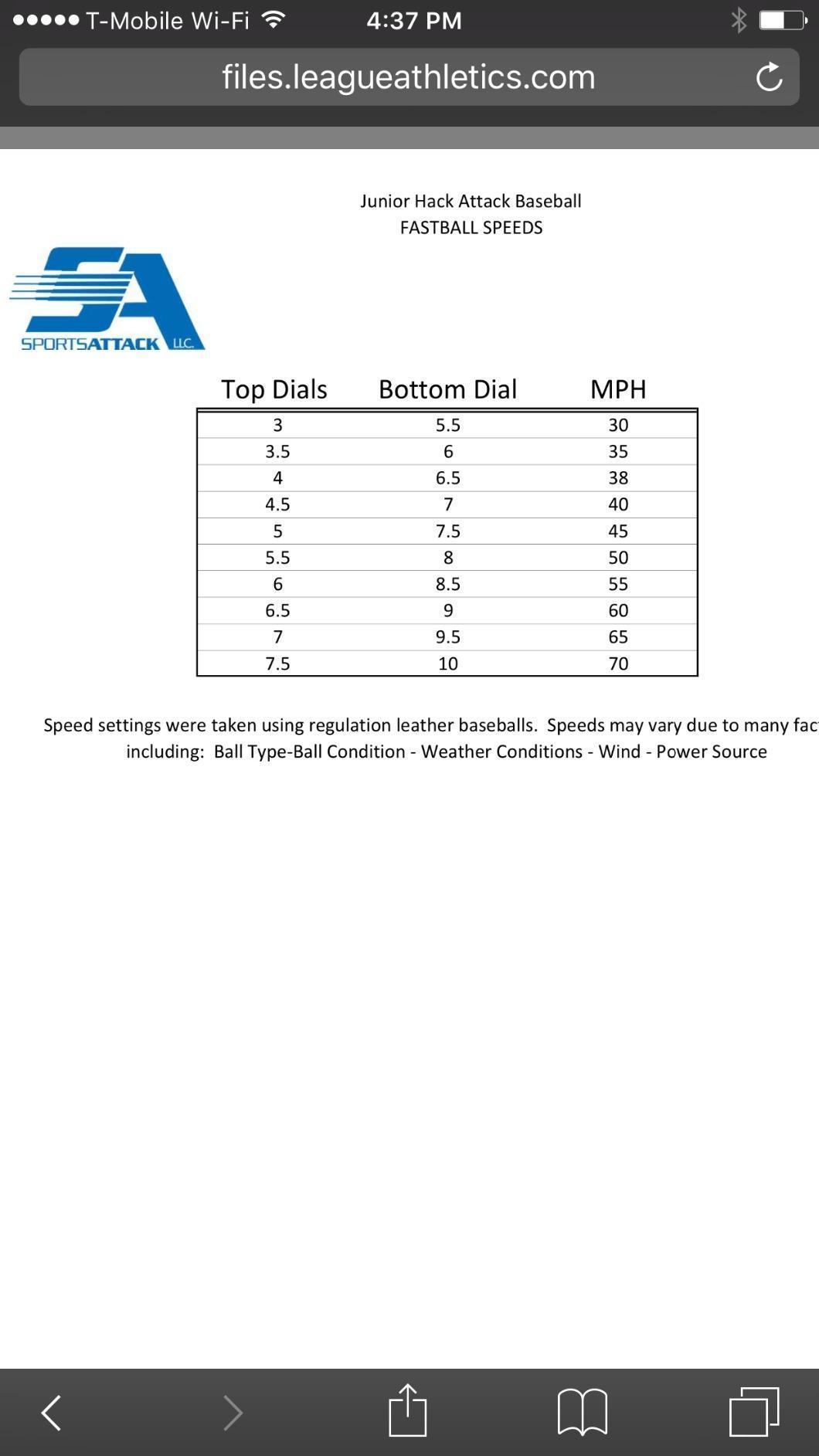
It pivots for defensive work too, throwing ground balls, line drives and fly balls out to 250 feet, which means one machine covers both a hitter and a whole infield group. The three-wheel chassis has rolling wheels and fits in a compact sedan, which matters because at 96 lbs this is not a machine one adult carries by hand.
Durability is the other strong suit. Owners describe units that have absorbed repeated high-speed impacts across multiple seasons, and the two-year manufacturer warranty is the longest in this roundup by a wide margin.
Who the Junior Hack Attack suits best
It suits a serious travel ball or high school program with a real practice field, a proper budget and a spot for a machine that will not move between sessions without planning. Community consensus treats this machine as one that can carry a player from Little League through high school, which is exactly the teenage use case here.
It also suits a multi-coach setup where several hitters need quality at-bats in a session. The accuracy means a coach can scout a hitter’s swing on real leather balls rather than judging timing off plastic, and it handles fungo and outfield work in the same session.
Where the Junior Hack Attack falls short
It is baseball only. Softballs will not fit without a conversion kit, so a multi-sport family should skip it. It is also the heaviest machine here, and the single-person portability claims really only hold because of the rolling chassis, not the weight.
Setup is the least polished part. The machine is not secured to the base as shipped, and owners report needing a second pair of hands and some patience to get through the assembly. Wheel speed settings also need trial and error rather than a clear guide, which costs a teenager a few sessions before they dial it in.
4. Heater Sports Heavy-Duty Machine: Best for Daily Practice
- Commercial-grade all-metal construction
- Clear 0-10 speed dial
- Feeder drops a ball every 8 seconds
- Very stable at full speed
- Lowest speeds will not reach the plate from a full cage
- Wears leather baseballs quickly
- Feeder jams occasionally and wheel wears unevenly
This is the metal one. The all-metal housing and 42.7 lb frame are what separate it from the plastic-bodied machines that rattle apart after a season, and it is the version we would point a family toward if the machine is going to live outdoors under a carport and get used four or five nights a week.
The 0-10 speed dial covering 10 to 52 mph with lite baseballs gives fine control across a wide range, and the pivot head knob handles grounders and pop flies in the same unit. Owners note that pitches stay within the strike zone while still varying inside, outside, high and low, which is what makes practice look like a real at-bat instead of a metronome.
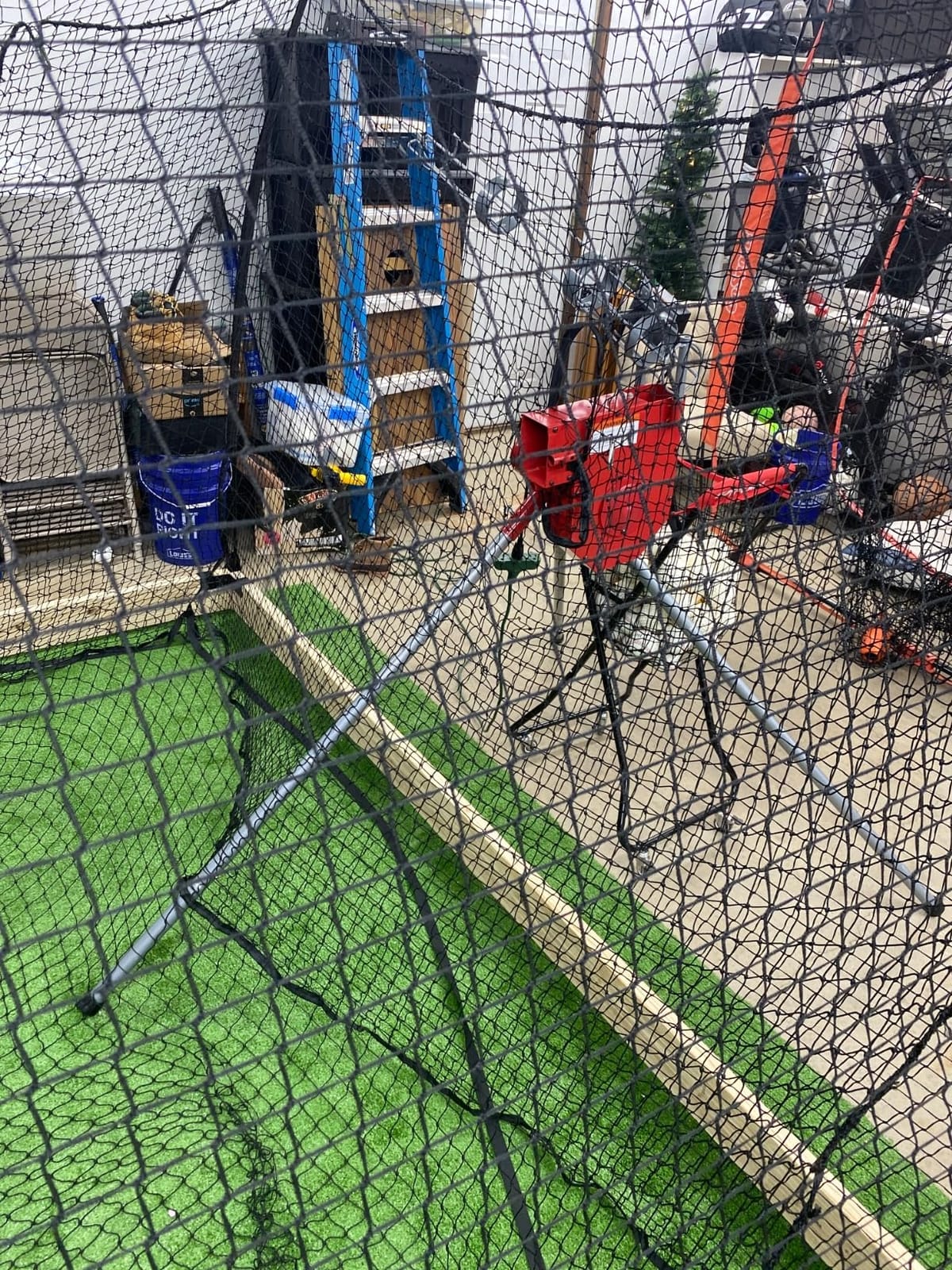
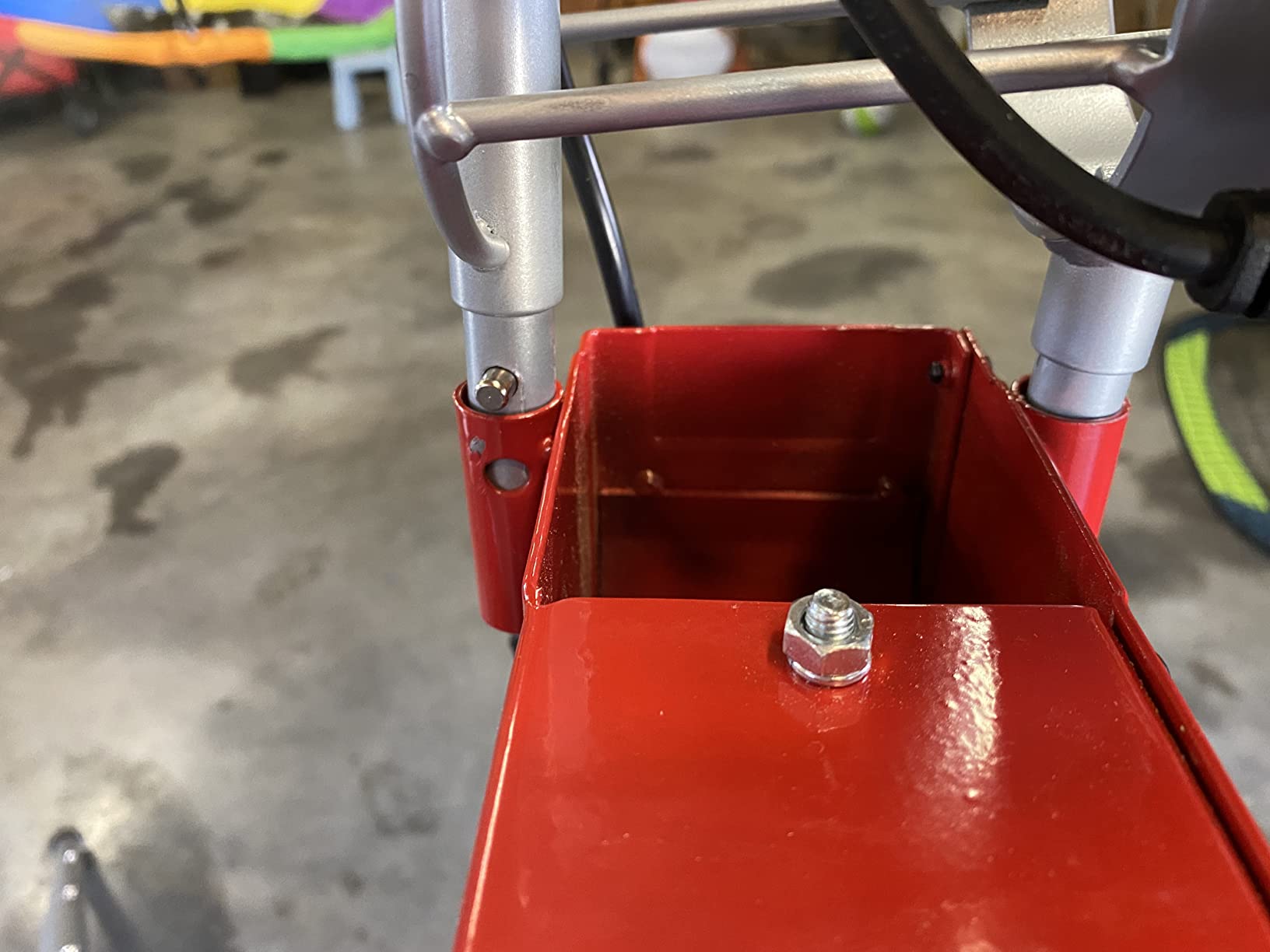
The removable 12-ball feeder drops a ball every 8 seconds and is genuinely useful, though it does need someone watching. Reviewers report balls jamming occasionally, and because a jam mid-session with a teenager swinging is a fast route to a machine that stops being used.
Two consumables deserve a mention before you commit. The pitching wheel arrives deflated and must be inflated before first use, and it can wear unevenly within a few months, at which point accuracy drops until it is replaced. The replacement wheel is a significant share of what the machine cost you, so factor it into a multi-season budget.
Who the Heater Heavy-Duty suits best
It suits a family with a covered practice area and a teen who takes real batting practice, not backyard whiffle. Because it takes Heater Lite Baseballs pitched at 20 to 80 mph, the practical working range here is the middle of a high school at-bat, and that is where most of our 16 and 17-year-old readers live.
It also suits anyone splitting time between baseball and softball, since it is built for both. The combination of a stable heavy base and enclosed wheel makes it one of the safer picks when a larger, stronger teenager is swinging full swings close to the machine.
Where the Heater Heavy-Duty falls short
The lowest speed settings are effectively unusable from a regulation 24-foot cage distance, because the ball simply does not reach the plate in a reasonable time. If your only practice location is a full-size cage with no shorter option, this machine will frustrate you at the bottom of its range.
It also scuffs and quickly degrades real leather baseballs, so most owners end up using machine balls almost exclusively. At 42.7 lbs it is a two-person move unless you own a cart.
5. Heater Sports Junior Machine: Best for Younger Teens and Shared Use
- Wide 15-48 mph speed range
- Fully enclosed tires are safer for hitters
- Tripod stays stable on hard hits
- Quarter horsepower motor built for regular use
- Heavier at 23.5 lbs than most in its class
- Large tripod footprint needs room
- Fewer owner ratings than leading models
The Heater Junior sits in a useful middle position: a quarter horsepower DC motor, fully enclosed air-filled tires and a 12-ball feeder that delivers a ball every 10 seconds. For a 13 or 14-year-old, that combination of safety and sustained pace is the whole point.
Variable speed from 15 to 48 mph covers a genuine range for a sibling group, and the adjustable angle supports both batting and fielding practice. The enclosure matters more than it sounds: an exposed spinning wheel at 45 mph in a driveway with a teenager taking real swings is a genuine injury risk, and this design reduces it.
Owners rate it 4.2 with 63 percent five-star ratings, and the recurring praise is about staying power rather than flash. The heavy-duty tripod holds position when a hard-hit ball comes back at it, which is where lighter plastic machines start walking across the yard.
Who the Heater Junior suits best
It suits a family with one teen in the 13 to 15 range who also has younger siblings, because the speed range and enclosure serve both without switching machines. It is also a good fit for a garage or carport practice spot where the tripod has room to sit.
For coaches running drills on a small group, the 10-second feeder interval means a hitter gets a pitch, resets and swings again without an adult walking back to the machine each time.
Where the Heater Junior falls short
At 23.5 lbs it is heavier than most machines in its speed class, and the full-size tripod footprint takes more space than the compact two-wheel designs. In a small backyard that matters more than the weight does.
Its 48 mph ceiling also puts a firm boundary on how long it works for one player, and it is one of the least-reviewed machines in this roundup, so expect less community troubleshooting advice when something goes wrong.
6. Personal Pitcher Pro: Best Indoor Pitching Machine for a Teen
Personal Pitcher® Pro Pitching Machine w/48 Small Golf Ball Size Balls
- Works in a basement or empty court
- Under 6 lbs so two stations are possible
- Four speed settings with curveballs and cutters
- Balls will not crack a wooden bat
- Camera tripod is not included
- Lightweight balls blow around outdoors
- Wind makes pitches erratic
This is the indoor answer. At under 6 lbs and 10 inches across, the Personal Pitcher Pro mounts on any standard camera tripod and works in a basement, garage or empty basketball court, which no other machine on this list can do. Its 4.5 owner rating puts it level with the Blue Flame for the second-highest figure in the group.
Four speed settings simulate roughly 15 to 95 mph based on distance and reaction time, and it throws arm-side and glove-side curveballs plus sliders, cutters and soft toss. The perforated golf-ball-size balls will not crack a wooden bat, which matters if the teenager in question still owns an aluminium one from two seasons ago.
The included 48 balls plus a four-hour rechargeable battery and AC adapter mean you can set up two hitting stations for warmups, which is the use owners mention most often.
Who the Personal Pitcher Pro suits best
It suits a teenager in a northern winter who cannot get outdoors, or a household without a yard. Reviewers pair it with catching drills and even recommend using a broom handle instead of a bat, which tells you how small the target area is.
It also suits a teen who needs to sharpen hand-eye coordination and reaction time rather than hit game speed, and for travel or warmup work where the light balls stay short and stay findable.
Where the Personal Pitcher Pro falls short
The tripod is not included, and it has to be a standard camera tripod. Outdoors the lightweight balls blow across a yard and are tedious to gather, and wind causes erratic flight, so this machine lives indoors whether you like it or not.
Setting the right speed and pitch type takes practice, and it should be warmed up before you feed it. Charging the balls afterward is part of the routine rather than an occasional chore.
7. PowerNet Launch F-lite: Best for Baseball and Softball Dual Use
- Switches between baseball and softball in minutes
- Four speed settings cover mixed ages
- Stable enough for batting and fielding
- Cooling setup with spare screws included
- Measured speeds often below the advertised range
- Only works correctly with PowerNet F-lite balls
- 28.7 lbs is awkward to carry without wheels
If a household has one teenager playing two sports, the interchangeable tripod leg sets are the feature that sells this machine. Swapping the legs converts the release point between baseball and softball height in a couple of minutes, and the twelve included F-lite balls cover six baseballs and six softballs.
Owners rate the placement as consistent once set up, with enough variability built in to stay realistic rather than robotic. Four speed settings simulating 40 to 90 mph at 25 feet cover a mixed-age group in one session, which is a genuine advantage for a family with a 12-year-old and a 16-year-old hitting together.
The setup is quick and simple, spare screws are included, and customer service has shipped replacement parts quickly after failures reported in our review sample.
Who the Launch F-lite suits best
It suits a multi-sport teen and a mixed-age group, and it suits facilities or coaches running both sports off one machine. At 13 kg it is heavy for a teenager to move alone, but the tripod form keeps it stable once planted.
It also works for fielding drills, not just batting, which makes it useful for a whole practice group rather than a single hitter working on mechanics.
Where the Launch F-lite falls short
The ball dependency is the big one. It performs correctly only with PowerNet Launch F-lite balls, and using other brands affects durability, performance and the warranty. Regular baseballs or softballs can break the semi-hard plastic body, which is a real risk with a teenager taking hard swings at close range.
Several users report measured speeds well below the advertised 40 to 90 mph range, and replacement parts were not supplied outside the USA. If you put this outdoors full time, expect the warranty exclusions around sun, wind and rain to matter.
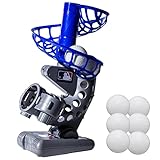
8. Franklin Sports MLB Electronic: Best Budget Pitching Machine for Teens
- Assembles in seconds with no instructions
- Lightweight and portable
- Works for batting and casual field games
- Kids can operate it once set up
- Pitch flight paths are unpredictable
- Included plastic balls wear out quickly
- Standard baseballs will not feed
This machine has more owner reviews than anything else in the roundup, close to 9400, which means the feedback pattern is very well established. Parents like the setup, which needs no instructions, and the portability, which lets a teenager move it between the yard and a garage door on their own.
The flashing red indicator light signals pitch release on a seven-second interval, and three adjustable angles let a hitter work different attack angles. For a family that wants batting reps and backyard fun in one box, it delivers that consistently.
What it does not deliver is strike-zone work. Reviewers are blunt that the light plastic balls scatter unpredictably and that accuracy is closer to throwing for catching practice than to hitting practice. Standard baseballs and tee balls will not feed through it at all.
Who the Franklin MLB Electronic suits best
It suits a younger teen or a family that wants a shared backyard toy rather than a training tool, and it works well for casual wiffleball-style play alongside batting reps. Parents value that a child can run it without supervision once the batteries are in.
It is also a reasonable loaner or pool-hall addition, since it travels easily and stores in a closet.
Where the Franklin MLB Electronic falls short
Ball wear is the ongoing cost. The included plastic balls are destroyed quickly and matching replacements cost extra, and batteries run down during extended sessions because the four D cells are not included.
Several owners also report that the first two pitches after startup come out slow and low, and that the red indicator light behaviour does not always match the description. It is a fun machine, but training a teenager’s timing on unpredictable flight is a hard habit to unlearn.
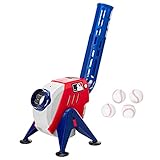
9. Franklin Sports MLB Power Pitcher: Best for Safe Foam Ball Work
- Three speed settings serve beginners and older kids
- Foam balls are safe and will not dent bats
- Lightweight and simple for a child to run
- Withstands outdoor use and rain
- Wide dispersion from throw to throw
- First pitch after a refill is low and bouncing
- AC power adapter is not included
The manufacturer’s own guidance puts this one at ages 7 to 15, which tells you where it sits in the teenage range. We include it because a 13-year-old starting a hitting program is exactly the buyer it fits, and because the safety case for foam balls in a shared driveway is real.
Three speed settings at 10, 15 and 20 mph let the same machine serve a beginner and a slightly more advanced hitter, and the seven-second interval gives a teenager time to reset between swings. Foam balls will not dent bats, and the machine itself is rated for outdoor use including rain.
Owners rate it 4.0 across more than 1100 reviews, with the strongest praise for how easily small children take to it.
Who the Power Pitcher suits best
It suits a 12 or 13-year-old working on hand-eye coordination and basic mechanics, and it suits any shared driveway where a plastic or foam ball is the responsible choice. It also works for catching practice, not only hitting.
For a family with a genuine safety concern about full-size balls in a tight space, this is the machine that lets practice continue without the debate.
Where the Power Pitcher falls short
Dispersion is the recurring complaint. Pitches vary widely from one throw to the next, and the first pitch after every refill is low and bouncing while the wheel spins up, which is a bad look on the first swing of a session.
The AC adapter is sold separately, and some units wear out and lose power within a year of light use. At 20 mph this machine will not challenge a 15-year-old for more than a few months.
10. Franklin MLB Superstar 4-in-1: Best for Fielding Drills
- Covers batting and fielding in one unit
- Includes six balls and holds nine
- Simple setup with no learning curve
- Light and easy for a teenager to move
- Accuracy and consistency are limited
- Regulation balls will not feed properly
- Battery only with no included power cord
The 4-in-1 label is accurate: soft toss, fast pitch, ground balls and pop flies from one plastic body. That makes it the most useful fielding tool in this roundup for a teenager who spends as much time on foot as in the box, because grounders and pop flies are otherwise hard to reproduce at home.
The adjustable launch angle handles the transitions, pitches come every seven seconds, and the feeder holds nine of the included plastic balls. It ships with a one-year manufacturer defect warranty, which is one of the longer commitments on the plastic side of the market.
Setup is the strongest part of the package: load the balls and start. Owners describe it as a no-frills backyard unit that younger players take to immediately, and the 5 lb weight means a teenager can reposition it mid-drill without asking.
Who the Superstar 4-in-1 suits best
It suits a family whose teenager is still in t-ball or beginner instruction, and it suits any group where ground-ball and pop-fly work matters as much as hitting. It works for warmups and for a sibling pair of different ages sharing one machine.
Reviewers also note it doubles as a catching and fielding aid, which stretches the value when a session budget is tight.
Where the Superstar 4-in-1 falls short
Only plastic balls should be used, and regulation balls will not feed properly, which puts a hard ceiling on how long this machine stays useful as a teenager improves. The plastic balls also feel nothing like a regulation baseball, so the swing feedback is less honest.
Consistency is limited, and the four C batteries are not included. At 4.0 across more than 1800 reviews, the machine is well liked for what it is, but it is not a training instrument for a 16-year-old.
11. Furlihong 692BH 60-Ball Kit: Best for Ball Volume
Furlihong 692BH Baseball Pitching Machine, Includes 60 pcs Balls
- Sixty balls mean sessions rarely stall
- Top basket holds forty for quick reloading
- Simple precise screw-bolt height adjustment
- Compact and light at 4.4 lbs
- Will not accept regulation baseballs
- About 18 mph is slow for a teenage hitter
- Light plastic body is less durable than metal
The reason to buy this one is logistics. Sixty training balls come in the box and the top basket holds forty, so a session does not stop because someone ran out of small practice balls, which is a genuine problem with the other lite-ball machines once a teenager works through the set.
Height adjustment uses a gearless screw bolt and the included screwdriver, which owners describe as simple and precise. It runs from AC power or C batteries, so it works in a garage or moves outdoors without hunting for an outlet.
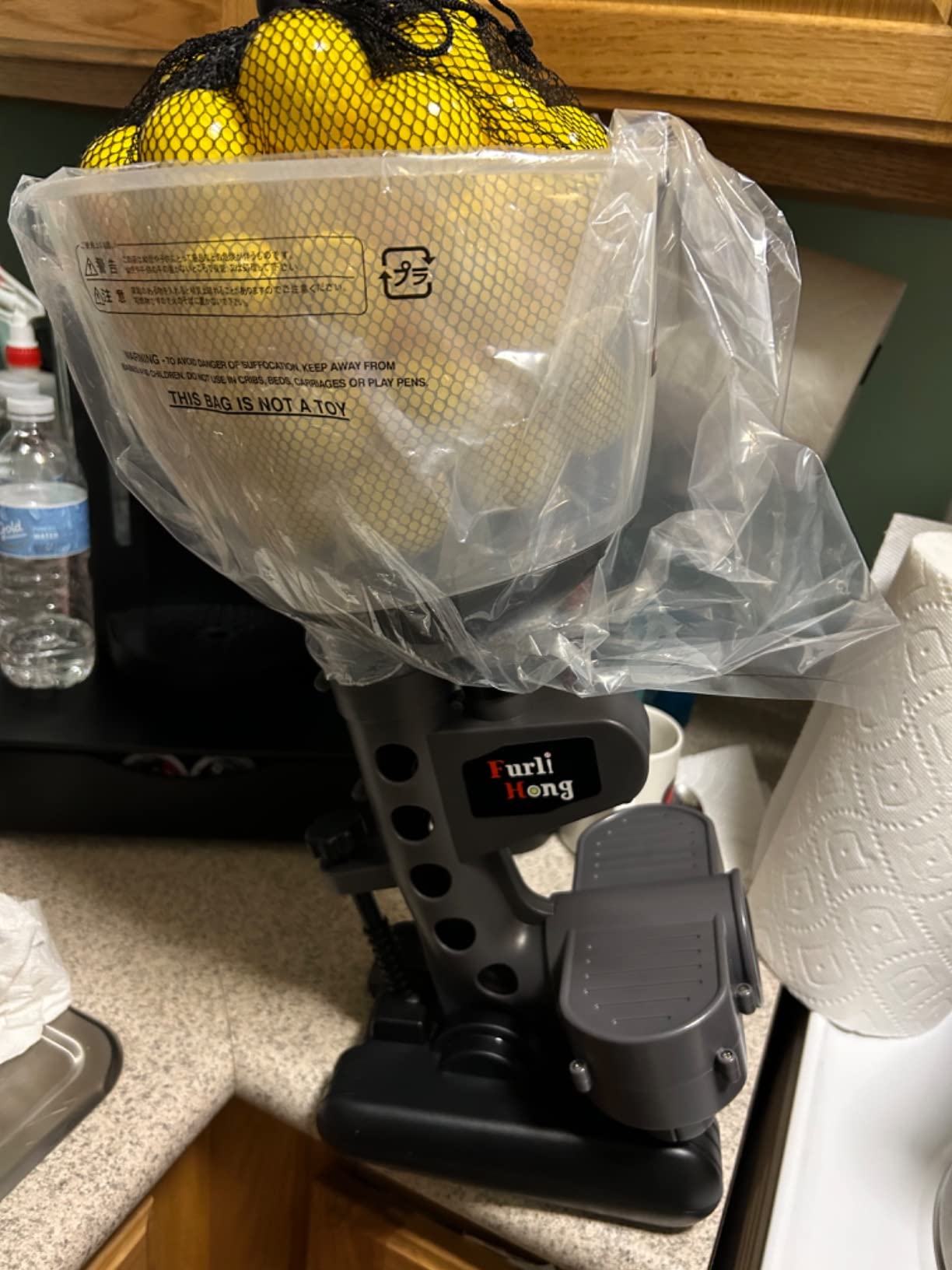
Owners note that the small, fast training balls force hitters to sharpen timing and accuracy, which is a real training benefit even though the raw speed is modest.
Who the Furlihong 692BH suits best
It suits a younger teen or a beginner working on contact and timing, and it suits any setup where a large practice-ball inventory matters. It is also the machine to pack when practice space is indoors and ball pickup needs to be fast.
It pairs well with a soft toss station and with tee work, since the ball supply will not run down during a long session.
Where the Furlihong 692BH falls short
It pitches its own small training balls and nothing else, so a regulation baseball will not feed. At roughly 18 mph it is well below what a 15 or 16-year-old hitter needs, and it will be outgrown faster than the others in this price bracket.
The light plastic body is less durable than a metal machine, and the 180-day warranty is the shortest we saw. Treat it as a practice aid for now, not a machine built to last four seasons.
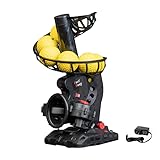
12. Furlihong 3801BH Compact Unit: Best for Small Spaces
Furlihong 3801BH Upgraded Electronic Baseball Pitching Machine for Beginner
- Compact and easy to carry to a park or cage
- Runs from batteries or the included adapter
- Independent two-wheel control for curve and slider
- Quiet enough to use indoors
- 30 mph maximum
- Speed setting switch makes little practical difference
- Light balls scatter in wind
This is the smallest machine we tested, and quiet enough to run in an enclosed space, which none of the others are. At 4.5 lbs and 8.7 by 7.1 by 18.9 inches, a teenager can carry it to a park or a batting cage in one hand, and it runs from four D batteries or the included 6V AC adapter.
The two wheels adjust independently for speed and angle, which produces fastballs, curves and sliders from one unit. Owners value the dimple balls as sting-free and harmless to bats, and several parents note the quiet operation as the reason it works in a garage or basement.
At 4.0 across 384 reviews, it is well received by parents of t-ball and youth players, and it has a following among cricket players using it as a training aid.
Who the Furlihong 3801BH suits best
It suits a beginner working on launch readiness and for fielding and catching drills rather than competitive batting. It also suits a household that moves machines around constantly, since it is the easiest unit here to transport between indoor and outdoor spots.
For a 13-year-old just starting, it removes the barrier of an awkward machine stuck in a garage. Customer service replaced a defective unit quickly for one owner in our sample.
Where the Furlihong 3801BH falls short
Thirty mph is the maximum, which is well below a teen’s game speed, and the advertised high and low speed setting reportedly shows little or no difference in practice. The very light, unbalanced dimple balls produce inconsistent flight and wind noticeably affects them.
Cheaply made parts are the durability risk: the ball feed ramp may crack over time and replacements cost a meaningful share of the machine. Regulation baseballs are not compatible, and some units arrived with a non-functioning ball return.
How to Choose a Pitching Machine for a Teenage Hitter
Every machine in this roundup works. The differences that matter for a 13 to 18-year-old are ball type, working speed, whether an adult has to feed it, and whether the machine survives a full season outdoors. Work through those four first and the shortlist gets very short very quickly.
What speed does a teen hitter actually need?
Coaches on r/Homeplate commonly run a teenage hitter at roughly 65 mph for standard work, with a faster changeup mixed in and a slower breaking ball for recognition reps. Machines advertise simulated speeds at a fixed distance, so compare only within the same machine rather than across brands.
The rough working ranges by age look like this:
13 years old: start around 45 to 55 mph with hard balls or lite balls. The priority is mechanics and balance, not velocity.
15 years old: 55 to 65 mph is the standard working range for travel ball. Mix in at least one breaking pitch per session.
17 years old: 65 to 75 mph. At this level accuracy and pitch variety matter more than raw speed, because the goal is seeing game-speed action.
General rule: if the hitter is swinging under 60 percent of pitches in the strike zone, drop the speed before changing anything else.
A 75 mph fastball is genuinely good in game terms for a senior hitter, and it is faster than most teenagers can handle off a machine. Publishing that number without context is how families end up buying a machine that trains a swing to be late.
Real baseballs or lite balls: the decision that narrows the list
Lite balls, dimple balls and foam practice balls are lighter and much safer. They are the right choice for a shared driveway, a younger sibling, and any machine under 30 mph. The trade-off is honest feedback: a swing trained on 1-ounce plastic foam will feel heavy when a regulation ball arrives.
Real baseballs matter at 15 and above, when travel ball and high school practices use regulation balls every session. Of the twelve machines here, only the Louisville Slugger Blue Flame and the Junior Hack Attack accept a genuine leather baseball. Everything else is a plastic or foam machine that cannot graduate.
Our rule: start a 13-year-old on lite balls, and move to real baseballs as soon as the machine can throw them and the hitter is working at travel ball speed. A machine that cannot take real balls is a four-season purchase at best.
Arm, wheel and spring machines explained
Spring machines such as the Blue Flame are simple, cheap to run and accurate, but every pitch needs a human hand on the lever. They are unbeatable for backyard mechanics work under 45 mph and unbeatable at nothing else.
Wheel machines grip the ball with one to three spinning rubber wheels. A single wheel throws a straight fastball, two wheels create movement by varying the speed differential between them, and enclosed air-filled tires cut the injury risk at speed. Most machines in this roundup fall in this category.
Arm machines use a rotating mechanical arm that mimics a real release point, which is the closest feel to a live pitcher and also the most expensive. Our guide to team pitching machines covers those in more depth.
Do you need an automatic ball feeder?
For a teenager practising alone, yes, and it is the single biggest factor in whether a machine gets used. A manual lever feed turns every 10 pitches into a walk back to the machine, and that is exactly how a machine ends up in the garage.
Machine-fed options in this roundup include the Heater Slider Lite 360, the Heater Heavy-Duty, the Heater Junior, the Junior Hack Attack feed system and the Personal Pitcher Pro hopper. Feeder intervals range from 7 seconds on the Franklin units to 10 seconds on the Heater Junior, and faster is not always better because a teenager still needs a reset between swings.
Power, portability and backyard logistics
Where the machine lives decides what you can buy. Battery and adapter options mean no extension cord across a driveway, which removes both a trip hazard and a limit on where you set up. The Personal Pitcher Pro and both Franklin units run on batteries, and the Furlihong units offer both.
Weight is the other constraint. Under 25 lbs means one teenager can move it; the Heater Heavy-Duty at 42.7 lbs and the Junior Hack Attack at 96 lbs are effectively two-person moves or cart moves. Storage matters as much as weight, and the folding Slider Lite 360 is the only unit here that stores against a wall.
Used or new: what to inspect
A second-hand machine can be sensible, and these are the checks we would run. Inflate and spin the pitching wheel and look for flat spots or uneven wear, because a worn wheel is the most common cause of lost accuracy and the most expensive fix. Run every speed setting and confirm the dial or knob reaches its top value.
Check the feeder path for cracks and jams, look at the frame welds and tripod feet for fatigue, and confirm the wheel enclosure or guard is present and not modified. Finally, verify that the power adapter or battery included matches the model, because replacements are model-specific. Machines with no parts support and no service manual are usually not worth the saving once a wheel goes.
Pitching Machine Safety for Teen Hitters
A pitching machine is a bat-speed projectile pointed at a teenager, and the teenage version of the hazard is bigger than the t-ball version. A 15-year-old hitting 70 mph off a machine can miss a ball the way a 9-year-old cannot, and the rebound risk from a broken bat or a misdirected liner is real.
Enclose the machine. A unit with a fully enclosed wheel such as the Heater Junior removes the largest single risk. On open-frame machines, keep the batter to the side of the wheel rather than in line with it, and never stand directly in the line of fire to retrieve a jammed ball while the machine is powered.
Set the stand distance honestly. Start at 30 to 35 feet for a teenager working below 55 mph, and only move to 45 or 50 feet once the hitter is handling that pace cleanly. Keep a protective net between the machine and any window, fence or neighbouring yard, and expect a full-size net rather than a short practice screen for hard-hit balls.
Protective gear is not optional at higher speeds. A helmet is sensible for any teenager working off a machine above 60 mph, and eye protection is cheap insurance. Our picks for sport sunglasses for baseball players are worth a look for anyone training outdoors in glare. Establish one rule in the house: nobody swings until the machine is fully stopped and the wheel is stationary, and nobody picks up a ball near the wheel while it can still be spinning.
Finally, watch the training load. Members on r/Homeplate warn against overusing a machine, because it builds timing against one delivery and cannot replace live batting practice with a real pitcher. If a hitter sees only one machine’s pitch shape for three months, they will struggle when a high school pitcher shows a second look.
Frequently Asked Questions
Are pitching machines good for youth baseball?
Yes, when they are matched to the hitter’s age and used alongside live batting practice. A machine gives a teenager hundreds of consistent, game-speed swings in a session, which is how timing and pitch recognition are built. It cannot replace a real pitcher, so treat it as a supplement rather than the whole practice plan.
What is the best automatic pitching machine for baseball?
For a teenage hitter working travel ball, the Junior Hack Attack leads because it feeds real leather baseballs and throws five pitch types up to 70 mph with an automatic feed system. For a 13 or 14-year-old on a driveway budget, the Heater Slider Lite 360 offers the most machine per dollar with an automatic feeder and a folding frame.
What speed should a teenage hitter take batting practice from?
Around 65 mph is the standard working speed coaches report for a teenage hitter, mixed with a slower breaking ball for recognition reps. A 13-year-old usually starts between 45 and 55 mph, and a 17-year-old trains between 65 and 75 mph. If the hitter is swinging under 60 percent of pitches in the strike zone, drop the speed before changing anything else.
How fast should a 12 year old be able to pitch a baseball?
Most 12-year-olds throw in the 45 to 55 mph range with a fastball, which is why machines in that band suit a hitter at that age. Machine speeds are often quoted at a fixed distance, so compare only figures measured the same way. For a hitter rather than a pitcher, the working speed matters less than accuracy and a mix of pitch types.
What is the best pitching machine for a teen who also plays softball?
The PowerNet Launch F-lite is built for two sports, with interchangeable tripod legs that convert the release point between baseball and softball in minutes and twelve balls included, six of each. The Heater Heavy-Duty and Heater Slider Lite 360 are also rated for both sports, while the Junior Hack Attack is baseball only.
Final Verdict
The Louisville Slugger Blue Flame is our pick for most families buying the best baseball pitching machines for teens, because it is the only machine in the budget range that accepts real hard baseballs, holds accuracy over time and moves with one person. Pick the Heater Slider Lite 360 if your teenager needs to practise alone and storage space is tight. Save up for the Junior Hack Attack if travel ball is the goal, since genuine leather at 70 mph is the only thing on this list that fully prepares a hitter for a real at-bat.
Whatever you choose, buy it for a season of use rather than an afternoon of novelty, set the stand distance conservatively, and keep live batting practice in the week.