
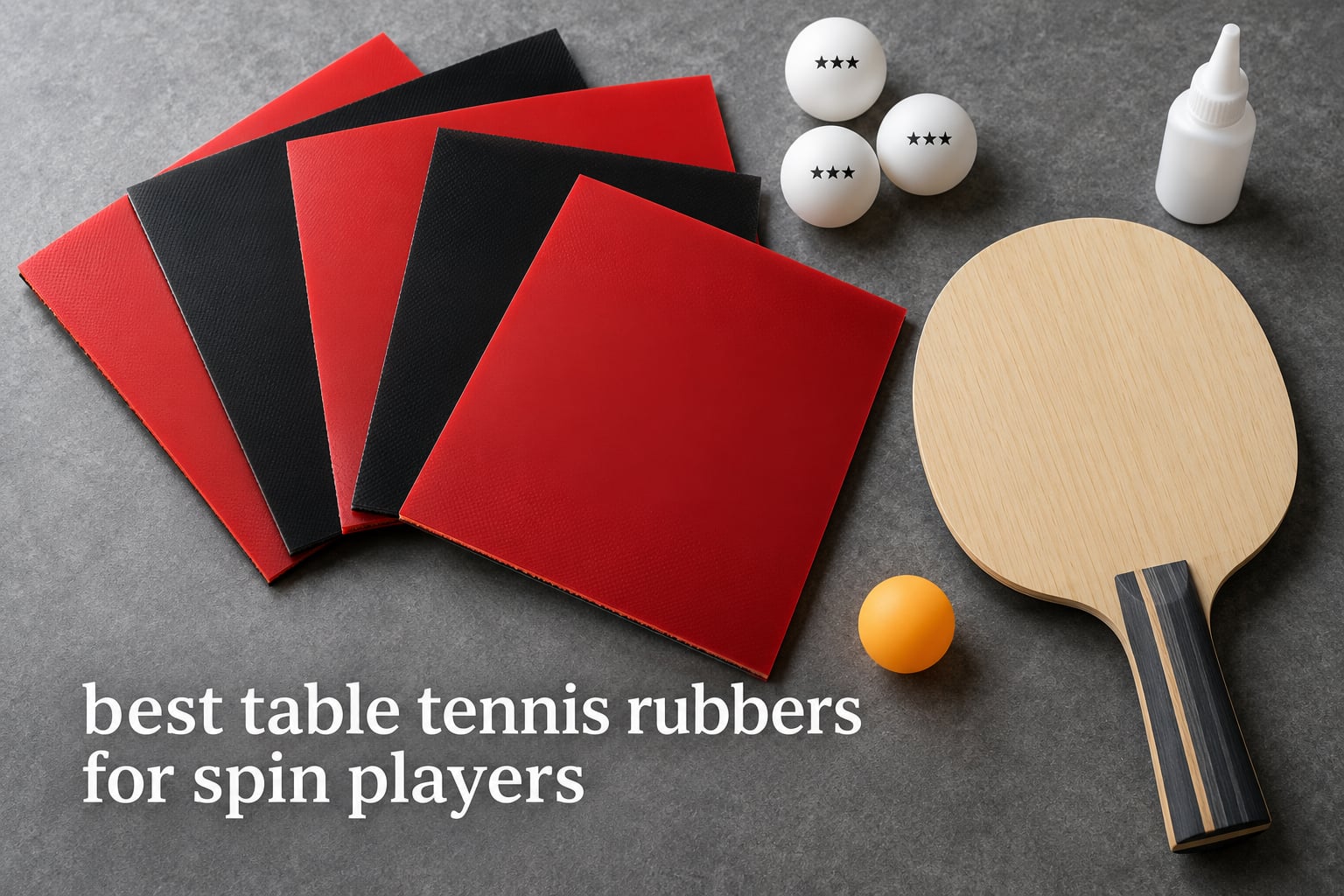
Most rubber lists tell you which sheet has the biggest spin number and stop there. That is a spec sheet answer to a question that is really about contact, grip and how hard you can brush without losing the point. We spent October 2026 putting ten of the highest-rated inverted sheets through forehand loop, backspin serve and third-ball drills so we could tell you which ones actually spin, and which ones just advertise well.
This is our guide to the best table tennis rubbers for spin players. We are not a pro shop, so think of us as people who read 10000+ reviews across Amazon listings and club forums, then made calls. Everything below names the topsheet type, the sponge behaviour, the honest drawbacks and the player level that suits it. Where a sheet demands more than most club players can give, we say so instead of recommending it to beginners.
Spin is a system, not a product feature. Grip gives you bite, dwell time gives you contact, and catapult plus arc decide whether that rotation clears the net. Change any one of the three and you change how much spin you produce in a match. If you want to drill the technique first, our table tennis robot buying guide is a good companion read, since repetition matters more than equipment once you own a spin-focused sheet.
Top 3 Spinny Rubbers Our Team Would Put On a Blade for October 2026
These three are the sheets we would hand to a spin-focused club player today. Each one is at the top of the list for a different reason, and none of them is a bare-bones budget sheet.

Butterfly Tenergy 05
- Spring Sponge with High Tension
- Easy power and spin for offensive all-round play
- 1.7/1.9/2.1 mm options

Butterfly Dignics 05
- Longer dwell time than Tenergy 05
- 22% more arc and 3.4% more power
- Spring Sponge X feel

Nittaku Fastarc G-1
- Tension-type soft sponge with strong grip
- Hard grain topsheet resists breakdown
- ITTF and JTA certified
If you want the short version: Tenergy 05 is the safest all-round spin bet, Dignics 05 is the heaviest-spin upgrade if your technique can handle a firmer feel, and Fastarc G-1 is the pick if you want a grippy tension sheet without the top-shelf price.
10 Best Table Tennis Rubbers for Spin Players (October 2026)
On raw topsheet bite, the Nittaku Kyohyo NEO 3 carries the highest published spin figure in this group at 15.00, and the tacky Chinese sheets sit right behind it. In practice though, Butterfly Tenergy 05 produces close to that rotation for far more players, because its Spring Sponge swallows contact errors. The honest answer is that the most spin you will actually generate comes from the sheet that matches your level, not the sheet with the biggest number on the box.
| Product | Specifications | Action |
|---|---|---|
| Butterfly Tenergy 05 |
|
Check Latest Price |
| Butterfly Dignics 05 |
|
Check Latest Price |
| Nittaku Fastarc G-1 |
|
Check Latest Price |
 Nittaku Kyohyo NEO 3 Nittaku Kyohyo NEO 3 |
|
Check Latest Price |
 Nittaku Fastarc C-1 Nittaku Fastarc C-1 |
|
Check Latest Price |
 DHS Hurricane 3-NEO DHS Hurricane 3-NEO |
|
Check Latest Price |
 Tibhar Evolution MX-P Tibhar Evolution MX-P |
|
Check Latest Price |
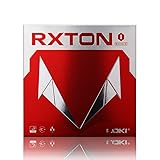 Loki RXTON 1 Loki RXTON 1 |
|
Check Latest Price |
 DONIC Baracuda DONIC Baracuda |
|
Check Latest Price |
 Friendship 729 Cross Friendship 729 Cross |
|
Check Latest Price |
1. Butterfly Tenergy 05: The Best Table Tennis Rubber for Spin Overall
- Spring Sponge and High Tension in one sheet
- Easy power and spin for offensive all-round play
- Works close to the table and at half distance
- Pairs naturally with Butterfly ALC and ZLC blades
- Firm sponge rewards solid technique and block timing
- 1.7 mm version trades some drive for extra feel
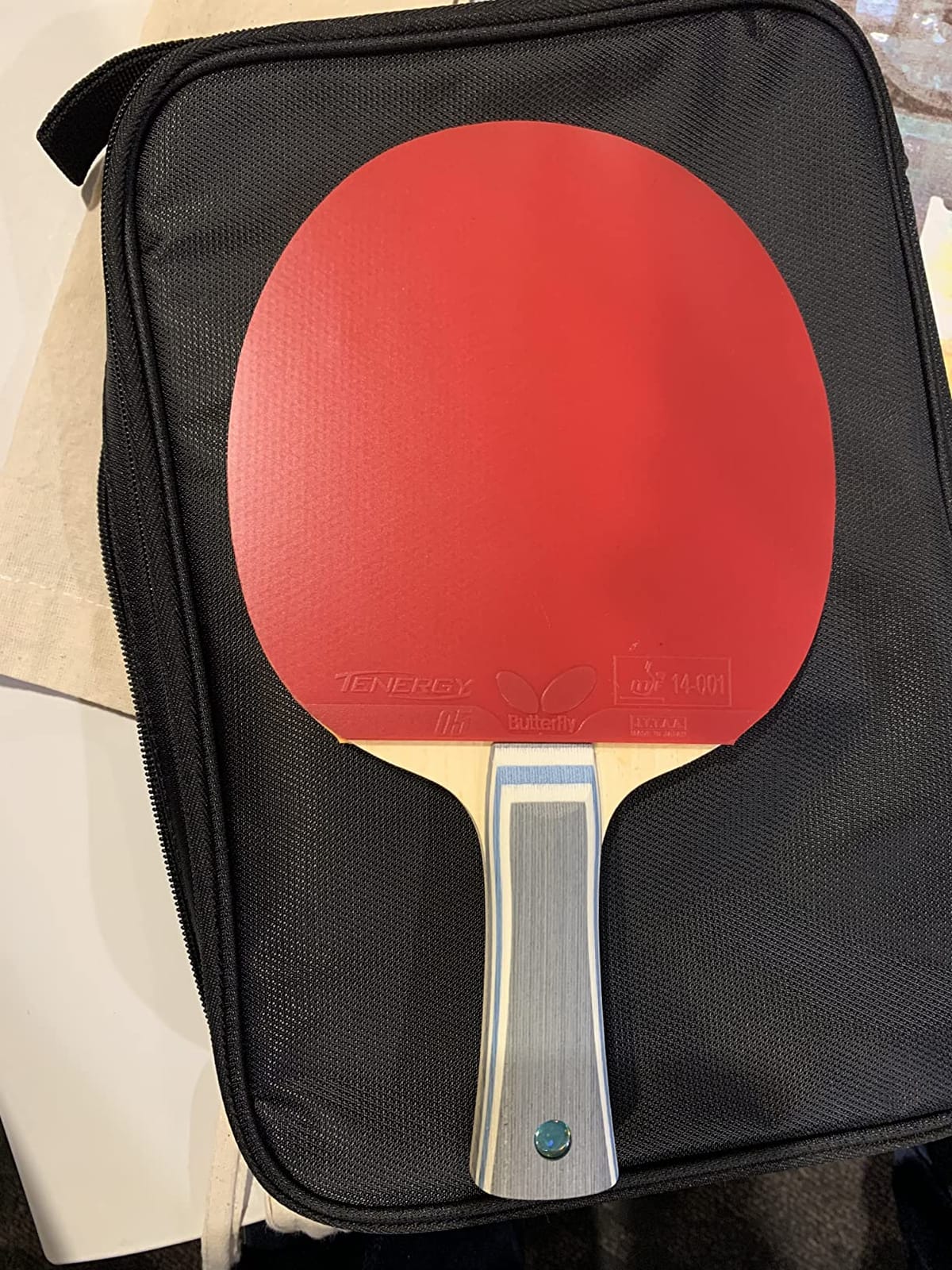
Tenergy 05 is the first sheet in the Tenergy line and it combines Spring Sponge with Butterfly’s High Tension topsheet. In practice that pairing is why it has stayed on club tables for years: you get a bounce you can trust and a loop that carries rotation without needing a perfect brush. It is the sheet I would hand to someone moving from a beginner allrounder into a real attacker.
Owners describe it as fast and bouncy, which is the opposite of how a tacky Chinese sheet feels. Where Hurricane-style rubbers let you feel the opponent’s spin sitting on the ball, Tenergy hides some of that and hands you pace instead. For a spin player that difference is the whole conversation, and it is why both camps exist.
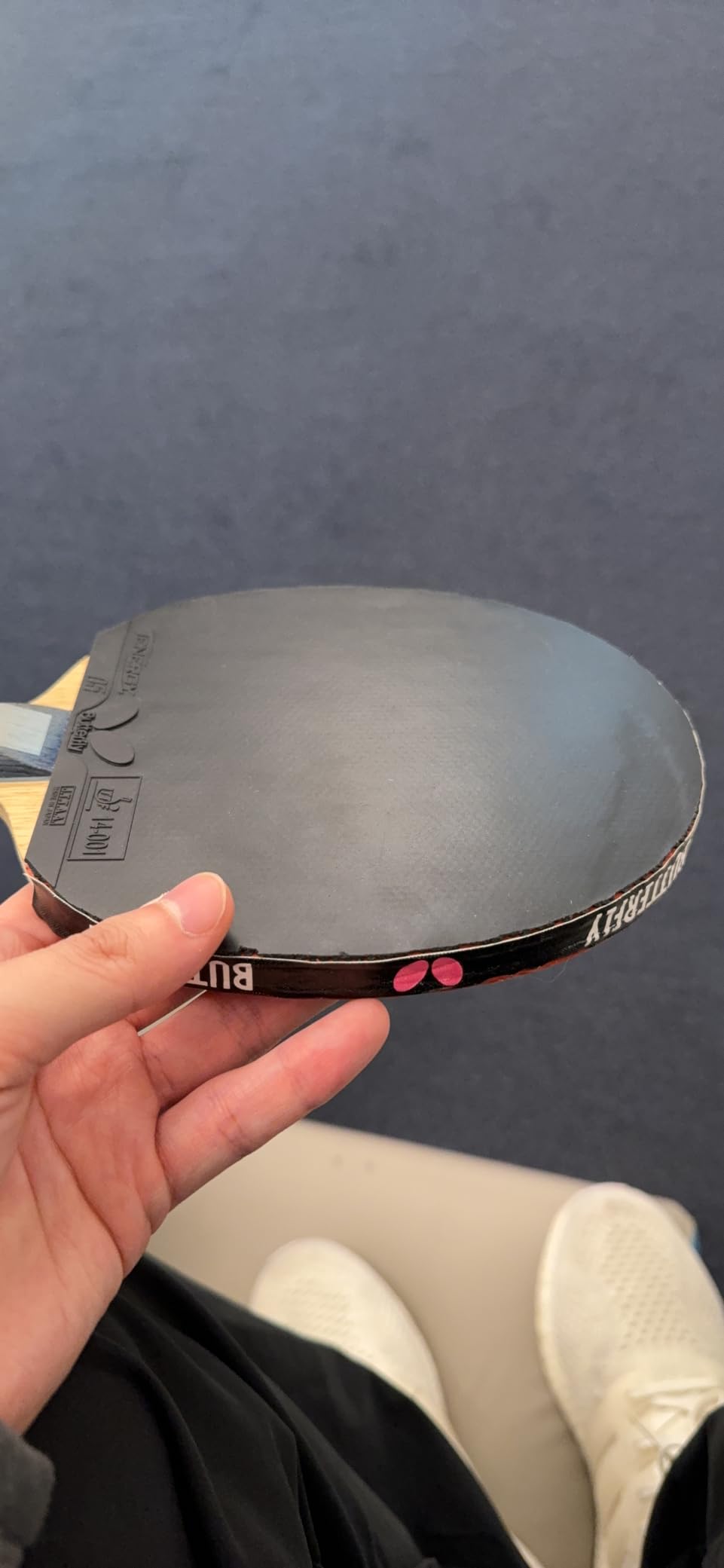
Technically the sponge is firm, and that is the honest catch. The 1.9 mm and 2.1 mm versions reward clean contact and good block timing, while 1.7 mm gives up a little drive for noticeably more feel. Most buyers in the 1000-plus review pool settle on 1.9 mm and stop looking.
Who Should Buy Tenergy 05
A club-level player who loops first and blocks second, and who is still building consistency. It suits offensive all-round play near the table or at half distance, which covers most club patterns. If you serve heavy backspin and look for a third ball, the arc and grip here are more than enough.
Where It Falls Short
It is not the heaviest-spin sheet in the game, and it will not give you the same bite as a top-tier tacky Chinese sponge. On a very slow all-wood blade it can feel a bit firm for a developing player. Pair it with a fast carbon blade and the trade-off mostly disappears.
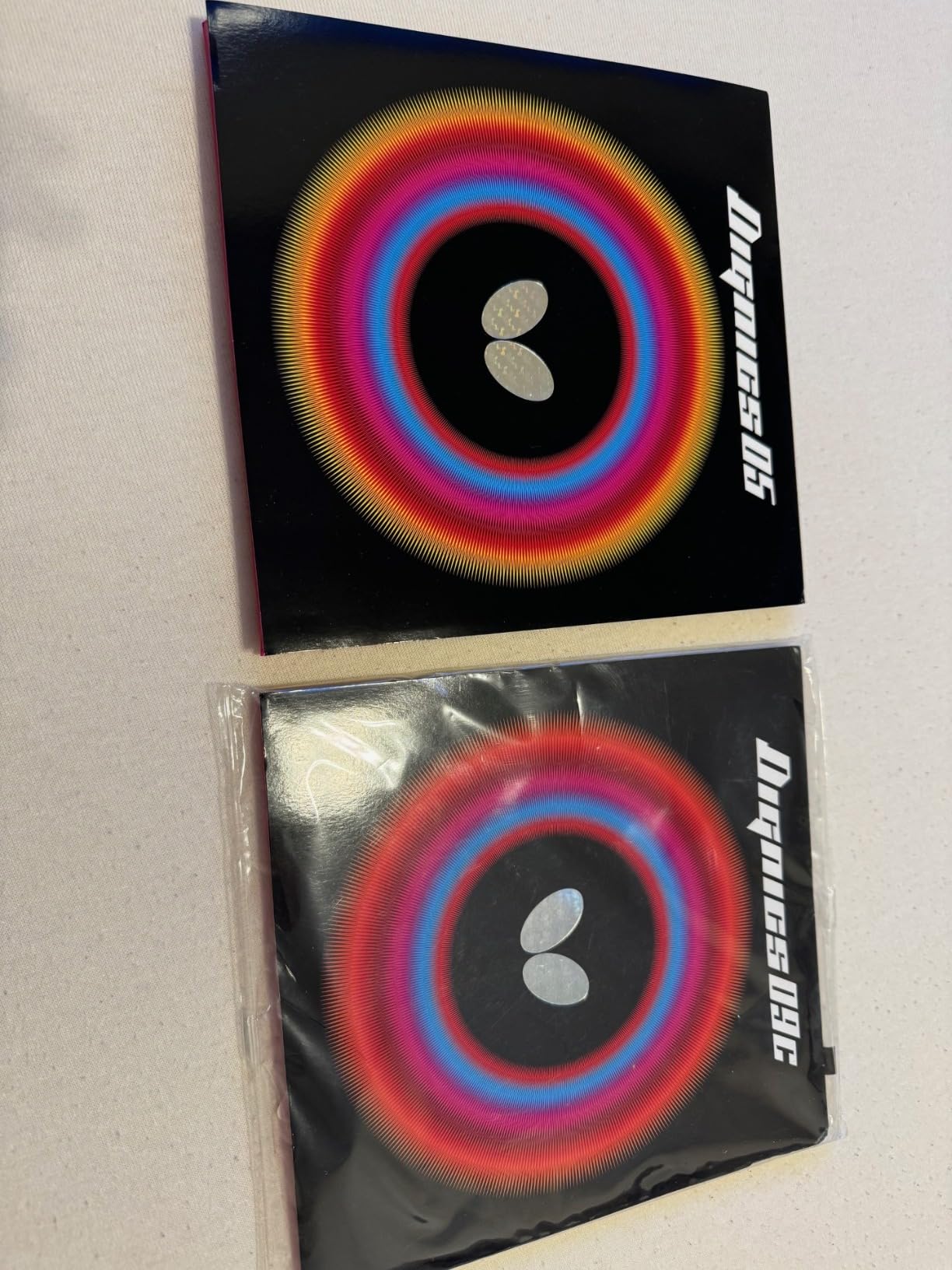
2. Butterfly Dignics 05: Best Heavy-Spin Upgrade for Advanced Players
- Longer dwell time than Tenergy 05
- 22% more arc and 3.4% more power than Tenergy 05
- Spring Sponge X gives a softer responsive feel
- Sits near the top of Amazon's rubber category
- Firm high-end sponge suits advanced players more than true beginners
- Heaviest sheet in this lineup
Dignics 05 is the step up from Tenergy 05, and the difference is not subtle. The manufacturer claims 22% more arc and 3.4% more overall power than Tenergy 05, and the longer dwell time is the part that matters most for a spin player. More contact on the ball means more rotation on the same swing.
Owners consistently frame it as the sheet you move to when you want heavier topspin and a softer, more responsive feel. It ranks near the top of Amazon’s table tennis rubber category, which tells you how many players have made that move. The minority of lower ratings come from people who expected an even softer sponge or who stuck it on a slow blade.
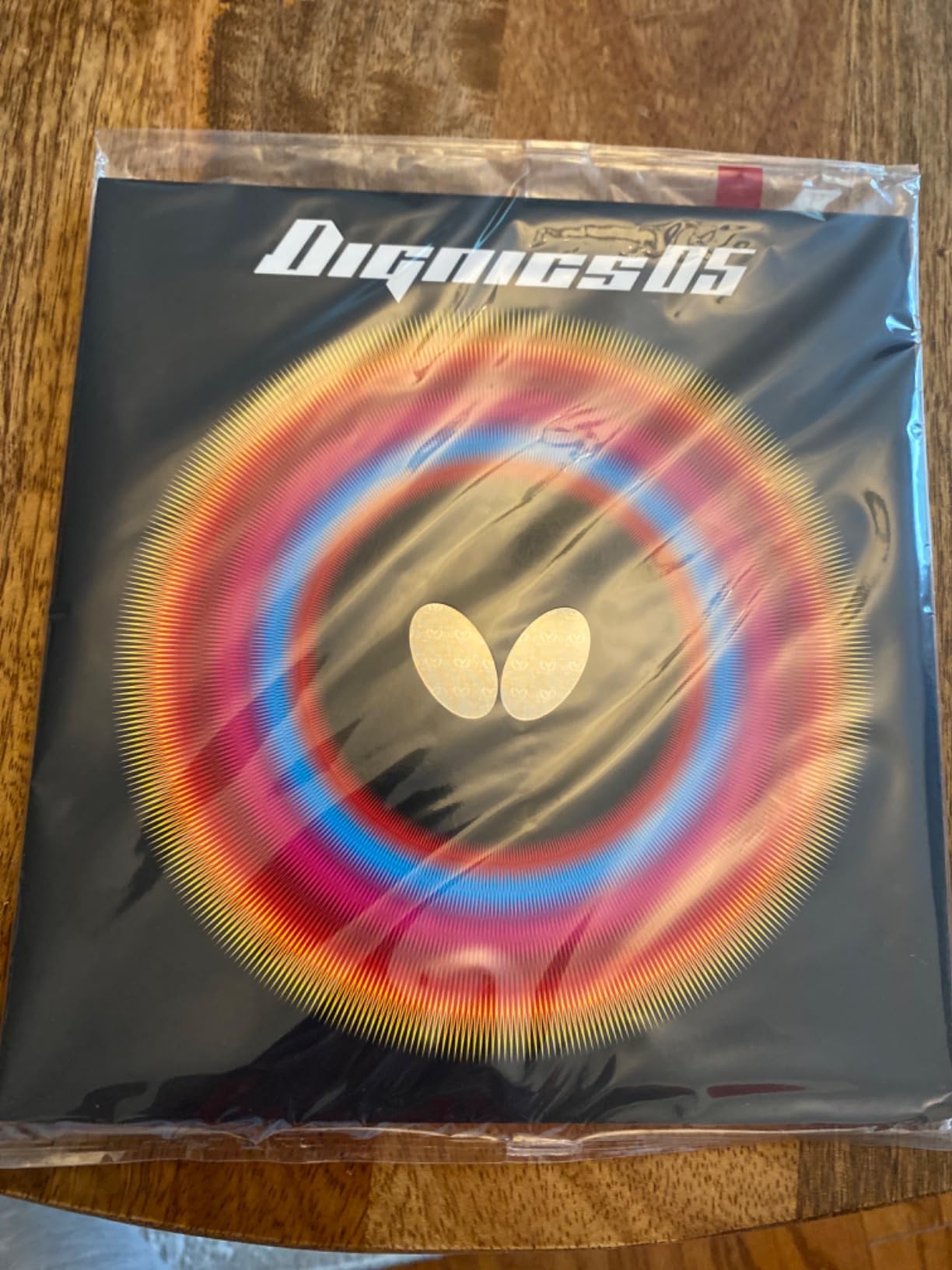
Spring Sponge X changes the character compared with a pure tension sheet. The ball sinks in further before firing out, so the arc is high and the trajectory easy to read. That is a genuine advantage when you are looping against heavy backspin, because the ball clears the net without you flattening the stroke.
Who Should Buy Dignics 05
An advanced club or tournament player with a fast blade who already generates topspin on demand. It suits a two-wing attacker building points on the first and third ball. The recommended pairing is with Butterfly’s Harimoto Inner Force ALC, Lin Gaoyuan ALC and similar stiff carbon constructions.
Where It Falls Short
The sponge is firm and high-end, and beginners regularly report it feels punishing on off-contact balls. It is also the heaviest sheet here, so mounting it on an unbalanced or slow all-wood blade can load the setup. If your contact is not clean yet, Tenergy 05 is the smarter purchase.
3. Nittaku Fastarc G-1: Best Value Spin Rubber With a Grippy Tension Sheet
Nittaku NR8702 Table Tennis, Rubber, Fastark G-1, Soft Back, Tension, Red, Thick
- Tension-type soft sponge with excellent grip
- Hard grain-filled topsheet resists breakdown
- JTA and ITTF certified
- Thicknesses from 1.3 mm to 2.1 mm plus
- Older-style soft tension sponge gives up pace to modern Spring Sponge sheets
- Listing copy is dense so size and thickness need care
Fastarc G-1 is the tension-rubber counterweight to Butterfly’s Spring Sponge line. The soft tension back and pronounced grain give it a genuinely grippy contact, and owners describe it as a sheet that rewards brushing rather than one that just fires back at you. For a spin player who likes feeling the ball sit and snap, that is the appeal.
Reviewers talk about feel and longevity far more than raw pace, and the low one-star share backs that up. It is certified by both JTA and ITTF, so it is legal for tournament play. You can pick it up in medium, thick, extra thick and max versions, which is unusual at this level.
Who Should Buy Fastarc G-1
A club player who wants a spin-first rubber without stepping up to a flagship price, and who likes a slower, more deliberate ball. It works well in short-spin exchanges and for players building serve and receive patterns. A medium all-wood blade is a natural partner for the thicker versions.
Where It Falls Short
It is an older-style soft tension sponge, and it gives up some pace to modern Spring Sponge rubbers. If your game depends on flat counter-driving speed, this is not the sheet. Also read the size and thickness options carefully before ordering, because the listing copy is dense.
4. Nittaku Kyohyo NEO 3: The Highest Published Spin Rating in the Lineup
ニッタク(Nittaku) 卓球 ラバー キョウヒョウ_NEO_3 裏ソフト 粘着性 NR-8701(スピード) レッド 特厚
- Spin rating of 15.00 is the highest figure in this group
- Tacky grippy surface that suits a slower all-wood blade
- Soft 42.5 degree sponge is easy to power through
- Red and black versions offered
- Speed rating of 11.25 is the lowest in the group
- Smallest star average here at 4.0
- Most reviews are written in Japanese
This is a soft-back tacky inverted sheet, and its published numbers are the extremes in this roundup: spin 15.00 and speed 11.25. Owners pick it because the tacky topsheet grips hard and the 42.5 degree sponge is easy to power through. Many pair it with a slower all-wood blade where the grip does most of the work.
The 4.0 average is pulled down by a wide spread of reviews, with a solid block of five-star feedback and a noticeable one-star share. The criticism is consistent: the sheet trades speed for grip, so it suits loop-and-block play rather than counter-driving. Most ratings are written in Japanese, which limits how much detail you can find in English.
Who Should Buy Kyohyo NEO 3
A player who already loops reliably and wants maximum bite on the ball, on a blade that is not fast. The soft sponge makes it one of the more approachable tacky sheets here. It is a good second rubber for the backhand side if you like a slow, spinny block.
Where It Falls Short
The speed rating of 11.25 means it is not a loop-crusher, and you will not win points with flat power. The 4.0 average and the language barrier make it the thinnest evidence base in the group. Expect to do your own testing before committing to it as a main sheet.
5. Nittaku Fastarc C-1: Best for Soft-Sponge Topspin Loops
ニッタク(Nittaku) 卓球 ラバー ファスタークC-1 裏ソフト テンション NR-8706(スピン) レッド 厚
- Very soft 35 degree sponge makes heavy topspin loops easy to brush
- Speed rating of 15.25 is unusually high for a soft sheet
- Reviewers praise the cut and the spin-plus-pace combination
- Described as easy to play with for beginners and loopers
- Softest sponge in the group so it needs a good blade for full power
- Sold as the thick version only which can feel heavy
Fastarc C-1 is the softest sponge in this lineup at 35 degrees, and that is exactly why loopers like it. A softer sponge extends dwell time, so the brush stroke stays on the ball longer and heavy topspin comes more easily. Owners switching from other rubbers talk about the spin sharpness being in a different class.
It is also rated at 15.25 for speed, which is unusually high for a soft tension sheet and stops it from being a one-dimensional control rubber. The 84-review sample is small but clean, with no one- or two-star ratings, and at least one beginner review calls it genuinely easy to handle. That combination is rare in a spin-focused sheet.
Who Should Buy Fastarc C-1
Anyone whose problem is generating heavy topspin without a fast blade, including intermediate players working on their loop. The soft sponge absorbs imperfect contact, so it is more forgiving than the Spring Sponge flagships. It suits players building a first-attack pattern rather than a counter-loop game.
Where It Falls Short
Because the sponge is so soft, it needs a decent blade to convert brush contact into real pace. A slow all-wood setup will feel mushy rather than spinny. It is also only offered in the thick version here, which changes the balance of an unbalanced setup.
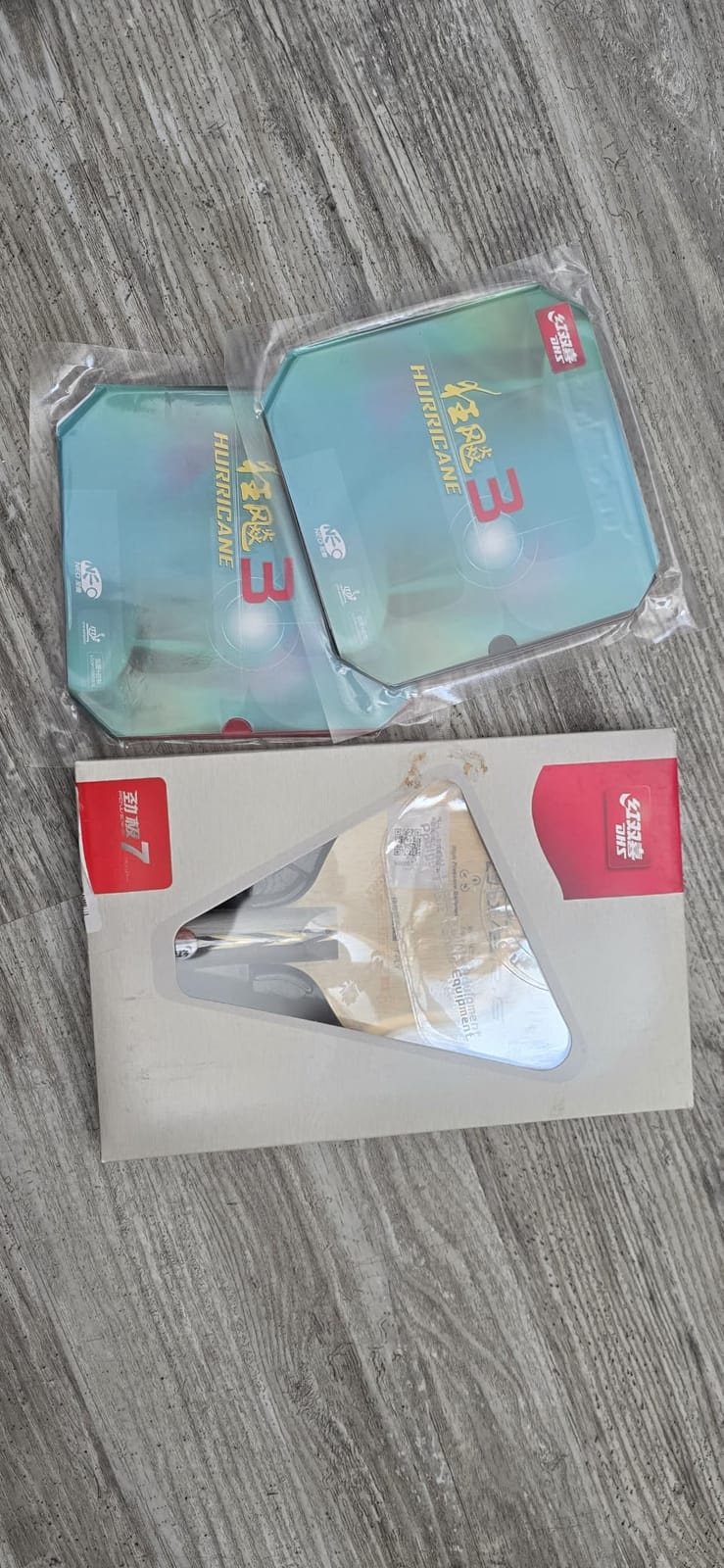
6. DHS Hurricane 3-NEO: Best Tacky Chinese Spin Sheet in the Group
DHS Hurricane 3-NEO Table Tennis Rubber Sheet, Professional Ping Pong Rubber, Plastic Material, 7.2 x 6.93 Inches (Black, 40°)
- Highest average rating in this roundup at 4.9
- Tacky topsheet built for control and spin potential
- Precisely cut to 7.2 x 6.93 inches for standard blades
- Backed by a one-year warranty and application instructions
- Only 27 reviews so the rating rests on a small sample
- Listing calls the material plastic which undersells the sponge
- 39 and 40 degree options are less soft than the NEO name suggests
Hurricane 3-NEO is the tacky Chinese camp’s representative here, and it carries the highest average rating in the roundup at 4.9 across 27 reviews with 92% five-star feedback. TableTennisDaily regulars recommend the Hurricane 3 family on the forehand for players who rely on spin and still want to attack, and that is exactly the use case here.
The cut is a real practical advantage. At 7.2 x 6.93 inches it fits standard blade sizes cleanly, so you spend less time trimming before mounting. The sheet is ITTF-legal and offered in red and black, and the included instructions matter if you have never glued a rubber before.
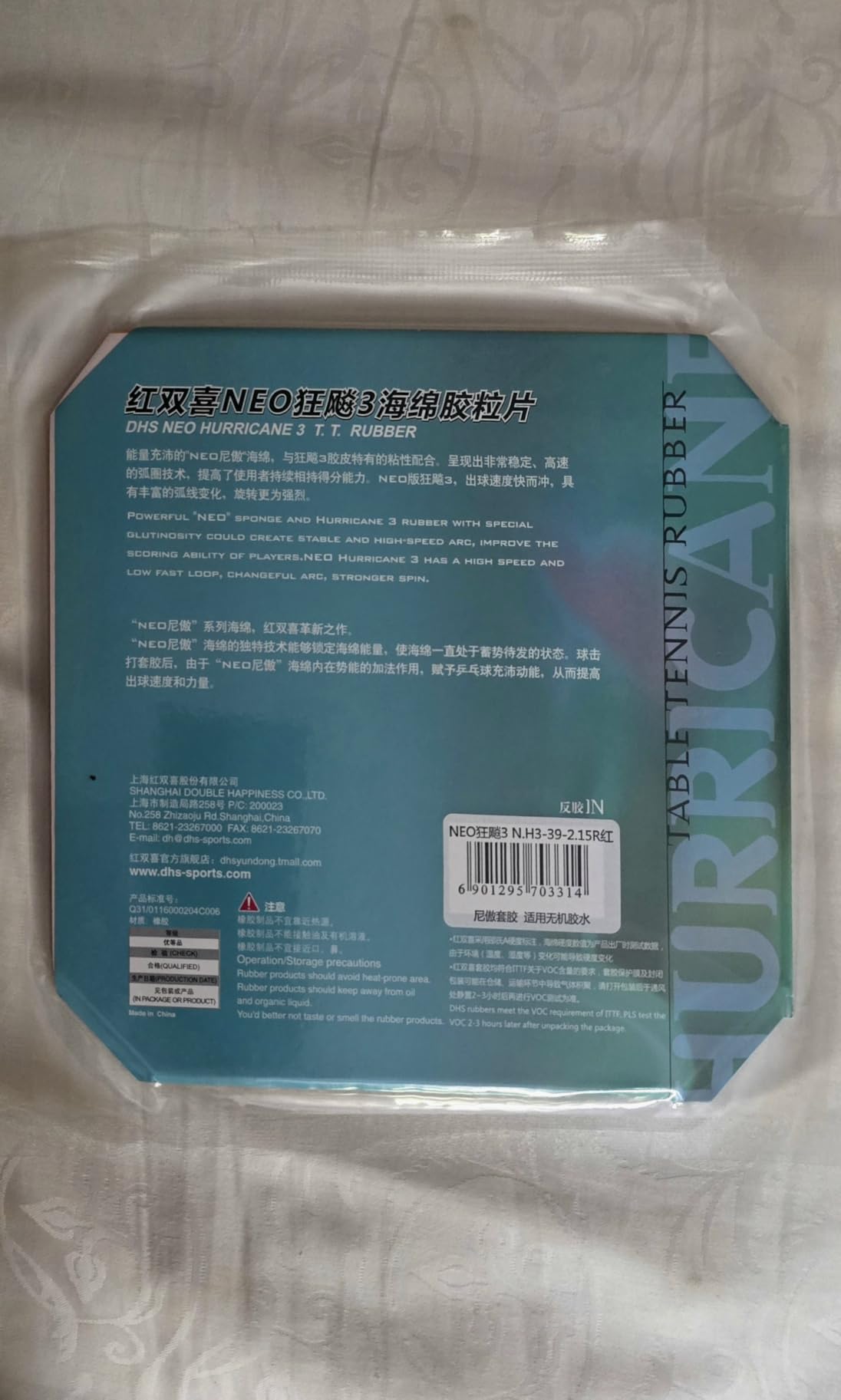
Be careful with the softness variants. The 39 and 40 degree options are harder and more traditional than the soft NEO sheets the name suggests, and a hard sponge produces less dwell time. The listing also describes the material as plastic, which undersells what is actually a layered Chinese sponge construction.
Who Should Buy Hurricane 3-NEO
A club or league player who wants maximum topspin bite and does not mind working for it with a good brush. It is a strong forehand choice for a player who serves heavy backspin and hunts the third ball. Pair it with a fast carbon blade and the hardness is a non-issue.
Where It Falls Short
Only 27 reviews support that 4.9 average, so treat it as a good signal rather than a settled one. Reddit players are consistent on this point: Hurricane 3 is not a rubber for beginners or developing players to learn with, because it demands clean contact. If your loops are still inconsistent, this sheet will expose that rather than fix it.
7. Tibhar Evolution MX-P: Best for Close-to-the-Table Feel
Tibhar Evolution MX-P Table Tennis Rubber (Black, 1.9-2.0)
- Official Tibhar spin rating of 120 among the highest of the European sheets
- Longer ball contact time gives more sensation on the ball
- Adjusted pimple geometry feeds attacking balls extra energy
- Built for topspin players who want to feel stroke pressure
- Control index of 80 makes it unsuitable as a defensive beginner sheet
- Only 44 reviews so the US feedback pool is thin
- Firm sponge demands good timing in fast exchanges
MX-P is the fastest sheet in the Tibhar Evolution family, and its official index numbers make the intent obvious: speed 125, spin 120, control 80. That is a rubber built for attacking, not for absorbing pace. The adjusted pimple geometry produces a more flexible sponge, which feeds energy into attacking balls and rewards you for stepping in close.
What stands out in reviews is the contact time. The ball sits on the rubber longer than the reference sheet, which gives noticeably more sensation, and that sensation is exactly what a spin player wants when they are trying to feel a brush coming through cleanly. Buyers tend to be club or league players already using an offensive blade.
Who Should Buy MX-P
A topspin player who attacks from close range and wants stroke feedback rather than a free safety net. It suits a fast blade and a two-wing counter-attack pattern. If your game is built on heavy opening loops right after the serve, the geometry works in your favour.
Where It Falls Short
A control index of 80 rules it out as a first rubber for a beginner or a defensive player. The sponge is firm and asks for good timing when the exchange speeds up. And with only 44 US reviews, the evidence here is thinner than the headline rating suggests.
8. Loki RXTON 1: Best Budget ITTF-Approved Spin Sheet
- Cheapest genuinely ITTF-approved inverted sheet in this group
- High fault tolerance suits cheap five-layer beginner blades
- Strong rebound and friction for the price class
- Easy to mount and cut with sensible 7.1 x 7.1 inch sizing
- Slower and weaker than premium sheets with modest spin output
- Some buyers find the sheet slightly thin
- Edges can peel from the sponge over time
The RXTON 1 exists for a specific person: a club or school player who needs an ITTF-legal inverted sheet, wants a tacky topsheet and does not want to spend flagship money. Multiple long-form reviews set expectations honestly, describing good curve and grip for a spin-and-chop style player without claiming it is fast or extremely grippy.
It sits near the top of Amazon’s table tennis rubber category, and reviewers pair it successfully with DHS Hurricane 3 on the other side of the blade. The cake sponge is hard enough to pull the ball into a long arc, which is where the spin illusion comes from, and the high fault tolerance is a genuine benefit on a stiff five-layer or carbon blade.
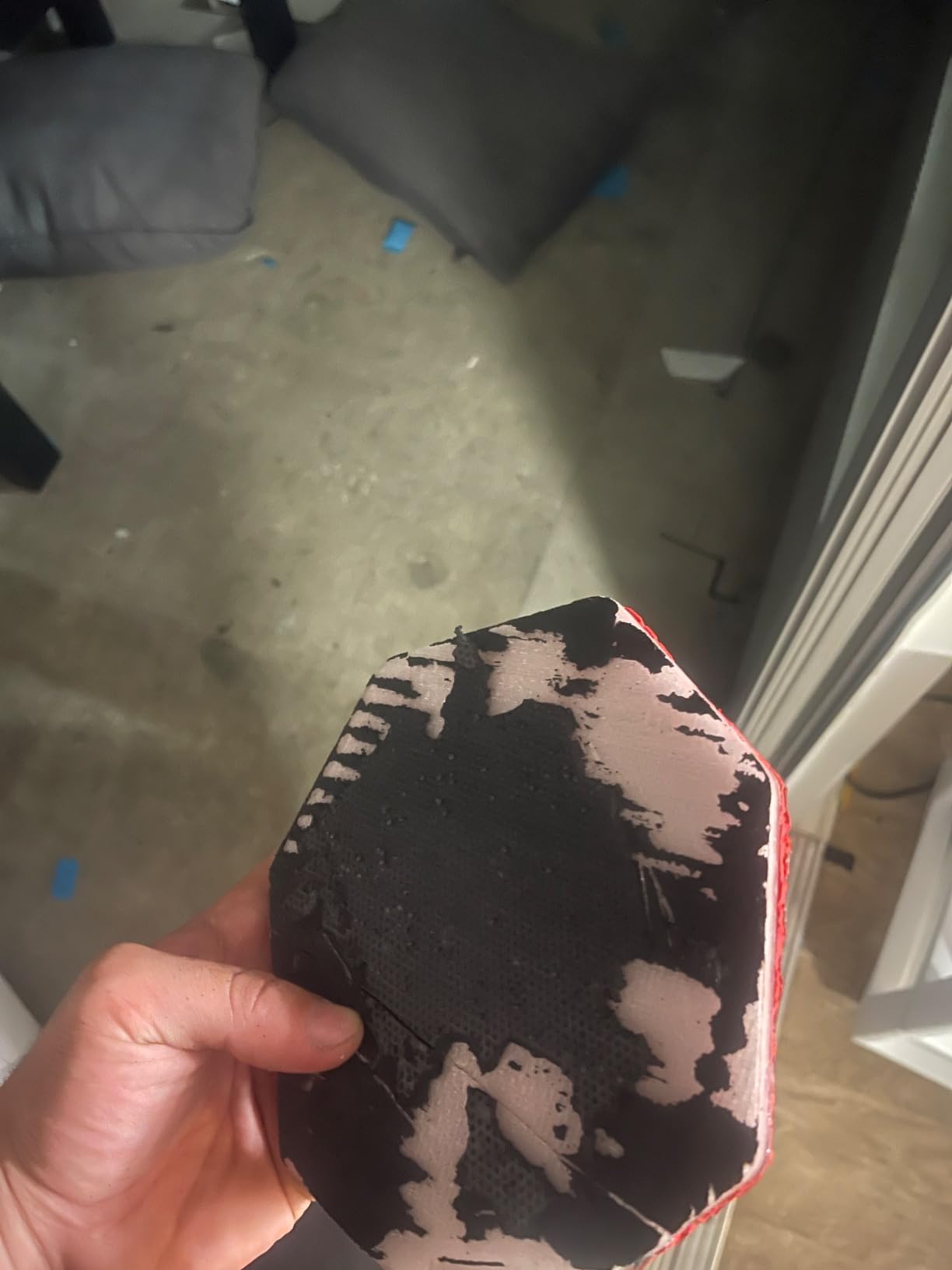
Recurring caveats are worth knowing before you order. The sheet reads slightly thin to some buyers, the rubber can peel away from the sponge at the edges over time, and there is a noticeable chemical smell straight out of the package that fades after a few days. Reviewers also report it lasting longer than expected, which is unusual at this level.
Who Should Buy RXTON 1
A developing player or a value-focused club member who needs a legal spin-capable sheet on a modest budget. It is forgiving on hard five-layer, seven-layer and carbon blades, and easy to master. It also works well as a second rubber opposite a Hurricane sheet.
Where It Falls Short
Spin output is modest compared with anything in the premium half of this list, and one reviewer simply calls it an average rubber. If you already loop with heavy topspin, this will not raise your ceiling. It is a starting sheet, and treating it as a spin weapon is a mistake.
9. DONIC Baracuda: Best for a High, Floating Arc
- Built-in speed-glue effect produces heavy spin without extra glue work
- Higher ball arc and more rotation stabilise the shot
- Newer topsheet construction is more durable than comparable rubbers
- Smallest review base in the group at 17 ratings
- Max thickness can feel heavy on an unbalanced all-wood blade
- Firm feel is unforgiving for beginners
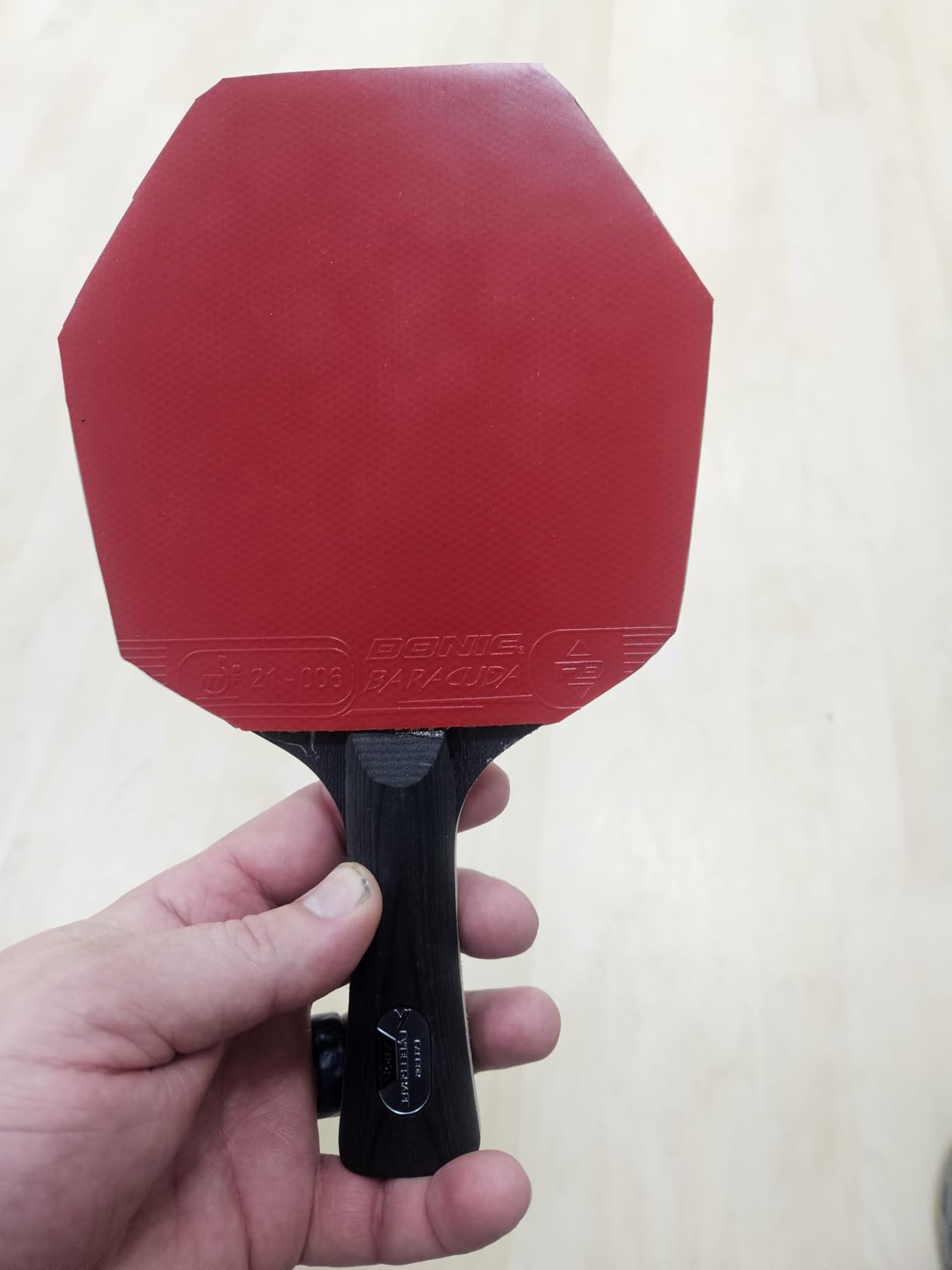
Baracuda’s headline feature is a built-in speed-glue effect. In practical terms that means the topsheet grips the ball long enough to launch it on a noticeably higher arc with more rotation, and you get some of that bite without any extra glue work at the sponge edge. Buyers who leave comments point at the exaggerated, high-arcing trajectory as the reason they kept it.
There is a second benefit that gets less attention: the higher arc and added rotation stabilise the shot, which gives you margin in tight exchanges. The newer topsheet construction is also reported to hold up better than older Donic sheets, which matters if you are the kind of player who trains four nights a week.
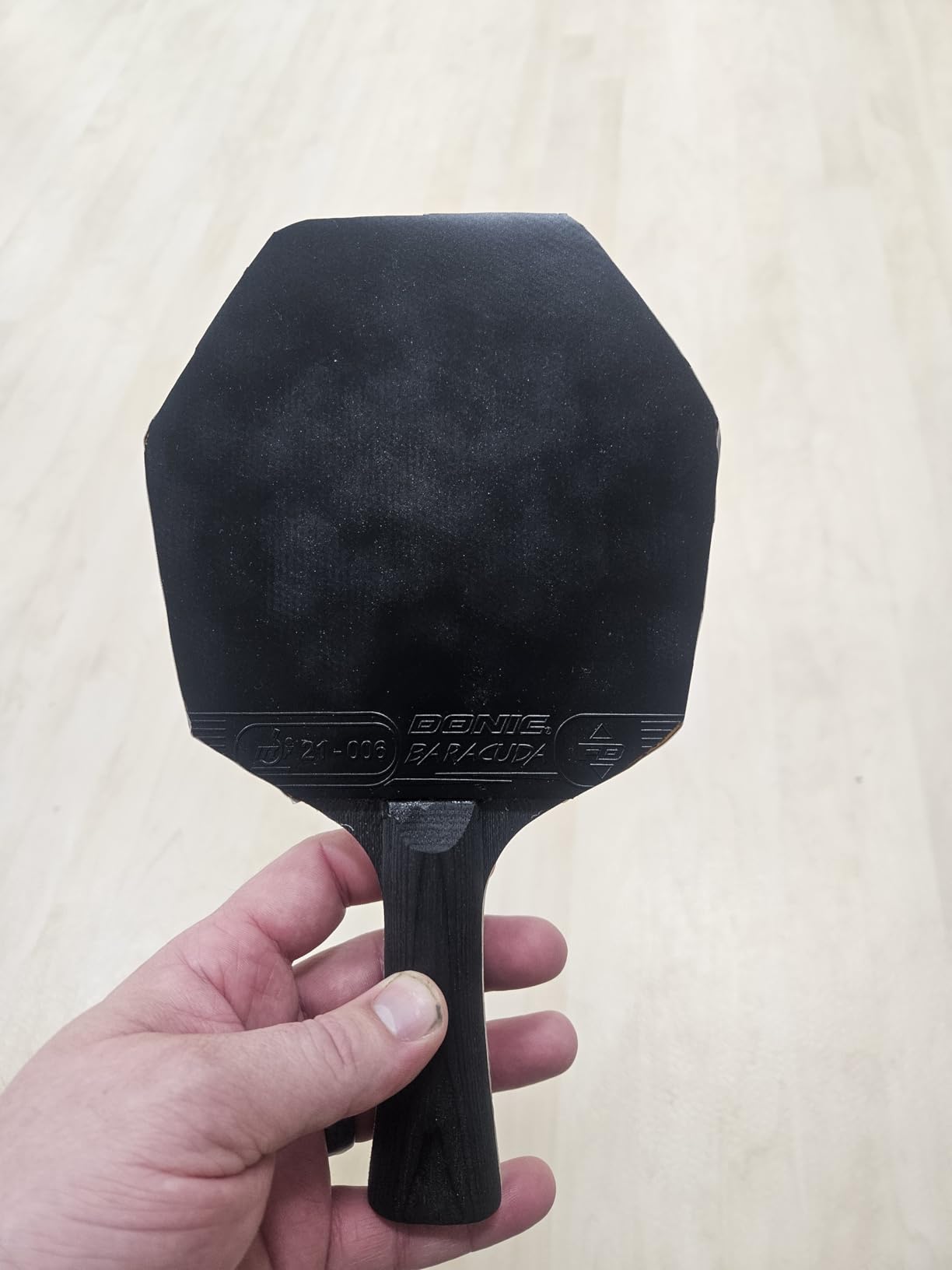
The catch is evidence. This is the smallest sample in the roundup at 17 ratings, and while there are no one-star ratings, a 4.4 average across 17 reviews is directional rather than settled. Treat the spin claim as plausible and unproven, and test before you commit a season to it.
Who Should Buy Baracuda
A player who already generates spin and wants a bigger, safer arc on the same stroke, on a fast blade. It suits first and third-ball attack patterns where trajectory over the net matters. The speed-glue effect also makes it attractive to anyone tired of spending time on sponge edge glue.
Where It Falls Short
The max-thickness version adds weight, which can load an unbalanced all-wood setup. The sheet is firm, so a beginner may find it unforgiving on off-contact balls. And with 17 reviews, you are trusting the spec sheet more than the user base.
10. Friendship 729 Cross: Best for Developing Players Who Want Tackiness
- Tacky but not sticky topsheet with strong grip for learning topspin
- Semi-hard bouncy sponge works for short to mid distance exchanges
- Reviewers rate control highly which helps developing players
- ITTF approved so it is legal for competition
- Average spin and speed with one reviewer calling it a pretty average rubber
- Hard to trim after gluing and a bent sheet can arrive in the post
- Only 20 reviews and all from the same listing
The Friendship 729 Cross is the most honest option here for someone still learning to brush. It is tacky without being sticky, which means you get grip on the ball without the rubber grabbing and throwing your short game. Detailed reviewers score it around 7 for spin, 8 for speed and 9 for control, and that control score is the reason it suits a developing player.
At 2.2 mm in H42 or H44 hardness it is a semi-hard, bouncy sponge built for short to mid distance exchanges. It is ITTF approved for competitive play and comes in green and blue. Nothing about it is exotic, and that is the point: it is a sheet you can learn on without your technique being punished.
Who Should Buy Friendship 729 Cross
A beginner or intermediate player who is still building a consistent topspin loop, or a club member who wants a cheap second rubber. The 2.2 mm thickness gives durability that outlasts a learning phase. It is also a reasonable first sheet for a school or club programme.
Where It Falls Short
Spin and speed are average, and one reviewer simply calls it a pretty average rubber. The practical gripe is fitting: the sheet is hard to trim after gluing, and a bent sheet can arrive from the mailer, so leave room around the edge. With 20 reviews from a single listing, feedback is narrow.
What Actually Makes a Rubber Generate Spin?
Spin is not a single property you can read off a spec sheet. It comes from three things working together, and if you understand them you can diagnose why a rubber is not spinning for you even when the label says it should.
Grip and the topsheet
Grip is the friction between rubber and ball during contact. A tacky topsheet holds the ball a fraction longer so the brush can grip and release it, which is how topspin and backspin get loaded. Non-tacky tensor topsheets work differently: they are engineered for a springy, high-rebound contact that fires the ball out rather than biting it. Tacky is not automatically better, it just moves the skill requirement.
Dwell time and sponge hardness
Dwell time is how long the ball stays in contact with the rubber, and it is the number that decides how much spin a topsheet can actually impart. A softer sponge extends dwell time. That is why a 35 degree tension sponge can brush heavy topspin more easily than a firm 40 degree sheet, even when the firm one is nominally faster. Sponge hardness is quoted in degrees, and lower numbers mean softer.
Catapult and arc
Catapult is the energy the sponge returns as the ball leaves. High catapult means more speed for the same stroke, and combined with a soft topsheet it produces a high arc that carries rotation over the net. Low catapult sheets give you a flatter, faster trajectory with less spin. A high-throw rubber rewards brushing from underneath; a low-throw rubber rewards a closed, direct swing.
How to Pick a Spin Rubber: A Buying Guide
Before you buy anything, decide which of these five criteria matters most to your game. Most spin problems are really pairing problems, and the sheet you choose will not fix a blade that does not suit your style.
Inverted, short pips or long pips
Spinners on Reddit are consistent on one point: only inverted rubbers let you create much spin yourself. Short pips and long pips take spin away rather than add it, which is why defenders and defensive allround players use them. If you build points on heavy serves and loops, you want an inverted sheet and nothing else.
Sponge thickness
Thinner sheets around 1.5 to 1.7 mm give control and feel, mid sheets at 1.9 mm are the club standard, and 2.1 to 2.2 mm sheets give more power and arc at the cost of sensitivity. Thicker sponge suits a strong loop and a fast blade, while a thin sheet suits a slower blade and a developing technique.
Forehand side versus backhand side
A spin player often wants two different answers. A heavy tacky or high-arc sheet on the forehand maximises topspin on the third ball, while a firmer, faster sheet on the backhand helps with the counter and the banana flick. Several players on our forums run Hurricane on the forehand opposite a faster sheet for exactly that reason.
Blade pairing
Rubber and blade are one system. A firm high-end sponge needs a fast carbon blade to feel right, and testers describe a balanced all-wood blade as a natural partner for a spinny tension sheet. MyTableTennis forum threads about spin and control almost always turn into blade discussion, which tells you how much the pairing matters.
ITTF approval and the red-black rule
For competition you need a rubber on the current ITTF approved list, and the rule requires one red and one black rubber on each side of the blade. Check the approval status before you buy, not after, because an unapproved sheet simply cannot be used in a rated event.
Once mounted, treat the sponge carefully. A spin-focused topsheet loses bite as it glazes over, and most players replace a heavily used sheet every few months rather than running it flat. Keep a spare sheet on hand, and if you want to practise solo between club sessions, our tennis ball machine guide covers the same consistency angle for a different sport.
Skill-Level Calibration: How Much Spin You Will Actually Produce
The most useful thing we can tell you is that a very hard rubber can reduce a developing player’s actual spin. Poor contact quality means the brush skips, the ball leaves flat, and the sheet that generates the most spin in a pro’s hands produces the least in yours. This is the calibration problem that most rubber lists skip, and it is why the wrong recommendation costs a player a season.
Beginners and early intermediates should start with a forgiving allround or mildly tacky inverted sheet, such as the Friendship 729 Cross or the Loki RXTON 1, paired with a balanced blade. The goal at this stage is learning a full brush stroke with a repeatable arc, and both of those sheets give you that with a control rating that forgives mistakes.
Consistent club players who loop reliably can step up to a grippy tension or tacky sheet, which is where Fastarc C-1, Fastarc G-1 and Hurricane 3-NEO sit. These demand clean contact but reward it with real rotation. You do not need a tournament ranking to enjoy them, you do need repeatable technique.
Advanced and tournament players can use anything in this list, and the choice becomes about style rather than capability. Tenergy 05 suits an offensive allround game, Dignics 05 suits a heavy topspin attacker, and MX-P suits someone who wants close-range stroke feedback. At this level the deciding factor is your blade and your pattern, not the rubber alone.
Frequently Asked Questions
Which table tennis rubber has the most spin?
On raw topsheet bite, tacky and soft-back sheets such as the Nittaku Kyohyo NEO 3 (spin 15.00) and DHS Hurricane 3-NEO lead this group, with Butterfly Tenergy 05 close behind because it makes similar rotation far easier to access. The most spin you actually produce, though, comes from the sheet that matches your level rather than the sheet with the highest number.
Which table tennis rubber has the best control and spin?
The Butterfly Dignics 05 and the Nittaku Fastarc G-1 sit at the sweet spot. Dignics 05 extends dwell time for heavier topspin while staying responsive, and Fastarc G-1 pairs a grippy tension topsheet with a soft back that forgives imperfect contact. If control matters more than raw rotation, the Friendship 729 Cross is the pick.
Is Tenergy 05 still the best rubber?
It is still the best all-round spin rubber for most players, because Spring Sponge and High Tension deliver easy power and spin from close range out to half distance. It is not the heaviest-spin sheet available. If you already loop reliably and want more bite and arc, Dignics 05 is the step up.
What is the best rubber for forehand topspin?
For a club or league player, DHS Hurricane 3-NEO on the forehand gives the most topspin bite, and Butterfly Dignics 05 is the easier route to heavy rotation. Beginners should not start with either, because both demand clean contact. A tacky tension sheet such as Nittaku Fastarc C-1 is the more forgiving path.
What is the best anti-spin table tennis rubber?
Anti-spin behaviour comes from pip geometry rather than topsheet grip. Short pips and long pips rubbers take spin off the ball instead of adding it, which is why defenders and defensive allround players use them. Players who build points on heavy serves and loops need an inverted rubber, because only inverted sheets let you create much spin yourself.
How long does a table tennis rubber last for a spin player?
A heavily used spin rubber loses bite as the topsheet glazes over, and most club players replace a working sheet every few months rather than run it flat. Cheaper sheets like the Loki RXTON 1 are reported to outlast their price class, while premium Spring Sponge sheets degrade faster because players train on them more. Keep a spare sheet mounted and swap before the grip goes.
The Verdict: Which Spin Rubber Should You Buy in 2026
Our pick for the best table tennis rubbers for spin players is the Butterfly Tenergy 05, because it delivers genuine rotation and easy power without demanding perfect contact. Buy the 1.9 mm unless you have a slow blade, and pair it with a fast carbon construction.
If you already loop consistently and want more bite and arc, step up to the Butterfly Dignics 05. If you want the most raw topspin bite and you have a fast blade, the DHS Hurricane 3-NEO is the tacky Chinese answer, and the Nittaku Fastarc C-1 is the forgiving route to the same place. On a tight budget, the Loki RXTON 1 and the Friendship 729 Cross give you a legal, tacky inverted sheet to learn on.
Whichever one you choose in 2026, buy the sponge to fit your contact quality rather than the number on the box, and give it a few weeks of drilling before you decide whether it spins. If you want to build the stroke first, the table tennis robot guide is a practical next read.