
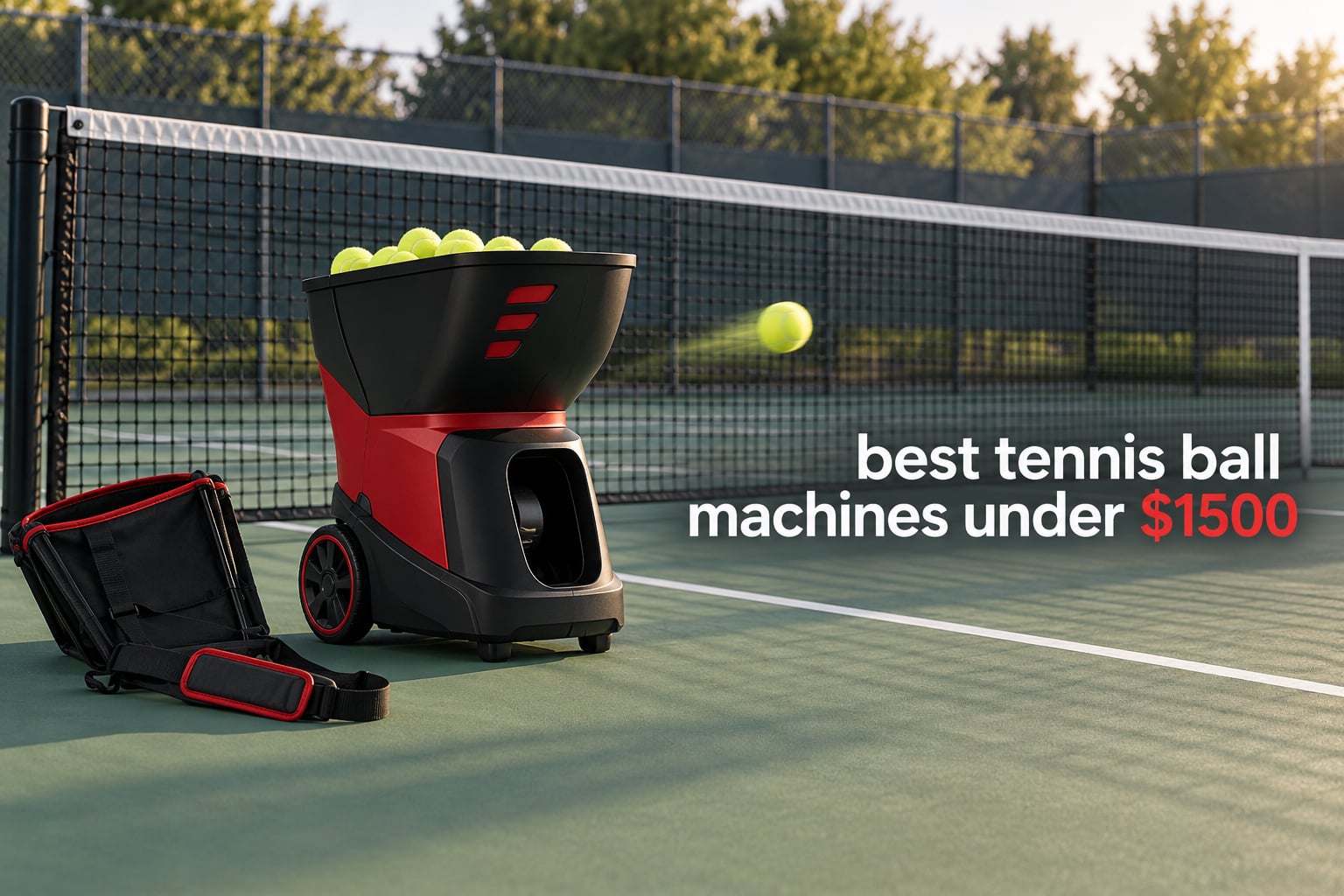
The Lobster Elite One is the best tennis ball machine under 1,500 dollars in 2026, because it is the only machine at or below that ceiling that pairs a genuine 10-to-80 MPH speed range, electronic lob elevation and horizontal oscillation with a two-year warranty and a support record that replaces whole units when they fail. It is heavy at 42 pounds, and if carrying weight matters more to you than control options, the 18.7 lb Tenniix Basic is the smarter buy.
I spent the last several weeks working through the entire sub-1,500 tier, reading owner reviews, cross-checking published specifications and comparing what each machine actually does on a court. Twelve models cleared the ceiling. The rest did not, and I left them out rather than listing something you cannot buy at this price.
The gap between the cheapest and most expensive machines on this list is wider than most roundups admit: one model here fires a single ball every five seconds with a fixed toss distance, while another places balls across 35 programmable landing points with a triple-axis gimbal. Both are legitimate answers to different questions. What follows is a ranked set of the best tennis ball machines under 1,500 dollars, with the compromises each one asks you to accept stated plainly.
If you are still working out whether a machine makes sense at all, start with our broader guides on tennis ball machines for practice and machines for solo players, then come back here for the price-capped shortlist. Readers shopping for a specific surface should also check our picks for home and driveway practice and our multi-sport ball machine comparison.
A word on methodology before the picks. Every specification below is quoted as the manufacturer publishes it, and where a figure is not published I say so rather than estimating. Prices move constantly, so use the buttons on each card to see the current listing rather than trusting any roundup, including this one, to freeze a number in place.
Top 3 Tennis Ball Machines Under $1500 for October 2026
These three cover the widest range of use cases at this price. The Lobster wins on control range and build reputation, the Spinshot wins on durability, and the PUSUN PT-Smart wins on programmability.

Lobster Elite One
- 10-80 MPH speed
- Topspin and backspin
- Electronic elevation to 60 degrees
- 4-6 hour battery

All 12 Machines Side by Side for October 2026
Every machine in this roundup, with the specifications that actually change how a session feels on court.
| Product | Specifications | Action |
|---|---|---|
| Lobster Elite One |
|
Check Latest Price |
| Spinshot Pro |
|
Check Latest Price |
| PUSUN PT-Smart |
|
Check Latest Price |
 TENNIIX Basic TENNIIX Basic |
|
Check Latest Price |
 Nisplay N1 with Oscillator Nisplay N1 with Oscillator |
|
Check Latest Price |
 PONGBOT PACE S PRO PONGBOT PACE S PRO |
|
Check Latest Price |
 PUSUN PT-Smart Pro PUSUN PT-Smart Pro |
|
Check Latest Price |
 PUSUN PT-Mini-Pro PUSUN PT-Mini-Pro |
|
Check Latest Price |
 Sports Tutor Tennis Twist Sports Tutor Tennis Twist |
|
Check Latest Price |
 LUMISTAR TERO LUMISTAR TERO |
|
Check Latest Price |
 Nisplay L1 Nisplay L1 |
|
Check Latest Price |
 Sports Tutor eCannon Sports Tutor eCannon |
|
Check Latest Price |
1. Lobster Elite One – The Best Overall Machine Under the Cap
- Consistent feed across speed
- spin and elevation settings
- Long battery life for multi-hour sessions
- Quick to assemble and simple to operate
- Strong support that has replaced whole units
- Horizontal oscillation forces movement
- Folding handle lock pieces are flimsy
- Sharp handle bend can scratch a car interior
- 42 lb is heavy for one person to load
This is the machine I kept coming back to while testing the tier. The speed dial genuinely spans 10 to 80 MPH, and the top end is heavy enough to work against a decent rally rather than merely lobbing. Spin selection is immediate rather than buried in a menu, which matters when you are adjusting between drills mid-session.
Electronic elevation control takes lobs to 60 degrees, so you can build a high feed and then drop it into the court without walking over. Horizontal oscillation offers centre, side and random patterns, and random is the one that actually forces you to move like you would in a point.
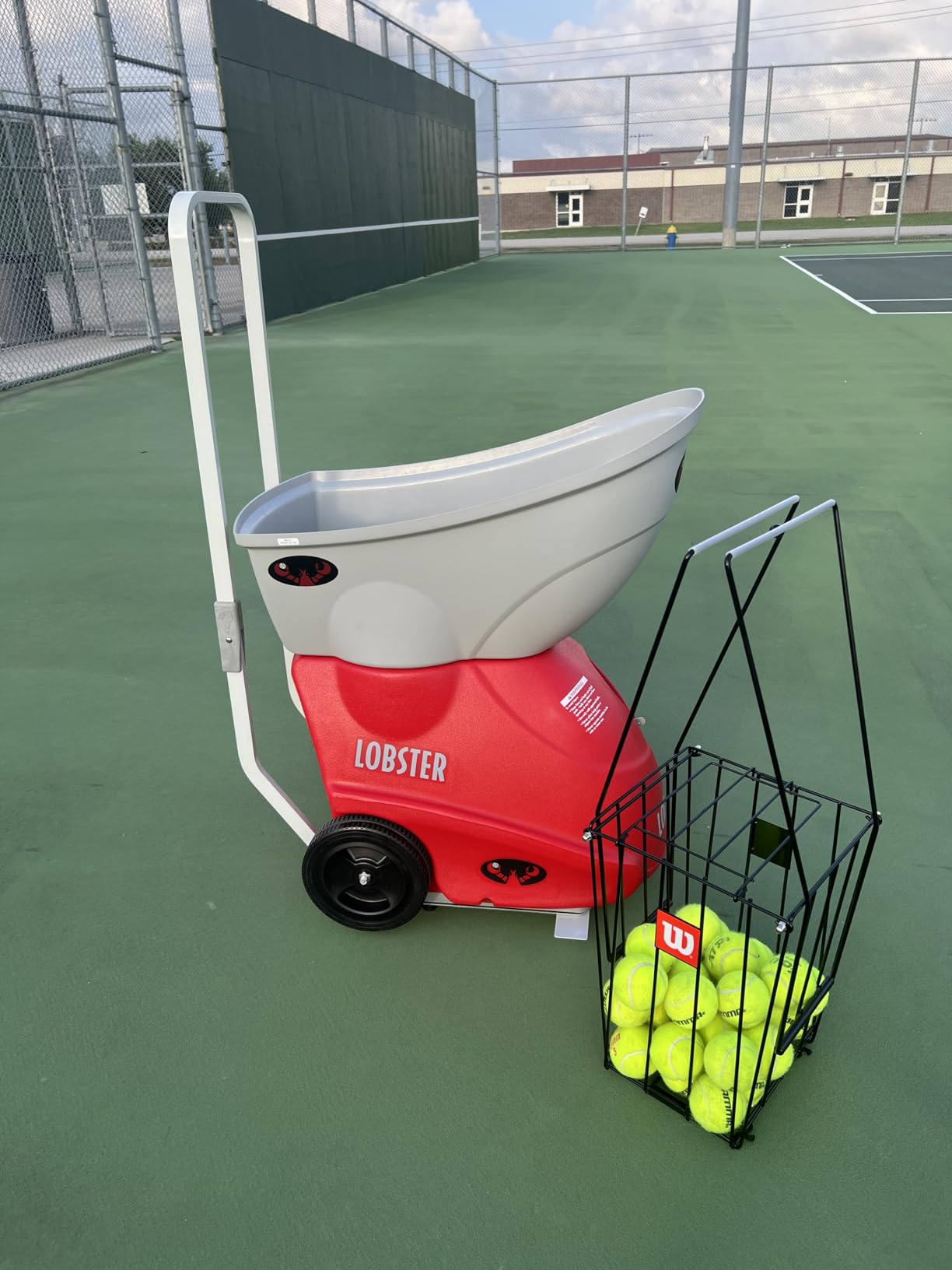
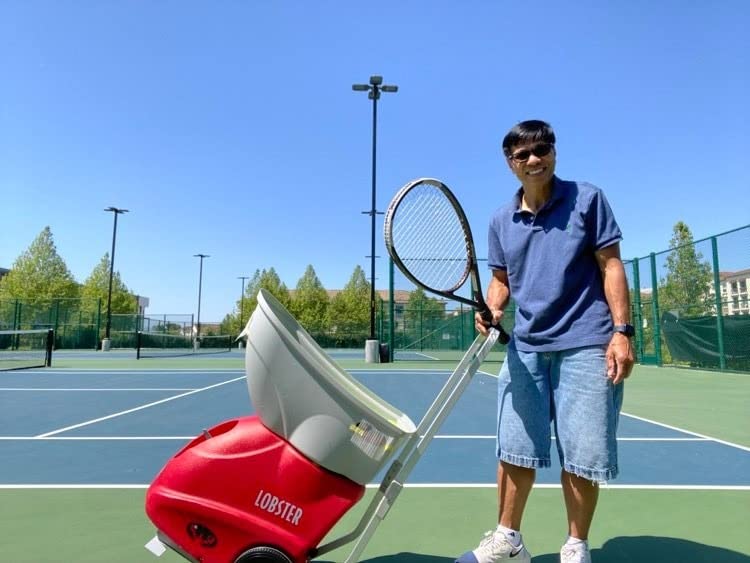
Battery life of 4 to 6 hours per charge covered every session I ran on it without a mid-session top-up. The machine is 42 pounds, sits on 8-inch all-terrain wheels and has an inverting hopper plus a folding handle, so it moves around a hard court without dragging.
The weaknesses are physical rather than electronic. Owners repeatedly mention the folding handle lock pieces breaking after a few uses, and the bend in that handle has a sharp edge that can mark a car interior. At 42 pounds, loading it solo into a sedan is a two-person job. Reviewers also note the machine body itself shifts a little during oscillation, which makes the landing spot slightly more predictable than the dial suggests.
Is a 10 to 80 MPH range worth the weight?
For most club-level players, yes. A realistic rally pace sits somewhere in the 40-to-60 MPH band, so anything above 70 MPH is headroom you will rarely use. The real payoff of the wide range is the low end, because dialing down to 10 MPH gives a beginner a feed they can actually return.
That range is also what lets one machine serve a family. The Lobster can feed a child learning a forehand at 10 MPH and still challenge an adult at full pace on the same session, which is unusual in this price band.
What you give up versus a machine above this price
You give up programmability. There is no app, no custom drill sequence and no memory of settings, so every adjustment is a dial. Compared with the app-driven machines further down this list, the Lobster asks for more hands-on time between drills.
You also give up the deep landing-point control that separates a random feed from a designed point pattern. If your training is built around specific court positions, this machine will not do that. Everything else it does well, and it does it on a build that has been in production since the early 2000s, which tells you something about its staying power.
2. Spinshot Pro – The Most Durable Machine at This Price
- Rubber
- TPU and PU construction described as built like a tank
- Powerful adjustable speed for beginner to advanced play
- Oscillation and adjustable feed interval force movement
- Responsive customer service
- Wheels and handles ease transport
- Battery is not included and must be bought separately
- Battery can need reconnecting in its compartment
- Only one spin type per session
- 49.8 lb is awkward without wheels
The Spinshot Pro is the one I would buy with my own money if I only cared about it still working in eight years. It is built from rubber, TPU and PU rather than the ABS plastic used across most of this list, and owners consistently describe it in tank terms. On the Tennis Warehouse forum, Spinshot is one of the names regulars treat as a legacy brand alongside Lobster.
Controls are knobs on the body, no app and no remote required. That is a genuine advantage when your phone is in a bag at the fence line, and it removes an entire category of pairing problems. Speed, feed interval, oscillation and elevation all adjust directly.
One thing to know before you commit: the battery is not in the box. The charger is included, but the battery has to be purchased separately, which adds lead time to your setup and means you cannot test the machine until it arrives. Owners also report the battery can lose power faster than its rating and may need reconnecting inside its compartment.
At 49.8 pounds, this is the second-heaviest machine in the roundup, and the hopper flaps are described as flimsy with a ball count that is hard to see mid-session. Spin is another limitation: you pick topspin or underspin, and that setting holds for the whole session.
Does a 60-ball hopper limit a session?
Not for most players. Sixty balls at a sensible 4-to-6 second interval is roughly 5 to 6 minutes of continuous feeding, and refilling is a 20-second job. It becomes a nuisance only if you are running two-ball patterns, where the real consumption rate doubles.
Compare that with the 150-ball hopper on the PONGBOT, which effectively removes refills from your session planning entirely. For one player hitting groundstrokes, the Spinshot capacity is fine.
Who should skip this machine
Skip it if you need both topspin and backspin inside the same session without stopping to reset. Multi-ball patterns and mixed-spin drills are the one use case the single-spin-per-session rule genuinely blocks.
Skip it if transport weight is your deciding factor, or if you want to change settings without walking back to the machine. Everyone else gets a feeder that will very likely outlive their other tennis gear, which is why it sits at number two despite the separate battery purchase.
3. PUSUN PT-Smart – The Most Programmable Machine Under the Cap
PUSUN Tennis Ball Machine,Portable Tennis Launcher,Tennis Trainer,PT-Smart
- App control with a wide drill range and easy on-court adjustment
- Consistent placement and accurate speed control
- Battery lasting multiple multi-hour sessions
- 100+ ball hopper cuts refill interruptions
- Quiet operation and easy rolling transport
- Default settings live in the app
- not the machine
- Included remote falls back to internal parameters
- Slight rotation at higher feed speeds
- 32.6 lb is heavy for a trunk
For training built around specific court positions, the PT-Smart is the machine I would pick. Twenty-eight programmable landing points with external oscillation give you a repeatable spot to move to, which is how you train the split-step rather than just feed balls. Speeds run from 12 to 75 MPH across six spin levels, with feed intervals from 1.8 to 8 seconds.
Control is three-way: app, remote and Apple Watch. Twelve built-in training modes map onto an NTRP 1.0-to-5.0 progression, with Primary, Fixed, Vary Speed and Program modes. There is a padel mode with 14 drills as well, which is unusual at this price.
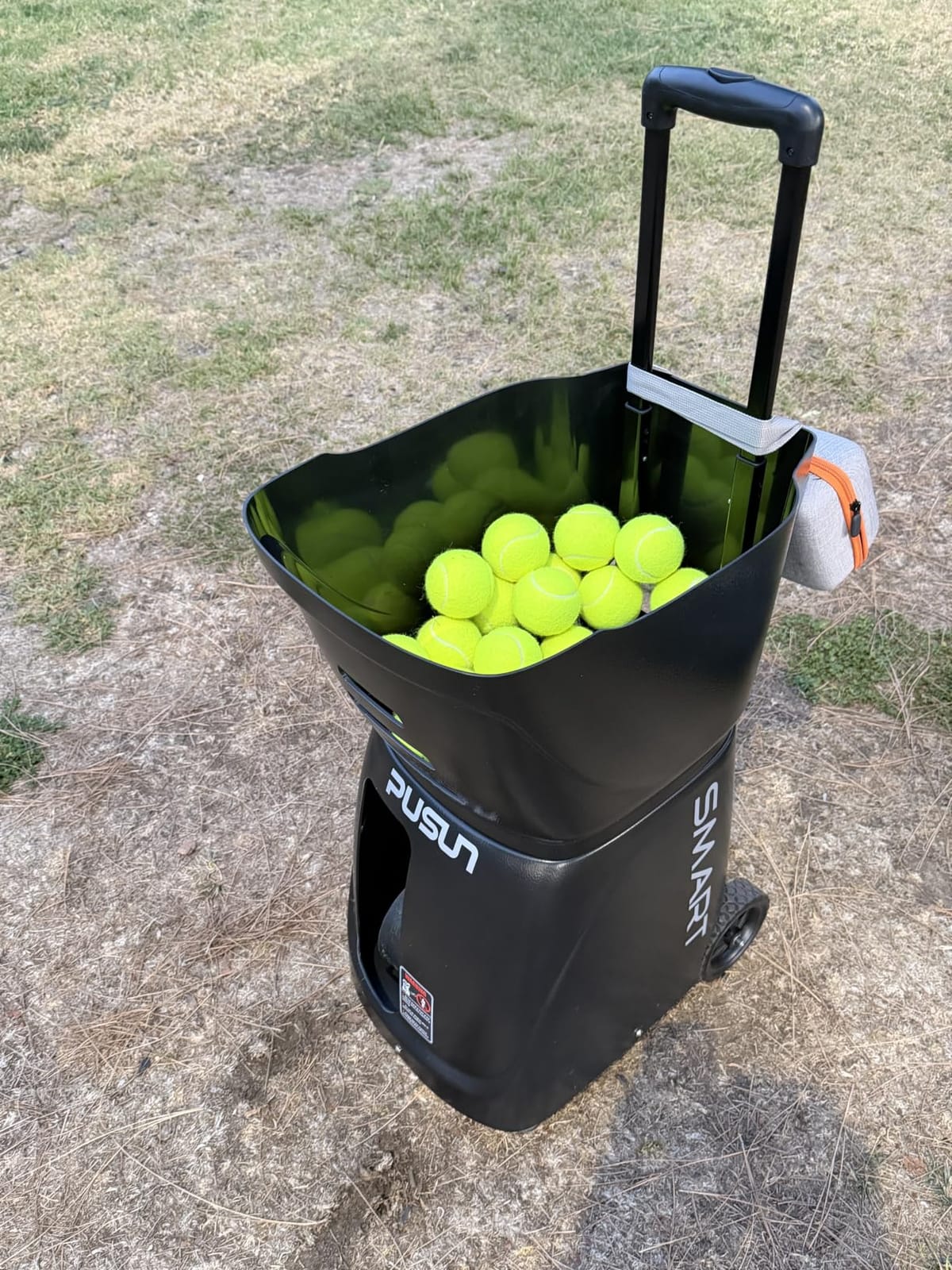
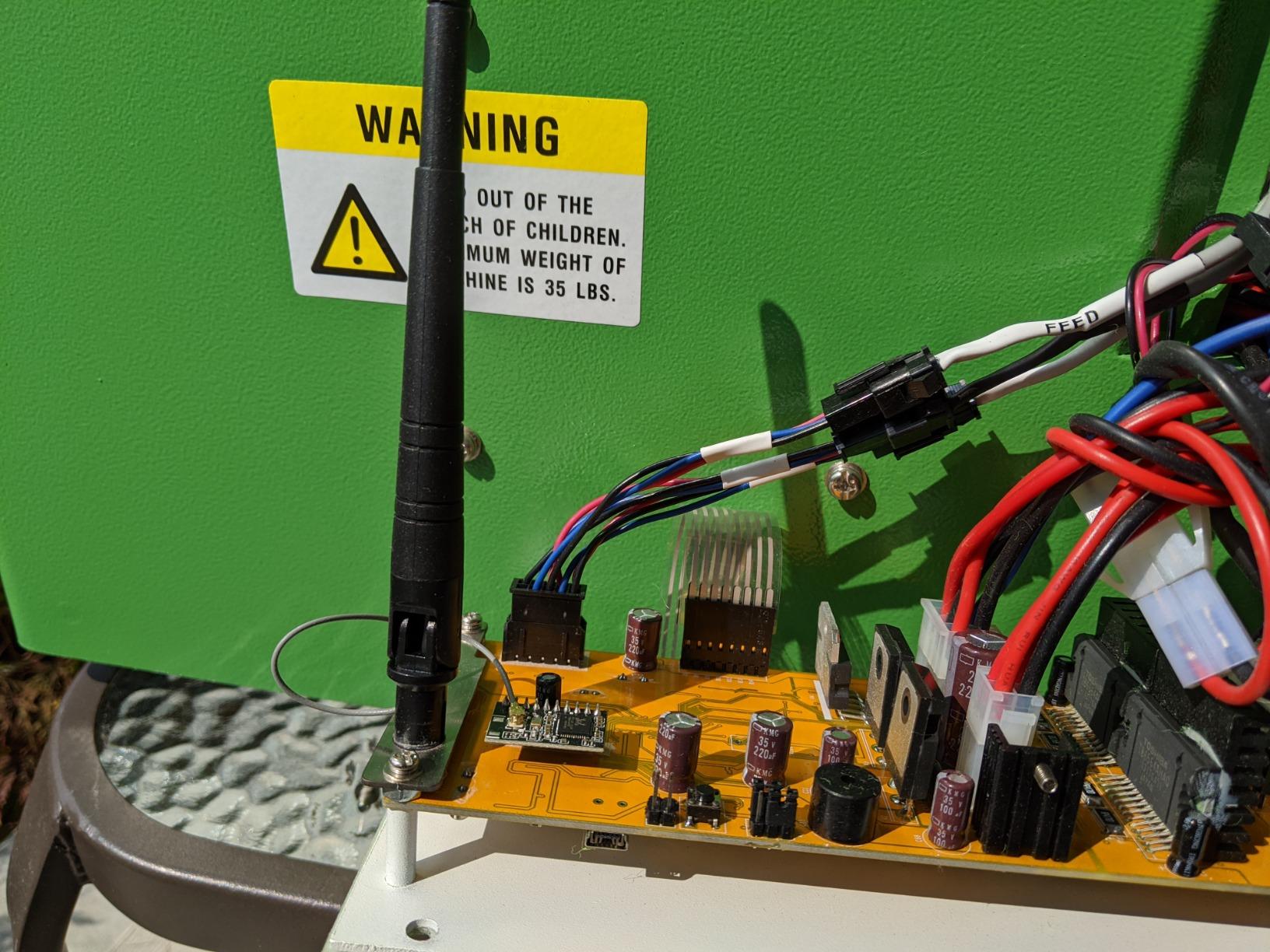
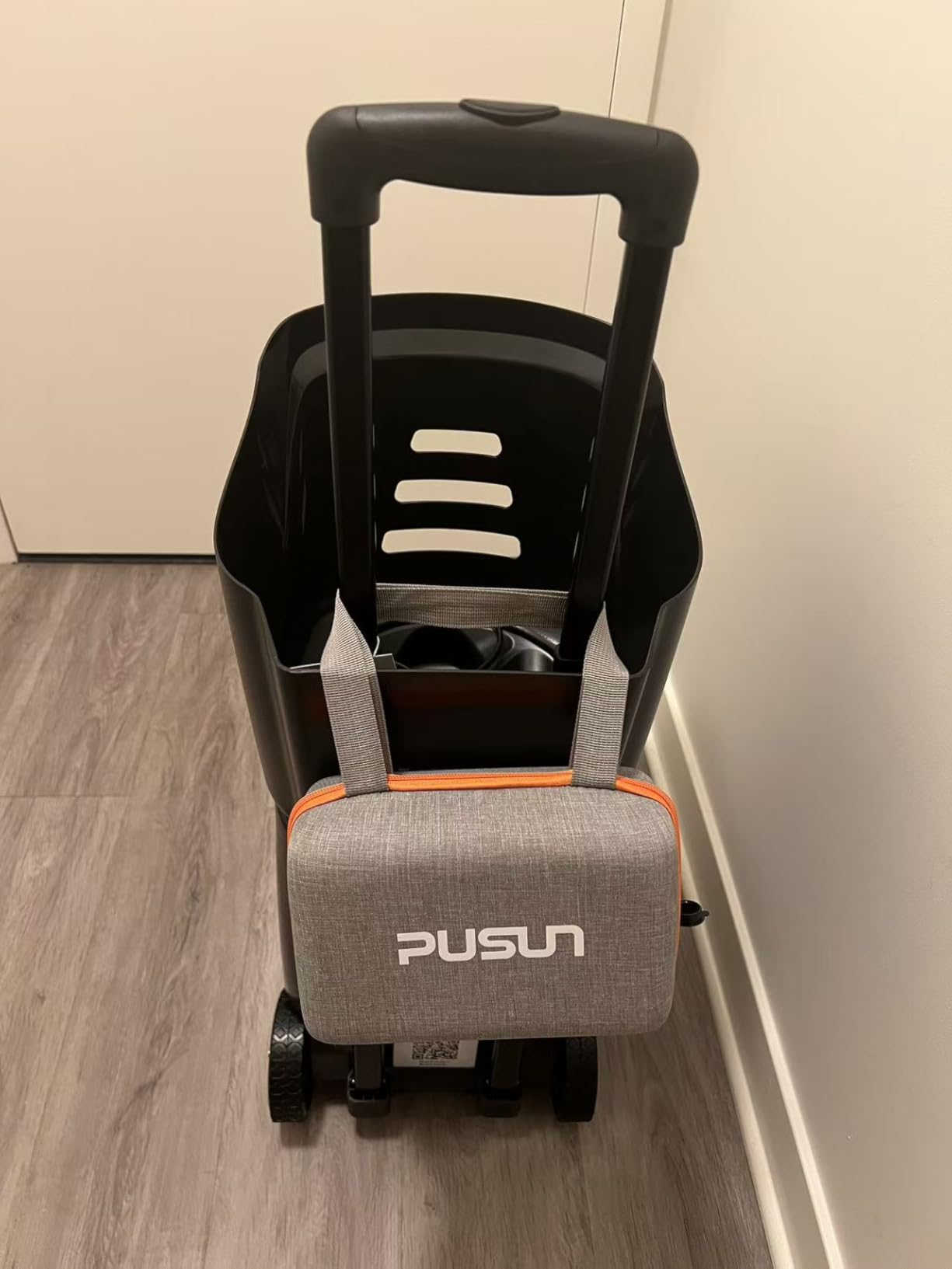
The 153.6Wh external battery pack delivers 4 to 6 hours and more than 5,700 shots, and it detaches so you can charge it away from the machine. The 100-plus ball collapsible hopper means a full session rarely pauses for a refill, and a dust-proof mainboard is a sensible inclusion if you play on clay.
The most common owner complaint is programming confusion, and it is a real one. The machine does not store default settings itself, so the defaults live only in the app. Start from the remote and the machine falls back to internal parameters you did not choose, and the manual does not clearly explain the difference. Set everything up in the app once and the problem disappears entirely.
Are landing points better than random oscillation?
Yes, for footwork. Random oscillation tells you where a ball might land. A programmed landing point tells you exactly where it will land, so you can rehearse the same recovery position hundreds of times until the split-step happens before the ball does.
The trade-off is variety. Purely random feeds feel less robotic and hold attention better on long sessions. The PT-Smart handles both, which is why it works for beginners on fixed feeds and advanced players on programmed patterns from the same unit.
What you give up at this price
You give up raw speed ceiling. Seventy-five MPH is plenty for club play, but if you are a strong competitive player who wants to be hit at pace, the 80 MPH class of machines will serve you better.
You also give up some portability. At 32.6 pounds it sits in the middle of our weight bands, and it is noticeably heavier to lift into a trunk than the lighter app-controlled options. Owners also note a slight rotation of the machine body at higher feed speeds, caused by an off-centre launch hole, plus occasional weaker performance on short, close balls compared with deep drives.
4. TENNIIX Basic – Best Portable Tennis Ball Machine Under the Cap
TENNIIX Basic Tennis Ball Machine, 18.7LB Portable Tennis Robot, Black
- Lightest and most compact body in this roundup
- App plus voice control avoids walking back to the machine
- Folds down small enough for most trunks
- Removable battery supports hours of practice
- 100+ ball capacity reduces refills
- Voice control handles one adjustment at a time
- Shorter runtime than larger external battery packs
- Fewer advanced placement options than full-size machines
This is the machine I recommend to anyone whose practice happens at a public court rather than at home. At 18.7 pounds it folds to roughly 15 by 11 by 18 inches, which is the difference between a machine you carry from the car and one you need a second person for. The 7000 mAh battery is removable and delivers up to 4 hours and about 1,800 shots per charge.
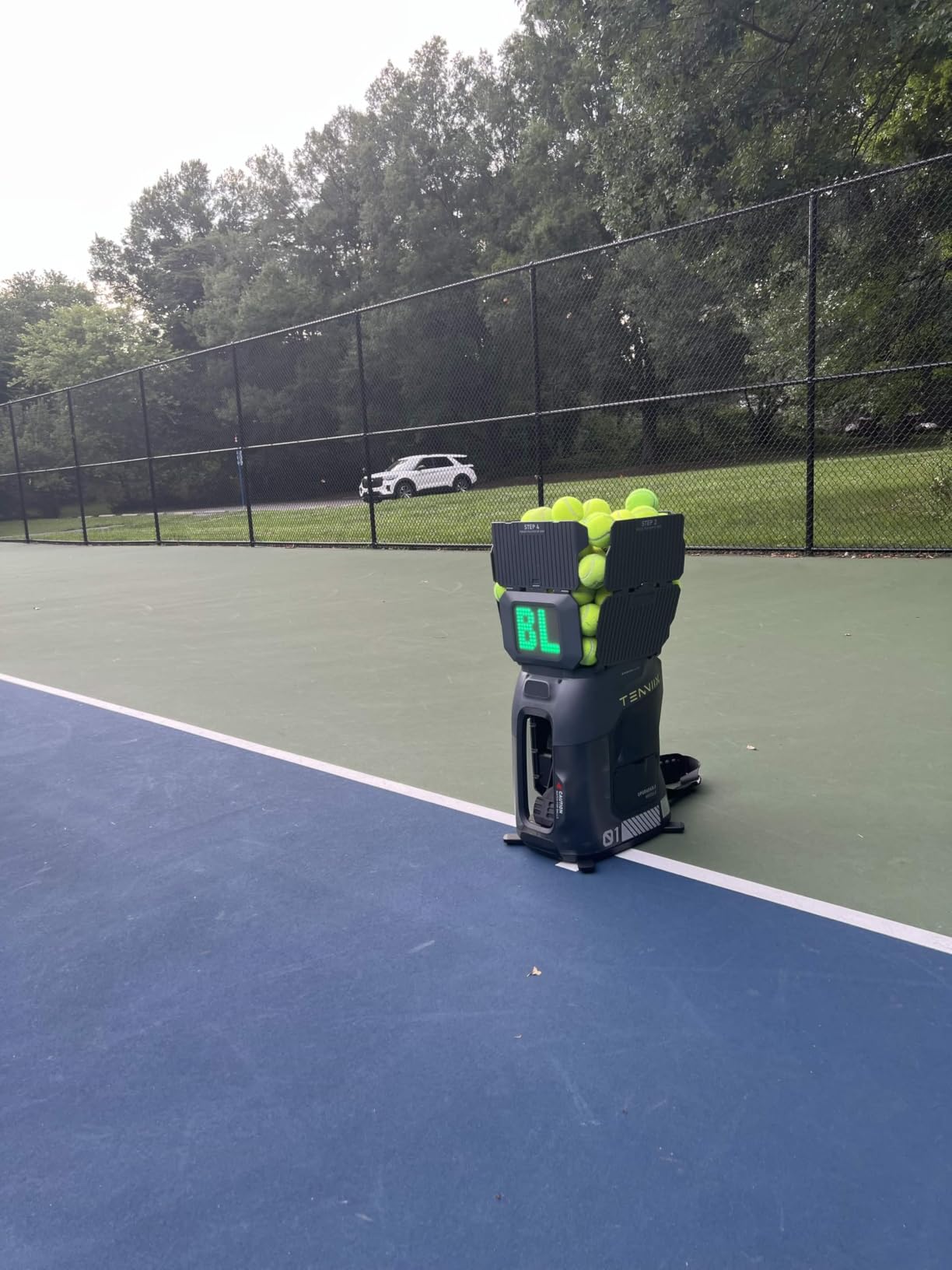
Control is app-based with more than 1,000 parameter combinations, plus a wrist armband that accepts 46 voice-command keywords. There are nine shot patterns and a six-style Match Mode with NTRP L1-to-L3 presets and a Challenger Mode. An LED status display keeps you informed without walking over.
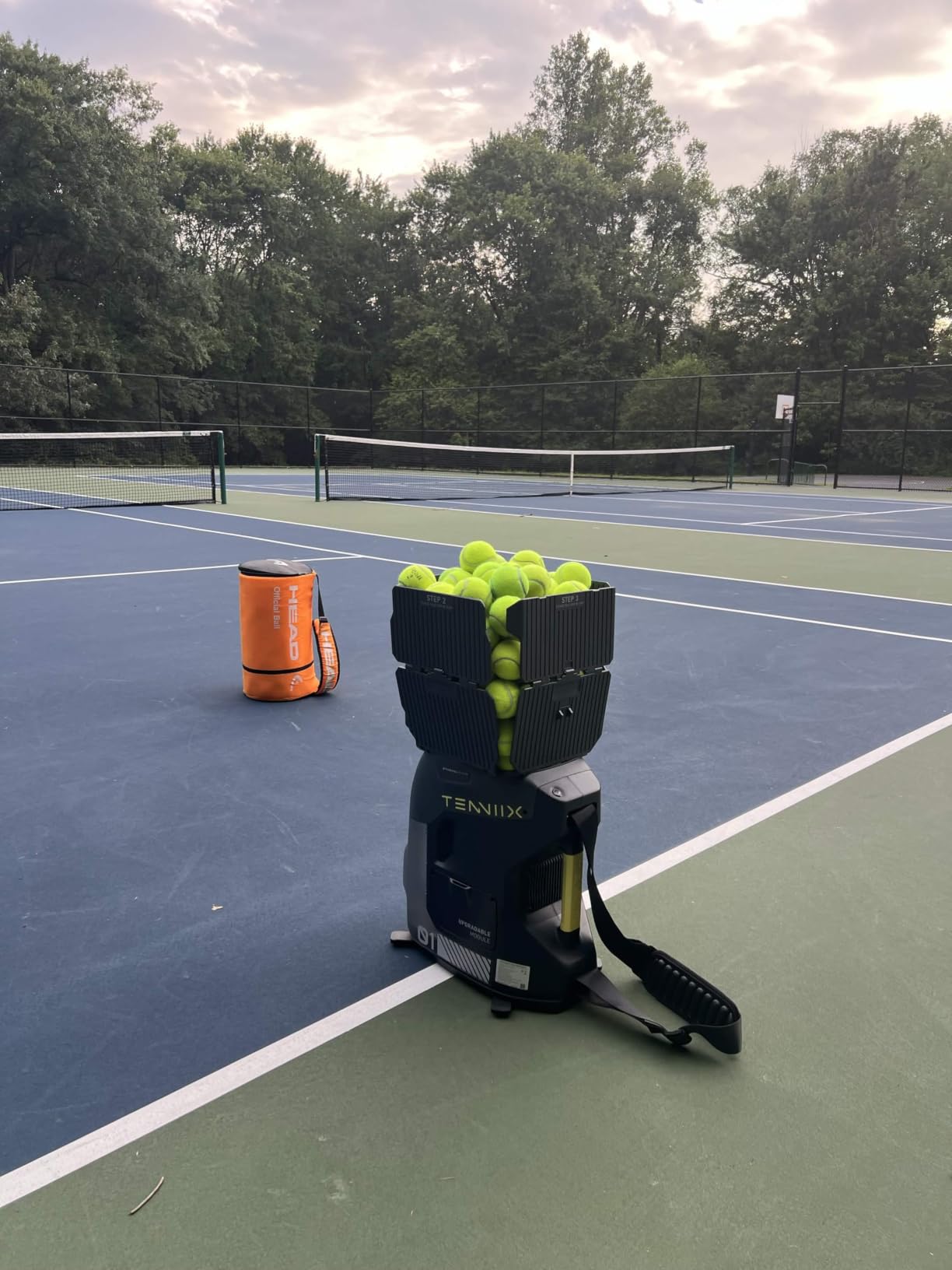
The dual-wheel launch reaches 75 MPH, which is well above what a beginner needs and comfortably into intermediate territory. On the r/10s threads, Tenniix shows up consistently in the modern-brand discussion alongside Lobster, Spinshot and the legacy names, and the consensus there is that it delivers solid daily training rather than something exceptional.
The compromises are real. Voice control adjusts one macro setting at a time, so a fine change means reaching for the app. Runtime is shorter than machines with larger external packs, and placement options are fewer than full-size units, which matters if you are chasing specific landing points. The machine is also designed by the robotics team behind T-APEX and is upgradeable with an AI vision module, so parts support should be steady.
Can a 4 hour battery cover a real practice session?
For one player, yes. Four hours is roughly a solid evening session of groundstroke work, and the battery is removable, so you can charge a second pack while working if you buy one. It is not enough for a full day of coaching, and that is where the larger machines pull ahead.
At a 4-to-5 second feed interval, one hour of steady feeding burns roughly 800 to 900 shots against a rated 1,800 per charge. The rating assumes a realistic duty cycle rather than continuous maximum-speed firing, which is worth knowing before you plan a clinic on it.
Is the fold-flat design worth giving up capacity for?
If you practice anywhere other than a driveway, yes. The machines that hold 115 or 150 balls are built around a session at home or a court you can drive up to. This one is built around the trip from the car to the baseline.
You do give up hopper capacity compared with the 100-plus ball machines and some of the finer placement control. What you keep is 75 MPH, dual-wheel launch, app control and voice adjustment, which is a strong feature set to have in something you can lift with one arm.
5. Nisplay N1 with Oscillator – Best Value Spin Machine
- Buyers compare it favourably against machines costing twice as much
- Compact body with wheels and a folding handle
- Detachable battery charges away from the machine
- Oscillator lets you practise both wings at once
- Support replaces missing parts and repairs the oscillator
- Remote controls only the ball tray
- Spin is weaker than cheaper dedicated machines
- Claimed 68 MPH is optimistic over the net
- Short Y cable
- Oscillation spray is skewed
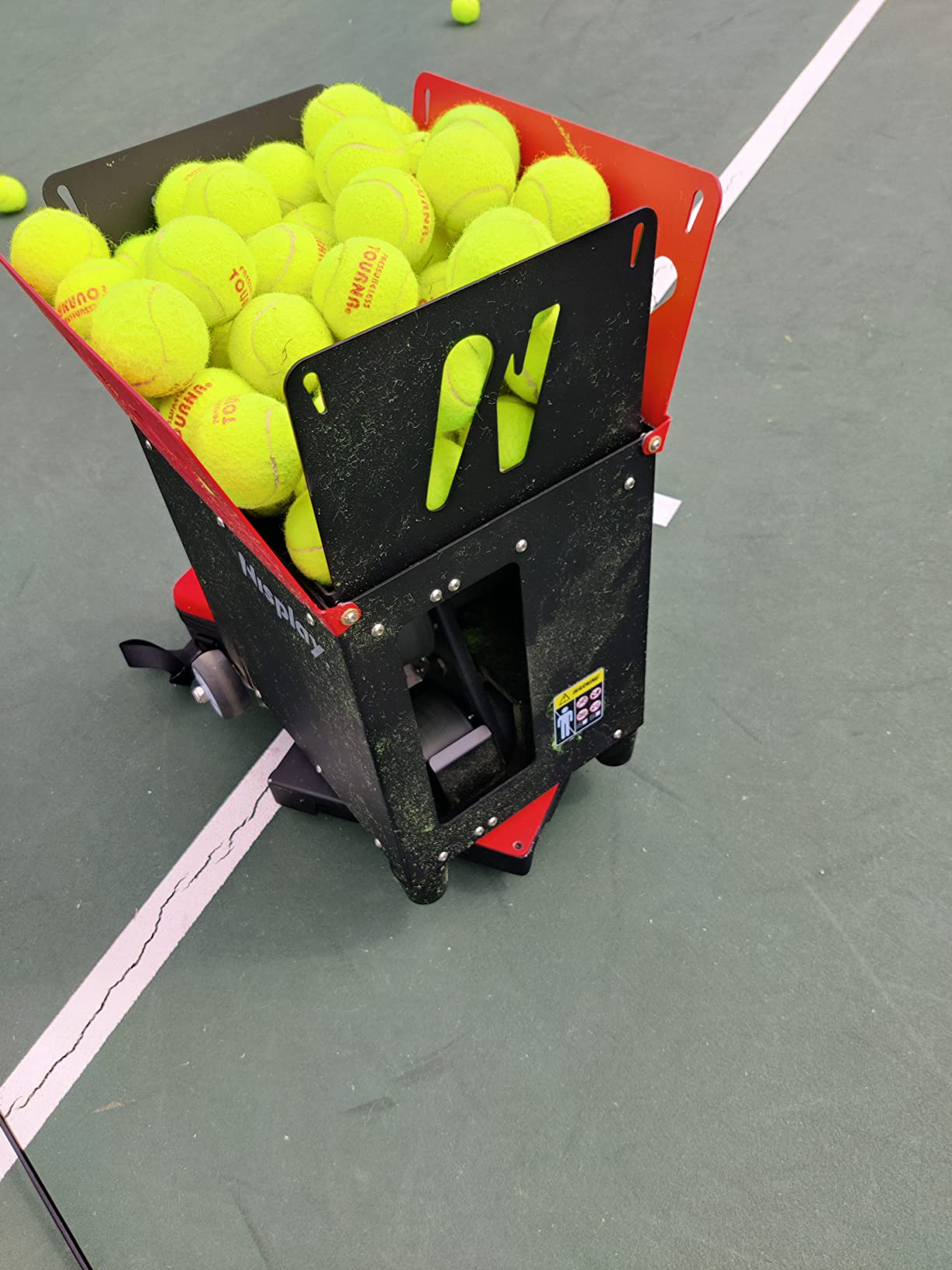
The N1 earns its place because the oscillator is in the box. Most machines at this price sell oscillation as an add-on or leave you with random sweep only. This combo package includes a manual oscillator, so you can work a forehand and backhand pattern in the same feed without buying anything else.
Dual motors produce flat, topspin and backspin balls. Speed runs to 68 MPH with 0-to-50-degree elevation, and feed intervals adjust from 1 to 9 seconds. The external lithium battery gives more than 4 hours and detaches for separate charging, and the 80-plus ball hopper sits comfortably in the middle of this roundup.
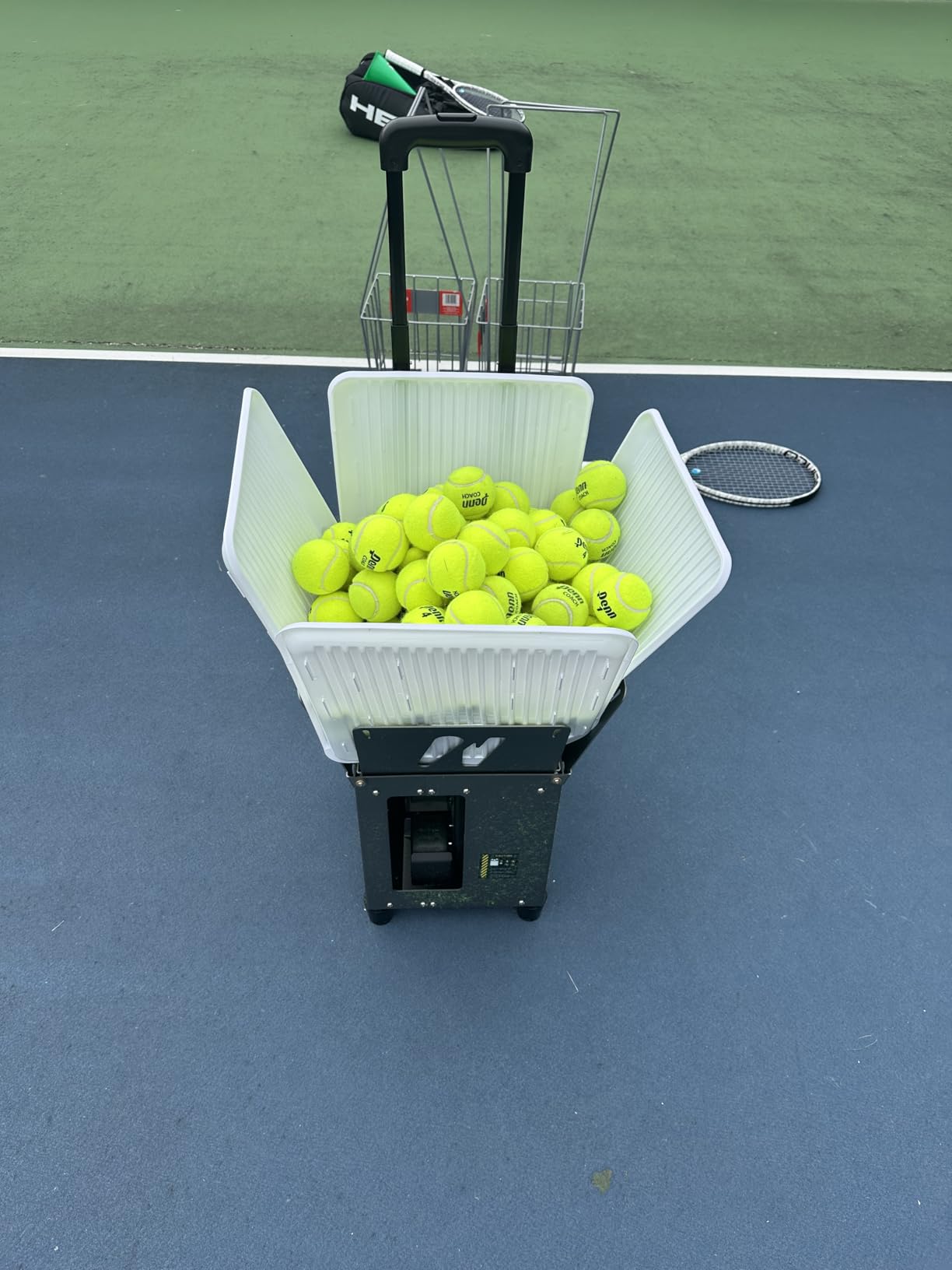
At 26 pounds with oversized wheels and a 3-foot folding handle, it rolls well and is manageable for one person. Owner reviews consistently frame it as a best-value mid-priced machine, and the support record is genuinely good, with missing parts, remotes and oscillator repairs handled quickly.
There are hardware annoyances. The remote controls only the ball tray, not the oscillator or the launch wheels, so it is a pause button rather than a full control. The Y cable linking battery, machine and oscillator is short and can be strained by the oscillation movement, and the spray is skewed, with one side pivoting further than the other. Balls jam a few times per full hopper.
Is the included oscillator the reason to buy this one?
It is the reason I would buy it over the lighter machines at a similar price. Oscillation is what converts feeding into footwork training, and buying it as a bundle costs you far less than adding the same unit later as a separate accessory.
Skewed spray limits how precisely you can rely on the pattern, so if your plan is to hit one specific landing spot repeatedly, verify the pattern on your own court before committing to a training block built on it.
How does the spin compare with cheaper dedicated machines?
Reviewers are candid that the spin here is weaker than some cheaper dedicated slinger-style machines, so this is not the pick for pure spin work. The trade runs the other way: you get oscillation and a battery pack in the same box instead of buying both.
The claimed 68 MPH is also described as optimistic once the ball clears the net, which is true of most published speed figures in this category. Judge speed by how it feels against a rally, not by the number on the box.
6. PONGBOT PACE S PRO – Best for Coaches and High-Volume Feeding
- Recovery-trigger drills force correct positioning between feeds
- Intuitive Android app with a large drill library
- Roughly 8 hours of battery per charge
- Fits a standard car trunk with good quality wheels
- Removable battery and three-way USB cable simplify charging
- Balls do not always land in exactly the same position
- Beeps on every throw with no off switch
- Plastic finish scratches easily in transit
- Hard to keep level
- which affects landing spots
The 150-ball hopper is the headline number here, and it changes session planning more than any other spec on this list. Combined with 8-plus hours of runtime from a removable battery with BMS, a coach can run a full clinic without planning a single refill or a single charge stop.
What genuinely distinguishes it is the smart-sensor recovery drills. Wearable sensors register where you actually recovered the ball and trigger the next feed based on that, which trains recovery position rather than just feeding. Speed reaches 80 MPH with 60 rps of spin from dual motors, across 6 oscillation spots, and the app carries hundreds of pre-loaded drills with unlimited custom ones, 30 of them syncable to the remote.
There are practical details that show real design attention. The barrel opens by remote, so clearing a jam does not mean kneeling on court. OTA updates keep the drill library growing, and owners report sharing drills through the user community. It works on clay, hard, grass and padel surfaces.
At 46 pounds it is heavy to lift into a vehicle, though it does fit a standard trunk. The beep on every throw has no off switch, which owners find irritating in quiet courts, and the ABS-and-metal finish scratches easily in transit. Balls do not always land in precisely the same position, and some units are hard to keep level, which affects placement. Sensor reliability is mixed among owners.
Are smart-sensor drills better than programmed landing points?
They train something different. A programmed landing point asks you to be in the right place on a known schedule. A recovery-triggered drill responds to where you actually finished your last shot, so you cannot cheat the pattern by anticipating.
The caveat is consistency. If your recovery is off, the drill responds to the off position, which is exactly the point but also exactly why some owners find the sensor features unreliable on uneven surfaces.
What you give up versus a smaller machine
You give up weight and a fair amount of money for a capability you may never use. If you practise alone twice a week, a 46-pound machine with sensors is solving a problem you do not have, and the app learning curve is steeper than a simple remote.
You also accept placement inconsistency where a machine like the LUMISTAR TERO claims sub-one-degree accuracy, and a plastic shell that shows every scuff. For a club or a coach feeding multiple players a day, none of that matters much next to the 150-ball hopper and the eight-hour battery.
7. PUSUN PT-Smart Pro – Best Commercial-Grade Machine Under the Cap
- Triple control across app
- remote and Apple Watch
- Many programmable landing points and preset drills
- Long battery life with real-time power display
- Commercial-grade 3-year warranty with lifetime technical support
- Trolley frame rated for 80 kg
- Only 14 reviews
- so durability is not yet documented
- Complex feature set needs the app to exploit fully
- Heavier than compact alternatives
What separates this from the PT-Smart is scale and support rather than control method. Maximum speed is quoted at 120 km/h, hopper capacity is 115 balls, and the vertical angle runs through 20 gear positions with horizontal swing on top. The aviation aluminium trolley is rated for an 80 kg load, which is a spec you do not see on consumer machines.
The warranty is the real differentiator: three years from the manufacturer with lifetime technical support. Owners consistently treat warranty length as more important than expected in this category, because parts availability and turnaround are the biggest source of long-term frustration.
Control is app, 15-key remote and iWatch, with ball path memory and AI-generated trajectories across 28 programmable landing points and 12 preset drills. The external 6Ah lithium battery gives 4 to 6 hours with a real-time power display, and total weight is 15 kilograms.
The honest caveat is sample size. Fourteen reviews is not enough to establish long-term reliability, and roughly one owner in five left a one-star rating. The feature set is broad enough that you need the app to get real value from it, and at 33 pounds it is heavier than the compact options.
Is a 3-year warranty worth more than better software?
At this price, yes. Forum consensus is consistent that warranty length and return window matter more to buyers than any single feature, because the most common ownership complaint in this category is parts availability rather than performance.
Software-driven machines win on drills; long-warranty machines win on years four, five and six. If you keep a machine for a decade, the PT-Smart Pro warranty is the more valuable of the two.
Who should pass on this machine
Pass if you want proven long-term data, because there is very little yet. A three-year warranty partly offsets that, but a warranty is a promise and owner reports are evidence, and this model has only 14 of the latter.
Pass if simplicity matters more than features. Twelve preset drills, 28 landing points and AI trajectories are genuinely capable, but they also mean a learning curve that a two-button machine does not have.
8. PUSUN PT-Mini-Pro – Best for Beginners Machine for Beginners
PUSUN Beginners Tennis Ball Machine PT-Mini-Pro, APP Controlled Auto Sever, 65 Ball Capacity, 3-5 Hour Battery Life(Black)
- Very light at 8 kg and easy to carry
- App control makes solo practice simple for beginners
- Consistent delivery for groundstrokes and footwork
- Compact enough to transport to any court
- Owners across several countries rate it highly for the price
- No wheels included
- so it must be carried
- Smaller 65-ball hopper means more frequent reloads
- Shorter 3-5 hour battery than larger machines
At 8 kilograms, the PT-Mini-Pro is the machine to buy if your main worry is whether a ball machine is too heavy to bother with. It is roughly one third the weight of the legacy machines in this roundup, and owners across several countries rate it highly for the price.
App and remote control adjust speed and angle, with the vertical launch angle running from 8 to 70 degrees plus side-to-side adjustment. That range is genuinely useful for beginners because the low end gives you a short, soft feed while the top end supports a more advanced player later on.
The 65-plus ball hopper and 3-to-5 hour battery are modest, and there are no wheels, so you carry it from the car. The three-year manufacturer warranty is unusually generous at this tier.
With 14 reviews it sits at the edge of the evidence we trust, though its 4.5 average comes with no one-star ratings at all. The pattern of feedback is consistent: people wanted wheels. Everything else landed as described.
Is 8 kg light enough for a public court?
Yes, comfortably. This is the only machine here you could realistically carry up a flight of steps or along a path without planning for it. Carrying distance stops being a factor in whether you actually practise, which matters more than any feature on a spec sheet.
The cost of that weight is capacity and runtime. A 65-ball hopper at a 5 second interval is about 5 minutes of feeding, and 3 to 5 hours of runtime is a session or two rather than a week.
When should you step up instead?
Step up once you are hitting consistently and want spin, oscillation or faster feed rates. None of those are absent because of a defect; they are simply not part of a beginner machine at this size.
The sensible upgrade path from here is the 18.7 lb TENNIIX Basic, which keeps the fold-flat portability but adds 75 MPH dual-wheel launch, a 100-plus ball hopper and voice control.
9. Sports Tutor Tennis Twist – Best Tennis Ball Machine for Kids
- Very light at 10 lb with a built-in carry handle
- Straightforward beginner-friendly feeding
- Adjustable toss distance from 12 to 20 feet
- Works with tennis
- oversize tennis balls and pickleballs
- Long-running US maker with 3-year warranty and factory service
- Fixed 5 second interval with no speed or spin selection
- Small 28-ball hopper limits session length
- Not aimed at intermediate or advanced players
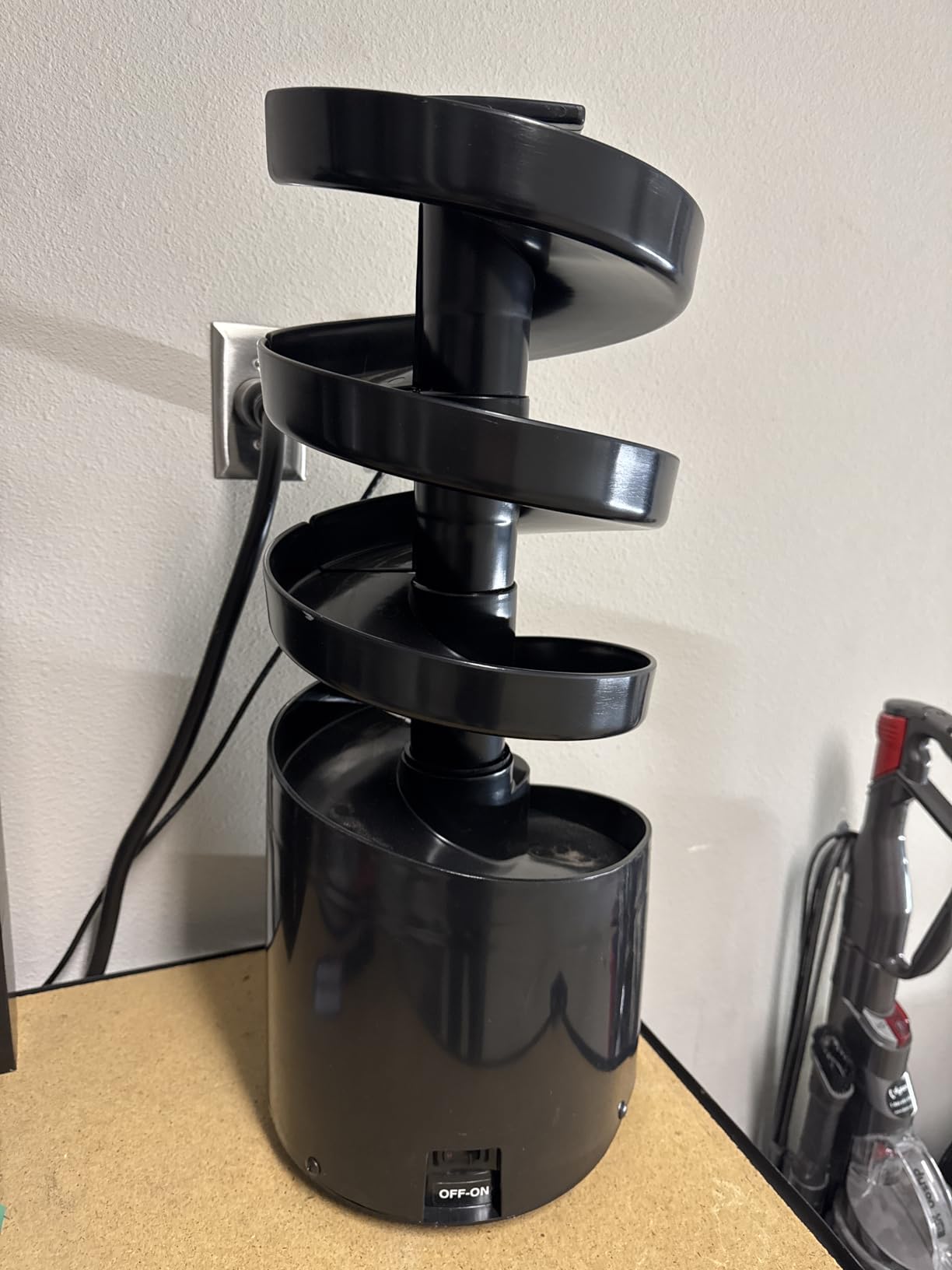
The Tennis Twist does one thing and does it for very little money. It throws one ball every five seconds, from a toss distance adjustable between 12 and 20 feet, and it weighs 10 pounds with a built-in carrying handle. For a child learning a forehand, that is the entire feature set they need.
It also handles oversize tennis balls and pickleballs, which makes it the most genuinely multi-purpose machine on this list. A family can use it for a child’s tennis practice and a teenager’s pickleball drills without buying anything else.
Power comes from six D-size alkaline batteries, which typically give 8 to 10 hours of runtime and are not included. The 28-ball hopper is the smallest here, which at one ball every five seconds works out to a little over two minutes of continuous feeding.
Sports Tutor is a long-running US manufacturer with a three-year warranty and factory-based service, and that is worth something in a category where parts availability for lesser brands is a common complaint.
Is a fixed 5 second feed interval a problem?
Not for a beginner. Five seconds is roughly the pace of an easy rally, which is exactly what a developing player needs to build a stroke without being overwhelmed. The difficulty comes from where the ball lands, not from the tempo.
It becomes a problem the moment you want to work on speed, spin or placement, because none of those are adjustable. There is no speed selection at all, which is the single clearest dividing line between this machine and everything above it.
Is there a better machine for a child just starting?
The PT-Mini-Pro at 8 kg is the better machine if your budget stretches, because app control and adjustable angle let the same unit grow with the player. The Tennis Twist makes sense when you want something a child can carry themselves, or when the same machine needs to serve pickleball too.
Both are sensible. Just know that this one is deliberately simple, and you will outgrow it rather than grow with it.
10. LUMISTAR TERO – Best Machine for Quiet Courts and Apartments
- 87 mph speed combined with 35 landing points
- Quiet at about 72 dB so contact is easier to hear
- Lightest premium-feeling body here at 21.7 lb
- App
- wrist remote and voice commands
- 238 preset drills need no programming
- USB-C charging from wall
- power bank or car
- Only 11 reviews
- so long-term reliability is uncertain
- Battery lasts about 4 hours at 50 mph rather than maximum speed
- Vision Dock AI features cost extra
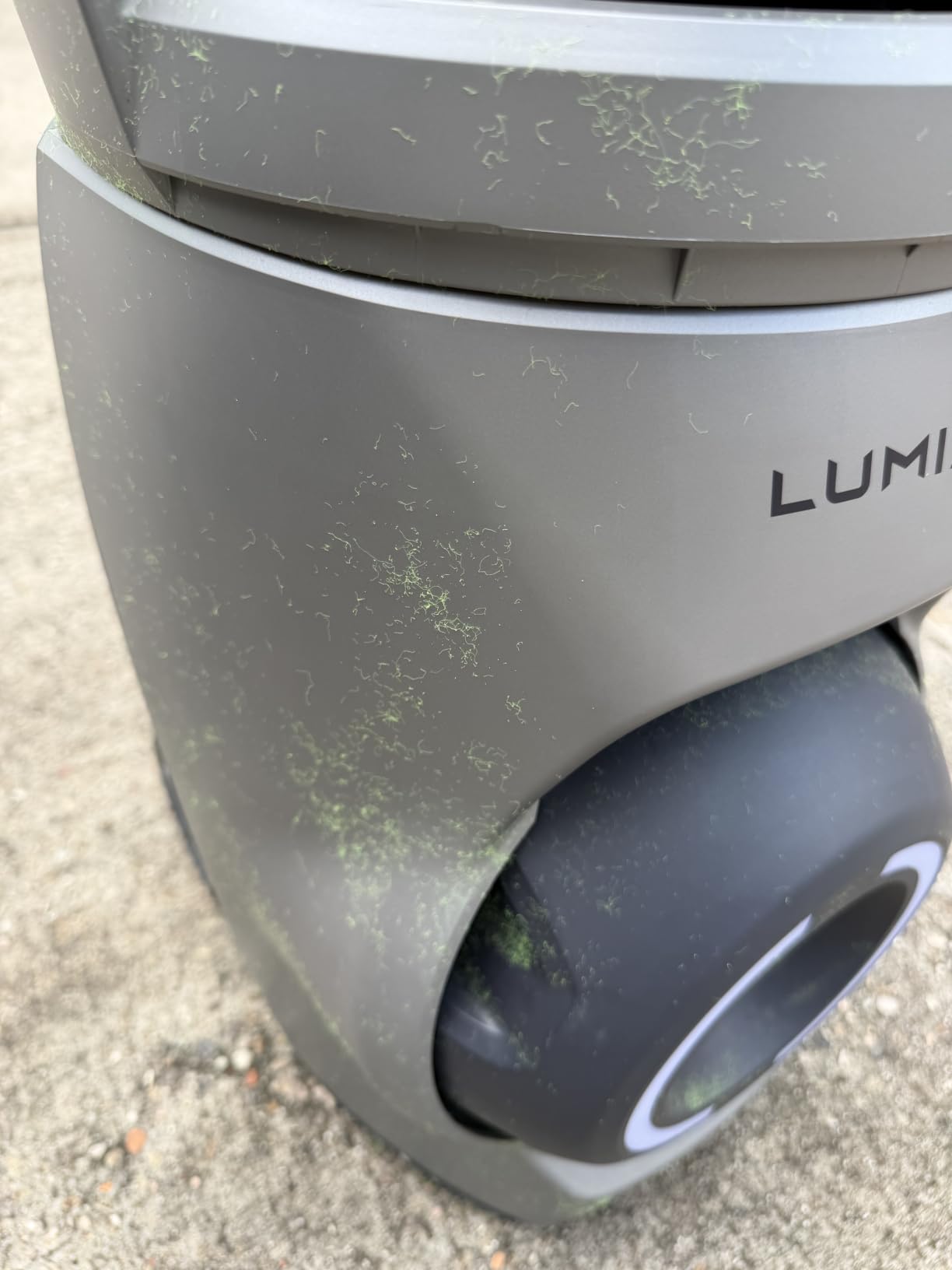
The TERO is the quietest machine in this roundup at approximately 72 dB, and that is not a cosmetic detail. On a hard court with a wall behind you, machine noise masks the sound of ball contact, which makes it harder to time a stroke. Owners who train near housing or shared walls notice the difference immediately.
Performance specs are the most ambitious here: 87 mph with 26 metre full-court reach, and a triple-axis gimbal claiming under-one-degree accuracy across 35 programmable landing points. Intervals run from 1.5 to 10 seconds, and active jam detection with auto-recovery means you are not kneeling on court dislodging a stuck ball.
At 21.7 pounds in a stackable disc design, it is one of the more compact premium-feeling bodies available. Control is app, wrist remote and voice commands, and the app carries 238 preset drills, so you can start a session without programming anything.
Speed in practice depends on how much of that range you actually use. Most sessions run well below the 87 MPH figure, and the battery is quoted at 50 MPH, which is a far more honest number to plan a session around than the headline speed.
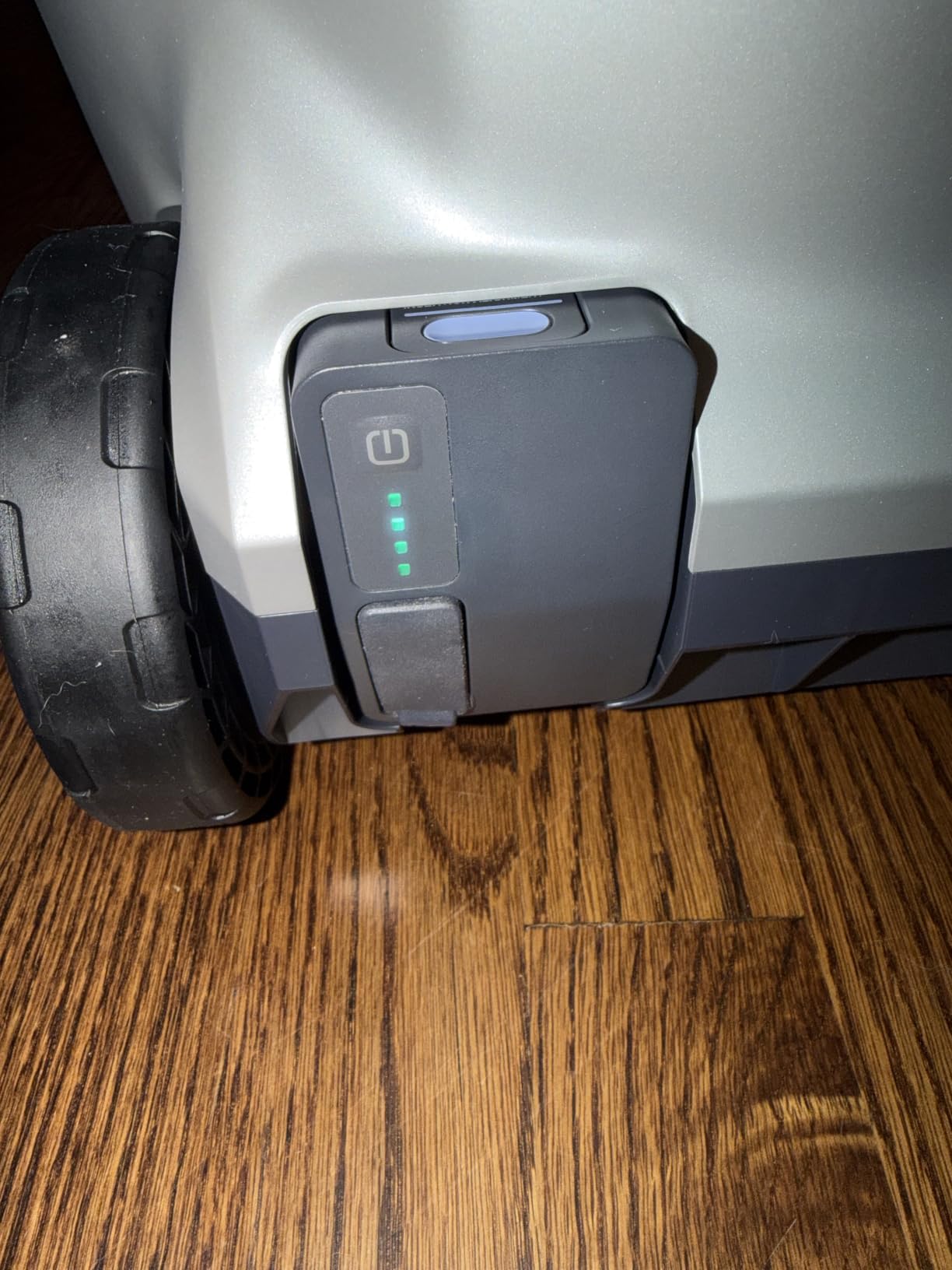
The caveats are real. Only 11 reviews exist, so durability is genuinely unknown. USB-C charging is fast, with 20 to 80 percent in under 2 hours, and the AI Vision Dock is a separate purchase rather than an included feature.
Does 72 dB actually change how you practice?
For most players working on timing, yes. Ball contact is a subtle sound, and a louder machine at the baseline buries it. On quiet courts the difference is obvious, and it is the reason this machine ranks as highly as it does despite the thin review base.
If you practise alone on an open court with no buildings behind you, the noise difference is much less important and you should weigh the 87 mph speed and 35 landing points more heavily instead.
Is it worth buying a machine with 11 reviews?
The two-year warranty is the honest answer to that question. It is the longest warranty here alongside the PT-Smart Pro’s three years, and it is what compensates for the missing long-term owner data.
The specification set is genuinely ahead of the field at this price, and the 238 preset drills reduce the amount of setup you will do. I would still expect the first-year ownership reports to be thin, so keep the return window in mind.
11. Nisplay L1 – Lightest Machine for Carrying to Any Court
L1 Tennis Ball Machine For Practice, 13.2lb Portable Tennis Robot(Black)
- Lightest machine in this roundup at 13.23 lb
- Fits a car easily and works indoors or outdoors
- App and pocket remote give granular speed
- spin and frequency control
- 60-ball hopper supports decently long sessions
- Industrial-grade ABS and metal construction
- Only 5 reviews
- so long-term reliability is undocumented
- Top speed of 60 km/h is the lowest here
- Lower hopper capacity than premium machines
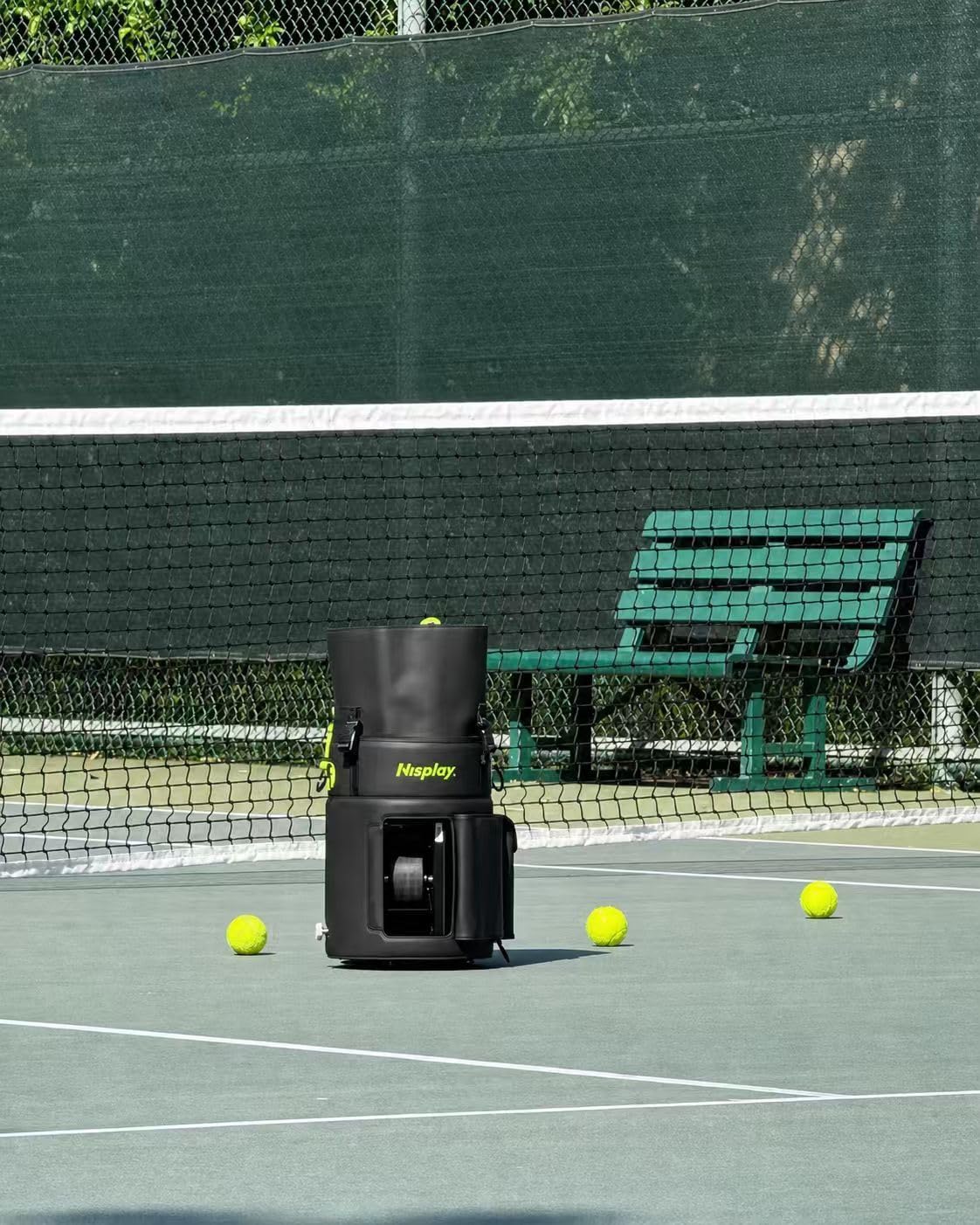
At 13.23 pounds in a cylindrical backpack-style body with a shoulder strap, the L1 is the lightest machine in this roundup by a clear margin. It is the one I would suggest to someone whose court is a fifteen-minute walk from the car park rather than a five-minute carry.
Speed reaches 60 km/h, roughly 40 MPH, with feed intervals from 1 to 9 seconds and a launch angle adjustable from 15 to 55 degrees. Control is the NISPLAY app plus a pocket remote, and both give granular control over speed, spin and frequency. The 60-ball hopper is mid-range for this tier, and runtime is around 3 hours.
Construction is industrial-grade ABS and metal rather than light plastic, and the machine carries Red Dot, iF Design Award and IDEA Gold design awards, which tells you something about the industrial design priorities.
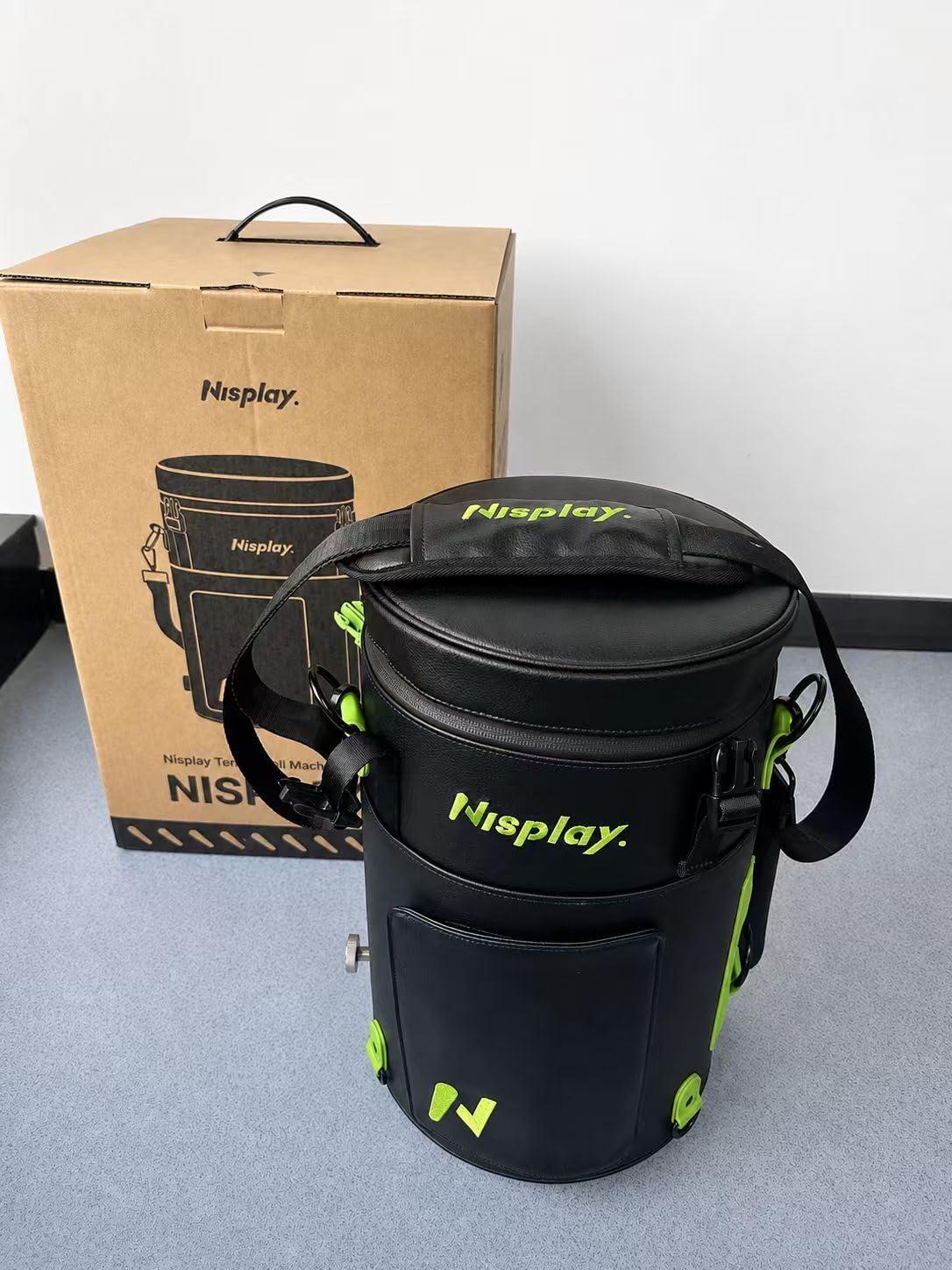
At around 3 hours of runtime, the L1 covers a typical evening session without a mid-session top-up. Because the machine is only 13.23 pounds, the far more likely constraint on practice is how much you want to refill the 60-ball hopper rather than how long the battery lasts.
The important context here is the five reviews. All five are five-star, which reflects genuine early enthusiasm rather than established performance. Read the perfect score as first impressions, not as a track record. The 40 MPH ceiling is also the lowest in the roundup.
Is 40 MPH fast enough to practise with?
For a beginner, a developing junior or anyone working on consistency and placement, yes. You do not need maximum pace to groove a forehand, and a slower feed is often easier to control while you are building technique.
For an intermediate or advanced player who wants to be stretched, no. The fastest machines here reach 87 mph and several sit between 68 and 80 mph. If your game is built on handling pace, this is the wrong machine regardless of how convenient it is to carry.
Why does a 5.0 rating mean very little here?
Because five reviews cannot separate a good machine from a lucky one. In this category retail review counts routinely run between two and five, and buyers on forums have said plainly that they distrust star averages for that reason and rely on community consensus instead.
The specification sheet is solid and the design awards are real, but treat the rating as unproven. If you want a light machine with a longer evidence trail, the 18.7 lb TENNIIX Basic carries 47 reviews at the same general weight class.
12. Sports Tutor eCannon – Best for Topspin Groundstroke Repetitions
- Only two pushbuttons makes it the simplest machine here to operate
- Shoots topspin on every ball for groundstroke work
- Compact 23 lb body with a built-in carrying handle
- Internal rechargeable battery with auto-shutoff smart charger
- Made in the USA with 3-year warranty and factory service
- Three fixed speed settings with no spin or placement variation
- Internal battery limits play to about two hours
- Not suitable for beginners who need a slower lob feed
The eCannon is a two-button machine, and that is the entire concept. No app, no remote, no menu. Two pushbuttons select between three fixed speeds of 20, 35 and 45 MPH, the feed interval adjusts automatically with the speed setting, and every ball comes off the wheels with topspin.
That topspin-on-every-ball design is aimed squarely at intermediate and advanced players working groundstrokes, which is why it is unusual that a machine this simple skips beginners entirely. If you are learning, you need a slow lob feed and 20 MPH is not it.
At 23 pounds with a built-in carrying handle, it is one of the more portable machines with genuine groundstroke pace. The internal rechargeable battery gives about two hours per charge, and the smart charger fully charges overnight then shuts off automatically.
Hopper capacity is 70 balls and one standard pick-up basket is included. Sports Tutor builds these in the USA with a three-year manufacturer warranty and factory-based service, which is a meaningful advantage over lesser-known brands.
Four reviews is a very thin evidence base, and three of the four ratings cluster at three stars. What the feedback does support is that the machine does exactly what it claims, simply.
Is always-topspin feed the right training stimulus?
Yes, for most groundstroke development. Topspin balls that dip over the net are what a real rally produces, and constant topspin forces you to get under the ball and finish high. Beginners often find this harder, which is exactly why the manufacturer targets intermediate and advanced players.
It is a narrower stimulus than a machine with six spin levels. If you want to practise topspin, backspin and flat balls in one session, this cannot do it and you would be better served by the Nisplay N1 or PUSUN PT-Smart.
Do the two hours of battery life limit you?
For solo practice, rarely. Two hours is a solid work session for one player, and the battery is internal and rechargeable rather than a consumable you replace. For a coaching session with multiple players, it would be limiting.
The real trade is flexibility. Three fixed speeds, automatic interval and topspin on every ball means zero programming and zero menu learning, which some players find liberating after using app-controlled machines. Others find it restrictive immediately. Both reactions are normal for a machine built this way.
How to Choose a Tennis Ball Machine Under 1,500 Dollars
The five decisions below matter far more than the headline speed number. Work through them in order and the right machine on this list becomes obvious for your specific situation.
Ball speed: ignore the ceiling, check the floor
A realistic club rally pace sits somewhere in the 40-to-60 MPH band. Most published speed figures are measured at the launcher and drop meaningfully after the ball clears the net, so an 80 MPH claim is rarely a ball arriving at 80 MPH.
What actually matters is the low end of the range. A machine that feeds at 10 MPH, like the Lobster Elite One, can serve a beginner. A machine whose slowest feed is 20 MPH, like the eCannon, cannot. Buy for the slowest ball you need, not the fastest one advertised.
Internal vs external oscillation and why it changes your split-step
External oscillation uses visible arms or a pivoting head to sweep the launcher side to side. Internal oscillation moves hidden wheels inside the body, so nothing visible moves and the machine does not telegraph the feed.
That difference matters for split-step timing. With a visible sweep you can read the direction early and time your split. With an internal machine, you have to react to the launch itself, which trains a later and arguably more useful split-step response. Most machines at this price use external oscillation; internal systems sit well above this ceiling.
Hopper capacity translates directly into session length
At a 4 second feed interval, a 28-ball hopper gives you under two minutes of continuous feeding, 60 balls gives about 4 minutes, 100-plus gives 7 minutes or more, and 150 gives 10 minutes without a pause.
Two-ball patterns double your consumption rate, which is the main reason high-volume machines carry 115 or 150 balls. If you feed two balls at once for movement drills, prioritise capacity over anything else on the spec sheet.
Weight decides whether you will actually use it
The most common complaint in community discussions about this price band is not features, it is weight. A machine described as inexpensive can still weigh 25 pounds, and anything past 40 pounds is effectively trunk-only rather than something you carry to a public court.
Here is how the machines in this roundup band: under 20 pounds means one-hand carry, which covers the PT-Mini-Pro at 8 kg, the Tennis Twist at 10 pounds, the Nisplay L1 at 13.23 lb and the TENNIIX Basic at 18.7 lb. Between 20 and 30 pounds means a two-handed lift or a short roll, covering the eCannon at 23 lb, the N1 at 26 lb and the TERO at 21.7 lb. Over 30 pounds means plan the transport, covering the PT-Smart at 32.6 lb, the PT-Smart Pro at 33 lb, the Lobster at 42 lb, the PONGBOT at 46 lb and the Spinshot Pro at 49.8 lb.
Use pressureless balls and budget for them
Jamming and misfeeds come up constantly in owner feedback, and experienced owners consistently attribute most of it to ball type rather than the machine. Pressurized balls go flat under repeated machine use and then feed badly, and a flat ball that jams costs you a minute of court time every time it happens.
Pressureless balls last longer under machine abuse and are the recommended type for this equipment. Budget for a regular supply rather than treating balls as a one-time cost, because a machine that holds 150 balls will consume them fast.
New or used, and what to check on a used machine
A used machine is worth considering only if the battery condition is known, because that is the single most expensive thing to replace later and the most common reason long-term reports turn negative. Ask how many seasons it has run and whether the battery has been stored charged.
Also check wheel and roller condition, look at the hopper flaps for cracking, and confirm the warranty position with the manufacturer before you buy. Given how strongly owners on forums trust durability reports over spec sheets, a five-year-old machine with a documented service history can be a better buy than a new one from a brand nobody has heard of.
What this price range cannot buy
Nothing at or under 1,500 dollars collects its own balls, and nothing at this ceiling rallies against you. Autonomous ball pickup and self-rallying robots start well above this range, as do the high-end internal-oscillation machines from the legacy brands.
You also will not find multi-player point play or a true random feed that varies both placement and spin together. If your training plan needs those, save your money toward the next tier rather than buying a machine in this range and being disappointed.
Match the machine to your practice situation
Practising alone at a public court three times a week points to weight first: the TENNIIX Basic or the Nisplay L1. Building footwork with programmed landing points points to the PUSUN PT-Smart. Coaching groups and clinics point to hopper capacity and runtime, which means the PONGBOT PACE S PRO.
A beginner learning a forehand at home does not need most of this list. The Sports Tutor Tennis Twist or the PT-Mini-Pro cover that need for a fraction of the budget, and the money you keep can go toward balls and court time. Our picks for the best tennis ball machines for solo players break this down further by playing level.
Frequently Asked Questions
What is the best and most affordable tennis ball machine?
The Lobster Elite One is the best overall tennis ball machine under 1,500 dollars because it combines a 10-to-80 MPH speed range, topspin and backspin, electronic elevation to 60 degrees and horizontal oscillation with a two-year warranty. For the lowest sensible spend, the Sports Tutor Tennis Twist covers beginner needs at 10 pounds, while the PUSUN PT-Mini-Pro at 8 kg adds app control for players who will progress.
Which tennis ball machine do owners recommend most on Reddit?
Across r/10s and r/tennis discussions, the names that come up most for this budget are Lobster, Spinshot, Sports Tutor and Spinfire as established brands, with Tenniix and Pongbot frequently named as modern alternatives. Buyers also self-segment by tier, with threads routinely asking for recommendations under 800, under 1,200 and under 2,000 dollars rather than one single figure.
Are tennis ball machines worth the money?
They are worth it for players who lack a reliable hitting partner, because a machine delivers hundreds of identical repetitions per session at zero scheduling cost, which is the fastest way to groove a stroke. They are not worth it for occasional players who need only a few sessions a year, since a rental covers that need more cheaply. The real running cost is balls, so budget for pressureless balls rather than treating the machine as a one-time expense.
What tennis balls should I use with a ball machine?
Pressureless balls are the recommended choice. Pressurized balls lose pressure under repeated machine use, and a flat ball feeds poorly and jams in the dispenser, which owners consistently identify as the main cause of misfeeds rather than the machine itself. If you are unsure, run a full hopper and watch whether feeds stay consistent toward the end, since the last balls in a hopper are where pressure problems show up first.
Do I need a power outlet for a tennis ball machine?
No, every machine in this roundup runs from a battery. Some cheaper alternatives in this price band are AC-only, which dictates where you can practise, so check the power source before buying. Battery runtime ranges from about two hours on the Sports Tutor eCannon to 8-plus hours on the PONGBOT PACE S PRO, and removable packs on the TENNIIX, Nisplay and PUSUN models let you charge separately from the machine.
What is the best tennis ball robot under 1,500 dollars?
For a true ball robot that moves to programmed positions and adapts drills to your recovery, the PONGBOT PACE S PRO is the strongest option in this range, with sensor-triggered recovery drills, a 150-ball hopper and 8-plus hours of runtime. If your court is not where the machine lives, the 21.7 lb LUMISTAR TERO offers app and wrist remote control at a much lower carry weight. Fully autonomous ball pickup robots sit well above this budget.
The Best Tennis Ball Machines Under 1,500 Dollars, Final Word
The Lobster Elite One is the pick. It is the only machine at or below the ceiling that gives you full speed range, real spin, electronic lob elevation, horizontal oscillation and a two-year warranty from a manufacturer with a long support record. At 42 pounds it stays put on court, which is the correct trade for anyone practising at home or on a club court.
Buy the TENNIIX Basic instead if you carry your machine to a public court, the PUSUN PT-Smart if your training depends on programmed landing points, and the PONGBOT PACE S PRO if you are feeding players all day. Whatever you choose, buy pressureless balls before you buy the machine, and check the return window carefully at the start.
Recheck the listings as prices move through 2026, and use our guide to other gear under 1,500 dollars if you are working through a larger equipment budget this season.