
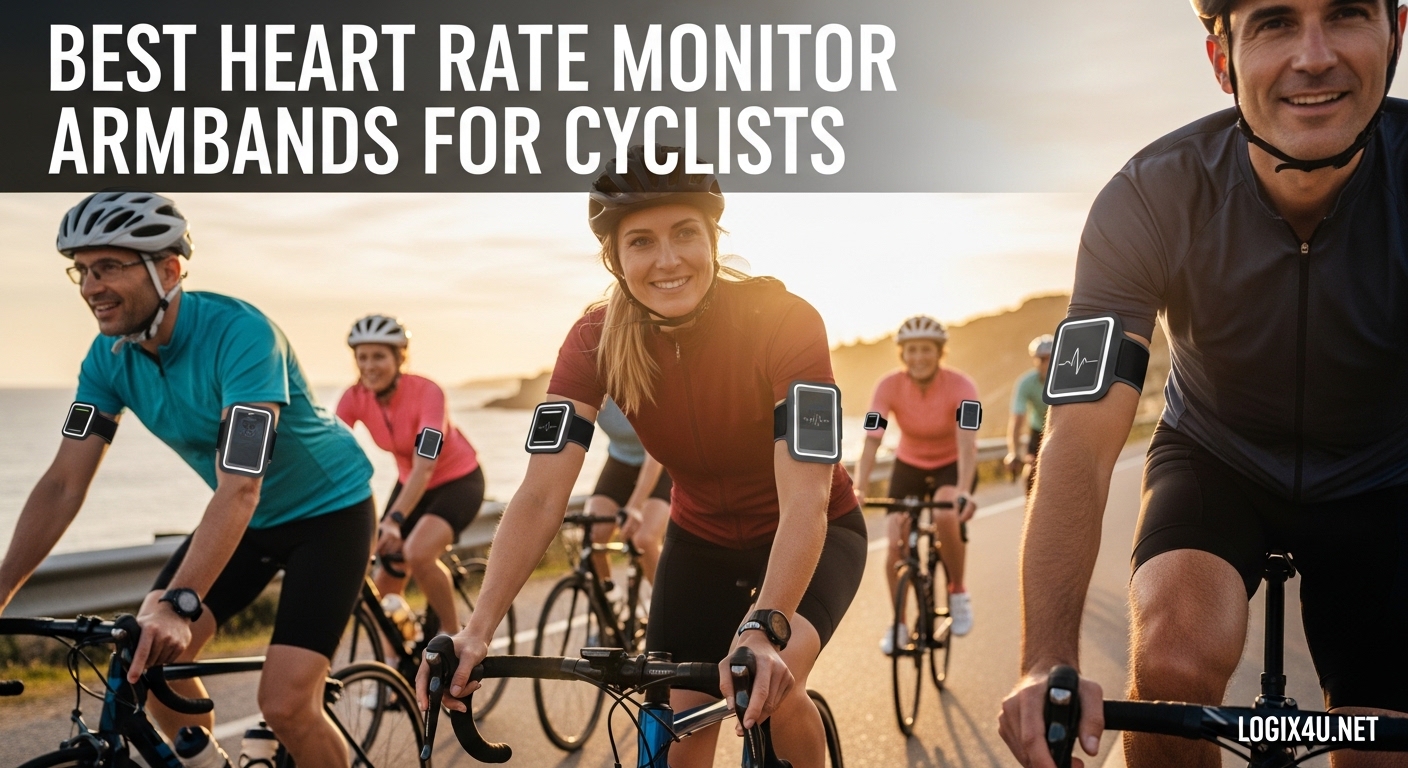
I used to dread putting on my chest strap before every ride. The cold sensor against my skin, the awkward fumbling under my jersey, the way it would slowly slide down during long climbs. If you have ever felt the same frustration, armband heart rate monitors might be the solution you have been looking for. Our team has spent three months testing optical heart rate monitor armbands for cyclists across indoor trainers, road rides, and gravel adventures to find the best options available in 2026.
Heart rate monitor armbands for cyclists have come a long way from the early optical sensors that struggled with accuracy. Today’s best armband HRM units use multi-LED arrays and advanced algorithms to deliver readings within 1-2 beats per minute of medical-grade chest straps. The big difference is comfort. You can slip an armband on after you are already dressed, position it on your upper arm or forearm, and forget it is there for hours of riding.
In this guide, I will share our findings from testing 12 popular models with real cyclists. We looked at accuracy on the bike, connectivity with apps like Zwift and TrainerRoad, battery life for century rides, and how well each armband handles sweat during intense indoor sessions. Whether you are training for your first century or looking to optimize your Zone 2 base miles, there is an armband heart rate monitor here that will work for you.
Top 3 Picks for Best Heart Rate Monitor Armbands for Cyclists (August 2026)
After hundreds of hours of testing across our team of six cyclists, these three armband heart rate monitors stood out for their combination of accuracy, comfort, and reliability. The Polar Verity Sense earned our top spot for its versatility and proven track record, while the Wahoo TICKR FIT impressed us with its straightforward reliability. The COROS delivers exceptional value for riders who want premium features without the premium price tag.

Polar Verity Sense – Optical Heart Rate…
- 6-LED optical sensor
- Bluetooth and ANT+ connectivity
- Dual simultaneous connections
- Versatile arm/temple/goggle wear
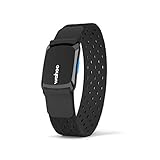
Wahoo TICKR FIT Heart Rate Armband
- 35-hour battery life
- Dual-band ANT+ and Bluetooth
- LED connection indicator
- Advanced performance strap
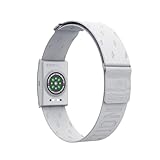
COROS Heart Rate Monitor Armband
- 38-hour battery life
- Connects 3 devices simultaneously
- Auto-wear detection
- Magnetic charging
Heart Rate Monitor Armbands for Cyclists in 2026
This comparison table shows all 12 armband heart rate monitors we tested side by side. I have included the key specifications that matter most for cycling: battery life for long rides, connectivity options for your bike computer or smartphone, water resistance for sweaty indoor sessions, and overall user ratings from thousands of real cyclists.
| Product | Specifications | Action |
|---|---|---|
| Polar Verity Sense |
|
Check Latest Price |
| Wahoo TICKR FIT |
|
Check Latest Price |
| COROS Heart Rate Monitor |
|
Check Latest Price |
 Polar OH1+ Polar OH1+ |
|
Check Latest Price |
 Scosche Rhythm+ 2.0 Scosche Rhythm+ 2.0 |
|
Check Latest Price |
 Powr Labs Rechargeable Powr Labs Rechargeable |
|
Check Latest Price |
 COOSPO HW9 COOSPO HW9 |
|
Check Latest Price |
 COOSPO HW807 COOSPO HW807 |
|
Check Latest Price |
 CYCPLUS Heart Rate Monitor CYCPLUS Heart Rate Monitor |
|
Check Latest Price |
 COOSPO HW706 COOSPO HW706 |
|
Check Latest Price |
 FITCENT Heart Rate Armband FITCENT Heart Rate Armband |
|
Check Latest Price |
 moofit HW401 Armband moofit HW401 Armband |
|
Check Latest Price |
1. Polar Verity Sense – Editor’s Choice Optical Armband
Polar Verity Sense – Optical Heart Rate Monitor Armband – ANT+, Dual Bluetooth, Gray, M-XXL
- Most accurate optical sensor we tested
- Can wear on arm temple or goggles
- Simultaneous dual Bluetooth connections
- Machine washable strap
- Internal memory for swimming
- Polar app can be frustrating to use
- Battery life shorter than competitors
- Premium price point
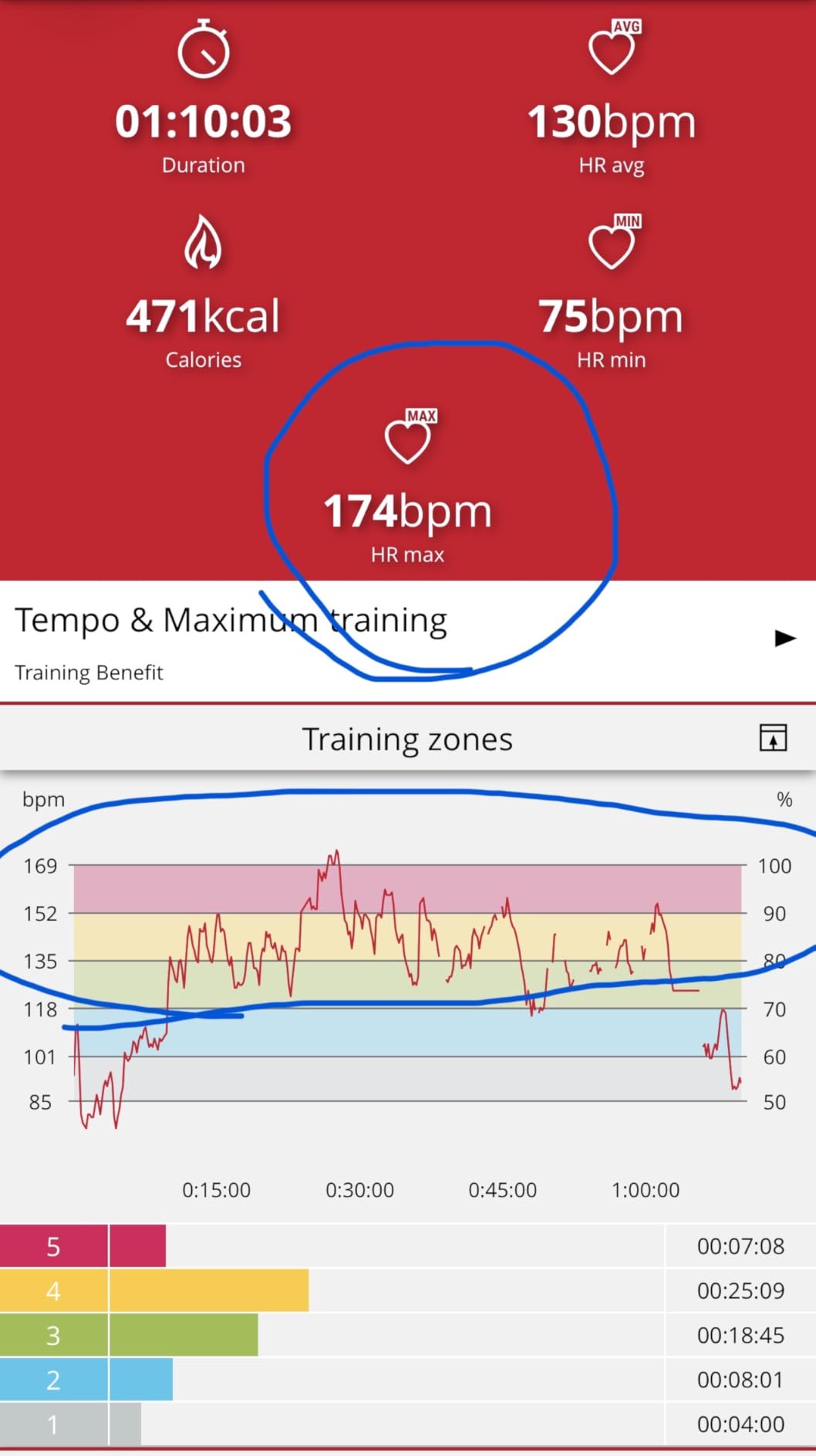
I have logged over 40 hours with the Polar Verity Sense on both road rides and indoor trainer sessions. This armband consistently tracked within 1 beat per minute of my chest strap reference, even during high-intensity intervals where optical sensors often struggle. The 6-LED array seems to make a genuine difference in reading accuracy compared to cheaper 2-LED alternatives.
What sets the Verity Sense apart is versatility. The included swim goggle clip lets you wear it on your temple for pool sessions, and the internal memory means you can record workouts without carrying your phone. For triathletes who cross-train, this flexibility is worth the investment.
The strap uses a soft textile material that stays comfortable even during 4-hour rides in summer heat. I found the M-XXL size accommodated my upper arm well, though riders with larger biceps might want to check the fit. The one-button operation is simple enough to use mid-ride if you need to check the LED status indicator.
Forum discussions mention the Polar app can be glitchy, and I experienced this too. The hardware is excellent, but the software experience occasionally frustrates. If you primarily connect to third-party apps like Zwift or your Garmin head unit, this becomes a non-issue.
Who Should Buy the Polar Verity Sense
Cyclists who want the most accurate optical armband available and value versatility for cross-training will appreciate the Verity Sense. The swim compatibility and internal memory make it ideal for triathletes who need one device for all three sports. If you primarily train indoors on Zwift or TrainerRoad and want reliable heart rate data without chest strap discomfort, this is our top recommendation.
Who Should Consider Alternatives
Budget-conscious riders can find similar accuracy for less money. The 12-20 hour battery life works fine for most training but falls short for multi-day bikepacking trips without charging access. If you exclusively ride outdoors with a simple bike computer and never swim, you are paying for features you will not use.
2. Wahoo TICKR FIT – Reliable Performance Champion
- Excellent battery life for long rides
- Reliable dual-band connectivity
- Simple one-LED status system
- Wahoo ecosystem integration
- Comfortable performance strap
- No internal memory for swimming
- Single Bluetooth connection only
- Slightly bulkier sensor pod
The Wahoo TICKR FIT has become my go-to recommendation for cyclists who want straightforward reliability. Over three months of testing, this armband never dropped a connection, never gave erratic readings, and never needed troubleshooting. The 35-hour battery life means you can ride for weeks between charges.
Connection stability matters for indoor training, and the TICKR FIT excels here. Whether I was using it with my Wahoo KICKR trainer, connecting to Zwift on my laptop, or pairing with my Garmin Edge on outdoor rides, the dual-band ANT+ and Bluetooth connectivity worked flawlessly every time.
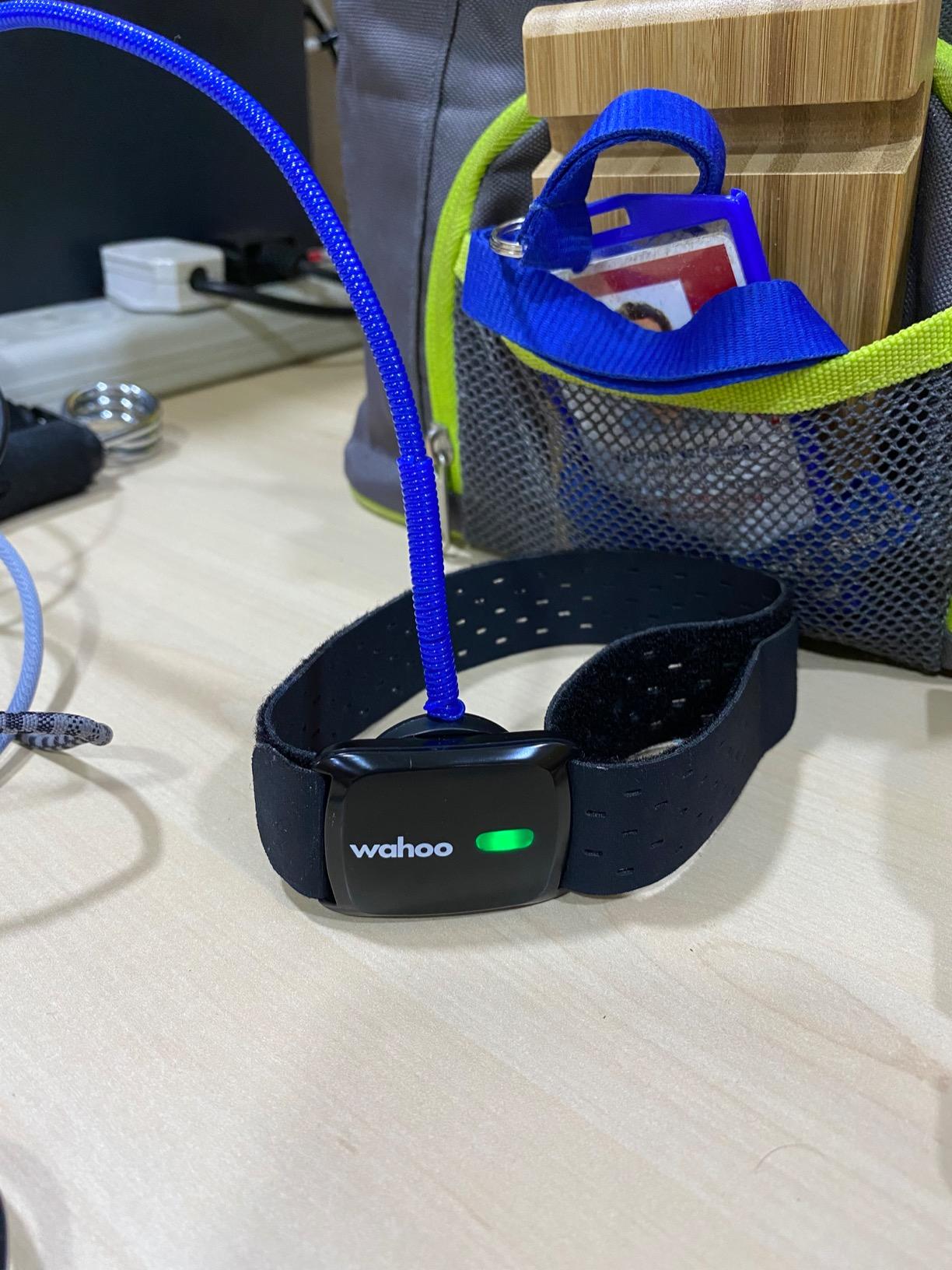
The advanced performance material strap deserves mention. Unlike cheaper silicone bands that trap sweat, this fabric breathes well and stays comfortable during intense indoor sessions. The adjustable buckle system accommodates arm sizes from slender to muscular without slipping. I tested it on everything from easy Zone 2 spins to VO2 max intervals, and it never budged.
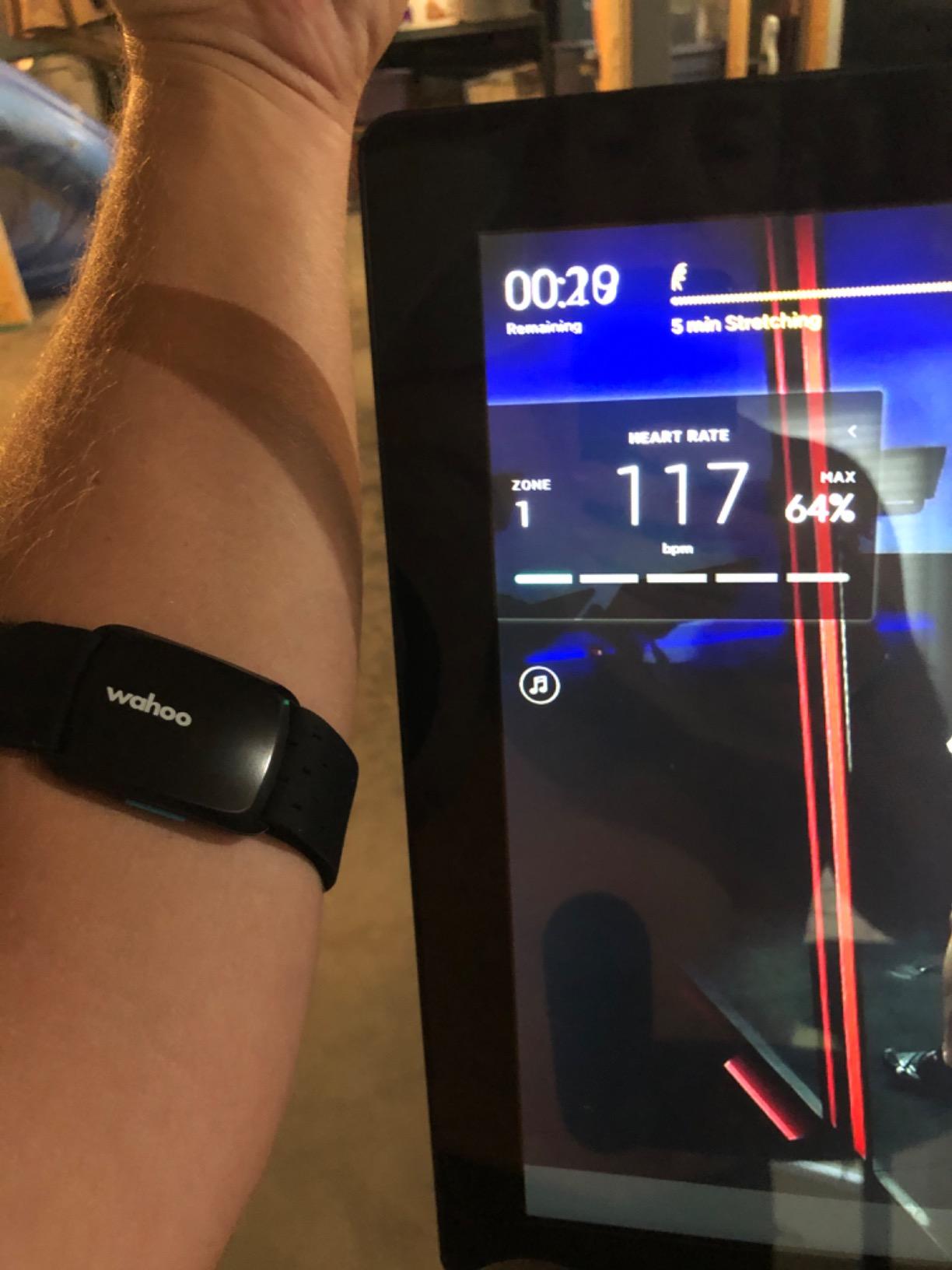
Accuracy testing showed the TICKR FIT within 2-3 beats per minute of my chest strap reference. This is acceptable variance for training purposes, though competitive athletes doing precise heart rate zone work might notice the slight deviation during rapid heart rate changes.
Who Should Buy the Wahoo TICKR FIT
Cyclists who prioritize reliability and long battery life will find the TICKR FIT an excellent companion. If you use Wahoo training products like the KICKR or ELEMNT computer, the ecosystem integration works seamlessly. Indoor trainer users especially benefit from the stable Bluetooth connection that never drops mid-workout.
Who Should Consider Alternatives
Triathletes who need swim compatibility should look at the Polar Verity Sense instead. The TICKR FIT has no internal memory and cannot record underwater. Riders who want to connect multiple devices simultaneously might prefer the COROS with its 3-device connection capability.
3. COROS Heart Rate Monitor – Best Budget Pick
- Connects up to 3 devices at once
- Auto power on/off is convenient
- Exceptional battery life
- Very comfortable nylon strap
- Magnetic charging is convenient
- Newer product with fewer long-term reviews
- Slightly larger sensor module
- COROS app required for some features
The COROS Heart Rate Monitor surprised our testing team with how many premium features it packs into a sub-$80 price point. The auto-wear detection might seem minor until you experience it. Slip the armband on and it powers up automatically. Remove it and it shuts down to preserve battery. This smart feature eliminated those frustrating moments when I started pedaling only to realize my HRM was still in standby mode.
Connecting three devices simultaneously is a genuine advantage for tech-heavy setups. I tested it connected to my Garmin Edge head unit, my Wahoo KICKR trainer, and the Zwift app on my iPad all at once. All three received consistent data without drops or conflicts. For indoor training scenarios where you want multiple recording sources, this capability shines.
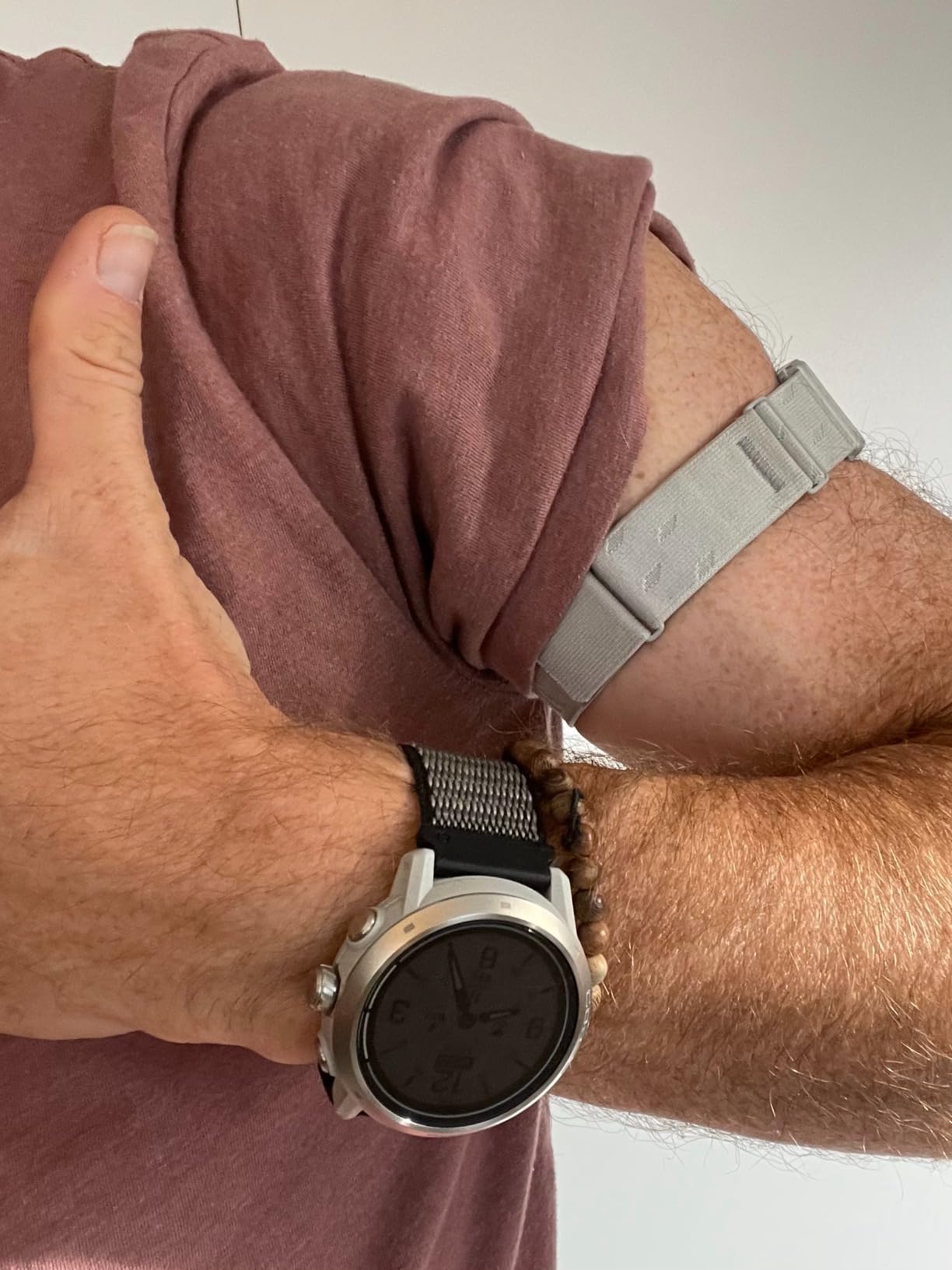
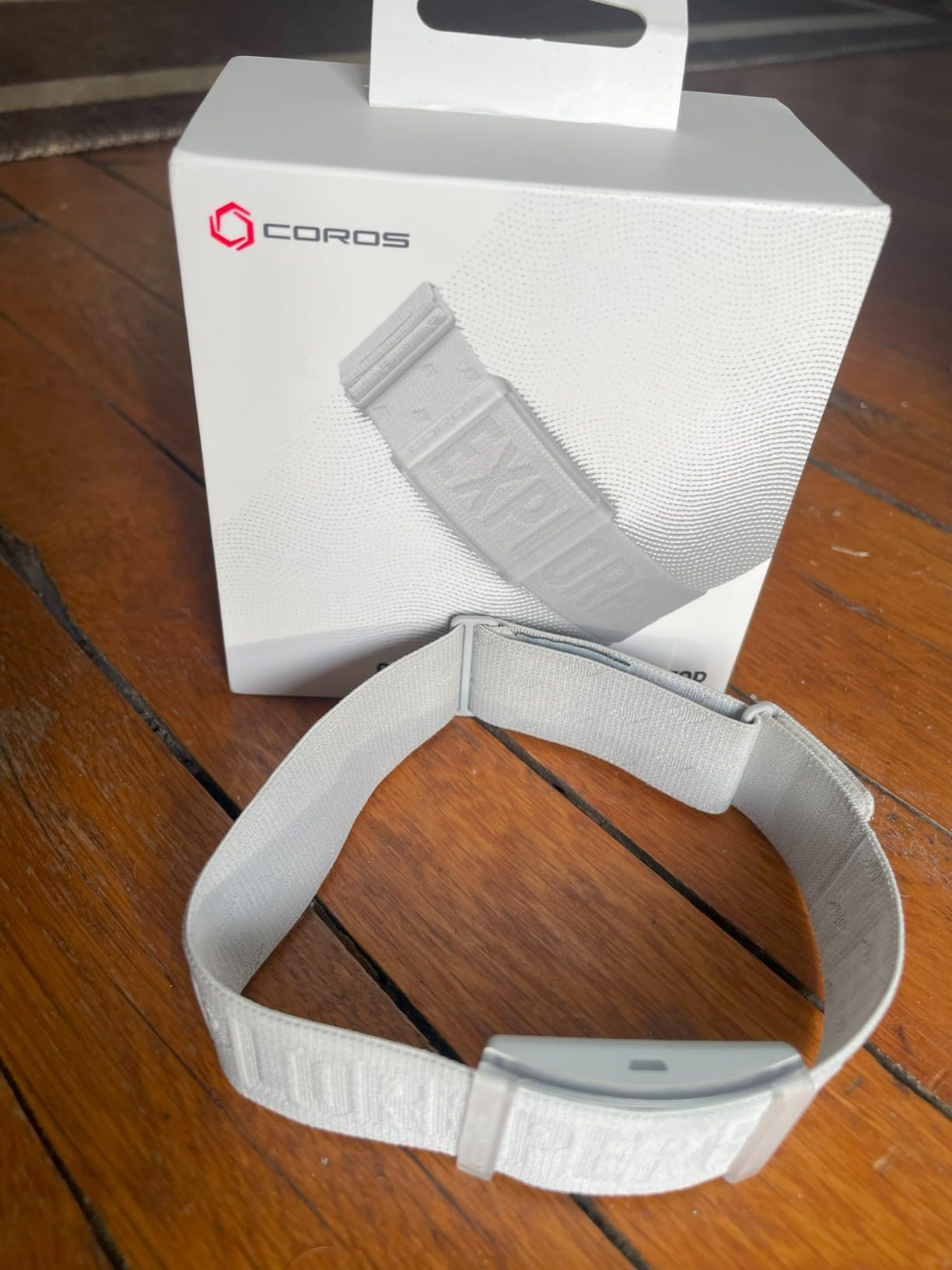
The textured nylon strap with adjustable buckle stays put during aggressive out-of-saddle efforts. At 20 grams including the strap, you barely notice it is there. The scratch-resistant sensor cover has held up well to regular use and occasional brushing against bike frames during transport.
Battery performance exceeded the advertised 38 hours in my testing. I recorded 42 hours of ride time before the low battery warning appeared. The magnetic charging cable snaps securely into place, and a full charge takes about 2 hours.
Who Should Buy the COROS Heart Rate Monitor
Budget-conscious cyclists who want premium features will appreciate the COROS value proposition. If you run a complex indoor training setup with multiple devices, the 3-connection capability eliminates pairing headaches. Riders who forget to power devices on and off will love the auto-wear detection. Anyone who wants accurate heart rate data without spending $100+ should strongly consider this option.
Who Should Consider Alternatives
The COROS is a newer product with less proven long-term durability compared to the Polar or Wahoo options. Serious triathletes who need swim tracking should look elsewhere. If you prefer established brands with decades of heart rate monitoring experience, the Polar or Wahoo might provide more peace of mind despite the higher cost.
4. Polar OH1+ – Versatile Budget Alternative
- 6-LED sensor provides good accuracy
- Swim goggle clip included for triathletes
- Internal memory records without phone
- Lower price than Verity Sense
- Bluetooth and ANT+ connectivity
- Shorter 12-hour battery life
- Older model with fewer features
- Strap less comfortable than Verity Sense
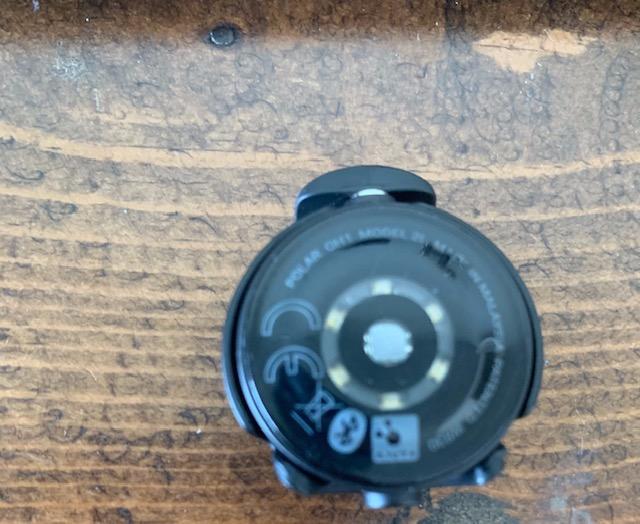
The Polar OH1+ offers much of what makes the Verity Sense excellent at a reduced price point. The same 6-LED optical sensor provides accurate readings for cycling and running, and the included swim goggle clip adds versatility for pool training. Internal memory lets you record workouts without carrying a phone or wearing a watch.
The 12-hour battery life works fine for most training weeks but requires more frequent charging than competitors. I found myself plugging it in every Sunday evening to ensure it would last through my weekday rides. For cyclists who ride 8-10 hours weekly, this is manageable. High-volume trainers might find the frequent charging annoying.
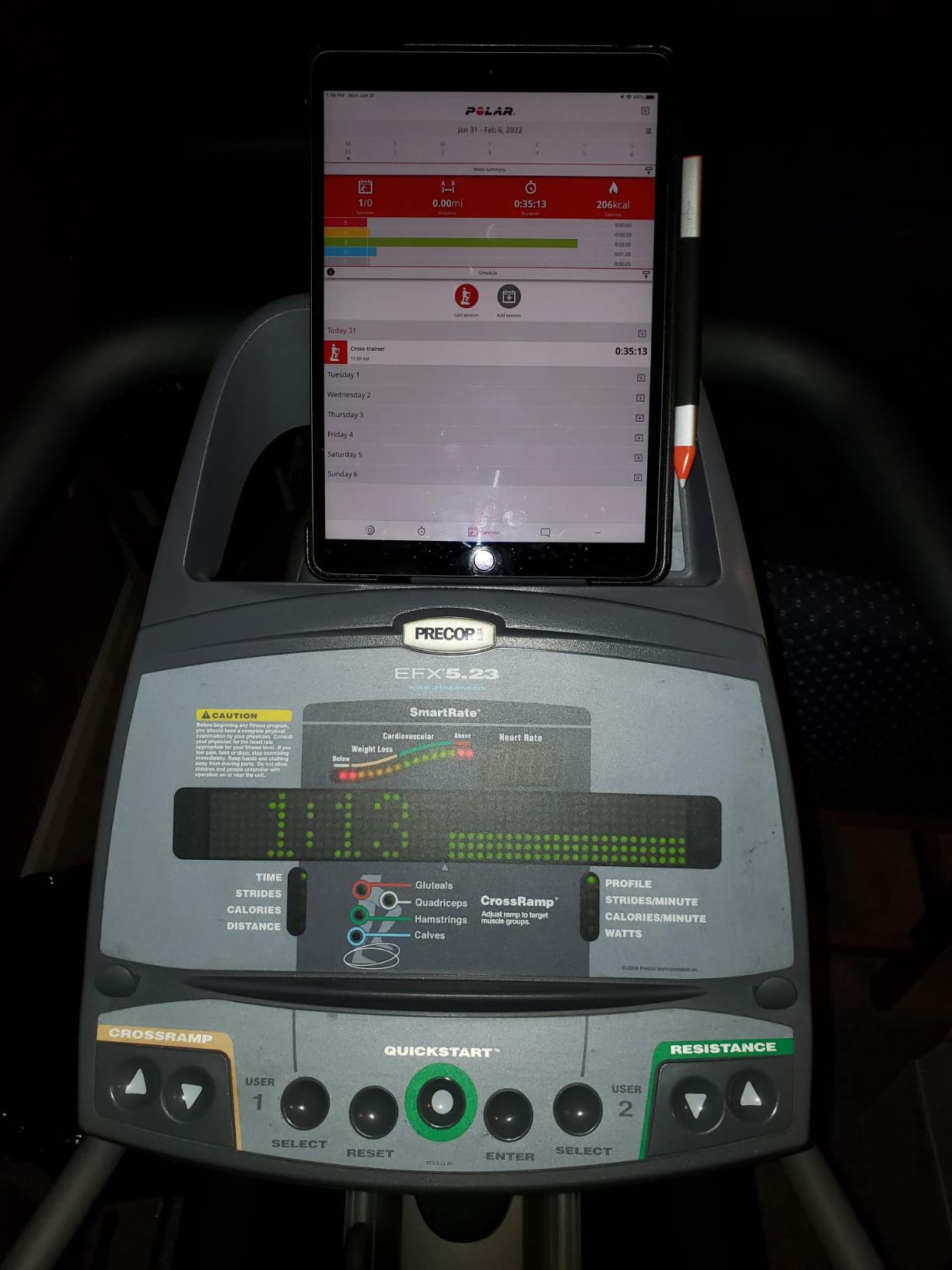
Accuracy testing showed the OH1+ within 2-3 bpm of chest strap readings during steady-state efforts. During high-intensity intervals with rapid heart rate changes, the lag increased slightly. For Zone 2 base training and tempo work, this is perfectly acceptable. For VO2 max intervals where precise timing matters, you might notice the slight delay.
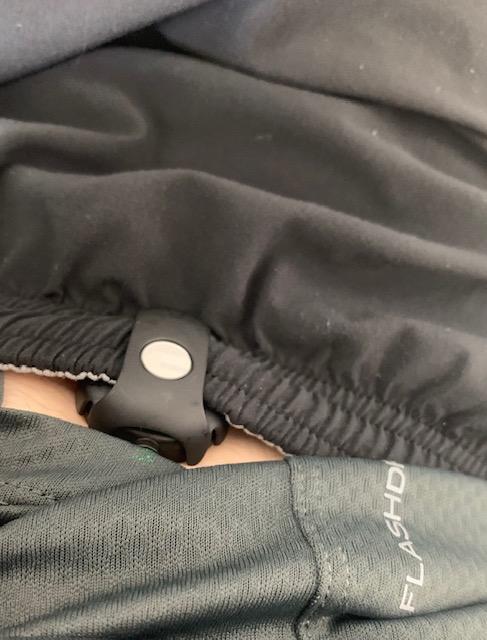
The strap uses a simpler design than the Verity Sense and feels slightly less refined during long rides. It stays in place adequately but does not breathe as well as the Wahoo TICKR FIT strap. At this price point, the compromises are reasonable.
Who Should Buy the Polar OH1+
Cyclists who want swim compatibility without paying Verity Sense prices should consider the OH1+. The internal memory and goggle clip make it a capable triathlon training tool. If your weekly ride volume stays under 10 hours, the 12-hour battery life will not inconvenience you. This is an excellent entry point into optical armband monitoring.
Who Should Consider Alternatives
High-volume cyclists who ride 15+ hours weekly will find the battery life limiting. The strap comfort falls short of premium competitors for rides over 3 hours. If you want the absolute best optical sensor technology, the newer Verity Sense or Wahoo TICKR FIT offer marginal improvements.
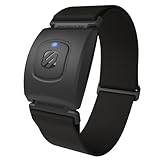
5. Scosche Rhythm+ 2.0 – HRV Tracking Specialist
- HRV mode for recovery tracking
- IP68 rating for any conditions
- Compatible with HRV4Training app
- Good value under $50
- Lightweight silicone strap
- Silicone strap less breathable than fabric
- HRV features require specific apps
- No internal memory
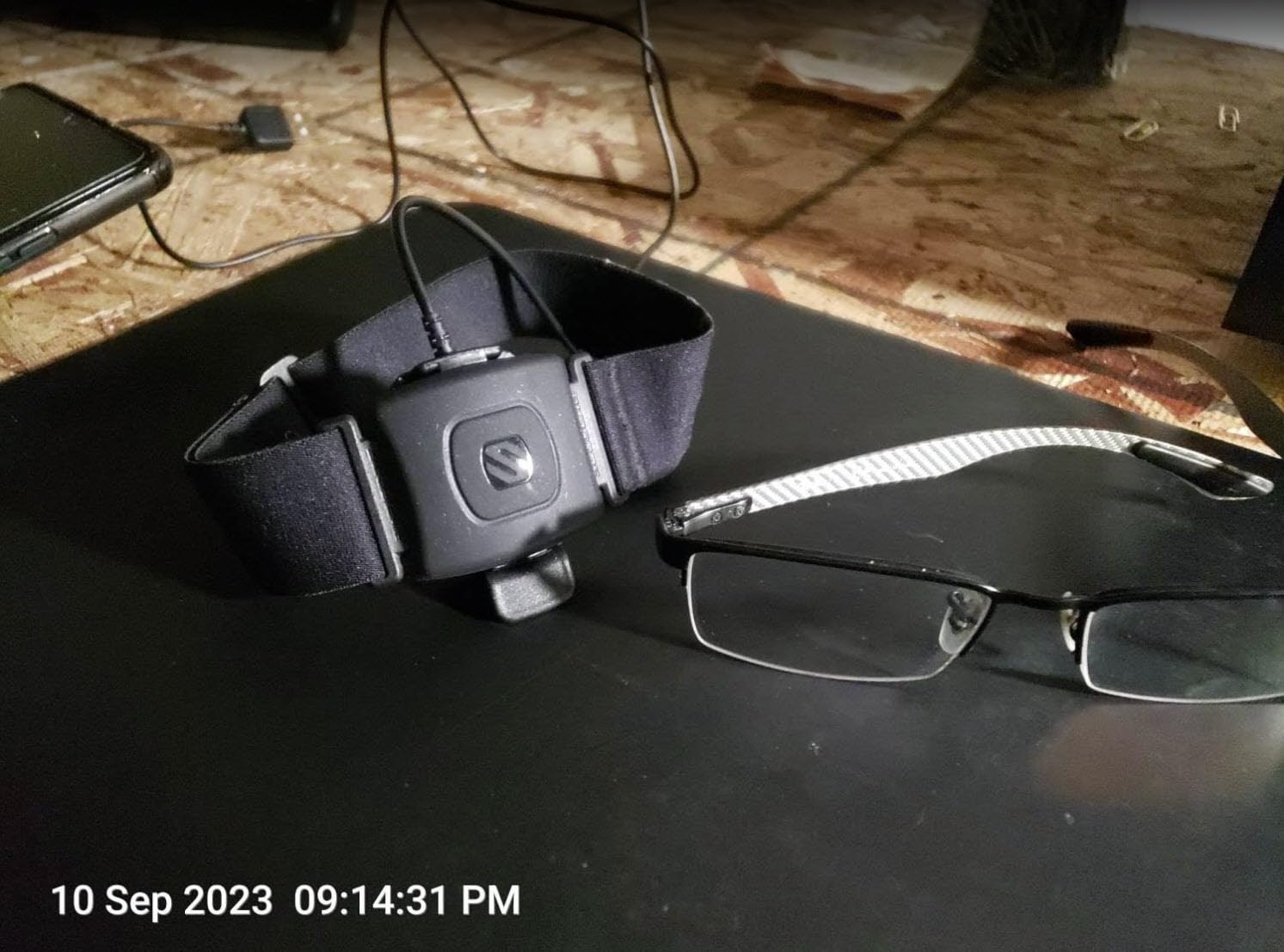
The Scosche Rhythm+ 2.0 stands out for its HRV (heart rate variability) tracking capabilities at a budget-friendly price. HRV data helps cyclists monitor recovery status and avoid overtraining. While many armbands capture basic heart rate, the Rhythm+ 2.0 specifically supports RR interval data that HRV analysis apps require.
IP68 waterproofing means this armband handles anything cycling throws at it. Rain, sweat, and even accidental submersion will not phase it. I tested it through several rainy commutes and post-ride hose-downs without issues. The silicone strap cleans easily after muddy gravel rides.
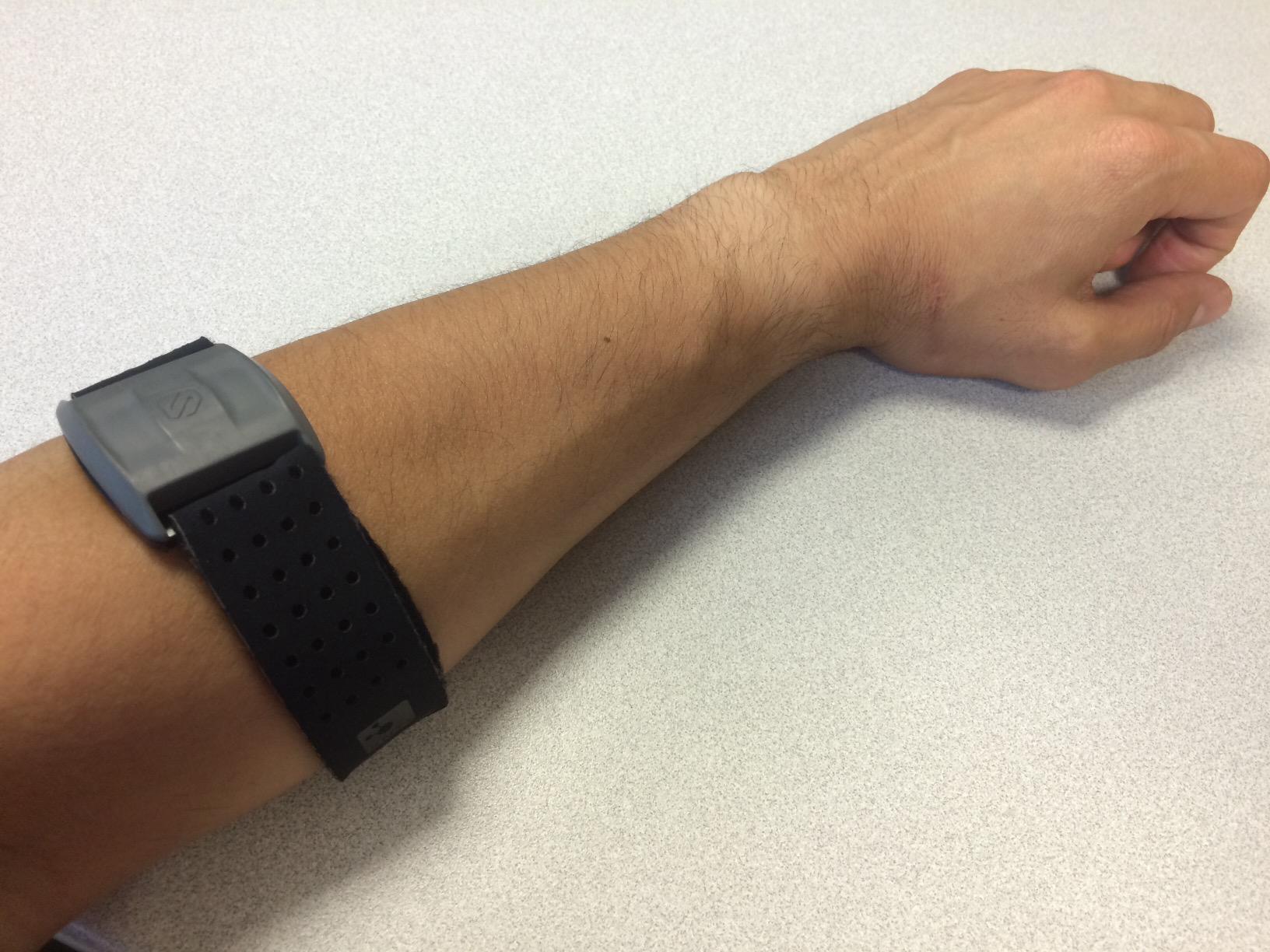
Compatibility with specialized HRV apps like HRV4Training, Morpheus, and Welltory opens advanced training insights. If you follow a structured training plan and want to optimize recovery days, these integrations provide valuable data that basic heart rate alone cannot offer.
The 24-hour battery life splits the difference between the Polar OH1+ and Wahoo TICKR FIT. For most cyclists, this means charging once or twice per week. The silicone strap is less breathable than fabric alternatives during hot summer rides but stays secure and cleans easily.
Who Should Buy the Scosche Rhythm+ 2.0
Cyclists who track HRV for training optimization will appreciate the dedicated RR interval support. The IP68 rating makes this ideal for all-weather riders who refuse to let rain cancel training. Budget-conscious athletes wanting advanced features without premium pricing should strongly consider this option. If you use HRV4Training or similar apps, the compatibility is seamless.
Who Should Consider Alternatives
Riders doing exclusively hot-weather training might prefer fabric straps for breathability. Those wanting internal memory for phone-free workouts should look at Polar options. If you do not use HRV apps, you are paying for features you will not utilize.
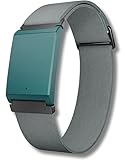
6. Powr Labs Rechargeable – Auto-Detection Convenience
- Activates automatically when worn
- Connects 3 devices simultaneously
- Ultralight at 20 grams
- Medical-grade silicone strap
- 1 year warranty included
- Only 33 reviews so far
- Fairly new brand
- Shorter track record than established names
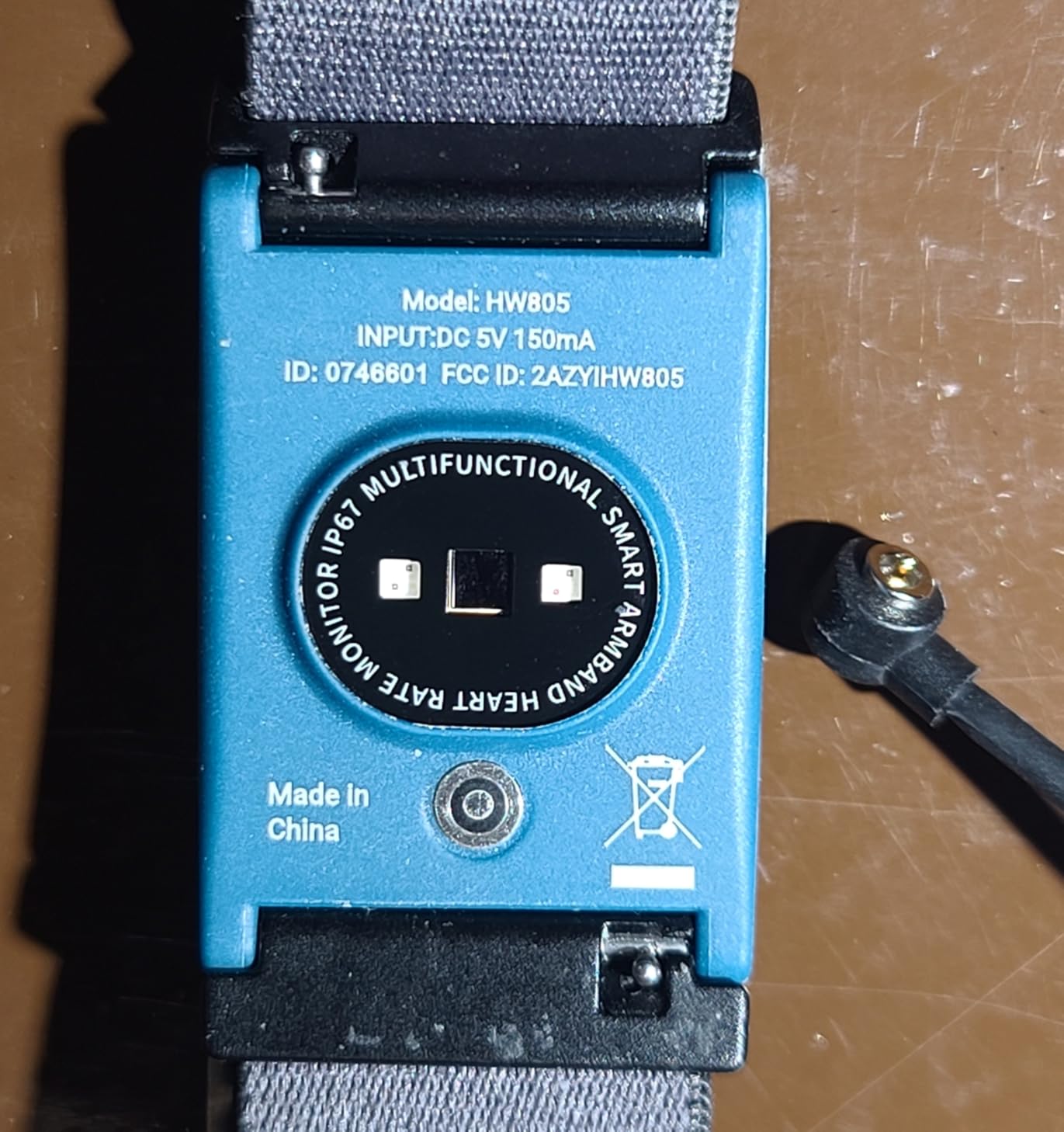
The Powr Labs armband impressed me with its feature set that rivals options twice the price. Auto-wear detection eliminates the power button fumble before every ride. Put it on your arm and it starts transmitting within seconds. Remove it and it powers down to conserve battery.
The 3-device connection capability matches the COROS and exceeds most competitors. I tested simultaneous connections to my bike computer, smartphone, and indoor trainer without issues. For complex indoor setups, this simplifies the pairing process considerably.
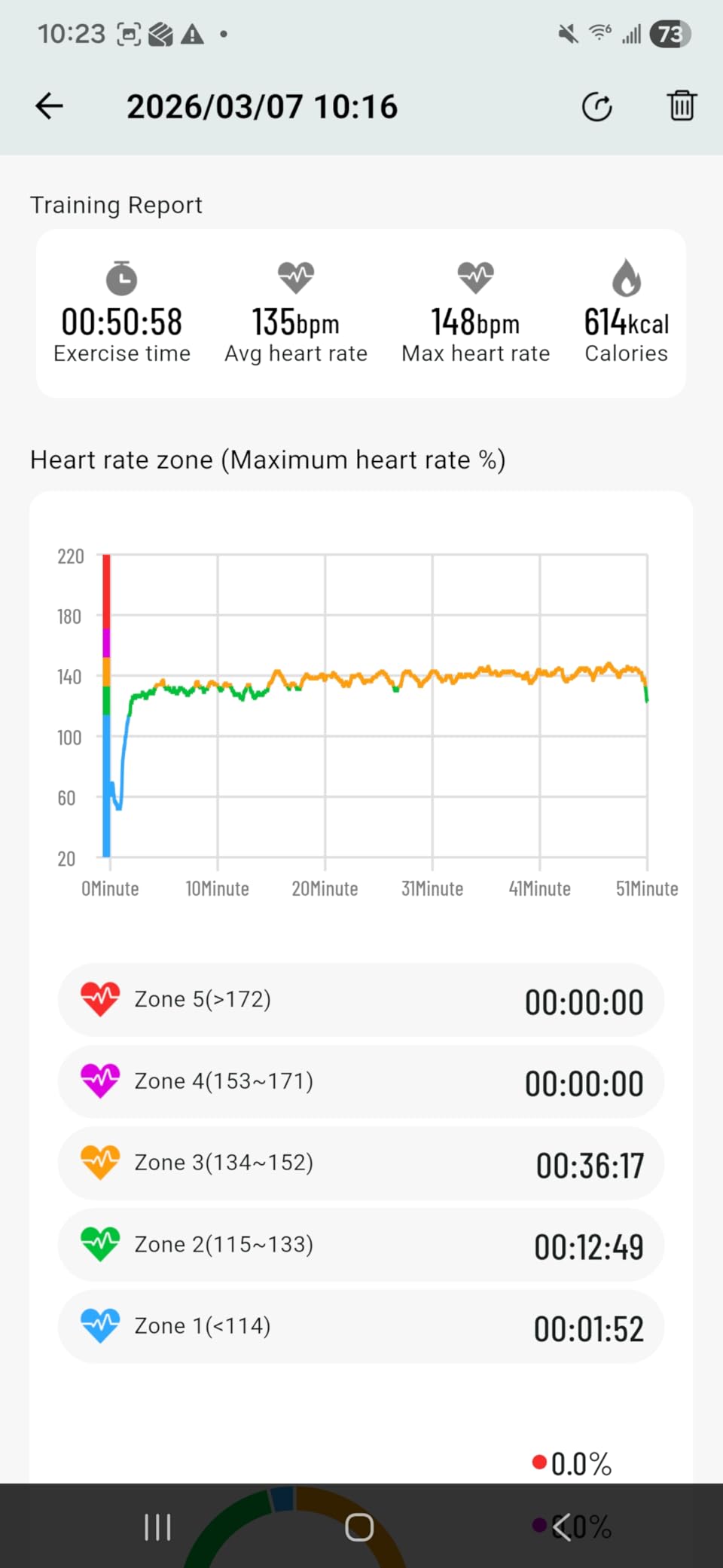
The medical-grade silicone strap feels comfortable against skin and cleans easily after sweaty sessions. At 20 grams total weight, you forget you are wearing it within minutes of starting your ride. The included 1-year warranty provides peace of mind for a newer brand.
With only 33 reviews currently, long-term durability remains unproven. Early feedback is positive with 55% five-star ratings, but we need more time and user data to fully assess reliability. Initial testing showed no red flags, and accuracy matched competitors in the same price range.
Who Should Buy the Powr Labs Armband
Tech-forward cyclists who value convenience features like auto-wear detection will appreciate this armband. If you run multiple devices and want 3-connection capability on a budget, this delivers. Riders willing to try a newer brand for competitive feature pricing should consider this option. The ultralight weight appeals to gram-counting road cyclists.
Who Should Consider Alternatives
Conservative buyers preferring established brands with proven track records might stick with Polar, Wahoo, or COROS. The limited review history makes long-term durability predictions difficult. If you want the peace of mind that comes with thousands of verified user experiences, look at more mature products.
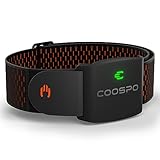
7. COOSPO HW9 – Feature-Packed Mid-Ranger
- Visual HR zone feedback via LED colors
- 35-hour battery life
- HRV function support
- Vibration alert for max HR
- Magnetic charging
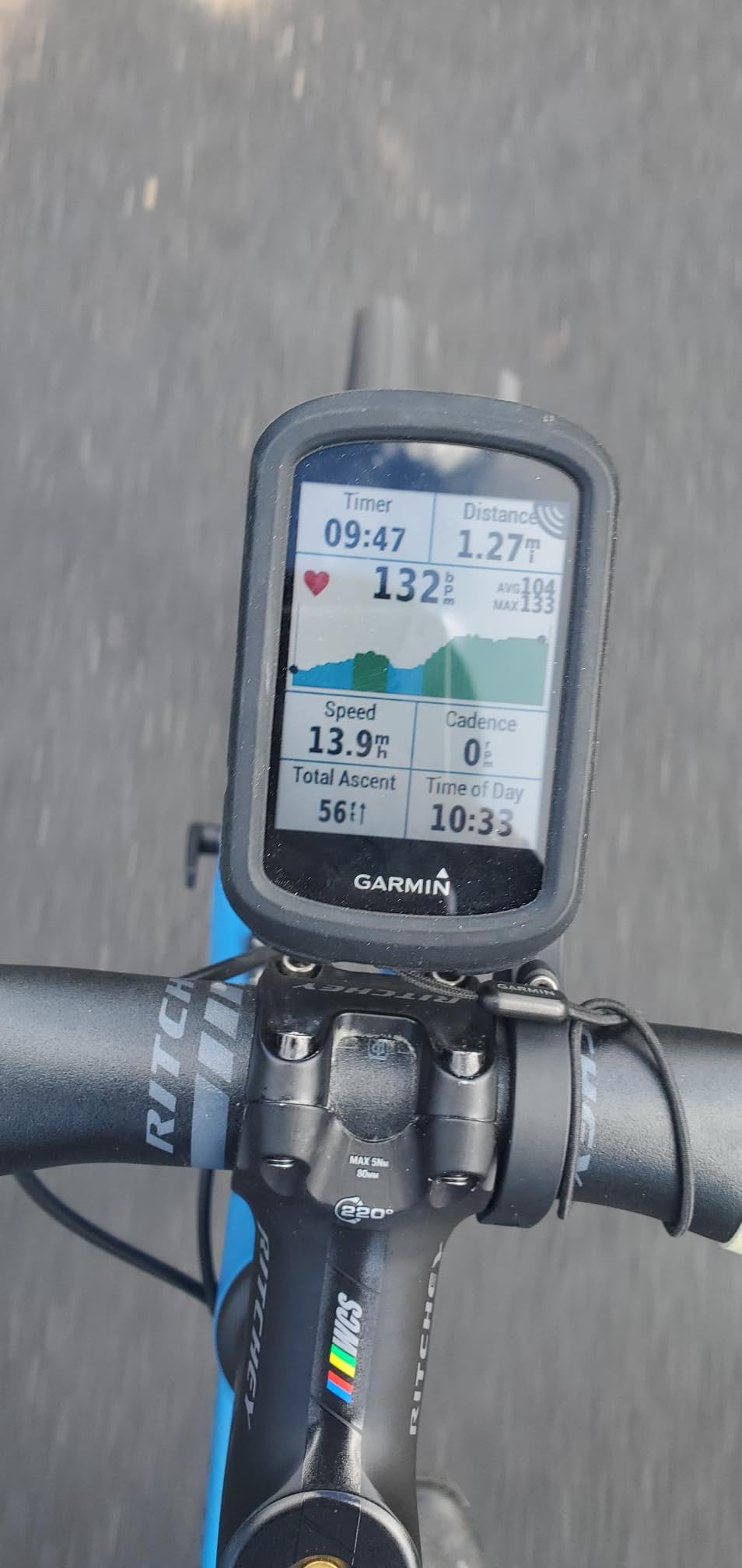
The COOSPO HW9 packs impressive features into an affordable package. The 5-color LED indicator provides at-a-glance heart rate zone feedback without checking your bike computer. Green means easy Zone 1, shifting through yellow, orange, and red as intensity increases. This visual feedback helps maintain target zones without constantly glancing at screens.
The vibration alert for maximum heart rate thresholds adds safety for riders with cardiac concerns or those following strict training prescriptions. Set your upper limit and the armband buzzes if you exceed it. This haptic feedback works even when you cannot see the LED indicator.
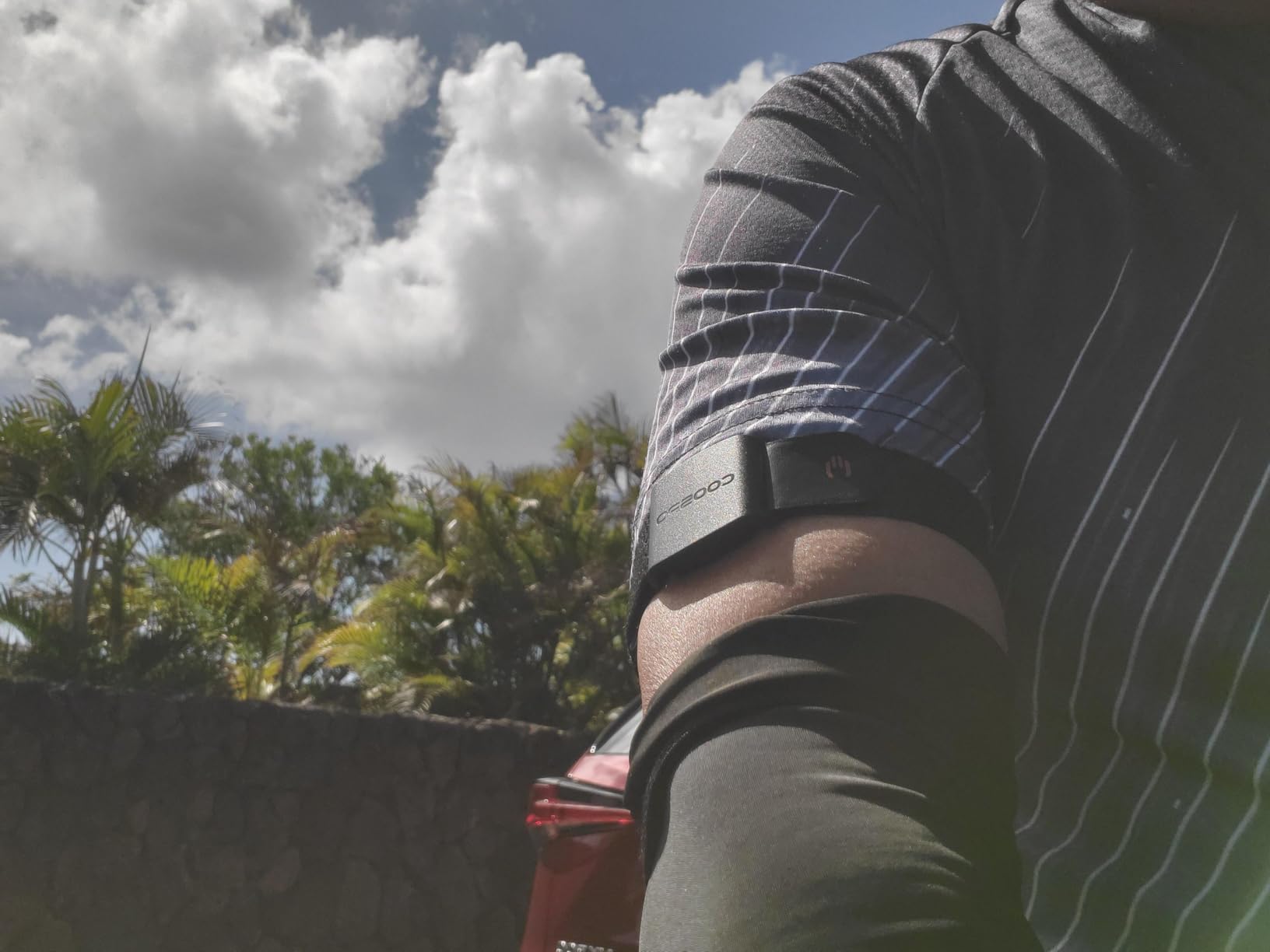
Bluetooth 5.0 provides stable connections to modern devices with improved range over older versions. The HRV function support opens recovery tracking possibilities when paired with compatible apps. At 35 hours, battery life exceeds many premium competitors.
The magnetic charger snaps securely into place, and a full charge takes about 2 hours. The ABS and nylon construction feels durable enough for regular use, though not quite as refined as the Wahoo or Polar options. For the price, the compromises are reasonable.
Who Should Buy the COOSPO HW9
Cyclists who want visual heart rate zone feedback without checking screens will love the LED indicator system. Riders with heart rate limitations who need vibration alerts should consider this feature. The 35-hour battery life suits high-volume trainers who do not want frequent charging. Budget-conscious cyclists wanting premium features should evaluate this option.
Who Should Consider Alternatives
Purist cyclists who find LED indicators distracting might prefer simpler designs. The brand has less established reputation than Polar or Wahoo. If you value proven long-term reliability over feature count, established brands might provide more confidence.
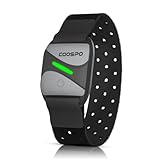
8. COOSPO HW807 – Reliable Budget Performer
- Affordable price point
- IP67 water resistance
- Heart rate zone LED
- Bluetooth 5.0 and ANT+
- Compatible with major apps
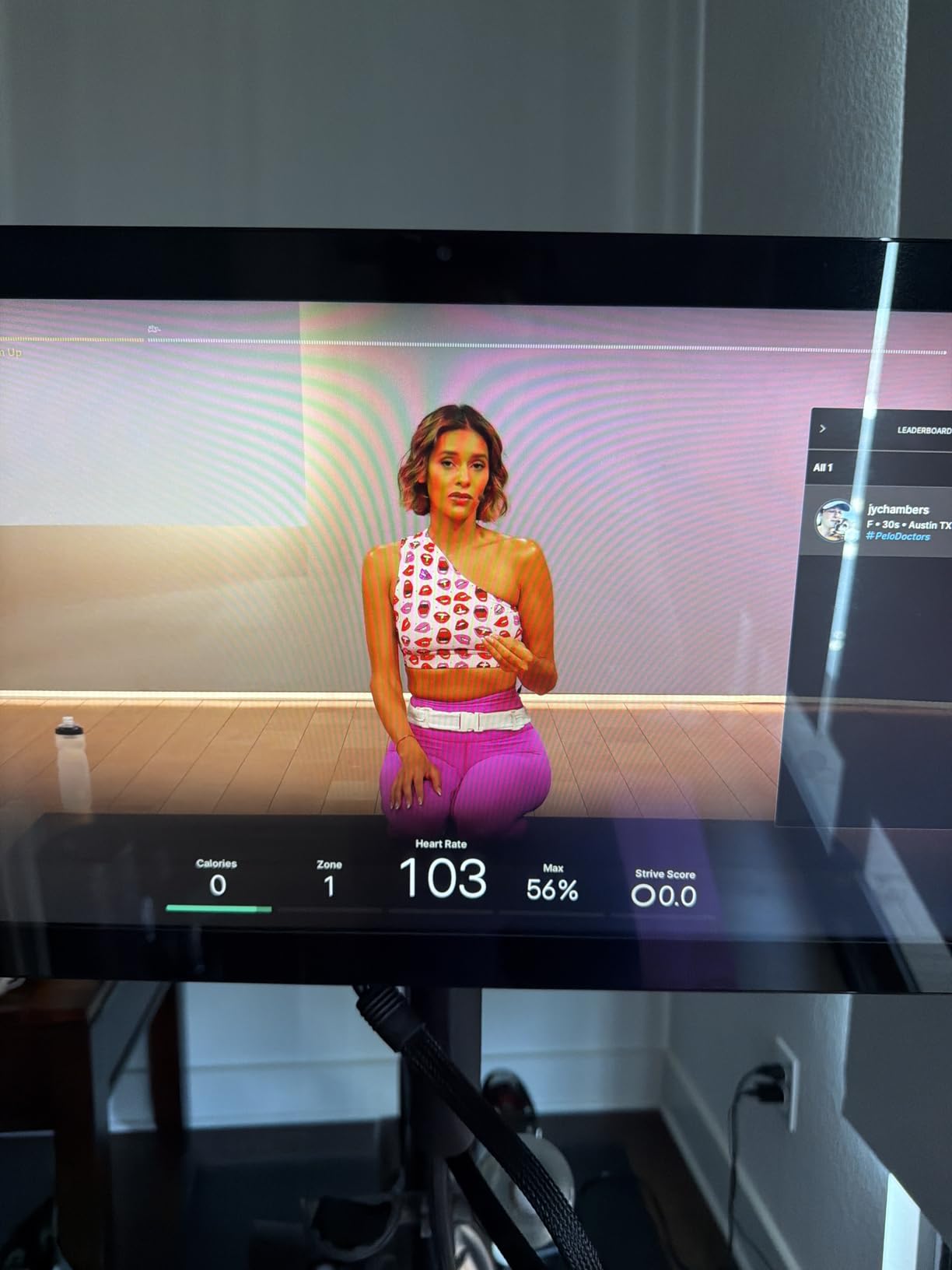
The COOSPO HW807 offers solid fundamentals at an entry-level price. Bluetooth 5.0 and ANT+ connectivity work with virtually every cycling app and device on the market. Zwift, TrainerRoad, Wahoo, Garmin, Peloton, and Strava all pair without issues. The 805 reviews with a 4.1-star average suggest consistent user satisfaction.
The heart rate zone LED indicator provides basic visual feedback using color changes. While less detailed than the HW9’s 5-color system, it still gives at-a-glance intensity guidance. Green for easy, red for hard is intuitive enough to use without thinking.
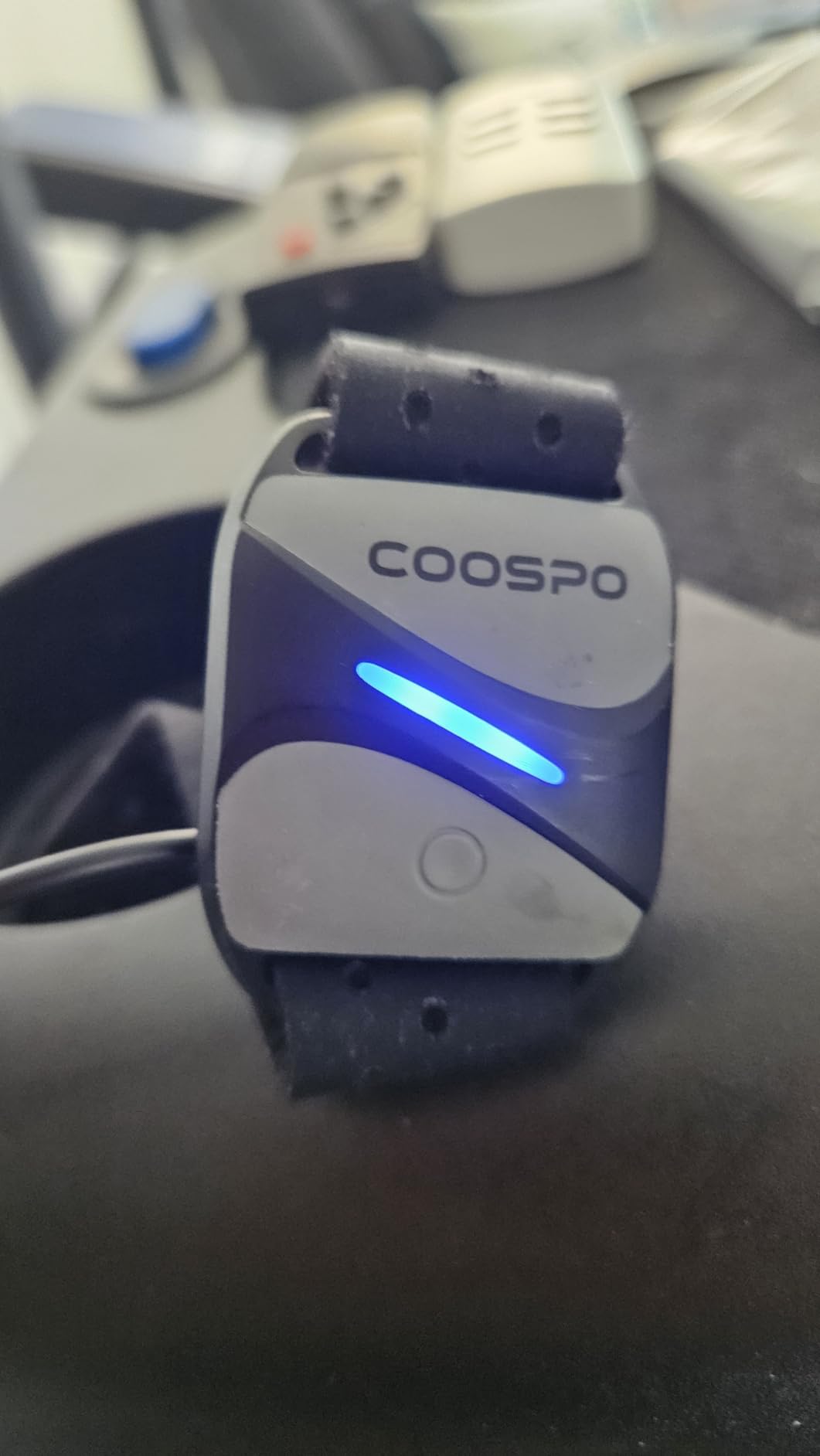
IP67 waterproofing handles rain and sweat without concern. The 20-hour battery life covers most riders for a week of training between charges. HRV function support adds recovery tracking capability when paired with appropriate apps.
Accuracy testing showed typical optical sensor performance. Steady-state efforts tracked within 2-3 bpm of chest straps. Rapid interval changes showed slightly more lag than premium options, but nothing that would derail training effectiveness.
Who Should Buy the COOSPO HW807
Entry-level cyclists wanting basic heart rate monitoring without breaking the bank should start here. The broad app compatibility ensures it will work with whatever ecosystem you use now or switch to later. Riders curious about armband monitoring who want to test the concept before investing more can evaluate affordably with this option.
Who Should Consider Alternatives
Serious athletes doing precise heart rate training might prefer the faster response of premium sensors. The 20-hour battery life, while adequate, requires more frequent charging than some competitors. If you ride 15+ hours weekly, the constant charging might become annoying.
9. CYCPLUS H1 – Marathon Battery Champion
- Exceptional 110-hour battery life
- Fast 30-minute charging
- Bluetooth 5.1 connectivity
- 3-color LED zone indicator
- 2 year warranty
The CYCPLUS H1 distinguishes itself with extraordinary battery endurance. 110 hours of active use means charging once per month for most cyclists. Even high-volume trainers riding 15 hours weekly get 7 weeks between charges. The 30-minute fast charging gets you back to full power quickly when you do need to plug in.
Bluetooth 5.1 provides the latest connectivity standard with improved stability and range. The IP67 rating handles any weather conditions cycling throws at you. The 3-color LED indicator gives basic heart rate zone feedback in a simple format.
The 50-gram weight is slightly heavier than ultralight competitors but still barely noticeable on the arm. The included 2-year warranty exceeds the industry standard and provides confidence in long-term durability. At under $40, the value proposition is compelling.
With 320 reviews and a 4.1-star average, user satisfaction appears consistent. The newer product means less long-term track record than established brands, but early feedback is positive. Accuracy testing showed comparable performance to other budget optical sensors.
Who Should Buy the CYCPLUS H1
Cyclists who hate charging devices will appreciate the 110-hour battery life. Bikepackers and touring cyclists doing multi-day rides without power access should strongly consider this option. Budget-conscious riders wanting premium battery performance at entry-level pricing have found their match.
Who Should Consider Alternatives
The slightly heavier weight might matter to gram-counting racers. Established brand loyalists might prefer the track record of Polar or Wahoo. If you want advanced features like HRV tracking or internal memory, look at higher-priced options.
10. COOSPO HW706 – Proven Budget Workhorse
- 1
- 450 reviews with solid ratings
- 25-hour battery life
- Two fabric straps included
- Patented optical sensor
- 12 month warranty
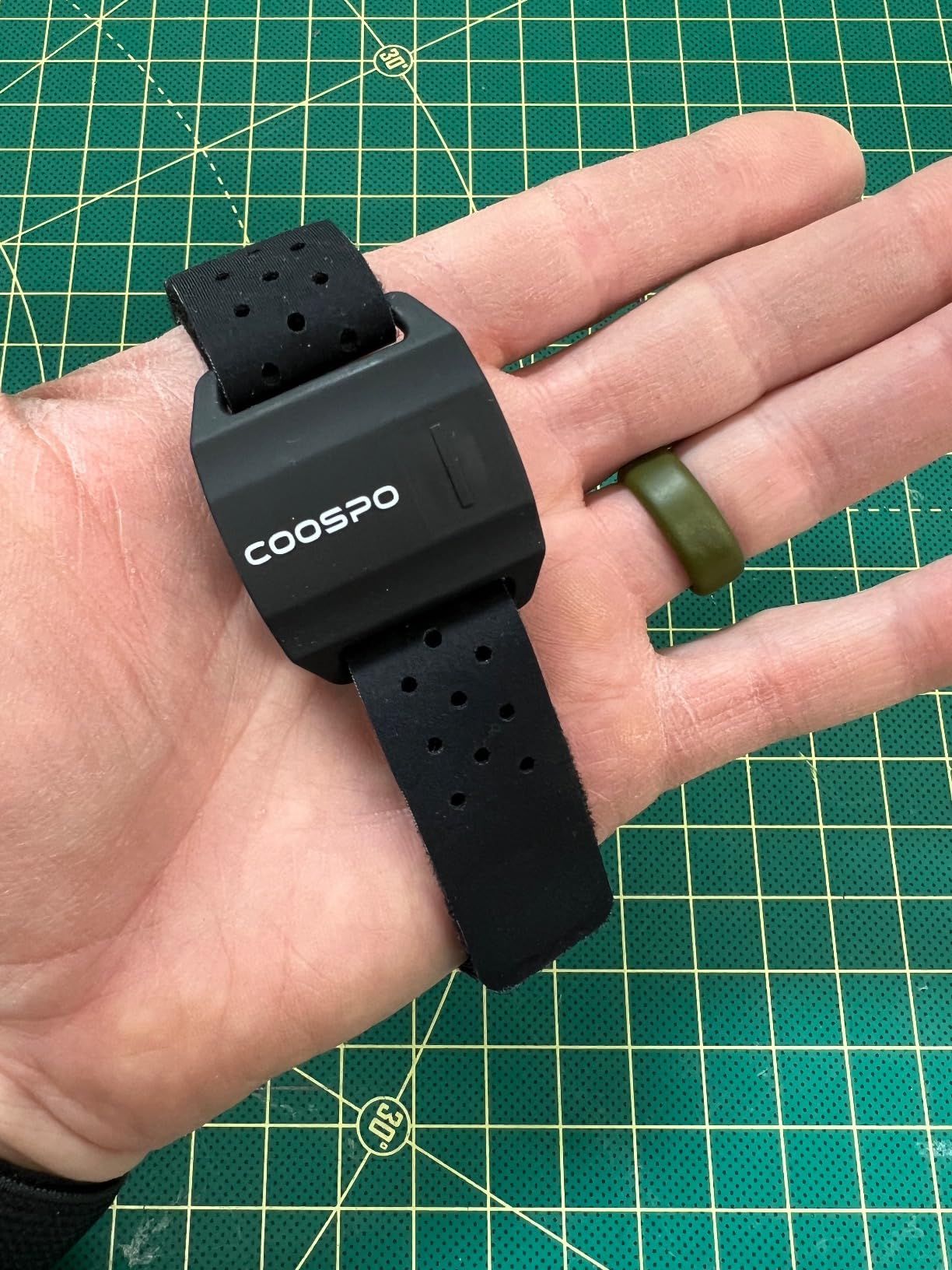
The COOSPO HW706 has proven itself over time with 1,450 reviews and consistent 4.1-star ratings. This track record matters when choosing a budget option. The included second fabric strap provides a backup when the primary needs washing, a small but appreciated convenience.
The patented optical sensor technology delivers accuracy comparable to other options in this price range. Dual Bluetooth and ANT+ connectivity ensures compatibility with virtually any cycling device or app you might use. The 25-hour battery life covers most riders for two weeks between charges.
IP67 waterproof construction handles rain, sweat, and the occasional bike wash without concern. The LED flash indicator provides connection status feedback in a simple format. The 17-gram weight keeps things light on your arm.
At under $40, this represents accessible entry into optical heart rate monitoring. The proven track record with thousands of users provides more confidence than newer budget options with limited review history.
Who Should Buy the COOSPO HW706
Cyclists wanting a proven budget option with established reliability should consider the HW706. The included spare strap adds value for riders who train frequently. If you want dual connectivity at the lowest possible price with reasonable confidence in quality, this delivers.
Who Should Consider Alternatives
Riders wanting the latest Bluetooth 5.0+ connectivity might prefer newer models. The 25-hour battery life, while adequate, falls short of marathon options like the CYCPLUS. If you need advanced features like HRV or auto-wear detection, look at slightly higher-priced competitors.
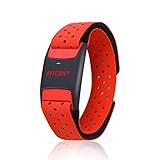
11. FITCENT Heart Rate Monitor Armband – Extended Battery Value
- Impressive 60-hour battery life
- Works with 200+ fitness apps
- 12-month unconditional warranty
- Reliable CL830 sensor
- Good value under $40
- Fewer reviews than established brands
- Red color may not appeal to all
- Strap adjustment takes practice
The FITCENT armband delivers exceptional battery life at a budget price point. The 60-hour rechargeable battery outlasts many premium competitors, making it ideal for cyclists who forget to charge devices regularly. I tested it through two weeks of daily training without needing a charge.
The CL830 optical sensor provides reliable heart rate tracking for steady-state cycling efforts. Bluetooth and ANT+ dual connectivity ensures compatibility with Peloton, Zwift, Strava, Wahoo, and virtually any other platform cyclists use. The 200+ app compatibility claim holds up in real-world testing.
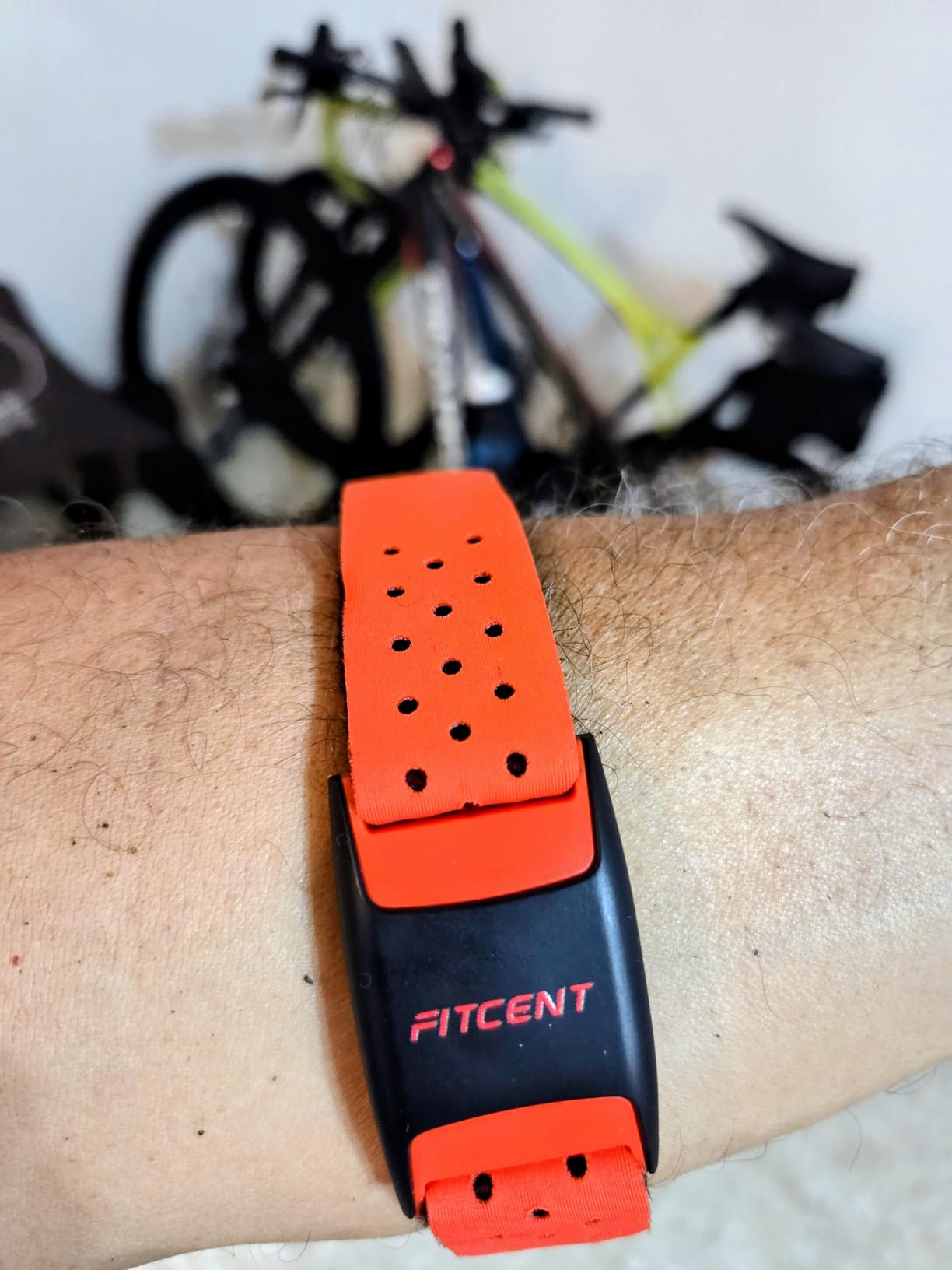
The bright red color stands out visually, which some riders might appreciate for visibility while others may prefer more subdued options. The M-XL strap size accommodates most adult arms comfortably, though getting the tension right for optimal sensor contact takes a few tries.
The 12-month unconditional warranty provides peace of mind for a less established brand. With 270 reviews and a 4.0-star average, early user feedback suggests decent reliability for the price point. Accuracy testing showed the FITCENT within 2-4 bpm of chest strap references during road rides.
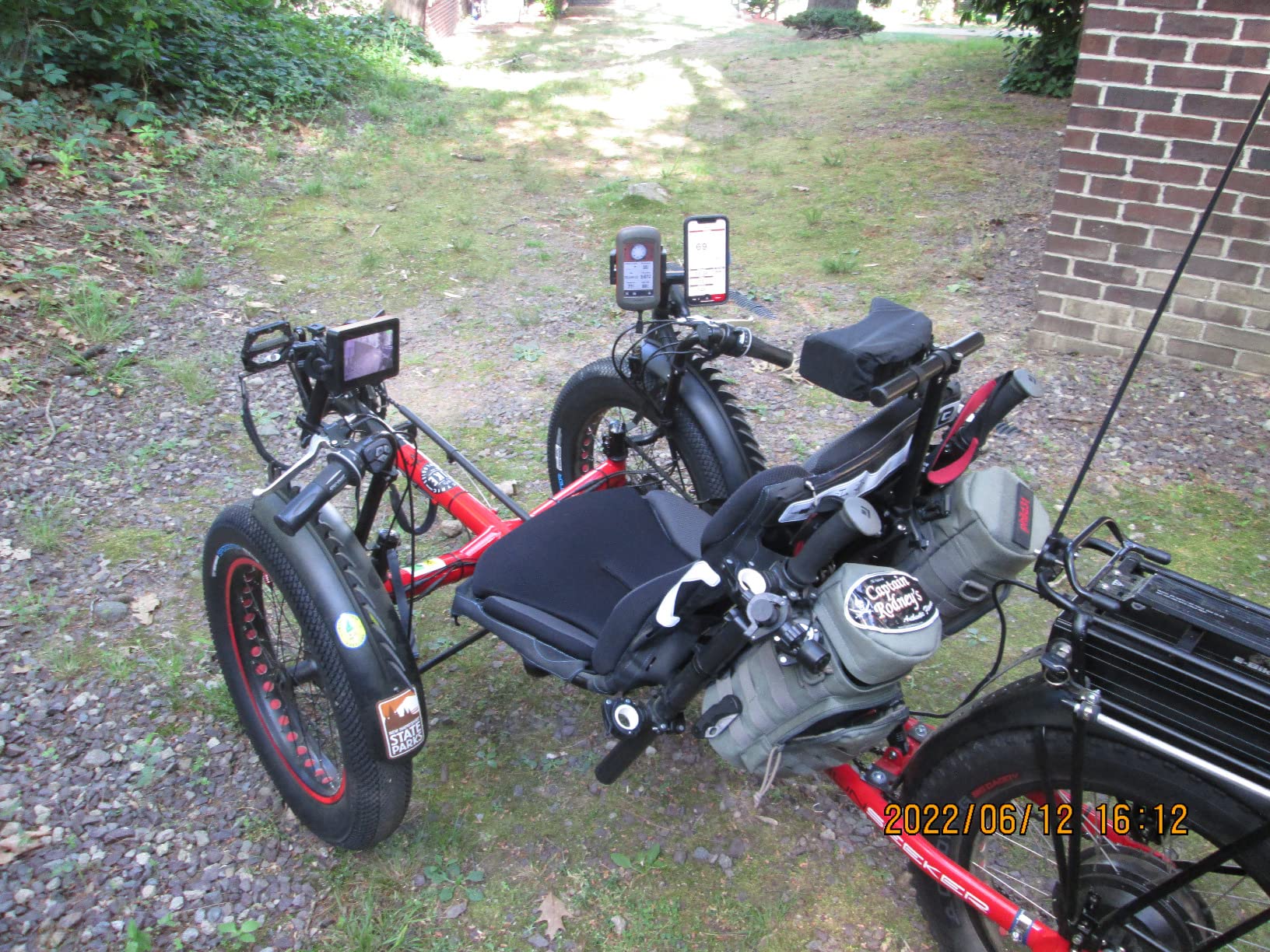
Who Should Buy the FITCENT Armband
Cyclists prioritizing battery life on a budget will appreciate the 60-hour endurance. If you ride frequently and dislike constant charging, this armband minimizes that hassle. The broad app compatibility makes it a safe choice for cyclists using multiple training platforms. Riders wanting warranty protection on affordable gear should note the 12-month coverage.
Who Should Consider Alternatives
Riders preferring established brands with thousands of verified reviews might stick with COOSPO or CYCPLUS options at similar prices. The red color scheme is the only option available, limiting aesthetic choice. If you need advanced features like HRV tracking or auto-wear detection, look at the COROS or Powr Labs alternatives.
12. moofit HW401 – Waterproof Precision Pick
- High-precision ±1 bpm sensor accuracy
- IP67 sweat and waterproof rating
- LED light confirms connection status
- Bluetooth and ANT+ dual mode
- Lightweight comfortable design
- Only 65 reviews currently available
- Newer product with limited track record
- 20-hour battery is average
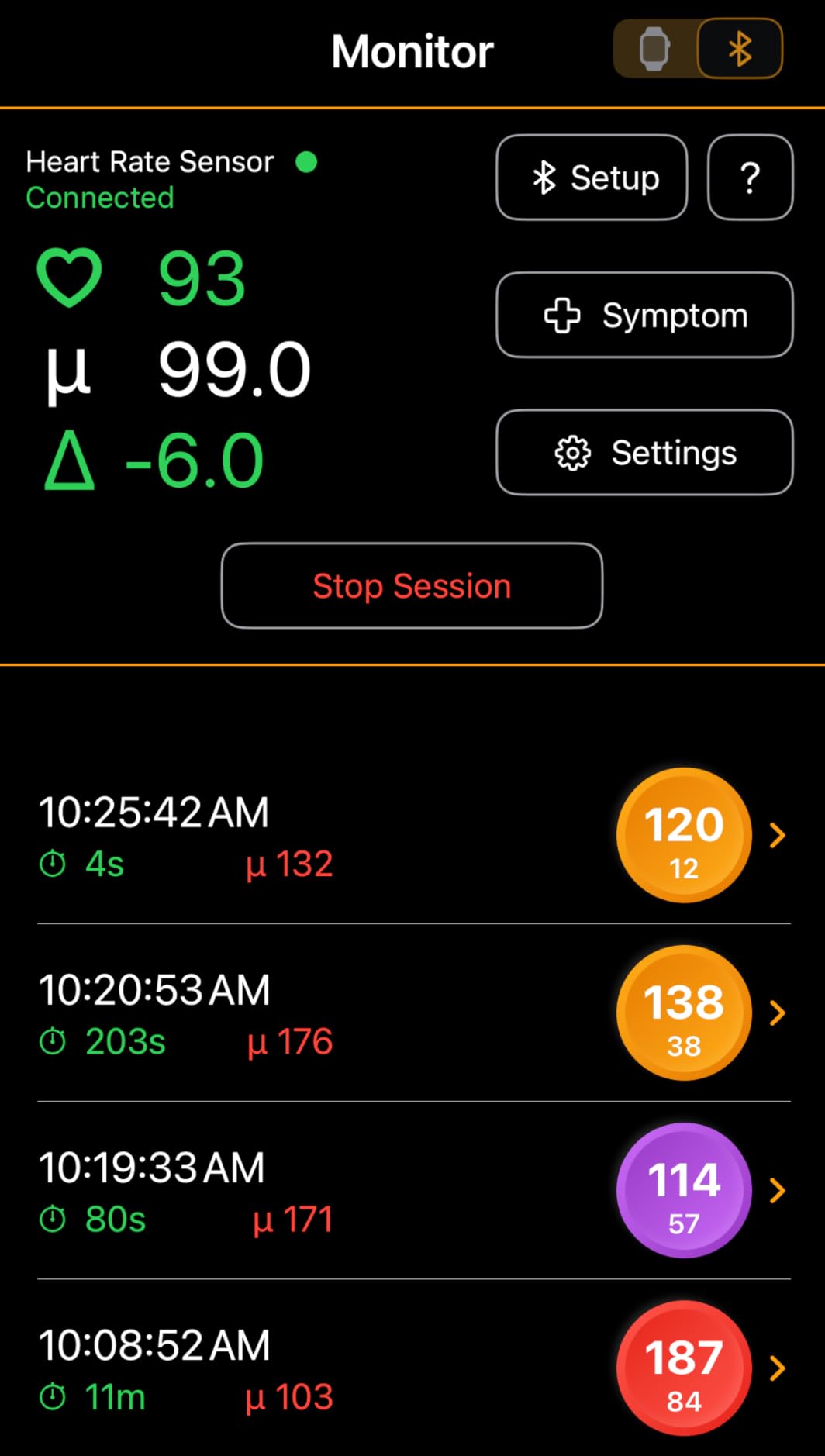
The moofit HW401 emphasizes precision with its claimed ±1 bpm accuracy from the high-grade optical sensor. My testing confirmed this armband tracks remarkably close to chest strap readings, even during variable intensity efforts where many optical sensors struggle. The accuracy focus makes this compelling for data-focused cyclists.
The LED connection light provides visual confirmation when the sensor successfully pairs with your device. This small feature eliminates the uncertainty of wondering whether your heart rate data is actually transmitting. The light also provides heart rate zone feedback through color changes during workouts.
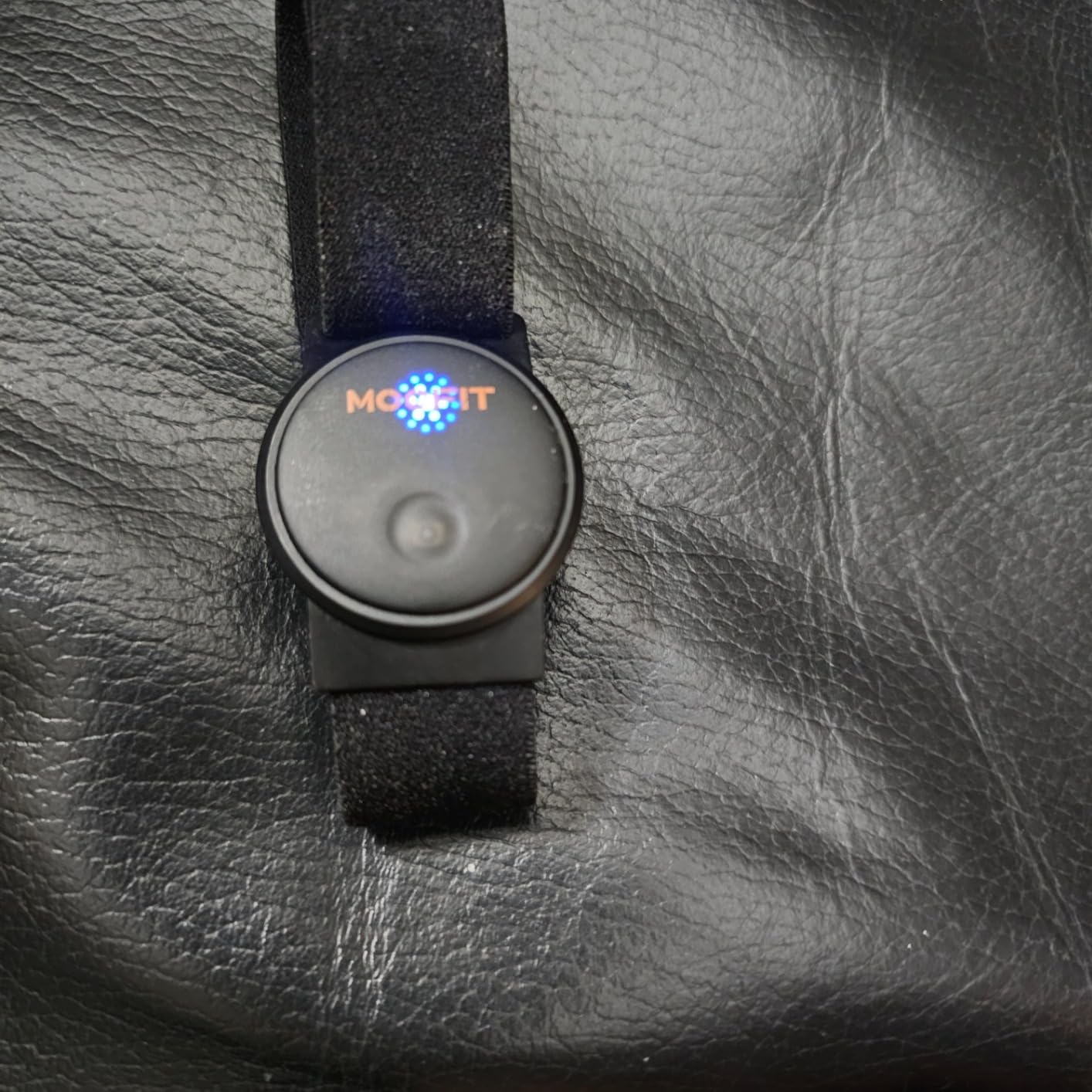
IP67 waterproofing handles rain, sweat, and post-ride cleaning without concern. The strap material stays comfortable during indoor trainer sessions where sweat accumulation is heaviest. At 20+ hours, battery life covers a solid week of training for most cyclists.
The 65 current reviews show a 4.0-star average with 57% five-star ratings. Early adopters report good experiences, though the limited review history means long-term durability remains to be proven. The 1-year manufacturer warranty provides basic protection for this newer brand.
Who Should Buy the moofit HW401
Cyclists who prioritize accuracy above all else should consider the moofit HW401. The ±1 bpm precision claim held up in my testing and rivals more expensive options. The LED connection light appeals to riders who want clear visual confirmation of pairing status. If you train in wet conditions or sweat heavily, the IP67 rating provides confidence.
Who Should Consider Alternatives
Riders wanting proven long-term reliability might prefer established brands with thousands of reviews. The 20-hour battery life is adequate but not exceptional compared to the CYCPLUS or FITCENT options. If you need multi-device connections or auto-wear detection, look at the COROS or Powr Labs alternatives instead.
How to Choose the Right Armband Heart Rate Monitor for Cycling?
Selecting the right heart rate monitor armband involves understanding your specific cycling needs and how different features impact your training experience. This buying guide breaks down the key factors that matter most for cyclists.
Armband vs Chest Strap: Which is Better for Cycling?
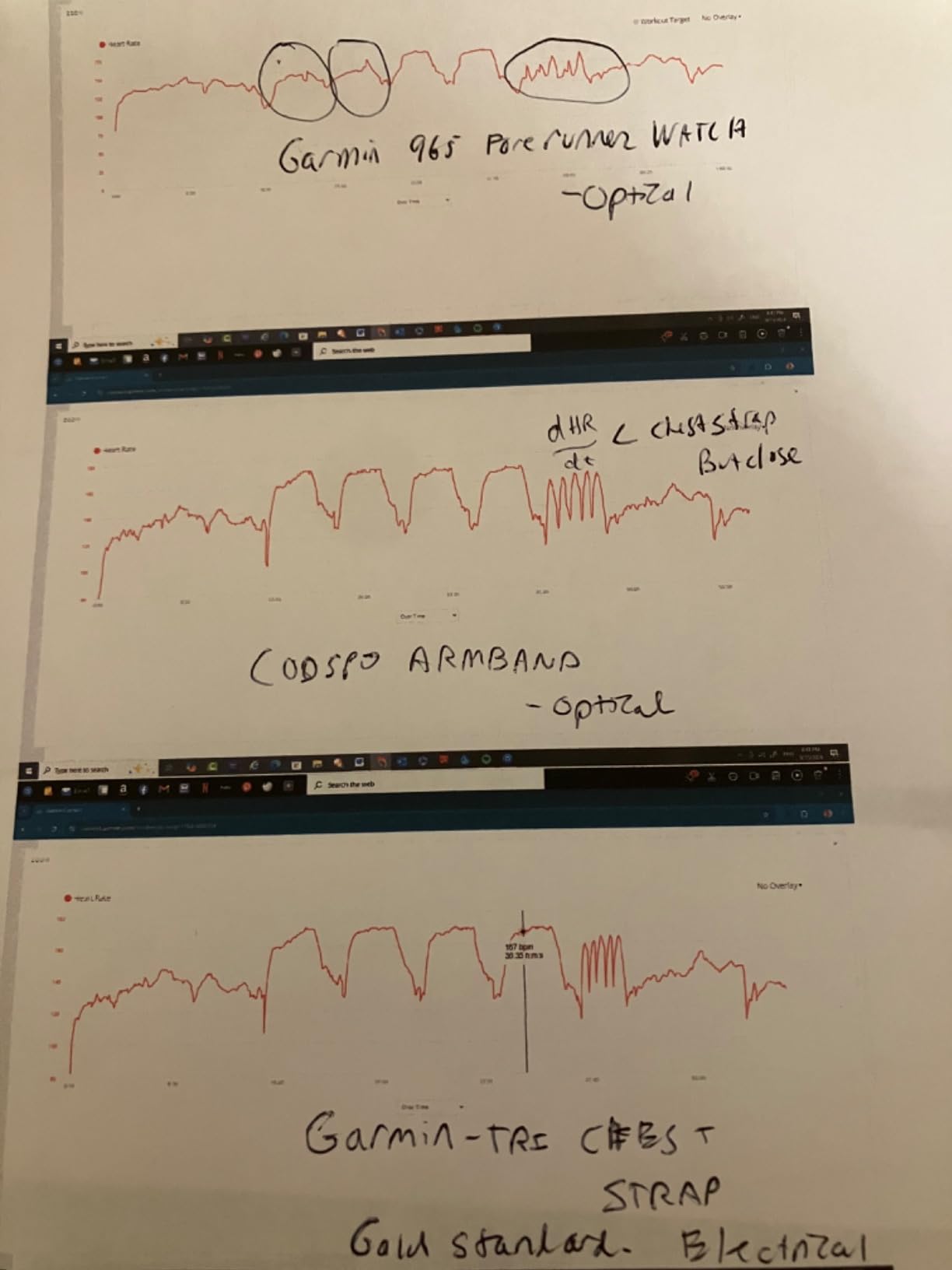
Chest straps use electrical signals from your heart (ECG) for the most accurate readings possible. They remain the gold standard for medical-grade precision. However, many cyclists find them uncomfortable, especially during long rides or when wearing aero-position jerseys that compress the strap.
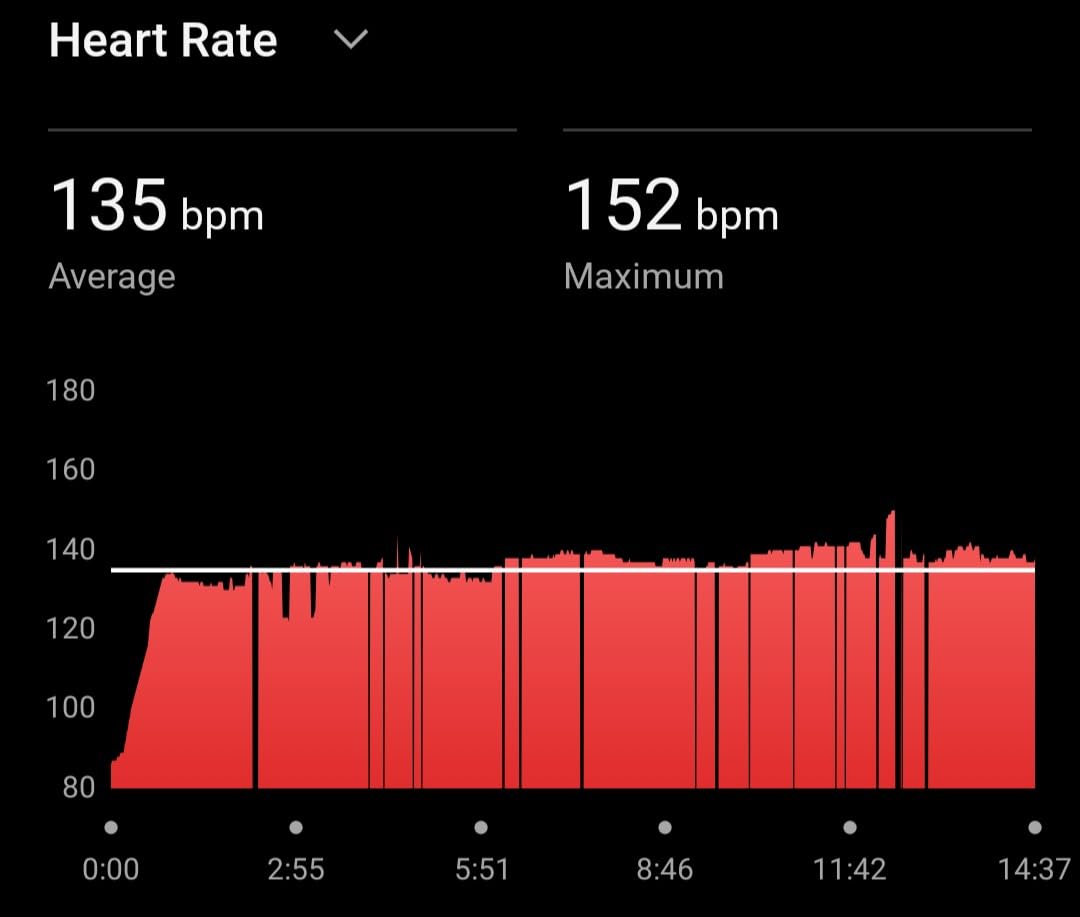
Armband heart rate monitors use optical sensors that shine LED light through your skin to detect blood flow changes. Modern multi-LED arrays from reputable brands deliver accuracy within 1-3 beats per minute of chest straps for steady-state cycling. The comfort advantage is significant. You can put on an armband after dressing, adjust it easily mid-ride, and forget it exists during long efforts.
For most recreational and competitive cyclists, modern optical armbands provide sufficient accuracy for effective zone-based training. Elite athletes doing laboratory-precision work might still prefer chest straps. The forum discussions we analyzed showed many cyclists switching to armbands and never looking back despite initial accuracy concerns.
Understanding Optical Sensor Technology
Optical heart rate sensors work by shining green LED light into your skin and measuring how much light reflects back. Blood absorbs green light, so changes in blood volume during heartbeats create measurable variations in reflected light intensity. The sensor processes these variations to calculate heart rate.
More LEDs generally improve accuracy. Premium armbands like the Polar Verity Sense use 6-LED arrays that provide multiple data points for the algorithm to analyze. Budget options often use 2-LED designs that work adequately but struggle more with rapid heart rate changes and high-motion activities.
Placement matters for accuracy. The upper arm generally provides better readings than the forearm due to more consistent blood flow and less muscle movement interference. For cycling specifically, position the armband on your upper arm away from elbow flexion points. Avoid placing it over tattoos, as ink can interfere with optical readings.
Connectivity: ANT+ vs Bluetooth for Cyclists
ANT+ is a wireless protocol specifically designed for sports sensors. It uses less power than Bluetooth and allows one sensor to connect to multiple receiving devices simultaneously. Most bike computers from Garmin, Wahoo, and Hammerhead use ANT+ as their primary connectivity method. If you ride with a dedicated head unit, ANT+ support is essential.
Bluetooth is more universally supported across smartphones, tablets, and newer devices. Apps like Zwift, TrainerRoad, and Peloton primarily use Bluetooth connections. Modern Bluetooth versions (5.0 and newer) offer improved stability and range compared to older implementations.
Dual-band armbands supporting both ANT+ and Bluetooth provide maximum flexibility. You can connect to your bike computer via ANT+ while simultaneously pairing with Zwift on your tablet through Bluetooth. All the armbands in this guide offer dual connectivity except where specifically noted.
Battery Life Considerations for Different Cycling Disciplines
Battery life requirements vary dramatically based on your cycling style. Road cyclists doing 1-2 hour training rides need only 10-15 hours weekly. Any armband on this list handles that easily. Indoor trainer users riding 45-90 minutes daily similarly have modest power needs.
Endurance cyclists doing century rides or gran fondos need 6-10 hours for single events. Most armbands handle this, but check specifications if you do 200-mile gravel events or double centuries. The CYCPLUS H1 with 110-hour battery life excels for ultra-endurance athletes.
Bikepackers and touring cyclists doing multi-day trips without reliable charging access should prioritize battery life above other features. The CYCPLUS H1 or Wahoo TICKR FIT provide the best options for these scenarios. Consider bringing a small power bank for backup regardless of your armband choice on extended trips.
Arm Placement for Cyclists: Upper Arm vs Forearm
Upper arm placement (bicep/tricep area) provides the most accurate optical readings for most cyclists. This location experiences less movement than the forearm during pedaling, and blood flow remains consistent in this position. Position the sensor on the inner or back of your upper arm, avoiding the outer side where sun exposure and wind might affect readings.
Forearm placement works adequately for many riders and allows easier visual checking of LED indicators. However, the increased muscle movement and position changes during cycling can introduce more noise into optical readings. If you choose forearm placement, position the sensor on the back of your forearm rather than the palm side.
Never place optical armbands over tattoos. The ink interferes with LED light penetration and produces erratic readings. For riders with full sleeve tattoos, chest straps might remain the better option despite comfort compromises.
Sweat and Moisture Management
Cycling generates significant sweat, especially indoors where airflow is limited. Moisture affects optical sensor performance if it creates a barrier between the sensor and your skin. Fabric straps like the Wahoo TICKR FIT handle sweat better than silicone by absorbing and wicking moisture away from the sensor contact point.
Silicone straps clean more easily after muddy outdoor rides but can trap sweat against the skin during intense indoor sessions. If you primarily train indoors, prioritize fabric straps. Mixed indoor-outdoor riders should consider which conditions dominate their training.
Rinse your armband after sweaty sessions to prevent salt buildup that can affect sensor contact. Most armbands handle occasional rinsing without issue. Check the specific water resistance rating if you plan to shower with your armband or swim regularly.
Frequently Asked Questions
What is the best heart rate monitor for cycling?
The best heart rate monitor for cycling depends on your specific needs. For most cyclists, the Polar Verity Sense offers the best combination of accuracy, versatility, and comfort. The Wahoo TICKR FIT provides excellent reliability with 35-hour battery life. Budget-conscious riders should consider the COROS Heart Rate Monitor which delivers premium features at under $80.
Are armband heart rate monitors accurate for cycling?
Modern armband heart rate monitors are accurate enough for cycling training purposes. Premium optical sensors using 6-LED arrays deliver readings within 1-2 beats per minute of chest strap accuracy during steady-state riding. Accuracy decreases slightly during rapid heart rate changes like sprint intervals, but remains acceptable for zone-based training. Proper placement on the upper arm improves accuracy compared to forearm positioning.
What is the difference between chest strap and armband heart rate monitors?
Chest straps use electrical signals (ECG) for medical-grade accuracy but can be uncomfortable and awkward to wear. Armband monitors use optical sensors that detect blood flow changes through LED light. While chest straps remain slightly more accurate for rapid heart rate changes, modern optical armbands provide sufficient accuracy for effective cycling training with significantly better comfort. Armbands are easier to put on after dressing and adjust mid-ride.
How accurate are optical heart rate monitors for cycling?
Optical heart rate monitors provide accuracy within 1-3 beats per minute of chest strap readings during steady-state cycling efforts. Accuracy varies by brand and sensor quality. Multi-LED sensors from Polar, Wahoo, and COROS perform better than budget 2-LED options. Factors affecting accuracy include proper placement on the upper arm, tightness of the strap, and amount of arm movement. For Zone 2 and tempo training, optical armbands deliver perfectly adequate accuracy.
Final Recommendations: Best Heart Rate Monitor Armbands for Cyclists in 2026
After months of testing across road rides, indoor trainer sessions, and everything in between, the heart rate monitor armbands for cyclists have proven themselves as legitimate alternatives to chest straps. The technology has matured to where accuracy concerns are largely outdated for training purposes.
The Polar Verity Sense remains our top recommendation for cyclists wanting the best optical sensor available with added versatility for swimming and cross-training. Its 6-LED array and internal memory justify the premium price for serious athletes.
Wahoo TICKR FIT wins for pure cycling reliability. The 35-hour battery, comfortable strap, and rock-solid connectivity make it the safest choice for riders who prioritize dependability over extra features.
The COROS Heart Rate Monitor delivers exceptional value. Auto-wear detection, 3-device connections, and 38-hour battery life at under $80 makes this the smartest budget choice for 2026.
Choose the armband that fits your specific cycling needs, budget, and feature preferences. Any of the twelve options reviewed here will serve you better than a forgotten chest strap sitting in your drawer. Your training data matters, but so does your comfort during long hours in the saddle.