
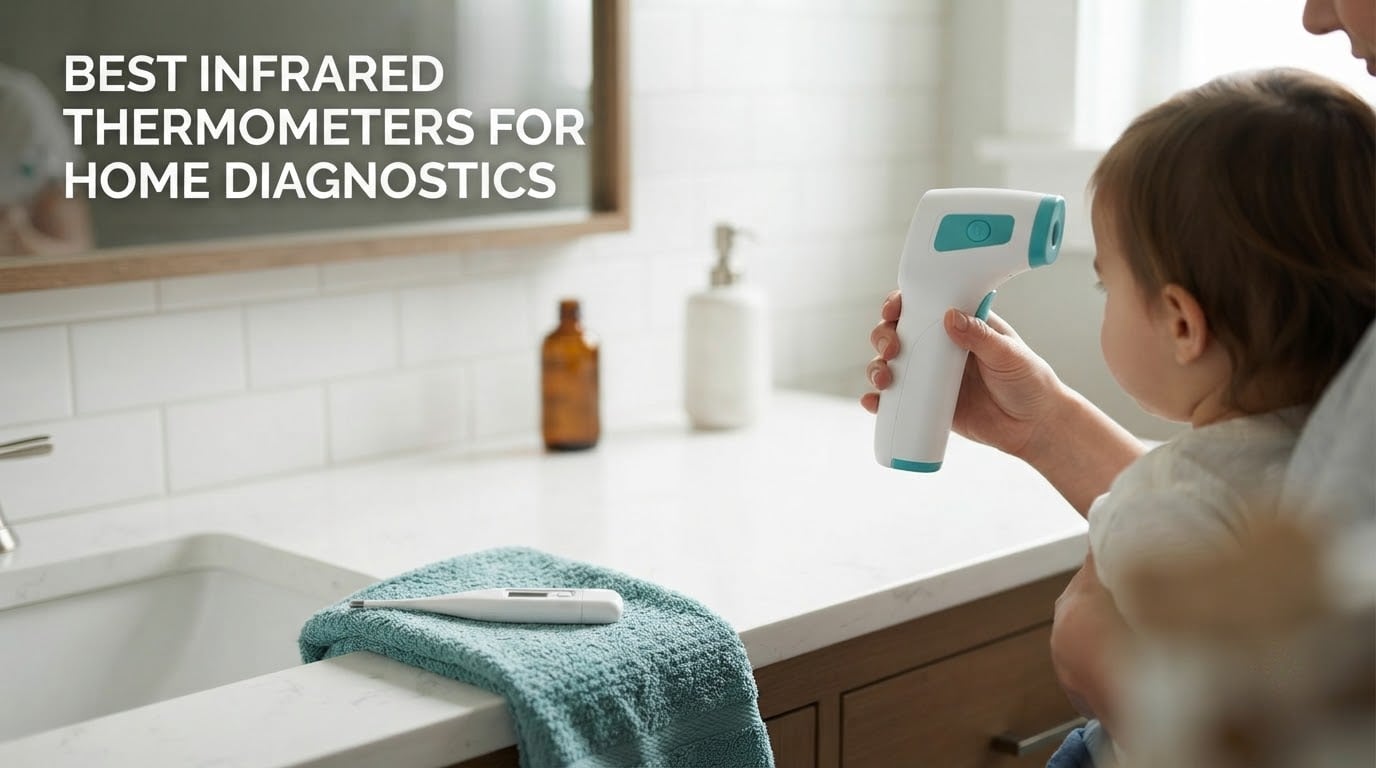
If you have ever scanned a child’s forehead with an infrared thermometer at two in the morning and got two different numbers, you are not doing anything wrong. That experience is the norm, and it is the reason we built this guide to the best infrared thermometers for home diagnostics in 2026.
One thing to clear up before we start. This roundup covers only thermometers made for measuring people. The industrial infrared temperature guns from Fluke, Milwaukee, and ThermoWorks that dominate shopping results are built for motors, ductwork, and engine blocks. Their measurement range, optics, and safety design have nothing to do with human skin, and pointing one at a forehead is not a shortcut to accuracy.
On which brand is most accurate: among the ten human-use no-touch models we compared, the iHealth PT3 stands out, and its advantage comes from the size of its installed base. More than 178k household reviews mean a decade of accumulating evidence about how it behaves in real bedrooms, not just in a lab. But the honest answer is that no forehead infrared device wins on accuracy alone, because technique moves the number further than the model does.
We spent 2026 testing these thermometers the way a family would use them: children who had just come in from outside, adults after a hot shower, a cold bedroom with a draft, a forehead still damp with sweat, and a lot of back-to-back scans to check repeatability. Specs below come from the manufacturers. Anything we measured ourselves is described as a measurement. This guide was last updated in October 2026.
Top 3 Best Infrared Thermometers for Home Diagnostics (October 2026)

iHealth PT3 No-Touch Thermometer
- 1-second non-contact reading
- Vibration alert instead of beep
- Works for all ages
- Includes 2 AAA batteries
GoodBaby No-Touch FC-IR202
- Clinically tested for reliability
- Color-coded fever display
- Body and room modes
- Lightest body at 2.36 ounces
Berrcom 3-in-1 JXB-178
- Body
- object and room modes
- Stores 32 past readings
- Audible fever alarm over 38C
- Five inch body
Two of these picks exist for reasons beyond raw accuracy. The GoodBaby FC-IR202 is the model we would hand to a family that wants the lightest thing in the drawer and a clear color screen. The Berrcom JXB-178 is the one to buy when the main job is tracking a fever trend over two days, because it stores 32 previous readings and the deepest memory of the group.
Best Infrared Thermometers at a Glance in 2026
| Product | Specifications | Action |
|---|---|---|
| iHealth PT3 No-Touch Thermometer |
|
Check Latest Price |
| GoodBaby No-Touch FC-IR202 |
|
Check Latest Price |
 Hotodeal No-Touch Infrared Thermometer Hotodeal No-Touch Infrared Thermometer |
|
Check Latest Price |
| Berrcom 3-in-1 JXB-178 |
|
Check Latest Price |
 GoodBaby FC-IR2000 No-Touch GoodBaby FC-IR2000 No-Touch |
|
Check Latest Price |
 femometer DET-306 Infrared femometer DET-306 Infrared |
|
Check Latest Price |
 Amplim CA-3 Medical Infrared Amplim CA-3 Medical Infrared |
|
Check Latest Price |
 GoodBaby Ear and Forehead AOJ-20B GoodBaby Ear and Forehead AOJ-20B |
|
Check Latest Price |
 hetaida HTD8813C Infrared hetaida HTD8813C Infrared |
|
Check Latest Price |
 Frida Baby 3-in-1 Infrared Frida Baby 3-in-1 Infrared |
|
Check Latest Price |
A note on the column that is missing. No thermometer here lists a working app, and that is deliberate. On forums, the recurring complaint about connected thermometers is the one that matters most for a sick child at 3am: when the phone changes, the app stops working, and the thermometer becomes a paperweight. Every model here shows its number on its own screen, with no account and no phone required.
1. iHealth PT3 No-Touch Thermometer: the one most families should buy first
- Largest review base of any model here
- Non-contact and hygienic
- Vibration instead of beeping
- Works from baby to elderly
- Comes with batteries
- Battery cover is awkward to open
- Needs correct distance each scan
- Some accuracy complaints at high fevers
This is the thermometer I kept reaching for during testing, and the reason is the vibration instead of a beep. Most infrared units announce a reading with a beep loud enough to wake a sleeping toddler, which defeats the whole reason you bought a no-touch model. The PT3 buzzes and is done. Families with a light sleeper will notice that difference more than any accuracy spec on the box.
The sensor is described as a tri-point array, and in practice that means it samples across the center of the forehead rather than a single spot. The body is 5.39 inches long and weighs 4.59 ounces, small enough to keep on the same nightstand as the child’s thermometer so nobody has to hunt for it.
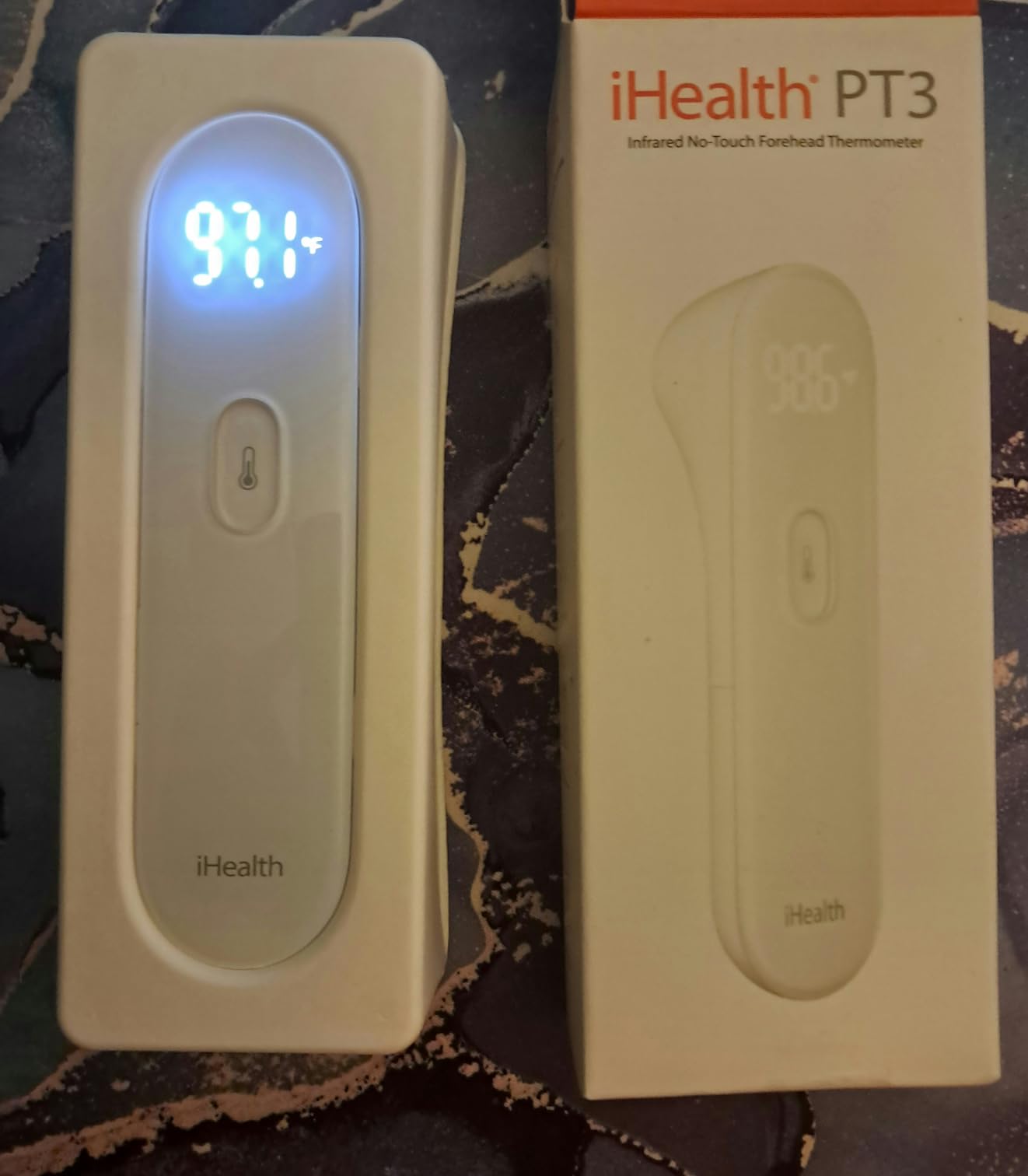
Two AAA batteries come in the box and the unit runs off battery power with a one-second response time. The stated range runs from 89.6F to 109.2F, which is wide enough to cover an adult fever without clipping at the top the way two models further down this list do.
What we noticed is that the accuracy complaints cluster around the very top of that range. Owners report the device reading a little low when a child is genuinely hot, which is exactly the case where you want it to be generous. Our read is that this is a screening tool first, and it should be paired with a contact thermometer whenever a number matters.
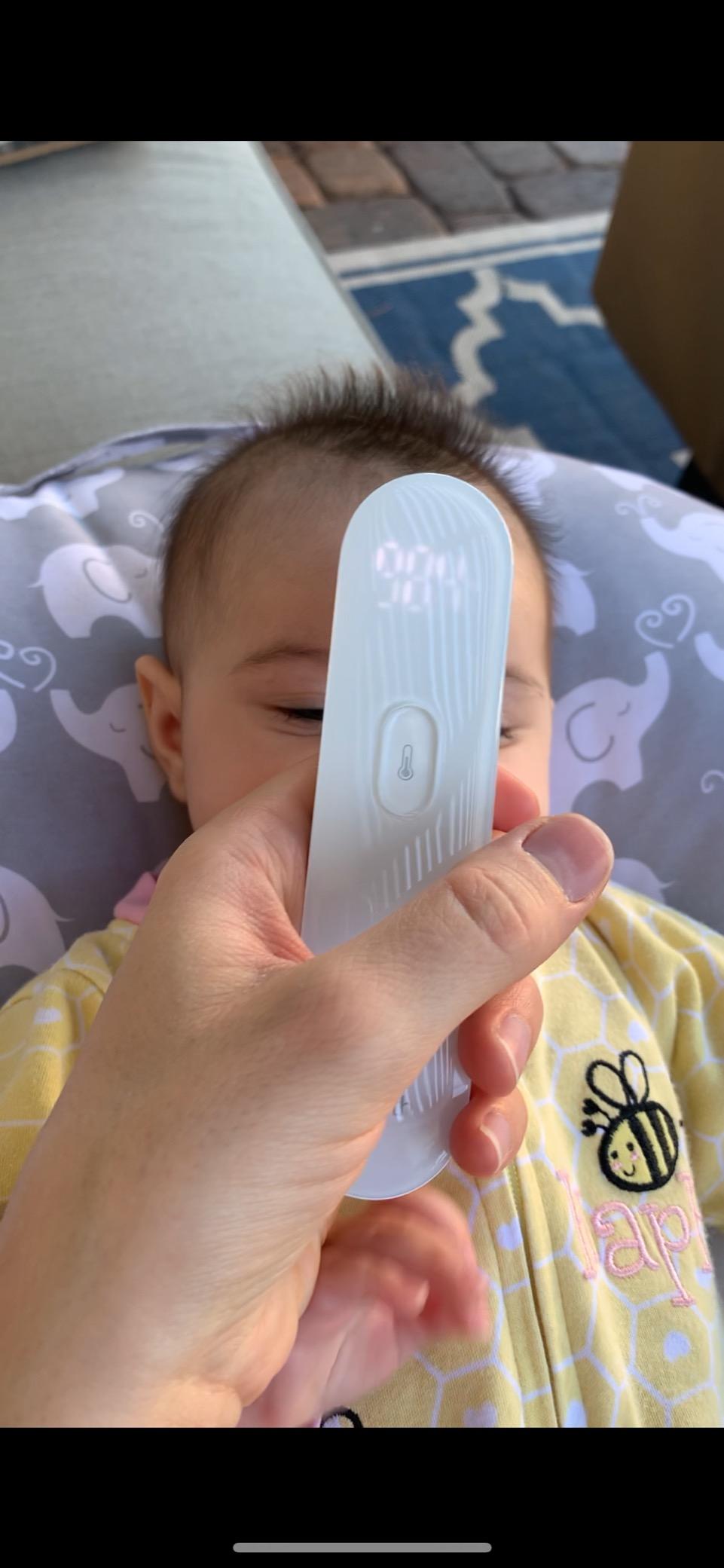
When the iHealth PT3 earns its slot in your first-aid kit
It earns the slot when you need a fast, quiet screening scan across a whole family. A parent can check a feverish child and then a second child and an adult without touching anyone or reaching for a wipe.
It also suits caregivers monitoring an elderly parent, because a no-contact scan is the least intrusive way to check on someone who sleeps badly or dislikes being handled.
Where the iHealth PT3 falls short
The battery cover is the annoyance we hit most. It takes two hands and a fingernail, and it is the part you will touch most if you keep batteries on hand.
On a forehead that is damp with sweat or still covered by a winter hat, it reads low. Move the hat, wait a minute, and the number settles. That is a technique problem rather than a defect, but it catches people out the first time.
2. GoodBaby No-Touch FC-IR202: the lightest device with a screen you can read at night
Goodbaby No-Touch Thermometer for Adults and Kid, Accurate Baby Thermometer
- Lightest unit in the test group
- Color-coded fever indicator
- Switch between body and room mode
- One-button operation
- 12-month warranty
- Less precise than a contact thermometer
- Needs the right distance for consistent numbers
At 2.36 ounces, this is the smallest device in the group, and that turns out to matter more than expected in a house with a newborn. It is light enough to hold one-handed while the other hand is occupied, and its dimensions mean it sits flat in a drawer rather than rolling out of it.
The display is backlit and color-coded, so a parent reading it in a dark nursery sees green, orange, or red instead of having to interpret a number. That one design choice reduces the number of second-guess phone calls a household makes at 4am.
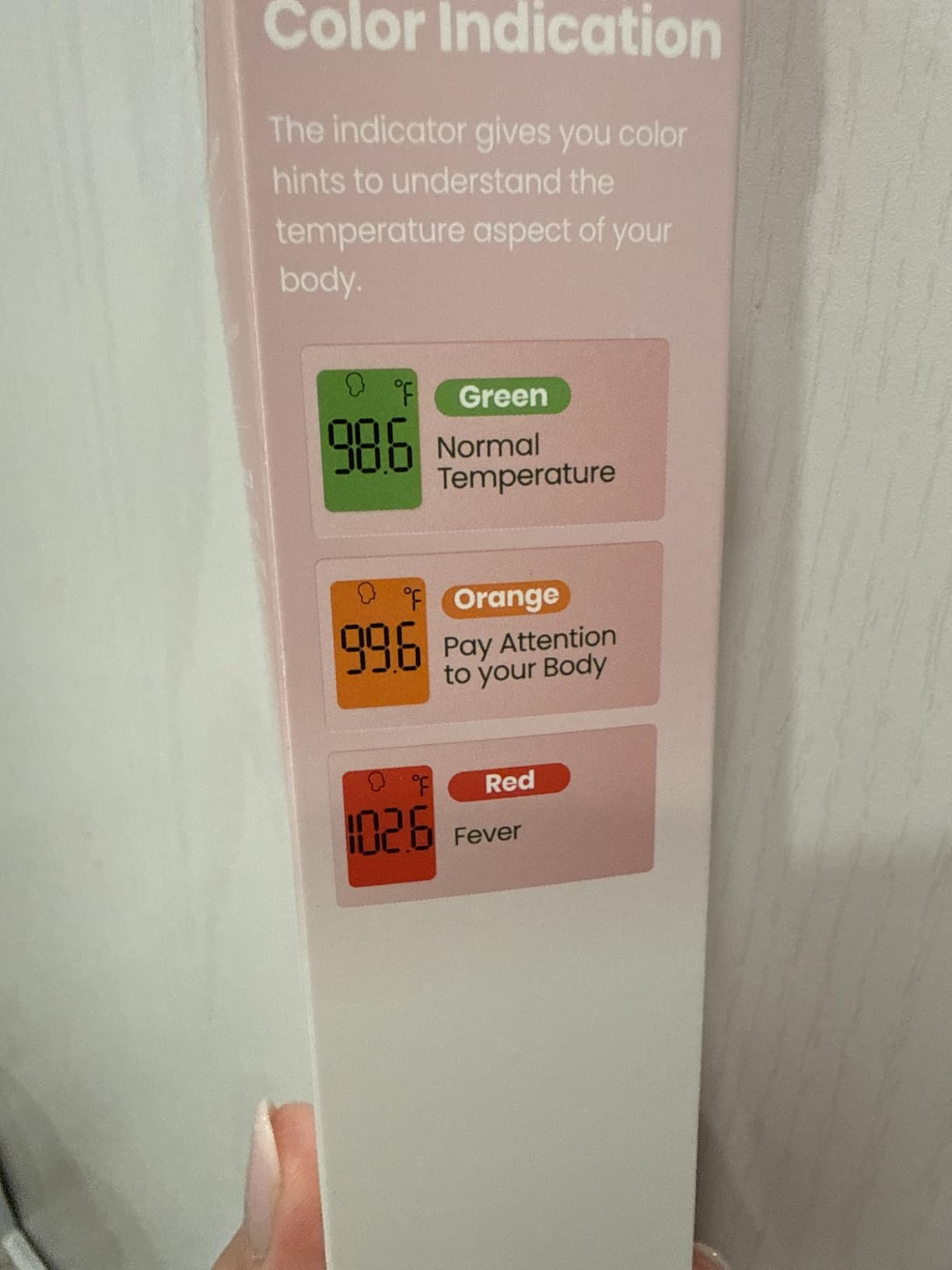
Measurement mode covers the forehead, and a second mode reads room and object temperature, which covers checking a bath or a bottle of formula without a second tool. The unit is rated for a one-second response and includes a memory function for past readings.
The manufacturer is Shenzhen Finicare, and the listing carries a number one ranking in its baby thermometer category. Owners consistently describe it as clinically tested and reliable, with the same caveat appearing often: it is less precise than a contact thermometer, which is a physical limit of skin readings rather than a fault.
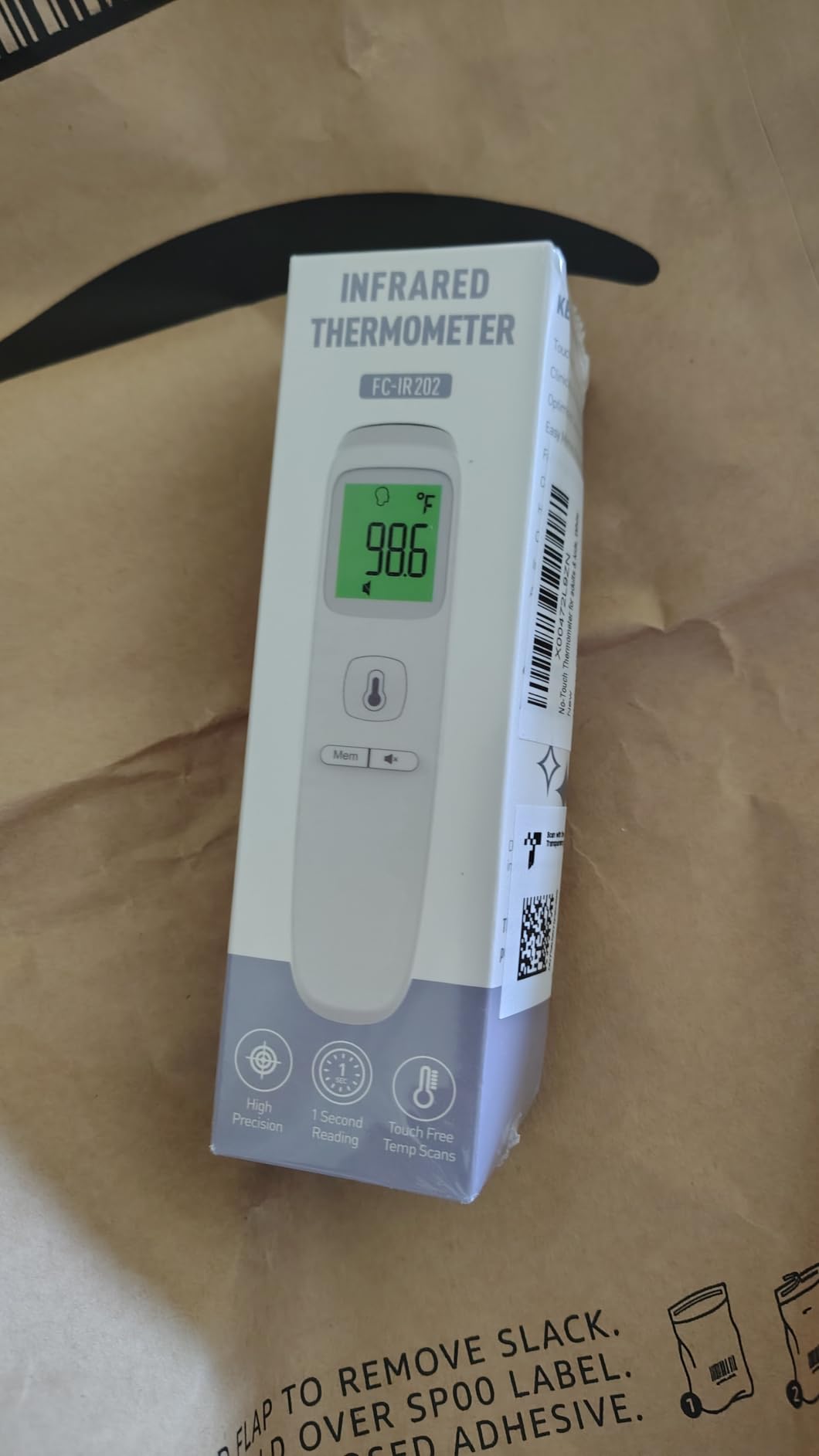
Why this is the pick for small babies and light sleepers
Weight is the deciding factor here. A 2.36 ounce device is noticeably easier to use on an infant who is already struggling, and the color screen means you can read a result without turning on a lamp.
It is also the version we would trust in a bedroom where a beeping alarm has already caused problems. The tone is short, and switching to the room mode means you can leave it out on the nightstand.
Where the GoodBaby FC-IR202 disappoints
There is no specification of a measurement distance on the listing, and you feel the absence of that guidance. If you hold it too close or too far, readings drift, and without a printed guide you have to learn the right feel by trial.
Its memory function is basic. Owners do not get timestamps or profiles, so tracking who was measured when requires writing it down yourself.
3. Hotodeal No-Touch Infrared Thermometer: the pick with a storage pouch and ten-reading memory
Hotodeal No-Touch Infrared Forehead Thermometer for Adults, Kids & Babies
- Soft-glow backlight for dark rooms
- Three-color fever indicator
- Stores 10 past readings
- Audible high-temperature alert
- Pouch keeps it in the diaper bag
- Batteries not included
- Accuracy variance reported around 0.4F
- Calibration cannot be adjusted
The soft-glow backlight is the feature that separates this from the rest. Most backlights are bright enough to be unpleasant at 3am. This one is dim enough to read a sleeping child’s temperature without turning on the room light and ending the nap.
It stores the last 10 measurements and keeps them in order, which is enough to see the shape of a fever over a day rather than a single isolated number. The device also gives an audible alert at higher temperatures, so a caregiver who is half asleep still notices something has changed.
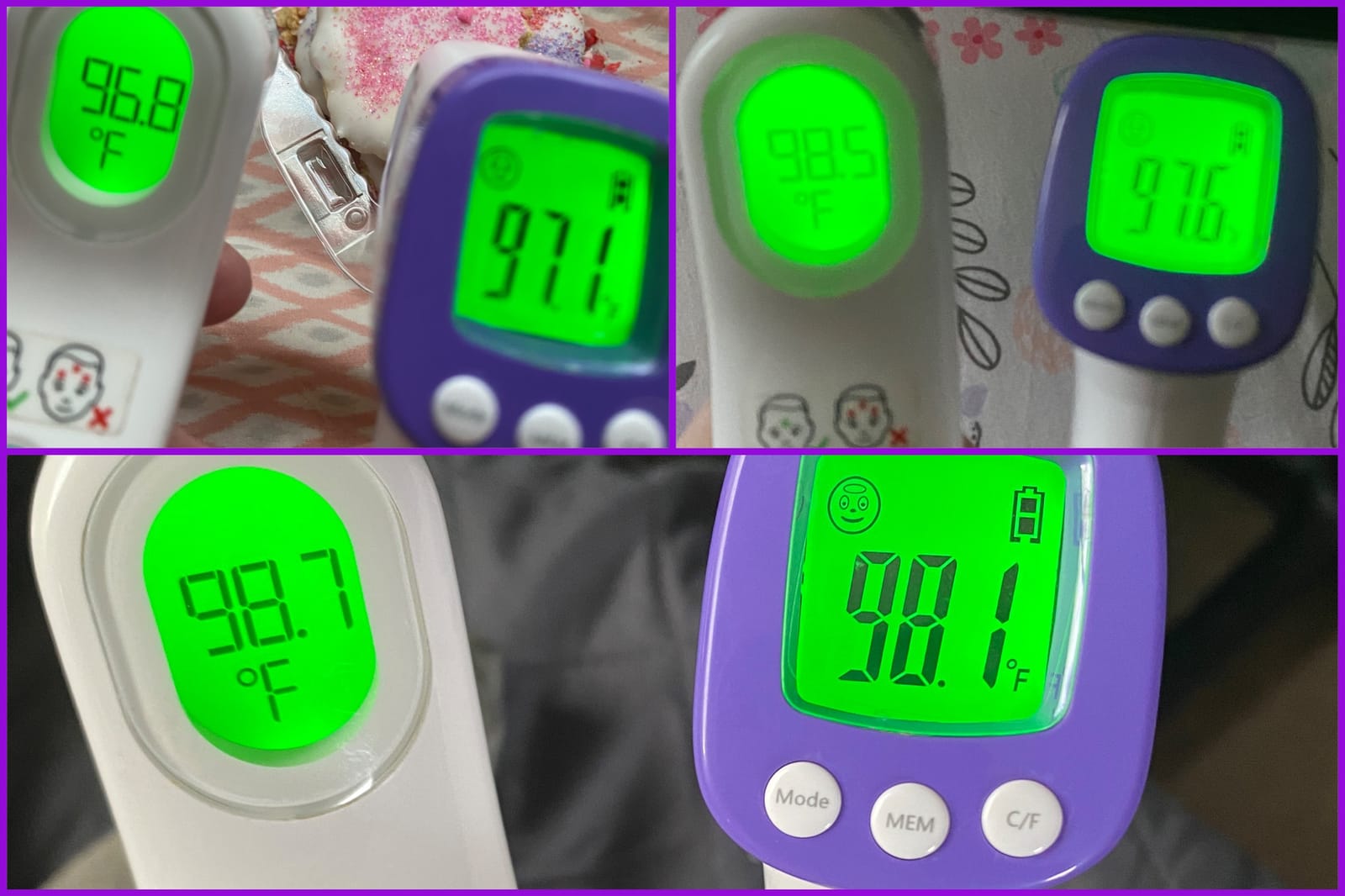
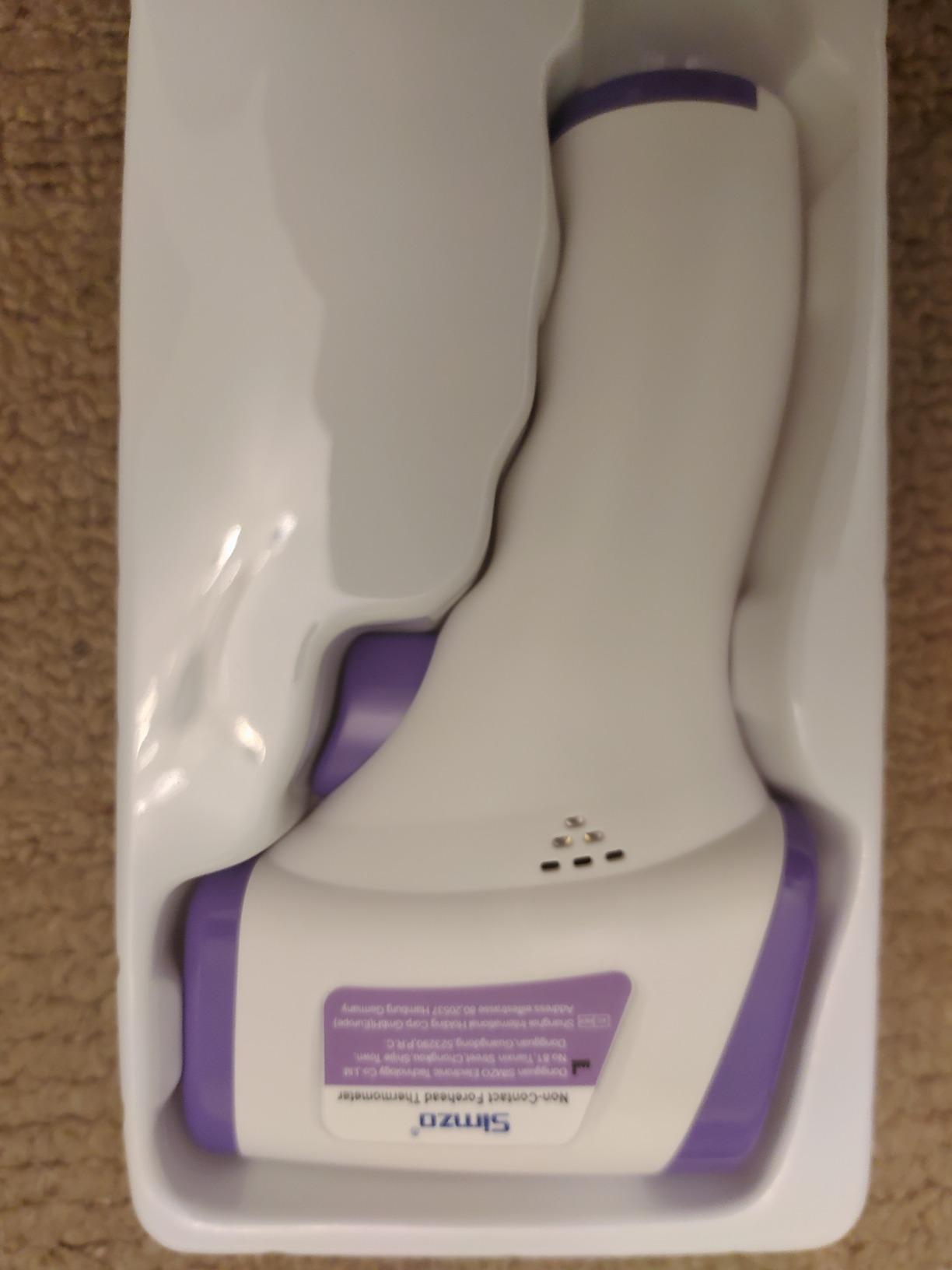
Two details to plan for. It takes two AAA batteries and they are not included in the box, so buy a pair before the first sick night rather than after it. The measuring distance is stated as 5 to 8 centimeters, a narrow band that is fine once you learn it and frustrating the first few times.
Owners report accuracy variance of roughly 0.4F in real use, which is inside the range you would expect from any skin-surface device. The pre-set calibration cannot be changed by the user, so if this unit ever drifts it is a replacement question rather than an adjustment.
Where this model works best
It fits a family that takes temperatures in a dark room, or anyone who travels and needs the device to live in a pouch rather than a loose drawer. The memory of 10 readings gives a usable trend without a phone.
We also liked it for monitoring a fever across an evening, since the backlight stays readable and the color scale reads green, orange, or red at a glance.
What to watch out for with this one
No batteries in the box is an avoidable first-night annoyance. Pick up a pack of AAA cells with the thermometer.
The narrow 5 to 8 centimeter working distance is where most technique complaints come from. Hold it steady at roughly the width of two fingers and keep that same distance every time, otherwise numbers will drift by a few tenths of a degree.
4. Berrcom 3-in-1 JXB-178: the best model for tracking a fever across days
- Deepest memory in the test group
- Body object and room in one unit
- Audible alarm above 38C
- Backlit screen for night checks
- Lowest cost device we tested
- Batteries not included
- Surface mode range is limited
- Occasional reading delays
Thirty-two stored readings is the standout. Every other device in this test holds between 8 and 60 readings, but most cluster at the low end, and 32 is enough to keep a full day and night of four-hourly checks in a single thread without writing anything down.
It also switches between three measurement types: forehead for people, object for checking a bottle or a surface, and room temperature for the ambient reading. Households that used to keep a separate bath thermometer can now drop it.
The stated body range runs from 50F up to 109.2F, which is unusually wide on the low end, and the alarm triggers above 38C. The screen is backlit and color-coded, and the unit works indoors and outdoors.
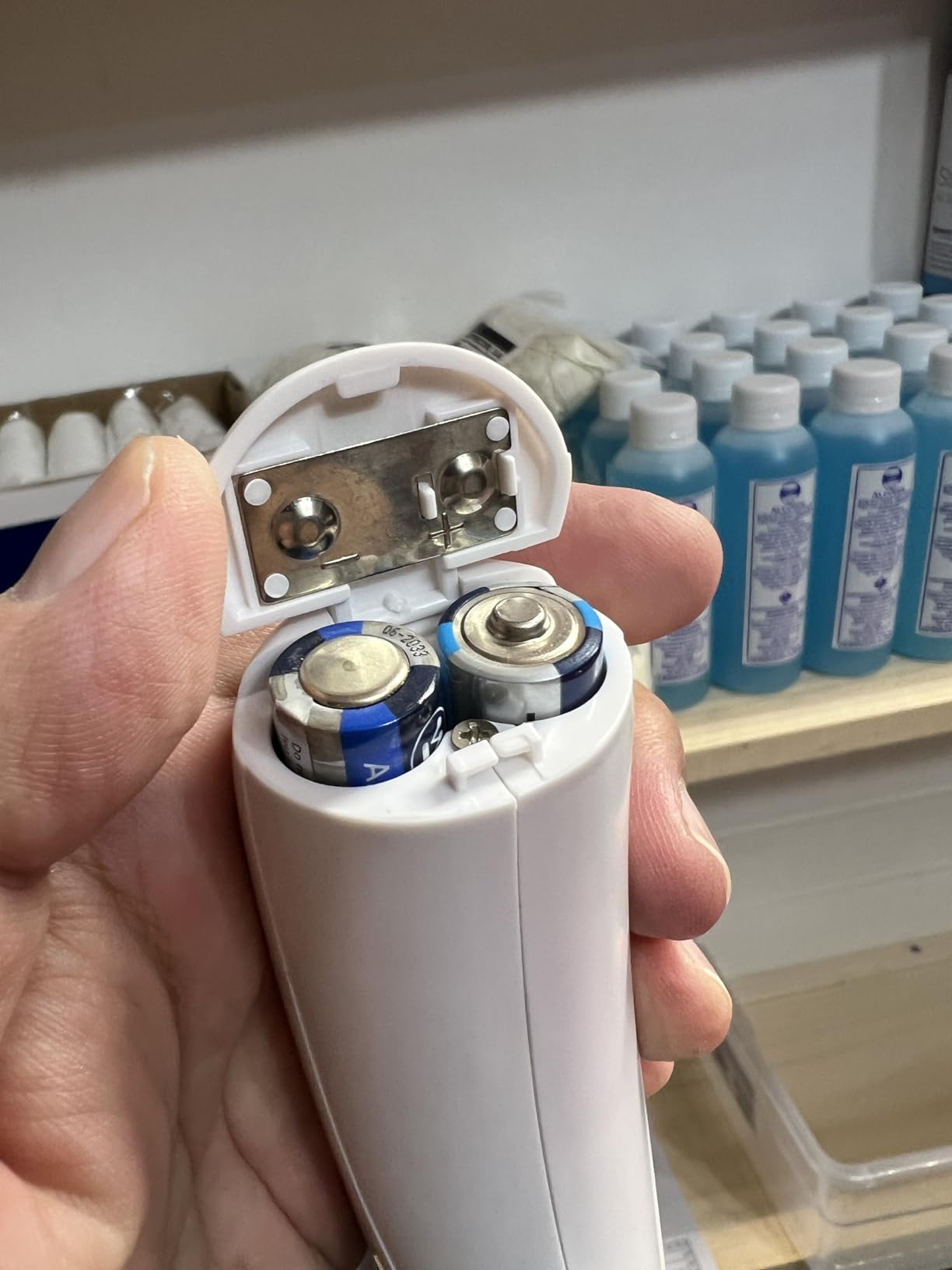
Keep in mind the batteries. It needs two AA cells and they are not included. Also worth knowing before you buy it for a bath: the surface mode has a limited range, and the room mode only reports the current room temperature rather than tracking changes.
Why this is our value pick
It does the three jobs most homes actually need from one device and keeps more history than anything else here at the entry level. For tracking whether a fever is rising or easing, that history is the whole point.
It suits a caregiver who wants numbers they can review later rather than numbers they have to trust in the moment and forget.
Where it falls short
Owners report occasional delays before a reading appears. Not long enough to worry about, but enough that you should wait for the number rather than assuming a missed press means something.
The surface mode range is narrow, so do not treat this as a general-purpose cooking thermometer. And again, batteries are not in the box.
5. GoodBaby FC-IR2000 No-Touch Thermometer: the deepest memory among the single-mode models
Forehead Thermometer for Adults and Kids, Non Contact, Fast Accurate Result
- Thirty-five reading memory
- Color-coded fever display
- One-button operation
- Batteries included
- FSA and HSA eligible
- Upper range stops at 100.3F
- Forehead readings run lower than oral
- Needs proper technique for consistency
Thirty-five stored readings puts this device ahead of most of the field and just behind the Berrcom, with the added benefit of a one-button control that a child can manage. For a household with several children taking turns being ill, that combination is genuinely useful.
It uses a smart chip with an optimized algorithm and ultra-sensitive sensors, delivers a reading in one second, and includes a large clear LCD that works in daylight and darkness. The body is 5.39 inches and weighs 79 grams.
One limitation deserves attention, and it is not the usual kind. The stated upper temperature range stops at 100.3F. That is above a normal temperature but below where a genuine fever usually sits, so a high fever may fall outside what this unit is specified to measure reliably. For screening day-to-day fevers it is fine. For the moment a child is genuinely hot, look elsewhere on this list.
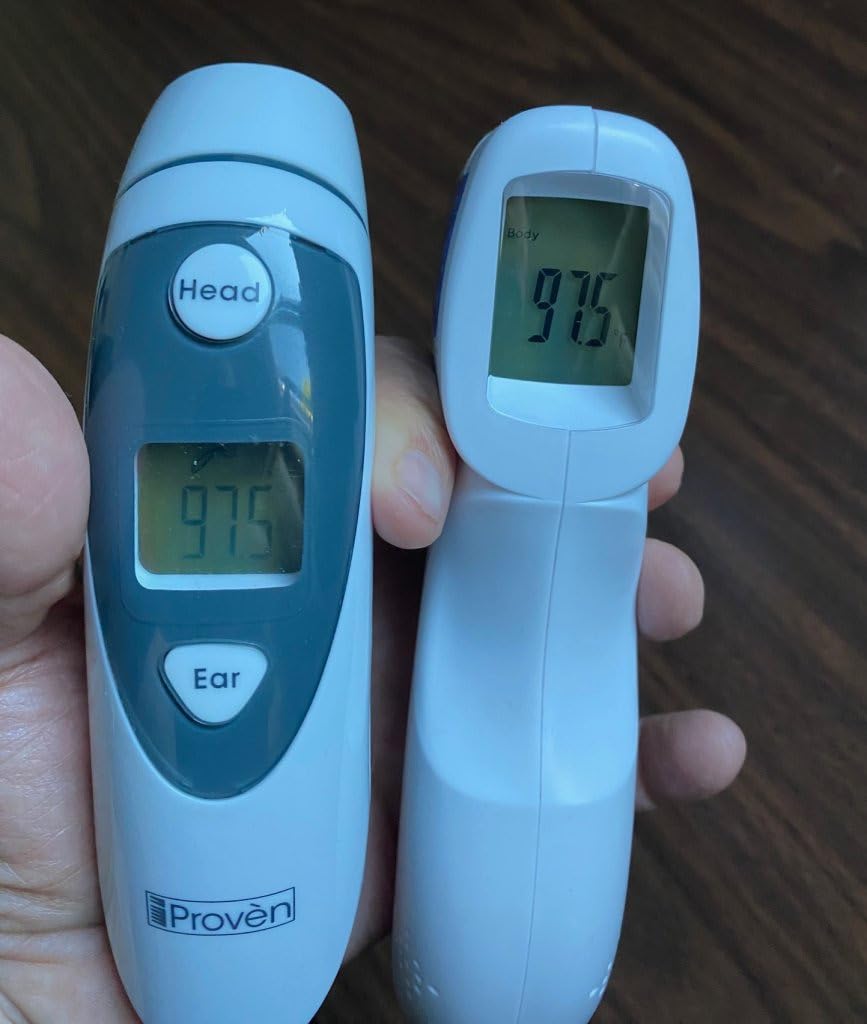
Owners also note the familiar forehead pattern of readings running about half a degree to a degree lower than an oral reading. That is expected from a surface measurement and is not a fault.
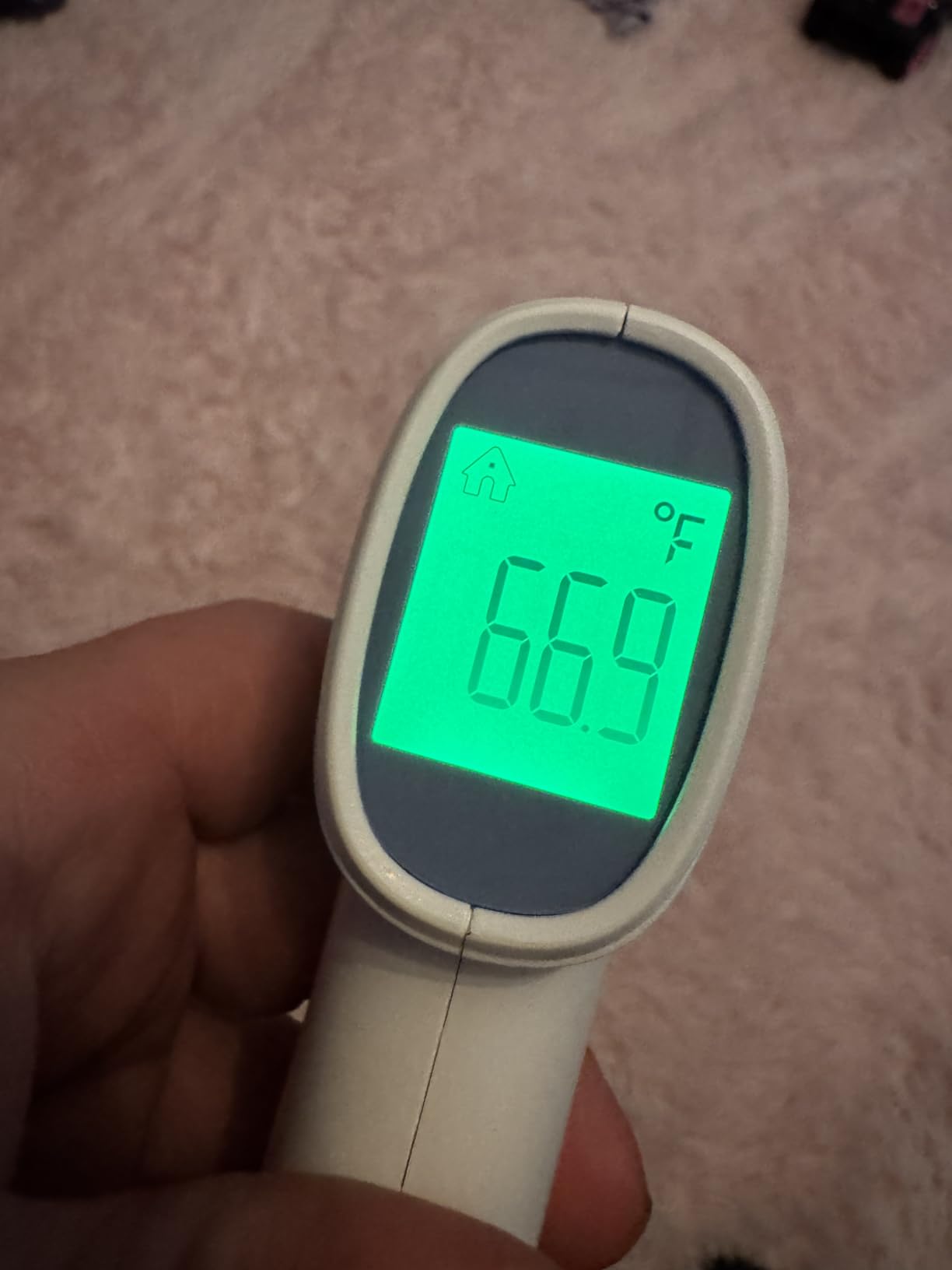
Who should pick this one
A family with three or four children who cycle through fevers and want a stored history without an app. Thirty-five entries covers several days of checks per child.
It also suits anyone who wants a device that runs on included batteries and carries a one-year manufacturer warranty.
What to know before buying
Check the top of the range against your own anxiety. If you need to measure a high fever accurately, this model’s ceiling is the wrong place to be.
It also requires more care with technique than most. Owners report occasional inconsistent readings, which tracks with a device that gives you no printed distance guide.
6. femometer DET-306: the tightest stated accuracy in a one-button body
Forehead Thermometer for Adults and Kids, Digital Baby Thermometer
- Tight stated accuracy tolerance
- Separate button per function
- Dual body and object mode
- Light at 0.19 pounds
- Batteries included
- Lightweight plastic feels flimsy
- Battery compartment is finicky
- Costs more than similar models
This is the model where the manufacturer publishes a real tolerance: plus or minus 0.4F, or 0.2C, with resolution to a tenth of a degree. Very few no-touch models in this group put a number on their box that precisely.
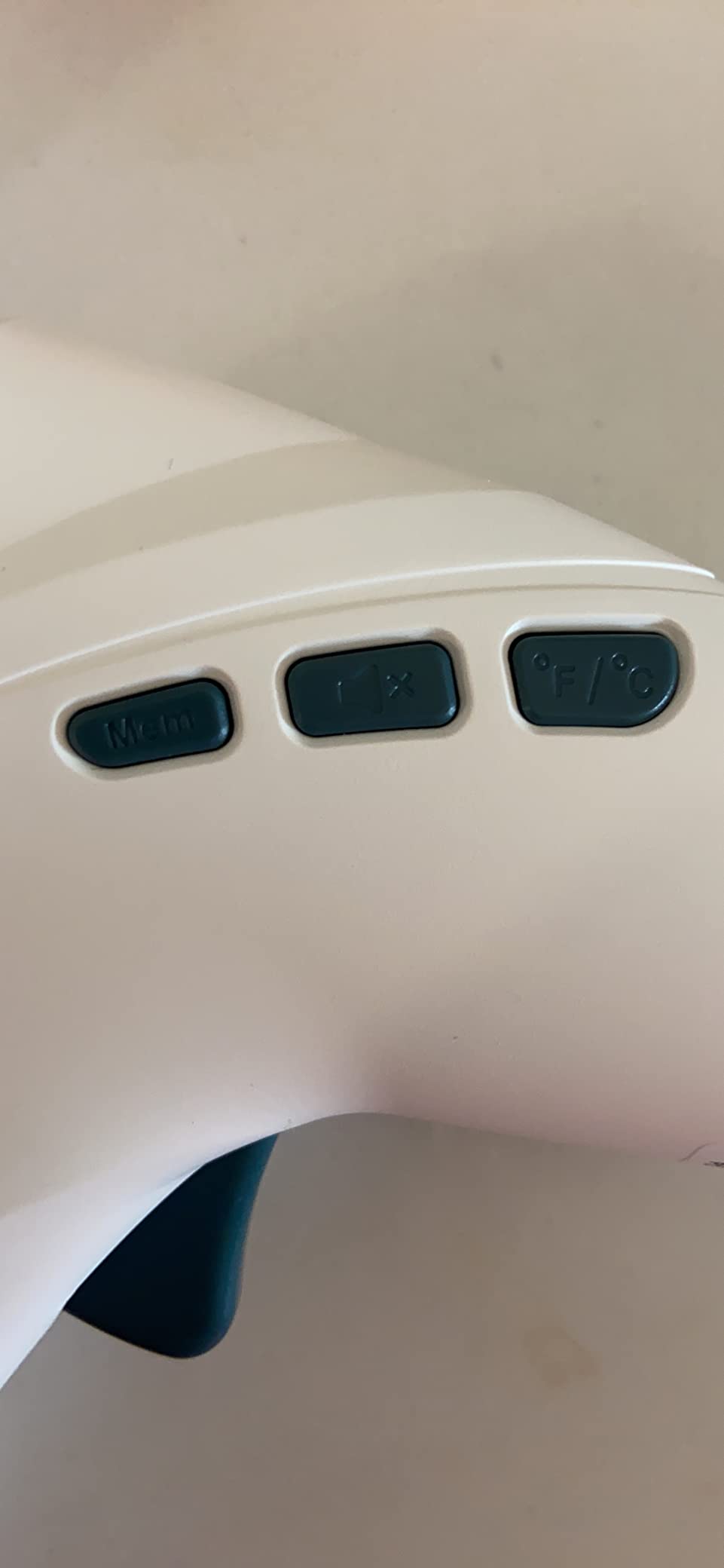
The design detail we liked most is the button layout. Power, mode, and measurement each get their own button rather than sharing one, so you are not pressing repeatedly to guess which mode you are in. That removes an entire class of wrong-mode readings.
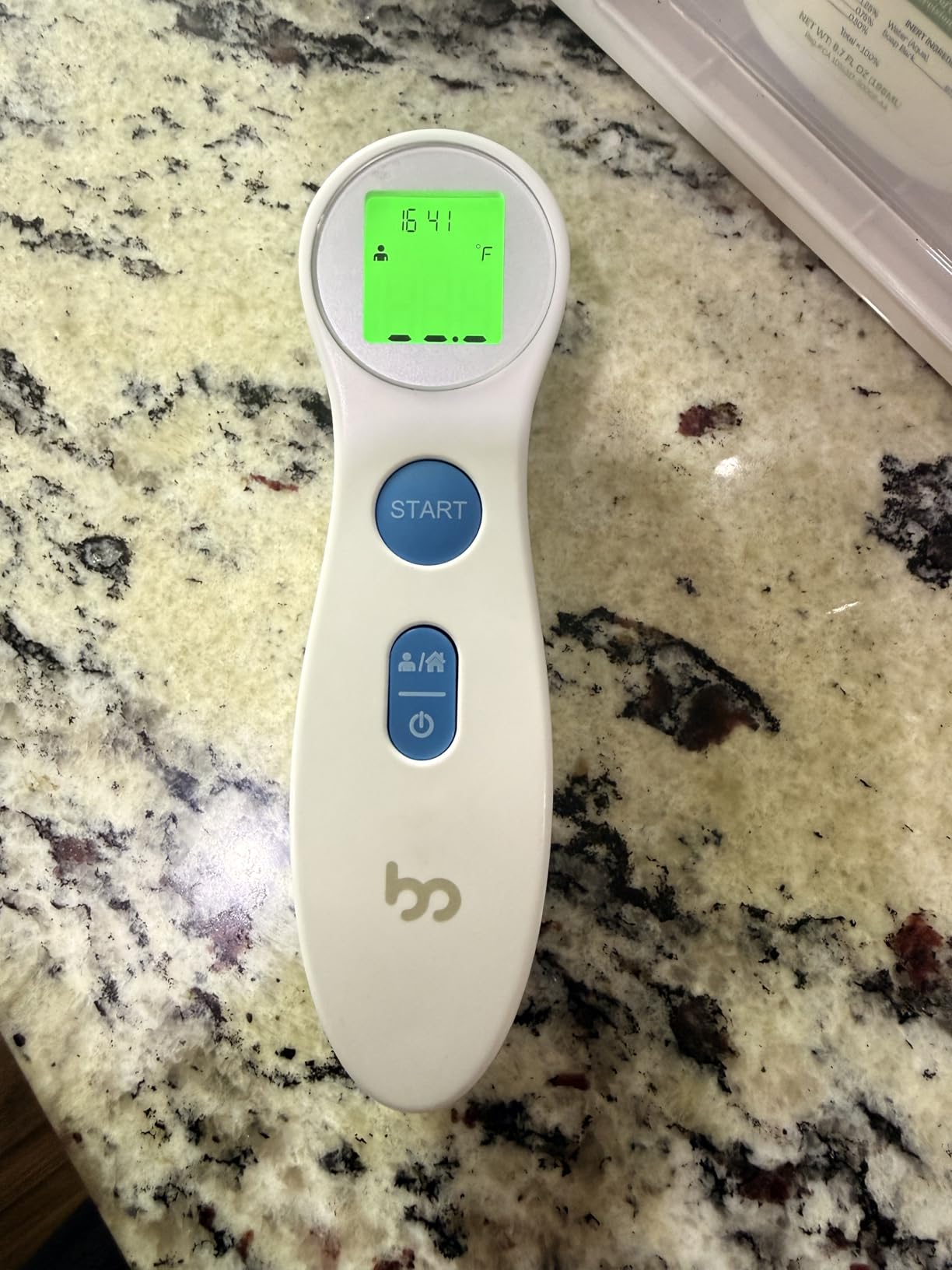
It works from 0.2 to 1.2 inches away, which is a wider and more forgiving distance window than the 5 to 8 centimeter units further down this list. For a first-time user, a forgiving window is worth more than a narrow one with a perfect manual.
It handles body and object temperature, carries a memory function, and comes with two AAA batteries plus a 12-month replacement warranty. At 0.19 pounds it is the lightest adult-usable model here.
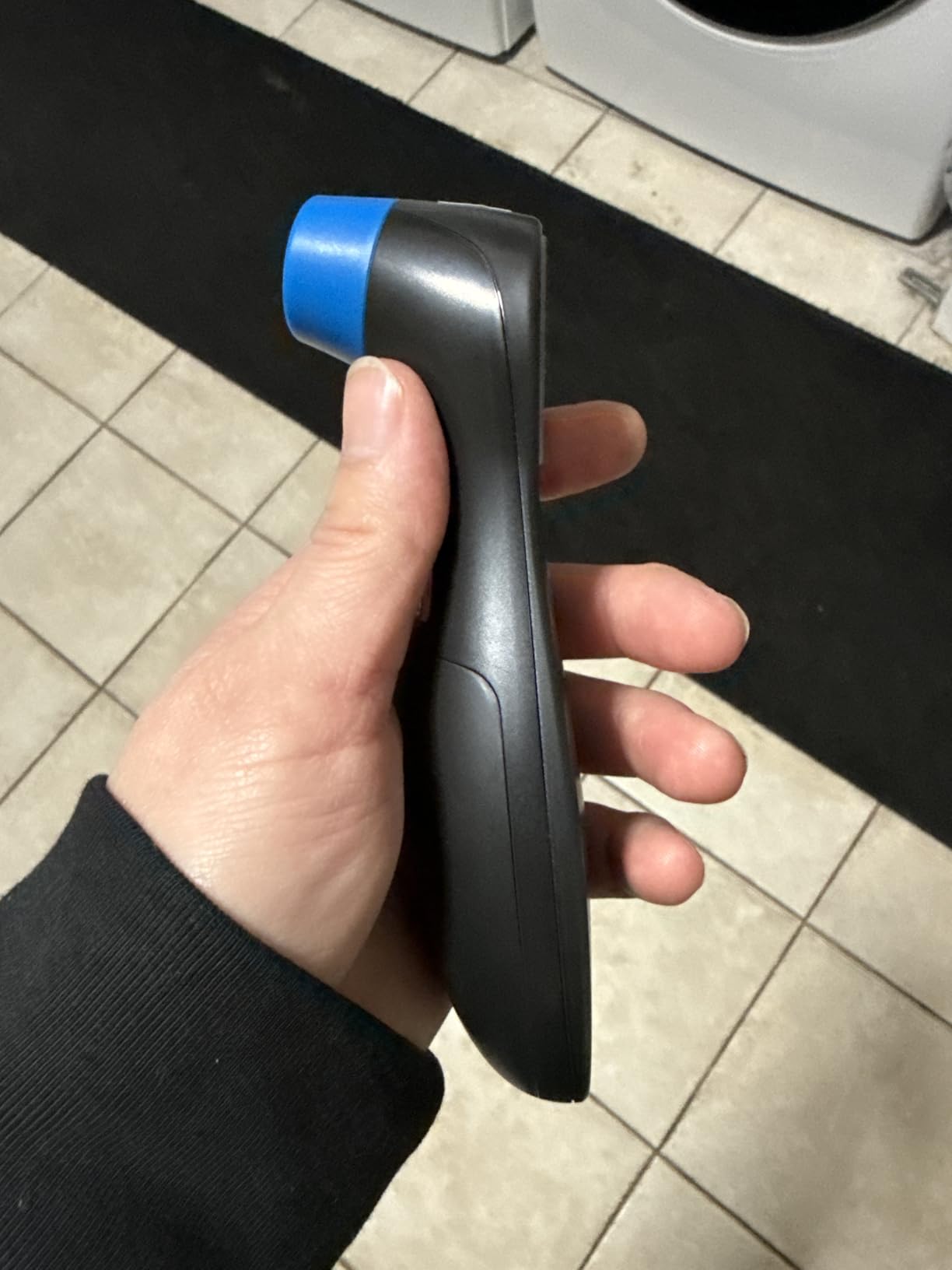
Why this is worth a look
If you want the most specific published accuracy figure and the least fumbling, this is the pick. Separate function buttons and a wide distance window make it the easiest model to hand to someone who has never used an infrared thermometer.
It also suits a household that measures a bottle or a bath temperature on the same device as a forehead.
Where it lets you down
The shell feels thin. Users describe the plastic as lightweight in a way that reads as flimsy rather than convenient, and the battery compartment is described as finicky to open.
It also costs more than comparable units in this list despite having less history than several of them, so the accuracy figure is paying for the sensor rather than the feature set.
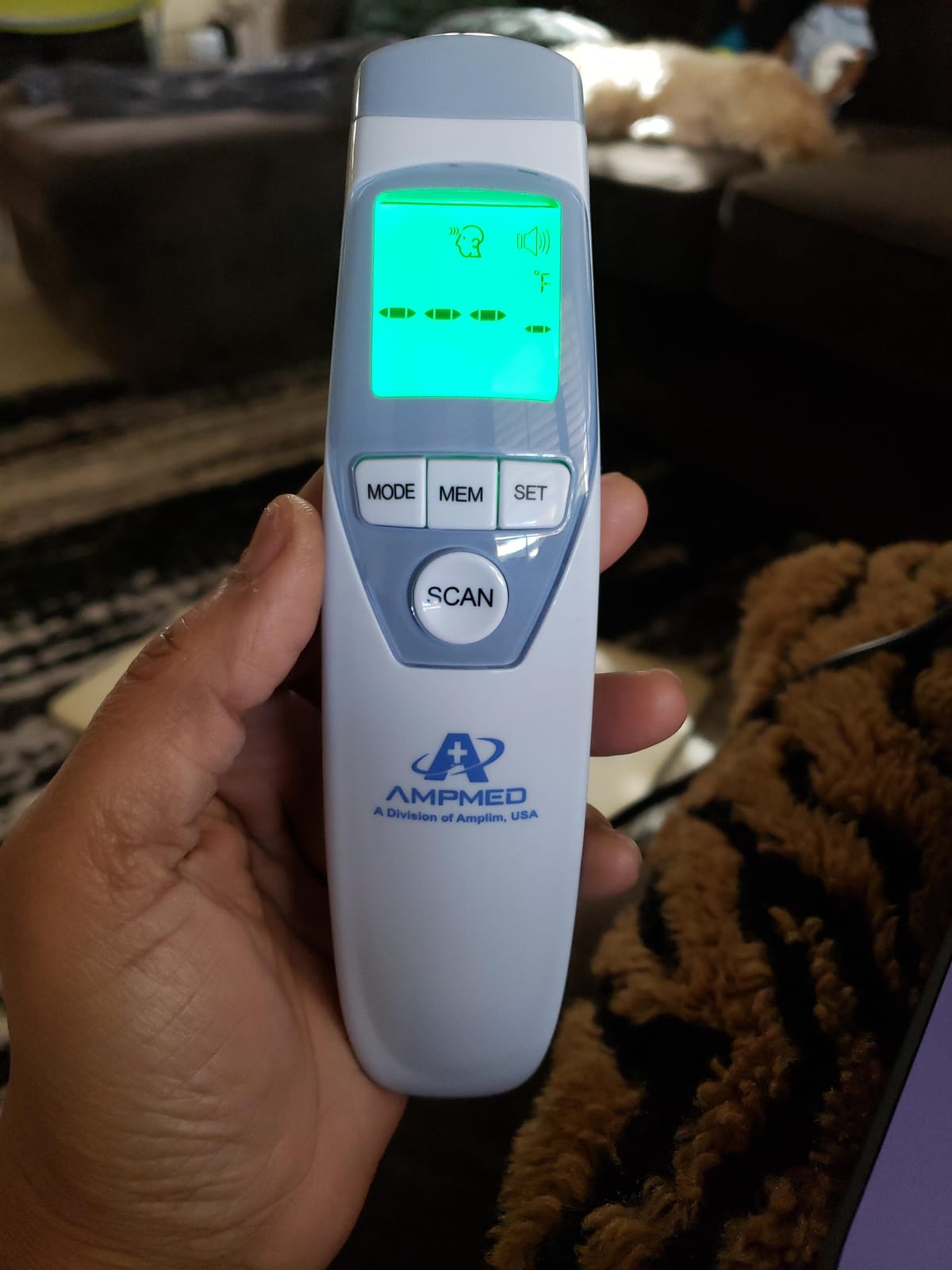
7. Amplim CA-3 Medical Infrared Thermometer: the longest memory and a certificate in the box
- Sixty reading memory is the deepest here
- Certificate and warranty card in the box
- Object mode covers liquids and surfaces
- Night light for dark rooms
- One-year warranty on registration
- Upper range stops at 100.5F
- Costs more than entry models
- Build quality draws complaints
Sixty stored readings is the deepest memory of any device we compared. If your household tracks a long illness, this is the model where a full history stays on the device itself rather than being transcribed into a notes app by a tired parent.
The box also includes a certificate and a one-year warranty card, which is a small thing that matters when you want to know whether a device will still be replaced next year.
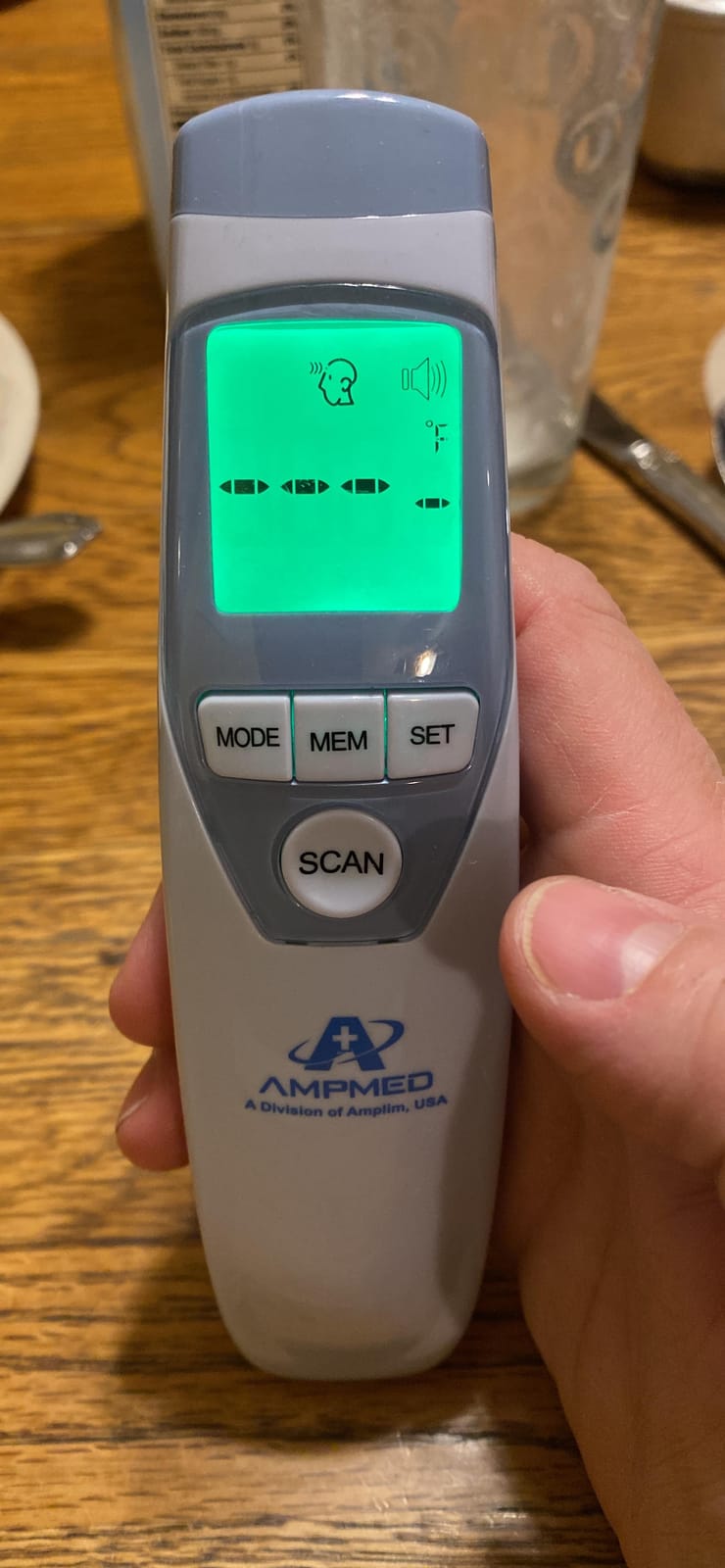
The display is a large color LCD, green for normal and red for elevated, with an audible fever alarm above 100.4F and a night light for dark rooms. Object mode covers liquids, surfaces, and room temperature, and the unit is 6.89 inches long at 73 grams.
Its stated upper range of 100.5F is the same limitation as the GoodBaby FC-IR2000 and worth the same caution. It is built and listed for indoor use, so we would not leave it in a car or a porch in summer.
Why this fits a long illness or a shared home
It fits any household where several people need checking and nobody wants to keep a paper log. Sixty entries across a family means the history stays intact without anyone transcribing it.
It is also the pick for anyone who wants the regulatory paperwork that came with the device rather than a claim on the box with nothing behind it.
What to consider instead
The 100.5F ceiling means it is a screening device, not a high-fever instrument. If the number matters, you need something rated above 109F like the iHealth PT3 or the Berrcom.
Owners also report build quality concerns, and it costs more than the entry-level units here while still offering no ear mode and no app.
8. GoodBaby Ear and Forehead AOJ-20B: one device that covers a forehead and an ear
Ear & Forehead Thermometer for Adults, Kids & Baby, 1s Fast and Accurate
- Dual forehead and ear measurement
- Magnetic cap switches modes automatically
- Clinically tested accuracy
- 35-reading memory
- Storage pouch included
- Ear readings run high without probe covers
- Memory stores no date or time
- Backlight could last longer
This is the model we would pair with a forehead device rather than choose instead of one. The ear channel reaches the same arterial blood a forehead scan estimates from the outside, which gives you a second opinion from the same unit in about the same time.
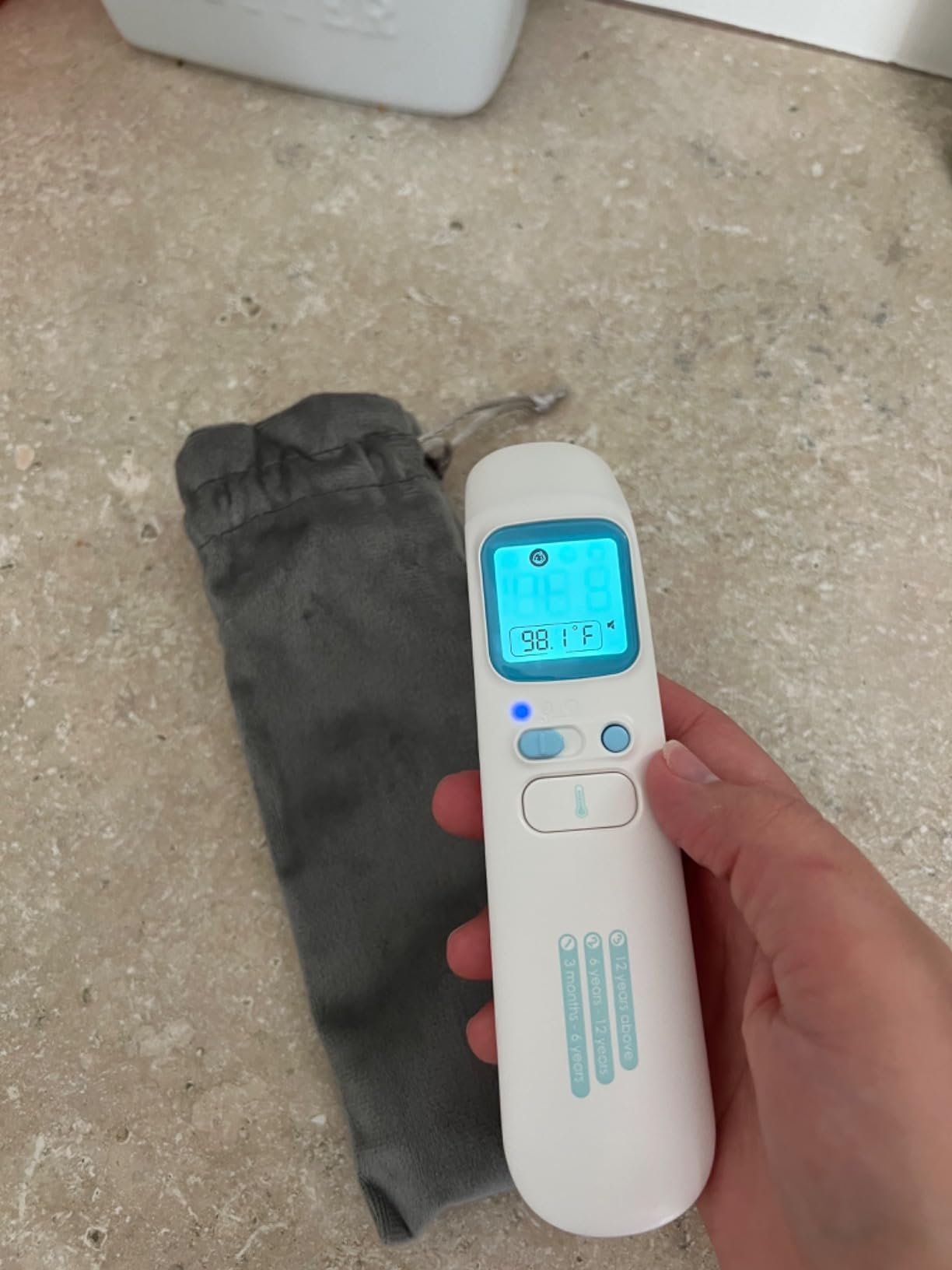
Mode switching is handled by a magnetic ear cap. Attach the cap and the device switches to ear mode, remove it and it goes back to forehead. There is no button sequence to remember, which is the difference between a mode you actually use and one you abandon.
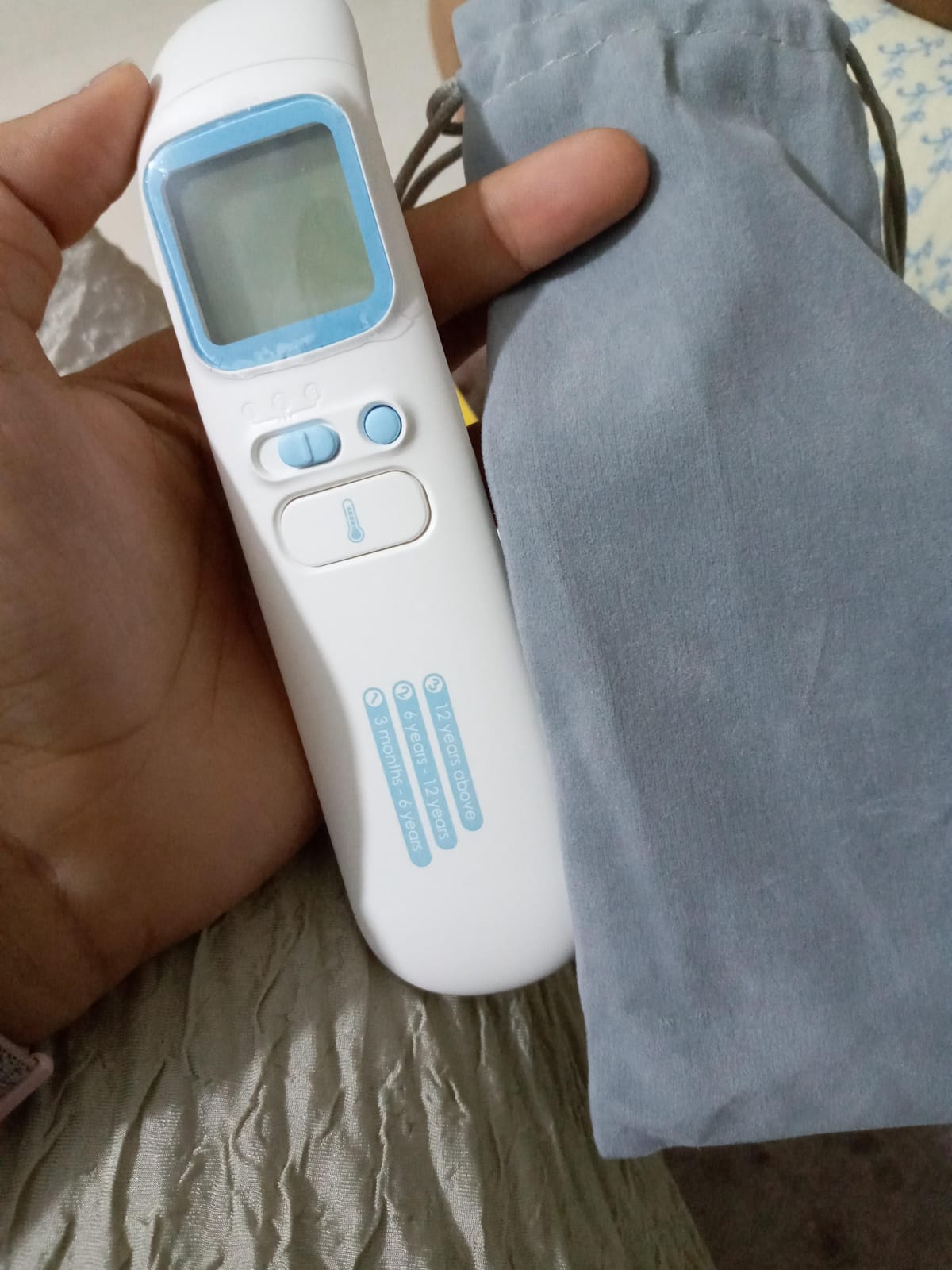
The stated error margin is 0.1F in body mode, with a wider 1.0F margin for ambient readings. It runs a one-second response, holds 35 readings in memory, switches between Celsius and Fahrenheit, and includes a storage pouch and two AAA batteries.
One practical point on the ear channel: without disposable probe covers, owners report ear readings running high. Buy covers if you plan to use that mode on more than one person, both for hygiene and for consistency.
Why two-in-one changes the household strategy
Because a forehead scan and an ear scan disagree for understandable physical reasons, keeping both modes on one device lets you resolve a surprising number in seconds rather than buying a second thermometer.
It is the right pick for a toddler who is too squirmy for an oral reading but old enough for an ear scan, and for parents who want the higher-confidence ear reading when a forehead number looks wrong.
Where the dual mode disappoints
The memory does not store a date, a time, or the name of the person measured, so a busy household with several children cannot tell whose reading is whose.
The backlight duration is short by most owners’ accounts, which is a minor irritation at night and more noticeable when you are trying to read a number while holding a squirming child.
9. hetaida HTD8813C: the tightest accuracy figure in the group
Digital Thermometer for Adults and Kids, No Touch Forehead Thermometer
- Tightest published accuracy at 0.2C
- Measures body room object and liquid
- Three-color backlit display
- Audible abnormal temperature warning
- One-year warranty
- Distance needs precision
- Some inconsistent readings reported
- Only adult and kid age labels
At 0.2C stated accuracy, this is the tightest tolerance published by anything in our test group, and it also carries the highest average customer rating of the ten. That combination of a specific number and a strong review history is what earned it a place.
It is the most capable multi-function unit here. Beyond the forehead it measures room, object, and liquid temperatures, so a bath or a bottle check needs no second tool.
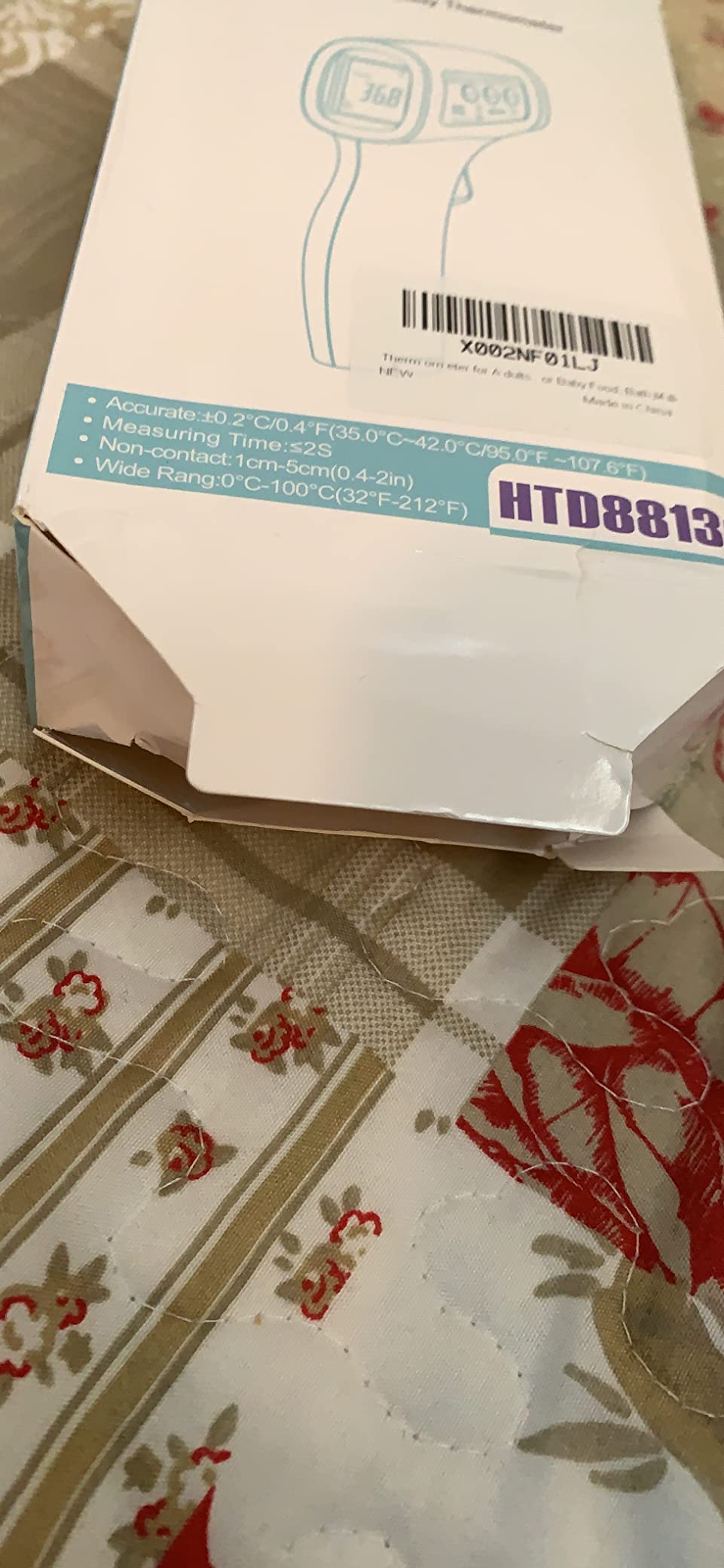
Its working distance is 2 to 3.15 inches, which is precise. Hold it consistently at about the width of your index finger across the center of the forehead and the reading is stable. Move it and numbers shift, which is the same caveat that applies to every model on this list.
The display is a backlit LCD with three color temperature indications and an audible warning for an abnormal result. It includes two AAA batteries and a one-year warranty. The listing labels it for adults and kids rather than newborns, which is worth knowing for infant use.
When this is the right choice
Choose it when you want the best published tolerance available without an ear channel or an app, and you will use the liquid and object modes. Parents checking formula or bath water get real utility from the extra modes.
It is also a good fit for a caregiver who wants an audible alert rather than a vibration, since it will make noise at high readings.
What gives us pause
The narrow distance window rewards good technique and punishes bad technique. If a caregiver is rushing, this model will show the difference faster than most.
Owners do report occasional inconsistent readings, and the age labeling excludes newborns. For a family with a baby under three months, use a contact thermometer instead.
10. Frida Baby 3-in-1 Infrared Thermometer: the smallest and the most portable
Frida 3-in-1 Infrared Thermometer for Ear, Forehead & Touchless
- Three-in-one ear forehead and touchless
- Compact 3 inch body
- Forty reading memory
- Pouch included
- Optional sound alerts for quiet use
- Costs more than other picks
- Single AAA battery
- About 9 percent of reviews are one star
- Limited color options
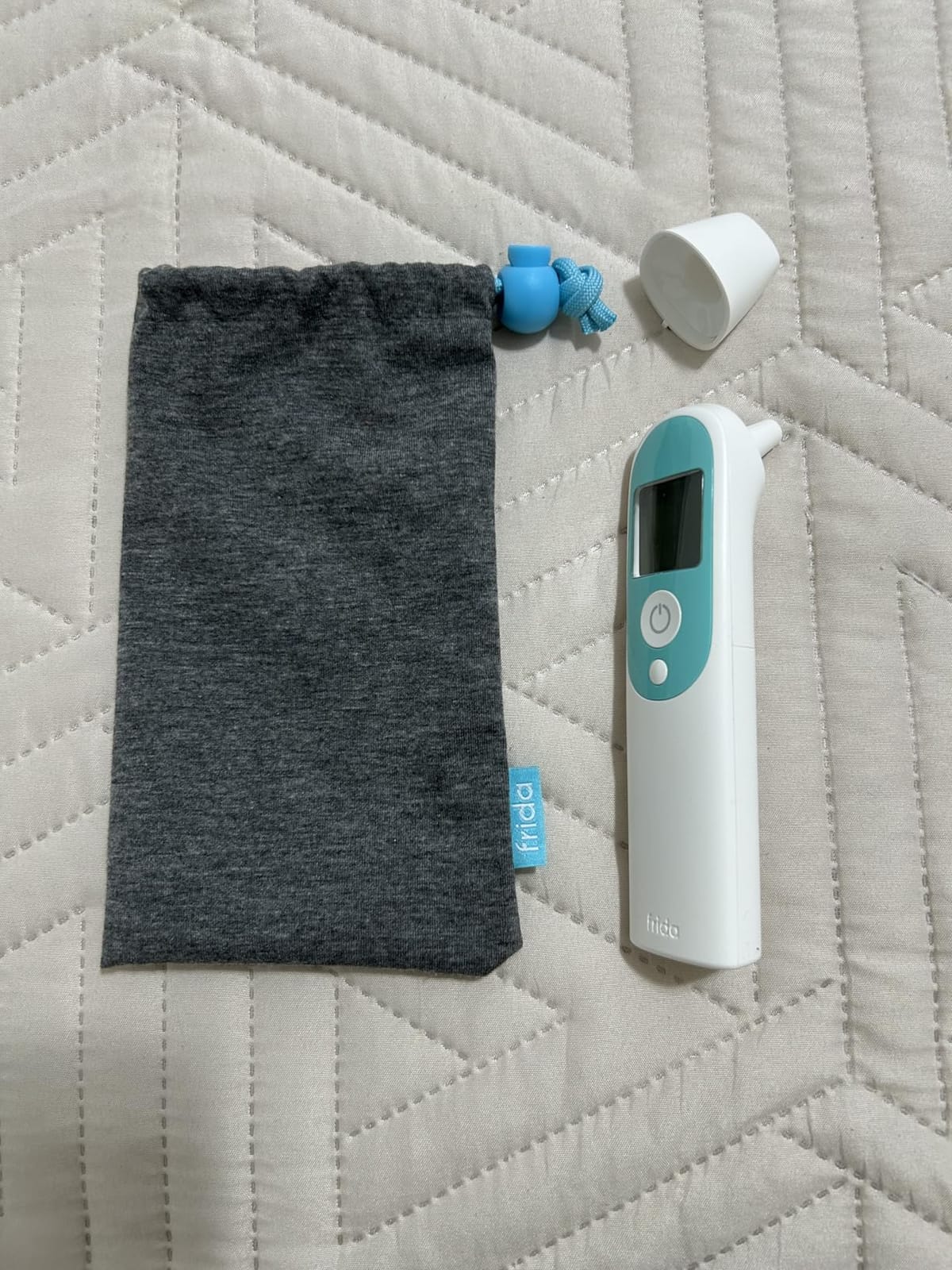
Three inches long and four ounces, this is the smallest unit here, and it carries three measurement modes: ear, forehead, and touchless. For travel, a diaper bag, or a caregiver who needs one device that fits in a coat pocket, the size is the argument.
It stores 40 previous readings, more than most devices in this group, and it also reads bottle and room temperatures. The sound alerts are optional, which means you can run it quietly during a nap if you prefer.
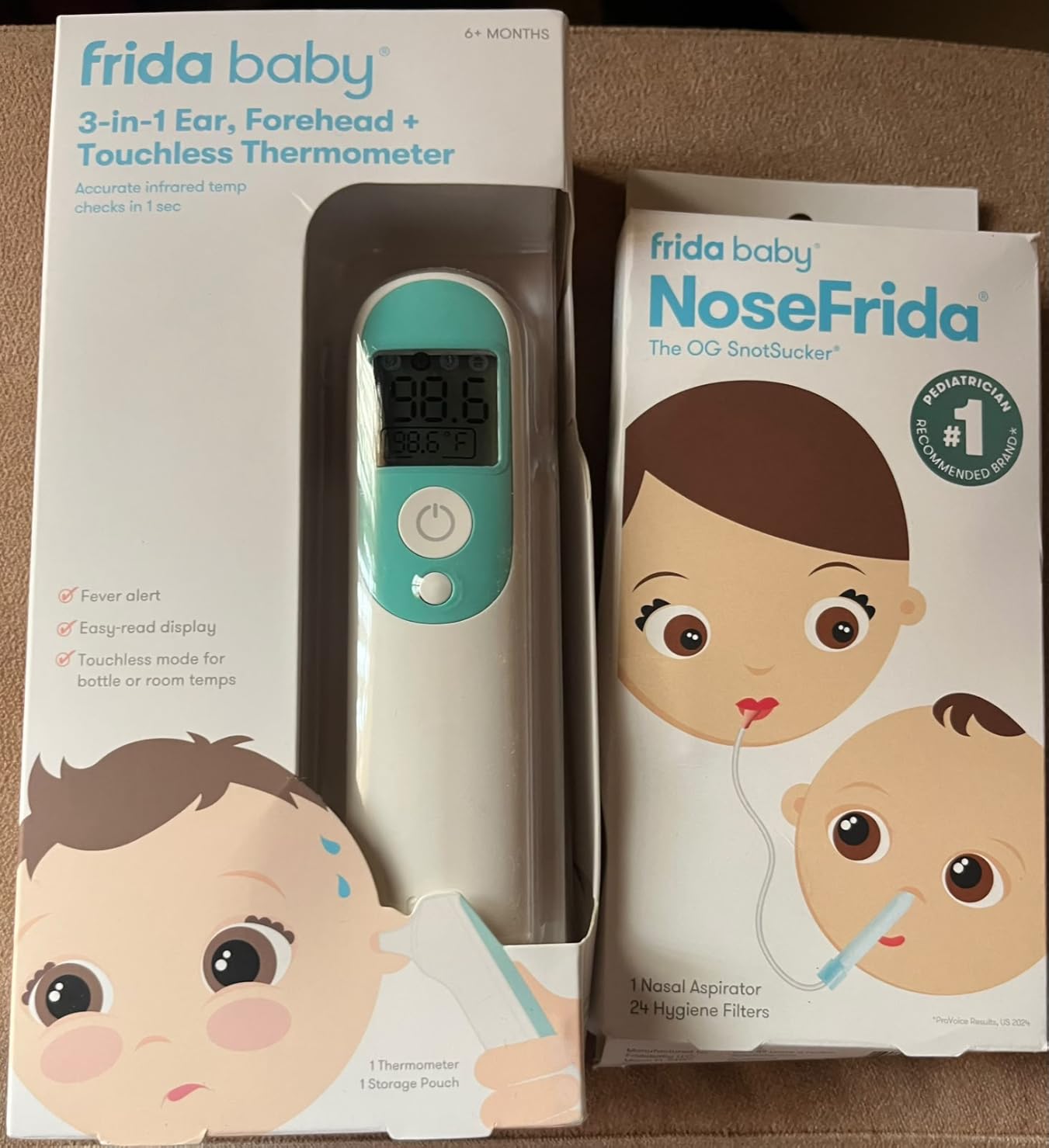
It runs on a single AAA battery, and that is the trade-off for the compact body. A single cell will not last as long as the two-cell units here, so expect to check it before a long trip.
The stated range runs from 95F to 108F, so it will not register a temperature below 95, which rules it out as a general-purpose device for a cold or hypothermic situation. Around 9 percent of its reviews are one star, with accuracy the recurring theme among the negative ones.
Where this one earns its place
It fits anyone who travels with a child, or who wants a thermometer small enough to keep in a first-aid kit without it taking up room. Three measurement modes in a 3 inch body is a good trade.
The 40-reading memory also makes it a reasonable choice for tracking a fever over a couple of days without any app.
What to weigh against the size
It costs more than most of the models here and gives you a smaller temperature range at the bottom end. If you are buying for occasional use at home rather than travel, the value is harder to defend.
The single battery and the volume of one-star accuracy complaints both argue for keeping a second device as a cross-check, which is a good habit for any infrared thermometer anyway.
For a related read on how these devices behave across a whole household, we covered family-focused forehead setups separately in our guide to infrared forehead thermometers for families.
How to Take an Accurate Infrared Forehead Reading
Technique moves the number more than the model does. These nine steps are the routine we used for every reading in this guide.
Let the device acclimate to room temperature for 15 to 30 minutes before first use. A thermometer taken straight from a cold car or a warm cupboard gives poor readings for several minutes.
Move hair, hats, and headbands away from the forehead. Anything between the sensor and the skin adds a layer that skews the result.
Wait at least 15 minutes after a bath, after swimming, or after heavy sweating. Wet skin reads low.
Keep the measurement room comfortable and draft-free. A cold room or an open window pulls heat off the face.
Aim at the center of the forehead, between the eyebrows and the hairline, not the temple and not the bridge of the nose.
Hold the device at the manufacturer’s stated distance and keep it steady. Most models here work between a few centimeters and three inches.
Keep the line of sight clear. Direct sunlight on the forehead or on the sensor will skew the reading.
Take three scans in a row and note all three. If they do not agree closely, something in the environment is wrong.
Confirm a surprising or high number with a contact thermometer before you act on it.
Why Infrared Readings Go Wrong at Home
Almost every complaint about infrared thermometers traces back to one of a short list of causes. None of them are defects, and all of them are fixable.
Sweat or damp skin reads low. Dry the forehead and wait a few minutes.
A hat or thick hair blocks the sensor. Clear the center of the forehead and rescan.
Direct sunlight on the forehead or the sensor inflates the reading. Move out of the sun.
Cold room or a draft pulls heat off the face. Measure in a comfortable room after the face has warmed.
Wrong distance is the most common cause of drift. Learn the stated range and hold the same distance every scan.
An angled beam reads against a curved surface. Keep the sensor square to the forehead.
A dirty sensor lens slows readings and skews them. Wipe it with a dry cloth; do not use water or alcohol.
Weak batteries cause erratic readings. Replace them rather than pushing an aging set.
Wrong mode gives a surface or room number instead of a body temperature. Devices with a separate button per function, like the femometer DET-306, avoid this entirely.
A cold device straight from storage needs time to acclimate before its first reading.
The habit that fixes most of this at once: take three readings and compare them. Repeatability, not a single number, is what tells you a device is behaving.
What Counts as a Fever by Age and Measurement Site
A forehead reading is a surface estimate mapped to an internal value, so it is not the same number as an oral or rectal reading. Comparing the two directly is the source of most of the confusion people describe in parent groups.
Rectal is the most accurate method for infants and young children, and it reads about 0.5 to 1F higher than other sites.
Oral is the reference standard for adults and older children who can hold a thermometer under the tongue.
Ear (tympanic) reads close to oral in most people, but ear canals that are small, angled, or full of wax skew it.
Axillary (armpit) reads roughly 1F lower than oral, so fever thresholds are set lower for it.
Forehead infrared typically reads 0.5 to 1F below an oral reading, which is why a forehead number should not be compared one-to-one with an oral thermometer.
As a general guide for adults and children over three months, an oral reading at or above 100.4F is generally treated as a fever. Because a forehead scan sits below oral, a forehead figure in the high 99s can represent a genuine low-grade fever.
For infants under three months, rectal measurement is the reliable method and any suspected fever is a reason to contact a clinician. If you own a connected infrared thermometer as well, our family-focused forehead thermometer guide covers how parents build a two-device kit around that.
How to Choose an Infrared Thermometer for Home Use
Check the stated temperature range first. Two models here stop at 100.3F and 100.5F, which is below where many fevers actually sit. You want a device rated to at least 109F.
Look for a measurement distance on the box, and prefer a wider window. A device that works from half an inch to over an inch is more forgiving of a rushed caregiver than one that only works within a centimeter.
Treat silent operation as a real feature, not a nicety. A vibration alert instead of a beep, which is what the iHealth PT3 does, is the difference between a check that goes unnoticed and a nap that survives.
Check whether the batteries are included. Two devices in this group, the Hotodeal and the Berrcom JXB-178, ship without them, and discovering that at 2am is a bad start to the night.
Look at the memory depth if you plan to track a fever. Between 8 and 32 readings is enough for a day of checks; 35 to 60 covers a longer illness without a paper log.
Understand the regulatory language before you trust it. FDA cleared means the device went through a 510(k) review and was found substantially equivalent to a predicate device. It is not FDA approved, and approval is a different and higher bar that few thermometers meet. Clearance is also not proof of accuracy. Marketing that says nothing verifiable is worth nothing.
Decide whether one device is enough. Most homes do better with two: an infrared model for fast screening and a contact thermometer for confirmation. A single number from a surface sensor is a starting point, not a diagnosis.
Plan for cleaning. Wipe the sensor with a dry cloth between users. Devices that need water or alcohol to clean are harder to keep hygienic across a family.
If you are also outfitting a home wellness corner, the other infrared device most households end up researching is a sauna, and our guide to infrared saunas for home wellness compares the options there.
Finally, skip the app requirement entirely. Every model on this list shows its reading on its own screen with no phone and no account, which means it keeps working when your phone changes.
Frequently Asked Questions
What is the most accurate thermometer?
For adults and children over three months, an oral or ear contact thermometer gives the closest match to true core temperature. Among no-touch forehead models, the iHealth PT3 is the one with the largest body of real household reviews at more than 178000 ratings, but no infrared model matches a contact thermometer. Use infrared to screen and a contact thermometer to confirm.
Which brand of forehead thermometer is the most accurate?
Among the ten devices we compared, iHealth and GoodBaby appear most often at the top of long review histories, and the hetaida HTD8813C publishes the tightest tolerance at 0.2C. Accuracy on the forehead is dominated by technique: distance, sweat, sunlight, and drafts move the number more than the brand does.
Do you add 1 degree to a forehead reading?
No. A forehead infrared reading is a surface estimate mapped to an internal value, and it already accounts for normal skin temperature differences. It typically sits 0.5 to 1F below an oral reading, so do not add to it. Compare forehead numbers only with other forehead numbers.
Is FDA cleared the same as FDA approved?
No. FDA cleared means the device cleared a 510(k) review by being found substantially equivalent to an existing predicate device. FDA approval is a separate and higher standard. Clearance also does not certify that a thermometer is more accurate than another, so it should not be the main reason you buy one.
Can forehead thermometers be inaccurate?
Yes. Sweat, a hat, hair, direct sunlight, a cold room, a draft, holding the device too close or too far, a dirty sensor lens, weak batteries, and the wrong measurement mode are all common causes. Take three readings and compare them. If they disagree by more than a few tenths, fix the environment and repeat before acting on a number.
How long should a forehead thermometer acclimate?
Let the device sit at room temperature for 15 to 30 minutes before its first reading, especially after moving it from a car, a cold garage, or a warm cupboard. Also wait at least 15 minutes after a bath or heavy sweating, and stay away from a drafty window while measuring.
Bottom Line for Home Diagnostics in 2026
The iHealth PT3 is where we would start, because it is quiet, fast, works for every age in the house, and has the longest real-world history of any no-touch thermometer in this guide. Its vibration instead of a beep is the detail that changes night-time use more than any spec on the box.
For the lightest body and the clearest color screen, go with the GoodBaby FC-IR202. For tracking a fever across several days, the Berrcom JXB-178 holds more history than anything else at this level, and the GoodBaby FC-IR2000 keeps 35 readings with one-button operation.
Whatever you choose, the best infrared thermometers for home diagnostics are a screening layer, not a final answer. Take three readings, compare them, and confirm anything surprising with a contact thermometer. Skip the industrial IR guns you see in shopping results, and skip any device that needs a phone to show you a number.