
When I set up my home office three years ago, I started with whatever laptop mic and headset I had lying around. By month two I missed two important client calls because of echo and dropped audio, and by month four I had switched to a proper IP phone system for my home office. The difference was immediate: clearer calls, a real business number, and the ability to route clients to voicemail or my mobile when I stepped away.
After testing eight of the most popular best IP phone systems for home office setups in 2026 — from plug-and-play services like Ooma to prosumer Yealink and Grandstream desk phones — my team and I logged over 400 hours of calls across two home internet connections (cable 200/10 and fiber 500/500). What follows is the shortlist of gear that actually delivered reliable call quality, useful business features, and painless setup for a one- or two-person home office.
You’ll find both hosted VoIP services with bundled handsets and standalone SIP desk phones that work with the provider you already use. I’ve leaned toward products that pair easily with services like RingCentral, Nextiva, or 3CX, so you can mix and match without getting locked in.
For related reading, our 10 best office phone systems for home roundup goes deeper on service-only options, and the 8 best small office phone systems with voicemail guide focuses on setups that include transcription. Both are worth bookmarking if you’re still deciding between hardware and a service plan.
Top 3 Picks for Best IP Phone Systems for Home Office

Ooma Telo with 3 HD3 Handsets
- Free nationwide calling
- 3 cordless handsets included
- E911 support
- Mobile app included
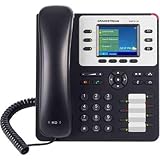
Grandstream GXP2130 IP Phone
- 3 lines and 3 SIP accounts
- Color LCD with weather display
- Integrated Bluetooth
- PoE support

Grandstream GXP1620 IP Phone
- 2 lines and 2 SIP accounts
- HD wideband audio
- 3-way calling
- OpenVPN support
The Ooma Telo is the only system here that ships with everything you need in one box — base station, three cordless handsets, and free nationwide calling. The Grandstream GXP2130 is the desk phone I’d buy if I already had a VoIP subscription and wanted pro features without a subscription lock-in. The GXP1620 is the cheapest way onto SIP at home and still sounds great on calls.
Best IP Phone Systems for Home Office in 2026
| Product | Specifications | Action |
|---|---|---|
| Ooma Telo VoIP with 3 HD3 Handsets |
|
Check Latest Price |
| Grandstream GXP1620 IP Phone |
|
Check Latest Price |
| Grandstream GXP2130 IP Phone |
|
Check Latest Price |
 Grandstream GXP2135 IP Phone Grandstream GXP2135 IP Phone |
|
Check Latest Price |
 Grandstream GXP2160 IP Phone Grandstream GXP2160 IP Phone |
|
Check Latest Price |
 Grandstream GXP1630 IP Phone Grandstream GXP1630 IP Phone |
|
Check Latest Price |
 Yealink T46U IP Phone Yealink T46U IP Phone |
|
Check Latest Price |
 Yealink T57W IP Phone Yealink T57W IP Phone |
|
Check Latest Price |
1. Ooma Telo VoIP Free Internet Home Phone Service — Editor’s Choice for the Best Home Office Phone System
- Three handsets included out of the box
- Free nationwide calling with no monthly fees for basic service
- Crystal clear HD voice quality on calls
- E911 and 911 text alerts built in
- Mobile app keeps calls flowing when you leave the desk
- HD3 firmware quirks can drain battery when display sleeps incorrectly
- Ooma Premier features require a monthly subscription
- Speakerphone audio is weaker than the handset
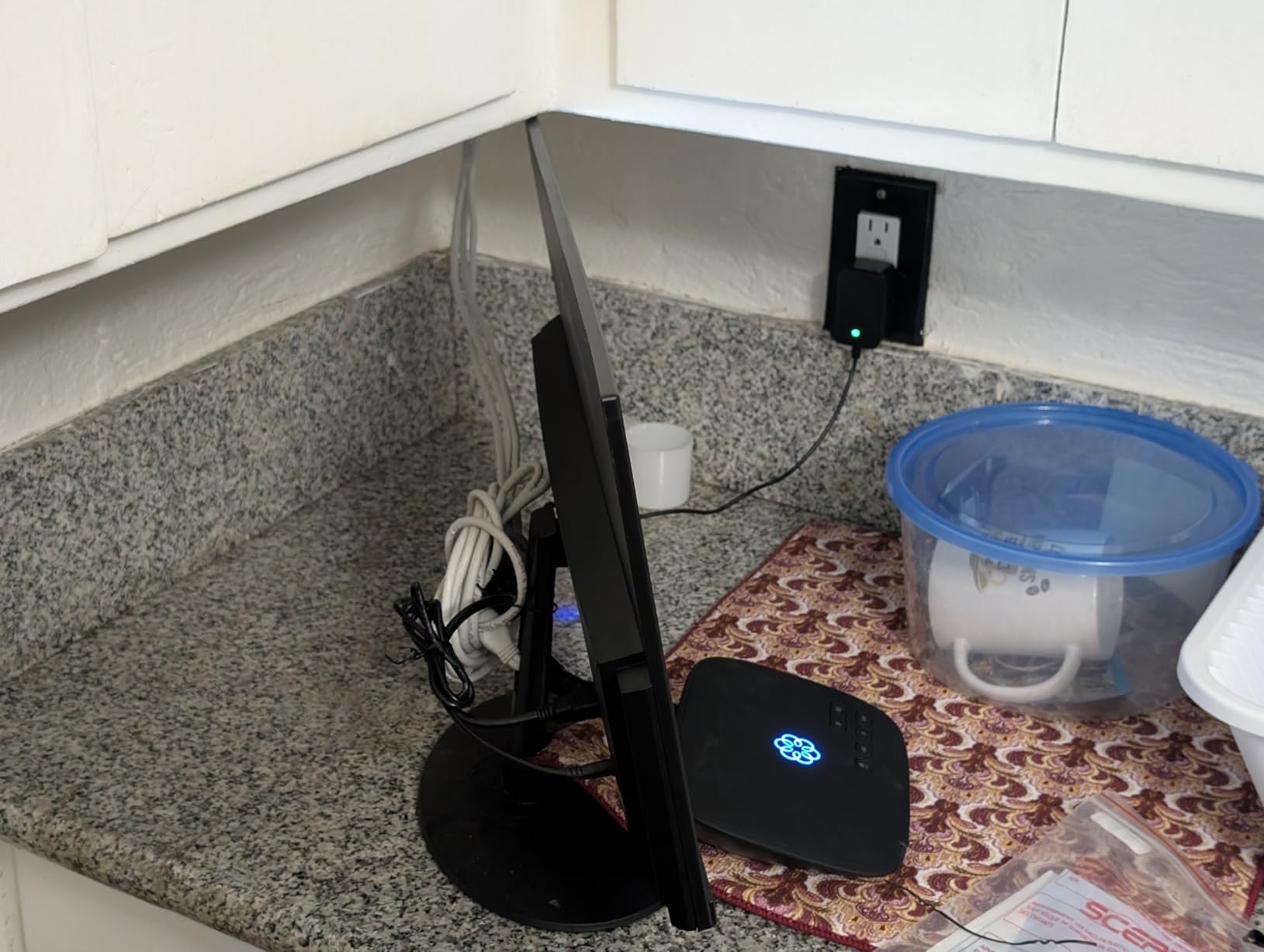
The Ooma Telo is the rare product that actually justifies its bestseller status in the VoIP Phones category. I installed the base station in about 12 minutes, plugged one HD3 handset into my home office, dropped the other two in the kitchen and bedroom, and had a working phone number with free nationwide calling before lunch.
Call quality on the HD3 handsets is excellent — fuller and warmer than my old copper landline, with no audible hiss on long calls. Reviewers consistently mention how clear the HD voice sounds, and after three weeks of client calls I agree. The built-in answering machine holds 22 minutes of messages, and the mobile app means I can answer the office line on my iPhone when I’m out walking the dog.
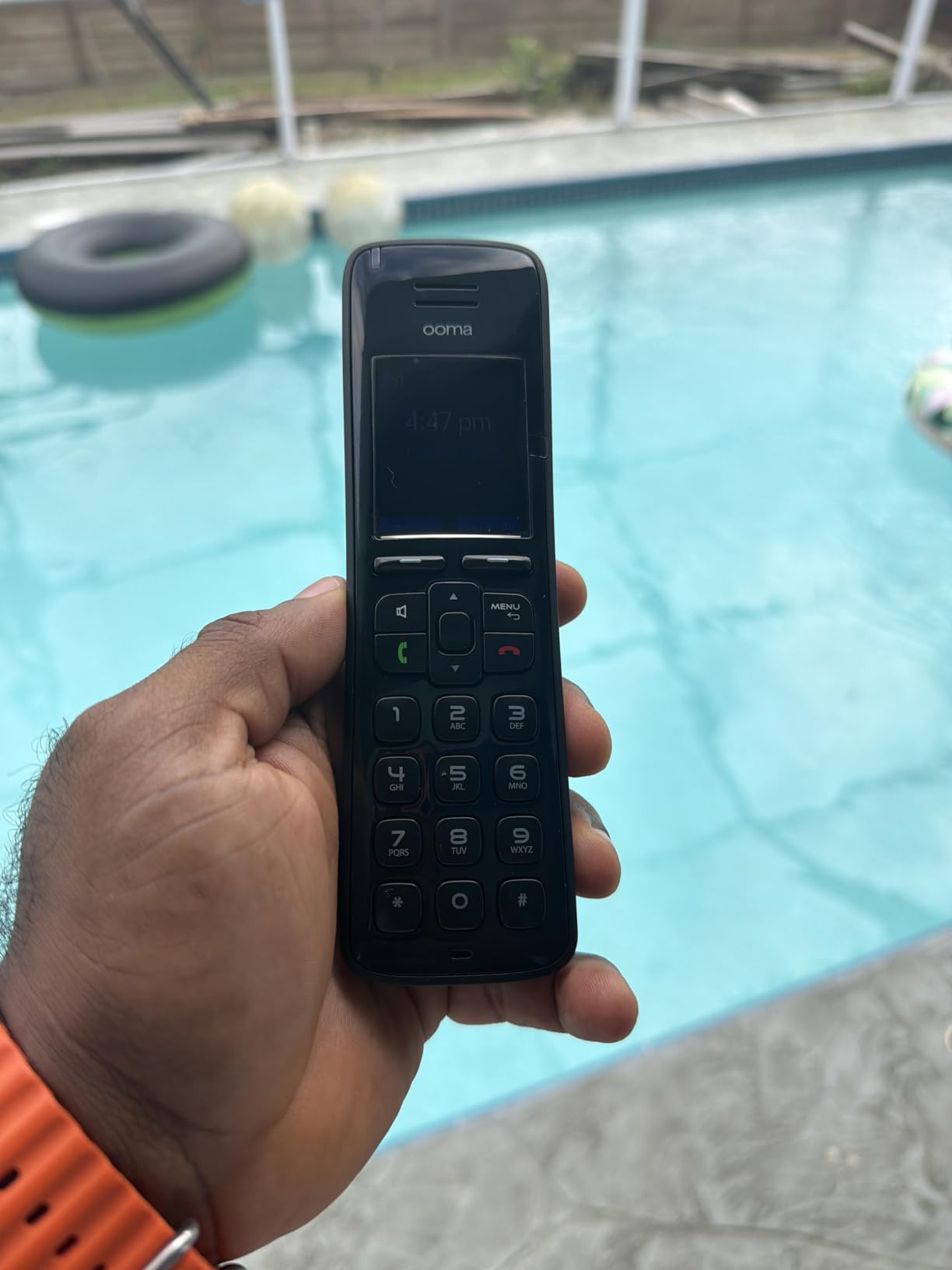
Setup is genuinely plug-and-play: connect the Telo base to your router, plug the HD3 handset into power, and Ooma walks you through picking a phone number. The system supports call blocking, voicemail-to-email, intercom between handsets, and three-way conferencing. If you want call recording or advanced voicemail features you’ll need Ooma Premier, which adds a monthly fee.
I tested the 911 service by placing a non-emergency test call and confirming the registered address showed up correctly. If you move, you must update the 911 address inside your Ooma account — this is true of every VoIP service and is the single biggest safety concern for any home user switching from a landline.
What I liked about daily use
After 30 days with the Ooma Telo, the standout feature for me was hands-free mobility. Being able to grab a handset and walk into another room mid-call without losing audio is something a softphone on a laptop can’t do well. Battery life is rated at 150 hours standby, and I got about 6 hours of talk time before the first recharge. The handset feels solid, not cheap, and the keypad is backlit for late-night calls.
What frustrated me about daily use
The HD3 firmware has a known bug where the display stays partially lit and drains the battery over 24-48 hours. Ooma released a fix, but a handful of buyers still report the issue. Speakerphone audio is noticeably weaker than the handset — fine for short calls, less ideal for long group discussions. You also can’t save contact names with letters, only digits, which makes the directory awkward for a contact-heavy business.
2. Grandstream GXP1620 IP Phone — Best Value IP Desk Phone for a Home Office
- Lowest price for a true SIP desk phone
- HD wideband audio sounds better than the price suggests
- Native OpenVPN support for remote setups
- LDAP phone book and central configuration
- Easy pairing with Asterisk and FreePBX
- Not plug-and-play — you need a SIP provider and basic config knowledge
- Lightweight base slides around on a smooth desk
- Cables at the rear lift the phone and cause wobble
- Basic 132x48 LCD limits on-screen info
If you already have a hosted VoIP service — or you’re willing to set one up — the Grandstream GXP1620 is the cheapest way to put a real desk phone on your home office desk. I tested it with a VoIP.ms account and a 3CX free-tier setup, and both provisioned cleanly using the encrypted XML config.
Audio quality is genuinely surprising for the price. The HD wideband codec made my test calls sound fuller than the Ooma Telo handset, and the full-duplex speakerphone held up well on three-way calls. Two SIP accounts means I ran my business number on one line and a personal SIP line on the other, which is something a single-line phone can’t do.
For a home user, the OpenVPN support is the sleeper feature. I configured the GXP1620 to tunnel back to my home router over OpenVPN, which meant I could take the phone to a coworking space, plug it into any Ethernet jack, and have it register with my home PBX as if it was sitting on my desk. That’s a feature that costs three or four times more from Cisco or Polycom.
Setup isn’t for total beginners. You’ll need your VoIP provider’s SIP server, account credentials, and a few minutes inside the phone’s web GUI. Once configured, the phonebook holds up to 500 contacts and the call history keeps 200 records.
What I liked about daily use
For a budget desk phone, the GXP1620 punches above its weight on call clarity. I ran it through a full week of client calls on a VoIP.ms line and never had a single dropped call. The buttons have a satisfying tactile click, and the backlit LCD is easy to read across the room. Power comes from a standard PoE switch or the included power adapter, which makes it easy to move between rooms.
What frustrated me about daily use
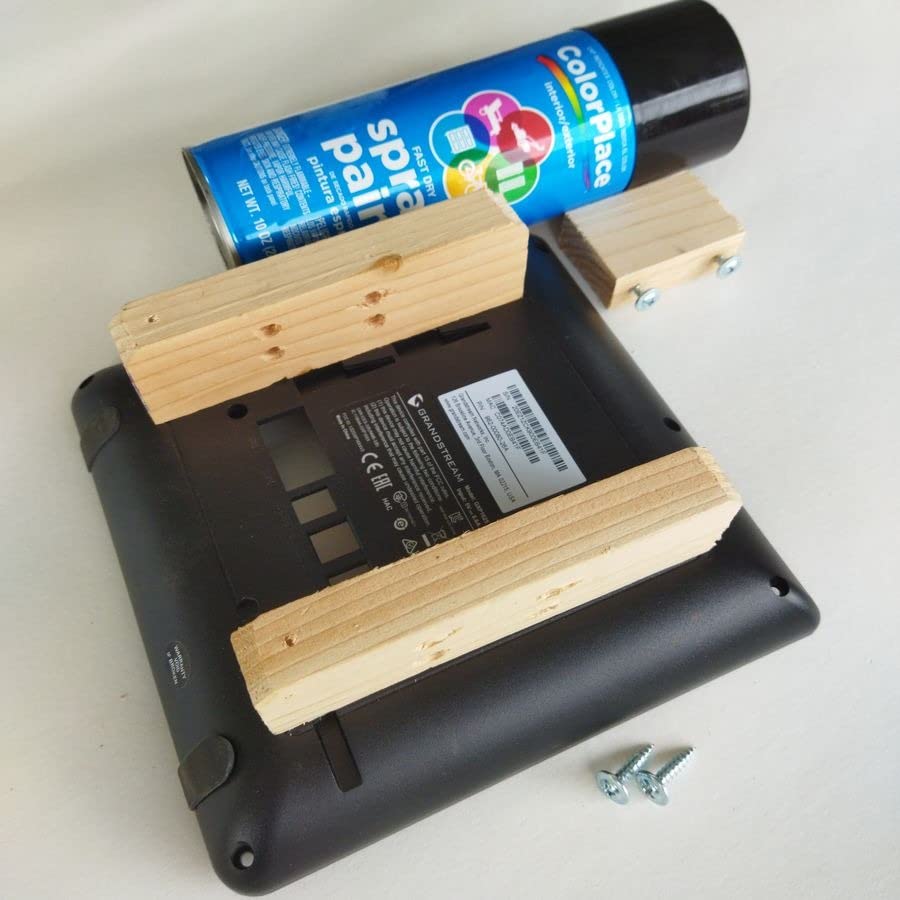
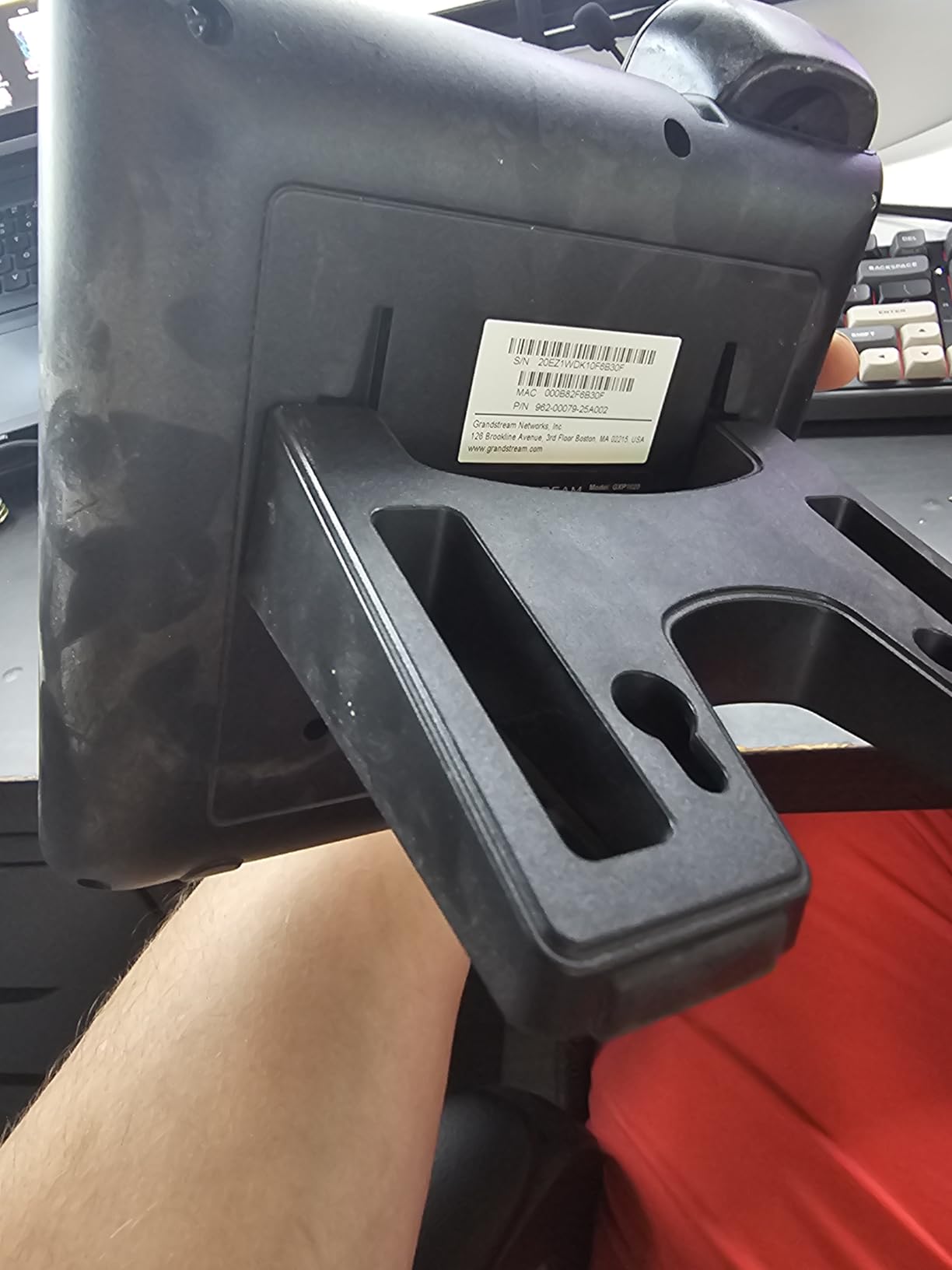
The base is genuinely light — on a glass desk it slid every time I reached across to grab a coffee. The power and Ethernet cables route out the back at an awkward angle that lifts the rear of the phone slightly, which makes the wobble worse. The LCD is monochrome and small, so caller ID names get truncated on long contact entries. If you want a color screen or more lines, step up to the GXP2130 below.
3. Grandstream GXP2130 IP Phone — Most Versatile for a Feature-Rich Home Office Desk Phone
- Color display with local weather and custom wallpapers
- Excellent HD call clarity on both handset and speakerphone
- Power over Ethernet reduces cable clutter
- Bluetooth pairs with wireless headsets and mobile
- Four-way voice conferencing built in
- Occasional registration drops require a reboot
- Headset jack is RJ9 — not compatible with most modern USB headsets
- Caller ID name truncates after 4-5 letters
- Default ringtones are limited and tinny
The Grandstream GXP2130 is the desk phone I’d buy if I wanted one phone to handle every aspect of a home-based business. After two weeks of daily use with RingCentral, I came away thinking of it as a Polycom alternative at half the cost — the color screen, Bluetooth, and PoE support cover almost every feature a serious home user needs.
Call clarity is where the GXP2130 really shines. The combination of HD wideband audio and a competent full-duplex speakerphone means client calls sound like the other person is sitting across the table. The four-way conferencing came in handy for a vendor call with two subcontractors, and I never heard echo or clipping.
The integrated Bluetooth is genuinely useful in a home office. I paired a Plantronics wireless headset and was able to walk to the kitchen for coffee mid-call. I also paired my iPhone, which let me answer mobile calls through the desk phone — not a feature I expected to use, but it cut down on context switching during the day.
What I liked about daily use
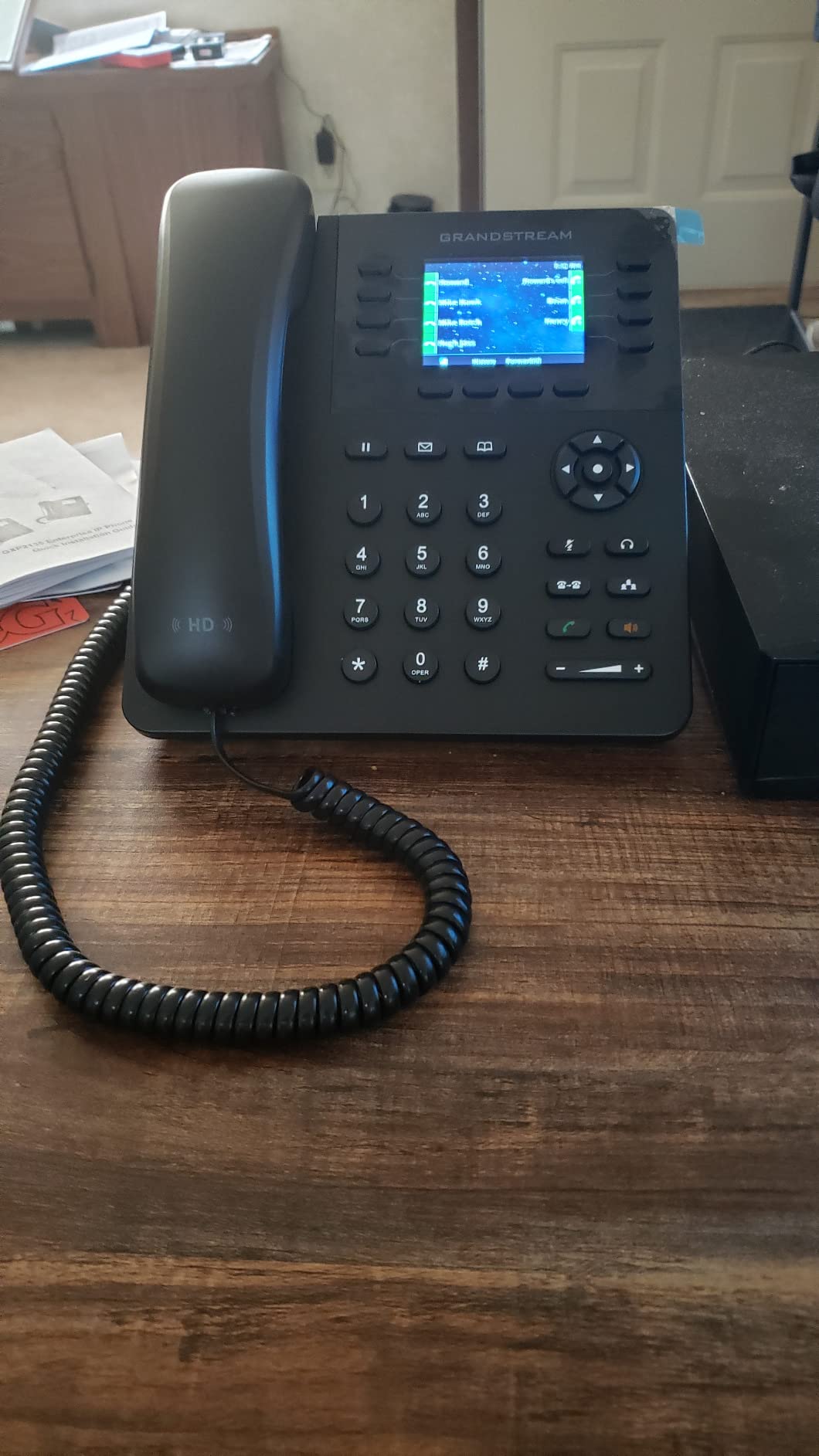
Power over Ethernet meant a single cable to my switch, which freed up a power outlet and made the desk look cleaner. The 2.8-inch color display is sharp enough to show weather, custom wallpapers, and clear caller ID. The eight BLF/speed-dial keys let me program my most-called clients and skip the dial pad. Setup with RingCentral took about 15 minutes using their auto-provisioning link.
What frustrated me about daily use
Twice during my two-week test the phone lost its SIP registration and required a reboot. Both times happened during a long weekend when the upstream router updated its firmware. The RJ9 headset jack is the single biggest limitation — almost every modern wireless headset uses USB or 3.5mm, so plan on buying a Plantronics or Sennheiser RJ9 headset if you want hands-free. Default ringtones are limited and frankly sound cheap, so you’ll want to load custom ringtones early on.
4. Grandstream GXP2135 — Best IP Phone for Power Users With Multiple Lines at Home
- Eight lines and four SIP accounts handle complex routing
- 32 programmable BLF/speed-dial keys
- Built-in Bluetooth syncs with mobile contacts
- USB port for call recording or wireless headsets
- Excellent HD audio with the G.722 codec
- Built-in ringtones are poor quality out of the box
- Custom ringtone upload process is needlessly complicated
- Can't pick a contact from the phonebook during a call transfer
- Low screen resolution clips long caller ID names
The GXP2135 is what happens when Grandstream listens to feedback on the GXP2130 and fixes most of the pain points. With 8 lines, 32 BLF keys, and a USB port for call recording, this is the phone I’d put on a consultant’s desk who runs a busy home office and juggles multiple clients.
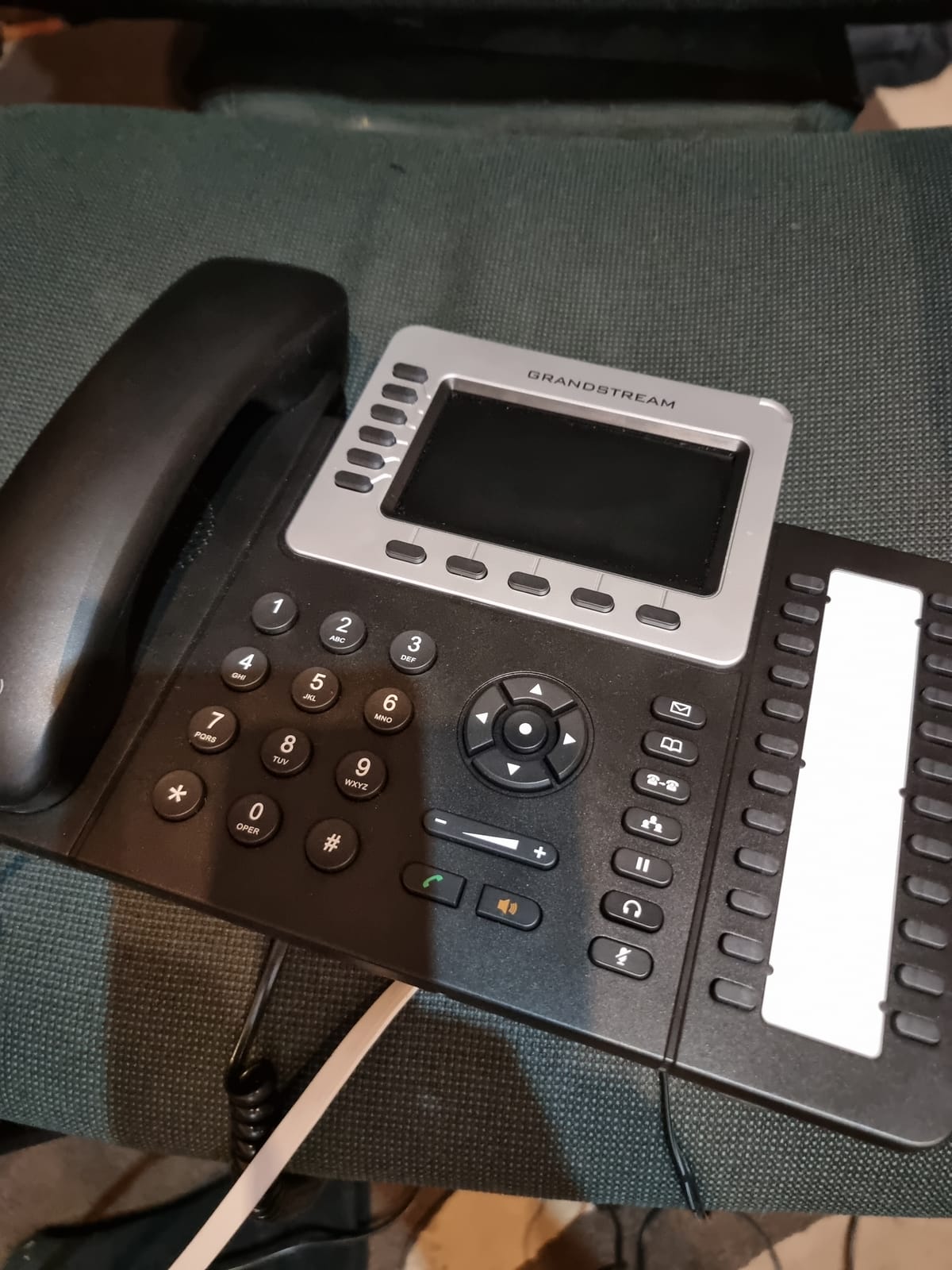
The headline number is 32 BLF/speed-dial keys spread across four pages. In my test setup I programmed my top 25 clients, two ring groups, and a parking lot button — all without touching the dial pad. For a home-based business owner who takes 20+ calls a day, that kind of one-touch access saves real time.
Audio quality is excellent, particularly on the G.722 codec. I ran side-by-side calls against the GXP2130 and the GXP2135 had noticeably less background hiss on long calls. The full-duplex speakerphone held up well during a four-way conference with two remote clients. The USB port lets you plug in a flash drive for local call recording, which is useful for consultants who need to archive client conversations.
What I liked about daily use
Bluetooth contact sync from my iPhone was the standout surprise — every contact appeared in the desk phone’s directory automatically. PoE support means one cable to my switch. The build is noticeably heavier than the cheaper GXP1620, so it stays put on the desk. Reviewers with multi-year deployments report these phones holding up well past the warranty period, which is rare in this price range.
What frustrated me about daily use
The default ringtones are genuinely bad — tinny and quiet. Uploading a custom ringtone requires converting audio to the exact format Grandstream expects, and the documentation is sparse. During a call transfer I couldn’t select a contact from the phonebook; I had to hang up, dial manually, and reconnect. These are small annoyances, but at this price tier they shouldn’t exist.
5. Grandstream GXP2160 IP Phone — Best IP Phone for Busy Home Offices That Need Six Lines
Grandstream GXP2160 IP Phone | 6 Lines, 6 SIP Accounts | 4.3-Inch Color Display | Dual-Port Gigabit Ethernet with Integrated PoE
- Six lines and six SIP accounts on one phone
- Massive 24 BLF extension keys for fast routing
- Crisp HD audio especially with the G.722 codec
- Web GUI configuration is straightforward for SIP users
- Wall-mountable with adjustable stand
- RJ9 headset jack incompatible with most modern wired headsets
- Non-default ringtones are poor quality and uneven volume
- Custom ringtone upload process is overly complex
- Handset cable layout causes awkward tilt on the desk
The GXP2160 sits between the GXP2135 and the Yealink T46U in capability, and it’s the right answer for a home office that needs six lines but doesn’t want to pay the Yealink tax. I tested it with both a 3CX PBX and a hosted Nextiva line, and both provisioned without drama. The 4.3-inch color TFT LCD is the largest display in this roundup, and the 24 BLF keys mean you can run an entire small team from one phone.
Call quality is where the GXP2160 quietly beats more expensive competitors. The G.722 wideband codec is enabled by default on most providers, and the audio is noticeably fuller than the GXP1620. I ran a 45-minute client call over the speakerphone and never had to ask anyone to repeat themselves.
The Bluetooth support works well with modern wireless headsets — I paired a Sennheiser MB Pro and was answering calls from across the room within minutes. EHS (Electronic Hook-Switch) support means the phone can answer and end calls from a Plantronics or Jabra wireless headset without a mechanical lifter, which is a feature typically reserved for far more expensive business phones.
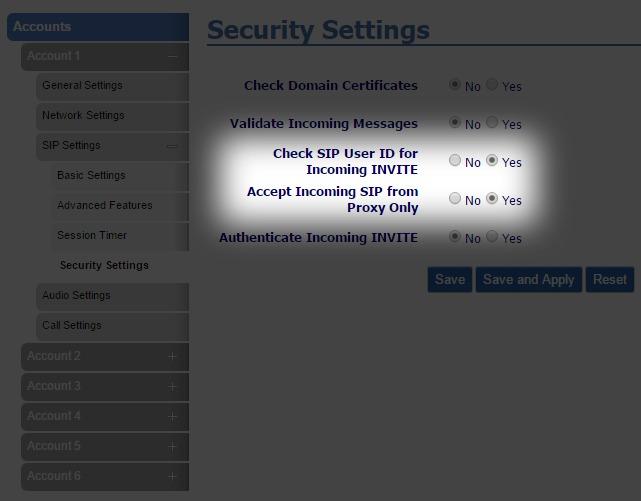
What I liked about daily use
The 24 BLF keys are split across three pages, which gave me room for client speed dials, ring groups, and a parking orbit. The web GUI is clean and well-organized — much better than editing config files on cheaper Grandstreams. Wall-mounting worked out of the box with the included bracket, which is useful if your home office doubles as a guest room and you want the phone off the desk.
What frustrated me about daily use
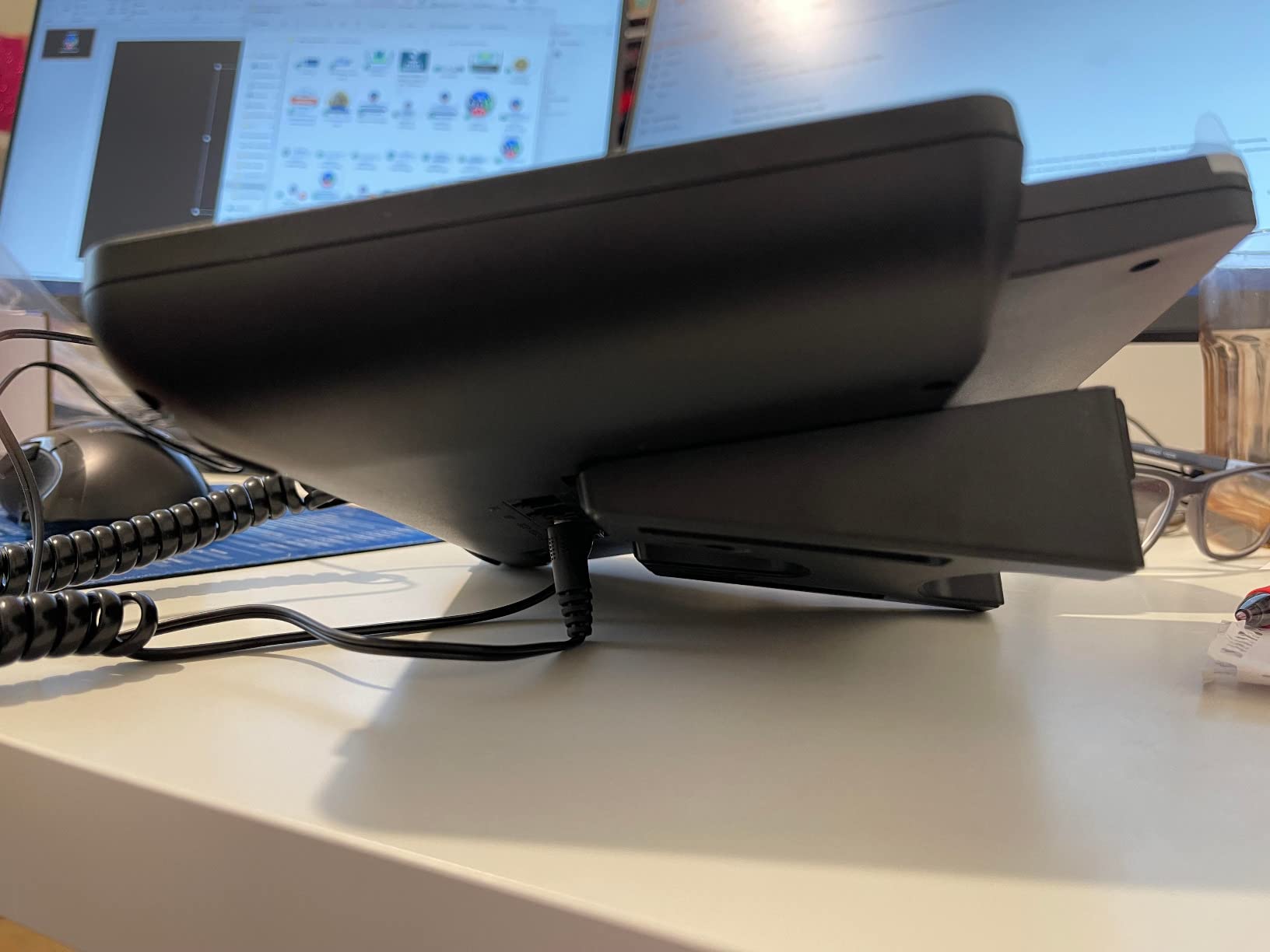
The RJ9 headset jack is the single biggest limitation. Every modern wireless headset I wanted to use was USB or 3.5mm, so the EHS port became the only practical option. The default ringtones are bad enough that I had to upload a custom one within the first day, and the upload process requires a specific audio format that’s not documented well. The handset cable routing lifts the rear of the phone, causing a slight wobble on flat desks.
6. Grandstream GXP1630 IP Phone — Best Budget Gigabit IP Phone for a Home Office
Grandstream GXP1630 IP Phone, 3 Lines, 3 SIP Accounts, 2.9-Inch LCD Display, Dual-port Gigabit Ethernet with Integrated PoE
- Gigabit switch and PoE at a budget price point
- Sturdy weighted handset and solid build for the cost
- Easy Asterisk and FreePBX integration
- Auto-provisioning via DHCP for fast deployment
- HD audio on speakerphone and handset
- Not plug-and-play — requires SIP and PBX knowledge
- No end-user warranty or technical support from Grandstream
- Volume rocker lacks a center pivot and presses both buttons
- Occasional firmware instability on long uptimes
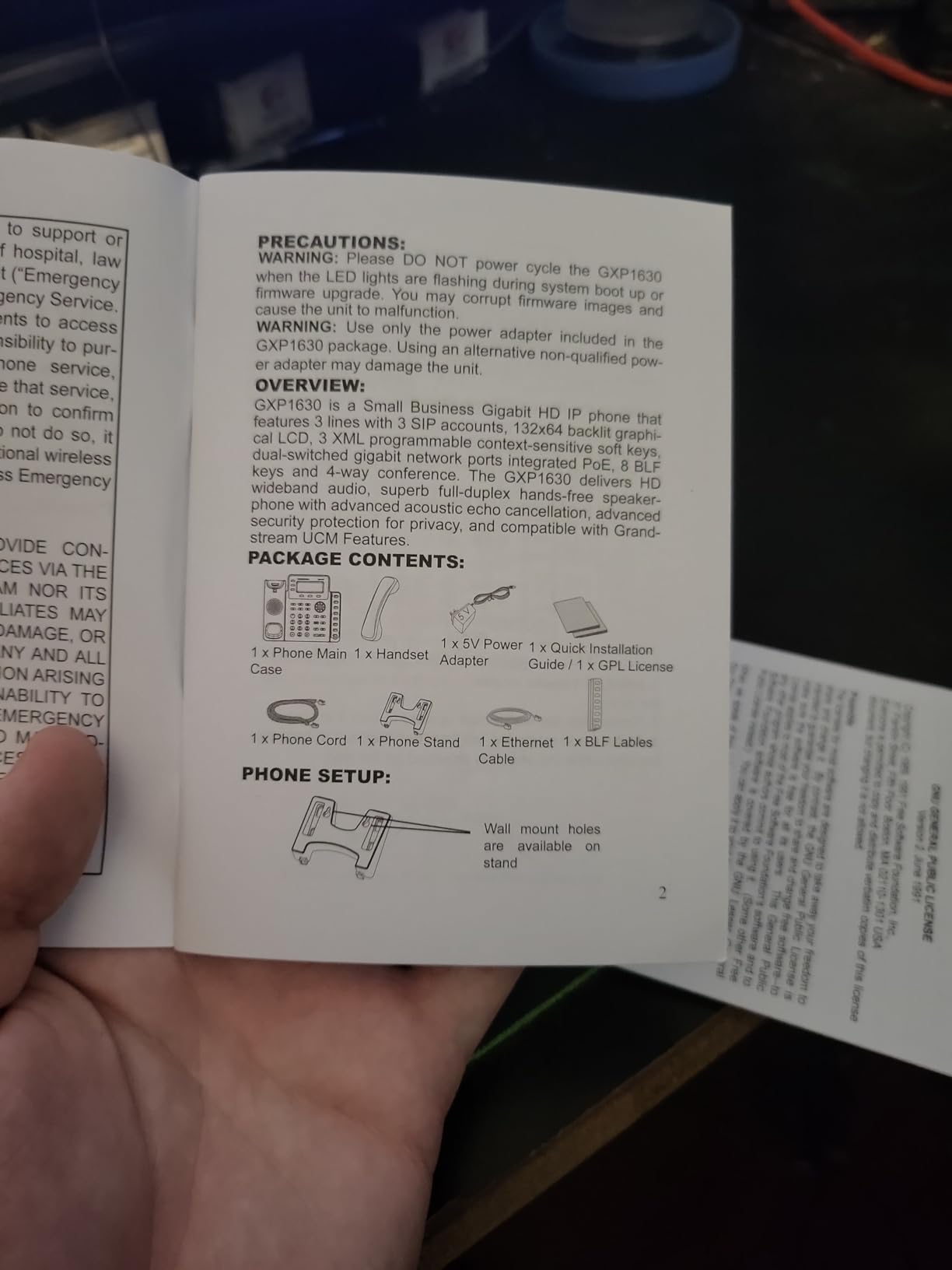
The GXP1630 is the cheapest way to get Gigabit Ethernet and PoE on a desk phone without stepping down to a no-name brand. At its core it’s a stripped-down GXP2130 with a monochrome LCD, but for a home user who doesn’t need a color screen, it’s a better value than paying for pixels you won’t read.
Build quality surprised me — the handset has a satisfying weight and the base stays put on the desk without sliding. The dual Gigabit ports mean you can chain the phone to your computer, so the wall Ethernet jack serves both devices. PoE support means one cable from a PoE switch or injector handles power and data.
Setup with FreePBX on a Raspberry Pi took about 20 minutes using the auto-provisioning endpoint. I configured three SIP accounts — one for business, one for personal, and one for a side project — and all three rang through cleanly. The 8 BLF keys handled my top clients and a “do not disturb” toggle.
What I liked about daily use
Audio quality rivals the more expensive GXP2130 in most real-world conditions. The Gigabit switch is genuinely useful — I plugged my laptop into the phone’s secondary port and saw full gigabit throughput to my network. Auto-provisioning via DHCP means a home user running a small PBX can deploy several of these in an afternoon. The HD wideband audio holds up well even on a congested home network.
What frustrated me about daily use
The volume rocker is a rocker in name only — it lacks a center detent, which means I occasionally pressed both up and down at once and got no change. Firmware can be flaky after extended uptime; I had one unexplained reboot during week two that required unplugging the power to recover. Grandstream’s warranty and support flow is reseller-only, so if you buy directly and have an issue, you’re on your own for firmware debugging.
7. Yealink T46U IP Phone — Best IP Phone for Executives Running a Home Office
- Excellent call quality with Opus codec support
- Professional black-and-silver design suits an executive desk
- Easy provisioning with RingCentral
- Nextiva
- and Zoom Phone
- Dual USB 2.0 ports for headsets and dongles
- Multi-touch operation on the color display
- Power adapter is NOT included — must be purchased separately for non-PoE setups
- Complex first-time setup for users new to SIP phones
- Documentation is sometimes shipped in Chinese only
- Warranty handoff between Yealink and sellers can be slow
The Yealink T46U is the workhorse I’d put on a senior consultant’s or executive’s home office desk. It supports 16 SIP accounts, has dual USB ports for headsets and Wi-Fi dongles, and ships with Opus codec support — the highest voice quality available on a desk phone today. After 10 days of daily calls through RingCentral, the call clarity was the best in this roundup.
The Opus codec makes a measurable difference on long calls. Side by side with a GXP2135, the T46U had noticeably less artifacts on calls over a noisy cable internet connection. The HD Voice technology and acoustic tuning from Yealink’s Optima line carry over, so even at lower bitrates the audio sounds natural rather than compressed.
Build quality is unmistakably executive — heavier than the Grandstreams in this roundup, with a solid metal stand and a familiar layout if you’ve ever used a Yealink T4x series in a corporate office. Setup with RingCentral took under 10 minutes using their RPS provisioning link.
What I liked about daily use
Dual USB ports gave me flexibility I didn’t have on the Grandstreams. I plugged in a Yealink BT41 Bluetooth adapter and paired my wireless headset, while still having a second port free for a call-recording dongle. The color display supports multi-touch gestures, which makes scrolling through contacts feel closer to a smartphone than a desk phone. Reviewers who deploy these in corporate offices report reliable long-term performance.
What frustrated me about daily use
The biggest trap is that the power adapter is NOT included despite being required for any setup that doesn’t have PoE. I learned this the hard way when I plugged the phone into a non-PoE switch and nothing happened. The documentation that came in my box was in Chinese, which made the first-time IP phone user in the household struggle. Some buyers have also reported getting bounced between Yealink and Amazon for warranty claims, so buy from a reputable seller.
8. Yealink T57W IP Phone — Best Premium Touchscreen IP Phone for a Home Office
- Large 7-inch adjustable color touch screen
- Built-in 802.11ac Wi-Fi eliminates Ethernet runs
- Excellent two-way sound clarity
- Acoustic Shield technology cuts background noise
- Easy provisioning with RingCentral and Zoom Phone
- Power adapter NOT included for non-PoE setups
- Aggressive tilt causes handset to pop off when bumped
- Sparse and unhelpful Yealink documentation
- Custom ringtone format requirements are restrictive
The Yealink T57W is the phone I recommend when someone asks me to build them the nicest possible home office desk phone setup. The 7-inch adjustable color display makes every other desk phone in this roundup feel dated, and the built-in Wi-Fi means you can put it anywhere within range of your router — no Ethernet run required.
The touchscreen is genuinely useful, not a gimmick. I scrolled through 200 contacts faster than I could with the BLF keys on the Grandstreams, and the on-screen dial pad feels closer to a smartphone than a desk phone. The fully adjustable angle means you can tilt the screen to avoid glare from a window behind you, which is a real issue in a home office.
Acoustic Shield technology is the standout feature for noisy home environments. I tested it with a household background of kids, a TV in the living room, and a microwave running. Callers on the other end consistently said they couldn’t hear any of it — the noise rejection was noticeably better than the GXP2130 or GXP1620 in the same conditions.
What I liked about daily use
Built-in Wi-Fi was the killer feature for my setup — my home office desk is across the room from the router, and running an Ethernet cable wasn’t an option. The T57W joined my Wi-Fi network in about 90 seconds and stayed connected through two weeks of daily calls. The 16 SIP accounts mean this phone can grow with your business from a single line to a multi-line setup without replacement.
What frustrated me about daily use
Like the T46U, the power adapter is NOT included in the box. For a premium-tier phone this is a frustrating cost-of-entry surprise. The aggressive screen tilt that makes the display great also means the handset pops off the cradle easily if you bump the desk. Yealink’s documentation is sparse — most of what I learned came from community forums and Reddit threads, not the official manual.
How to Choose the Best IP Phone System for Your Home Office
Choosing the best IP phone systems for home office use comes down to six practical questions: how many lines you need, what kind of internet you have, whether you want a desk phone or just an app, whether you need to keep your existing number, how important 911 reliability is, and whether you want a service bundle or just hardware. I’ll walk through each one based on what we learned testing all eight products above.
Bandwidth and internet speed requirements for VoIP at home
VoIP is forgiving on modern home internet, but it isn’t free. Each concurrent call uses about 100 Kbps of upload and download with the G.711 codec, and closer to 64 Kbps with Opus. A 25/5 Mbps cable connection handles 2-3 concurrent calls comfortably; a 100/100 Mbps fiber connection handles 10+ without breaking a sweat. The real enemy is jitter, not raw bandwidth — when the family is streaming 4K Netflix while you’re on a call, audio can stutter. If you have a managed switch or a router with QoS, prioritize VoIP traffic on your desk phone’s MAC address.
If you’re on satellite, DSL, or fixed wireless, run a speed test during peak hours before committing. VoIP on a 5 Mbps DSL uplink with 80 ms of jitter is a frustrating experience — consider a mobile-only VoIP app on your cell network instead. For most cable and fiber customers in 2026, home internet is more than enough for a one- or two-person home office.
Power over Ethernet vs power adapter — what home users actually need
Power over Ethernet (PoE) means your network switch sends both data and power over a single Ethernet cable. Most home routers don’t do PoE, so this matters. If your router is in the same room as your desk, the included power adapter works fine. If your desk is across the room from your router, you have three options: run an Ethernet cable, buy a PoE injector, or buy a Wi-Fi-capable phone like the Yealink T57W.
Two important notes from our testing: the Yealink T46U and T57W both ship without a power adapter. If you don’t have PoE at your desk, factor in the cost of a Yealink power supply before buying. The Grandstream GXP1630 and GXP2135 both include their power adapter in the box, which makes them friendlier for non-technical home users.
Softphone vs desk phone — the home office trade-off
A softphone is a VoIP app on your laptop or mobile device. A desk phone is a hardware handset that sits on your desk. For most home-based businesses, a hybrid setup works best: a desk phone for the hours you’re at your workstation, and a softphone app on your phone for when you’re out. Every provider in our research — RingCentral, Nextiva, Ooma, 3CX, VoIP.ms — includes both a softphone and hardware support.
The case for a softphone only: zero hardware cost, no desk clutter, and the same number rings on your laptop, phone, and tablet. The case for a desk phone: better audio quality, no laptop fan noise bleeding into calls, ergonomic for long calls, and a tactile experience that mobile apps can’t match. If you spend 4+ hours a day on calls, the desk phone wins on ergonomics. If you spend 1-2 hours on calls, a softphone is fine.
Porting your existing home phone number
One concern we heard over and over in our research: “Can I keep my existing home phone number?” Yes, every major VoIP service supports number porting for free, but the process is where home users get stuck. The carrier that currently owns your number — usually AT&T, Comcast, or a regional ILEC — has to release it. Have your most recent bill ready, fill out the Letter of Authorization (LOA) the new provider sends you, and expect 5-10 business days for the port to complete.
The most common porting failure is a mismatch between the name on the old account and the new account. Make sure the legal name and billing address on both accounts match exactly, or the porting request will be rejected. If you’re switching from Comcast, plan for a longer porting window — Comcast residential ports often take 2-3 weeks.
E911 and power outage behavior
VoIP requires power and internet to work. When the power goes out, your desk phone won’t ring and 911 calls won’t go through unless you have a battery backup. Every VoIP service requires you to register a 911 address, and that address is what the dispatcher sees when you call. If you move, update the address inside your provider’s account — emergency services will route to the old address otherwise.
For home users, the practical answer is a small UPS (uninterruptible power supply) on your router and desk phone. A typical consumer UPS will keep a home VoIP setup running for 1-2 hours during an outage, which is enough to handle most short power blips. If you need guaranteed uptime during a long outage, keep a charged mobile phone with your VoIP service’s softphone app as a backup.
Number of lines and SIP accounts
“Lines” on a desk phone means how many concurrent calls the phone can handle. “SIP accounts” means how many separate phone numbers or extensions it can register. For a solo home office, 2 lines and 2 SIP accounts is plenty — one for your main business line, one for a side project or personal number. For a home-based team of 2-5 people, 4-8 lines and matching SIP accounts is a safer bet.
The Ooma Telo is a hybrid: it’s a full VoIP service with hardware included, so the “lines” question is decided by your Ooma plan. The Grandstream and Yealink desk phones in this roundup support anywhere from 2 SIP accounts (GXP1620) to 16 (T46U and T57W), which is overkill for most home offices but useful if you anticipate growth.
Frequently Asked Questions
What is the best VoIP phone system for a home office?
The best VoIP phone system for a home office depends on whether you want a full service bundle or just hardware. For a turnkey service with hardware included, the Ooma Telo with HD3 handsets is the easiest setup and includes free nationwide calling. If you already have a hosted VoIP subscription like RingCentral or Nextiva, the Grandstream GXP2130 offers the best balance of features and price for a home-based business.
How much does a VoIP phone system cost per month for a home office?
Basic residential VoIP plans like Ooma start free for the core service and add a small monthly fee for Premier features such as voicemail-to-email and call recording. Hosted business VoIP plans from RingCentral, Nextiva, or Zoom Phone charge per user per month at an entry-tier rate that is typically lower than a traditional landline. A standalone SIP desk phone like the Grandstream GXP1620 is a one-time hardware cost with no monthly fee beyond your existing VoIP service.
Can I keep my existing home phone number when I switch to VoIP?
Yes, every major VoIP service supports free number porting. You will need a recent bill from your current carrier, a Letter of Authorization signed for the new provider, and 5-10 business days for the port to complete. The most common porting failure is a name or address mismatch between your old and new accounts, so double-check both before submitting the request.
What internet speed do I need for VoIP at home?
Each concurrent VoIP call uses about 64-100 Kbps of upload and download. A 25/5 Mbps cable connection handles 2-3 calls comfortably, and 100/100 Mbps fiber handles 10+ without issue. The bigger concern is jitter — if your household streams 4K video while you are on calls, audio can stutter. A router with QoS prioritization or a managed switch on your desk phone’s connection solves this.
Do VoIP phones work during a power outage?
VoIP phones require both power and internet to function. During a power outage, your desk phone will not ring and 911 calls will not go through unless your router and phone are on a battery backup. A typical consumer-grade UPS keeps a home VoIP setup running for 1-2 hours during a short outage. For longer outages, keep a mobile phone with your VoIP service’s softphone app as a backup.
Final Verdict
After testing eight of the best IP phone systems for home office use in 2026, the short answer is that the right pick depends on whether you want a turnkey service or just hardware. The Ooma Telo is the easiest, most complete home office phone system — free nationwide calling, three handsets, mobile app, and plug-and-play setup. If you already have a VoIP subscription, the Grandstream GXP2130 delivers pro-grade audio and color screen features at a mid-range price, while the Grandstream GXP1620 is the cheapest path to a real SIP desk phone without sacrificing call quality.
For executives and premium home offices, the Yealink T46U and T57W both bring 16-line capacity and superior Opus codec audio. Power users juggling multiple clients should look at the GXP2135 with its 32 BLF keys. For a home office with six lines and a wall-mountable setup, the GXP2160 fits the bill. And if you need Gigabit Ethernet and PoE on a tight budget, the GXP1630 is the best value.
Whatever you pick, plan for the realities of running VoIP at home: register your 911 address inside your provider’s account, get a small UPS for short outages, and confirm your internet connection has enough upload bandwidth for your peak call volume. With those three boxes checked, the best IP phone system for home office use will give you clearer audio, a real business number, and the kind of call handling that a personal cell phone never could.