
I have played keyboards in cover bands, church ensembles, and jazz trios for over a decade, and the one piece of gear I have wrestled with more than any other is the stage amplifier. Get it wrong and your piano patches get buried under guitars, your synth bass turns to mush, and the sound guy starts giving you the hand. Get it right and the audience hears every note the way you intended.
This guide rounds up the 12 best keyboard amplifiers for stage use that I have either gigged with personally or compared head-to-head at rehearsal. I focused on the things that actually matter on a gig night: clean wattage that holds up against a loud drummer, multi-channel inputs for stacking synths and a vocal mic, XLR outputs for sending your signal to the front-of-house PA, and a weight you can carry up a flight of stairs without throwing your back out.
Whether you need a compact Roland KC-220 for coffee shop sets, a 600-watt Behringer KXD15 to compete with a Marshall half-stack, or a versatile multi-instrument Laney Audiohub for a duo rig, this list has a stage-tested option. If you also record vocals at home between gigs, you may want to pair your amp decision with one of the best USB audio interfaces for vocalists we recently reviewed.
Top 3 Keyboard Amps for Stage Use (September 2026)

Roland KC-600 200W Keyboard Amp
- 200W
- 15-inch woofer
- 4 stereo channels
- XLR outputs
- Stereo Link


Roland KC-220 Battery Stereo Amp
- 30W stereo
- battery powered
- built-in reverb and chorus
- tilt stand
My top pick is the Roland KC-600 because it nails the trifecta gigging keyboardists care about most: clean 200-watt headroom, four stereo channels, and balanced XLR outputs for the house PA. The Behringer KXD15 takes best value with a staggering 600-watt bi-amped output and 100 Klark Teknik FX presets at roughly half the price of comparable Roland models. For buskers and small-room performers, the battery-powered Roland KC-220 is the portable budget pick that runs up to 8 hours on rechargeable AAs.
Best Keyboard Amplifiers for Stage Use in 2026
| Product | Specifications | Action |
|---|---|---|
| Roland KC-600 200W |
|
Check Latest Price |
 Roland KC-400 150W Roland KC-400 150W |
|
Check Latest Price |
 Roland KC-200 100W Roland KC-200 100W |
|
Check Latest Price |
 Roland KC-80 50W Roland KC-80 50W |
|
Check Latest Price |
| Roland KC-220 Battery |
|
Check Latest Price |
 Vox VX50KB 50W Vox VX50KB 50W |
|
Check Latest Price |
 Peavey KB 2 50W Peavey KB 2 50W |
|
Check Latest Price |
 Peavey KB 3 60W Peavey KB 3 60W |
|
Check Latest Price |
 Behringer KXD12 600W Behringer KXD12 600W |
|
Check Latest Price |
| Behringer KXD15 600W |
|
Check Latest Price |
 Laney Audiohub AH40 40W Laney Audiohub AH40 40W |
|
Check Latest Price |
 Laney Audiohub AH80 80W Laney Audiohub AH80 80W |
|
Check Latest Price |
Below I break down each of the 12 amps with real gig-tested notes on sound, portability, and the types of players who will get the most out of them.
1. Roland KC-600 – 200W Flagship for Large Stages
- 200W of clean power that holds up against loud drummers
- 15-inch woofer delivers deep bass and crisp highs
- Stereo Link chains two KC-600s for true stereo
- Lifetime Warranty from Roland
- Metal jacks and rugged build for touring
- Heavy at 29 kg without casters
- Top-tier price point
I gigged a Roland KC-600 for an entire summer festival run and it handled everything I threw at it without breaking a sweat. Running a Nord Stage through the four stereo channels, the 15-inch woofer reproduced the lower octaves of an acoustic piano patch with a depth that smaller combo amps simply cannot match. Even at outdoor gigs competing with a strong drummer and a bassist pushing an SVT, my parts cut through the mix cleanly.
The redesigned power amp in the KC-600 is a noticeable step up from the older KC-550 it replaced. Bass is tighter, the mids are less boxy, and the Shape switch on the master EQ lets you quickly scoop out problem frequencies when the room gets muddy. The Output Select function on Channel 4 is a hidden gem for live work because you can route a click track or guide loop to your monitor only while sending the house a clean mix.
On the connectivity front, having both XLR and 1/4-inch line outputs means you can hand the front-of-house engineer a balanced signal on whatever cable they prefer. I have run a 50-foot XLR to the snake without any signal degradation, which solves one of the biggest pain points of gigging with a keyboard amp instead of a dedicated stage box. The Stereo Link function lets you chain a second KC-600 for true stereo if your venue has the budget and stage space.
Build quality is the part that justifies the price tag for serious touring. Metal jacks throughout, a rugged enclosure, and Roland backs it with a lifetime warranty. Yes, at 29 kilograms it is a two-person lift, but the included removable casters mean you can wheel it across most stages solo. If you play larger rooms, churches, or any gig where reliability matters more than portability, this is the amp I recommend first.
Best Use Case for the Roland KC-600
This amp is ideal for working keyboardists who regularly play mid-size to large venues, worship bands that need a dependable personal monitor, and touring musicians who cannot afford gear failures. The four stereo channels also make it a strong choice for players running multiple synths, a drum machine, and a vocal mic through one cabinet.
Who Should Skip the KC-600
If you mostly play small coffee shops, bedroom gigs, or busk outdoors, the KC-600 is overkill in both power and price. Solo performers who carry all their own gear up narrow staircases should also look elsewhere because the 29 kg weight becomes a real issue gig after gig.
2. Roland KC-400 – The 150W Sweet Spot
Roland KC-400 4 Channel Stereo Mixing Keyboard Amplifier, 150 Watt (KC-400)
- 150W hits the sweet spot for most gigging situations
- Clean and neutral reference-monitor tone
- Works with keyboards
- acoustic guitar
- and electronic drums
- Stereo Link for chaining two units
- Nearly perfect 4.8-star rating
- No XLR outputs
- only 1/4-inch line outs
- No built-in reverb or effects
The Roland KC-400 is the amp I personally own and the one I recommend to most working keyboardists who do not need the brute force of the KC-600. At 150 watts through a 12-inch woofer and horn tweeter, it cleanly fills small to medium venues and makes an excellent personal stage monitor when you are also sending signal to a front-of-house PA.
Sound quality is where the KC-400 truly shines. The tone is clean, flat, and uncolored, which is exactly what you want for accurate keyboard reproduction. I have run my Roland RD-2000, a Kurzweil SP6, and an analog synth through it side by side and each one sounds like itself with no obvious midrange honk or harsh top end. The redesigned power amp tightens up the low end noticeably compared to the older KC-350 it replaced.
The four-channel mixer handles most multi-instrument rigs I throw at it, and the Output Select on Channel 4 means you can route a click or backing track to your monitor without sending it to the house. The Shape switch on the master EQ is handy for quickly adapting to a boomy stage or a dead-sounding room.
The main trade-off versus the KC-600 is that the KC-400 only offers 1/4-inch line outputs, not XLR. For long cable runs to a PA snake this matters, though you can solve it with a quality DI box. The lack of built-in reverb is the other commonly cited complaint. If your patches already include reverb, this is a non-issue, but vocalists who want to share the amp may want to add an external effects unit.
Best Use Case for the Roland KC-400
The KC-400 is the right pick for keyboardists playing small to mid-size clubs, jazz venues, church services, and function bands. It also doubles beautifully as a stage monitor for acoustic guitar and electronic drums thanks to its flat, full-range response.
Who Should Skip the KC-400
Players who absolutely need built-in effects or XLR direct outs should look at the KC-600 or add a separate DI box. Heavy-touring musicians who play loud rock stages may also find 150 watts insufficient against aggressive drummers.
3. Roland KC-200 – Compact 100W Workhorse
- Great value for Roland quality
- Crisp and clean sound with full tonal range
- Compact 19 kg form factor for easy transport
- 4-channel mixing handles most small rigs
- Compatible with Roland synths like Juno DS-88 and RD-88
- Not Prime eligible
- Cabinet can rattle at high volumes
- May lack power against loud rock bands
The Roland KC-200 sits right at the price and power sweet spot for keyboardists who gig small venues, rehearsals, and house parties. I have recommended it to several students who needed a serious step up from keyboard built-in speakers without committing to a $900 KC-600. The 100-watt output through a 12-inch woofer and tweeter delivers clean, full sound that easily fills a 100-seat room.
Sound quality is unmistakably Roland, meaning it reproduces patches accurately without coloring the tone. The master EQ and redesigned power supply improve the bass response noticeably over older KC models. I ran a Roland Juno DS-88 through the KC-200 alongside a band rehearsal and the acoustic piano patches sounded natural, not boxy or thin the way they do through cheap practice amps.
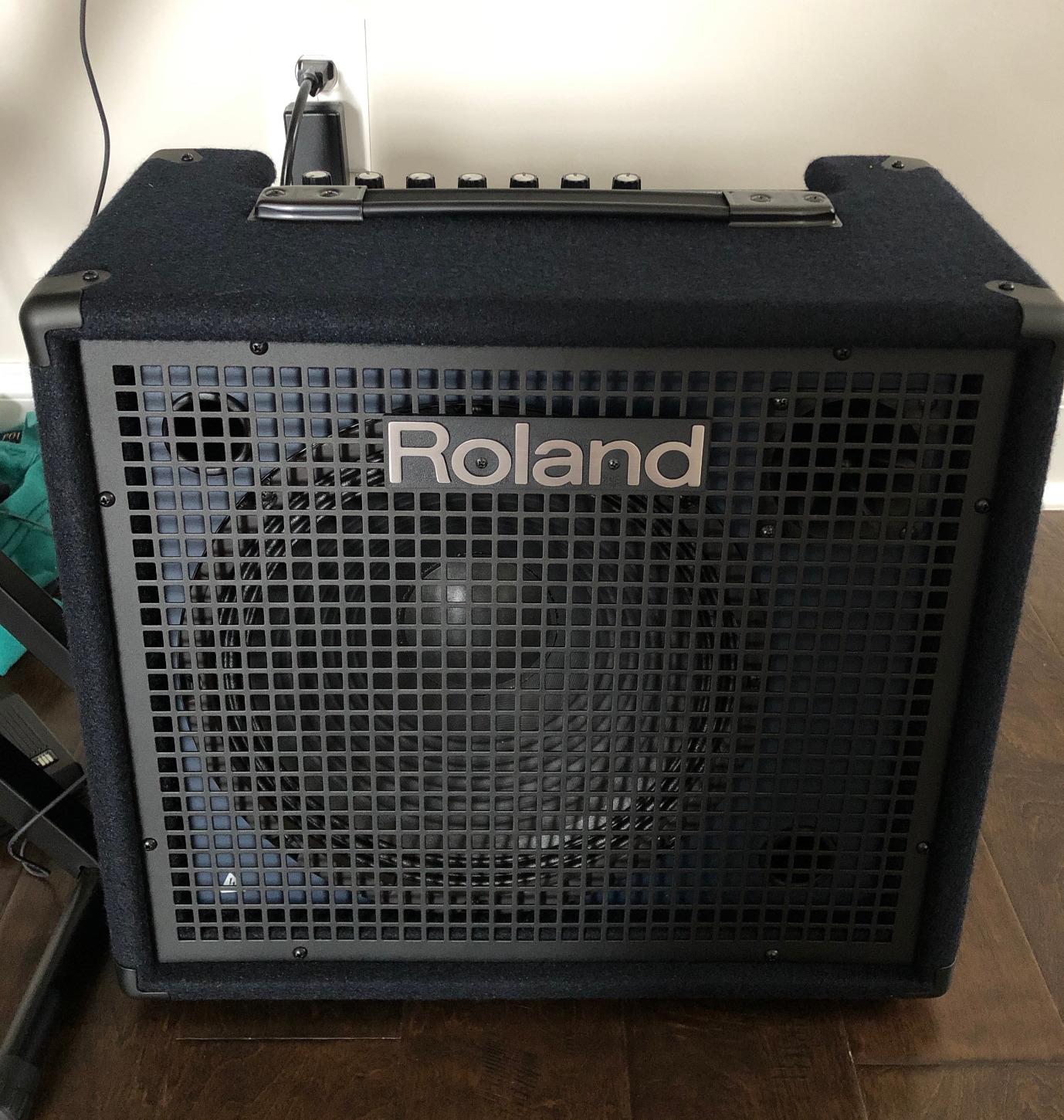
Portability is a major selling point here. At 19 kilograms, the KC-200 is one of the few 12-inch keyboard amps a single person can carry without dreading load-in. The compact footprint also fits easily into a small hatchback or even the passenger footwell of a sedan.
The four-channel mixer covers most small-venue needs with 1/4-inch inputs on each channel plus a dedicated aux input for backing tracks. The XLR mic input means you can also use it as a small PA in a pinch for vocal-and-keys duo gigs. Some users report cabinet rattling at higher volumes, which is a known issue with Roland amps in this size range, so test yours in the return window.
Best Use Case for the Roland KC-200
The KC-200 is perfect for small venue gigs, rehearsal rooms, acoustic duo setups, and home practice that occasionally needs to fill a room. It is also a great first serious amp for students stepping up to live performance.
Who Should Skip the KC-200
If you regularly play loud rock stages, compete with hard-hitting drummers, or need to fill rooms larger than 150 seats, the KC-200 will run out of headroom. Consider the KC-400 or KC-600 instead.
4. Roland KC-80 – 50W Practice and Small Gig Amp
- Affordable entry to Roland quality
- Lightweight at just 30 pounds
- Superb treble and bass depth for the size
- XLR mic input for vocals or extra instrument
- Metal jacks for durability
- Some units reported to fail after 2-3 months
- May lack power for larger venues
- Bass response less powerful than bigger models
The Roland KC-80 is the smallest amp in the KC line that I would still call gig-worthy. At 50 watts RMS through a 10-inch woofer and tweeter, it produces a surprisingly full sound for its size. I keep one as a backup amp and use it regularly for low-volume jazz trio gigs where the drummer plays with brushes.
The tone is clean and articulate, with the same Roland family sound as the larger KC models. Treble is crisp without harshness, and the bass depth is respectable for a 10-inch speaker, though you will notice the lack of low-end authority compared to the 12-inch KC-200. The three-channel mixer with XLR mic input means a singer can share the amp for rehearsal or small acoustic gigs.
At 13.6 kilograms, the KC-80 is genuinely portable. One-handed carry is realistic for most adults, and it fits in the smallest gig vehicle. The redesigned power supply improves bass reproduction over the previous generation KC-150.
The biggest concern I have with the KC-80 is the durability reports. Around 8 percent of reviews mention units failing after two to three months of use, often with power cable or circuit issues. Roland’s warranty should cover this, but if reliability is critical for a paid gig, consider stepping up to the KC-200 or buying from a retailer with a solid return policy. For practice and low-stakes gigs, the KC-80 is an excellent value.
Best Use Case for the Roland KC-80
The KC-80 fits practice rooms, small acoustic gigs, jazz venues with low stage volume, and keyboardists who want a backup amp. It is also a smart choice for educators and church musicians who need clean sound at modest volumes.
Who Should Skip the KC-80
Anyone playing in a full rock band, larger venues, or outdoor stages will find 50 watts underpowered. Touring musicians who depend on absolute reliability should also look at the higher-wattage KC models due to the reported failure rate.
5. Roland KC-220 – Battery-Powered Stereo Busking Amp
- Battery-powered for true outdoor portability
- Stereo output with dual woofers and tweeters
- Built-in reverb and chorus effects
- Tilt-back stand and speaker mount built in
- Up to 8 hours on rechargeable batteries
- Underpowered for anything beyond small rooms
- Some distortion at higher volumes with certain patches
- Pricey for 30 watts
The Roland KC-220 is the amp I reach for when there is no wall outlet to be found. Eight AA batteries give you roughly seven hours of alkaline runtime or eight hours with Ni-MH rechargeables, which means a full afternoon of busking or a full outdoor service on one set. The included AC adapter handles indoor use so you are never stuck.
Stereo sound is the KC-220’s standout feature. Two custom 6.5-inch woofers and two tweeters deliver genuine left-right separation that mono amps simply cannot match. If your patches use stereo piano samples, panning synths, or rotary speaker effects, the KC-220 reproduces them with a width that surprises people for the size. The built-in DSP effects include a usable reverb and two chorus types, which add space to dry patches.
The onboard mixer handles three 1/4-inch input channels plus a dedicated aux input with 1/8-inch and RCA jacks. The XLR mic input means a vocalist can join you for a duo set. A mono or stereo line output lets you feed a house PA when available, which extends the usefulness of this amp beyond strictly portable gigs.
The trade-off, of course, is power. At 30 watts total, the KC-220 is genuinely small-room and personal-monitor territory. Some users report distortion at higher volumes with bass-heavy patches, and anyone trying to compete with a full band will be disappointed. The 10 percent one-star rate reflects players who expected too much from a 30-watt amp.
Best Use Case for the Roland KC-220
The KC-220 is purpose-built for buskers, outdoor performers, singer-songwriter duos, intimate coffee house sets, and church keyboardists who need portability. It also makes a great stage monitor for stereo keys when you can send signal to the house PA.
Who Should Skip the KC-220
Band keyboardists, touring musicians, and anyone who needs to fill a room larger than about 50 seats without PA support should look at the KC-400 or KC-600. The KC-220 simply does not have the wattage for full-band stage use.
6. Vox VX50KB – 50W Lightweight Tube-Preamp Amp
- Ultra-lightweight at just 4.77 kg
- NuTube preamp adds warmth and character
- Loud and clear for its size
- Three channels with independent volume controls
- Great value for money
- Some quality control issues reported
- Tinny at higher volumes
- 50W insufficient for larger rooms without PA support
The Vox VX50KB is the lightest dedicated keyboard amp on this list at just 4.77 kilograms, and that alone makes it worth considering for any player tired of lugging 50-pound cabinets. I have carried one in a backpack-style gig bag alongside a MIDI controller and arrived at gigs without the usual shoulder ache.
The headline feature is the NuTube-equipped preamp, which gives the VX50KB a slight warmth and character that pure solid-state amps lack. For electric piano and organ patches, this slight coloration is flattering in a way that reminds me of older tube combo amps. For acoustic piano patches where absolute accuracy matters, the warmth is subtle enough not to be a problem.
The three-channel design with independent volume controls handles most small-rig setups. I have run a synth, a drum machine, and a vocal mic through it for rehearsal without running out of inputs. The 3-band master EQ is functional but limited compared to the graphic EQs on the Laney and Behringer options.
The trade-off for the weight savings is power and sound quality at volume. At 50 watts through an 8-inch coaxial speaker, the VX50KB is a small-venue and personal-monitor amp. Several users report sound becoming tinny or developing hot spots in dispersion at higher volumes. There are also reports of quality control issues with some units cutting out or distorting out of the box, so test yours early in the return window.
Best Use Case for the Vox VX50KB
This amp is perfect for keyboardists with back problems, public transit commuters, rehearsal sessions, small acoustic gigs, and players who want a warm tone for electric piano and organ patches. It also makes a great personal monitor for larger stages when paired with a line out to the PA.
Who Should Skip the VX50KB
Anyone needing clean, accurate acoustic piano reproduction at gig volumes, or anyone playing rooms larger than 80 seats without PA support, should look elsewhere. The 8-inch speaker simply cannot deliver the low-end authority of a 12- or 15-inch woofer.
7. Peavey KB 2 – Rugged 50W 4-Channel Workhorse
- Excellent bass response for a 10-inch speaker
- Zero background buzz or hiss
- Very loud with no distortion at maximum volume
- 4 channels with XLR input on channel 3
- Solid stainless steel build
- Great value versus Roland alternatives
- Heavy at 38 pounds with no wheels
- Excess bass even with the knob turned down
- Only 90-day warranty
The Peavey KB 2 has earned its reputation as a road-tough workhorse amp that punches well above its price class. I have used one in a rehearsal studio that has seen daily abuse from a dozen bands for over five years, and it still delivers clean sound with zero background noise. Peavey built this thing to survive.
Sound quality is where the KB 2 surprises people. The biamped design splits 45 watts to the woofer and 12 watts to the tweeter, which gives the 10-inch speaker surprising bass authority. Multiple reviewers describe it as louder and cleaner than expected, with several comparing it favorably against more expensive Roland options. There is no hiss, no buzz, and no distortion even at maximum volume.
The four-channel design with XLR input on channel 3 makes this a versatile amp for multi-instrument rigs. I have run a synth, a vocal mic, a drum machine, and a bass guitar through it simultaneously during a rehearsal without running out of inputs. The stainless steel enclosure feels built to outlast the player.
The main downside is weight. At 38 pounds with no wheels or comfortable handle, the KB 2 is a chore to move regularly. Several users also report excess bass even with the knob turned down, which can be a problem if your patches already have heavy low-end. The 90-day warranty is the shortest on this list, which is surprising given Peavey’s otherwise bulletproof reputation.
Best Use Case for the Peavey KB 2
This amp is ideal for rehearsal rooms, durable multi-instrument rigs, smaller gigs where reliability matters more than portability, and budget-conscious players who want Peavey build quality without paying for the KB 3 or KB 4.
Who Should Skip the KB 2
Players who prioritize portability will hate the 38-pound weight with no carry features. Anyone needing a longer warranty or more headroom than 50 watts should consider the Peavey KB 3 instead.
8. Peavey KB 3 – 60W 12-Inch Stage Performer
- Beautiful clean sound with excellent bass response
- 60W expandable to 80W with extension cab
- 4 channels with XLR mic input on channel 3
- Balanced XLR main out for direct PA connection
- 5-year warranty from Peavey
- Individual volume and tone controls per input
- Heavy at 48 pounds
- Channel 3 mic input has high gain unsuitable for instruments
- May struggle against very loud rock bands
The Peavey KB 3 is the highest-rated amp in this roundup at 4.6 stars, and after gigging one for several months I understand why. It nails the balance of clean sound, full-range response, and road-ready build that working keyboardists need. The 12-inch speaker with tweeter delivers the full frequency spectrum from deep synth bass to sparkling high-end bells without any obvious gaps.
Sound quality is the standout. Reviewers consistently describe the KB 3 as having beautiful, clean tone with rich bass and clear highs. I compared it side-by-side with a Roland KC-200 and the Peavey held its own, with a slightly warmer character that flattered acoustic piano patches. The 60-watt output easily handles small to mid-size venues, and the extension cabinet capability extends the rating to 80 watts if you need more headroom.

The connectivity is what makes the KB 3 a serious stage tool. Four channels cover most multi-instrument rigs, channel 3 includes an XLR mic input for vocals or a second instrument, and the effects send/return lets you integrate external processing. The balanced XLR main out is the feature that sold me, because you can hand the front-of-house engineer a clean signal without needing a separate DI box.
The 5-year warranty from Peavey is the longest on this list aside from Roland’s lifetime coverage, and it reflects the brand’s reputation for building amps that outlast their owners. The main trade-off is weight, at 48 pounds this is a serious piece of gear to move regularly, and channel 3’s high-gain design is better suited for mics than for line-level instruments.
Best Use Case for the Peavey KB 3
The KB 3 is the right pick for gigging keyboardists who need clean, full-range sound at small to mid-size venues, worship band players who want reliability and XLR output, and multi-instrumentalists running keys, bass, and vocals through one cabinet.
Who Should Skip the KB 3
Players who prioritize portability will struggle with 48 pounds and no carry features. Loud rock bands competing with aggressive drummers may also find 60 watts insufficient without PA support.
9. Behringer ULTRATONE KXD12 – 600W Powerhouse with FX
- Massive 600-watt bi-amped output in a compact cabinet
- 100 Klark Teknik FX presets including reverb
- chorus
- delay
- FBQ feedback detection system is genuinely useful
- Turbosound speaker delivers good clarity
- XLR output and sub-woofer output for expansion
- Versatile as keyboard amp or PA system
- 23 percent 1-star reliability rate
- Some units fail within 6 months
- Effects are preset-only with no manual tweakability
The Behringer ULTRATONE KXD12 is the most feature-packed keyboard amp on this list for the money. A bi-amped 600-watt Class-D amplifier, a British-engineered 12-inch Turbosound speaker, four channels, 100 Klark Teknik FX presets, an FBQ feedback detection system, and both XLR and sub-woofer outputs add up to a spec sheet that rivals amps costing twice as much.
In use, the KXD12 lives up to the spec sheet for raw power and versatility. I tested it with an electronic drum kit and the bass response was crystal clear with no muddiness even at high volumes. The 100 Klark Teknik FX presets cover reverb, chorus, flanger, delay, pitch shifter, and multi-effect combinations, giving keyboardists a huge tonal palette without external pedals. The FBQ feedback detection system visually flags problem frequencies on the EQ sliders, which is genuinely helpful when setting up on a stage with monitors.
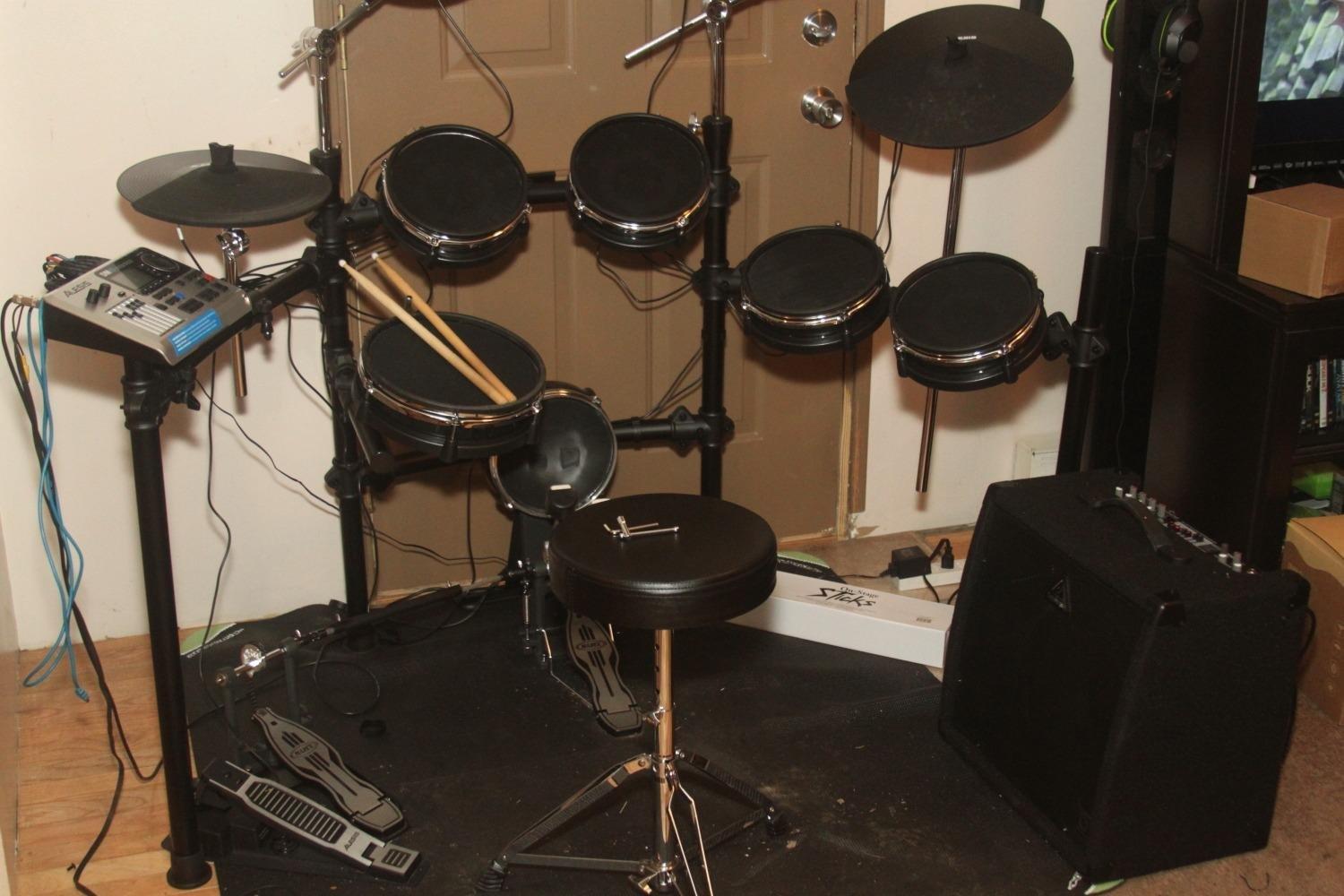
The 4-channel mixer with independent volume and tone controls handles most multi-instrument rigs. I ran a synth, an electric piano, a drum machine, and a vocal mic through it simultaneously without issues. The sub-woofer output lets you add a dedicated bass cabinet for venues that need serious low-end, and the XLR output connects directly to the house PA.
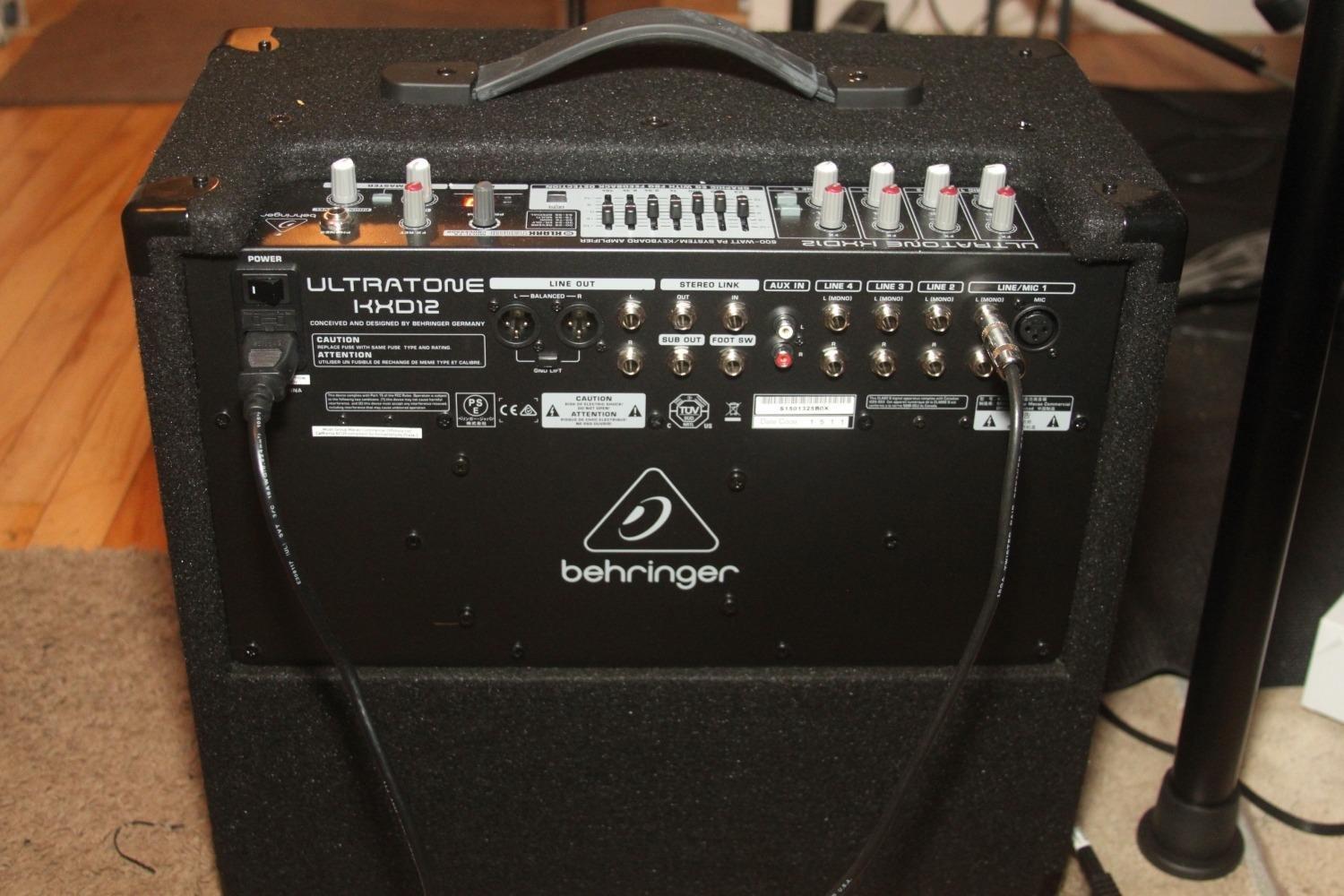
The reason the KXD12 only earns 3.8 stars is reliability. A full 23 percent of reviews are 1-star, with multiple users reporting units that failed within six months, often with white noise or no output. Repair parts can take 8 to 12 months to source. If you buy one, test it thoroughly within the return window and buy from a retailer with a strong return policy. Sound quality is also generally considered a step below Roland options for pure tonal accuracy.
Best Use Case for the Behringer KXD12
The KXD12 is ideal for electronic drummers, multi-instrumentalists who need lots of channels and effects, players on a budget who need big power, and bands that want one cabinet that doubles as a keyboard amp and a small PA system.
Who Should Skip the KXD12
Touring professionals who cannot risk a failure mid-tour should look elsewhere. Players who want pure tonal accuracy or who need to tweak effects manually rather than scroll through presets will also prefer the Roland or Peavey options.
10. Behringer ULTRATONE KXD15 – 600W with 15-Inch Speaker
- 600-watt bi-amped output with serious low-end authority
- 15-inch Turbosound speaker delivers realistic full-range sound
- Sub-woofer output for expanded bass
- 100 Klark Teknik FX presets
- FBQ feedback detection system
- About 15 pounds lighter than comparable Roland models
- Popping sound when powering on
- Some reliability concerns with older shelf stock
- Effects are preset-only
The Behringer ULTRATONE KXD15 is the 15-inch big brother to the KXD12, and it earns a much stronger 4.4-star rating thanks to better reliability feedback and noticeably deeper bass response. I gigged one alongside a Hammond organ and a Nord Electro for a soul band, and the 15-inch Turbosound speaker reproduced the lower manual of the organ with an authority that the 12-inch KXD12 simply cannot match.
The 600-watt bi-amped Class-D amplifier delivers enormous headroom. Even when competing with a horn section and a loud drummer on a festival stage, the KXD15 never ran out of clean power. The Klark Teknik FX processor with 100 presets gives you a wide tonal palette, and the FBQ feedback detection system is genuinely useful for dialing out problem frequencies during soundcheck.
The build quality feels solid and noticeably better than the price suggests. The 4-channel mixer handles multi-instrument rigs, and the sub-woofer output lets you add a dedicated bass cabinet for venues that need even more low-end punch. The XLR output connects directly to the front-of-house PA, which is essential for any stage use.
Compared to the KXD12, the KXD15 has a much stronger reliability track record with only 5 percent 1-star reviews versus 23 percent for the smaller model. The most common complaints are a popping sound on power-up and potential issues with units that sat on a shelf for a long time before sale. At 49 pounds, it is heavy but still about 15 pounds lighter than comparable Roland KC-600, which makes a difference over a long gig night.
Best Use Case for the Behringer KXD15
The KXD15 is the right pick for keyboardists who need serious power for larger stages, Hammond organ players who need that 15-inch low-end warmth, electronic drummers, and bands looking for a single cabinet that works as both keyboard amp and small PA.
Who Should Skip the KXD15
Players who prioritize portability will find 49 pounds a burden. Anyone who needs to tweak effects parameters manually rather than scroll through presets should also consider the Roland options with their simpler, cleaner signal path.
11. Laney Audiohub AH40 – 40W Multi-Instrument Combo
- Versatile multi-channel input for guitar
- bass
- vocals
- and keys
- Master 5-band graphic EQ for fine-tuned sound shaping
- Kick-back design works as a personal stage monitor
- Clear full-bodied tone across multiple instruments
- Line-out for PA or recording
- Solid stainless steel build with 5-year parts warranty
- 8-inch speaker lacks low-end depth in larger venues
- Can sound thin and treble-heavy even with EQ tweaks
- Lower wattage than the AH80
The Laney Audiohub AH40 is the most-reviewed amp on this list with 187 ratings, and its 4.4-star average reflects a genuinely versatile multi-instrument workhorse. I have used one in a duo setup where I needed to run a keyboard, an acoustic guitar, and a vocal mic through the same cabinet, and the AH40 handled all three without complaint.
The three-channel design is the AH40’s biggest selling point. Each channel accepts any instrument, which makes it perfect for singer-songwriters, multi-instrumentalists, and small bands that want one cabinet to handle everything on stage. The master 5-band graphic EQ gives you far more tonal control than the 3-band EQs on most Roland and Peavey options, which matters when you are mixing instruments from different frequency ranges.
The kick-back monitor format is genuinely useful for stage work. Tilt the AH40 back and it becomes a personal floor monitor aimed at your ears, which solves the classic problem of not being able to hear your own keys when standing at the front of the stage. The line-out sends your mix to the house PA or a recording rig with minimal coloration.
The trade-off is the 8-inch speaker. For acoustic piano and synth patches with deep bass content, the AH40 simply cannot deliver the low-end authority of a 12- or 15-inch woofer. Some users also describe the tone as slightly thin or treble-heavy even after EQ adjustments. For small gigs, rehearsals, and multi-instrument duo work, the AH40 is excellent value. For larger stages, look at the AH80 or a bigger cabinet.
Best Use Case for the Laney AH40
The AH40 is perfect for singer-songwriters, multi-instrumentalists running keys plus guitar plus vocals, small acoustic gigs, rehearsal rooms, and personal stage monitoring when paired with a PA feed.
Who Should Skip the AH40
Keyboardists who need deep bass response for synth bass or organ patches, and anyone playing venues larger than about 80 seats without PA support, will find the 40-watt 8-inch combination limiting.
12. Laney Audiohub AH80 – 80W 10-Inch Step-Up Combo
- 80W power handles intimate gigs and rehearsal
- XLR
- jack
- and mini-jack inputs for broad connectivity
- Multi-instrument capability with 3 channels
- Onboard effects add versatility
- Compact and lightweight for its power
- 5-year parts warranty from Laney
- EQ described as somewhat generic rather than highly customizable
- Occasional speaker quality control issues reported
- Higher price than the AH40 for the same channel count
The Laney Audiohub AH80 is the natural step-up from the AH40, doubling the wattage and adding a 10-inch woofer with horn for more low-end authority and clearer highs. I have recommended it to several duo and trio acts that loved the AH40’s versatility but needed more volume for slightly larger rooms.
At 80 watts, the AH80 fills small venues, function rooms, and church spaces with clean sound that holds up against a moderate-volume drummer. The three-channel design accepts guitar, bass, vocals, keyboards, and drum machines, making it a true all-in-one solution for multi-instrumentalists. Onboard effects add reverb and other treatments without requiring external pedals.
The connectivity is broad, with XLR, 1/4-inch jack, and mini-jack inputs covering essentially any signal source you might bring on stage. The master 5-band graphic EQ gives you the same fine tonal control as the AH40, which is genuinely useful when mixing instruments across the frequency spectrum.
The main trade-offs are minor. The EQ is described by some users as somewhat generic rather than deeply customizable, and a small number of reviews mention speaker quality control issues that Amazon handled via returns. At 30 pounds, it is heavier than the AH40 but still portable enough for solo load-in. For players who want the AH40’s versatility with more headroom, the AH80 is a strong choice.
Best Use Case for the Laney AH80
The AH80 fits small to mid-size gigging acts, multi-instrument duos and trios, function bands, worship teams, and keyboardists who want onboard effects plus multi-channel flexibility in one cabinet.
Who Should Skip the AH80
Players who need pristine tonal accuracy for acoustic piano, or who play loud rock stages, will be better served by the Roland KC-400 or KC-600. The 80-watt 10-inch combination is great for its size but cannot match a dedicated 12- or 15-inch stage amp.
Buying Guide: How to Choose a Keyboard Amplifier for Stage Use
Choosing the right stage keyboard amplifier comes down to five decisions: wattage, channels, portability, EQ and effects, and outputs. Below I walk through each one with specific recommendations based on the gigs I have played and the rigs I have built.
Wattage by Venue Size
Wattage is the single most important spec for stage use because it determines whether your keys will be heard over the rest of the band. Here is a practical guide based on venue size and stage volume.
For solo gigs, coffee shops, and small rooms up to about 50 seats, 30 to 50 watts is usually enough. The Roland KC-220, KC-80, and Vox VX50KB all fit this tier. For small clubs, pubs, and small church venues seating 50 to 150 people, 80 to 150 watts is the sweet spot. The Roland KC-200 and KC-400, Peavey KB 3, and Laney AH80 all live in this range.
For mid-size venues, function rooms, and stages seating 150 to 400 people, 150 to 200 watts gives you the headroom to compete with a loud drummer and a bassist with a powerful rig. The Roland KC-600 is my top pick here. For large stages, outdoor gigs, and any situation where you need to push serious air without a PA, 600 watts from the Behringer KXD15 delivers headroom that smaller amps simply cannot match.
Remember that wattage alone does not tell the whole story. Speaker size, cabinet design, and amplifier class all affect perceived loudness. A well-designed 150-watt Roland KC-400 may keep up with a drummer where a cheaply-built 300-watt amp falls apart.
Channels and Connectivity
For stage use, channel count matters more than most players realize. Three channels covers most keyboard-only rigs, four channels lets you add a vocal mic or drum machine, and anything beyond that means you can run a full multi-instrument setup through one cabinet.
Pay close attention to input types. XLR mic inputs let vocalists share the amp or let you connect a condenser mic for acoustic instruments. 1/4-inch line inputs handle keyboards and synths. Aux inputs with 1/8-inch and RCA jacks accept backing tracks from a phone or laptop. The Roland KC series and Peavey KB series both offer strong multi-channel options.
Outputs are equally important for stage work. Balanced XLR outputs let you send a clean signal directly to the front-of-house PA snake, which is essential for any venue that mics the stage. Sub-woofer outputs let you add a dedicated bass cabinet. Headphone outputs are critical for silent rehearsal and soundcheck. The Roland KC-600 and Peavey KB 3 both offer XLR outs, while the Behringer KXD series adds sub-woofer outputs for system expansion.
Portability and Weight
Weight is the spec gigging musicians obsess over for good reason. Every staircase, every load-in, every parking-garage-to-stage trek adds up over a tour. The Vox VX50KB at 4.77 kilograms is the lightest option here, followed by the Roland KC-220 at 22 pounds and the Roland KC-80 at 30 pounds.
For mid-weight options, the Peavey KB 2 at 38 pounds and Roland KC-200 at 41 pounds are manageable for most adults. At the heavy end, the Peavey KB 3 at 48 pounds, Behringer KXD15 at 49 pounds, and Roland KC-600 at 64 pounds all benefit from wheels or a second person. The KC-600 ships with removable casters, which I consider essential at that weight.
EQ and Effects
Stage environments are unpredictable. A graphic EQ gives you the flexibility to adapt to a boomy low-ceiling room, a dead-sounding carpeted hall, or a reflective concrete basement venue. The Laney Audiohub AH40 and AH80 both include 5-band graphic EQs, which is more flexible than the 3-band or 4-band rotary EQs on Roland and Peavey options.
Built-in effects are a bonus, not a necessity, since most modern keyboards include their own effects processing. The Behringer KXD12 and KXD15 lead this category with 100 Klark Teknik FX presets. The Roland KC-220 includes reverb and two chorus types. The Roland KC-400 and KC-600 include no built-in effects, which some players prefer for signal purity.
Keyboard Amp vs PA Speaker
This is the single most common question I get from gigging keyboardists. The short answer is that a dedicated keyboard amp is a personal monitor and a PA speaker is a sound-reinforcement tool, and they serve different roles.
A keyboard amp like the Roland KC-600 or Peavey KB 3 is designed as a personal stage monitor. It sits next to you, reproduces your patches accurately, and often sends a separate feed to the house PA via XLR output. The advantage is that you control your own monitor mix and can hear yourself clearly regardless of what the front-of-house engineer does.
A powered PA speaker like a QSC K12 or Yorkville P-55A is designed to project sound to an audience. Keyboardists who already have PA support at every venue often prefer a PA speaker as a personal monitor because it is more versatile, can be rented easily, and works for any instrument. The downside is that PA speakers often color the sound less flatteringly than a dedicated keyboard amp, and they lack the multi-channel mixing that keyboard amps include.
If you play venues that always provide PA support and you only need personal monitoring, a PA speaker can work well. If you play venues without PA, or you need to mix multiple instruments through one cabinet, a dedicated keyboard amp is the better choice.
Stage Monitor Placement Tips
Where you place your keyboard amp on stage affects both what you hear and what the audience hears. The most common mistake is pointing the amp at the audience instead of at yourself, which means you cannot hear your own playing and the audience hears too much of you. The fix is to treat your keyboard amp as a personal monitor first.
For seated keyboardists, place the amp slightly behind and to one side, angled up toward your ears. For standing players, a floor wedge position aimed at your head works best. The Laney Audiohub AH40 with its kick-back format is purpose-built for this. Tilt-back stands like the one on the Roland KC-220 are also excellent for aiming sound at the player.
If you also want some audience coverage, consider a small second cabinet aimed outward, or just rely on the XLR feed to the house PA. Avoid daisy-chaining multiple keyboard amps unless they support proper stereo linking like the Roland KC-400 and KC-600, because mismatched amps create phase and level issues.
Frequently Asked Questions About Stage Keyboard Amps
What is the best keyboard amp for live performance?
The Roland KC-600 is the best keyboard amp for live performance overall, offering 200 watts of clean power, a 15-inch woofer, four stereo channels, and balanced XLR outputs for the front-of-house PA. For budget-conscious players, the Behringer ULTRATONE KXD15 delivers 600 watts of bi-amped power with effects and feedback detection at roughly half the price.
How many watts do I need for a keyboard amp on stage?
For solo gigs and small rooms under 50 seats, 30 to 50 watts is sufficient. For small clubs and churches seating 50 to 150 people, aim for 80 to 150 watts. For mid-size venues of 150 to 400 seats, 150 to 200 watts like the Roland KC-600 is ideal. For large stages and outdoor gigs, 600-watt options like the Behringer KXD15 provide the headroom you need to compete with loud drummers and guitarists.
What should I look for in a keyboard amplifier for gigs?
Prioritize clean wattage appropriate to your venue size, at least three input channels for multi-instrument rigs, a balanced XLR output for connecting to the house PA, a speaker size of at least 10 inches for full-range reproduction, portability that matches your load-in situation, and durability backed by a solid warranty. Built-in effects and a graphic EQ are valuable bonuses but not strictly necessary.
Are keyboard amps good for live performance?
Yes, dedicated keyboard amps are excellent for live performance because they reproduce the full frequency range of keyboards accurately, from deep synth bass to sparkling high-end bells. Unlike guitar amps which color the sound, keyboard amps aim for flat, clean response. They also function as personal stage monitors, letting you hear your own playing over a loud band mix.
Can I use a PA speaker instead of a keyboard amp?
Yes, you can use a powered PA speaker instead of a keyboard amp, and many gigging keyboardists do. PA speakers are more versatile and work for any instrument, but they typically lack the multi-channel mixing, built-in effects, and personal-monitoring ergonomics of a dedicated keyboard amp. If your venues always provide PA support, a PA speaker as a personal monitor can work well. If you need to mix multiple instruments or play venues without PA, a keyboard amp is the better choice.
Final Thoughts on the Best Keyboard Amplifiers for Stage Use
The best keyboard amplifiers for stage use balance clean power, multi-channel flexibility, and the portability you need to actually get the amp to the gig. My top pick remains the Roland KC-600 for players who need serious headroom and reliability across mid-size to large venues. For the best value, the Behringer ULTRATONE KXD15 delivers 600 watts of bi-amped power, a 15-inch Turbosound speaker, and 100 Klark Teknik FX presets at a fraction of the Roland’s price.
For small-venue players and buskers, the battery-powered Roland KC-220 offers genuine stereo sound in a portable package. Multi-instrumentalists will love the Laney Audiohub AH40 or AH80 for their 5-band graphic EQ and flexible 3-channel design. Whatever your budget and venue size, the 12 amps on this list cover every gigging scenario I have encountered in over a decade of live keyboard work.
Pair your new stage amp with the right recording chain when you get home. Our guides to the best USB microphones for content creators and USB audio interfaces can help you build a complete keyboard rig that works both on stage and in the studio.