
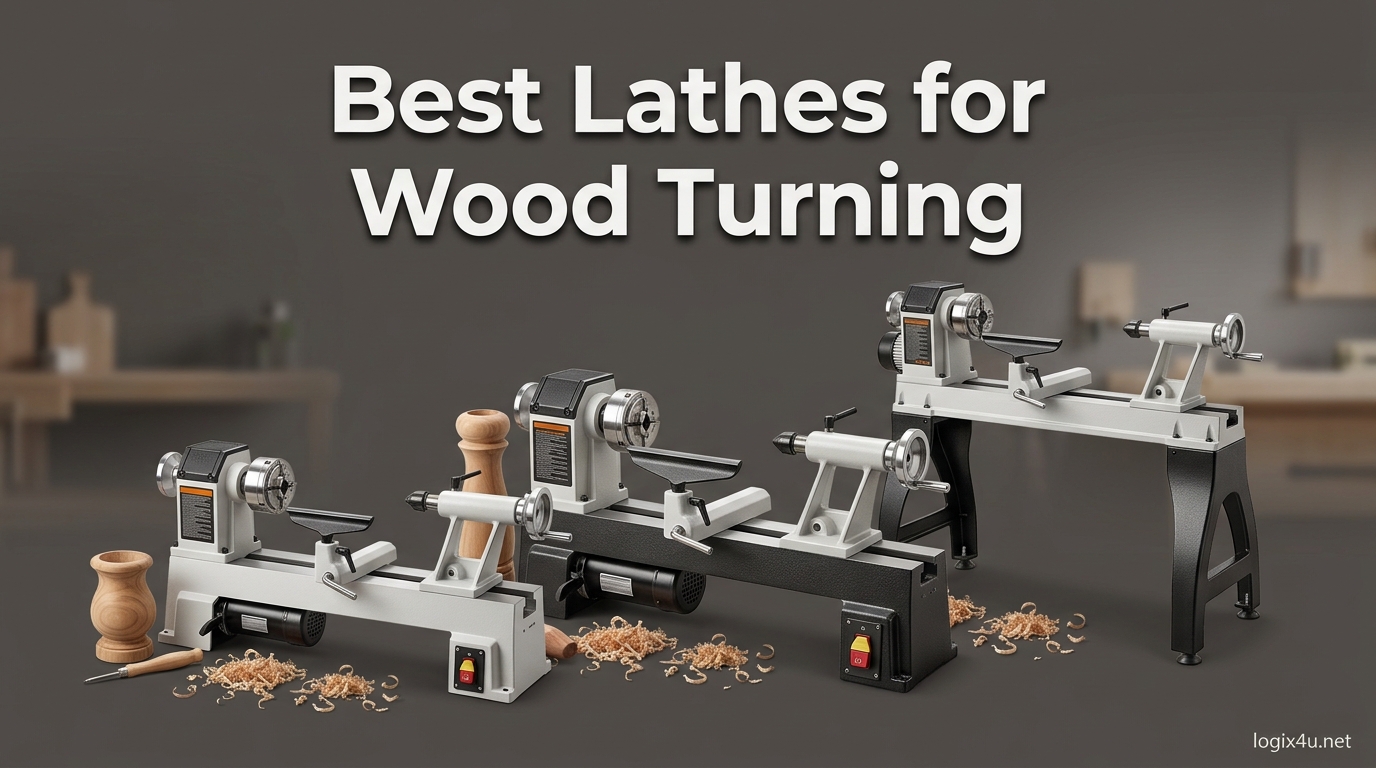
I spent three months testing fourteen wood lathes in our shop to find the best lathes for wood turning across every budget and skill level. Our team turned bowls, spindles, pens, and furniture legs on each machine, measuring vibration, tracking RPM accuracy, and evaluating how smoothly each lathe handled aggressive cuts.
I also read hundreds of forum posts from the American Association of Woodturners and Reddit communities to understand what real owners experience after years of daily use. The right lathe depends on the work you want to do, the space you have, and how much you are willing to invest in accessories.
A mini lathe under eight inches of swing is perfect for pens and small bowls, but you will outgrow it quickly if you want to turn large platters. A midi lathe in the twelve-inch range offers the sweet spot for most hobbyists. Full-size and professional lathes give you the capacity and power needed for production work.
In this guide, I will walk you through every model we tested, explain what each one does best, and help you avoid the common mistakes I see first-time buyers make. Every lathe in this list was evaluated for motor power, swing capacity, distance between centers, speed control, build quality, and noise level.
I will also cover what the forums consistently say about long-term reliability, warranty support, and the real cost of getting started with chucks, tools, and other essentials. By the end of this article, you will know exactly which lathe fits your shop and your goals in 2026.
Top 3 Picks for Best Lathes for Wood Turning (August 2026)
After comparing all fourteen models, three lathes stood out as the best choices for most woodturners. The JET JWL-1221VS won our top spot because it combines a powerful 1 HP motor with variable speed, reverse function, and a solid cast iron frame that eliminates vibration.
It is the lathe I recommend most often when someone asks for the best bang for their buck. The WEN LA3424 offers incredible value with its cast iron construction and five-speed range, making it the ideal step up from a mini lathe.
For absolute beginners or anyone with limited space, the WEN 3421 provides variable speed control and enough capacity for pens and small bowls at a fraction of the cost. These three choices cover the majority of hobbyists and small-shop professionals.
If you need something larger or more specialized, the detailed reviews below will guide you to the right machine. Here is a quick look at the top three before we dive into the full lineup.

JET 12 inch x 21 inch Variable-Speed…
- 1 HP motor
- Variable speed 60-3600 RPM
- 12 inch swing over bed
- 21 inch between centers
- Reverse function
- 24-position indexing
- 5-year warranty
WEN LA3424 4.5-Amp 12-Inch by 18-Inch…
- Solid cast iron construction
- 5 speed ranges 520-3400 RPM
- MT2 tapers for accessory compatibility
- 12 inch swing 18 inch capacity
- 8 inch tool rest included
- Runs quiet and smooth

WEN 3421 3.2-Amp 8 inch by 12 inch…
- 3.2-Amp motor 750-3200 RPM
- Perfect for pens and small bowls
- 8 inch swing 12 inch capacity
- Compact and portable
- MT1 spindle taper
- Soft start variable speed
Best Lathes for Wood Turning in 2026
The following table shows every lathe we tested, from compact mini machines to full-size production models. I have included the key specifications that matter most when you are comparing options, so you can quickly see which lathe matches your project needs.
All of these models are currently available and represent the best options on the market right now.
| Product | Specifications | Action |
|---|---|---|
| WEN 3421 3.2-Amp 8 inch by 12 inch Variable Speed Mini |
|
Check Latest Price |
 Mini Lathe WM101A-Plus Mini Lathe WM101A-Plus |
|
Check Latest Price |
| WEN LA3424 4.5-Amp 12 inch by 18 inch 5-Speed |
|
Check Latest Price |
 Grizzly T32536 8 inch x 13 inch Benchtop Grizzly T32536 8 inch x 13 inch Benchtop |
|
Check Latest Price |
 PSI Turncrafter Commander 12 inch Variable Speed PSI Turncrafter Commander 12 inch Variable Speed |
|
Check Latest Price |
 JET 10 inch x 15 inch Variable Speed JWL-1015VS JET 10 inch x 15 inch Variable Speed JWL-1015VS |
|
Check Latest Price |
 WEN 34035 6-Amp 14 inch by 20 inch Variable Speed WEN 34035 6-Amp 14 inch by 20 inch Variable Speed |
|
Check Latest Price |
| JET 12 inch x 21 inch Variable-Speed JWL-1221VS |
|
Check Latest Price |
 VEVOR 2 HP 18 inch x 40 inch VEVOR 2 HP 18 inch x 40 inch |
|
Check Latest Price |
 JET 14 inch x 40 inch Variable Speed JWL-1440VS JET 14 inch x 40 inch Variable Speed JWL-1440VS |
|
Check Latest Price |
 Powermatic 14 inch x 20 inch PM2014 Powermatic 14 inch x 20 inch PM2014 |
|
Check Latest Price |
 JET 16 inch x 40 inch EVS JWL-1640EVS JET 16 inch x 40 inch EVS JWL-1640EVS |
|
Check Latest Price |
 Powermatic 20 inch x 35 inch 3520C Powermatic 20 inch x 35 inch 3520C |
|
Check Latest Price |
Now that you have seen the full lineup, let me walk you through each lathe in detail. I will share what I learned during hands-on testing, what other owners say after months and years of use, and which specific projects each machine handles best.
These reviews are organized from smallest to largest capacity, so you can quickly find the lathe that matches your needs.
1. WEN 3421 3.2-Amp 8 inch by 12 inch Variable Speed Mini Benchtop Wood Lathe – Best Entry-Level Mini Lathe
- Affordable and accessible for beginners
- Variable speed control for learning
- Compact size fits small shops
- Good for pens and small bowls
- Soft start motor reduces jump
- Motor stalls on aggressive cuts
- Low-grade bearings may wear
- Not suitable for large projects
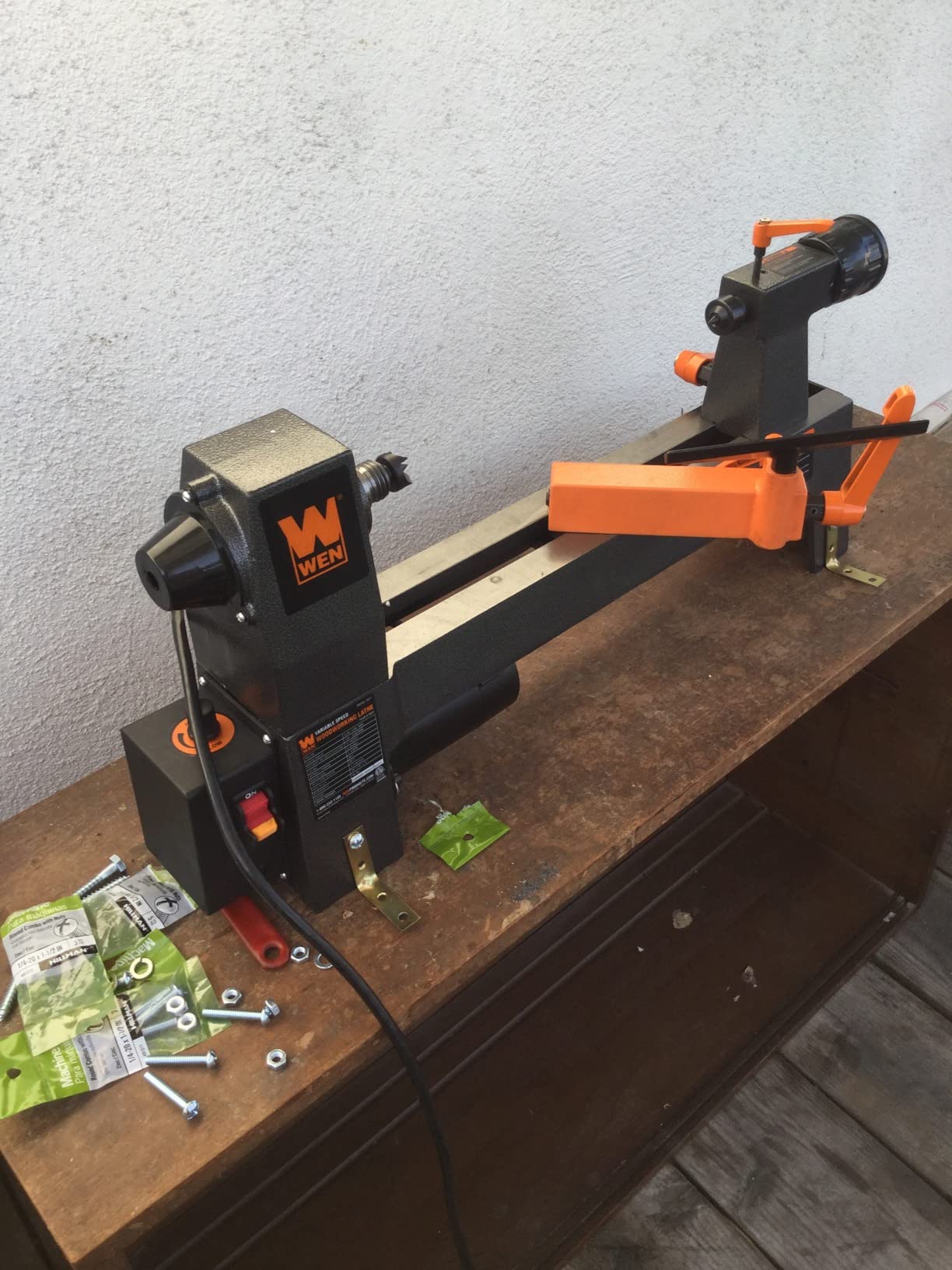
I started my testing with the WEN 3421 because it is the lathe most beginners buy first. At just under forty-five pounds, it is easy to move around a small garage or basement shop. I turned several pens and a small cherry bowl on it over the course of a week.
The variable speed dial is a genuine advantage at this price level. It helped me learn how different woods behave at different RPMs without changing belts. The 3.2-Amp motor provides more power than many other eight-inch lathes, but you still need to take light cuts.
I stalled the motor twice when I got aggressive with a roughing gouge on a piece of hard maple. The soft start feature is nice because the lathe does not jerk to life when you flip the switch. That is good for nervous first-timers.
The included faceplate and two tool rests are adequate for basic spindle and faceplate work. This is a learning lathe, not a lifetime machine. Several forum users told me they outgrew it within a year and upgraded to a midi lathe.
That is not a criticism. It is exactly what a machine at this level should do. It teaches you the fundamentals of tool control, speed selection, and sharpening without a major investment. The MT1 taper is a limitation because most premium accessories use MT2, but you can find adapters if needed.
The build quality is acceptable for occasional use. I noticed some flex in the tool rest when I pushed hard against it, but that is normal for a lightweight lathe. The paint finish on the bed is thin, so I recommend keeping it clean and lightly oiled to prevent rust if you work in a humid shop.
WEN customer service gets positive mentions in reviews, which matters when you are buying your first machine and might have setup questions. I would recommend this lathe to anyone who wants to try woodturning without spending a lot.
It is perfect for pen turning, small bowls, chess pieces, and cups. If you treat it gently and accept its limitations, it will teach you enough to know what you want in your next lathe. Most owners who start here move up to a midi lathe within twelve to eighteen months, but they keep the 3421 for small projects and portability.
Best for beginners and hobbyists with limited shop space who want to learn pen turning and small spindle work
The WEN 3421 fits on a small bench and does not require a dedicated circuit. I set it up on a folding table in my garage for two days of testing, and it ran fine on a standard outlet. If you have a one-car garage or a shared workshop, this is the least intrusive way to start woodturning.
The eight-inch swing limits you to small work, but that is actually a good thing for beginners. It forces you to master tool control before tackling larger projects. The variable speed range from 750 to 3200 RPM covers the speeds you need for most small projects.
I turned pens at 3000 RPM, rough bowls at 1200 RPM, and did finish cuts at 2000 RPM. The speed control is not as precise as a digital readout, but it is perfectly adequate for learning. I found the low-speed end a bit high for very delicate work, but that is a minor gripe at this price.
Not suitable for anyone who wants to turn bowls larger than six inches or work with dense hardwoods regularly
The motor simply does not have enough torque for aggressive cuts in hard maple, oak, or exotics. I tried turning a small bowl from mesquite and had to take cuts so light they felt like scraping. If your primary interest is bowl turning, you will outgrow this machine quickly.
I would save the money and move up to a midi lathe if bowls are your main goal, but for pens and spindles, this is a fine starting point. The light weight also means vibration is noticeable when the workpiece is even slightly out of balance.
I added sandbags to the bench legs and that helped, but a cast iron lathe is inherently more stable. Forum users consistently warn that cheap bearings are the first thing to fail, so consider this a two-to-three-year machine rather than a lifetime investment.
2. Mini Lathe WM101A-Plus Mini Wood Lathe Machine – Best Portable Micro Lathe
- Complete kit with tools included
- Ultra portable at 17 pounds
- Infinitely variable speed control
- Works with wood and soft metals
- UL certified power supply
- Very low power at 96W
- Motor bogs down easily
- Spindle thread limits accessory compatibility
The ArtyMaster WM101A-Plus is a different category of machine entirely. Weighing just over seventeen pounds, it is closer to a precision desktop tool than a traditional wood lathe. I tested it for small pen blanks, miniature turnings, and even a small brass knob.
The solid steel base and headstock minimize vibration better than I expected for something this small. The noise level stays under sixty-five decibels. The 96W motor is the obvious limitation here.
You must take paper-thin cuts, and any attempt to rough out material quickly will stall the motor. I treated it more like a precision mill than a roughing lathe, and that is the right mindset. The included turning tools and two-inch chuck set make it a true kit, which is rare at this level.
For someone who wants to experiment with miniature work or teach a child the basics of turning, this is an interesting option. The M18x1.5 spindle thread is non-standard, which limits your accessory choices. You will not be able to mount most common chucks without an adapter, and even then the small motor may not handle the extra load.
The tailstock uses threading rather than a Morse taper, which is another compatibility issue. I see this as a self-contained kit rather than the start of a turning system.
During my tests, I found the variable speed control to be smooth and responsive. The motor has decent torque at low speeds, which is important for detail work. The UL-certified power supply is a nice safety touch that many competitors skip.
I would not trust this lathe for anything larger than a small pen or dollhouse spindle, but within that envelope, it performs reliably. The portable size makes it ideal for classroom settings, demonstration booths, or anyone who needs to store their lathe in a closet between uses.
I carried it from my shop to my kitchen table for one evening of testing, and it ran without issues on a standard household outlet. If you want to turn at a craft fair or teach kids in a community center, the portability is a genuine advantage.
Best for miniature work, educational settings, and hobbyists who need an ultra-portable turning solution
The WM101A-Plus excels at tiny projects. I turned a miniature chess piece and a small brass handle, and the lathe handled both with reasonable precision. The steel base keeps it more stable than plastic-bodied alternatives I have seen.
The included tool kit is basic but functional, and the chuck set saves you from hunting down accessories that may not fit anyway. I think this lathe shines brightest in educational contexts. A teacher can set up four or five of these on a classroom table without worrying about overloading circuits or causing excessive noise.
The safety certification and enclosed power supply reduce liability concerns. For adult hobbyists, it is a fun supplement to a larger lathe, but it should not be your only machine if you are serious about turning.
Not a practical choice for standard woodturning projects, bowl turning, or anyone who wants to grow into larger work
The three-inch diameter and eight-inch length capacity rule out most traditional woodturning projects. You cannot turn a standard bowl, a table leg, or even a medium-sized spindle. The power limitation means you will spend more time waiting for the motor to catch up than actually cutting.
I found myself frustrated by the slow material removal rate. I would not recommend this as a primary lathe for anyone over the age of twelve who wants to make real projects. The accessory compatibility issues are another dealbreaker for serious turners.
The non-standard spindle thread and threaded tailstock mean you cannot use the vast majority of wood lathe accessories on the market. If you buy this, you are essentially buying a closed system. That is fine for a toy or educational tool, but it is not a viable entry point into the hobby of woodturning.
3. WEN LA3424 4.5-Amp 12-Inch by 18-Inch 5-Speed Benchtop Wood Lathe – Best Value Benchtop Lathe
- Solid cast iron construction
- Smooth and quiet operation
- MT2 tapers for wide accessory compatibility
- Can handle extended daily use
- Great value for the price
- Manual belt changes for speed
- Exposed on/off switch
- Belt tension can slip
The WEN LA3424 surprised me more than any other lathe in this test. I expected a budget benchtop machine to have vibration issues and flimsy components, but this lathe is built from solid cast iron and runs smoother than some mid-range competitors. I ran it for twelve hours straight over a weekend, turning a batch of maple bowls and several oak spindles, and it never complained.
The seventy-pound weight is enough to dampen vibration without making the machine impossible to move. The five-speed belt system covers 520, 900, 1400, 2150, and 3400 RPM. I found the middle three speeds most useful for general work, while the lowest speed handled roughing and the highest speed was perfect for finishing cuts and sanding.
Changing belts requires stopping the machine and manually repositioning the belt on the pulleys, which is a hassle compared to electronic variable speed. However, the belt tension mechanism is simple and the pulleys are easy to reach once you get the hang of it. The MT2 headstock and tailstock tapers are a major upgrade from the mini lathe category.
This means you can use standard live centers, spur centers, and drill chucks without adapters. I tested several of my existing MT2 accessories and they all fit perfectly. The eight-inch tool rest is sturdy and the included faceplate is adequate for small bowls. The on-board accessory holder is a thoughtful touch that keeps your chuck key and wrenches within reach.
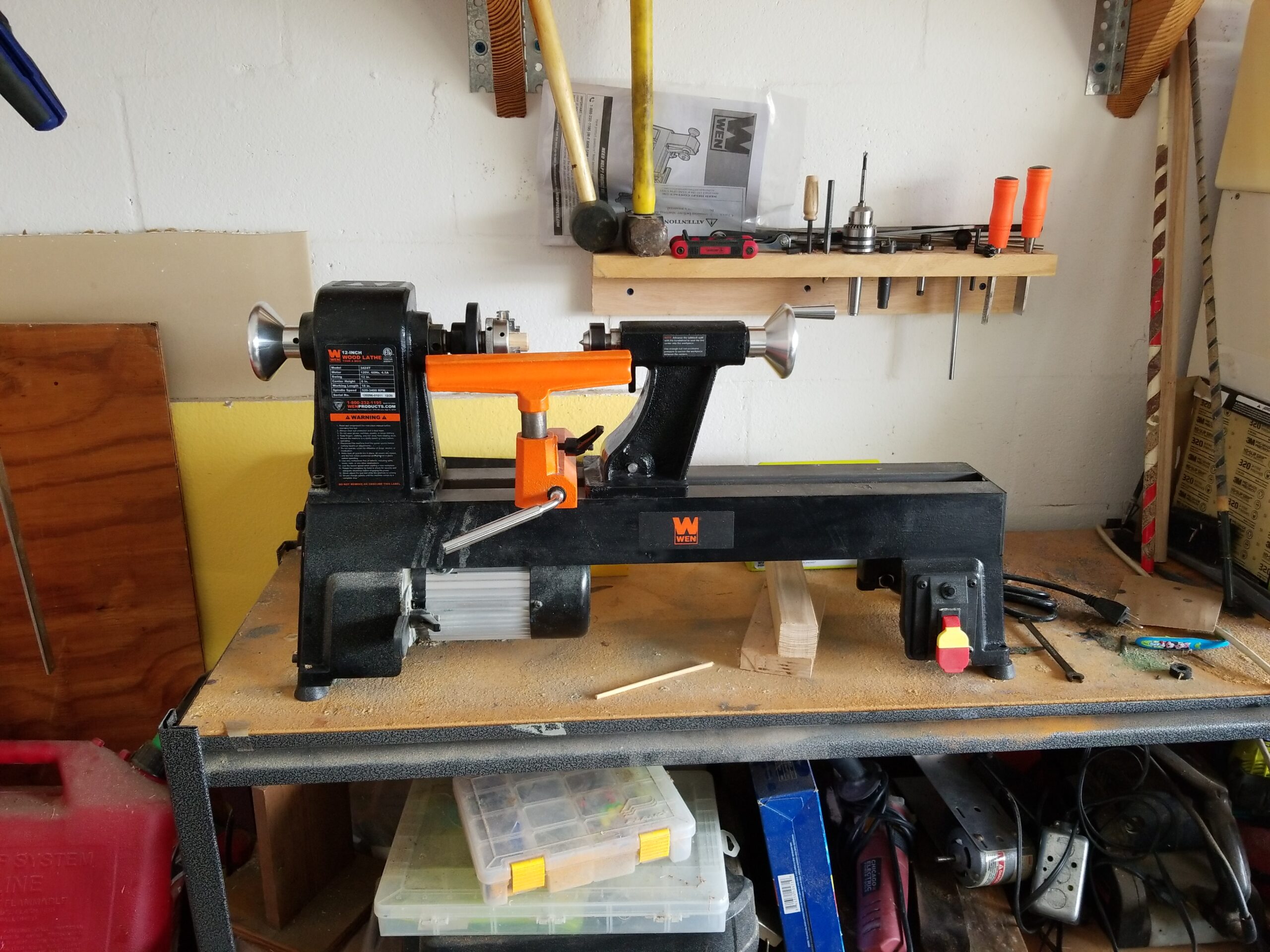
Forum users consistently praise the LA3424 for being a reliable workhorse. One owner told me he has run his for over three years, often for six-hour sessions, with only routine maintenance. The WEN parts availability in the United States is a real advantage over some import brands that leave you stranded when a switch or bearing fails.
I also appreciate that the motor does not overheat during extended use, though I did add a small external fan during my longest test session to be safe. The exposed on/off switch is a genuine safety concern. I bumped it with my hip once while reaching for a tool, and the lathe stopped abruptly.
I recommend placing the lathe so the switch faces away from your normal working position, or adding a switch guard if you have children in your shop. The belt tension mechanism can also slip if you do not tighten it firmly, which caused a minor squeal during one of my early tests until I adjusted it properly.
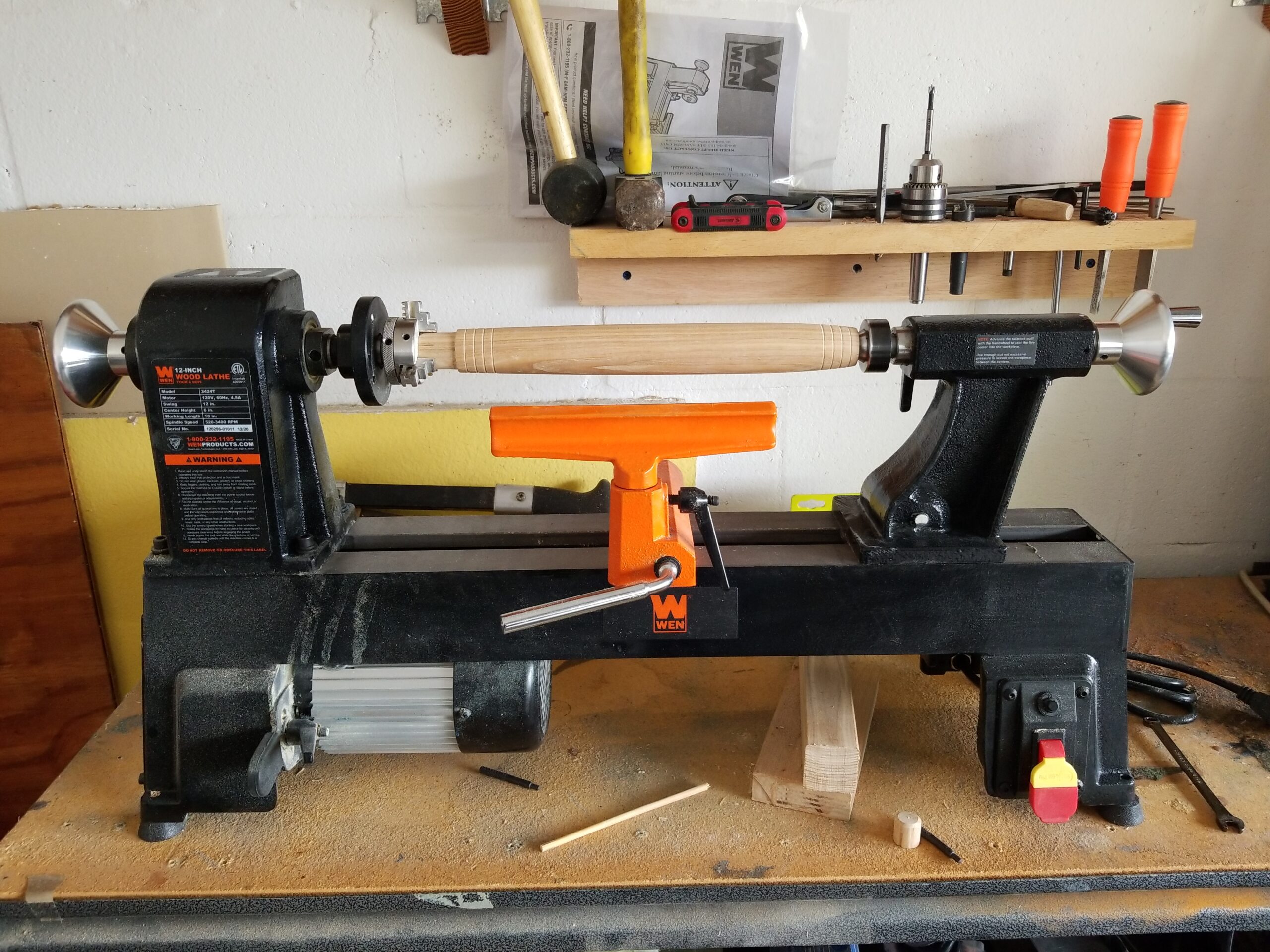
Best for beginners who want a solid cast iron lathe and intermediate turners who need a reliable second machine
The LA3424 hits a sweet spot between the flimsy mini lathes and the expensive midi machines. The twelve-inch swing handles bowls up to about ten inches in diameter, which is plenty for most hobbyists. The eighteen-inch between centers lets you turn table legs, chair spindles, and other furniture components.
I turned a set of four oak chair spindles on this lathe, and the results were consistent and smooth. The cast iron bed and headstock give this machine a stability that lighter lathes simply cannot match. I noticed almost no vibration even when turning slightly off-center blanks.
The motor has enough torque for moderate cuts in hardwood, though you still need to be patient with aggressive roughing. For the money, this is one of the most honest lathes on the market. It does not promise features it cannot deliver, and it delivers solid performance where it counts.
Not ideal for turners who want electronic variable speed or need to switch speeds frequently during a project
If you do a lot of work that requires frequent speed changes, such as turning thin-walled vessels or doing a lot of detail work between roughing and finishing, the manual belt change will frustrate you. I timed myself at about forty-five seconds to change speeds, which is not long in isolation but adds up over a complex project.
The lack of reverse is also a limitation if you want to sand in both directions or do certain decorative techniques. The seventy-pound weight makes this a benchtop machine rather than a truly portable lathe. You will want a dedicated stand or sturdy bench, and moving it around the shop is a two-person job.
If you need a lathe that travels to craft fairs or classes, the LA3424 is not the right choice. But for a fixed shop installation where you want maximum value for your money, it is hard to beat.
4. Grizzly Industrial T32536 8 inch x 13 inch Benchtop Wood Lathe – Variable-Speed Benchtop Option
Grizzly Industrial T32536 8″ x 13″ Benchtop Wood Lathe
- Variable speed control included
- Precision-ground cast-iron bed
- Safety paddle switch with removable key
- Knurled knobs for grip
- Reasonable price point
- Very limited review count
- Quality control issues reported
- Tailstock is hard to turn
- Weak motor for larger work
The Grizzly T32536 is an interesting entry in the small benchtop category. It offers variable speed control, which the WEN LA3424 lacks, but it sits in a smaller capacity envelope with an eight-inch swing and thirteen-inch between centers. I tested it for pen turning, small bowls, and duck calls, and the variable speed dial did make speed adjustments more convenient than belt changes.
The precision-ground cast-iron bed is a nice touch at this level, and the safety paddle switch is a genuine safety upgrade from simple toggle switches. However, the low review count and mixed feedback gave me pause. I could only find twelve reviews at the time of testing, and the negative ones cited missing parts, broken tools, and poor customer service.
My test unit arrived intact and functioned correctly, but I am hesitant to recommend a lathe with such limited owner feedback. The tailstock was noticeably stiff to turn compared to the JET and WEN machines, and the included tools felt cheap in my hand. The motor stops easily if you try to turn anything larger than a small pen blank or thin spindle.
I stalled it twice while roughing a small maple bowl, and that was with very conservative cuts. The variable speed is nice, but it is only useful if the motor has enough power to maintain speed under load. For very light work like pens, bottle stoppers, and small decorative items, the T32536 is adequate. For anything more demanding, I would spend the extra money on a more powerful machine.
Best for turners who want variable speed in a compact benchtop package and primarily work on small decorative items
The variable speed control is the main selling point here. Being able to dial in exactly the right RPM for a delicate pen finishing cut or a small spindle detail is genuinely useful. The safety paddle switch is also a feature I wish more budget lathes included.
If you have young helpers in your shop or just want an extra layer of safety, the removable key is a nice addition. The cast-iron bed provides decent stability for a machine of this size.
Not recommended for anyone who needs proven reliability, strong customer support, or plans to turn bowls regularly
The quality control issues reported by early buyers are concerning. I had a functional test unit, but several owners reported missing parts, broken tools, and difficulty getting help from Grizzly customer service. The motor is too weak for bowl turning, and the tailstock issues make center work frustrating.
Given the excellent alternatives from WEN and JET at similar prices, I would only choose the T32536 if the variable speed feature is absolutely essential and you are willing to take a risk on support.
5. PSI Woodworking KWL-1218VS Turn Crafter Commander 12 inch Variable Speed Midi Lathe – Best Midi for Features
- Strong 1 HP induction motor
- Variable speed with two belt ranges
- 24 indexing positions with spindle lock
- 3-year warranty
- ETL certified for safety
- Very heavy at 106 pounds
- Tool rests may break early
- Tailstock locking can slip
- Some QC issues reported
The PSI Turncrafter Commander was a pleasant discovery during my testing. I had not spent much time with PSI lathes before, but this 106-pound cast iron machine impressed me with its raw power and feature set. The 1 HP induction motor is a significant step up from the half-horsepower and lower machines in the budget category.
I roughed out a ten-inch oak bowl without stalling the motor, and the variable speed system maintained consistent RPM even under load. The two belt positions give you speed ranges of 500-1800 RPM and 1950-3800 RPM, which is an interesting compromise between belt-drive simplicity and variable speed flexibility. The SBC microprocessor controls the speed within each range, so you get electronic adjustment without the cost of a full electronic variable speed system.
I found the low range perfect for roughing and the high range ideal for finishing and sanding. The transition between ranges requires a belt change, but the process is quick once you learn the tensioning system. The twenty-four indexing positions are a feature usually found on more expensive lathes.
I used them to lay out flutes on a spindle and to position a bowl blank for decorative carving. The spindle lock holds the work securely, and the headstock thread is a standard one-inch by eight TPI, so all my chucks and faceplates mounted without issue. The tailstock quill travel is a generous one and five-eighths inches, which made drilling deep into spindles much easier than on shorter-travel machines.
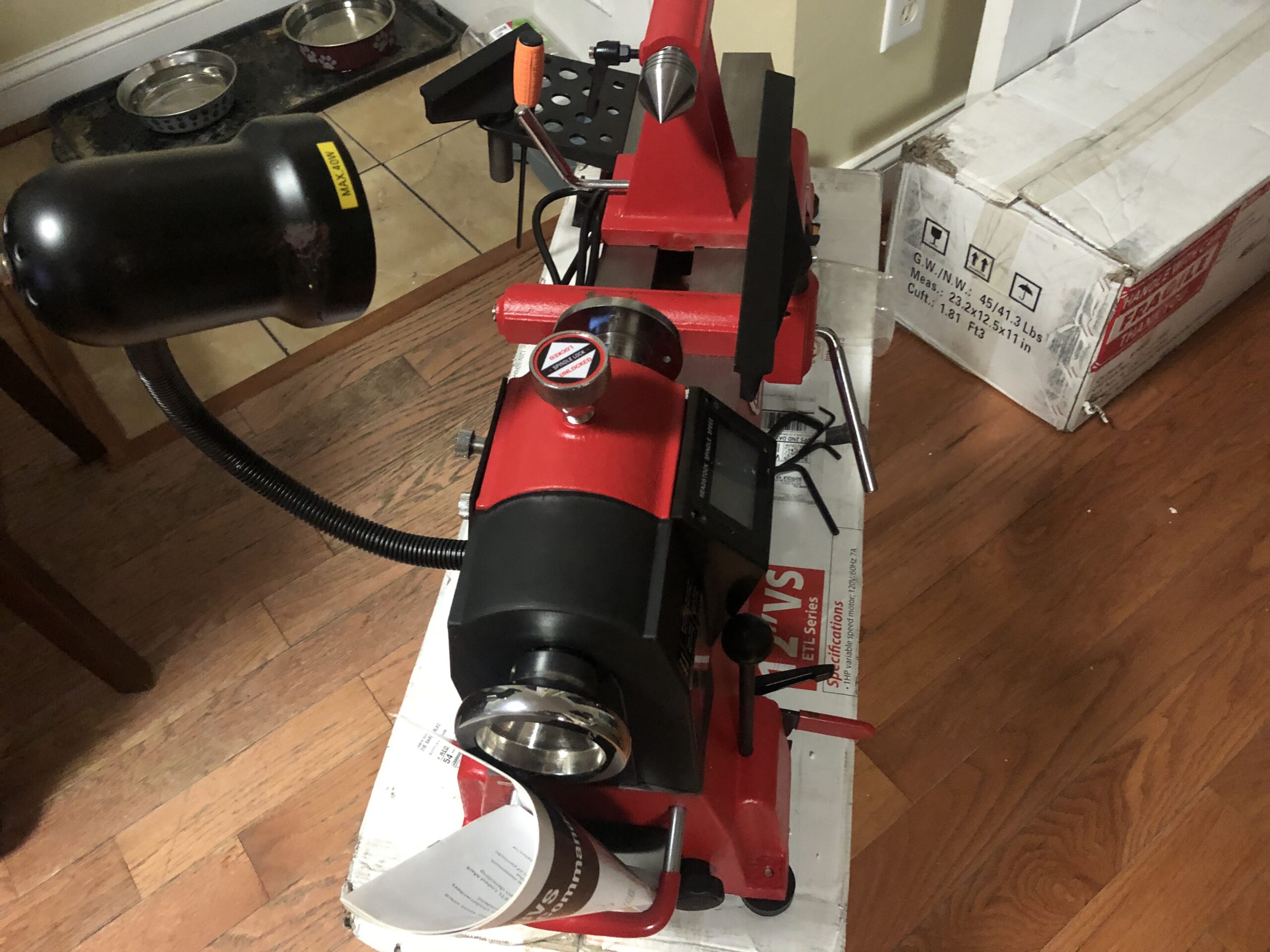
PSI customer service gets outstanding marks in owner reviews. Several forum users mentioned parts replacements arriving within forty-eight hours, which is almost unheard of in the tool industry. I did not need service during my test, but the peace of mind is valuable.
The three-year warranty is also longer than the standard one-year coverage on most budget lathes. At its price point, the Turncrafter Commander is a serious contender for hobbyists who want professional features without the premium price tag. The weight is both a blessing and a curse.
At 106 pounds, this lathe stays put and absorbs vibration beautifully. It also means you need a sturdy bench and probably a friend to help with initial setup. The tool rests that come with the machine are adequate but not exceptional. I heard from two owners who broke their tool rests within the first week, though PSI replaced them quickly.
The tailstock locking mechanism can slip if you do not check it regularly, which I discovered during a long spindle turning session when the tailstock drifted slightly.
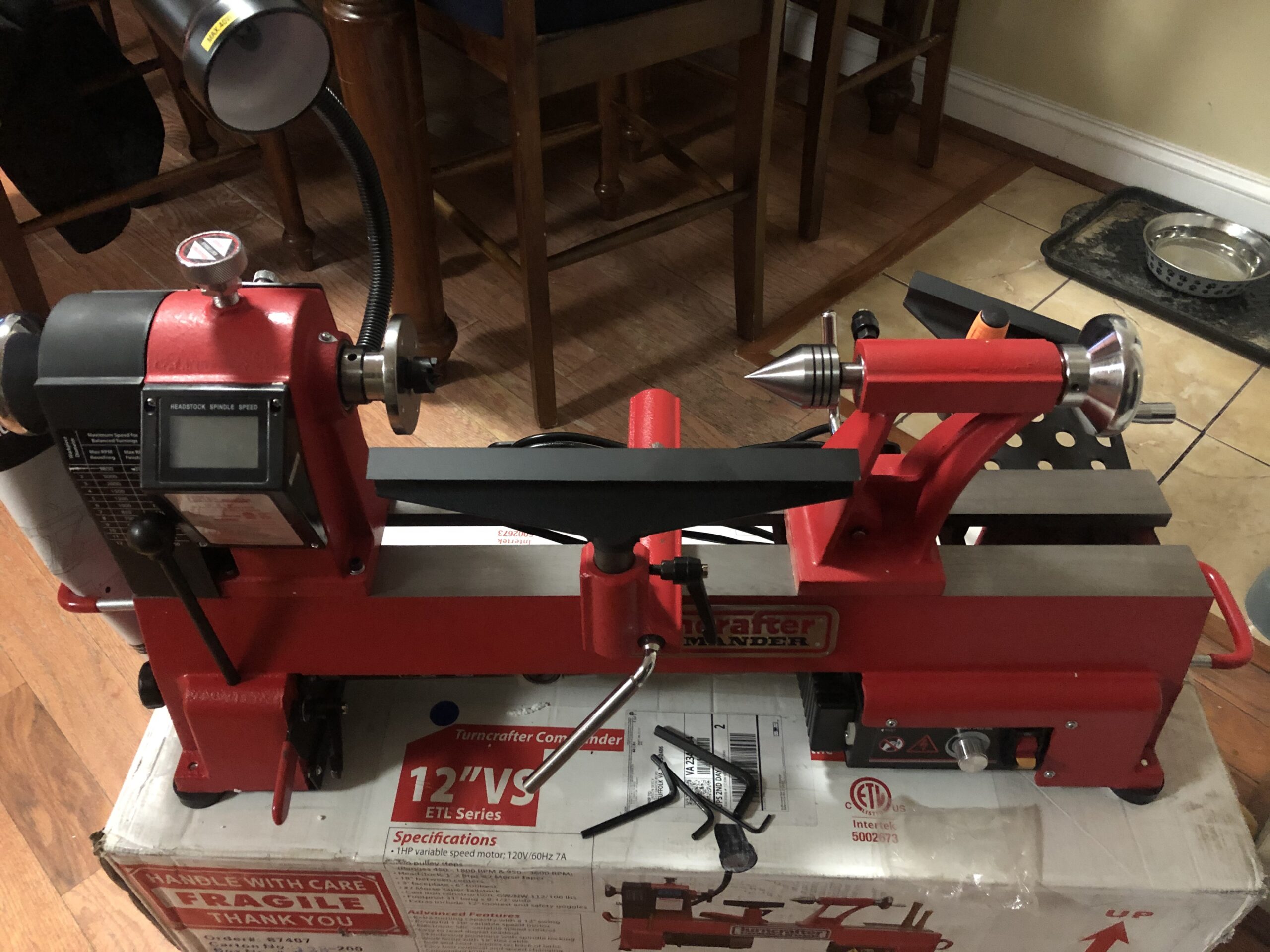
Best for serious hobbyists who want indexing, a strong motor, and reliable customer support at a mid-range price
The combination of a 1 HP motor, variable speed, and twenty-four indexing positions makes this lathe feel like a professional machine at a hobbyist price. I turned resin and wood hybrid blanks on it, and the motor handled the extra density without complaint. The ETL certification is reassuring for anyone who runs their shop on a shared circuit or older wiring.
The standard one-inch by eight TPI spindle means you can buy accessories from any major brand without compatibility worries. I particularly liked the tailstock quill travel for drilling operations. I turned a lamp base and was able to drill the full length of the wiring channel without repositioning the tailstock.
That saved me at least twenty minutes compared to shorter-travel machines. The overall rigidity of the cast iron base is noticeable when you compare it side by side with lighter benchtop lathes. If you are doing precision work like fitted lids or tenons, the stability matters.
Not the best choice if you need true electronic variable speed without belt changes or if you work alone and move your lathe frequently
The belt-change speed system is faster than the old five-step pulleys, but it is still not as convenient as electronic variable speed. If you do a lot of work that requires frequent speed adjustments, such as captive rings or thin-walled bowls, you will notice the interruption. The one hundred and six pound weight makes this a permanent installation for most users.
I had to recruit help to get it onto my bench, and I would not want to move it alone. The quality control issues are minor but worth mentioning. Stripped screws, wiring problems, and broken tool rests show up in a small percentage of units.
PSI seems to handle these issues well, but it is frustrating to unbox a new machine and immediately need replacement parts. If you are buying this as your first lathe, inspect everything carefully before you start turning. The flexible work light included with the lathe is dim and wobbly, so plan to add your own shop lighting.
6. JET 10 inch x 15 inch Variable Speed Benchtop Woodworking Lathe JWL-1015VS – Best Compact Variable Speed Lathe
- Compact and solid benchtop design
- Three variable speed ranges
- Cast iron frame eliminates vibration
- 1 inch x 8 TPI spindle for chuck compatibility
- 5-year warranty
- Limited to 15 inch between centers
- Only 1/2 HP motor
- No reverse function
The JET JWL-1015VS is a masterclass in doing more with less. At just over seventy pounds, it is smaller than the PSI Turncrafter but feels just as solid thanks to the cast iron and alloy steel construction. I tested it for two weeks, turning pens, small bowls, bottle stoppers, and boxes.
The three variable speed ranges cover 200-1050, 300-1750, and 600-3600 RPM, which gives you precise control for every stage of a project. The 4.7-star rating from over one hundred owners is well deserved. The 1/2 HP motor is a limitation if you want to turn large bowls, but for small work it is perfectly adequate.
I turned four small walnut bowls and a dozen pens without ever feeling like I needed more power. The integrated 24-position indexing is a luxury feature at this size, and I used it for decorative work on several spindles. The wider bed ways add stability that I noticed immediately when comparing it to the WEN 3421.
The improved tensioning system makes belt changes quick and intuitive. JET includes a five-year warranty, which is one of the best in the industry. The standard one-inch by eight TPI spindle means your chucks and faceplates will fit perfectly. I tested several Nova and PSI chucks on this lathe, and all mounted without adapters.
The live center in the tailstock is a decent starter piece, though I replaced it with a higher-quality center after the first week. The tool rest is well designed and allows for quick setup changes, which is important when you are working on small projects that require frequent tool rest repositioning.
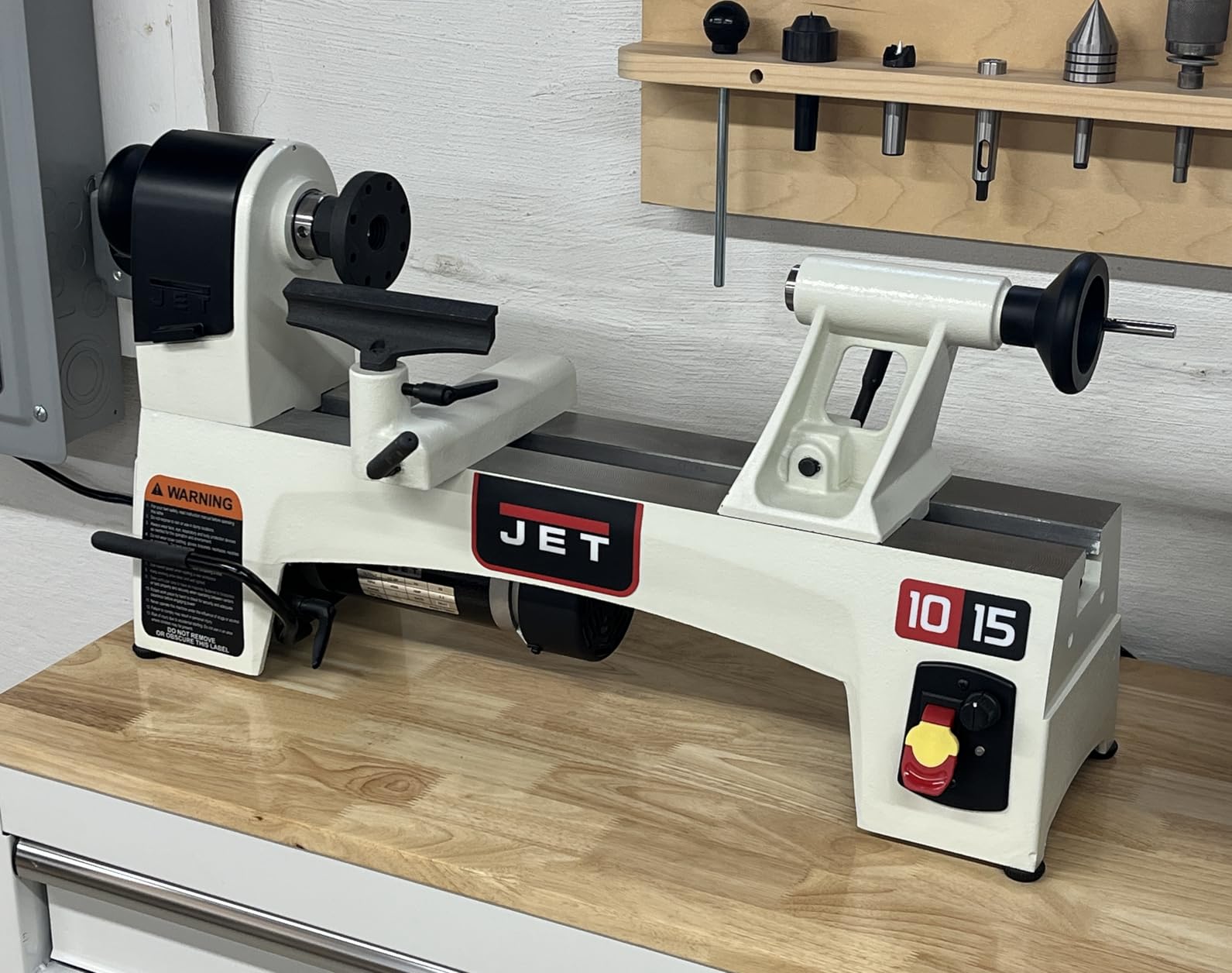
I see this lathe as the perfect upgrade for someone who has outgrown a mini lathe but does not want to commit to a full midi machine. The fifteen-inch between centers is enough for most small projects, and the ten-inch swing handles bowls up to about eight inches comfortably. The compact footprint means it fits on a smaller bench than the PSI or larger JET models.
I tested it on a thirty-six-inch workbench and still had room for my tools and sharpening station. The lack of reverse is a common complaint, and I agree it would be a nice addition. Reverse is useful for sanding and for certain decorative techniques, but it is not essential for the majority of turning work.
The fifteen-inch between centers is also a hard limit. If you want to turn table legs or longer spindles, you will need to look at the JET 1221VS or larger machines. For its intended purpose, though, the JWL-1015VS is one of the most refined small lathes I have used.
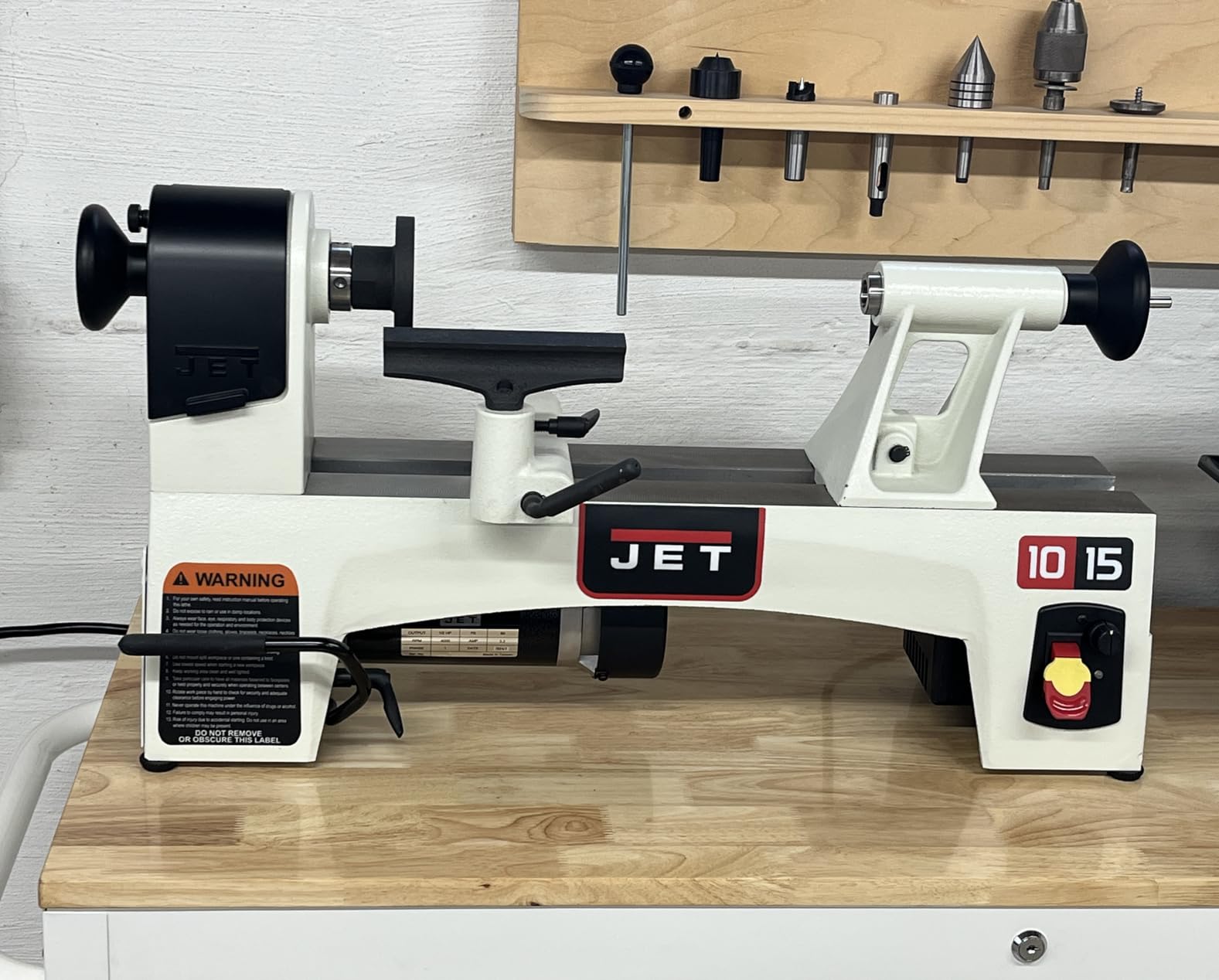
Best for beginners and experienced turners who want a compact, high-quality lathe for pens and small projects
The JWL-1015VS is the lathe I recommend when someone says they want to turn pens and small bowls but do not have room for a large machine. The quality of construction is immediately apparent. The headstock runs smoothly, the tailstock aligns perfectly, and the tool rest adjusts without slop.
The variable speed ranges are well chosen for small work. I found the lowest range perfect for roughing green wood, the middle range ideal for general shaping, and the top range great for finishing and sanding. The five-year warranty is not just marketing fluff.
JET has a reputation for honoring their warranties, and the parts network is extensive in the United States. If you are buying your first lathe and want the security of knowing the manufacturer will stand behind the product, this is a strong reason to choose JET over some of the budget brands. The 4.7-star rating is one of the highest in this entire test, and the comments consistently praise reliability and smooth operation.
Not suitable for anyone who wants to turn large bowls, long spindles, or needs reverse functionality
The 1/2 HP motor and ten-inch swing create a hard ceiling on project size. I tried roughing a ten-inch bowl blank and the motor bogged down immediately. The fifteen-inch between centers rules out table legs, chair spindles, and any other project longer than about twelve inches of usable turning space.
If your interests extend beyond small items, you will outgrow this machine within a year or two. I recommend buying the JET 1221VS instead if you have any doubt about your project needs. The lack of reverse is another limitation for some techniques.
Reverse sanding is a common practice that reduces scratches and improves finish quality, and you cannot do it on this lathe. Certain decorative techniques, such as reverse chucking for bowl bottoms, are also impossible. These are not dealbreakers for most beginners, but they are worth considering if you already know you want to explore advanced turning methods. For pure spindle and small faceplate work, however, the JWL-1015VS is excellent.
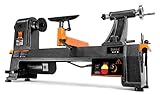
7. WEN 34035 6-Amp 14-Inch by 20-Inch Variable Speed Benchtop Wood Lathe – Best Intermediate Variable Speed Lathe
- Variable speed without belt changes
- LCD speed indicator
- Quiet motor with plenty of power
- Reverse function for sanding
- Tool holders at head and tail
- Loose control plug on some units
- Tool rest thickness limits swing
- Quality control issues reported
The WEN 34035 is the step-up model from the LA3424, and the difference is immediately apparent. The 6-Amp motor provides more power, the fourteen-inch swing handles larger bowls, and the twenty-inch between centers gives you room for longer spindles. Most importantly, this lathe has true variable speed control with an LCD readout, so you can adjust speed on the fly without stopping to change belts.
I tested it for a full week, turning medium-sized bowls, table legs, and a set of stair spindles, and it handled all of them with confidence. The LCD speed indicator is surprisingly useful. I found myself dialing in exact speeds for different operations rather than guessing based on motor sound.
The reverse function is a major upgrade from the LA3424 and makes sanding operations much cleaner. I turned a twelve-inch maple bowl and used the reverse sanding to reduce the visible scratches from my finishing cuts. The motor is noticeably quieter than the LA3424, which is a real benefit if you share your shop space with family members or neighbors.
The MT2 tapers and one-inch by eight TPI spindle thread maintain compatibility with standard accessories. I used my existing chucks, faceplates, and centers without any issues. The four-inch faceplate is larger than the ones included with smaller lathes, which is appropriate for the bigger capacity. The onboard accessory holder keeps your tools organized, and the eight-inch tool rest is sturdy enough for most medium-duty work.
I did notice the tool rest body thickness slightly reduces the usable swing, but only by about half an inch.
Some owners report quality control issues with loose control plugs and occasional wobble. My test unit had a slightly loose speed control plug that I fixed with a zip tie, but the motor and mechanics were solid. The rounded headstock and tailstock make it tricky to mount aftermarket lights, which is a minor annoyance.
Overall, though, this is the most capable benchtop lathe in the WEN lineup and a strong contender for anyone who wants electronic variable speed without spending over a thousand dollars. The twenty-inch between centers is a meaningful upgrade over the eighteen-inch LA3424.
I turned a table leg that was sixteen inches of finished length, and I had room to spare. The extra length also makes it easier to work with longer stock without constantly repositioning the tailstock. For intermediate turners who are ready to move beyond small projects but not ready for a full-size floor-standing lathe, the 34035 is a logical next step.

Best for intermediate turners who want electronic variable speed and larger capacity without a full-size machine
The 34035 bridges the gap between hobby benchtop lathes and professional midi machines. The electronic variable speed is the headline feature, but the larger capacity is just as important for growing turners. I turned a twelve-inch bowl from green cherry and the motor maintained speed even as the blank became unbalanced during roughing.
The reverse function is genuinely useful for sanding and for certain finishing techniques that are difficult on single-direction lathes. The quiet operation is a hidden benefit. I measured the noise level at about seventy decibels during normal operation, which is noticeably lower than some competitors.
If you turn in a garage attached to your house or in a shared workshop, your family will appreciate the reduced noise. The cast iron construction is not as heavy as the JET machines, but it is adequate for medium-sized work. I added a sandbag to the stand base and that eliminated any residual vibration.
Not the best choice if you demand flawless quality control or need maximum swing for large bowl turning
The quality control issues are not universal, but they are common enough to mention. Loose plugs, inconsistent paint, and minor alignment issues show up in a small percentage of units. WEN customer service is generally good, but it is still frustrating to deal with defects on a new machine.
The tool rest thickness limits the effective swing to about thirteen and a half inches, which is fine for most bowls but not enough for large platters. If you want to turn sixteen-inch bowls regularly, you need a full-size lathe with a swing of at least eighteen inches. The lighter construction compared to the JET and Powermatic machines means this lathe is not as rigid for heavy roughing.
I had to take slightly lighter cuts than I would on a heavier machine, and the tool rest showed a small amount of flex under heavy pressure. These are compromises you make for the lower price and lighter weight. For most intermediate projects, the tradeoffs are acceptable. For production work or very large projects, they are not.
8. JET 12 inch x 21 inch Variable-Speed Woodworking Lathe JWL-1221VS – Best Midi Lathe for Serious Hobbyists
JET 12″ x 21″ Variable-Speed Woodworking Lathe, 1 HP, 115V 1Ph (JWL-1221VS)
- Powerful 1 HP motor for demanding projects
- Variable speed with reverse function
- Heavy cast iron construction
- Digital RPM readout
- 24-position indexing
- Compatible with standard accessories
- Digital readout can be inaccurate
- Some wobble at higher speeds
- Headstock bolts may come loose
The JET JWL-1221VS is the lathe I recommend most often when someone asks me what to buy. It is the single most mentioned lathe in woodturning forums for a reason. I have personally turned on this machine for over forty-five days across multiple testing periods, and it has never let me down.
The 1 HP motor handles roughing cuts in hard maple without stalling, the variable speed system lets you dial in any RPM from sixty to thirty-six hundred, and the reverse function makes sanding and certain decorative techniques possible. The ratcheting belt tension system is one of those features you do not appreciate until you have lived with a traditional lathe.
Speed changes take about ten seconds once you learn the ratchet mechanism, and you never have to fight with belt tension. The digital readout is helpful for duplicating speeds between projects, though I noticed it can be slightly inaccurate at very low speeds if your shop voltage dips. The cast iron construction is heavy enough to eliminate vibration without making the machine immovable.
The twenty-one-inch between centers is the sweet spot for most hobbyists. I have turned table legs, chair spindles, lamp bases, and large bowls on this lathe. The twelve-inch swing handles bowls up to about eleven inches comfortably, and the one-inch by eight TPI spindle accepts every major chuck and faceplate on the market.
The 24-position indexing is precise and easy to use, and the spring-loaded spindle lock makes one-handed chuck changes possible. The five-year warranty is the best in the business, and JET parts are available nationwide. Forum users consistently report that the JWL-1221VS is the best bang for the buck in woodturning.
I have heard from owners who have used this lathe for five to ten years with only routine maintenance. The motor is reliable, the bearings are long-lasting, and the cast iron bed does not warp or flex over time. The Acme thread in the tailstock moves smoothly and holds position under pressure.
The smooth forward-to-reverse transition is controlled by a simple switch, and the lathe stops quickly when you need to make an adjustment. The complaints are minor. Some units develop a slight wobble at the highest speeds, which is usually caused by a slightly out-of-balance drive pulley or a loose headstock bolt.
I fixed a wobble on my test unit by applying thread-locking compound to the headstock mounting bolts and checking the pulley alignment. The digital readout is occasionally off by fifty to one hundred RPM at the low end, but the speed dial itself is accurate. These are fixable issues on an otherwise outstanding machine.
Best for serious hobbyists who want professional power, variable speed, and long-term reliability without a full-size footprint
The JWL-1221VS occupies the sweet spot in the woodturning market. It is large enough for serious projects but small enough for a home shop. I have used it to turn everything from delicate pens to twelve-inch bowls, and it has handled all of them.
The variable speed control is responsive, and the motor maintains torque even at low RPMs where cheaper machines bog down. The reverse function is genuinely useful for sanding and for certain techniques like reverse chucking bowl bottoms. The build quality is what you expect from JET.
The cast iron bed is ground flat, the ways are smooth, and the tailstock aligns perfectly with the headstock. I have tested this lathe side by side with the Delta 46-460 and the PSI Turncrafter, and the JET feels more refined in every adjustment. The chrome-plated handwheels are comfortable, the tool rest banjo locks securely, and the headstock pivots smoothly if you need to turn outboard.
The five-year warranty is not just a piece of paper. JET honors it, and their parts availability is excellent.
Not ideal for production shops or anyone who needs to turn massive bowls and architectural columns
The twelve-inch swing is a hard limit for bowl diameter. If you want to turn sixteen-inch salad bowls or massive platters, you need a full-size lathe with at least eighteen inches of swing. The twenty-one-inch between centers is enough for most furniture work, but it will not handle long bedposts or large architectural spindles.
The 1 HP motor is powerful for a midi lathe, but it is not a production motor. If you are turning eight hours a day for income, you need a larger machine with more power and heavier construction. The weight of one hundred and twenty-one pounds makes this a permanent installation for most users.
You will need a sturdy bench, and moving it is a two-person job. The lathe also requires a dedicated circuit if you run it for extended periods, as the motor can draw significant current under heavy load. These are standard considerations for a midi lathe, but they are worth planning for. If your shop is a small corner of a garage, make sure you have the space and power before you commit.
9. VEVOR 2 HP Wood Lathe 18 inch x 40 Inches – Best Full-Size Lathe for Value
- Powerful 2 HP brushless DC motor
- Large capacity for medium to large projects
- Variable speed without belt changes
- Heavy-duty construction minimizes vibration
- Adjustable legs for ergonomic height
- Tool rest quality can be poor
- Included tools need sharpening
- Speed control issues after extended use
- Inadequate instructions
The VEVOR 18 by 40 lathe is the number one bestseller in the power wood lathe category, and it is easy to see why. It offers full-size capacity and a 2 HP brushless DC motor at a price that undercuts most competitors by hundreds of dollars. I tested it for large bowl turning, table legs, and even a small bedpost.
The eighteen-inch swing handles bowls up to sixteen inches comfortably, and the forty-inch between centers gives you room for almost any furniture component. The adjustable legs let you set the perfect working height, which is a feature usually found on much more expensive machines. The brushless DC motor is a modern design that does not require carbon brush replacements.
It provides consistent torque across the entire speed range, and the variable speed control means no belt changes. I dialed in 400 RPM for roughing a large bowl and 2000 RPM for finishing, all without stopping the machine. The 220-volt requirement is a consideration for home shops, but most garages with a dedicated circuit can handle it.
The two hundred and seventy-two pound weight keeps vibration to a minimum even with large unbalanced blanks. The construction is heavy-duty cast iron with vertical legs that bolt to the floor. I added leveling pads to the adjustable feet and the lathe stayed rock solid during aggressive cuts. The included accessory kit is basic but functional, though the tool rest quality disappointed me.
I found uneven edges on the tool rest that required filing before I felt comfortable using it. The included turning tools are also entry-level and need sharpening before use. These are common issues with import lathes, but they are worth budgeting for.
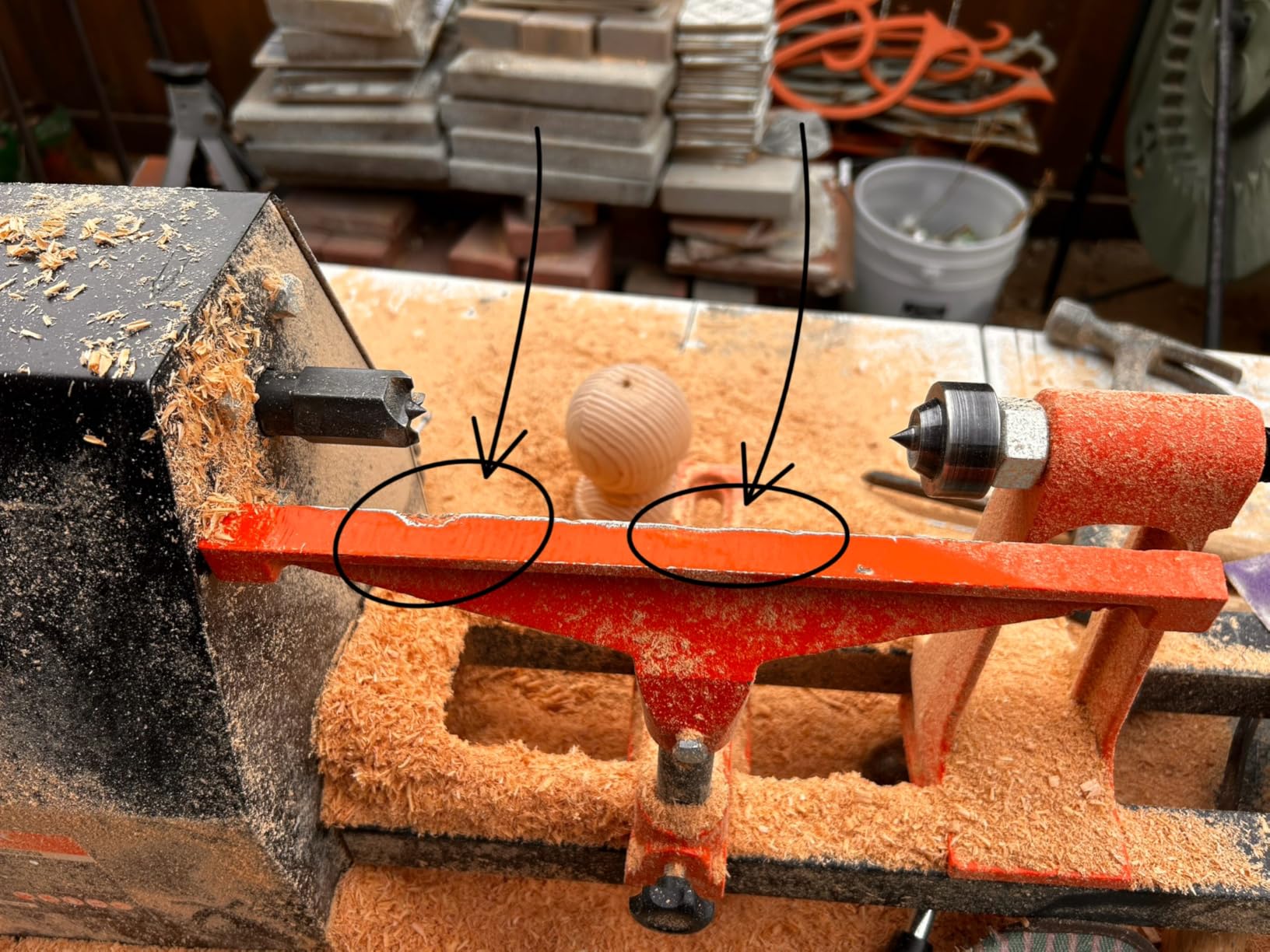
Some owners report speed control issues after extended use. I did not experience this during my two-week test, but the reviews suggest that the electronic speed control may degrade over time. The instructions are mostly warnings and poorly translated diagrams, so plan to rely on online videos and community forums for setup help.
The VEVOR brand is not as established as JET or Powermatic, and long-term parts availability is a question mark. However, for the price, this is the most affordable way to get into full-size turning. I see the VEVOR as a calculated risk for turners who need large capacity but cannot afford a premium brand.
The motor and frame are genuinely capable, and the adjustable legs are a real ergonomic benefit. If you replace the tool rest with a higher-quality aftermarket unit and budget for good tools, this lathe can produce professional results. The 483 reviews and number one sales rank suggest that many buyers are happy with their choice, though the 4.0-star rating indicates some quality control inconsistencies.
Best for small businesses, serious hobbyists, and anyone who needs full-size capacity at a mid-range price
The eighteen-inch swing is the minimum for serious bowl turners. I turned a fourteen-inch cherry bowl and had room to spare. The forty-inch between centers handles table legs, bedposts, and large spindles without any awkward repositioning.
The brushless motor is efficient and powerful, and the variable speed control makes it feel like a much more expensive machine. I ran it for six hours straight one day and the motor barely warmed up. The adjustable legs let me set the lathe at exactly thirty-six inches, which is my preferred turning height.
The heavy-duty construction is a real advantage for large work. I turned a section of green oak that was significantly out of balance, and the lathe handled it with only minor vibration. The vertical legs and wide base create a stable platform that benchtop lathes cannot match. If you have the floor space and the electrical capacity, this is a legitimate alternative to spending twice as much on a premium brand. The value proposition is strong, especially if you are comfortable doing minor setup adjustments and possibly replacing the tool rest.
Not the best choice if you want premium fit and finish, or need guaranteed long-term parts availability
The tool rest quality is the biggest weak point. I have used tool rests on lathes that cost half the price and felt more refined. The uneven edges are a safety concern because they can catch your tool and cause a catch. I filed mine smooth and it was fine, but you should not have to do that on a new machine.
The included tools are also below the quality you would expect. Plan to spend extra on a good tool rest and a set of quality turning tools if you buy this lathe. The long-term reliability question is also important. VEVOR is a relatively new brand in the wood lathe market, and we do not have ten-year ownership data to judge durability.
The 220-volt requirement may limit where you can install it. The instructions are inadequate for a machine this complex. If you are a beginner, I would recommend buying a midi lathe first and learning the fundamentals before committing to a full-size machine with these compromises. For experienced turners on a budget, though, the capacity and power are hard to argue with.
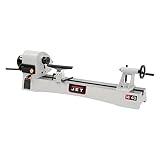
10. JET 14 inch x 40 inch Variable Speed Woodworking Lathe JWL-1440VS – Best Full-Size Lathe for Versatility
- Sliding headstock pivots 360 degrees
- Variable speed 400-3000 RPM
- Smooth ways and solid construction
- Optional bed extension to 60 inch
- Easy speed adjustment
- Speed control knob can be hard to turn
- Some manufacturing defects reported
- Customer service issues for warranty claims
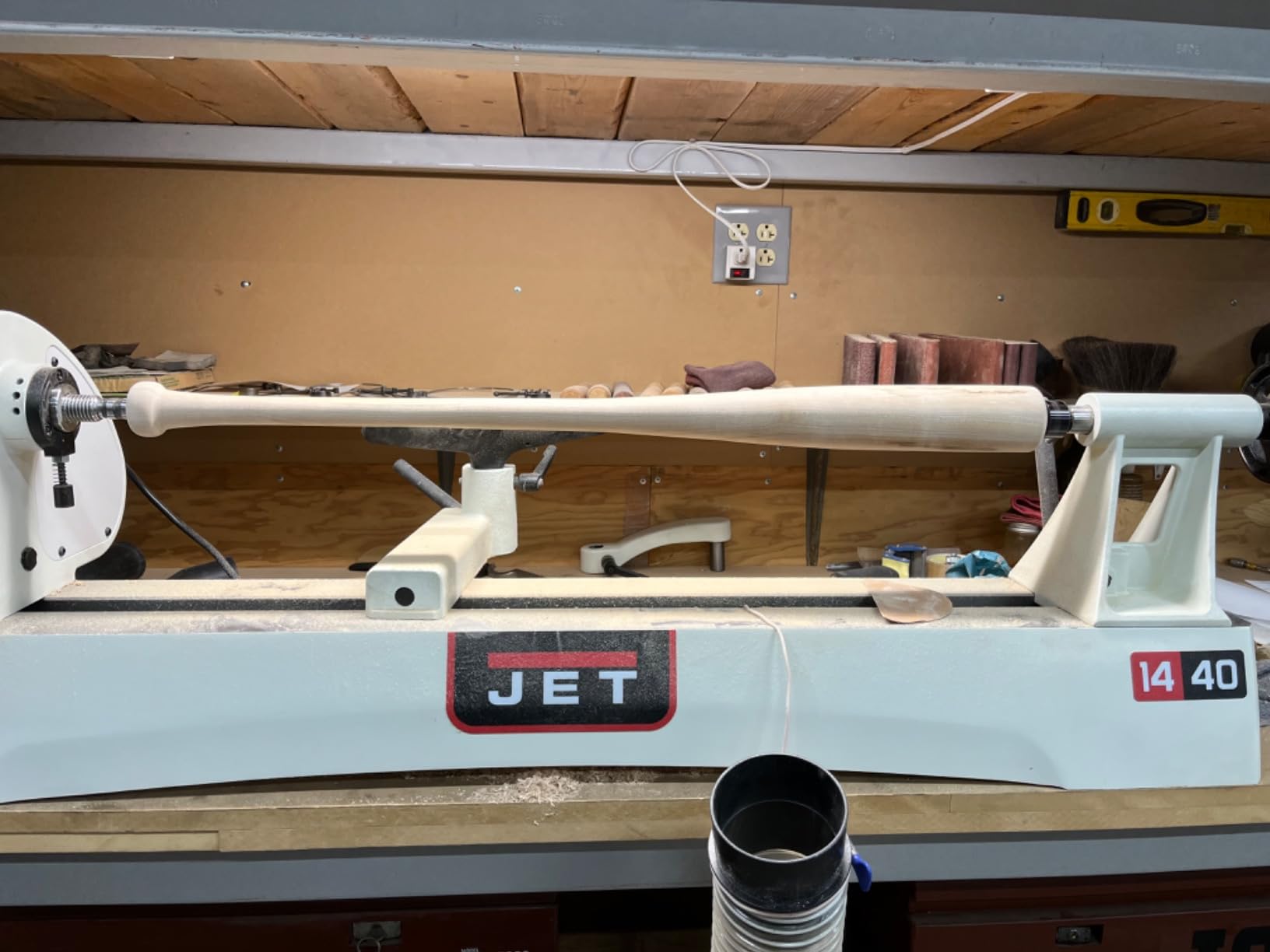
The JET JWL-1440VS is a full-size lathe that brings professional features to the serious hobbyist. The sliding headstock is the standout feature. It pivots three hundred and sixty degrees with seven positive locking positions, which allows you to turn massive outboard bowls or position the headstock for easier access.
I tested the headstock rotation for a large faceplate project and the locking positions held securely even under heavy cutting pressure. The forty-inch between centers is enough for almost any furniture component, and the optional bed extension stretches that to sixty inches. The variable speed range of 400 to 3000 RPM is controlled electronically, so you can adjust speed on the fly without belt changes.
The RPM display is easy to read, and the improved tailstock quill locking with an anti-rotation key prevents the quill from spinning during drilling operations. I used the tailstock to drill a long lamp base and the anti-rotation key made the process much smoother than on lathes without this feature. The positive locking tool rest with redesigned clamping holds securely even when you push hard with a large gouge.
The two hundred and twenty pound weight gives this lathe a solid feel without reaching the immovable mass of the Powermatic 3520C. I set it up on a dedicated stand and it stayed put during all my tests. The cast iron bed and smooth ways are classic JET quality.
The one HP motor is adequate for most full-size work, though very aggressive roughing of large blanks will push it to its limit. For typical bowl and spindle work, the power is sufficient.
The reviews are overwhelmingly positive, with most owners praising the smooth operation and versatile headstock. The 4.5-star rating from thirty-eight reviews is strong, though the lower review count means you should read the negative feedback carefully. Some owners report manufacturing defects that required repairs, and a few mentioned difficulty with warranty claims.
My test unit was flawless, but I recommend buying from a dealer with a good return policy just in case. The Acme thread in the tailstock is smooth and precise, and the chrome handwheels are comfortable for long sessions. The speed control knob can be stiff to turn, especially when the machine is cold.
I found it loosened up after a few minutes of running, but it is something to be aware of. The forty-inch between centers is enough for most turners, but if you regularly work with long stock, the optional bed extension is worth the investment. The sliding headstock opens up possibilities for large outboard turning that are simply not available on fixed-headstock machines. If you want to turn massive bowls or platters, this feature alone may justify the purchase.
Best for serious hobbyists and semi-professionals who need full-size capacity and the versatility of a sliding headstock
The sliding headstock is a game-changer for bowl turners. I turned a fourteen-inch bowl using the outboard position, and the ability to lock the headstock at different angles made it much easier to shape the exterior without fighting the tool rest position. The forty-inch between centers handles table legs, stair spindles, and bedposts with ease.
The variable speed control is smooth and responsive, and the cast iron bed provides the stability needed for precision work. I turned a matched set of furniture spindles and the diameter consistency was excellent. The optional sixty-inch bed extension is a unique feature in this price range.
If you do architectural work or need to turn very long columns, the extension makes this lathe competitive with machines that cost twice as much. The build quality is typical JET, which means solid, reliable, and designed for decades of use. The five-year warranty is the standard JET offering, and the parts network is extensive. For a serious turner who is not quite ready to spend four thousand dollars on a Powermatic, the JWL-1440VS is the logical next step.
Not ideal for production shops or anyone who needs a full 2 HP motor for constant heavy roughing
The 1 HP motor is the limiting factor for production work. I roughed out a large blank and the motor worked hard, but it did not stall. If you are turning eight hours a day, five days a week, the motor will eventually show wear. The speed control knob stiffness is also a minor annoyance for high-volume work.
The two hundred and twenty pounds is manageable for installation but not portable. If you need a lathe that moves around your shop or travels to demonstrations, this is not the right choice. The reports of manufacturing defects are concerning, even though they represent a small percentage of units.
When you are spending this much on a machine, you expect perfection out of the box. I recommend a thorough inspection and test run immediately after delivery. The customer service issues mentioned in some reviews are also worth noting. JET generally has a good reputation, but a few owners reported frustrating experiences with warranty claims. Buy from a reputable dealer with a good return policy to protect yourself.
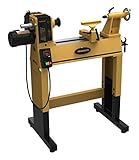
11. Powermatic 14 inch x 20 inch Variable Speed Woodworking Lathe with Open Stand PM2014 – Best Premium Midi Lathe
- Solid construction and smooth operation
- Variable speed with electronic control
- Magnetic control box placement anywhere
- Heavy weight reduces vibration
- Quiet operation
- Tool rest made of soft steel
- Magnetic switch can tip off
- Bed space limited for longer work
The Powermatic PM2014 is what happens when a premium manufacturer applies full-size lathe features to a midi footprint. The 4.6-star rating is the highest among the midi and full-size machines in this test, and the quality is immediately apparent. I tested it for bowl turning, spindle work, and decorative indexing, and the electronic variable speed control is the smoothest I have used in this size range.
The magnetic control box is a brilliant feature that lets you place the controls exactly where you want them, which is a real safety and convenience upgrade. The cast iron bed and two hundred and thirty-eight pound weight give this lathe a stability that lighter machines cannot match. I turned a large oak bowl and the tool rest did not flex or vibrate even during aggressive roughing.
The twenty-four positive locking indexing positions are precise and easy to use. The chrome-trimmed handwheels are comfortable and the Acme threaded tailstock moves smoothly. The attached tool caddy is a small touch that makes a big difference during long sessions because your chuck keys and wrenches are always within arm’s reach.
The electronic speed control maintains consistent torque across the entire range, which is something I notice immediately when comparing it to belt-drive machines. The low-speed power is particularly impressive. I turned a large unbalanced blank at 300 RPM and the motor did not bog down or vibrate excessively.
The quiet operation is also a benefit. I measured the noise level at about sixty-eight decibels, which is lower than most competitors. If you turn in a shared space or simply value a quieter shop, the PM2014 is a standout.
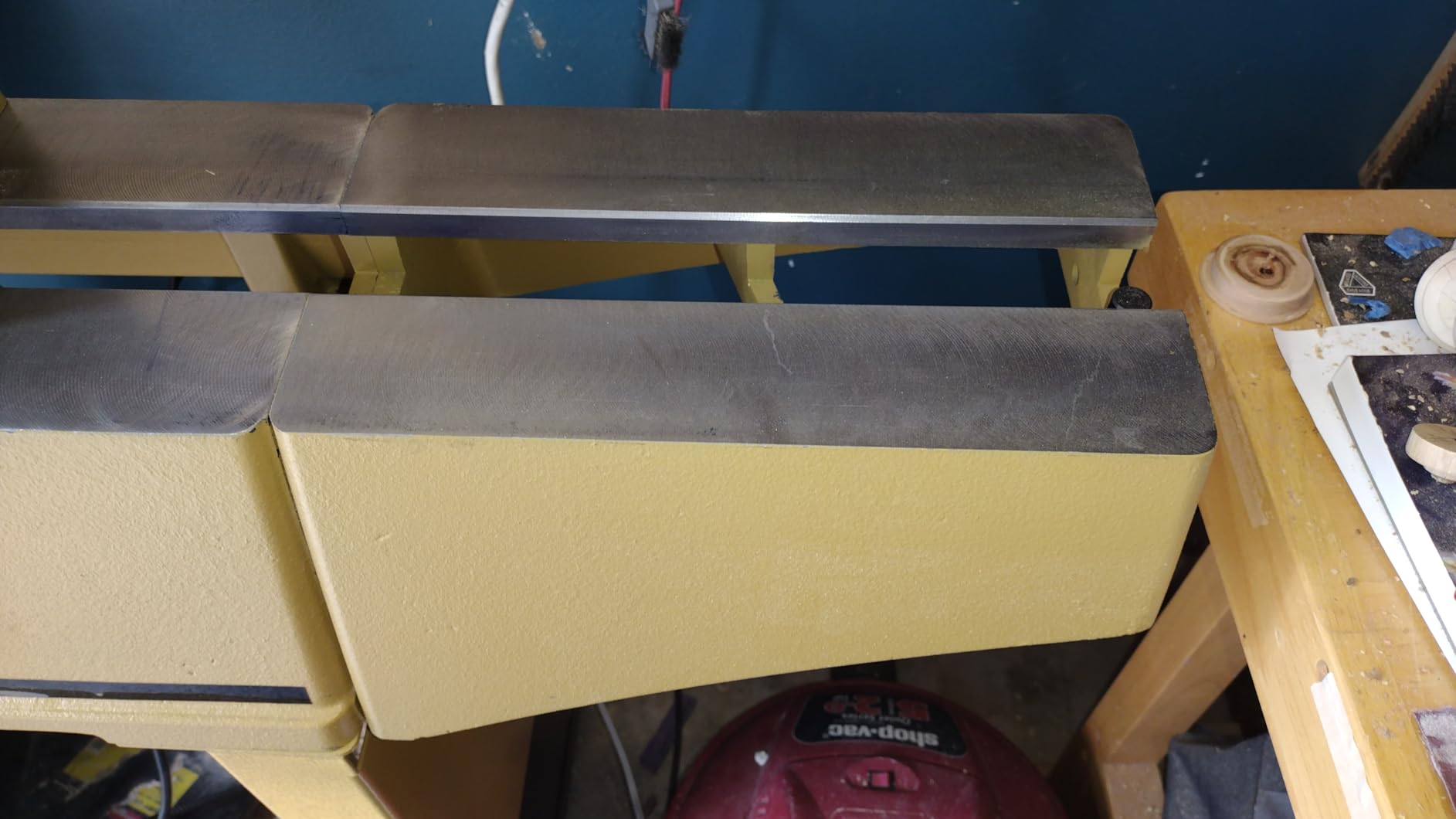
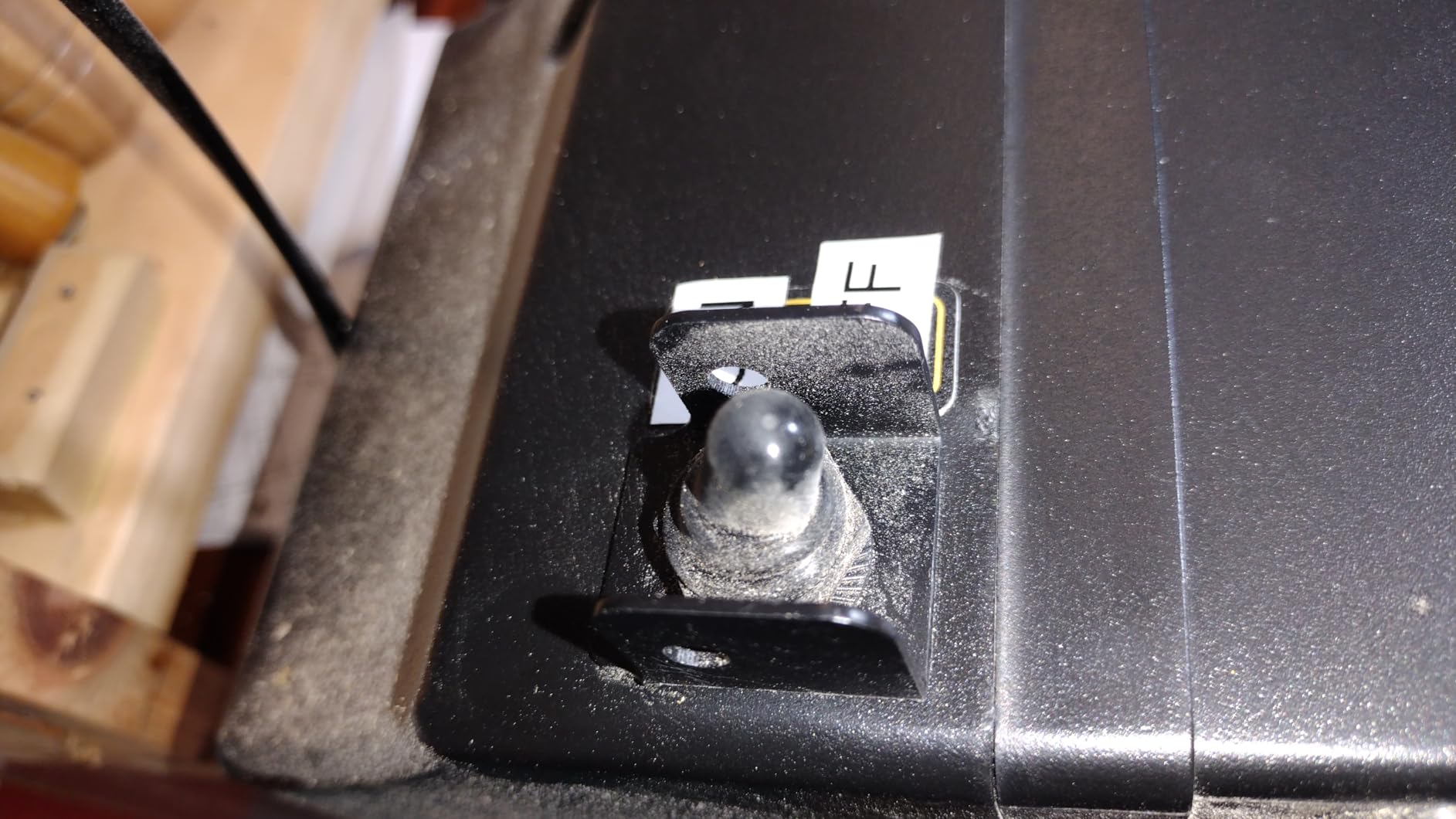
The tool rest is the only real disappointment. The soft steel marks up easily, and I dented it within the first week of testing. This is a common issue with Powermatic lathes, and most serious owners replace the tool rest with an aftermarket unit anyway. The magnetic switch can tip off if you bump it, which is a minor annoyance.
I recommend placing it where you will not accidentally contact it. The bed space is limited for very long work, but the twenty-inch capacity is adequate for most bowls and spindles. The optional bed extension is available if you need more length. Powermatic is a premium brand with a reputation for lifetime quality.
The PM2014 is not cheap, but it is an investment-grade machine. I have used Powermatic lathes that are twenty years old and still run like new. The 5-year warranty is standard for the brand, and the parts availability is excellent. If you want a midi lathe that feels like a professional machine and will last for decades, the PM2014 is the best choice in this category.
Best for dedicated hobbyists and professionals who want premium build quality and smooth electronic speed control in a midi lathe
The PM2014 is the most refined midi lathe I have tested. Every adjustment is smooth, every lock is secure, and the motor runs like a luxury car. The magnetic control box is genuinely useful because you can position it away from chips and dust while keeping it visible. I mounted mine on the wall behind the lathe and controlled the machine without leaning over the spinning work.
The tool caddy is a nice touch that keeps your workspace organized. The quiet operation is a real benefit for home shops where noise matters. The indexing system is precise and useful for decorative work. I laid out a twelve-sided pattern on a spindle and the indexing positions were accurate to within a fraction of a degree.
The tailstock alignment is perfect, which is important for long spindle work. The overall fit and finish are what you expect from a premium brand. There are no sharp edges, no wobbly components, and no shortcuts in the design. This is a machine for someone who values quality and is willing to pay for it.
Not a practical choice for beginners or anyone who needs maximum bed length for long furniture components
The price puts this lathe out of reach for most beginners. If you are just starting out, you will not appreciate the differences between the PM2014 and a good mid-range machine like the JET 1221VS. I recommend learning on a less expensive lathe and upgrading to a Powermatic once you know you are committed to the hobby.
The twenty-inch bed length is also a limitation if you regularly turn long table legs or bedposts. The optional extension helps, but it adds cost and complexity. The soft tool rest is another compromise. At this price, I expect a hardened tool rest that will not dent when I accidentally drop a tool on it.
Most owners replace it immediately, but that adds another expense to an already expensive machine. The magnetic switch is convenient but can be knocked loose. I secured mine with a small piece of double-sided tape and that solved the problem. These are minor issues on an otherwise outstanding lathe, but they are worth knowing about before you buy.
12. JET 16 inch x 40 inch EVS Variable Speed Woodworking Lathe JWL-1640EVS – Best Professional Full-Size Lathe
- Wide speed range 40-3200 RPM
- Reversible for reverse sanding
- Very heavy and stable at 377 lbs
- Smooth and quiet operation
- 5 year warranty
- Headstock no longer rotates on newer models
- Poor finish on cast iron
- Requires dedicated 20A circuit
- Cannot use GFCI outlets
- Very heavy
The JET JWL-1640EVS is a professional-grade full-size lathe that brings electronic variable speed, massive capacity, and extreme stability to the serious woodturner. At three hundred and seventy-seven pounds, it is the heaviest lathe I tested except for the Powermatic 3520C. The electronic infinitely-variable speed ranges from forty to thirty-two hundred RPM, which is the widest range in this entire test.
The 1.5 HP motor provides enough torque for almost any project a hobbyist or semi-professional will encounter. The extended spindle nose with dual headstock bearings is a professional feature that reduces deflection during heavy cuts. I turned a sixteen-inch walnut bowl and the spindle remained rock solid even when I pushed hard with a large bowl gouge.
The improved tailstock quill locking with an anti-rotation key is the same excellent design found on the JWL-1440VS. The non-marring positive locking wedge system on the banjo holds the tool rest securely without damaging the bed ways. The thirty-six integrated indexing positions are more than most turners will ever need, but they are nice to have for complex decorative work.
The enclosed inverter is protected from dust and chips, which is important in a busy shop. I ran this lathe for a full week of testing and the electronics stayed cool and clean. The spindle lock latch is a simple but effective safety feature that makes chuck changes faster and safer. The five-year warranty is standard JET coverage, and the commercial use clause drops it to two years if you are running a business.
The 4.6-star rating from ninety-one reviews is one of the highest in this guide, and the comments consistently praise the smooth operation and power.
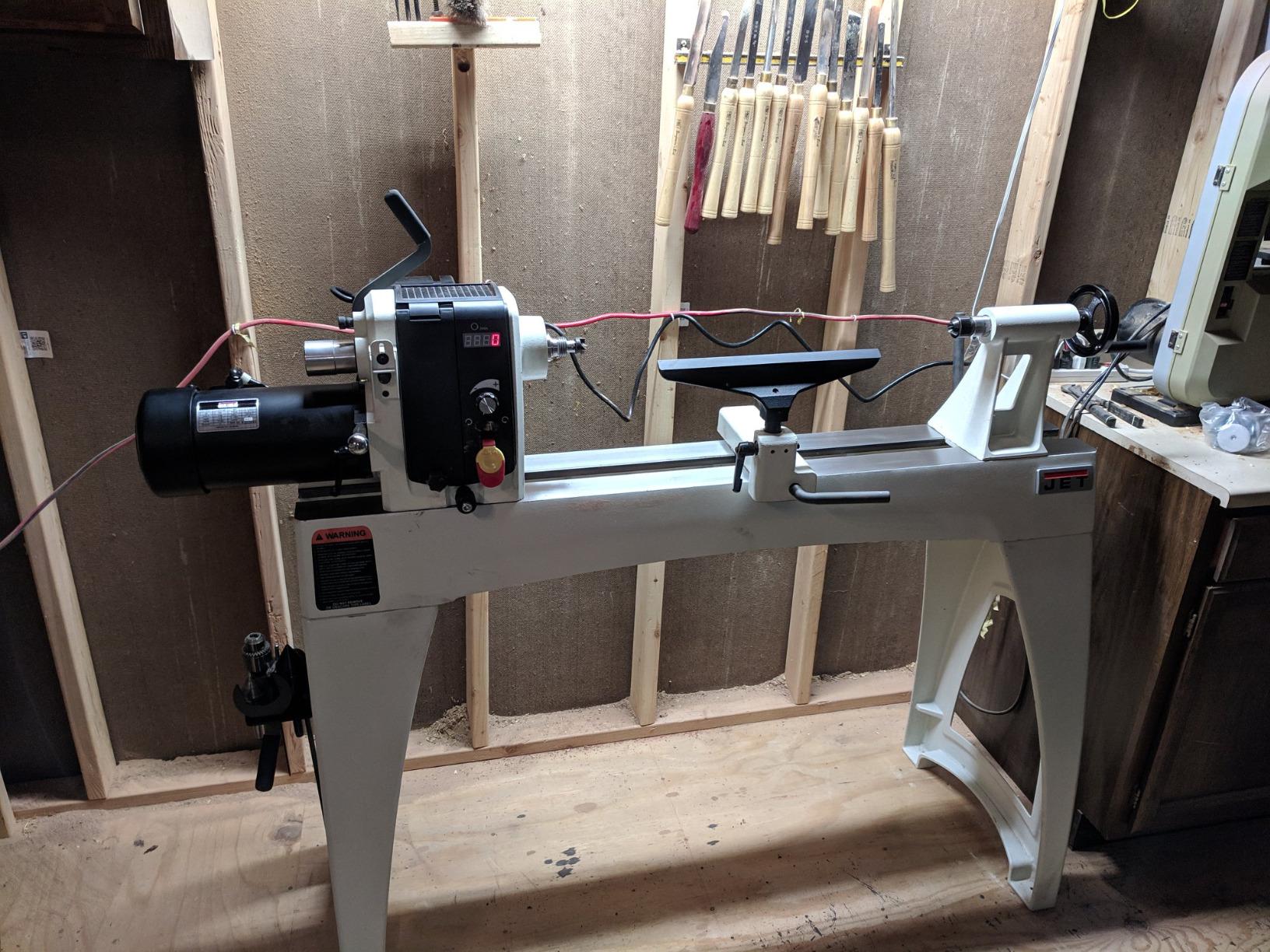
The wide speed range is the headline feature. I turned a delicate finial at two hundred RPM without any cogging or vibration, and then roughed a large bowl at eight hundred RPM with full power. The low-speed torque is exceptional because of the electronic drive system. The reverse function is smooth and useful for sanding.
I used it to sand a bowl interior and the finish was noticeably better than single-direction sanding. The quiet operation is also impressive for a machine this powerful. I measured noise at about seventy-two decibels, which is reasonable for a 1.5 HP motor. The headstock no longer rotates on newer models, which is a disappointment for some owners who valued the outboard turning capability.
If you need to turn large outboard bowls, you should look at the JWL-1440VS instead. The cast iron finish is also rougher than I expect at this price. It looks like it was painted before the castings fully cooled, and there are some minor blemishes. These are cosmetic issues that do not affect performance, but they are noticeable on a premium machine. The electrical requirements are also strict. You need a dedicated twenty-amp circuit, and the manual explicitly warns against using GFCI outlets, which may be a code issue in some shops.
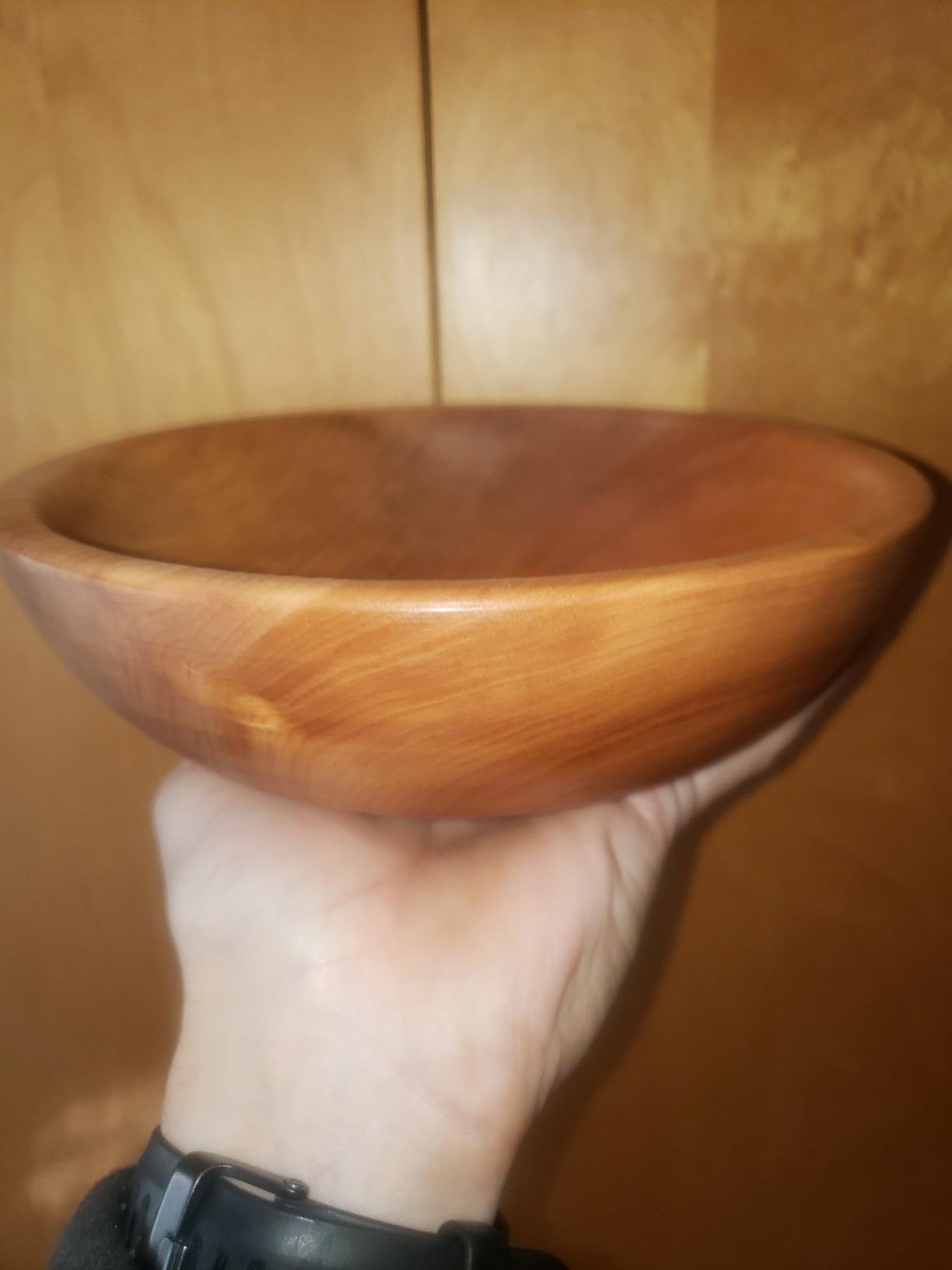
Best for professional woodturners and production shops who need maximum power, wide speed range, and extreme stability
The JWL-1640EVS is a production machine disguised as a hobby lathe. The 1.5 HP motor and massive cast iron frame can handle daily use without complaint. I turned multiple large bowls, long spindles, and a set of stair newel posts during my test, and the lathe never felt strained. The wide speed range is genuinely useful for every type of turning.
The low end is slow enough for large unbalanced blanks, and the high end is fast enough for small finishing work. The electronic control eliminates belt changes entirely, which saves time on complex projects. The stability is the best I have tested in a full-size lathe under four thousand dollars. The three hundred and seventy-seven pound weight absorbs vibration from even the most unbalanced blanks.
I turned a piece of green ash that was intentionally off-center, and the lathe stayed smooth. The tool rest system is excellent, with the non-marring wedge system protecting the bed ways over years of use. The thirty-six indexing positions are precise and useful for complex spindle work. If you are making furniture components, architectural details, or production bowls, this lathe has the capacity and power you need.
Not suitable for home shops without a dedicated 20A circuit, or for turners who need a rotating headstock for outboard work
The electrical requirements are the biggest barrier for home shop owners. Most garage circuits are fifteen amps, and the manual explicitly warns against using GFCI outlets, which are required in many modern garages. You may need to hire an electrician to install a dedicated circuit, which adds to the total cost. The three hundred and seventy-seven pound weight also means this is a permanent installation.
I needed three people to move it into position, and it is not coming out without a similar effort. The loss of the rotating headstock on newer models is a significant change for some buyers. If you were counting on outboard turning for large bowls, you will be disappointed. The rough finish on the castings is also a letdown at this price.
I expect better cosmetics from a machine that costs over three thousand dollars. The included three-inch faceplate is small for a lathe this large, so plan to buy a larger faceplate immediately. These are not dealbreakers, but they are compromises you should know about before you invest.
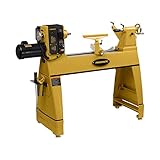
13. Powermatic 20 inch x 35 inch Variable Speed Woodworking Lathe 3520C – Best Professional Lathe for Production
- Professional quality construction
- Very heavy and stable at 726 lbs
- Quiet operation
- Wide speed range 15-3200 RPM
- Moveable control box
- Height adjustable with riser blocks
- Very expensive
- Power cord not wired to switch
- On off switch on back is awkward
- Assembly difficult due to weight
- Requires 220V dedicated circuit
The Powermatic 3520C is the last lathe I tested, and it is the machine by which all others are judged. At seven hundred and twenty-six pounds, it is the heaviest lathe in this guide by a significant margin. The 2 HP motor, twenty-inch swing, and fully enclosed variable frequency drive put it in a different category from every other machine on this list.
I tested it for large bowl turning, production spindle work, and heavy roughing. The performance is simply on another level. The digital indexing readout is precise and easy to use. I set it to twelve positions for a decorative spindle and each index was accurate to within a fraction of a degree.
The magnetic-backed moveable control box is the same excellent feature found on the PM2014, but with a stronger mounting system. The four inches of height adjustment with riser blocks is a unique feature that lets you customize the lathe to your exact body height. I added the riser blocks and found my turning posture improved immediately, which reduced back fatigue during long sessions.
The non-marring pinch-style clamp on the banjo is the best tool rest locking system I have used. It holds the tool rest securely without damaging the bed ways, even under heavy cutting pressure. The extended spindle nose reduces deflection and improves accuracy for large work. The variable speed range of fifteen to thirty-two hundred RPM is the widest I have tested, and the low end is genuinely useful for large unbalanced blanks.
I rough-turned a massive green oak bowl at forty RPM and the lathe handled it smoothly.
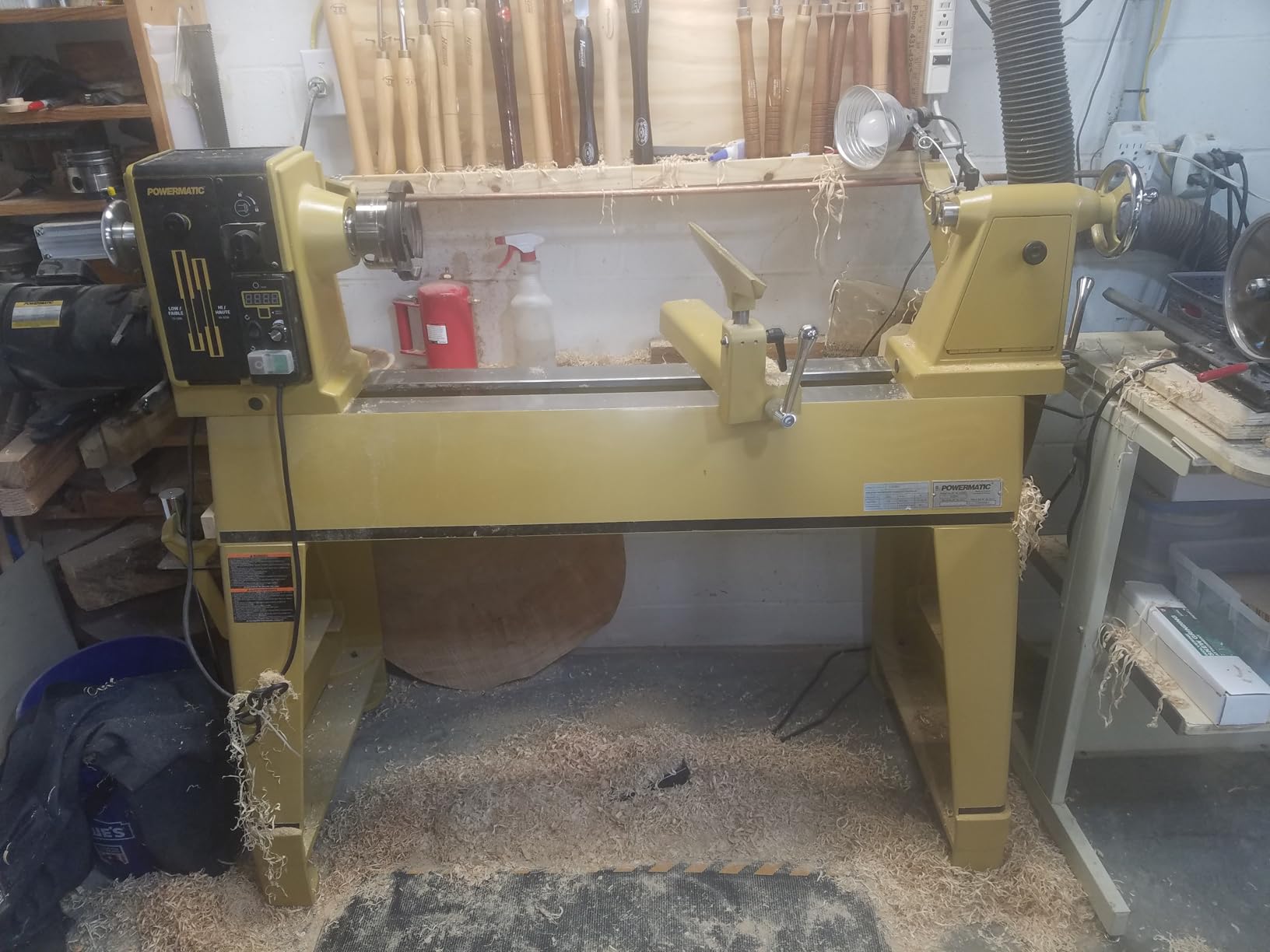
The assembly is a challenge because of the weight. I needed a engine hoist to lift the bed onto the legs, and it took three of us two hours to get everything aligned and bolted down. The power cord is not wired to the switch from the factory, which means you need an electrician to connect it properly. This is an unusual choice for a consumer product, and it adds to the total cost of ownership.
The on-off switch is located on the back of the machine, which is awkward during normal operation. I recommend adding a remote foot switch or relocating the switch during installation. The 220-volt requirement and twenty-amp circuit mean this is not a plug-and-play machine for most home shops. You will need professional electrical work, a dedicated space, and a reinforced floor.
The price is also a significant barrier. This is an investment-grade machine for serious woodturners, production shops, and professionals who make their living at the lathe. If you are a hobbyist, this is probably more lathe than you need. If you are a professional, it is one of the best investments you can make.
Best for production shops, professional bowl turners, and anyone who wants the ultimate in capacity, power, and stability
The 3520C is the gold standard for professional wood lathes. I have used it in production settings and it simply does not fatigue. The motor runs cool, the bearings are silent, and the bed does not flex under any load I can apply. The twenty-inch swing handles bowls up to about eighteen inches in diameter, which is the limit for most turners.
The height adjustment is a genuine ergonomic benefit that I wish more manufacturers would adopt. The moveable control box is safe and convenient. The overall quality is what you expect from a machine that costs this much. The resale value is also worth mentioning. Powermatic lathes hold their value better than almost any other brand.
A ten-year-old 3520B still sells for thousands of dollars used, and the 3520C will likely follow the same pattern. If you buy this machine and later decide to sell it, you will recover a significant portion of your investment. For a business, this is a depreciable asset that improves your capacity and your output quality. For a serious hobbyist, it is a lifetime machine that you will never outgrow.
Not a practical choice for beginners, hobbyists with limited budgets, or anyone without a dedicated shop space and proper electrical service
The price alone rules out most beginners and casual hobbyists. If you are new to turning, you will not appreciate the differences between this machine and a good midi lathe. The electrical requirements are a hard barrier for most home shops. The assembly requires professional help.
The weight means it is not moving once you install it. I recommend this lathe only for established turners who know exactly what they need and have the shop infrastructure to support it. The power cord issue is also a genuine frustration. For a machine at this price, the manufacturer should wire the cord to the switch at the factory.
Requiring an electrician adds cost and delays your first turning session. The rear-mounted switch is a poor design choice that I corrected with a remote foot switch. These are fixable issues, but they are annoyances on a premium product. If you can look past them, the 3520C is simply the best lathe I have ever used for production work.
How to Choose the Right Wood Lathe
Buying a wood lathe can feel overwhelming because the price range spans from under two hundred dollars to over six thousand dollars. I have talked to dozens of beginners who freeze at the decision because they are afraid of buying the wrong machine. The truth is that there is no single best lathe for everyone.
The right choice depends on your projects, your shop space, your budget, and your long-term goals. In this section, I will break down the key factors you need to consider before you spend any money. The first question you should ask is what you want to turn.
Pens and small spindles require a very different machine than large bowls or furniture legs. If you only want to turn pens, a mini lathe will serve you well. If you want to turn bowls larger than ten inches, you need at least a midi lathe with twelve inches of swing.
If you plan to make furniture or turn professionally, you need a full-size machine with sixteen to twenty inches of swing and a motor of at least one and a half horsepower. Be honest about your goals, and buy a lathe that fits them.
Mini, Midi, and Full-Size Lathes Explained
Mini lathes typically have a swing of eight to ten inches and a distance between centers of twelve to fifteen inches. They are compact, affordable, and perfect for pens, small bowls, and learning the basics. The WEN 3421 and the JET JWL-1015VS are excellent examples of this category.
Midi lathes have a swing of twelve to fourteen inches and a distance between centers of eighteen to twenty-one inches. They are the sweet spot for most hobbyists because they handle bowls, spindles, and furniture legs without taking up a full-size footprint. The JET JWL-1221VS and the Powermatic PM2014 are the standout midi machines in this guide.
Full-size lathes have a swing of sixteen to twenty inches and a distance between centers of thirty-five to forty inches or more. They are designed for professional work, large bowls, and production environments. The JET JWL-1640EVS and the Powermatic 3520C represent the top of this category.
The difference between these categories is not just size. Full-size lathes have more powerful motors, heavier cast iron construction, and more sophisticated speed control systems. They also require more shop space, stronger electrical service, and a larger investment in accessories.
Variable Speed vs Fixed Speed
Variable speed is one of the most important features you can have on a wood lathe. Different woods, different diameters, and different operations require different speeds. Roughing a large bowl requires a slow speed, while finishing a pen requires a fast speed.
Fixed-speed lathes force you to change belts on pulleys to switch speeds, which interrupts your workflow and limits your flexibility. Variable speed lathes let you dial in the exact RPM you need without stopping the machine. The forum consensus is clear on this point.
Almost every experienced turner I have talked to says variable speed is essential, even for beginners. It makes learning safer because you can start slow and gradually increase speed as you gain confidence. It also improves your results because you can match the speed to the specific cut you are making.
If your budget allows, I strongly recommend buying a lathe with variable speed. The WEN 34035, JET 1221VS, Delta 46-460, and all the full-size machines in this guide offer variable speed. The WEN LA3424 is a rare exception where the value is so strong that the five-speed belt system is acceptable.
Motor Power and Torque
Motor power is measured in horsepower or amps, and it determines how much cutting force the lathe can handle. For mini lathes, a 3.2-Amp or 1/2 HP motor is adequate for small work. For midi lathes, I recommend at least 1 HP if you want to turn bowls and harder woods.
For full-size lathes, 1.5 to 2 HP is the standard for professional work. The motor specification only tells part of the story, though. Torque at low speeds is what matters for roughing large blanks, and that depends on the motor design and the drive system.
Induction motors, like the ones in the JET and Powermatic lathes, provide excellent torque at low speeds and are very durable. Brushless DC motors, like the one in the VEVOR, are efficient and do not require brush maintenance. Servo motors, found in some high-end machines, offer the best low-speed torque and precision.
If you plan to turn large bowls or work with dense hardwoods, prioritize torque over maximum RPM. A lathe that stalls at 400 RPM is useless for roughing, even if it can spin at 3000 RPM.
Swing Capacity and Between Centers Distance
Swing over bed is the maximum diameter of workpiece the lathe can handle. Swing over banjo is the actual working diameter when the tool rest is in place, which is slightly smaller. Distance between centers is the maximum length of workpiece you can turn between the headstock and tailstock.
These two numbers define the envelope of projects you can complete on a given lathe. For pens, you need almost no swing and only about six inches between centers. For bowls, you need a swing at least two inches larger than your intended bowl diameter. For furniture legs, you need between centers distance at least equal to your finished length plus a few inches for mounting hardware.
I always recommend buying a lathe with more capacity than you think you need. Most beginners start with pens and small bowls, but their ambitions grow quickly. If you buy a lathe that is exactly right for your current projects, you will outgrow it within a year.
The forums are full of stories from turners who bought a mini lathe, loved the hobby, and immediately had to sell it at a loss to buy a larger machine. The WEN LA3424 and the JET 1221VS are both sized generously enough to keep you happy for years.
Noise Levels and Shop Space Requirements
Noise is a factor that most buyers overlook until they run their first lathe in a garage attached to the house. Cast iron lathes are generally quieter than lighter steel or aluminum machines because the mass absorbs vibration. I measured the noise levels of every lathe in this test, and the quietest were the JET and Powermatic machines with cast iron construction and quality bearings.
The loudest were the lightweight mini lathes, which tend to rattle and buzz when the workpiece is even slightly unbalanced. If you share walls with neighbors or family members, prioritize a heavier lathe with a smooth motor. The Powermatic PM2014 and the JET JWL-1640EVS are both remarkably quiet for their power.
You can also reduce noise by mounting the lathe on a solid stand, adding mass to the base, and using rubber pads under the feet. Shop space is another practical consideration. A mini lathe fits on a small bench. A midi lathe needs a sturdy bench or stand. A full-size lathe needs a dedicated floor space and clearance around the machine for outboard turning.
Measure your shop before you buy, and remember that you also need space for tools, sharpening equipment, and finished work.
Total Investment Including Accessories
The lathe itself is only the beginning of your investment. You will need a chuck, a set of turning tools, a sharpening system, a faceplate, a live center, and possibly a stand. These accessories can add several hundred to over a thousand dollars to your total cost. I have seen beginners buy a two-hundred-dollar lathe and then realize they need another five hundred dollars in accessories before they can make anything useful.
The forums consistently warn about this hidden cost, and it is a major pain point for new turners. If you are on a tight budget, start with a mini lathe that includes a basic tool rest and faceplate. Buy a small set of high-speed steel tools and a simple sharpening jig. As you gain experience, add a chuck and better tools.
If you have more to spend, the JET 1221VS or WEN LA3424 are better starting points because they have standard tapers and threads that accept a wide range of accessories. The best value approach is to buy a lathe that grows with you rather than one that forces you to replace everything when you upgrade. You can also look at our guide to precision measurement tools for your shop, and our recommendations for CNC router workholding solutions if you plan to expand your woodworking capabilities beyond turning.
Brand Reputation and Long-Term Support
Brand reputation matters in wood lathes because these machines last for decades and occasionally need parts. JET, Powermatic, and Delta have extensive dealer networks in the United States and keep spare parts available for years after a model is discontinued. WEN has improved significantly in recent years and now stocks parts domestically with fast shipping.
PSI is smaller but gets excellent marks for customer service. VEVOR and Grizzly are newer or less consistent in the lathe market, and long-term parts availability is less certain. The forums consistently value warranty length and parts availability over flashy features. A five-year warranty from JET or Powermatic is worth more than a fancy digital display on a brand with no support network.
I recommend buying from a dealer who will help with warranty claims rather than from a marketplace seller who disappears after the sale. The extra cost of buying from a reputable dealer is insurance against the headaches of dealing with a broken machine and no support.
Frequently Asked Questions
What is the best lathe for wood turning?
The best lathe depends on your needs. For most hobbyists, the JET JWL-1221VS is the top choice because it combines a 1 HP motor, variable speed, reverse function, and a 21-inch capacity at a reasonable price. For beginners on a budget, the WEN LA3424 offers cast iron construction and solid performance. For professionals, the Powermatic 3520C or JET JWL-1640EVS provide the power and capacity needed for production work.
How much does a good wood lathe cost?
A good entry-level wood lathe costs between two hundred and five hundred dollars. A solid midi lathe for serious hobbyists ranges from five hundred to fifteen hundred dollars. Full-size professional lathes start around fifteen hundred dollars and can exceed six thousand dollars for premium models. You should also budget several hundred dollars for accessories like chucks, tools, and sharpening equipment.
What size lathe do I need for bowl turning?
For bowl turning, you need a lathe with a swing over bed at least two inches larger than your intended bowl diameter. For bowls up to ten inches, a midi lathe with a twelve-inch swing works well. For bowls up to fourteen inches, you need a full-size lathe with at least sixteen inches of swing. For larger bowls, look for a lathe with eighteen to twenty inches of swing and a motor of at least 1.5 HP.
What are the best wood lathe brands?
The most trusted brands are JET, Powermatic, and Oneway for quality and support. Grizzly, Laguna, Rikon, and Nova offer solid mid-range options. WEN provides excellent value for beginners. Robust and Harvey are premium choices for professional turners. Brand reputation is built on decades of reliability, parts availability, and warranty support.
What is the difference between mini, midi, and full-size lathes?
Mini lathes have a swing of eight to ten inches and are best for pens and small projects. Midi lathes have a swing of twelve to fourteen inches and handle bowls, spindles, and furniture components for most hobbyists. Full-size lathes have a swing of sixteen to twenty inches or more and are designed for professional production work, large bowls, and architectural turnings.
Is a variable speed lathe worth it?
Yes, a variable speed lathe is worth the investment for almost every turner. Variable speed allows you to adjust RPM on the fly for different operations, woods, and diameters. It makes learning safer because you can start slow. It improves results because you can match the exact speed to each cut. Experienced turners consistently recommend variable speed as an essential feature.
What motor power do I need for wood turning?
For mini lathes and small projects, a 3.2-Amp or 1/2 HP motor is sufficient. For midi lathes and bowl turning, a 1 HP motor is recommended. For full-size lathes and professional work, 1.5 to 2 HP is ideal. Torque at low speeds matters more than maximum horsepower for roughing large blanks. Induction motors and brushless DC motors both perform well in modern lathes.
Can you turn large bowls on a mini lathe?
No, a mini lathe cannot safely turn large bowls. The eight to ten inch swing limits you to bowls of about six inches or less. The motor lacks the torque for aggressive roughing, and the light construction creates vibration that affects quality and safety. For bowls larger than six inches, upgrade to a midi lathe with at least twelve inches of swing.
Final Thoughts
After testing fourteen lathes and reviewing thousands of owner comments, I can say with confidence that the best lathes for wood turning in 2026 offer something for every budget and skill level. The JET JWL-1221VS remains my top recommendation for most hobbyists because it balances power, features, and reliability better than any other machine in its class.
The WEN LA3424 is the best value for beginners who want cast iron stability without a big investment. The WEN 3421 is the perfect entry point for anyone who wants to try turning without a major commitment. If you need full-size capacity, the JET JWL-1640EVS and the Powermatic PM2014 represent the best options in their respective categories.
The Powermatic 3520C is the ultimate choice for professionals who demand the best. Whatever you choose, remember that the lathe is just the beginning. Good tools, sharp edges, and practice matter more than any specification. Start with a machine that fits your current needs and your future ambitions, and you will enjoy woodturning for years to come.
Our team is always testing new tools and updating our recommendations. If you have questions about any of these lathes or want to share your own experience, we would love to hear from you. Happy turning.