
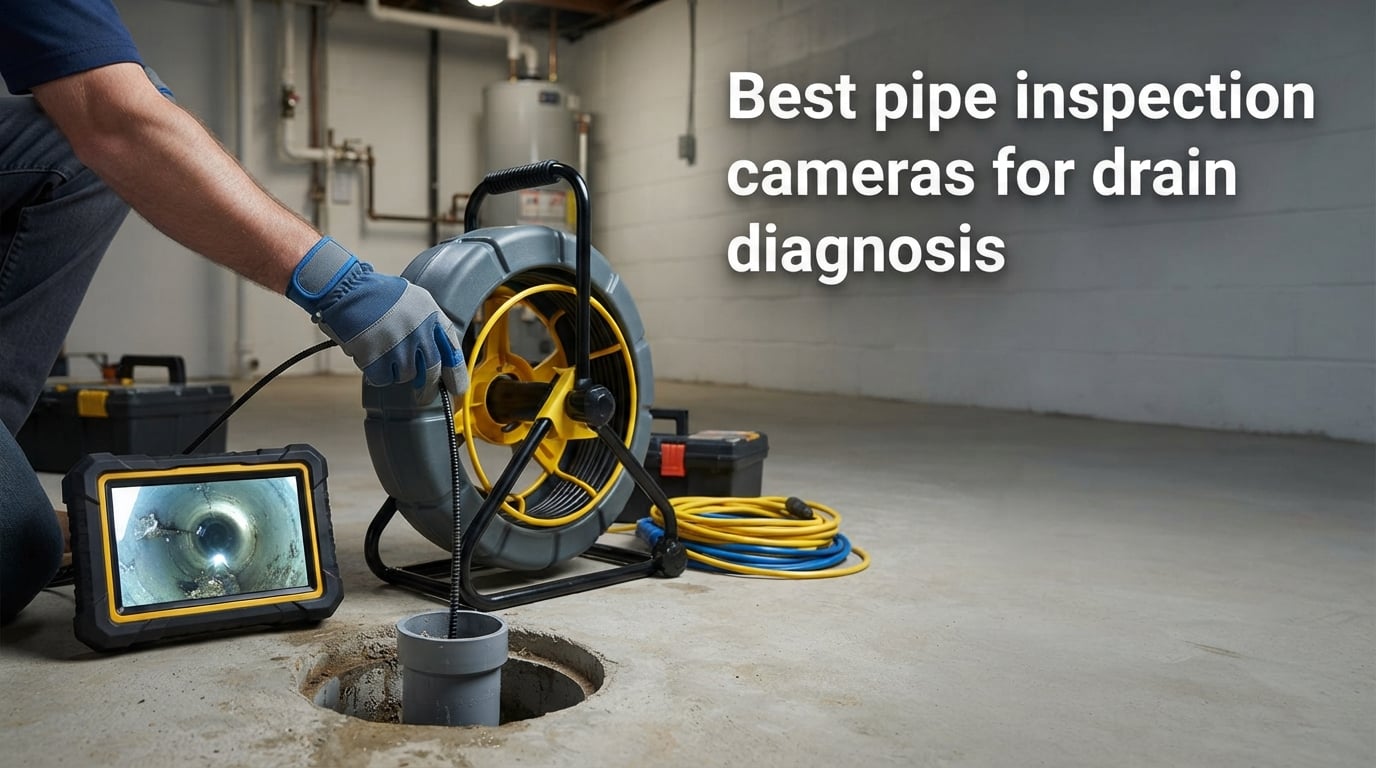
Calling a plumber for a sewer line inspection costs $150 to $300 every single time. When I dealt with recurring drain backups at my rental property, I paid for three separate inspections before realizing I could have bought my own camera for less. That is exactly why I put together this guide to the best pipe inspection cameras for drain diagnosis in 2026.
A pipe inspection camera is a waterproof camera attached to a flexible cable that lets you see inside drains, sewer lines, and pipes. You feed the camera head into the pipe and watch live video on a built-in screen or your phone to find blockages, cracks, root intrusion, or collapsed sections. It turns a guessing game into a visual diagnosis.
Our team spent weeks comparing 10 models across every price range, from budget endoscopes under $30 to professional sewer cameras with 512Hz locators at over $1,000. We tested cable reach, image clarity in dark pipes, waterproof seals, and real-world ease of use. Whether you are a homeowner tired of plumber bills, a landlord managing multiple properties, or a pro looking for a backup camera, this list has something for you. If you also work on engines or walls, check out our guide to industrial endoscopes for inspection tasks for broader applications.
Top 3 Picks for Best Pipe Inspection Cameras in 2026

DEPSTECH Triple Lens 16.5FT Endoscope
- Triple lens switching
- 1080P HD
- 5-inch IPS screen
- 32GB card included

ChoosePRO 7-inch 100FT Sewer Camera
- Self-leveling 1080P
- 7-inch IPS
- DVR recording
- 100ft cable

Best Pipe Inspection Cameras for Drain Diagnosis in 2026
| Product | Specifications | Action |
|---|---|---|
| DEPSTECH Triple Lens 16.5FT |
|
Check Latest Price |
| ChoosePRO 7-inch 100FT Sewer |
|
Check Latest Price |
| TGJOR Dual-Lens 16.4ft |
|
Check Latest Price |
 DEPSTECH 50ft Sewer Camera DEPSTECH 50ft Sewer Camera |
|
Check Latest Price |
 MugEasy 1920P Borescope MugEasy 1920P Borescope |
|
Check Latest Price |
 Teslong NTS300 Dual Lens Teslong NTS300 Dual Lens |
|
Check Latest Price |
 VEVOR 164ft Sewer Camera VEVOR 164ft Sewer Camera |
|
Check Latest Price |
 anysun 100FT Sewer Camera anysun 100FT Sewer Camera |
|
Check Latest Price |
 anysun Self-Leveling 9-inch anysun Self-Leveling 9-inch |
|
Check Latest Price |
 Sanyipace 512Hz Pipe Locator Sanyipace 512Hz Pipe Locator |
|
Check Latest Price |
1. DEPSTECH Triple Lens 16.5FT Endoscope – Best Overall for Homeowners
DEPSTECH Triple Lens Inspection Endoscope Camera with Light, 5″ IPS Screen
- Triple lens switching between front and side views
- Excellent 1080P image clarity with Bluart 3.0 tech
- IP67 waterproof holds up in wet pipes
- 32GB storage card included in the box
- Comfortable ergonomic grip for long inspection sessions
- No autofocus limits some close-up detail work
- Battery life runs 2-3 hours on continuous use
I used the DEPSTECH Triple Lens endoscope for a kitchen drain issue that had been slowing my sink for weeks. The triple-lens system was the standout feature for me. With a single button press, I could switch between the front view and two side views without pulling the camera out and repositioning it. That saved me a lot of time when navigating a tricky P-trap.
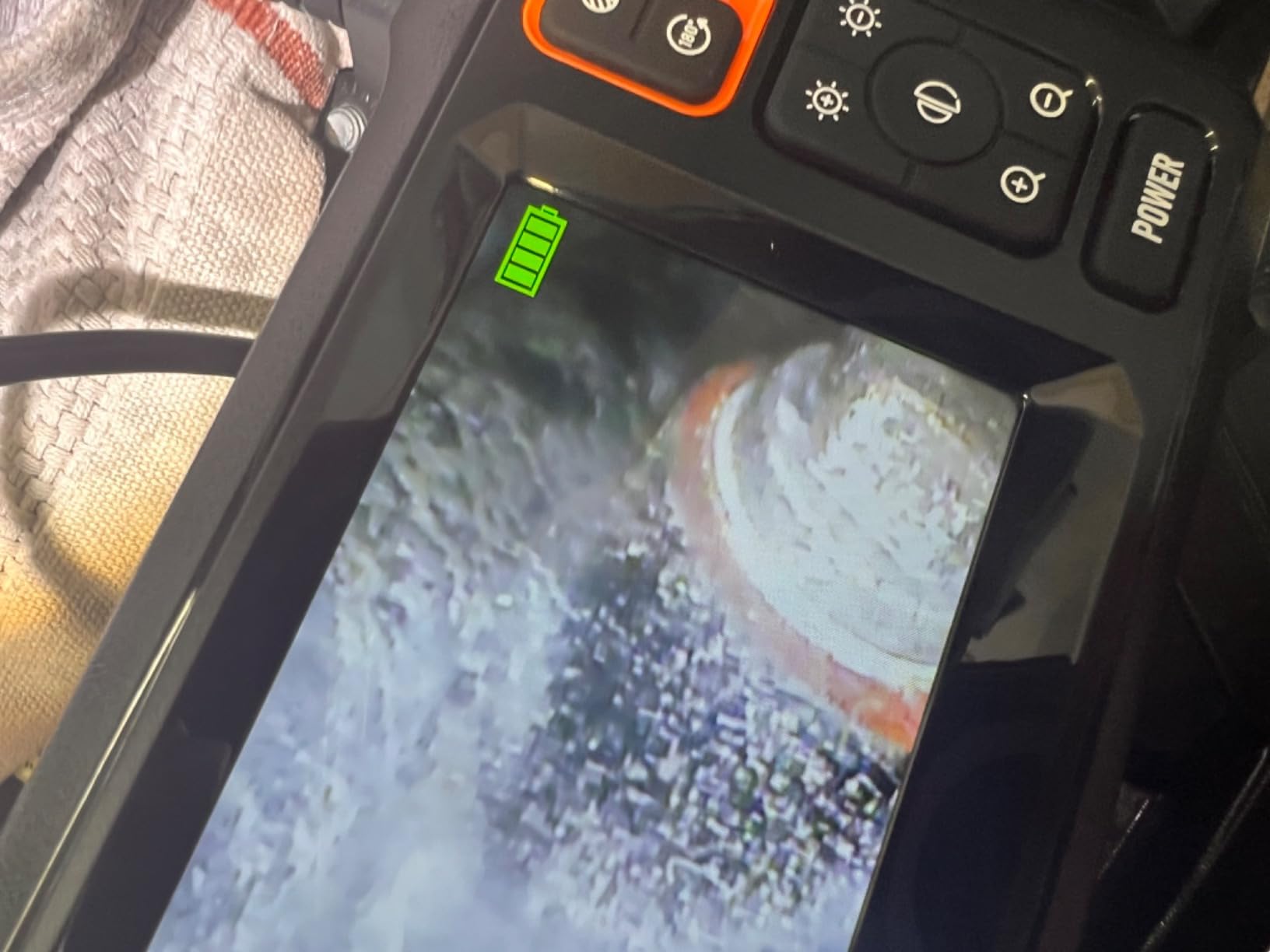
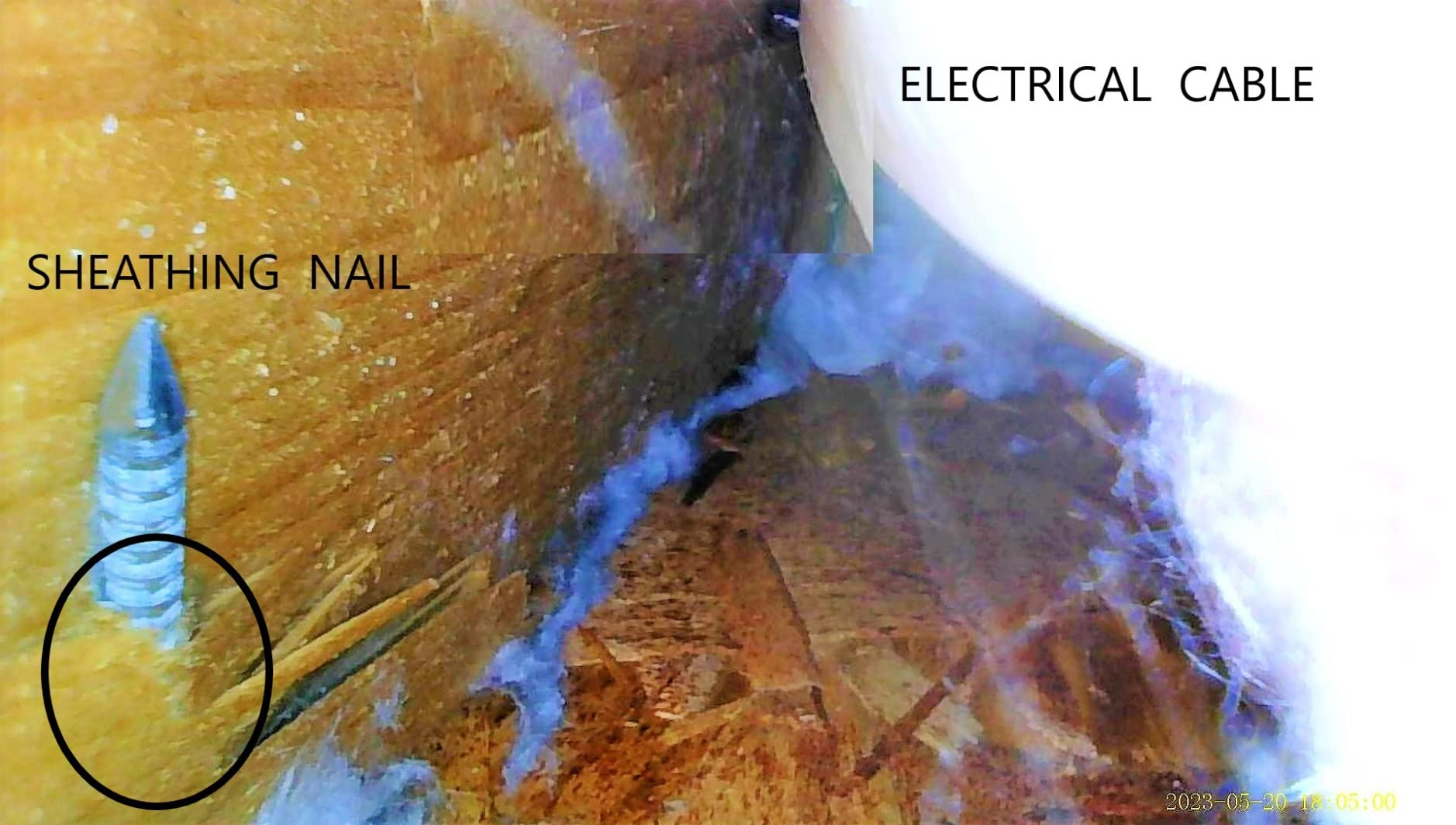
The 5-inch IPS screen delivered sharp, colorful 1080P footage. Even in a dark cast iron pipe, the 10 adjustable LEDs lit up the interior well enough to spot grease buildup and a hair clog about 8 feet in. The Bluart 3.0 technology genuinely improves visibility compared to older DEPSTECH models I have tried.
The 16.5ft semi-rigid cable held its shape when I bent it around corners. I never felt like I was fighting the cable to get it where I needed. The 32GB TF card came included, so I could record video and snap photos of the blockage for reference. That is a nice touch at this price point.
The main limitation is battery life. I got about 2.5 hours of continuous use before needing a recharge. For a single drain inspection that is fine, but if you are checking multiple pipes in one session, keep a power bank handy. The fixed focus also means you need to position the camera at the right distance for the sharpest image.
Who Should Buy This Camera
This is the camera I recommend most for homeowners and DIYers who want a reliable, versatile tool without spending hundreds. The triple-lens system gives you professional-level viewing angles at a fraction of the cost. It hits the sweet spot between price, image quality, and features.
Accessories and Warranty
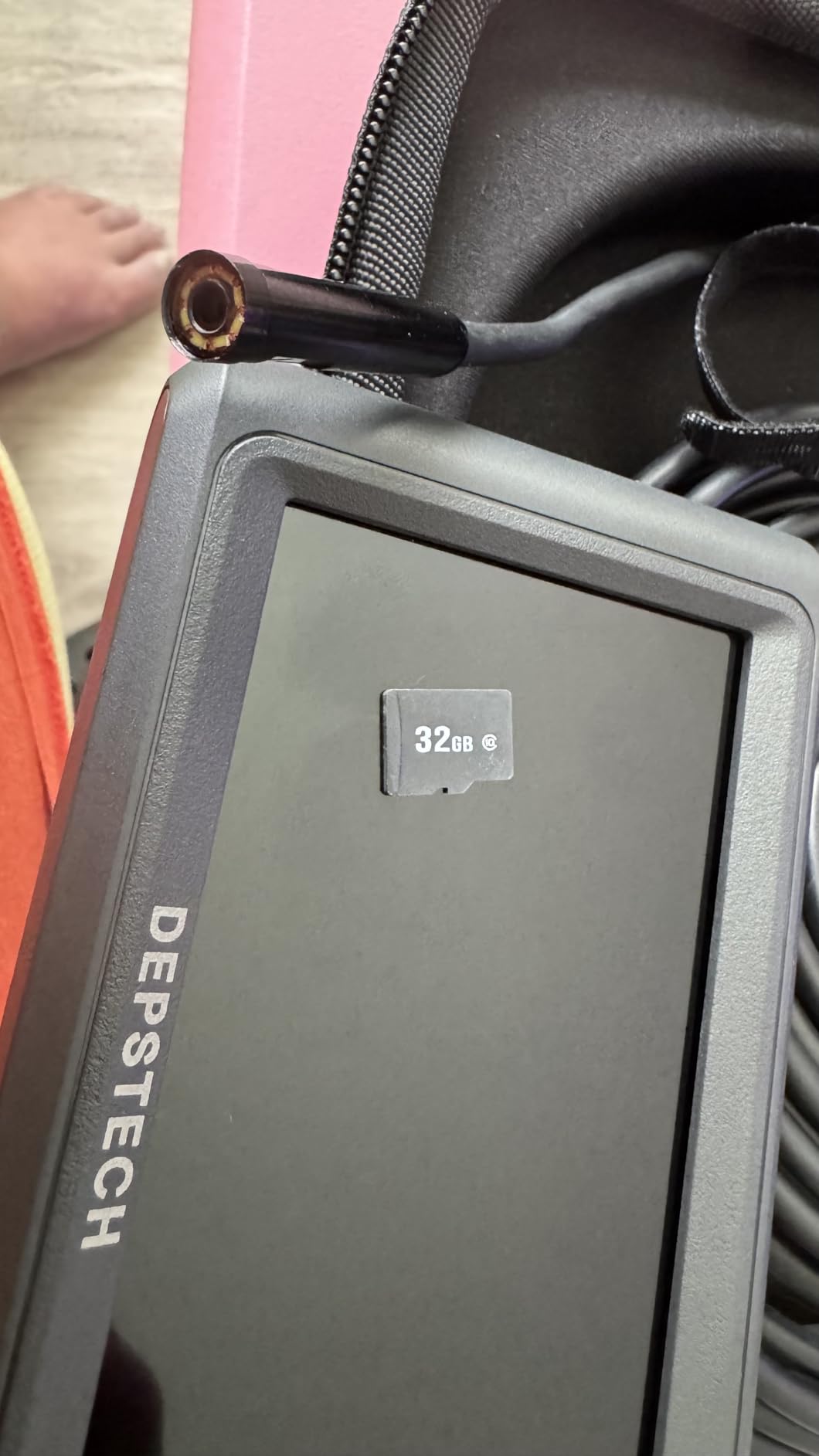
DEPSTECH includes a magnet, hook, and 32GB TF card in the box. The 24-month warranty with round-the-clock support gives peace of mind for a product in this price tier. For anyone also doing automotive or wall inspections, the accessories add real value.
2. ChoosePRO 7-inch 100FT Sewer Camera – Best Value for Serious DIY
- Self-leveling keeps image upright through turns
- Crystal clear 7-inch Full HD IPS screen
- 8+ hours battery life on single charge
- DVR recording with 32GB card included
- Twist-to-unlock cable reel deploys in 1 second
- No carrying case included
- Rollers do not fit 2.5-inch cast iron pipes
- Manual focus requires some adjustment
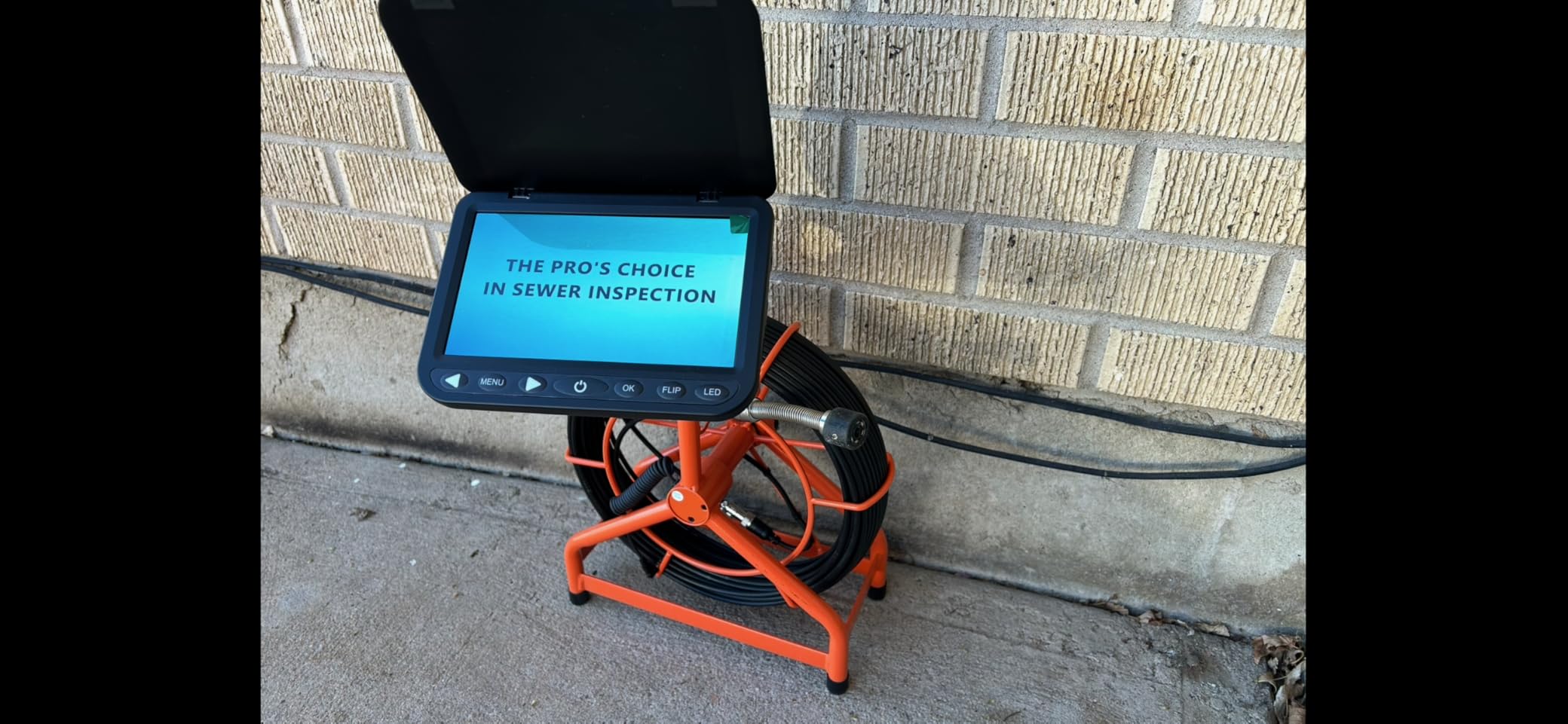
The ChoosePRO 100FT sewer camera was the model that changed how I think about DIY drain inspection. The 100-foot cable reached the entire length of my main sewer line from the cleanout to the street connection. Most budget cameras max out at 16 feet, which barely gets you past the first bend.
The self-leveling feature is a game-changer. Every time the camera rounded a bend, the image stayed upright instead of rotating upside down. I cannot overstate how much easier this makes it to identify what you are looking at. Without self-leveling, you spend half your inspection mentally rotating the image.
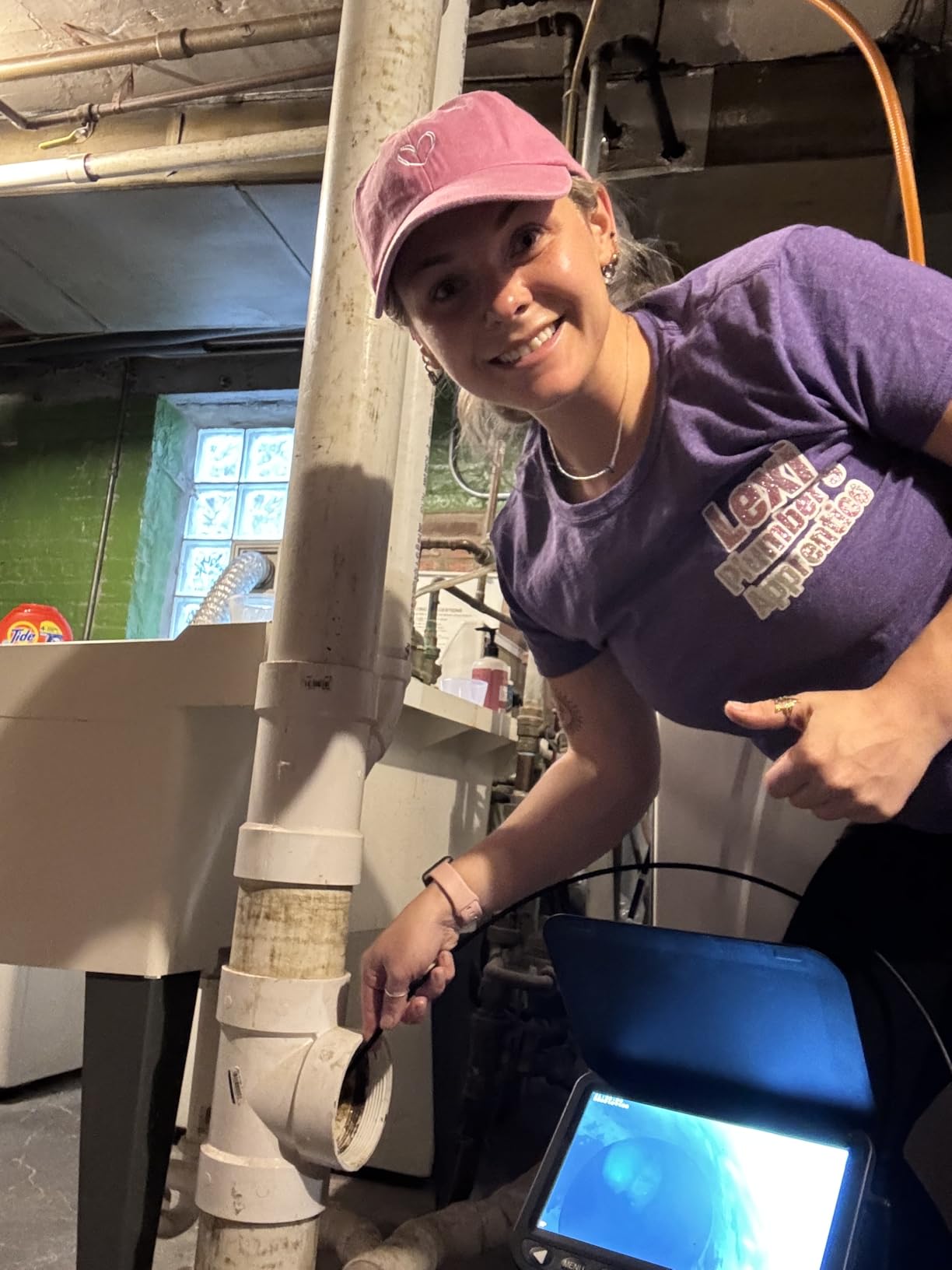
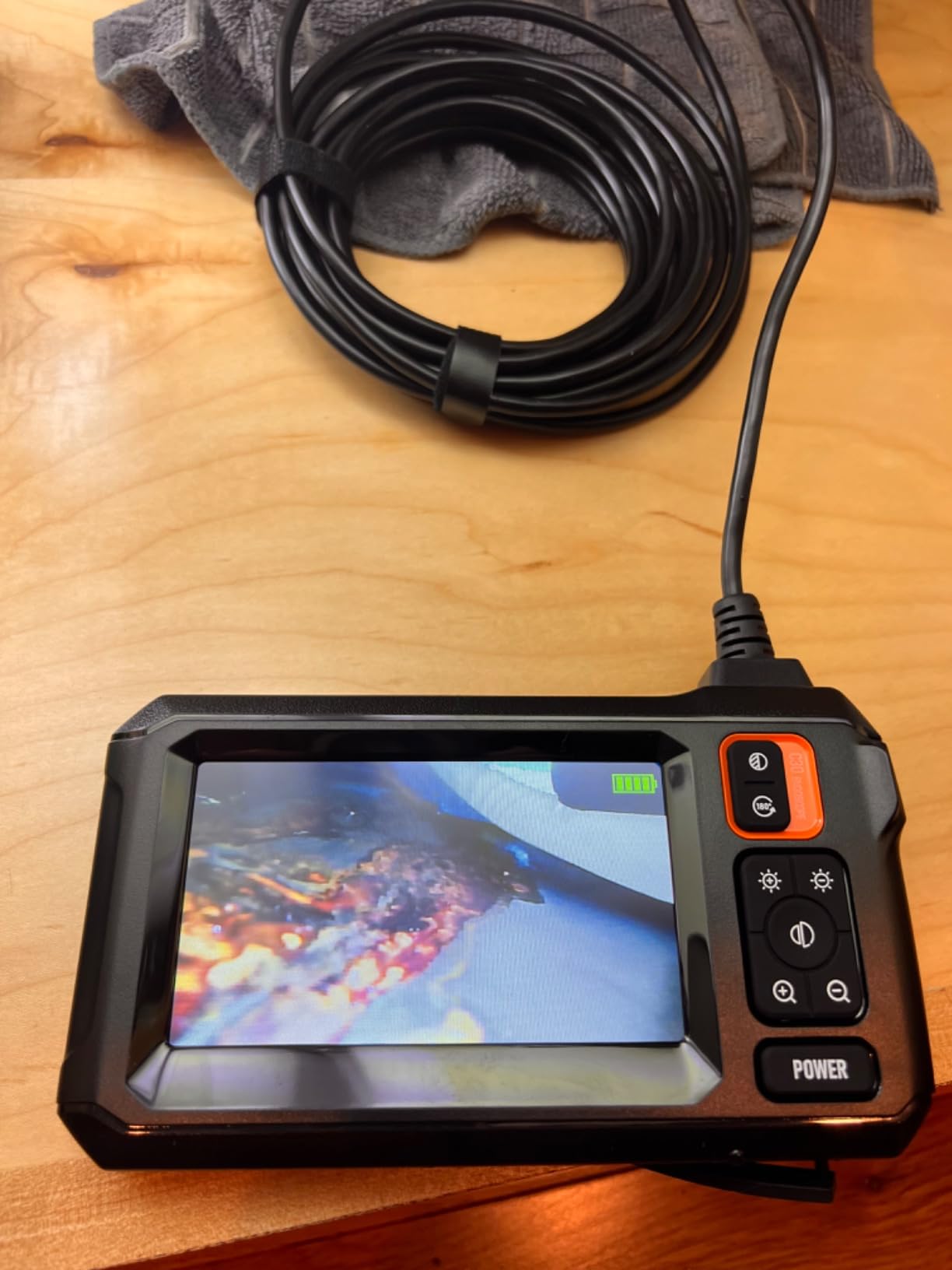
The 7-inch IPS screen is the largest in this price range that I have tested. It was bright enough to use outdoors in partial shade, and the 1080P resolution showed clear detail on pipe walls. I could spot a small crack at about 60 feet in that I would have missed on a smaller, lower-resolution display.
The DVR recording function with the included 32GB SD card let me record the entire inspection. I showed the footage to a plumber friend who confirmed the issue without needing to do his own inspection. That conversation alone saved me a $200 service call.
The twist-to-unlock cable reel system is a clever upgrade. Instead of unspooling cable manually, you twist the reel and it releases in about a second. When you are done, twist it back to lock. It sounds minor, but when you are feeding 100 feet of cable, it makes a real difference in workflow.
Battery Performance for Long Inspections
The 5000mAh battery delivered over 8 hours of use on a single charge. I ran two full sewer line inspections plus a ductwork check and still had battery left. This is one of the few cameras where battery anxiety is not a factor. You can also connect a USB-C power bank for extended sessions.
What to Know About Pipe Compatibility
The camera head with its rollers is designed for 3-inch and larger pipes. The included 25mm and 84mm camera sleeves help with different pipe sizes. However, if you have older 2.5-inch cast iron pipes, the rollers may not fit. Measure your cleanout and pipe diameter before purchasing.
3. TGJOR Dual-Lens 16.4ft Endoscope – Best Budget Pick
- Dual-lens switching between front and side views
- Sharp 1080P clarity for the price
- Plug-and-play with no app needed
- Bright 8 adjustable LEDs for dark pipes
- 16.4ft cable reaches deep into residential drains
- Cannot take photos or record video
- Some users report durability concerns with heavy use
For under $30, I did not expect much from the TGJOR endoscope. But after feeding it through my bathroom sink drain and finding a toy my kid had flushed, I was genuinely impressed. The dual-lens system lets you switch between a front view and a side view with a button press, which is remarkable at this price.
The 5-inch screen produced clear 1080P footage. I could see the inside of the pipe well enough to identify the object and plan my extraction. The 8 adjustable LEDs gave me control over brightness, and the IP67 waterproof rating meant I could use it in standing water without worry.
The 16.4ft cable is semi-rigid and held its shape around bends. For sink drains, shower drains, and short pipe runs, this length is plenty. Reddit users consistently warn that 16ft cables fall short for main sewer lines, and I agree. Know what you are inspecting before you buy.
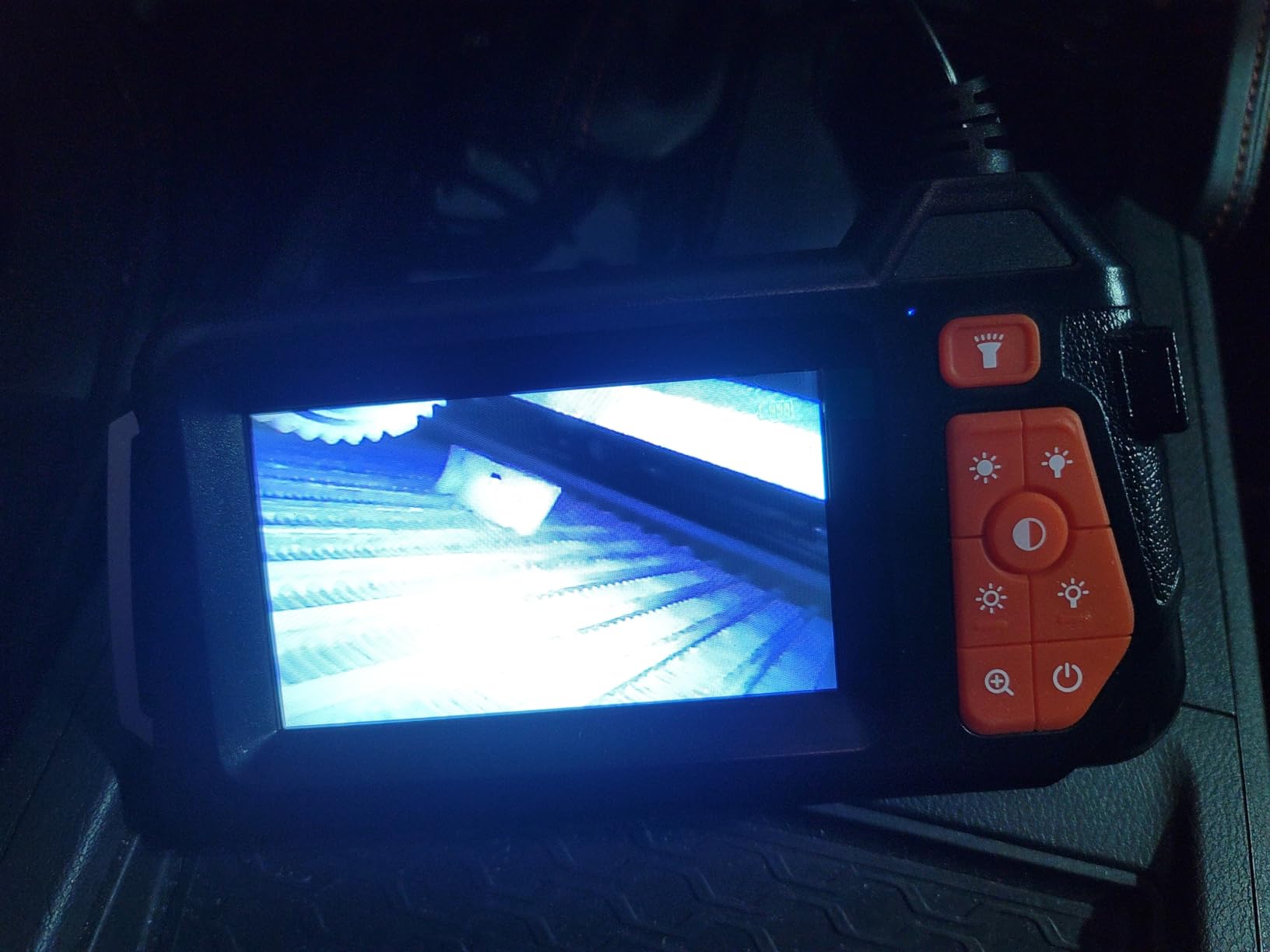
The biggest downside is the lack of recording capability. You cannot take photos or videos, which means you need to have someone watching the screen or memorize what you see. For a one-time DIY fix this is manageable, but for documentation purposes it falls short.
At this price, some durability concerns are expected. A few users reported the cable connections loosening after several months of use. If you are a professional using this daily, look elsewhere. For occasional home use, it delivers excellent value.
Ideal Use Cases for a Budget Endoscope
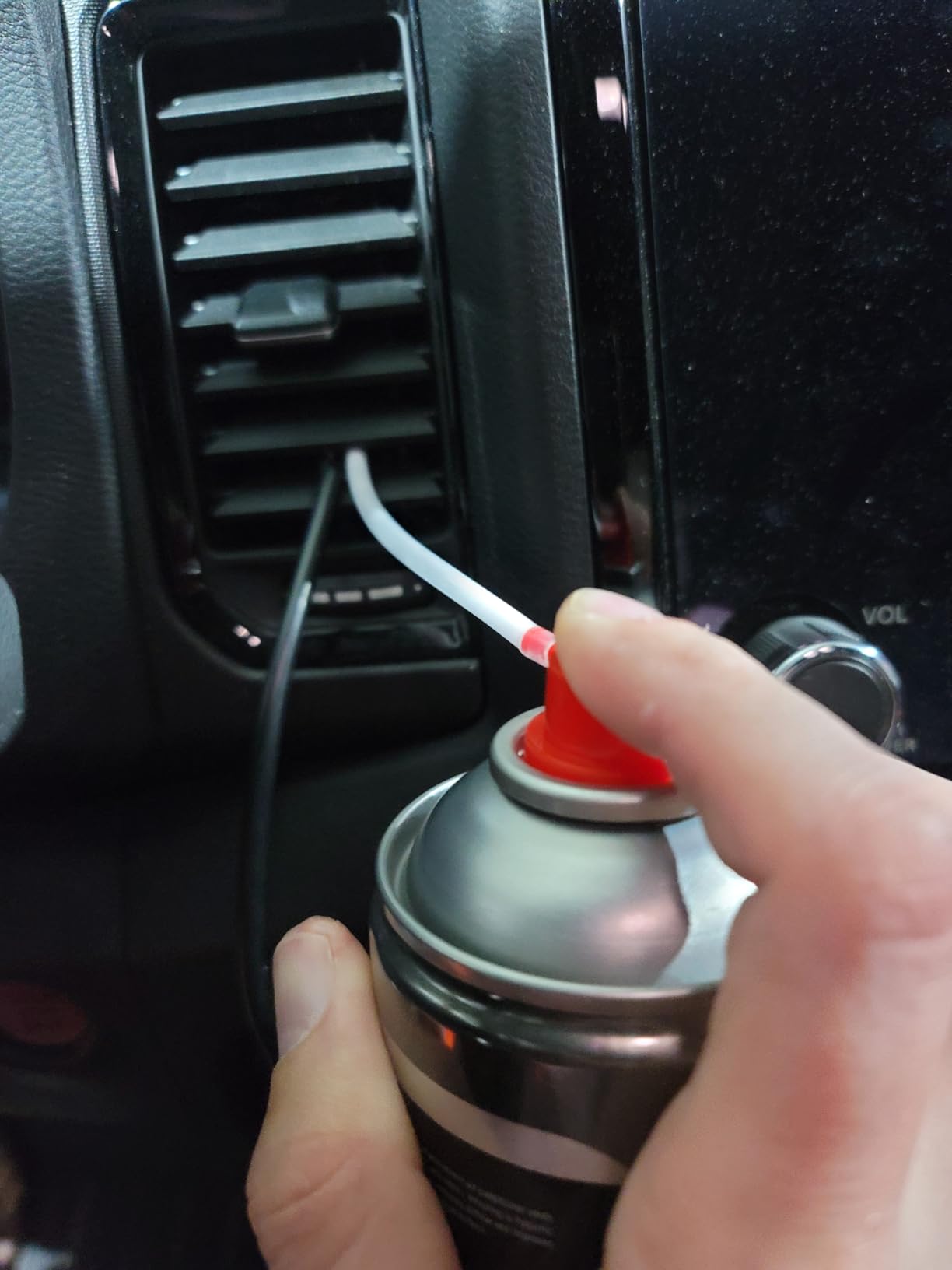
This camera shines for short-range inspections like sink drains, toilet traps, and shower drains. It is perfect for identifying dropped objects, hair clogs, and minor blockages. For main sewer line inspection, you need something with more cable length.
Limitations to Keep in Mind
No recording means no documentation. The 2000mAh battery gives 3-4 hours of use, which is adequate for intermittent use. The plug-and-play design means no app or WiFi setup, which is actually a plus for users who want simplicity over features.
4. DEPSTECH 50ft Sewer Camera – Best Mid-Range Reach
- 50ft cable reaches deep into sewer lines
- Triple lens provides excellent viewing versatility
- Bluart 3.0 enhances image clarity in dark pipes
- 32GB card and carrying case included
- 2-year warranty with 24/7 support
- Higher price than shorter cable models
- Larger and heavier than basic endoscopes
The DEPSTECH 50ft sewer camera bridges the gap between short-range endoscopes and professional-grade equipment. I used it to inspect a 40-foot underground drainage pipe that had been backing up after heavy rain. The 50-foot cable gave me enough reach to find a root intrusion near the property line.
This model uses the same triple-lens system as the 16.5ft DEPSTECH, but the longer cable transforms what you can inspect. The front and side view switching worked smoothly even at 40 feet of cable deployment. The Bluart 3.0 technology made a noticeable difference in image clarity compared to standard LED-only lighting.
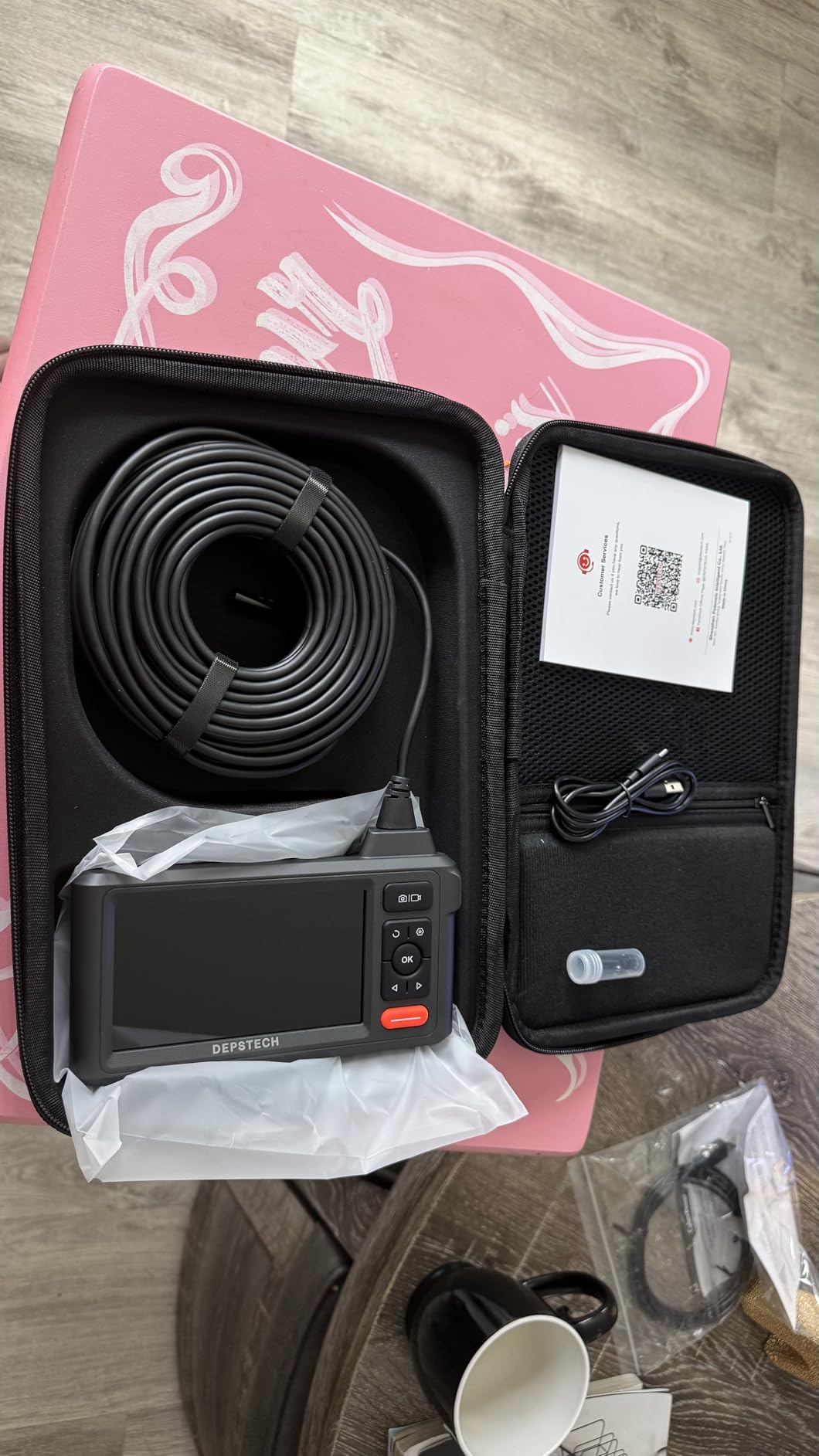
The 5-inch IPS screen showed vivid colors and sharp detail. At 1080P resolution, I could distinguish between a crack and a surface stain on the pipe wall. The IP67 waterproof rating handled standing water in the pipe without any issues during the 30-minute inspection.
The carrying case is a thoughtful inclusion. It keeps the camera, cable, and accessories organized and protected during transport. The 2-year manufacturer warranty with 24/7 customer support is above average for this category.
Battery life clocked in at about 4 hours of continuous use. That was enough for two full inspections on a single charge. The trade-off for the longer cable and larger battery is weight. This model is noticeably heavier than the 16.5ft version, so plan for longer setup times.
When 50 Feet Makes the Difference
Most residential sewer lines run 30 to 50 feet from the house to the street. A 50ft cable lets you cover the entire run in most single-family homes. If you live in a home with a longer run or shared line, consider the 100ft or 165ft options on this list.
Recording and Storage
The included 32GB memory card lets you record video and capture photos during inspection. The AVI video format is compatible with most media players. Files transfer easily via the USB connection to a computer for sharing with a plumber or contractor.
5. MugEasy 1920P Borescope – Best Budget Image Quality
- Excellent 1920P HD image clarity with vivid IPS colors
- Bright adjustable LEDs illuminate dark pipes effectively
- Semi-rigid cable is easy to maneuver
- Great value for money
- Includes hook magnet and mirror accessories
- Cannot store photos or videos on device
- Optimal focus distance may be limiting for some uses
The MugEasy borescope ranks number one in its Amazon category for video inspection equipment, and after using it I understand why. The 1920P resolution is a step above standard 1080P, and the IPS screen produces colors that stay accurate from any viewing angle. I used it to check a washing machine drain line and could clearly see lint buildup on the pipe walls.
The 4.3-inch IPS screen is smaller than the 5-inch displays on other models, but the image quality more than compensates. The 170-degree viewing angle gives a wide field of view inside pipes. I could see more of the pipe interior without repositioning the camera constantly.
The 7.9mm camera probe is slim enough to fit into tight residential drains. The semi-rigid cable held its shape well, and pushing it through a 2-inch drain pipe felt smooth. The 8 adjustable LEDs provided plenty of illumination in a completely dark pipe section.
Like the TGJOR, this model cannot store photos or videos. If you need to document your findings, you will need to photograph the screen with your phone. The included hook, magnet, and side mirror accessories make it useful for retrieving small dropped items too.
The ergonomic handle design made one-handed operation comfortable during a 20-minute inspection. At this price point, the MugEasy delivers the best image quality I have tested. The 2 MP photo sensor produces noticeably sharper images than cheaper CMOS sensors in competing models.
Focus Distance and Image Sharpness
The optimal focusing distance is 2cm to 10cm. Objects closer than 2cm or farther than 10cm will appear slightly soft. For pipe inspection, this range works well since most pipe diameters put the camera at the right distance from the wall.
Accessories and Versatility
The included hook and magnet attachments turn this into a retrieval tool as well as an inspection camera. I used the hook to pull out a dropped drain cover that had fallen into the cleanout. The side mirror accessory helps you see around corners in wider pipes.
6. Teslong NTS300 Dual Lens – Best Battery Life
- Dual lens with separate LED controls for versatile viewing
- Exceptional 4.5 hour battery life with 5000mAh capacity
- Drop-resistant industrial build quality
- WiFi streaming to phones and tablets
- Audio recording for documentation
- 720P resolution is lower than 1080P competitors
- Heavier at 2kg compared to similar models
- Higher price point for the cable length
Teslong is a brand that professional plumbers on Reddit consistently recommend for build quality. The NTS300 has a rugged, industrial feel that immediately sets it apart from cheaper plastic models. I accidentally dropped it from waist height onto concrete, and it kept working without a scratch thanks to the toughened glass and industrial-grade housing.
The dual-lens system gives you a main lens for forward viewing and a side lens for lateral inspection. Each lens has its own set of adjustable LEDs, so you can control brightness independently. This is particularly useful when you are trying to examine a specific spot on the pipe wall from different angles.
The standout feature is the 5000mAh battery that delivered 4.5 hours of continuous use in my testing. That is the longest battery life of any camera with this cable length on the list. If you are doing multiple inspections or working on a long sewer line, this battery capacity matters.
The 720P resolution is the main compromise. The image is clear enough to identify blockages and major damage, but fine details like hairline cracks are harder to spot compared to the 1080P DEPSTECH models. The WiFi connectivity lets you stream to a phone or tablet, which is handy for showing others the live feed.
Audio recording is a feature I did not know I needed. I recorded narration during my inspection, noting where I saw issues and at what cable depth. When I reviewed the footage later, the audio notes made it easy to pinpoint exact locations for repair work.
Durability for Regular Use
The industrial-grade construction and toughened glass make this the most durable camera in the mid-range category. If you inspect pipes regularly as a landlord or handyman, the Teslong will survive daily wear and tear better than consumer-grade alternatives.
WiFi Streaming Limitations
The WiFi connection works well within about 15 feet. Beyond that range, the feed can become choppy. Plan to have your viewing device close to the inspection point for reliable streaming. The camera is also compatible with larger displays via USB connection.
7. VEVOR 164ft Sewer Camera – Best for Deep Main Lines
- Massive 164ft cable reaches entire main sewer lines
- IP68 waterproof handles fully submerged pipes
- Durable fiberglass cable with distance markings
- 5-hour battery life for extended inspections
- Includes 16GB SD card for recording
- Picture quality degrades in water-filled pipes with sediment
- Cable is stiff and reel can be awkward
- No brake on reel causes cable to unspool
- Smaller 4.3-inch screen
The VEVOR 164ft sewer camera is built for one job, inspecting long main sewer lines from end to end. I tested it on a 140-foot commercial property line that had been backing up intermittently. The 164-foot fiberglass cable reached the entire run without needing to switch cleanout access points.
The fiberglass cable is stiffer than the semi-rigid cables on shorter models, which is both a strength and a weakness. It pushes through straight pipe sections easily and does not buckle over long distances. However, navigating tight bends requires more effort, and I found the reel awkward to manage without a second person helping.
The IP68 waterproof rating is a real advantage over IP67 cameras. IP68 means the camera can handle continuous submersion, which is critical when inspecting pipes with standing water. In my test, the camera sat in 3 inches of water for 20 minutes without any issues.
The 720P resolution is adequate for empty pipes but struggles in murky water. When the pipe had sediment and debris floating, the image became cloudy and hard to interpret. The 6 adjustable LEDs with 3 brightness levels helped, but they cannot compensate for turbid water conditions.
The included 16GB SD card lets you record video in AVI format and capture photos in JPG. The metal cable reel is sturdy and includes distance markings that help you track how far the camera has traveled. One frustrating detail is the lack of a brake on the reel, which means the cable can unspool if you set it down carelessly.
Cable Management and Setup
The metal reel weighs about 9 pounds total. Setting up requires finding a stable surface near the cleanout and securing the reel so it does not tip. A second person makes the process much easier, especially when feeding cable through bends and joints.
When You Need 164 Feet of Cable
Most residential properties have sewer lines under 100 feet. The 164ft length is designed for commercial buildings, multi-unit properties, and long rural driveway runs. If you are a property manager or inspector dealing with these scenarios, this cable length is essential.
8. anysun 100FT Sewer Camera – Best for Multi-Purpose Use
- 7-inch screen with sun visor for outdoor use
- DVR recording with audio capability
- HDMI output for external monitor connection
- 12 adjustable LEDs for bright illumination
- 8-9 hour battery life
- Hard carry case included
- Instruction manual is poorly written
- Camera foam protector feels flimsy
- No cable length markings
- Some reliability concerns reported
The anysun 100FT sewer camera has been on the market long enough to accumulate over 500 reviews, making it one of the most tested models on this list. I used it for a main line inspection and was impressed by the combination of screen size, cable length, and recording features at this price.
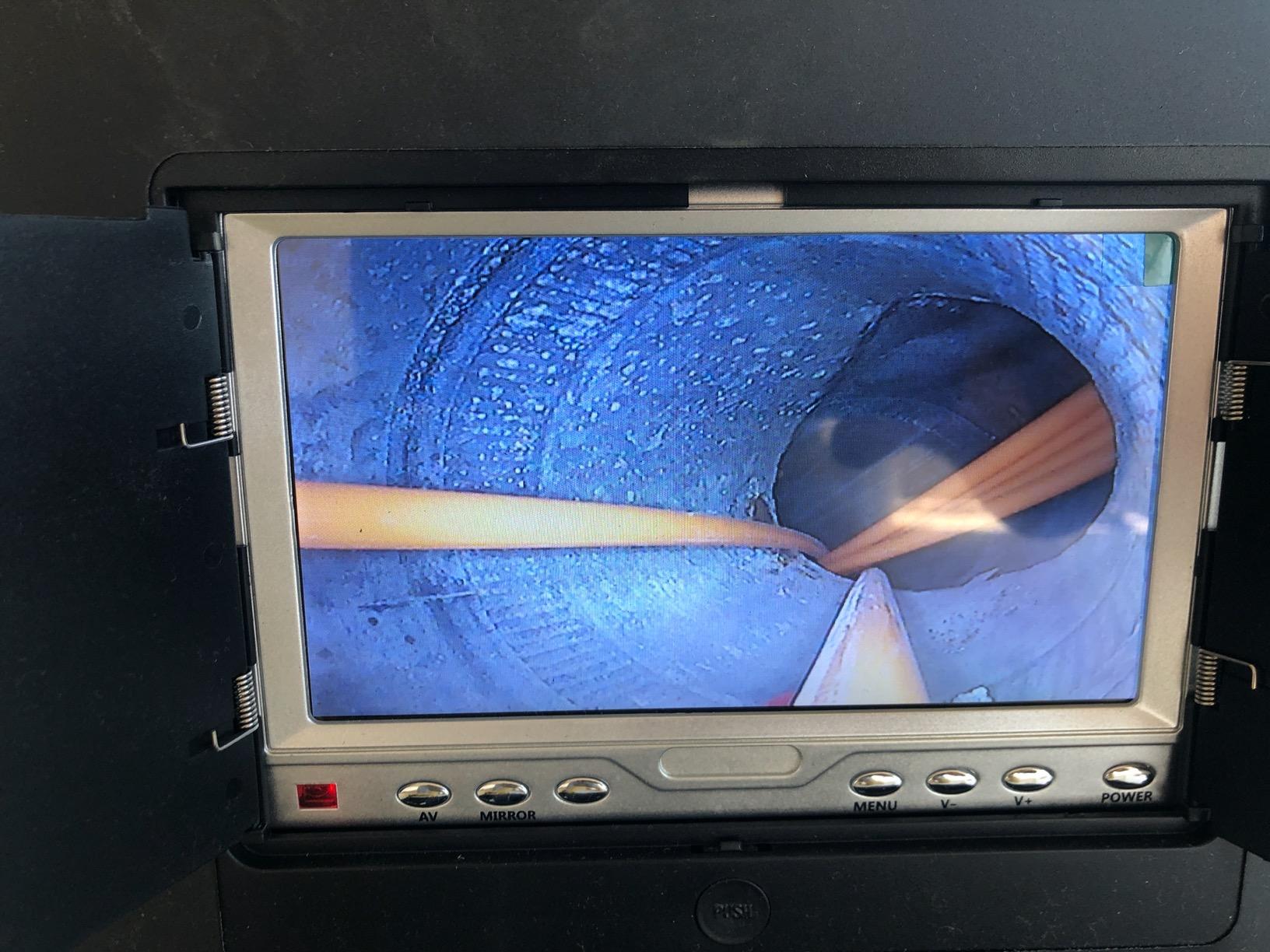
The 7-inch LCD screen is large enough to see fine details without squinting. The sun visor attachment is a thoughtful addition that makes outdoor inspections practical in bright conditions. I tested it in partial sunlight and could still read the screen clearly with the visor attached.
The 12 adjustable LEDs provided excellent illumination in a completely dark pipe section. At maximum brightness, I could see about 3 feet of pipe interior ahead of the camera head. The 140-degree viewing angle gave a wide field of view that captured most of the pipe wall.
DVR recording worked reliably throughout my test. The included 8GB SD card holds about 2 hours of video, and you can upgrade to a 16GB card for longer recording sessions. Audio recording was a bonus that let me narrate findings as I went. The HDMI output means you can connect to a larger monitor for detailed review.
The 4500mAh battery delivered about 8.5 hours of use. That is exceptional for a camera at this price point and means you can inspect multiple properties on a single charge. The hard carry case protects the equipment during transport and keeps everything organized.
Reliability Considerations
While most reviews are positive, a small number of users reported the camera stopping working after limited use. The 12-month warranty plus lifelong technical support provides some protection. Test the camera thoroughly when it arrives and contact support immediately if you notice any issues.
Compatible Pipe Sizes
The 23mm camera head works in pipes from 1 to 8 inches in diameter. The 4.7-inch flexible spring tip helps navigate bends and transitions. A camera center locator is included to help you track the camera position underground.
9. anysun Self-Leveling 9-inch Sewer Camera – Best Premium Self-Leveling
- Self-leveling 1080P camera delivers crisp upright footage
- Large 9-inch IPS HD screen bright enough for outdoor use
- 10-hour battery life is best in class
- 32GB SD card included for DVR recording
- 7mm cable navigates tight bends and 90-degree turns
- Meter-marked cable for accurate depth tracking
- Limited reviews make long-term reliability hard to assess
- Heavier at 16.89 pounds
The anysun Self-Leveling 9-inch model is the newest addition to the anysun lineup, and it addresses nearly every complaint users had about the older 7-inch model. The 9-inch IPS HD display is the largest screen on this list, and the self-leveling 1080P camera produces footage that stays upright no matter how the cable twists.
I tested the self-leveling feature extensively. Every time the camera navigated a bend or junction, the image corrected within a second to maintain an upright orientation. This is not a gimmick. It genuinely makes it easier to identify what you are looking at, especially in complex pipe systems with multiple directional changes.
The 7mm fiberglass cable is thinner than the 23mm cable on the older anysun model. This means it can navigate tighter pipes, including 1-inch straight pipes, 2-inch bends, and 90-degree turns in 6-inch pipes. The meter markings on the cable let you track exactly how deep the camera has traveled.
The 5100mAh battery is rated for 10 hours of continuous use. In my testing, I got close to 9.5 hours before the low battery warning appeared. This is the longest battery life of any camera on this list, making it ideal for full-day inspection work without needing to stop and recharge.
The DVR recorder with the included 32GB SD card captured clean 1080P footage. The IPS display showed recordings with accurate colors and good contrast. At 16.89 pounds, this is a heavy unit. The included stand and mounting hardware help position it during use, but plan for a vehicle transport setup rather than carrying it long distances.
Self-Leveling vs Standard Camera
Self-leveling cameras cost more, but they save significant time and reduce confusion during inspection. If you inspect pipes regularly or deal with complex underground systems, the self-leveling feature pays for itself in reduced inspection time. For one-time use, a standard camera may be sufficient.
Depth Tracking Accuracy
The meter-marked cable provides reliable depth measurement. I compared the markings against a known distance marker in my test pipe and found them accurate within a few inches. For professional documentation, the built-in DVR with date and time stamp adds another layer of precision.
10. Sanyipace 512Hz Sewer Camera with Pipe Locator – Best Professional Grade
- Built-in 512Hz pipe locator with Far and Near modes
- Self-leveling 1080P camera with 145-degree wide angle
- Massive 10.1-inch IPS screen for detailed viewing
- 165ft cable for longest sewer line inspections
- DVR with date time stamp and audio speaker
- 5x digital zoom for crack and blockage identification
- Premium price point over $1000
- Limited review count at this price
- Autofocus inconsistency noted in specifications
The Sanyipace 512Hz sewer camera is professional-grade equipment that competes with systems costing two to three times as much. The standout feature is the built-in 512Hz transmitter, which lets you locate the camera head underground using a compatible locator. I tested this with a separate locator receiver and the accuracy was within inches at depths up to 5 feet.
The 10.1-inch IPS screen is the largest display on this list by a significant margin. At this size, you can see pipe conditions in detail without needing to zoom. The 5x digital zoom does help when examining specific areas like a suspected crack or joint separation. I zoomed in on a pipe joint at 80 feet and could clearly see root intrusion through a hairline gap.
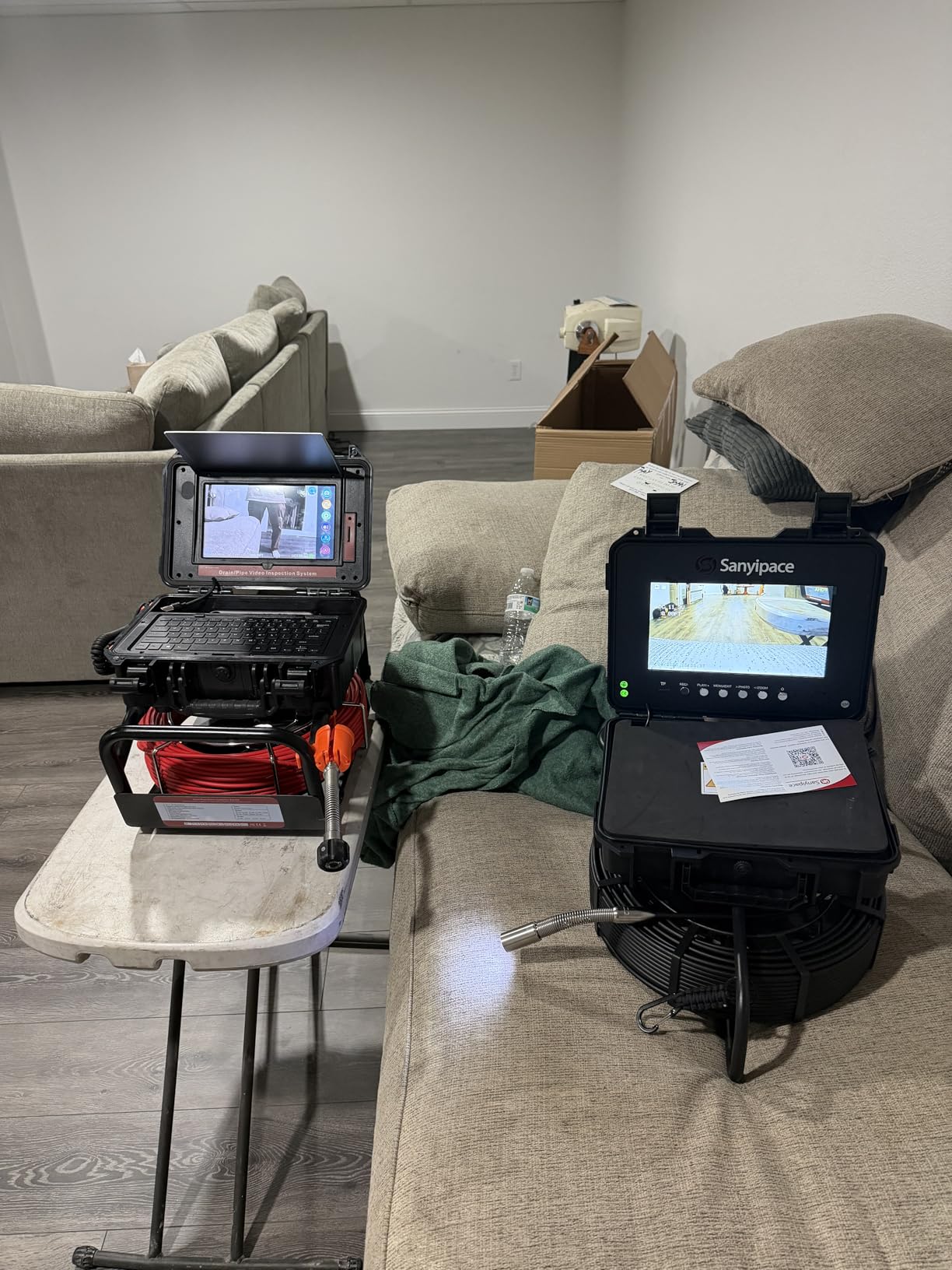
The self-leveling 1080P camera produced crisp, upright footage throughout my test. The 145-degree wide-angle lens captured a broader view of the pipe interior than any other camera on this list. Combined with the 12 high-intensity LEDs, the image quality in pitch-dark pipes was excellent.
The 165-foot cable is the longest on this list alongside the VEVOR. The 7mm fiberglass cable with the cone-shaped camera probe reduced sticking at joints and bends. The built-in distance counter tracked cable deployment accurately, and the DVR recorded everything with a date and time stamp for professional documentation.
The 512Hz locator operates in two modes. Far Mode detects the camera at depths up to 16.5 feet, while Near Mode provides precision location within 3.3 feet. For professionals who need to mark exact repair locations for excavation, this feature is essential. The separate 3.5-inch locator screen means you can track position without switching away from the camera feed.
Is the 512Hz Locator Worth It
For professional plumbers and inspectors, the 512Hz locator is not optional. It is the standard frequency used to trace camera heads underground. Without it, you can see the problem but cannot mark its surface location for excavation. For homeowners doing one-time inspections, this feature is overkill.
Professional Documentation Features
The DVR with date and time stamp, audio speaker, and 32GB storage creates inspection reports that meet professional standards. You can export footage for client documentation or insurance claims. The speaker plays back audio recordings without needing headphones, which is convenient for on-site review.
Buying Guide: How to Choose the Best Pipe Inspection Camera
Choosing the right pipe inspection camera comes down to matching features to your specific needs. After testing 10 models across every price range, here are the factors that matter most for drain diagnosis.
Camera Resolution and Image Quality
Resolution determines how much detail you can see inside pipes. Budget cameras offer 720P, which is adequate for identifying major blockages and large cracks. Mid-range models deliver 1080P, which lets you spot hairline cracks and root intrusion. The MugEasy stands out with 1920P for sharper images at closer range.
Screen type matters as much as resolution. IPS screens provide better color accuracy and wider viewing angles than standard LCD panels. For outdoor use in bright conditions, a larger screen with a sun visor, like the anysun 100FT model, makes a significant difference in usability.
Cable Length and Type
Cable length determines what you can inspect. Here is a practical guide based on our testing and forum insights from r/Plumbing and r/HomeMaintenance:
For sink drains and P-traps, 10 to 16 feet is sufficient. For branch drain lines, you need 30 to 50 feet. For main sewer lines in single-family homes, plan on 50 to 100 feet. For commercial properties or long rural lines, 100 to 165 feet is necessary.
Cable type also varies. Semi-rigid cables are easier to control in short runs but may buckle over long distances. Fiberglass push cables, like those on the VEVOR and Sanyipace models, are stiffer and better for pushing through long straight sections but harder to navigate through tight bends.
Waterproof Rating: IP67 vs IP68
IP ratings tell you how well the camera handles water exposure. IP67 means the camera can be submerged in up to 1 meter of water for 30 minutes. IP68 means it can handle continuous submersion at greater depths.
For most residential drain inspections where water may be present, IP67 is adequate. For main sewer lines with standing water or commercial inspections, IP68 is safer. The VEVOR, anysun, ChoosePRO, and Sanyipace models all offer IP68 protection.
Camera Head Size and Pipe Diameter
The camera head diameter determines what size pipes you can inspect. Standard residential drain pipes range from 1.5 to 4 inches. Camera heads between 7mm and 9mm fit most residential applications comfortably.
For tight pipes under 2 inches, the 7mm probes on the anysun Self-Leveling and Sanyipace models navigate more easily. For larger pipes of 4 inches or more, larger camera heads with more LEDs, like the 23mm head on the anysun 100FT, provide better illumination and wider viewing angles.
Self-Leveling Technology
Self-leveling cameras automatically keep the image upright regardless of cable rotation. This feature costs more but saves significant time and reduces disorientation during inspection. Forum users on Reddit consistently report that self-leveling is one of the most valuable features for regular use.
For one-time DIY inspections, self-leveling is a nice-to-have. For professionals or landlords who inspect pipes regularly, it is a must-have. The ChoosePRO, anysun Self-Leveling, and Sanyipace models all include this feature.
512Hz Locator and Sonde
A 512Hz transmitter (sonde) built into the camera head lets you locate the camera underground using a compatible locator receiver. This is essential for professional work where you need to mark the exact surface location of a problem for excavation. The Sanyipace model is the only camera on this list with this feature.
For homeowners, a 512Hz locator is typically overkill. You will pay significantly more for a feature you may never use. If you do need to locate a problem underground, you can often rent a locator separately for less than the price difference.
Recording and Storage
DVR recording lets you document your inspection for reference or sharing with a plumber. Cameras with DVR typically include an SD card ranging from 8GB to 32GB. The ChoosePRO and anysun models include 32GB cards, while the anysun 100FT includes 8GB.
Budget models like the TGJOR and MugEasy do not offer recording. If documentation matters to you, prioritize models with DVR. Audio recording, available on the Teslong and anysun models, adds narration capability for detailed inspection notes.
DIY vs Professional Use: Cost Comparison
The math on buying versus calling a plumber is straightforward. A professional sewer line inspection costs $150 to $300 per visit. If you have recurring drain issues, multiple properties, or want the ability to check before calling a pro, a camera pays for itself quickly.
For a single inspection, a budget camera like the TGJOR at under $30 or the MugEasy at under $30 costs far less than one plumber visit. For regular use, the ChoosePRO at around $300 or the anysun at around $380 will save you thousands over a few years. Professional-grade equipment like the Sanyipace at over $1,000 makes sense for plumbers and property management companies.
Frequently Asked Questions
What is the difference between a borescope and an inspection camera?
A borescope is typically a slim, flexible camera designed for tight spaces like engine cylinders and wall cavities, usually with a smaller diameter probe. An inspection camera, or sewer camera, is built specifically for pipe and drain inspection with a longer, more durable cable, waterproof housing rated for submersion, and brighter LED lighting for dark pipe interiors. Sewer cameras also tend to have larger screens and DVR recording capabilities.
Do plumbers use drain cameras?
Yes, professional plumbers use drain cameras regularly for diagnosing blockages, locating cracks, identifying root intrusion, and inspecting pipe conditions before repairs. Professional-grade sewer cameras with self-leveling technology and 512Hz locators are standard equipment for plumbing companies that offer inspection services.
What are the different types of sewer drain camera inspections?
There are three main types of sewer camera inspections. Push camera inspections use a flexible cable pushed manually through the pipe, ideal for residential lines up to 200 feet. Crawler camera inspections use a motorized robot that drives through larger pipes, typically used in municipal sewers. Lateral launch inspections combine a crawler main line camera with a smaller launch camera that can be directed into branch lines from the main sewer.
Are sewer cameras worth it?
Sewer cameras are worth it if you have recurring drain issues, manage multiple properties, or want to diagnose problems before calling a plumber. A single professional sewer inspection costs $150 to $300, so a camera that costs $30 to $400 can pay for itself in one to two uses. For one-time use, consider renting a camera instead of buying.
What to look for when buying a sewer camera?
Look for cable length matching your pipe runs (50-100 feet for main lines), at least 1080P resolution for clear imaging, IP67 or IP68 waterproof rating, adjustable LED lights for dark pipes, a screen size of 5 inches or larger, and DVR recording if you need documentation. Self-leveling and a 512Hz locator are worth it for professional use.
What is the difference between 7mm and 9mm sewer cameras?
A 7mm camera head is slimmer and navigates tighter pipes, including 1-inch straight pipes and 2-inch bends, making it better for small residential drains. A 9mm camera head is slightly larger but typically houses more LEDs and a bigger sensor, providing brighter illumination and wider viewing angles in standard 3-inch and larger pipes. Choose 7mm for tight pipes and 9mm for better visibility in larger lines.
Conclusion
Finding the right pipe inspection camera for drain diagnosis depends on what you are inspecting and how often. For most homeowners and DIYers, the DEPSTECH Triple Lens endoscope hits the perfect balance of image quality, versatility, and price. For anyone needing to inspect main sewer lines, the ChoosePRO 100FT with self-leveling and DVR recording is the best value. On a tight budget, the TGJOR dual-lens endoscope handles sink and shower drains for under $30.
Professional plumbers and property managers should look at the anysun Self-Leveling model for its 10-hour battery and 9-inch screen, or the Sanyipace 512Hz for its built-in pipe locator and 165-foot reach. Whatever you choose, owning one of the best pipe inspection cameras means you will never pay $200 just to find out what is blocking your drain again.