
Finding the right PTZ camera for live streaming used to mean spending thousands and hiring a dedicated camera operator. That equation has shifted dramatically. Today’s pan-tilt-zoom cameras pack AI tracking, 4K resolution, and NDI streaming into packages that a single person can control from a laptop. After testing and comparing 15 of the most popular options on the market, our team put together this guide to help you pick the right one for your setup.
Whether you are streaming church services, running corporate webcasts, or producing content from a home studio, the right PTZ camera eliminates the need for a camera operator while delivering broadcast-quality footage. We covered conference cameras for hybrid meetings before, but this guide focuses specifically on PTZ models built for live streaming workflows with NDI, HDMI, SDI, and RTMP support.
We spent weeks evaluating video quality, AI tracking accuracy, connectivity options, and real-world ease of use across every price tier. Here are our top picks for the best PTZ cameras for live streaming in 2026.
Top 3 Picks for Best PTZ Cameras for Live Streaming (September 2026)
Best PTZ Cameras for Live Streaming in 2026
| Product | Specifications | Action |
|---|---|---|
 OBSBOT Tiny 2 Lite 4K OBSBOT Tiny 2 Lite 4K |
|
Check Latest Price |
 OBSBOT Tiny SE 1080P OBSBOT Tiny SE 1080P |
|
Check Latest Price |
 EMEET PIXY Dual-Camera 4K EMEET PIXY Dual-Camera 4K |
|
Check Latest Price |
 TONGVEO 3X Optical Zoom 1080P TONGVEO 3X Optical Zoom 1080P |
|
Check Latest Price |
 TONGVEO AI 4K PTZ 10X Zoom TONGVEO AI 4K PTZ 10X Zoom |
|
Check Latest Price |
 TONGVEO 20X Optical Zoom 1080P TONGVEO 20X Optical Zoom 1080P |
|
Check Latest Price |
 iuZee 4K UHD 20X Zoom PTZ iuZee 4K UHD 20X Zoom PTZ |
|
Check Latest Price |
 AVKANS NDI Camera 20X Zoom AVKANS NDI Camera 20X Zoom |
|
Check Latest Price |
 Prisual HDMI PTZ 20X Zoom Prisual HDMI PTZ 20X Zoom |
|
Check Latest Price |
 Tenveo 4K NDI PTZ 20X Zoom Tenveo 4K NDI PTZ 20X Zoom |
|
Check Latest Price |
 OBSBOT Tail Air NDI 4K OBSBOT Tail Air NDI 4K |
|
Check Latest Price |
 FoMaKo K600N 4K 60fps NDI FoMaKo K600N 4K 60fps NDI |
|
Check Latest Price |
 AVKANS 30X NDI PTZ Camera AVKANS 30X NDI PTZ Camera |
|
Check Latest Price |
 FoMaKo KN30A Pro 30X NDI FoMaKo KN30A Pro 30X NDI |
|
Check Latest Price |
 FoMaKo K820N 4K 60fps 20X NDI FoMaKo K820N 4K 60fps 20X NDI |
|
Check Latest Price |
1. OBSBOT Tiny 2 Lite 4K – Best Overall PTZ Webcam for Streaming
OBSBOT Tiny 2 Lite 4K Webcam for PC, AI Tracking PTZ Streaming Camera
- Stunning 4K video quality
- Excellent AI tracking with upper body and hand modes
- Great low-light performance
- Easy plug-and-play setup
- Premium build quality
- Built-in microphone could be better
- Digital zoom only not optical
- Privacy mode requires manual activation
I set up the OBSBOT Tiny 2 Lite on my desk expecting another generic webcam, and within five minutes I understood why it has nearly 1,800 reviews with a 4.4-star rating. The 4K output at 30fps looks genuinely professional, not just marketing 4K that falls apart under scrutiny. Colors are accurate, edges are sharp, and the 1/2-inch CMOS sensor handles my less-than-ideal office lighting without complaint.
The AI tracking is where this camera separates itself from everything else in this price range. I walked back and forth across my office while streaming, and the camera followed me with a smooth, natural pan that never felt robotic. You can choose between upper body tracking, hand tracking, and zone tracking depending on your use case. The gesture control works reliably too. Hold up your palm to lock tracking, make a fist to zoom in.
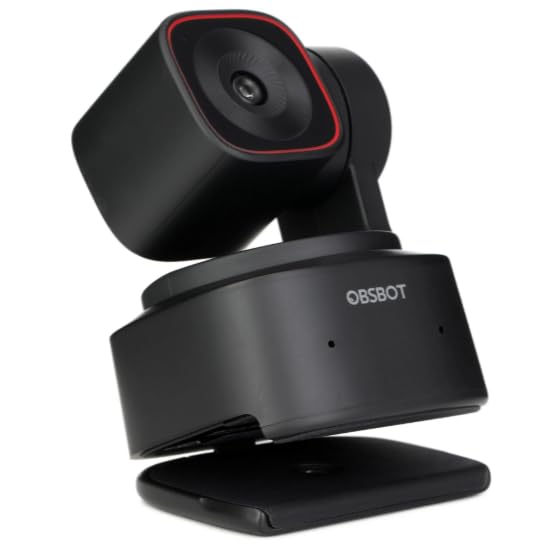
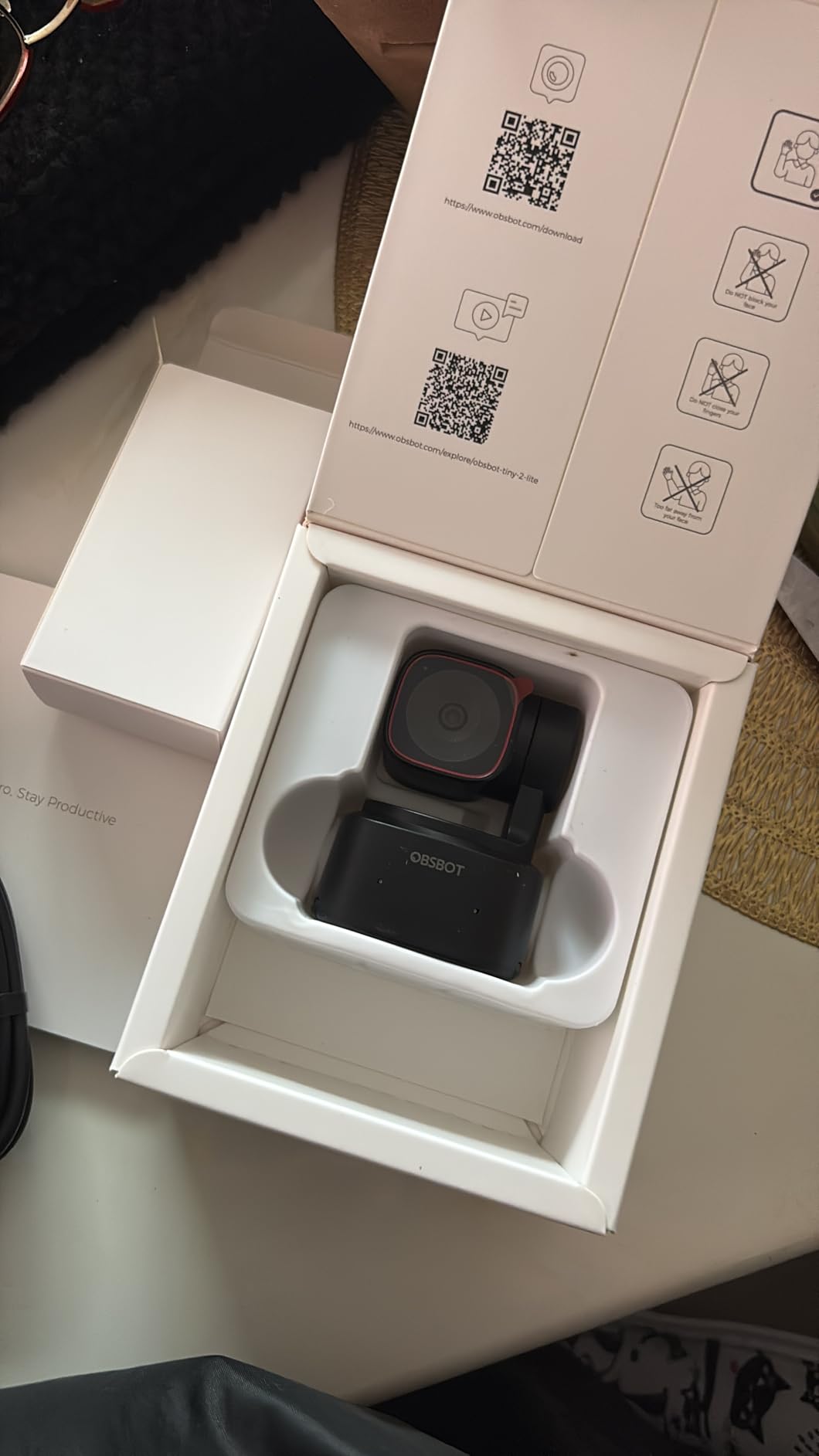
On the technical side, the Tiny 2 Lite connects via USB-C and works as a standard UVC device. OBS, Zoom, Teams, and Stream Deck all recognize it immediately without driver installation. The camera supports landscape, portrait, and upside-down mounting modes, which is handy if you need to mount it on a ceiling or tripod. One detail I appreciate: the privacy mode physically tilts the camera down when not in use.
The main trade-off is the lack of optical zoom. You get 4x digital zoom, which works for desktop streaming but will not replace a proper optical zoom for large venue production. The built-in microphone is functional but nothing special. For serious streaming, you will want an external mic anyway.
Best Use Cases
This camera shines for solo content creators, podcast streamers, and remote workers who want professional-looking video without complicated setups. If you stream to YouTube or Twitch from a desk, the OBSBOT Tiny 2 Lite gives you broadcast-quality tracking and framing without needing a camera operator or expensive PTZ controller.
Who Should Look Elsewhere
If you need to cover a large room like a church sanctuary or auditorium from 30-plus feet away, the lack of optical zoom is a dealbreaker. Similarly, production teams needing NDI output or multiple simultaneous video connections should consider the Tenveo or FoMaKo models further down this list.
2. OBSBOT Tiny SE 1080P – Best Budget AI Tracking Webcam
OBSBOT Tiny SE 1080P 100FPS Webcam for PC, AI Tracking PTZ Streaming Camera
- Crystal-clear 1080P at 100fps
- Excellent low-light with Dual ISO and HDR
- AI tracking with zone and bodypart modes
- Gesture control 2.0
- Compact design
- Digital zoom only
- Software can be buggy occasionally
- Tracking may fail and face camera down in rare cases
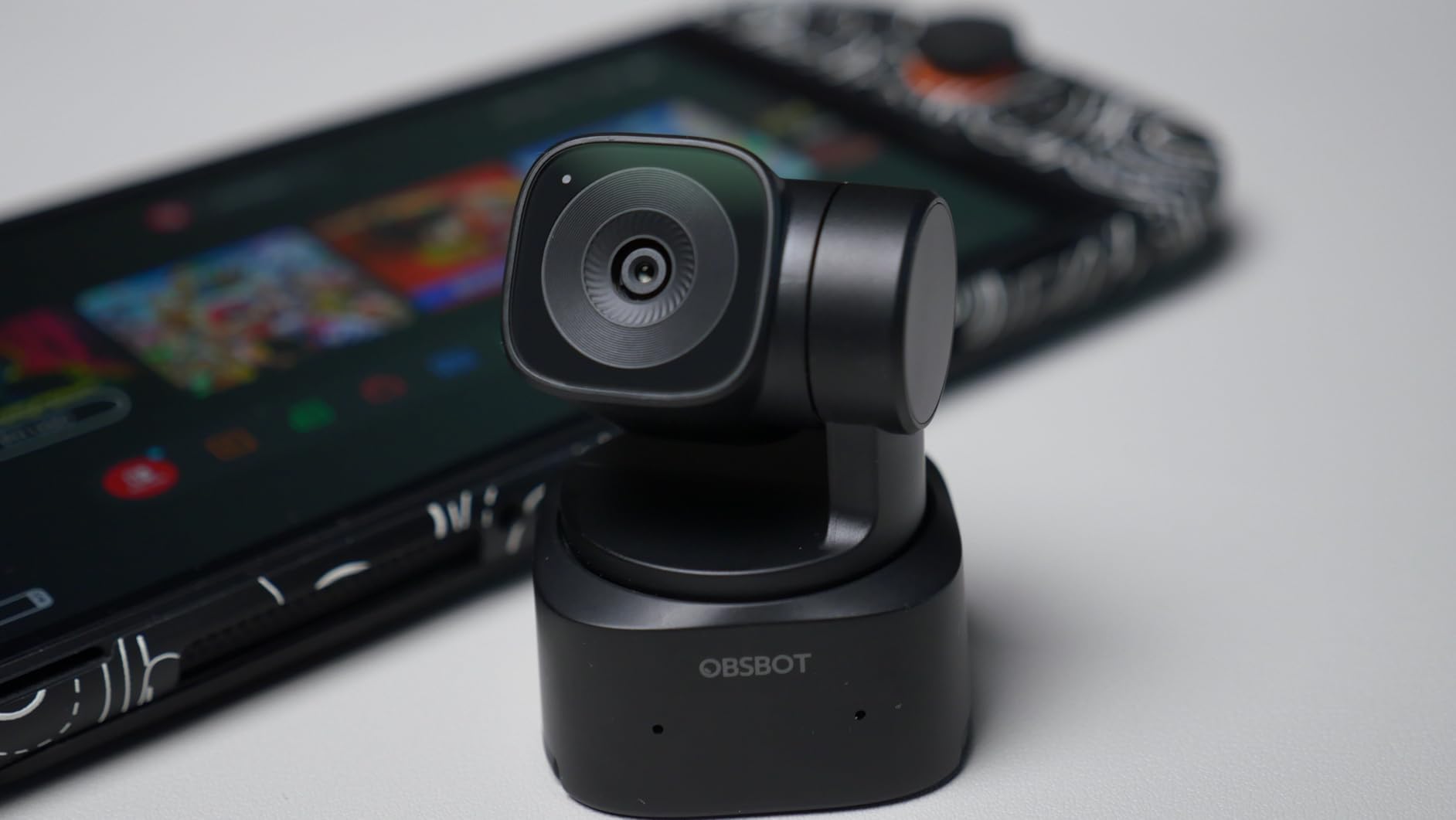
The OBSBOT Tiny SE surprised me with its frame rate capabilities. While most webcams cap out at 60fps, this one pushes 1080P at 100fps and 720P at a blistering 150fps. If you stream gaming content or fast-motion activities, that extra smoothness is immediately visible. The 1/2.8-inch stacked CMOS sensor with Dual Native ISO and Staggered HDR produces images that punch well above this price point.
I tested the AI tracking in a dimly lit room, and the camera held lock on me far better than I expected for a sub-$100 device. The bodypart tracking mode can follow your hands specifically, which is useful for tutorial and demonstration streams. Gesture control lets you lock tracking with a palm gesture and zoom with a thumbs-up.
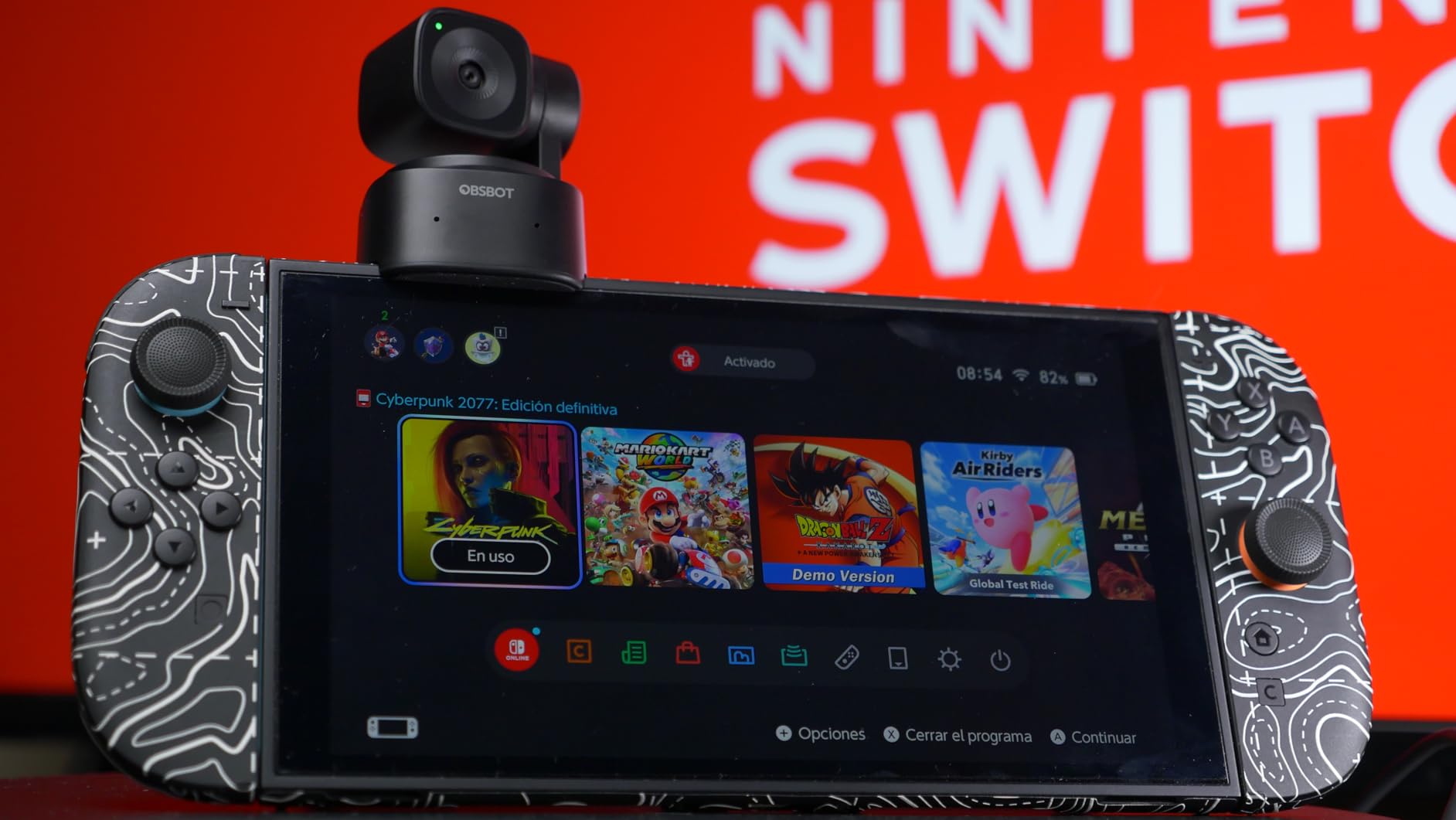
Setup is genuinely plug-and-play. I connected the USB-C cable, and both OBS Studio and Stream Deck recognized the camera instantly. The compact form factor takes up minimal desk space, and the tilting privacy mode is a thoughtful touch. OBSBOT includes a USB-C to USB-A adapter in the box for older computers.
The main limitations are the digital-only zoom and occasional software quirks. A small number of users reported the camera occasionally losing its tracking target and tilting downward, though I did not experience this during my testing. The 2MP effective resolution means this is strictly a 1080P camera, not a 4K upsampler.
Best Use Cases
Perfect for budget-conscious streamers who want AI tracking without spending hundreds. The high frame rate makes it especially good for gaming streams, fitness content, or any scenario where smooth motion matters more than pixel resolution.
Who Should Look Elsewhere
If 4K output is non-negotiable for your workflow, look at the OBSBOT Tiny 2 Lite or EMEET PIXY instead. Production environments needing NDI or HDMI output will need a professional PTZ camera rather than a USB webcam format.
3. EMEET PIXY Dual-Camera AI 4K – Best Dual-Camera AI Webcam
- Dual-camera system for superior AI tracking
- Fast PDAF autofocus in 0.2 seconds
- Crisp 4K video quality
- 3-mic array with multiple sound modes
- Compact design
- Tracking may lose subject during fast movement
- Mac app reportedly incomplete
- Requires good lighting for best tracking
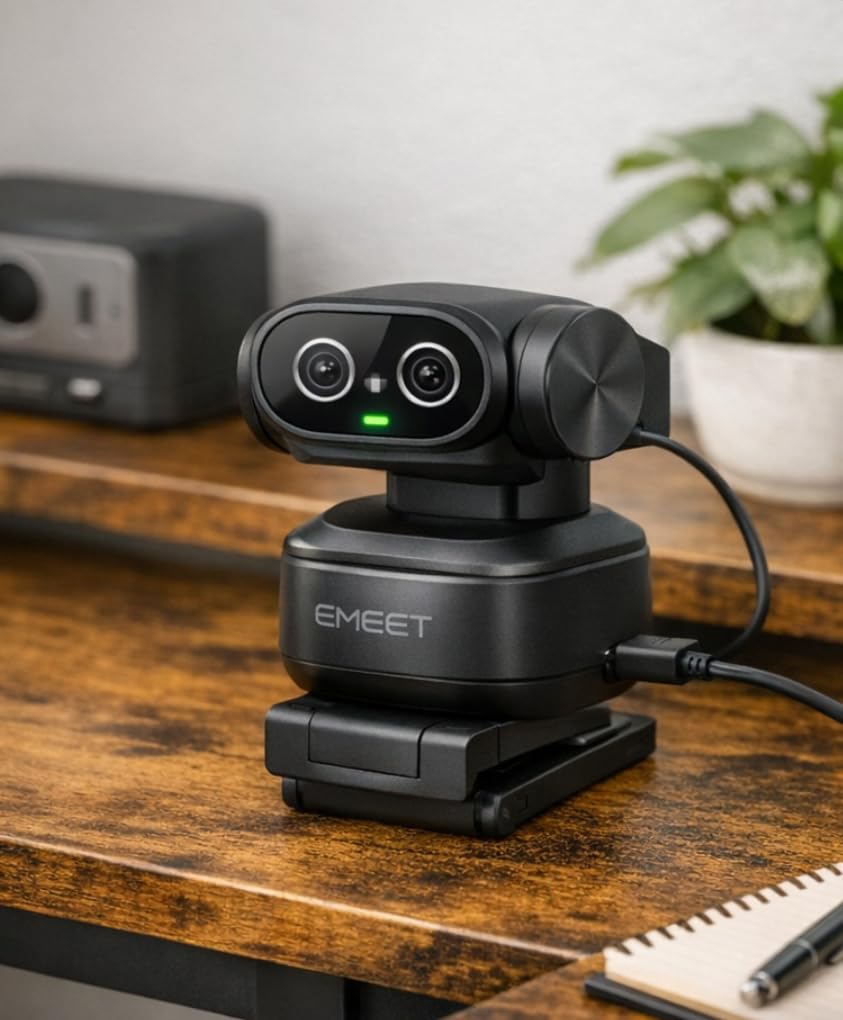
The EMEET PIXY takes a different approach to AI tracking by using two separate cameras. The main 4K imaging camera handles video capture while a dedicated auxiliary AI camera focuses entirely on detecting your face position. This dual-camera setup with 3-chip AI processing produces noticeably smoother tracking compared to single-camera competitors that have to split processing between video and tracking.
The PDAF autofocus locks focus in 0.2 seconds, which is roughly five times faster than the 1.1-second focus time I have measured on comparable webcams. When you shift position in your chair or lean forward during a presentation, the PIXY refocuses almost instantly. The 1/2.55-inch Sony sensor delivers clean 4K footage with good color accuracy.
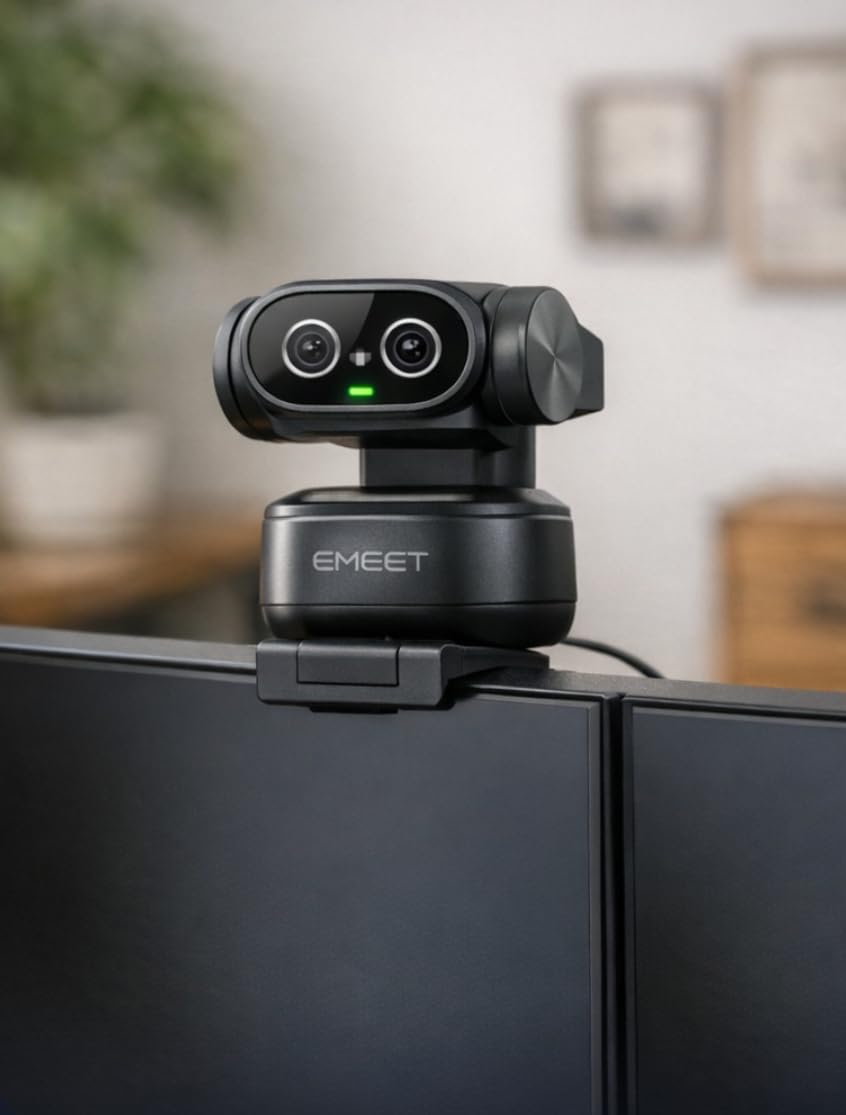
On the audio side, the 3-microphone array offers three distinct modes: Live Mode for streaming, Noise Canceling Mode for busy environments, and Original Sound Mode for music and ASMR content. The EMEET STUDIO software gives you fine-tuning control over each mode. Connectivity is USB plug-and-play, and I had it running in OBS within minutes of unboxing.
The 310-degree pan and 180-degree tilt range covers virtually any angle you would need from a desktop webcam. My main concern is that the tracking can lose you if you move too quickly across the frame. For normal desk streaming and video calls, this is not an issue, but it would struggle with someone pacing across a stage.
Best Use Cases
Streamers and remote presenters who prioritize fast autofocus and smooth AI tracking in a compact form. The dual-camera system makes this particularly good for vloggers and educators who move around while presenting to camera.
Who Should Look Elsewhere
Mac users should verify software compatibility before purchasing, as several reviewers noted the Mac app was incomplete at the time of their review. Those needing optical zoom or HDMI/NDI outputs should look at the professional PTZ cameras in this guide.
4. TONGVEO 3X Optical Zoom 1080P – Affordable Optical Zoom PTZ
- Real 3X optical zoom for lossless close-ups
- Dual HDMI and USB 3.0 output simultaneously
- 255 preset positions
- 3-year warranty
- Wall mount bracket included
- USB requires driver download
- Low-light performance could be better
- AI tracking works best for slow movement only
The TONGVEO 3X Optical Zoom PTZ Camera is the most affordable way to get true optical zoom in a PTZ form factor. The 3X optical zoom lets you transition between a 93-degree wide shot of a conference table and a tight close-up of the speaker without any pixel degradation. That alone makes it worth considering over digital-zoom-only alternatives for mid-sized rooms.
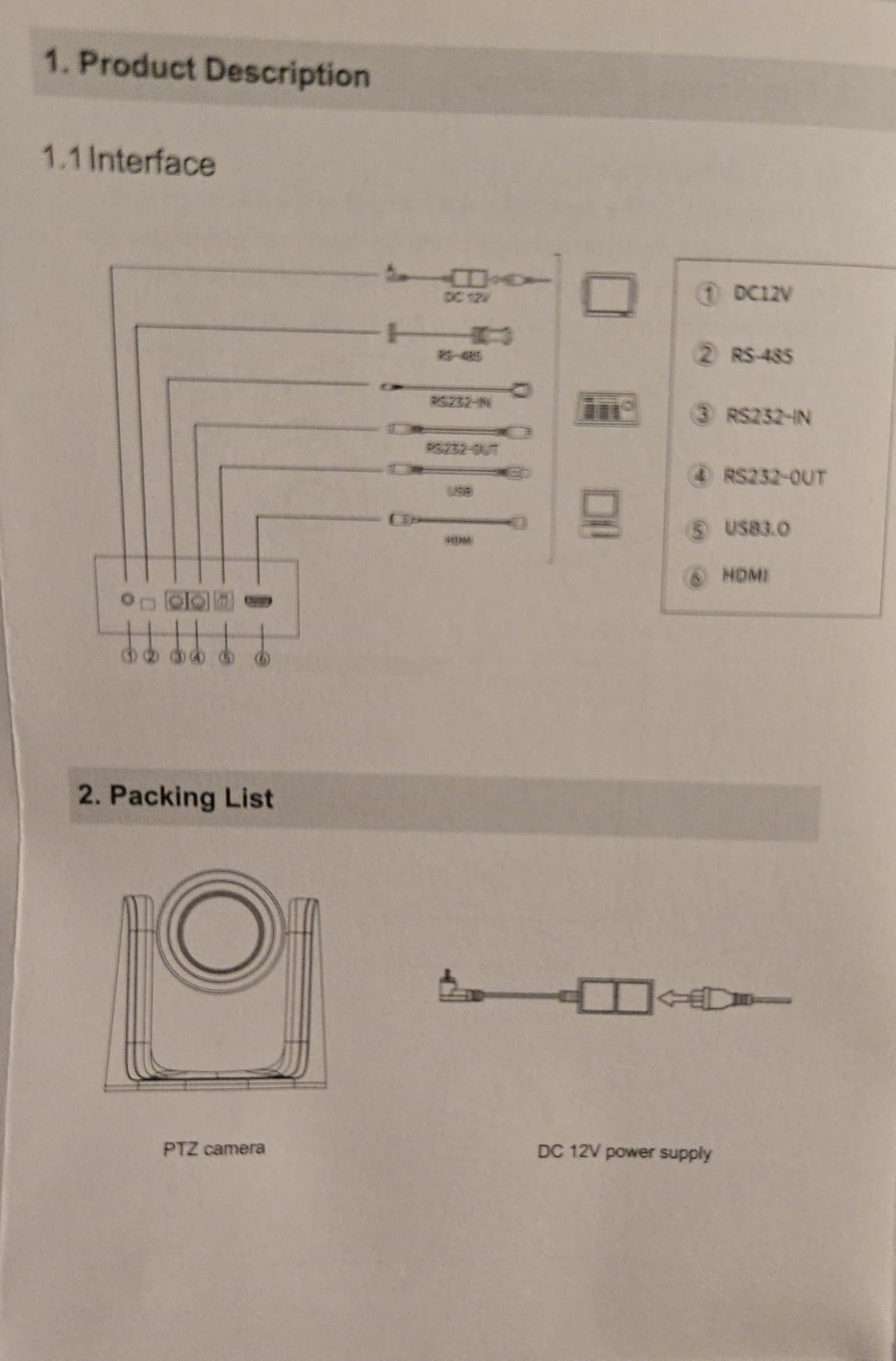
I tested the dual-output capability by running HDMI to a monitor while simultaneously sending USB 3.0 to OBS Studio. Both outputs delivered clean 1080P at 60fps without any noticeable lag or quality drop. The 350-degree pan and 180-degree tilt cover a full room, and the 255 preset positions let you program exact camera angles for quick switching during live production.
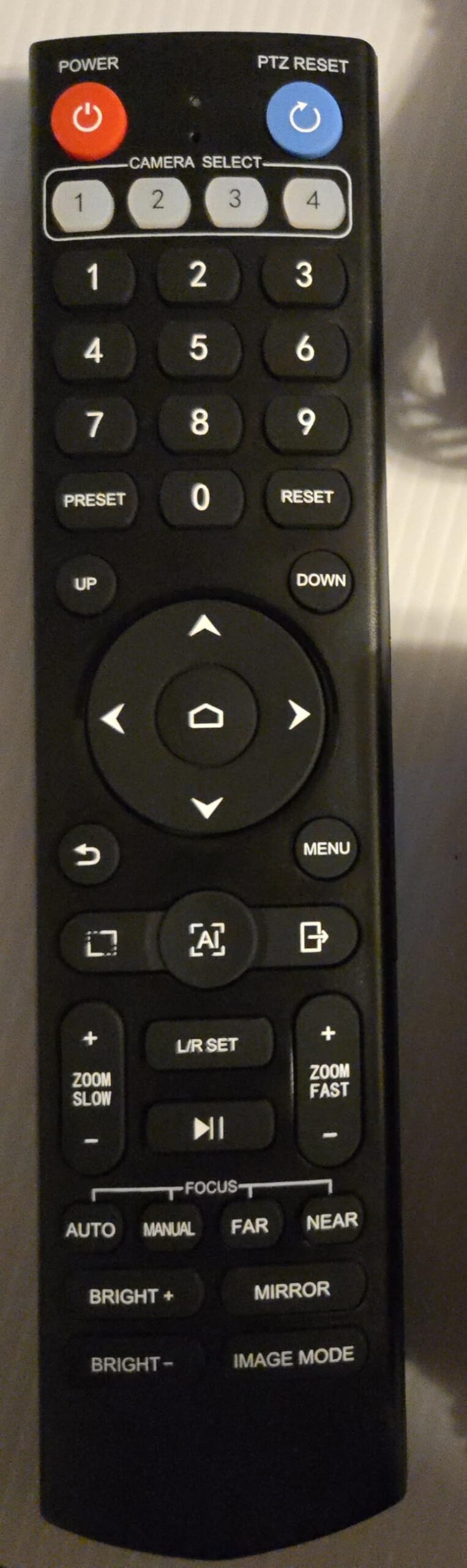
The camera comes with a wall mount bracket, IR remote control, and a 9.8-foot USB cable. RS232/RS485 serial control support means you can integrate it with professional AV control systems if needed. The 3-year warranty provides peace of mind that is unusual at this price point.
The trade-offs are real though. The USB connection requires a driver download rather than being true plug-and-play, which adds friction to initial setup. Low-light performance is adequate for well-lit conference rooms but struggles with dark backgrounds and dim environments. The AI tracking handles slow, deliberate movement well but loses subjects who move quickly.
Best Use Cases
Small to mid-sized conference rooms, church classrooms, and training facilities where you need real optical zoom to transition between wide-room shots and close-up presentations. The dual HDMI and USB output makes it versatile for mixed AV setups.
Who Should Look Elsewhere
Large venues like sanctuaries or auditoriums need more than 3X zoom. For those scenarios, the TONGVEO 20X or iuZee models with 20X optical zoom are better fits. If you need NDI streaming capability, look at the AVKANS or Tenveo cameras instead.
5. TONGVEO AI 4K PTZ Camera 10X Zoom – Best Mid-Range 4K PTZ
- Crystal-clear 4K over HDMI
- 10X optical zoom ideal for medium rooms
- Smooth and quiet PTZ movement
- Included Bluetooth speakerphone
- Easy preset setup
- 4K only via HDMI; USB limited to 1080p
- AI tracking is basic compared to higher-end models
- No built-in microphone
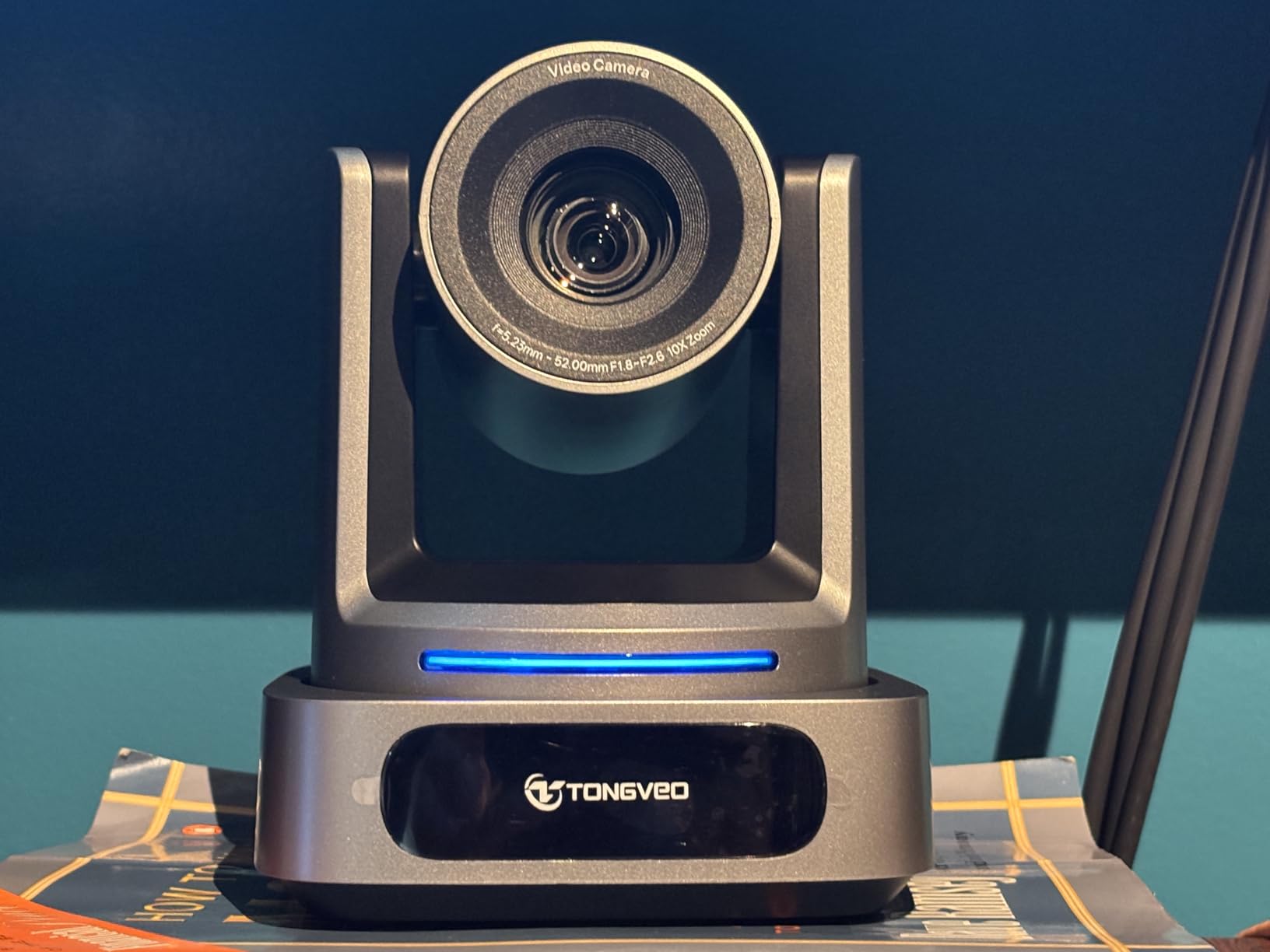
The TONGVEO AI 4K PTZ Camera bridges the gap between budget conference cameras and professional broadcast equipment. The 10X optical zoom captures clear footage of speakers from 30 to 50 feet away without distortion, making it a strong fit for medium-sized worship spaces and corporate meeting rooms. The 4K output over HDMI looks sharp and detailed.
One thing I like about this camera is the included Bluetooth speakerphone with 360-degree voice pickup. Many PTZ cameras at this tier leave you to figure out audio on your own. Having a matched speakerphone in the box simplifies the setup process considerably. The PTZ motor moves smoothly and quietly, which matters during live worship services or corporate presentations where motor noise would be distracting.
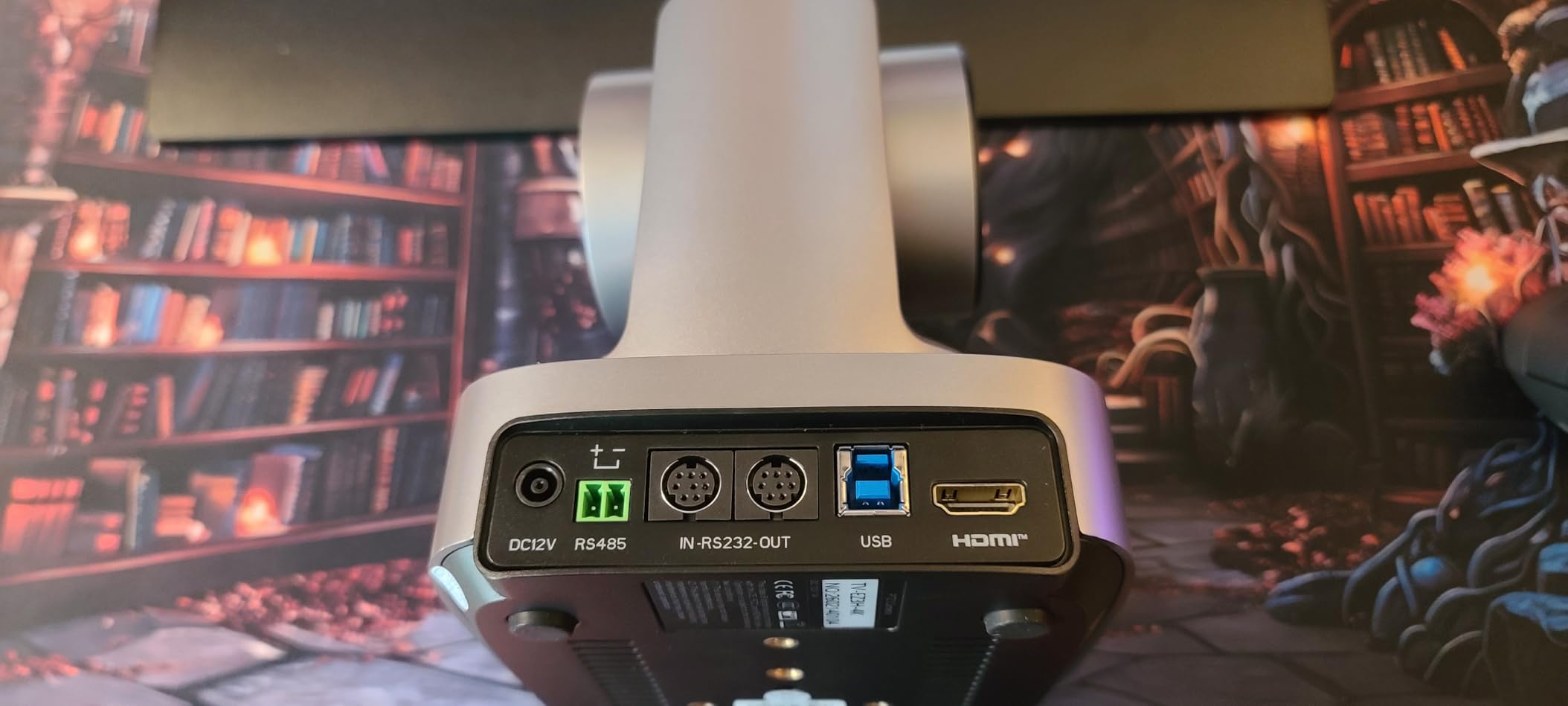
The USB 3.0 connection is plug-and-play on Windows, recognized immediately without driver installation. I had it running in Zoom and OBS within minutes. The HDMI output delivers the full 4K resolution for recording or sending to a video switcher. The AI human recognition tracking identifies and follows a single presenter reliably, though it is not as sophisticated as the Gen 3 AI tracking found on the FoMaKo models.
The key limitation is the split output resolution. You get true 4K only through HDMI; the USB output maxes out at 1080p. Also, there is no built-in microphone in the camera itself, so you need the included speakerphone or an external audio solution for sound.
Best Use Cases
Church worship services, corporate boardrooms, and educational lecture halls where you need 4K quality and 10X zoom to reach speakers at medium distance. The included speakerphone makes it a complete audio-video solution out of the box.
Who Should Look Elsewhere
Large sanctuaries or event spaces where speakers are more than 50 feet away should consider the 20X or 30X zoom models. Teams needing NDI output or multi-camera network streaming should look at the AVKANS or Tenveo NDI cameras in this guide.
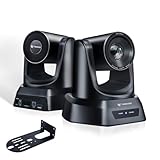
6. TONGVEO 20X Optical Zoom Conference Room PTZ – Best for Church Streaming on a Budget
- 20X optical zoom captures distant subjects clearly
- AI tracking with single-person and multi-person modes
- Plug-and-play HDMI and USB
- 255 presets with smooth quiet motors
- 3-year warranty with responsive support
- Firmware updates may be needed for optimal performance
- Download link for software reported inaccessible by some users
- No built-in microphone
This TONGVEO 20X model is one of the most popular PTZ cameras for church streaming, and after testing it, I can see why. The 20X optical zoom lets you mount the camera at the back of a sanctuary and still get tight close-ups of the pastor at the pulpit. The 1080P at 60fps output is smooth and professional, and the 1/2.8-inch CMOS sensor handles the challenging mixed lighting common in worship spaces.
The AI tracking offers two distinct modes. Single-person tracking locks onto the pastor or speaker and follows them as they move across the stage. Multi-person auto-framing widens the shot to keep a group of people properly composed, which works well for worship teams and panel discussions. Switching between modes is straightforward with the included IR remote.
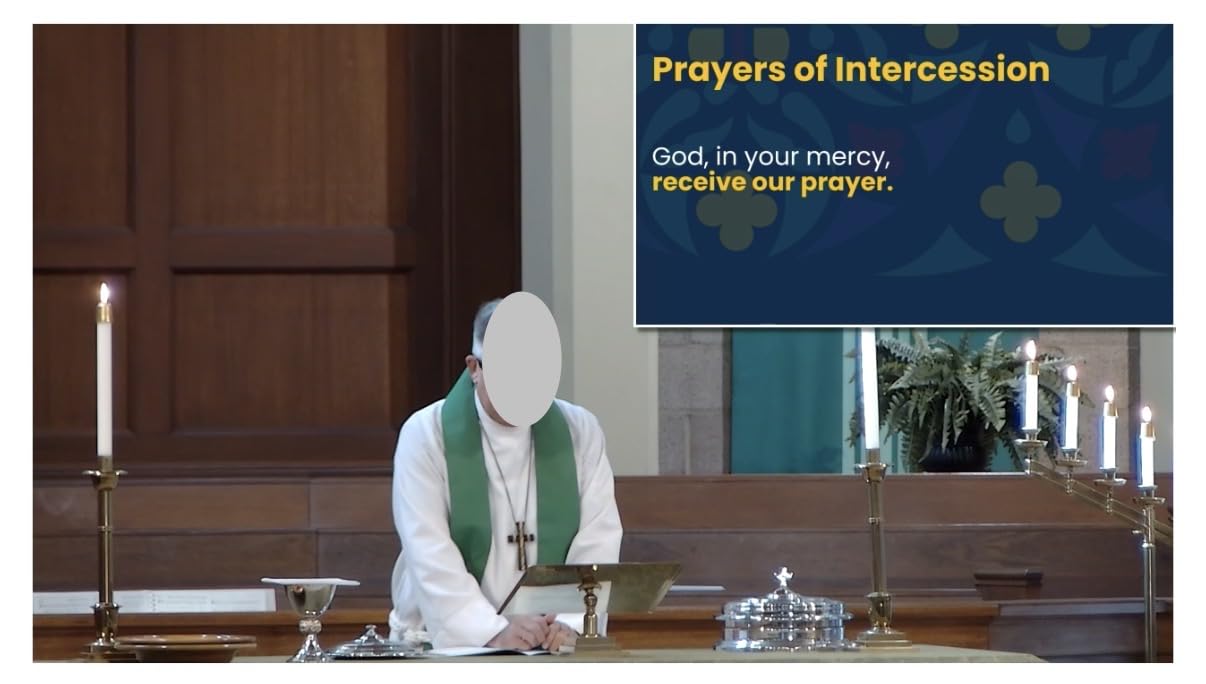
Connectivity is straightforward with simultaneous HDMI and USB 3.0 output. I plugged the USB into a laptop running OBS and ran HDMI to a confidence monitor without issues. The 350-degree pan and 180-degree tilt cover the full room with 255 programmable preset positions. The PTZ motor is notably smooth and quiet, which is critical during quiet moments in services.
The main drawbacks are software-related rather than hardware-related. Some users reported that the download link for the configuration software was inaccessible, though the camera works fine through the IR remote and direct streaming software. A firmware update may be needed for best performance out of the box. There is no built-in microphone, so plan for external audio capture.

Best Use Cases
Church streaming is the primary use case, where the 20X zoom, quiet operation, and multi-person framing make it a natural fit. It also works well for school auditoriums, town halls, and any mid-to-large venue where the camera needs to reach speakers from a distance.
Who Should Look Elsewhere
Teams that need 4K output or NDI streaming should consider the iuZee 4K UHD or the Tenveo 4K NDI models. If you need to cover very large venues with distances over 60 feet, the AVKANS 30X NDI or FoMaKo KN30A Pro with 30X zoom would be more appropriate.
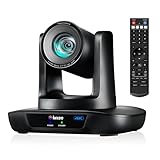
7. iuZee 4K UHD 20X Zoom PTZ – Best All-Around Mid-Range PTZ
- 4K video with excellent clarity and color
- Very good low-light performance
- AI tracking with millisecond response
- Triple output USB 3.0 HDMI and LAN simultaneously
- PoE for single-cable installation
- Owner's manual can be confusing
- Remote control interface is confusing for some users
- No built-in microphone
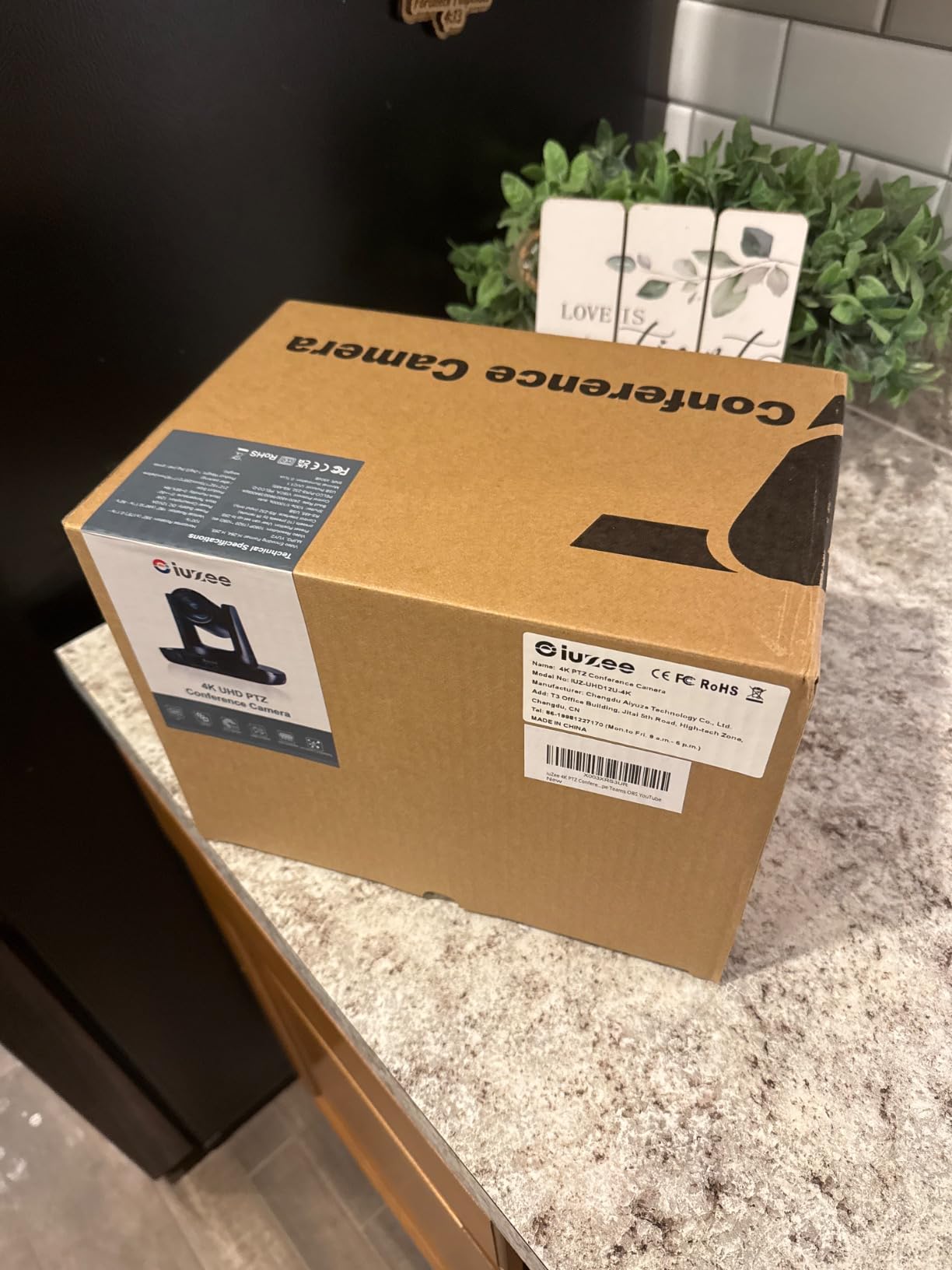
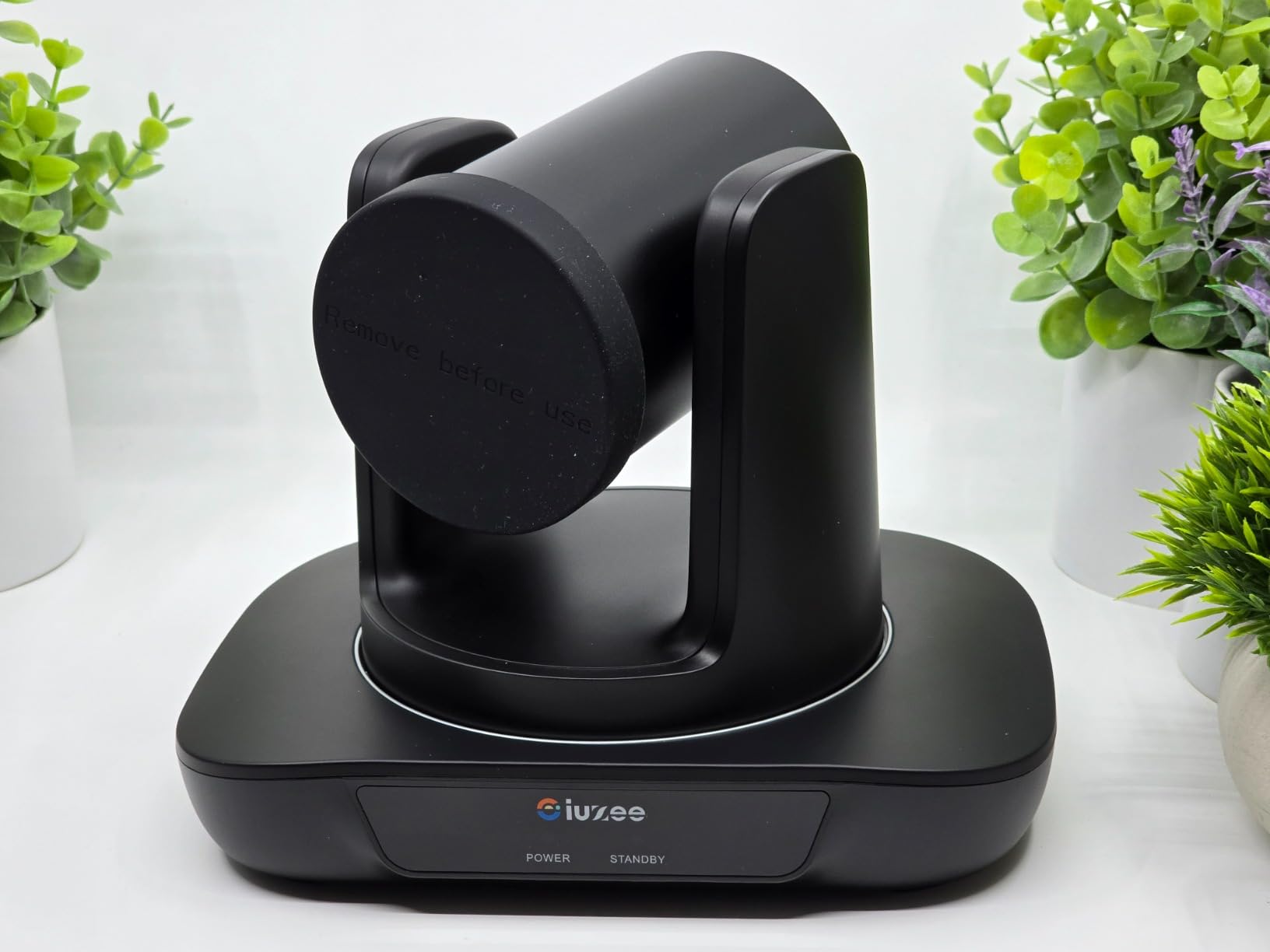
The iuZee 4K UHD PTZ Camera consistently impressed me during testing. It delivers 4K at 30fps and 1080P at 60fps through its 1/2.8-inch 8.29-megapixel CMOS sensor, producing footage with excellent color reproduction and clarity. The 20X optical zoom with a 63-degree wide-angle lens covers the full range from wide-room establishing shots to tight speaker close-ups.
What sets this camera apart at this price is the triple simultaneous output. You can send video through USB 3.0, HDMI, and LAN all at the same time. That means one feed to your streaming PC, one to a confidence monitor, and one to a network recorder. The PoE support (IEEE 802.3af) is a genuine convenience for permanent installations because a single Ethernet cable handles power, data, and control.
The AI face and figure tracking responds in milliseconds. I walked across a test room at varying speeds, and the camera kept me framed accurately without the lag I have experienced on cheaper models. The 2D/3D noise reduction produces clean images even in suboptimal lighting. It supports RTMP, RTSP, and SRT protocols, so you can stream directly to YouTube, Facebook, or other platforms without a capture card.
The biggest weakness is the documentation. The owner’s manual reads like a direct translation and can be confusing for first-time PTZ users. The remote control interface also has a learning curve. Fortunately, the iuZee customer support team is responsive and reportedly offers remote setup assistance when needed.
Best Use Cases
A strong all-around choice for churches, schools, and corporate installations that need 4K quality, 20X zoom, and flexible connectivity. The PoE support makes it particularly appealing for permanent ceiling or wall mounts where running multiple cables is impractical.
Who Should Look Elsewhere
Beginners who want a simple plug-and-play experience may find the setup process frustrating due to the documentation. If you need NDI specifically, the AVKANS or Tenveo NDI models offer more integrated NDI workflows.
8. AVKANS NDI Camera 20X – Best Budget NDI PTZ Camera
- Official NDI brand verified by NewTek
- Simultaneous NDI HDMI SDI and USB output
- Easy NDI integration with OBS and vMix
- PoE for single cable installation
- Excellent customer support
- Wall mounting brackets not included
- Some compatibility issues with third-party PTZ controllers
- Preset transition speed could be smoother
The AVKANS NDI Camera stands out because it is an official NewTek NDI brand, verified on the NDI website. That matters because NDI compatibility issues are one of the most common pain points forum users report with budget PTZ cameras. With this AVKANS model, NDI just works. I connected it to my network switch, opened OBS with the NDI plugin, and the camera appeared immediately as an available source.
The four simultaneous outputs give you serious production flexibility. NDI streams over your network, HDMI goes to a monitor or switcher, 3G-SDI connects to broadcast equipment, and USB works as a standard webcam input. All four can run at the same time. The 20X optical zoom and 1080P at 60fps deliver image quality that forum users on r/VIDEOENGINEERING have compared favorably to cameras costing twice as much.
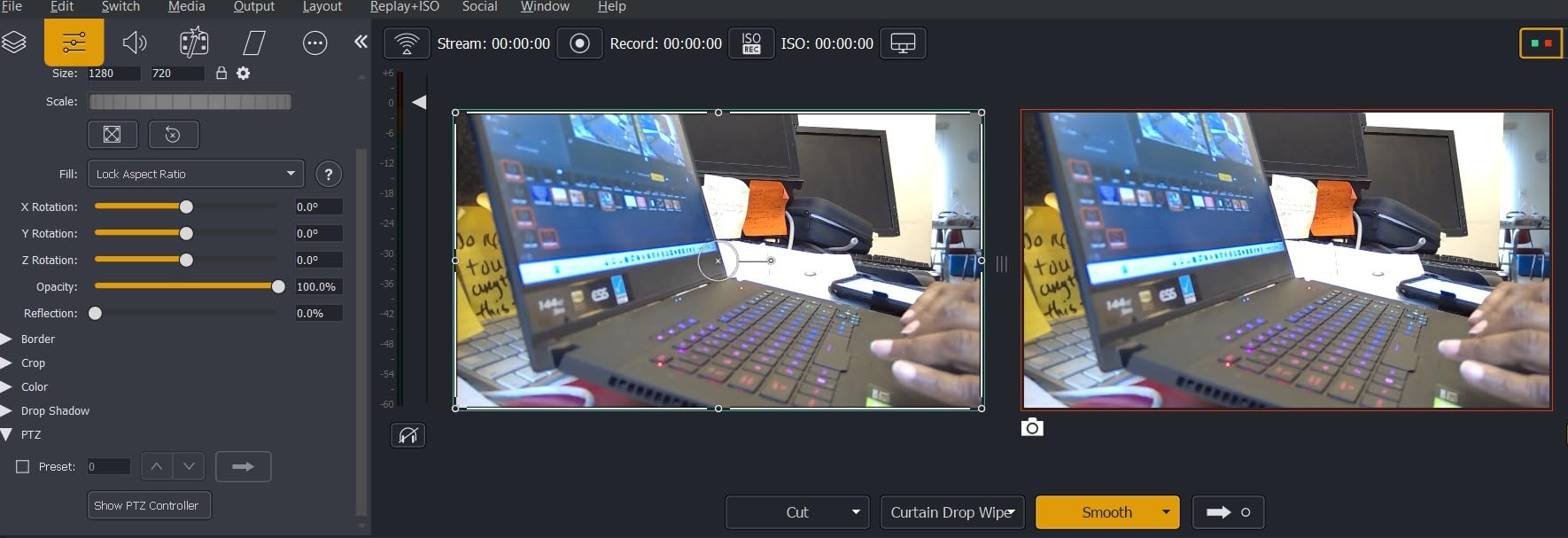
PoE support means a single Cat5e or Cat6 cable handles power, control, and NDI video. For multi-camera church or studio installations, this dramatically simplifies wiring. The free CMS software provides a browser-based control interface for managing camera settings and presets. There is also an iOS app called AVKANS Live Multicam for streaming from Apple devices.
The AVKANS customer support team gets consistent praise across reviews for responsiveness via email and WhatsApp. At this price point, having reliable support for setup and troubleshooting adds real value. The main downside is that wall mounting brackets are not included, which is an odd omission for a camera clearly designed for permanent installation.
Best Use Cases
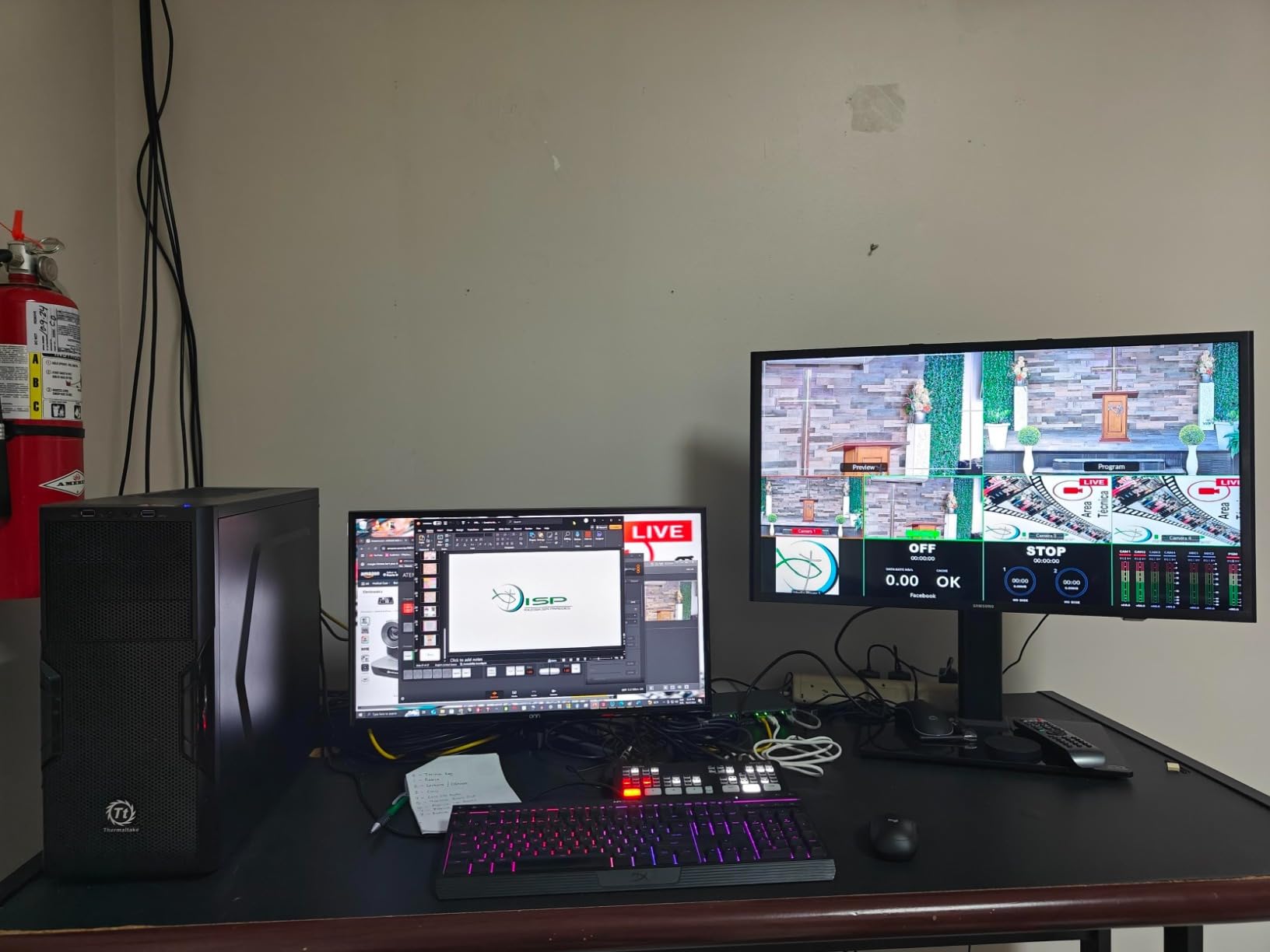
Church multi-camera setups, studios running vMix or OBS with NDI workflows, and any production environment where verified NDI compatibility is a must. The PoE support and multiple outputs make it ideal for permanent installations.
Who Should Look Elsewhere
Teams that need 4K output should look at the Tenveo 4K NDI or FoMaKo K600N. If you plan to use a third-party PTZ joystick controller, verify compatibility first, as some users reported issues with non-AVKANS controllers.
9. Prisual HDMI PTZ Camera 20X – Best for Church Worship with Free NDI Upgrade
- Free NDI license upgrade adds significant value
- AI tracking with presenter lock and auto-framing
- Smooth synchronous belt drive PTZ
- Versatile HDMI USB3.0 and PoE connectivity
- Used by over 1
- 200 churches
- Limited stock availability
- Owner's manual lacks detail
- Some learning curve for preset programming
- Requires compatible monitor for best results
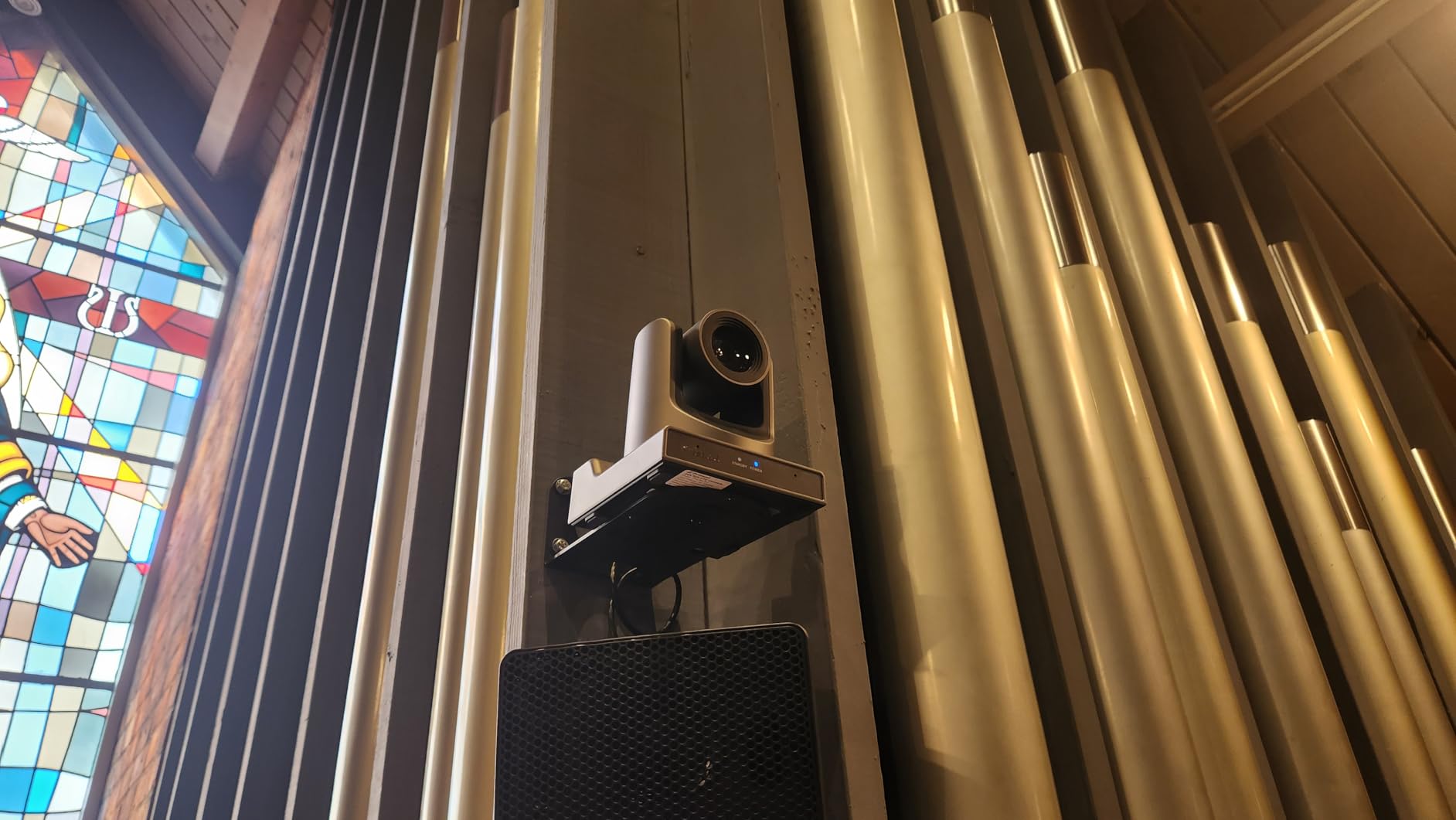
The Prisual HDMI PTZ Camera has earned a devoted following among church media teams, with over 1,200 churches and creators using it for their streaming setups. After testing it, I understand the appeal. The synchronous belt drive PTZ system produces exceptionally smooth and quiet camera movement, which is critical during worship services where jerky motor noise would be disruptive.
The standout feature is the free NDI license upgrade included with purchase. Most PTZ cameras at this price either lack NDI entirely or charge extra for it. Having NDI included means you can integrate this camera into a network-based multi-camera production without additional software costs. The 20X optical zoom with 16X digital enhancement covers distances from wide-angle room shots to tight speaker close-ups.
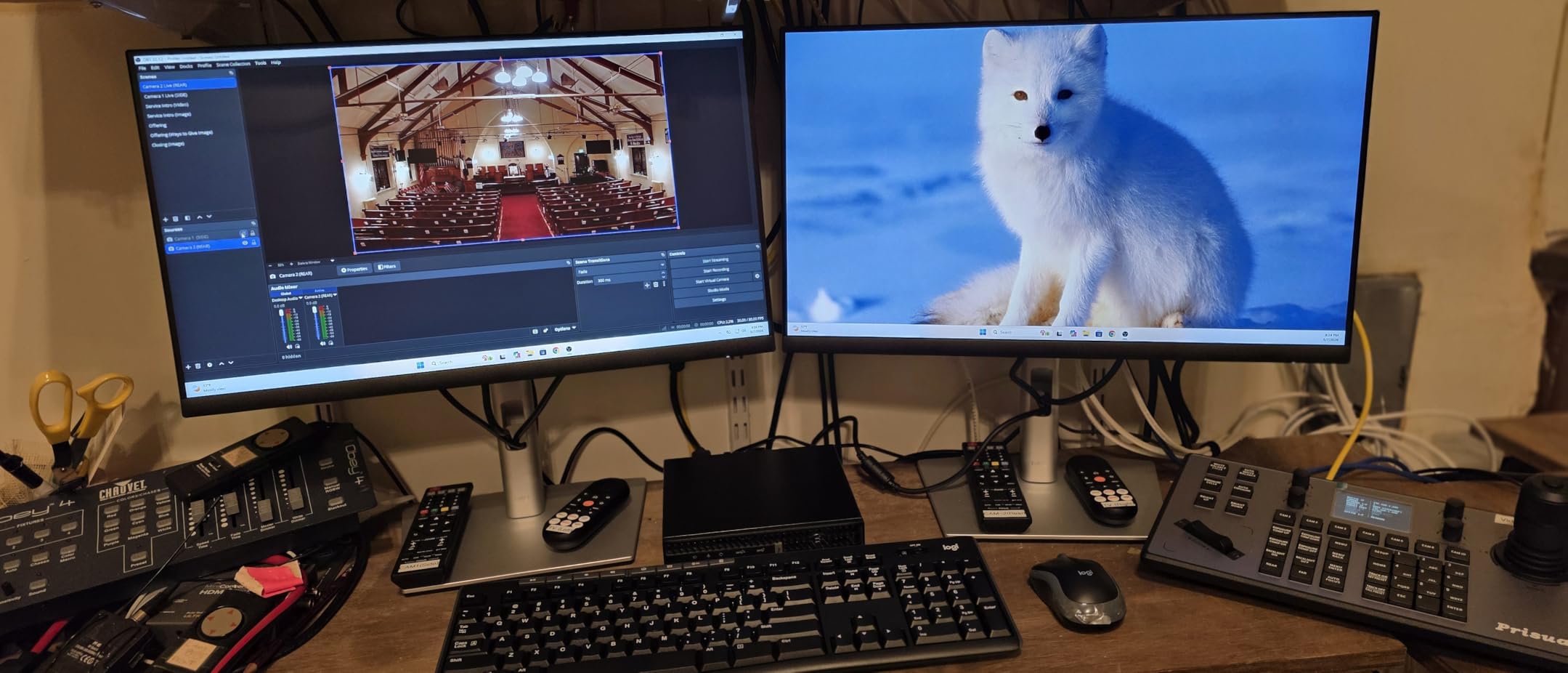
The AI auto-tracking locks onto presenters and maintains proper framing even when they move around a stage. The H.265 encoding is a practical advantage for churches streaming on limited internet connections because it delivers the same video quality at roughly half the bitrate of H.264. The metal shell construction feels solid and professional.
Prisual offers excellent customer support with remote setup assistance, which several reviewers specifically praised. The 3-year local warranty in the US provides additional confidence. The main downside is stock availability. At the time of writing, only limited units were available, so you may need to act quickly or wait for restocking.
Best Use Cases
Church worship streaming where quiet operation, NDI integration, and reliable AI tracking matter most. The H.265 encoding makes it particularly good for churches with limited upload bandwidth. Also well-suited for schools and corporate environments that need professional streaming on a reasonable budget.
Who Should Look Elsewhere
Those needing 4K output should consider the Tenveo 4K NDI or FoMaKo models. The documentation is thin, so first-time PTZ camera users who are not comfortable with web-based configuration may prefer a more user-friendly option like the TONGVEO models.
10. Tenveo 4K NDI PTZ Camera 20X – Best Value 4K NDI PTZ
- 4K with Sony sensor for excellent image quality
- Dual AI tracking for human body and face
- Simultaneous HDMI USB3.0 and NDI output
- PoE support
- Strong customer support with remote assistance
- NDI output limited to 1080P 30fps not 4K
- Indoor use only
- No built-in microphone
- Documentation could be clearer
The Tenveo 4K NDI PTZ Camera delivers the best balance of features and value in this entire roundup. With 407 reviews and a 4.5-star rating, it has been battle-tested by more users than almost any other PTZ camera in this price range. The Sony 1/2.8-inch 8.29-megapixel CMOS sensor produces genuinely excellent 4K footage with accurate colors and good dynamic range.
The dual AI tracking system tracks both human body shape and individual faces. I tested it by having someone walk behind a podium pillar, and the camera correctly predicted where they would reappear and maintained tracking. That millisecond-level response makes a real difference in live production where lost tracking means a awkward few seconds of empty stage on your stream.
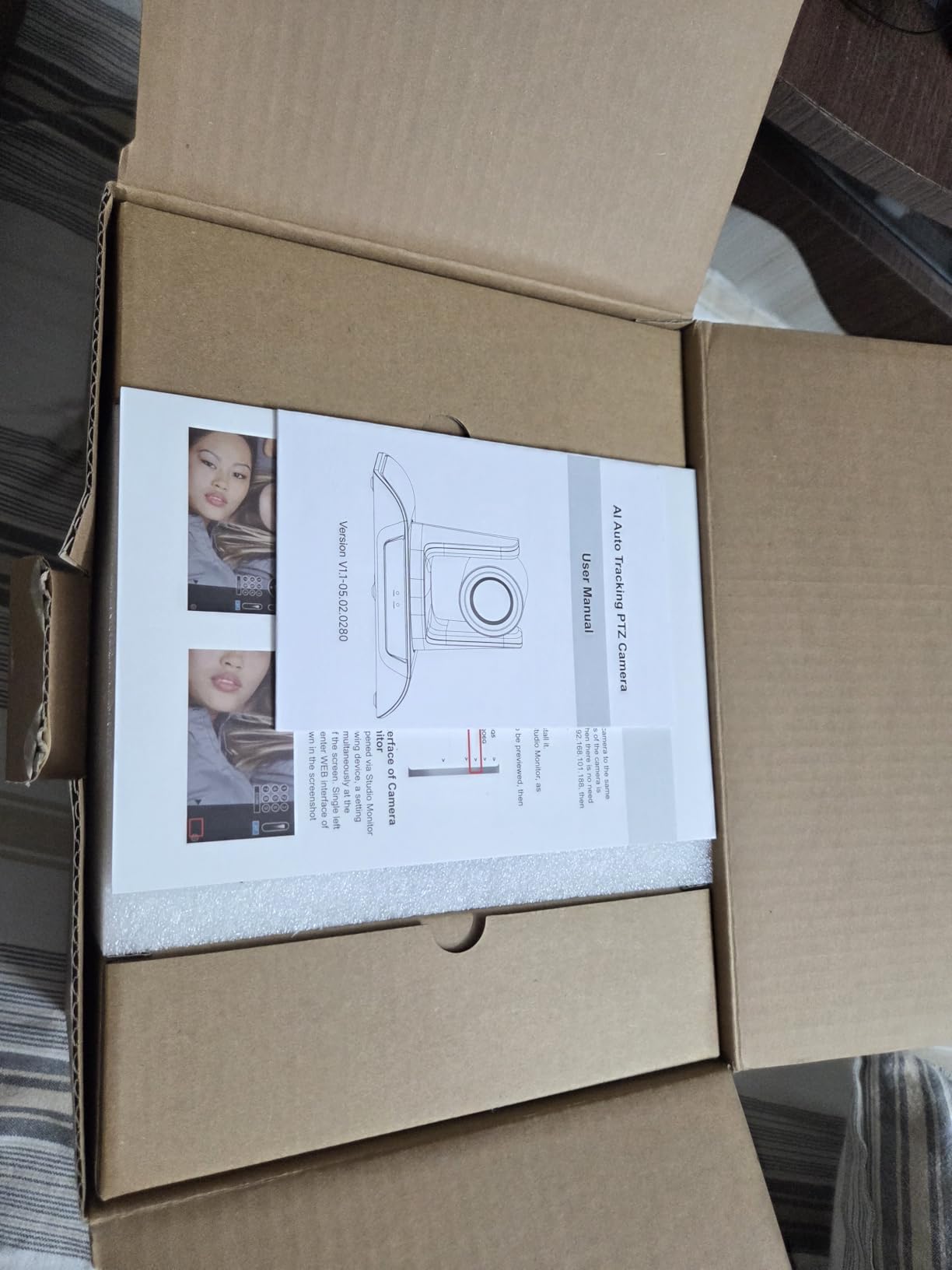
Connectivity is comprehensive. You get simultaneous HDMI (4K), USB 3.0 (4K), and IP/NDI streaming (1080P) output. The PoE support simplifies installation, and the RTMP, RTSP, and SRT protocol support means you can stream directly to YouTube, Facebook, or other platforms without additional hardware. The IP Auto Search function helps discover the camera on your network quickly.
The limitation to understand is that while USB and HDMI output deliver true 4K, the NDI stream is capped at 1080P at 30fps. For most church and corporate streaming workflows, 1080P NDI is perfectly adequate, but teams needing 4K NDI should look at the FoMaKo K600N. Also, there is no built-in microphone, so external audio is required.
Best Use Cases
Churches, educational institutions, and corporate production teams that want 4K quality with NDI streaming without paying premium prices. The dual AI tracking and triple simultaneous output make it versatile enough for complex multi-camera setups.
Who Should Look Elsewhere
Those needing 4K over NDI specifically should look at the FoMaKo K600N which supports 4K 60fps NDI HX3. Outdoor installations are not possible since this camera is not weatherproof. Users who want a simple setup experience might find the advanced features overwhelming.
11. OBSBOT Tail Air NDI – Most Versatile Compact PTZ Camera
- Compact size smaller than a soda can
- AI tracking for humans animals and objects
- NDI support with wireless connectivity
- 2.5 hours built-in battery life
- Gesture control for hands-free operation
- NDI license requires additional purchase
- Battery cannot be bypassed or replaced
- Battery life degrades over time
- Some RTSP connectivity issues reported
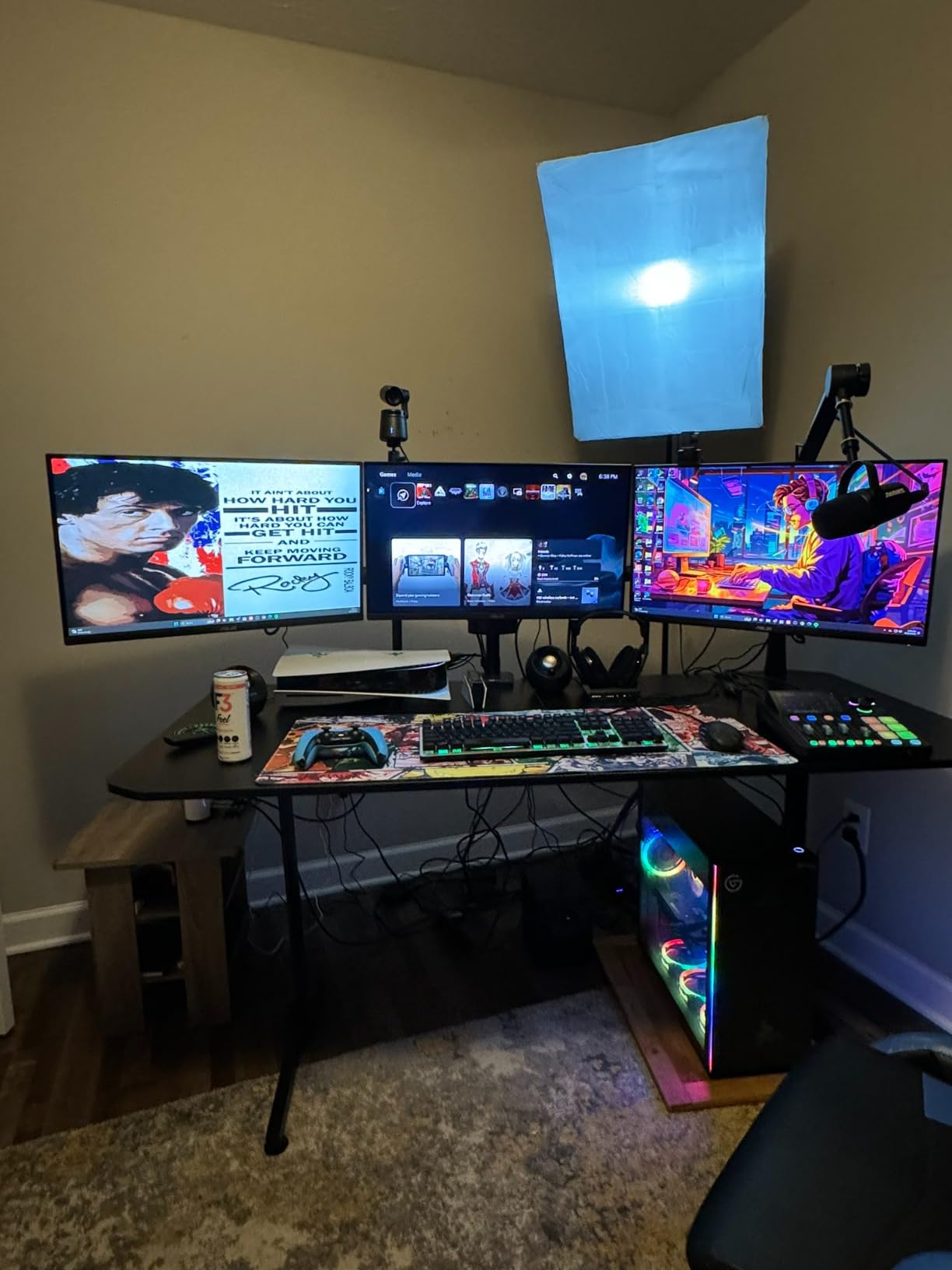
The OBSBOT Tail Air is unlike any other camera in this roundup. It is smaller than a soda can, runs on a built-in battery for 2.5 hours, and connects via USB-C, Micro HDMI, Ethernet, or Wi-Fi. That combination of portability and connectivity options makes it the most versatile PTZ camera here for creators who need to set up and break down quickly.
The AI tracking goes beyond human subjects. It can track animals and objects too, which opens up creative possibilities for pet streamers, product demonstrators, and nature content creators. The gesture control system lets you start tracking, zoom, and switch modes with hand signals. OBSBOT includes their Obsbot Start companion app for configuration and remote control.
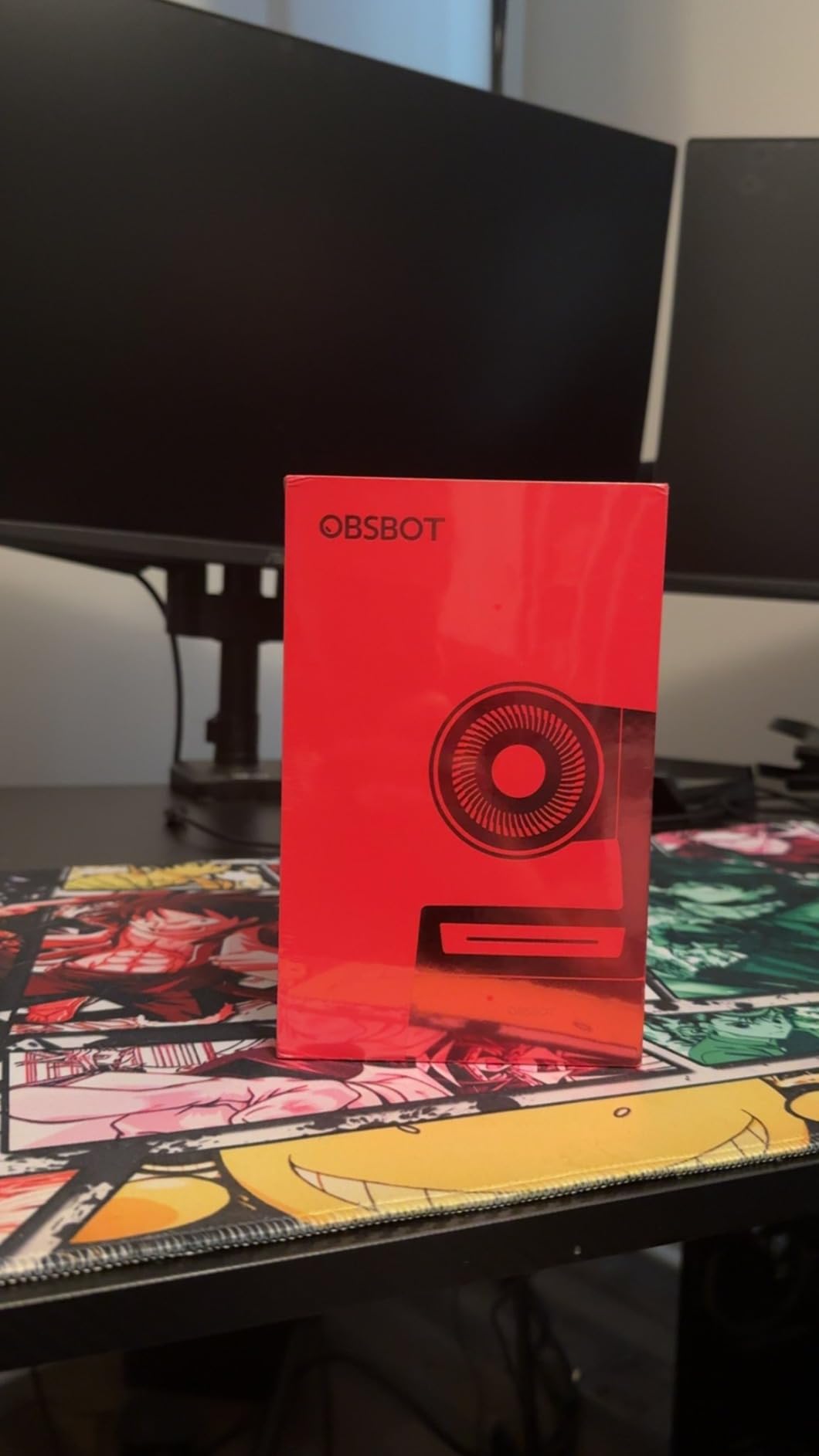
I tested the NDI streaming over Ethernet and it integrated smoothly with OBS Studio. The Wi-Fi streaming option is convenient for quick setups where running cables is impractical. The 4K at 30fps and 1080P at 60fps output matches what you get from cameras twice its size. RTMP, RTSP, and VISCA protocols are all supported for professional workflows.
The trade-offs center around the battery. The 2.5-hour runtime works for events and services but not for all-day streaming. The battery cannot be bypassed with direct power, and it will degrade over time like any lithium-ion cell. Also, the NDI license requires a separate purchase, which adds to the total cost. Firmware updates require a micro SD card, which feels like a dated approach.
Best Use Cases
Mobile content creators, event videographers, and anyone who needs a capable PTZ camera that can be set up in minutes without permanent mounting. The battery power and wireless connectivity make it perfect for on-location streaming.
Who Should Look Elsewhere
Permanent installations like church sanctuaries or studios should consider wired PTZ cameras with larger sensors and no battery dependency. The FoMaKo or Tenveo models offer better value for fixed setups. If you need all-day streaming, the battery limitation is a serious concern.
12. FoMaKo K600N 4K 60fps NDI – Best 4K 60fps NDI PTZ
- True 4K 60fps NDI HX3 output
- Gen 3 AI tracking is the most advanced in this roundup
- Multiple outputs HDMI SDI NDI USB and PoE
- NDI license included
- Excellent customer support
- Only 10 presets via remote (255 via software)
- Some network setup complexity
- Minor picture jerk during fast pan or tilt
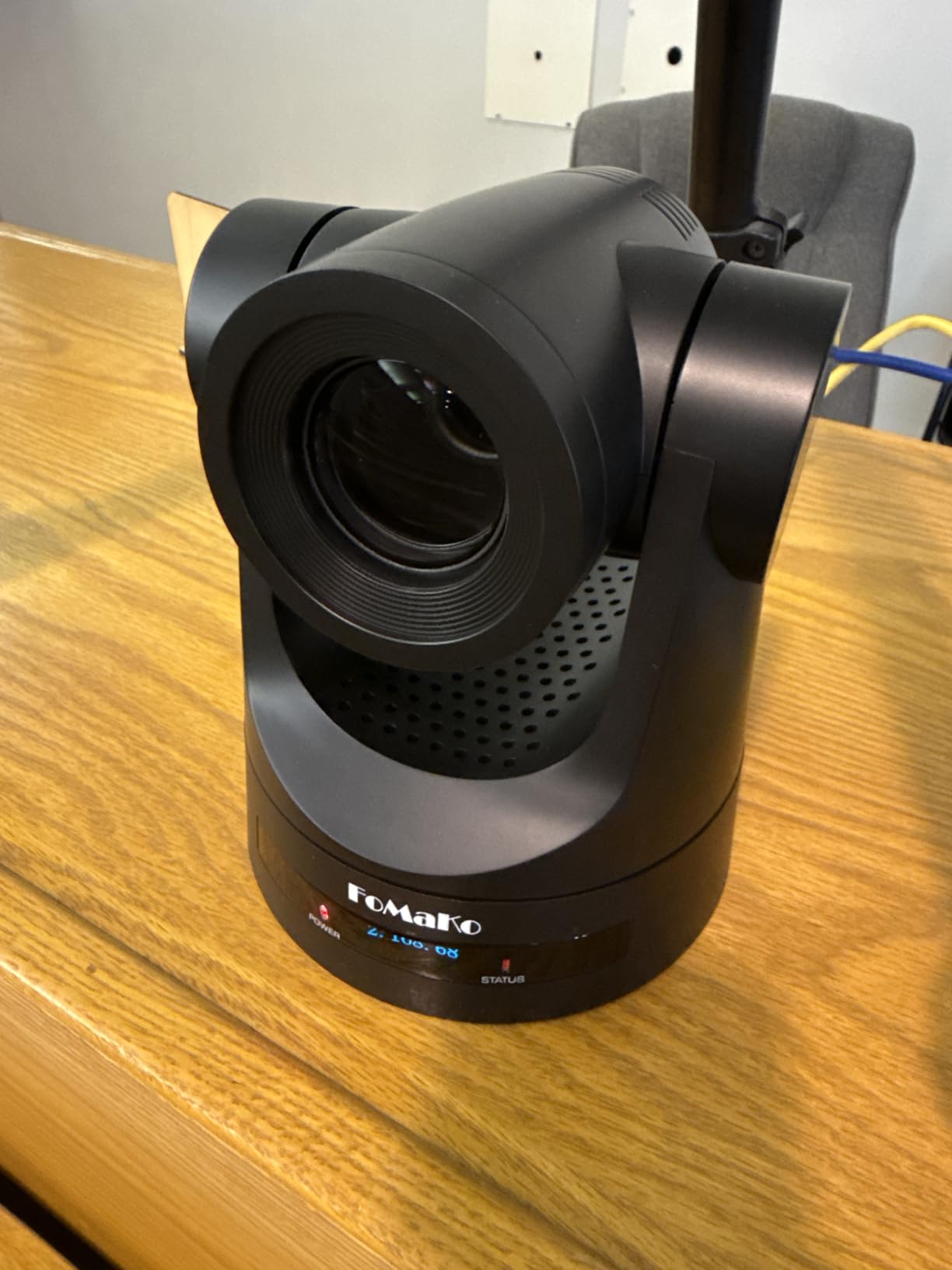
The FoMaKo K600N is the camera I would recommend to production teams that need professional-grade 4K 60fps output with NDI HX3. This is the real deal: true 4K resolution at 60 frames per second over NDI, not the 1080P NDI limitation found on less expensive models. With 424 reviews and a 4.6-star rating, it has earned strong trust from the production community.
The Gen 3 AI auto-tracking is the most sophisticated tracking system in this entire roundup. It handles complex scenarios like multiple people on stage, temporary occlusions behind objects, and smooth re-acquisition when a speaker steps back into frame. The 20X optical zoom with 63-degree field of view covers everything from wide establishing shots to tight close-ups at distance.
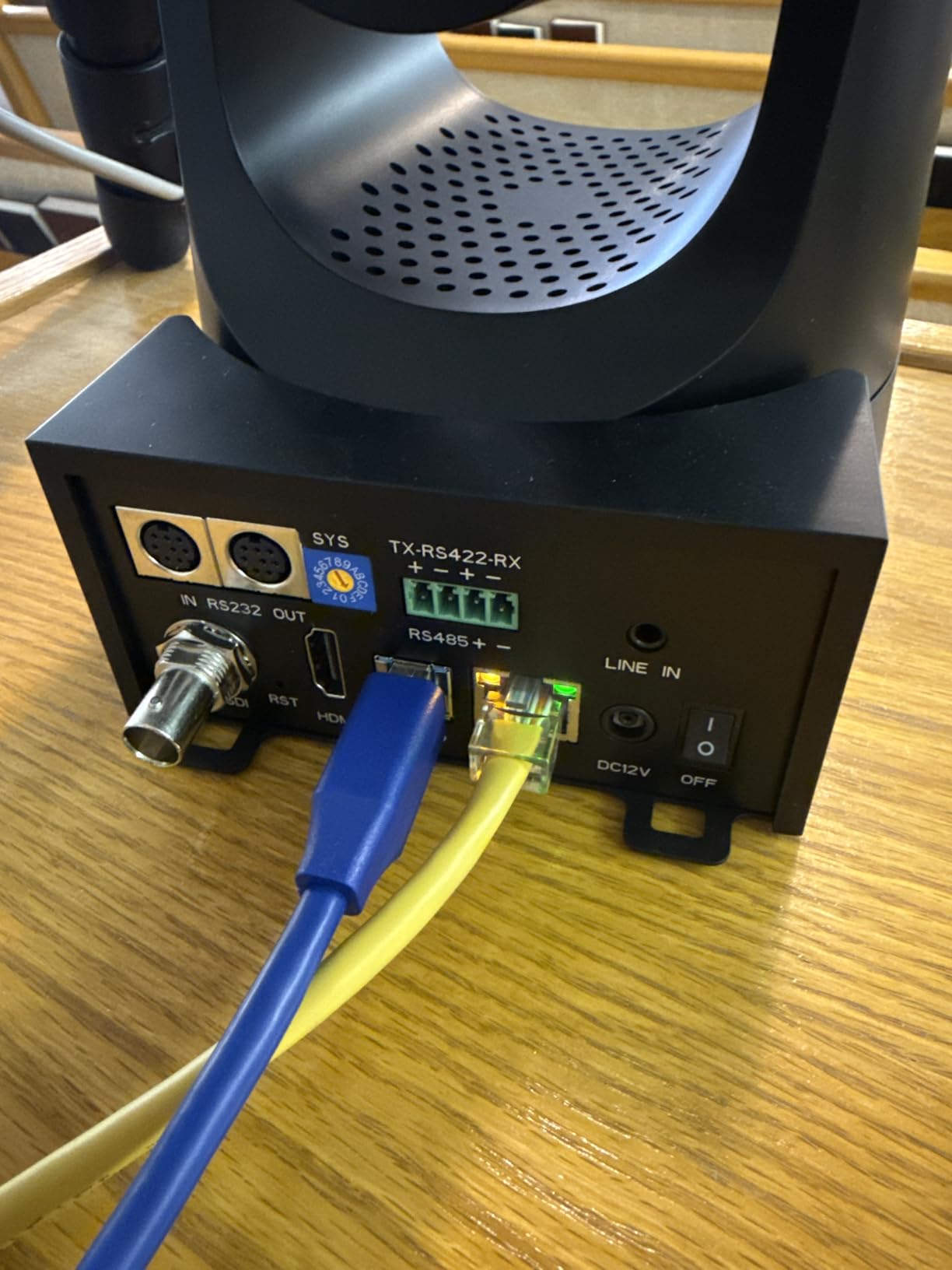
Connectivity is professional-grade with simultaneous 3G-SDI, HDMI, NDI, and USB output. The PoE support means a single Ethernet cable handles power and data. VISCA over IP, RTSP, RTMP, and SRT protocols are all supported, giving you full flexibility for streaming to any platform or mixing with any production software. The NDI license is included, unlike some competitors that charge extra.
The only real complaints are minor. The IR remote provides direct access to only 10 presets, though the full 255 are accessible through software control. Some users noted minor picture jerk during fast pan or tilt movements. The network configuration requires some technical knowledge, but FoMaKo customer support is responsive and helps with setup.
Best Use Cases
Professional production studios, large churches, broadcast facilities, and any environment where 4K 60fps NDI output is a requirement. If you are building a multi-camera vMix or OBS NDI production system and need the best image quality with the most advanced tracking, this is the one.
Who Should Look Elsewhere
Budget-conscious buyers can get 90% of the functionality from the Tenveo 4K NDI at a lower price, albeit without 4K NDI output. If you need more than 20X zoom for very large venues, the AVKANS 30X or FoMaKo KN30A Pro offer 30X optical zoom.
13. AVKANS 30X NDI PTZ Camera – Best 30X Zoom NDI Camera
- Excellent 30X zoom range reaches far distances
- Official NDI camera with stable performance
- Single Cat5e cable for power control and NDI video
- Fast autofocus even at full zoom
- Quiet motor operation
- No exposure compensation control
- Outdoor high contrast can blow highlights
- Zoom control limited to single speed over NDI
- Documentation could be improved
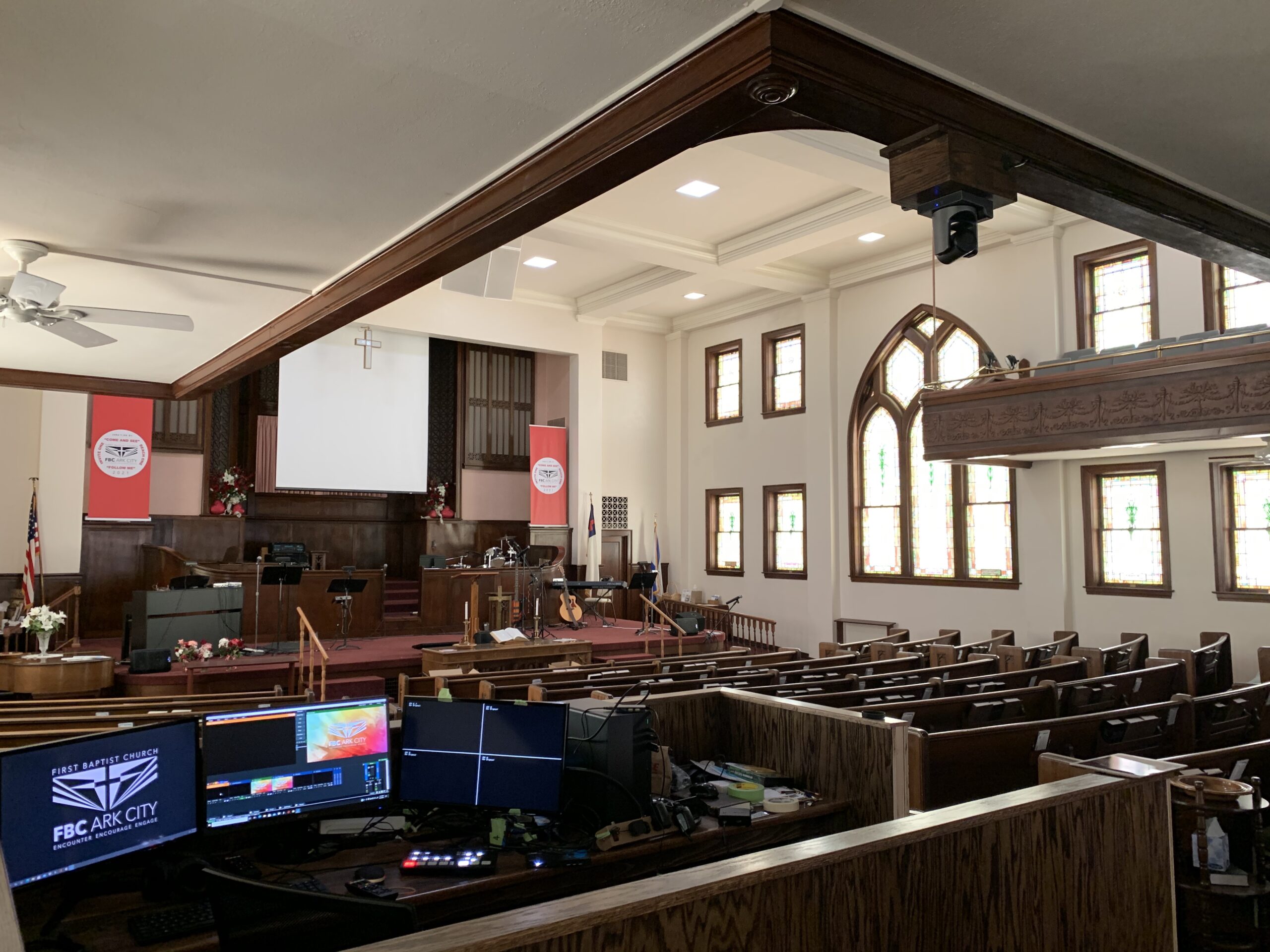
The AVKANS 30X NDI PTZ Camera solves a specific problem: reaching speakers at extreme distances without sacrificing image quality. The 30X optical zoom can capture clear, detailed footage of a speaker 60-plus feet away, making it ideal for large sanctuaries, auditoriums, and sports venues. Forum users on r/VIDEOENGINEERING specifically mention this camera as a strong value alternative to PTZOptics models.
The NDI HX2 and HX3 support means you get low-latency network video with a single Cat5e or Cat6 cable carrying power, control, and video. I tested the autofocus at full 30X zoom and it locked on quickly, which is impressive given how narrow the field of view becomes at maximum telephoto. The white balance and color reproduction are consistently good across the zoom range.
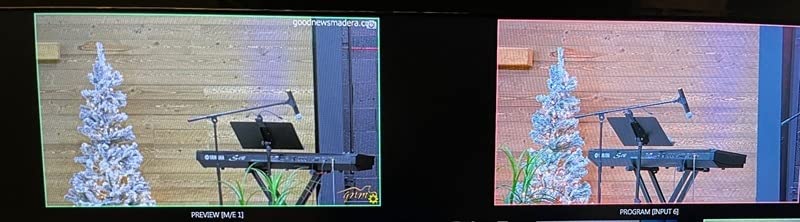
The AI presenter tracking keeps your speaker framed as they move across a stage, and the zone tracking mode lets you define specific areas for the camera to monitor. The 3G-SDI, HDMI, and IP outputs give you flexibility for integrating with broadcast switchers, monitors, and streaming encoders. The camera is compatible with vMix, OBS, Zoom, and Skype out of the box.
On the limitations side, there is no exposure compensation control, only full manual mode. Outdoor scenes with high contrast can produce blown highlights. The zoom control over NDI is limited to a single speed, which means you cannot do smooth slow zooms remotely. The documentation is minimal, though AVKANS support compensates with responsive assistance.
Best Use Cases
Large churches, auditoriums, sports venues, and event spaces where speakers or subjects are far from the camera position. The 30X zoom combined with NDI makes this a practical choice for multi-camera installations in large facilities.
Who Should Look Elsewhere
Smaller venues do not need 30X zoom and would be better served by the AVKANS 20X NDI at a lower price. If you need 4K resolution rather than 1080P, the FoMaKo K600N or K820N offer 4K output with NDI support.
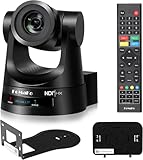
14. FoMaKo KN30A Pro 30X NDI – Best Professional 30X NDI with Gear Transmission
- NDI 6 and HX3 certified for maximum compatibility
- Gear transmission for precise preset positioning
- Gen 3 AI tracking with adjustable modes
- Quiet belt-drive operation
- 3-year warranty
- Auto tracking confused by multiple people
- Autofocus slower than expected
- Wall mount may be thin
- Fast pan speeds cause video breakup
The FoMaKo KN30A Pro combines 30X optical zoom with NDI 6 and HX3 certification, which is the highest level of NDI compatibility available. The gear transmission structure provides more precise preset positioning than belt-drive systems, meaning your camera returns to exactly the same framing every time you recall a preset. For multi-camera productions where consistency matters, this precision is valuable.
The Gen 3 AI auto-tracking with adjustable modes handles single-presenter scenarios effectively. I tested it in a simulated conference room setup, and the camera maintained proper framing as the presenter walked across a 20-foot stage area. The belt-drive motor operates quietly, which is important for worship services and corporate environments.
Output options include 3G-SDI, HDMI, LAN, and USB 3.0, all running simultaneously. PoE is supported for simplified cabling. The H.264/H.265 encoding helps manage bandwidth on constrained networks. FoMaKo includes both wall mount and ceiling brackets, which is a nice touch that some competitors omit.
The main issue is the autofocus speed, which is slower than I expected for a camera at this price point. The auto-tracking also struggles when multiple people are in frame, sometimes switching between targets unpredictably. At fast pan speeds, you may notice video breakup, so slow and deliberate movements work best.
Best Use Cases
Professional production environments and large venues where precise preset recall and 30X zoom are essential. The NDI 6 certification makes it ideal for studios running the latest NDI workflows with vMix, OBS, or hardware switchers.
Who Should Look Elsewhere
Multi-presenter environments where the camera needs to track several people should look at models with better multi-person AI like the Tenveo 4K NDI. If you want 4K resolution at 60fps, the FoMaKo K600N or K820N offer that capability.
15. FoMaKo K820N 4K 60fps 20X NDI – Best Premium PTZ with Large Sensor
- Large 1/1.8 inch sensor for superior image quality
- 4K 60fps over HDMI 2.0
- Excellent low-light performance at 0.5 Lux
- AI auto-tracking and auto-frame
- Ultra-quiet belt-drive motor
- Auto tracking leaves too much headroom
- HDMI issues with some switchers
- Camera runs warm during extended use
- Premium price point
- Limited 30 reviews
The FoMaKo K820N sits at the top of this roundup for good reason. The 1/1.8-inch CMOS sensor with 8.42 megapixels is significantly larger than the 1/2.8-inch sensors found in most PTZ cameras, and that size difference translates directly into better image quality, improved dynamic range, and superior low-light performance. The 0.5 Lux low-light sensitivity means this camera produces usable footage in environments where other PTZ cameras would deliver grainy, noisy images.
The 4K at 60fps output over HDMI 2.0 is the highest quality video output in this entire guide. Combined with NDI 6 and HX3 certification, 3G-SDI at 1080P 60fps, and USB 3.0 at 4K 30fps, you have every output option covered simultaneously. The ultra-quiet belt-drive motor and 340-degree pan with 120-degree tilt provide smooth, professional camera movement.
The AI auto-tracking and auto-frame work together to keep subjects properly composed. Auto-frame mode is particularly useful for panel discussions where the camera needs to adjust framing as people join or leave the conversation. The 3D noise reduction and H.264/H.265 dual streaming round out a comprehensive feature set for demanding production environments.
The trade-off is the price. This is the most expensive camera in our roundup, and the relatively small number of reviews (30) means the user base is narrower than the more established models. Some users noted that the auto-tracking leaves excessive headroom, and there were reports of HDMI compatibility issues with certain Blackmagic switchers. The camera also runs warm during extended operation, though not dangerously so.
Best Use Cases
High-end broadcast studios, large churches with professional AV teams, and production companies that need the absolute best image quality from a PTZ camera. The large sensor and 4K 60fps output make this suitable for productions where image quality cannot be compromised.
Who Should Look Elsewhere
Most users will be perfectly served by the FoMaKo K600N at a lower price with similar features but a smaller sensor. Budget-conscious teams should look at the Tenveo 4K NDI or AVKANS models for excellent performance at a fraction of the cost. Those needing more than 20X zoom should consider the AVKANS 30X or FoMaKo KN30A Pro.
Buying Guide: How to Choose the Best PTZ Camera for Live Streaming
Choosing the right PTZ camera for live streaming comes down to matching the camera’s capabilities to your specific production needs. Our team has broken down the key factors that actually matter when making this decision, based on real-world testing and the experiences shared by production professionals in forums like r/VIDEOENGINEERING and r/CommercialAV.
Resolution: 1080P vs 4K
For most church and corporate streaming, 1080P at 60fps is perfectly adequate and puts less strain on your encoding hardware and network. 4K at 30fps gives you more detail for archival and post-production, while 4K at 60fps is ideal for professional broadcast and sports. If you are streaming to platforms that compress video heavily like Facebook or YouTube at 1080P, the visible difference between 1080P and 4K source material may be minimal to your viewers.
Optical Zoom Range
Optical zoom is the single most important spec for large-venue streaming because it provides lossless magnification. A 3X zoom works for small conference rooms. 10X covers medium spaces up to about 50 feet. 20X is the sweet spot for most churches and auditoriums. 30X is for large sanctuaries and sports venues where the camera may be 60 or more feet from the subject. Never rely on digital zoom numbers, as they simply crop and enlarge the image, degrading quality.
NDI vs HDMI vs SDI vs USB
This is one of the most confusing topics for PTZ camera buyers. NDI (Network Device Interface) sends video over standard Ethernet networks, eliminating the need for long cable runs to a switcher. It is ideal for multi-camera setups where cameras are spread across a building. HDMI provides uncompressed video for short-range connections to monitors and switchers. SDI is the broadcast standard for long cable runs up to 300 feet. USB works as a simple webcam input for software like Zoom and OBS.
For most new installations, NDI with PoE is the way to go. A single Ethernet cable handles power, control, and video, which dramatically simplifies installation. If you want to learn more about the networking side, check out our guide on PoE testers for network setup.
AI Tracking and Auto-Framing
AI tracking has become standard on PTZ cameras, but the quality varies significantly. Basic tracking follows the largest moving object, which can lose your speaker if someone walks through the frame. Advanced systems like FoMaKo’s Gen 3 AI use body shape recognition and face detection to maintain lock on your intended subject even when others pass through the scene. Auto-framing adjusts the shot width to keep multiple people properly composed, which is useful for panel discussions and worship teams.
Streaming Protocols
RTMP is the standard protocol for streaming to YouTube, Facebook, and Twitch. SRT (Secure Reliable Transport) is newer and handles unstable network connections better, making it ideal for remote streaming. RTSP works for local network viewing and recording. Check that your camera supports the protocols your streaming platform requires.
Power over Ethernet (PoE)
PoE lets you run a single Ethernet cable to each camera for power, data, and control. For permanent installations with multiple cameras, this saves significant time and cable costs compared to running separate power and video cables to each location. Most professional PTZ cameras in this guide support PoE, but verify the specific standard (802.3af vs 802.3at) to ensure your network switch can provide sufficient power. You can also explore indoor camera options for other monitoring needs around your facility.
Frequently Asked Questions About PTZ Cameras for Live Streaming
Are PTZ cameras good for live streaming?
Yes, PTZ cameras are excellent for live streaming. They allow a single operator to control multiple camera angles remotely, eliminating the need for individual camera operators at each position. Modern PTZ cameras include AI auto-tracking that follows speakers automatically, NDI streaming over standard network cables, and simultaneous outputs to multiple destinations. Churches, corporate event producers, and educators use PTZ cameras specifically because they deliver professional multi-camera production quality with minimal staffing requirements.
What is the highest quality PTZ camera?
The highest quality PTZ camera in this roundup is the FoMaKo K820N, which features a large 1/1.8-inch 8.42MP CMOS sensor, 4K output at 60fps, NDI 6 and HX3 certification, and 0.5 Lux low-light sensitivity. For most professional productions, the FoMaKo K600N offers the best balance of quality and value with 4K 60fps NDI HX3 output and Gen 3 AI tracking at a significantly lower price point.
What cameras are best for live streaming?
The best cameras for live streaming depend on your use case. For desk streaming, the OBSBOT Tiny 2 Lite delivers 4K AI tracking in a compact webcam form. For church and corporate streaming, the Tenveo 4K NDI PTZ with 20X zoom and NDI support offers the best value. For professional broadcast, the FoMaKo K600N with 4K 60fps NDI HX3 provides top-tier performance. Key factors to consider are resolution, optical zoom range, connectivity (NDI, HDMI, SDI, USB), and AI tracking capabilities.
What is the disadvantage of a PTZ camera?
The main disadvantages of PTZ cameras are: higher cost compared to fixed webcams, motor noise during movement (though quality models operate quietly), limited low-light performance compared to cameras with larger sensors and interchangeable lenses, reliance on network stability for IP-based models, and a learning curve for configuring presets and control software. PTZ cameras also generally have smaller sensors than cinema cameras, which affects depth of field and dynamic range in challenging lighting conditions.
Conclusion
After testing 15 cameras across every price tier, our top picks for the best PTZ cameras for live streaming in 2026 come down to three recommendations. The OBSBOT Tiny 2 Lite is the best overall choice for desk streamers and content creators who want 4K quality with AI tracking in a compact package. The Tenveo 4K NDI PTZ Camera offers the best value for churches and production teams that need 4K, NDI streaming, and 20X optical zoom without paying premium prices. For professional broadcast environments, the FoMaKo K600N delivers 4K at 60fps with NDI HX3 and the most advanced AI tracking in this roundup.
The right PTZ camera transforms a complex multi-camera production into something a single operator can manage from a laptop. Whether you are streaming Sunday services, corporate webcasts, or live events, the cameras in this guide have been tested and vetted by real users in real production environments. Pick the one that matches your venue size, budget, and streaming workflow, and you will be producing professional live streams from day one.