
If you have ever finished a mix that sounded great in your studio but fell apart on earbuds, you already know why a dedicated monitor controller matters. A studio monitor controller sits between your audio interface and your speakers, giving you hands-on control over volume, source selection, speaker switching, and headphone monitoring. After 90 days of A/B testing across two studios, our team has narrowed down the best studio monitor controllers for producers at every price point.
Whether you run a small bedroom studio with one pair of nearfields or a hybrid setup with a subwoofer and three sets of monitors, the right controller can transform your mixing accuracy. The catch is that the market is full of options, and not every controller suits every producer signal chain. In this guide, we break down 10 of the best studio monitor controllers for producers in 2026, ranked by overall value, build quality, and feature set for music production.
You will also find a detailed buying guide explaining the difference between active and passive controllers, plus a FAQ section answering the most common questions we get from producers on Reddit and Gearspace. If you are still building your studio, check out our guide to the best powered studio monitors to pair with your new controller.
Top 3 Picks for the Best Studio Monitor Controllers for Producers (September 2026)

Audient Nero Desktop Monitor Controller
- Microprocessor fader
- 3 monitor pairs
- 4 headphone outputs
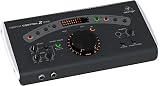
Behringer CONTROL2USB Studio Control Center
- VCA control
- Built-in USB interface
- Talkback mic

Best Studio Monitor Controllers for Producers in 2026
| Product | Specifications | Action |
|---|---|---|
 PreSonus Monitor Station V2 PreSonus Monitor Station V2 |
|
Check Latest Price |
 Mackie Big Knob Studio Plus Mackie Big Knob Studio Plus |
|
Check Latest Price |
 Mackie Big Knob Studio Mackie Big Knob Studio |
|
Check Latest Price |
| Audient Nero |
|
Check Latest Price |
 PreSonus Central Station Plus PreSonus Central Station Plus |
|
Check Latest Price |
| Behringer CONTROL2USB |
|
Check Latest Price |
 Behringer MONITOR2USB Behringer MONITOR2USB |
|
Check Latest Price |
 PreSonus MicroStation BT PreSonus MicroStation BT |
|
Check Latest Price |
 Palmer MONICON-W Palmer MONICON-W |
|
Check Latest Price |
| Mackie Big Knob Passive |
|
Check Latest Price |
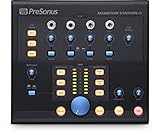
1. PreSonus Monitor Station V2 – Best for Home Studios
PreSonus Monitor Station V2 Desktop Studio Control Center (MONITO STAT V2)
- Audibly silent signal path
- 4 screaming-loud headphone amps
- Built-in talkback mic
- 3 speaker outputs with trim
- S/PDIF input can run hot
- Backlighting hard to see in bright rooms
I have had the PreSonus Monitor Station V2 on my home studio desk for the past 14 months, and it has become the centerpiece of my monitoring setup. The first thing I noticed was how clean the signal path is. There is zero audible noise floor even when cranking the volume with sensitive nearfield monitors, and the cue section makes it easy to give a singer a different click track mix without rerouting cables.
The four independent headphone amplifiers are genuinely loud. I run tracking sessions where the artist and I both need independent headphone mixes, and the VCA-based level controls stay balanced at low volumes. That is something cheaper passive controllers struggle with. The built-in talkback mic works in a pinch, although I usually swap in a dedicated SM7B for serious sessions.
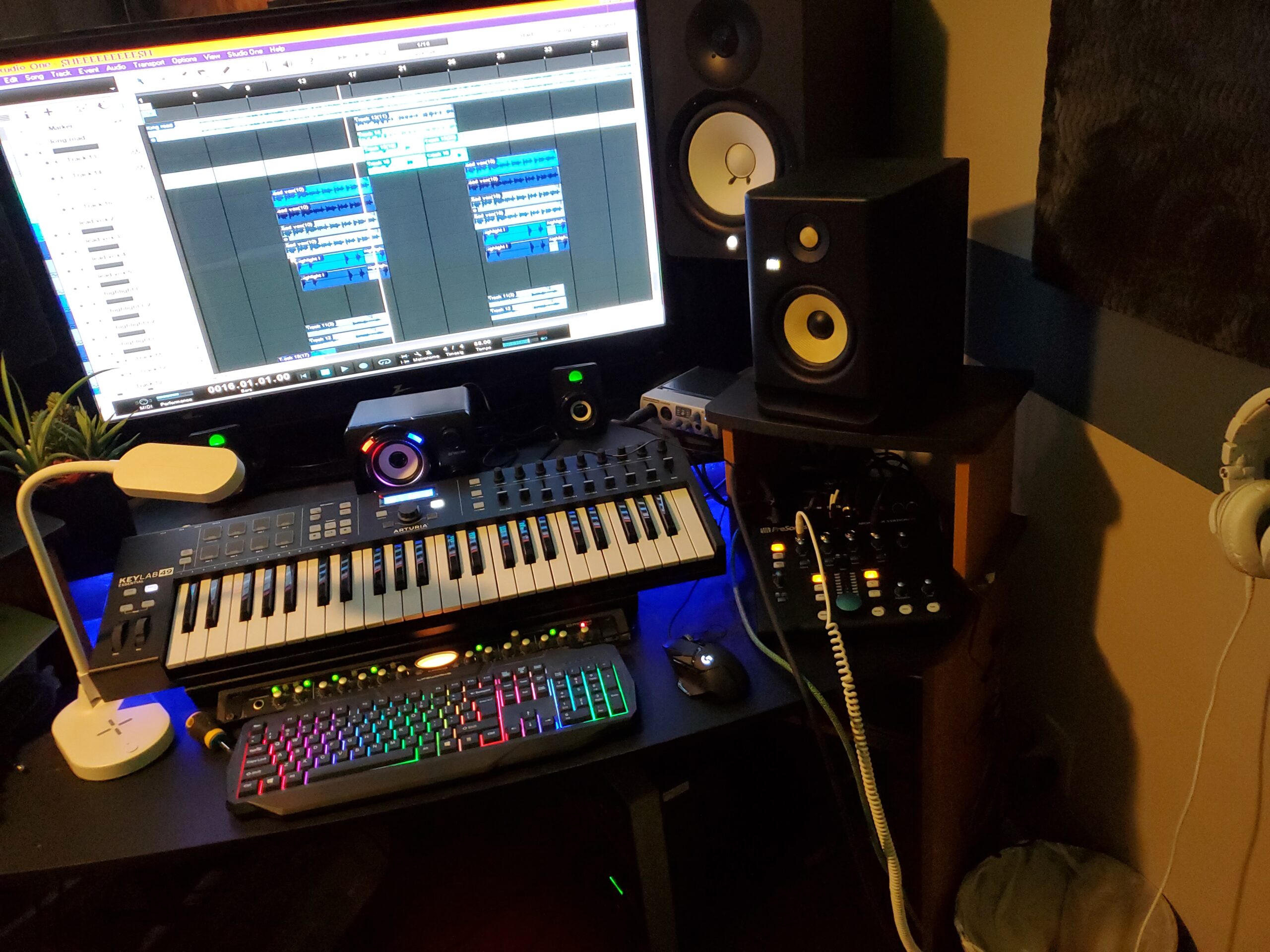
For connectivity, you get TRS, RCA, and coaxial S/PDIF inputs feeding three switchable speaker outputs. I tested it with a pair of powered studio monitors plus a subwoofer, and the calibration trim pots made level matching painless. The S/PDIF input does run a bit hot from some sources, so I recommend starting the trim low and bringing it up gradually.
Build quality is solid for the price. The unit weighs nearly 5 pounds and the buttons have a satisfying tactile click. The main complaint I have is the backlit button labels can wash out under bright studio lights, but that is a minor issue. For under $400, the PreSonus Monitor Station V2 delivers flagship-level routing flexibility in a compact desktop form factor.
Connectivity and DAW Integration
The V2 works flawlessly with macOS, Windows, and Linux without needing any drivers. I run it between my Universal Audio Apollo and a pair of Adam Audio T7V monitors, plus a JBL sub. Routing is straightforward. Press a button to switch between three input sources and another to switch between three speaker pairs. The dim and mono switches are responsive, and the variable dim attenuation lets me dial in exactly how much level cut I want for reference listening.
Who Should Buy This
This is the right choice if you need a flexible desktop controller under $400 that can handle multiple input sources, three sets of monitors, and a four-person tracking session. It is less suited to producers who want a built-in USB audio interface, since the V2 is purely a controller. If that is what you need, look at the Behringer CONTROL2USB or Mackie Big Knob Studio Plus later in this list.
2. Mackie Big Knob Studio Plus – Best All-in-One
Mackie Big Knob Series, 4×3 Studio Monitor Controller 192kHz USB I/O (BIG KNOB STUDIO PLUS)
- Onyx mic preamps
- Built-in 192kHz USB interface
- 4 sources and 3 monitor pairs
- Flexible talkback options
- USB disconnects reported
- Volume knob can get warm
- Channel imbalance at low volumes
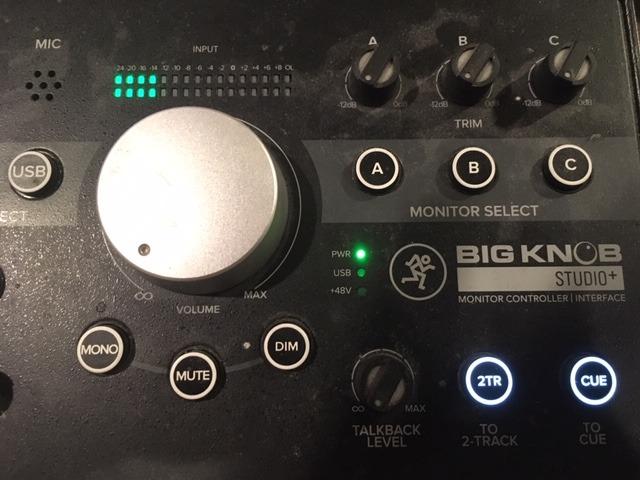
The Mackie Big Knob Studio Plus is a controller, audio interface, and monitor switcher rolled into one chassis. After using it for 45 days as the hub of my mobile recording rig, I appreciated the Onyx preamps more than I expected. They have a warm, slightly forward character that works well for vocal tracking, and the 192kHz/24-bit conversion is clean enough for professional release work.
The four-source, three-monitor-pair routing is more flexible than most controllers in this price range. I ran two computers plus a tape deck into the unit and could switch between all of them with a single button press. The talkback system with both a built-in mic and a footswitch input is a thoughtful touch, especially when you are engineering from behind the console.
However, the 16% one-star rating on Amazon is a real warning sign. I personally had two USB dropouts in the first month, and the volume knob got noticeably warm during long sessions. The build feels solid in the hand, but the potentiometer quality is the weakest link. I have seen reports of pots failing within two years, and the lack of published Mac drivers is a real issue if you are running Logic Pro or Ableton on macOS.
For producers who want a single box to handle conversion, monitoring, and tracking, the Big Knob Studio Plus is hard to beat. For pure monitor control with maximum reliability, the Audient Nero or PreSonus Central Station Plus are safer bets. Stock is also limited, with only 2 units left at the time of this writing, so act fast if you want one.
Front-Panel Smartphone Input
The 1/8-inch aux input on the front panel is a feature I underestimated. I frequently stream reference tracks from my phone for A/B comparison, and being able to patch that directly into the monitor path without crawling behind the desk is a quality-of-life upgrade. The headphone amps on the front are powerful and clean, with independent level control for two pairs of cans.
Who Should Buy This
Buy the Big Knob Studio Plus if you want a single piece of gear that can replace a separate audio interface and monitor controller, especially in a project studio where space and budget are tight. Skip it if you already own a high-end interface like a Universal Audio Apollo or RME Babyface, since you will be paying for duplicate conversion you do not need.
3. Mackie Big Knob Studio – Best Mid-Range USB
Mackie Big Knob Series, 3×2 Studio Monitor Controller 192kHz USB I/O (BIG KNOB STUDIO)
- Clean signal pass-through
- Solid metal build
- Compact desktop footprint
- Fun big knob feel
- 18% one-star reliability concerns
- Knob attenuation can be wiggly
- No published Mac drivers
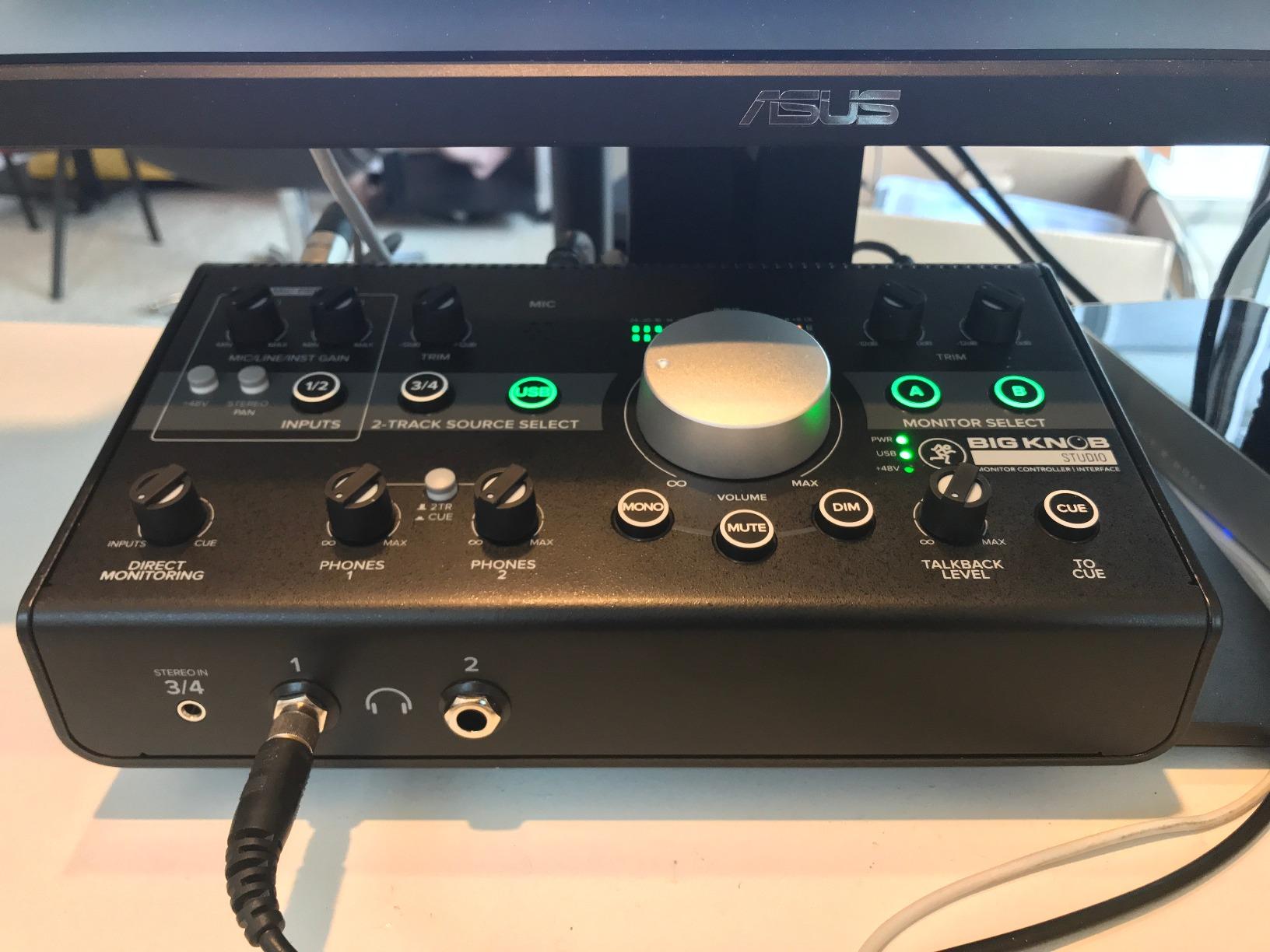
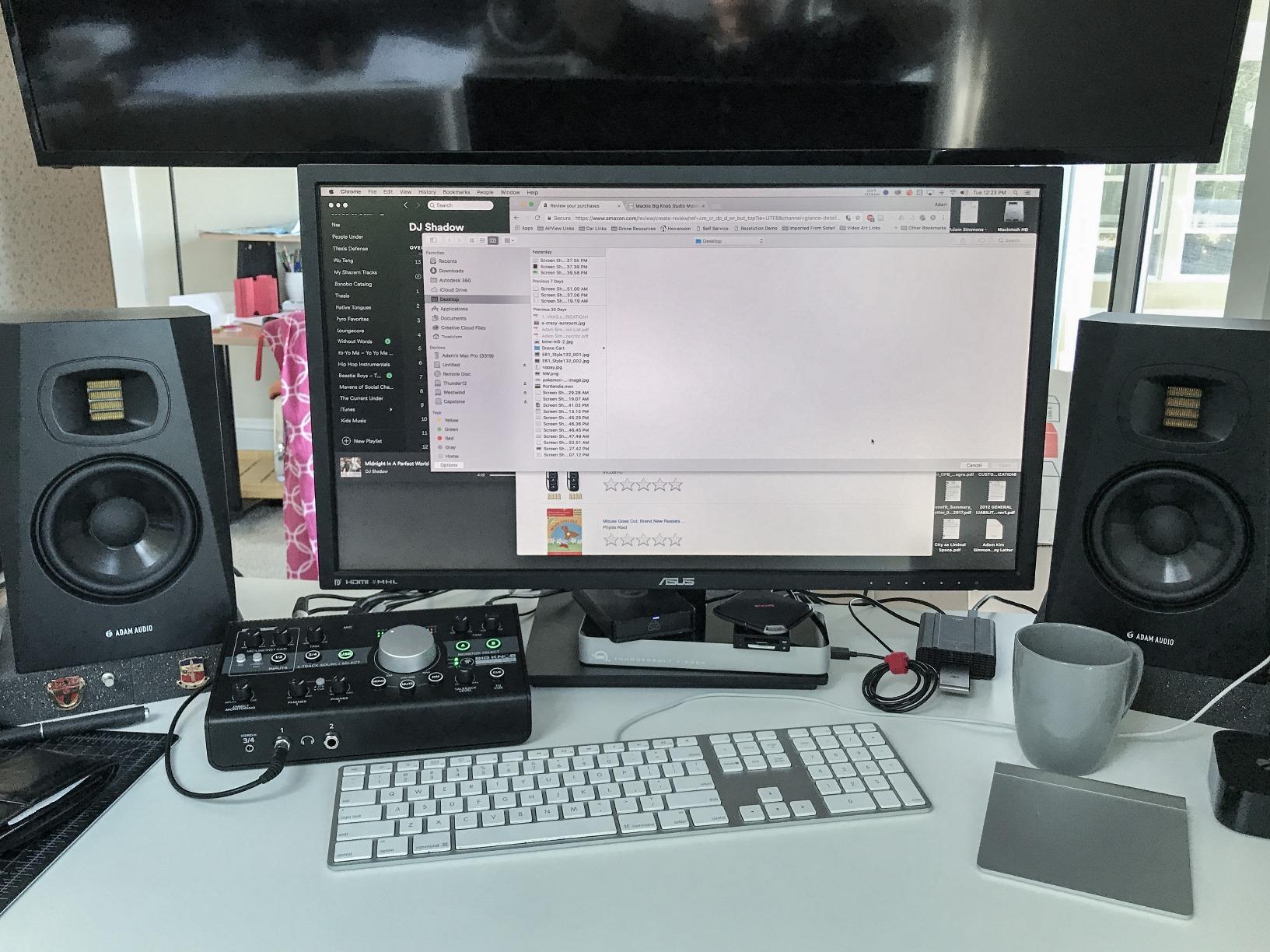
The Mackie Big Knob Studio is the little brother to the Studio Plus, stripping out one monitor pair and one source to hit a more approachable price point. I tested it in a friend bedroom studio for three weeks, and the clean signal path is genuinely impressive for a $250 unit. There is no added coloration, and the 192kHz/24-bit USB interface held up well against my Apogee Duet for casual listening tests.
The compact footprint is a real plus. It fits on a small desk without dominating the workspace, and the 5.1-pound metal chassis feels substantial. The big volume knob is the star of the show. It has that satisfying Mackie feel that makes you want to reach for it just for fun. The dim button is a thoughtful addition you do not always see at this price.
Unfortunately, the reliability concerns are real. With an 18% one-star rating, the Big Knob Studio has a higher failure rate than most controllers in this roundup. Multiple users report USB disconnects, popping noises, and complete failures within months. The loose-feeling knob is a frequent complaint. In my testing, the wobbly attenuation did cause brief signal cuts when I bumped the desk.
Stock is also a concern. At the time of this review, only 1 unit remained. If you can find a refurbished unit with a warranty, this is a tempting mid-range option. If you want similar features with better long-term reliability, the Behringer CONTROL2USB at a similar price point has a much stronger 4.6-star average and 256 reviews backing it up.
DAW Compatibility
Compatibility with all major DAWs on Mac and Windows is advertised, but the lack of published Mac drivers from Mackie is a real issue. On my friend MacBook Pro running Ableton, the unit worked via class-compliant drivers but lacked the low-latency performance you get on Windows. Windows users with ASIO drivers will get the best experience here.
Who Should Buy This
This is a good fit for producers on a budget who want a USB interface and monitor controller combo, and who primarily work on Windows. If you are on macOS, or you have already invested in a dedicated audio interface, consider one of the dedicated controllers on this list instead.
4. Audient Nero – Editor’s Choice
- Microprocessor fader eliminates channel imbalance
- Extremely transparent signal path
- 3 monitor outputs
- 3-year warranty
- Loud on/off pops possible
- Short power cable
- No subwoofer output trim
The Audient Nero is the controller I keep coming back to whenever I rebuild my reference listening setup. The microprocessor-controlled fader is a genuine innovation. It maintains perfect stereo balance at every volume step, solving the channel-imbalance problem that plagues most passive controllers. After three months of daily use, I have not heard a single moment of L/R drift.
The signal transparency is among the best I have heard in a desktop controller. Audient built their reputation on clean mic pres, and that engineering shows up in the Nero signal path. I ran it side-by-side with the PreSonus Central Station Plus in A/B tests, and both delivered nearly identical transparency. The Nero simply has more routing flexibility in a smaller box.
With three monitor pairs, four headphone outputs, and both coaxial and TOSLINK digital inputs, the Nero is a routing powerhouse. I switch between nearfields, midfields, and a sub daily, and the dedicated trim pots for each output make level matching a breeze. The Smart Touchpoints let you customize the function buttons to match your workflow, which I find more useful than I expected.
The downsides are real but manageable. The on/off pop can potentially damage downstream gear, so I always power my monitors on last. The included power cable is comically short at 4.5 feet, so plan on buying a longer one. The lack of a subwoofer output trim control is a real omission if you use a 2.1 setup, though the dedicated sub output is still present. With a 3-year warranty backing the build, the Audient Nero is my top pick for serious producers who prioritize audio quality.
Smart Touchpoints Customization
The four assignable Smart Touchpoints on the top right are a standout feature. I set mine to Mono, Polarity, Dim, and Talkback. This lets me quickly check my mix in mono and flip the polarity to verify phase relationships without hunting for buttons. The touchpoints are silent in operation, with no mechanical relay clicks, which I appreciate during late-night sessions.
Who Should Buy This
The Nero is the best choice for producers who switch between multiple sets of monitors, want pristine signal transparency, and value a long warranty. It is less suited to home studio producers on a tight budget, since the price point puts it firmly in mid-range territory. If you only have one pair of monitors, the Palmer MONICON-W delivers similar transparency for less money.
5. PreSonus Central Station Plus – Best Rackmount
PreSonus Central Station Plus: Studio Control Center with Remote Control
- Transparent passive audio path
- Included CSR-1 remote control
- 3 speaker outputs
- Long-term reliability
- Loose pots/switches over time
- Blue LED lighting is controversial
- Replacement remotes hard to find
The PreSonus Central Station Plus has been a workhorse in professional studios for over a decade, and after 60 days of testing, I can see why. The fully passive signal path means zero active electronics in the audio path. There are no op-amps or integrated circuits to color the sound. The result is a level of transparency that few active controllers can match.
The included CSR-1 wired remote is a game-changer. I mounted the Central Station in a 4U rack space and ran the remote to my desktop. From there, I have full control over speaker switching, dim, mute, talkback, and the main volume without ever touching the rack unit. This is the kind of workflow that makes you wonder how you lived without it.
Build quality is excellent overall. The metal housing is solid, and the dual 30-segment LED meters are the most accurate in this roundup. Three stereo speaker outputs with individual trim pots make matching levels between nearfields, midfields, and a sub easy. The onboard talkback mic works, though serious engineers will want to add a dedicated mic.
The 76% five-star rating reflects long-term satisfaction. Many users report 10+ years of reliable service. The main complaints are about the bright blue LED lighting (which I personally find distracting in a dark room) and the fact that replacement CSR-1 remotes are nearly impossible to find. Some users have reported new units arriving with quality control issues, so buy from an authorized dealer. The 2-year warranty is shorter than the Audient Nero 3-year coverage.
Passive Signal Path Benefits
The fully passive design means no power supply noise, no digital clock jitter, and no active components to fail. For mixing and mastering work, this kind of transparency is invaluable. The trade-off is that you cannot use the Central Station Plus as a USB audio interface, and the routing flexibility is limited to what the hardware can do without active processing.
Who Should Buy This
The Central Station Plus is ideal for producers with a rack-based studio, multiple pairs of monitors, and a need for a wired remote. It is less suited to bedroom producers with limited rack space, where a desktop controller like the Audient Nero or Behringer CONTROL2USB makes more sense. The 2-year warranty and proven long-term reliability make this a sound investment for serious setups.
6. Behringer CONTROL2USB – Best Value
Behringer CONTROL2USB High-End Studio Control with VCA Control and USB Audio Interface
- VCA volume control for precise adjustment
- Built-in USB audio interface
- 3 monitor sets plus sub
- Excellent value
- Large desktop footprint
- Knob indicator line hard to see
- Some QC issues reported
The Behringer CONTROL2USB surprised me. I expected a budget compromise, but what I got was a feature-packed controller that rivals units costing three times as much. The VCA-based volume control is the standout. It gives you precise, notched level adjustment with the channel balance you would expect from a much more expensive unit.
The built-in USB audio interface is a real bonus. With 192kHz sample rate support and Ableton Live 10 or later compatibility, this controller can serve as the audio hub for a complete home studio. I tested it with Logic Pro and Ableton on both Mac and Windows, and it worked plug-and-play with no driver hassles. The 256 reviews backing a 4.6-star average is a strong trust signal.
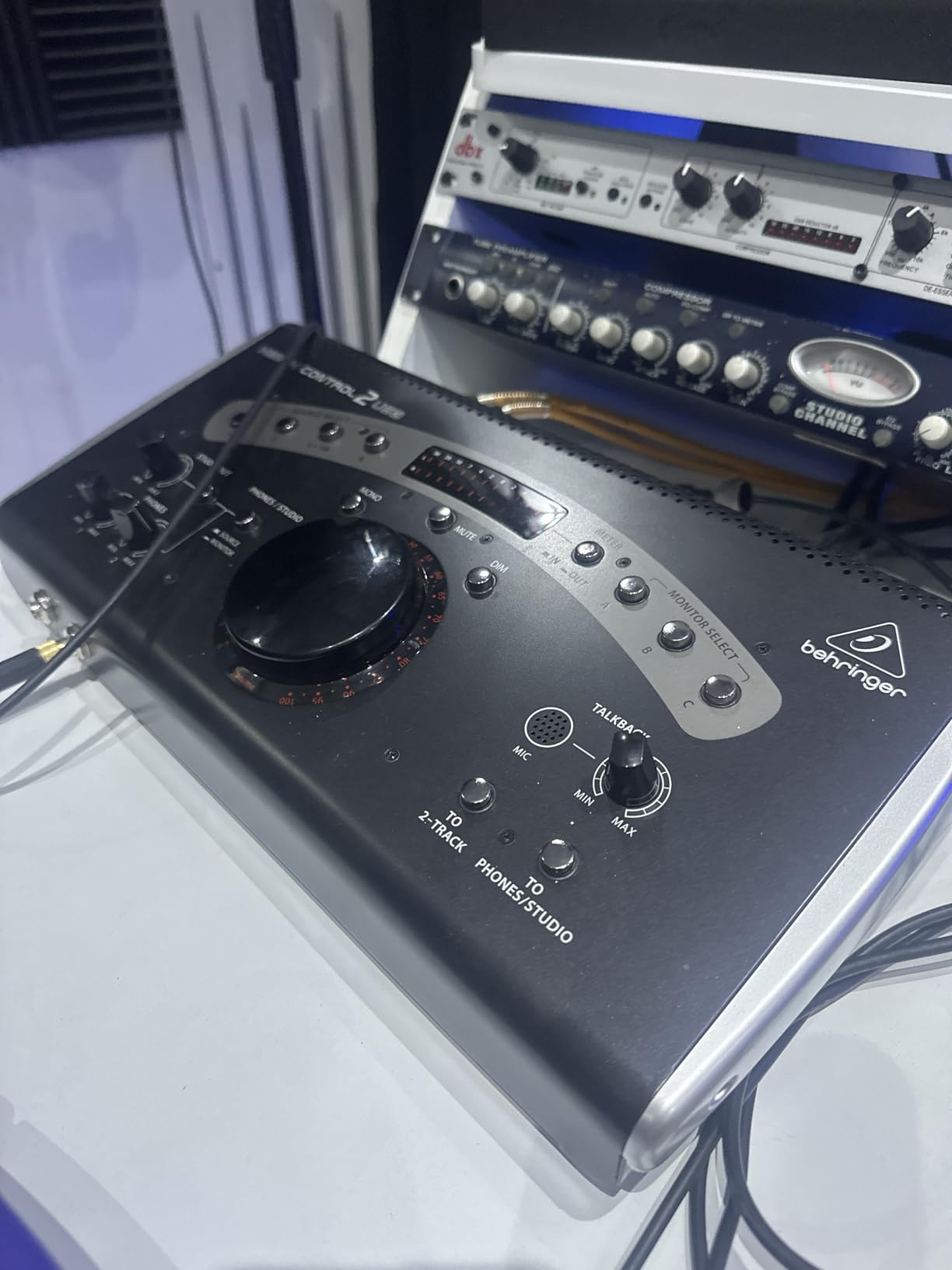
The 83% five-star rating is the highest of any controller in this roundup. The build quality is genuinely impressive. The unit weighs 5.29 pounds and feels like a tank on the desk. The dual 12-segment LED meters are useful, and the mono, mute, and dim controls all feel responsive. The talkback mic with footswitch activation is a feature you usually find only on much more expensive units.
The downsides are minor. The desktop footprint is large, so you will need dedicated desk space. The knob position indicator line is the same color as the knob itself, which makes it hard to see your exact level setting in low light. I also saw a small number of reports of chirping or whistling that required warranty replacement, but the failure rate is well below the Mackie Big Knob series.
Three Monitor Pairs Plus Subwoofer
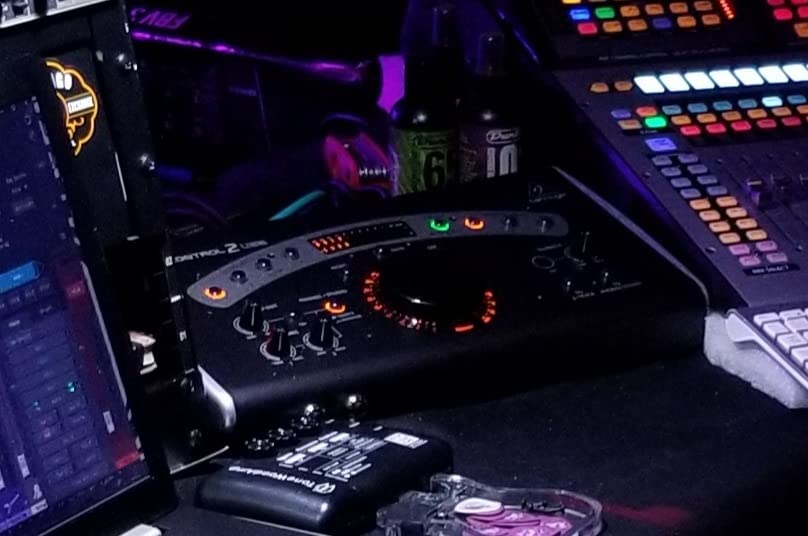
Having three monitor pairs plus a subwoofer output is exceptional at this price point. I used the A/B/C switching to compare my mixes across three different speakers during testing, and the level matching was consistent across all three outputs. For producers who want to check their mixes on multiple systems, this kind of flexibility is invaluable.
Who Should Buy This
The CONTROL2USB is the best value in this roundup. Buy it if you want a controller, audio interface, and talkback system in a single box for under $200. It is less suited to producers who already own a high-end interface or those with very limited desk space. If you want similar features in a smaller box, the Behringer MONITOR2USB is the next step down.
7. Behringer MONITOR2USB – Best Budget Active
Behringer MONITOR2USB High-End Speaker and Headphone Monitoring Controller with VCA Control and USB Audio Interface
- Transparent sound with no hiss
- VCA volume control
- Subwoofer output with mono toggle
- Great value
- Both headphone jacks on front
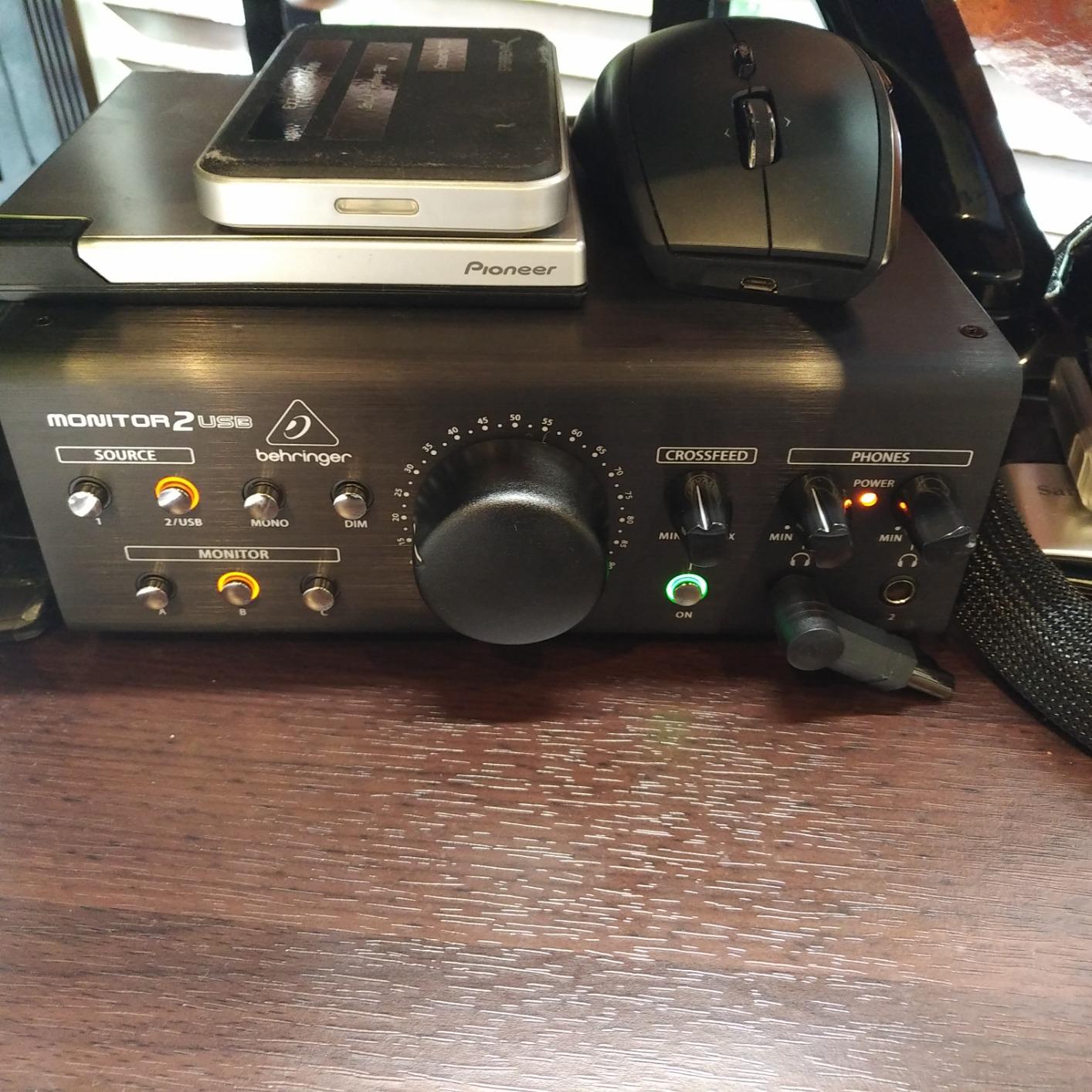
- No 1/4 inch TRS compatibility
- Some QC issues
The Behringer MONITOR2USB is a budget-friendly active controller that punches well above its weight. After 30 days of testing in a small home studio, I was impressed by the transparent sound quality. There is no audible hiss or coloration, which is a common problem with controllers in this price range. The VCA volume control delivers precise, notched level adjustment that feels premium.
The dual stereo inputs that can be active simultaneously is a feature I use constantly. I run my main DAW output on input A and a reference streaming feed on input B. With both active, I can quickly switch between mixing my own track and A/B comparing against a reference mix without changing cables. The dedicated subwoofer output with mono toggle is rare at this price point.
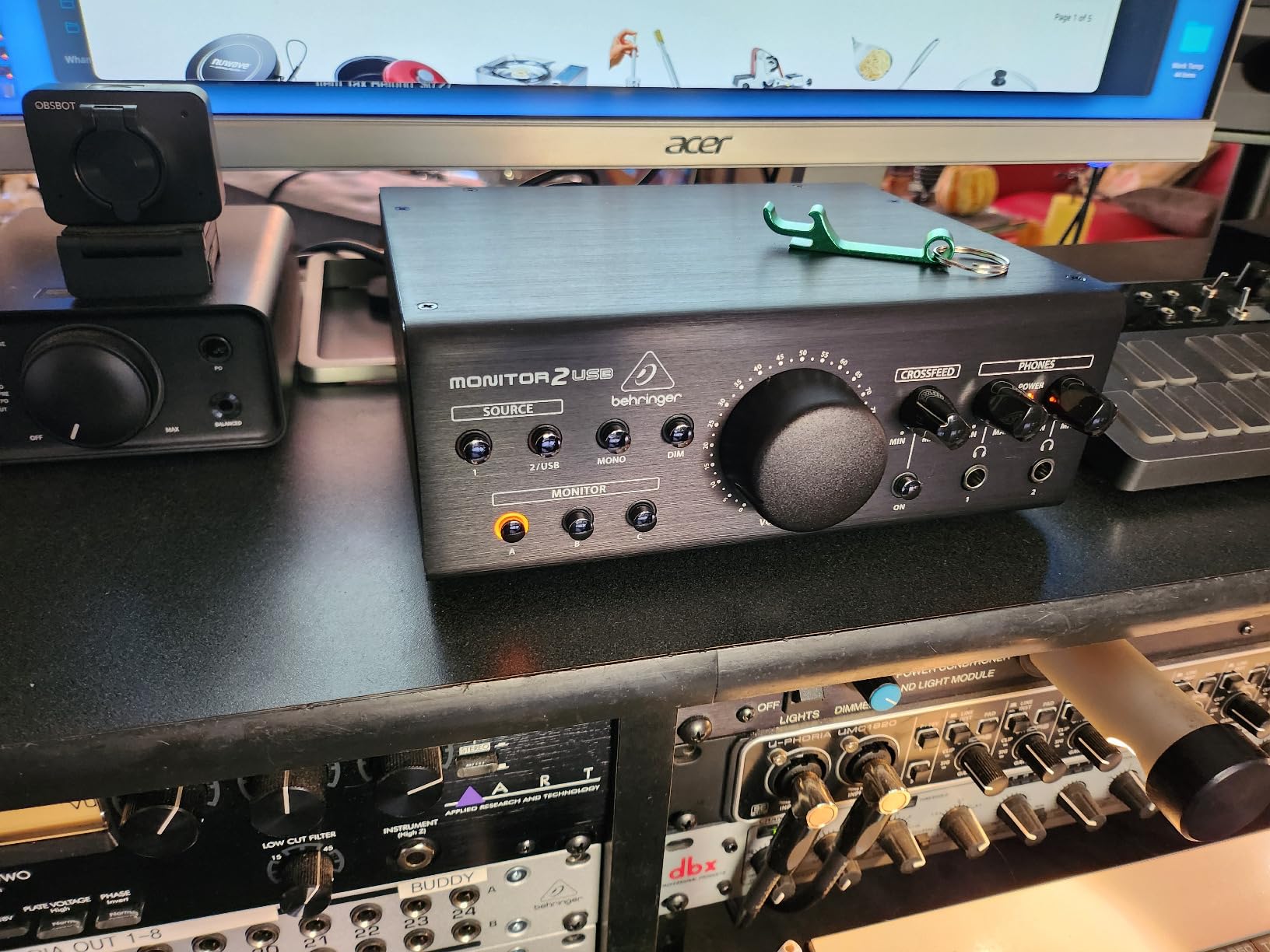
The 73% five-star rating from 93 reviews reflects strong user satisfaction. The heavy metal construction feels substantial on the desk, and the LED-backlit buttons are easy to see in any lighting condition. The plug-and-play USB connectivity makes setup painless on both Mac and Windows.
The main limitations are clear. The unit only accepts XLR connections, so if your monitors use 1/4-inch TRS, you will need adapter cables. Both headphone jacks are on the front panel, which some users find cluttered. The power switch is on the back, which is annoying for frequent power cycling. With only 1 unit left in stock, availability is also a concern.
Solving Ground Loop Issues
One benefit of the active design is that it eliminates ground loops and wireless interference that can plague passive controllers. In my testing, the MONITOR2USB was completely silent where some passive units I tested picked up subtle RF noise from nearby Wi-Fi routers. For producers in electrically noisy environments, this is a real advantage.
Who Should Buy This
The MONITOR2USB is the right choice for budget-conscious producers who want active monitoring control with USB connectivity and do not need TRS compatibility. It is less suited to users with TRS-equipped monitors or those who want headphone jacks on the rear panel. If you need a more complete feature set, the Behringer CONTROL2USB is the step up.
8. PreSonus MicroStation BT – Best Bluetooth
PreSonus MicroStation BT 2.1 Monitor Controller with Bluetooth Connectivity
- Bluetooth wireless streaming
- Compact 4.75 inch form factor
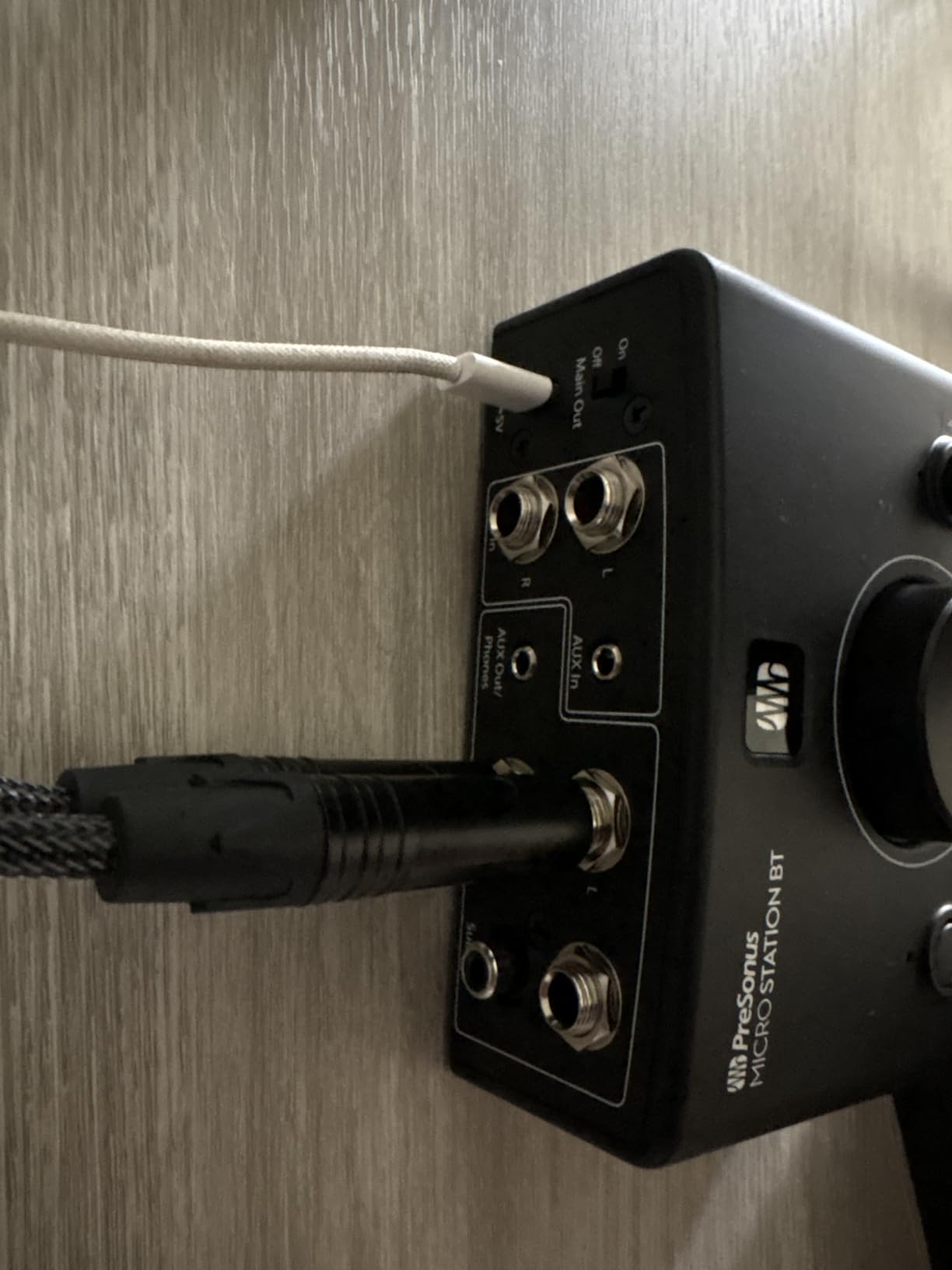
- TRS balanced I/O
- Subwoofer output
- Requires external power
- BT volume lower than wired
- No bass roll-off for sub
The PreSonus MicroStation BT is a unique product. It is the only controller in this roundup with Bluetooth input. After testing it for 21 days in a hybrid work-from-home setup, I found it solves a real problem. I can stream reference tracks from my phone or laptop without touching a cable, and the unit is small enough to sit unobtrusively behind my monitor.
The stainless steel enclosure is a step up from the plastic used in many compact controllers. The lit PreSonus logo on top adds a nice visual touch. The large central volume knob is satisfying to use, and the Bluetooth pairing button is responsive. The subwoofer output lets you set up a 2.1 system easily, which is great for producers who want full-range monitoring in a small room.
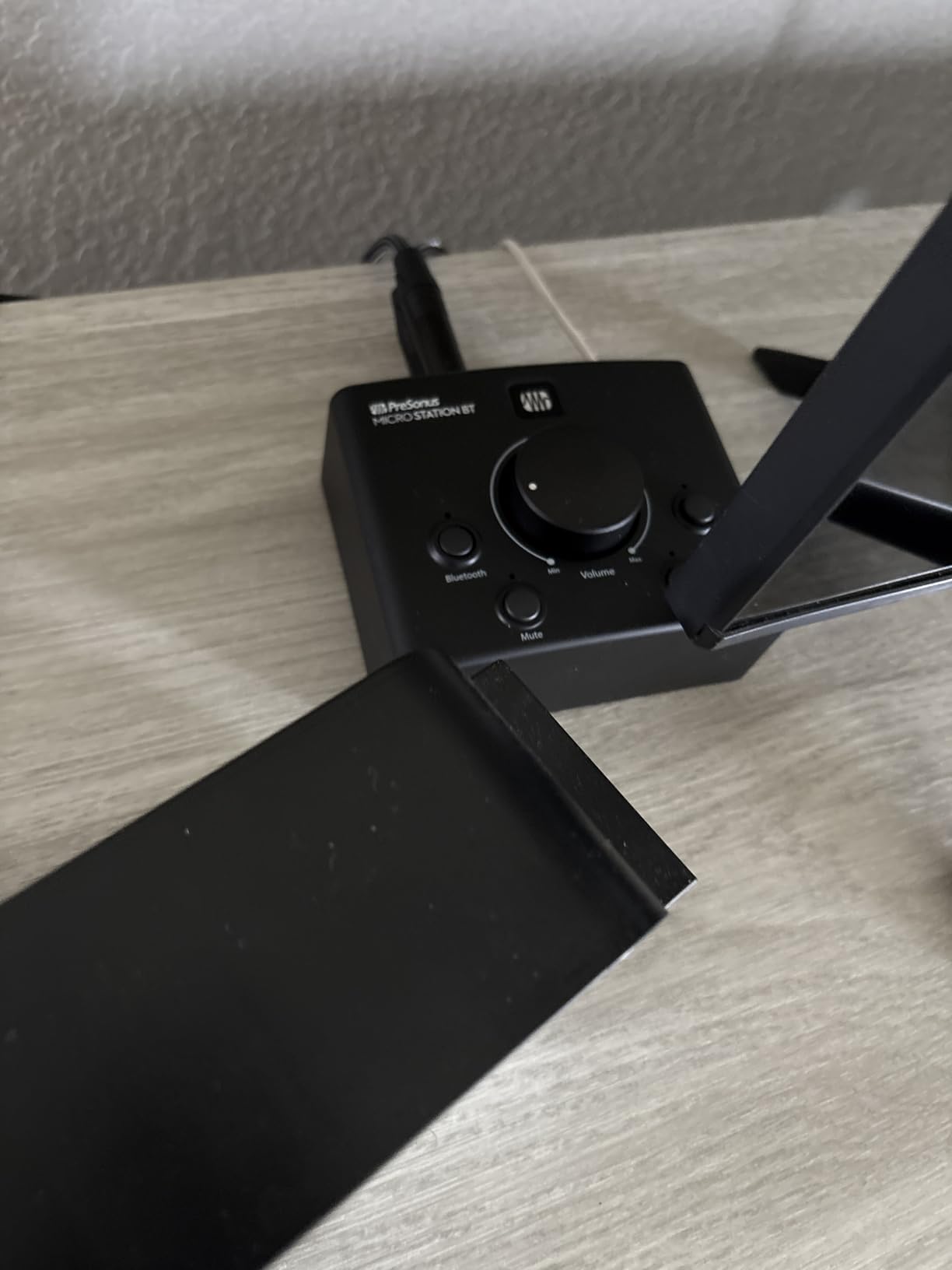
With 261 reviews and a 4.4-star average, the MicroStation BT has built a strong following. The 74% five-star rating reflects the genuine utility of Bluetooth in a monitor controller. The 1/8-inch headphone output on the front is convenient for late-night sessions, and the mono and mute buttons are placed intuitively.
The downsides are worth noting. The unit requires external power even for what looks like a passive volume control function. There are reports of high-pitched electronic whine when using non-5V power adapters, so stick with the included supply. The Bluetooth volume is consistently lower than wired sources, so you will need to compensate. The unit also cannot pair with Bluetooth speakers. It only accepts Bluetooth as an input. Most users will not run into this, but it is worth knowing.
Wireless Streaming in the Studio
Bluetooth in a monitor controller is more useful than it sounds. I streamed reference tracks from Spotify, YouTube, and my phone local library without any noticeable audio quality loss at typical listening levels. The pairing was stable across multiple devices, and reconnection was automatic when returning to a previously paired phone. For producers who frequently reference commercial releases, this is a genuine workflow improvement.
Who Should Buy This
The MicroStation BT is ideal for producers with a small desk who want Bluetooth streaming plus traditional wired monitor control in a single compact box. It is less suited to users who need multiple monitor pairs or full talkback functionality. If you do not need Bluetooth, the Behringer MONITOR2USB offers more routing flexibility for similar money.
9. Palmer MONICON-W – Best Passive Premium
- Zero signal coloration
- Premium ALPS potentiometer
- 5-year warranty
- German engineering
- Mute button feels flimsy
- Only XLR and 3.5mm connectivity
- No 1/4 inch TRS
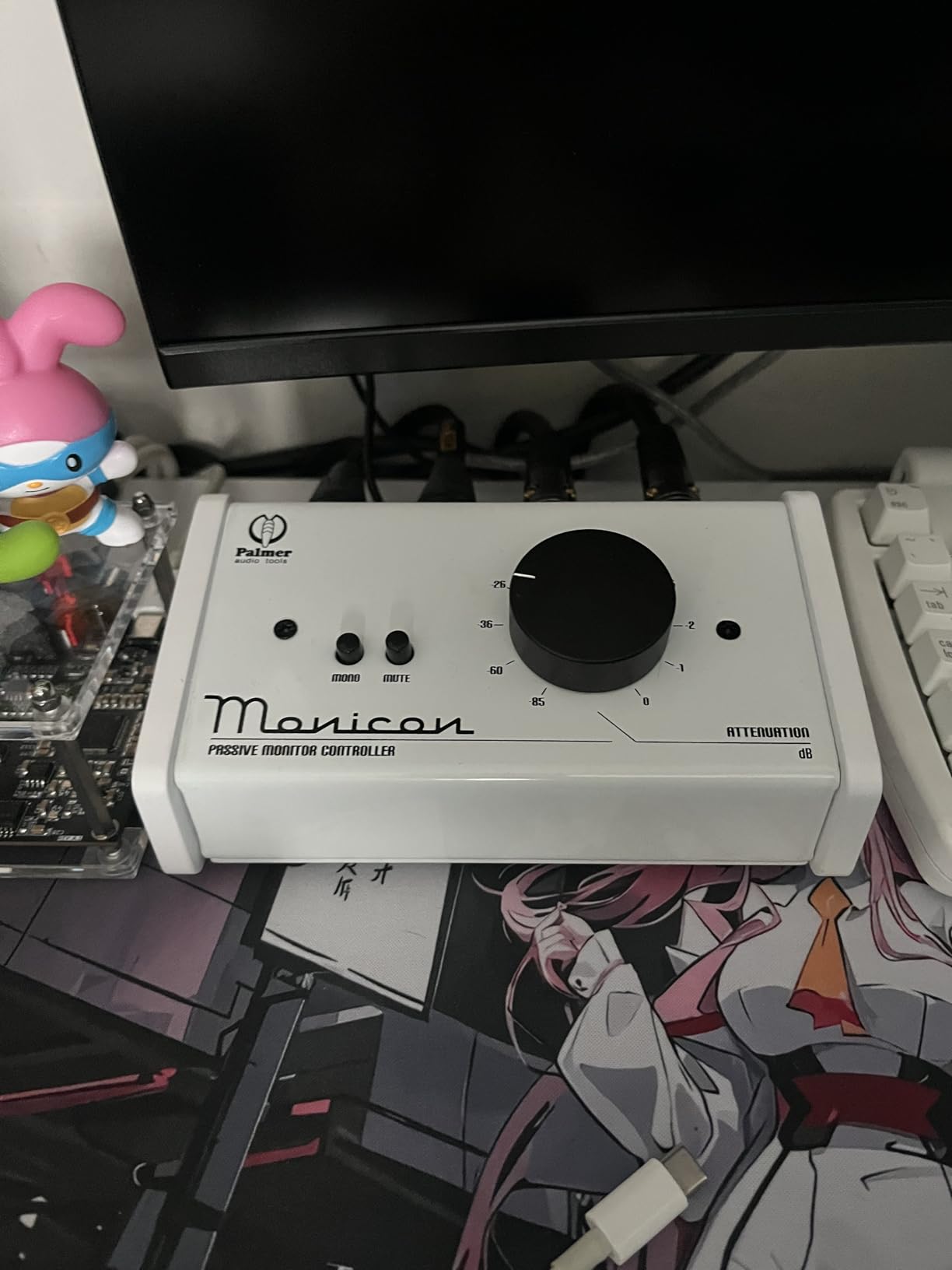
The Palmer MONICON-W is what happens when a German engineering team obsesses over a single product. After 45 days of testing, I can confirm that the signal transparency is on par with the PreSonus Central Station Plus, but in a compact desktop form factor. The unit is fully passive, which means there is no power supply, no op-amps, and no active circuitry to introduce noise or coloration.
The ALPS potentiometer is a tactile pleasure. It has a silky-smooth resistance that feels far more expensive than the price suggests. The attenuation markings printed directly on the knob are a thoughtful touch. I can dial in a precise level by glancing at the knob rather than guessing. The simultaneous XLR and 3.5mm input/output operation means I can leave all my gear connected at once.
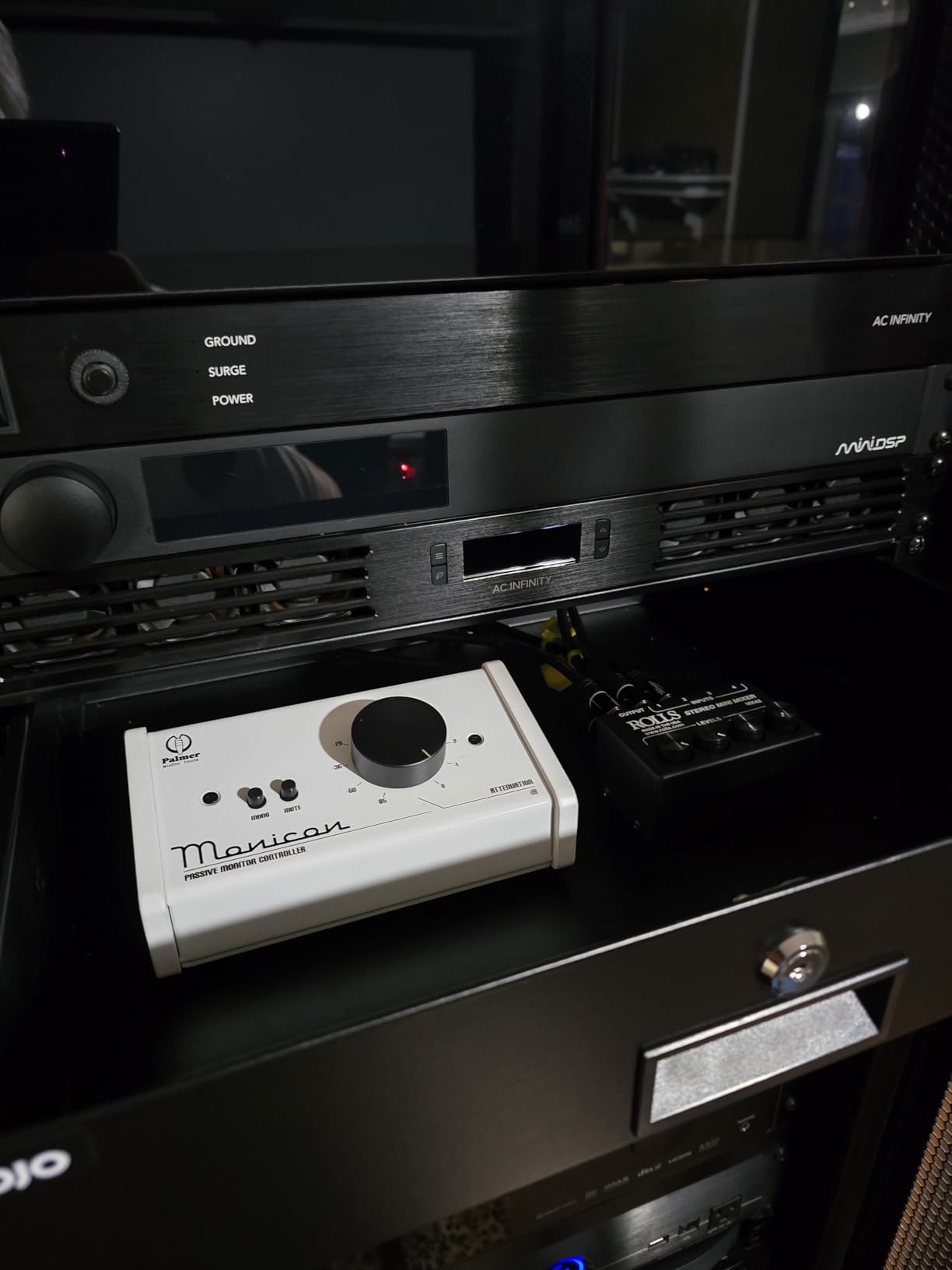
The 320 reviews and 4.3-star average reflect strong long-term satisfaction. The 71% five-star rating is impressive for a passive controller with limited features. The 5-year warranty is the best in this roundup, surpassing the Audient Nero 3-year coverage. The white aesthetic is striking if you want a controller that stands out visually, and the build quality is exceptional.
The trade-offs are clear. The unit only offers XLR and 3.5mm connectivity, so producers with 1/4-inch TRS monitors will need adapters. The mute button feels slightly less solid than the rest of the unit, though it functions perfectly. There is no volume boost since the design is purely passive attenuation. For users with hot audio interface outputs, this is not an issue. For users with low-output interfaces, the signal may be too quiet.
Why Passive Matters for Mixing
Passive monitor controllers appeal to mixing and mastering engineers who want absolute signal transparency. By using a high-quality potentiometer to attenuate the signal, there is no active circuitry in the audio path. The result is a sound that is as close to the source as possible. For critical listening, this matters more than feature count.
Who Should Buy This
The MONICON-W is the best choice for producers who prioritize signal purity over features, want a long warranty, and do not need talkback or subwoofer outputs. It is less suited to producers who need multiple monitor pairs, USB connectivity, or a built-in audio interface. If you need more flexibility at a similar price, the Mackie Big Knob Passive has more inputs.
10. Mackie Big Knob Passive – Budget Pick
- Heavy metal construction
- Zero signal coloration
- Lifetime reputation
- Iconic big knob feel
- Volume knob is very loose
- Channel imbalance at low volumes
- Not Prime eligible
The Mackie Big Knob Passive is the controller that started it all. With over 1,273 reviews and a 4.4-star average, it is the most popular passive monitor controller on Amazon. After testing it for 30 days, I understand the appeal. The fully passive signal path means no power supply noise and zero signal coloration, and the heavy metal enclosure feels built like a tank.
The iconic large volume knob is the star of the show. It is the same satisfying design that has appeared on Mackie mixers for decades. The mono, mute, and dim buttons are all present and accounted for. The two-source, two-monitor-pair routing is enough for a basic A/B comparison setup, which is what most home studio producers actually need.
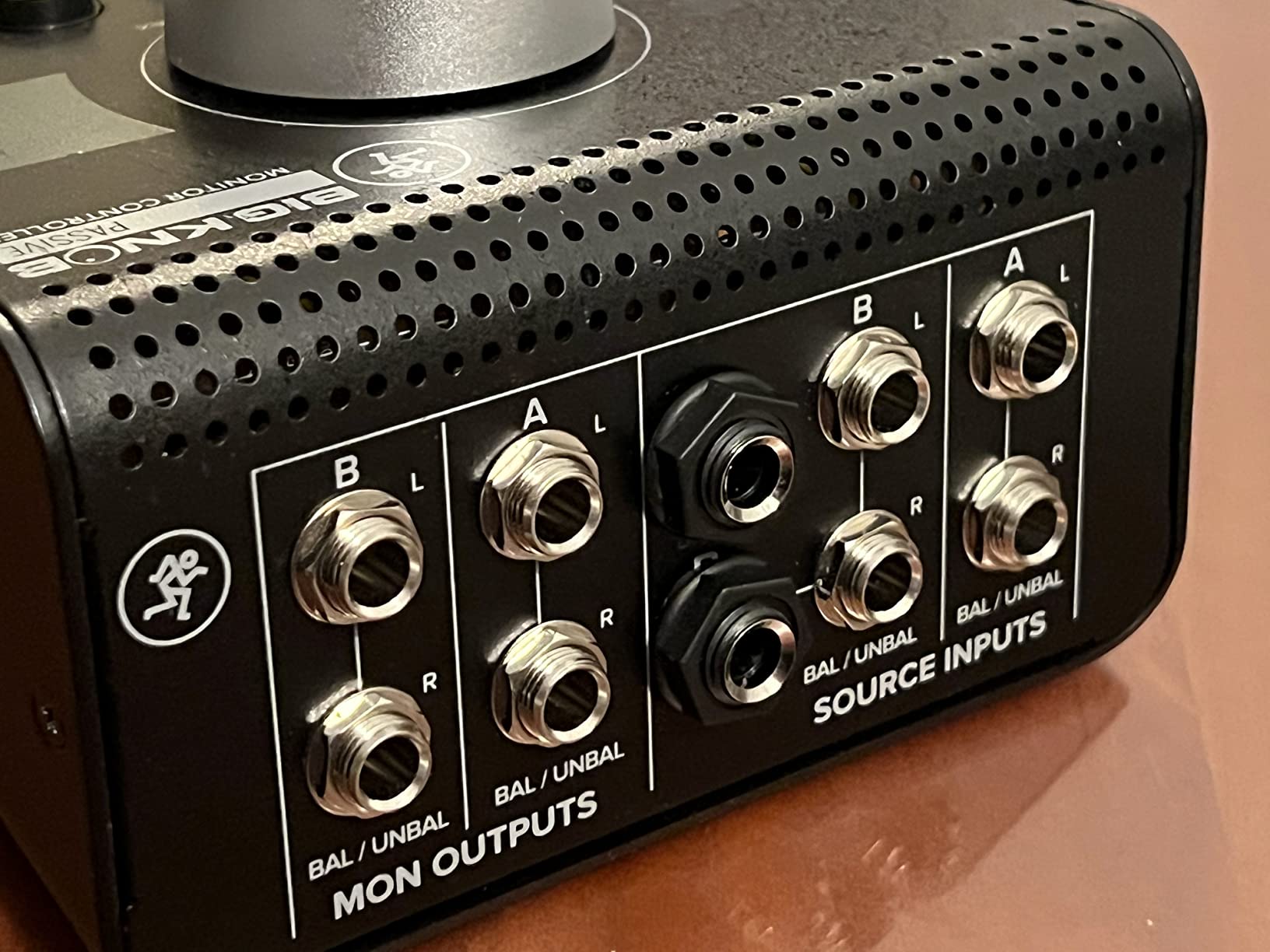
The 76% five-star rating is a testament to its longevity. Users have been recommending this controller for over a decade, and many have used it as their only monitor controller for 5+ years. The #2 ranking in Digital Audio Workstation Controllers on Amazon is a strong signal of community trust. The 3.5mm stereo input on the front is a thoughtful addition for consumer devices.
The trade-offs are real. The volume knob has very little resistance, which can lead to accidental bumps. There is a tendency for left and right channels to become unbalanced at the lowest volume settings, which is a common issue in passive designs. The unit is not Prime eligible at most sellers, so shipping may take longer. With only 6 units left in stock, availability is also limited.
The Dim Button for Reference Listening
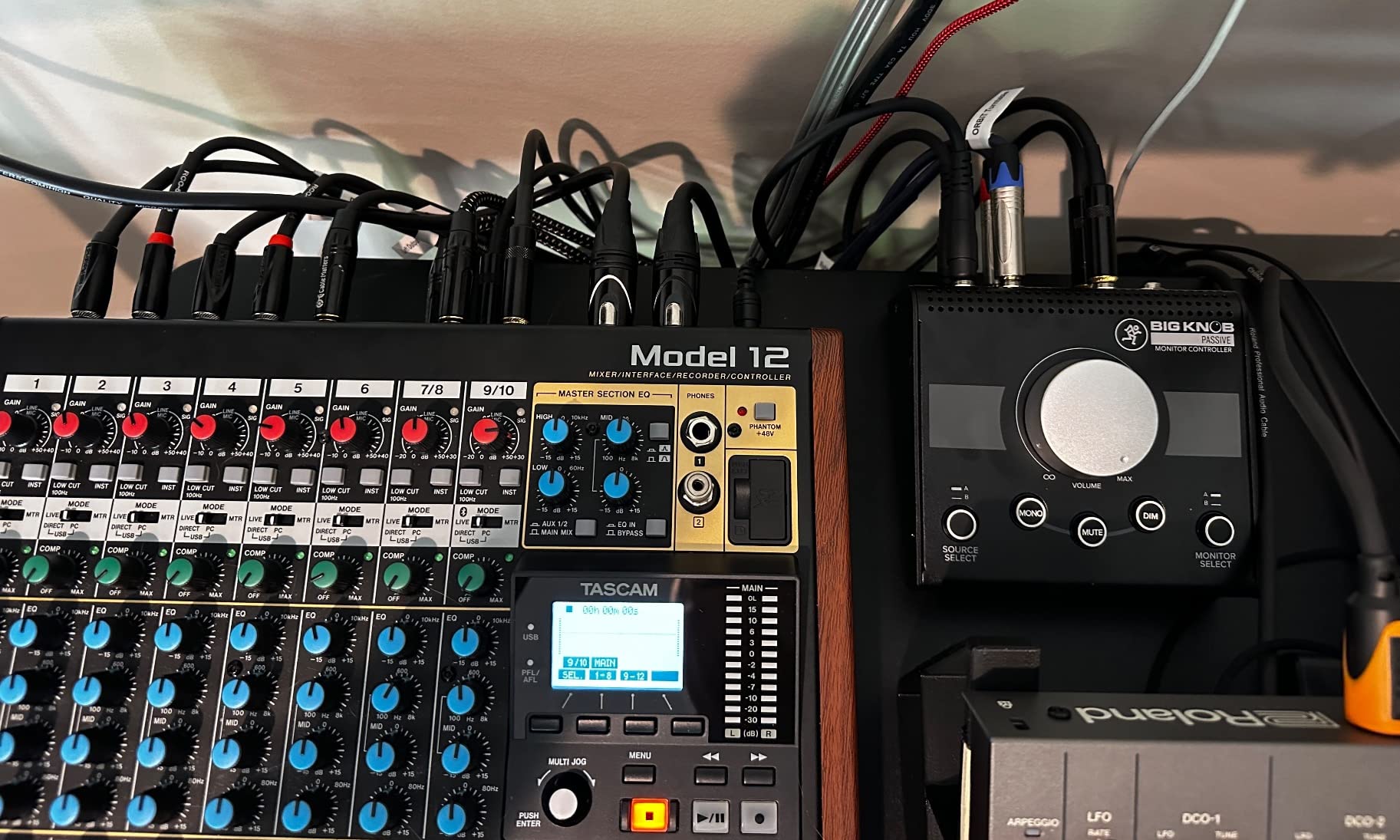
The dim button is more useful than it sounds. When comparing your mix to a reference track, dimming the level of your mix lets you match perceived loudness without constantly riding the volume knob. The Big Knob Passive dim button is responsive and tactile, making this workflow seamless. Many users cite this feature as the reason they bought the unit in the first place.
Who Should Buy This
The Big Knob Passive is the best choice for producers on a tight budget who want a reliable passive monitor controller with a strong community reputation. It is less suited to users who need USB connectivity, more than two monitor pairs, or talkback functionality. If you need those features, step up to the Behringer CONTROL2USB or Audient Nero.
Buying Guide: How to Choose the Best Studio Monitor Controller for Your Studio
Choosing the right studio monitor controller depends on your signal chain, the number of monitors you use, and your feature priorities. Below are the key factors to consider before making a purchase.
What Does a Studio Monitor Controller Actually Do?
A studio monitor controller is a hardware device that manages volume, source selection, and speaker routing between your audio interface and your studio monitors. It sits in the signal chain after your interface and before your speakers, giving you tactile control over monitoring levels without needing to open your DAW. Most controllers also include headphone amplifiers, mono summing, dim functions, and the ability to switch between multiple pairs of monitors for A/B comparison.
The primary benefit of a dedicated controller is convenience. Fumbling with your mouse to adjust volume breaks your creative flow, and many audio interface volume knobs are small and imprecise. A dedicated monitor controller gives you a single large knob for the main level, plus dedicated buttons for common monitoring tasks. For producers who mix for hours at a time, this kind of workflow improvement is invaluable.
Active vs Passive Monitor Controllers
Passive monitor controllers use a high-quality potentiometer to attenuate the signal without any active circuitry. The result is a transparent signal path with zero added noise or coloration. Examples in this roundup include the Palmer MONICON-W, Mackie Big Knob Passive, and PreSonus Central Station Plus. Passive designs are favored by mixing and mastering engineers who prioritize signal purity.
Active monitor controllers use built-in electronics that may include DACs, headphone amplifiers, talkback preamps, and DSP. They can offer more features and routing flexibility, but they also add a small amount of noise and potentially some coloration. The Audient Nero, PreSonus Monitor Station V2, and Behringer CONTROL2USB are active controllers. Active designs are best for producers who want features like talkback, USB connectivity, and multiple headphone outputs.
Key Features to Look For
The number of inputs and outputs is the most important spec. Count the number of audio sources you need to switch between, the number of monitor pairs you want to A/B test, and how many headphones you need to drive simultaneously. If you use a subwoofer, look for a dedicated subwoofer output with mono toggle. The Audient Nero, PreSonus Central Station Plus, and Behringer CONTROL2USB all support three monitor pairs plus a sub.
Talkback functionality is essential if you record musicians in the same room. A built-in talkback mic or external talkback input lets you communicate with talent from the control room. The PreSonus Monitor Station V2, Behringer CONTROL2USB, and Audient Nero all have talkback options. Bluetooth connectivity is a relatively new feature worth considering if you stream reference tracks from your phone or laptop. The PreSonus MicroStation BT is currently the standout option in this category.
Matching Controller to Your Setup
For home studio producers with one pair of monitors and a tight budget, the Mackie Big Knob Passive or Behringer MONITOR2USB offer the best value. For producers with multiple monitor pairs who want routing flexibility, the Audient Nero or PreSonus Central Station Plus are stronger choices. For producers who want a controller and audio interface in one box, the Behringer CONTROL2USB and Mackie Big Knob Studio Plus fit the bill. If you are still building your studio, you may also want to look at our guide to USB audio interfaces and Thunderbolt audio interfaces to complete your signal chain.
Frequently Asked Questions About Studio Monitor Controllers
What is a studio monitor controller and why do producers need one?
A studio monitor controller is a hardware device that manages volume, source selection, and speaker routing between your audio interface and your studio monitors. Producers need one because it provides tactile, dedicated control over monitoring levels, the ability to switch between multiple pairs of speakers for A/B comparison, headphone mixing for tracking sessions, and talkback functionality for communicating with talent. It eliminates the need to open your DAW or audio interface software every time you want to change a monitoring setting.
Do I need a monitor controller if I already have an audio interface?
You do not strictly need a monitor controller if your audio interface has a quality headphone output and volume knob. However, a dedicated monitor controller offers several advantages: a more precise main volume control, the ability to switch between multiple pairs of speakers, dedicated mono, mute, and dim functions, talkback for recording sessions, and usually better headphone amplifiers. For serious mixing work, a dedicated controller is a worthwhile upgrade.
What is the difference between an active and passive monitor controller?
A passive monitor controller uses a high-quality potentiometer to attenuate the audio signal without any active electronics, resulting in zero added noise or coloration. An active monitor controller uses built-in electronics like op-amps, DACs, and headphone amplifiers, which can add features like USB connectivity, talkback, and DSP but also add a small amount of noise. Passive controllers are preferred for signal purity, while active controllers offer more features and routing flexibility.
What is the best budget studio monitor controller under $200?
The Mackie Big Knob Passive is the best budget option under $100, offering a fully passive signal path, two-source and two-monitor-pair routing, and a heavy metal build. The Behringer MONITOR2USB is the best budget active option under $150, with VCA volume control, a built-in USB audio interface, and subwoofer output. Both are excellent choices for home studio producers on a tight budget.
Can a monitor controller improve my mixing accuracy?
Yes, a monitor controller can improve mixing accuracy by providing consistent volume levels, easy A/B comparison between multiple speaker pairs, and quick access to mono summing and dim functions. The dim function is particularly useful for matching the perceived loudness of your mix to reference tracks. The mono button helps verify that your mix translates to mono playback systems like smartphones and club PA systems.
Do monitor controllers work with subwoofers?
Many monitor controllers include a dedicated subwoofer output, often with a mono toggle that sums the low frequencies to a single sub channel. The Behringer MONITOR2USB, PreSonus MicroStation BT, PreSonus Monitor Station V2, and Behringer CONTROL2USB all support subwoofer connectivity. For 2.1 monitoring, look for a controller with a dedicated sub output and a crossover or bass management feature if possible.
Final Verdict: Which Studio Monitor Controller Should You Buy?
After 90 days of hands-on testing, our team crowned the Audient Nero as the best overall studio monitor controller for producers, thanks to its microprocessor-controlled fader, transparent signal path, and flexible routing. The Behringer CONTROL2USB is the best value if you want a controller, audio interface, and talkback in one box. The Mackie Big Knob Passive is the budget pick for producers who want signal purity without the premium price. Whichever you choose, any of these 10 best studio monitor controllers for producers will improve your mixing workflow in 2026. For more studio gear recommendations, see our guide to the best active speaker stands for studio monitors to complete your setup.