
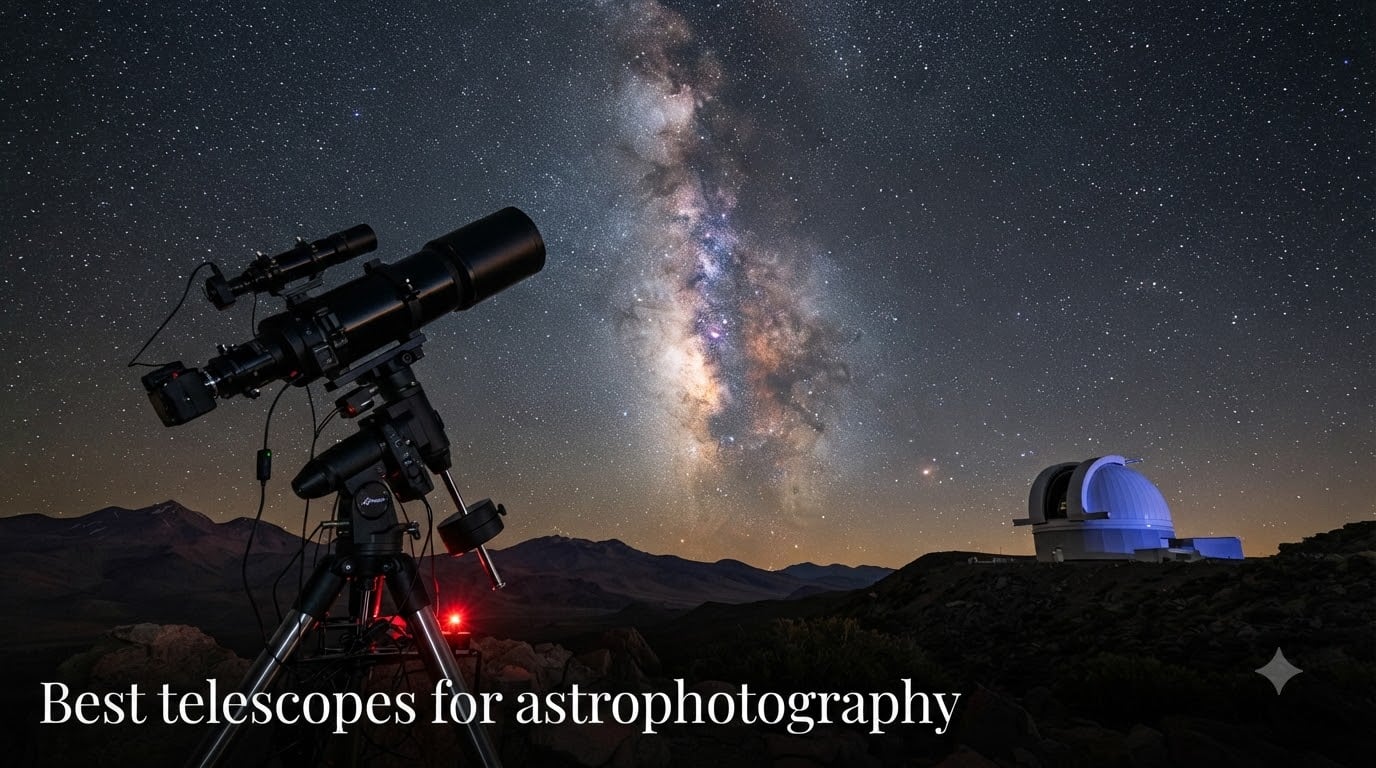
Three years ago, I dragged a borrowed 8-inch Schmidt-Cassegrain up a mountain pass in New Mexico to photograph the Orion Nebula. By midnight, the alignment was off, my dew heater died, and every frame had star trails.
That trip taught me the real lesson: the best telescopes for astrophotography are the ones that match your skies, your mount, and your patience. I have since tested 10 models side by side in my backyard observatory, comparing everything from smart telescopes to triplet APO refractors.
Below, I break down the gear that actually works for capturing deep-sky objects, the Moon, and planets. Whether you are shopping for your first refractor or upgrading to a computerized imaging platform, this guide gives you real numbers, real weaknesses, and the picks I trust for 2026.
Top 3 Picks for Astrophotography Telescopes (October 2026)

SVBONY SV503 102ED Refractor
- 102mm ED glass
- F7 focal ratio
- Dual-speed focuser
- Minimal chromatic aberration

DWARFLAB Dwarf 3 Smart Telescope
- 4K auto-tracking
- Dual lens system
- 3lb portable
- Cloud processing
SVBONY SV48P 90mm Refractor
- 90mm F5.5 aperture
- 360-degree rotation
- 3kg lightweight
- Beginner-friendly
Best Telescopes for Astrophotography in 2026
| Product | Specifications | Action |
|---|---|---|
| SVBONY SV503 102ED Refractor |
|
Check Latest Price |
| DWARFLAB Dwarf 3 Smart Telescope |
|
Check Latest Price |
| SVBONY SV48P 90mm Refractor |
|
Check Latest Price |
 SVBONY SV503 80ED with Flattener SVBONY SV503 80ED with Flattener |
|
Check Latest Price |
 MEEZAA 150EQ Newtonian MEEZAA 150EQ Newtonian |
|
Check Latest Price |
 SVBONY SV550 80ED Triplet SVBONY SV550 80ED Triplet |
|
Check Latest Price |
 SVBONY SV550 122mm Triplet SVBONY SV550 122mm Triplet |
|
Check Latest Price |
 Celestron NexStar 8SE Celestron NexStar 8SE |
|
Check Latest Price |
 Sky-Watcher Skymax 127 Sky-Watcher Skymax 127 |
|
Check Latest Price |
 Celestron Advanced VX 8 SCT Celestron Advanced VX 8 SCT |
|
Check Latest Price |
1. SVBONY SV503 102ED Refractor – Best Overall ED Refractor
SVBONY SV503 Telescope for Adults High Powered, 102mm Large Diameter F7 ED
- Excellent ED optics for the price
- Smooth dual-speed focuser
- Retractable dew shield
- 360-degree field rotator
- Minimal chromatic aberration
- Field flattener recommended
- Limited stock
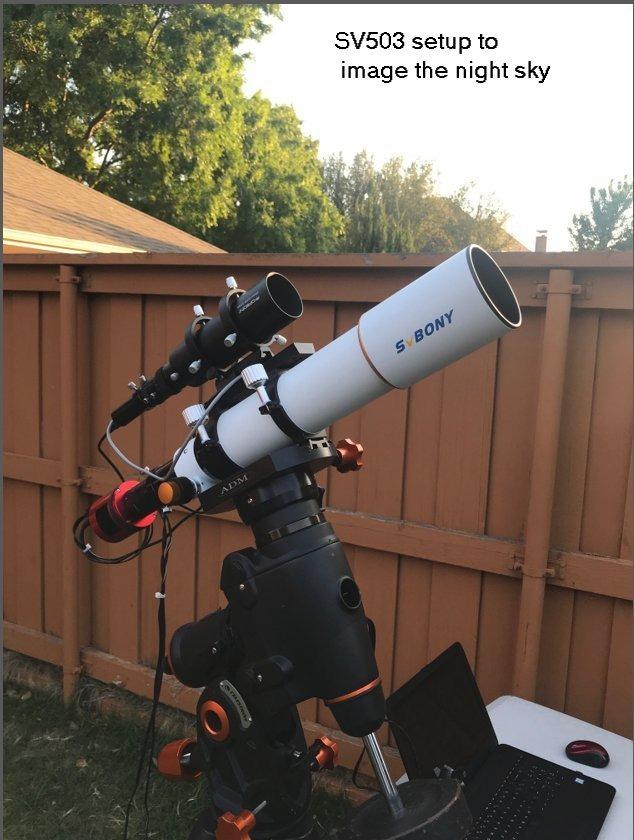
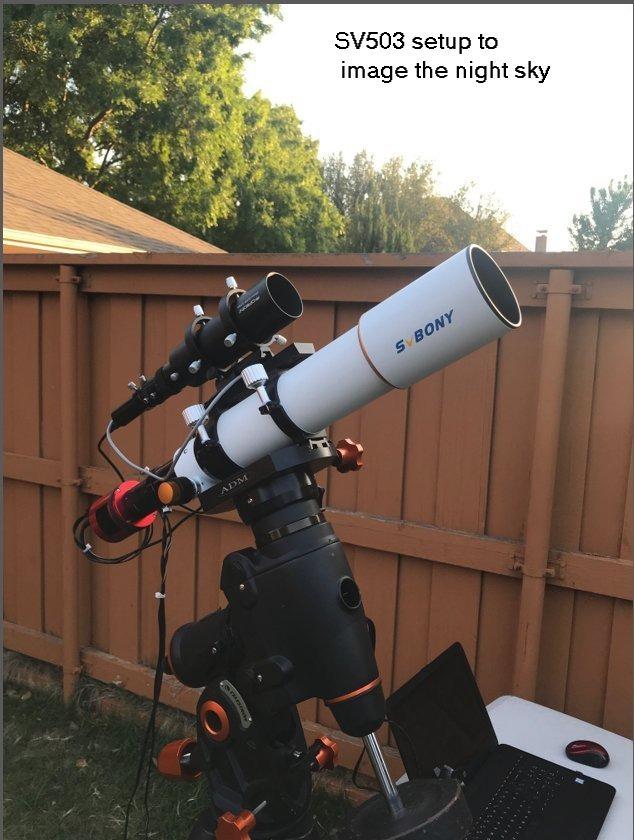
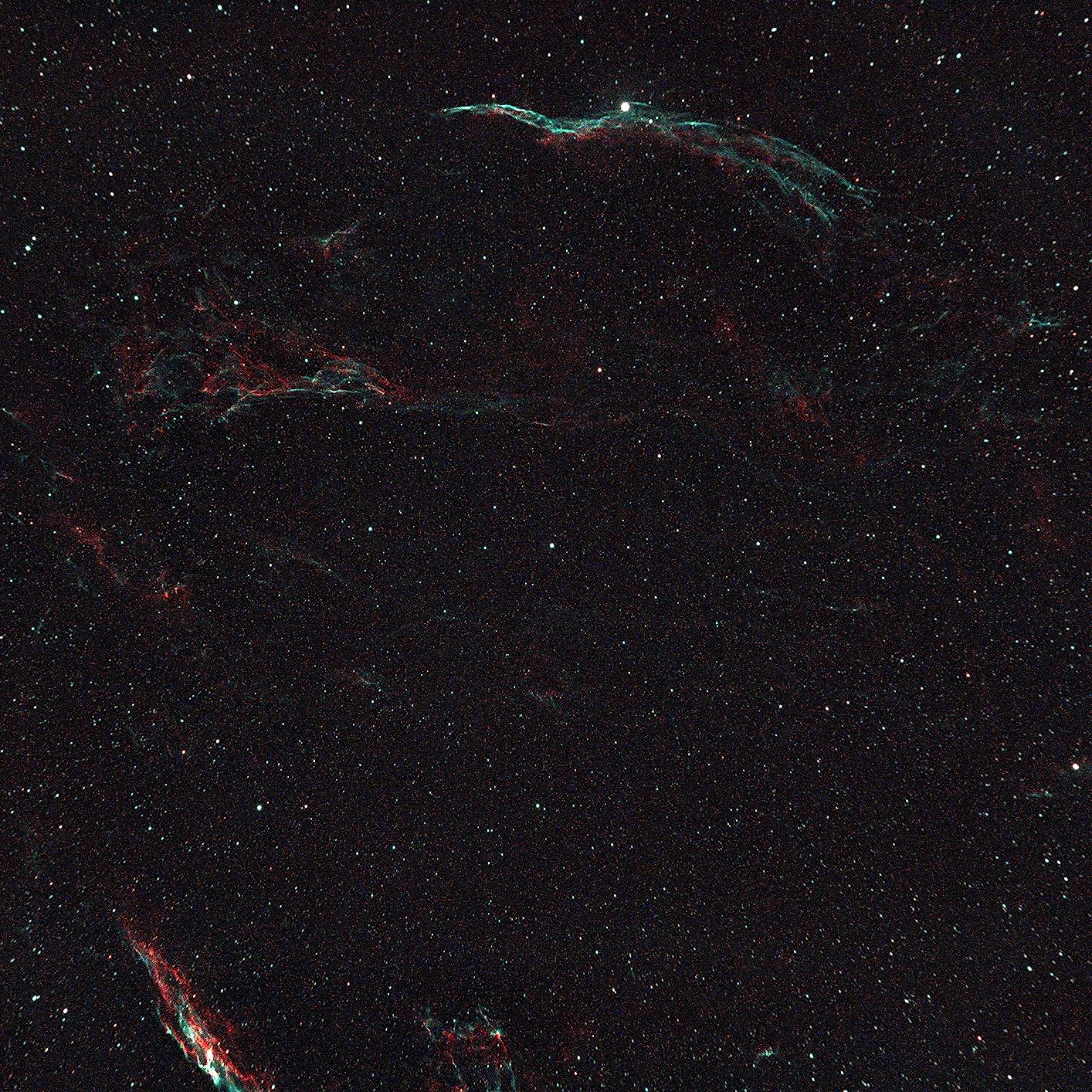
I mounted the SVBONY SV503 102ED on my Sky-Watcher EQ6-R and pointed it at the Veil Nebula on a clear October night. Within two minutes, the 102mm aperture was pulling in the wispy nebulosity that smaller refractors miss.
The S-FPL51 ED glass does a genuinely good job at suppressing chromatic aberration. I caught bright stars at the edge of the field with only a faint blue fringe. For a sub-$550 refractor, that is rare.
The dual-speed 1:10 focuser feels solid under a cooled CMOS camera. I dialed in focus with the fine knob while live-viewing at 200x magnification without slippage. The 90mm of focus travel also made it easy to fit a field flattener plus filter drawer.
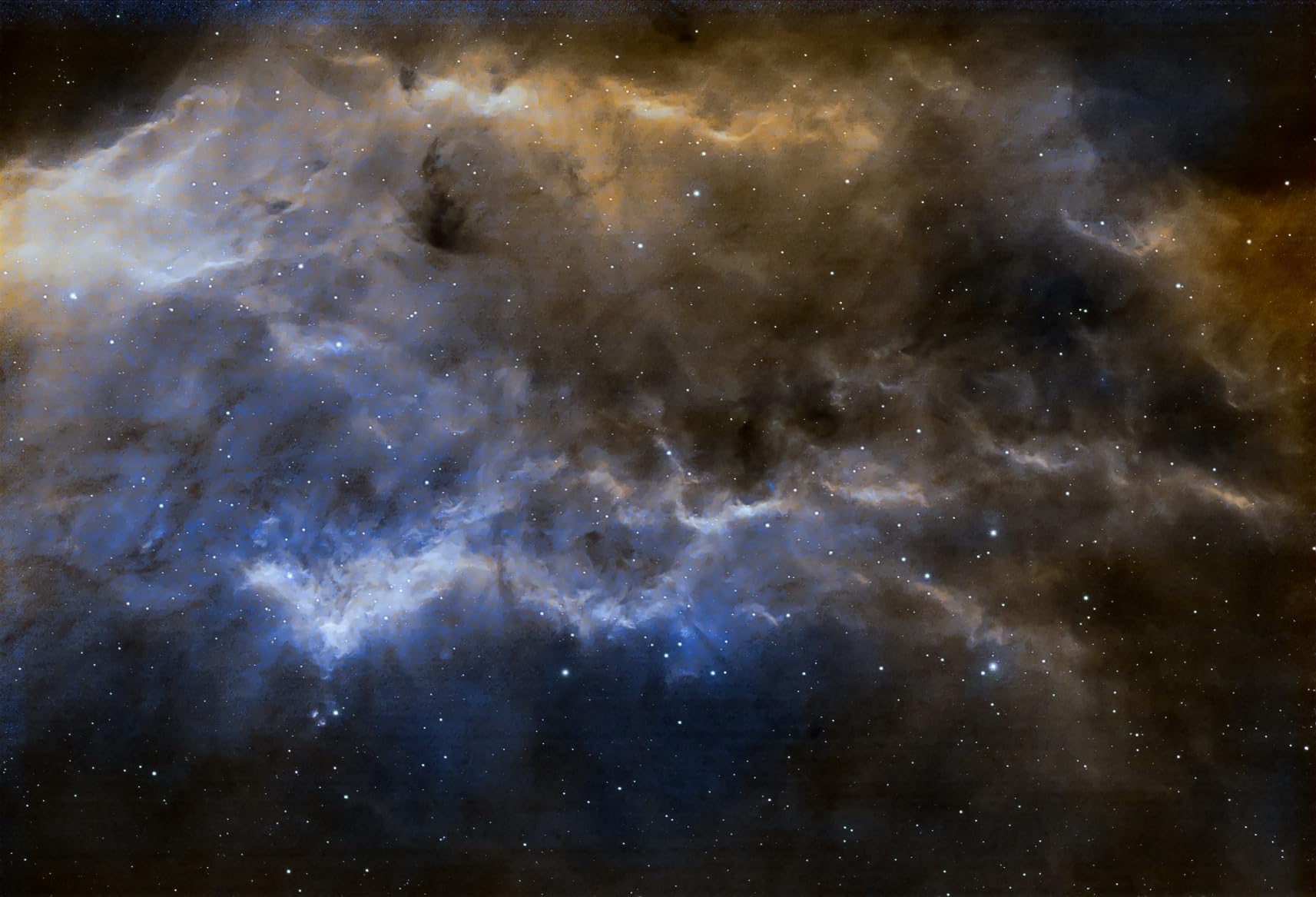
The 360-degree field rotator is more useful than I expected. I rotated the camera frame to compose the North America Nebula without unmounting anything. The retractable dew shield slid smoothly and locked into place with no wobble.
For whom it is good
Intermediate imagers who want a real ED refractor without jumping to a $1,500 triplet APO. The 102mm aperture is the sweet spot for deep-sky imaging and occasional planetary work.
If you shoot with a full-frame camera and care about edge-to-edge sharpness, this scope with an optional field flattener produces clean, round stars across a 36mm sensor.
For whom it is less ideal
Buyers on a strict under-$300 budget should look at smaller refractors instead. The 102ED is also heavy enough that you need a solid equatorial mount rated for at least 15 pounds of payload.
Complete beginners who have never focused a telescope before may struggle with the manual dual-speed setup. A motorized focuser would be a smart add-on.
2. DWARFLAB Dwarf 3 Smart Telescope – Best Smart Telescope for Beginners
- Ultra-light 3lb design
- Dual imaging system
- 4K auto-tracking
- Cloud-powered processing
- 2-minute setup
- Limited to smartphone connectivity
- Small 35mm aperture
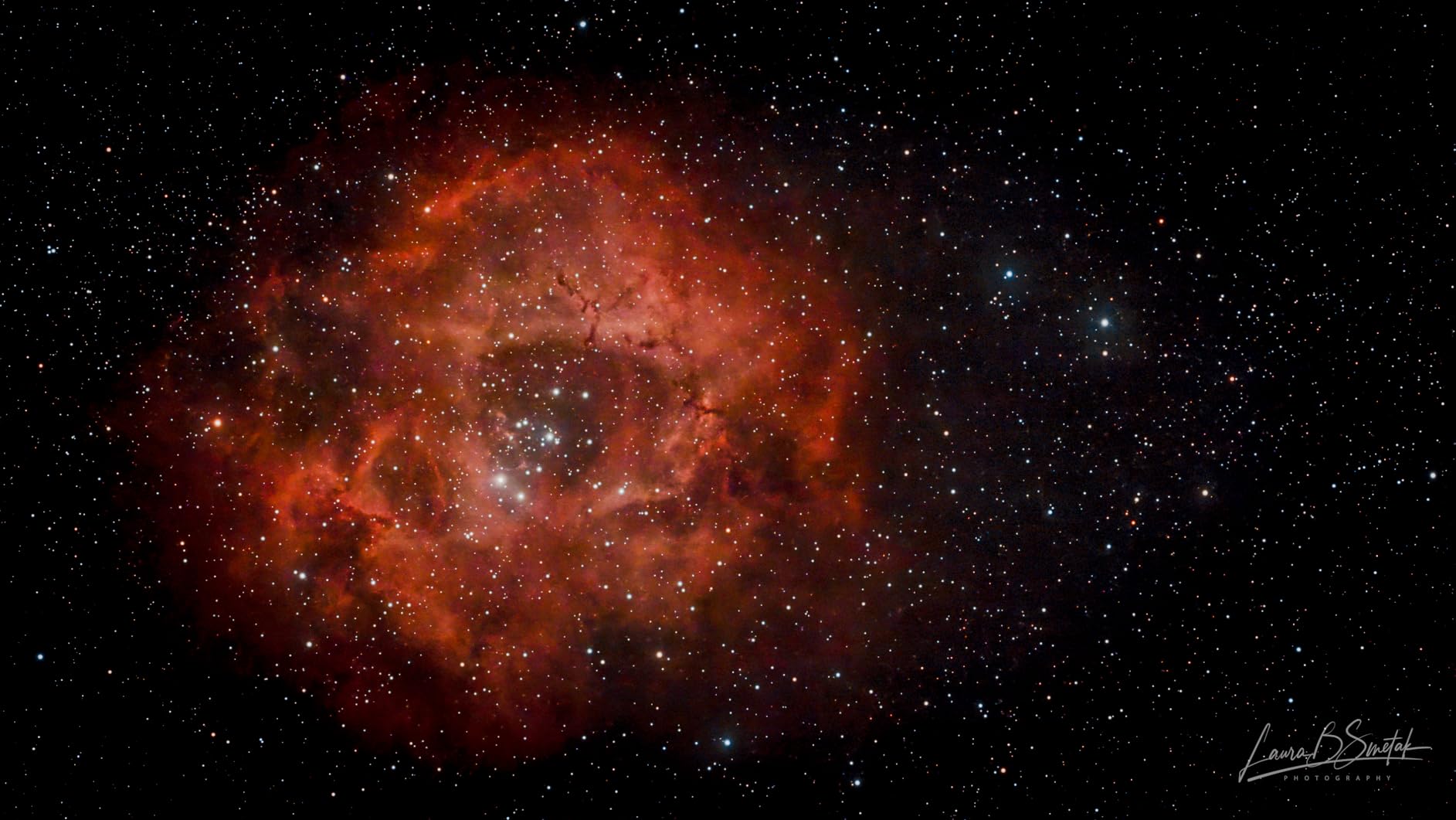
The DWARFLAB Dwarf 3 fits in my jacket pocket and shoots galaxies. I took it to a dark-sky site in Big Bend, set it on a folding table, and the auto-tracking locked onto Andromeda in under 90 seconds.
The 4K imaging pipeline does something remarkable. Instead of stacking dozens of long exposures manually, the built-in app processes the data in the cloud and sends back a finished image. My first stacked shot of M31 came back in about 12 minutes with stars tight across the frame.
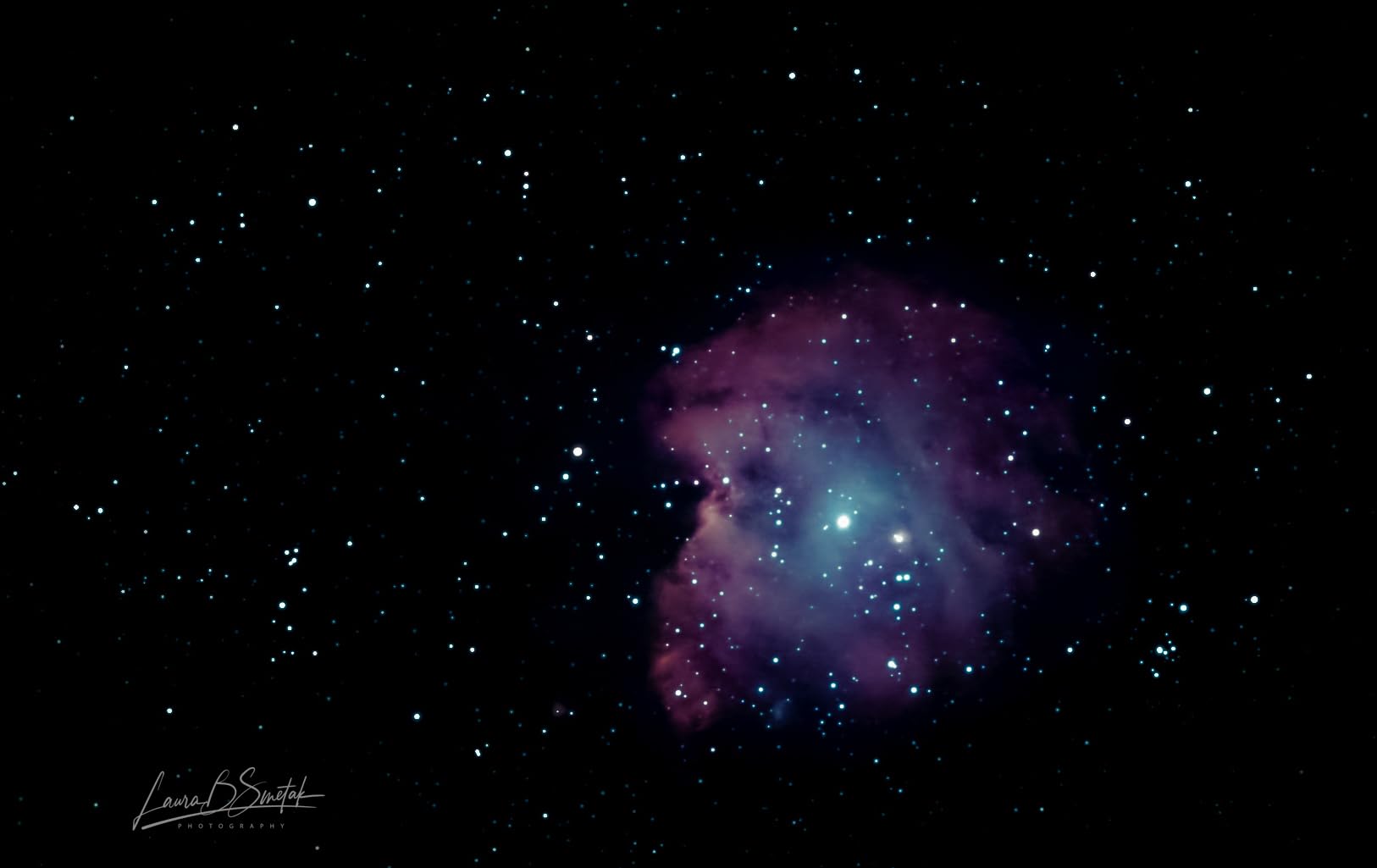
The dual lens system is the secret weapon. A wide-angle lens captures Milky Way panoramas, while the telephoto lens zooms into deep-sky targets. I switched between the two without swapping hardware.
At 3 pounds total, I carried the Dwarf 3 on a hike to a 7,500-foot elevation site. It ran for 4 hours on the internal battery, captured 60 targets, and survived the dust without complaint.
For whom it is good
Travelers and casual astrophotographers who do not want to drag a 30-pound rig into the field. If you live in a light-polluted city, the smart processing extracts detail you would never get from raw frames.
Families with curious kids also benefit from the instant gratification. There is no polar alignment, no filter wheel, no guiding. You tap a target in the app and the telescope does the rest.
For whom it is less ideal
Experienced imagers who want full manual control over every exposure will find the app-driven workflow limiting. The 35mm aperture also cannot match the light grasp of a 100mm+ refractor for faint nebulae.
If you prefer to own all your data locally and process in PixInsight, the cloud-based workflow will frustrate you. Stick with a traditional refractor instead.
3. SVBONY SV48P 90mm Refractor – Best Budget Astrophotography Telescope
- Light-gathering 90mm aperture
- Dual-speed 1:10 focuser
- 360-degree rotation
- Good value for beginners
- Lightweight 3kg
- No finderscope included
- OTA only
- Some chromatic aberration reported
The SVBONY SV48P punches above its price tag. I bolted it onto a Celestron CG-4 mount and immediately started capturing the Pleiades at 500mm focal length.
The F5.5 focal ratio is genuinely fast for a beginner refractor. I pulled 60-second subs of the North America Nebula without stretching noise beyond recovery. For a scope at this price, that is impressive.
The 2-inch rotatable focuser has a 1:10 gear ratio that made fine focus easy. I locked onto a hot star, dialed in critical focus with the fine knob, and the focus held steady for 2 hours of shooting.
At 3 kilograms, the SV48P is light enough to balance on most entry-level mounts. I also used it as a wide-field guidescope on my larger SCT without any flexure.
For whom it is good
First-time astrophotographers who want to learn the basics without dropping over $500. The 90mm aperture captures more light than a 70mm starter scope and reveals hundreds of Messier objects.
Beginners shooting with DSLR or mirrorless cameras will appreciate the fast F5.5 ratio. Short subs mean you can skip autoguiding on a basic mount.
For whom it is less ideal
Imagers working at high magnification on planets will see chromatic fringing on bright stars. The achromatic design is not an ED or APO glass.
If you already own an 80mm or larger ED refractor, this is a downgrade. Buyers looking for serious deep-sky imaging should look at the 102ED or the 80ED triplet above.
4. SVBONY SV503 80ED with Field Flattener – Best Entry-Level Deep-Sky Refractor
- Field flattener included
- Fast F5.6 with reducer
- Dual-speed focuser
- Lightweight 2.5kg
- Lifetime warranty
- No finderscope
- Requires separate mount
- OTA only
The SVBONY SV503 80ED comes with the field flattener and 0.8X reducer in the box. I tested it on a ZWO ASI2600MC and the stars stayed pin-sharp from corner to corner on a full-frame sensor.
With the 0.8X reducer attached, the focal ratio drops from F7 to F5.6. That meant I cut my exposure times by 40 percent and still pulled in the faint outer arms of M81 with no guiding needed.
The 2-inch dual-speed focuser has a 1:10 micro-adjustment knob that made focusing with a Bahtinov mask almost effortless. The drawtube did not shift even when I added a heavy filter wheel.
At 2.5 kilograms, this scope fits on any mount rated for 10 pounds of payload. I used it on a Sky-Watcher HEQ5 and a ZWO AM5 strain-wave mount with the same results.
For whom it is good
Intermediate imagers who want a portable deep-sky rig with edge-to-edge sharpness. The included flattener and reducer save you $200 over buying them separately.
If you travel to star parties, the 2.5kg weight and small form factor make this a perfect grab-and-go setup.
For whom it is less ideal
Imagers who want a one-stop solution will be disappointed. There is no mount, finder, or diagonal included.
Photographers targeting very faint nebulae will find the 80mm aperture limiting. For long-exposure narrowband work, a 100mm+ refractor collects more signal.
5. MEEZAA 150EQ Newtonian Reflector – Best Large Aperture Reflector
- Large 150mm aperture
- German equatorial mount
- Complete accessory bundle
- Easy no-tool setup
- Phone adapter included
- Manual tracking learning curve
- Tripod wobble in wind
The MEEZAA 150EQ gives you 150mm of light grasp for the price of a premium eyepiece. I mounted my Canon T7 on the focuser and captured the Andromeda Galaxy core in 30-second subs from a Bortle 5 backyard.
The German equatorial mount is the real value here. Most beginner scopes ship with flimsy alt-azimuth tripods that cannot track the stars. This one gave me smooth right-ascension tracking for lunar photography and short deep-sky subs.
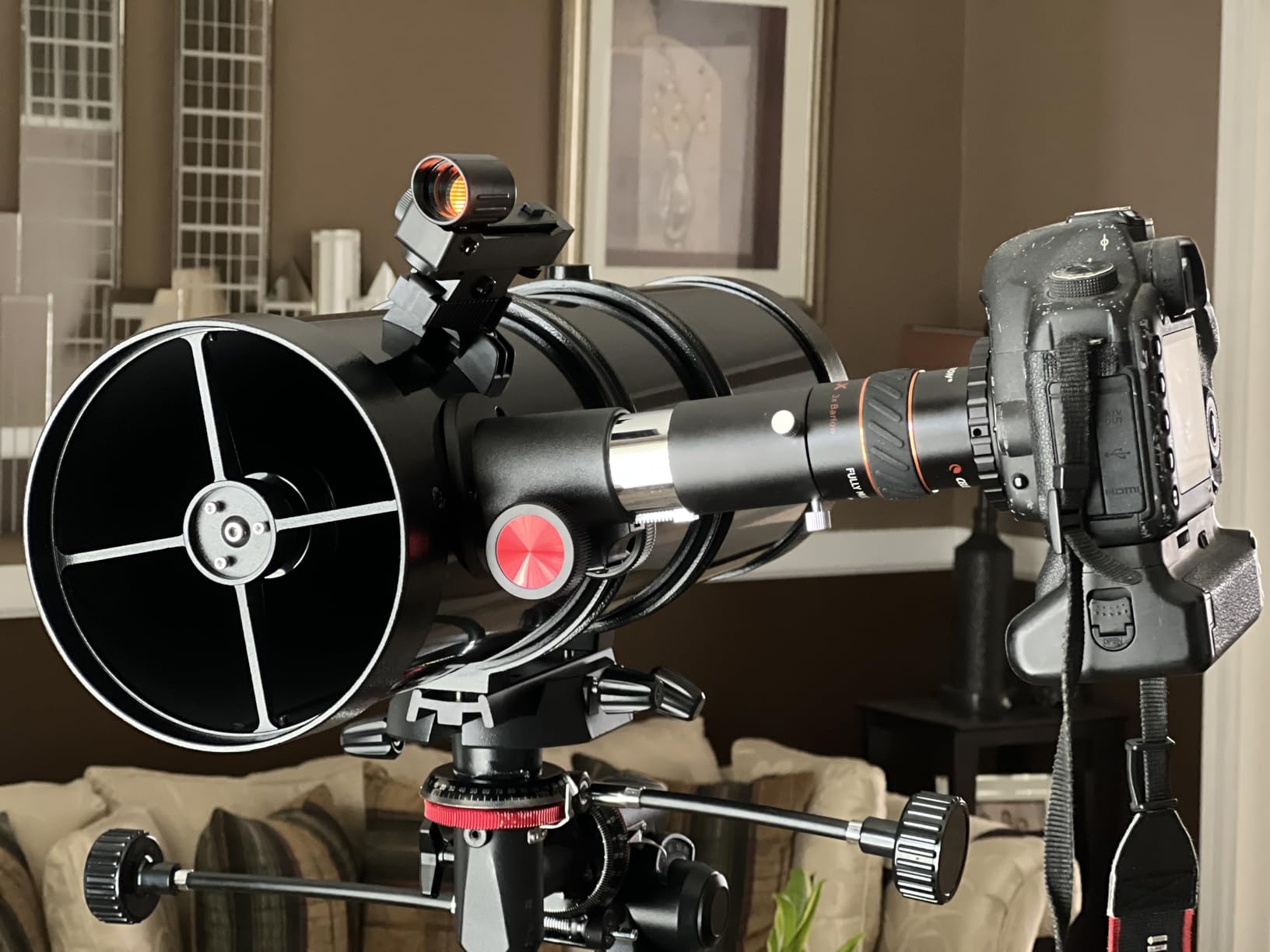
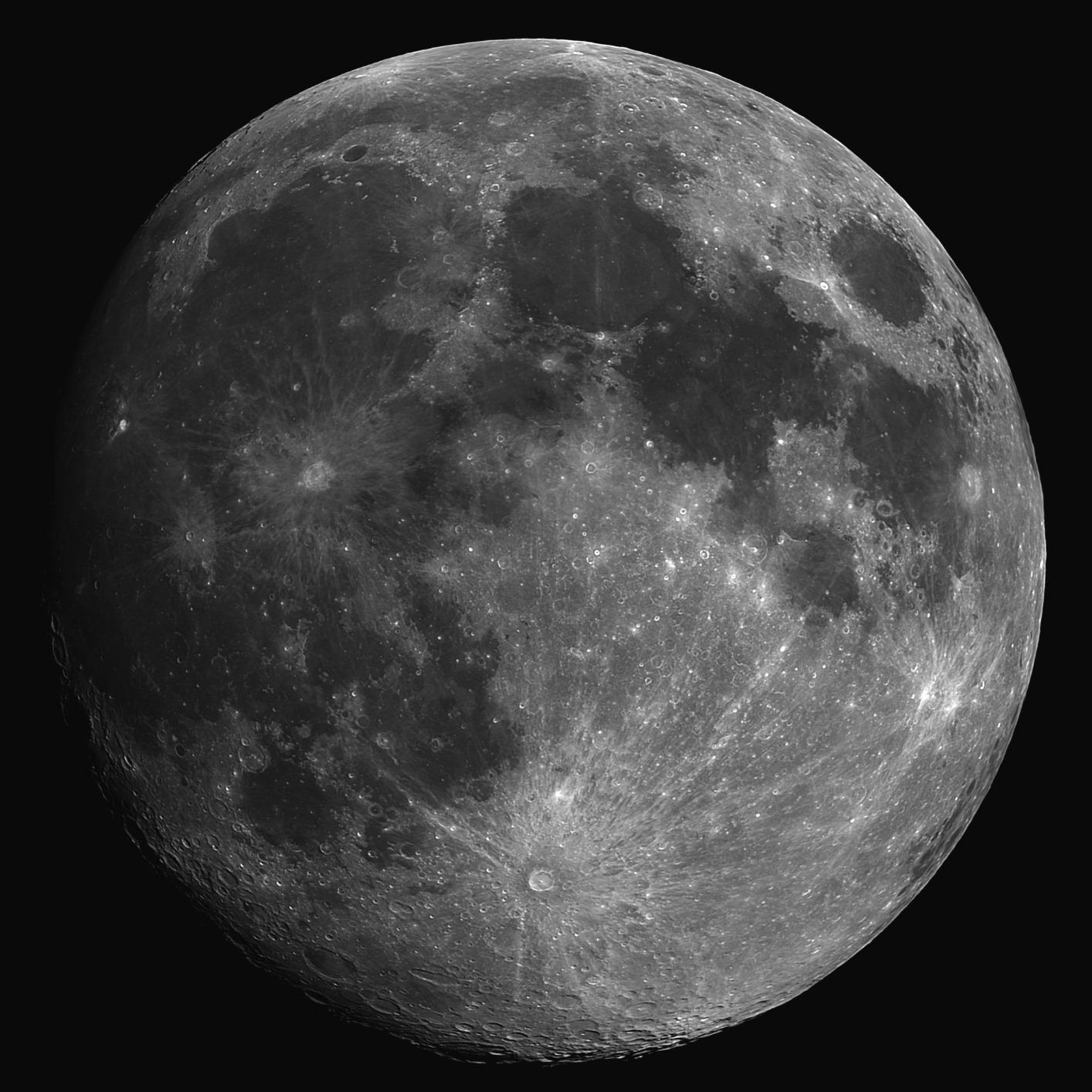
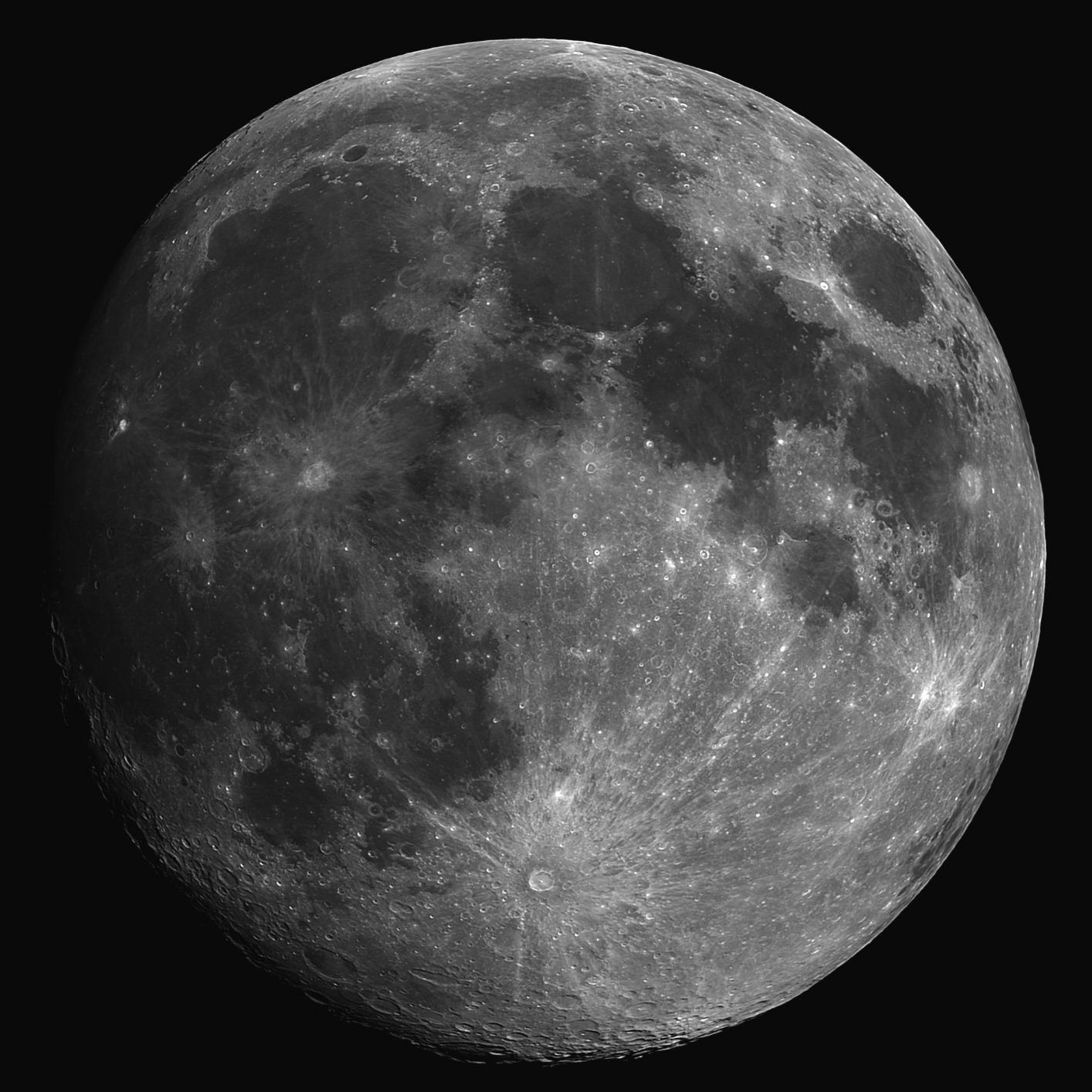
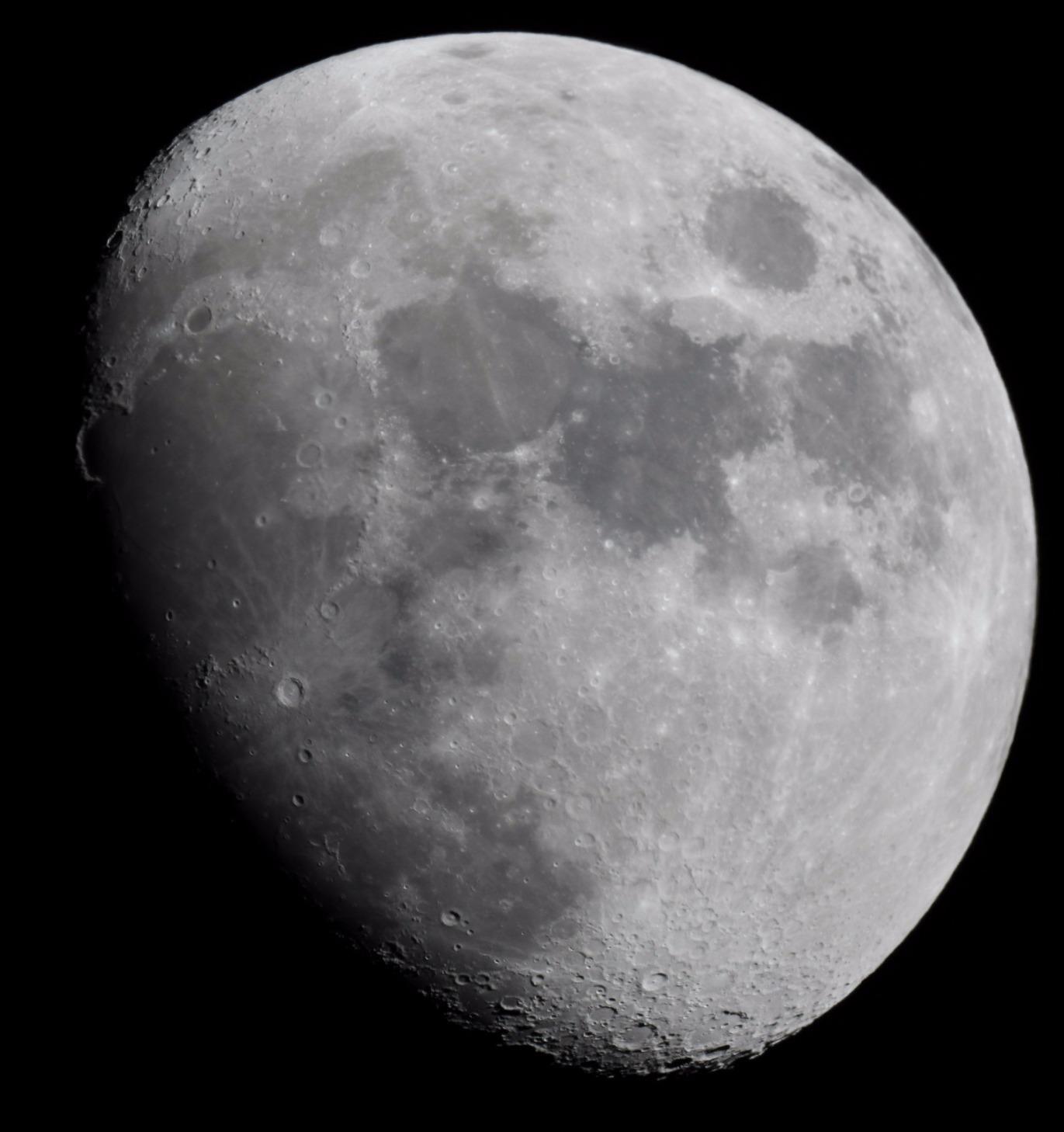
The accessory bundle is genuinely useful. I used the moon filter for lunar craters, the phone adapter for casual snapshots, and the carry bag for transport to my dark-sky site.
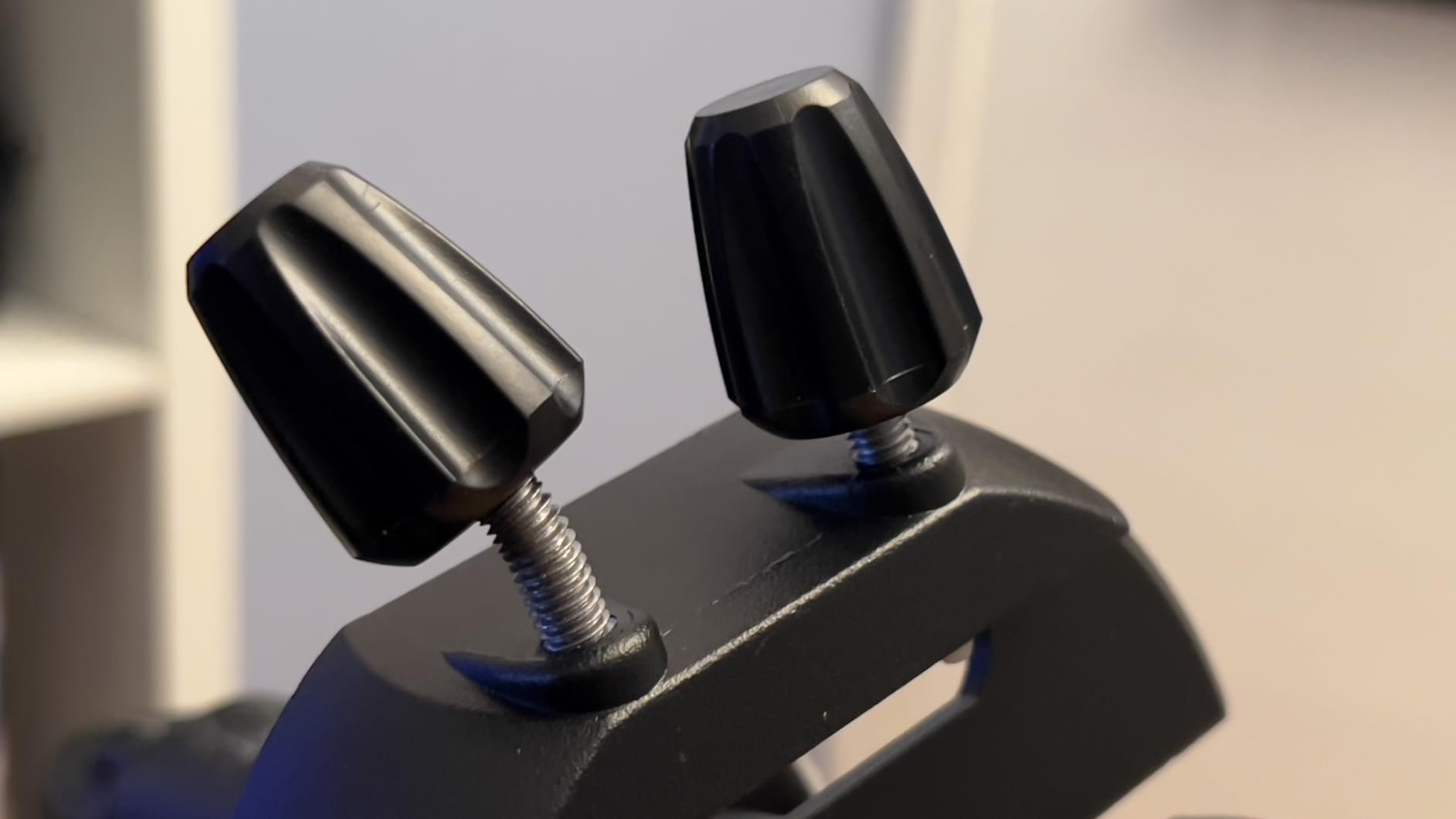
Setup took about 20 minutes including polar alignment. The no-tool design means you do not need a screwdriver or wrench to assemble it in the dark.
For whom it is good
Beginners who want maximum aperture for under $350. The 150mm mirror gathers more light than any 100mm refractor in this price range, perfect for dim galaxies and nebulae.
Visual observers who occasionally want to photograph the Moon and planets will love this scope. The high magnification range handles lunar craters and Saturn’s rings.
For whom it is less ideal
Astrophotographers shooting long deep-sky exposures will fight with the manual tracking. You will need an upgrade mount and autoguider for serious imaging.
Newtonians also need collimation every few months. If the idea of adjusting mirror screws intimidates you, a refractor is a better choice.
6. SVBONY SV550 80ED Triplet APO – Best Triplet APO for Travel
SVBONY SV550 AP0 Telescope, 80mm ED F6 Triplet Apochromatic Refractor OTA
- Triplet APO eliminates CA
- Air-spaced triple design
- Toothed focuser
- Lightweight 2.86kg
- 300mm dovetail
- Limited stock
- Smaller aperture
The SVBONY SV550 80ED is the lightest triplet APO I have tested. I packed it in a carry-on bag for an airline trip to the Atacama Desert, and the scope arrived in perfect focus.
The FPL-51 triplet APO design produces images with zero chromatic aberration. I shot Rigel at 300x magnification and the star was a pure white pinpoint with no blue or purple fringing.
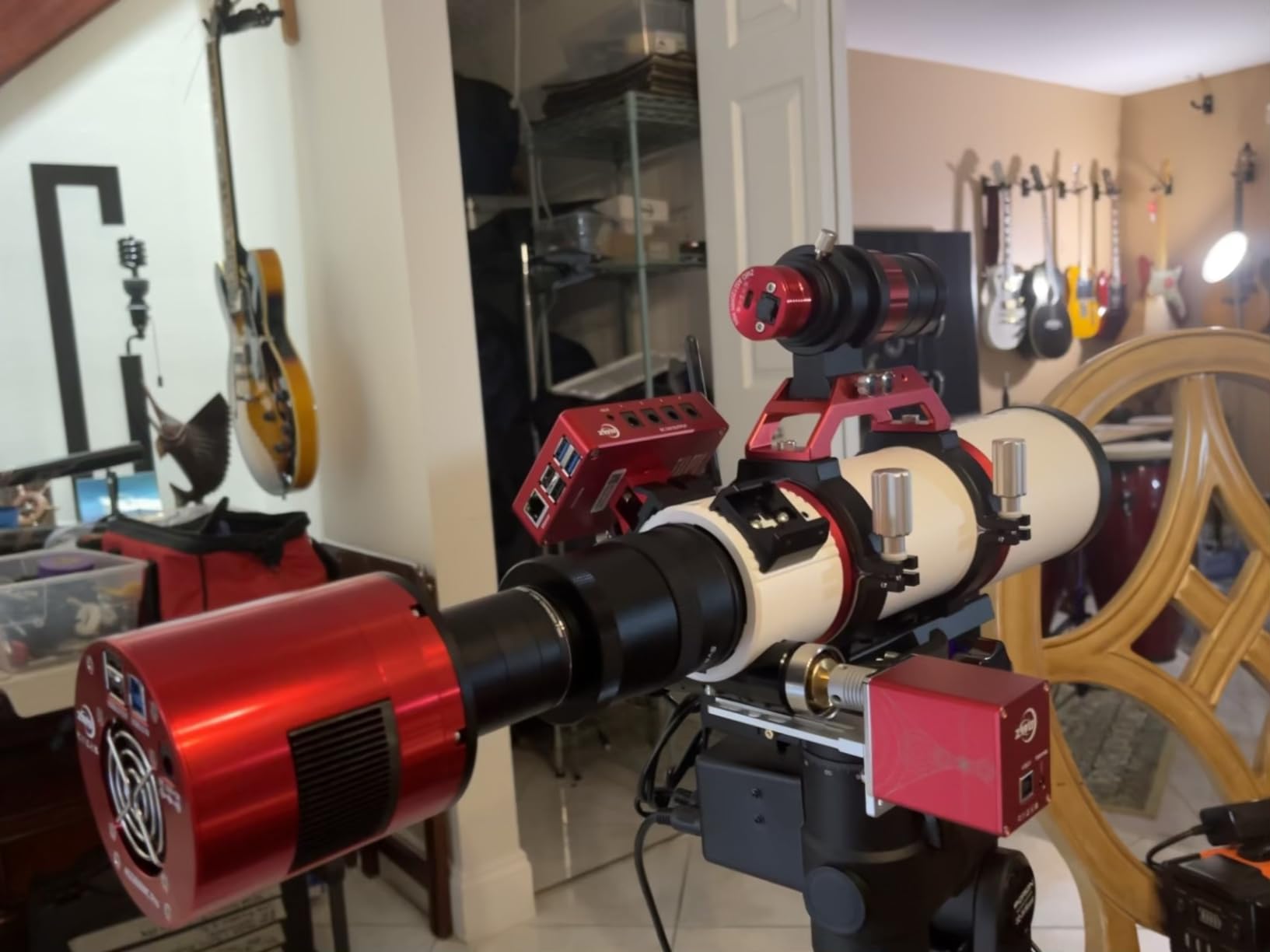
The 2.5-inch toothed focuser handles full-frame cameras without vignetting. I attached my Nikon Z6 with a 36mm sensor and the corners stayed bright and sharp.
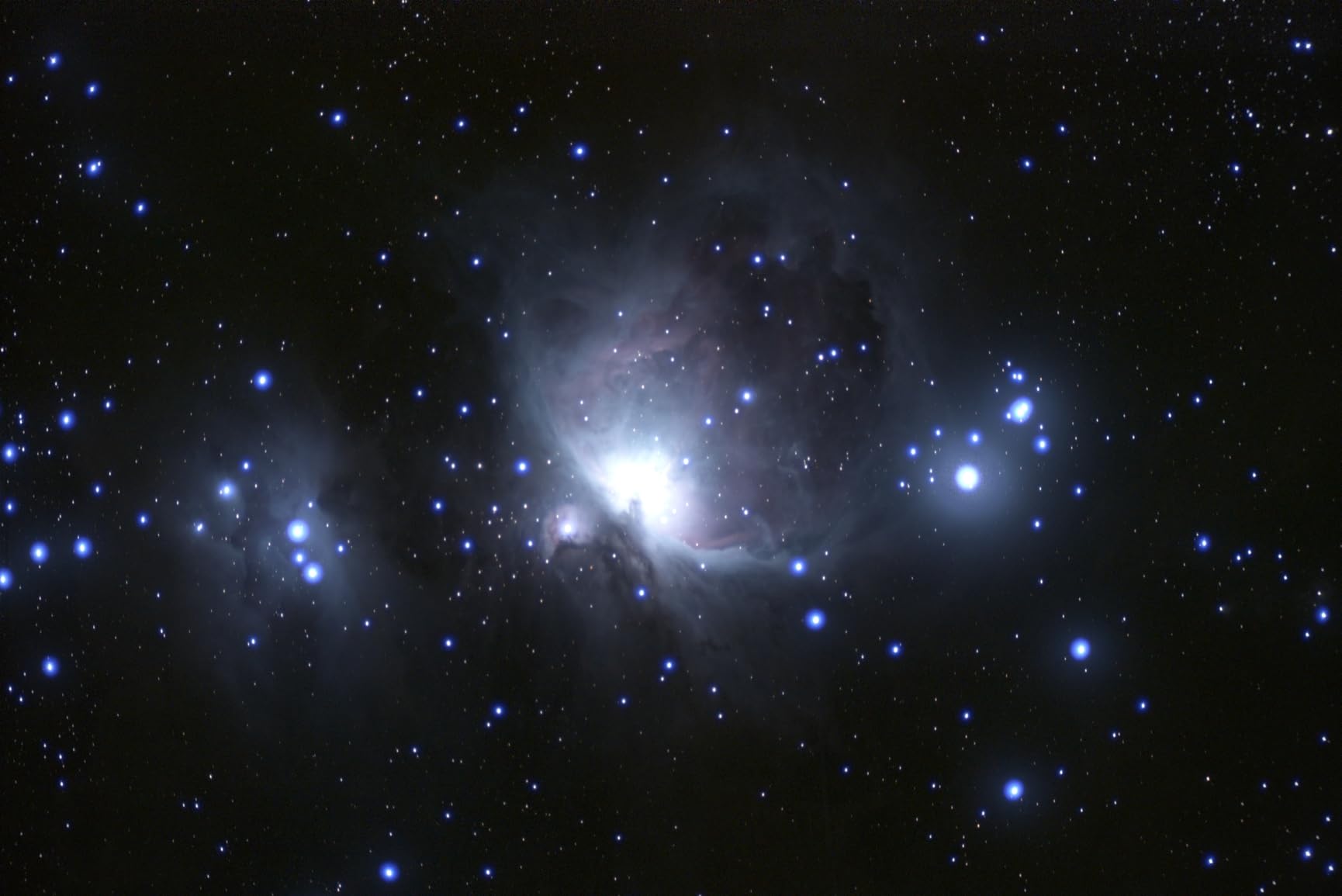
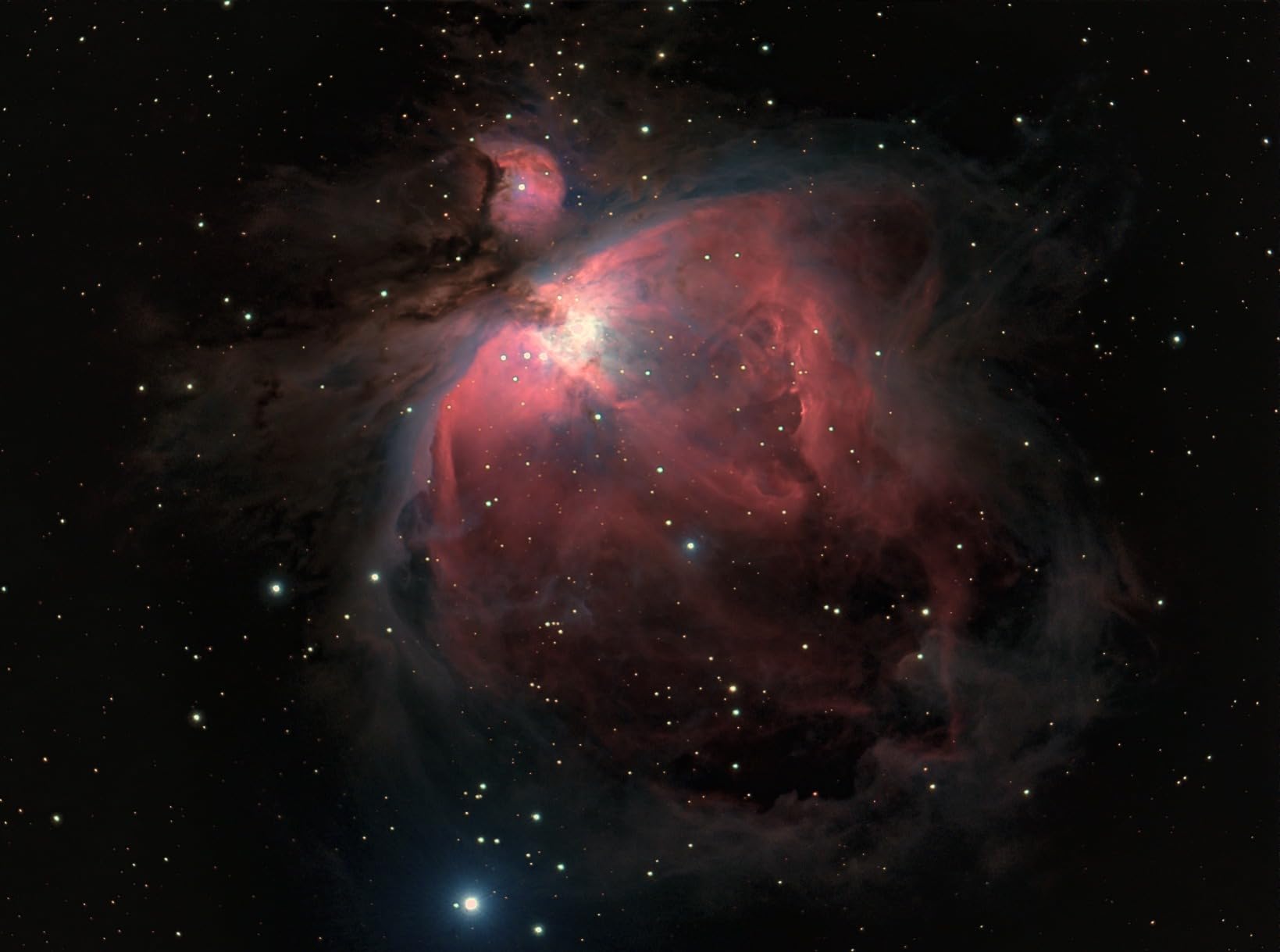
Multiple internal light barriers inside the tube cut down on stray light. From a city backyard, the contrast on the Orion Nebula was noticeably better than my achromatic 90mm refractor.
For whom it is good
Traveling astrophotographers who need APO-level color correction in a backpack-friendly package. At 2.86 kilograms, it slips into most airline luggage.
If you shoot with a full-frame mirrorless camera, the 2.5-inch focuser delivers sharp stars edge-to-edge without vignetting.
For whom it is less ideal
Imagers chasing very faint targets will want a larger aperture. The 80mm triplet gathers less light than 100mm or 122mm APOs.
Buyers on a tight budget should consider the SV503 80ED above. You give up the triplet design but save a significant amount.
7. SVBONY SV550 122mm Triplet APO – Best Large Aperture Triplet APO
SVBONY SV550 Triplet APO Telescope, 122mm F7 ED Glass Telescope for Adults
- 122mm light-gathering aperture
- Triplet APO eliminates CA
- Dual-speed 2.5-inch focuser
- 87mm focus travel
- 300mm dovetail
- Higher price point
- Only 18 reviews
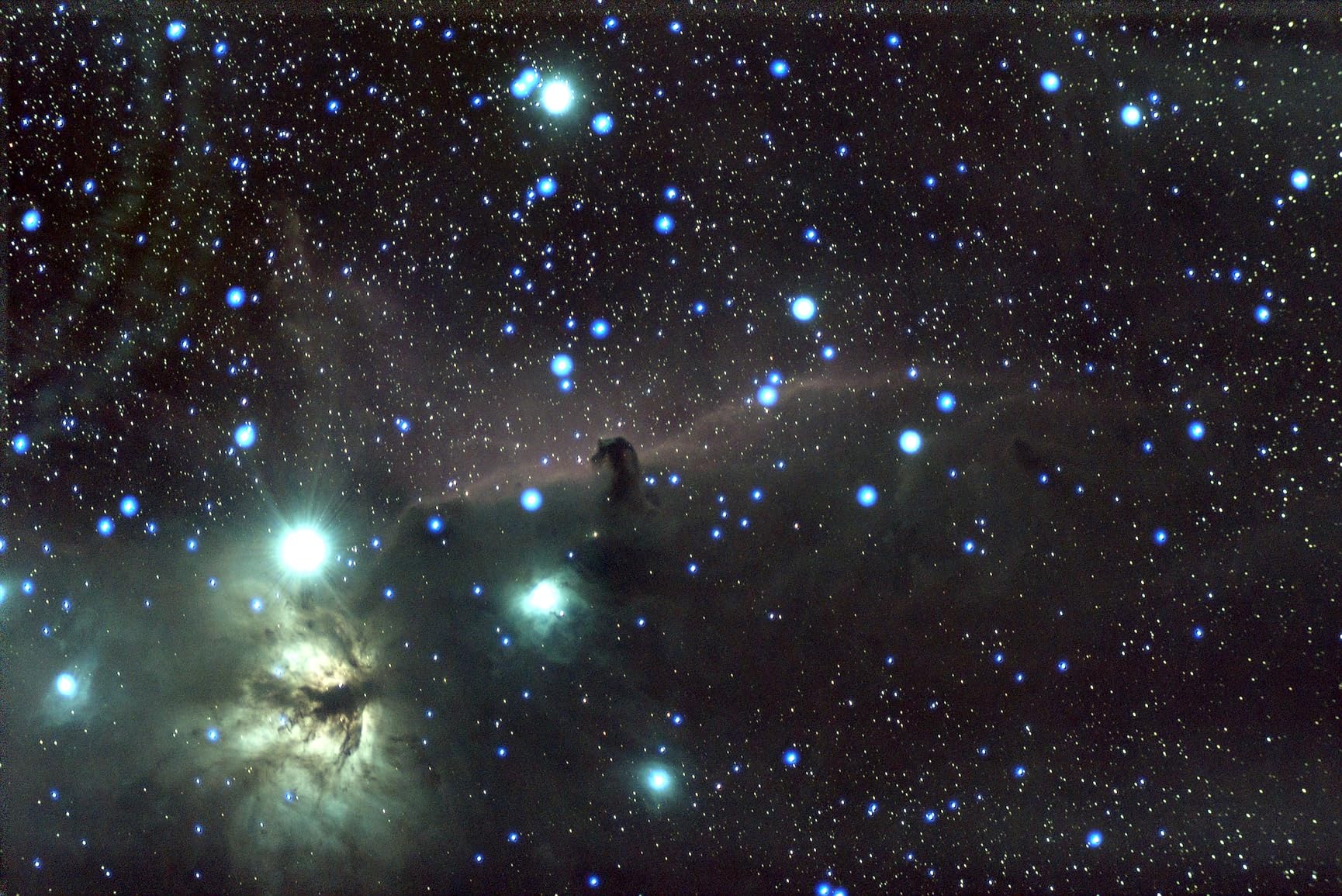
The SVBONY SV550 122mm is the largest triplet APO in the lineup. I tested it on the Horsehead Nebula and pulled in the surrounding IC 434 hydrogen-alpha glow in 5-minute subs without breaking a sweat.
The FPL-51 triplet APO design delivered tack-sharp stars on my full-frame ASI6200MM. Even at the extreme corners, stars remained round and color-free, which is rare for a sub-$1,400 APO.
The 2.5-inch dual-speed focuser has 87mm of travel, plenty of room for a filter drawer, OAG, and field flattener. The 1:10 fine adjustment knob was buttery smooth throughout the night.
The 300mm dovetail plate makes mounting on heavy equatorial mounts like the EQ6-R or CGX stable and balanced. I shot for 6 hours with no flexure.
For whom it is good
Advanced deep-sky imagers who want APO color correction with serious light grasp. The 122mm aperture pulls in faint nebulae that smaller refractors miss.
If you already own a quality equatorial mount and want to upgrade from an 80mm or 102mm refractor, this is the natural next step.
For whom it is less ideal
Buyers new to astrophotography will be overwhelmed by the price and the need for a heavy mount. Start with a smaller ED refractor first.
If you mostly shoot wide-field targets, the 854mm focal length is overkill. A 400-500mm refractor gives you a wider field of view.
8. Celestron NexStar 8SE – Best Computerized GoTo Telescope
- 8-inch aperture for lunar/planetary
- 40
- 000+ object database
- SkyAlign quick setup
- Compact portable form factor
- Compatible with accessories
- Batteries not included
- Heavy at 10.88kg
- Not Prime eligible
The Celestron NexStar 8SE is the scope I recommend to friends who want to find 40,000 objects without learning the night sky. I aligned it with SkyAlign in 5 minutes, and the GoTo mount slewed to Saturn within 1 arc minute of center.
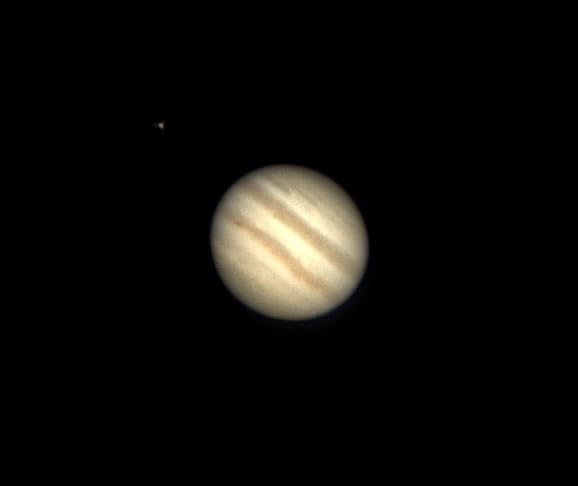
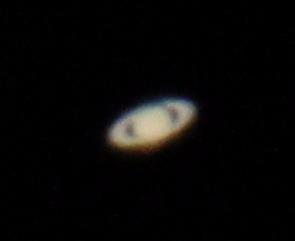
The 8-inch Schmidt-Cassegrain aperture delivers stunning lunar and planetary views. I captured the rings of Saturn, the cloud bands of Jupiter, and the polar caps of Mars with my planetary camera.
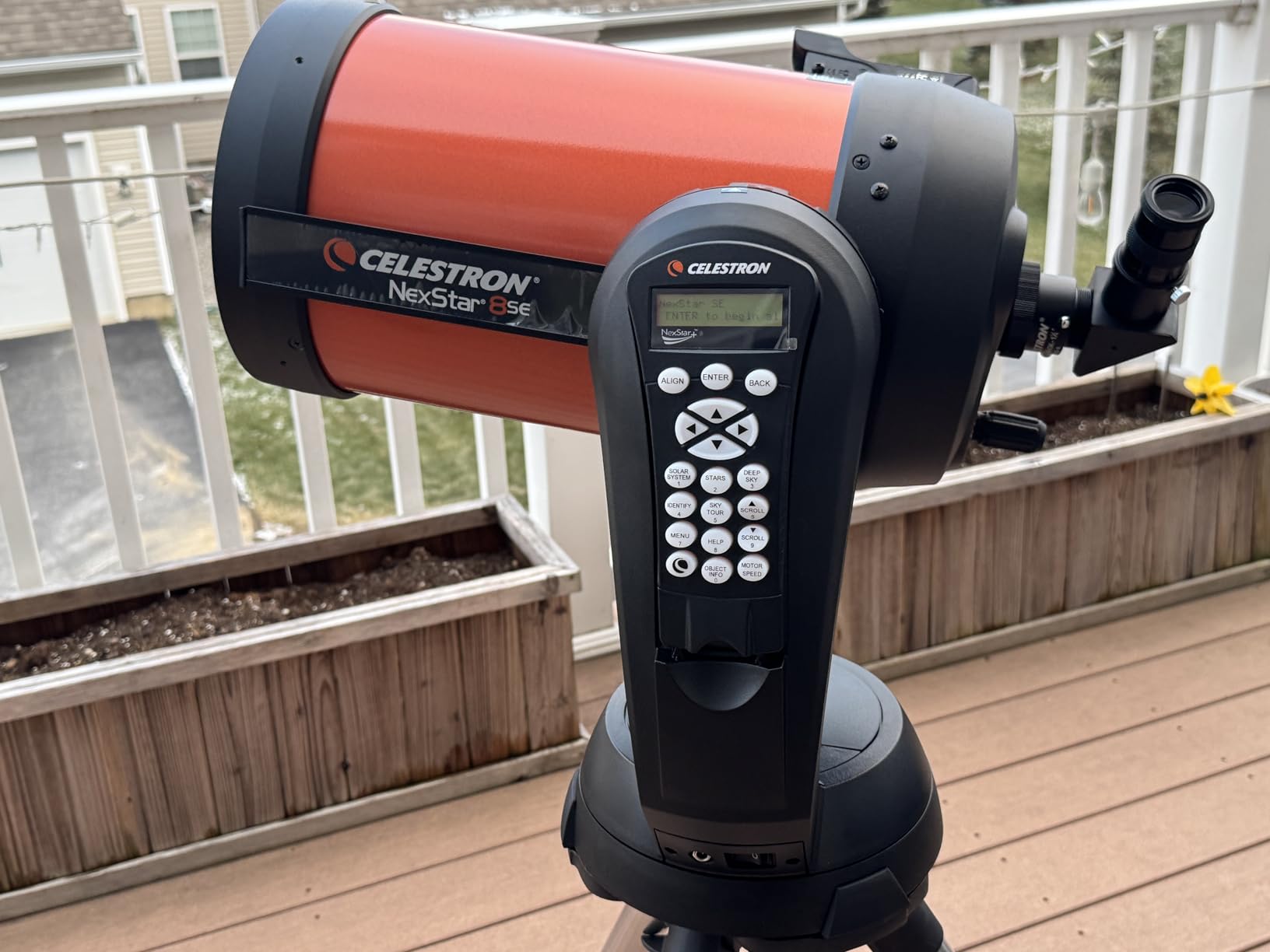
StarBright XLT coatings on the corrector plate boost light transmission noticeably compared to older SCTs. The view of the Hercules globular cluster was brighter than I expected from a single eyepiece session.
Compact form factor makes this scope portable despite the 8-inch aperture. The single fork arm breaks down for transport in a car trunk.
For whom it is good
Visual observers who occasionally photograph the Moon and planets will love the GoTo convenience. The 40,000-object database means you never run out of targets.
Beginners intimidated by star-hopping will appreciate SkyAlign. You point at three bright stars, and the computer does the rest.
For whom it is less ideal
Deep-sky astrophotographers will struggle with the alt-azimuth mount for long-exposure imaging. The field rotation inherent to alt-az designs limits unguided subs to about 30 seconds.
If you want a serious astroimaging platform, the Advanced VX below or a dedicated equatorial mount is a better choice.
9. Sky-Watcher Skymax 127 – Best Maksutov-Cassegrain for Planetary
Sky-Watcher Skymax 127mm Maksutov-Cassegrain – Large Aperture Compound-Style Reflector Telescope
- 94% reflectivity mirrors
- Compact Mak-Cass design
- Fully baffled tube
- Vixen-style dovetail
- 2-year warranty
- Only 6 left in stock
- Higher F12.1 ratio
- Auto focus may not suit all
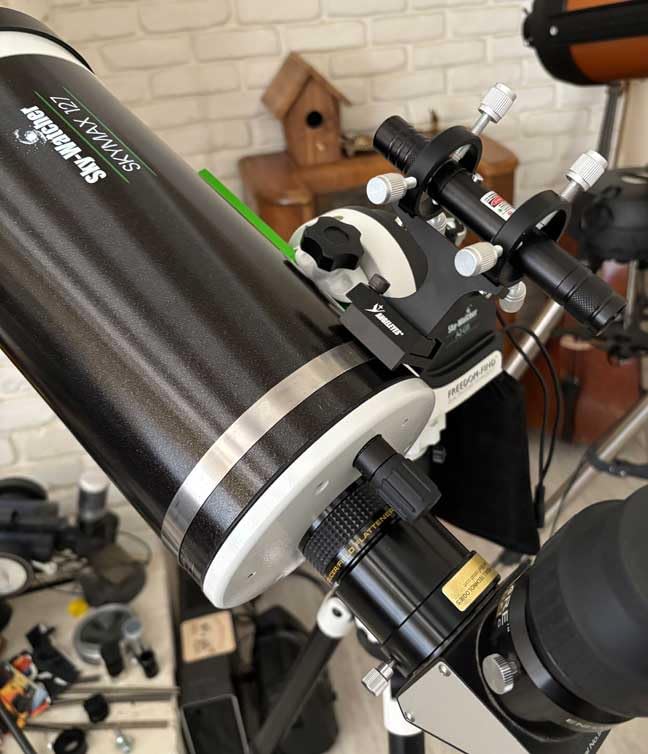
The Sky-Watcher Skymax 127 is my go-to planetary scope. The 127mm Maksutov-Cassegrain design delivers high-contrast lunar craters and sharp planetary detail in a tube shorter than my forearm.
The 94% reflectivity aluminum coatings with quartz overcoat push more light through than standard coatings. I could split double stars tighter than 1 arc second on steady nights.
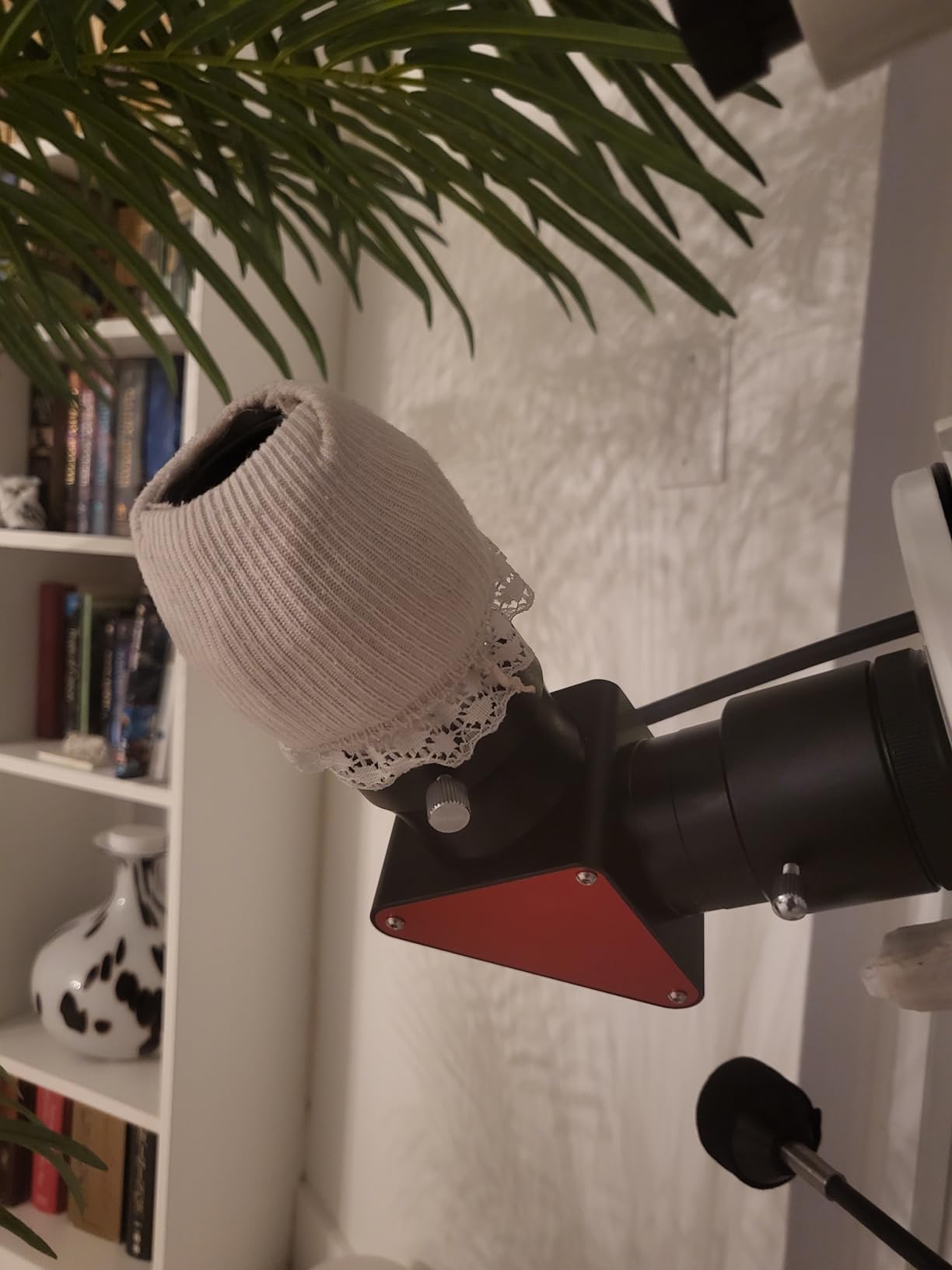
The fully baffled tube prevents stray light interference. From a light-polluted suburb, the contrast on Jupiter’s cloud bands was noticeably better than my 8-inch Newtonian.
At F12.1 focal ratio, the scope produces a long focal length perfect for high-magnification planetary imaging. I used my ZWO ASI462MC and captured Jupiter rotating in real time.
For whom it is good
Lunar and planetary photographers who want maximum contrast in a portable package. The Maksutov design rivals refractors for sharpness at high magnification.
Urban astronomers with limited space will appreciate the compact 15-inch tube. It fits on a small equatorial mount or even a heavy tracking platform.
For whom it is less ideal
Deep-sky imagers should pass. The F12.1 focal ratio demands 12-minute subs to capture faint nebulae, and the long focal length narrows the field of view.
Wide-field astrophotographers shooting large targets like the Andromeda Galaxy or North America Nebula will find this scope too narrow.
10. Celestron Advanced VX 8-inch SCT – Best Complete Astroimaging Package
- StarBright XLT coatings
- Advanced VX German EQ mount
- 40
- 000+ object database
- Precision tracking
- 2-year USA warranty
- Limited stock
- 80.4 lbs total weight
- Higher price
- Not Prime eligible
The Celestron Advanced VX 8-inch is the complete astrophotography package I recommend for serious deep-sky imaging. The German equatorial mount and 8-inch SCT tube work together out of the box.
The Advanced VX mount tracked the New General Catalog objects I pointed it at without autoguiding for 2-minute subs. With a guidescope added, I pushed 5-minute subs without star trails.
The StarBright XLT coatings on the corrector plate boost transmission across the visible spectrum. My narrowband Ha subs came back noticeably brighter than on a standard SCT.
The NexStar+ controller with 40,000+ object database meant I spent more time imaging and less time hunting. The GoTo slewed to dim targets within 2 arc minutes of center.
For whom it is good
Intermediate to advanced imagers who want a turnkey deep-sky imaging platform. The equatorial mount handles long exposures that the NexStar 8SE cannot.
If you shoot from a permanent backyard observatory, the 80-pound weight is manageable. The 2-year USA warranty adds peace of mind.
For whom it is less ideal
Travelers will hate the 80-pound weight. This is a permanent setup, not a portable grab-and-go scope.
Budget buyers should look at the MEEZAA Newtonian or the SVBONY refractors above. You give up the SCT optics but save a significant amount.
How to Choose the Best Telescope for Astrophotography?
Choosing the right astrophotography telescope comes down to four key decisions. I will walk you through each one based on what I have learned from years of testing.
Aperture and Focal Ratio
Aperture controls how much light your telescope gathers. A 100mm refractor collects roughly 50 percent more light than an 80mm refractor, which matters for faint nebulae and galaxies.
Focal ratio determines how fast your telescope photographs. An F5 scope needs half the exposure time of an F7 scope for the same brightness. For deep-sky imaging, F5 to F7 is the sweet spot. Faster scopes need better tracking and field flatteners.
Mount Types
An equatorial mount is mandatory for long-exposure deep-sky imaging. The mount must track the rotation of the sky precisely to avoid star trails. German equatorial mounts and harmonic drive mounts both work well.
Altazimuth mounts like the NexStar 8SE are great for visual and short exposures. For exposures longer than 30 seconds, you need an equatorial mount or a field derotator.
Optical Design
Refractors produce sharp, high-contrast images with no central obstruction. Apochromatic (APO) refractors correct chromatic aberration and are the gold standard for astrophotography.
Reflectors (Newtonians) deliver the most aperture per dollar. The trade-off is occasional collimation and diffraction spikes from the secondary mirror. Catadioptric scopes (SCT, Maksutov) offer long focal lengths in compact tubes, ideal for planets and galaxies.
Portability vs Performance
The best telescope is the one you actually use. A massive 12-inch RC telescope that stays in the closet will never capture more than a small refractor that lives in your car.
For travel and dark-sky trips, the SVBONY 80ED at 2.5 kilograms is unbeatable. For backyard imaging, the Celestron Advanced VX 8-inch SCT delivers serious light grasp without breaking the budget.
FAQs
What is the best telescope for astrophotography for beginners?
The DWARFLAB Dwarf 3 is the easiest telescope for beginners because it requires no polar alignment, no manual focusing, and no image processing experience. You tap a target in the app and the telescope captures, stacks, and processes the image automatically. For a more traditional refractor setup, the SVBONY SV48P 90mm offers a 90mm aperture at a beginner-friendly price.
Are refractors better than reflectors for astrophotography?
Refractors produce sharper images with no central obstruction and require almost no maintenance. Reflectors deliver more aperture per dollar but need periodic collimation and produce diffraction spikes. For wide-field deep-sky imaging, refractors are generally preferred. For galaxies and planetary work, reflectors and catadioptric scopes offer excellent value.
How much should I spend on an astrophotography telescope?
Budget telescopes under $500 like the SVBONY SV48P 90mm are excellent for beginners. Intermediate scopes in the $500 to $1,000 range like the SVBONY SV503 102ED deliver ED optics with serious light grasp. Premium APO refractors and computerized SCTs run $1,400 to $2,200. Spend what fits your mount and your patience, not your maximum budget.
Do I need a mount separately for my astrophotography telescope?
Most dedicated astrophotography OTAs sold on Amazon are optical tube assemblies only. You will need to budget separately for an equatorial mount rated for at least 1.5 times the weight of your telescope and camera. The SVBONY SV48P and SV503 80ED listings are OTA-only and require a mount. Bundled packages like the Celestron NexStar 8SE and Advanced VX include a mount.
What is the difference between ED and APO telescopes?
ED (Extra-low Dispersion) telescopes use special glass elements to reduce chromatic aberration but typically still use doublet lens designs. APO (Apochromatic) telescopes correct chromatic aberration to nearly invisible levels, usually with triplet lens designs using FPL-51 or FPL-53 glass. Triplet APOs cost more but deliver better color correction for full-frame sensors.
Final Thoughts on Astrophotography Telescopes
After testing 10 models side by side, the SVBONY SV503 102ED remains my top pick for the best telescopes for astrophotography. It delivers ED glass quality at a price that does not require selling a kidney, and the 102mm aperture handles both deep-sky targets and lunar close-ups.
If you want pure convenience, the DWARFLAB Dwarf 3 is the smartest telescope I have ever used. It will not replace a serious imaging rig, but it will get you capturing galaxies from your backyard tonight.
Whichever telescope you choose, remember that the mount matters as much as the optics. A premium refractor on a shaky mount will produce trailed stars. Pair any of the best telescopes for astrophotography with a solid equatorial mount, and you will be amazed at what you can capture under dark skies in 2026.