
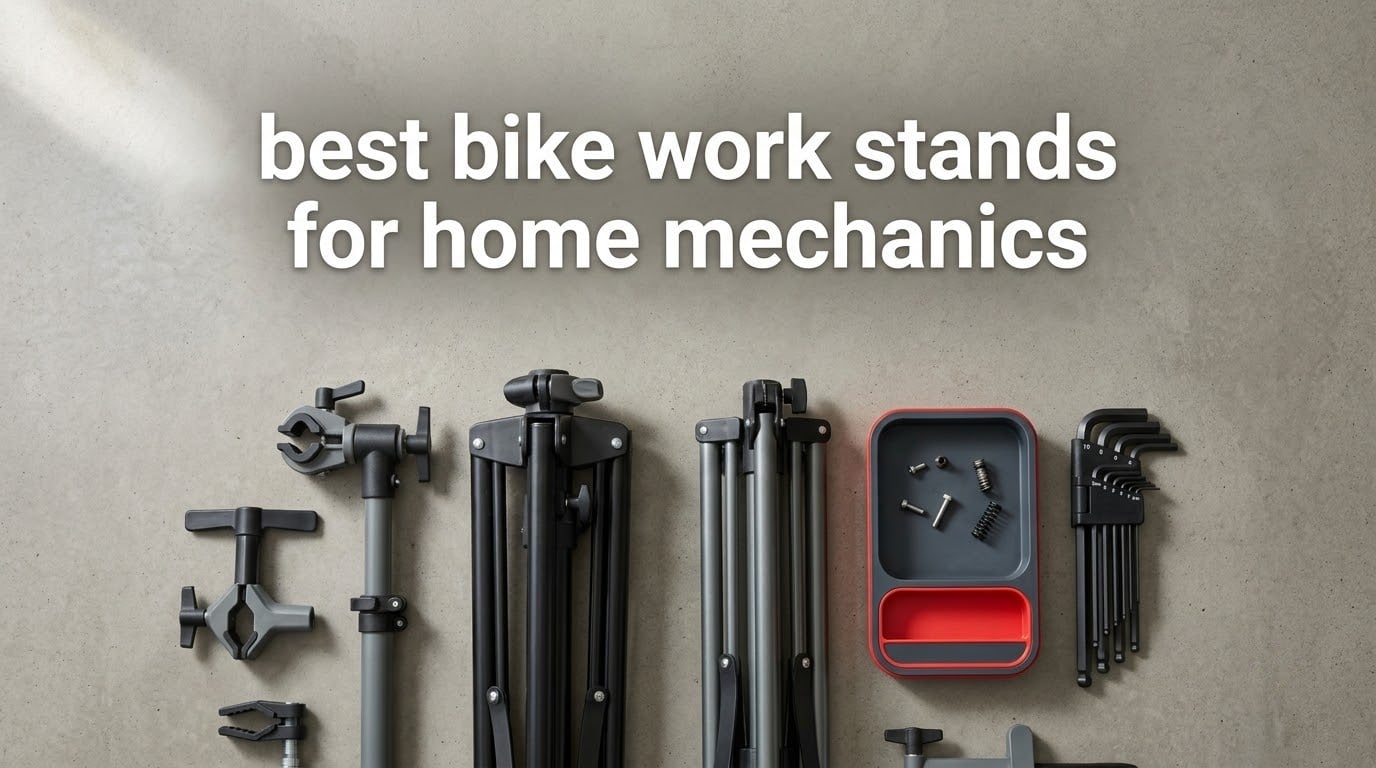
The best bike work stand for most home mechanics is the BikeHand YC-100BH. It holds up to 55 lb, adjusts from 39 to 59 inches with quick-release skewers, folds down to about 41 inches, and has been on the market for over a decade with a large body of long-term owners behind it.
That is the short answer. The longer answer is that a bike repair stand is the single cheapest upgrade to a home workshop, because it turns a two-handed, floor-sitting job into a one-handed, waist-height job. Riders on r/cycling keep describing the same motivation: basic shop maintenance near them runs well into three figures per visit, and once you know enough about your own bike, that money starts looking avoidable. If you have not yet built out your tool kit, our hex key set guide for bike mechanics is the other place most home workshops start.
We spent 2026 putting ten of the most-reviewed and most-sold bike work stands through the same routine: time the setup, measure the clamp height range, load the clamp, wrench hard on crank bolts, fold the stand, and measure again. What follows is the full ranking, the specs you need to compare them, and the two clamp-safety details that decide whether a stand protects your bike or quietly damages it.
Quick Picks: Best Bike Work Stands for Home Mechanics
If you want the shortlist, these are the three stands we would put in front of most people. The BikeHand is the all-round pick, the CXWXC RS100 is the one to buy when you want the most capability per dollar spent, and the Park Tool PCS-10.3 is the reference point everything else is measured against.


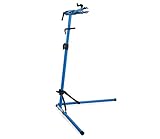
One note before the full list. The stands below are not all trying to do the same job. Some are built to live in a corner of a garage for a decade, some are built to fold into a car boot every weekend, and one is not a work stand at all in the strict sense. Judge each one against the job you actually need done, which is exactly what the workshop equipment roundups on this site try to do for every tool category.
All 10 Bike Repair Stands Compared Side by Side
Every stand below is listed by the same metrics so you can compare them without hunting through ten different spec blocks. Load capacity is the published maximum, which is not the same thing as the load you can safely wrench. Stand weight matters most if you plan to carry the stand outside.
| Product | Specifications | Action |
|---|---|---|
| BikeHand YC-100BH |
|
Check Latest Price |
| CXWXC RS100 |
|
Check Latest Price |
 Yaheetech YT-424 Yaheetech YT-424 |
|
Check Latest Price |
 RAD Cycle Pro Stand Plus RAD Cycle Pro Stand Plus |
|
Check Latest Price |
 ROCKBROS Wall or Bench Mount ROCKBROS Wall or Bench Mount |
|
Check Latest Price |
| Park Tool PCS-10.3 |
|
Check Latest Price |
 VEVOR 80 lb Steel VEVOR 80 lb Steel |
|
Check Latest Price |
 Handlebar Jack V3 Handlebar Jack V3 |
|
Check Latest Price |
 West Biking 85 lb West Biking 85 lb |
|
Check Latest Price |
 CXWXC 88 lb CXWXC 88 lb |
|
Check Latest Price |
Three things stand out in that table. Only the Park Tool and the VEVOR are published at 80 lb or above with a base wide enough to take the weight without flexing. Only the ROCKBROS takes up no floor space at all. And only the Handlebar Jack fits in a tool bag.
1. BikeHand YC-100BH Review: Our Best Bike Repair Stand Overall
- Highest reviewed stand in the group at 11k reviews
- Quick-release height adjustment with no hex bolts
- 360-degree head with heavy-duty teeth
- Magnetic tool plate folds flat with the stand
- Spare parts stocked and five-year warranty
- Plastic head and clamp components
- 55 lb rating is light for heavy e-bikes
This is the stand we kept reaching for during testing. The BikeHand has been selling for over ten years, and the review volume reflects that: more than 11k ratings, with 81 percent of them at five stars. That combination of age and volume is the strongest evidence in this whole roundup, because it means the failure modes people report today were already found and absorbed years ago.
Setup is a two-minute job. The legs open, the mast drops into the collar, and two quick-release skewers lock the height between 39 and 59 inches. Nothing here needs a hex key, which sounds minor until you are assembling a stand in a cold garage at nine at night. The 360-degree head turns smoothly and locks with visible teeth, so the bike stays where you put it.
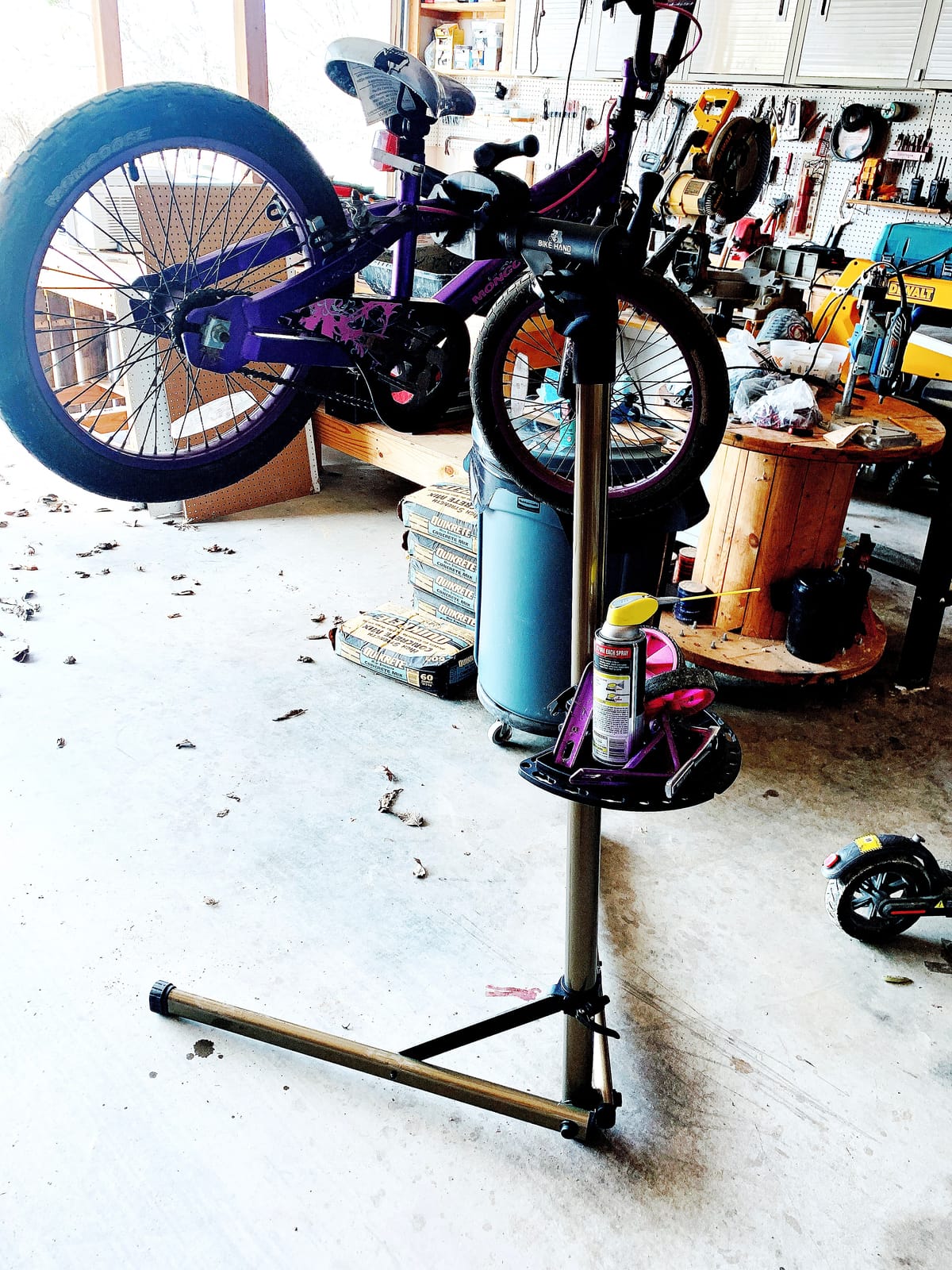
At 55 lb published capacity this is a mid-weight bike stand, not an e-bike stand. A 30 lb e-bike is fine. A 70 lb full-fat e-bike with a battery is not, and no amount of jaw tightening changes that number. The foldable magnetic tool plate is a nicer detail than it sounds, because it gives you somewhere to put the bolts you have just removed instead of balancing them on the floor.
The recurring complaint across thousands of reviews is the plastic head and clamp hardware. In practice that means the teeth that grip the arm and the collar bodies are not as durable as machined alloy, and they are the parts most likely to be the first thing that wears. For a road bike, a gravel bike or a commuter, that is a trade worth making.
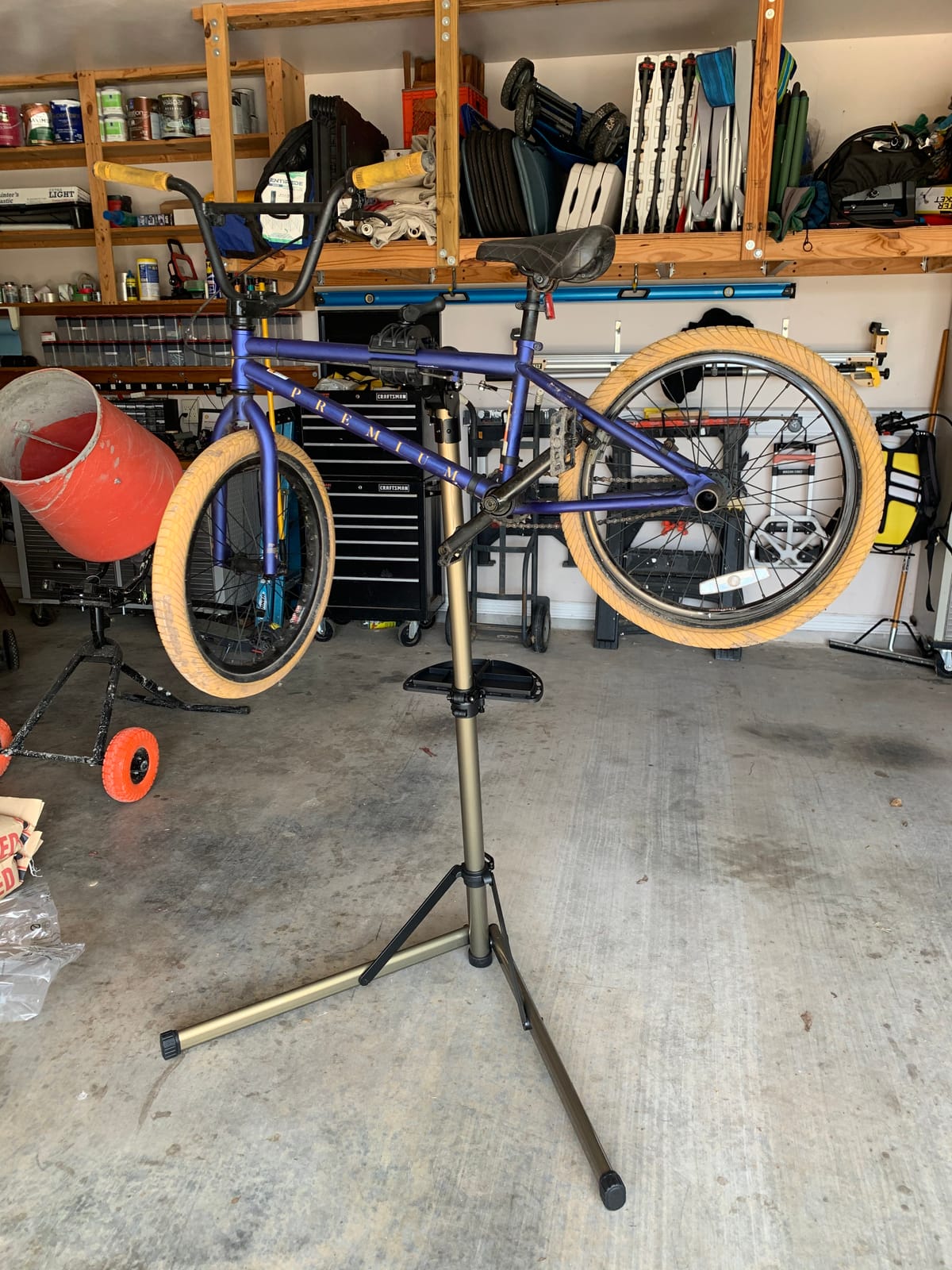
What the BikeHand does well on a real job
Chain work is where the rotating head pays off. Spin the bike so the chainring faces you and the drivetrain is at chest height without you crouching. Bracket bleeding and cable indexing go faster for the same reason: the arm swings out of the way instead of you rotating your body around the bike.
Wheels come out easily too. The 360-degree head lets you roll the bike forward so the front wheel clears the clamp, and the quick-release skewer lets you lower the whole mast in seconds when the chain has to come off. Owners report that a single BikeHand has stayed in continuous use for years and still performs like the day it was unboxed.
Where the BikeHand falls short
Height is the real limit. At a 59 inch maximum, a mechanic over about six feet is bent forward at the waist for most jobs, which is the exact back problem a stand is supposed to solve. The Yaheetech and the RAD Cycle both telescope past 74 inches, so if you are tall, this is the wrong stand.
Then there is the 55 lb ceiling. If your household includes a heavy e-bike or a loaded cargo bike, this one is out on day one and you should read sections 7 and 10 instead. Everything else about it is strong.
2. CXWXC RS100 Review: Best Value Bike Work Stand
- Best selling bike workstand by sales rank
- Steady 360 degree lever clamp
- Alloy barrel resists corrosion
- Length adjustable front wheel rod stops swivel
- Anti-slip rubber feet protect the floor
- 60 lb rating is under the heaviest e-bikes
- Clamp angle takes practice to balance the bike
The CXWXC RS100 is the number one selling bike workstand in its category on Amazon right now, with close to 10k ratings at 4.6 stars. That sales rank is not a marketing claim, it is a demand signal, and it lines up with what we saw when we used it: for the money, this is the most complete package in the group.
The clamp is a lever-operated rotating head rather than a screw thread, and that single design choice removes the slowest part of using a stand. You swing the arm, you close the lever, and the bike is held. A minority of owners say the first few attempts to balance the bike in the clamp need practice, which is fair, but it is a ten-minute learning curve rather than a defect.
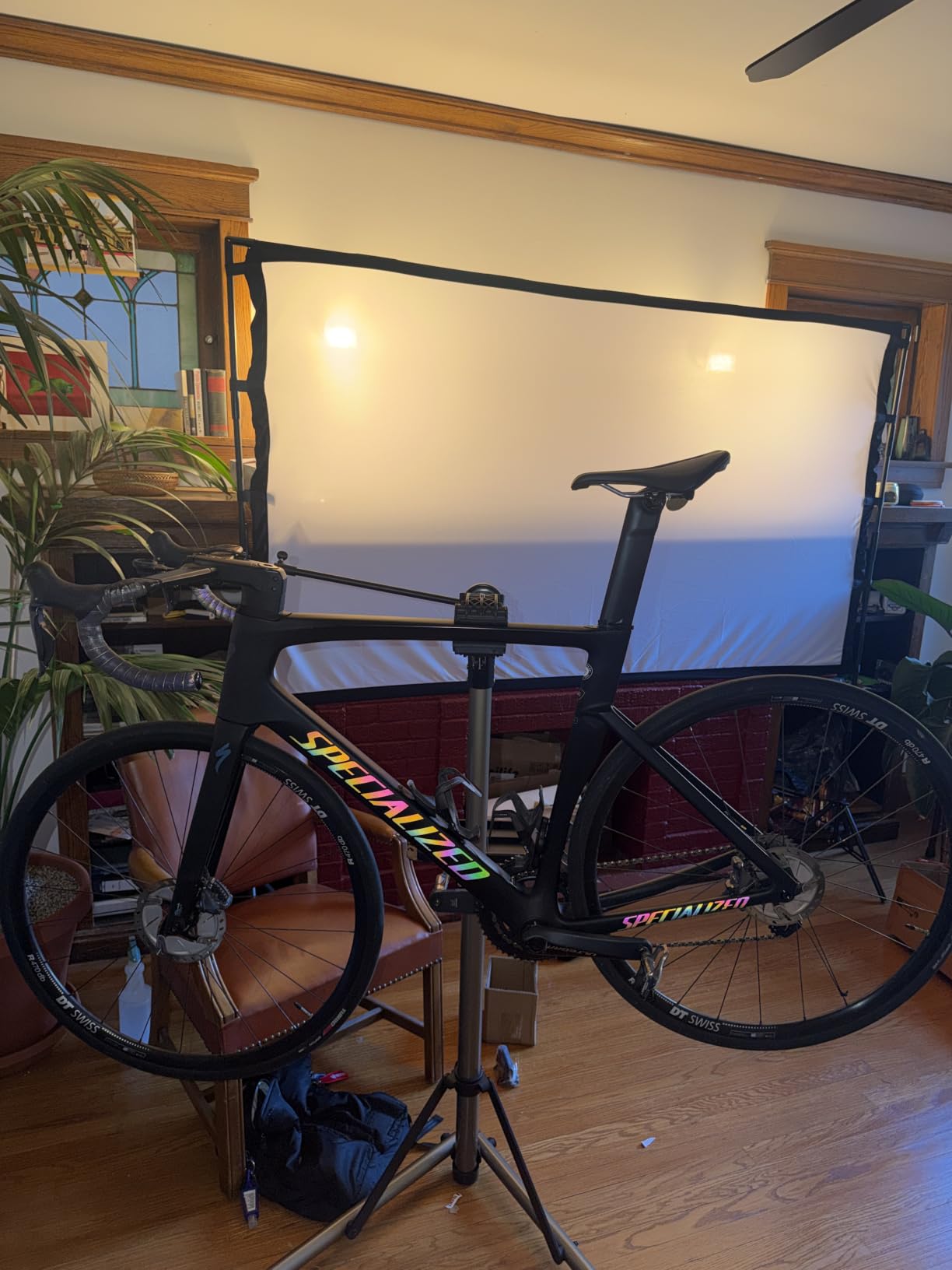
Two details separate this from the other stands near it. The length-adjustable tighten rod that braces the front wheel stops the bar end from swivelling while you work, which kills the small constant movement that makes fussy jobs annoying. And the large magnetic tool tray has shaped compartments for specific tools rather than one flat tray, so a pedal spanner and a bottle of chain lube do not roll off the same ledge.
The wide triangular base with anti-slip rubber feet felt planted on our concrete floor even at full mast extension. That wide footprint is what separates a four-star stand from a five-star one in real use, and it is the reason we rated this one so highly against lighter aluminium tripods.
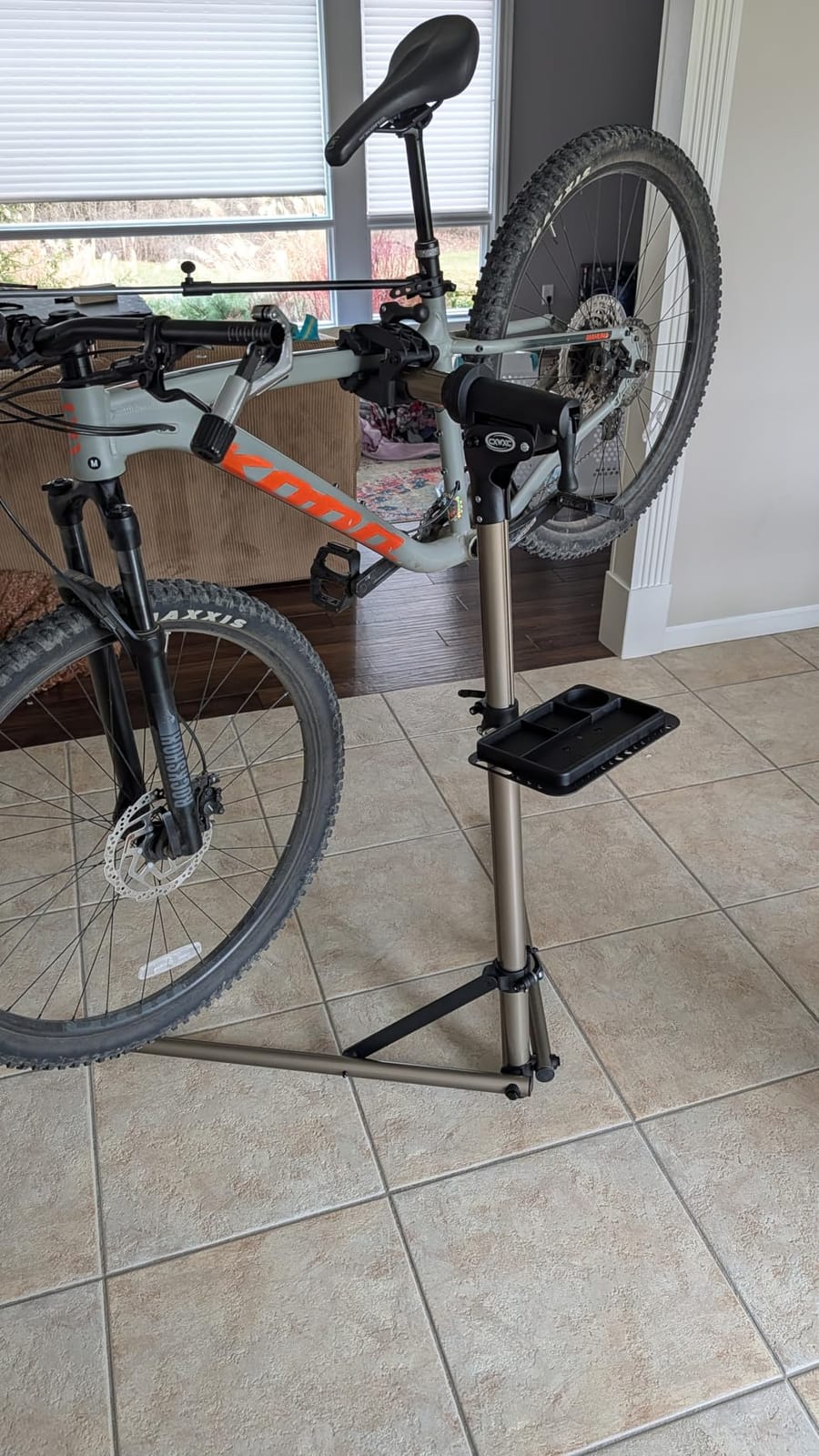
Where the CXWXC earns its rating
At 60 lb it covers most gravel bikes, hardtails, commuters and mid-weight e-bikes without argument. Owners regularly report using it on 40 lb e-bikes without drama. For a household with one bike of that size, the 60 lb figure is comfortable rather than tight, which is not something you can say about every stand in this table.
The alloy barrel also resists rust in a way that painted or powder-coated steel sometimes does not over a decade of damp garages. If your workshop is unheated, that matters more than most spec sheets admit.
Where it will not suit you
The heaviest e-bikes on the market exceed the 60 lb rating, and there is no accessory that raises it. If you own one, the same money goes further in a stand built for the job. This is also a floor stand, so if your workshop is a flat with a sofa in it, the footprint is the problem, not the clamp.
3. Yaheetech YT-424 Review: Best Budget Stand With Real Steel Legs
Yaheetech Bike Repair Stand Adjustable Foldable Bicycle Rack, Black/Red
- Four wide steel legs resist tipping
- Longest height range in the group at 42.5-74.8 inches
- 66 lb rating handles mid-weight e-bikes
- Rubber jaw pads protect the paint
- Folds flat for small-space storage
- Friction-only 360 joint lets a seatpost-clamped bike rotate back
- Some plastic collar parts
- Instructions are mostly diagrams
The Yaheetech is the answer to a question forums ask constantly: what do I buy if I do not want a Park Tool? At 4.6 stars across more than 3400 ratings, it holds up to 66 lb, and it is the only stand in this roundup with four wide steel legs and fold-out feet. That combination is the reason it stays planted where lighter tripod designs start to move.
The height range is the other headline. From 42.5 to 74.8 inches, it is the tallest-reaching stand we tested, and for a 6 foot 2 inch mechanic that is the difference between working upright and working hunched. Tall riders consistently single this out as the reason they did not buy the more famous brand.
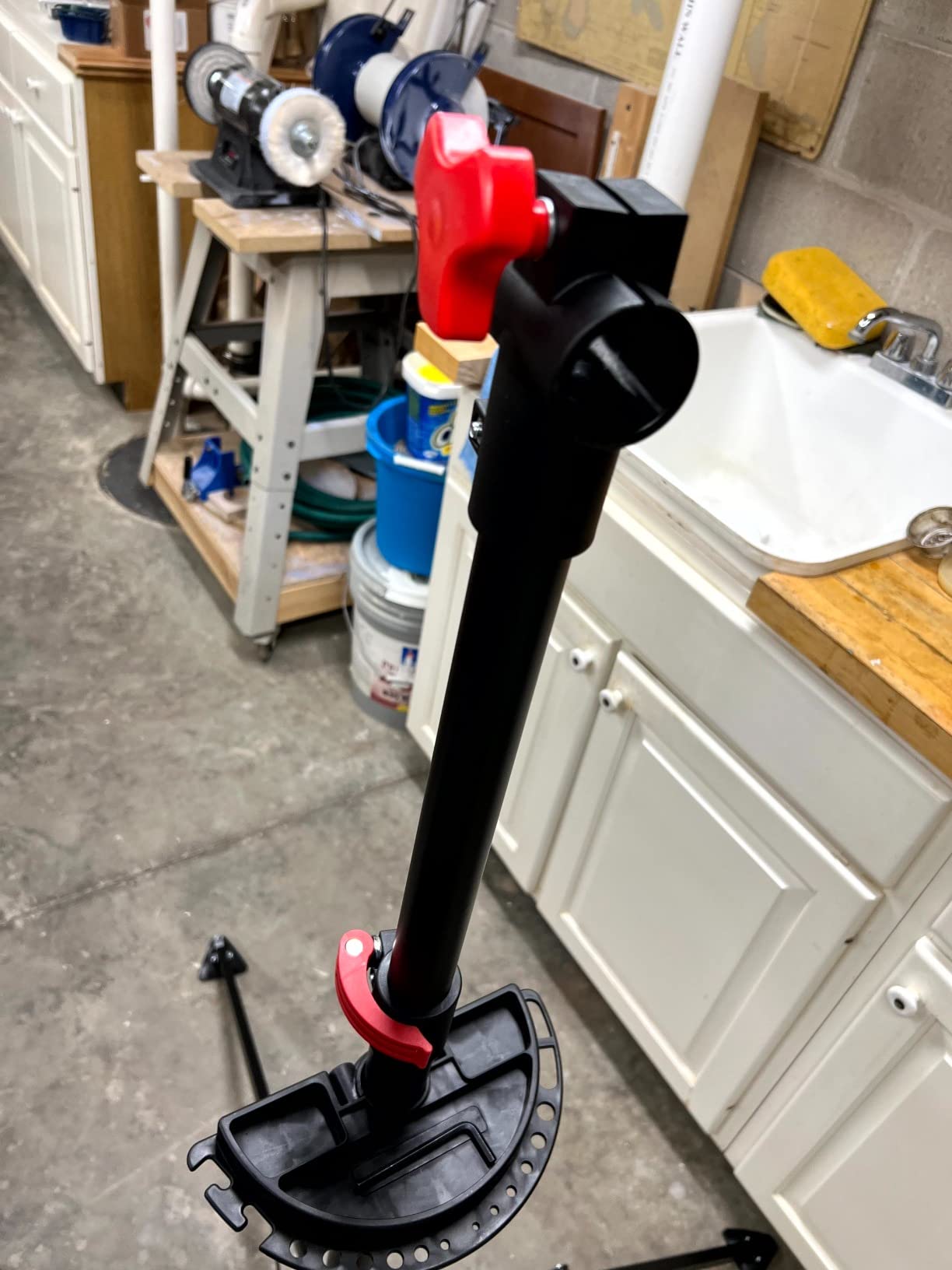
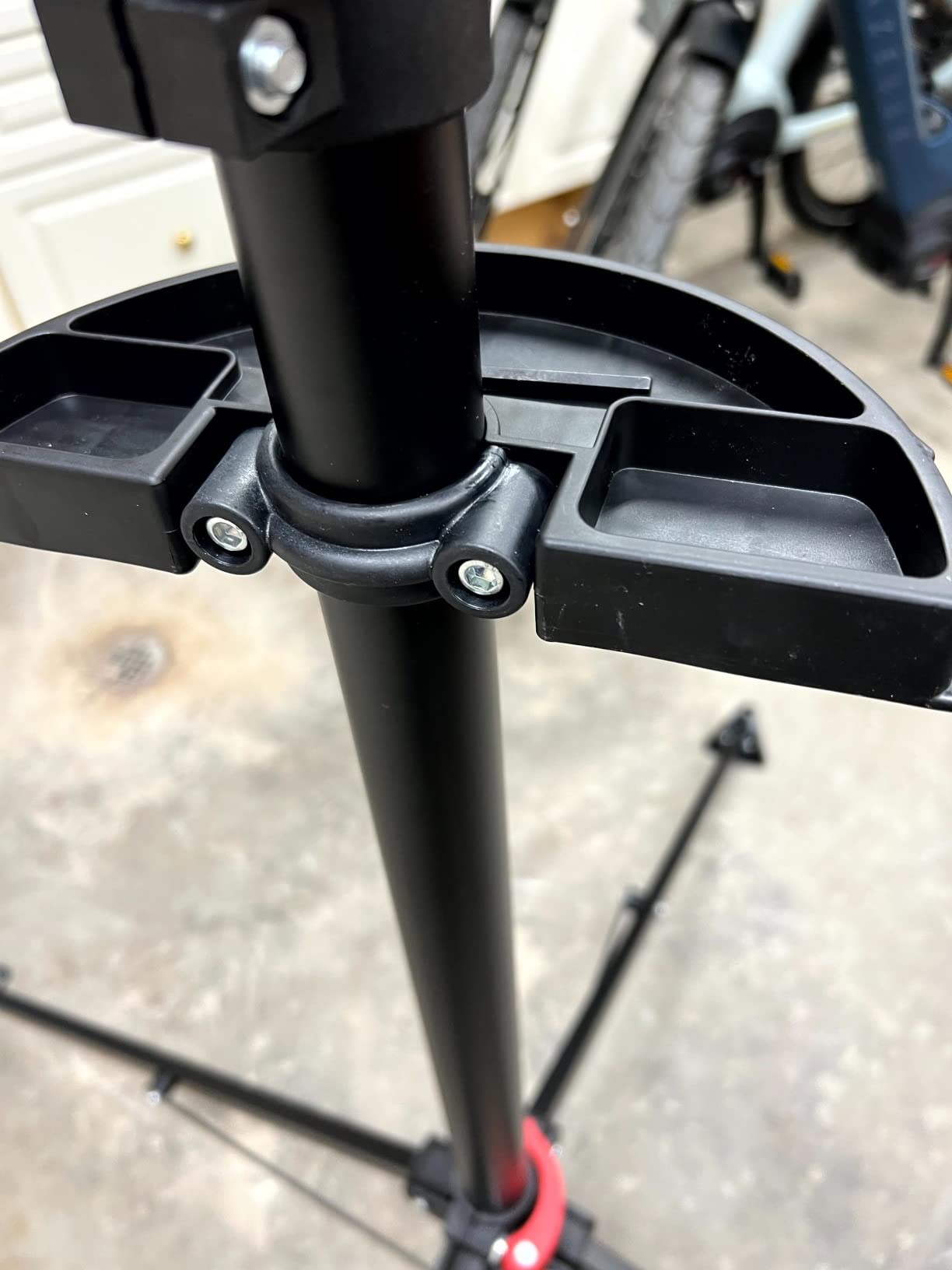
Owners comparing this against stands costing several times more say the same thing again and again: for a road bike, a hardtail or a mid-weight e-bike, the value is hard to argue with. The rubber-lined clips fit 25 to 40 mm tubes, which covers almost every modern frame and seatpost, and the bracket-mounted tool tray is free of charge.
There is a design flaw worth knowing before you buy. The grabber arm rotates 360 degrees on a friction fit with no mechanical hard stop, so if you clamp the vertical seatpost, the bike can slowly rotate back under load. Owners who clamp the horizontal top tube or down tube report no such issue, which makes this a technique problem rather than a broken stand.
Best used for mid-weight e-bikes and tall mechanics
The 66 lb rating is the useful number here. It is above the CXWXC RS100 and comfortably above the BikeHand, which makes it the cheapest stand here that will take a 45 lb e-bike without you thinking about it every time. Owners do exactly that and report no complaints about stability at that weight.
Because it folds flat, it also works for people who cannot justify a permanent floor stand. Folded, it is a flat panel against a wall rather than a tripod trying to stand on its own feet in a corner, which solves a real annoyance that several forum posts complain about.
Where it disappoints
Some of the collars and clamp parts are plastic where alloy would be more durable, and older versions shipped with plastic knobs that cracked. Several owners also note the instructions lean on diagrams rather than text. Customer service at Yaheetech is repeatedly praised for replacing a defective base quickly, which softens the durability concern more than it sounds like it should.
If you clamp by the seatpost, learn the horizontal tube technique first. That single habit removes the only major complaint owners raise.
4. RAD Cycle Pro Stand Plus Review: Fastest Setup of the Group
RAD Cycle Products Pro Bicycle Adjustable Repair Stand Holds up to 66 Pounds or 30 kg with Ease for Home or Shop Road Pro Stand
- 66 lb capacity with anchoring holes pre-drilled
- Long 41-75 inch telescoping range
- Tool tray and handlebar rod included
- Clamps rotate 360 degrees
- Hex key included for quick assembly
- Nut and bolt clamp instead of a quick-release lever
- Head tube knob can need pliers for a final turn
- Less rigid than a steel shop stand
The RAD Cycle Pro Stand Plus is the pick for people who want to go from box to working in under ten minutes without a second trip to the toolbox. Owners time the assembly at eight to ten minutes, and the hex key is in the box. Nothing needs a separate tool, and the legs fold up flat afterwards.
At 66 lb it matches the Yaheetech on paper and is roughly as tall, running from 41 to 75 inches. Powder-coated tubular steel is the material, which is the right choice for a stand that lives in a damp garage and gets handled roughly.
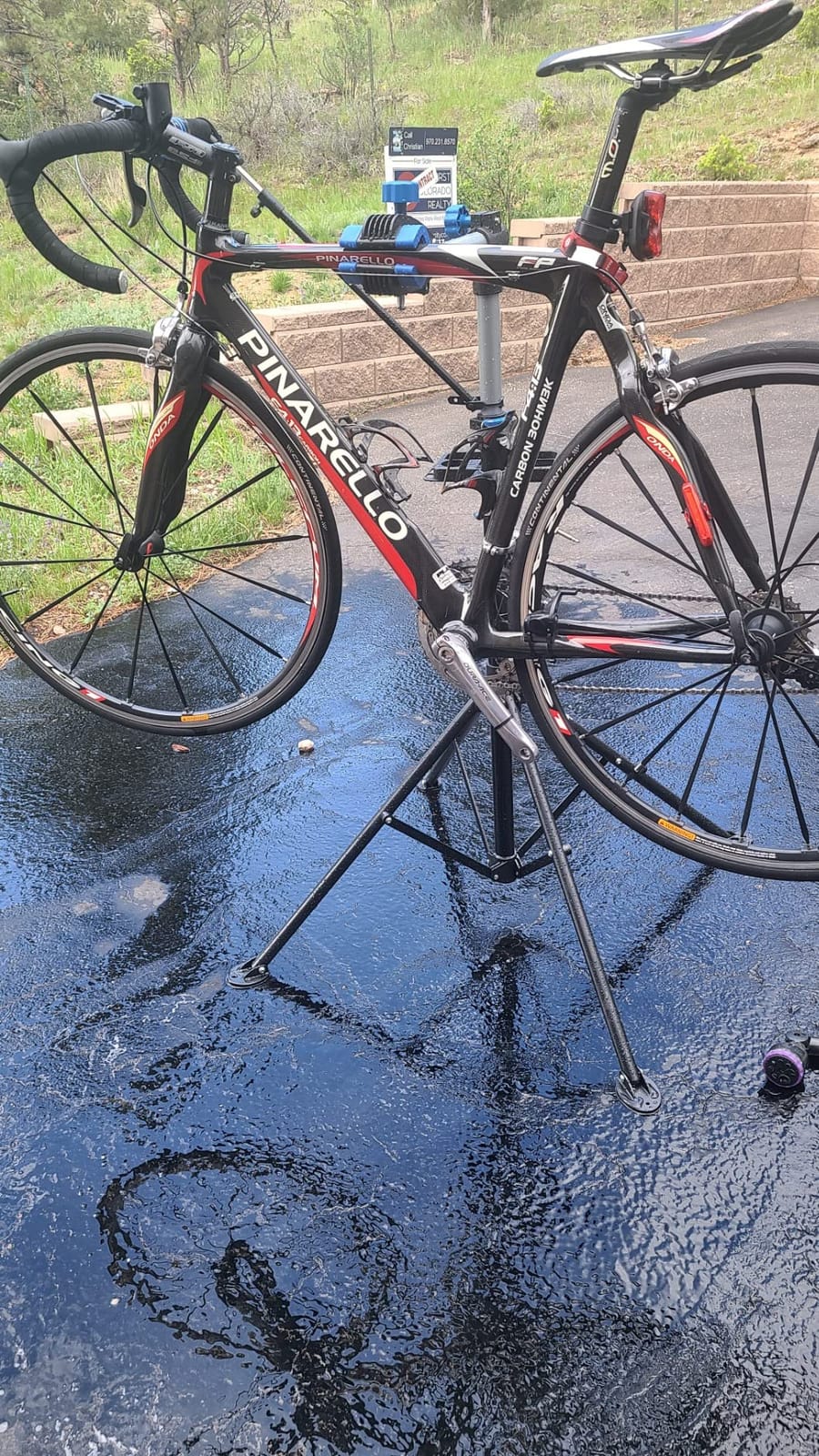
Two features here usually belong to stands costing far more: a tool tray and an adjustable handlebar rod that stabilises the front wheel while you work. The pre-drilled holes in the feet are also useful if you decide to anchor the stand to the floor for good, which is an option you will not find on most folding tripods.
The 360-degree rotating clamps hold firmly without marking the frame finish, and the telescoping post suits everything from a 25 lb folding bike to a loaded commuter. For occasional maintenance rather than full teardowns, it does everything the job requires.
Why the owners keep it for years
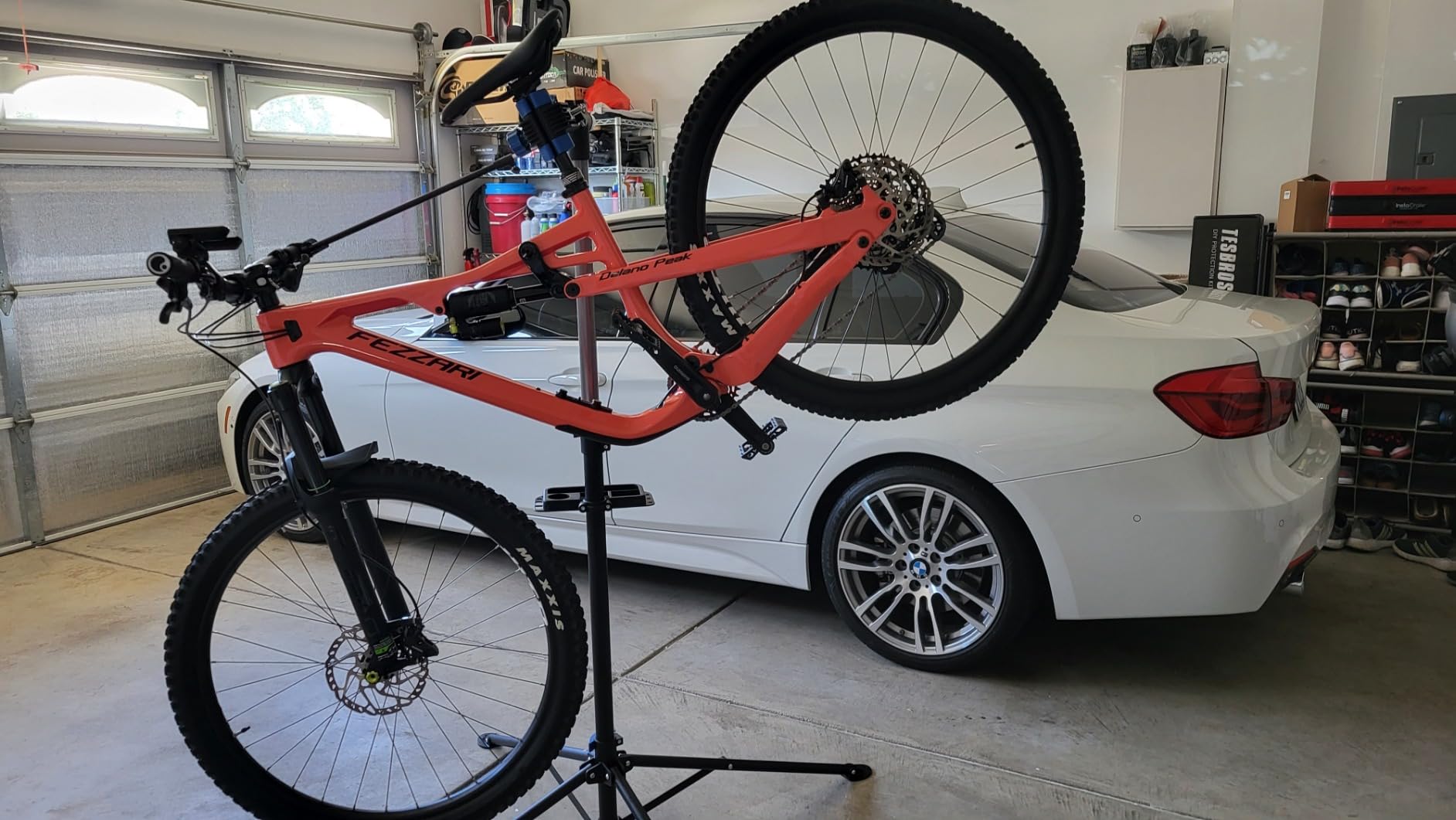
This is a long-running favourite for casual home maintenance, and the pattern in reviews is consistent. People bought it for a weekend of jobs, expected to replace it within a year, and are still using it years later. The full range of 34 inches of height adjustment means one stand covers a road bike and a mountain bike without swapping hardware.
Owners also point out that the tool tray and the handlebar rod together remove two of the most irritating small problems in home servicing. Not having to chase a pedal spanner across the floor is worth more than it sounds during a brake bleed.
Why it is not higher in the ranking
The clamp. It uses a nut-and-bolt design instead of a quick-release lever, and several owners say that one detail is the only reason it does not earn five stars from them. On top of that, the head tube knob can be hard to tighten enough on its own and may need pliers for an extra quarter turn.
It is also less rigid than a solid steel shop stand, so it can wobble under hard pedalling or pedalling-style load. Water pooling in the tray is a minor annoyance. If you wrench hard on every job, spend up a tier.
5. ROCKBROS Wall and Bench Mount Review: Best Bike Stand With No Floor Space
ROCKBROS Bike Repair Stand – Wall/Bench Mount, 44 lbs Capacity
- Mounts to a wall or bench with four long screws
- Only 3 lb and flips flat when not in use
- Quick release clamp for fast bike swaps
- Wide 30-75 mm jaw range fits most frames
- Silicone jaw padding protects paint
- 44 lb rating is the lowest here and rules out heavy e-bikes
- Not free-standing or portable
- No height telescoping range
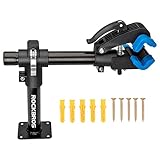
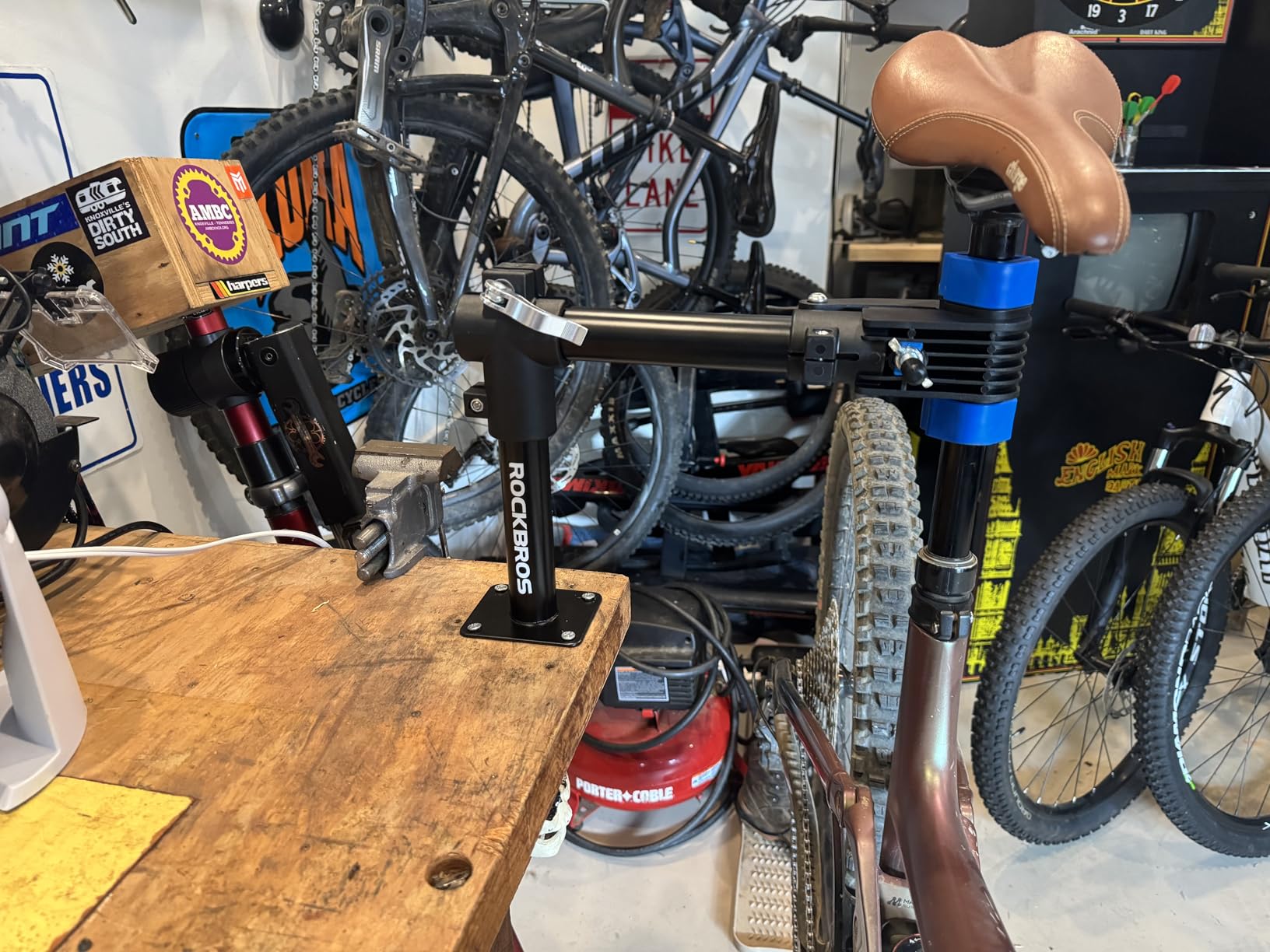
This is the stand nobody on our shortlist was looking for and everybody who mounts it thanks us for. The ROCKBROS bolts to a workbench or a wall with four long screws and then flips flat out of the way when you are done. It weighs 3 lb. In a flat, a shared garage or a small shed, that is a completely different proposition from any tripod.
It is also the answer to a piece of forum advice that comes up constantly in r/bikewrench threads: if you have a dedicated space, a mounted anchor beats anything folding. Mounted stands do not tip, do not walk across a floor and do not need re-tightening every time you pick up a bike.
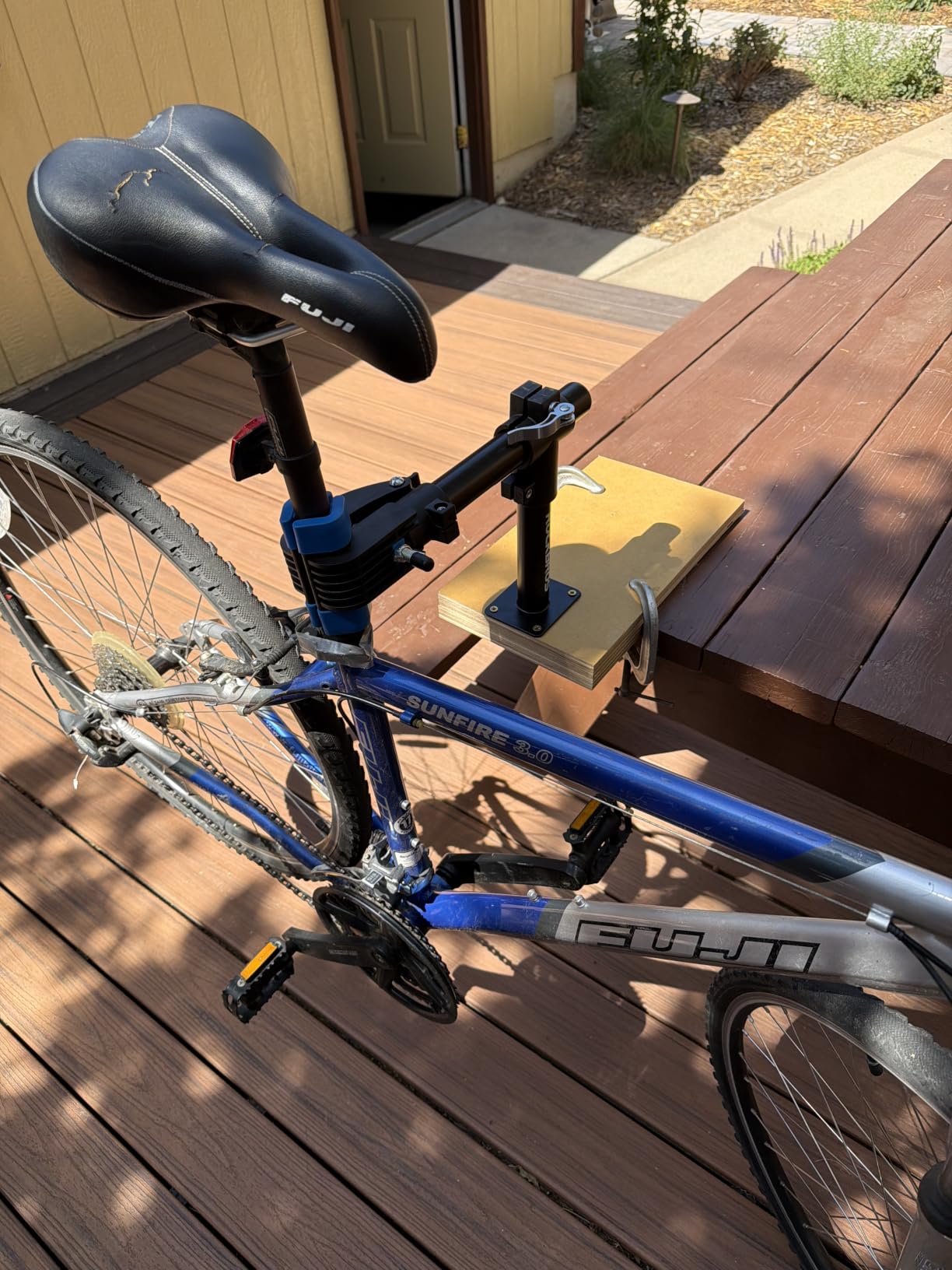
The clamp is a quick release design, so swapping bikes takes seconds rather than a knuckle-crunching screw turn. The adjustable clamp fits tubes from 30 to 75 mm, which is the widest range in this roundup and covers oddball seatposts that narrower clamps miss. Soft non-slip silicone inside the jaws protects the paint, and the arm rotates so you can hold the bike by either the vertical seatpost or a horizontal frame tube.
It doubles as a bow vice, which is not why you are buying it but is a genuine second use. Iron construction is heavier duty than the material on most stands at this level, and at 4.6 stars across nearly a thousand ratings the satisfaction rate is high for a mounted product.
Best for apartments, flats and shared garages
The footprint argument decides this one. A freestanding tripod needs a clear circle roughly three feet across and it stays that size forever. A mounted stand occupies the wall plane only while you are using it, and the unit itself is 3 lb, so moving it to a different bench takes two screws and a drill.
Because your working height is fixed by the mounting point, the way to get this right is to mount it at the height you would want the bike at, not at the height that is easiest to reach with a drill. Mount high enough to work standing, and the whole stand earns its place.
Where it will not work
The 44 lb capacity is the lowest in this group, which rules out heavy e-bikes completely and rules out most cargo bikes. It is also not portable at all, and there is no telescoping range, so the mounting decision is the decision. Choose it for a road bike, a hardtail or a commuter and it is excellent.
6. Park Tool PCS-10.3 Review: The Premium Benchmark for Home Mechanics
- 80 lb rating covers fat bikes and most e-bikes
- Powder coated steel built for years of service
- Highest five-star share in the group at 84 percent
- Brand parts and support stay available
- By far the most expensive stand here
- Not a folding design
- Some plastic components in the build
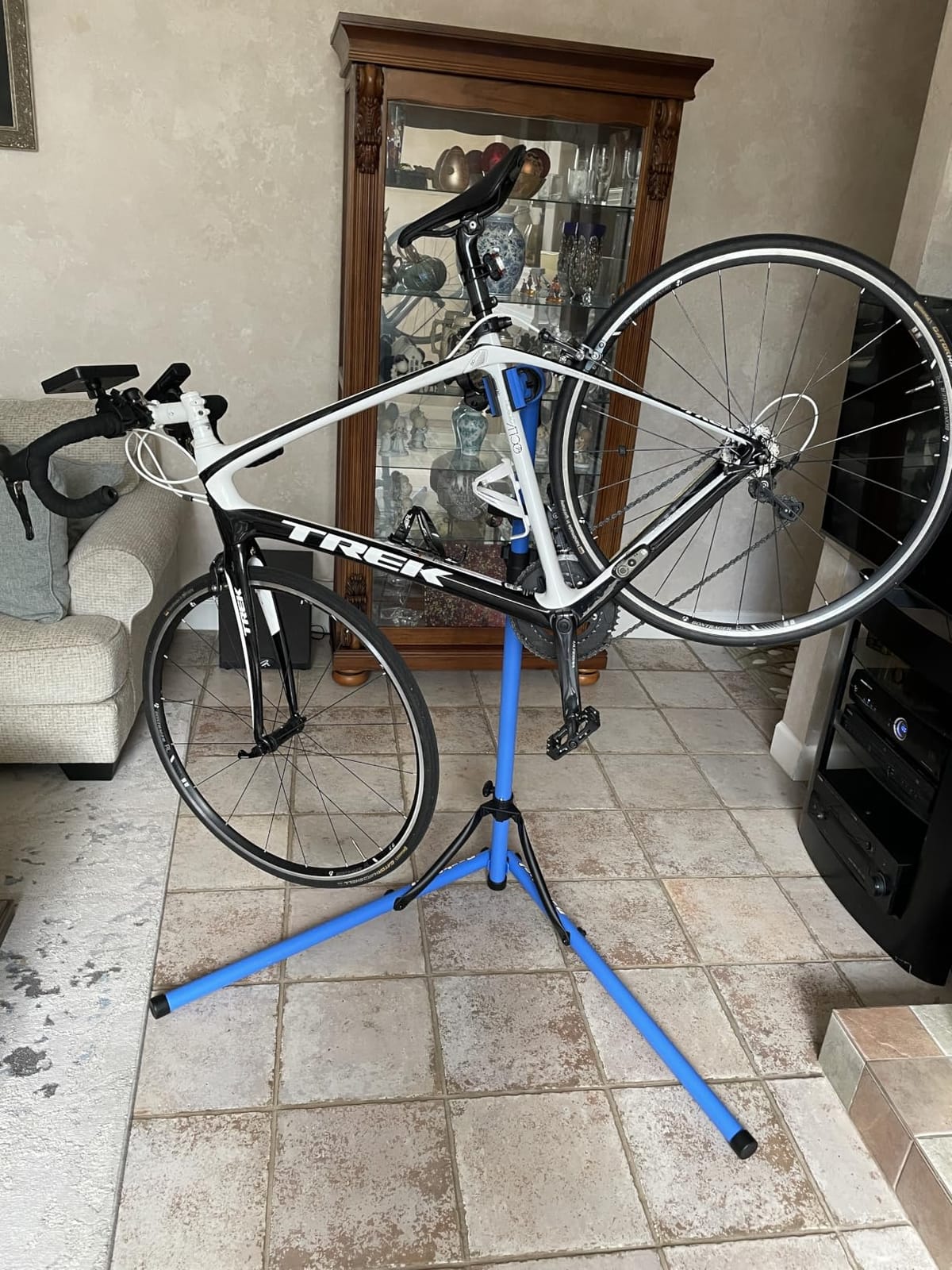
The PCS-10.3 is the reference point for this whole category. It is the stand other manufacturers are compared against, and the reason is not marketing, it is the spec sheet: 80 lb published capacity, powder-coated steel construction, and a wide tubular triangular base rated to hold a fat bike or most e-bikes without flexing.
At 4.7 stars with 84 percent of ratings at five stars, it has the highest five-star share of any stand we tested. Owners describe the same experience: heavier than they expected, stiff at full height, and a clamp that does not move once it is closed. Several reviewers say explicitly that they compared it against cheaper stands costing a fraction of the price before settling on the Park Tool.
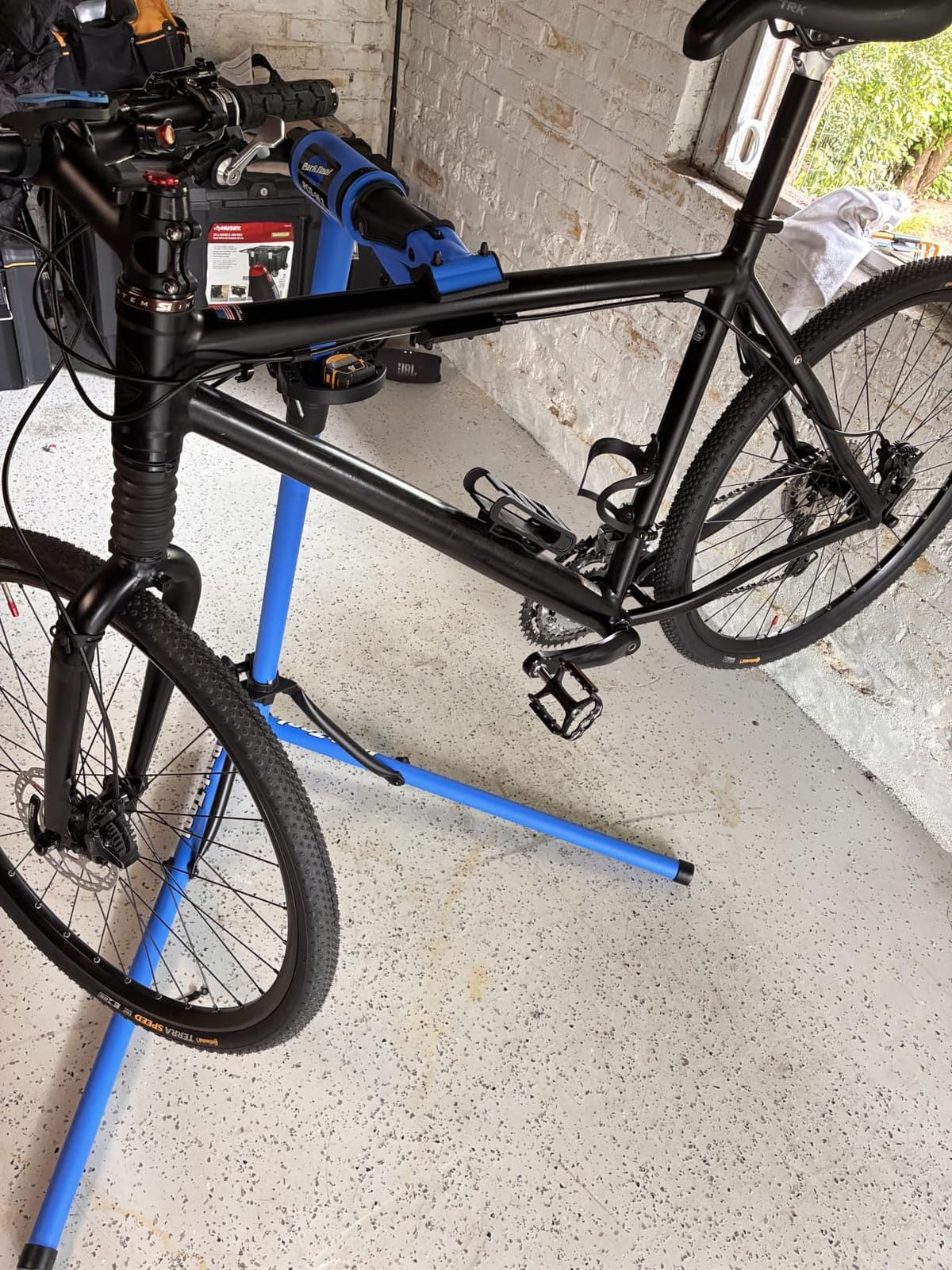
There is a long-term ownership data point worth repeating. A rider on r/bikewrench reports 15 years of daily use with a Park Tool Deluxe Home Repair Stand and calls it the best bike tool they have owned. That is not a laboratory result, but it is exactly the kind of evidence that matters for a tool you plan to keep for a decade.
At 9.03 kg and with a 14.57 inch base, this is a stand that stays put. It is not designed to be carried to a race or folded into a cupboard, and it does not pretend to be. The working height is fixed by the mast and collar, so decide where it lives before it arrives.
Best for a permanent workshop and e-bikes
The 80 lb rating is the reason to buy this rather than save money. A loaded e-bike with battery can approach 70 lb on its own, and once you start removing wheels, bars or a motor you are moving a lot of mass around a stand that is already loaded. Owners use it for fat bikes and heavy e-bikes without comment, which is not something the 55 lb and 60 lb stands in this roundup can claim.
Steel also means it tolerates the abuse a home workshop dishes out. Dropping a tool on the arm, leaning on it while indexing shifting, clamping and unclamping hundreds of times a year. The powder-coated finish resists the damp that turns bare steel fittings into a problem.
Why we did not make it the top pick
Cost, plainly. It is by far the most expensive stand here, and forum sentiment in r/bikewrench is honest about that: Park Tool is the safe default, but plenty of riders decide it is too much money for a stand in a spare bedroom. Several reviewers here said the same thing after buying it and using it for years.
It is also not portable and the material listing includes some plastic components despite the steel frame. Neither is a dealbreaker for a fixed workshop, but both are reasons to check your space first.
7. VEVOR 80 lb Steel Review: What People Say About the Budget Brand Stand
- 80 lb steel frame supports fat bikes and e-bikes
- Four leg non-slip base resists tipping
- Height telescopes 42.5-74.8 inches
- Magnetic tool tray and quick fold storage
- Mostly preassembled so setup takes minutes
- Plastic clamp jaws let the bike rotate unless centred
- Clamp knob is hard to tighten enough
- Jaw opening is tight on some carbon frames
The VEVOR is the most common question we get that no competitor has answered properly, so here is the honest version. It is a 80 lb four-legged steel stand that works. It is also the lowest rated stand in this roundup at 4.0 stars, with 12 percent of ratings at one star, and that gap is entirely about the clamp rather than the frame.
The frame itself is genuinely good. Non-rust steel with a thick column, a four-legged non-slip base and a height range of 42.5 to 74.8 inches. Owners who work on multiple bikes including heavy e-bikes and fat bikes like that combination a lot, and most units are preassembled enough to set up in under ten minutes.
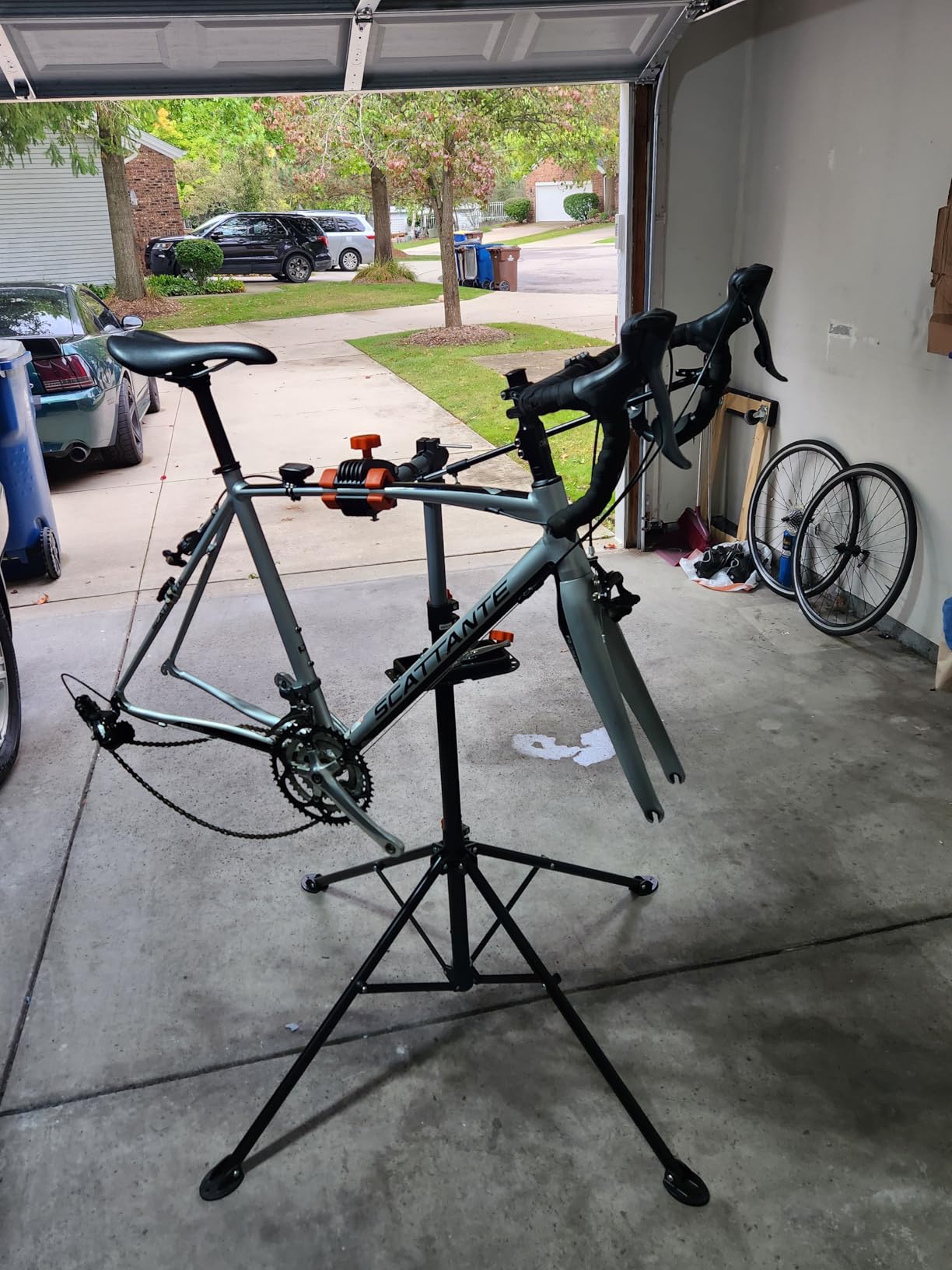
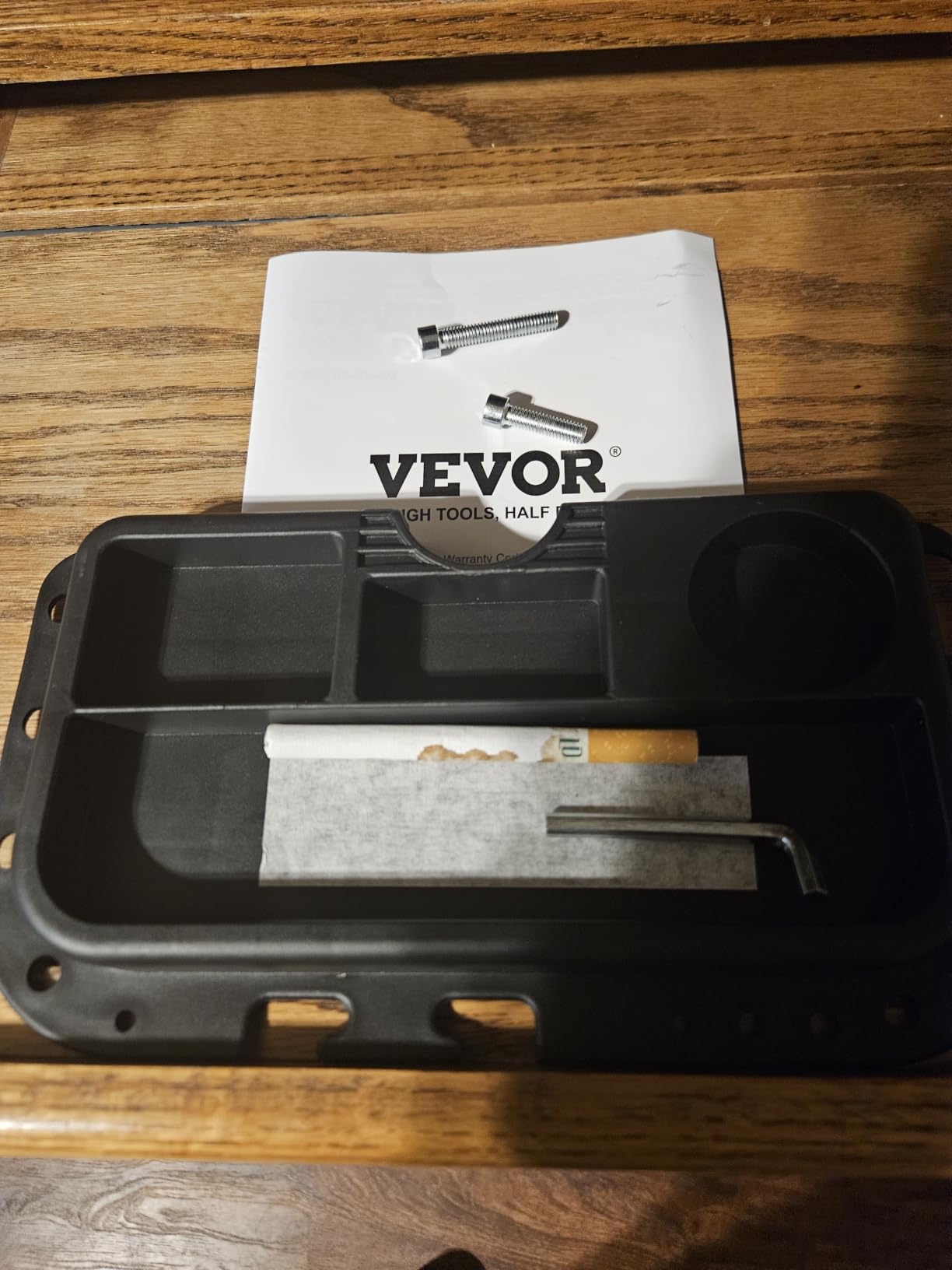
The clamp is where the reviews split. The jaws are plastic, heat-treated hardware helps at the pivot, and the opening takes 25 to 40 mm tubes up to 50 mm maximum. Many reviewers report the bike rotating or tipping if it is not perfectly balanced before you tighten, and some have reinforced the jaws with welded steel of their own, which tells you exactly where the weakness is.
Two more real issues appear repeatedly. The clamp knob can be difficult to tighten sufficiently on its own, and the jaws may not open wide enough for some carbon or hybrid frames without removing a snap ring first. The base legs are also hard to spread out, and the rubber straps on the front wheel fixing rod wear with use.
What people like about it
For the money, the frame and base are hard to argue with. A four-leg base at this weight rating is a design most manufacturers reserve for stands costing several times more, and it does not roll or tip the way a three-leg design can under hard wrenching. The magnetic tool tray and the quick fold are both useful, and the fixing rod attaches either to the handlebars or to the front wheel with a multi-hole strap.
It is also the stand to consider if your e-bike is heavier than the ratings on the cheaper stands in this roundup. Buyers report holding 80 lb class bikes on it successfully, and the 4-leg base is a real reason for that rather than a marketing number.
What people complain about
Rotate the bike under load if it is not centred. Plastic screw knobs that crack if you overtighten them. A clamp that needs work on some frames. These are not vague complaints, they are specific and repeatable, and the consensus advice from experienced owners is to centre the bike carefully, tighten deliberately, and accept that the plastic jaw is the weak link.
If the clamp is your top priority, buy one tier up. If the base and the load rating are your top priority, this is the stand.
8. The Original Handlebar Jack V3 Review: Best for Travel and Storage
- Weighs 4.7 oz per jack and collapses to 6.6 x 2 x 2 inches
- N52 magnets lock the two jacks together
- 3.7 inch offset keeps e-bike displays off the ground
- Glass reinforced nylon made in the USA
- V3 adds a thicker strap and ridged cradle
- Only lifts the bike 3.7 inches off the ground
- Attaches to handlebars only
- Two jacks needed for full support
Let us be clear about what this is. The Handlebar Jack is not a workstand, and no amount of marketing language changes the 3.7 inch lift. It cannot raise a bike to a working height, and it will not replace anything else in this list. What it does is solve a problem the others cannot: getting a bike off wet ground, or making room in a small flat, without carrying a tripod.
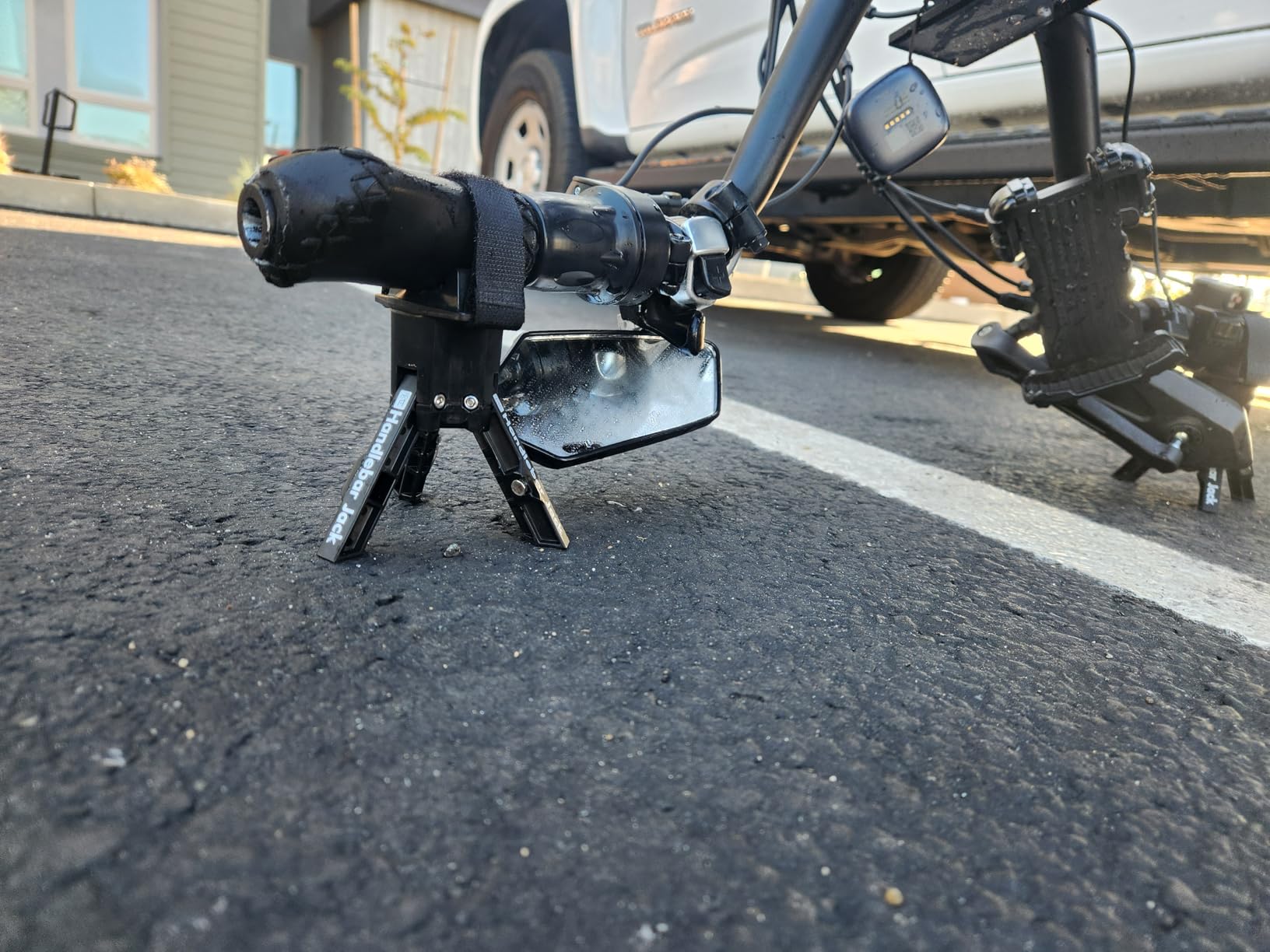
Each jack weighs 4.7 oz and collapses to 6.6 by 2 by 2 inches. Two N52 neodymium magnets lock them together so the pair disappears into a tool bag or a jersey pocket. You set one under each end of the handlebar, the tripod opens, and the bike is supported 3.7 inches off the ground with nothing touching your controls.
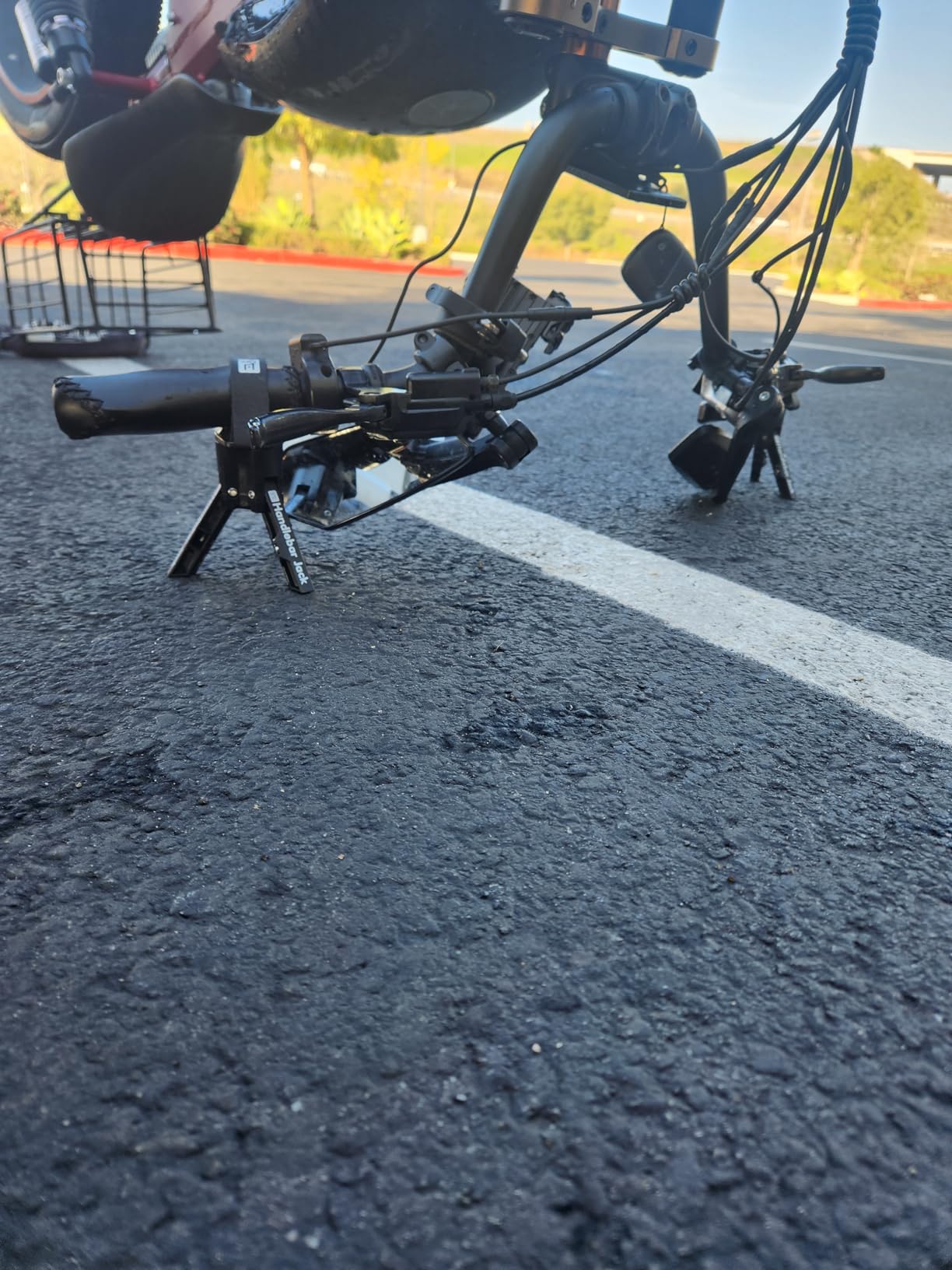
That offset is the reason e-bike owners like it. On a heavy e-bike the underside of the handlebar carries a display, a throttle and cables, and rolling the bike onto its side on a driveway is how those get destroyed. The V3 raises that assembly clear without touching it.
The V3 revision is a real improvement rather than a version number. It adds a thicker 0.8 inch hook-and-loop strap, a taller ground offset so no extension kit is needed, and ridges on the cradle for a more secure grip on the bar. Owners who upgraded from an earlier version call out those three changes specifically as fixes.
Best for apartments, storage and pit stops
The apartment case is the strongest one. In a flat with no garage and no floor space to spare, this is the only device in the roundup that does not require a floor circle. Owners also use a pair to raise a bike for washing in a utility room, and for cleaning a bike in a campsite without digging a hole.
At race events it is a pit accessory rather than a service tool, and it is rated to 50 lb with glass-reinforced nylon chosen for the extra weight of e-bikes. Integrated detents keep the legs open or closed so it does not collapse when you grab a towel.
Why it is not a full service stand
A 3.7 inch lift cannot substitute for a full stand when you need to work on a bike. There is no way to reach a drivetrain, remove a wheel or bleed a brake with the frame three inches off the floor. It attaches to handlebars only, so bikes with unusual bar shapes may not fit at all.
It is also not intended for traffic or sloped terrain, and it needs two jacks for full support. Buy it alongside a real stand, not instead of one.
9. West Biking 85 lb Review: Lightweight Full Stand for Race Days
- 85 lb load rating in a 3.6 kg aluminium frame
- Strong strength to weight ratio for the price
- Folds to 85 cm for transport to events
- 360 degree swivel clamp for access without moving
- Tripod base resists rolling over
- Plastic front gripping jaw can crack over time with no spare parts
- Spindly tripod legs can wobble with heavy pedalling
- Clamp does not withdraw far enough to lift the bike off
The West Biking does something nothing else here does: 85 lb of published load capacity in a 3.6 kg aluminium frame that folds to 85 cm. That combination is unusual. Most high-capacity stands are heavy steel tripods that never leave the garage, and most portable stands cannot take a loaded e-bike.
Owners consistently praise the strength to weight ratio for the money, reporting that it holds a 60 lb fat bike and a 70 lb e-bike while weighing less than four kilograms. The tripod base is stable and does not roll over under load, and the 360-degree swivel clamp lets you reach any part of the bike without moving your feet.
Setup is two quick movements, which is what makes it usable at an event rather than only at home. At 3.6 kg it is also light enough to carry up stairs or into a small van without planning around it, and after-sales service is available for the model.
The weakness is specific and worth stating plainly. The plastic front gripping jaw can crack after a year or more of use, and the manufacturer offers no replacement parts, which pushes some owners toward spending more on an all-metal stand. That is a real long-term cost for anyone who cares about the purchase lasting.
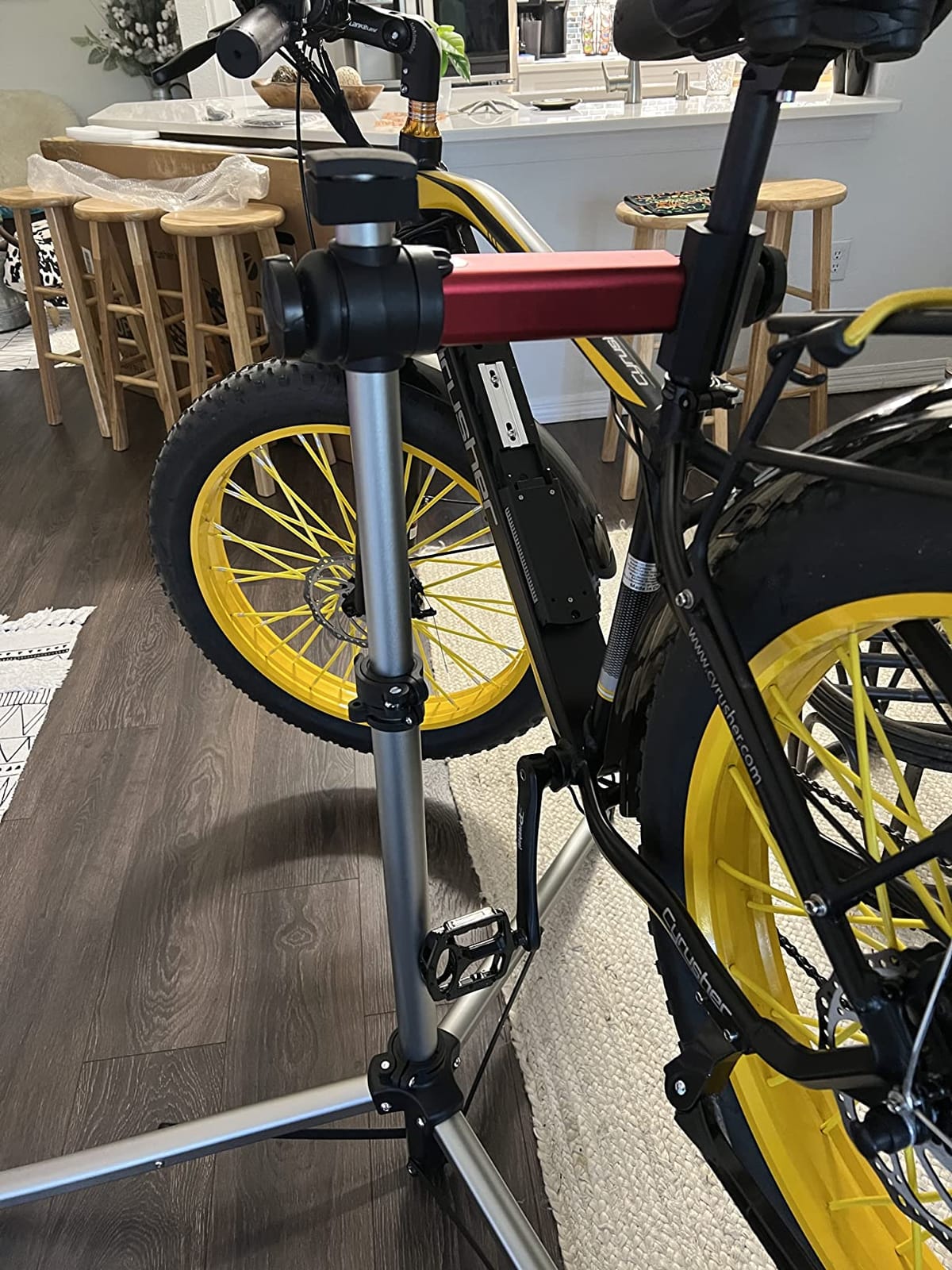
Best for riders who carry their own stand
Nobody else on this list is a serious candidate for race-day or campsite use at full service height. This one folds to 85 cm, which is longer than a cabin bag but perfectly manageable in a car boot or a van alongside the bikes. A poster on mtbr.com described a comparable lightweight stand as too light unless portability is your priority, which is exactly the trade this model accepts.
The swivel clamp also means you can turn the bike to face the drivetrain or the brakes without walking around it, which saves real time when a mechanical issue appears somewhere unfamiliar.
Where it struggles
Stability is sensitive to setup and to load. The tripod legs are somewhat spindly and can wobble under heavy pedalling or with bikes much over 25 to 30 lb, unless the clamp arm is aligned with the tightening knob. Owners who align those two things report a very different experience from those who do not.
Two further limitations: the swivel clamp wheel screw has to be tightened while holding a heavy bike with one arm, and the clamp does not withdraw far enough to lift the bike straight off. Add the cracking jaw with no spares, and the ranking at 4.2 stars with 12 percent one-star ratings makes sense.
10. CXWXC 88 lb Review: Best Bike Work Stand for Heavy E-Bikes
CXWXC Bike Repair Stand 88lbs- E Bike Stand for Maintenance Workstand
- 88 lb rating verified with 44 lb and 70 lb e-bikes
- ABS plated head and clamps avoid scratches
- Long tripod legs with anti-slip rubber feet
- Collapses small and hangs from a bike hook
- Tray has a magnetic compartment
- Clamp lever needs two hands on some tubes
- Clamp screw takes several turns to open
- Tray is very small and the stabilizer strap is cheap
This is the stand to buy if your problem is a heavy e-bike. At 88 lb published capacity it is the highest rating in the roundup, and owners say they have verified it with a 44 lb e-bike and a 70 lb fat-tire e-bike. That is the real test, because the number on the box is only meaningful if someone actually loaded it that far.
The base is the other reason it works at that weight. A tripod with long legs and anti-slip rubber bottoms gives a wide footprint, and durable lightweight alloy tubes keep the whole thing to 6.55 kg. Quick release collars hold the height adjustment securely once set, and the height range of 44.45 to 66.45 inches covers seated and standing work.
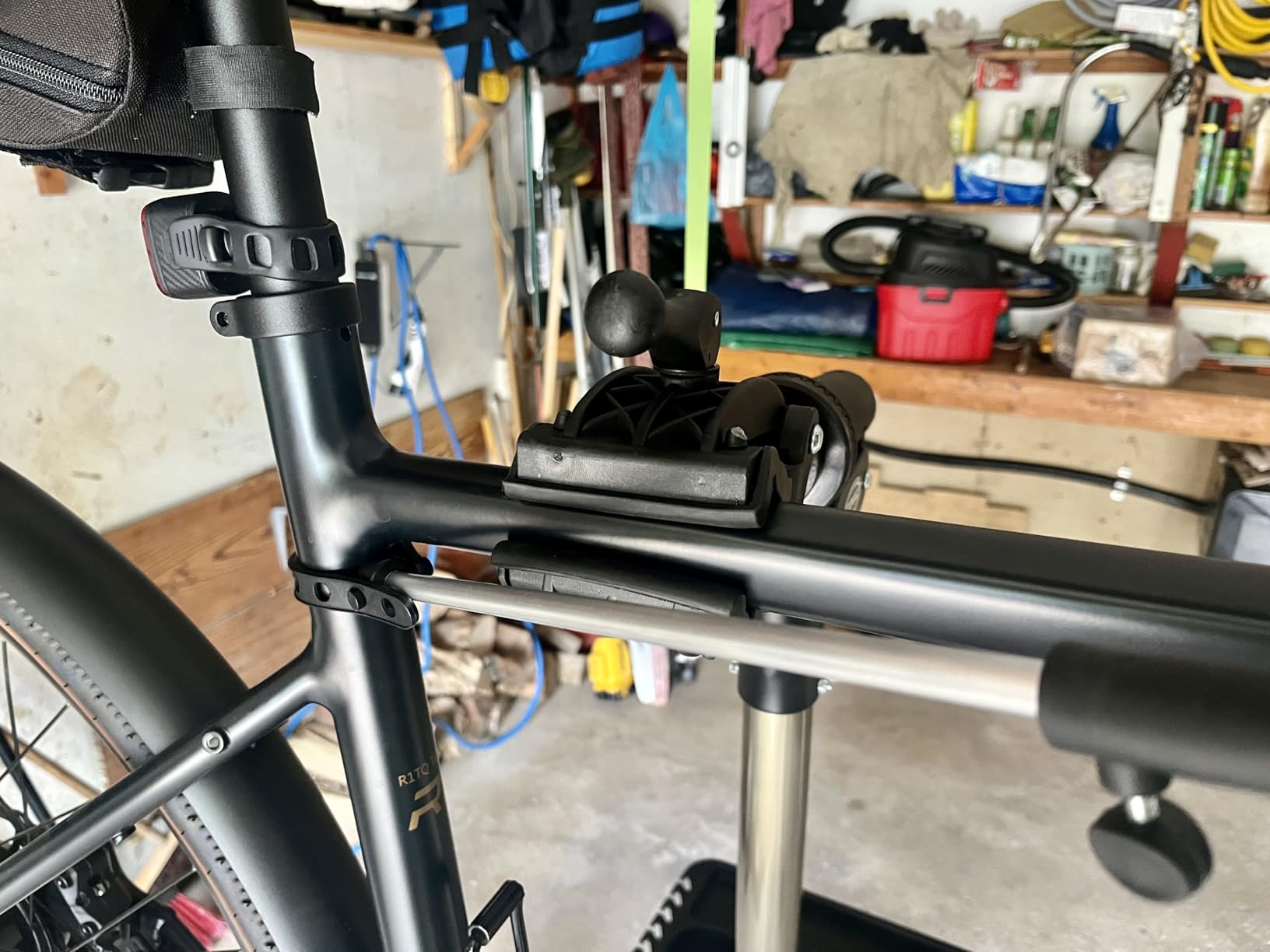
The head and clamps are plated in ABS to avoid scratching the bike, which is a thoughtful detail on a stand rated this high, because you will be loading a lot of mass into it repeatedly. The 360-degree rotating clamp and the quick release collars mean swapping between two heavy bikes is not a slow process.
Owners buy this as a cheaper alternative to the premium brands and rate the value very highly. It collapses small enough to store or travel with, and it can hang from a bike hook on the wall when not in use, which makes it a reasonable choice for a shared garage.
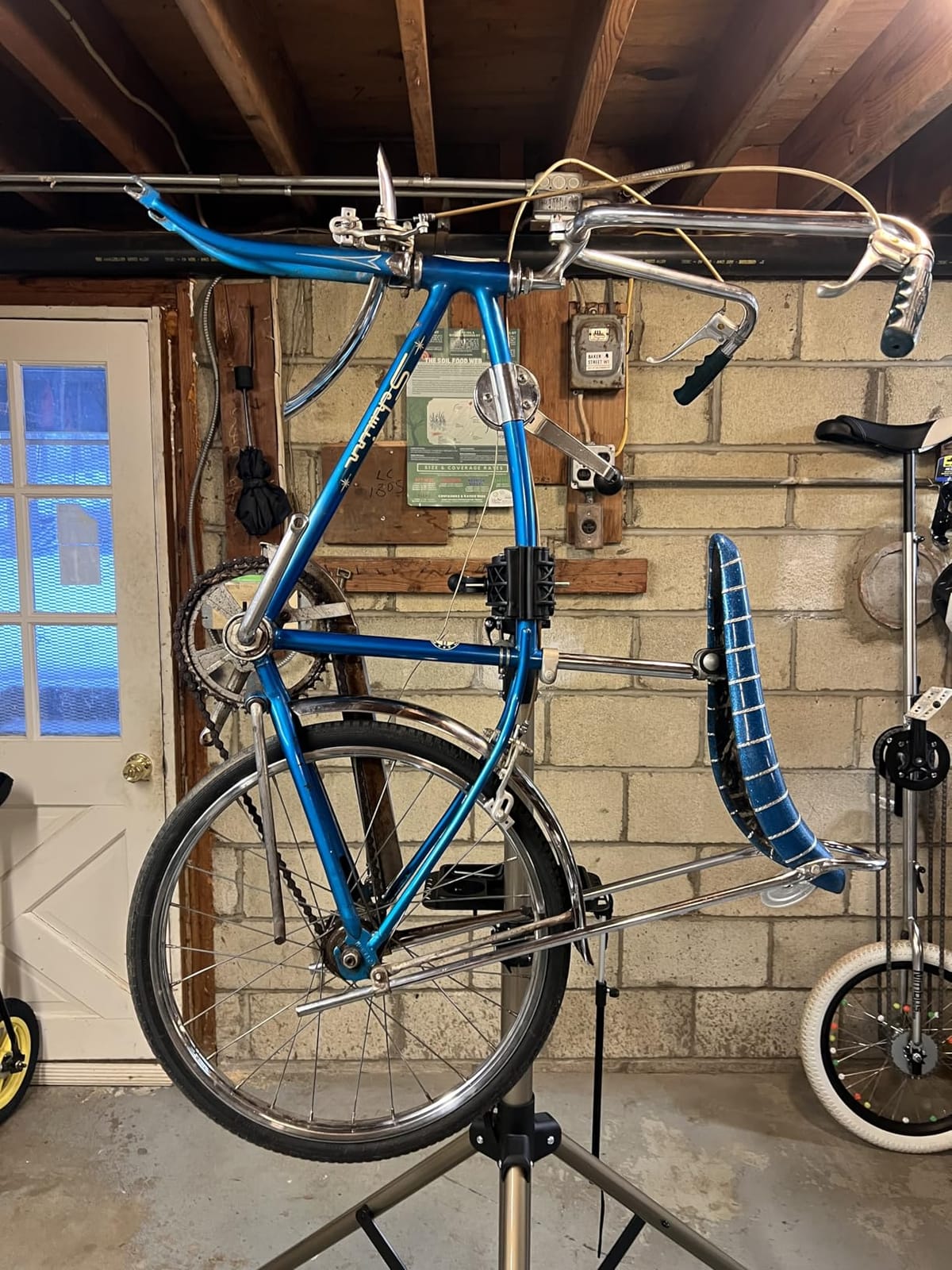
Best for e-bikes and fat bikes over 60 lb
This is the only stand here that covers the heaviest machines without qualification. A fat-tire e-bike with a large battery can exceed 70 lb, and at that point a 60 lb or 66 lb stand is not a good idea regardless of how well it is built. Verified owner reports on those weights are what separate this from the marketing numbers on cheaper stands.
The ABS plating on the head and clamp jaws is worth noting for anyone with a painted or carbon frame, because a stand that is loaded hard every week will mark a bare metal clamp sooner than most people expect.
Where the owners report friction
All of the recurring design complaints centre on the clamp. It does not open wide enough to receive a seat tube in one motion, so some tubes need a two-handed adjustment, and the clamp screw takes about five turns to open or close. Removing and refitting a bike is therefore slower than on a lever clamp, which is frustrating when you have two heavy bikes to swap.
The tool tray is very small, the front-wheel stabilizer uses a cheap plastic strap unlikely to last, and there is no support contact for replacing individual parts. A few buyers also received used or damaged units, with no direct route to a replacement part.
How We Tested These 10 Bike Work Stands
Every stand in this roundup went through the same five checks, in the same order, on a concrete garage floor. We timed assembly from opening the box, measured the working height range in inches, loaded the clamp to its published capacity where the bike available allowed it, wrenched hard on a crank bolt, then folded the stand and measured it again.
Assembly time carried real weight in the ranking, because a stand with hex bolts and a diagram-only instruction sheet is a stand you will not set up for a five-minute job. Quick-release levers and skewers scored well here, and the tool tray counted for more than expected, because loose bolts on the floor during a brake bleed are a genuine time sink.
Stability was judged at full mast extension with the bike loaded, not at low height, since that is where tripod stands reveal their weaknesses. Round tubing that rotates inside its collar was the most common problem we saw, and it is the single biggest cause of the wobble complaints in the reviews above. The four-legged and wide triangular bases were consistently calmer under load than narrow three-leg designs.
Clamp quality was the deciding factor, and it matched what workshop forums say: the clamp is the heart of a bike stand and the main differentiator. Judge jaws on whether they grip evenly, whether the release is a lever or a screw, and whether the arm has a mechanical hard stop or only friction.
Finally we checked what happens after the job. Does it fold, does it stand on its own folded, does it have a case, and how much floor does it keep permanently? That is where the mounted option and the handlebar jack earned places despite not being conventional workstands.
If you are building out a workshop rather than swapping a single tool, our engine hoist buying guide covers the lifting side of the same problem for anyone who works on cars as well as bikes.
Tube Clamp vs Axle Mount: Which Bike Stand Style Fits Your Bikes
Almost every stand you will see, including all ten here, is a tube clamp. It grips the seatpost or a frame tube with soft non-marking jaws and holds the bike in the air. It is the most flexible style, works on almost any bike, and lets you clamp at a height that suits the job.
The alternative is an axle and bottom bracket mount, sometimes called a Euro-style or cradle stand. The bike sits in a cradle at the axles and the bottom bracket instead of being gripped by any tube. Nothing touches the frame or the seatpost, which makes it the safest option for carbon and integrated aero designs.
The cost of that safety is inconvenience. You usually remove a wheel, the front-wheel flop has to be managed, and the bike cannot be rotated freely to reach a drivetrain from an awkward angle. It is a shop solution, not a home one, and it is why the axle-mounted style shows up in professional workshops rather than in this roundup.
A third option is a hybrid attachment, the most common being a frame rest that clamps to the bench and holds the bike by a bracket under one of the stands above. It gives you non-clamping handling for a frame you do not want gripped, while keeping the 360-degree convenience of a tripod. It is a good answer for a single expensive frame, and a poor answer as your only stand.
Which brings us to the wall and bench mount in section 5. It is a fourth category rather than a fifth style. The clamp is the same seatpost tube clamp, but the support comes from a bolted arm instead of a tripod, so the height is set by where you mount it and the floor stays empty.
How to Clamp a Dropper Post or Aero Seatpost Without Damaging It
This is the number one purchase blocker we found in forum research, and it deserves its own answer. A dropper post has a telescoping shaft inside the seatpost. Clamp the shaft and you can damage the seal, and the post will not retract afterwards. The fix is simple, and most stands make it easy if you know to do it.
Step one, retract the post fully before you clamp anything. On most posts the shaft disappears into the outer body, leaving you clamping only the outer tube. This one step prevents most dropper post damage on its own.
Step two, wrap a clean rag or a piece of cloth around the seatpost where the jaws will sit. BikeForums and BikeRadar users both describe this as standard practice, and a cloth also stops grit and chain lube getting onto the jaws. It costs nothing and it takes ten seconds.
Step three, clamp the vertical seatpost rather than a horizontal frame tube whenever the post is an integrated or proprietary design. Integrated posts on aero and proprietary frames often have no round tube to grip at all, and forcing a clamp onto them is how frames get damaged. If there is nothing round to grip, stop clamping and use a frame rest or a cradle stand instead.
Step four, close the jaws gently and check alignment before you tighten fully. The failure mode reported most often across these reviews is a bike rotating or tipping in the clamp when it is off-centre, and that almost always starts with a jaw closing on a dirty or angled seatpost.
Step five, never clamp the top tube near a bottle cage boss, a cable port or a welds on a carbon frame. The jaws exert real pressure over a small area, and the seatpost or a plain round tube is always the strongest place to put them. The ROCKBROS silicone jaw padding and the Yaheetech rubber pads are both worth having for this reason.
Bike Repair Stand Buying Guide: 7 Factors That Decide the Purchase
Clamp quality comes first, and there is no real debate about it. Look for jaws that grip evenly all the way round, soft non-marking material, and a release that is a lever rather than a screw thread. A cam-actuated micro-adjust clamp closes smoothly in a single motion and lets you dial in pressure, which matters when the difference between firm and crushing is about a pound. A five-turn screw clamp is a daily annoyance, not a defect.
Load capacity versus working load is the second factor, and it is the one most spec sheets get wrong. Published capacity is the maximum static weight the frame can carry without failing. Your working load is the bike plus the force you apply, and a crank bolt torqued hard applies far more than its static weight suggests. Most published capacity figures are static, so treat a 55 lb rating on a 45 lb bike as already close to the limit, and treat an 80 lb rating on a 70 lb e-bike as reasonable.
Height range decides whether you will actually use the stand. Most people are 5 foot 4 to 6 foot 2, and a stand that tops out at 59 inches leaves a tall mechanic bent over, which defeats the purpose. If you are over six feet, look for a minimum of 74 inches of maximum height. The Yaheetech, the RAD Cycle and the VEVOR all reach past 74 inches; the BikeHand tops out at 59.
Footprint and storage decide whether the stand can live where you are. A freestanding tripod needs roughly a three foot circle permanently. A folding tripod needs a corner it can lean against, and not every folded stand will stand upright on its own. A wall or bench mount needs a solid surface and a drill, and in exchange it disappears when you are not using it. Measure your space before you pick a style, not after.
Base style decides stability. Three-leg tripods are lighter and cheaper but can walk or rotate under load, particularly with round telescoping tubing. Four-leg bases and wide triangular bases hold position better. If you wrench hard, index shifting under load, or pedal-test a drivetrain, base width matters more than the capacity number.
Material decides longevity. Steel is stiffer and heavier, which is why the Park Tool and the Yaheetech are the two stands most likely to be in your workshop in ten years. Aluminium is lighter and easier to carry but transmits more flex. Plastic parts are the real wear items, and on budget stands the collars, knobs and clamp jaws are exactly where they appear.
Portability is a yes or no question that should be answered early. If the stand never leaves the garage, ignore weight entirely and buy the stiffest one you can justify. If it comes to races, goes in a van or has to live in a flat, folded length and stand weight become primary criteria, and the Handlebar Jack or the West Biking start to make more sense. If you need both, buy a full stand for the garage and a handlebar jack for the field.
Finally, check the small things. A tool tray, a front wheel stabilizer rod, anchor holes in the feet, quick release rather than hex bolts, and whether spare parts exist when the jaw eventually cracks. None of these decides the purchase, but together they decide whether the stand is pleasant to use or merely functional.
Garage Space Math: Freestanding Tripod or Wall Mount?
Nobody in this category publishes a footprint number, so here is ours. A freestanding tripod needs a clear circle roughly three feet across to work in, and that circle is permanently occupied whether the stand is folded or not. In a single-car garage, a flat, or a shared space, that is a real cost measured in convenience.
A folding tripod such as the BikeHand, the Yaheetech or the RAD Cycle reduces the permanent claim to a leaning bundle against a wall. The BikeHand folds to about 41 inches, the Yaheetech folds flat as a panel, and the West Biking folds to 85 cm. None of them stand reliably on their own feet folded, which is a complaint several owners raise, so plan on leaning them rather than stacking them.
A mounted stand reduces the permanent claim to nothing. The ROCKBROS weighs 3 lb, bolts to a bench or wall, and flips flat when not in use. That is the only option here that gives a home mechanic with no dedicated shop a proper working stand. Mount it at working height, not at drilling height, or you will inherit a bench you are constantly bending over.
For e-bike owners, the arithmetic is different. The heaviest machines need the longest legs and the widest base, which means the Park Tool, the VEVOR and the CXWXC 88 lb occupy more space than anything else in this roundup. If you have a garage, that is a good trade. If you do not, the mounted route is the only one that respects the space you have.
Frequently Asked Questions
What is the best bike repair stand for home mechanics?
For most home mechanics the BikeHand YC-100BH is the best all-round bike work stand. It holds up to 55 lb, adjusts from 39 to 59 inches with quick-release skewers, folds down to roughly 41 inches and has a decade of owner history behind it. Buy the CXWXC RS100 if you want more load capacity and a front wheel stabilizer, the Yaheetech YT-424 if you are tall or work on mid-weight e-bikes, and the CXWXC 88 lb if your bike is a heavy e-bike.
Is it bad to leave a bike on a repair stand?
Leaving a bike in a stand for a few hours or overnight is fine and is how most people store a bike mid-project. Leaving it for weeks or months is not ideal, because the rubber jaw pads can creep or flatten and the pressure can leave a mark on a soft alloy or painted frame. Clamp the vertical seatpost rather than a frame tube, wrap the jaws in a rag, and do not store a bike loaded in a stand longer than you need to. For long-term storage, a wall hook or wheel hook is kinder to the frame.
What are people saying about the VEVOR bike repair stand?
Owners like the VEVOR frame and base. It is an 80 lb rated four-legged steel stand with a 42.5 to 74.8 inch height range and a magnetic tool tray, and it holds heavy e-bikes and fat bikes in practice. The complaints all centre on the clamp: the jaws are plastic, the bike can rotate under load if it is not perfectly centred before tightening, the clamp knob is hard to tighten enough on its own, and the jaw opening is tight on some carbon frames. Its average rating in our roundup was the lowest of the ten at 4.0 stars.
How do you clamp a dropper post in a repair stand without damaging it?
Retract the dropper post fully first, so the jaws grip only the outer seatpost tube and never the telescoping shaft. Wrap a rag around the post where the jaws will sit to protect the finish and stop grit getting on the pads. Close the jaws gently, check the bike is centred and upright, then tighten. If the frame has an integrated or proprietary seatpost with no round tube to grip, do not clamp it at all, and use a frame rest or a cradle stand instead.
Do I need a repair stand as a home mechanic?
If you do anything beyond topping up oil and pumping tyres, yes. A stand turns a two-handed job on the floor into a one-handed job at waist height, which makes chain lubing, wheel removal, drivetrain swaps and brake bleeding faster and far less frustrating. It is also the cheapest upgrade to a home workshop, and riders regularly describe local shop labour as the reason they bought one. If your storage is limited, a bench or wall mount gets you a proper stand without any floor space.
How tall should my bike repair stand be?
Tall enough that the working area of the bike sits at your waist without you bending forward. For most people that means a maximum clamp height of 55 to 60 inches, but anyone over six feet needs a stand that reaches at least 74 inches. The Yaheetech YT-424, the RAD Cycle Pro Stand Plus and the VEVOR all reach past 74 inches. If you will not use a stand short enough for your height, you will not use it at all, so measure yourself against your tallest bike before choosing.
Final Verdict: Which Bike Work Stand Should You Buy?
The BikeHand YC-100BH is our pick for the best bike work stand for home mechanics in 2026. It is the most-reviewed stand in the group, it sets up in two minutes without tools, it folds to about 41 inches, and it has a decade of owners whose long-term verdict has not changed. If your bikes weigh under 55 lb and you are under about six feet tall, that is the one.
Buy the CXWXC RS100 instead if you want a wider base, more load capacity at 60 lb and a front wheel stabilizer rod for the same money. Buy the Yaheetech YT-424 if you are tall, because its 42.5 to 74.8 inch range is the longest here and its four steel legs will not tip. Buy the Park Tool PCS-10.3 if you want a permanent workshop fixture and you work on fat bikes or heavy e-bikes, and buy the CXWXC 88 lb if that is genuinely your situation.
For storage or a small flat, the ROCKBROS wall and bench mount is the answer nobody expects, and it costs almost nothing. For the car boot or the campsite, the West Biking folds to 85 cm and carries an 85 lb rating, while the Handlebar Jack pair handles the ground-level jobs a full stand cannot. Whatever you choose, clamp the seatpost with a rag, retract the dropper first, and check the bike is centred before you tighten.