
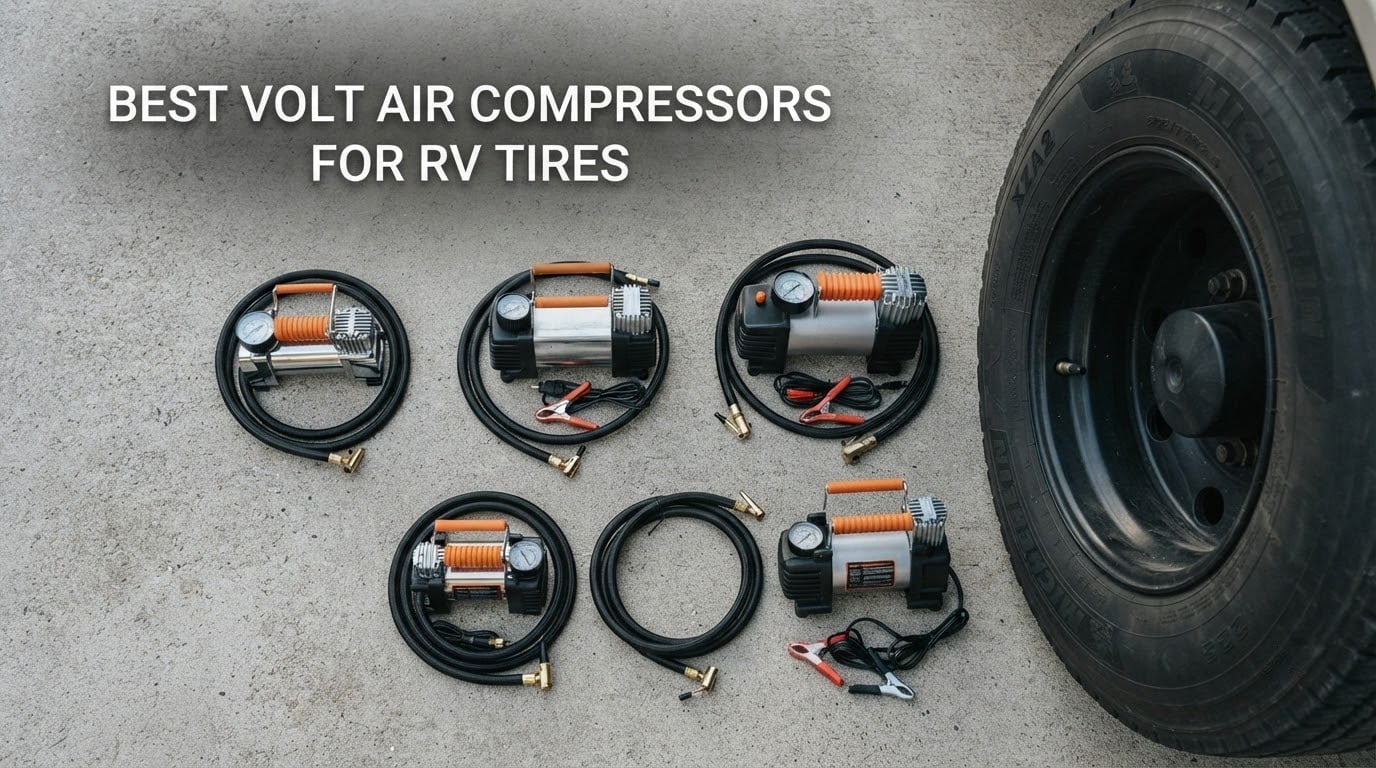
RV tires are not car tires. A 22.5-inch tire on a Class C motorhome holds far more air at far more pressure than anything rolling on four cylinders, and a blowout thirty miles from the nearest service station turns into a tow bill and a ruined trip. Choosing the best 12 volt air compressors for rv tires comes down to three things: sustained airflow at pressure, a duty cycle you can live with, and enough hose to reach the farthest valve without dragging the pump down the road.
We spent six weeks comparing ten portable compressors, reading owner reports, and working through what each spec sheet number actually means once the tire is at 100 PSI instead of zero. Here is the shortlist before the detail.
VIAIR 450P-RV – best for Class A coaches and 5th wheels, with 150 PSI, 100% duty cycle at 100 PSI and 60 ft of hose.
VIAIR 300P – best all-round truck and SUV kit, 2.30 CFM free flow at a 33% duty cycle.
VIAIR 88P – best value for routine top-offs, 4.8 lb and over 8000 reviews behind it.
GSPSCN 202 – best budget dual-cylinder unit with a metal cylinder and rod.
ALL-TOP ATACR180L – best for heavy trucks and off-road use, 26 ft hose and a metal shell.
ALL-TOP ATACR300 – best for fast fills, dual cylinders rated 12.35 CFM.
UUP SS02006 – best for quiet night-time roadside use, rated at 70 dB.
OlarHike TIX7V101 – best cordless option with a 12000mAh internal battery.
VEVOR YD-127D – best for maximum airflow per dollar, 10.6 CFM at 75 A.
Kohree KR4133 – best for pressure control at the valve, with a paddle-pull inflator.
One safety note before anything else. The maximum pressure molded into a tire sidewall is a ceiling, never a target. Inflate to the pressure on the driver’s door placard or, more accurately, to the cold inflation pressure for your actual axle weight on the tire’s load table.
If you also tow off-road or run airing down over sand, our guide to the best portable air compressors for off-road tires covers the larger, higher-flow end of the market. And if the RV is parked at a site with shore power, a pancake compressor for DIYers will always out-pump a portable 12V unit.
Top 3 Best 12 Volt Air Compressors for RV Tires
The 450P-RV is the only unit here rated for continuous running at 100 PSI, and its two 30 ft coiled hoses mean one placement can serve a whole 40 ft diesel coach. The 300P is the value champion for trucks and SUVs, with the highest single-cylinder airflow figure in this group. The 88P is the one most RV owners keep in a compartment as a backup, because it weighs under 5 lb and stows anywhere.
Best 12 Volt Air Compressors for RV Tires in 2026
| Product | Specifications | Action |
|---|---|---|
 VIAIR 450P-RV Automatic 12V Kit VIAIR 450P-RV Automatic 12V Kit |
|
Check Latest Price |
 VIAIR 300P 12V Portable Inflator VIAIR 300P 12V Portable Inflator |
|
Check Latest Price |
 VIAIR 88P 12V Portable Kit VIAIR 88P 12V Portable Kit |
|
Check Latest Price |
 GSPSCN 12V Double Cylinder Pump GSPSCN 12V Double Cylinder Pump |
|
Check Latest Price |
 ALL-TOP 12V 7.06 CFM Inflator ALL-TOP 12V 7.06 CFM Inflator |
|
Check Latest Price |
 ALL-TOP Dual Cylinder 12.35 CFM ALL-TOP Dual Cylinder 12.35 CFM |
|
Check Latest Price |
 UUP 12V Dual Cylinder Inflator UUP 12V Dual Cylinder Inflator |
|
Check Latest Price |
 OlarHike 12000mAh Cordless Inflator OlarHike 12000mAh Cordless Inflator |
|
Check Latest Price |
 VEVOR 10.6 CFM Dual Cylinder Pump VEVOR 10.6 CFM Dual Cylinder Pump |
|
Check Latest Price |
 Kohree 12V Dual Cylinder Inflator Kohree 12V Dual Cylinder Inflator |
|
Check Latest Price |
Every product below draws real amps from your RV. The 300P pulls up to 30 A, the VEVOR is rated at 75 A, and even the small 88P asks for 20 A. Plan on running the engine during any fill longer than a couple of minutes.
1. VIAIR 450P-RV Automatic 12V Kit – Best for Class A Coaches and 5th Wheels
This is the compressor we would put in a 40 ft diesel pusher, and the reason is the 100% duty cycle rating at 100 PSI. Most portable pumps are rated 33% at 100 PSI, which means roughly 20 minutes of running followed by a long rest. The 450P-RV is built to keep going while the tank fills and then shut down on its own sensor.
Owners consistently report it handling motorhome and dually truck tires at 110 PSI and above without the drama that flattens cheaper pumps. One reviewer describes filling a 275/60R20 from 15 to 40 PSI in about two minutes, which is roughly what a service-station air hose would manage.
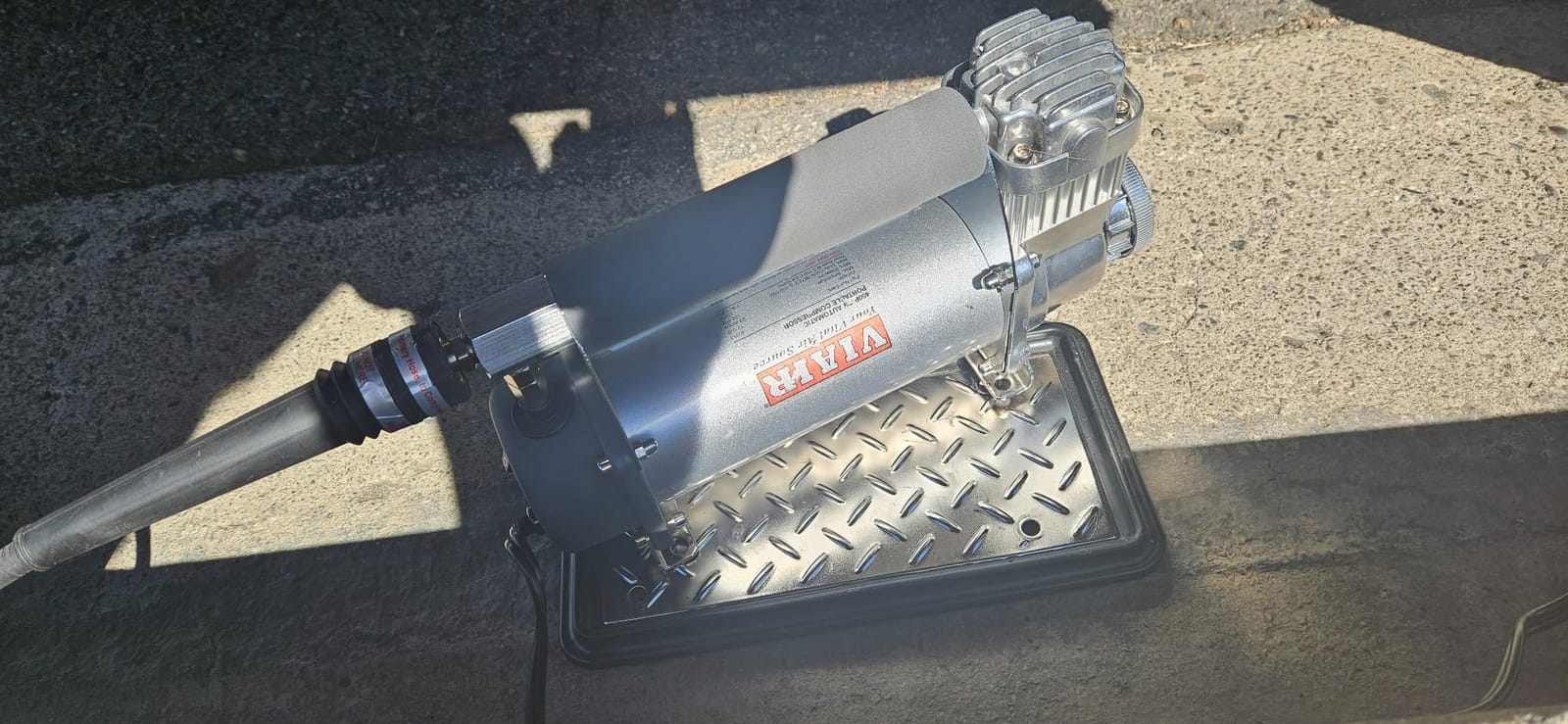
The physical design is what separates it from everything else here. Two 30 ft coiled hoses give 60 ft of reach from a single placement, and the included sand tray with vibration isolators keeps it from walking across the gravel while it runs. The inflation gun has an inline 150 PSI gauge and a deflation button, so you can bleed a tire back down without swapping tools.
At 13.1 lb it is a two-person lift into a rear storage bay, and the deluxe carry bag is bulky. The gauge is the weak point: reviewers report it reading several psi high at low pressures and running to 170 at the top of the scale, so a cheap separate tire gauge is worth carrying.
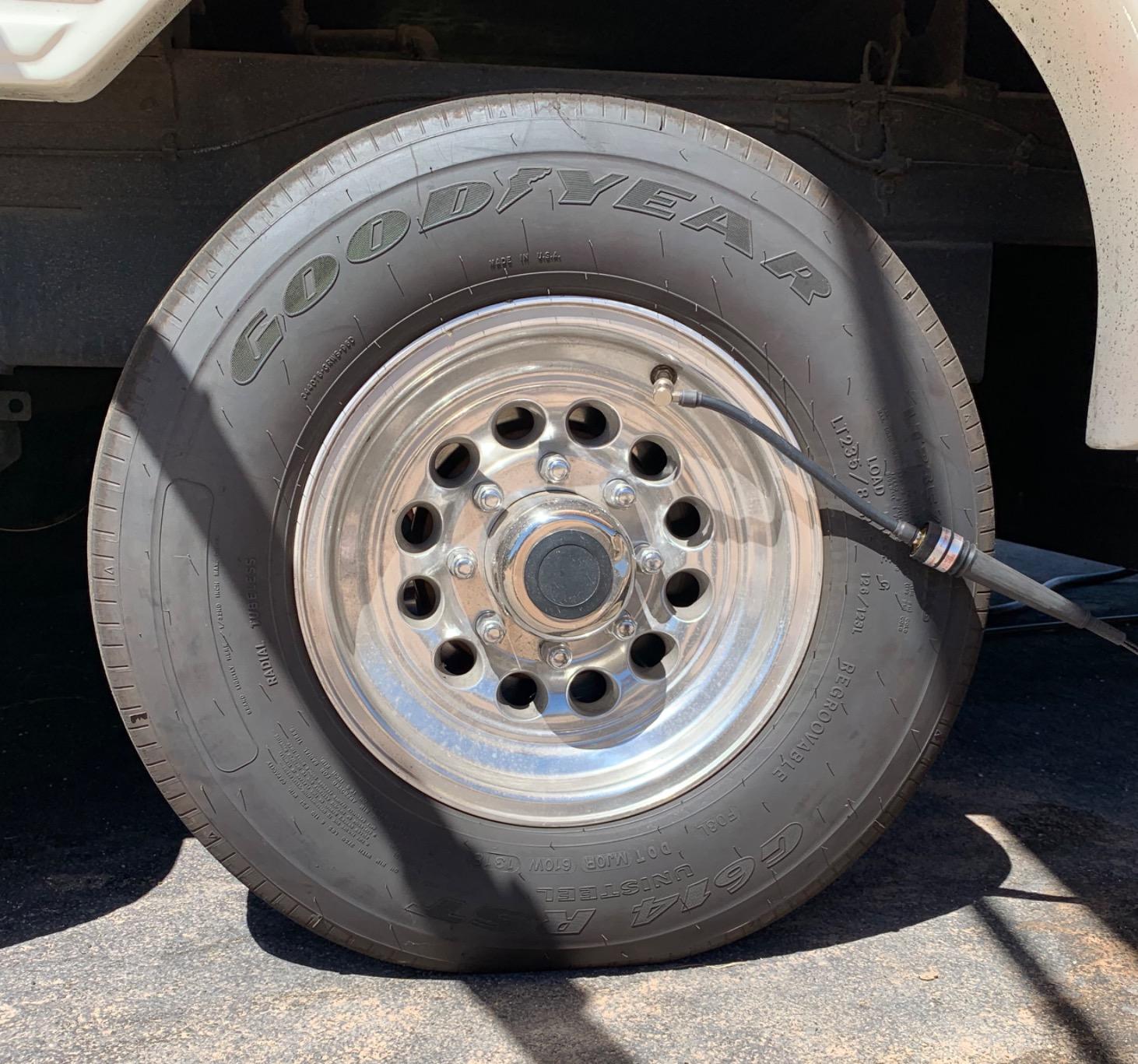
Who the VIAIR 450P-RV suits
It suits owners of Class A motorhomes, 5th wheels and dual-axle pickups whose tires run above 100 PSI. The automatic pressure cut-off sensor means you can start a fill on the far side of the coach and let it cycle without walking back to switch it off, which is the single biggest quality-of-life difference in this group.
It also suits anyone with dual rear wheels. Sixty feet of hose means the inner dually valve is reachable from one setup rather than from two.
Who the VIAIR 450P-RV does not suit
It does not suit light users. If your tires only ever need three or four psi after a drive, this is far more pump than the job requires, and the metal housing gets hot enough to notice during extended filling. Reviewers mention that regularly.
It also does not suit owners who want to run it off shore power. It is battery-powered only, so it needs the RV’s engine running or a charger feeding the house bank.
2. VIAIR 300P 12V Portable Inflator – Best All-Round Truck and SUV Kit
- Highest single-cylinder airflow in this group
- 150 PSI ceiling
- 8.7 lb aluminum body
- Dual-compartment carry bag
- Simple clamp-and-connect setup
- 33 percent duty cycle means long cool-downs
- Inline 100 PSI gauge is the only reference
- Engine must run during use
This is the compressor most owners mean when they say a portable 12V pump, and the 2498 reviews at 4.7 stars reflect that. The 2.30 CFM free-flow figure is the highest single-cylinder number in this roundup, which means it moves noticeably more air than the VIAIR units above and below it in the line-up.
Where it fits is tires up to 33 inches in overall diameter. That covers most Class B vans, travel trailers, pickups and SUVs, plus the front axle of many Class C motorhomes on lighter trims.
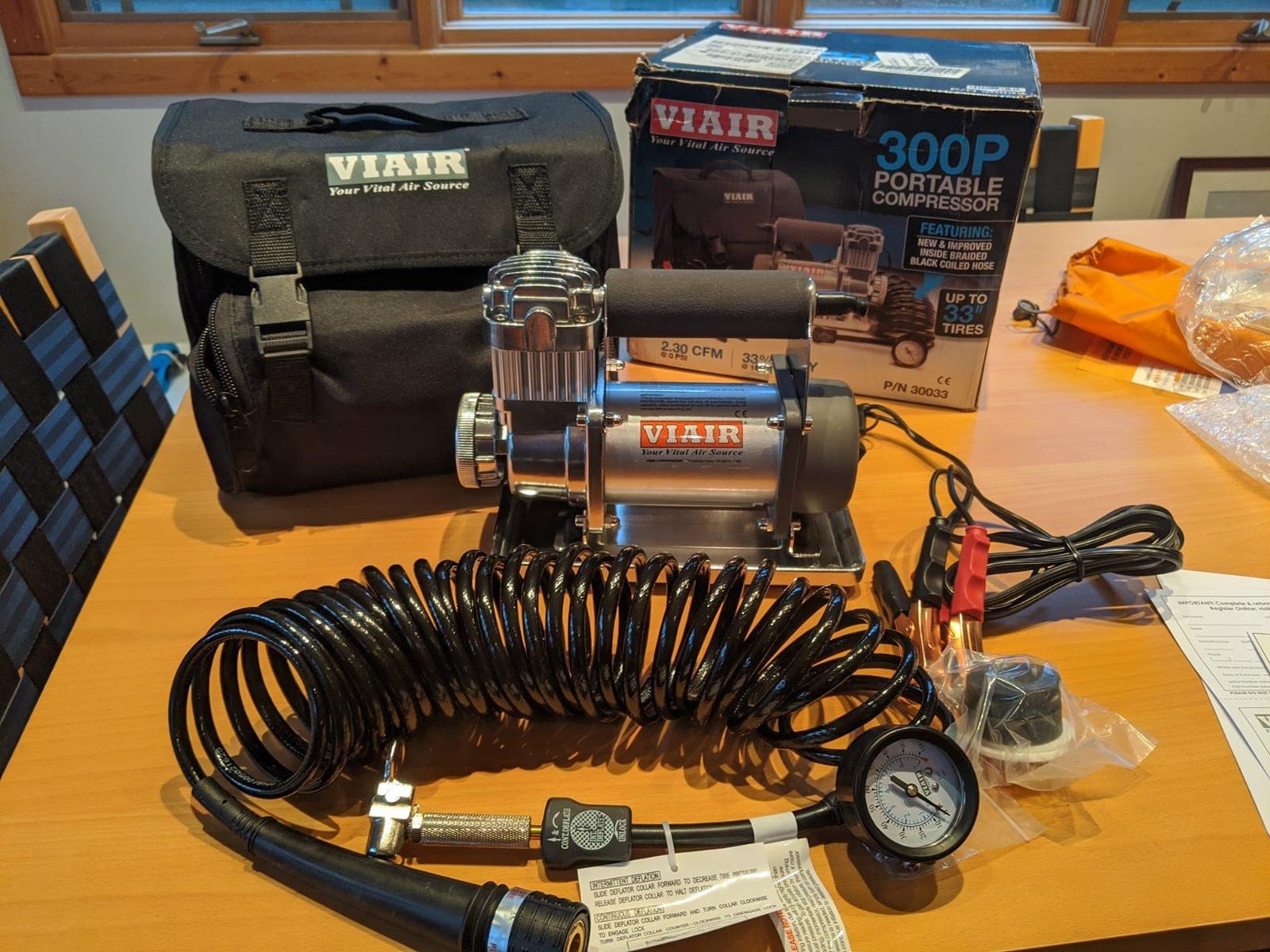
The honest limitation is the 33% duty cycle. In plain terms the pump runs about 20 minutes and then wants a rest, and the rest period lengthens on a hot day. For topping off four tires by four or five psi, you will never notice it. For bringing eight tires up from a quarter pressure after a long highway run, you will be counting minutes.
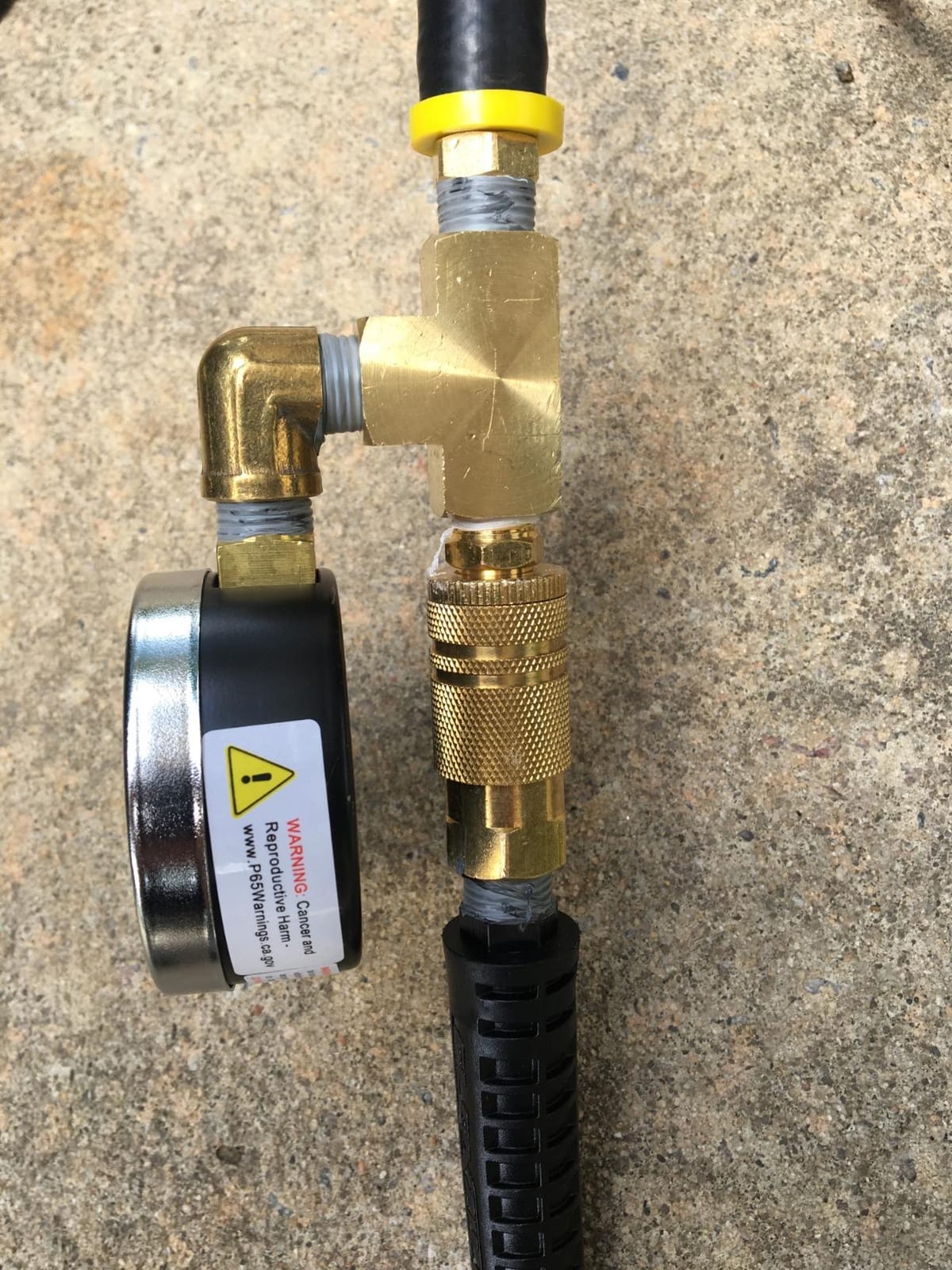
The 25 ft 5-in-1 hose with an inline 100 PSI gauge is long enough to reach around most pickups and SUVs from a single position. The inline gauge tops out at 100 PSI, which is a real constraint on anything that needs more, and the instructions are explicit that the engine must be running during use to avoid draining the start battery.
Who the VIAIR 300P suits
It suits travel trailer and pop-up owners, Class B van campers, and anyone whose tires top out in the 50 to 80 PSI range. The airflow figure means it holds a reasonable pace without generating enough heat to need a rest between tires.
It also suits owners who want one kit that does everything except high-pressure coach work. At 8.7 lb it is easy to move from tire to tire, and the dual-compartment bag keeps the gun and clamps together.
Who the VIAIR 300P does not suit
It does not suit Class A coaches or 5th wheels running 22.5-inch tires at 120 to 130 PSI. The 100 PSI inline gauge cannot even read the target pressure, and the 33% duty cycle turns a full fill into a series of rest stops.
Reviewers also flag that a 25 ft hose is tight on longer rigs. If your farthest valve is more than about 25 ft from where the battery sits, plan on repositioning the unit rather than stretching the hose.
3. VIAIR 88P 12V Portable Kit – Best Value for Routine Top-Offs
- Over 8000 reviews at 4.7 stars
- Only 4.8 lb so it stows anywhere
- LED work light for night roadside use
- Solid brass twist-on chuck
- Maintenance-free gearless motor
- 120 PSI ceiling is low for coach tires
- 25-minute duty cycle is the shortest here
- 16 ft hose is the shortest of the VIAIR units
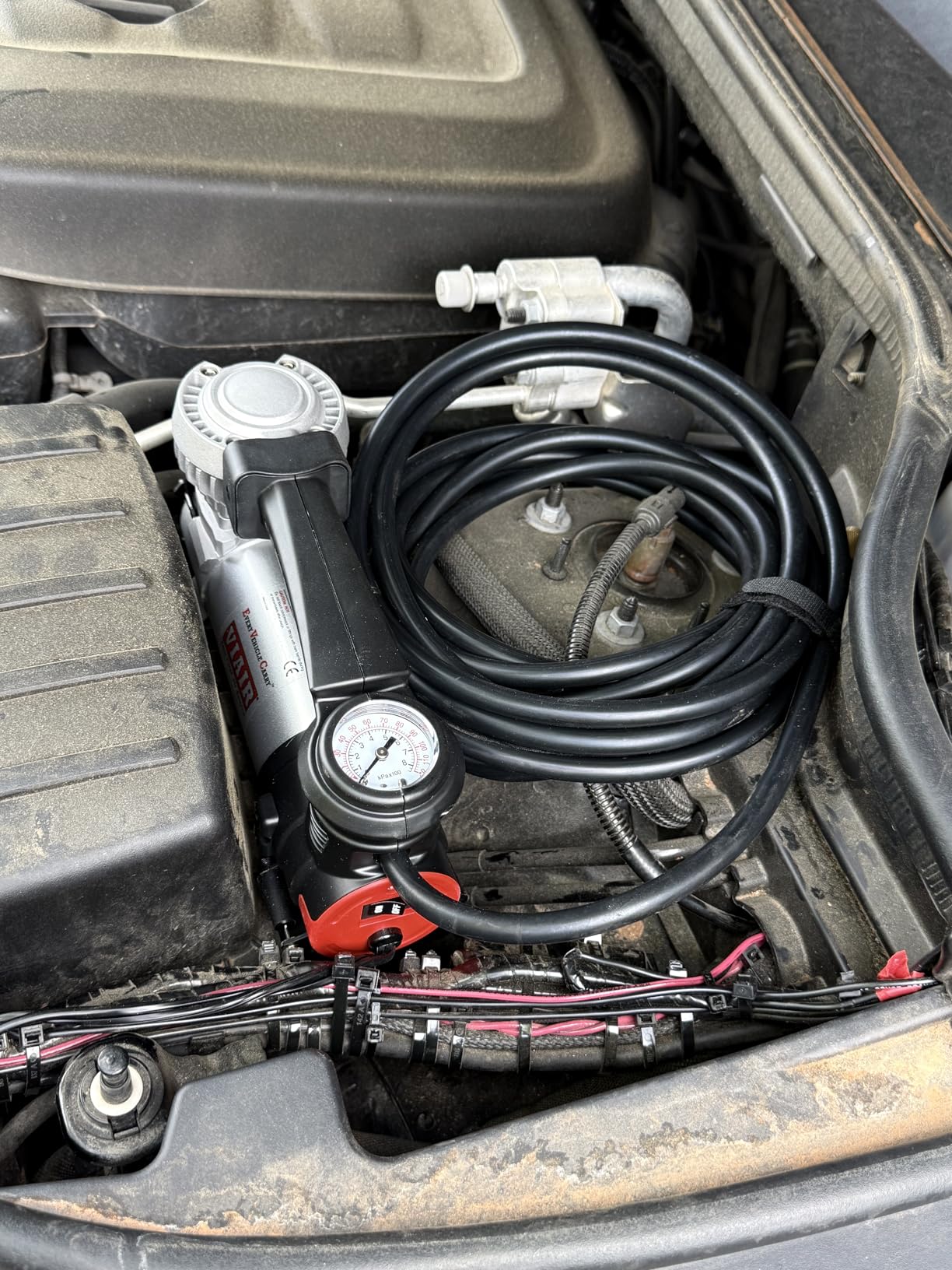
The 8094 reviews make this the most proven compressor in the entire roundup, and at 4.8 lb it is by far the easiest to move around a crowded storage bay. If your RV’s tire pressures drift a few psi over a long drive, this is the pump you want living in a compartment permanently.
It is also the one reviewers recommend for bikes, motorcycles and air mattresses, because the solid brass twist-on chuck is durable and three extra inflation tips plus a Presta adapter come in the box. The LED work light genuinely helps on a dark shoulder.
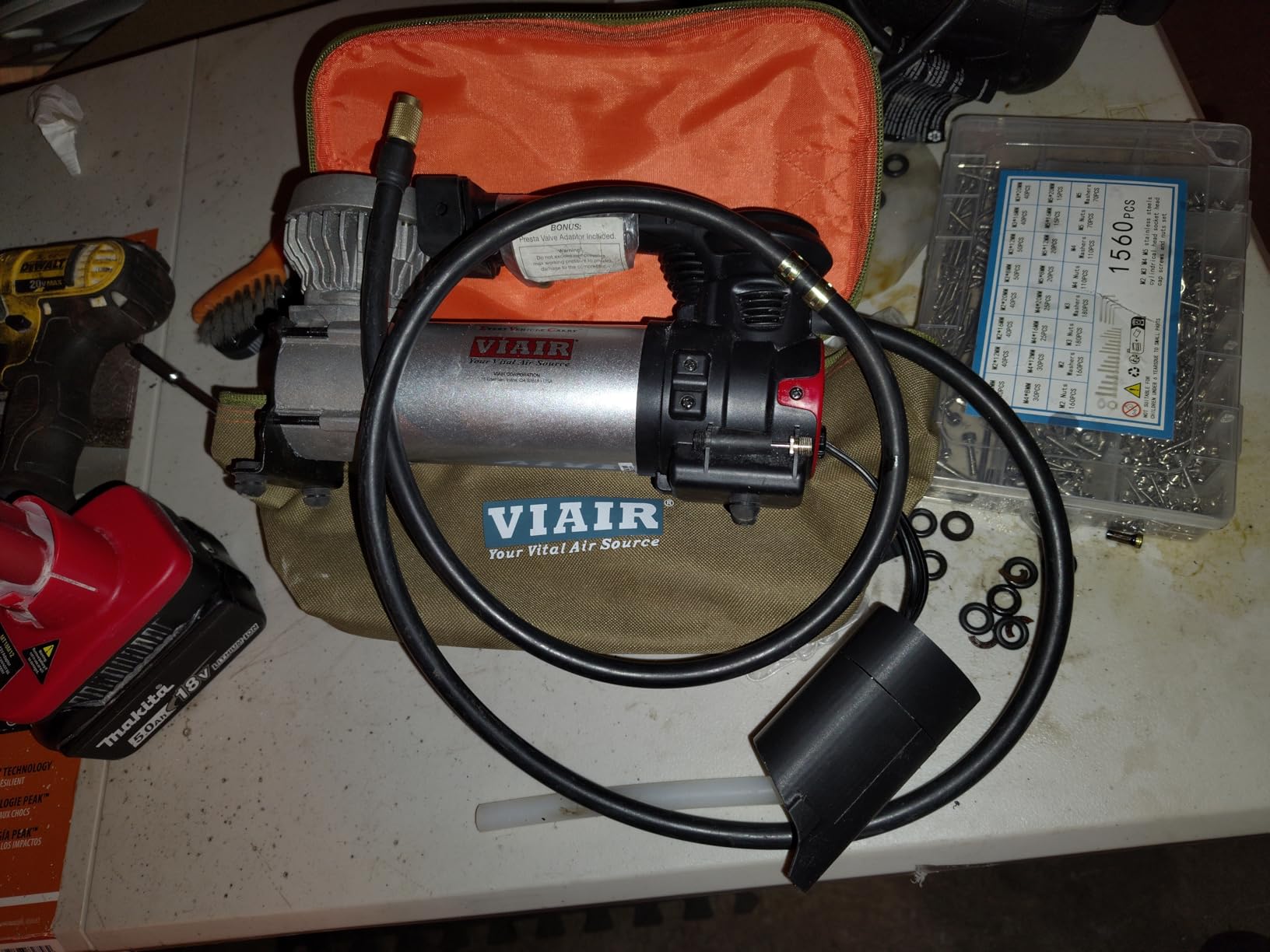
What it cannot do is high-pressure work. The 120 PSI ceiling is genuinely limiting: a Class A motorhome tire at 125 PSI cold is above what this pump can reach, and 1.47 CFM means large-volume fills take real patience. Reviewers are consistent about that limitation.
The duty cycle is 25 minutes at 30 PSI, which is the shortest runtime spec among the VIAIR units listed here. That is fine for a top-off and fine for a car tire, but it is not a full-flat recovery plan.
Who the VIAIR 88P suits
It suits Class B van campers, travel trailers and Class C owners running tires in the 50 to 90 PSI range who mainly want a pre-trip check and a monthly top-off tool. Owners repeatedly describe using it exactly that way and being very happy.
It also suits anyone who values weight. At 4.8 lb and 9.8 by 3.2 by 5.6 inches, it disappears into a compartment that cannot take a 13 lb unit.
Who the VIAIR 88P does not suit
It does not suit anyone who needs to inflate from empty. One owner on an RV forum described spending two hours bringing a fully flat front tire back up with a small pump, and that scenario is exactly what this class of unit handles badly.
It also does not suit dual-axle setups where the inner rear valve is more than 16 ft away. The 16 ft hose is the shortest of the VIAIR models here, and you will be carrying the pump rather than the tire.
4. GSPSCN 12V Double Cylinder Pump – Best Budget Dual-Cylinder Unit
GSPSCN 12V Heavy Duty Tire Inflator Metal Portable Air Compressor Pump
- Double cylinder design at a low price
- Metal cylinder motor and connecting rod
- Quiet 70 dB running
- Replacement fuse and adapters in the box
- Airflow is a fraction of the 350 L/min dual cylinder pumps
- 11.5 ft hose and cord are short
- No pressure gauge on the hose in this configuration
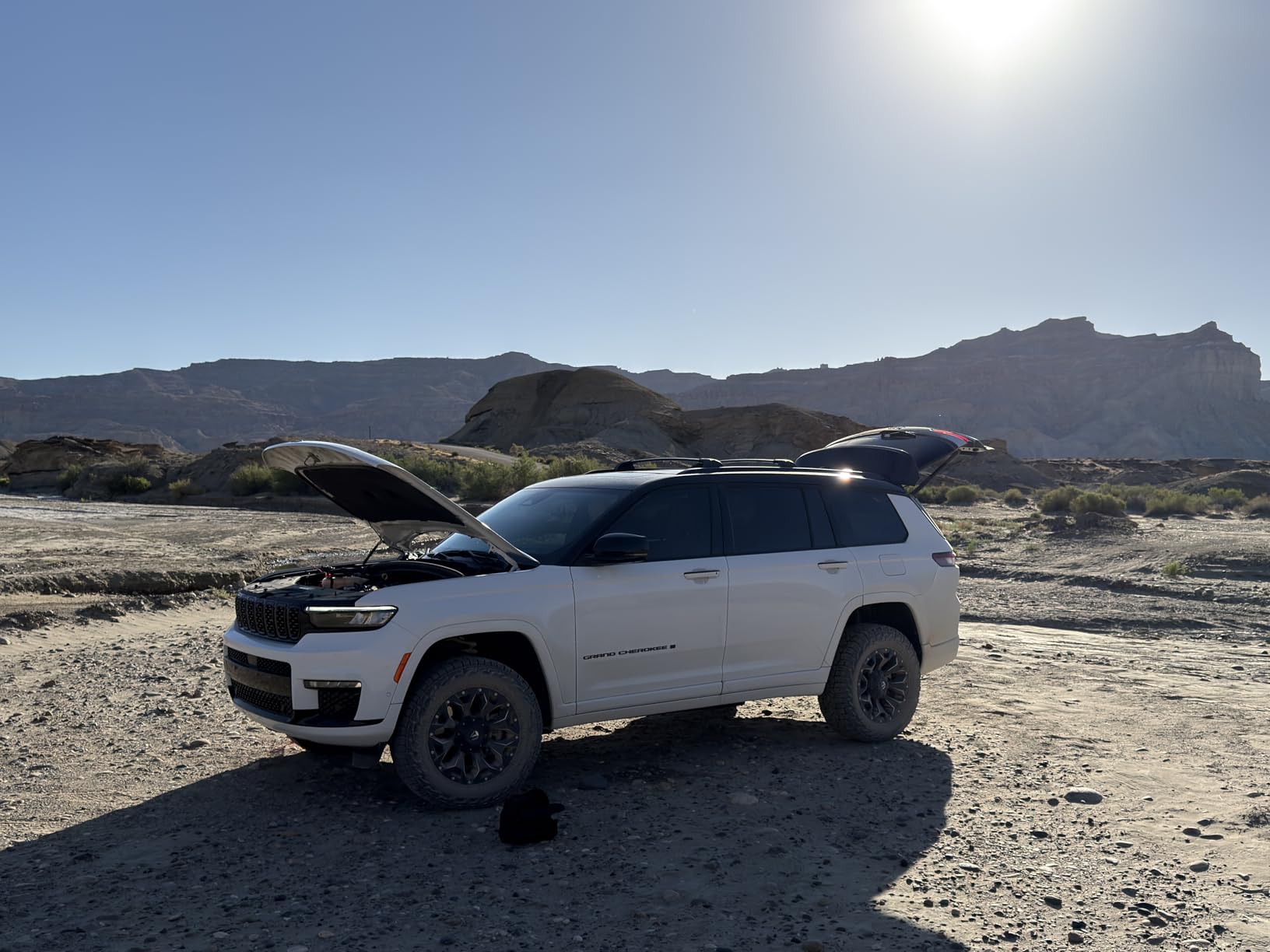
With 11679 reviews this is the highest-volume listing in the group, and the reason is straightforward: most dual-cylinder pumps cost several times more. The direct-drive double-cylinder design pushes 70 L/min and reaches 150 PSI, which covers the pressure range most RV tires need.
The build is the differentiator at this price. The cylinder, motor and connecting rod are metal rather than the plastic used in most budget pumps, and that is the part that fails on a hot afternoon. Reviewers repeatedly single out the material upgrade as the reason their units keep working.
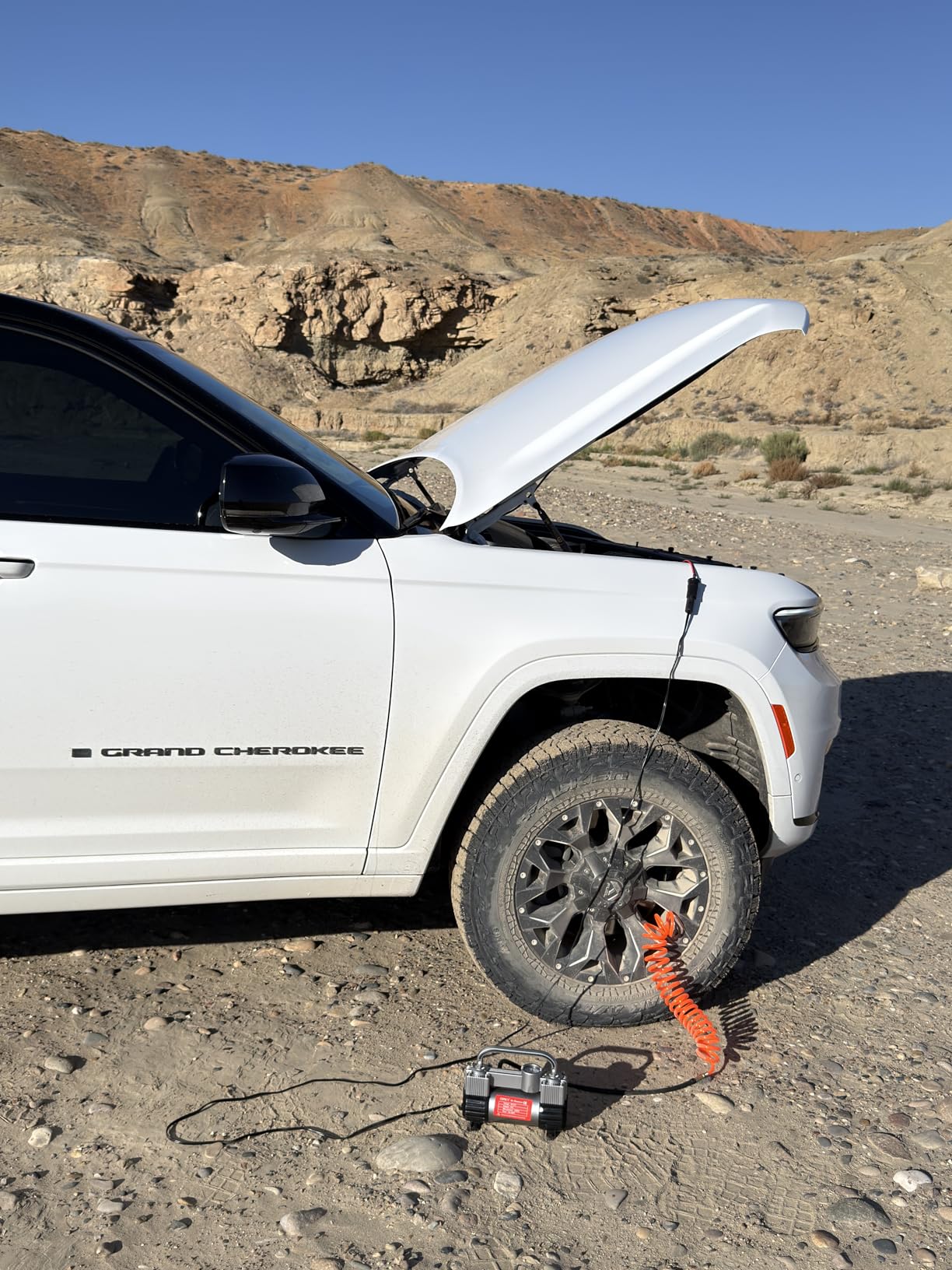
The catch is airflow. Seventy litres per minute is roughly a fifth of what the 350 L/min dual-cylinder models in this roundup deliver, so anything larger than a light-truck tire will be slow. The manufacturer claims a 200/70R18 goes from 0 to 35 PSI in about a minute, which is a car tire rather than an RV tire.
The 11.5 ft extension hose and matching 11.5 ft power cord are short for anything larger than a Class B van. In this configuration there is no pressure gauge on the hose, so you are reading the tire’s own gauge or carrying your own.
Who the GSPSCN 202 suits
It suits owners who want dual-cylinder metal construction without spending mid-tier money, and reviewers confirm it handles car and light truck tires well. The 70 dB running level is also among the quietest here, which matters if you are inflating at a campground at night.
It also suits owners who inflate more than tires. Three adapters and an Oxford storage bag come in the box, so bikes, kayaks and air mattresses are covered.
Who the GSPSCN 202 does not suit
It does not suit Class A coach owners. There is no scenario in which 70 L/min keeps up with 22.5-inch tires at 120 PSI, and the short hose means you would be carrying it across a gravel pad for every tire.
Reviewers also caution against taking the manufacturer speed claims at face value. Marketers’ multipliers are measured on small car tires and do not translate to RV rubber.
5. ALL-TOP ATACR180L 12V Inflator – Best for Heavy Trucks and Off-Road Use
ALL-TOP Air Compressor Kit, 12V Portable Inflator 7.06CFM, Offroad Air Compressor for Truck ,Air Pump for Car Heavy Duty, Max 150PSI for SUV 4×4 Vehicle RV Tire
- Hollow metal shell sheds heat well
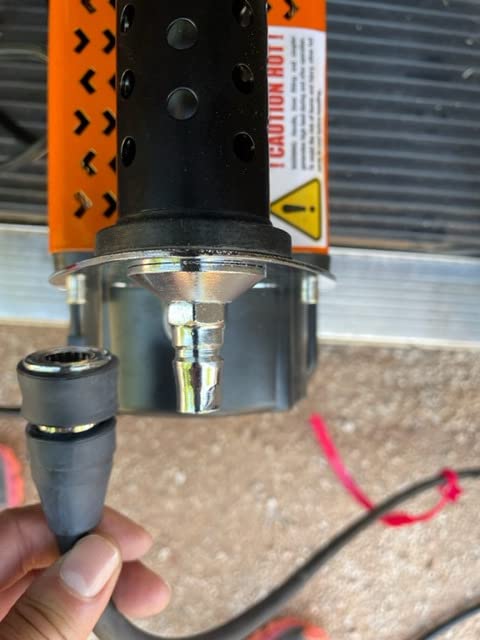
- 26 ft rubber hose for real reach
- Auto thermal cut-off and safety valve
- Two-year warranty included
- Single cylinder airflow of 7.06 CFM
- 16 lb is heavy for a portable unit
- No automatic pressure cut-off to monitor
The thermal design is what we like here. A hollow metal shell with an aluminium cylinder moves heat away from the motor far better than a plastic housing, and on a truck or off-road rig where the pump lives in the bed, that difference decides whether it survives the season. Our off-road compressor guide covers the same thermal principle in more detail.
At 7.06 CFM it sits in the middle of this roundup on airflow, which makes it a genuinely useful step up from single-cylinder pumps without the 24 lb weight of the dual-cylinder flagships. The 26 ft rubber hose is among the longest here.
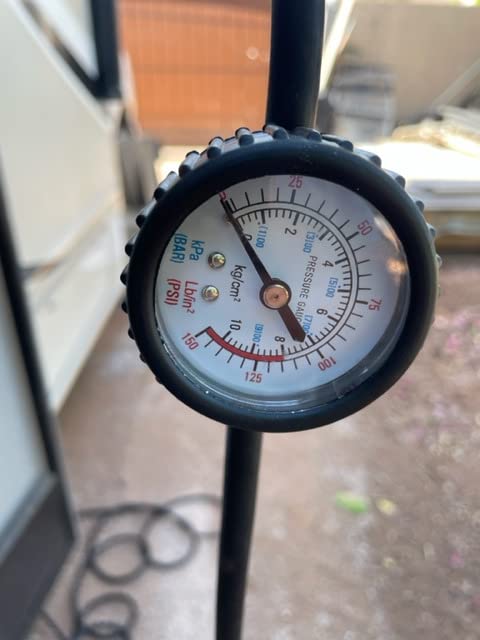
The 150 PSI ceiling is right for truck and trailer tires, and the auto thermal cut-off switch plus safety valve protect the motor during an overloaded fill. Four anti-vibrate rubber feet keep it steady on uneven ground, and the sand-proof power switch is a thoughtful touch for beach work.
What is missing is automation. There is no automatic pressure cut-off, so someone has to watch the gauge and switch the unit off between tires, and owners report the hose gauge is not dependable. A separate digital gauge is close to essential here.
Who the ALL-TOP ATACR180L suits
It suits pickup and trailer owners who air down for off-road runs and need to reinflate on sand, where airflow and cooling beat portability. The 26 ft hose means you can set it on the tailgate and reach both rear tires.
It also suits anyone who values the warranty. The two-year, 24-month coverage is longer than most competitors in this class offer.
Who the ALL-TOP ATACR180L does not suit
It does not suit owners who need to move it often. At 16 lb it is a two-hand lift, and the 13 by 6 by 9 inch footprint takes real space in a Class B van compartment.
It also does not suit anyone who wants set-and-forget inflation. Without an auto cut-off, filling six to eight tires means walking back to the unit each time.
6. ALL-TOP ATACR300 Dual Cylinder 12.35 CFM – Best for Fast High-Flow Fills
ALL-TOP Air Compressor Kit, Dual Cylinder 12V Portable Inflator 12.35 ft³/Min, Offroad Air Compressor Pump for Truck Tires, Heavy Duty Max 150 PSI for 4×4 Vehicle & RV
- 12.35 CFM fills 37 to 40 inch off-road tires in one or two minutes
- Did not overheat filling four tires on a 95 degree day
- Over-current and thermal cut-off protection
- Two-year warranty confirmed by long-term owners
- Built-in gauge is not accurate
- No automatic shut-off between tires
- 6.5 ft power cord reaches only the near battery
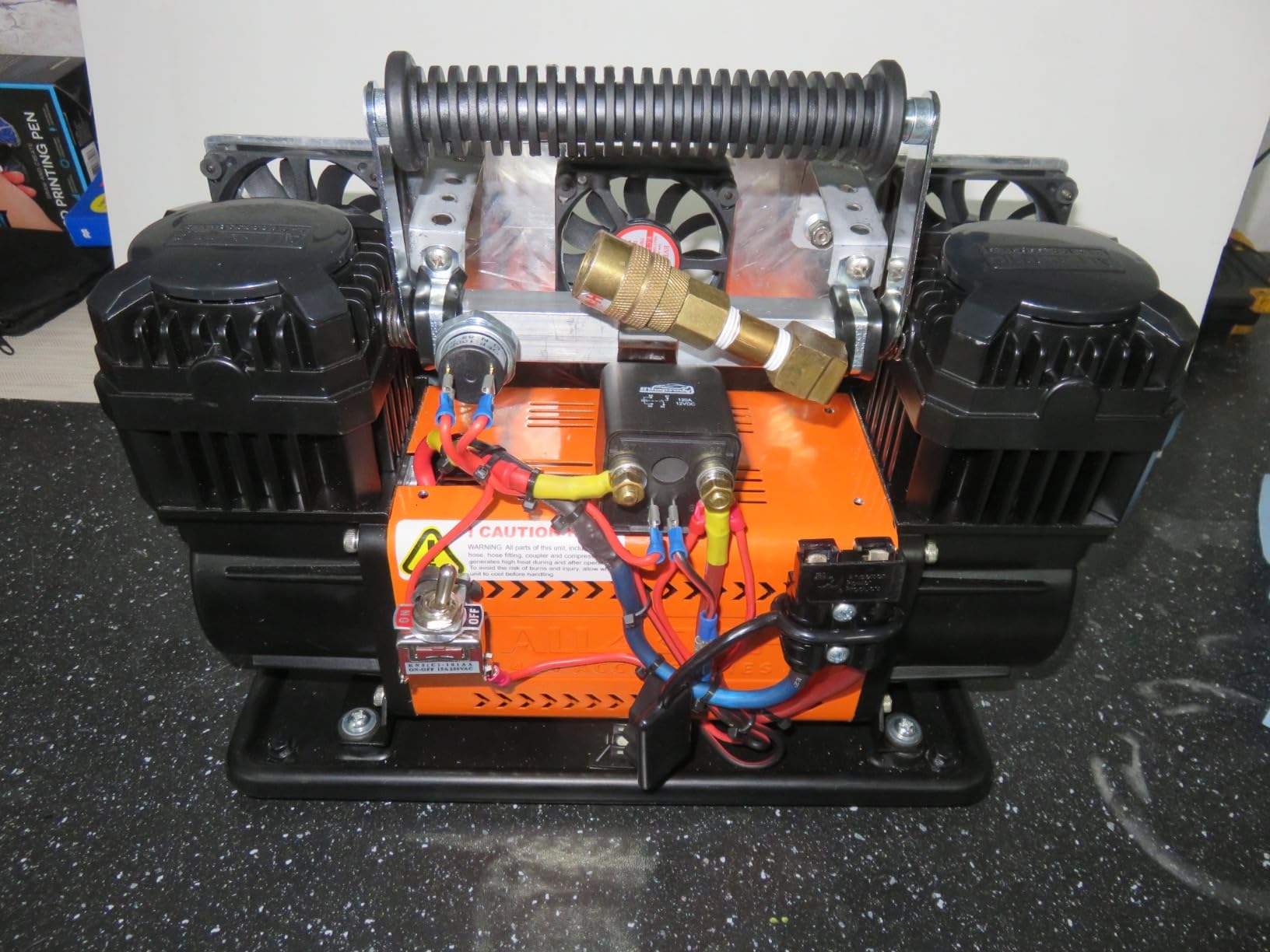
If your bottleneck is fill speed, this is the pump to look at. The dual aluminium cylinders deliver 12.35 CFM at 150 PSI, and owners report filling 37 to 40 inch off-road tires from 26 to 38 PSI in about 90 seconds, plus four tires on a 95 degree day without the motor cooking.
That last report matters more than the speed claim. Duty cycle is what kills portable pumps in summer heat, and a dual-cylinder unit with a hollow metal shell has the thermal headroom to finish the job rather than shut down halfway through.
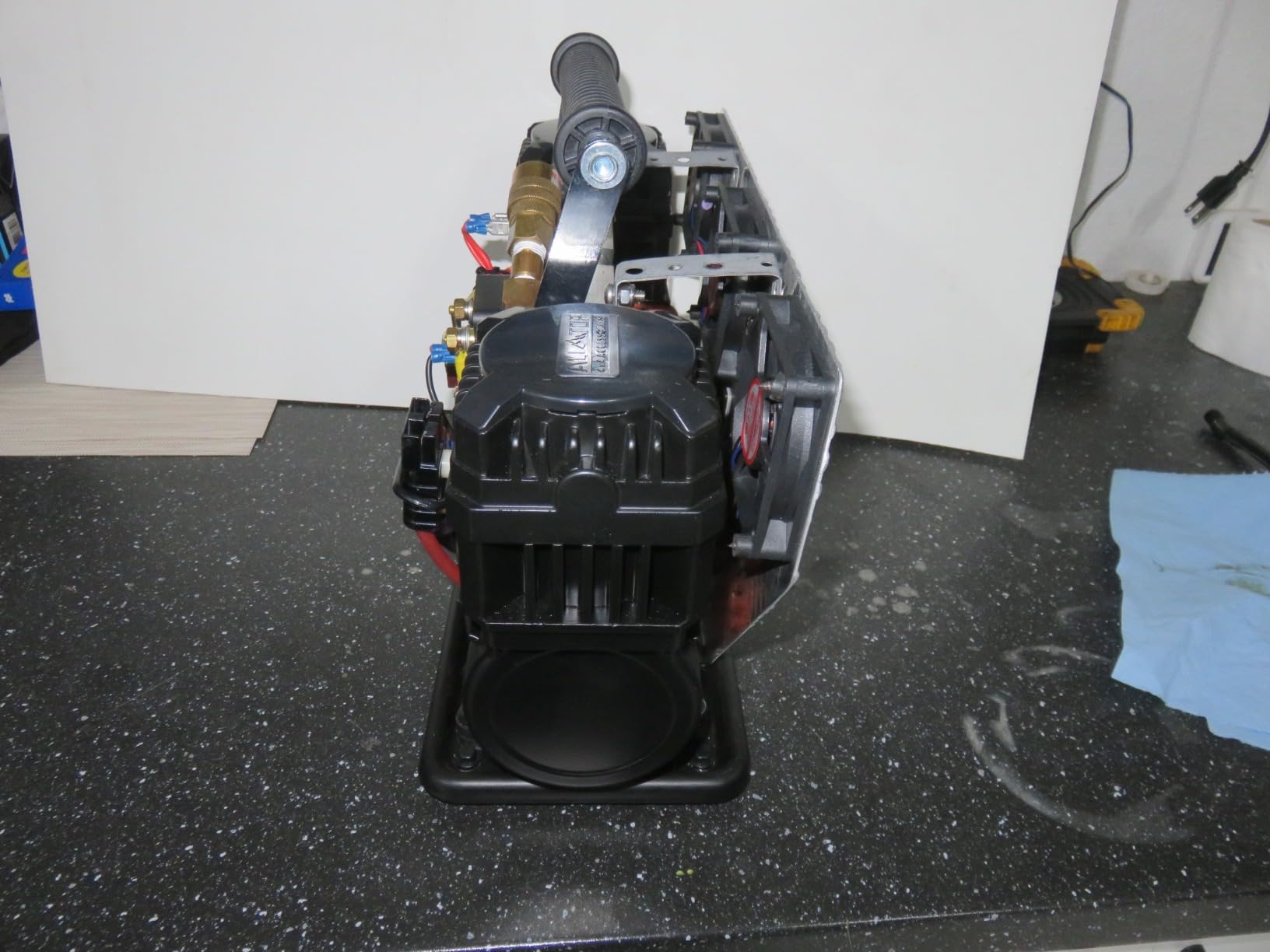
The weaknesses are specific and fixable. The built-in pressure gauge is not accurate; one owner overshot by roughly 20 psi and had to bleed air back out, and most long-term users carry a separate digital gauge or fit a pressure switch. The hose gauge also sits at one end of the hose where you cannot read it while the pump runs.
There is no automatic shut-off either, so you return to the unit between tires. At 24 lb it is heavy, and the non-standard hose fitting means third-party gauges and inflators will not connect directly.
Who the ALL-TOP ATACR300 suits
It suits owners of dually trucks, fifth wheels and off-road rigs where volume matters more than portability. Owners comparing it against a VIAIR single-cylinder unit report faster fill times on large tires at a similar or lower cost.
It also suits anyone who inflates a lot of high-volume rubber regularly, because 12.35 CFM turns a chore into a single tire’s worth of waiting.
Who the ALL-TOP ATACR300 does not suit
It does not suit small rigs or anyone storing a pump in a tight compartment. Twenty-four pounds is a deliberate carry from the vehicle to the tire every time.
It also does not suit owners who want accurate pressure readings out of the box. Budget a separate gauge; the accessory ecosystem on this non-standard fitting is thin.
7. UUP SS02006 12V Dual Cylinder Inflator – Best for Quiet Night-Time Use
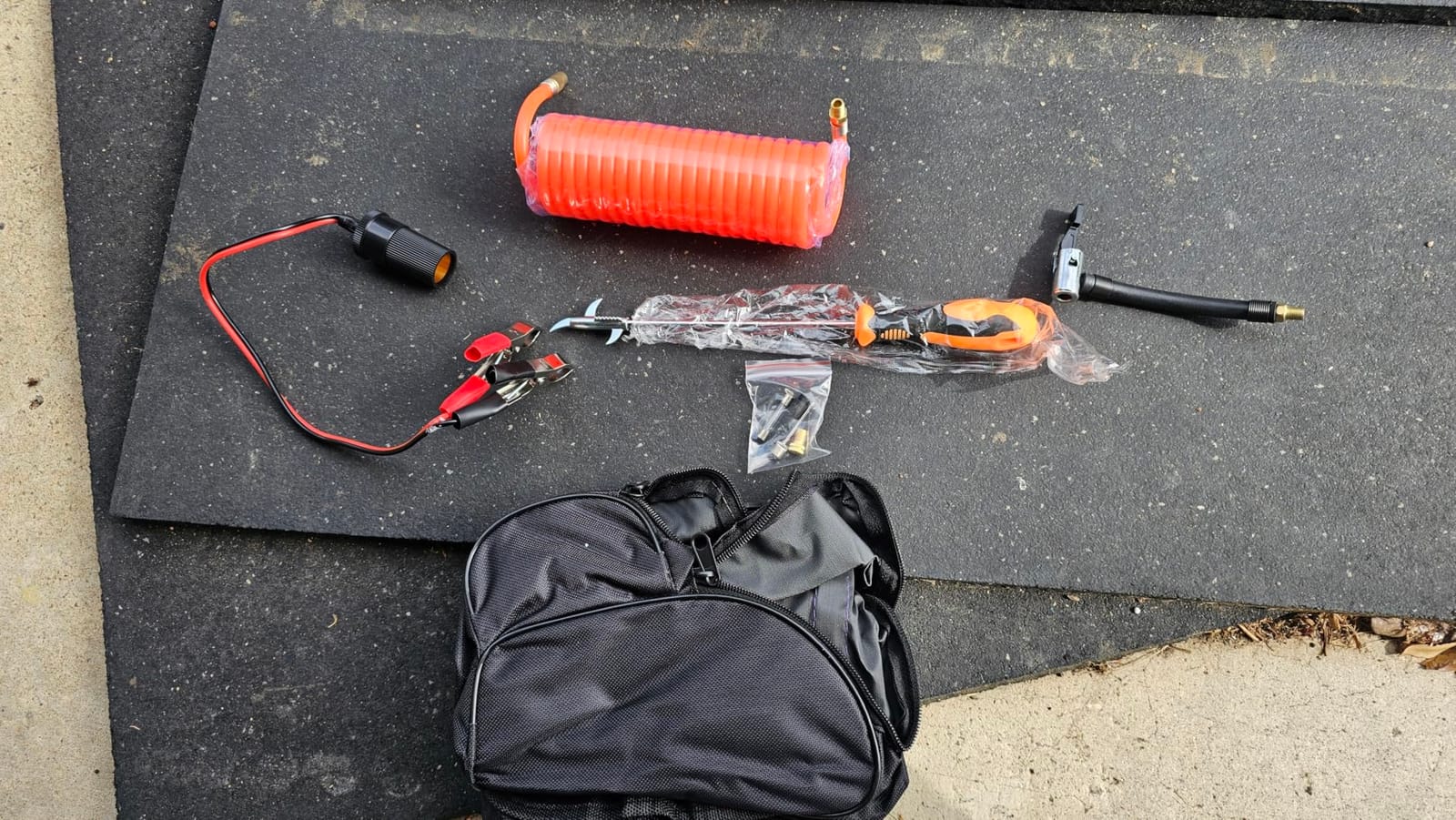
UUP Portable 12V Air Compressor, 150 PSI Tire Inflator with Dual Cylinders
- Quiet 70 dB operation suits campsites
- Emergency LED light for dark shoulders
- Includes valve extender and quick connector
- Two-year manufacturer warranty
- 70 L/min is slow on large RV tires
- Metal limited to the cylinder assembly
- Not built for sustained high-PSI work
This is the one to pick if inflating at 10 pm at a quiet campground matters more than raw speed. The 70 dB rating is at the quiet end of this roundup, and the emergency LED lighting handles the dark side of a highway shoulder without a separate torch.
At 150 PSI with a double-cylinder metal pump, it covers the pressure range most RV tires need. The included valve extender and quick connector add real reach for inner dual-wheel valves, which is a pain point owners mention often.
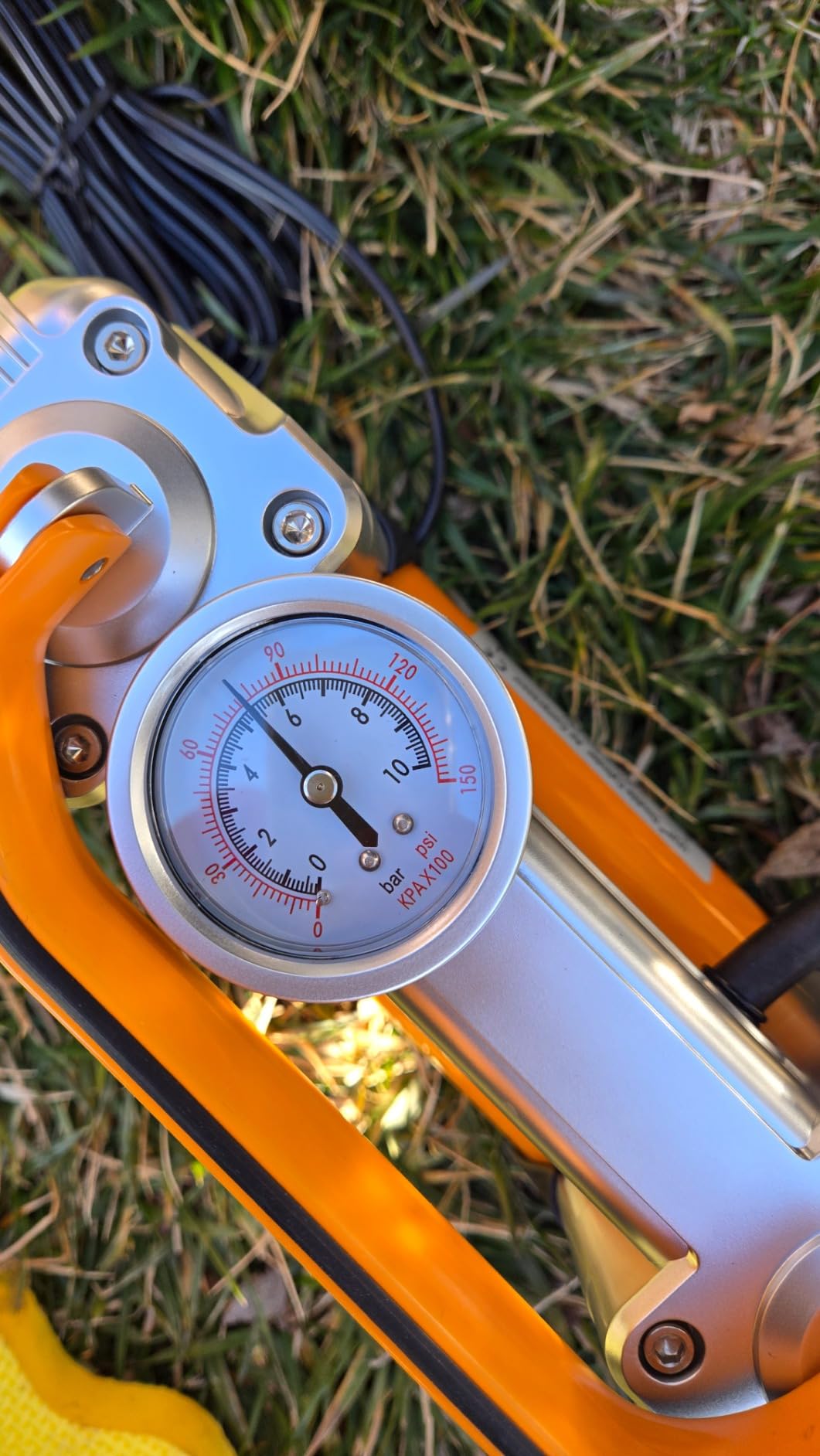
Airflow is the compromise. At 70 L/min it sits alongside the GSPSCN at the bottom of the group, so a 22.5-inch tire takes a while. The manufacturer claims a 200/70R18 goes from 0 to 40 PSI in about three minutes, which again is a car tire figure.
The metal construction is limited to the cylinder assembly, with alloy and ABS elsewhere. Some buyers also find the accessory bundle adds bulk to the storage bag rather than saving trips.
Who the UUP SS02006 suits
It suits Class B and travel trailer owners who mostly top off tires in the 35 to 65 PSI range, and campers who care about noise. The quick connector and valve extender make dual-wheel access noticeably easier.
It also suits anyone who wants one pump for tires plus inflatable gear, since three nozzle adapters and the storage bag come in the box.
Who the UUP SS02006 does not suit
It does not suit owners of 22.5-inch motorhome tires or dually trucks. At 70 L/min the fill times are long enough that most owners move on to a higher-flow pump.
It also does not suit someone who inflates after dark on a highway shoulder regularly, where 70 L/min is a long time to sit in a traffic lane.
8. OlarHike TIX7V101 Cordless Inflator – Best Cordless Option
OlarHike 12000mAh Heavy Duty Tire Inflator Portable Air Compressor
- Only cordless option with a 12000mAh battery
- Auto-stop and memory remove supervision
- 3.2 lb and 2.5 inches thick
- Twist-Lock connection is faster than screw-on
- 50 L/min is among the lowest airflow figures
- 31.5 inch hoses limit reach
- 78 dB is louder than it looks on paper
This is the only unit here with no cord to the vehicle at all. The 12000mAh internal battery is rated for up to 44 tire fills, and the 45W PD output means you can charge a phone from the same box. For anyone who already owns a tool battery ecosystem, that freedom is the point.
It is also the smallest and lightest heavy-feeling unit here at 3.2 lb and 2.5 inches thick, which makes it the easiest to keep in a Class B van or carry to the far side of a coach.
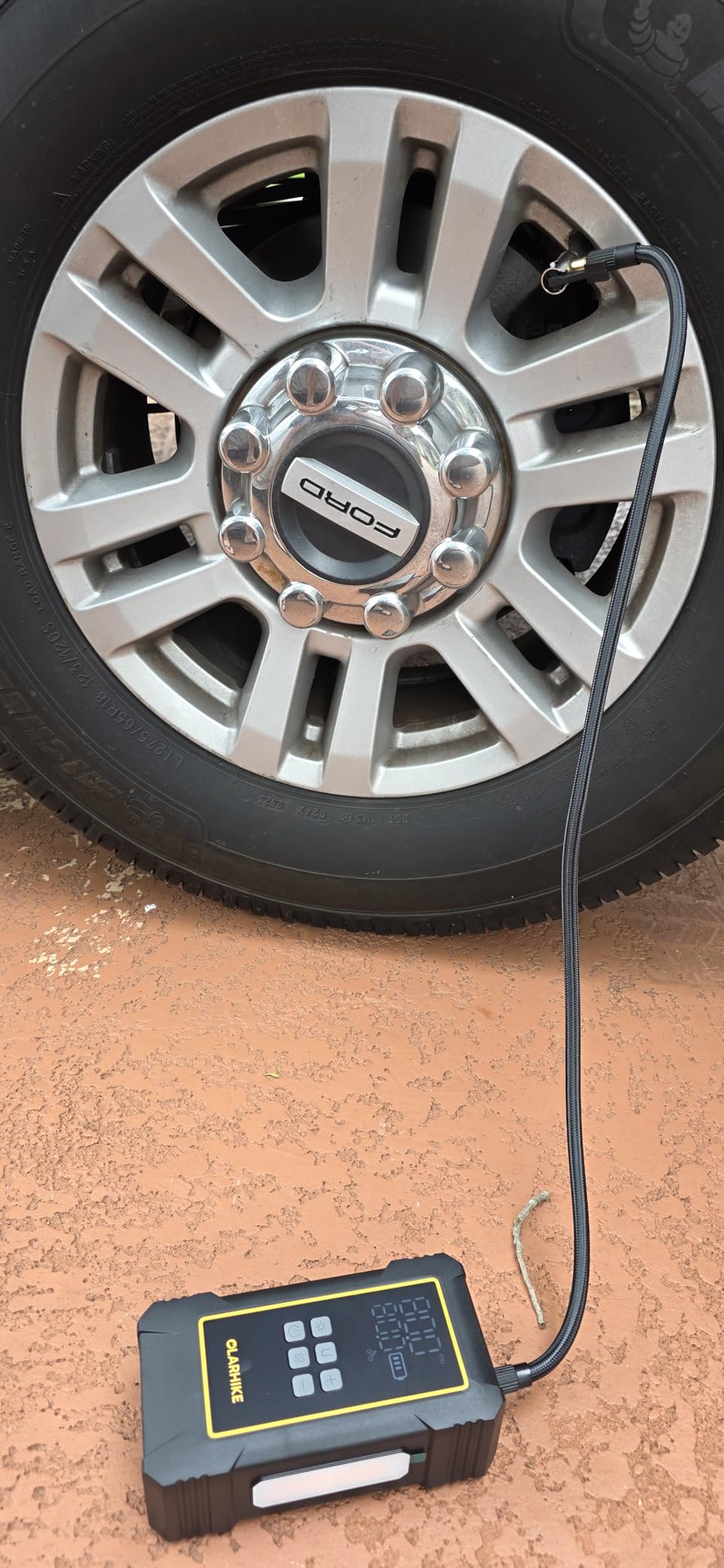
Airflow is the trade. Fifty litres per minute is among the lowest in this roundup, and the 13 A maximum current draw reflects a smaller motor. On a sedan tire it claims a 20-second fill from 30 to 35 PSI; on a 22.5-inch RV tire, expect a much longer conversation.
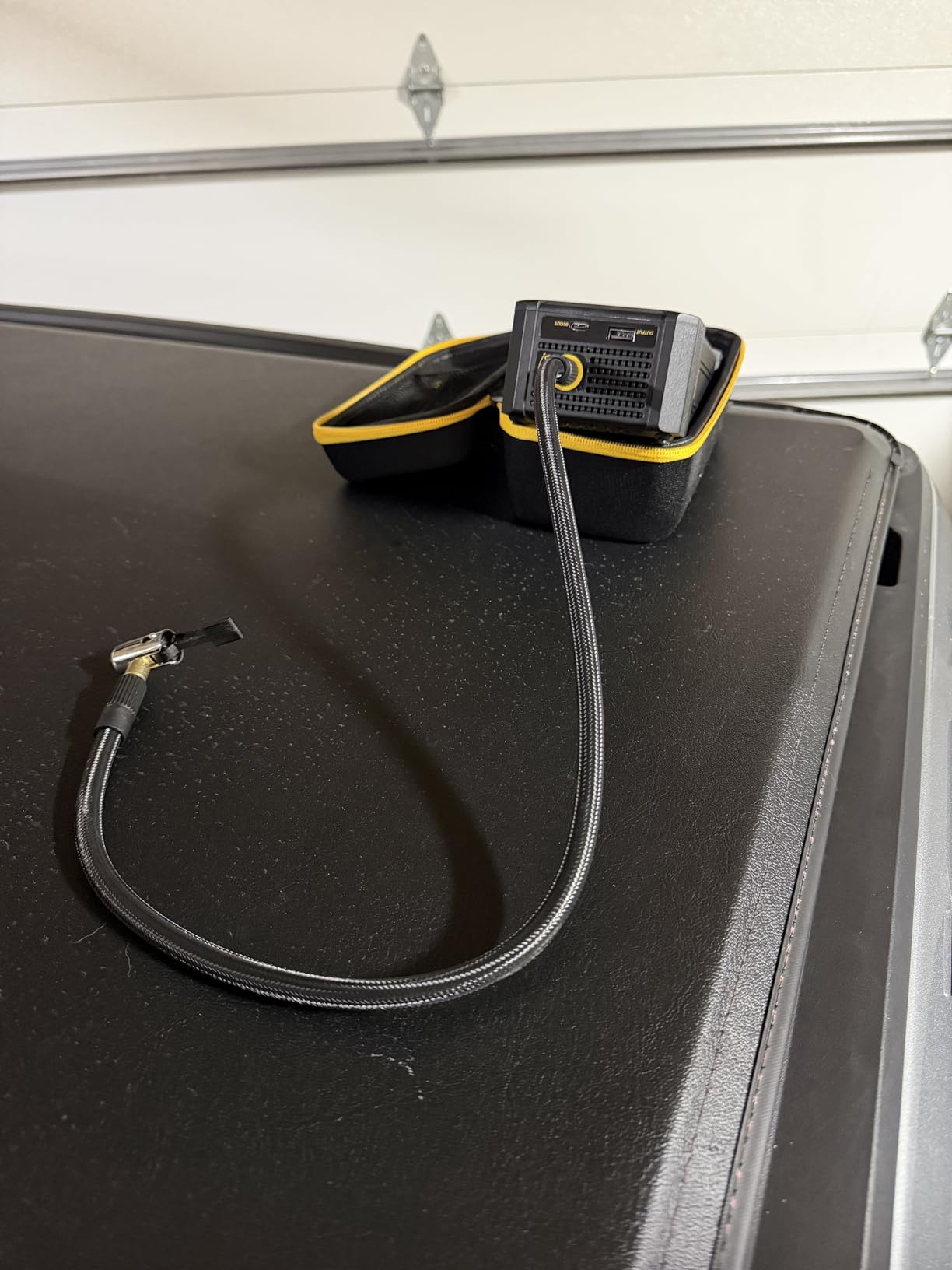
The two braided nylon hoses measure 31.5 inches, so reach is short without an extension. The battery management system covers over-charge, over-discharge, 19 A over-current, short circuit and temperature, and the auto-stop with memory means you set a target once and walk away.
Who the OlarHike TIX7V101 suits
It suits owners who want emergency readiness without running cables to a battery, and anyone whose RV tires only need a top-off. Reviewers report pairing it with the 12V DC car cable for longer sessions when the internal battery is not enough.
It also suits anyone who inflates bikes, kayaks and air mattresses as often as tires, because the adapter set and lock-on chuck are included in the EVA case.
Who the OlarHike TIX7V101 does not suit
It does not suit owners who fill from empty or who run large motorhome tires. The airflow figure is the limiting factor, and it is not close.
It also carries the shortest track record here with 435 reviews, so long-term durability is less proven than the VIAIR units that have thousands of reviews behind them.
9. VEVOR YD-127D 10.6 CFM Dual Cylinder – Best Airflow Per Dollar
- 10.6 CFM dual cylinder airflow
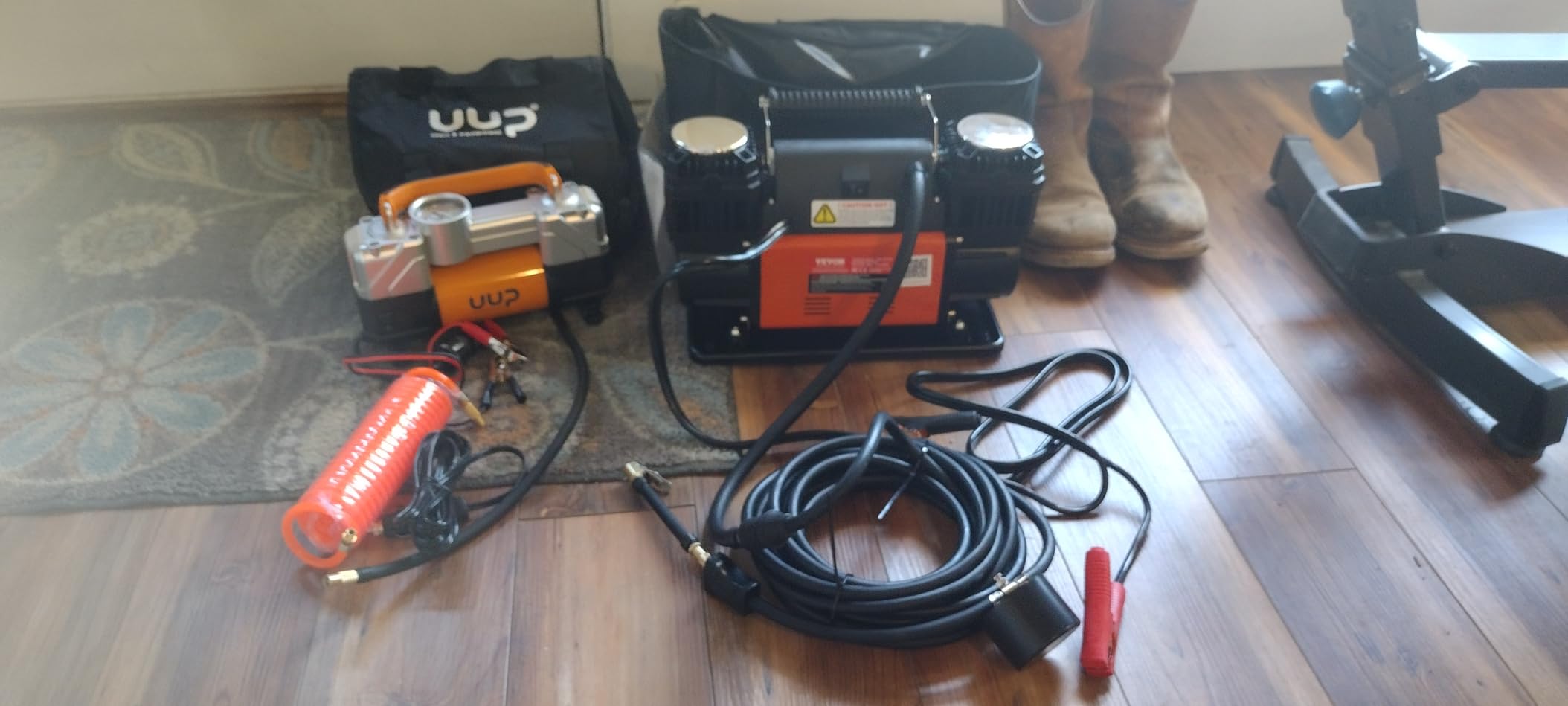
- 26 ft hose for full coach reach
- Auto thermal cut-off protects the motor
- 75 A output for serious fill speed
- 90 dB is the loudest in this roundup
- Heaviest unit at 25.4 lb
- Smallest review base at 132 ratings
On a purely output-per-dollar basis this is the most capable pump in the group. Ten point six CFM from dual cylinders at 150 PSI maximum, with a 75 A current rating, is closer to what a 120V pancake compressor delivers than anything else we tested, and it costs a fraction as much. If you want to compare, our pancake compressor guide covers what shore power can do.
The 26 ft hose is tied for the longest here, which on a 40 ft coach still means repositioning, but on a 30 ft Class C you may not have to.

The tradeoffs are loud and clear. At 90 dB it is by far the noisiest unit in this roundup, and several reviewers note that matters when you are working beside a campsite or an open window. At 25.4 lb it is also the heaviest.
The mechanical hose gauge is the only pressure reference and there is no auto shut-off, so you monitor and switch manually. The 132-review base is the smallest here, which leaves long-term reliability less certain than the well-established VIAIR listings.
Who the VEVOR YD-127D suits
It suits owners who measure a compressor in CFM and want the most air per unit of money. Owners credit it with truck and RV tire fills at a fraction of the cost of comparable dual-cylinder models.
It also suits someone working in a garage or driveway where 90 dB does not matter and 75 A of available power does.
Who the VEVOR YD-127D does not suit
It does not suit campsites, quiet driveways or early morning roadside work. The 90 dB figure is the deal-breaker for many buyers, and it is not a marginal difference.
It also does not suit small RVs. Carrying 25.4 lb to a Class B van’s rear tire is a poor use of anyone’s afternoon.
10. Kohree KR4133 Dual Cylinder Inflator – Best for Pressure Control at the Valve
Kohree 12V Dual Cylinder Air Compressor, 12.35 ft³/Min Fast Tire Inflator
- Paddle-pull inflator checks pressure at the valve
- 70 dB is quietest of the 350 L/min units
- Better rubber hose and sturdier carry bag
- Fills a 17 inch 4Runner tire in under two minutes
- Digital display is unreadable in daylight
- No quick-connect on the end of the long hose
- 24 lb unit is heavy to carry
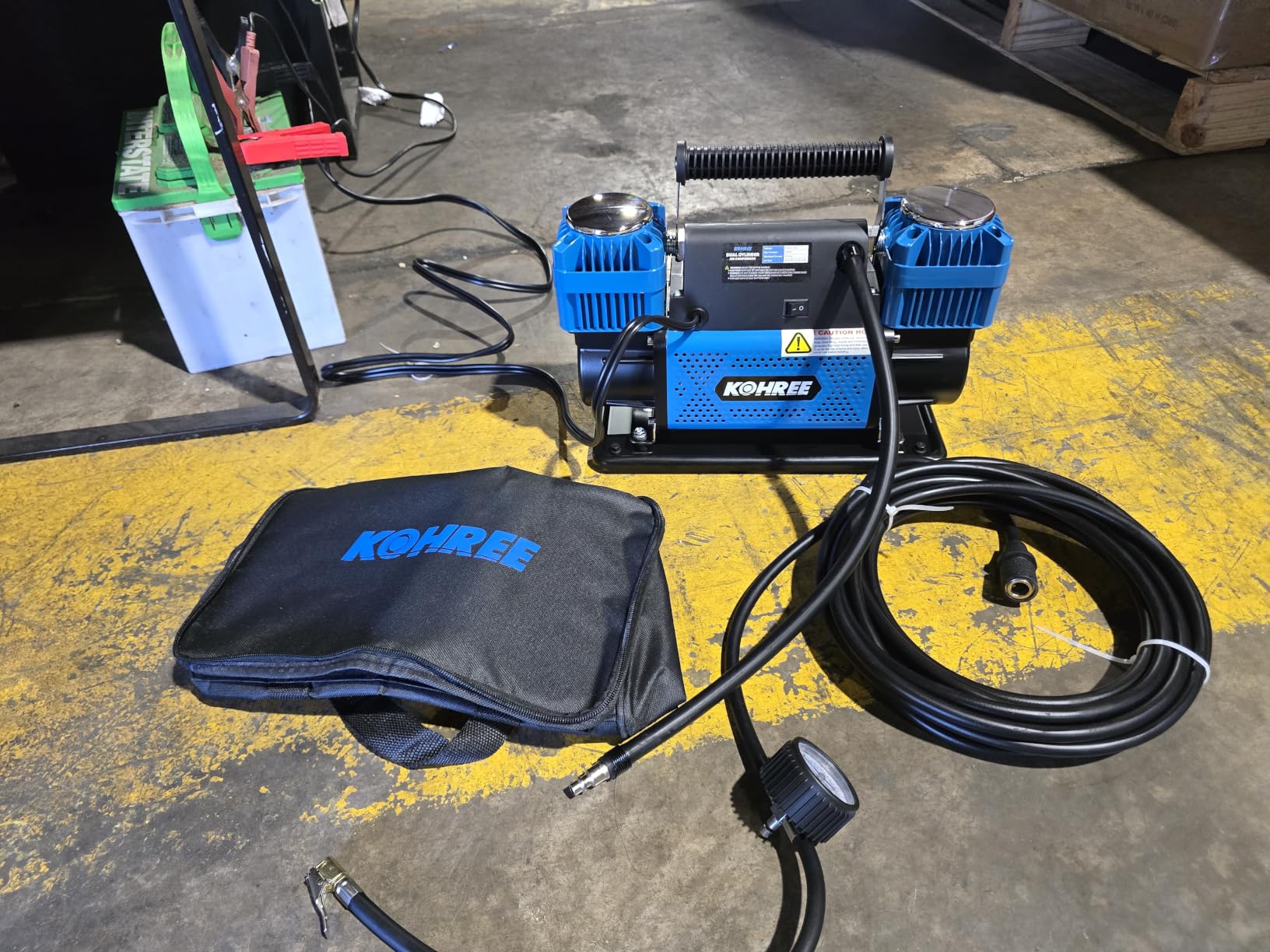
The feature that separates this from visually similar dual-cylinder pumps is the paddle-pull inflator. It lets you read pressure at the valve without walking back to the unit, which is exactly the annoyance that owners of the other high-flow pumps complain about most.
The numbers are strong: 12.35 CFM at 150 PSI, 26.24 ft of rubber hose, and a pressure gauge on the hose with a rear release button for bleeding air. Owners report bringing RV tires up in a few minutes each.
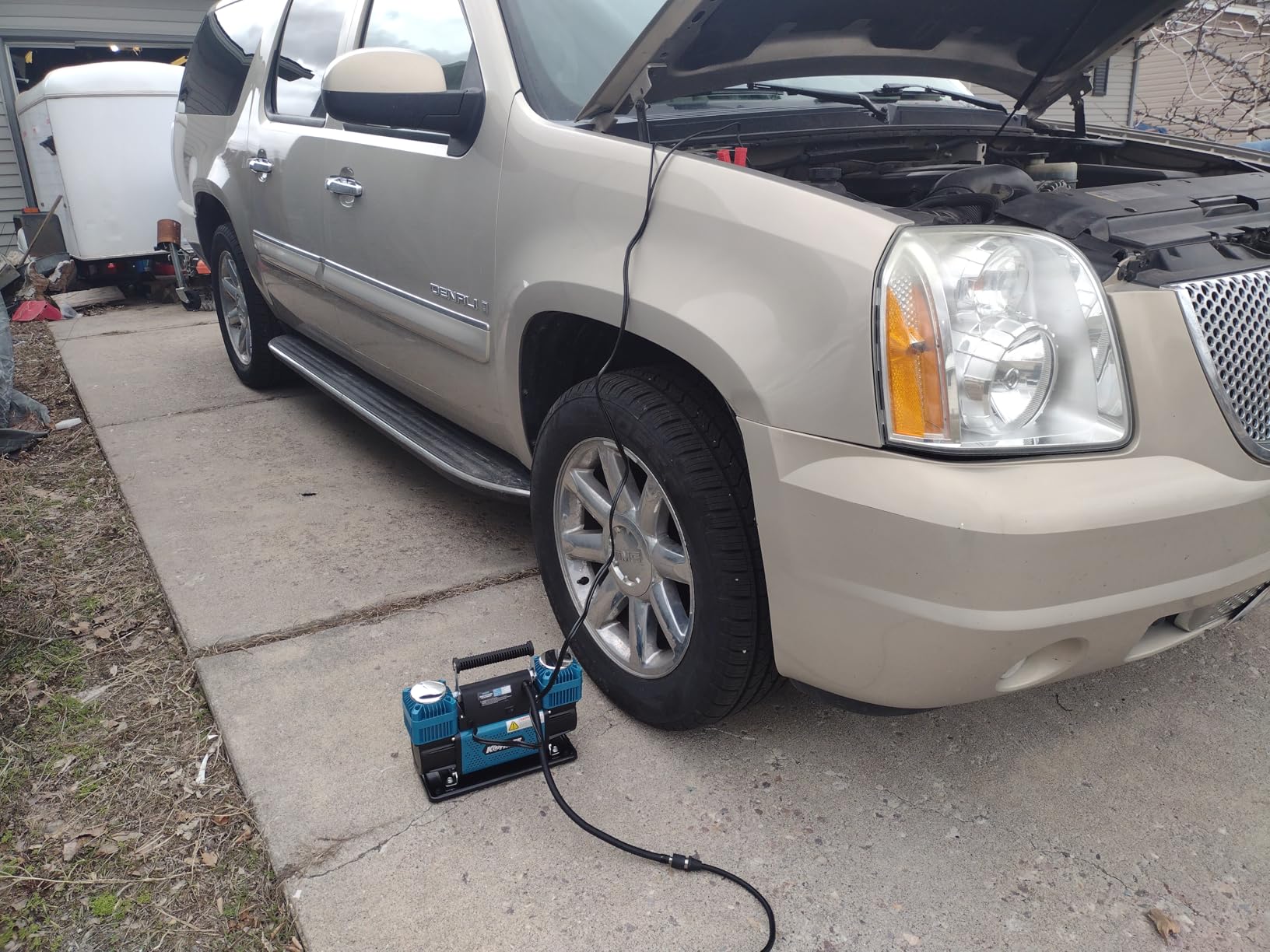
Noise is another differentiator in its favour. At 70 dB this is the quietest of the 350 L/min dual-cylinder compressors, which matters if you are working outside a motorhome at a quiet campground. The hollow metal shell, solid metal base and dual aluminium cylinders manage heat well, and one long-term report notes it ran across multiple tires without overheating.
The complaints are consistent. The digital display is unreadable in daylight even when shaded, there is no quick-connect on the end of the long hose so third-party dual inflators will not attach, and at 24 lb it is heavy. There is also one report of a unit failing after two uses, against 197 reviews overall.
Who the Kohree KR4133 suits
It suits owners who want high airflow without the noise penalty, and anyone tired of walking back to a compressor to check a gauge. The pressure switch and paddle-pull inflator solve the single most common complaint in this class.
It also suits buyers comparing value at the top of the range. Off-road owners in owner reviews place it faster than a comparable VIAIR single-cylinder unit on a 315 tire while offering better fittings than cheaper lookalikes.
Who the Kohree KR4133 does not suit
It does not suit owners who need to read the display in direct sun. That is a real problem at an open campsite, and owners mention it as the top complaint.
It also does not suit anyone who wants to hang extra tools off the hose end. The missing quick-connect closes off the usual route of fitting a second inflator or an upgraded gauge.
How to Choose a 12 Volt Air Compressor for RV Tires
What PSI do RV tires actually need?
Three different numbers get confused constantly, and mixing them up either under-inflates a tire or destroys it. The sidewall number is the maximum the tire was designed to hold, and it is a limit, not a target. The door placard number is a good general reference. The load table number, found on the tire’s sidewall or in the vehicle manual, is the correct cold pressure for the weight you are actually putting on that axle.
As a rough map: Class B vans on 225/75R16 typically sit around 50 to 60 PSI. Travel trailer and Class C tires in the 15 to 16 inch range often run 50 to 80 PSI. Class A coaches and 5th wheels on 22.5-inch tires frequently need 120 to 130 PSI on a loaded rear axle.
Check cold, before driving, and check the load table rather than guessing. A tire pressure monitoring system set point is not a substitute for the placard, and owners report summer over-pressure alerts firing even at correct cold settings because hot sidewall pressure reads higher.
Free-flow CFM is not the number that fills your tire
Free-flow CFM is measured at zero pressure with nothing blocking the outlet. What actually determines fill time is how much air the pump still moves at 100 or 120 PSI, and that number is rarely published. A 12 CFM free-flow pump can fall to a small fraction of that at high pressure.
This is why comparing 1.80 CFM to 12.35 CFM does not mean the second pump fills six times faster on your RV tire. The gap narrows once both pumps are working against a loaded bead. Airflow still matters, but the ranking is softer than the brochure suggests.
Duty cycle tells you when the pump has to rest
Duty cycle is the honest number on the spec sheet. A 33% duty cycle at 100 PSI means roughly 20 minutes of run time followed by a rest period, and the rest lengthens as ambient temperature climbs. A 50% cycle halves the waiting. The 450P-RV is the outlier here at 100% duty at 100 PSI.
For routine top-offs of a few psi, duty cycle never enters the picture. For filling a fully flat tire, it is the difference between a ten-minute job and a two-hour one. Owners who cook small pumps during long fills are almost always hitting the end of a duty cycle, not a defective unit.
Hose length and dual-wheel valve access
Measure from your battery compartment to the farthest valve, including the inner rear dual on a dually. A 25 ft hose covers most pickups and Class C rigs. A 40 ft coach with a rear dually really wants the 56 to 60 ft reach of the 450P-RV’s paired coiled hoses.
Also consider the chuck. Screw-on brass chucks are durable and universal; twist-lock and push-fit connections are faster but tie you to the manufacturer’s fittings. If you plan to hang a second inflator or a better gauge off the end, you need a standard fitting or a quick-connect.
Battery clamps beat the cigarette outlet every time
The 12V accessory outlet in an RV is typically rated around 10 to 15 A and shares a circuit with cabin electronics. Every compressor in this roundup draws between 13 A and 75 A, so none of them belong on the outlet. Battery clamps connect directly to the chassis or house bank and skip the socket entirely.
Run the engine during long fills to keep the alternator feeding the battery, and never leave a compressor clamped to a battery you depend on for starting. Owners with dual-battery coach systems generally clamp to the coach bank and keep the start bank untouched. If you want one more check before a trip, our twin stack compressor guide covers the fixed-install alternative.
When a portable 12V compressor is the wrong tool
If your coach tires run 120 to 130 PSI and you plan to fill all eight from empty after a blowout or a long storage period, no portable 12V pump is the right answer. The onboard compressor already in the coach, paired with a simple air doubler manifold, delivers far more air and owners report it outperforms portable pumps by a wide margin.
The portable unit is the right tool for top-offs, pre-trip checks, flat emergencies on tires under 100 PSI, and anything you do not want to permanently bolt into the coach. Match the tool to the task and you will stop thinking about it, which is the goal.
Frequently Asked Questions
What is the best portable air compressor for RV tires?
The VIAIR 450P-RV is the strongest all-round choice for RV tires. It delivers up to 150 PSI, holds a 100% duty cycle at 100 PSI, and ships with two 30 ft coiled hoses for 60 ft of reach, so one placement serves a whole coach. For lighter rigs and travel trailers the VIAIR 300P offers more airflow at lower weight, and the VIAIR 88P is the compact backup for routine top-offs.
What is the best 12 volt tire inflator?
For RV tires the best 12 volt inflator is one that reaches 150 PSI, runs on battery clamps, and has at least 25 ft of hose. The VIAIR 300P and VIAIR 450P-RV both meet that bar, with the 450P-RV adding continuous duty at 100 PSI. Below that tier, the Kohree KR4133 and ALL-TOP ATACR300 deliver far more airflow at 12.35 CFM but weigh about 24 lb each.
What is the best quality 12V air compressor?
Build quality tracks the materials and the review history. The VIAIR line leads on proven longevity, with the 450P-RV using alloy steel and the 88P using brass fittings, and both carry thousands of reviews. Among newer high-flow units, the Kohree KR4133 and ALL-TOP ATACR300 use hollow metal shells with aluminium cylinders and thermal cut-off switches, and both carry two-year warranties.
How many PSI do I need for RV tires?
It depends on the vehicle class. Class B van tires on 225/75R16 often run 50 to 60 PSI. Travel trailer and many Class C tires in the 15 to 16 inch range run 50 to 80 PSI. Class A coaches and 5th wheels on 22.5-inch tires often need 120 to 130 PSI on a loaded rear axle. Always inflate cold, to the load table figure for your axle weight, never to the sidewall maximum.
Can a portable 12V compressor fill RV tires from flat?
Yes, but plan the time carefully. Duty cycle matters more than speed here: a 33% unit runs about 20 minutes and then needs a rest, so a full flat on a 22.5-inch tire can take a couple of hours on a small pump. A unit rated 12 CFM or more with thermal cut-off protection finishes the same job far quicker. If you inflate from flat often, the onboard coach compressor is usually faster.
The Best 12 Volt Air Compressor for Your RV
The VIAIR 450P-RV takes our pick for best 12 volt air compressors for rv tires because it is the only unit here rated for continuous running at 100 PSI, and its 60 ft of paired hose reach solves the dual-wheel and long-coach problem that pushes most owners to reposition a pump four times per fill. If your tires top out below 100 PSI, the VIAIR 300P gives you more airflow per pound and the VIAIR 88P gives you a backup that weighs under five pounds. When you genuinely need volume on 22.5-inch tires, the Kohree KR4133 and ALL-TOP ATACR300 deliver 12.35 CFM, and the Kohree’s paddle-pull inflator keeps your hand on the pressure.
Whichever you choose, clamp it to the battery, keep the engine running, and inflate cold to your load table figure rather than the sidewall maximum. That habit will outlast any pump on this list.
If you want to round out the kit, our guides to the best mini air compressors and the best workshop compressors cover the small jobs around the RV rather than the tires.