
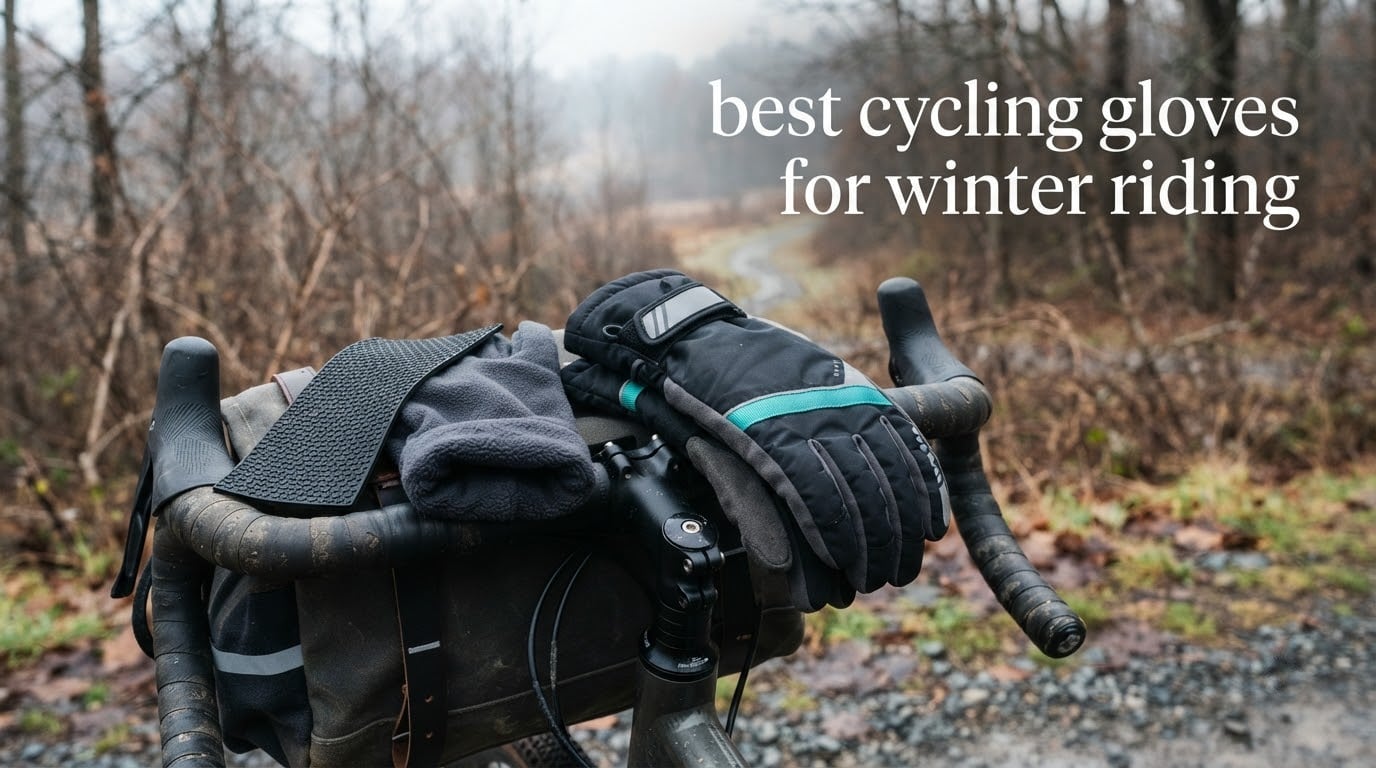
There is a specific kind of cold that ruins a winter ride. It is not the cold air itself, and it is not the general misery of riding at 34F. It is the moment your hands go past cold into numb, and you realise you cannot feel the brake lever under your index finger, or that the shifter has stopped responding the way you expect it to.
That is the problem this guide solves. We went through the winter cycling gloves on the market and sorted them by the thing that actually matters, which is the temperature band each pair genuinely serves and how much of your bar feel it gives up to get there. The wrong glove in the wrong weather is either too cold to work in or too hot to wear for an hour.
Before we get into the picks, one honest note. The category is full of gloves labelled waterproof that are only water-resistant, and full of pairs sold for deep cold that fall apart in ordinary winter drizzle. Reviewers are blunt about both. We kept that bluntness in every section below, so you can see where a glove works and where it stops working, and pick the best cycling gloves for winter riding for your actual conditions rather than the marketing.
Top 3 Best Winter Cycling Gloves in 2026
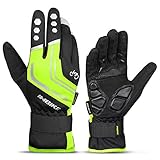
INBIKE Winter Gloves
- Windproof shell with fleece lining
- Gel padded palm
- Reflective detailing
- Hook-and-loop wrist closure

Souke Sports Winter Gloves
- Lightweight fleece lining
- 5mm foam padded palm
- Silicone grip panel
- Reflective details

MOREOK 3M Thinsulate Gloves
- 3M Thinsulate multi-layer insulation
- Reliable touchscreen tips
- Silicone palm grip
- Windproof cuff
The INBIKE pair takes the top slot because it does the hardest thing in this category well: it holds warmth through the high 20s, seals the wrist, and still gives you a usable lever and shifter. The MOREOK is the value pick, with the largest review base of any cold-weather glove here and the best warmth-to-bulk ratio of the bunch. The Souke pair earns its place for riders who find gloves that are too warm and need something that stays flexible on a hard effort.
All 10 Winter Cycling Gloves Compared in 2026
| Product | Specifications | Action |
|---|---|---|
| INBIKE Winter Cycling Gloves Windproof Reflective Thermal Gel |
|
Check Latest Price |
| Souke Sports Winter Cycling Gloves Padded Touchscreen |
|
Check Latest Price |
 GripGrab Ride Windproof Winter Cycling Gloves GripGrab Ride Windproof Winter Cycling Gloves |
|
Check Latest Price |
 INBIKE Winter Cycling Gloves Thermal Gel Padded INBIKE Winter Cycling Gloves Thermal Gel Padded |
|
Check Latest Price |
 GripGrab Ride Waterproof Winter Cycling Gloves GripGrab Ride Waterproof Winter Cycling Gloves |
|
Check Latest Price |
 GripGrab Waterproof Knitted Thermal Cycling Gloves GripGrab Waterproof Knitted Thermal Cycling Gloves |
|
Check Latest Price |
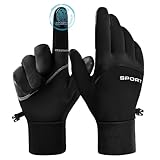 AURUZA Cycling Gloves Winter Cold Weather AURUZA Cycling Gloves Winter Cold Weather |
|
Check Latest Price |
 Fox Racing Ranger Mountain Bike Glove Fox Racing Ranger Mountain Bike Glove |
|
Check Latest Price |
| MOREOK Winter Gloves 3M Thinsulate Touch Screen |
|
Check Latest Price |
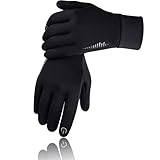 SIMARI Winter Gloves Thermal Touch Screen Fleece Lined SIMARI Winter Gloves Thermal Touch Screen Fleece Lined |
|
Check Latest Price |
Every pair below appears in that table in the same order, with a full write-up following. Ratings and review counts are the ones buyers have actually left, not our score.
1. INBIKE Winter Cycling Gloves: Best All-Rounder for Cold Commutes
INBIKE Cycling Gloves for Men Winter Windproof Reflective Thermal Gel Pads Touch Screen Bike Gloves for Cold Weather Riding
- Warm to roughly 28-32F for most riders
- Gel pads take sting out of long rides
- Long gauntlet cuff seals drafts out
- Reflective elements help in low light
- Strong value versus premium brands
- Touchscreen pad on index finger rarely registers
- Runs about one size small
- Water-resistant rather than waterproof
- Velcro cuff can blouse out under a sleeve
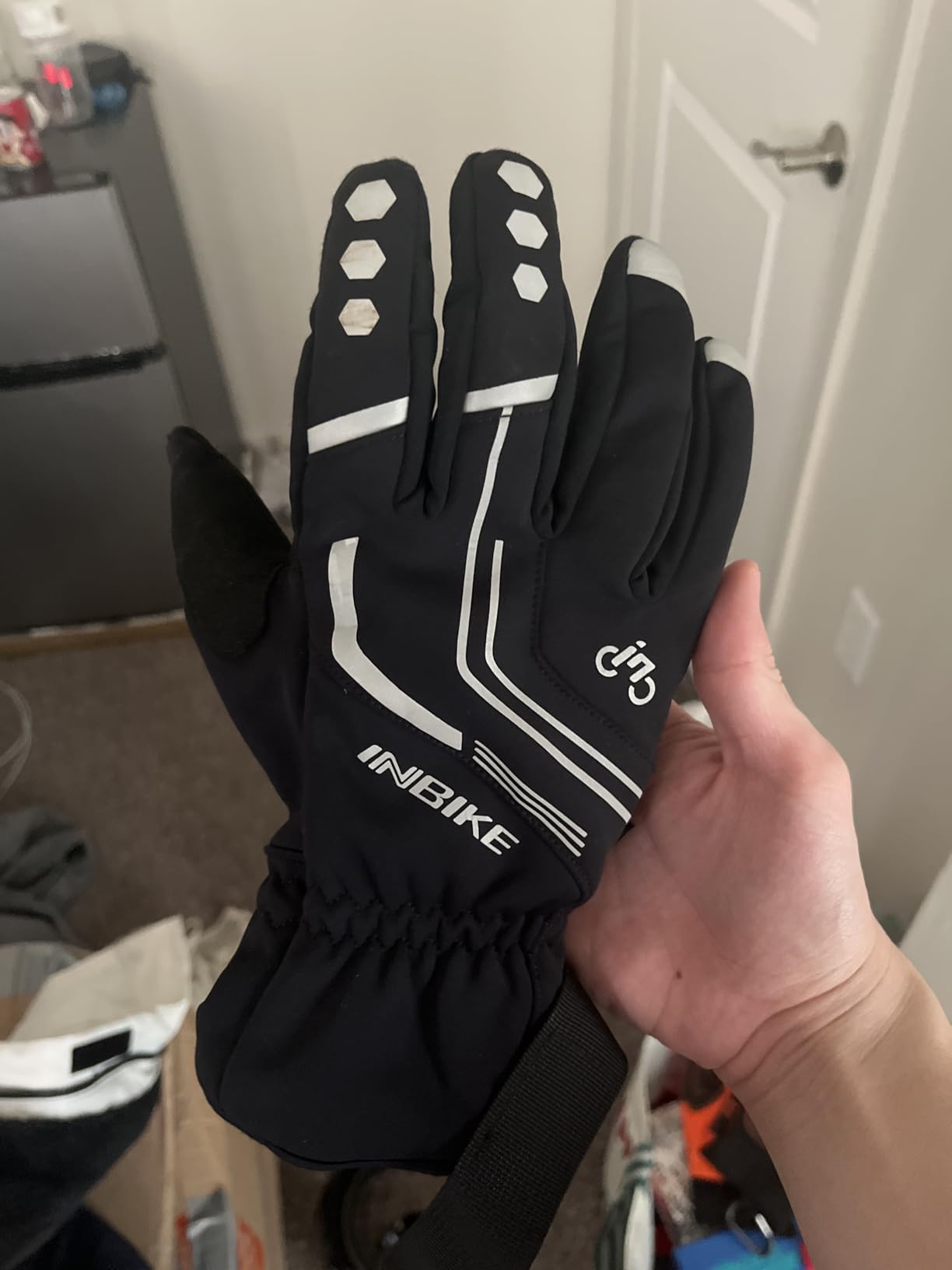
This is the pair we kept reaching for. The shell is windproof with a thickened fleece lining, and across more than 2700 buyer reviews the warmth ceiling keeps getting described in the same band, roughly the high 20s to low 30s on Fahrenheit. That is exactly the range where most winter commuting happens, which is why it tops our list.
What surprised us was how much bar feel survives. The gel palm padding takes the sting out of a long ride on rough tarmac without turning the handlebar into a sponge, and reviewers consistently rate grip on brake levers and shifters as a strength. The long gauntlet cuff does a genuinely useful job sealing the gap at the wrist, which is where most riders lose heat first.
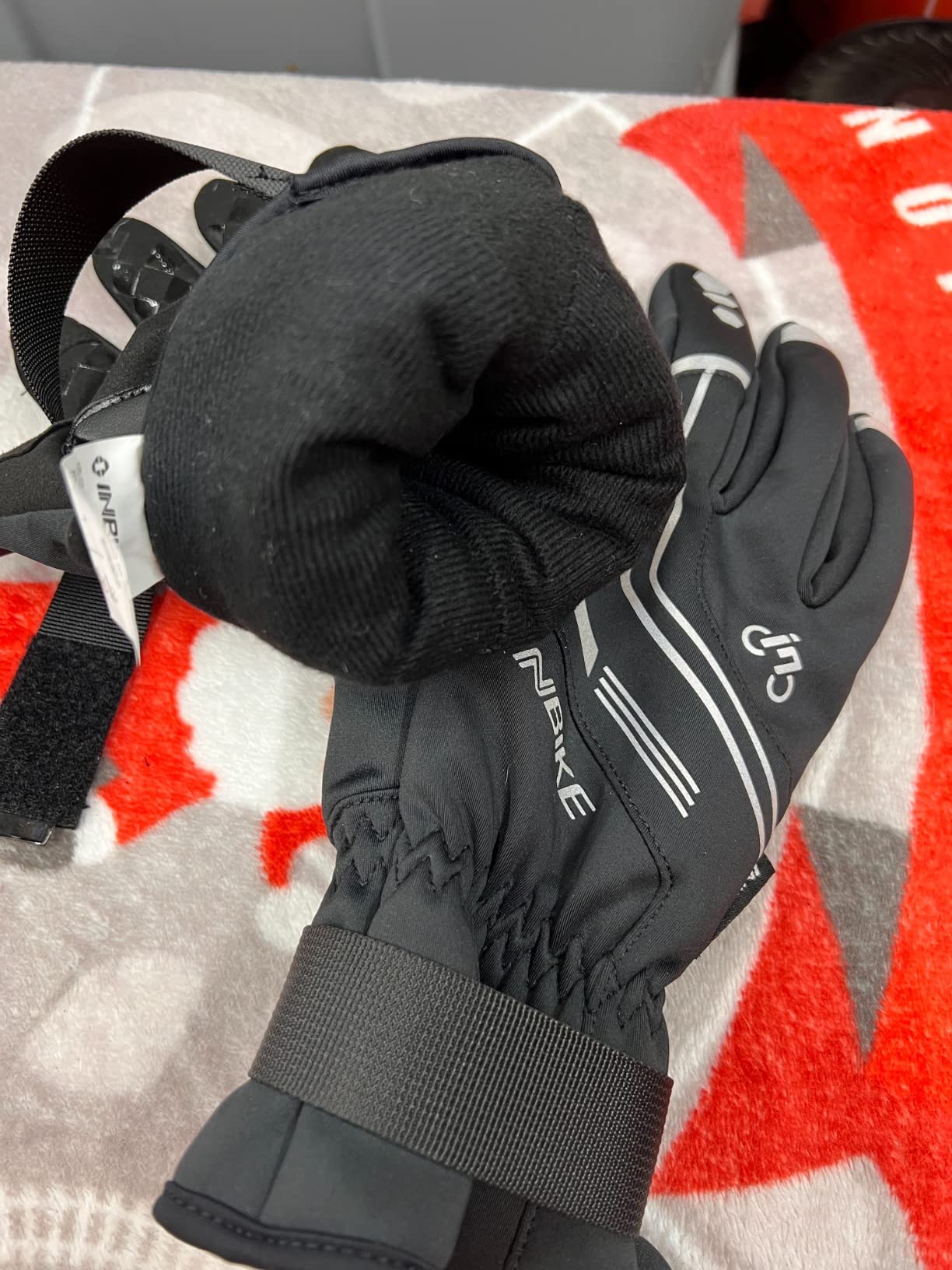
The reflective elements on the back of the hand are a real safety gain on a dark commute, and the silicone grippers on the fingers help when your hands are damp. Buyer photos show a glove that looks used but intact after a season, which is more than we can say for several cheaper options here.
Now the honest part. The touchscreen pad is the most repeated complaint, with the small index-finger pad rarely registering on a phone. It also runs about a size smaller than advertised, so size up if you are between sizes. And it is water-resistant, not waterproof, so it needs drying out after heavy rain rather than being ridden through it.
Why this pair works for cold daily riders
The warmth rating is calibrated to real commuting temperatures rather than marketing extremes, and the cuff sealing solves a problem most riders only discover after a season of cold wrists. Reflective detailing handles the dark half of the commute without a separate light.
If your winter riding sits mostly in the 30s, this is the glove that stops you thinking about your hands for the whole ride. It is also the safest first winter glove to buy because the failure mode is mild. A too-small fit is annoying; a numb hand is not.
Where it falls short
Do not buy it for sustained rain, and do not expect it to keep you comfortable well below the high 20s. Reviewers report the warmth fading out around 28F, and the water resistance means a long wet ride ends with damp hands no matter how good the shell looks.
If you ride in serious cold or ride through winter rain regularly, the GripGrab waterproof models further down this list are the more honest fit. They cost you a little bulk in exchange for actually blocking water.
2. Souke Sports Winter Cycling Gloves: Best Lightweight Option for Hard Efforts
Souke Sports Winter Cycling Gloves Men Women Padded Bike Gloves Touchscreen
- Warm without the bulk of heavy winter gloves
- 5mm foam absorbs vibration neatly
- Silicone palm grips levers and shifters
- Breathable palm vents sweat on active rides
- Thumb wipe and elastic cuff suit long commutes
- Best suited to roughly 45-60F rather than deep cold
- Three-piece palm feels less natural than one panel
- Sheds light rain and snow only
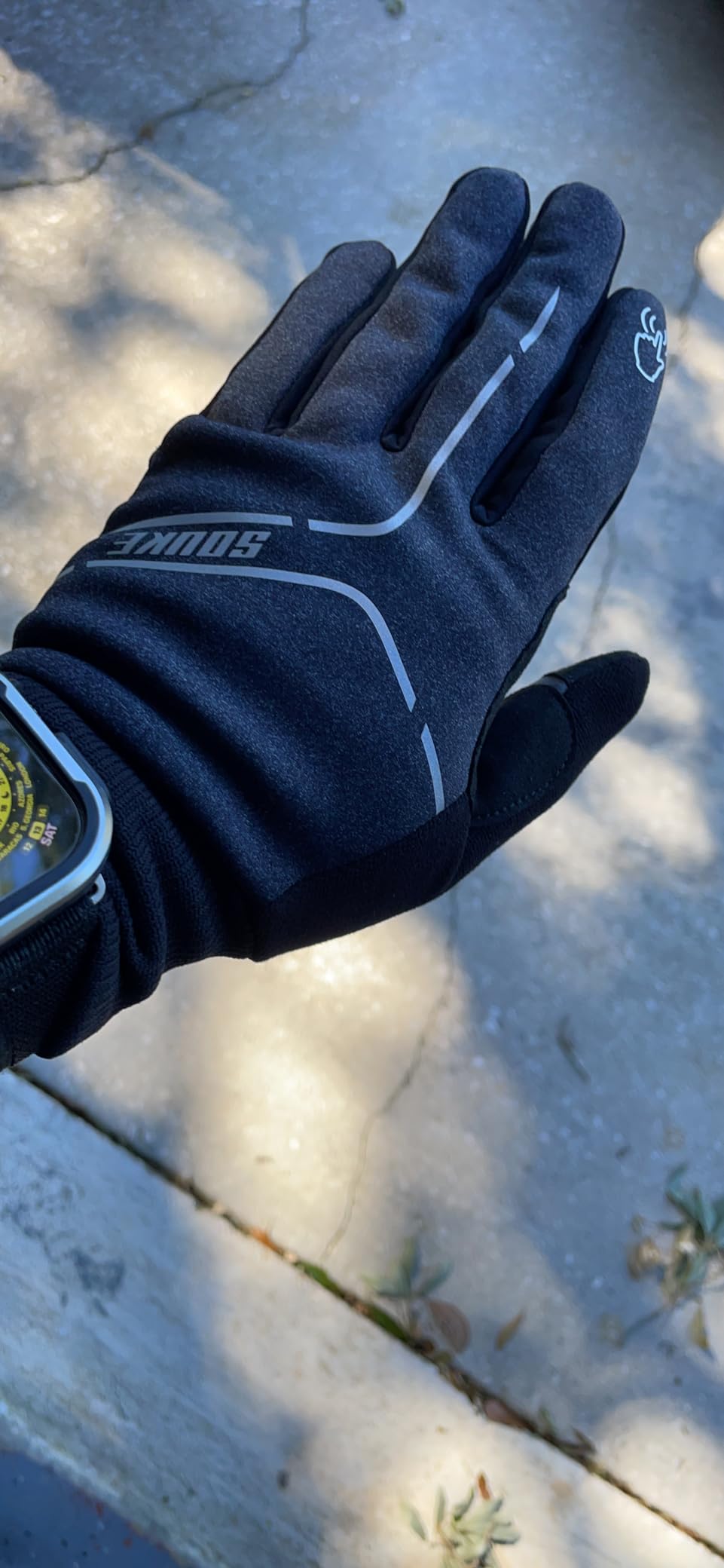
If you overheat in winter gloves, this is the one to try. The fleece lining gives real warmth without the heavy insulated look, and the whole glove weighs under four ounces, which matters on a long ride when every gram is felt through the bars.
The 5mm foam padding on the three-piece palm is the part we liked most. It absorbs road vibration with minimal bunching as your hands move across the hoods, and the silicone palm grips brake levers and shifters securely even when damp. Riders on this pick repeatedly describe it as an all-rounder rather than a specialist.
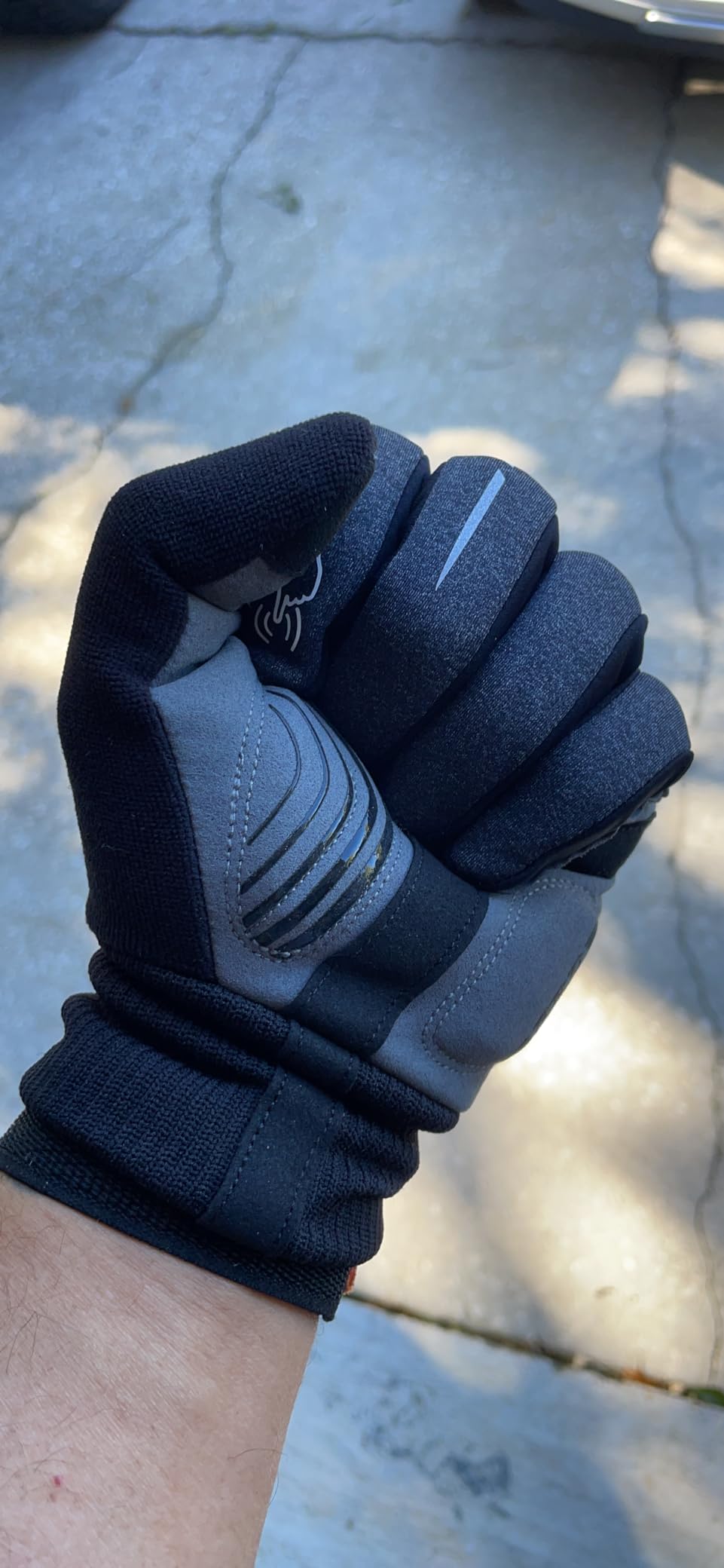
Breathability is the sleeper feature. The palm is microfiber suede rather than a sealed membrane, so heat and perspiration move out on a hard effort instead of building up. For riders who do 40F intervals and generate real body heat, that matters more than a top-line insulation rating.
The thumb wipe panel and elastic cuff both work well on longer commutes, and the reflective detailing helps in traffic. Touchscreen compatibility covers the thumb, which is where most riders actually need it, on a ride map or a music screen.
Who this glove suits
Riders doing active winter training, MTB sessions, or anything that generates more than a steady cruise. The warmth ceiling sits around 45-60F, so on a cold morning at rest you will feel it quickly.
It is also a good second pair alongside something heavier. Plenty of riders use a lighter pair like this for the middle of a cold day and swap up for a deep cold pair when the temperature drops further.
Where it is the wrong choice
If your typical winter ride happens in the 20s or below, this is too thin and you will finish with cold fingers. The windproof back stops wind, which is the main job, but it only sheds light rain and snow. Wet commuting riders should look further down.
A handful of riders also mention the three-piece palm feels slightly less natural than a single panel under the fingers. It is a minor point, but noticeable if you are very particular about feel.
3. GripGrab Ride Windproof Gloves: Best Fit for Cold Road Riders
GripGrab Ride Windproof Winter Cycling Gloves – Thermal Full Finger Padded
- Windproof yet still vents heat on hard efforts
- DoctorGel takes strain off on long winter rides
- Long cuff closes the sleeve gap
- Sweat-wipe fleece thumb is genuinely useful
- Snug fit keeps bar feel precise
- Close fit means sizing up from your summer glove
- Windproof only with no waterproof membrane
- Padding thinner than heavy winter models
This glove solves the sleeve gap problem better than anything else in the range. The elongated soft knitted cuff extends far enough up the forearm to sit under a jacket sleeve and seal the gap, which is the single most common place riders lose heat on a winter road ride.
Fit is the other story here. It is a tight performance fit, and GripGrab recommends sizing up. Once you do that, bar feel is excellent and the 4mm DoctorGel padding takes the strain off your hands on a long ride without the numbness that heavy padding causes.
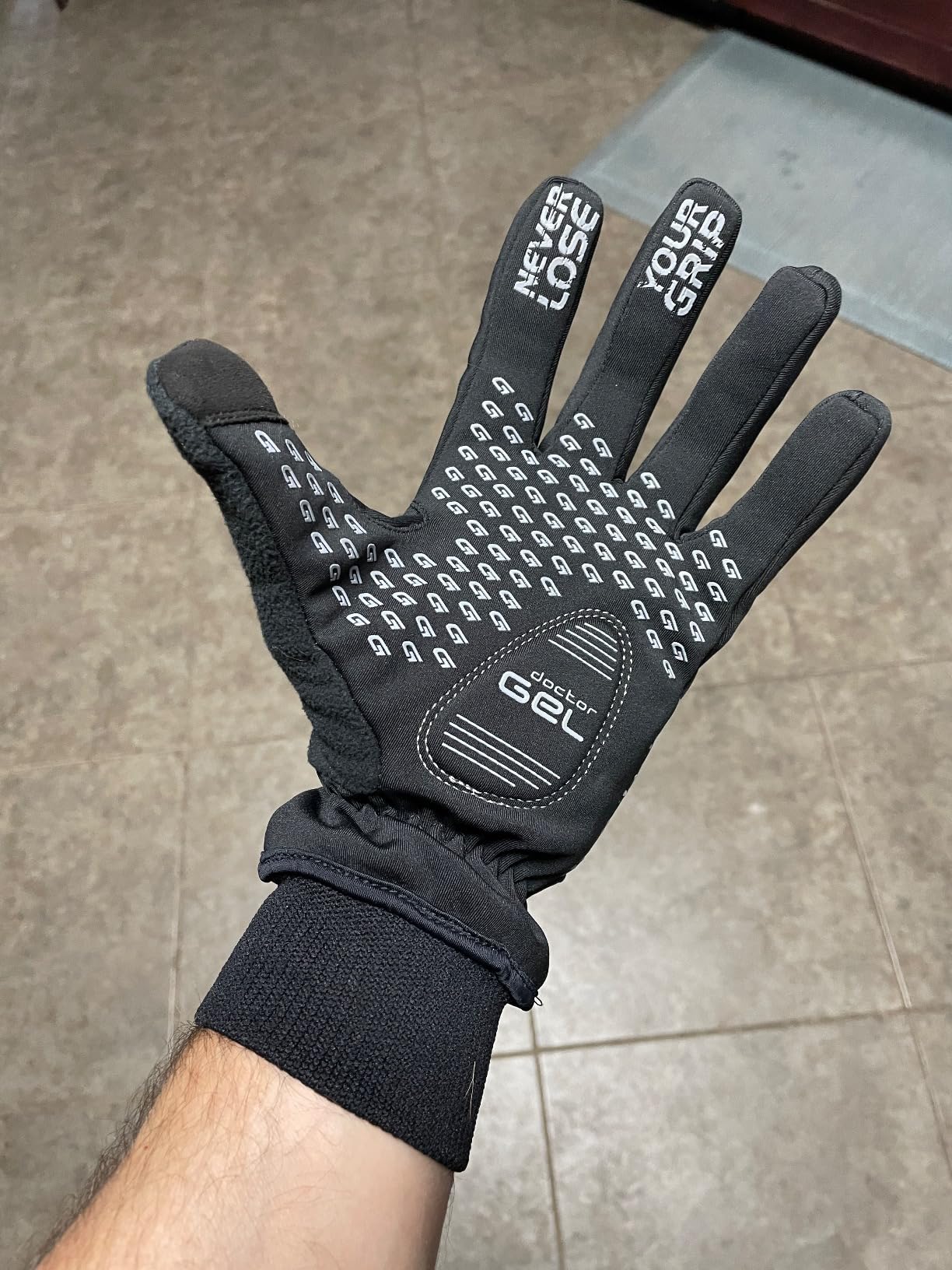
The 100% windproof construction includes breathable panels, so it holds off wind while still venting heat when you push. The fleece thumb sweat-wiper earns its place on long climbs. It is also machine washable at 30C, which is more than most gloves in this category can say.
Riders on the hi-vis colourway get genuinely better visibility in low light, and the reinforced construction holds up on winter gravel and rough tarmac where a cheaper glove would start to wear through.
Why it earns its place
The combination of a sealing cuff, a snug performance fit and a full windproof build makes this the most complete answer for road riders who deal with wind rather than rain. Cold, windy, dry rides are the most common winter condition there is.
It is also the glove most likely to survive a long season. Machine washable, tightly constructed, and the padding is positioned where pressure actually lands on the bars.
Where it is not the right tool
There is no waterproof membrane, so in rain or road spray this glove will eventually wet through. If your winter riding is wet more than it is windy, the waterproof GripGrab models further down handle that case better.
The padding is thinner than a dedicated deep-winter glove, so this is a cold-wind glove rather than a sub-freezing glove. Riders heading well below freezing should add a liner or pick something heavier.
4. INBIKE Winter Thermal Gel Gloves: Best Reflective Pick for Night Commutes
INBIKE Winter Cycling Gloves for Men Women Thermal Gel Padded Bike Gloves
- Fleece lining holds heat in genuinely cold conditions
- Gel padding improves grip and dampens vibration
- Reflective detailing helps on dark commutes
- Wrist closure keeps drafts out
- Wide size and colour range
- Bulkier cut than liner-style gloves
- Touchscreen tips handle basic taps only
- Water-resistant rather than fully waterproof
This is the INBIKE option built around a polar fleece inner lining for tear-resistant thermal insulation, and it feels warmer than its price suggests. The fleece sits under a shell of polyester, polyamide nylon and polyurethane, which gives it a sturdier feel than the fleece-lined pairs that cost more.
The gel palm padding serves two purposes at once, adding grip on the levers and dampening vibration through the wrists on a long ride. On a dark commute the reflective elements are the reason to pick this one, and buyers consistently call them out as a visible improvement over unlined gloves.
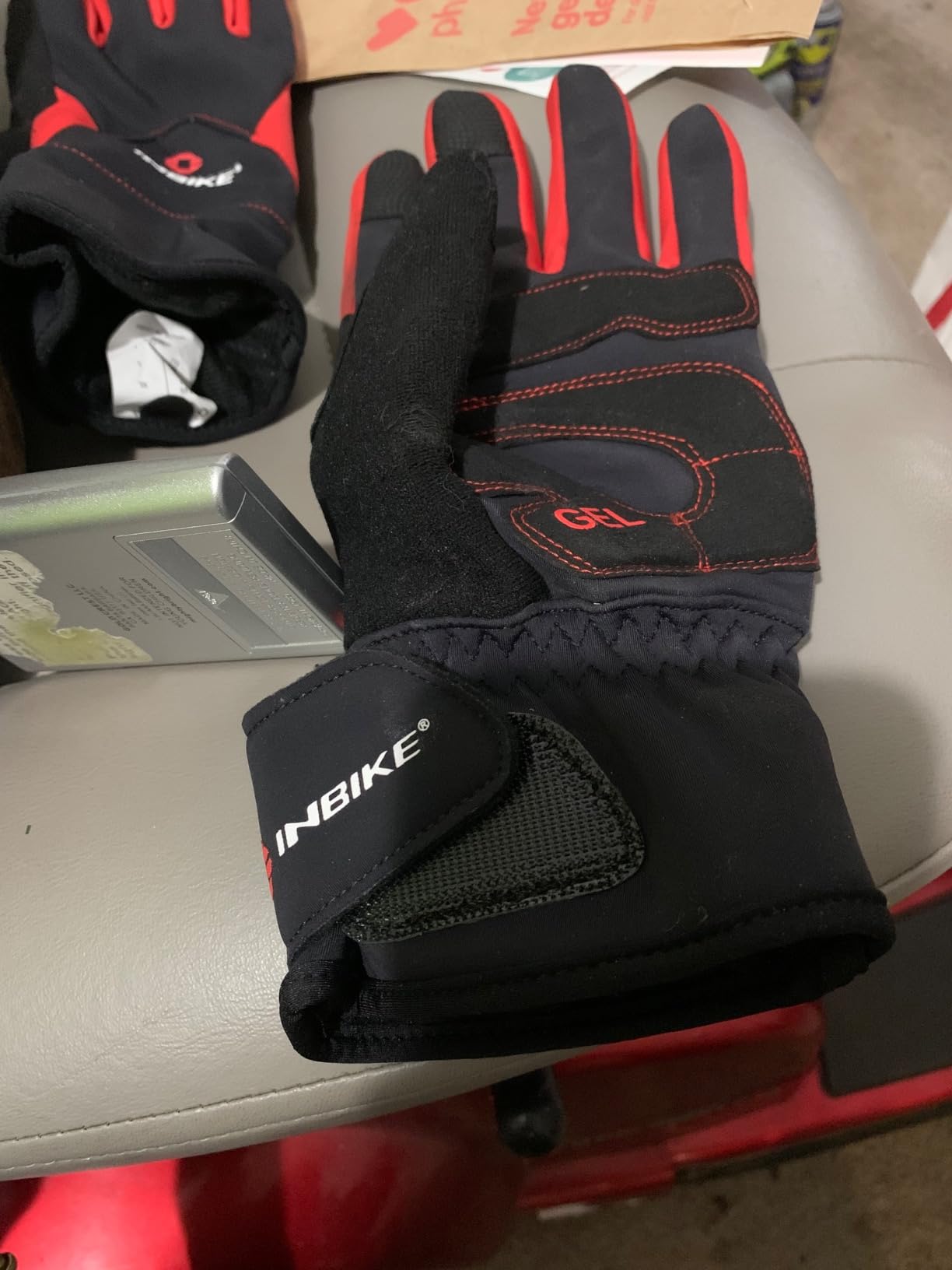
The hook-and-loop wrist closure is effective at keeping drafts out, and because the shell is ambidextrous you are not stuck with a left and right mismatch if you order two pairs. The size and colour range is genuinely wide, which helps if you need a hard-to-find size.
Compared with the fleece glove at number one, this one runs bulkier. That is a real trade-off: more warmth, less finesse. Riders who want the lowest-profile option in the range will feel the difference on a long fast ride.
Why commuters like it
Warmth plus visibility is the combination that matters after dark. The reflective detailing and the sealing wrist closure address the two things a night rider actually worries about, and the fleece lining handles the cold that builds up over a 30-minute ride at low speed.
Low-speed riding is where most commuter heat loss happens. A heavier glove that stays warm at a slow pace is more useful than a lighter one that only works once you are spinning.
Where it disappoints
Bulk is the honest drawback. On a long climb at speed this is the glove that makes you reach for the waistband, and the touchscreen tips handle taps rather than typing. The shell is windproof and water-resistant but has no waterproof membrane, so sustained rain is still out of reach.
If you ride fast and far rather than short and slow, the Souke pair at number two is a better match.
5. GripGrab Ride Waterproof Gloves: Best for Rain, Mud and Spray
GripGrab Ride Waterproof Winter Cycling Gloves – Windproof Thermal Padded
- Membrane keeps hands dry in rain spray and mud
- DoctorGel protects on rough winter roads
- Silicone prints hold control when wet
- Adjustable cuff improves warmth retention
- Works for road and mountain riding
- Close fit means sizing up from summer gloves
- Handwash only care
- Less insulated than a dedicated deep-winter glove
This is the pair to buy if your winter riding is wet. The windproof and waterproof membrane is specified against rain, spray and mud rather than just rain, which matters when you spend a winter ride behind a spray-generating wheel on a wet commute.
The anti-slip silicone prints across the palm are what make wet riding safe rather than merely survivable. When there is water on the bars, the difference between a grippy palm and a smooth one is the difference between controlled braking and a slide.
The adjustable hook-and-loop wrist closure is a genuine warmth improvement over pull-on designs, because it lets you seal the cuff down when the temperature drops and open it when you are working hard.
Who should buy it
Commuters who ride in rain rather than around it. It is listed in both men’s and women’s cycling glove categories and works on road or mountain bikes, and the 4mm DoctorGel padding makes it comfortable on rough winter surfaces where a thin glove would leave you sore.
Reviewers rate the adjustable cuff and the membrane as the standouts, and the fit is described as a close performance fit that rewards sizing up.
Where the limits are
It is less insulated than a dedicated deep-winter glove, so in genuinely cold conditions you would want a liner underneath rather than relying on it alone. Care is handwash only rather than machine wash, so plan for that in the winter.
Also worth being straight about: no glove stays dry through hours of rain. Riders who lose confidence after their hands get wet usually need a change of gloves in the back pocket, not a better glove.
6. GripGrab Waterproof Knitted Gloves: Best Breathable Pick for Rainy Sp
GripGrab Waterproof Knitted Thermal Cycling Gloves Full Finger Rain Glove
- Waterproof and windproof for genuinely wet rides
- Knitted fabric is soft and insulating without weight
- Breatheable enough to avoid overheating
- Palm grippers hold the bars when wet
- Reflective graphics make hand signals visible
- Snug around the fingers so size carefully
- Reinforced thumb-index crutch is the only reinforcement
- Not insulated enough for sustained sub-freezing rides
At 70 grams, this is the lightest waterproof glove in the range, and that weight is the whole point. A knitted outer instead of a woven shell gives this glove far more breathability than its membrane rating suggests, and riders report not overheating on hard efforts in the wet.
The knitted insulating fabric blocks windchill effectively while staying soft against the skin. In practice it behaves like a glove you can keep on for a full wet ride rather than one you strip off halfway up a hill because your palms are streaming.
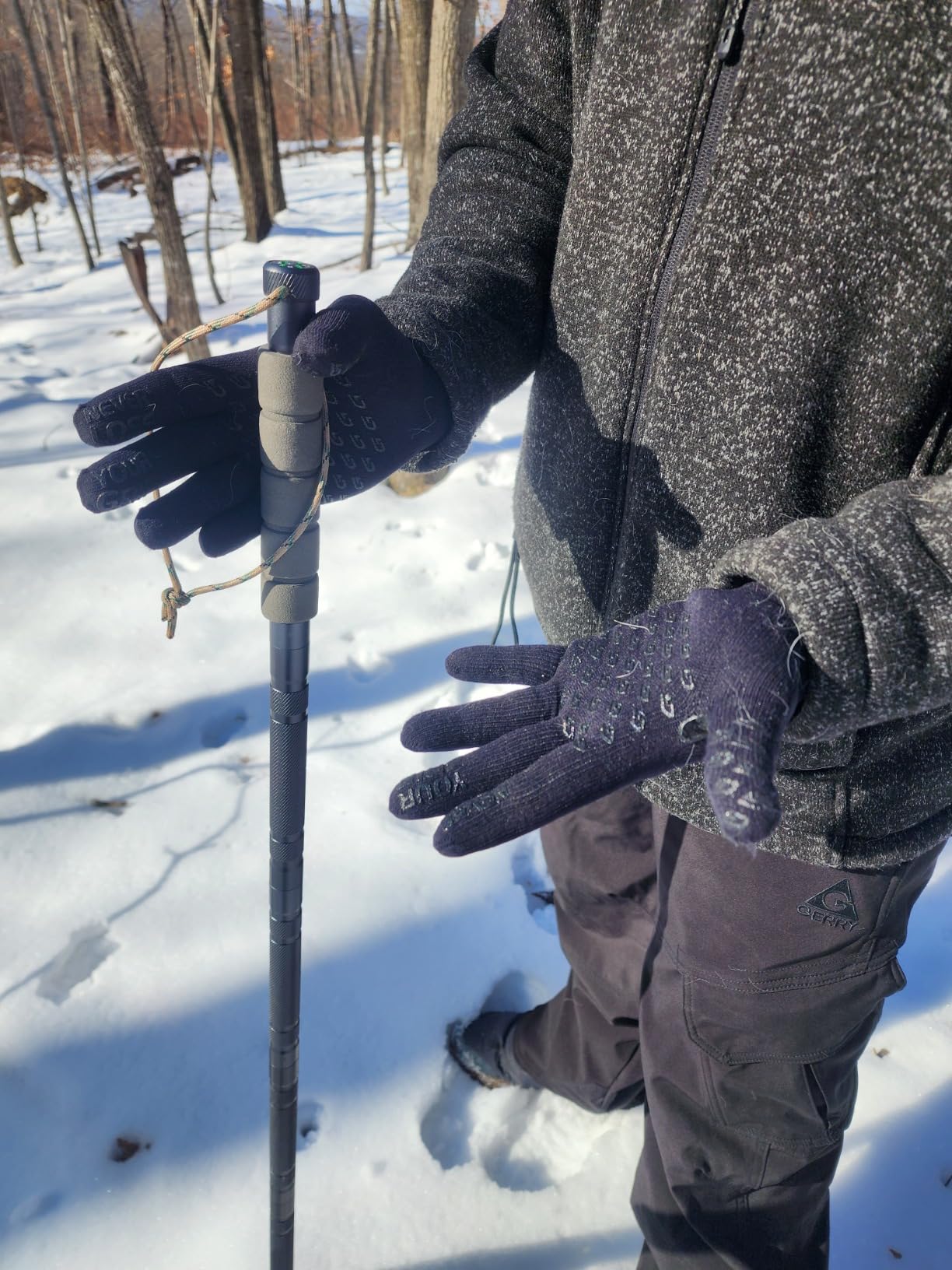
Anti-slip palm gripper print keeps hold on wet bars, and the reflective graphics mean your hand signals are visible in traffic, which is a small safety detail that a lot of riders appreciate on a dark rainy commute.
Fit is the main talking point and the main caution. It runs close around the fingers, so size carefully. It is a pull-on design, so there is no cuff adjustment to fine-tune, but the elastic does seal reasonably well under a sleeve.
Why it earns a spot
Most waterproof gloves solve water by sealing, and sealing causes sweat. This one splits the difference unusually well, which makes it the pick for wet rides that also involve effort, such as a hilly commute or a gravel ride in winter drizzle.
It is also the most packable option here, which suits riders who carry a spare pair in a back pocket.
Where it stops working
The insulation ceiling keeps it out of deep-cold territory. It is a glove for rainy shoulder-season riding rather than anything sustained below freezing. The only structural reinforcement is the thumb and index crutch, so it is a light-use glove in the durability sense.
Reviewers also mention sizing up if you are between sizes, because the close fit around the fingers is the most common reason for a return.
7. AURUZA Cycling Gloves: Best Budget Liner for Layering
- Very inexpensive for a five-finger liner
- Flexible enough to keep fine dexterity
- Anti-slip PU palm grips bars well
- Doubles as a liner inside bulkier gloves
- True-to-size fit across S to XL
- Touchscreen tips non-functional for most inputs
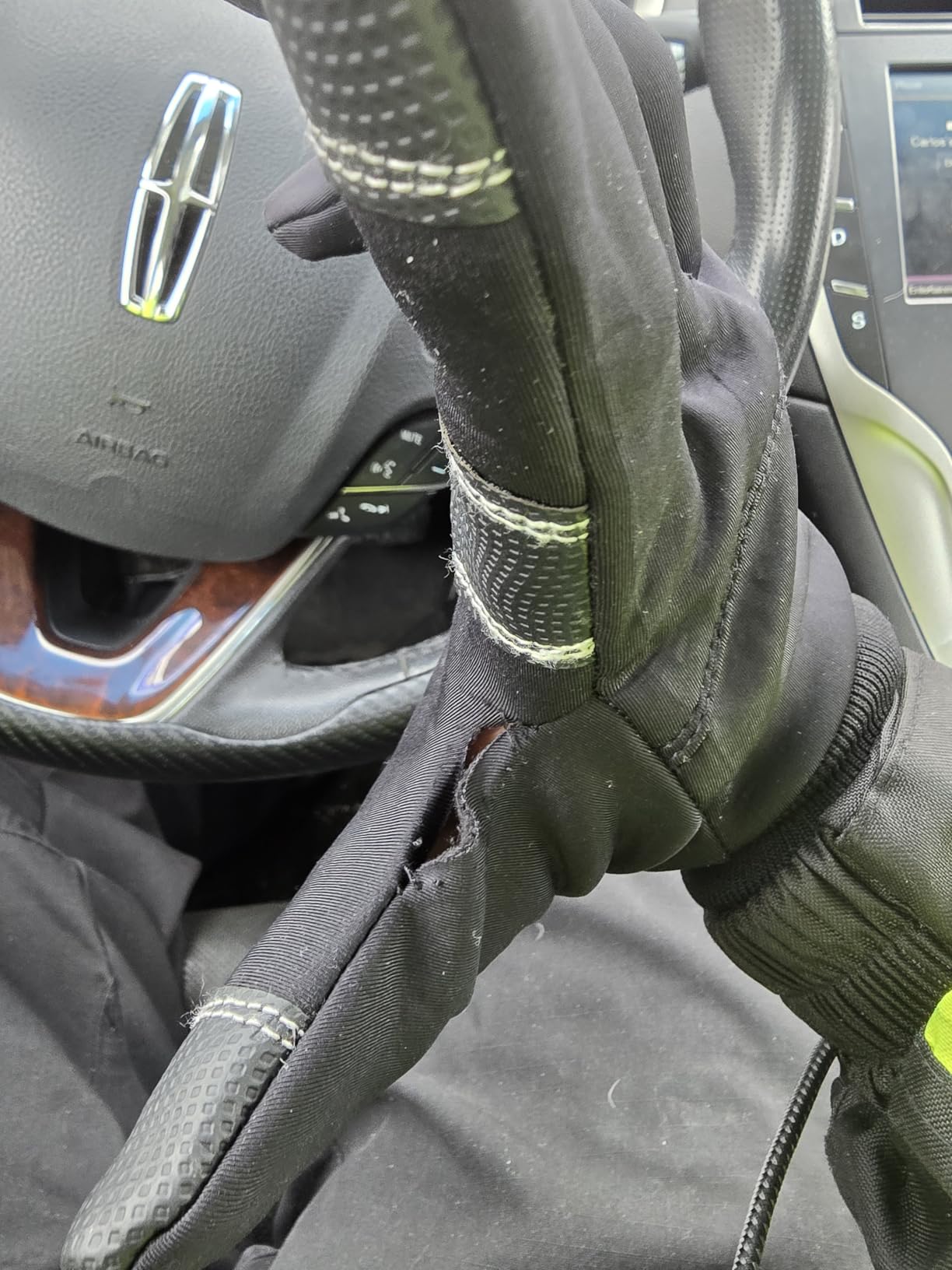
- Seams and fingertips unsealed so it soaks
- Too thin to ride in alone
- Small storage clip at the cuff broke quickly
Treat this as a component rather than a glove. Its job is to sit against your skin inside a bulkier winter shell, adding a wicking layer and letting you size down the outer glove for a better fit. Viewed as a standalone winter glove it falls well short, and reviewers say so directly.
Used as intended, the strengths are real. The anti-slip PU leather palm patches and finger strips grip the bars well, and the material is flexible enough to preserve fine dexterity, which is exactly what you want from a liner that is adding warmth without adding bulk.
The water-resistant TPU shell handles snow and light rain, and the listed weight is negligible, which is the defining advantage of a liner. Fit is true to size across four options, small through X-Large, so ordering is straightforward.
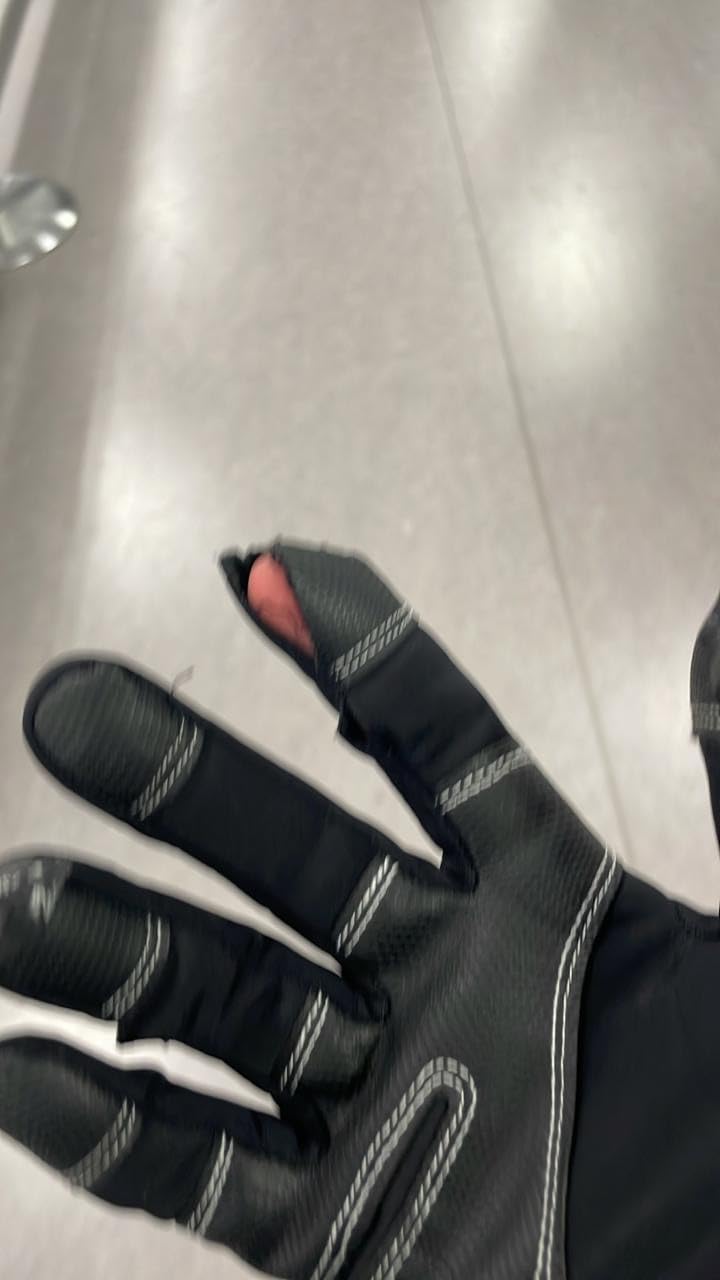
As a standalone glove the complaints are severe and consistent. The touchscreen tips are essentially non-functional for most inputs, and the seams and thumb and index tips are not sealed, so it soaks through when it contacts wet ground. It is also too thin on its own for real cold-weather riding.
Why buy it as a liner
The single best argument for this glove is sizing. If your winter shell runs bulky and you need to size down to get a good fit, a thin liner gives you back the lost warmth without further crowding the fingers. It also adds a moisture-handling layer between your skin and a synthetic shell.
Riders with poor circulation often find that a thin wicking layer against the skin helps more than another thick outer, because it reduces the moisture that makes cold hands feel worse.
Where it is the wrong buy
Do not buy it as your only winter glove. The marketing overstates both warmth and water resistance, and the waterproof label does not mean waterproof. At this price it is a sensible accessory, not a solution.
A small storage clip at the cuff is also reported to break quickly, which is a minor annoyance but worth knowing if you rely on clipping gloves to a bag.
8. Fox Racing Ranger Glove: Best Grip for MTB and Winter Trails
- Micro-suede palms give outstanding grip on the bars
- Lightweight and breathable enough for year-round use
- Snug race fit keeps lever and shifter feel
- Micro-suede thumb wipes sweat well
- Conductive threads make touchscreens actually work
- No thermal insulation so not a deep winter glove
- Runs small with several riders sizing up
- Some reports of seam or fingertip wear
This is the strongest grip in the range, and for winter MTB that is the deciding factor. The micro-suede palms give outstanding hold on the bars, and the fitted pre-curved race cut keeps your hands in the natural position for braking and shifting at low speeds on technical ground.
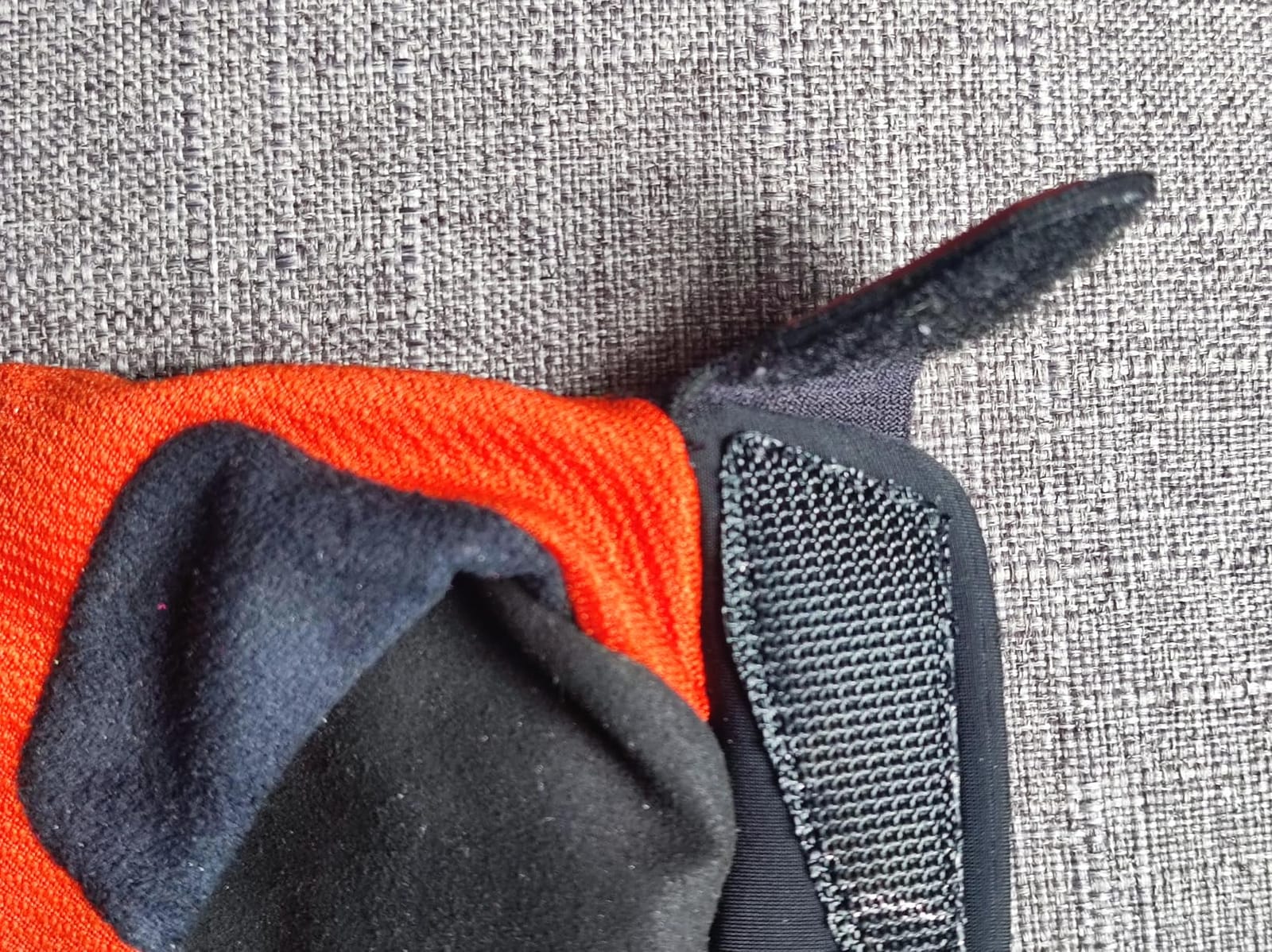
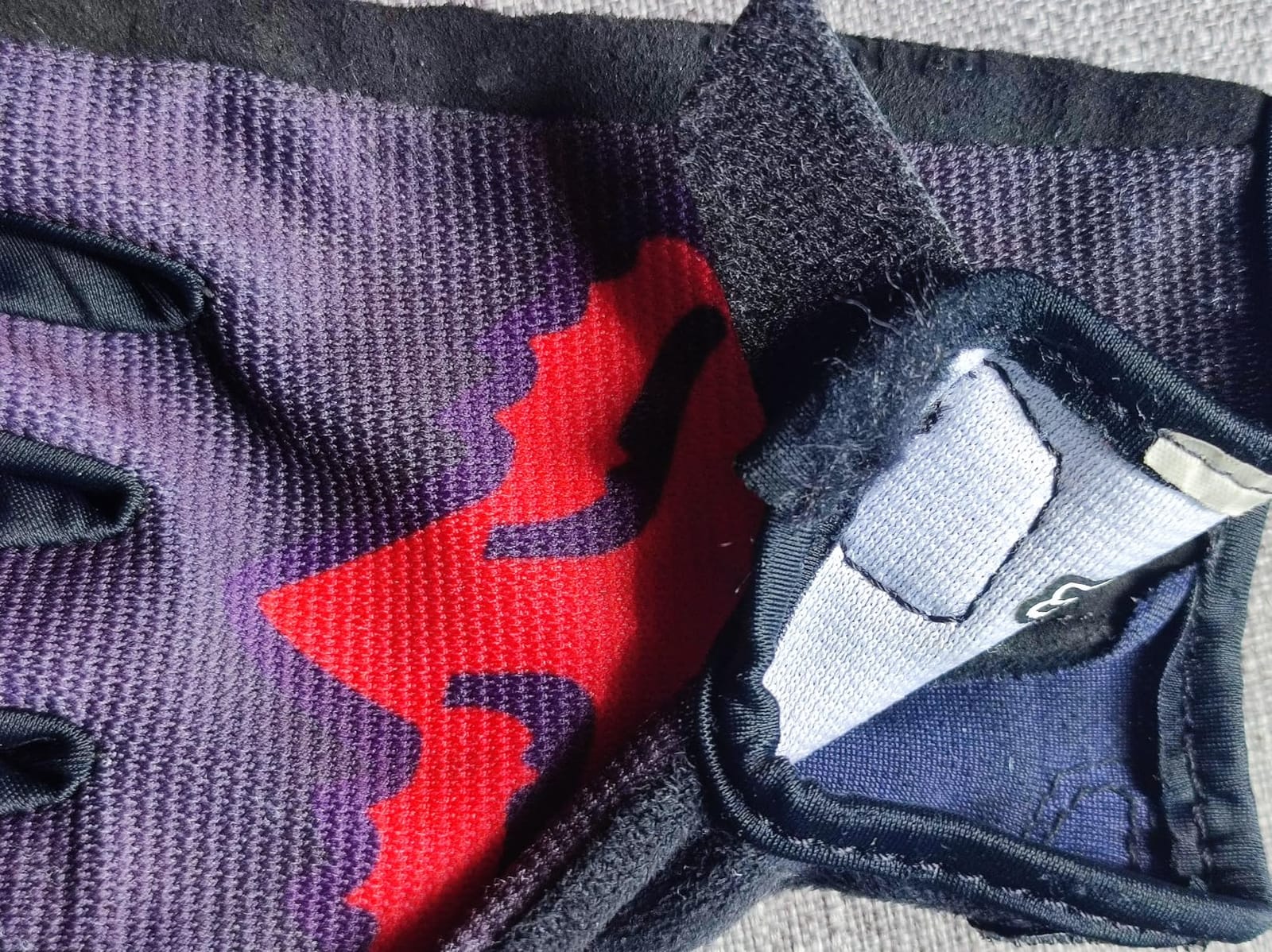
It is machine washable, which matters more than it sounds for a glove that gets covered in mud. The low-profile neoprene cuff with hook-and-loop closure sits flat under a jacket sleeve without bunching, so it works as a shoulder-season glove on its own terms.
The conductive threads at the index finger and thumb are worth calling out because they are the rare touchscreen implementation that actually works. Riders who use a phone to track a route mid-ride report being able to scroll and tap, not just register an accidental press.
The absorbent micro-suede thumb wipes sweat effectively, which on a hard climb in a warm jacket is the feature that gets used most.
Why trail riders pick it
Winter MTB means cold hands plus repeated impacts plus mud, and the micro-suede palm handles the last two better than any silicone print here. It stays grippy when damp, and the light weight means you are not adding insulation you cannot afford to carry on a ride where you are already working hard.
It also functions as a good three-season glove, so if you only want one pair that works from October through March on the trail, this is the honest answer.
Where it falls short
Be clear about what this is not. It has no thermal insulation, so it takes the edge off a cool morning rather than keeping you warm in real winter cold. Riders on this pick are consistent about that limitation.
Sizing runs small and several riders size up. There are also reports of seam and fingertip material tearing after light use, so if you ride regular MTB and are hard on kit, expect to replace it sooner than the fleece-lined pairs.
9. MOREOK Winter Gloves: Best Value for Cold, Dry Rides
- Warm without bulk and still easy to shift and brake
- Touchscreen pads work reliably across devices
- Silicone grip holds bars tools and steering well
- Cuff tucks under a jacket sleeve
- Rated for conditions around 20-32F
- Fully fabric build with no water resistance
- Runs about a size smaller than expected
- Not enough for extended exposure far below freezing
- Fingertip pads can fray with heavy use
The largest review base of any cold-weather glove in this roundup belongs to a pair most riders would not recognise as a cycling product, and it earns that volume. Multiple layers of 3M Thinsulate with 140g warm cotton and a microfibre exterior give serious insulation for the money, and reviewers keep returning to the warmth-to-bulk ratio as the reason they are satisfied.
Dexterity is the surprise. Gloves rated for the 20s are often unusable on the levers, and this one is not in that category. Owners describe shifting and braking normally, which is why it earns the value slot despite not being a dedicated cycling glove.
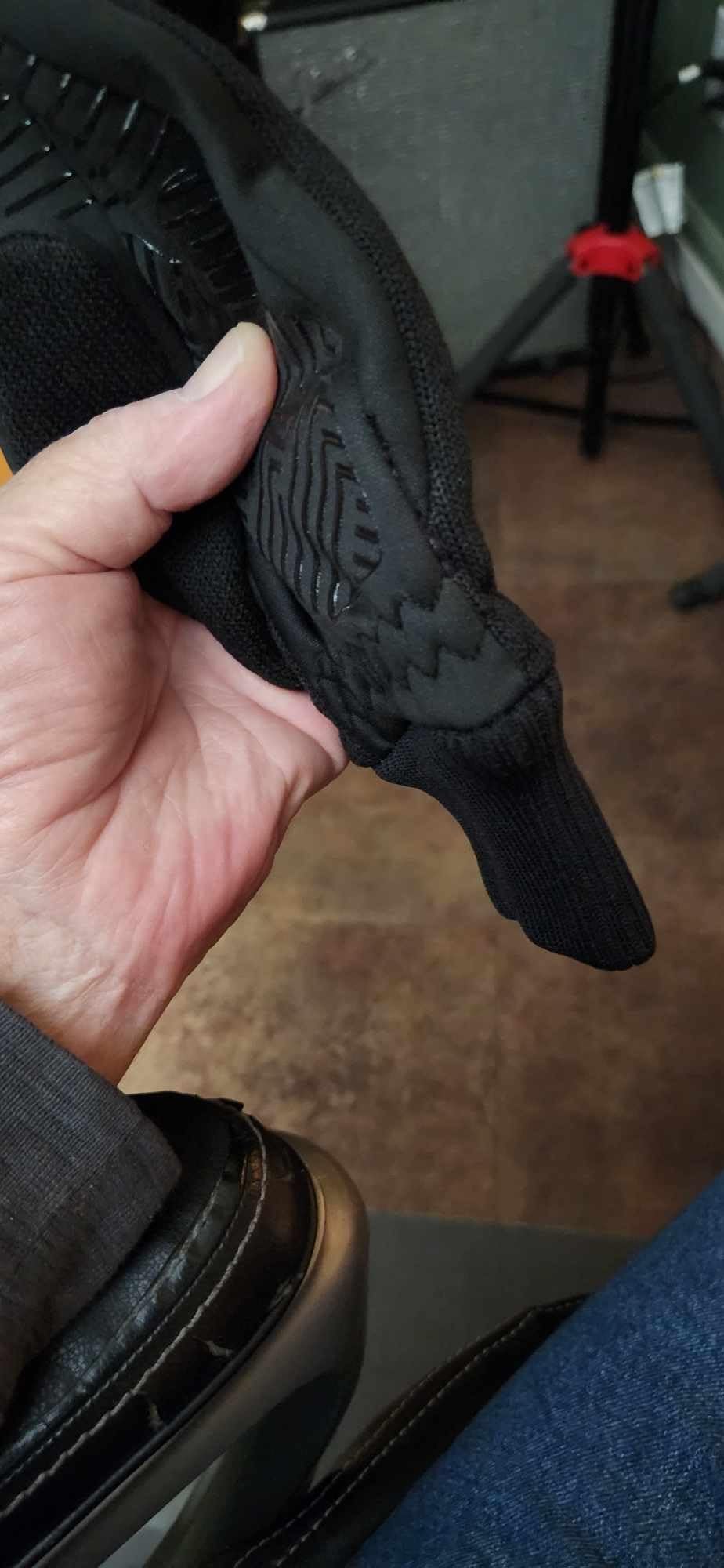
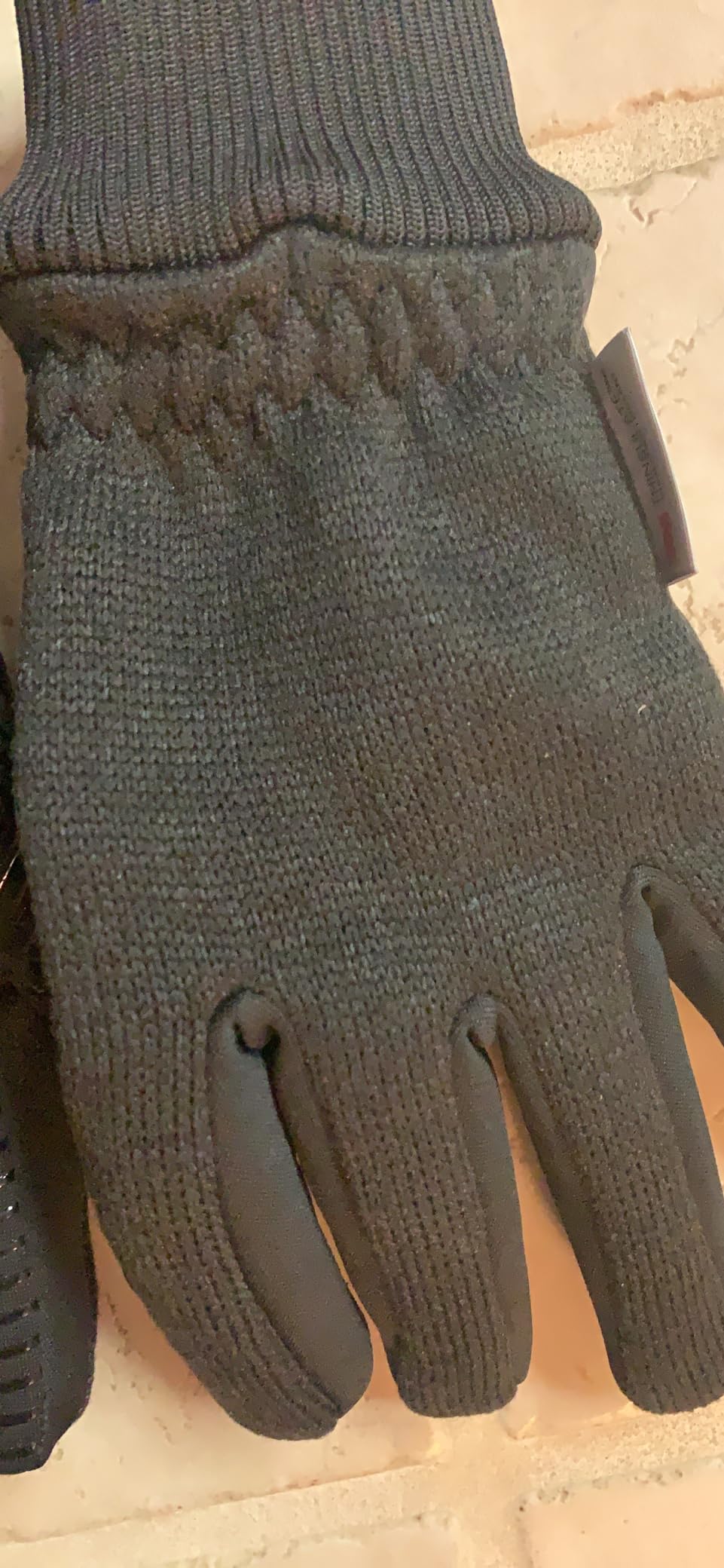
The touchscreen pads are the best-performing implementation in this entire list, working reliably on phones, tablets and watches rather than only registering an accidental press. The moisture-wicking, air-circulating interior also helps with the sweat problem, and the cuff tucks under a jacket sleeve to block wind.
Because it is a general winter glove, it works across activities. If you cycle, walk the dog, and drive in the same week, one pair covers all three, and the silicone grip is equally at home on handlebars, a steering wheel or a set of tools.
Why it beats the alternatives on value
The insulated-to-bulk ratio is what separates it from dedicated winter cycling gloves that cost several times more. It is rated to handle conditions around 20-32F comfortably, which puts it below our top pick for real cold, yet it stays flexible enough to ride in.
For riders who do not ride every day, one versatile pair that handles cold commutes, errands and driving is a more sensible purchase than a cycling-specific glove that only gets used for a few months.
Where it is the wrong choice
There is no water resistance at all. The construction is fully fabric, so it soaks through in rain or wet snow, and that is the single biggest reason not to pick it for winter commuting. It also runs about a size smaller than expected.
It is not insulated enough for extended exposure far below freezing, and the fingertip pads can fray with heavy use over time. If your riding is wet as well as cold, choose a membrane glove instead.
10. SIMARI Winter Gloves: Most Versatile and Best Standalone Liner
- Best-selling budget option with the largest review base
- Warm and soft inside for everyday cold
- Silicone palm grips bars tools and steering
- Reflective panels improve night visibility
- Snug fit keeps dexterity while typing
- Limited water resistance for prolonged snow
- Touchscreen handles taps and calls but not typing
- Not warm enough for skiing or long outdoor sessions
- Sizing varies so size up between sizes
With more than 45,000 reviews, this pair has been worn by more riders than everything else on this list combined. The reason is simple: the flannel lining is warm and soft, the fit is not bulky, and it costs very little. It is the pair most people will reach for when they need something for the walk to the shop in February.
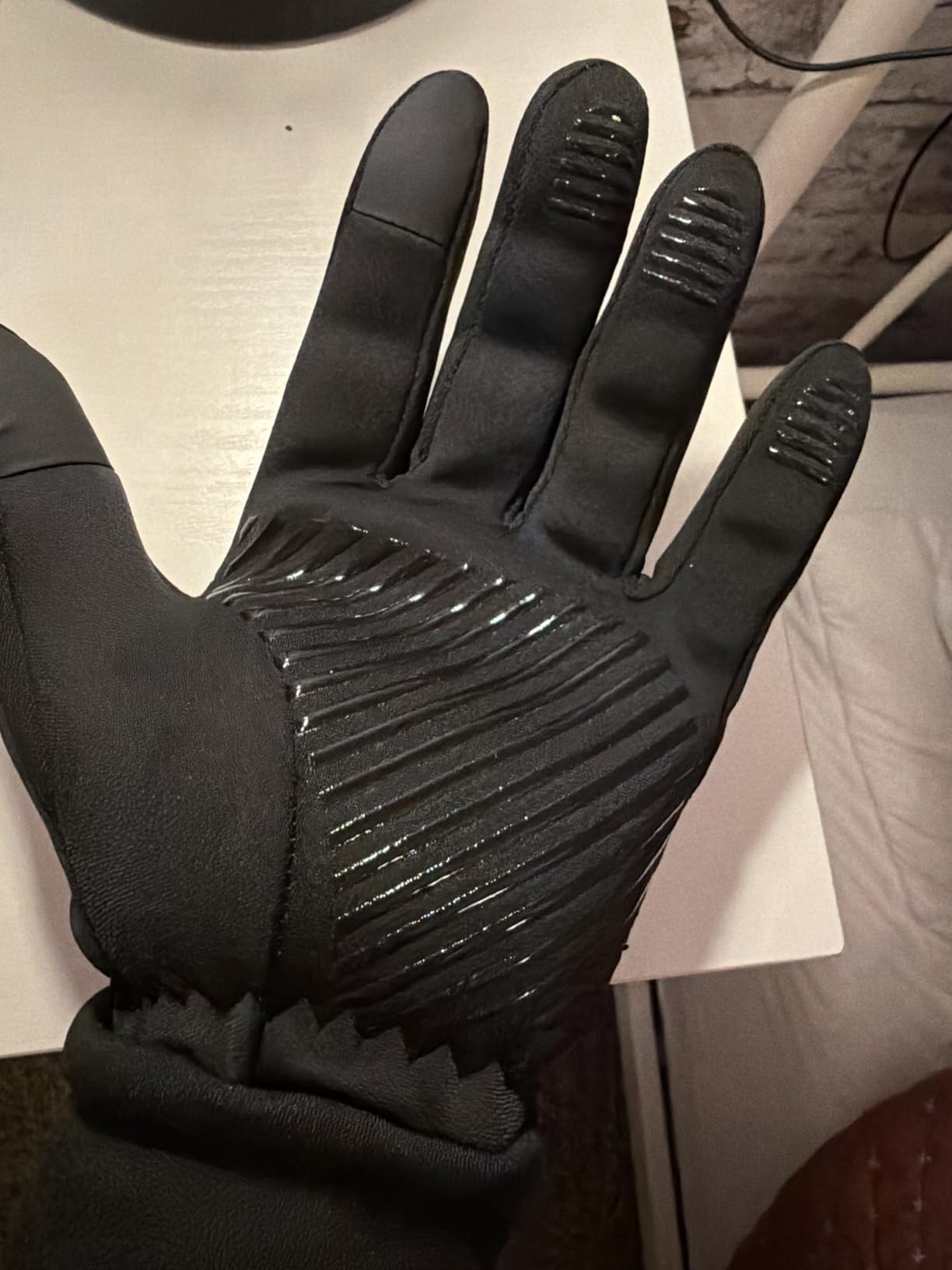
As a riding glove it works best as a shoulder-season or liner option rather than a deep winter one. The snug lycra-style fit keeps enough dexterity for typing on a phone at a light, and the silicone grip particles on the palm and fingers hold the bars, tools and a steering wheel well.
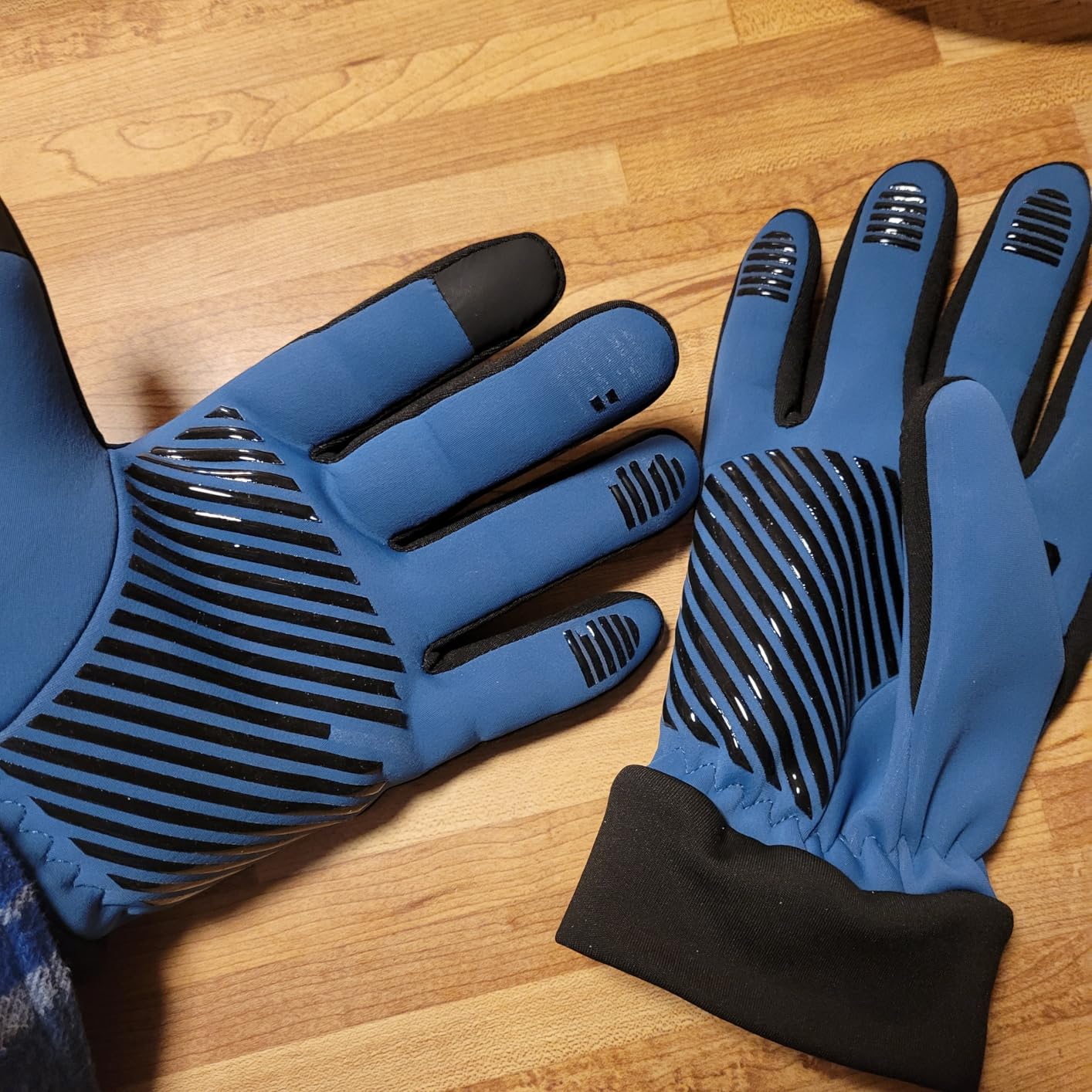
Reflective patterns on the back of the hand improve visibility at night, which is a genuine benefit for riders using unlit routes in the dark months. The elastic cuff is comfortable but does not seal as tightly as a hook-and-loop or gauntlet design.
The touchscreen compatibility is honest about its limits in practice. It handles taps and calls reliably and does not work for scrolling or typing, which is the standard limitation on conductive fabric at this level.
Where it makes sense
If you ride in cool rather than cold conditions, this is a perfectly serviceable glove that keeps your hands comfortable on the way to work without the bulk or expense of a dedicated winter pair. It is also the easiest glove here to wear alone, with no liner required for mild chill.
It is rated as a unisex glove with a wide size and colour range, and the large review base means fit problems are easy to diagnose and compare against other buyers.
Where it is not enough
Do not expect it to handle prolonged snow exposure, and it is not rated for the kind of extended cold that comes with skiing or long stationary winter sessions. Water resistance is limited, so wet weather is out.
Sizing varies between pairs, so if you are between sizes, size up. That single warning appears often enough that it is worth acting on before you order.
How to Choose Winter Cycling Gloves That Fit Your Riding
The single most useful decision you can make before reading any spec sheet is working out the temperature you actually ride at. Not the temperature you think you will face, but the one on a typical Tuesday morning when you are rolling out of the door. Buy for that number, and treat anything colder as a reason to add a layer rather than to buy a heavier glove.
Start with temperature, then waterproofing, then fit
Warmth claims are the least reliable number in this category, so start there and set your expectations honestly. Roughly 45-60F needs a thin fleece-lined glove that keeps dexterity. Around 28-40F needs real insulation with a sealed wrist, and 20-30F needs a deep cold design or a shell and liner combination. Below that, layers beat a single thick glove every time.
Only after temperature should you consider water. Plenty of gloves marked waterproof are water-resistant, and a rider who cycles in drizzle will be fine with water-resistant, whereas a rider who cycles in rain will not. Paying more for a membrane is wasted if you only face the first case.
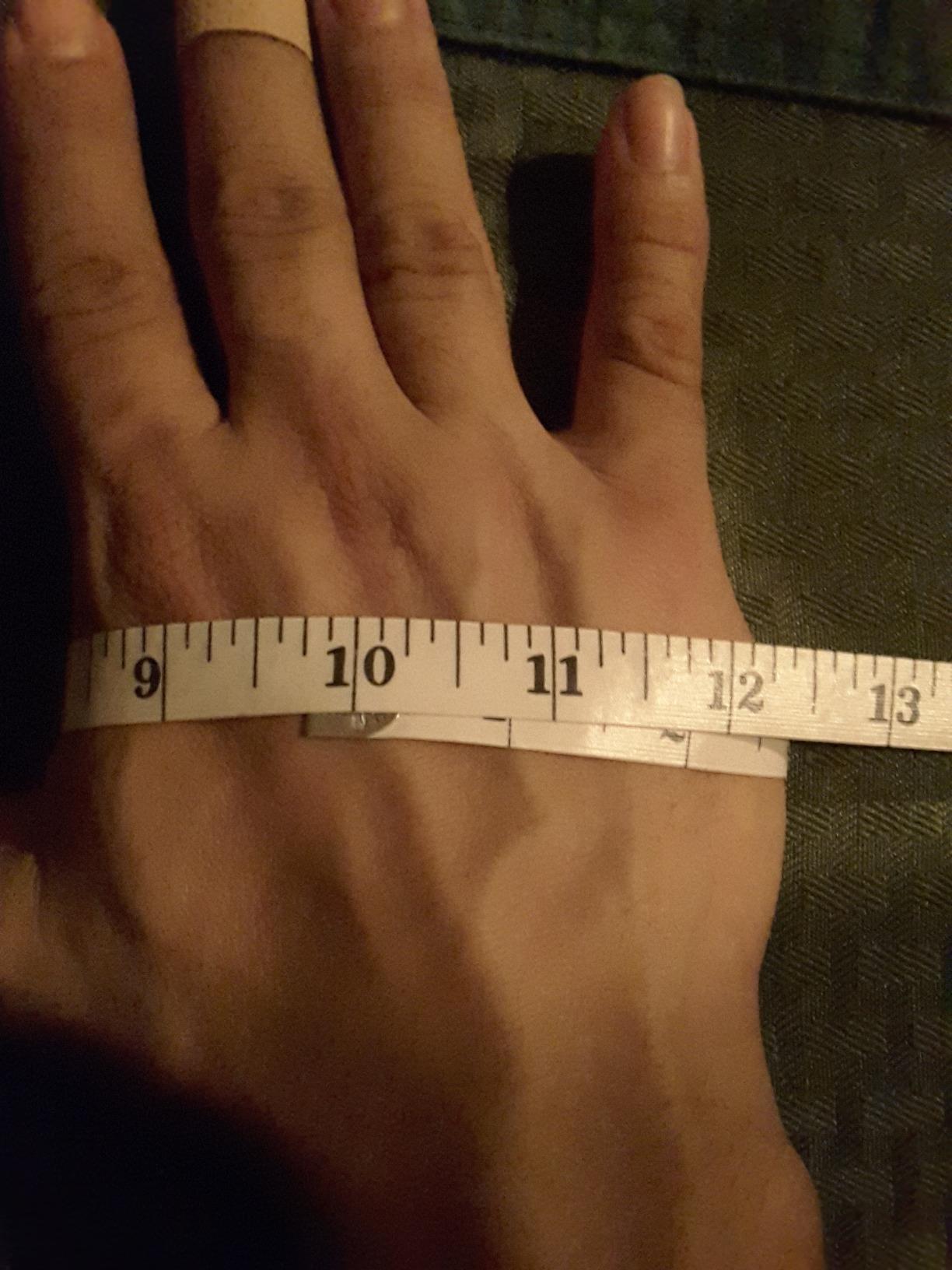
Fit is the third filter and the one riders most often skip. A glove that is technically warm but slightly too small gives you a numb hand rather than a warm one, because a compressed finger circulates badly. Sizing up on a close-fitting model is usually the right call.
Waterproof vs water-resistant vs windproof
These three words describe completely different jobs, and confusing them is how riders end up wet and unhappy. Water-resistant means a treated outer fabric that sheds light rain and spray for a limited time. Windproof means the fabric blocks moving air, which is what actually strips heat from your hands. Waterproof means a membrane plus sealed seams, which is the only version that holds up in real rain.
A useful test when reading listings is to look for whether seams are taped. Waterproof membranes fail at the stitching around the fingertips and along the finger seams first, so a glove claiming waterproof with untaped seams will disappoint you in exactly the conditions you bought it for.
Lobster, split-finger and five-finger designs
Two fingers in one sleeve, as on a lobster design, cut total surface area and warmth loss, which is why they show up so often in deep cold recommendations. The cost is braking feel, since your index finger cannot move independently. A split-finger mitten is the compromise that recovers most of the braking control while keeping the shared warmth benefit.
For most riders the honest answer is that five-finger gloves win on control and split-finger wins on warmth, and the crossover point is a rider who is genuinely cold rather than merely cool. Riders on cycling forums repeatedly point out that a glove being windproof and not too tight matters more than the design label.
Cuffs, sleeves and how many pairs you need
The wrist is the most common leak in any winter glove, because riders tuck a short cuff under a jacket sleeve and a gap opens as you bend forward. An elongated knitted cuff or a hook-and-loop closure solves it properly, and both appear among our picks for exactly that reason.
On how many pairs to own, two covers a winter well and the pattern is consistent across reviewers. Keep a light, breathable pair for the shoulder season and your hard efforts, and a heavier insulated pair for the cold mornings. Riders who own one pair end up either overheating or being too cold, whichever season they optimised for.
If your circulation works against you
Riders with Raynaud’s disease or generally poor hand circulation are the group most likely to be defeated by a normal winter glove, and they are the group most often left out of buying guides. The pattern that works is adding warmth from outside the body, either with handlebar covers and pogies or with gloves that carry a battery.
Riders on cycling forums consistently point to pogies and heated gloves as the only two options that reliably work for Raynaud’s, because the problem is blood flow rather than insulation. Layers help, but they help less than they do for riders with normal circulation, and it is worth knowing that before you spend money on a pair that will not fix it.
Our other cold-weather gear picks are worth pairing with any of these gloves. The best cycling sunglasses for road riders keep the rest of your face protected, and if you are building a full winter kit, our cycling shoes guide covers the other end. For longer cold rides, the earbud question is covered in our guide to earbuds for listening while cycling, since managing audio with gloves on is a real problem.
One more thing worth planning for. No glove stays dry on a multi-hour ride in steady rain, and riders who lose confidence once their hands are wet tend to stop riding rather than buy a better glove. Carrying a dry pair or a pair of thin liners in a back pocket solves a problem no membrane can.
Frequently Asked Questions
How do I keep my hands warm when cycling in winter?
Warmth in winter cycling comes from four places, in this order. Cut the wind with a windproof shell or membrane, since moving air strips heat faster than still cold air. Seal the wrist, which is the most common leak point on any glove. Add insulation in the 20s to 40s, and a shell plus thin liner system beats one bulky glove. Then manage sweat, because damp hands feel colder than dry hands at the same temperature. Hand position on the bars and keeping your core warm both help more than most riders expect.
Are lobster cycling gloves good?
Lobster gloves group two fingers into one sleeve, which reduces surface area and heat loss, so they run noticeably warmer than equivalent five-finger designs in deep cold. The trade-off is braking feel, because the index finger cannot move independently to grab a lever. They suit riders who genuinely get cold rather than merely cool, and they are most useful well below freezing. Riders who shift and brake a lot, or ride technical trails, are usually better served by a split-finger mitten or a five-finger glove.
Are neoprene cycling gloves warm enough for winter?
Neoprene is genuinely warm because it is a thin closed-cell material that resists wind and traps a layer of warm air, and that is why it is popular for wet winter riding. Its weaknesses are sweat and re-wear. The same sealed construction that keeps wind out also keeps moisture in, so a neoprene glove that gets warm on a climb comes out damp and unpleasant to put back on mid-ride. Expect to change gloves on long rides rather than plan to ride the whole way in one pair.
What temperature gloves do I need for winter cycling?
Around 45-60F, a thin fleece-lined glove keeps you comfortable and preserves full lever control. From roughly 28-40F, you want real insulation plus a sealed wrist closure. Between 20-30F, a deep cold design or a shell and liner combination is the right call. Below that, layering consistently beats a single thick glove. Buying for the temperature you actually ride at, rather than the worst case you imagine, is what keeps you from overheating in October and freezing in January.
Are heated cycling gloves worth it?
For a rider with normal circulation who can generate heat by riding hard, heated gloves are usually hard to justify, and that is a common argument in cycling forums. For a rider with Raynaud’s disease or poor hand circulation, the picture reverses completely, because the problem is blood flow rather than insulation and external heat is the only thing that reliably solves it. Heated gloves also add weight, need charging, and mean another cable or battery run through a jacket. Decide by circulation, not by weather alone.
Are waterproof cycling gloves actually waterproof?
Only some of them, and the difference shows up in the wet. A true waterproof glove has a membrane and taped seams, and it holds up in sustained rain. A water-resistant glove has a treated outer fabric that sheds light rain and spray for a limited time and then gives up. Check whether the seams are taped, because membranes fail first at the stitching around the fingertips. And remember that no glove stays dry through hours of steady rain, so a dry spare pair in a back pocket is worth more than any membrane.
The Winter Cycling Gloves to Buy in 2026
If you take one pair and make it count, the INBIKE windproof fleece glove is the one to buy. It holds warmth through the high 20s, seals the cuff, keeps reflective visibility, and leaves you with a lever and shifter you can still use, which is the combination nothing else in this roundup matches.
Pair it with the MOREOK Thinsulate glove if you want more warmth for less money and ride in dry cold, or step up to a GripGrab waterproof model if your winter is wet rather than windy. Whatever you choose, buy for the temperature you actually ride at, size up if a model runs close, and keep a dry spare in your pocket. That is the best cycling gloves for winter riding advice we can give, and it costs nothing.