
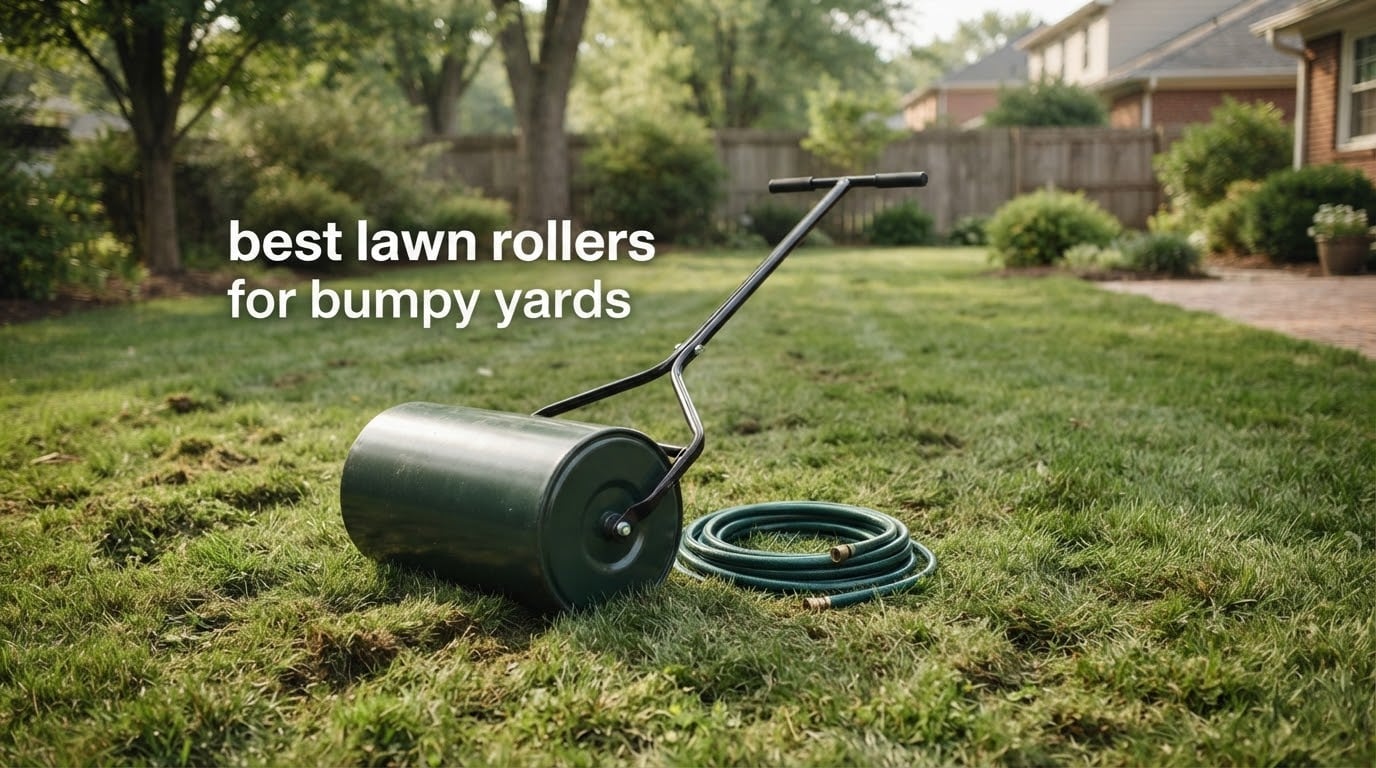
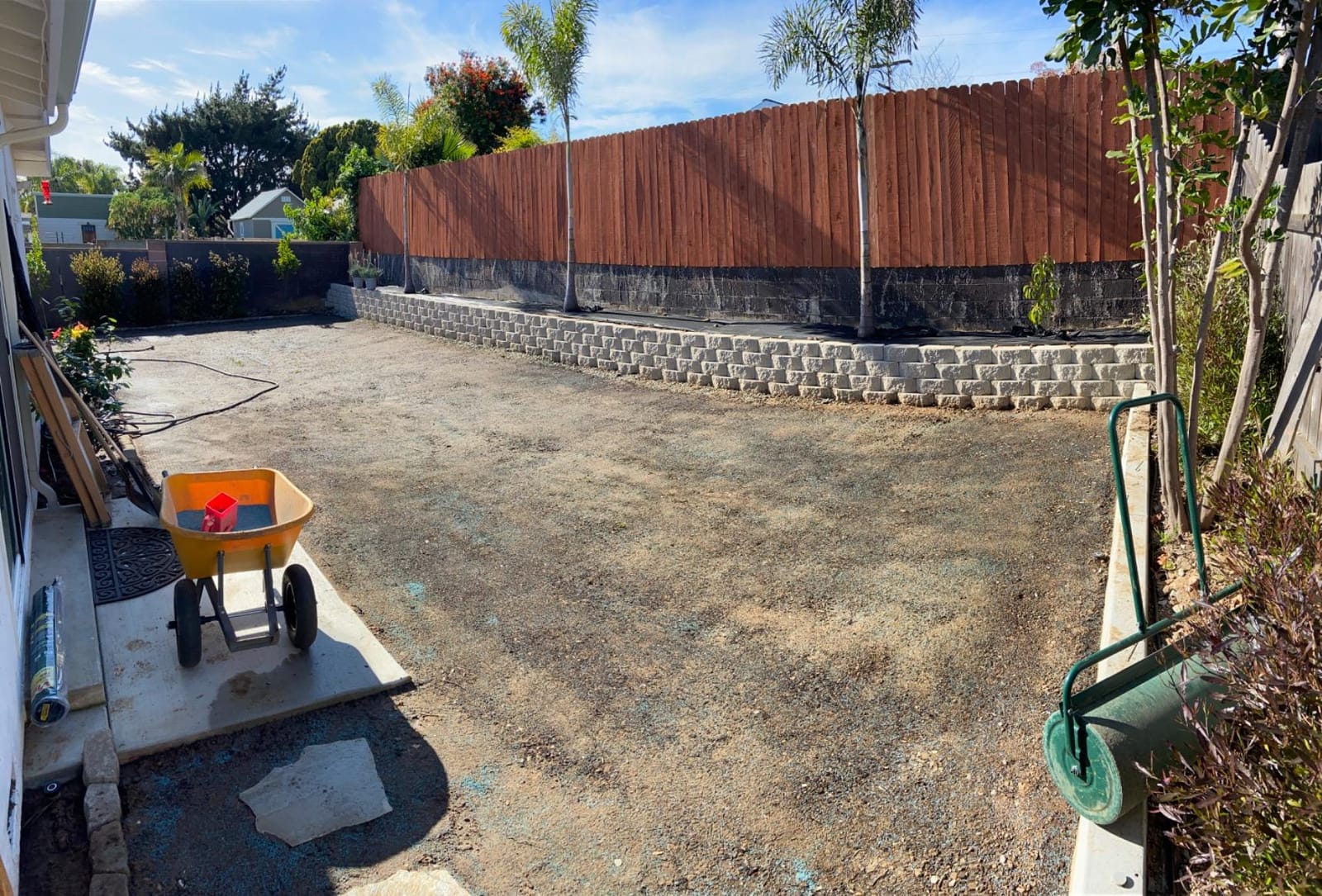
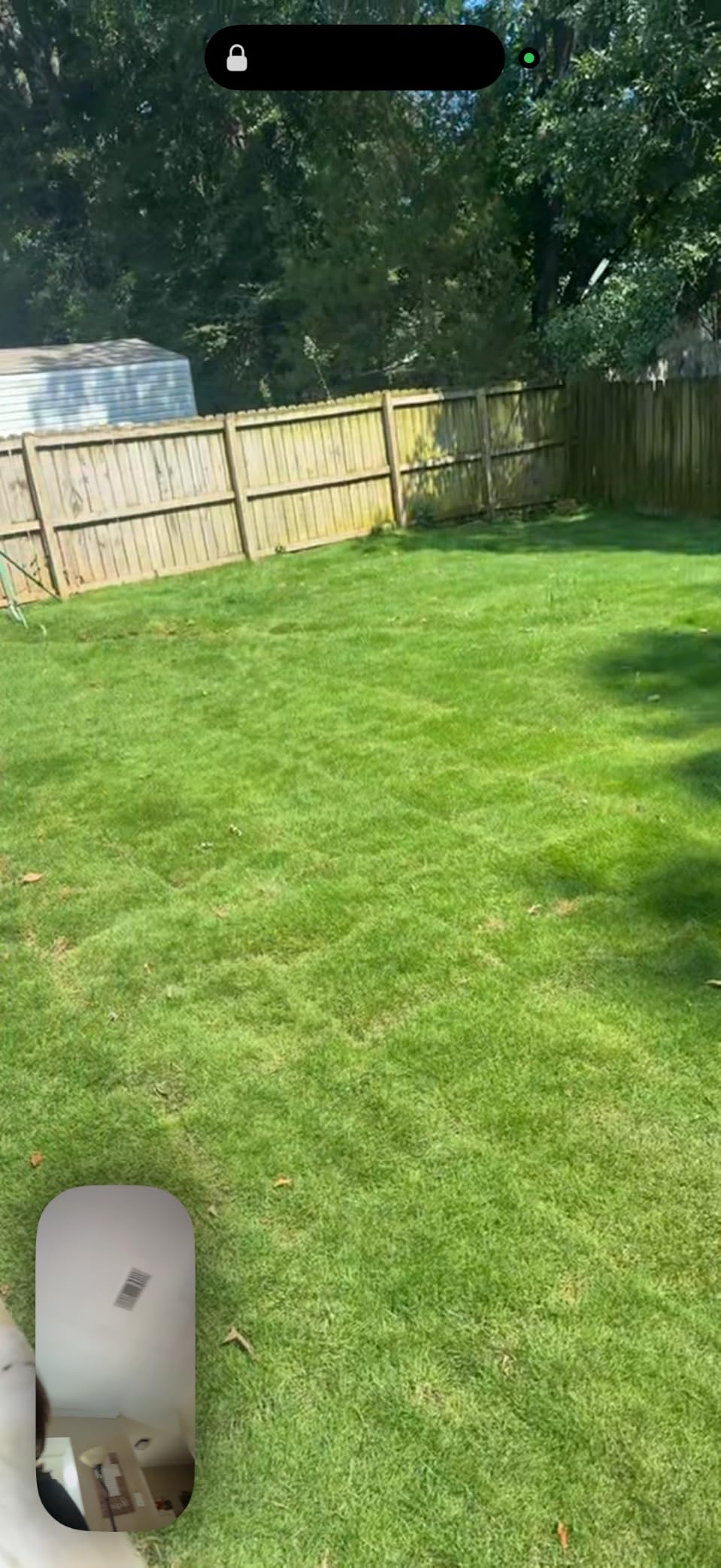
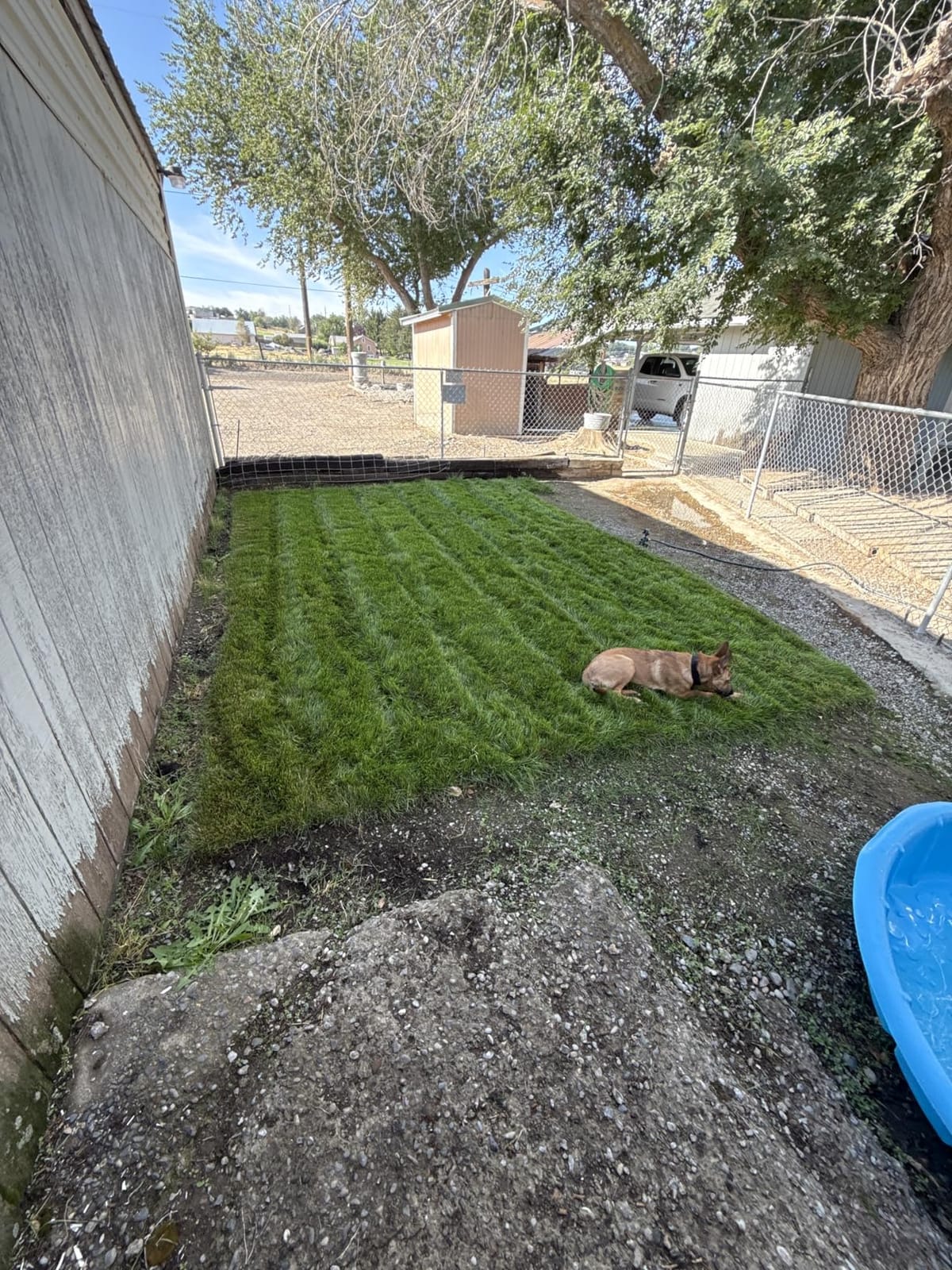
A lawn roller flattens a bumpy yard when the bumps are shallow and the soil underneath is already firm. It will not fix bad grading, washout, or a lawn that is compacted or full of holes. The drum only presses what is already there, so adding weight to a bump sitting on loose ground drives the problem deeper and leaves you with a new low spot.
That distinction is the single most important thing to understand before you spend money on one of the best lawn rollers for bumpy yards, and it decides everything else in this guide.
We went through ten of the most widely reviewed rollers sold today, checked their published drum capacity, rolling width and max filled weight, and sorted them against the question most buyers actually have: which one actually removes a bump instead of just pushing it around. The answer is almost always the heaviest drum you can comfortably control, filled no more than half way on the first pass.
Everything below is measured against the same job: flattening uneven ground. We note drum material, because a poly drum will not rust or dent while a thin steel drum will, we note width, because a wide drum bridges over dips instead of falling into them, and we note the tow hitch, because a roller you cannot hook to your mower is a roller that sits in the garage. Specs and ratings were checked against the manufacturer listings and published customer reviews as of 2026, and every number in this guide comes from those sources.
If you are still choosing a mower for the same yard, our guides to the best cordless lawn mowers for small yards and the best robot lawn mowers for suburban yards cover the cutting half of the job.
Top 3 Best Lawn Rollers for Bumpy Yards (October 2026)
These three cover the widest range of yards. The Brinly is the all-rounder, the Agri-Fab is the heavy tow-behind, and the Goplus is the one people keep coming back to when a yard is genuinely rough.
Brinly 270 lb 18×24 Poly Roller
- 28 gallon capacity
- 270 lb filled weight
- 18 in x 24 in poly drum
- Push pull or tow behind

Agri-Fab 400 lb 18×36 Tow-Behind
- 400 lb working weight
- 18 in x 36 in poly drum
- Tow behind only
- 3 year warranty

Goplus 30 Gallon Push Tow Roller
- 30 gallon capacity
- 41 lb empty weight
- 16 in drum
- Push pull or tow behind
Every Roller We Compared in 2026
All ten rollers in this roundup, with the specs that actually decide whether they level uneven ground. Filled weights are the published working weights with water or sand.
| Product | Specifications | Action |
|---|---|---|
| Brinly 270 lb 18×24 Poly Push Tow Roller |
|
Check Latest Price |
 Goplus 36 Inch Steel Push Pull Tow Roller Goplus 36 Inch Steel Push Pull Tow Roller |
|
Check Latest Price |
 VEVOR 61 L Steel Push Pull Roller VEVOR 61 L Steel Push Pull Roller |
|
Check Latest Price |
| Agri-Fab 18×36 Tow Behind Poly Roller |
|
Check Latest Price |
 Goplus 16×20 Compact Steel Roller Goplus 16×20 Compact Steel Roller |
|
Check Latest Price |
 S AFSTAR 17 Gallon Steel Roller S AFSTAR 17 Gallon Steel Roller |
|
Check Latest Price |
 ARNOT 12×36 Steel Roller ARNOT 12×36 Steel Roller |
|
Check Latest Price |
| Goplus 30 Gallon Push Tow Roller |
|
Check Latest Price |
 Brinly 485 lb 18×48 Tow Behind Poly Roller Brinly 485 lb 18×48 Tow Behind Poly Roller |
|
Check Latest Price |
 IRONMAX 30 Gallon Steel Push Tow Roller IRONMAX 30 Gallon Steel Push Tow Roller |
|
Check Latest Price |
How we picked: every roller here is water or sand fillable, so you control the weight, and every one is sold for manual yard work rather than commercial sod farms. The shortlist favours published capacity figures over marketing language, and we weighted the customer reviews heavily on two things that cause returns: fill plug sealing and drum durability.
1. Brinly 270 lb 18 x 24 Inch Poly Push and Tow Roller
Brinly 270 lb. Combination Push/Tow Poly Lawn Roller with Easy-Turn Tethered Plug, 18 by 24″ – Flat Black
- Pushes
- pulls or tows with the included hitch pin
- Poly drum will not dent or rust
- Easy-turn tethered plug stays attached between fills
- Extra-large fill opening accepts a garden hose
- Made in the USA with a 2 year warranty
- Handle can pinch fingers on tight turns without gloves
- Rubber handle grips fit loosely
- Drain it before storage or the drum can take a flat spot
This is the roller we keep coming back to for uneven residential ground. The 28 gallon drum fills to 270 lbs of working weight, and because it is adjustable you can start at a third full, judge the yard, and add water or sand until the bumps start giving.
The 18 inch diameter and 24 inch rolling width is a good match for most residential yards. The drum is wide enough to cover ground at a decent pace but narrow enough that it finds a 1 inch dip instead of bridging straight over it, which is the failure mode we see most often with the 48 inch models.
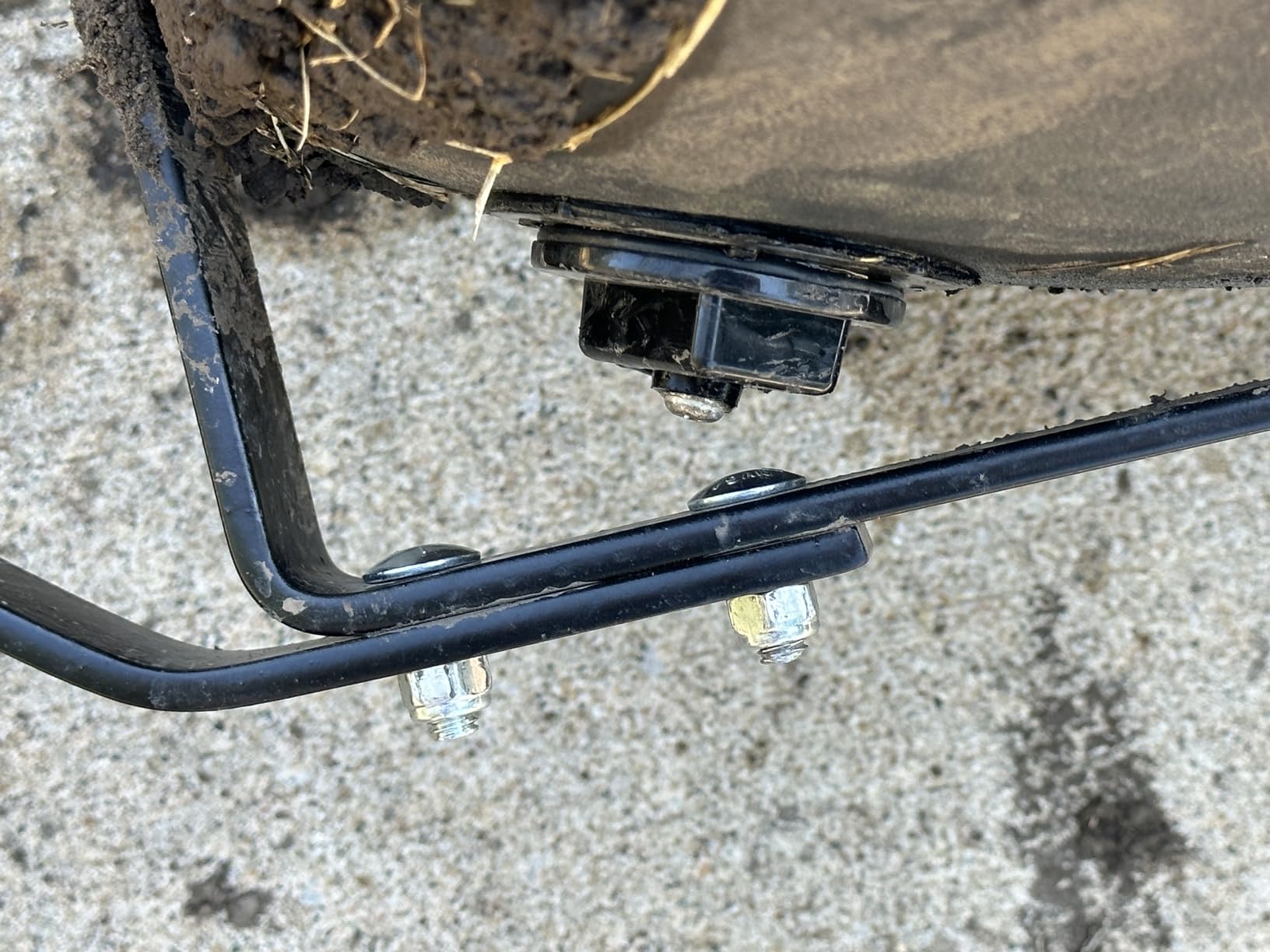
The combination design is the reason this one ranks first. Remove the handle and pin it to a riding mower for the open parts of a yard, then push it by hand around beds and along fences. That flexibility matters on a bumpy property, because the worst spots are rarely in a straight line where a tow-behind can reach them.
Owners report that it flattens torn-up yard areas and that the result holds through later weather, which is the real test. The poly drum is the practical reason it lasts: no rust, and no dents from stones or mower debris.
Two storage rules matter here. Drain the drum before winter, because water left inside can damage it in freezing temperatures, and do not leave it full and sitting still in hot weather, because a poly drum can take a flat spot.
How it handles a severely uneven yard
At 270 lbs filled, it has enough authority to knock down moderate bumps and to settle new fill soil. It is not the tool for washout ruts a foot deep. Fill it to half, make slow passes, and if the ground still springs back, the subgrade needs compacting before you keep adding weight on top.
Where it falls short
The handle is the weak point. Owners report finger pinching on tight turns if you are not wearing gloves, and the rubber grips fit loosely. Nobody complained about the drum, and nobody rusted it.
2. Goplus 36 Inch Steel Push, Pull and Tow Roller
- Powder-coated steel frame and drum resist rust
- Large 17 gallon capacity lets you dial the weight
- Rounded drum edges and a scraper bar protect the turf
- Light enough empty to hang on a wall
- U-shaped handle suits push and pull strokes
- Minimal instructions and unclear washer placement
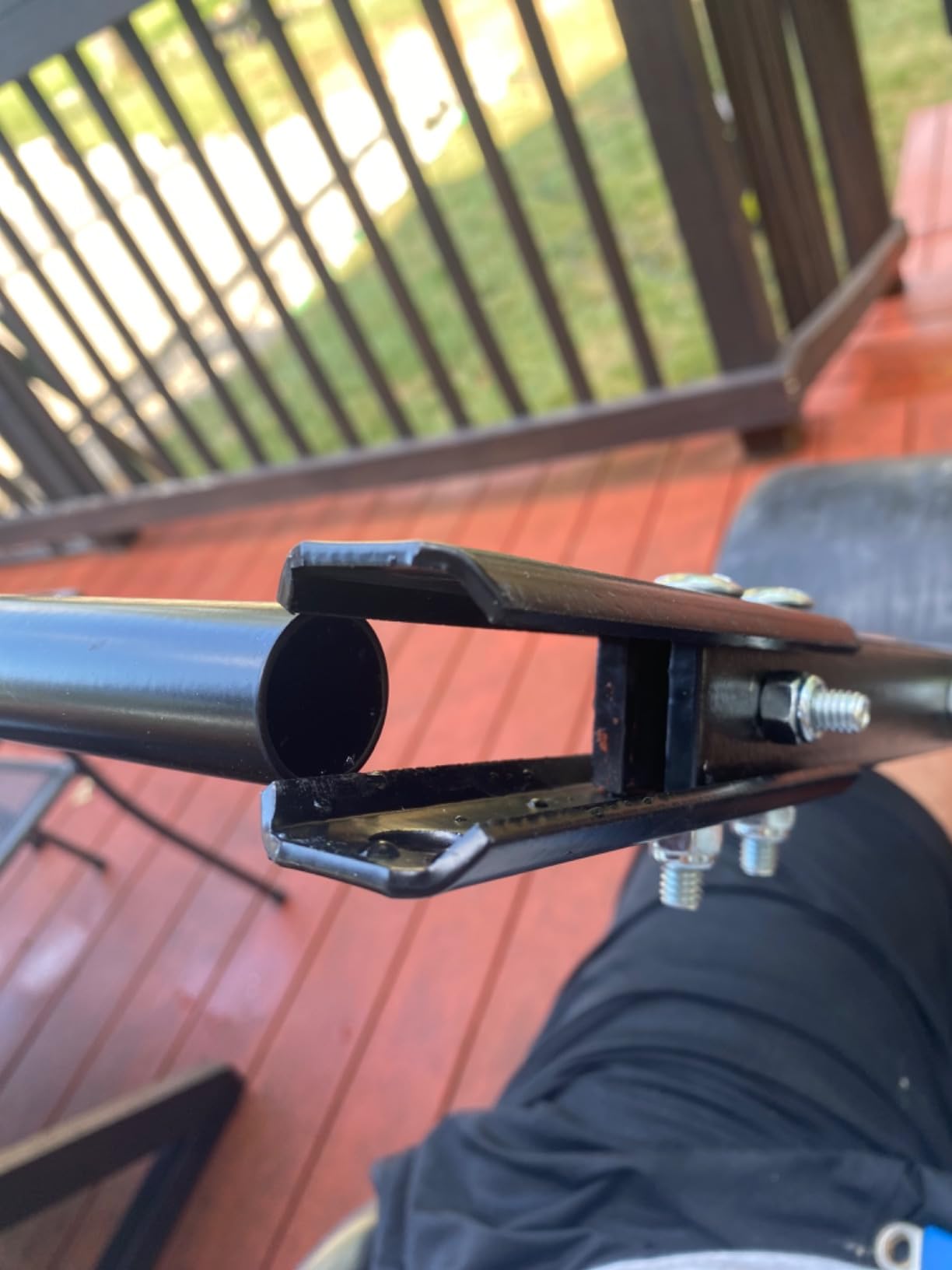
- Thin retaining hairpins on the handle can pop out
- Pop-in fill plug can leak and sits away from the drum surface
This has one of the largest review bases in the group, and it is the roller most people find when they search for a wide push roller. The 36 inch rolling width covers a large lawn in a reasonable number of passes, and the 17 gallon drum gives you a working weight somewhere in the low hundreds of pounds once it is full.
The powder-coated steel frame is genuinely built for many seasons. Unlike poly, it will not flex, and the rounded drum edges matter more than most spec sheets admit: they let you turn without tearing the turf at the ends of each pass.
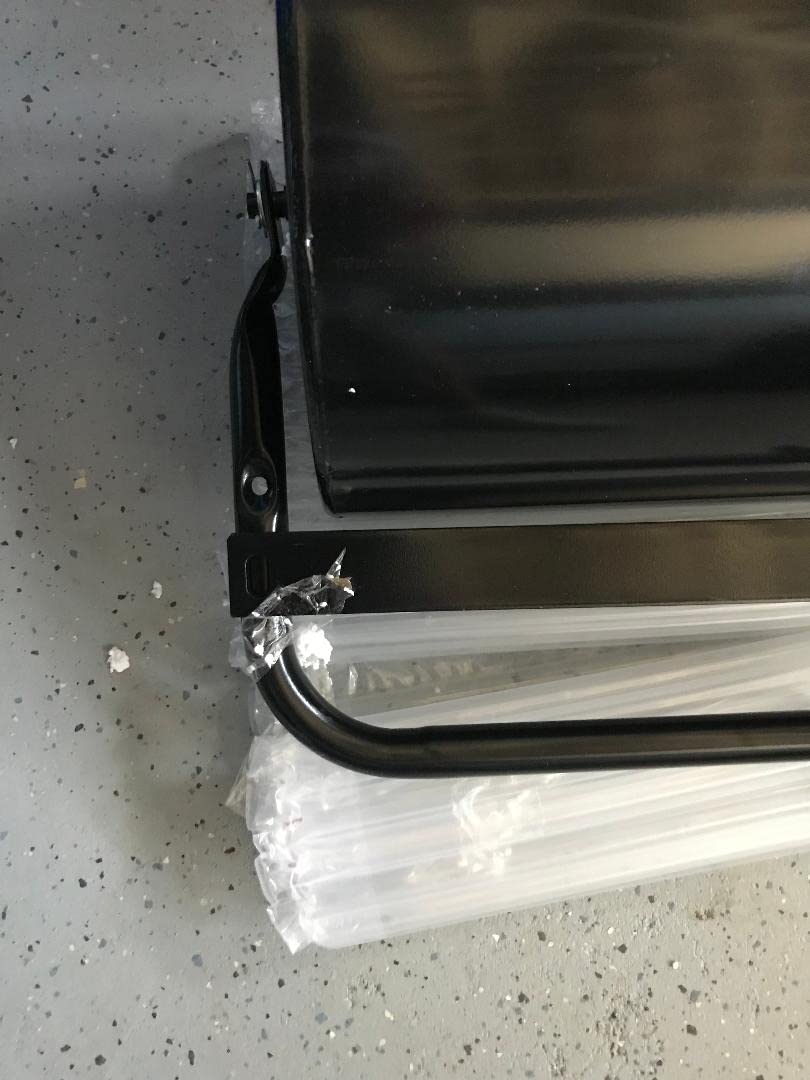
The metal scraper bar ahead of the drum is a small feature that saves real annoyance. It clears clinging soil so the drum rolls true instead of picking up a mat of dirt and skating across the lawn.
Assembly is where this roller loses points. Owners report minimal instructions, washer placement that is not clearly illustrated, and thin retaining hairpins that let the handle bars separate from the drum if you hit a bump hard. Check those pins before every session.
Filling is a little awkward as well. The plug sits away from the drum surface, so you tip the roller onto its edge to fill it completely, and the pop-in plug type is a known leak source on this and similar models.
What a 36 inch drum does to small dips
A drum this wide spans about three feet of lawn, so it tends to bridge a shallow dip and skim over the high spots on either side. If your bumps are narrow and under an inch or so, a narrower drum like the Brinly above will find them more reliably. For broad unevenness across an open yard, the width wins.
Where it falls short
Thin steel dents, and the hardware quality control is uneven. If your yard has stones, roots or stumps in the soil, expect dings, and keep an eye on the handle hairpins.
3. VEVOR 61 L Steel Push and Pull Roller
- Thickened high-carbon steel drum feels heavier duty than most budget rollers
- Sealed bearing system blocks dust and water
- Sealing rings and iron plugs rarely leak in reviews
- Metal scraper bar keeps the drum clean
- Wall mountable for storage
- Push-pull only with no tow hitch included
- Some owners want a wider drum for large yards
- Heavier than a poly drum to move when empty
The VEVOR punches above its class on drum construction. The thickened high-carbon steel shell with a double-layer rust-resistant coating is a step up from the light-gauge sheet steel used by several other rollers here, and the sealed bearing system is designed so you can leave it outside in a shed without servicing it.
At 16 gallons of capacity and 35.4 inches wide, it sits in the middle of the group on both weight and width. That makes it a sensible choice for a mid-size yard where you want more punch than a compact roller without handling a 400 lb tow-behind.
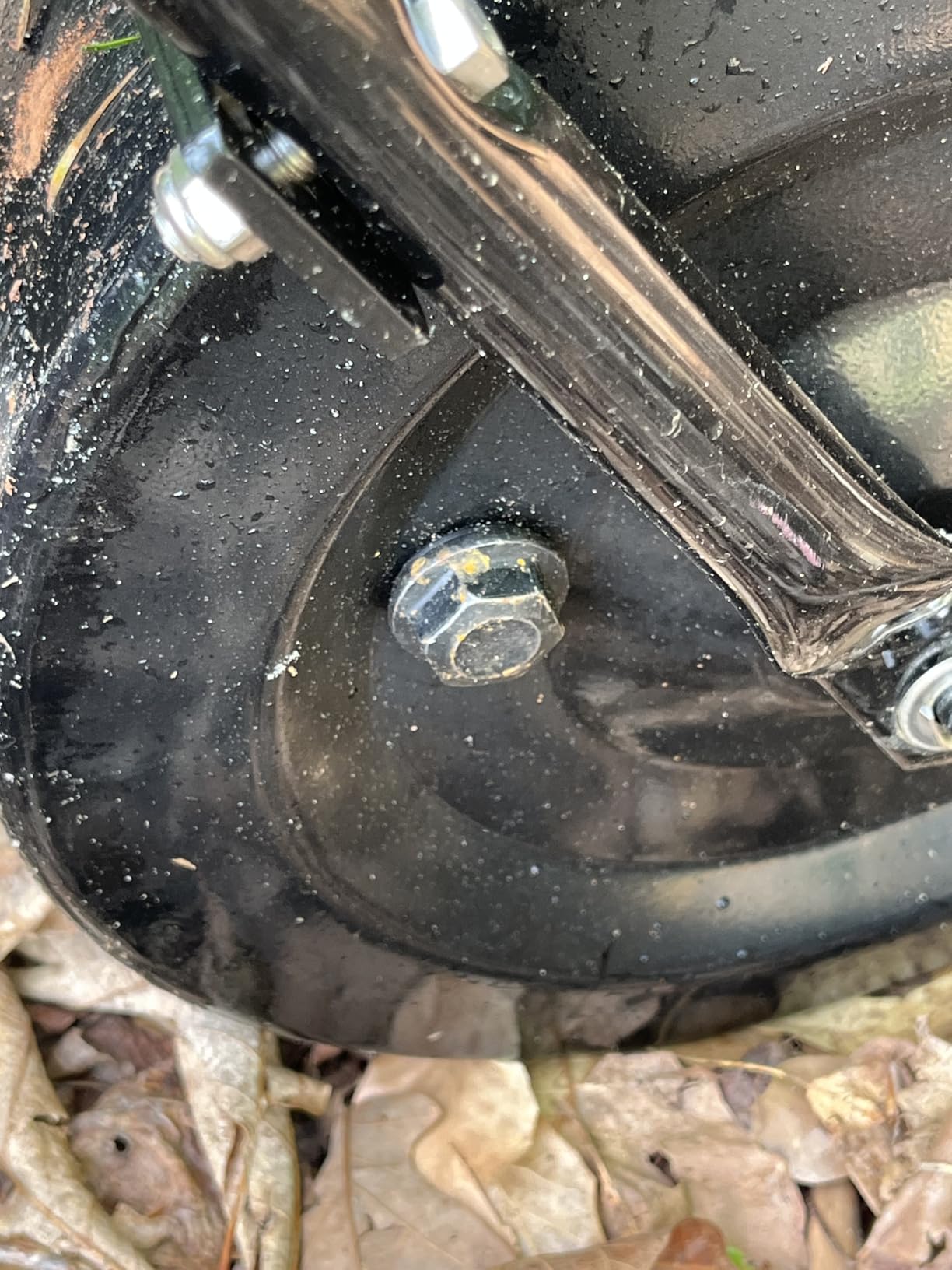
Leakage is rarely mentioned in its reviews, and that is a real differentiator in this category. Pop-in plugs are the most common complaint across budget rollers, so a drum whose sealing rings and iron plugs hold water is worth noting.
It also has the best sales rank of anything in this roundup, which tells you this category of steel roller is moving in volume right now. Buyers keep it for seed beds and general leveling work rather than one dramatic job.
Is it heavy enough for a bumpy yard
It is enough for frost heave repair, seed settling and moderate unevenness. If your bumps are the kind that a mower deck catches on, step up in capacity rather than in drum quality, and consider a 30 gallon model instead.
Where it falls short
There is no tow hitch. On a larger or awkward yard you will be walking it the whole time, and that is the point at which a detachable-handle model starts paying for itself.
4. Agri-Fab 18 x 36 Inch Tow-Behind Poly Roller at 400 lbs
Agri-Fab 45-0606 18″ x 36″ Tow Behind Poly Lawn Roller 400 lbs weight with water, Poly Drum and Steel Frame, with Plug. Designed for Lawn and Garden Tractors
- 400 lbs of water weight levels uneven ground and new soil
- Poly drum is lighter than steel to move and store
- Plug accepts a standard garden hose for fast filling
- 36 inch swath covers ground fast behind a riding mower
- Assembles in about 15 minutes with a 3 year warranty
- Tow behind only with no handle for walking it
- Fill plug can be hard to seat fully
- One reviewer reported missing hardware from an opened box
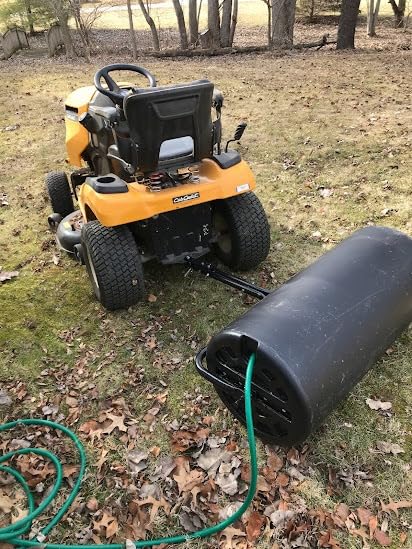
If you already own a riding mower or garden tractor, this is the roller that will move a seriously uneven yard. At 400 lbs of working weight it is the heavy tow-behind for a mid-size property, and 400 lbs is enough to flatten fill sand, topsoil and clay rather than just pressing the surface.
It also has the highest share of five-star reviews in this roundup, and the pattern in those reviews is consistent: owners use it on large seeding jobs, on new fill, and for striping athletic fields. The 36 inch swath means fewer passes over a large area.
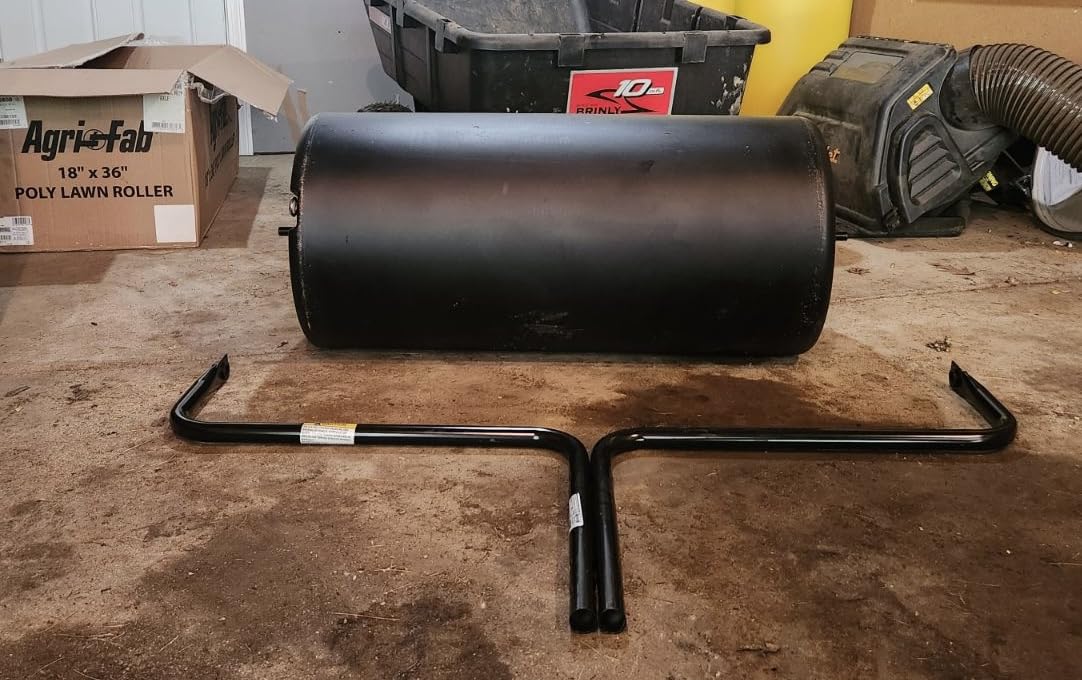
The poly drum on a steel frame is a sensible combination. You get the weight and the durability of a welded frame without the dead weight of a steel drum, and under 50 lbs empty it is still manageable enough to load into a truck bed.
Filling is quick because the plug takes a garden hose directly, and draining is just as fast. Plan on doing that before winter, since the drum and the plug are both vulnerable to freezing water.
How it performs on a new-build or filled yard
This is the situation it was made for. When a contractor has spread new fill and the topsoil has been raked flat but not firmed, a 400 lb roller behind a tractor settles that layer properly in a handful of passes. Smaller rollers will just push the loose layer around.
Where it falls short
There is no handle, so beds, corners and anything behind a fence are out of reach unless you unhook and reposition constantly. The plug seating also gets occasional complaints, and check the hardware bag on arrival.
5. Goplus 16 x 20 Inch Compact Steel Roller
- Narrow footprint fits tight areas and small sheds
- Under 20 lb empty so it is easy to carry and transport
- Spray-treated steel resists rust and sinking
- Rounded drum edges keep turns clean
- Good for light leveling and packing seed
- About 155 lb filled is light for severely uneven ground
- Lowest average rating in this roundup with a 10 percent one-star share
- Green powder coat finish scuffs visibly
- Minimal instructions for a first-time buyer
This is the small-yard roller. The 16 inch drum and 20 inch rolling width make it the easiest unit here to maneuver around garden beds, along a path edge, or into a corner that a 36 inch drum cannot physically enter.
It is also the lightest to move. Under 20 lbs empty means you can lift it into a car or carry it across a patio, and the detachable design means it stands out of the way in a garage when the job is done.
That portability is the whole argument for it. It also has the lowest average rating in this roundup, and the reason shows up in the reviews: about 155 lbs of water is not much authority on badly uneven ground.
For its intended job, though, it works. Light leveling of a small patch, packing down seed, flattening a small mole run, smoothing a sand patch after topdressing. These are all things a light roller is genuinely good at.
Which yards suit a compact roller
Anything under a few thousand square feet where the unevenness is mild. If you want it to fix frost heave across a whole lawn, fill it with sand rather than water, since sand roughly doubles the mass for the same drum volume.
Where it falls short
It will not move a real bump. The green finish scuffs, and the instruction sheet is thin, so budget a few minutes of figuring out the assembly before you start.
6. S AFSTAR 17 Gallon Steel Roller, 36 Inch
- Steel drum holds water and rolls true on tilled soil
- Several owners get years of use out of it
- Rounded drum ends and scraper bar reduce turf damage
- Easy to fill and easy to drain for winter storage
- 36 inch width covers good ground per pass
- Retaining hairpins are flimsy and can fail within minutes
- Assembly pieces may not line up and washer placement is unclear
- Pop-in plug leaks for some owners and sits away from the drum surface
- Drum can arrive with factory dents
Where a roller earns its keep most often is a seed bed. This 17 gallon, 36 inch unit is the one reviewers describe as levelling tilled dirt and packing seed down for germination, and it does that job well enough that several owners report years of service.
Several buyers also recommend filling it with sand rather than water. Sand roughly doubles the weight for the same drum volume and, in a steel drum, it takes care of the internal rust problem that water leaves behind over a season of storage.
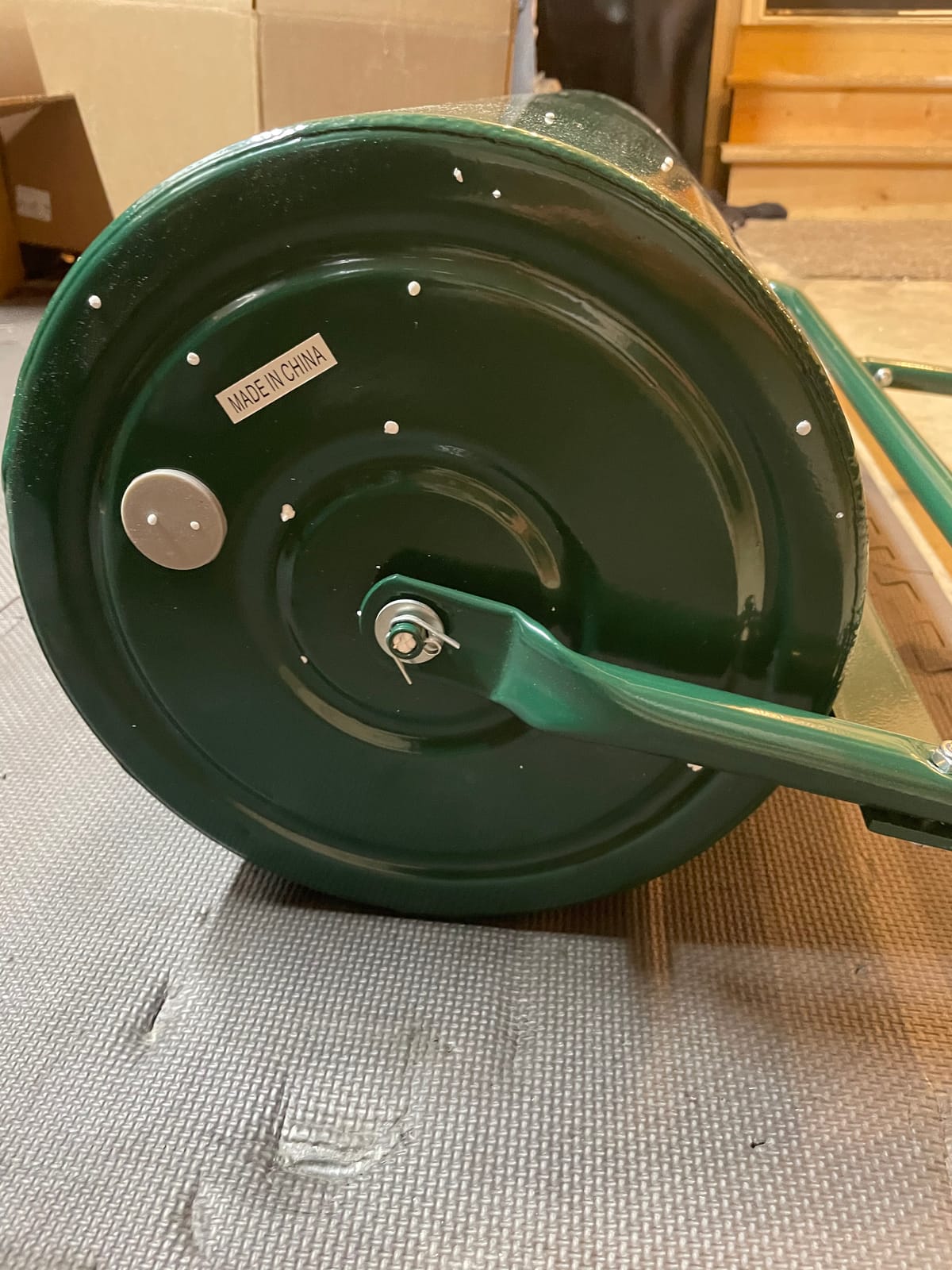
The 36 inch width means you can cover a new bed quickly, and the rounded drum ends plus the metal scraper bar keep the turf and the drum in reasonable condition through a season.
The hardware is the weak point and it is worth being blunt about it. The thin retaining hairpins that hold the handle bars to the drum have failed for multiple owners, sometimes inside a single session, and assembly pieces do not always line up without forcing.
One more practical warning from the reviews: do not pivot the drum while rolling. Turn by flipping the handle and walking the roller around instead, or you will gouge a trench in soft soil.
Is it right for uneven ground
It handles moderate unevenness in a prepared area. For raw, filled ground with loose subgrade it is too light, and the same hardware weakness becomes a liability when you are dragging it over rubble.
Where it falls short
Flimsy handle hardware, a pop-in plug that leaks, and a roller that will not stand up on its own to fill. Buy a tube of thread sealant if you own this one.
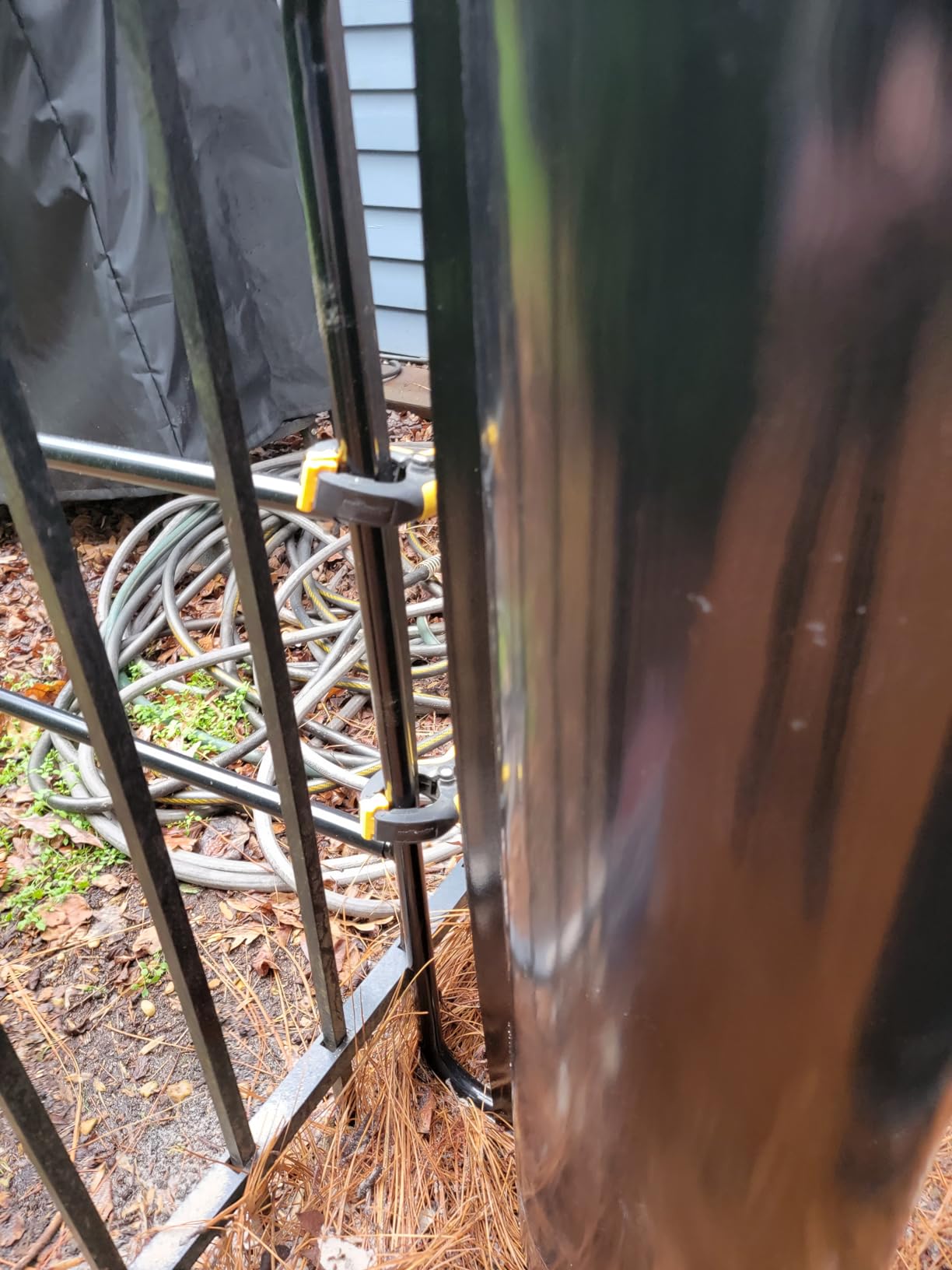
7. ARNOT 12 x 36 Inch Steel Roller, 17 Gallon
Lawn Roller, ARNOT 12×36-Inch, 63L/ 17 Gallons Heavy-Duty Push/Tow Behind Water/Sand Filled Garden Drum Roller for Park, Garden, Yard, Ball Field, Green
- Levels uneven ground and mounds in a few passes when filled
- Smooth rolling and easy to maneuver on rough terrain
- Adjustable weight matches different grass types and soils
- Easy to assemble
- fill and drain
- Compact enough to store despite the 36 inch width
- Some owners report water leaking from the drum or plug
- One fill plug snapped in half during removal
- Drum can arrive with dents despite undamaged packaging
- At about 140 lb filled some want more weight
Owners use this one for putting greens, pea gravel, new sod and general yard work, which tells you it rolls smoothly and handles a variety of surfaces. The adjustable fill lets you run light over new sod and heavier over problem patches in the same session.
At 17 gallons it lands around 140 lbs filled, which is on the light side for a genuinely bumpy lawn. But the 12 inch drum is small in diameter, and a small diameter is an advantage when you want the roller to drop into a dip rather than skate across it.
The most common complaint is plug related: leakage at the fill port, and one owner whose plug snapped in half when removing it. Inspect the plug threads when it arrives and take care when you are draining it.
Cosmetic drum dents showing up on arrival despite undamaged packaging also come up. They do not stop the roller from working, but check the drum rolls true before you start.
Best use for this drum size
Short passes over a specific defect. The small diameter and adjustable weight make it a good tool for knocking down an isolated mound or setting a seam, rather than for leveling a whole property.
Where it falls short
Light when full, prone to plug problems, and not the roller to buy if you have a riding mower and a large yard. Check the drum for flat spots once you have filled it.
8. Goplus 30 Gallon Push and Tow Steel Roller
- Highest average rating in this roundup at 4.5 stars
- Large 30 gallon drum gives real compaction weight
- Knocks down problem areas in a few passes
- Converts between push-pull and tractor towing
- Several owners assembled it without instructions
- Light gauge steel drum dents readily and one developed a flat spot
- Thin handle to roller connection broke for one owner
- Snap-in fill plug does not seal reliably
- Fill opening is small if you are filling with sand
This is the roller reviewers most often describe as heavy duty without needing a tractor. Thirty gallons of capacity puts real compaction pressure on the ground, and owners report it knocking down uneven problem areas quickly and handling multi-acre yards.
It has the highest average rating of the ten, at 4.5 stars, and the assembly is consistently called simple. The detachable handle is the key feature: pull it off to walk it, fix it to the drum to tow it behind a tractor.
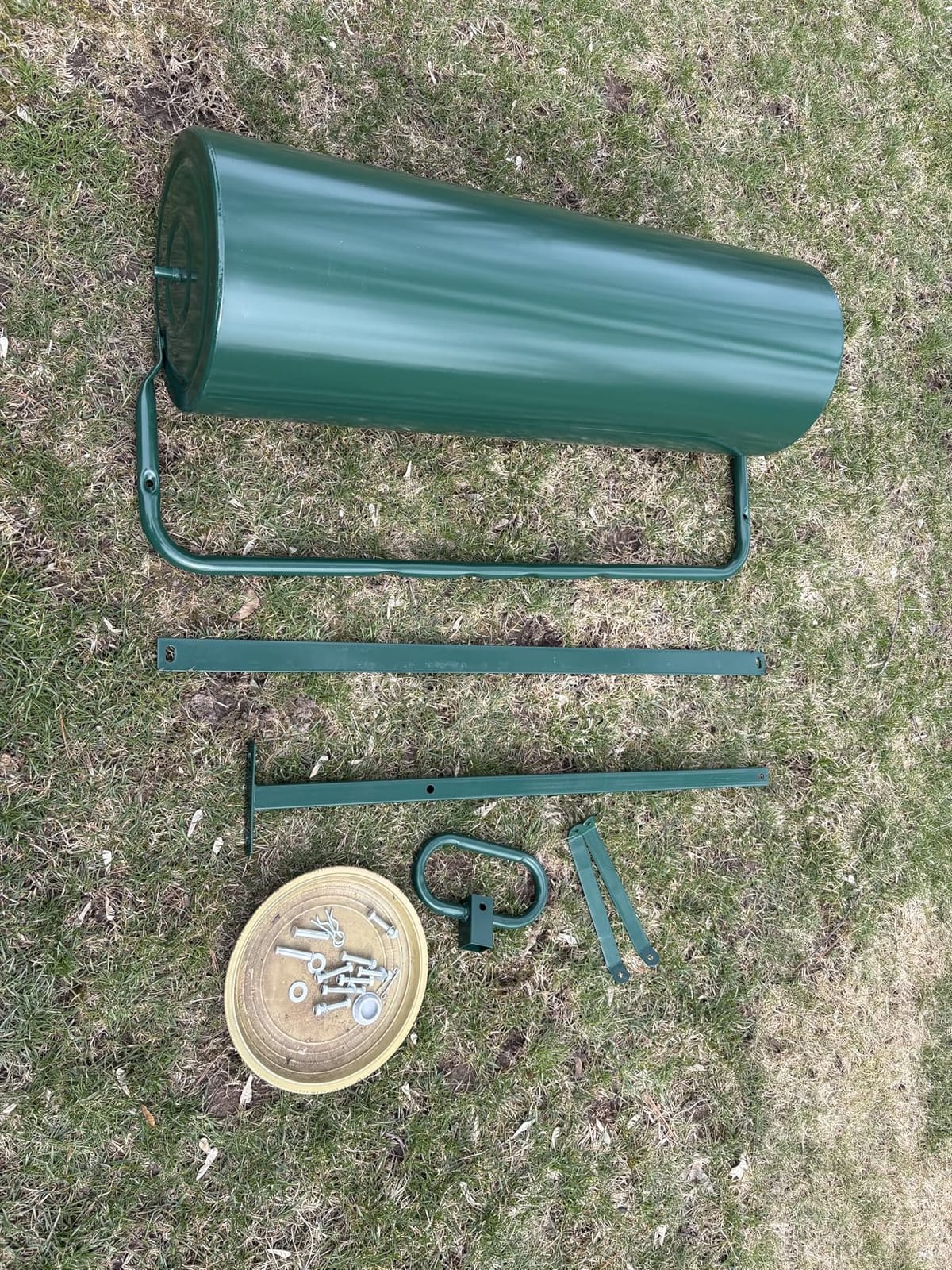
At 41 lbs empty it is still manageable to reposition, and it hangs or leans against a wall for storage. That matters because a 30 gallon drum full of water is not something you want to wrestle across a yard every time you need it.
The catch is the sheet metal. Several reviews describe the drum developing flat spots or dents after modest use, and one reports the handle connection snapping after two weeks. The handle to roller joints also need regular greasing.
How much authority does 30 gallons give you
Enough that you can move a bump that a 16 gallon drum simply bounces over. It is the practical middle point between a walk-behind roller and a 400 lb tow-behind, which is why it works for the widest range of bumpy yards in this roundup.
Where it falls short
Thin sheet steel that dents, a snap-in plug that leaks for a minority of owners, and a fill opening too small to make sand filling pleasant. Budget for a replacement plug if you fill with water.
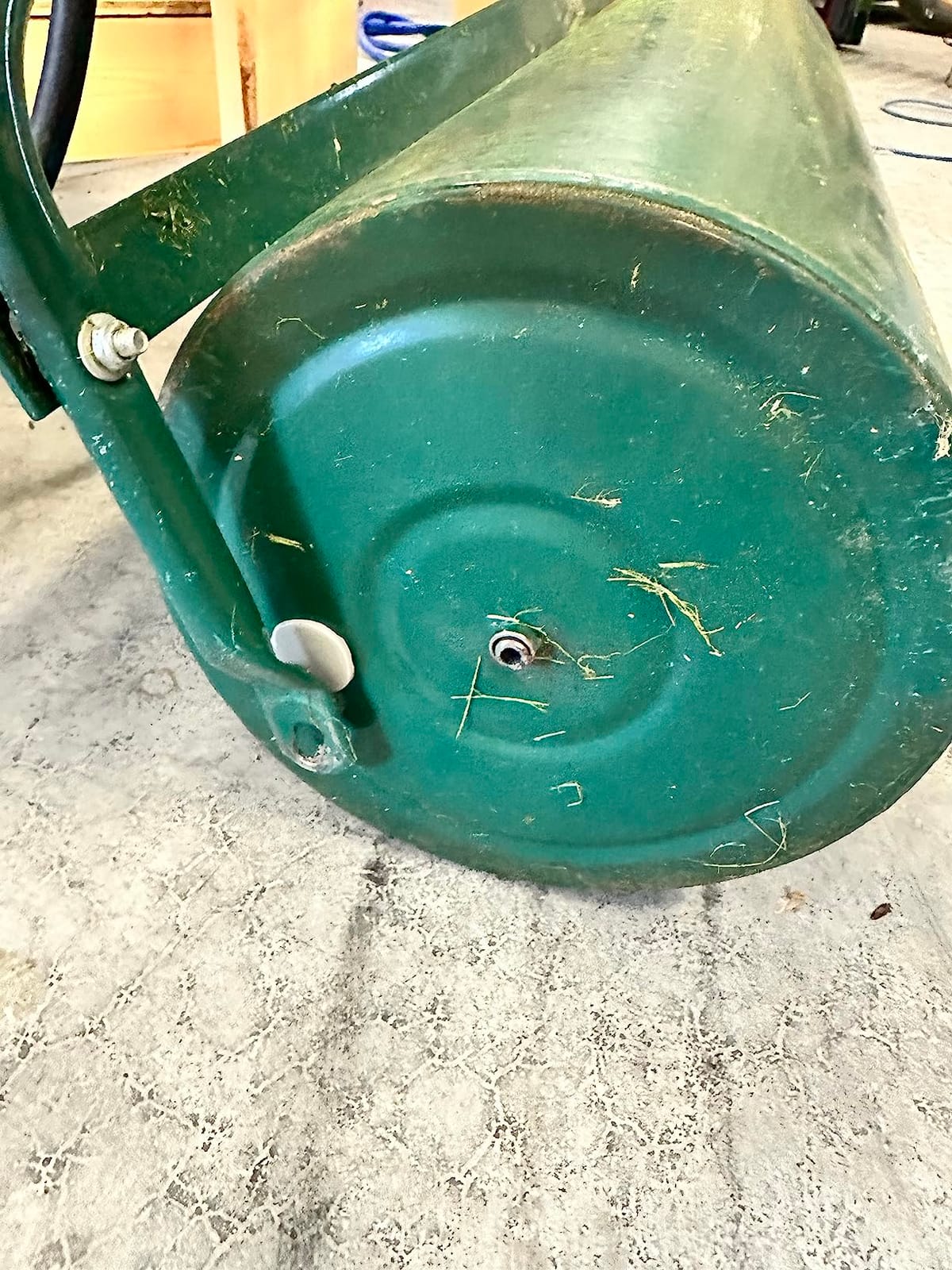
9. Brinly 485 lb 18 x 48 Inch Tow-Behind Poly Roller
Brinly 485 lb. Tow Behind Poly Lawn Roller with Easy Turn Plug, 18 by 48″
- Widest drum in the roundup at 48 inches for large yards
- Highest working weight at 485 lb for stubborn uneven ground
- Poly drum will not dent or rust
- Universal heavy duty hitch pin fits most riders
- tractors
- ZTRs and ATVs
- Extra-large fill opening speeds filling and emptying
- Tow behind only with no push handle
- Size and cost are out of reach for small yards
- Awkward to maneuver by hand even when empty
This is the biggest roller in the roundup and the one you buy when the problem is acreage-scale. Forty-eight inches of rolling width and 485 lbs of working weight will flatten mole damage, frost heave and new sod across a large property in a fraction of the passes a walk-behind would need.
Owners treat it as the big-yard, big-job option, and the poly drum is credited with not rusting or denting while still surviving years of outdoor storage. The included universal hitch pin is what makes it painless to hook to different machines.
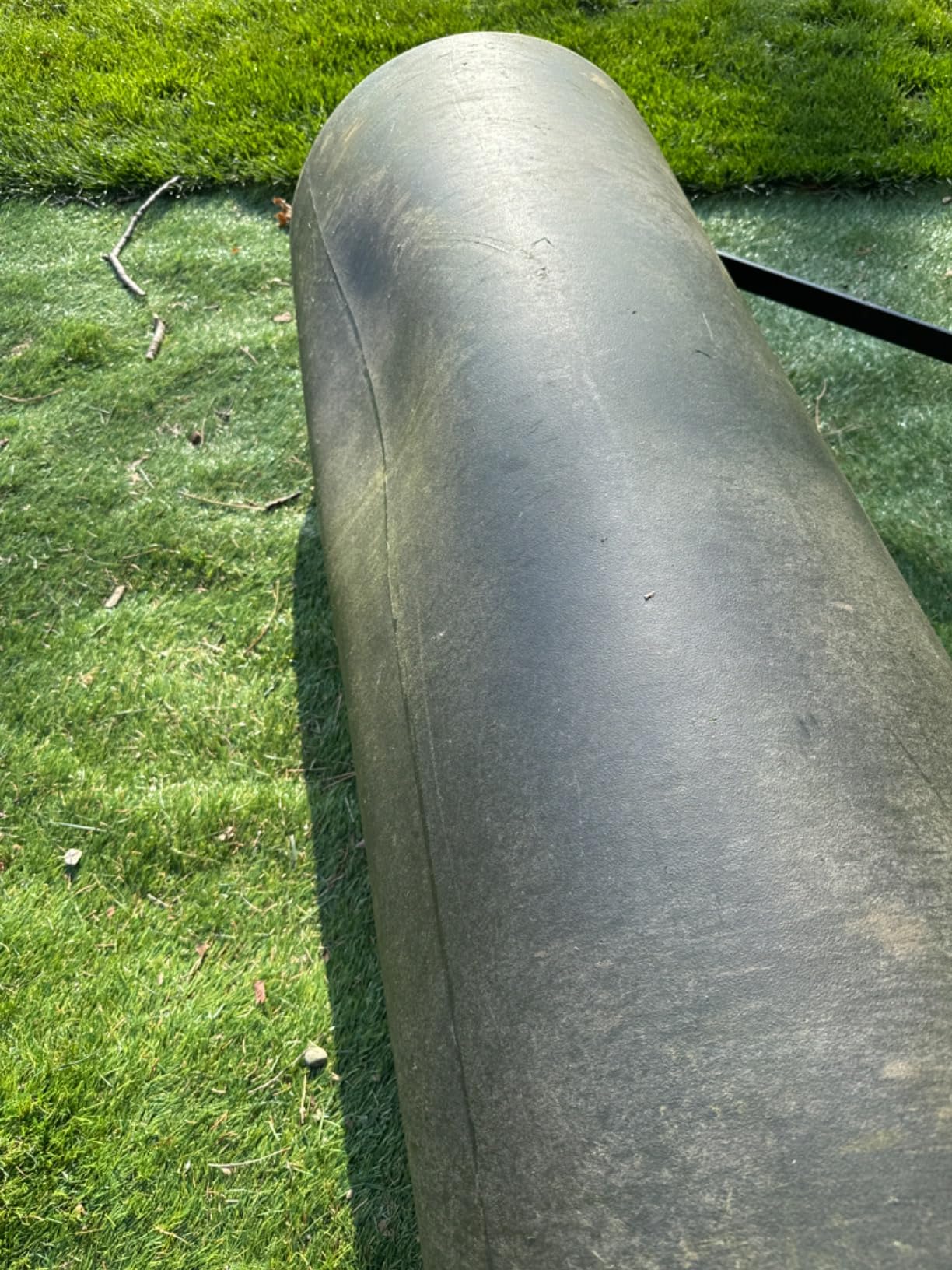
The hitch compatibility is worth calling out because it is a live source of confusion. The pin on this model fits most riding mowers, tractors, zero-turn mowers and ATVs, which is broader than the fixed hitches on many tow-behind rollers.
Rounded drum ends protect the turf during turns, and the metal scraper bar clears debris ahead of the drum. The extra-large fill opening takes a garden hose, so a 54 gallon fill is a short job rather than an evening.
When a 48 inch drum is too much
Wide drums bridge. A 48 inch drum spans more than four feet of lawn, so it will skim across a dip that is only a foot or two wide rather than settling into it. If your unevenness is small and scattered, a narrower drum will actually do a better job.
Where it falls short
It is impractical without a tractor, zero-turn or ATV, and even empty it is awkward to move by hand. This is not a first lawn roller.
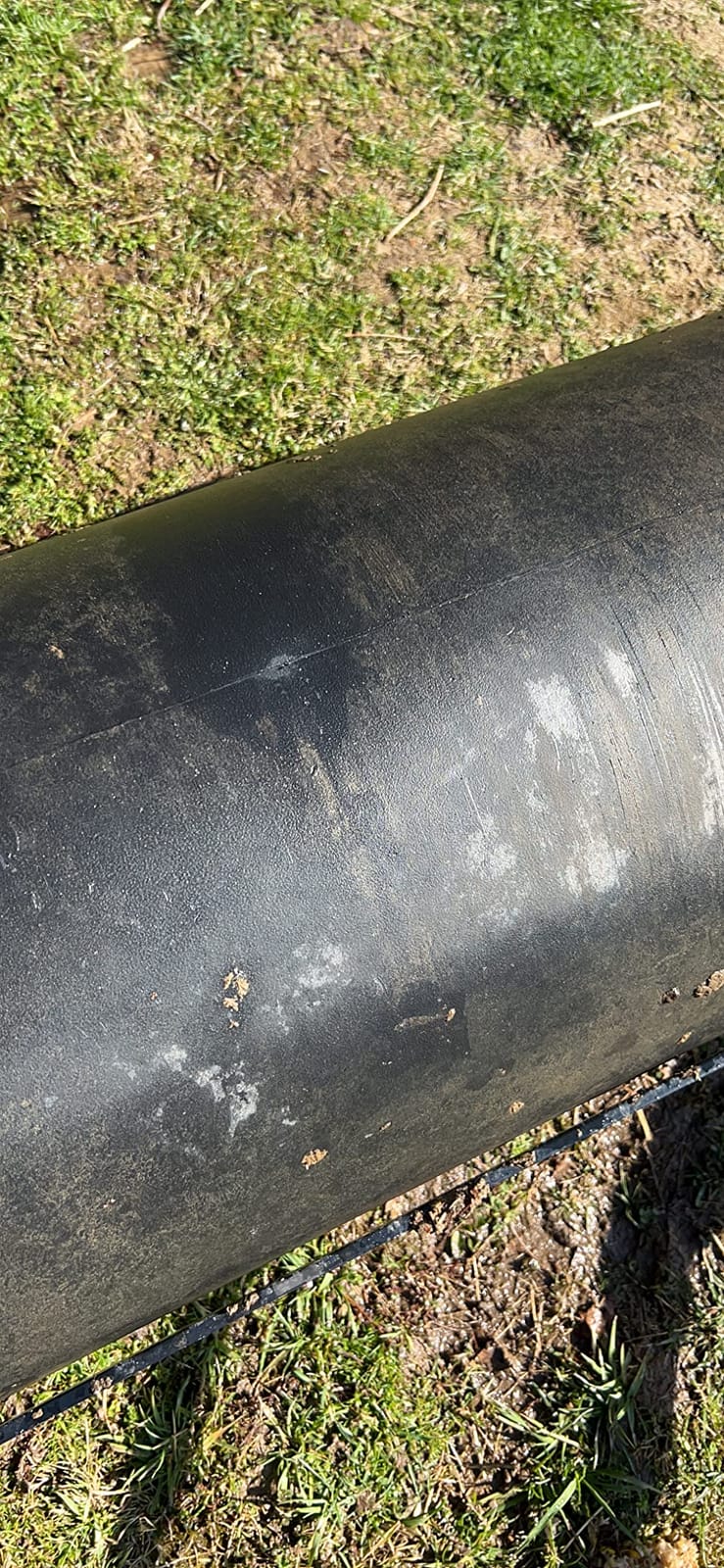
10. IRONMAX 30 Gallon Steel Push and Tow Roller
IRONMAX 30 Gallons/113 L Manual Lawn Roller, Water & Sand Fillable, Black
- Works as both a tractor tow-behind and a hand-pushed roller
- Large 30 gallon capacity produces enough weight to level uneven lawn
- Screw-in fill plug seals better than snap-in plugs
- Easy to assemble and pulls easily even when full
- Scraper rod keeps debris off the drum
- Thin gauge steel dents from rocks and one seam split over gravel
- Water plug leaks slightly and the O-ring quality is poor
- Runs smaller than expected for a 30 gallon listing
- Durability over multi-acre use is questionable
The thing that sets this one apart is the screw-in fill plug. Across this whole roundup, leaking pop-in plugs are the most common complaint, and a threaded plug with an O-ring simply does not have that problem to the same degree.
Capacity is 30 gallons, and owners who fill with sand report roughly 250 lbs of working weight, which puts it in serious compaction territory for a roller that also has a handle.
It converts between modes with a latch and pin for tractor towing and a circular handle for manual push and pull. The triangular handle bar structure and anti-rust coating are sensible, and several owners confirm it assembles without difficulty.
The recurring complaint is drum gauge. Multiple reviewers report thin steel denting after contact with stones, roots or stumps, and one had the main seam split after an hour and a half over three-eighths inch gravel.
Owners also find it runs smaller than a 30 gallon listing suggests, and that durability over multi-acre use is questionable. Treat it as a small and medium yard roller rather than an acreage tool.
Does the plug design matter in practice
Yes. Water in a drum is a permanent load, and a plug that weeps slowly over a season empties your weight without you noticing, which makes the roller feel like it stopped working. A screw-in plug removes the most common failure mode in this category.
Where it falls short
Thin steel, a still imperfect O-ring, and a real risk of drum damage on rocky ground. Walk the yard and pick up stones before you roll it full.
Does a Lawn Roller Actually Flatten a Bumpy Yard?
Only some of the time. A roller flattens a lawn by compressing the soil and turf from above, so it works on unevenness that is already sitting on firm ground: frost heave, mole and ant hills, loose new fill, and small dips in an otherwise established yard. It does nothing for compaction, washout channels or bad original grading. Putting a heavy drum on top of a loose bump drives that bump down instead of spreading it, and the yard is now worse than when you started.
That is why diagnosis comes before the roller. Here is how the common causes map to a fix.
Frost heave lifts the whole turf mat in patches over winter, and a roller pressed down in early spring knocks it flat quickly. This is the single best case for a roller, and a medium weight is enough.
Mole and ant hills are loose spoil pushed up above the surface. A roller tamps them down, but it hides the problem rather than solving it, because the tunnels refill after the next wet spell. Trap first, then roll.
Settling fill and new-build lawns need real weight, and this is where a 270 lb to 400 lb drum earns its place. Fill sand and topsoil do not consolidate under a light roller.
Compaction is the cause most people get wrong. Traffic-hardened ground feels bumpy because the soil is dense and the grass thins, and a roller makes it denser. Core aeration is the fix here, not a roller.
Thatch buildup also creates a lumpy surface. A roller flattens the thatch and pushes the problem down, and dethatching or aerating is the actual remedy.
Push vs Tow-Behind: Which One Levels a Bumpy Yard
A push roller wins on access and control. You can turn it on the spot, lift it over roots, take it into corners and along beds, and feel the ground feedback through the handle. For scattered bumps in a small or oddly shaped yard, that control is worth more than speed.
A tow-behind wins on coverage and weight. Anything you pull behind a riding mower or tractor can be far heavier, and weight is the mechanism that removes a bump. The 400 lb and 485 lb rollers in this roundup only exist in tow-behind form for that reason.
The compromise most people land on is a detachable-handle roller, which is how the Brinly 18 x 24 and the Goplus 30 gallon are built. Push it where the bumps are, tow it where the lawn is open. If you do not already own a machine capable of pulling one, our guide to the best lawn tractors for large yards covers the other half of that decision.
Poly vs Steel Drum for Bumpy Ground
Poly wins on durability and handling. It will not rust and it will not dent, and it is light enough to lift and reposition. The Brinly and Agri-Fab rollers in this roundup use poly precisely because a drum that sits damp in a shed all winter should not be rusting.
Steel wins on absolute stiffness and on being the only realistic option at the heavy end of the scale. A thick steel drum holds its shape under load and rolls true, which matters if you are chasing a flat surface rather than knocking down a mole hill.
The trade-off is dents and rust. Every thin-gauge steel drum here took damage from stones, roots or stumps in owner reports, and coating quality varies widely. If your yard is full of buried debris, poly is the safer purchase.
How Much Filled Weight You Actually Need
A workable rule of thumb is roughly 150 to 300 lbs of filled weight per 1,000 square feet of genuinely uneven lawn. Below that you are pressing rather than compacting, and above it you risk squeezing out the air the roots need.
Put that in drum terms. A 16 gallon drum lands around 140 to 155 lbs filled with water, which suits about 1,000 sq ft of mild unevenness. A 17 gallon drum is a similar weight class, so a 36 inch width there buys you coverage, not authority.
Fill with sand and the same drum roughly doubles its working weight, which is how a 30 gallon unit reaches around 250 lbs and a 54 gallon unit reaches 485 lbs. Sand is the lever for a bad yard; water is fine for maintenance passes and seed work.
For scale, a poster on a lawn care forum reported running a 6,000 lb street roller across a lawn to pull out small bumps, and noted that it works when the bumps are caught early. That is a professional-grade approach on a small area, and it is not what most residential yards need.
How to Roll a Bumpy Yard Without Making It Worse
Mow first. Long grass hides every bump you are about to miss, and it snags on the drum ends.
Check the soil. Squeeze a handful: it should hold together and break apart with a light touch. Soggy soil compacts unevenly and can rut.
Firm the subgrade. If the ground under a bump is loose, walk it down with your shoes or a water-filled drum at minimum weight before adding sand.
Fill the drum to one third for the first pass. This is the step most people skip, and it is the one that prevents new ruts.
Walk the ground before you pull the drum. A roller adds weight, so anything loose becomes a sinkhole. Pick up stones.
Roll slowly in overlapping passes. Overlap each pass by about a third of the drum width, and keep moving rather than stopping with the drum loaded.
Let the turf recover before mowing or seeding again. The lawn needs a few days to stand back up.
Expect two or three sessions, not one. A bump that has not moved after the first full pass is usually a bump whose subgrade is loose, and the answer there is a lighter roller, more passes, or a completely different tool.
Rent or Buy a Lawn Roller for a One-Time Fix
Renting makes sense when the job is genuinely one-time: a new-construction yard to smooth once, a post-project repair, or borrowing from a neighbor. Rental outlets carry tow-behind rollers in the weight class you probably want, and a day of rental is a small fraction of owning something you will use twice.
Buying makes sense if you seed, lay sod, stripe a field, or repair frost heave every spring. Members of a lawn Facebook group were actively seeking a borrowed or locally rented roller for a single new-construction smooth-out, which is exactly the profile of the rental buyer.
The decision rule is simple. If you expect fewer than three jobs, rent. If you have a riding mower already and a recurring annual problem, a mid-weight roller will pay for itself over a few seasons and save the rental queue.
When Not to Roll, and What to Use Instead
Some of the most common bumpy-yard problems get worse under a roller. Ranked by how often they are the real cause:
Core aeration for compacted ground. Hollow-tine aeration pulls plugs and opens the soil, which a roller actively undoes by pressing it tighter.
Topdressing plus a leveling rake for thin, uneven soil. Adding screened topsoil or a sand blend and raking it level fixes the surface instead of compressing it.
Sand blending for a soft, spongy lawn. It changes the soil structure over time in a way no roller can.
Dethatching where thatch is the lumpy layer on top. Roll after, not before.
Sod replacement for washout channels and eroded ruts. A roller will press the sod into a hole and the hole will still be there.
Professional grading when the original grade is wrong. No drum corrects a slope that was poured badly, and this is where a roller becomes a waste of a day.
Also skip the roller entirely on drought-stressed turf, on clay-heavy ground that is already wet, and on brand new seed that has not germinated. And never leave a filled drum standing still on the lawn: that is how you create the low spot you were trying to remove.
Lawn Roller Maintenance and Winter Storage
Drain the drum before winter. This is the rule that matters most, because water left inside a steel or poly drum in freezing conditions can crack it, and it is the single most common seasonal complaint across these models.
Clean the drum after each session. A metal scraper bar handles the big debris, but a stiff brush and a hose rinse prevent soil packing against the drum wall and adding to the load.
Check the plug and the O-ring every few fills. Pop-in plugs on the budget models in this roundup leak slowly, and a drum that seeps for a season is a drum that quietly stops doing the job.
Store poly drums on edge and empty, not full and flat. Owners report poly drums taking a flat spot when left full and stationary in hot weather, and once a drum is out of round it will roll unevenly for good.
For steel, wipe it dry and touch up any rust spots before storage. Do not store a steel drum on a damp concrete floor.
Frequently Asked Questions
Does a lawn roller flatten a lawn?
A lawn roller flattens a lawn when the bumps sit on soil that is already firm, such as frost heave, mole hills and settled new fill. It will not fix compaction, thatch buildup, washout channels or bad grading, and rolling a loose bump can drive it deeper and leave a new low spot. Always firm the subgrade first.
What is the best lawn roller?
For most bumpy residential yards, the Brinly 270 lb 18 x 24 poly roller is the best all-round choice, because 270 lbs of adjustable weight is enough for real bumps and it pushes or tows. For a large property with a tractor, the Agri-Fab 18 x 36 reaches 400 lbs, and the Brinly 18 x 48 reaches 485 lbs across the widest swath.
What is better, steel or poly lawn roller?
Poly is better for durability and handling because it will not rust or dent and is light enough to reposition. Steel is better when you need maximum weight in a smaller drum and when the drum must stay perfectly round. Choose poly for a yard full of buried stones or roots, and thick coated steel when weight is the priority.
What to use instead of a lawn roller?
Use core aeration for compacted ground, topdressing with screened soil or sand plus a leveling rake for thin uneven soil, dethatching where thatch is the lumpy layer, and sod replacement for eroded or washed-out ruts. Professional grading is the only fix for a lawn that was originally graded badly. A roller makes compaction worse, not better.
How heavy should a lawn roller be?
A useful rule of thumb is roughly 150 to 300 lbs of filled weight per 1,000 square feet of genuinely uneven lawn. A 16 gallon drum lands near 140 to 155 lbs and suits mild unevenness, while a 30 gallon drum filled with sand reaches about 250 lbs and a 54 gallon unit reaches 485 lbs.
Should I rent or buy a lawn roller?
Rent if this is a one-time job such as a new-construction smooth-out or a single repair, since rental outlets carry the heavy tow-behind class. Buy if you seed, lay sod, stripe a field or repair frost heave every spring. If you expect fewer than three jobs, renting is the cheaper path.
When is the best time to roll my lawn?
Roll in early spring right after frost heave appears and the soil has thawed, again after laying seed or sod to press it into contact, and in autumn for a light maintenance pass. The soil should hold together in your hand but break apart with a light touch. Never roll soggy soil, drought-stressed turf or ungerminated seed.
Final Verdict: The Best Lawn Rollers for Bumpy Yards
Match the tool to the bump. Mild unevenness on a small yard needs a compact roller filled with sand, around 150 lbs. Real bumps in a residential lawn need the Brinly 270 lb 18 x 24 poly roller, which is our pick because the weight is adjustable and it pushes or tows. A large property with a tractor needs the Agri-Fab 18 x 36 at 400 lbs or the Brinly 18 x 48 at 485 lbs, and nothing smaller will move serious unevenness.
Before you roll anything, diagnose the cause and firm the subgrade. A roller adds weight to whatever is under it, and loose ground becomes a sinkhole. If the bumps are compaction or thatch, spend the afternoon on aeration instead, and pick the best lawn rollers for bumpy yards off the shelf until next spring.