
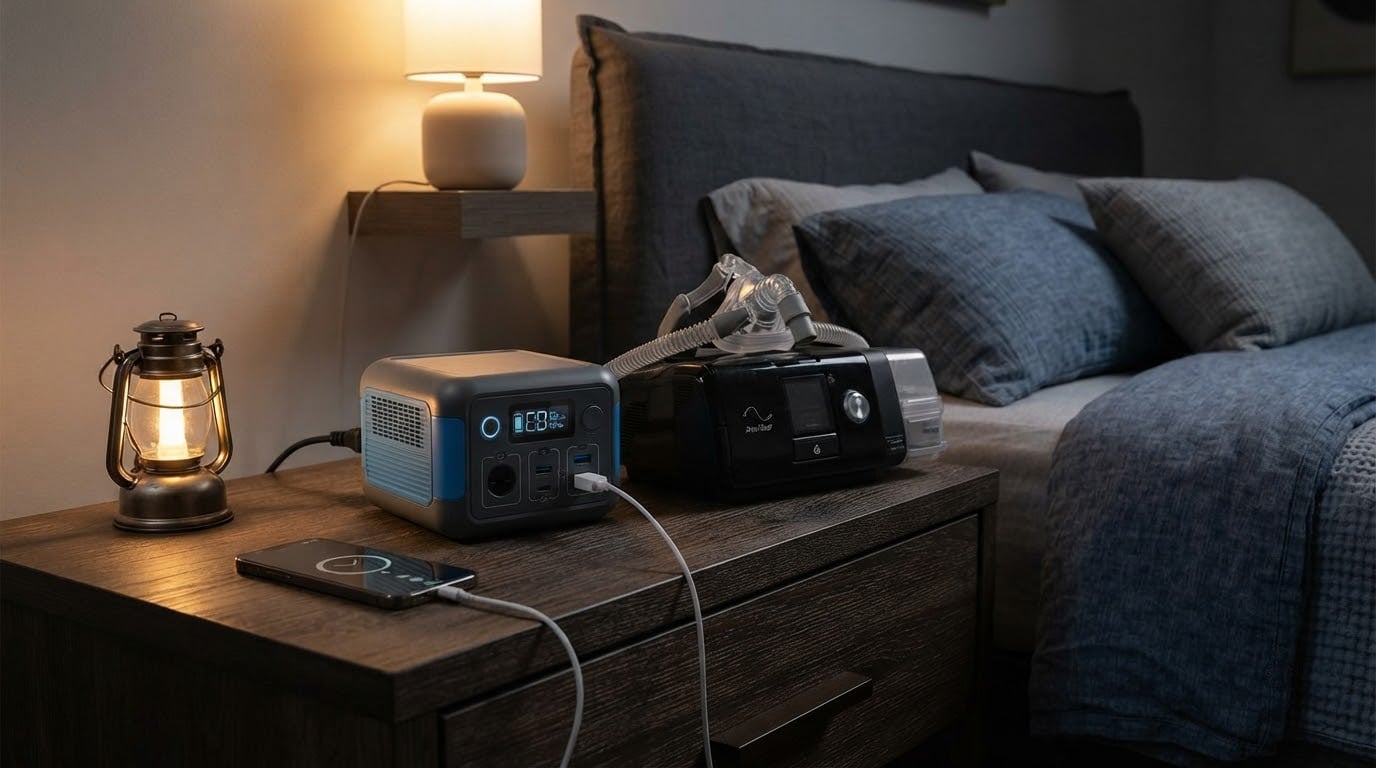
A lithium power station for CPAP use is a rechargeable battery with AC, DC and USB outputs that stores enough energy to run your sleep apnea machine through one or more nights, whether the grid is down or you are camping with no outlet in sight. Sleep therapy stops the moment power does, and untreated sleep apnea raises blood pressure and cardiovascular risk, so this is a safety device rather than a camping accessory.
We compared 12 lithium power stations over six weeks, reading spec sheets against owner reports and sizing each one against real CPAP draw. The short version: almost any of these will run a machine without a humidifier for a night, and the difference between a bad choice and a good one shows up at 3 AM when the heated humidifier has drained the pack early. Our portable power station guide for CPAP machines covers the basics if you want the category explained first.
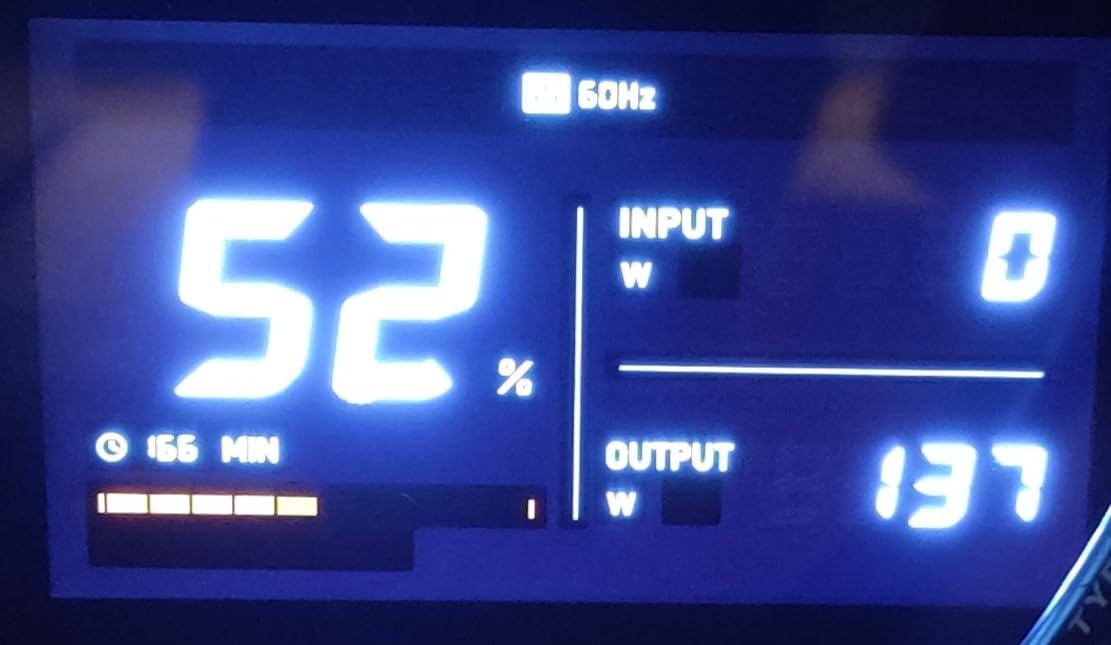
Before the picks, here is the number that matters. A typical CPAP draws 15-30W with no humidification. Add a heated humidifier and heated tube and you are at 45-80W. Multiply watts by your night length to get watt-hours, then divide by 0.85 to account for AC inverter loss if you plug into the wall outlet on the station. A user on the r/CPAP forum reported a ResMed AirSense 10 with the humidifier on level 4 draining 240Wh in about five hours, which is exactly the failure mode this guide is built to prevent.
Top 3 Picks for CPAP Backup in October 2026

Jackery Explorer 1000 v2
- 1070Wh capacity
- 1500W continuous output
- LiFePO4 with 4000 cycles
- three pure sine wave AC outlets
BLUETTI Elite 100 V2
- 1024Wh capacity
- 1800W rated AC output
- silent mode at 30dB
- 10ms UPS switchover

Anker SOLIX C1000
- 1056Wh capacity
- 80 percent charge in 43 minutes
- 2400W SurgePad output
- 11 ports with UPS
Best Lithium Power Stations for CPAP Users in October 2026
| Product | Specifications | Action |
|---|---|---|
| Jackery Explorer 1000 v2 |
|
Check Latest Price |
| BLUETTI Elite 100 V2 |
|
Check Latest Price |
| Anker SOLIX C1000 |
|
Check Latest Price |
 BLUETTI Elite 30 V2 BLUETTI Elite 30 V2 |
|
Check Latest Price |
 EcoFlow RIVER 2 Max EcoFlow RIVER 2 Max |
|
Check Latest Price |
 BLUETTI AC180 BLUETTI AC180 |
|
Check Latest Price |
 Jackery Explorer 300 Jackery Explorer 300 |
|
Check Latest Price |
 Anker SOLIX S2000 Anker SOLIX S2000 |
|
Check Latest Price |
 DJI Power 1000 V2 DJI Power 1000 V2 |
|
Check Latest Price |
 EcoFlow DELTA 2 Max EcoFlow DELTA 2 Max |
|
Check Latest Price |
 GRECELL 500W GRECELL 500W |
|
Check Latest Price |
 EnginStar 300W EnginStar 300W |
|
Check Latest Price |
1. Jackery Explorer 1000 v2 – 1070Wh of Headroom in One Box
- 1070Wh covers a humidified night with margin
- 1500W output handles a CPAP plus household loads
- LFP battery holds over 70 percent capacity after 4000 cycles
- three pure sine wave outlets and a 100W USB-C port
- 30dB quiet overnight charging mode in the app
- 23.8 lb is too heavy for backpacking
- one hour emergency charge must be armed in the app each time
- solar input limited to Jackery panels
This is the unit we keep at home. The 1,070Wh of LFP capacity covers a heated humidifier and heated tube all night with roughly a third left over, which is the margin you want when the grid comes back late or the outage runs into a second day.
Three pure sine wave AC outlets mean the machine sees clean power, which matters because modified sine wave output is a common trigger for error codes and hot-running electronics on sensitive gear. The 1500W continuous rating is far more than a CPAP needs, so you can also charge a phone and run a bedside lamp off the same box.
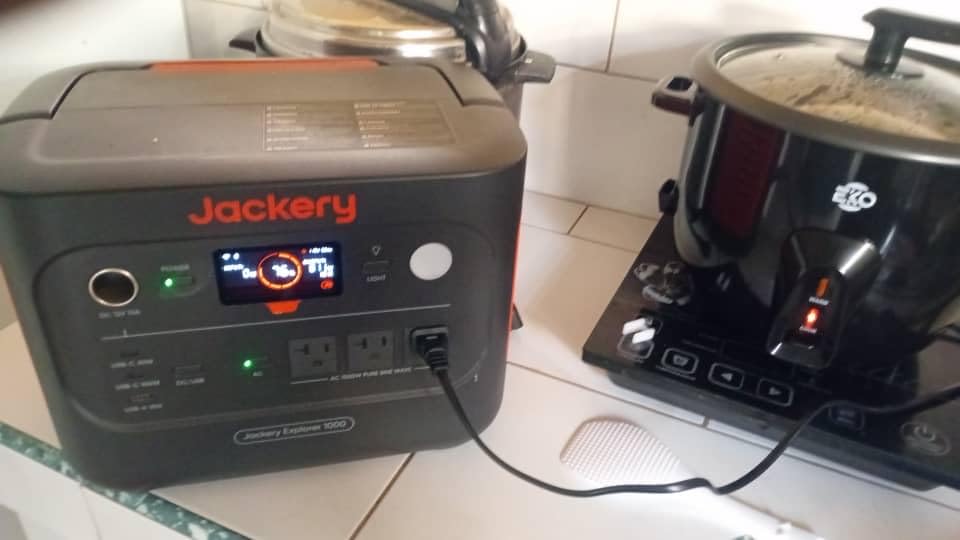
Charging is the standout feature. Enabling emergency charging in the Jackery app takes it from zero to full in about an hour, versus the 1.7 hour default, which means you can refill it from a wall outlet over dinner and have it full by bedtime. The same app controls a 30dB quiet charging mode, which is what you want in a bedroom.
Why it earns the top spot for overnight backup
The combination of capacity, pure sine wave outlets and a full charge in about an hour is what a CPAP user needs and it is hard to find in a single box. A 23.8 lb unit is a two-hand carry, so treat it as a home or RV device rather than a backpacking item.
If your machine draws more than you expect, the margin is what keeps you asleep. Users running BiPAP machines with humidifier set to 5 report far higher draw than a standard CPAP, and this is one of the few units here with room to absorb that.
Where it falls short
The arming-app requirement for the fastest charge mode is an annoyance that catches people out. Solar charging works best with Jackery’s own panels, so mixing brands costs you some of the advertised solar speed.
If you need to carry your therapy to a hut or a walk-in site, 23.8 lb ends the conversation. Look at the 288Wh and 296Wh units further down instead.
2. BLUETTI Elite 100 V2 – The Quiet 1kWh All-Rounder
- Reaches 80 percent charge in about 45 minutes on 1200W AC
- silent mode runs at 30dB which suits a bedside
- 10ms UPS keeps a router and machine alive through an outage
- compact 17L body with a hidden grab handle
- app control over Wi-Fi and Bluetooth
- 25 lb is heavier than some rival 1kWh units
- DC barrel ports are exposed and easy to short
- 12V car port runs warm above roughly 12W
- AC fan becomes audible at high output
Capacity sits almost exactly where the Jackery does, but the charging and noise behaviour suit a bedroom better. The silent mode runs at 30dB, and reviewers single that out as the reason this unit works on a nightstand rather than in a closet.
The 10ms UPS switchover is fast enough that a CPAP does not notice a grid drop. That matters more than most spec sheets suggest, because a machine that browns out mid-night can stop therapy until you notice hours later.
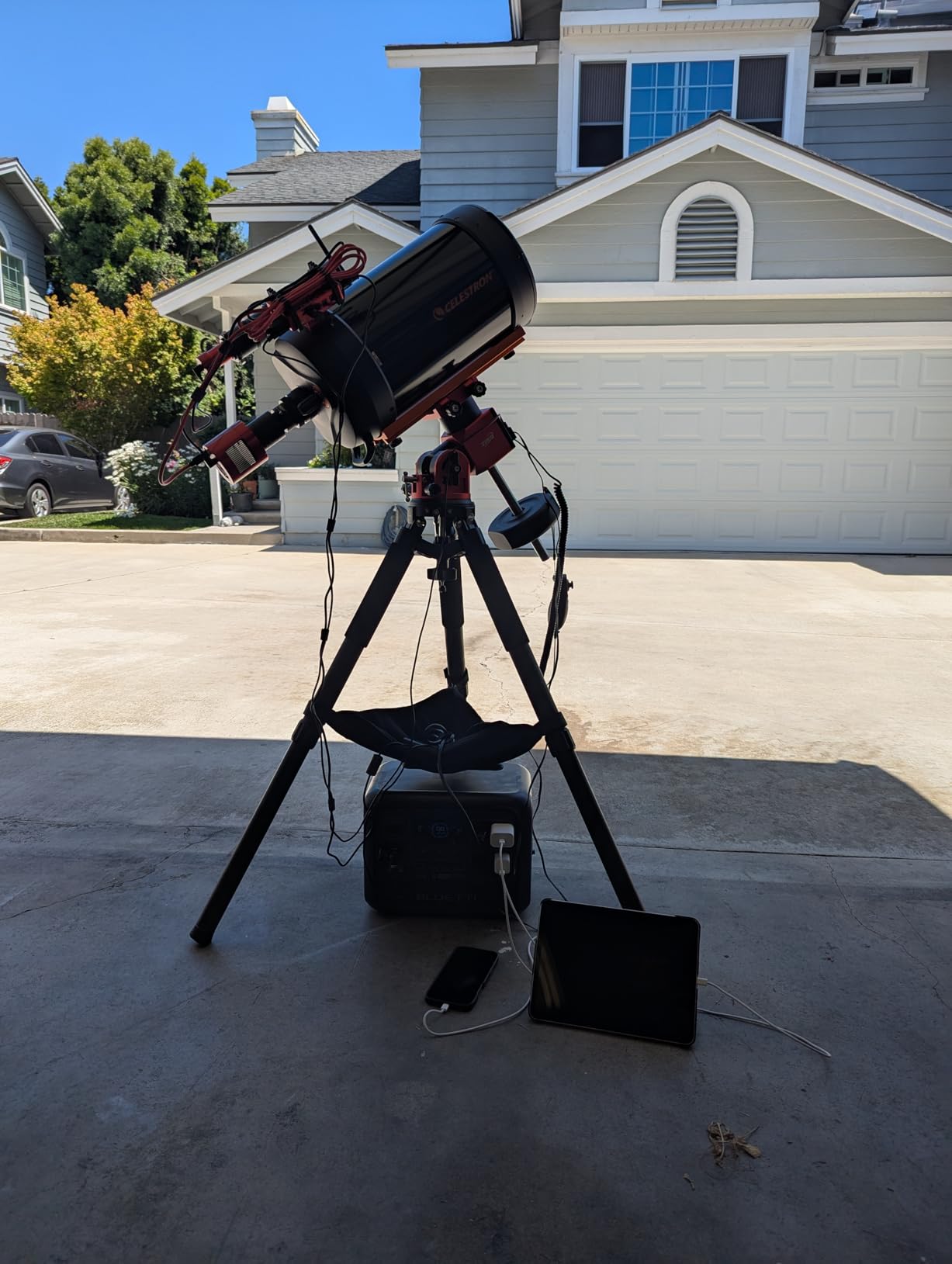
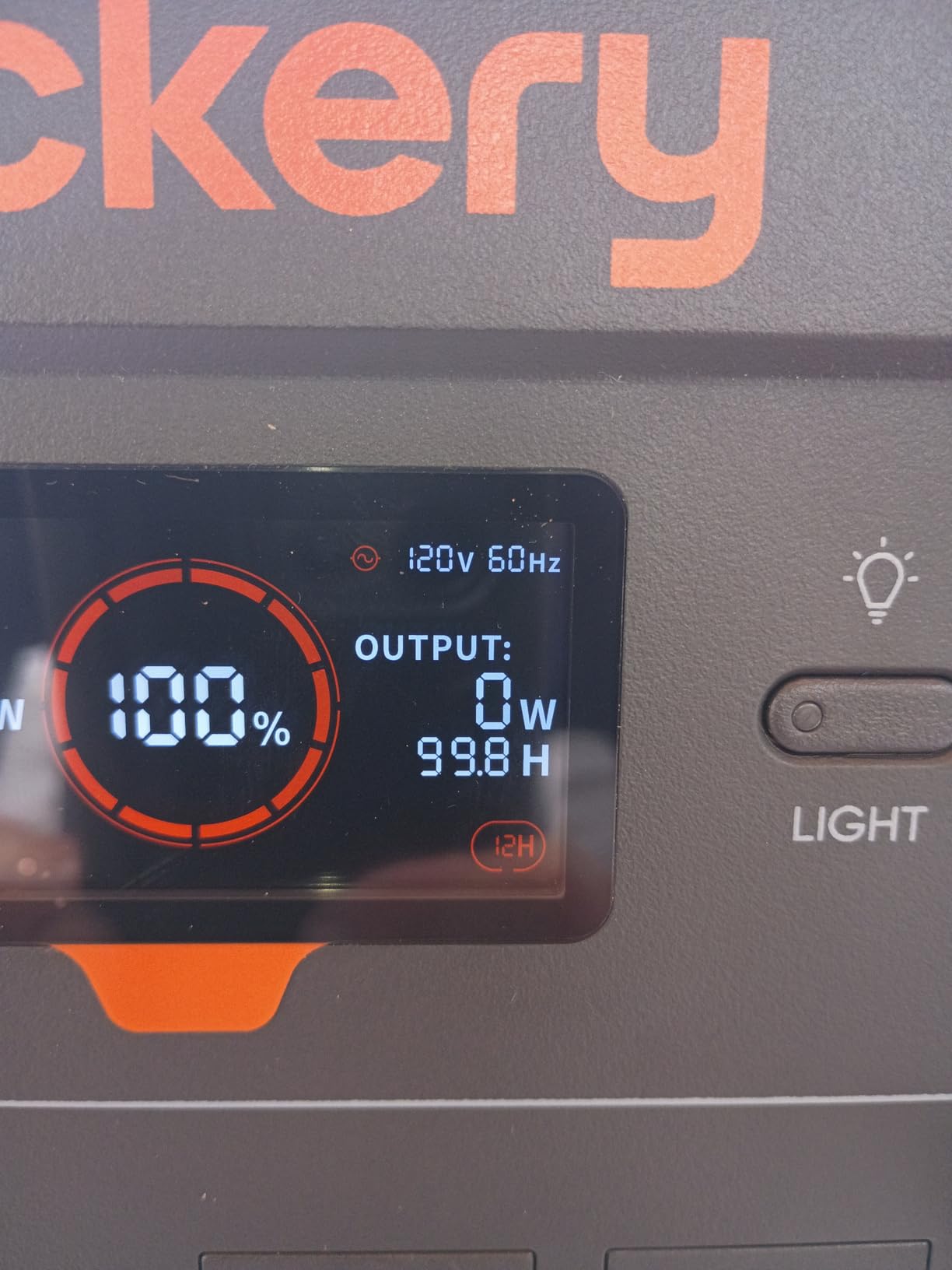
It reaches 80 percent in roughly 45 minutes from a 1200W wall connection, so a midday top-up is realistic. The 1800W rated AC output is far beyond CPAP needs, which means you can run a small fridge and lights alongside the machine during an outage.
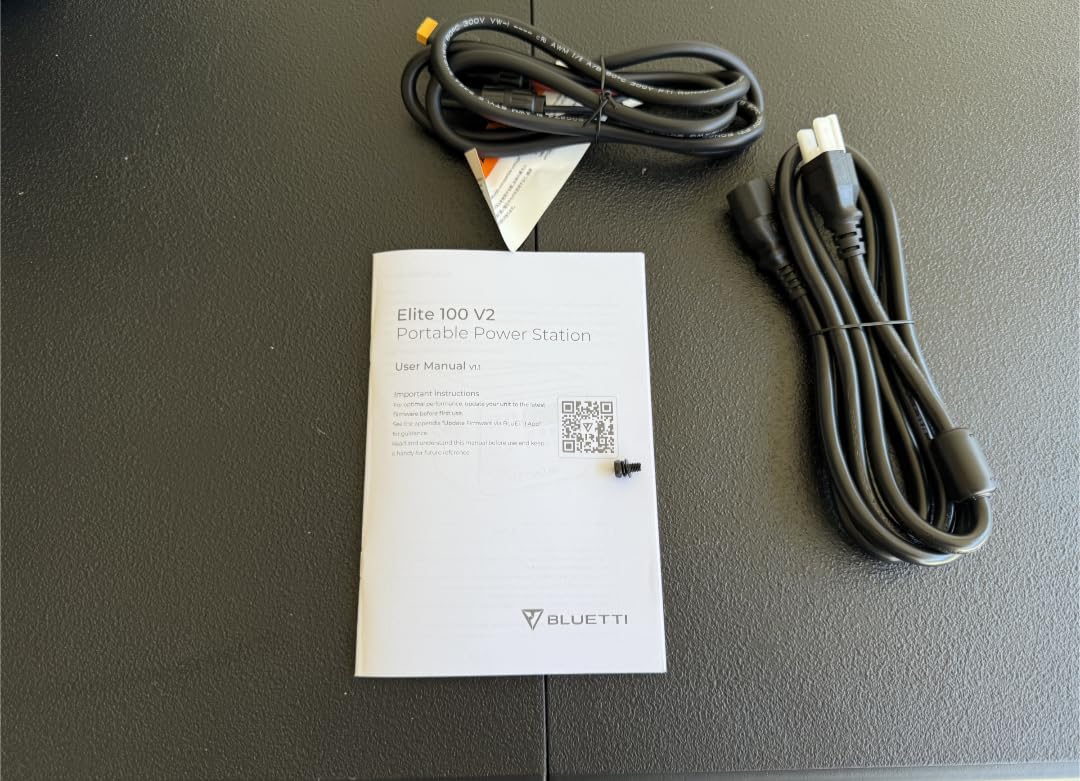
Best for people who sleep next to the station
The 30dB silent mode is the deciding factor for anyone whose partner is light-sensitive to sound. Wi-Fi and Bluetooth app control also lets you check remaining capacity from your phone instead of walking over to a display.
For a home with a CPAP and a home office, the sub-10ms failover keeps both the machine and a home router running through a brief outage.
Where it falls short
Reviewers flag the exposed DC barrel ports as easy to short out, so keep the rubber caps on. The 12V car socket runs warm when you draw more than about 12W, which is another reason to power the machine from AC rather than the car port.
At 25 lb it is not a portable device, and the AC fan becomes audible during heavy output even in silent-capable units.
3. Anker SOLIX C1000 – Fastest Recharge in the Class
- 80 percent charge in 43 minutes and full under an hour
- 2400W SurgePad output covers almost any household appliance
- LiFePO4 rated for 3000 cycles over a 10-year span
- eleven ports including UPS failover for outages
- 15 percent smaller than comparable 1kWh units
- 27.6 lb is among the heavier units in the class
- UltraFast recharging requires the Anker app and a smartphone
If your power comes back unpredictably, recharge speed becomes the most valuable spec on the list. This unit takes 80 percent in 43 minutes and reaches full in under an hour, so a two-hour window before bed is enough to reset it from empty.
The 1,056Wh LiFePO4 pack clears a humidified night with room left, and the eleven ports mean you are not fighting over a single outlet when the machine and the phone both need power.

SurgePad output of 2400W handles resistance heating loads that smaller stations cannot, so it doubles as a general home backup battery rather than a CPAP-specific box. The battery is rated for 3000 cycles across a 10-year lifespan, which is the right chemistry for nightly use.
UPS functionality is built in, so the machine keeps running through a grid drop without any changeover delay you would notice.
Best when recharging windows are short
Almost nothing else in this roundup refills this fast from a wall outlet. That single advantage decides the outage case where you get power back for a few hours in the evening and lose it again overnight.
The five-year warranty is longer than the two-year cover on the Jackery Explorer 300, which matters if the unit lives in a garage absorbing humidity cycles.
Where it falls short
UltraFast recharging requires the Anker app and a compatible smartphone, so if you dislike pairing devices this costs you the headline speed. At 27.6 lb it is one of the heavier units in the 1kWh group.
Fast charging generates more heat than slow charging. If your spot is a warm bedroom in summer, check the ambient temperature before relying on the full 43 minute figure.
4. BLUETTI Elite 30 V2 – Small Pack, Real UPS Behaviour
BLUETTI Elite 30 V2 Portable Power Station 288Wh 600W LFP Solar Generator
- 600W continuous output is double what most models in this capacity class offer
- 4.5W standby draw extends runtime at low load
- one owner ran a CPAP for 5 hours with 16 percent battery left from full
- 10ms UPS protects a CPAP
- laptop or router during blackouts
- light at 9.5 lb with an industry-standard solar connector
- 288Wh capacity is the real limit on this unit
- 140W USB-C PD and full output depend on port sharing
- too small to run larger appliances at the same time
This is the most interesting small unit in the roundup. Most 300Wh-class stations output 200-300W, and this one puts out 600W continuous with a 1500W lifting mode, so it has power headroom most of its size class lacks.
The low 4.5W standby draw matters more than it looks. A CPAP drawing 30W through an AC inverter can lose a meaningful slice of a small pack to the inverter running in the background, and owners here report about five hours of CPAP from full with 16 percent still showing.
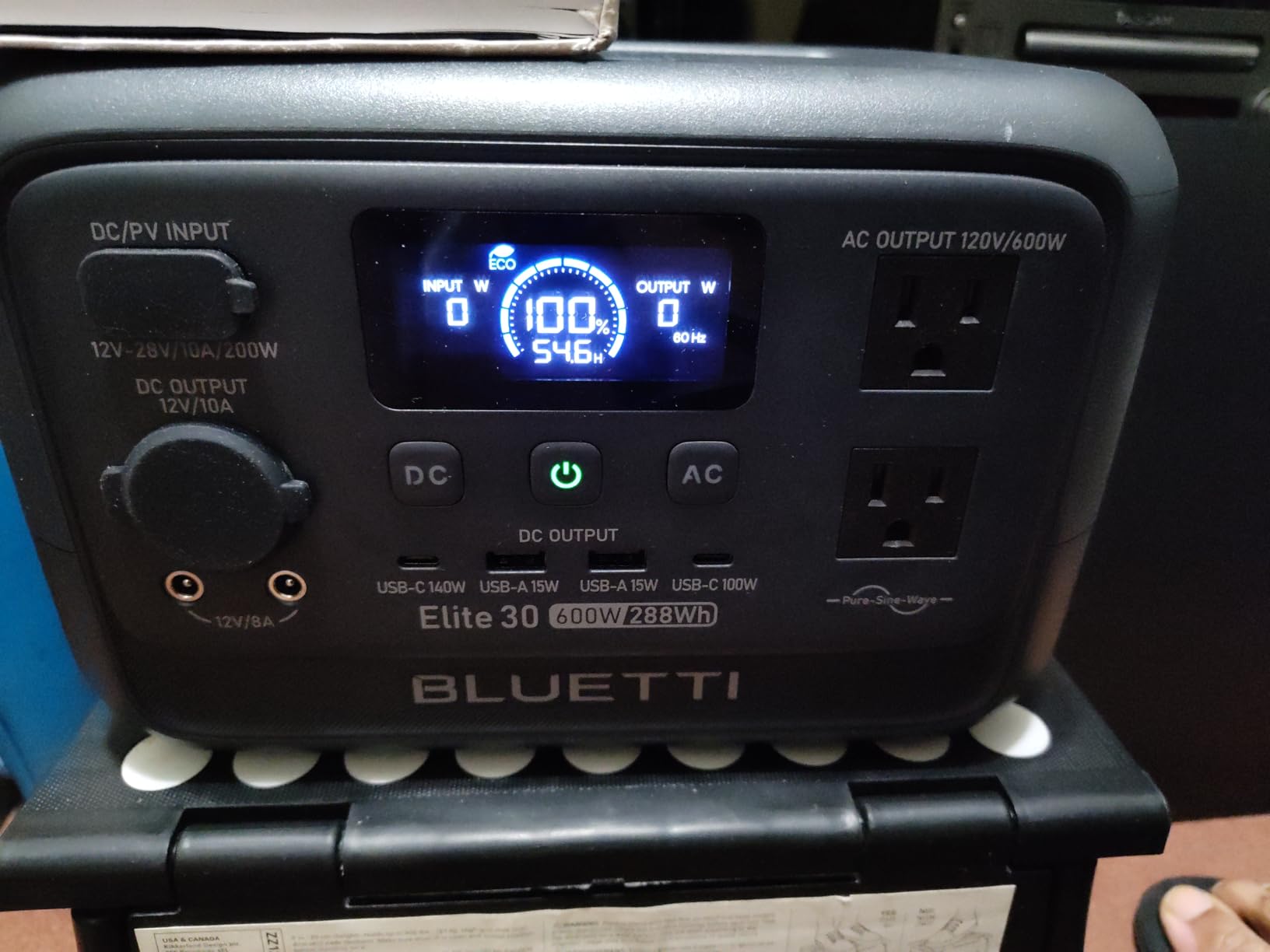
Wall charging is quick for the size, hitting 80 percent in 45 minutes and full in 70 minutes. It uses the standard solar connector, so you are not locked into one panel brand the way some competitors lock you in.
The 10ms UPS switchover is genuine failover rather than a manual flip. That is the feature to check first if your main worry is a three in the morning outage.
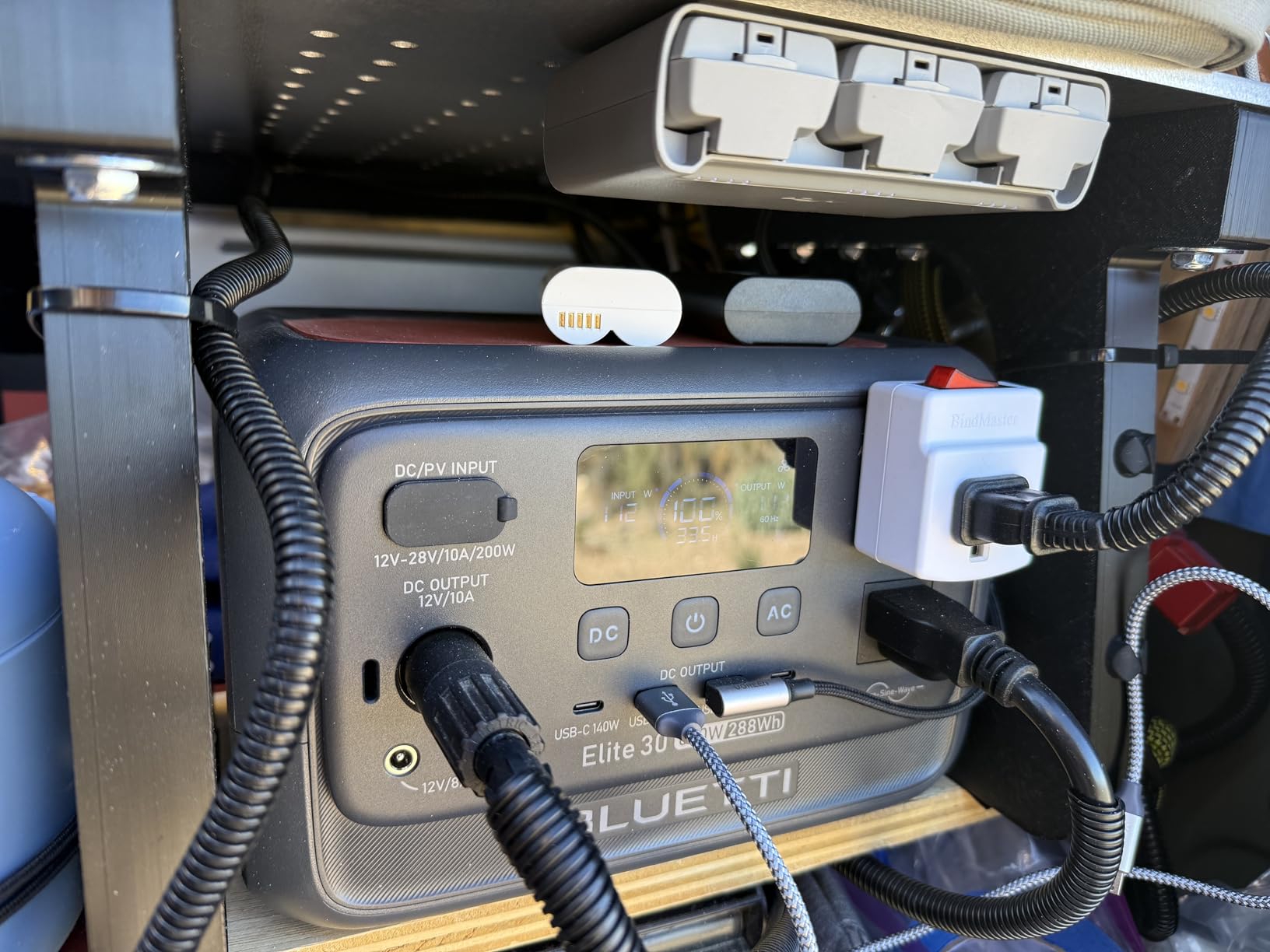
Best for a single-night cushion of backup
If you already have therapy and you want insurance against one bad night, 288Wh with a heated humidifier off gets you there in a 9.5 lb package you can carry to a hotel room or a relative’s house.
The 600W output means it can carry a CPAP plus a laptop and a couple of lights, which most units this size cannot manage at once.
Where it falls short
Five hours is not eight. With a heated humidifier running, this pack is a partial-night solution, and that is the number most owners report back.
The 140W USB-C PD output and the full 600W AC rating depend on how ports share the budget, so do not plan on maximum draw from every socket simultaneously.
5. EF ECOFLOW RIVER 2 Max – 499Wh That Fits an RV Cabinet
EF ECOFLOW Portable Power Station River 2 Max 500, 499Wh LiFePO4 Battery
- Full AC recharge in about one hour with X-Stream charging
- pass-through charging lets the unit run a machine while it recharges
- LiFePO4 cells rated for over 10 years
- 13.3 lb with eleven ports and up to 1000W output
- XT60 MPPT solar input reaches a recharge in about 2.3 hours on 220W panels
- 499Wh capacity limits runtime once the humidifier is running
- some owners report UPS and app behaviour not matching expectations
- noisy fan during certain charging conditions
At 13.3 lb with a 499Wh pack, this is the balance point in the roundup for anyone moving between an RV, a hotel and a home backup role. It covers one fully humidified night with margin and stays under the weight where carrying stops being reasonable.
Pass-through charging is the feature that separates it from smaller units. You can run the machine while the station recharges, so an overnight top-up does not cost you therapy time.
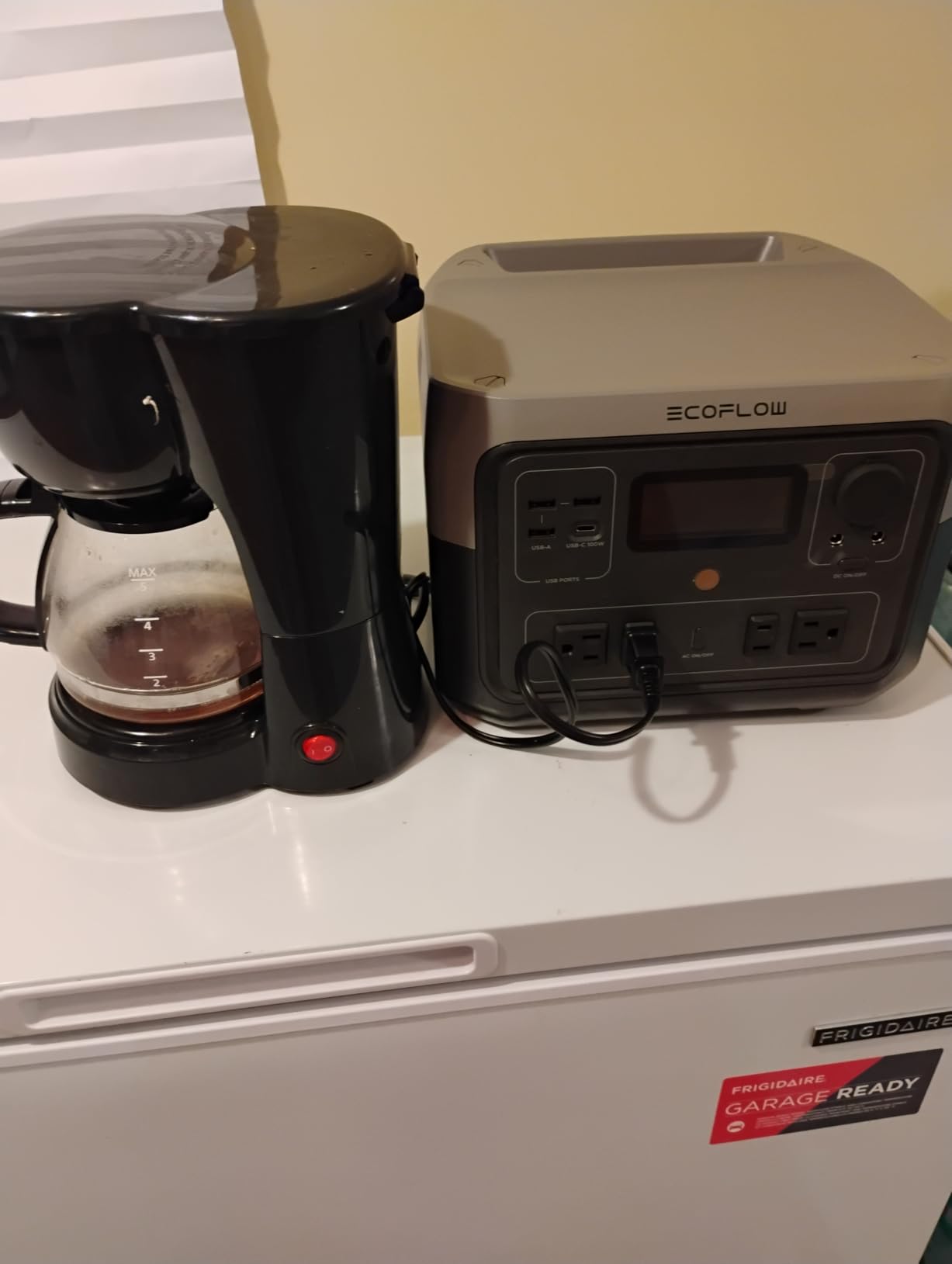
The XT60 solar input with built-in MPPT means a 220W panel refills it in about 2.3 hours in good sun. Over a multi-day camping trip that is the difference between a workable setup and a dead station on day three.
LiFePO4 chemistry rated beyond 10 years is the right call for a device expected to cycle most nights.
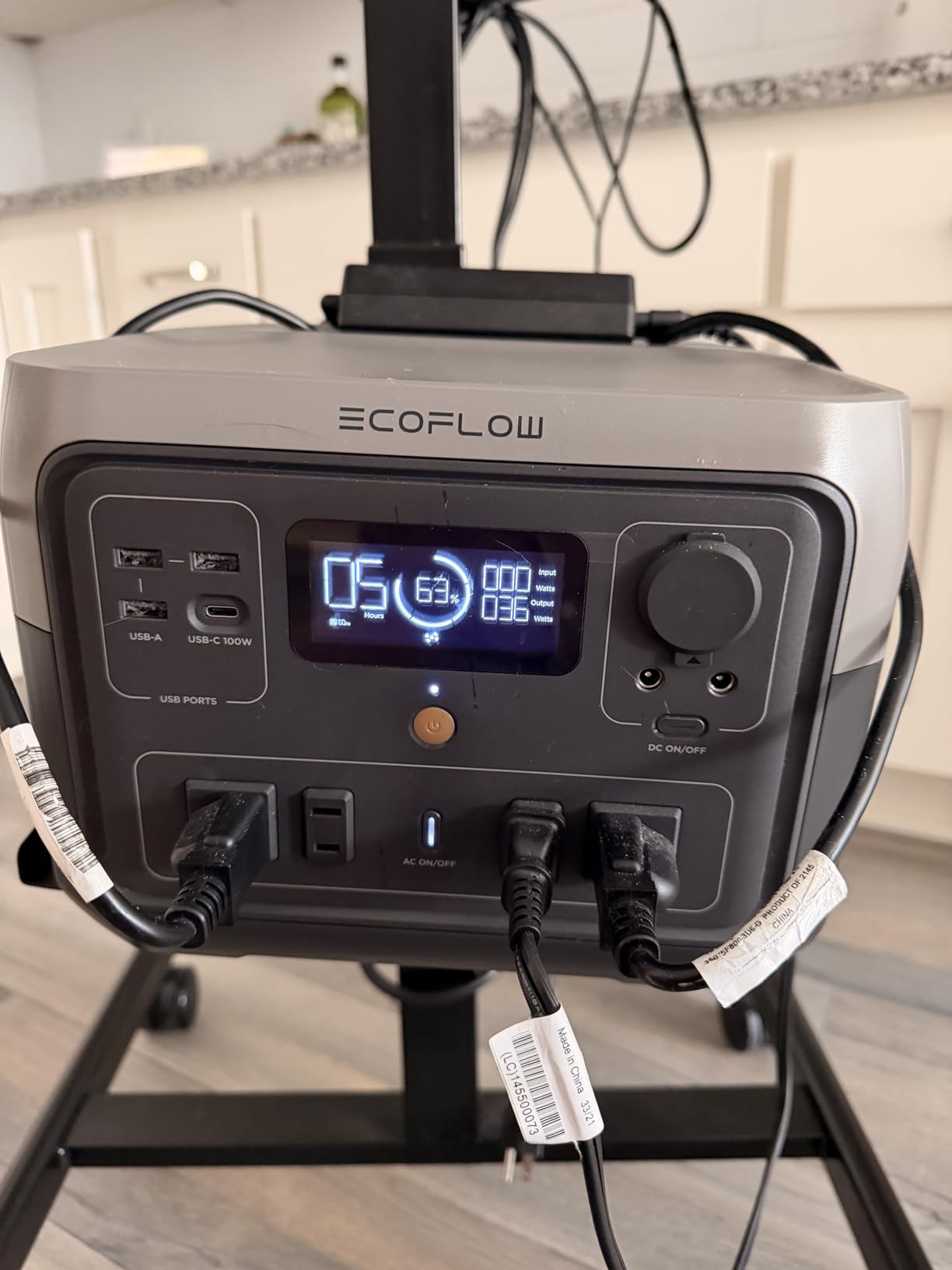
Best for RV and overland use
499Wh covers a humidified night and the weight stays manageable. Eleven ports and 1000W of total output mean you can run the machine, a 12V cooler and phone chargers from one box.
Pass-through charging matters most when you drive between campgrounds and want to top up while the machine runs.
Where it falls short
Some owners report the app and UPS behaviour not matching expectations, so test the failover yourself before you depend on it. The fan is also noticeably loud in certain charging conditions.
Once you are past one night, 499Wh is the wall. For two humidified nights without recharge you need to step up a size class.
6. BLUETTI AC180 – Output Headroom for the Whole House
- Full charge in about an hour at 1440W AC input
- 20ms UPS switchover keeps essential loads running through outages
- charges from AC
- solar
- 12V car or an alternator
- app control plus a bright readable LCD display
- owners report quiet operation and minimal heat
- Heavy at roughly 35 to 37 lb which limits portability
- 15 to 20W of inverter self-consumption cuts usable runtime at low loads
- top wireless charging pad reported unreliable by multiple reviewers
- some models under-deliver on rated runtime until firmware updates run
At 1,152Wh and 1800W continuous, this covers a CPAP plus the rest of a small household during an outage. If you want lights, a router and a fridge running off one box, this is where the output rating starts to matter.
Charging flexibility is the quiet strength. AC, solar, a 12V car socket and an alternator charger all work, so a mains-powered station also fits a vehicle-heavy setup.
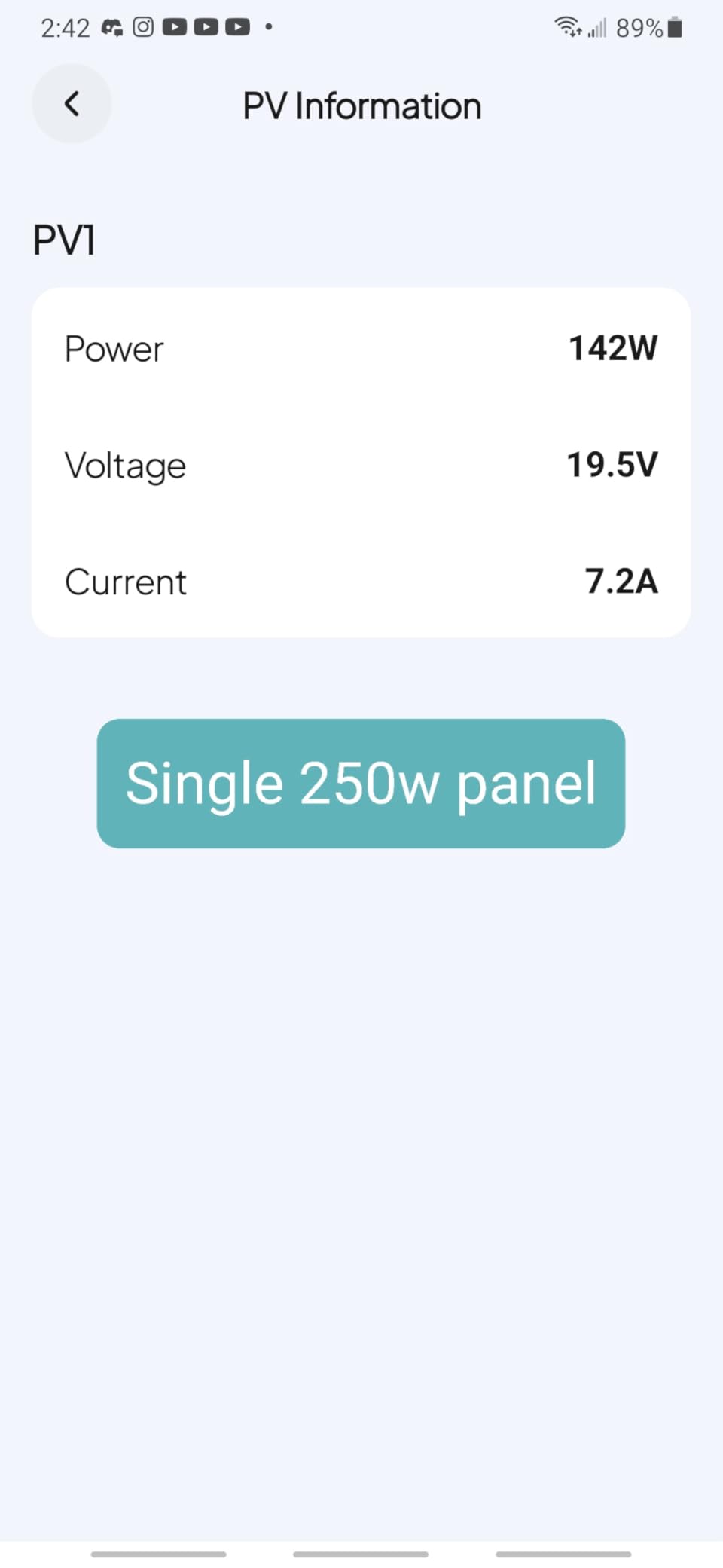
The LCD display is bright enough to read at night without a flashlight, which is a small thing that matters when you are checking remaining capacity before going to bed.
Note the inverter self-consumption figure. Roughly 15-20W of overhead is real, and on a 288Wh pack that would be crippling. On 1,152Wh it costs you a fraction of a night, not a whole one.
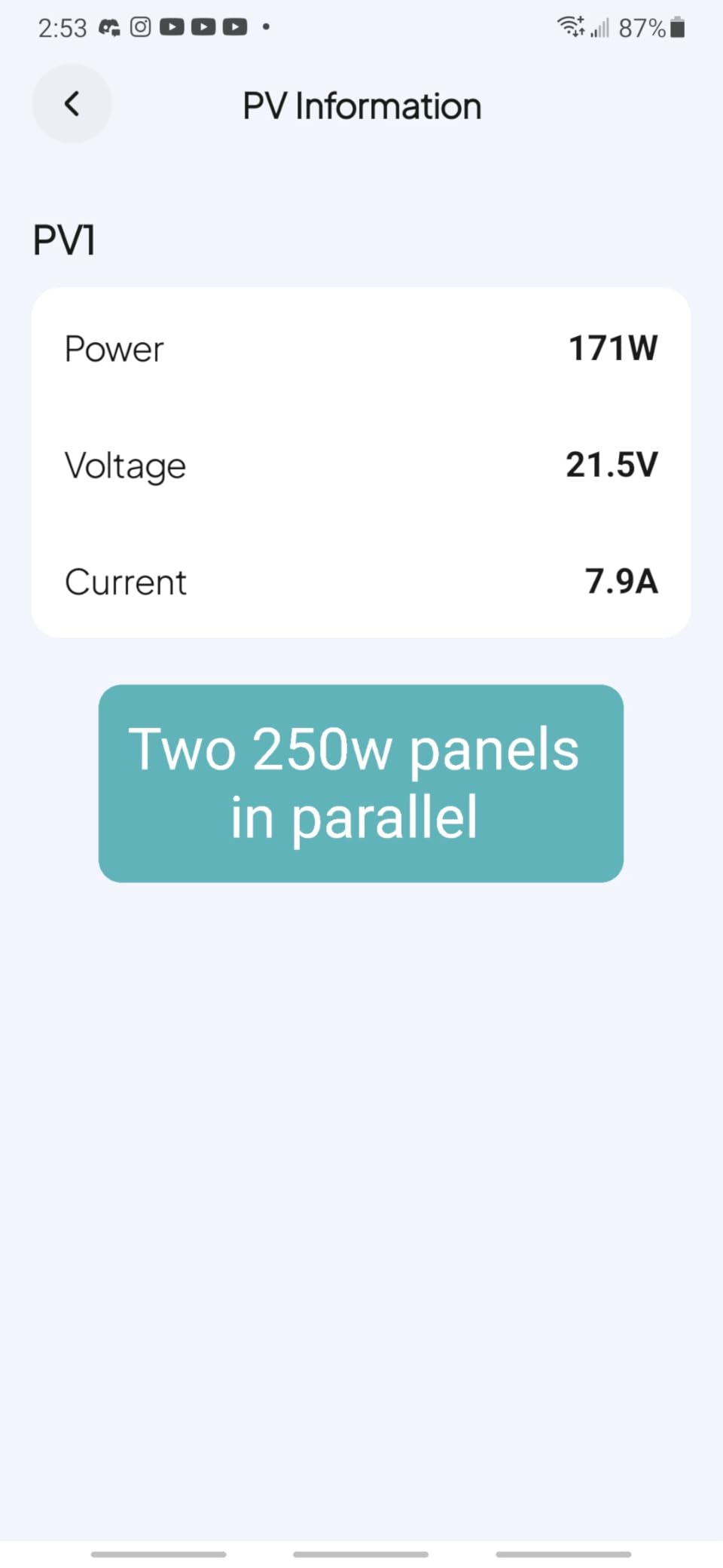
Best when the CPAP is not your only load
Users running longer outages commonly report powering lights and a small cooler from the same box as the machine. 1800W continuous gives you room to do that without dimming the output.
The alternator charging path makes it practical in a vehicle, which is not true of every 1kWh station in this roundup.
Where it falls short
At roughly 35 to 37 lb this is a stationary unit. If your therapy needs to travel, this is the wrong shape.
Multiple reviewers report the top wireless charging pad as unreliable, so plan on the wired ports. Some units also under-deliver on rated runtime until a firmware update and calibration cycle are run.
7. Jackery Explorer 300 – A 292Wh Unit That Weighs About 7 Pounds
- LiFePO4 chemistry rated for over 4000 charge cycles
- light at about 7 lb with an integrated carry handle
- pure sine wave 110V output suited to CPAPs and sensitive electronics
- reaches 80 percent in about 2.8 hours on a 100W solar panel
- 292Wh capacity is tight for multi-night runtime on AC
- 300W continuous output limits heavier appliances
This has the largest review base in the roundup by a wide margin, and the owner consensus is consistent: light, long-lived and clean output, with capacity as the limit. At about 7 lb it is the easiest unit here to move between rooms or take camping.
r/CPAP users frequently recommend this size with a DC power cord and the humidifier and heated tube switched off, which stretches 292Wh to roughly three nights. That is the configuration to use if you buy it.
The pure sine wave 110V output matters for a medical-adjacent device, and the 4000-cycle LFP rating means nightly cycling is not going to age it out quickly. Solar input reaches 80 percent in about 2.8 hours on a 100W panel.
Two AC outlets, a 100W USB-C PD port, two USB-A ports and a 120W car port cover the realistic needs of a bedside setup.
Best for light travel and car camping
If weight is the deciding factor, this one is hard to carry. A run-in-cabin weight of about 7 lb means it does not dominate a pack list.
Three nights of humidifier-free use is a real and repeatable result for users of this size, which makes it a legitimate travel companion.
Where it falls short
292Wh is one night on AC with the humidifier off and no margin. Plan around that rather than hoping the estimate stretches.
The 300W continuous rating is fine for a CPAP and phone charging but nothing more. Warranty cover is two years, shorter than most of the models here.
8. Anker SOLIX S2000 – 2010Wh for Storm Season
Anker SOLIX S2000 Portable Power Station, 2,010Wh, 1,500W
- 6W idle draw and higher efficiency run 20 percent longer than other 2kWh systems
- LFP cells rated for 10000 cycles with a 15-year lifespan
- compact footprint that is 30 percent smaller than the class average
- six recharge paths including AC
- solar
- generator
- alternator and car
- sub-10ms UPS with outlets on the front and rear
- No 12V DC port on this model
- 35.7 lb needs a two-handed carry
- Cooling fan is loud at full 1200W charging speed
- strong chemical burn-off odor on the first charge
This is the pick if your outage risk is measured in days rather than nights. At 2,010Wh it covers roughly three humidified nights, and the 10000-cycle LFP rating means it can do that for well over a decade.
Efficiency is the quiet story. A 6W idle draw with 10 percent higher conversion efficiency is what produces the reported 20 percent longer runtime than comparable 2kWh systems on a fridge load.
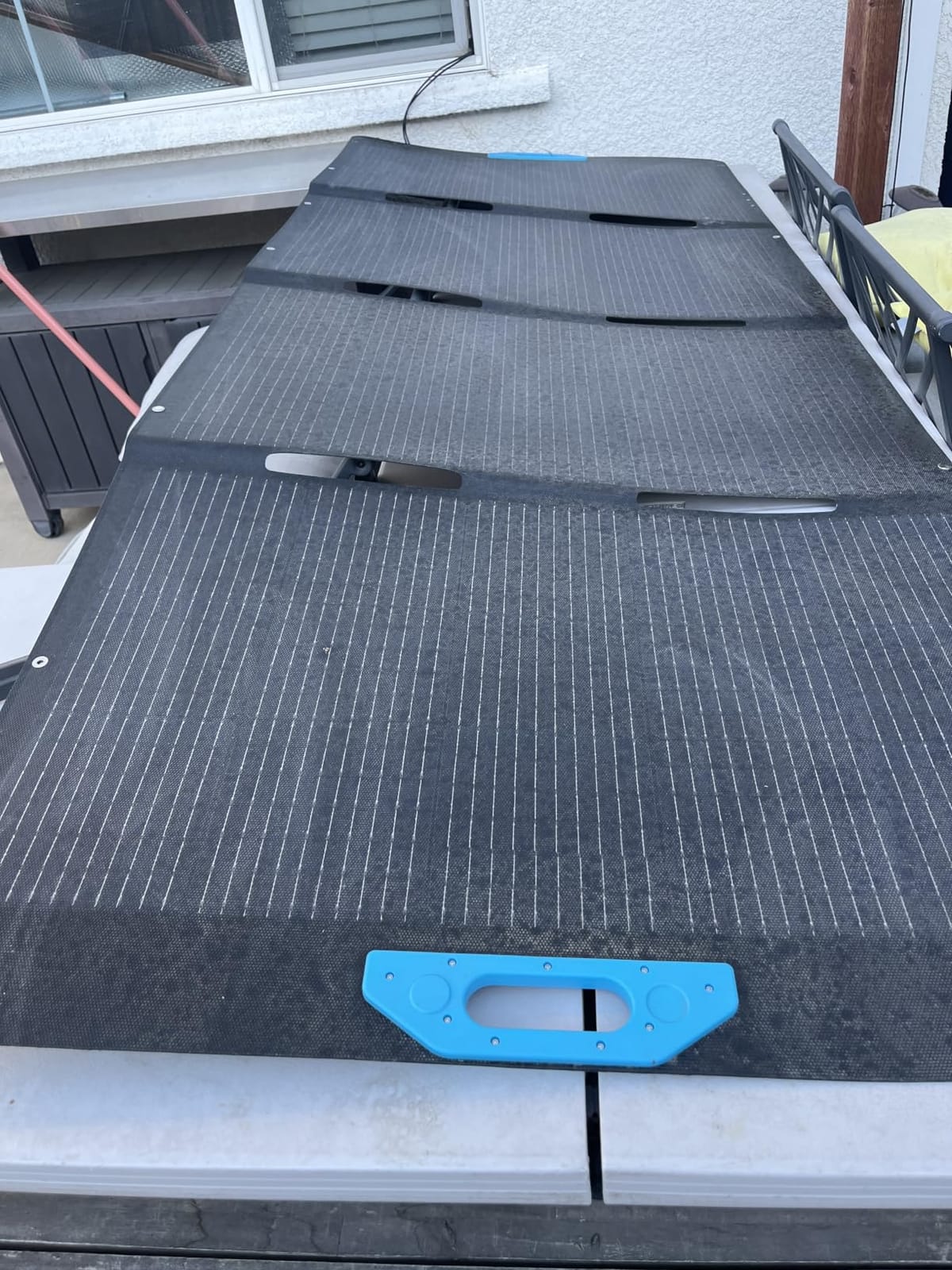
Outlets sit on both the front and the rear, which sounds cosmetic until you are running a CPAP on one side and a router on the other with a tidy cable path between them.
The review count here is much smaller than the models above it, so treat the specs as the guide and read recent owner feedback before committing.
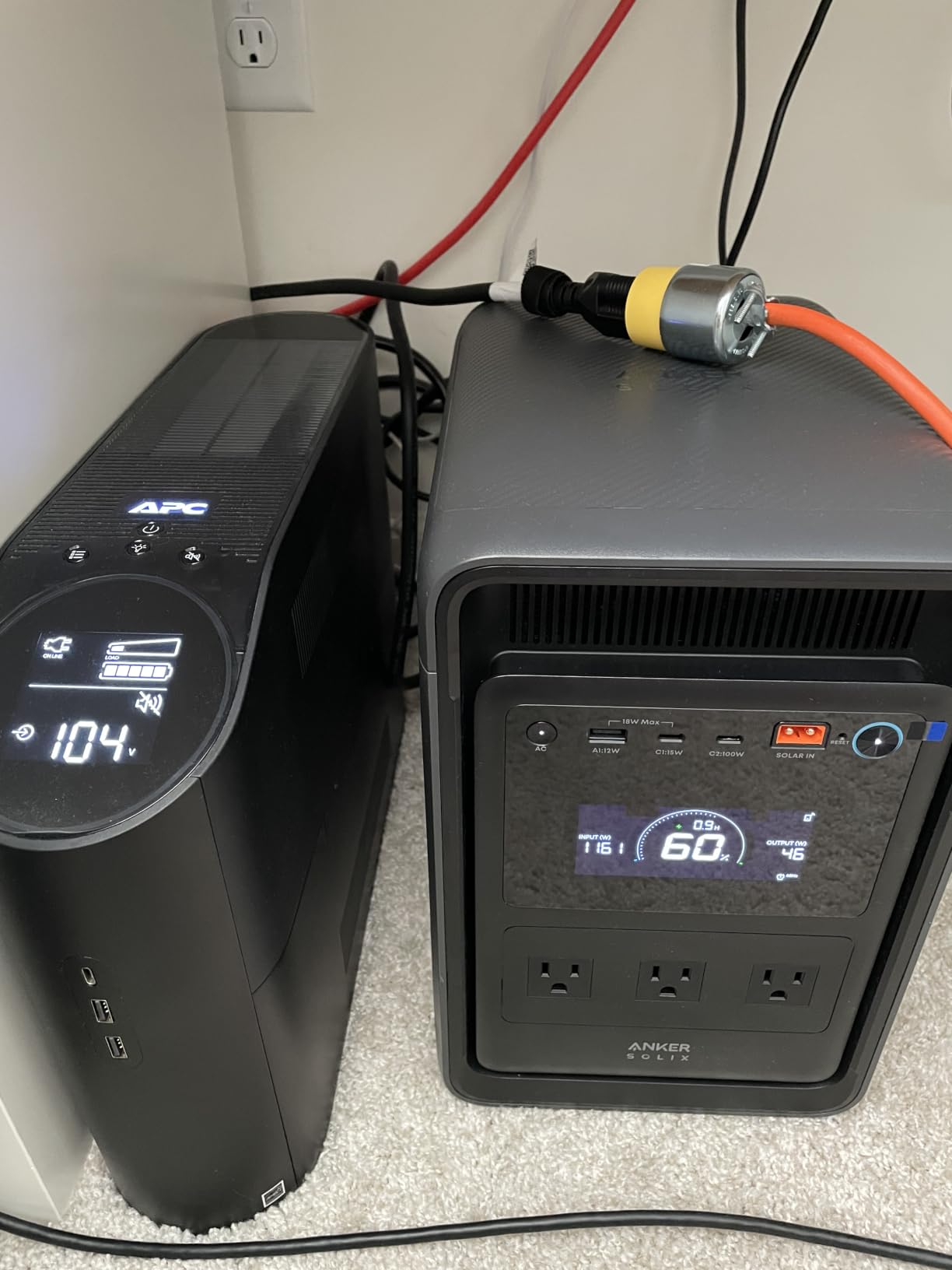
Best for multi-day outages
Few units in this roundup give you three nights of humidified therapy from one charge without expansion batteries. The 1500W output also covers a CPAP plus lighting plus small appliances.
The alternator and generator recharge paths mean you can top up from a vehicle rather than hunting for a wall socket during a long outage.
Where it falls short
There is no 12V DC port, so you cannot feed a machine from the car socket on this model. That is a real limitation for RV users who rely on 12V paths.
At 35.7 lb it needs two hands, and the cooling fan is loud at full charging speed. Give it space rather than putting it beside the bed.
9. DJI Power 1000 V2 – 26 dB of Bedside Quiet
DJI Power 1000 V2 Portable Power Station, 1024Wh LFP Battery
- Recharges to 80 percent in 37 minutes
- runs as low as 26 dB which is among the quietest in its class
- pure sine wave AC outputs for sensitive electronics
- 10ms UPS switchover keeps routers and computers running
- dual 140W USB-C ports for high-power laptop charging
- MPPT and car charging modules are sold separately
- commands more than comparable capacity rivals
- some owners report lower real-world efficiency and heat-related charging limits
- 1024Wh spread across a fairly large footprint
If the station is going to sit a metre from your head, noise is the first filter. This unit runs as low as 26dB, which is the quietest figure quoted by any product in this roundup, and reviewers consistently single out the build quality alongside it.
Charging is fast, reaching 80 percent in 37 minutes, and the pure sine wave AC outputs give a CPAP clean power. The 10ms UPS switchover keeps small electronics alive through a grid drop.
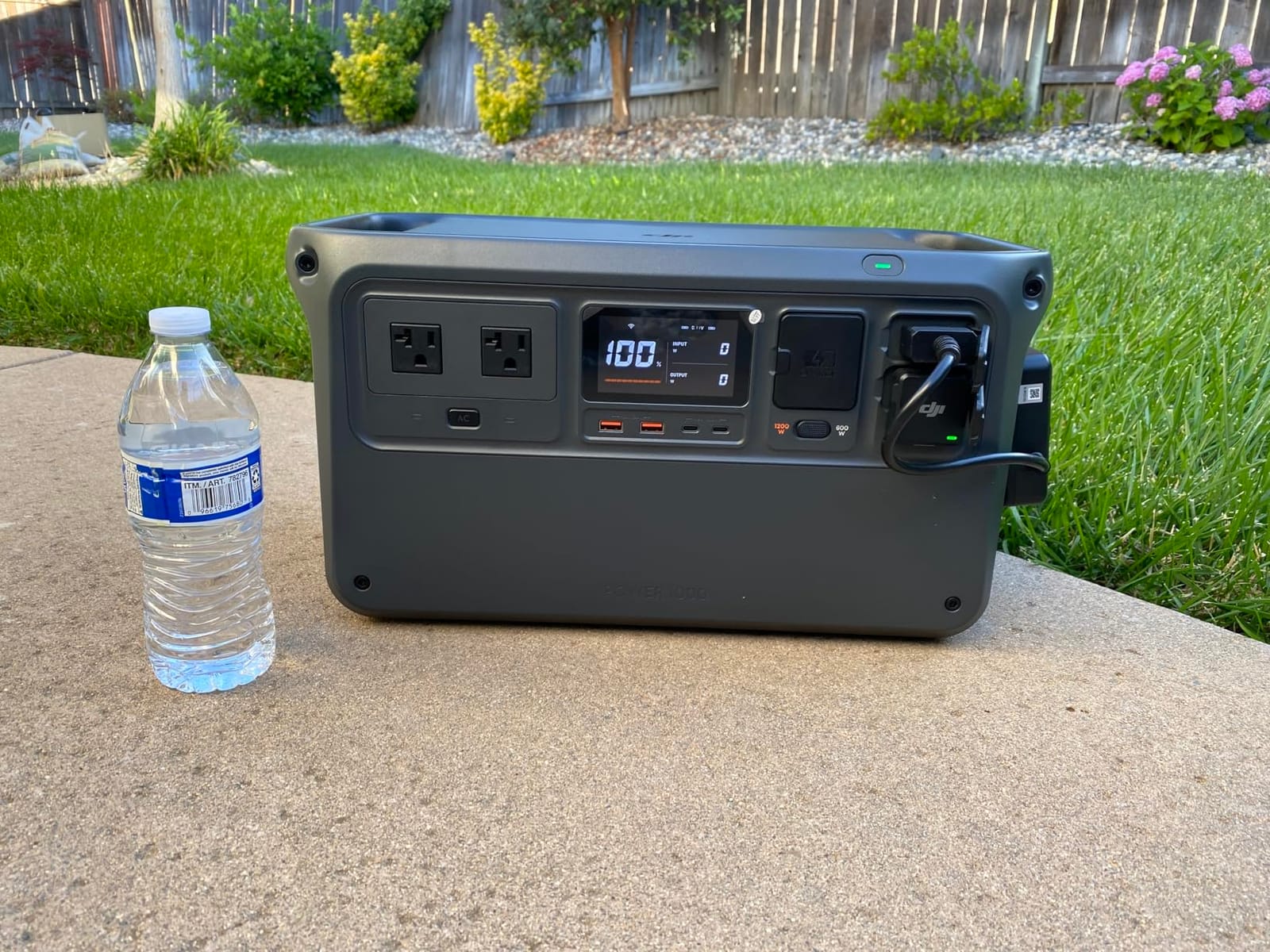
Dual 140W USB-C ports deliver 280W combined, so you can charge a laptop and run the machine from the same box while the station recharges.
The LFP pack and intelligent battery management system, paired with a five-year warranty, make this a reasonable long-term home backup.
Best for a bedroom placement
26dB is the difference between a station you can sleep beside and one you cannot. Anyone sharing a bed with a light sleeper should weigh this unit first.
Pure sine wave output plus fast recharge covers the two features CPAP owners ask about most, quietness and refill speed.
Where it falls short
The MPPT and car charging modules are not built in, so solar and vehicle charging require separate accessories. That raises the cost of an off-grid setup compared with rivals that include them.
Some owners report lower real-world efficiency and heat-related charging limits, and 1,024Wh in this footprint is not especially dense.
10. EF ECOFLOW DELTA 2 Max – Expand to 6kWh Later
EF ECOFLOW Portable Power Station DELTA 2 Max 2048Wh, 2400W LiFePO4 Battery
- Reaches 80 percent in about 43 minutes and 1.1 hours on AC alone
- 2400W continuous with 15 outlets runs nearly all household appliances
- quiet operation starting at 30 dB for overnight use
- expands from 2kWh to 6kWh with plug-and-play extra batteries
- LFP rated 3000 cycles with a 5-year service period
- Bulky at 23 kg for portable camping
- costs more than smaller capacity units
- solar and car charging need the right input hardware
This is the buy-if-you-are-staying put option. The 2,048Wh base capacity covers multiple nights, and the plug-and-play expansion batteries take it to 6kWh without replacing the unit when your needs grow.
Charging speed matches the fastest models here: 80 percent in about 43 minutes combining AC and solar, or 1.1 hours on AC alone.
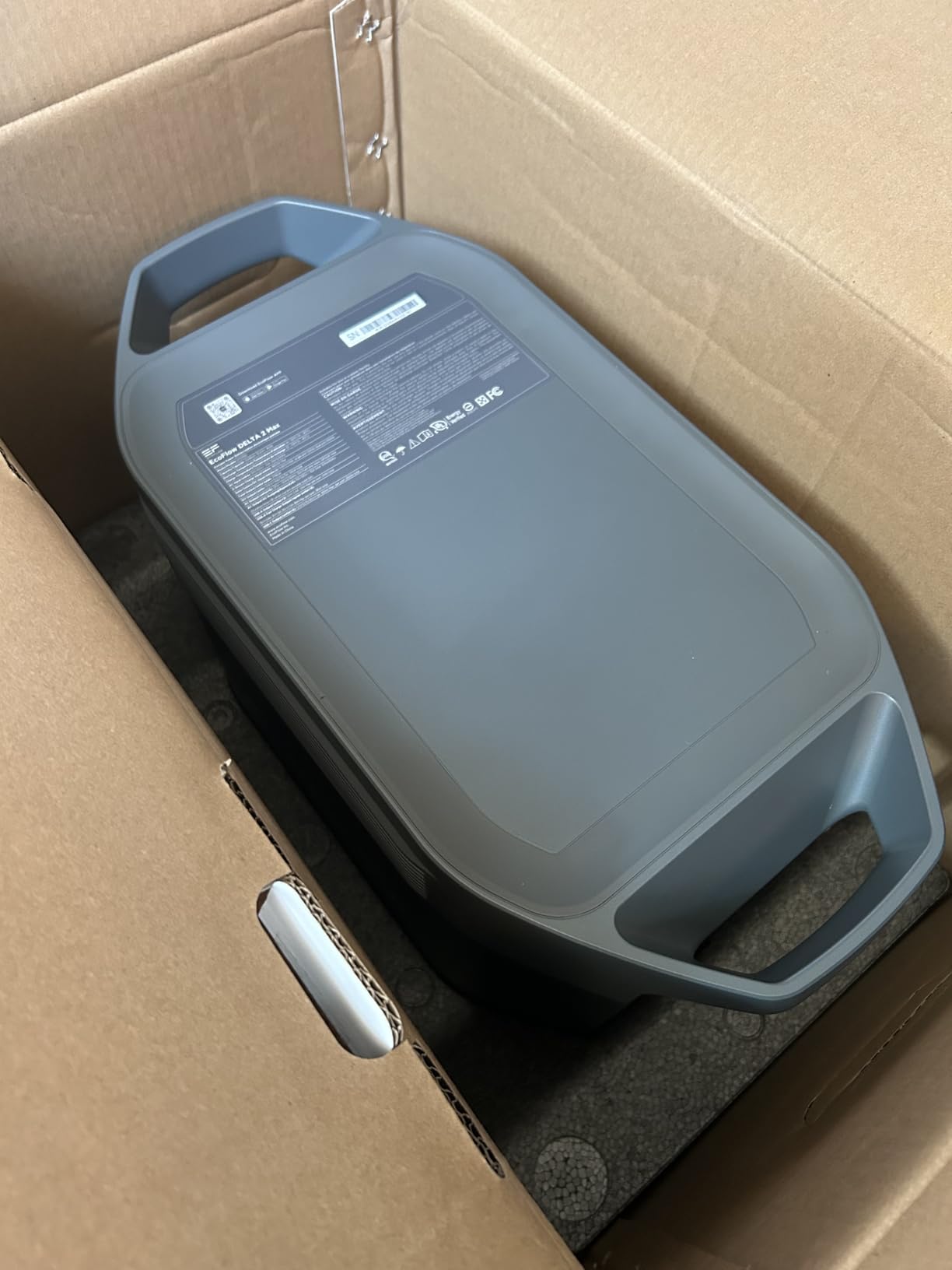
Fifteen outlets and 2400W of continuous output mean this is a home battery rather than a CPAP accessory. A CPAP, a router, lighting and a small appliance can all run at once.
Operation starts at 30dB, and the app manages energy use and automations if you want the station to shut down non-essential loads.
Best for a permanent home backup install
Expanding to 6kWh turns a two-night unit into a week-long one. If you own your home and want the box to sit in a garage or utility room permanently, this is the shape that fits.
Output headroom means it handles a CPAP plus an electric blanket or heater alongside it, which smaller units cannot manage.
Where it falls short
At 23 kg this is not portable in any real sense. If therapy has to travel, choose a lighter unit and accept fewer nights.
It also commands more than smaller capacity models, and solar and car charging need the appropriate input hardware rather than working from any panel.
11. GRECELL EB500 – 519Wh With Ten Ports
Portable Power Station 500W, 519.48Wh/140400mAh Solar Generator Backup
- 500W of continuous power from a 519Wh pack supports a CPAP and small appliances
- pass-through charging runs the unit while it recharges
- ten outputs including a 60W USB-C PD port and a 10W wireless charger
- one owner ran two lamps for 9 hours with 40 percent remaining
- Solar and DC charging input limited to about 105W
- the AC power brick limits device use during pass-through charging
- slow wall charging compared with rivals
- one owner received a unit with a cracked bottom shell
At 519Wh this sits in the same class as the River 2 Max but with a wider port selection: ten outputs, including pure sine wave AC outlets, a 60W USB-C PD port and a wireless charging pad.
Pass-through charging is the practical feature here. You can run the CPAP while the station recharges, which keeps therapy continuous when the power situation is improving rather than gone.
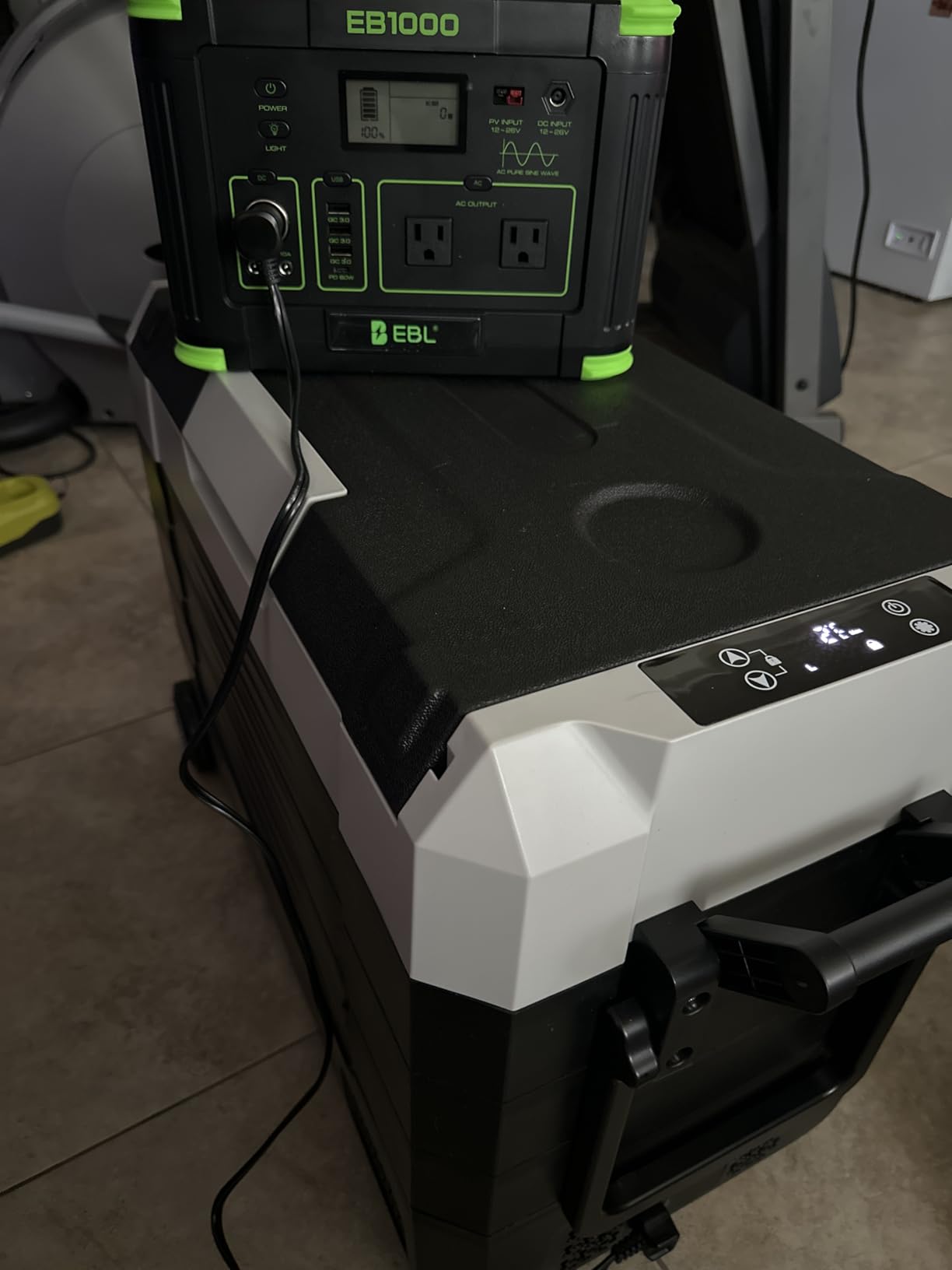
At 18 lb it is heavier than the River 2 Max at the same capacity class, so the extra ports come with extra bulk. The built-in battery management system covers temperature, overvoltage, overcurrent and short circuit protection.
Recharge paths are wall, car and solar, with solar taking 6-9 hours depending on panel size.
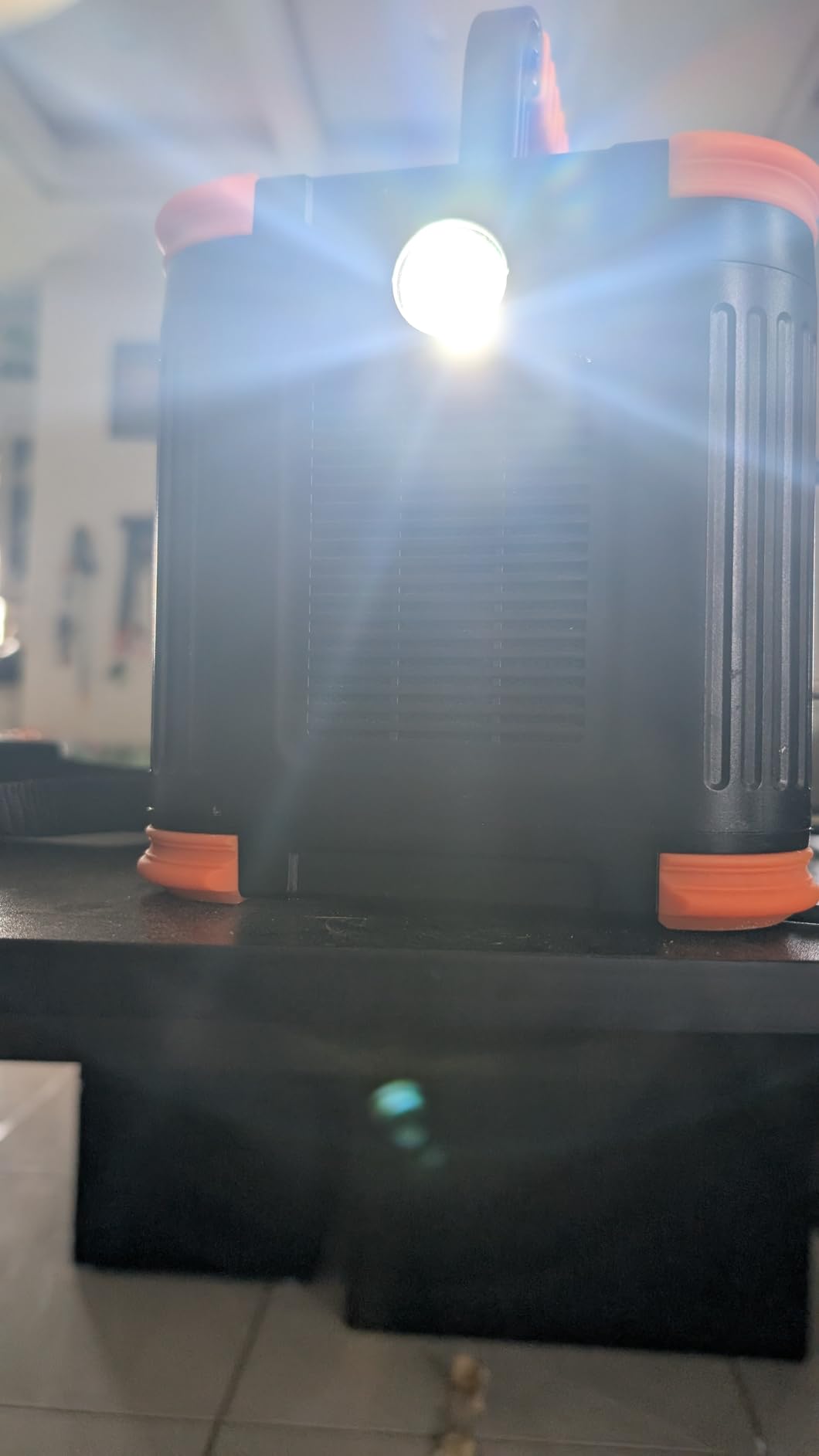
Best when you need many small ports
Ten outputs means a CPAP, a phone, a tablet and lights all connect at once without hunting for a splitter. The pure sine wave AC outlets suit sensitive electronics.
If your main pattern is a machine running while the station slowly refills, pass-through operation is the reason to choose this over a comparable unit without it.
Where it falls short
Solar and DC input are capped at roughly 105W, which is slow if you plan to recharge mainly from a panel. Wall charging is slower than the models above it too.
The review base is thin at 237, and one owner received a unit with a cracked bottom shell, so inspect the enclosure on arrival. During pass-through charging the AC power brick limits what you can run.
12. EnginStar 300W – The Budget First Step
- Two 110V pure sine wave AC outlets protect sensitive devices
- eight output ports charge several devices at once
- light at 6.5 lb with ETL certification
- recharges from solar
- wall or a 12V car socket
- battery management with voltage and temperature control
- Conventional lithium-ion cells rated for only about 1000 charge cycles
- 65W maximum charging input is slow for solar
- only 12 months of limited warranty coverage
This is the most compact way into the category and it does the basics correctly: pure sine wave 110V output on two AC outlets, eight ports and a 6.5 lb weight.
Pure sine wave is the detail worth paying for. Budget models with modified sine wave output are a known cause of machines running hot and throwing error codes, and this one avoids that.
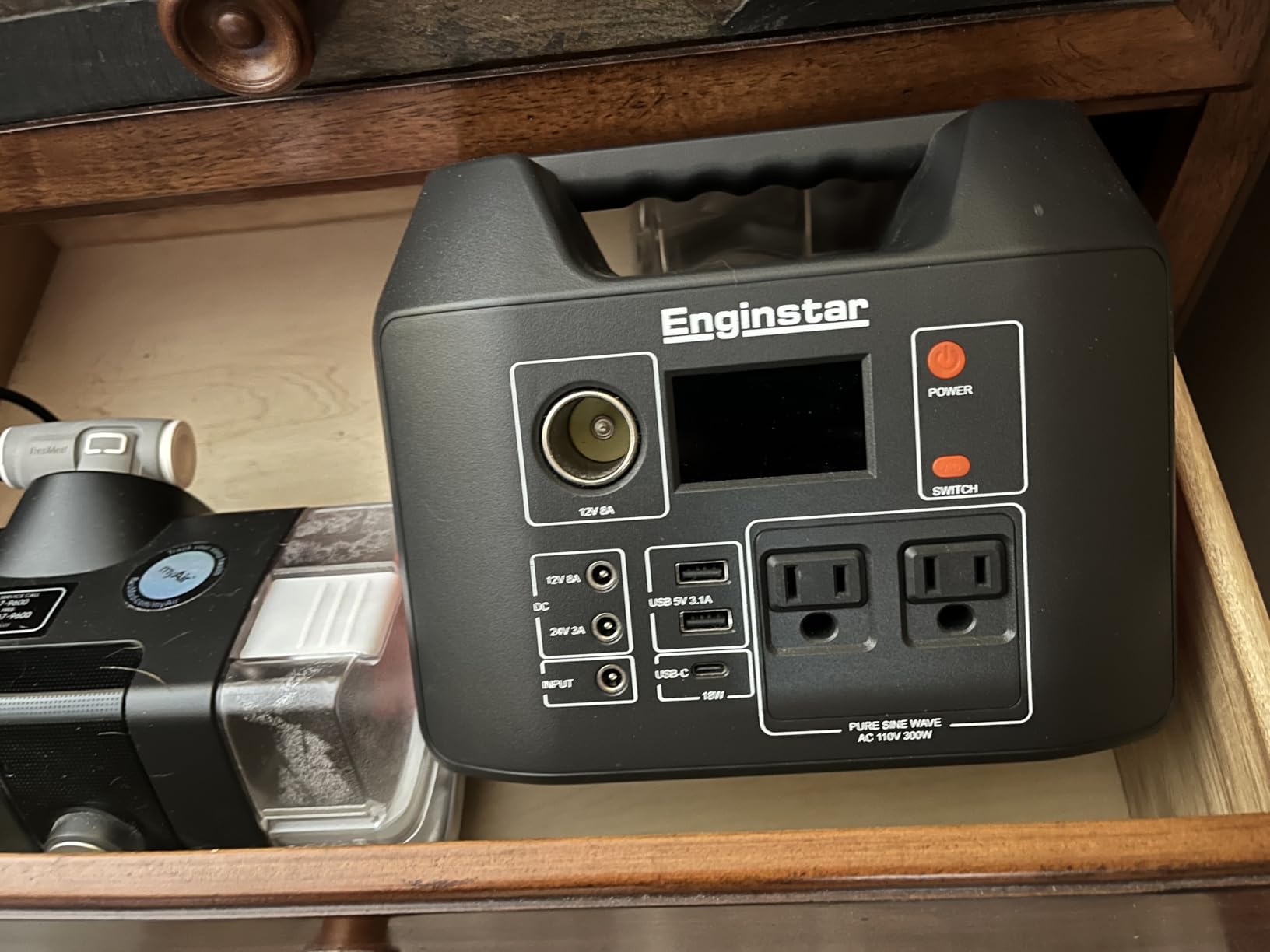
It recharges three ways, including a 12V car socket, so it works in a vehicle-heavy setup. The battery management system handles voltage and temperature control, which is the safety layer you want on any lithium pack.
296Wh means one night with the humidifier off and no margin beyond that.
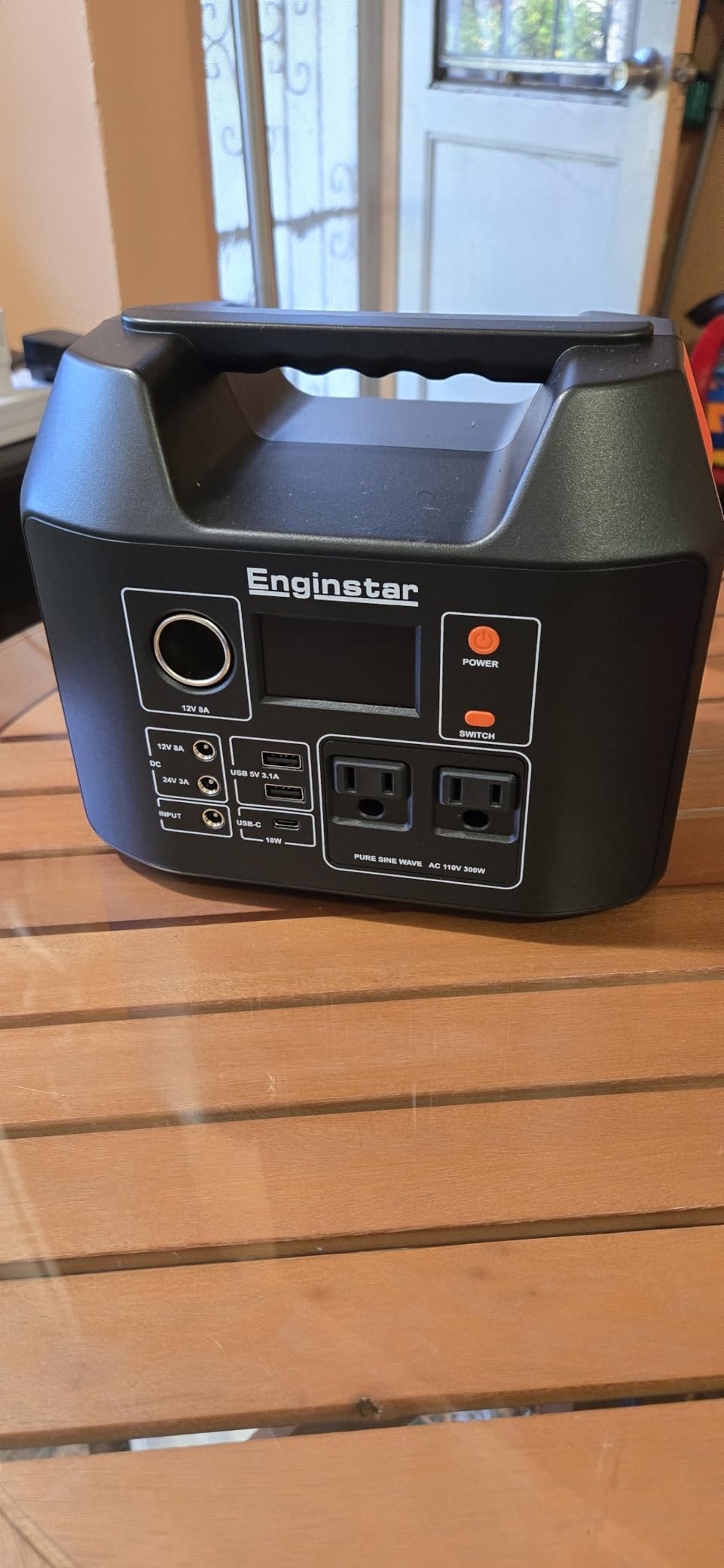
Best as a first backup unit
If you want a stopgap that covers the most common single overnight outage and you are not planning to cycle it nightly, the pure sine wave output at this size is a sensible entry point.
Six and a half pounds means it can live in a closet and come out when needed rather than being installed permanently.
Where it falls short
It uses conventional lithium-ion cells rated for about 1000 charge cycles, roughly a quarter of the LFP ratings quoted above. Nightly cycling is where that difference bites, so treat this as a backup rather than a daily off-grid power source.
The 65W maximum charging input makes solar replenishment slow, and the 12-month limited warranty is the shortest coverage in this roundup.
LiFePO4 vs NMC: Why Chemistry Decides Nightly Backup
Most of the models above use lithium iron phosphate, and that choice matters more than any other spec for someone who will drain the pack every night. LFP cells are rated between 3000 and 10000 cycles across this roundup, and the Jackery Explorer 300 alone is quoted above 4000 cycles before reaching 70 percent capacity.
NMC lithium-ion cells, used by the EnginStar here, are typically quoted around 1000 cycles. Nightly cycling eats that budget in under three years, and forum users consistently favour LFP for anything that runs every night, accepting NMC only when weight savings matter more than longevity.
There is a second reason to care: depth of discharge. NMC packs should not be emptied below roughly 20 percent, and consumer units rarely give you a way to set that cutoff. LiFePO4 units tolerate a full discharge without the same penalty, so the stated watt-hour rating is closer to what you can actually use.
AC or DC: The Connection That Changes Your Runtime
Every recommendation to run your CPAP on DC instead of AC comes down to one conversion step. A power station stores energy as DC, and a CPAP wants DC. Plugging into the AC outlet forces an inverter to convert DC to AC and the machine to convert it back, and you lose 10 to 40 percent of your capacity in the round trip.
Running from the 12V car socket with a DC cable removes both conversions. Users who switched to a DC-to-DC converter report going from around two nights to around five on the same pack, which is the single biggest runtime change available to you for the least money.
Check that the station you choose actually has a 12V DC car port. The Anker SOLIX S2000 in this roundup does not, so that path is closed on an otherwise excellent unit.
Setting Up UPS Failover for Overnight Outages
UPS mode means the station is always on, watching the wall outlet, and takes over when power disappears. Switchover times across the models here range from 10ms on the BLUETTI Elite 30 V2, BLUETTI Elite 100 V2, EcoFlow DELTA 2 Max, DJI Power 1000 V2 and Anker SOLIX S2000, up to 20ms on the BLUETTI AC180. Any of those is fast enough that a CPAP does not register the switch.
Here is the setup sequence we use.
Fully charge the station and leave it on the wall so it knows it has a good reference level.
Enable UPS mode in the manufacturer app, and confirm the unit shows the machine as a supported load.
Plug the CPAP into an AC outlet rather than the wall, so the station sees the load and estimates runtime correctly.
Set any capacity cutoff the app offers, and leave 15 to 20 percent headroom above what one night needs.
Test the failover by pulling the wall plug while you are awake, and confirm the machine keeps running without a pressure change or error code.
One note: several owners report units under-delivering on rated runtime until a firmware update and calibration cycle have run. Do the test before you need it.
How to Choose a Lithium Power Station for CPAP
Start with capacity, not output wattage. Your CPAP will never draw 1500W, but it will draw from the pack for eight hours. Size on watt-hours for your night, then pick the smallest unit that clears it with 20 percent margin.
Confirm pure sine wave output. Every recommended unit here produces pure sine wave AC. Modified sine wave inverters are a recurring complaint source on forums, with machines running hot or throwing error codes.
Check the chemistry before the discount. If the station will cycle most nights, LFP at 3000 plus cycles is the only sensible target. If it sits in a closet as an emergency spare, conventional lithium-ion is acceptable.
Weight is a therapy decision, not a preference. The spread here runs from about 6.5 lb to 37.4 lb. If you camp or travel with the machine, anything above 20 lb changes how you pack. Our CPAP power station breakdown goes deeper on the weight-versus-capacity trade.
Treat fan noise as a real spec. Values quoted in this roundup range from 26dB to a fan that is clearly audible at full charging speed. If the box goes beside your head, silence mode matters more than the charging rate.
Decide on recharge paths before you buy. Wall, car socket, solar and alternator support varies a lot. The DJI Power 1000 V2 needs separate modules for solar and car charging, while the BLUETTI AC180 includes all four paths.
Look at warranty length as a cycle-life proxy. Twelve months on the EnginStar and two years on the Jackery Explorer 300, against five years on the Anker, BLUETTI and EcoFlow models. A longer warranty usually tracks a manufacturer that expects nightly cycling.
On air travel, mind the watt-hour limit. Spare lithium batteries up to 100Wh travel in carry-on, and 101Wh to 160Wh require airline approval. None of the stations in this roundup fall under 100Wh, so they are for ground travel, not the cabin. Check the current rule with your airline before packing one.
Never charge a lithium pack below freezing. Cold-weather derating reduces available capacity, and charging a frozen cell is a safety risk. Bring the station inside at night if you are camping below zero.
Two more checks worth doing. Confirm your CPAP manufacturer lists the connection you plan to use, and ask your insurer or HSA administrator about reimbursement, since CPAP battery backup comes up often enough in patient forums to be worth one phone call.
Frequently Asked Questions
What size power station do I need to run a CPAP?
Multiply your machine’s draw in watts by your night length, then divide by 0.85 for AC inverter loss. A 30W draw with no humidifier needs about 282Wh per night; the same machine with a heated humidifier and heated tube at 60W needs about 565Wh. For one humidified night with margin, 600-700Wh works, and 1200-1400Wh covers two.
How long will a Jackery Explorer 1000 v2 run a CPAP machine?
With 1,070Wh of capacity, the Jackery Explorer 1000 v2 runs a standard CPAP without a humidifier for roughly 30 hours on AC at typical draw. With a heated humidifier and heated tube, expect closer to 12-15 hours, so roughly one full night with a comfortable reserve. Running from the 12V car port with a DC cable recovers 10 to 40 percent more.
Will a 400 watt inverter run a CPAP machine?
Yes. A CPAP draws 15-30W without humidification and 45-80W with a heated humidifier and tube, so inverter wattage is rarely the limiting factor. The limit is usually the battery’s watt-hour capacity and how much the inverter itself consumes, not the inverter’s peak rating.
What kind of battery pack can I use to power my CPAP machine?
Three options work: a dedicated DC-only CPAP travel battery, a generic lithium power station with pure sine wave AC outlets, or a computer-style UPS. For nightly use, a lithium iron phosphate power station is the strongest long-term choice because it is rated for thousands of cycles and tolerates a full discharge.
How do I power my CPAP in a power outage?
Turn on UPS mode in the manufacturer app while the station is plugged into a wall outlet, then run the CPAP from the station rather than the wall. Switchover times on the models in this roundup range from 10ms to 20ms, which is fast enough that the machine does not register the change. Test the failover while you are awake first.
How many nights can a 500Wh power station run a CPAP?
Roughly two nights without a humidifier, or one night with a heated humidifier and heated tube, at typical draw and an eight-hour night. Connecting through the 12V DC car port with a DC cable extends that because you skip the AC inverter conversion loss entirely.
Is a CPAP battery backup covered by insurance or an HSA?
Coverage varies by plan, and it is not universal. Many patients report that HSA or FSA accounts can be used for a CPAP battery backup since it is a durable medical accessory related to an existing prescription, but the reimbursement rules for a general-purpose power station are less clear-cut than for a dedicated CPAP travel battery. Confirm with your plan administrator before buying.
The Bottom Line on CPAP Battery Backup
The Jackery Explorer 1000 v2 is our pick as the best of the best lithium power stations for CPAP users because 1,070Wh covers a heated humidified night with real margin, the pure sine wave outlets keep the machine clean, and a one-hour recharge means a short window of wall power is enough to reset it.
Buy the BLUETTI Elite 100 V2 instead if quiet operation at 30dB matters more than recharge speed, and the Anker SOLIX C1000 if you need to refill as fast as possible. For travel and camping under about 7 lb, the Jackery Explorer 300 works well with the humidifier switched off. If your outages run for days rather than nights, the Anker SOLIX S2000 gives you three humidified nights from one charge.
Measure your machine’s real draw before you buy, run it on DC rather than AC where the station allows it, and test the failover while you are still awake. Those three steps matter more than any spec on this list. Last verified in 2026.