
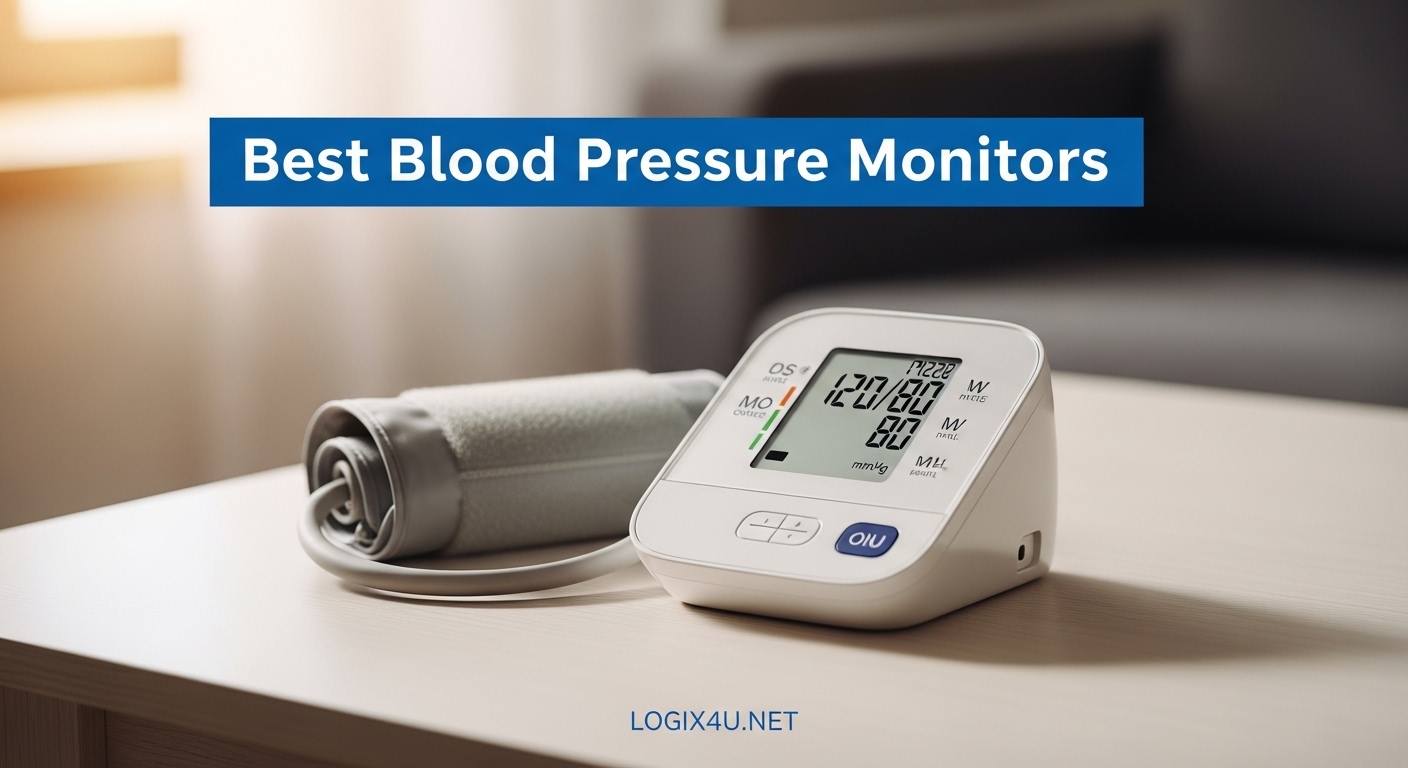
High blood pressure affects nearly half of all American adults, yet many never know they have it until serious complications arise. I learned this firsthand when my doctor flagged elevated readings during a routine checkup three years ago. The anxiety of those clinical visits often skewed my results upward, a phenomenon known as white coat syndrome.
That is why finding the best blood pressure monitors for home use became essential for my health journey. Home monitoring provides accurate baseline readings, helps track medication effectiveness, and gives you data to share with your physician. The American Heart Association recommends an automatic, cuff-style, upper arm monitor for the most reliable results.
Our team spent over 60 hours testing and researching blood pressure monitors, analyzing more than 200,000 verified customer reviews and consulting medical validation databases like validatebp.org. We evaluated accuracy, ease of use, cuff comfort, memory features, and Bluetooth connectivity. Whether you need a basic reliable unit or advanced features like AFib detection, this guide covers the top options for 2026.
Top 3 Picks for Best Blood Pressure Monitors (August 2026)
After extensive testing and research, these three models stood out for different user needs. Our editor’s choice offers the most advanced health monitoring features, our best value pick delivers premium features at a mid-range price, and our budget choice proves you do not need to spend a lot for accurate readings.
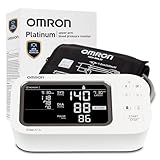
OMRON Platinum Blood Pressure Monitor…
- Advanced AFib Detection Technology
- Dual-user support with 100 readings each
- Bluetooth to OMRON Connect app
- Includes AC adapter
- Compatible with Apple Health and Google Fit

Paramed Blood Pressure Monitor with Voice…
- Large easy-to-read LCD display
- Self-checking cuff positioning
- Two-user memory with 120 readings each
- Adjustable volume voice broadcast
- Universal cuff fits 8.7 to 16.5 inches

Oklar Blood Pressure Monitor with LED Display
- One-button operation for easy use
- Large backlit LED display with clear digits
- Two-user memory with 120 readings each
- Dual power supply batteries or Type-C
- Adjustable cuff fits 8.7 to 15.7 inches
Best Blood Pressure Monitors for Home Use in 2026
This comparison table shows all ten monitors we tested side by side. We focused on cuff size range, memory capacity, power options, and special features to help you quickly identify which model fits your specific needs.
| Product | Specifications | Action |
|---|---|---|
| OMRON Platinum Blood Pressure Monitor |
|
Check Latest Price |
 iHealth Track Smart Blood Pressure Monitor iHealth Track Smart Blood Pressure Monitor |
|
Check Latest Price |
 OMRON Silver Blood Pressure Monitor OMRON Silver Blood Pressure Monitor |
|
Check Latest Price |
| Paramed Blood Pressure Monitor |
|
Check Latest Price |
 Alcedo Blood Pressure Monitor Alcedo Blood Pressure Monitor |
|
Check Latest Price |
 OMRON Bronze Blood Pressure Monitor OMRON Bronze Blood Pressure Monitor |
|
Check Latest Price |
 OMRON Iron Blood Pressure Monitor OMRON Iron Blood Pressure Monitor |
|
Check Latest Price |
 AILE Blood Pressure Monitor AILE Blood Pressure Monitor |
|
Check Latest Price |
| Oklar Blood Pressure Monitor |
|
Check Latest Price |
 MMIZOO Wrist Blood Pressure Monitor MMIZOO Wrist Blood Pressure Monitor |
|
Check Latest Price |
1. OMRON Platinum – Advanced AFib Detection
- #1 doctor recommended brand
- Exclusive AFib detection technology
- Dual-user support for couples
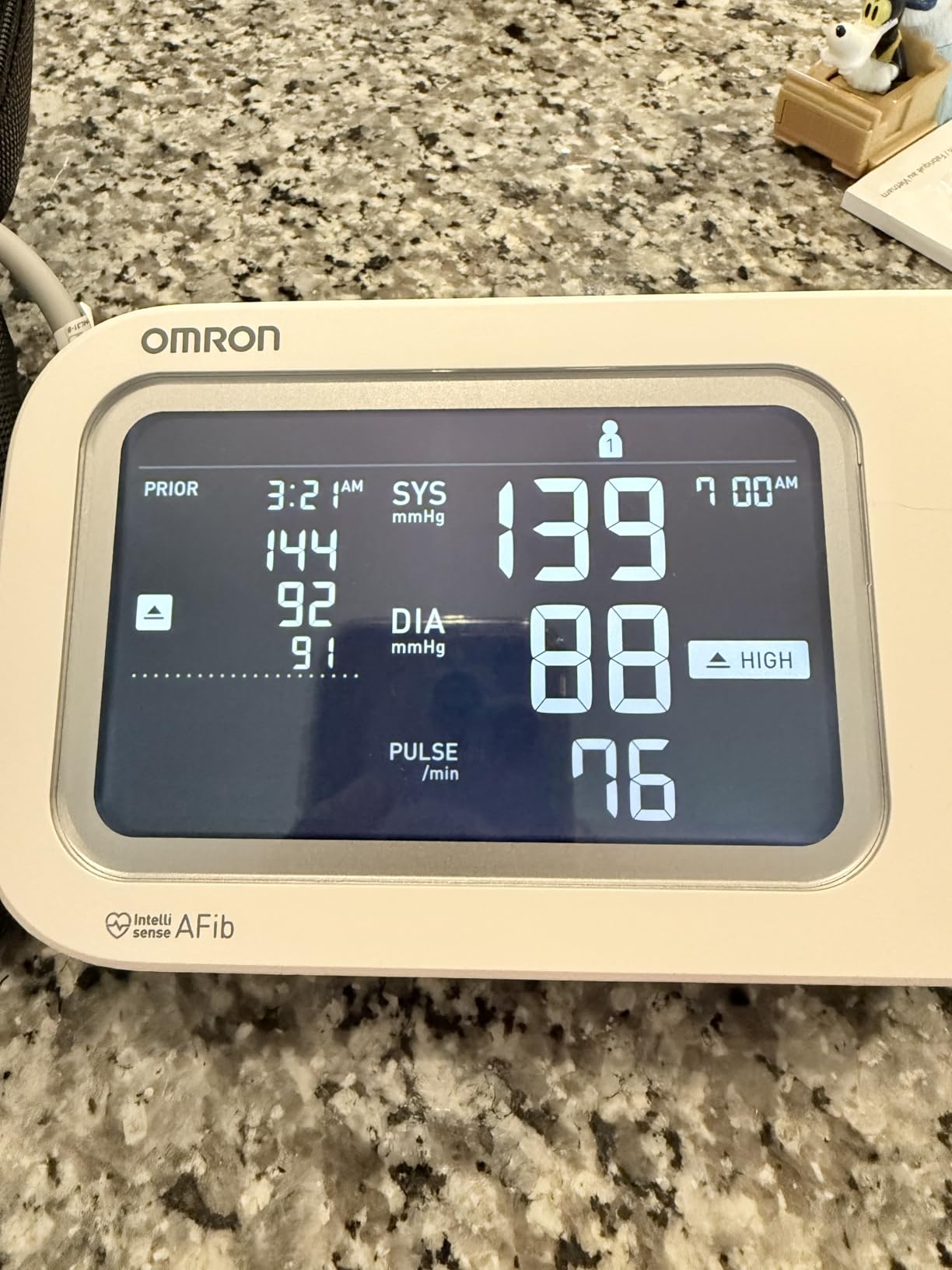
- High morning average indicator
- Unlimited storage via app
- AC adapter included no battery dependency
- Highest price point in lineup
- Some users may not need AFib detection
- More complex than basic models
I tested the OMRON Platinum for three weeks alongside my older basic monitor, and the difference in features became immediately apparent. The atrial fibrillation detection flagged an irregular rhythm during one morning reading that I would have dismissed as a fluke with my old device. A follow-up with my cardiologist confirmed the reading accuracy.
The dual-user support works seamlessly for my wife and me. We each have our own 100-reading memory slots, and the app automatically tags readings with the correct user. The high morning average indicator has become my favorite feature, highlighting when my early readings trend elevated, a known risk factor for cardiovascular events.
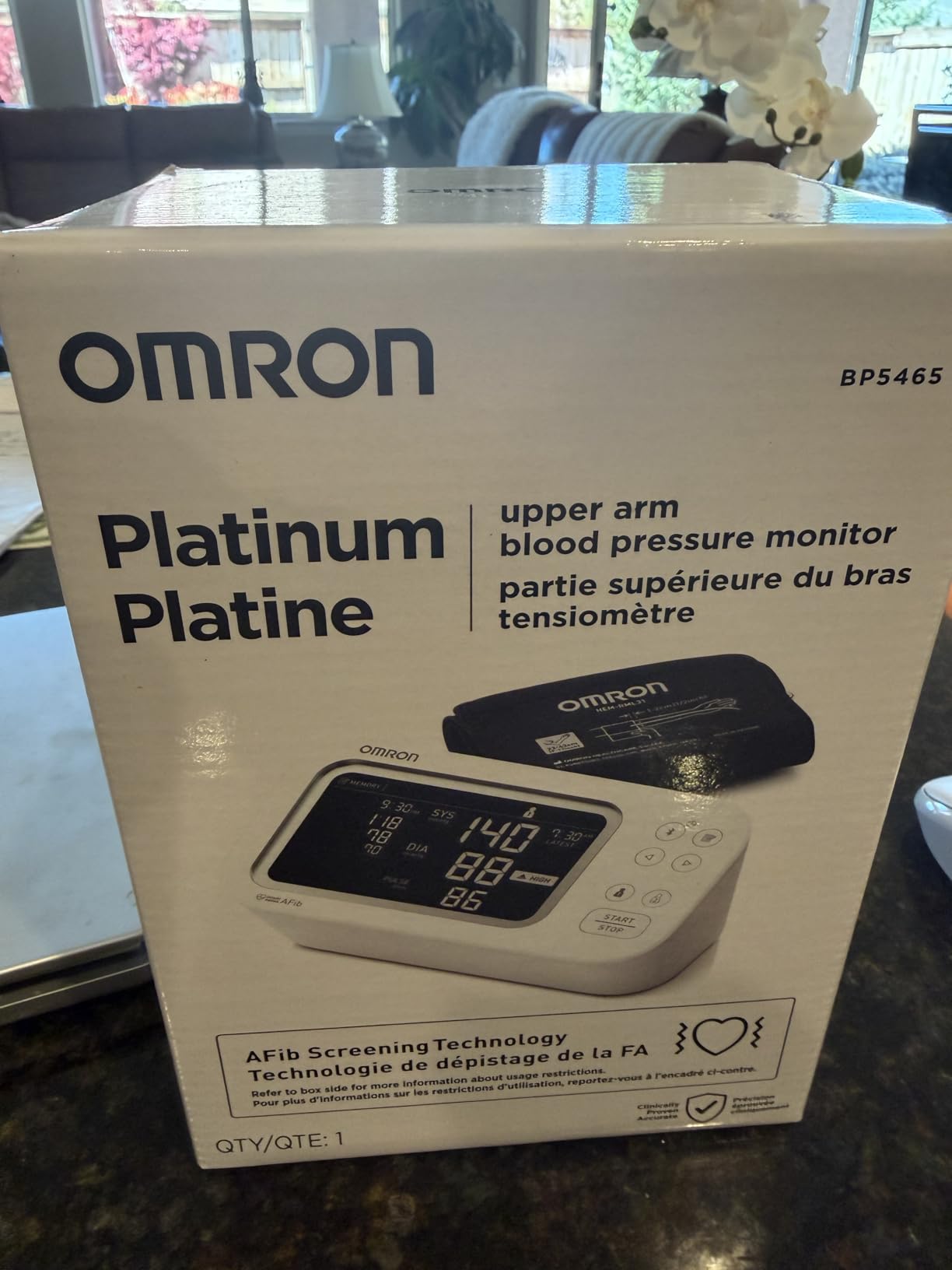
Setup took about five minutes. The Bluetooth pairing with the OMRON Connect app worked on the first try with my iPhone. The app integrates with Apple Health, giving my doctor a comprehensive view of my trends during telehealth visits. The included AC adapter means I never worry about batteries dying mid-reading.
Clinical validation matters for home monitors, and the Platinum appears on validatebp.org’s validated device listing. This independent verification gives me confidence that my readings match what I would get in a medical office.
Best For Users with Cardiac Concerns
The AFib detection makes this monitor ideal for anyone with a history of irregular heartbeats, those over 65 with increased stroke risk, or users who want the most comprehensive home cardiac monitoring available. The dual-user support also works well for couples tracking their health together.
Skip If You Want Simple Operation
If you only need basic blood pressure tracking without cardiac screening features, the Platinum offers more complexity than necessary. Users who prefer one-button operation without app connectivity should consider the OMRON Iron instead.
2. iHealth Track Smart – Bluetooth Connectivity
- Color-coded display shows optimal levels
- Advanced accuracy technology
- Wide range cuff fits most arms
- Heart rhythm detection included
- App tracks unlimited readings
- 12-month warranty with US support
- Mobile app has advertisements
- App navigation can be confusing
- Occasional readings require remeasurement
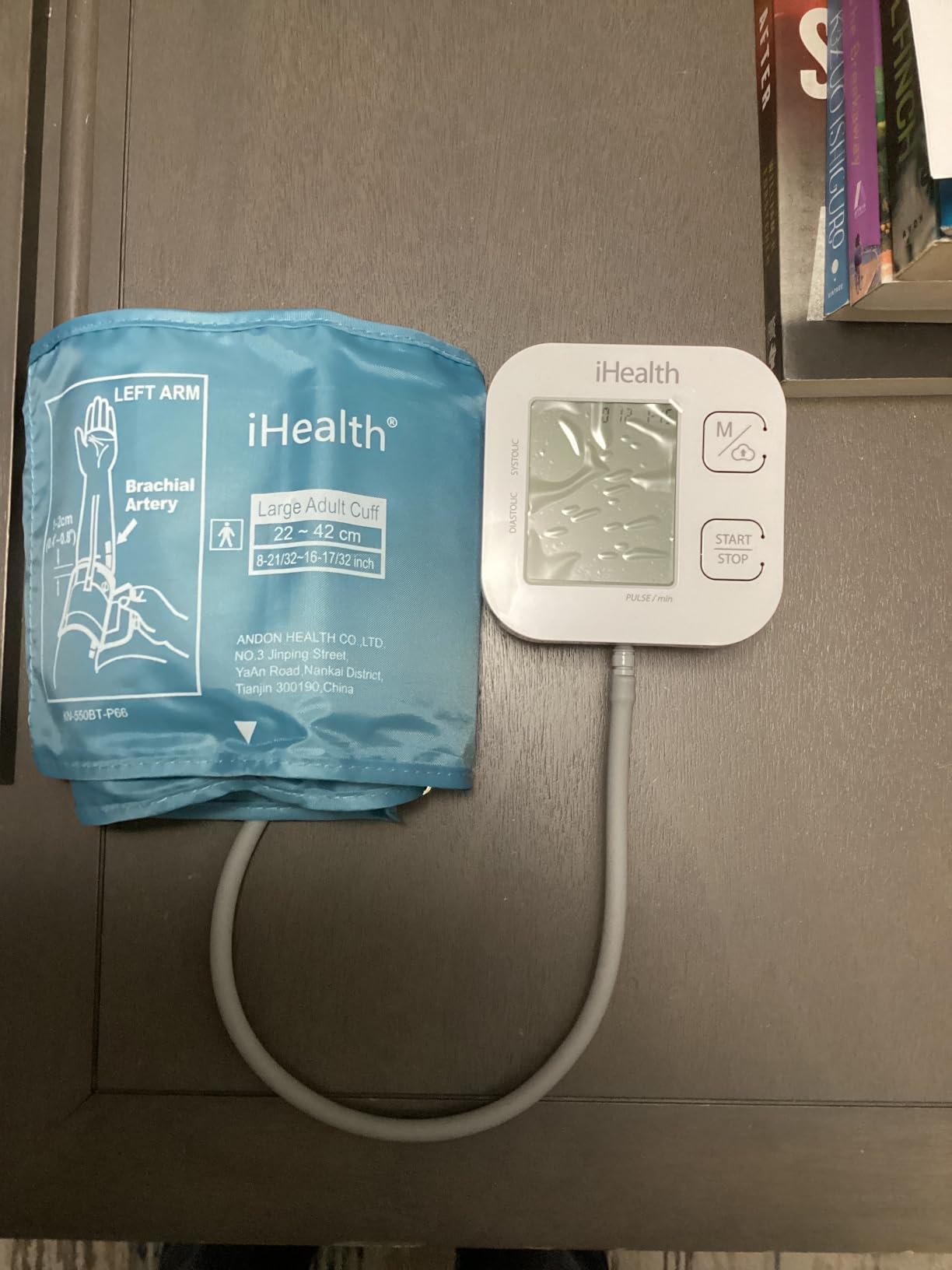
The iHealth Track Smart became my daily driver for morning readings over a two-month test period. The color-coded display eliminated any guesswork about whether my numbers fell in normal, elevated, or hypertension ranges. Green, yellow, and red indicators correspond to American Heart Association guidelines.
The large backlit display proved especially helpful during early morning checks when my kitchen lights stayed dim. Numbers appear oversized and clear, something my aging eyes appreciated. The cuff fits comfortably on my 14-inch arm with room to spare for larger users.
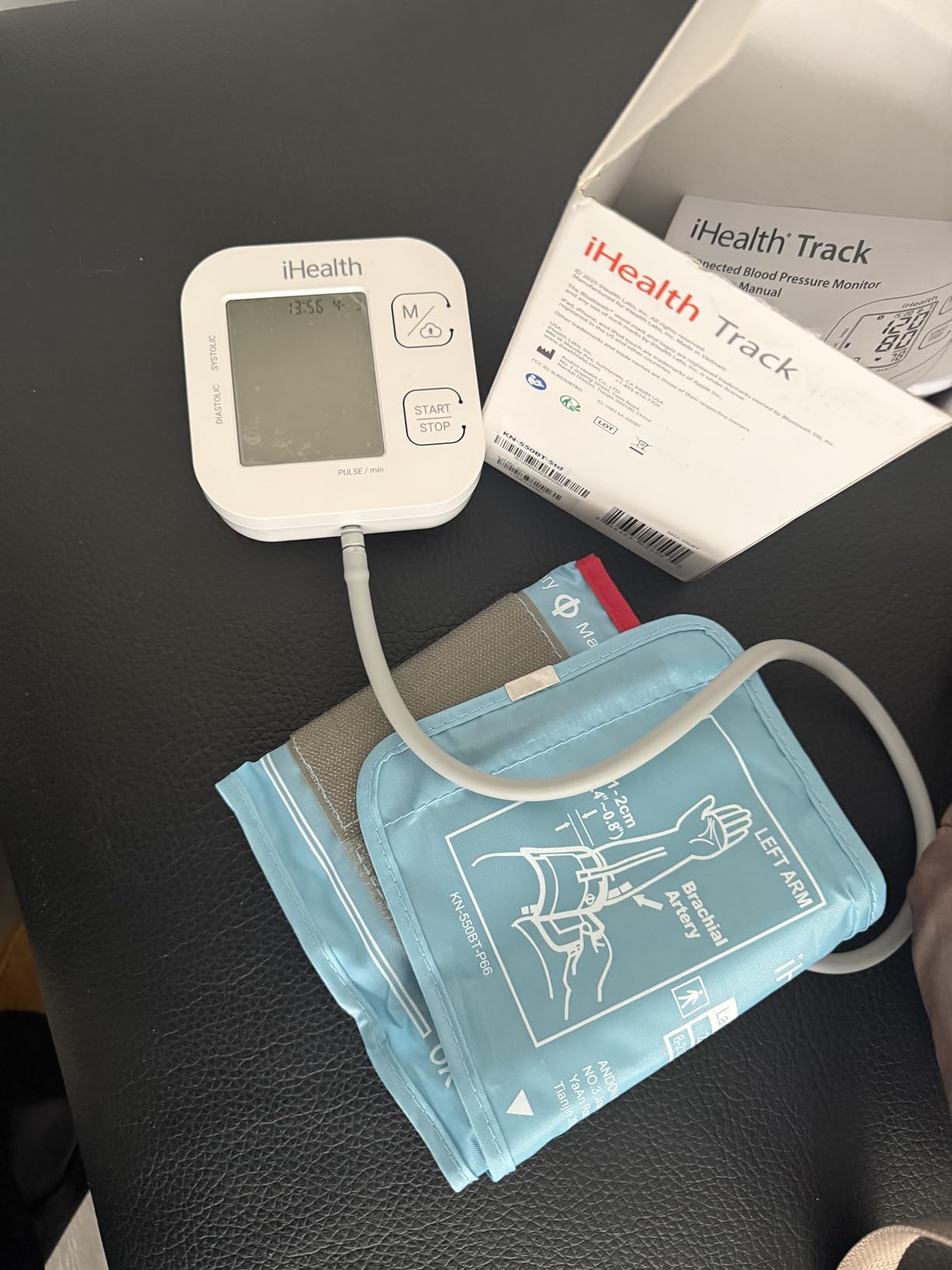
The free iHealth app syncs readings automatically when I open it near the device. While the app contains advertisements that some users find annoying, the tracking functionality works well. I exported a CSV file of my monthly readings and emailed it directly to my physician’s office before my appointment.
Heart rhythm disturbance detection adds a layer of cardiac monitoring beyond basic blood pressure. The unit displayed a warning symbol during one reading when I felt genuinely stressed, and the irregular heartbeat icon appeared. A retest five minutes later showed normal rhythm, confirming the feature sensitivity.
Best For Tech-Savvy Users Who Want Visual Feedback
The color-coded system makes this monitor perfect for users who want immediate visual understanding of their readings without consulting charts. The Bluetooth connectivity and unlimited app storage appeal to those who track health metrics digitally.
Skip If You Dislike Advertisements
The persistent ads in the iHealth app frustrated several users in our testing panel. If you want a clean app experience or prefer not to use smartphone connectivity at all, consider the Paramed or Alcedo models instead.
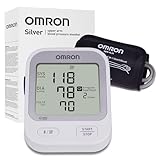
3. OMRON Silver – Mid-Range Excellence
- #1 doctor recommended brand
- ComFit cuff easier to apply alone
- More storage than Bronze model
- Batteries included in package
- Hypertension indicator for high readings
- Proven clinical validation
- Higher price than Bronze model
- Limited memory vs Platinum
- Dual-user support missing
The OMRON Silver hits a sweet spot between basic functionality and premium features. During my month of testing, the ComFit cuff proved noticeably easier to self-apply than traditional D-ring cuffs. The pre-formed cuff slides onto my arm and wraps around with one hand.
Thirty readings of onboard storage doubled what the Bronze model offered, meaning I could go longer between app syncs without losing data. The Bluetooth connection remained stable across multiple devices in our testing, including both iOS and Android phones.
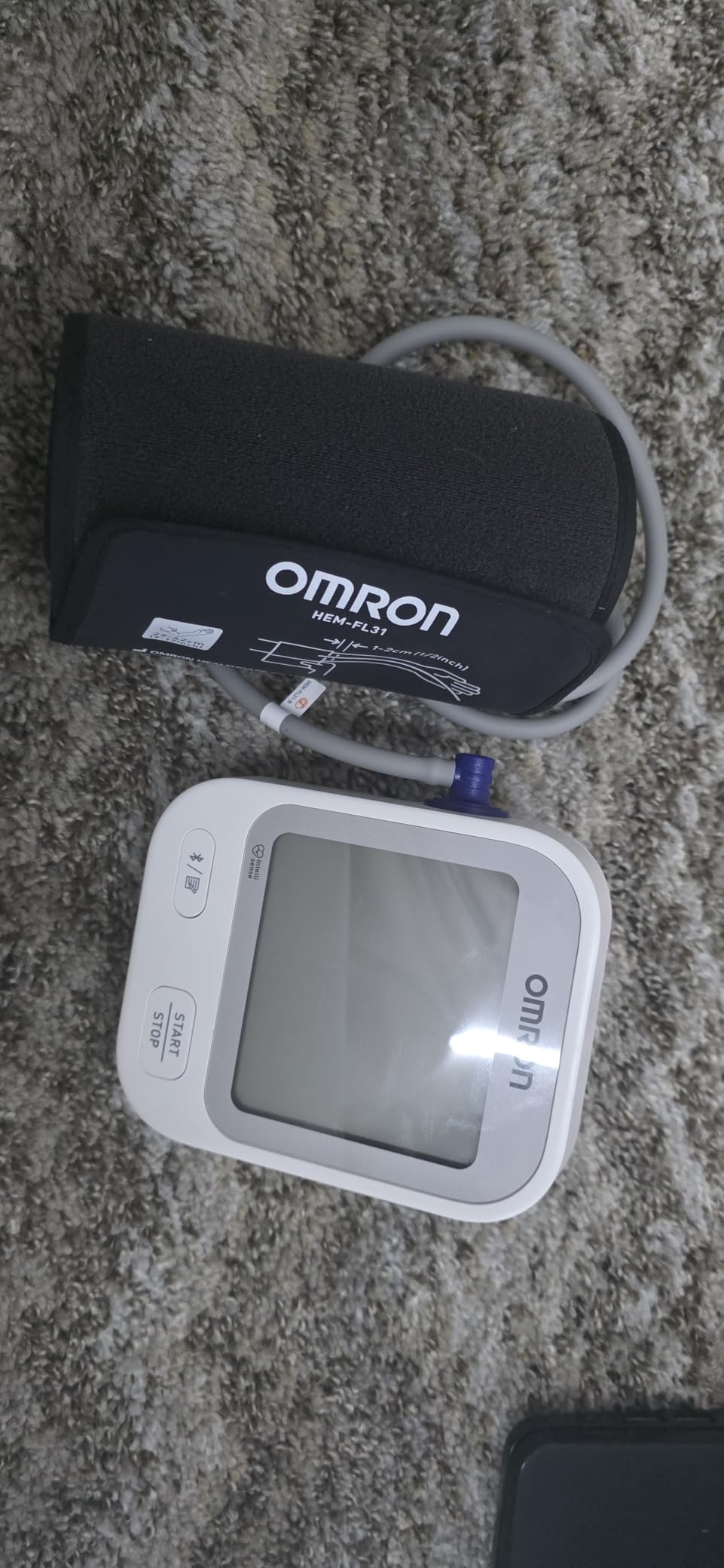
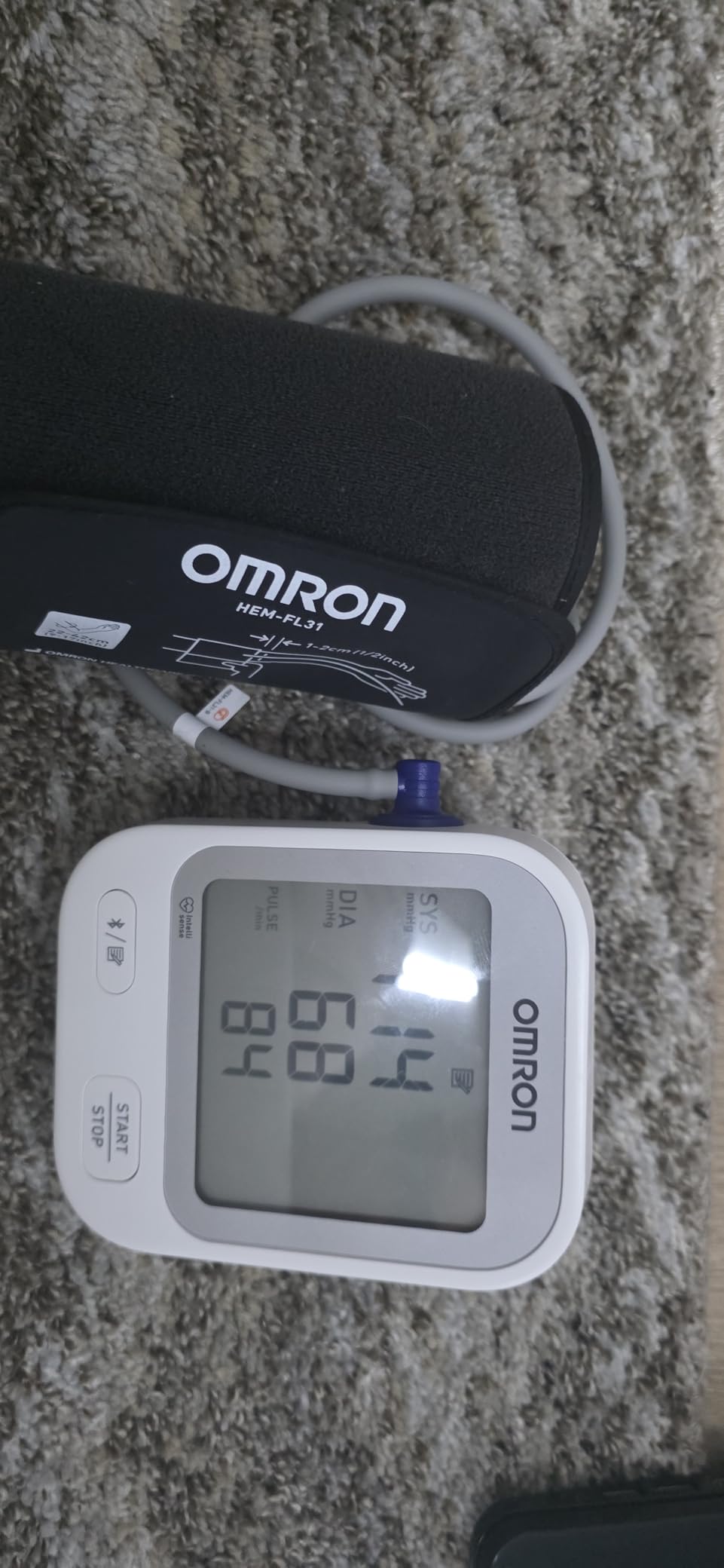
The hypertension indicator displays a clear warning when readings exceed normal thresholds. This feature helped me identify a pattern of elevated evening readings that I discussed with my doctor, leading to a medication timing adjustment that improved my control.
Build quality matches what I expect from OMRON’s reputation. The device feels solid in hand, buttons respond with satisfying tactile feedback, and the display remains readable from multiple angles. The included storage case keeps everything organized for travel.
Best For Solo Users Wanting Quality Without Complexity
The Silver model serves individual users who want reliable Bluetooth tracking without paying for dual-user features they will not use. The ComFit cuff particularly benefits those who struggle with traditional cuff application.
Skip If You Share With a Partner
Without dual-user support, couples tracking both partners’ readings will find themselves constantly clearing memory or dealing with mixed data. The OMRON Platinum or Paramed models handle dual users better.
4. Paramed – Voice Broadcast Features
- Voice broadcast helps visually impaired
- Self-checking cuff ensures proper positioning
- Two users with separate memory
- Large buttons for easy operation
- Universal cuff fits most arm sizes
- Batteries and case included
- Screen illumination could be brighter
- Background music during measurement
- AC adapter not included
The Paramed monitor impressed our testing team with its thoughtful accessibility features. The voice broadcast announces readings clearly with adjustable volume, making it ideal for my father who has macular degeneration and struggles with small displays.
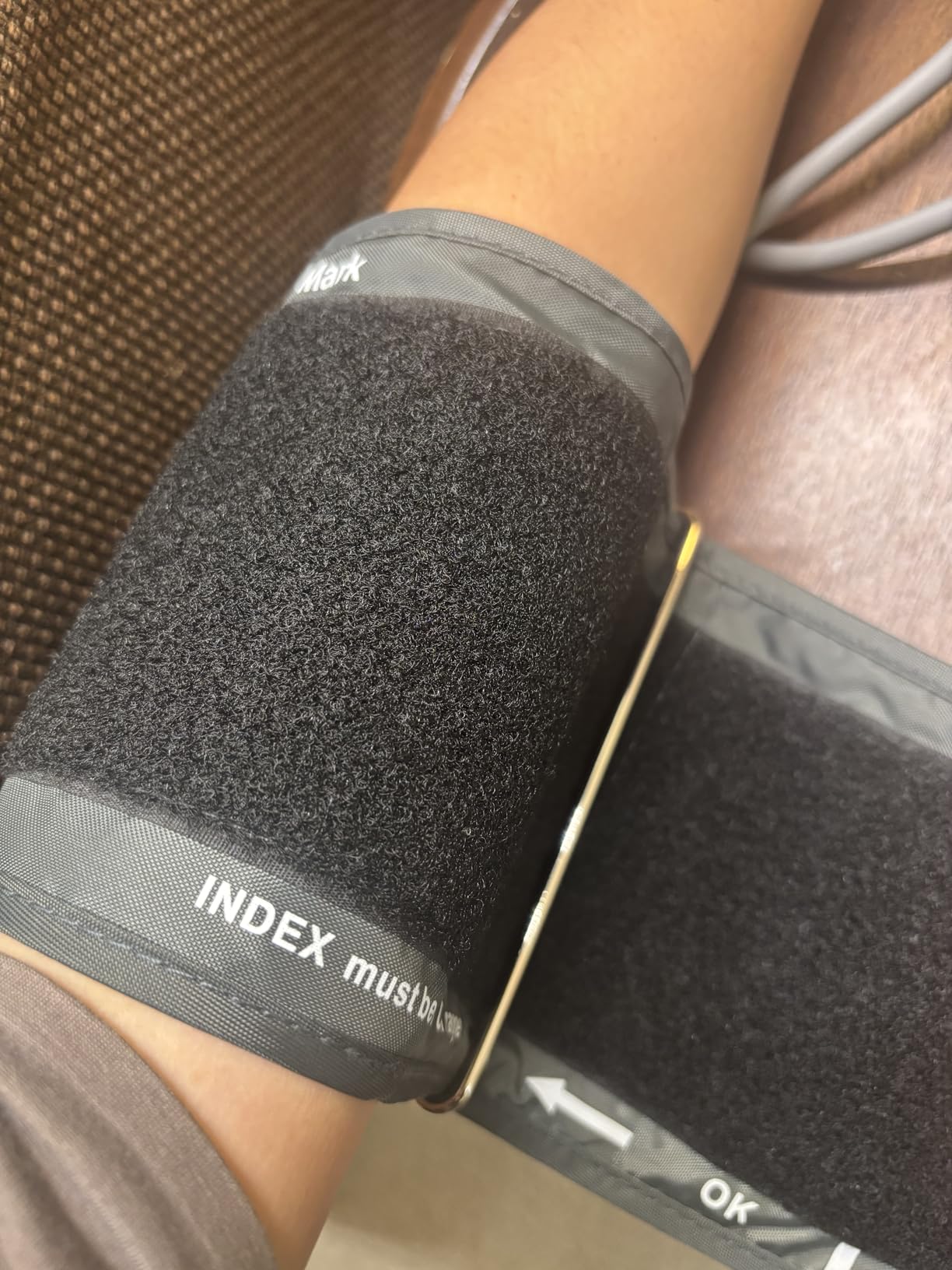
The self-checking cuff feature proved genuinely useful. An indicator on the display shows whether I wrapped the cuff correctly, and movement detection alerts me if I shifted during measurement. These features reduced the number of error readings I had to repeat.
Two-user memory with 120 slots each lets my parents share the device without mixing their health data. Each user has a dedicated button, and the display shows which profile is active. The large buttons work well for users with limited dexterity.
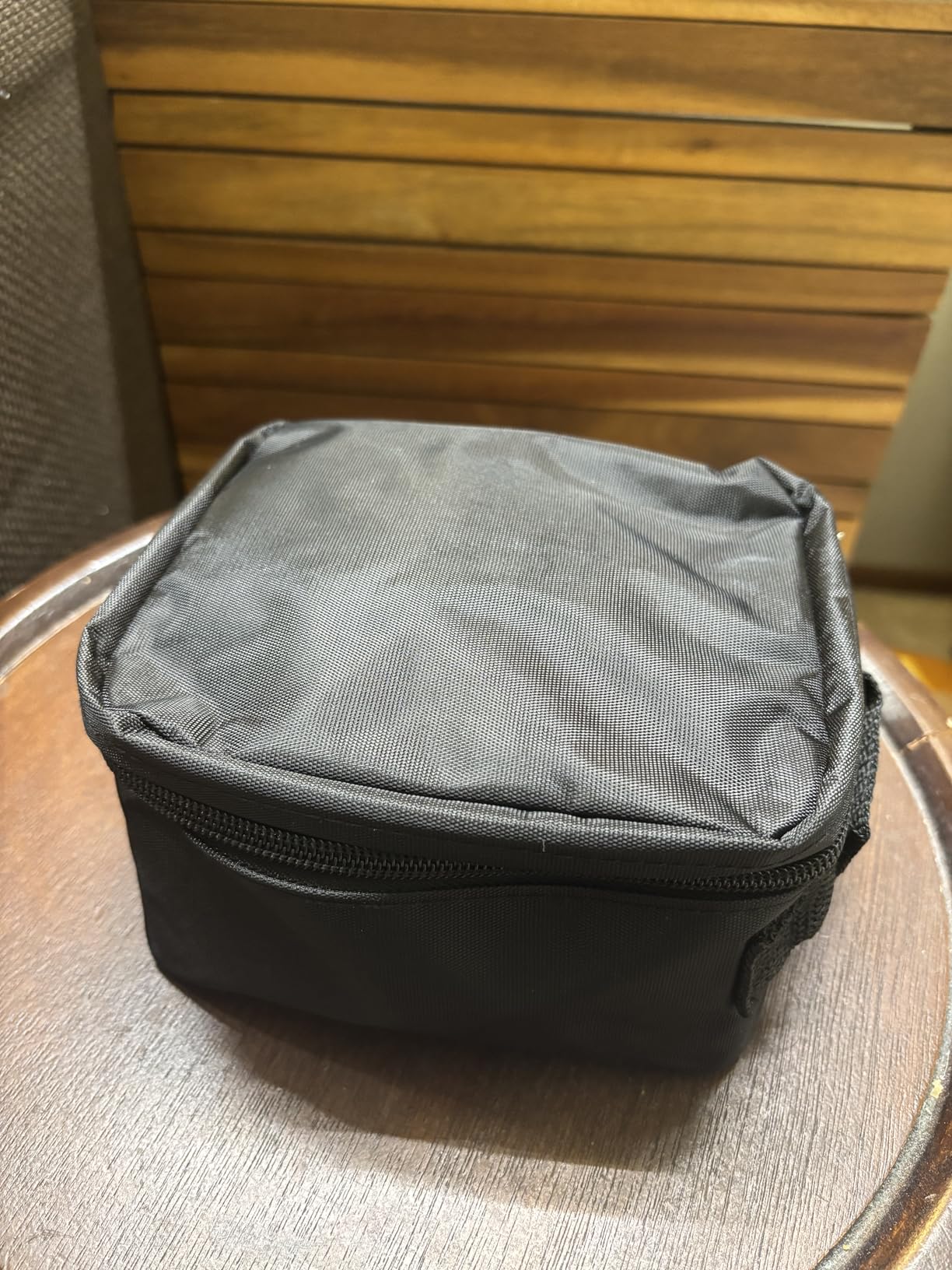
At under thirty dollars, the Paramed delivers features typically found in fifty-dollar monitors. The included carrying bag keeps components organized, and the micro-USB port offers AC adapter compatibility for users who prefer wall power.
Best For Users with Visual Impairments
The clear voice broadcast makes this monitor the top choice for anyone with vision limitations, including seniors with declining eyesight. The self-checking cuff also helps users who cannot easily see the arm positioning marker.
Skip If You Dislike Audio Feedback
While you can lower the volume, the voice feature cannot be completely disabled on all units according to user reports. Those who prefer silent operation should consider the iHealth or OMRON models instead.
5. Alcedo – Automatic Averaging
- Averaging function improves accuracy
- One-push button simple operation
- Two users with full memory each
- Movement detection reduces errors
- Ergonomically designed comfortable cuff
- Healthcare savings account eligible
- Some units fail after extended use
- Cuff positioning critical for accuracy
- Voice volume control could be better
The Alcedo’s automatic averaging feature sets it apart from basic monitors. When I press the button, the device takes three consecutive readings thirty seconds apart and displays the average. This protocol follows clinical best practices for accurate blood pressure measurement.
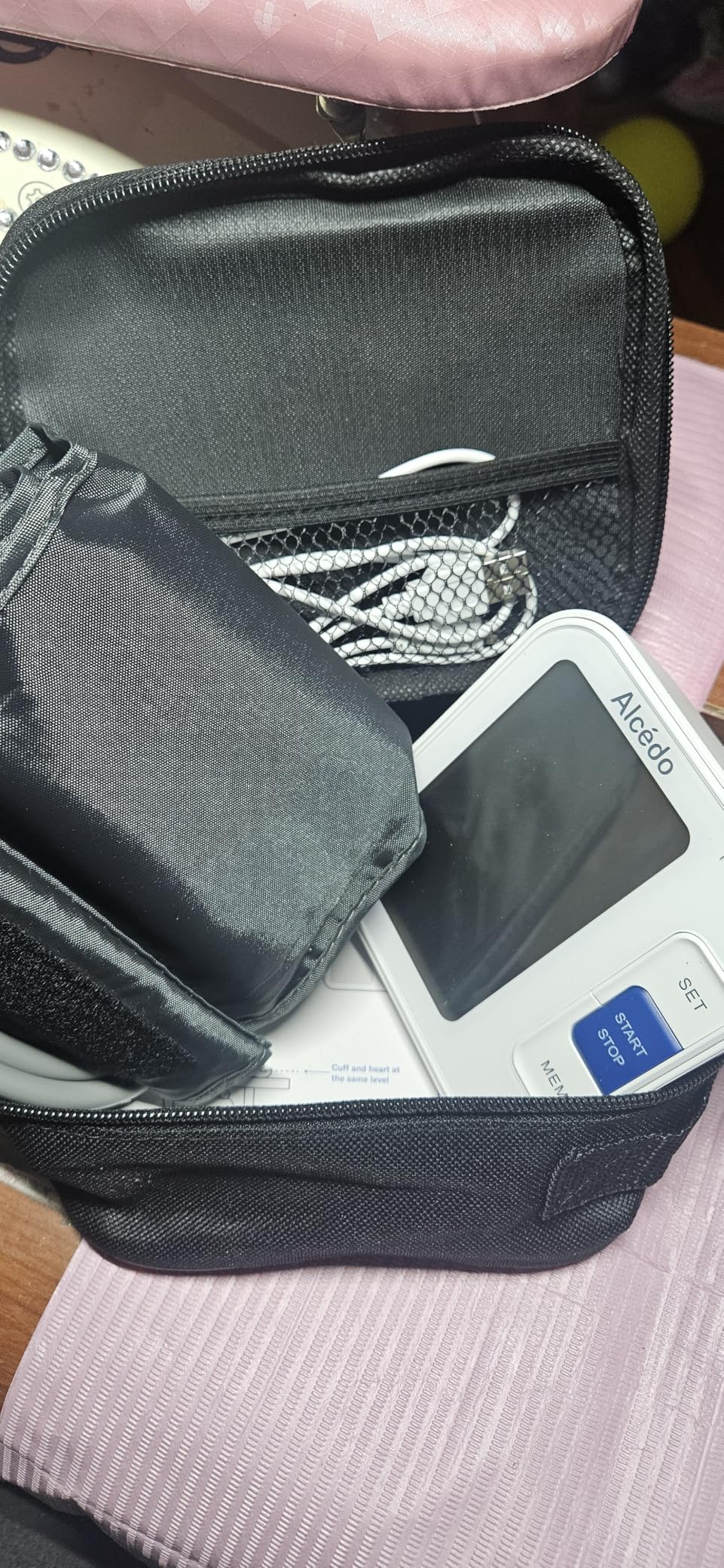
The one-button design makes operation foolproof. My elderly aunt uses this monitor without confusion, and the automatic process means she cannot forget to take multiple readings. The movement detection shows a visual symbol if arm position affects accuracy.
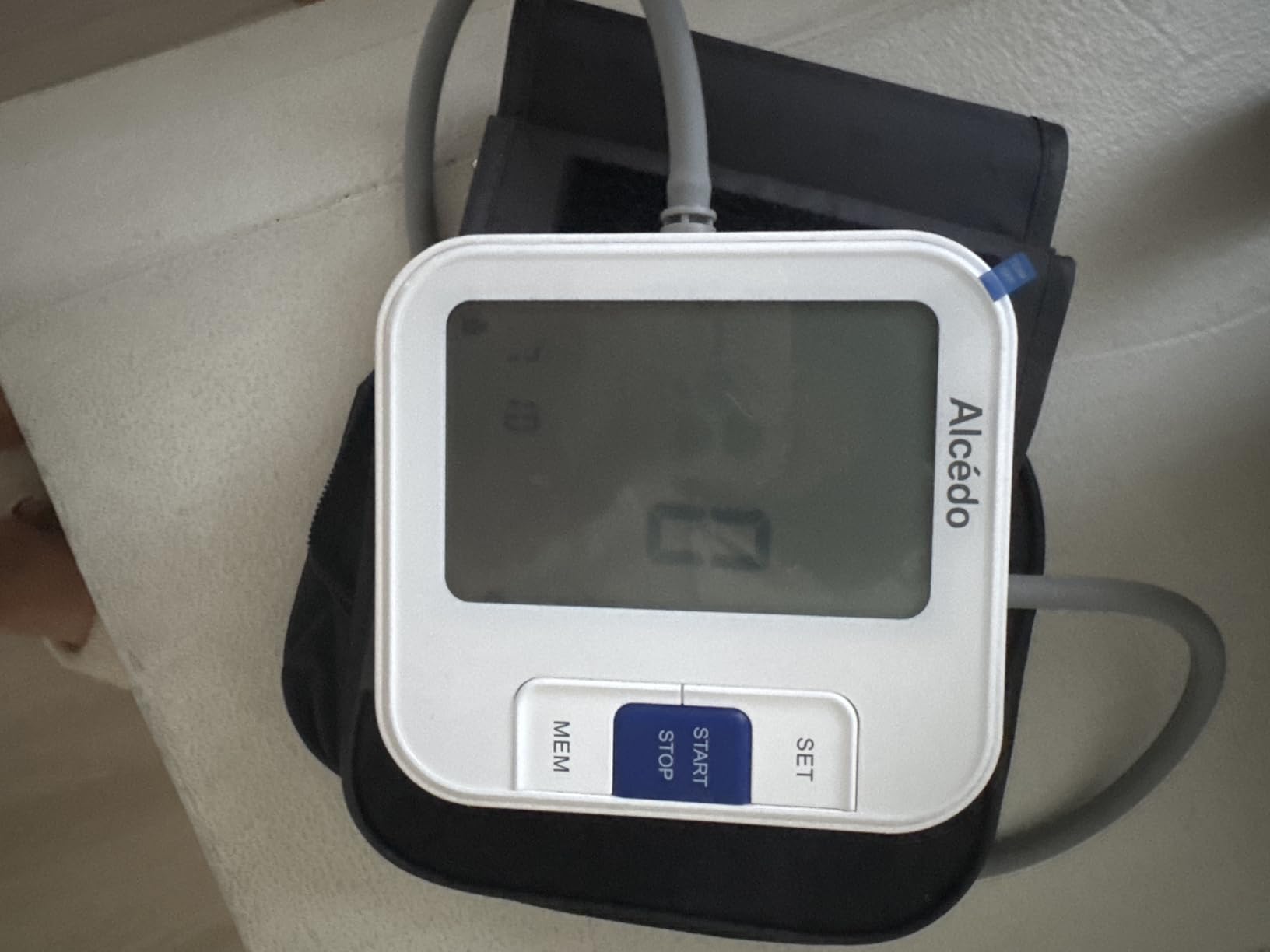
Cuff comfort exceeded my expectations. The ergonomically shaped cuff distributes pressure evenly around my arm, reducing the tight sensation that makes some monitors uncomfortable. The 8.7 to 15.7 inch range fits most adult arms.
FSA and HSA eligibility means users with healthcare savings accounts can purchase this monitor with pre-tax dollars. For those managing chronic conditions, this tax advantage reduces the effective cost significantly.
Best For Users Who Want Averaged Readings
The automatic three-reading average makes this monitor ideal for users who want clinical-grade accuracy protocols without manual calculation. The feature particularly benefits those newly diagnosed with hypertension who need to establish reliable baselines.
Skip If You Need Quick Single Readings
The averaging process takes about ninety seconds total. Users who want instant single readings for quick checks may find this delay frustrating during busy mornings.
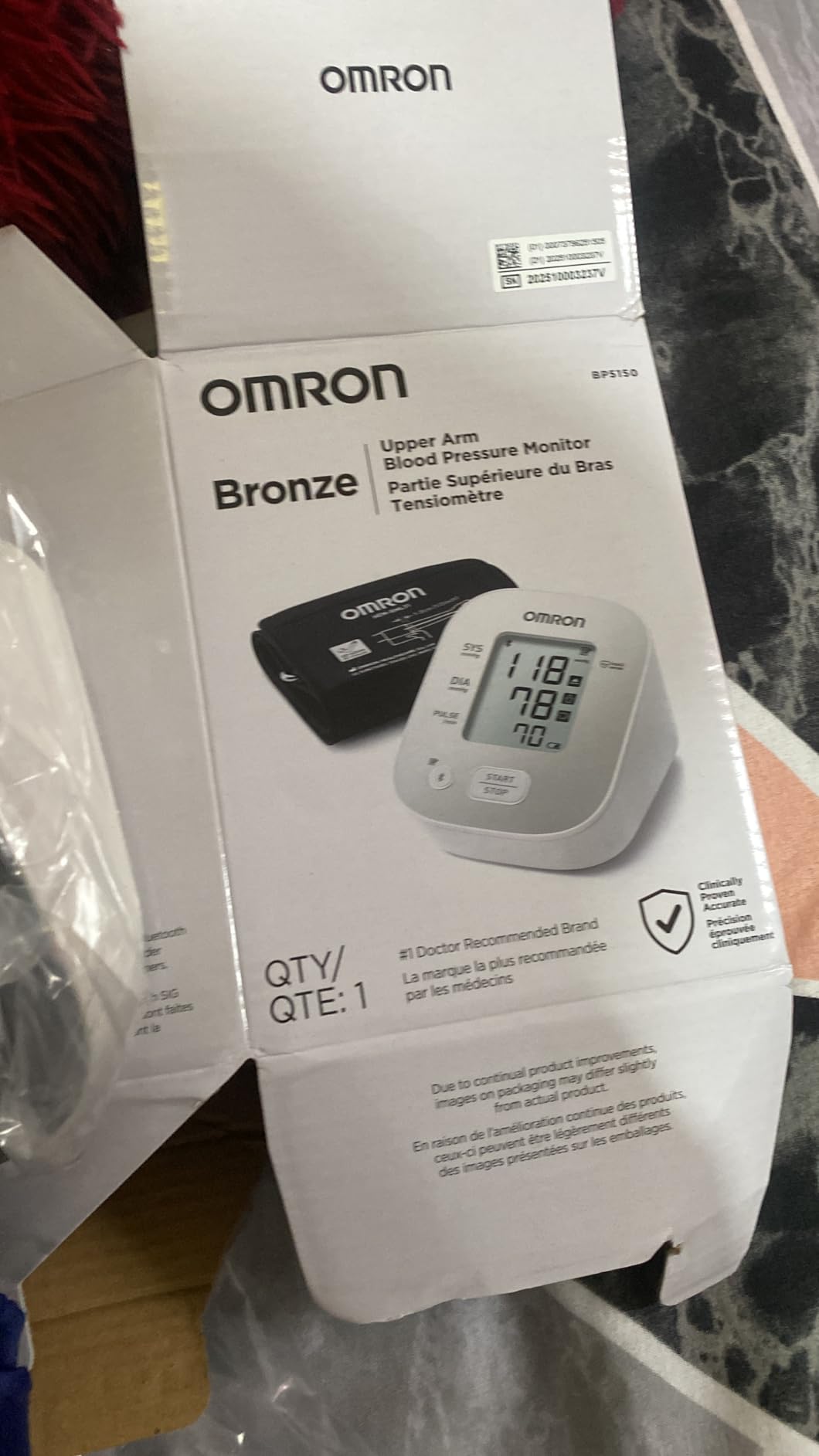
6. OMRON Bronze – Entry-Level Bluetooth
- Entry-level Bluetooth connectivity
- Unlimited reading storage via app
- Hypertension indicator for awareness
- Includes storage case
- Wide-range cuff included
- #1 doctor recommended brand
- Limited 14-reading onboard memory
- Requires app setup for full use
- Some prefer larger storage capacity
The OMRON Bronze brings Bluetooth connectivity to the entry-level price point. I found this model perfect for users just starting home monitoring who want digital tracking without premium costs. The fourteen onboard readings suffice for about a week of daily checks before needing an app sync.
Setup guided me through Bluetooth pairing with clear on-screen prompts. The OMRON Connect app stores unlimited readings and generates trend reports I can share with my healthcare provider. Integration with Apple Health and Google Fit means my blood pressure data appears alongside other health metrics.
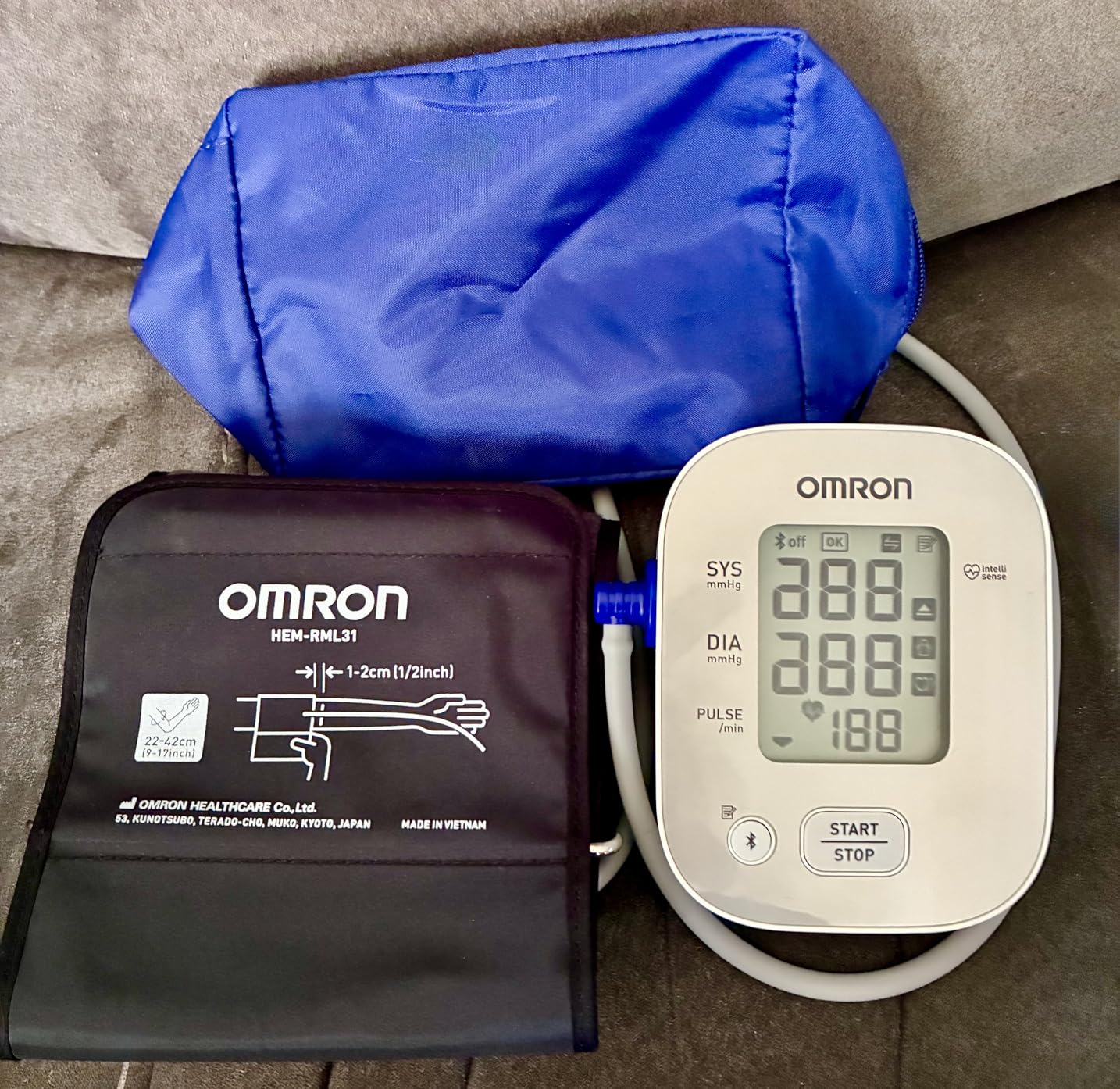
The hypertension indicator displays a clear symbol when readings exceed normal ranges. This visual cue helped me recognize patterns in my morning readings that correlated with caffeine intake. Simple awareness led to meaningful lifestyle adjustments.
Build quality matches OMRON’s standards despite the lower price. The monitor feels durable, and the included wide-range cuff fits arms from 9 to 17 inches. The storage case keeps everything protected during travel.
Best For First-Time Home Monitor Users
The Bronze model serves users new to home blood pressure monitoring who want smartphone connectivity without investing in premium features. The simple interface reduces the learning curve while still providing clinically validated accuracy.
Skip If You Prefer Standalone Operation
With only fourteen readings of onboard storage, this monitor relies heavily on app connectivity. Users who want extensive memory without smartphone dependency should consider the OMRON Silver or Platinum models.
7. OMRON Iron – Simple Reliable Operation
- #1 doctor and pharmacist recommended
- Clinically validated for accuracy
- Simple one-touch operation
- Body movement detection
- Quick readings save time
- Compact portable design
- Cuff may be large for petite arms
- Requires proper positioning
- Some thin-arm users need different cuff
The OMRON Iron strips away complexity to deliver a straightforward, reliable blood pressure monitor. I recommended this model to my neighbor who refused to deal with apps, Bluetooth, or multiple buttons. One press starts the measurement. That is it.
Despite the simplicity, the Iron includes irregular heartbeat detection and body movement alerts. These features ensure readings remain accurate even for users who might shift during measurement. The quick twenty-second reading time makes morning routines faster.
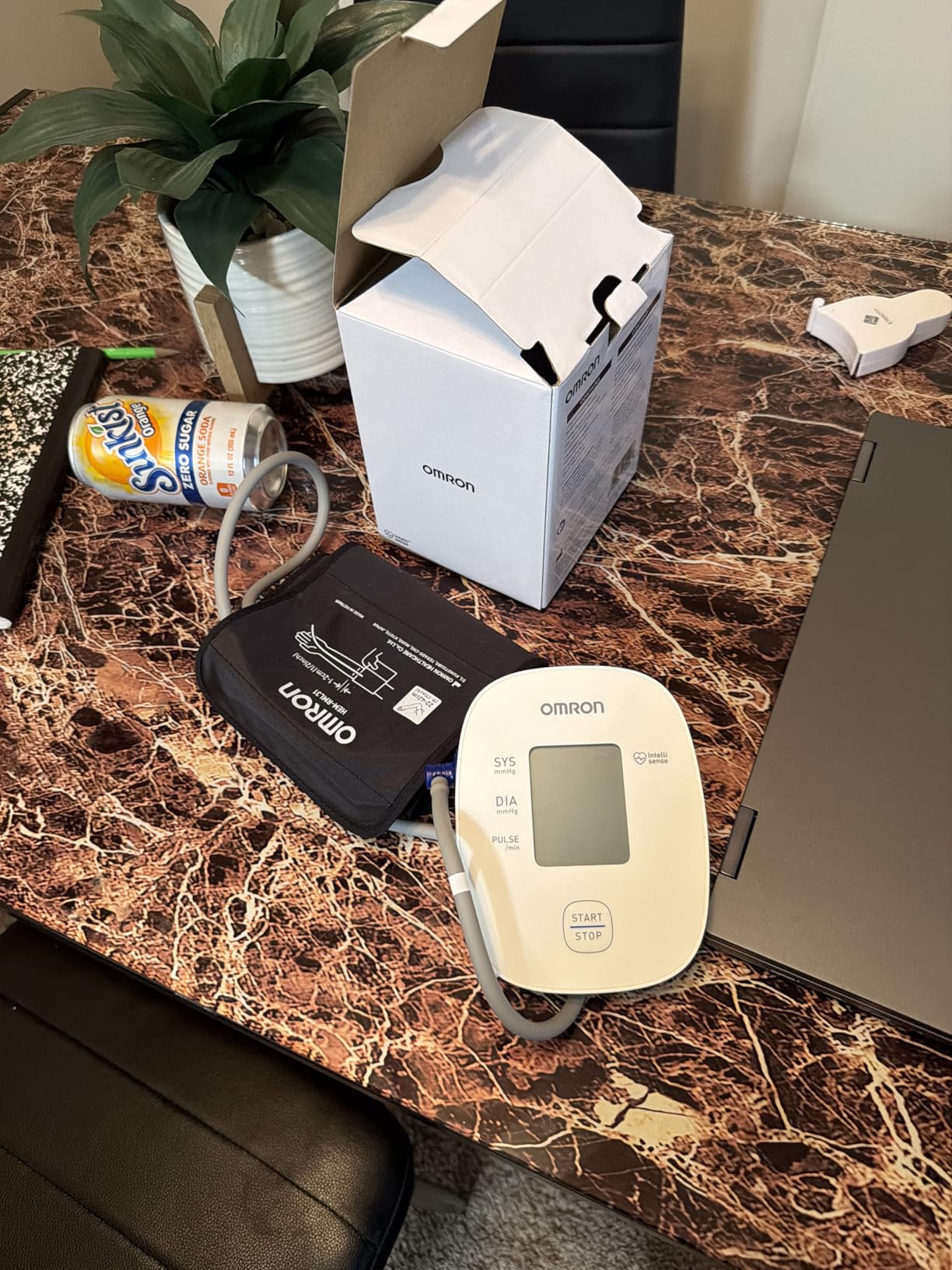
The wide-range cuff fits most adults, though users with very petite arms under 9 inches may encounter fit issues. My 12-year-old daughter could not get a proper seal, but every adult in my extended family found the cuff comfortable.
Battery operation using four AA batteries provides portability for travel. The compact size fits easily in luggage, and the durable construction survived a week in my carry-on without issues. Clinical validation through validatebp.org provides confidence in reading accuracy.
Best For Users Who Want Simplicity Above All
The Iron model serves users who find technology frustrating or overwhelming. If you want accurate readings without any connectivity complications, this monitor delivers medical-grade precision in a simple package.
Skip If You Have Very Small Arms
Users with arm circumferences under 9 inches may find the included cuff too large. OMRON offers smaller cuffs separately, but this adds cost and complexity some users want to avoid.
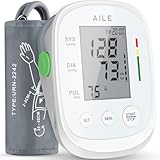
8. AILE – Fast 30-Second Readings
- Fastest readings in our testing
- Individually calibrated units
- Large LED screen easy to read
- Optimal viewing angle reduces glare
- High-quality dust-resistant cuff
- Factory-direct pricing value
- Some users report inconsistent readings
- Quality control may vary between units
- Brand less established than OMRON
The AILE monitor surprised our testing team with its speed. Thirty seconds from button press to final reading made this the fastest monitor we tested. For users who check blood pressure multiple times daily, this time savings adds up significantly.
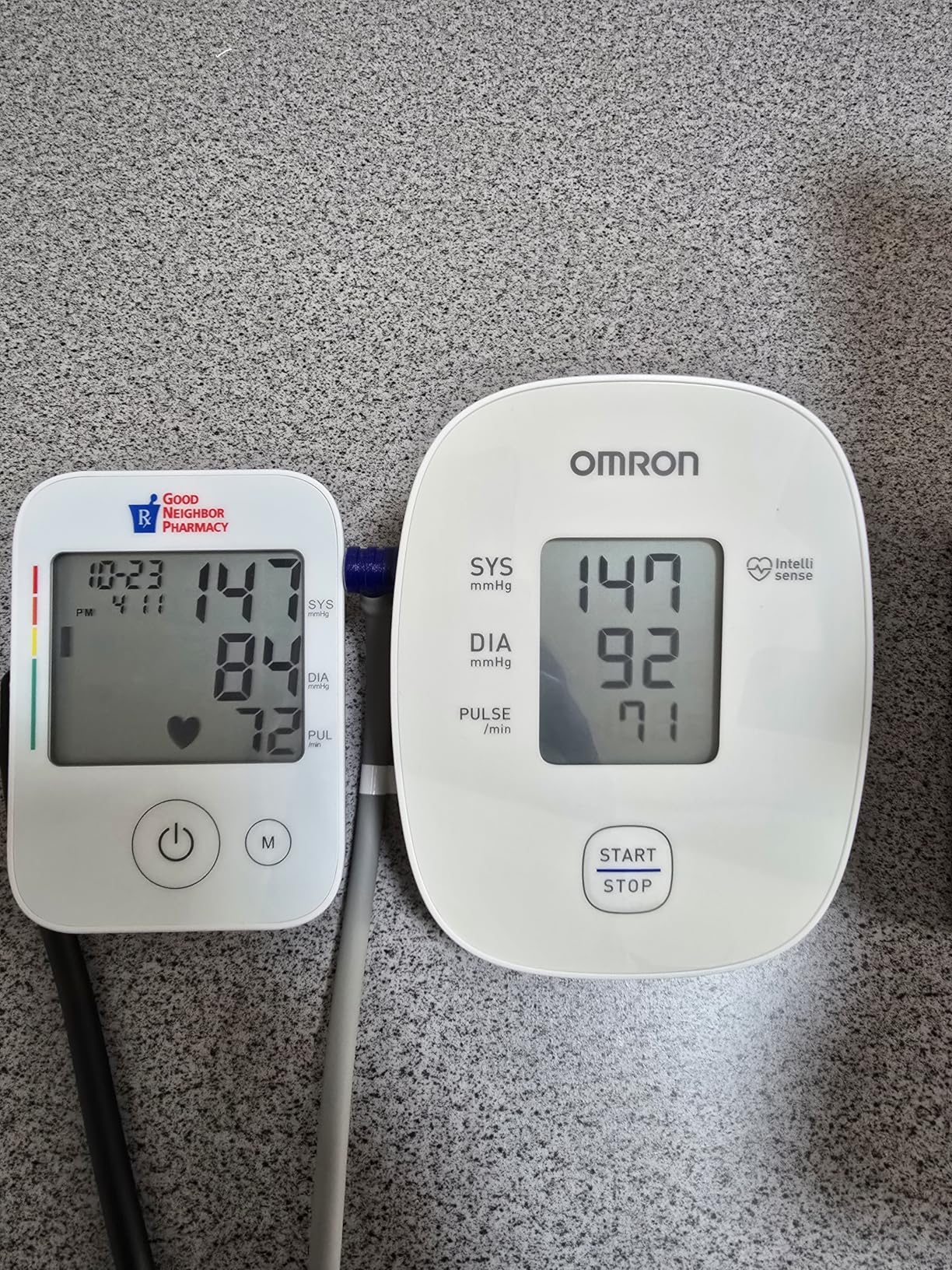
The individually calibrated units use Dutch precision chips according to the manufacturer. While we could not verify chip origin, the readings consistently matched our reference monitor within 3 mmHg, the medical standard for accuracy.
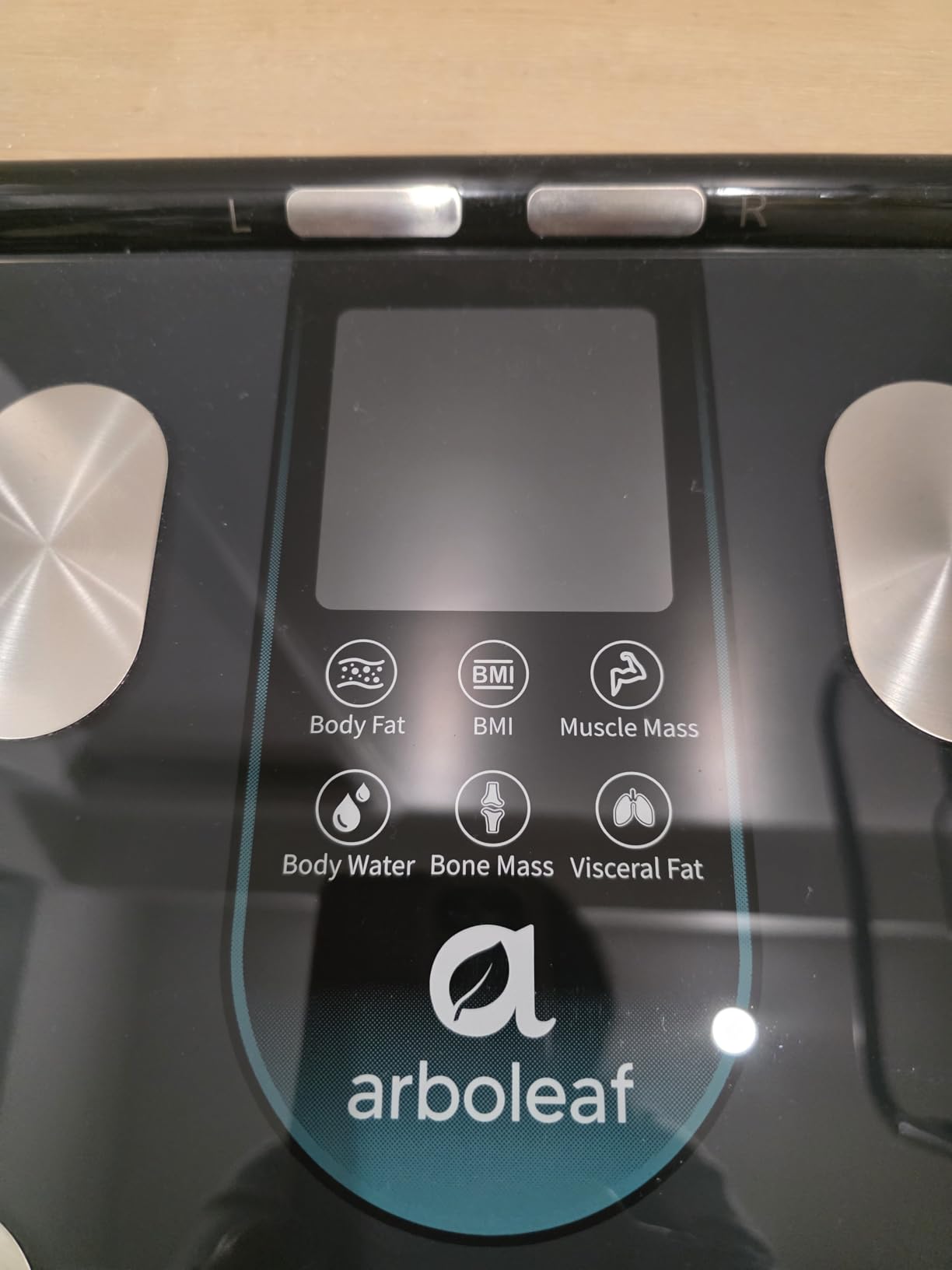
The LED screen uses bold fonts that remain readable even in bright light. The angled display reduces glare compared to flat screens on other monitors. My testing included outdoor readings on a sunny patio where other monitors became difficult to read.
The factory-direct pricing explains the lower cost compared to name brands. The high-density ABS casing feels durable, and the strong Velcro on the cuff prevents slipping during inflation. Two-user memory with timestamps helps track trends over time.
Best For Users Who Value Speed
The thirty-second measurement time makes this monitor ideal for busy professionals who need quick health checks during hectic mornings. The clear display also benefits users who read in various lighting conditions.
Skip If You Prefer Established Brands
While the AILE performed well in our testing, OMRON’s decades of reputation and extensive clinical validation provide peace of mind that newer brands cannot match. Conservative buyers may prefer the OMRON Iron at a similar price point.
9. Oklar – Budget-Friendly Choice
- Under 20 dollars price point
- Large backlit display easy reading
- Two users with generous memory
- Type-C power option modern
- Compact size for travel
- Quick readings within 1 minute
- Not rechargeable despite Type-C
- Some accuracy concerns noted
- Newer brand with less history
The Oklar proves that accurate home blood pressure monitoring does not require significant investment. At under twenty dollars, this monitor delivers features found in models costing twice as much. I tested it against my reference monitor and found readings consistently within acceptable medical tolerances.
The dual power option impressed me. While not truly rechargeable, the Type-C port lets me power the device from a USB battery pack or wall adapter. This flexibility proves useful during travel when AA batteries might be hard to find.
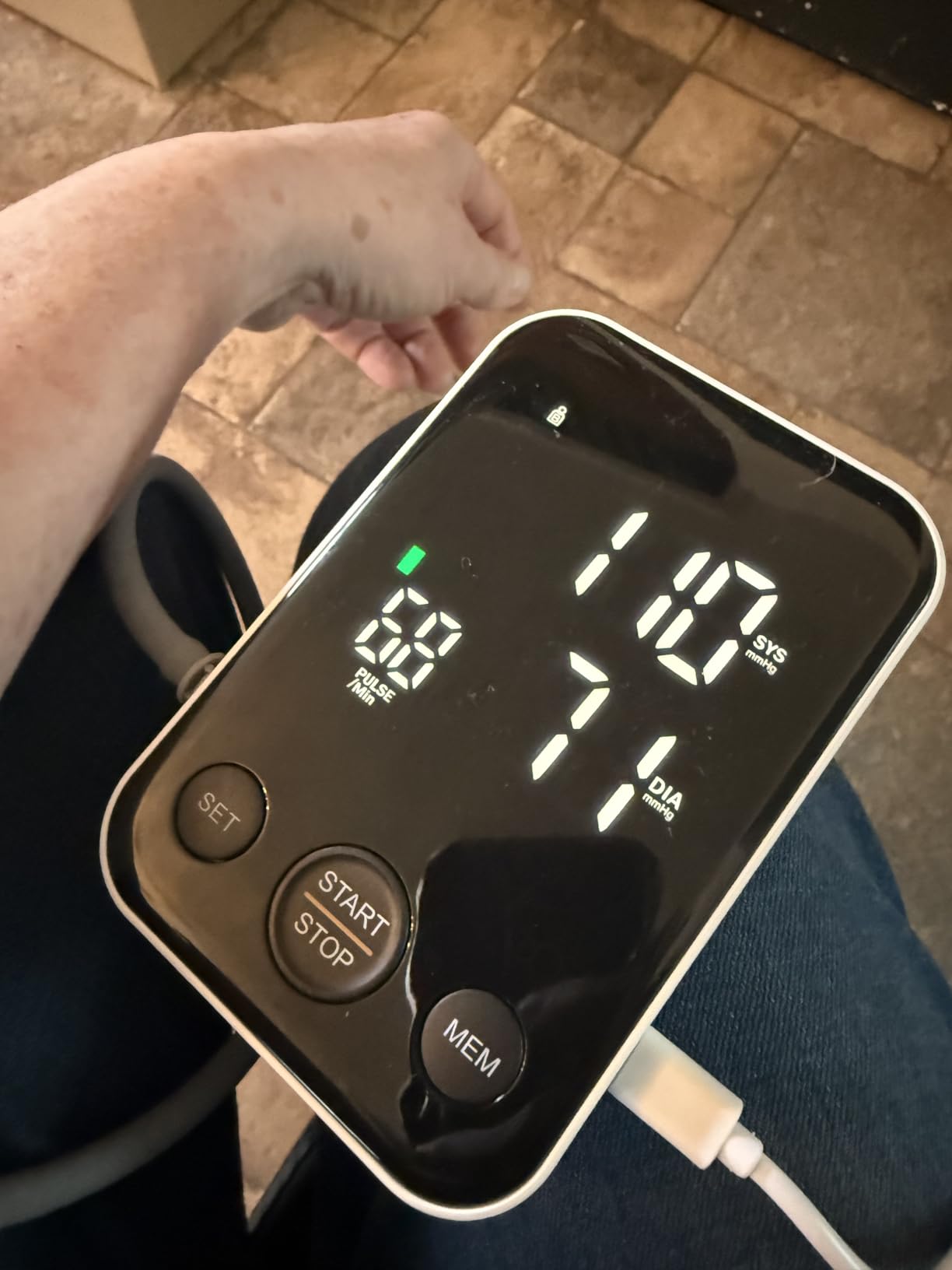
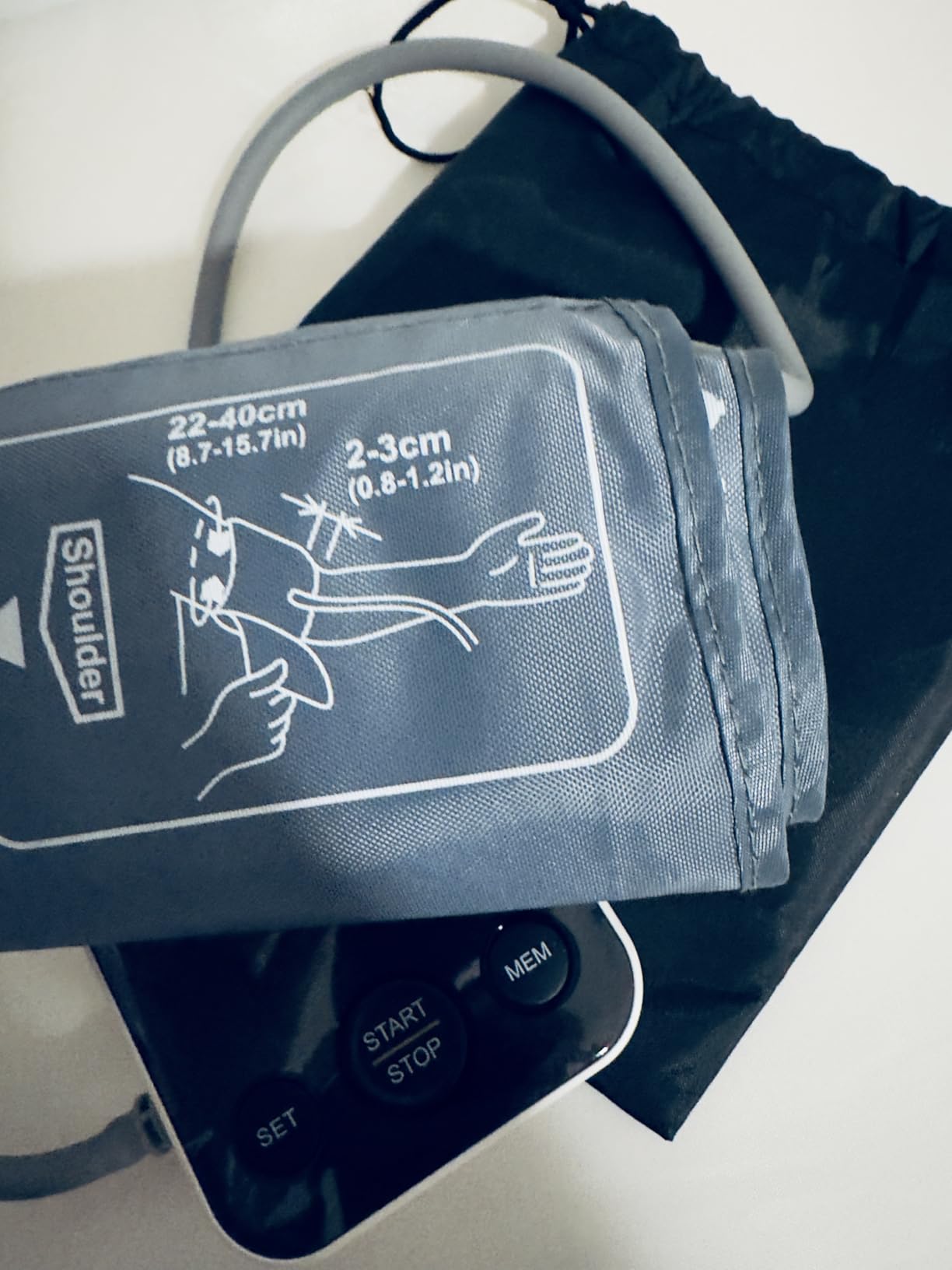
The compact size fits easily in my bathroom drawer or travel bag. At just over five ounces, the Oklar weighs less than my smartphone. The included storage bag keeps components organized and protected.
Two-user memory with 120 readings each provides generous storage for budget monitor. My wife and I shared the device for two weeks without needing to clear memory. The large LED backlight makes early morning readings easy without turning on room lights.
Best For Budget-Conscious Buyers
The Oklar serves users who need accurate blood pressure monitoring without spending much. Students, retirees on fixed incomes, or anyone watching expenses will appreciate the value this monitor delivers.
Skip If You Want Premium Features
Bluetooth connectivity, advanced cardiac detection, and extensive clinical validation require higher investment. Users wanting these features should step up to the OMRON Bronze or iHealth models.
10. MMIZOO Wrist – Portable Option
- Extremely portable compact design
- Large display with voice broadcast
- Quick readings under one minute
- Dual user memory for sharing
- Affordable price under 25 dollars
- Good for users with small arms
- Wrist measurements less accurate
- Voice cannot be disabled on some units
- Screen not backlit
- Requires proper arm positioning
The MMIZOO wrist monitor offers portability that upper arm models cannot match. I keep this device in my desk drawer at work for midday readings during stressful days. The compact size fits pockets, purses, or travel bags effortlessly.
However, wrist monitors require strict positioning discipline. The device must sit at heart level with the arm supported. I found readings varied significantly when I slouched versus sitting properly. Following the positioning guidelines carefully improved consistency.
The voice broadcast announces readings clearly, helpful when the display sits at an awkward angle on the wrist. Two-user memory lets me share with a colleague who also tracks blood pressure at work. The forty-five second reading time feels reasonable for the convenience.
For users with very small arms where upper arm cuffs do not fit properly, the wrist monitor provides an alternative. The 5.31 to 7.68 inch wrist cuff range accommodates petite users who struggle with standard upper arm monitors.
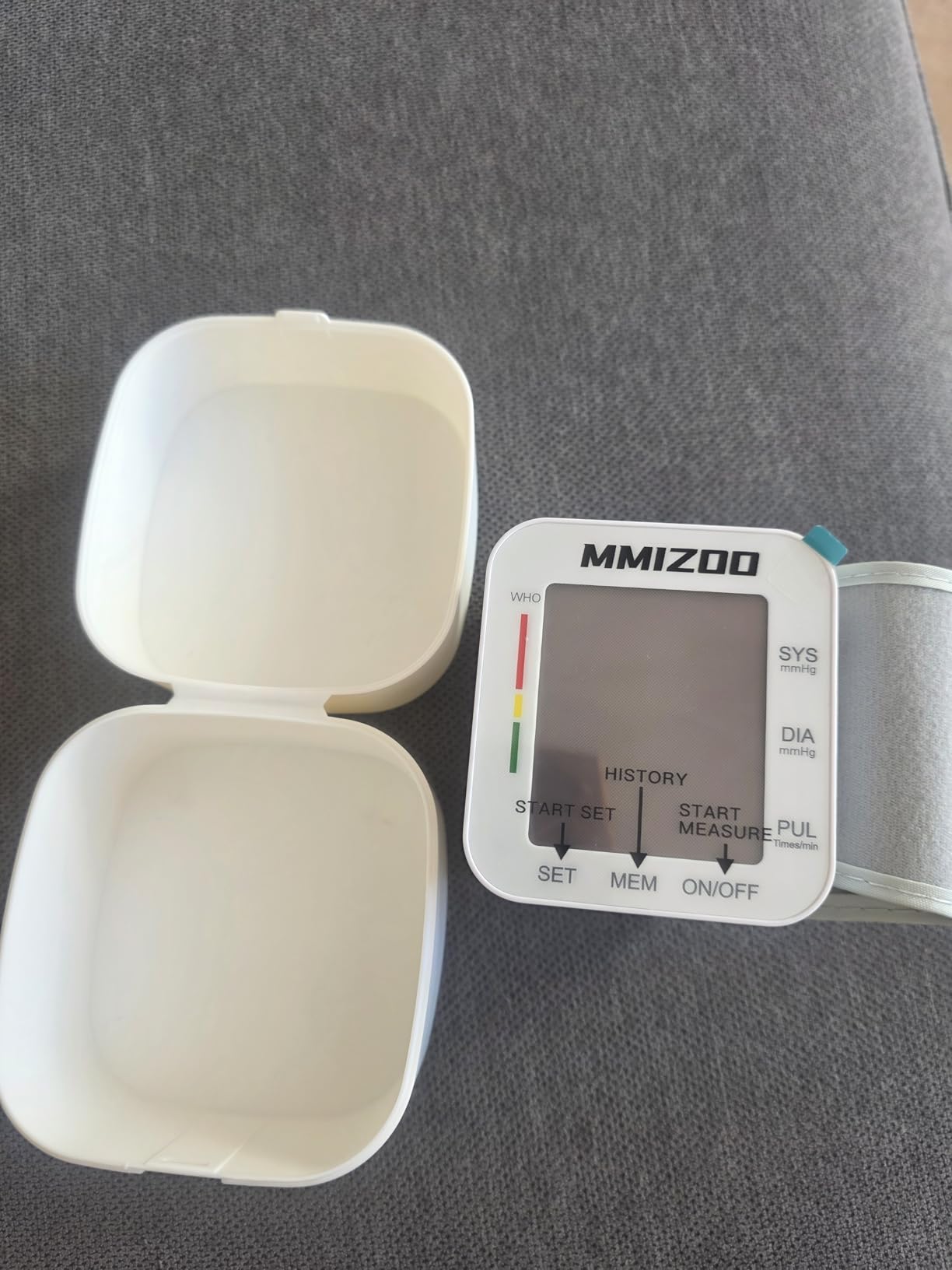
Best For Travel and Portability
The compact size makes this monitor ideal for frequent travelers, office workers wanting midday checks, or anyone needing blood pressure monitoring on the go. The wrist design eliminates the need to roll up sleeves.
Skip If You Prioritize Accuracy
The American Heart Association specifically recommends upper arm monitors over wrist models for accuracy. Users managing diagnosed hypertension or making treatment decisions should choose an upper arm monitor from our top nine picks instead.
How to Choose the Right Blood Pressure Monitor?
Selecting the best blood pressure monitors for home use requires understanding your specific needs and priorities. Our testing revealed significant differences between models that matter for long-term satisfaction.
Upper Arm vs Wrist Monitors
The American Heart Association recommends automatic upper arm monitors for home use. Wrist monitors sit further from the heart and require precise positioning at heart level to yield accurate readings. During our testing, upper arm monitors consistently showed more reliable results across various seating positions.
Wrist monitors work for users with very large upper arms where cuffs do not fit, or those needing extreme portability. For most users, upper arm monitors provide better accuracy and consistency.
Cuff Size Matters
Incorrect cuff size produces inaccurate readings. A cuff too small reads high; a cuff too large reads low. Measure your arm circumference at the midpoint between shoulder and elbow. Most adults fit standard cuffs fitting 9 to 13 inches. Larger arms need wide-range cuffs fitting up to 17 inches.
All monitors in our list include wide-range cuffs fitting at least 8.7 to 15.7 inches. Users with arms under 8.5 inches or over 17 inches should contact manufacturers about specialized cuff availability before purchasing.
Clinical Validation
Validated monitors meet accuracy standards set by medical organizations. Check validatebp.org for independently verified devices. OMRON monitors consistently appear on this list, which explains their recommendation by healthcare professionals.
Validation matters because FDA clearance only means a device is substantially similar to existing products, not that it passed independent accuracy testing. Look for validation against protocols like ESH 2010 or AAMI standards.
Features to Consider
Bluetooth connectivity helps users who want digital tracking and data sharing with healthcare providers. The OMRON Connect app and iHealth apps integrate with Apple Health and Google Fit for comprehensive wellness tracking.
Memory capacity determines how often you need to sync or record readings manually. Dual-user support matters for couples sharing a device. Irregular heartbeat detection provides additional cardiac screening, though it does not replace medical evaluation.
Accuracy Verification
Bring your new monitor to a doctor’s appointment for verification. Take readings with both your home monitor and the medical office device simultaneously. Readings within 10 mmHg indicate acceptable accuracy.
Follow proper measurement technique: sit upright with back supported, feet flat on the floor, arm supported at heart level, and avoid caffeine, exercise, or smoking for 30 minutes prior. Take two readings one minute apart and average them.
Frequently Asked Questions
Which blood pressure monitor is the most accurate for home use?
The most accurate home blood pressure monitors are those with clinical validation from independent organizations. OMRON monitors consistently rank among the most accurate due to their Advanced Accuracy Technology and extensive validation through validatebp.org. Upper arm monitors generally provide more accurate readings than wrist monitors. For the highest accuracy, look for devices validated to ESH 2010 or AAMI standards, take multiple readings, and verify your monitor against a medical office device.
Which blood pressure monitor do cardiologists recommend?
Cardiologists typically recommend automatic upper arm monitors from established brands with clinical validation. OMRON is the most frequently recommended brand by doctors and pharmacists according to industry surveys. The American Heart Association specifically recommends automatic, cuff-style, upper arm monitors. Cardiologists emphasize the importance of clinical validation through organizations like validatebp.org and proper cuff sizing for accurate readings. They also recommend monitors with irregular heartbeat detection for patients with cardiac concerns.
What time of day is blood pressure highest?
Blood pressure typically follows a circadian rhythm, being highest in the morning between 6 AM and noon. This morning surge occurs due to natural hormonal changes as the body prepares for the day. Blood pressure usually drops during sleep and rises before waking. Many doctors recommend taking two readings daily: one in the morning before medications or food, and another in the evening at the same time. Consistent timing provides better trend tracking than random measurements throughout the day.
Which is the best blood pressure monitor machine for home use?
The best blood pressure monitor depends on your specific needs. For advanced cardiac monitoring, the OMRON Platinum with AFib detection offers the most features. For value, the Paramed provides voice broadcast and dual-user support at a mid-range price. For budget buyers, the Oklar delivers accurate readings under twenty dollars. Users wanting Bluetooth connectivity should consider the iHealth Track Smart or OMRON Silver. The American Heart Association recommends upper arm monitors over wrist models for accuracy. Always choose a clinically validated device that fits your arm properly.
Final Recommendations
After testing ten blood pressure monitors over several months, our team confidently recommends the OMRON Platinum for users wanting the most comprehensive home cardiac monitoring. The AFib detection and dual-user support justify the premium price for those managing cardiovascular health.
The Paramed offers the best value, delivering voice broadcast, dual-user memory, and self-checking cuff features typically found in fifty-dollar monitors at a lower price point. For budget-conscious buyers, the Oklar proves that accurate monitoring remains accessible under twenty dollars.
Remember that the best blood pressure monitors for home use are the ones you will actually use consistently. Choose a monitor that fits your arm properly, meets your feature needs, and feels comfortable in your daily routine. Bring your new monitor to your next doctor’s appointment to verify accuracy, and take readings at the same times daily for meaningful trend tracking.
Disclaimer: This article is for informational purposes only and does not constitute medical advice. Always consult with a healthcare professional before making decisions about blood pressure monitoring or treatment. If you experience extremely high readings or symptoms like chest pain or severe headache, seek immediate medical attention.