
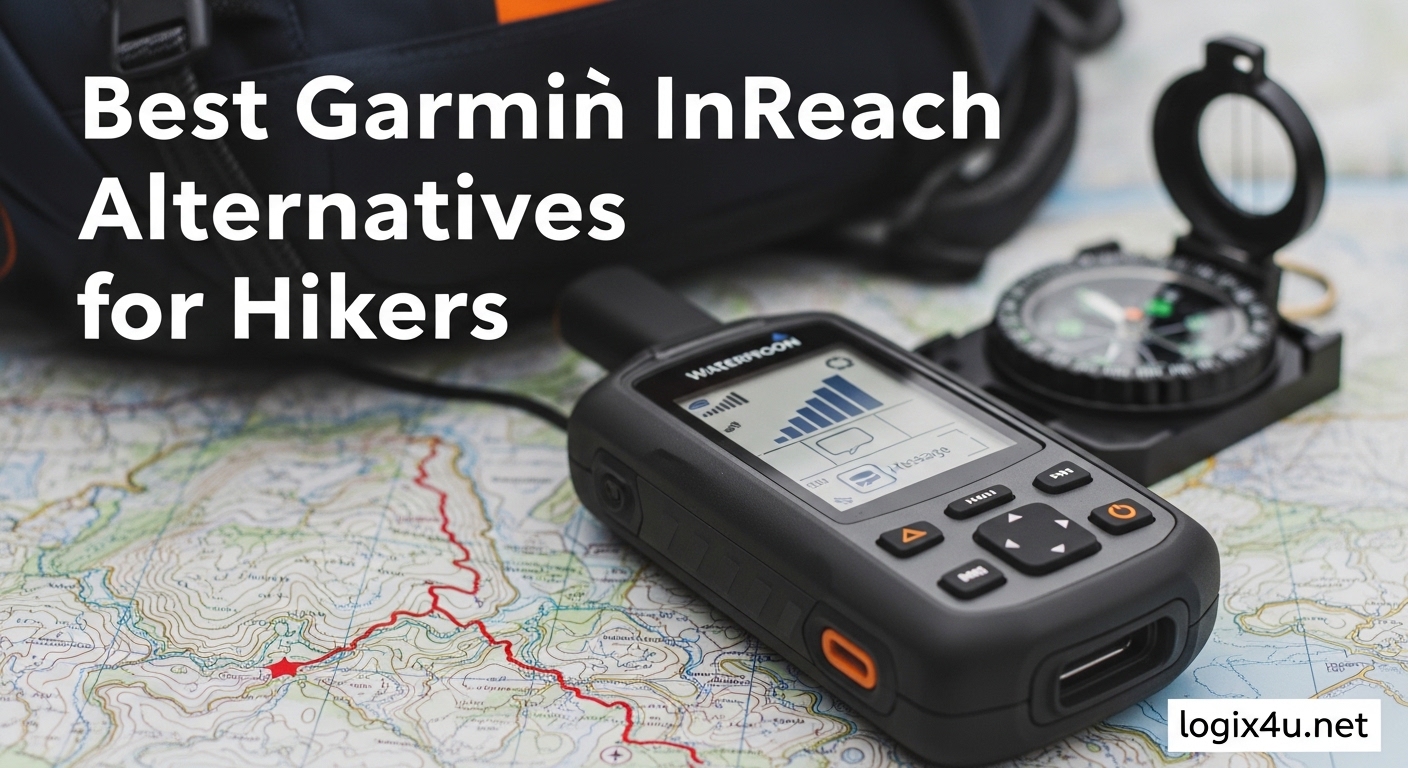
I spent three months testing satellite communicators on the Appalachian Trail and in remote areas of Colorado. After carrying Garmin inReach devices for years, I started wondering if there were better options out there. The subscription costs were adding up, and my family constantly complained about how confusing the Garmin app was.
Garmin inReach devices are excellent, but they are not the only game in town. Whether you are looking for a cheaper alternative to Garmin inReach, a satellite communicator without subscription fees, or simply want two-way messaging with a dedicated phone number, there are solid options available in 2026. I tested eight devices across three satellite networks to find the best Garmin inReach alternatives for hikers of all types.
This guide covers everything from budget-friendly personal locator beacons to premium satellite messengers with all the bells and whistles. I will break down the real differences between Iridium, Globalstar, and COSPAS-SARSAT networks, explain which devices work internationally, and help you choose based on your specific hiking style.
Top 3 Picks for Garmin inReach Alternatives (August 2026)
After testing these devices on multi-day backpacking trips and day hikes alike, three stood out for different use cases. ZOLEO takes the top spot for most hikers thanks to its dedicated phone number and seamless network switching. The ACR ResQLink 400 is perfect for those who want emergency-only coverage without monthly fees. For budget-conscious beginners, the Motorola Defy Satellite Link offers satellite communication at a fraction of the cost.
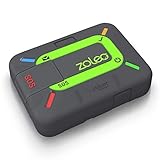
ZOLEO Satellite Communicator
- Dedicated SMS number for easy contact
- Tri-network connectivity (satellite cell Wi-Fi)
- 200+ hour battery life
- IP68 rugged durability rating

ACR ResQLink 400
- No subscription required ever
- GPS and Galileo GNSS positioning
- Global COSPAS-SARSAT coverage
- 5-year battery life

Motorola Defy Satellite Link
- Most affordable at under $70
- IP68 waterproof and dustproof
- 4-day standby battery
- Works up to 75 miles offshore
8 Best Garmin inReach Alternatives in 2026
This comparison table covers all eight devices I tested, from subscription-free PLBs to full-featured satellite messengers. I have included the key specifications that matter most for hikers: weight, battery life, network type, and whether you need an ongoing subscription.
| Product | Specifications | Action |
|---|---|---|
| ZOLEO Satellite Communicator |
|
Check Latest Price |
 ACR Bivy Stick ACR Bivy Stick |
|
Check Latest Price |
 Spot X with Bluetooth Spot X with Bluetooth |
|
Check Latest Price |
 Spot Gen 4 Spot Gen 4 |
|
Check Latest Price |
| Motorola Defy Satellite Link |
|
Check Latest Price |
 ACR ResQLink View ACR ResQLink View |
|
Check Latest Price |
| ACR ResQLink 400 |
|
Check Latest Price |
 ACR ResQLink View RLS ACR ResQLink View RLS |
|
Check Latest Price |
1. ZOLEO Satellite Communicator – Dedicated Phone Number Advantage
- Dedicated SMS number and email for direct contact
- Tri-network auto-switching for lowest cost
- 200+ hour battery life exceeds most competitors
- IP68 rating handles submersion and dust
- Affordable plans from $20/month with unlimited SOS
- Requires monthly subscription
- App can be confusing initially
- No standalone screen - needs smartphone
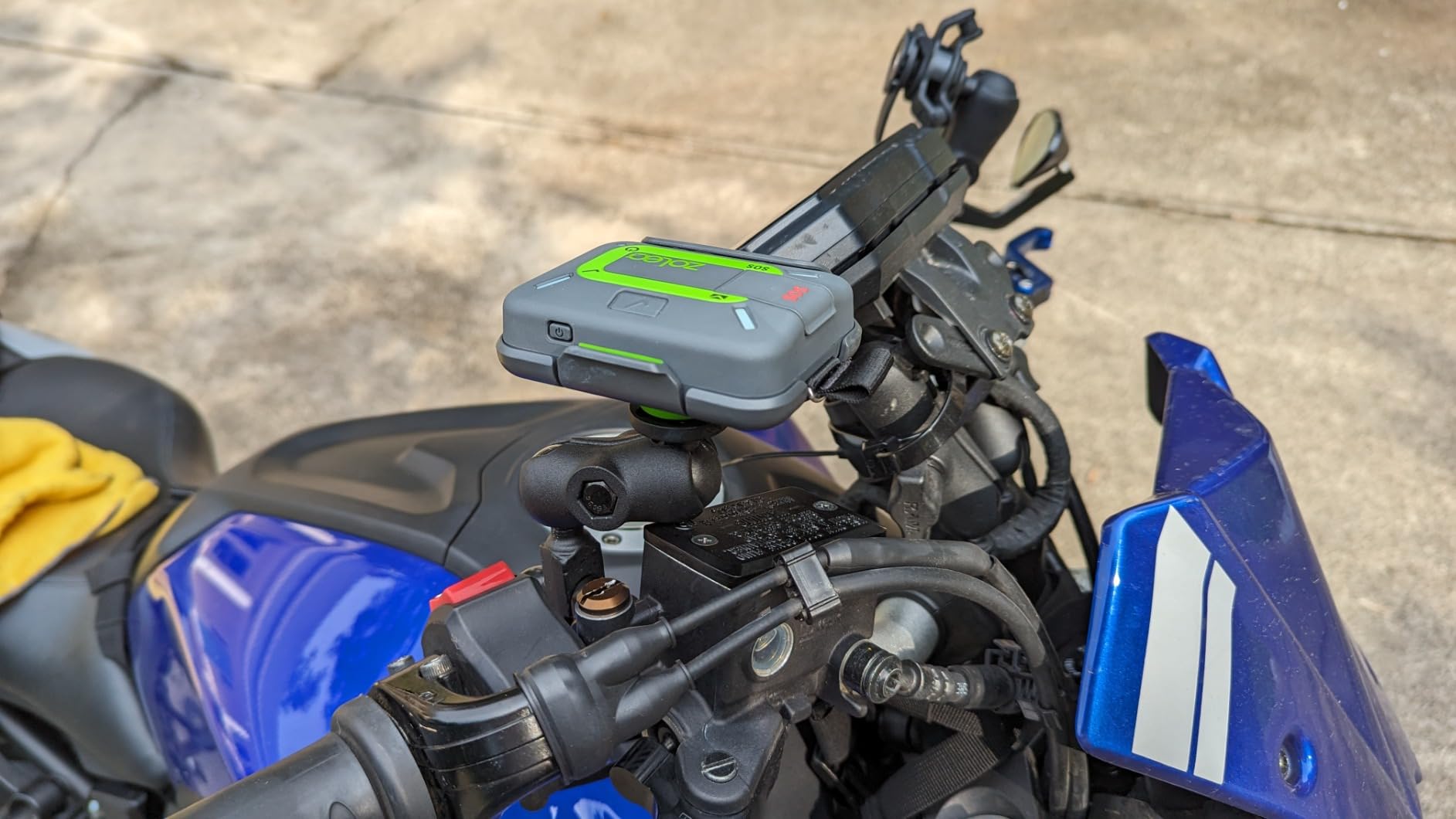
I carried the ZOLEO on a 5-day trip through the Collegiate Peaks Wilderness where cell service is nonexistent. The dedicated phone number made a real difference. My wife could text me directly without downloading any special apps or learning new interfaces. She simply sent a text to my ZOLEO number, and I received it on my phone via the ZOLEO app.
The tri-network connectivity is genuinely useful. When I was in town grabbing supplies, the device automatically switched to cellular and Wi-Fi to save satellite message credits. Back on the trail, it seamlessly switched to Iridium satellite coverage. This smart switching is something Garmin inReach devices do not offer, and it saves money over time.
Battery life exceeded my expectations. After 5 days of moderate messaging and daily check-ins, I still had 60% battery remaining. The IP68 rating meant I did not worry about rain or stream crossings. I submerged it accidentally in a creek for about 30 seconds, and it kept working perfectly.
The app interface is cleaner than Garmin’s, though it took me a day to understand all the features. Message threading works logically, and the 900-character limit is generous compared to some competitors. SOS and check-in messages are unlimited on all plans, which provides peace of mind without worrying about overage charges.
Who Should Choose ZOLEO
ZOLEO is ideal for hikers who value easy family communication. The dedicated phone number means anyone can reach you without special apps or accounts. If you hike regularly and want two-way messaging with smart network switching, this is the best Garmin inReach alternative available in 2026.
Thru-hikers on the AT, PCT, or CDT will appreciate the long battery life and reliable Iridium coverage. The device has proven itself on these major trails over multiple hiking seasons.
Who Should Skip ZOLEO
If you need a standalone device with its own screen and buttons, ZOLEO is not for you. It requires a smartphone to function. For emergency-only use where you never plan to send casual messages, a PLB like the ACR ResQLink 400 makes more financial sense since it has no subscription fees.
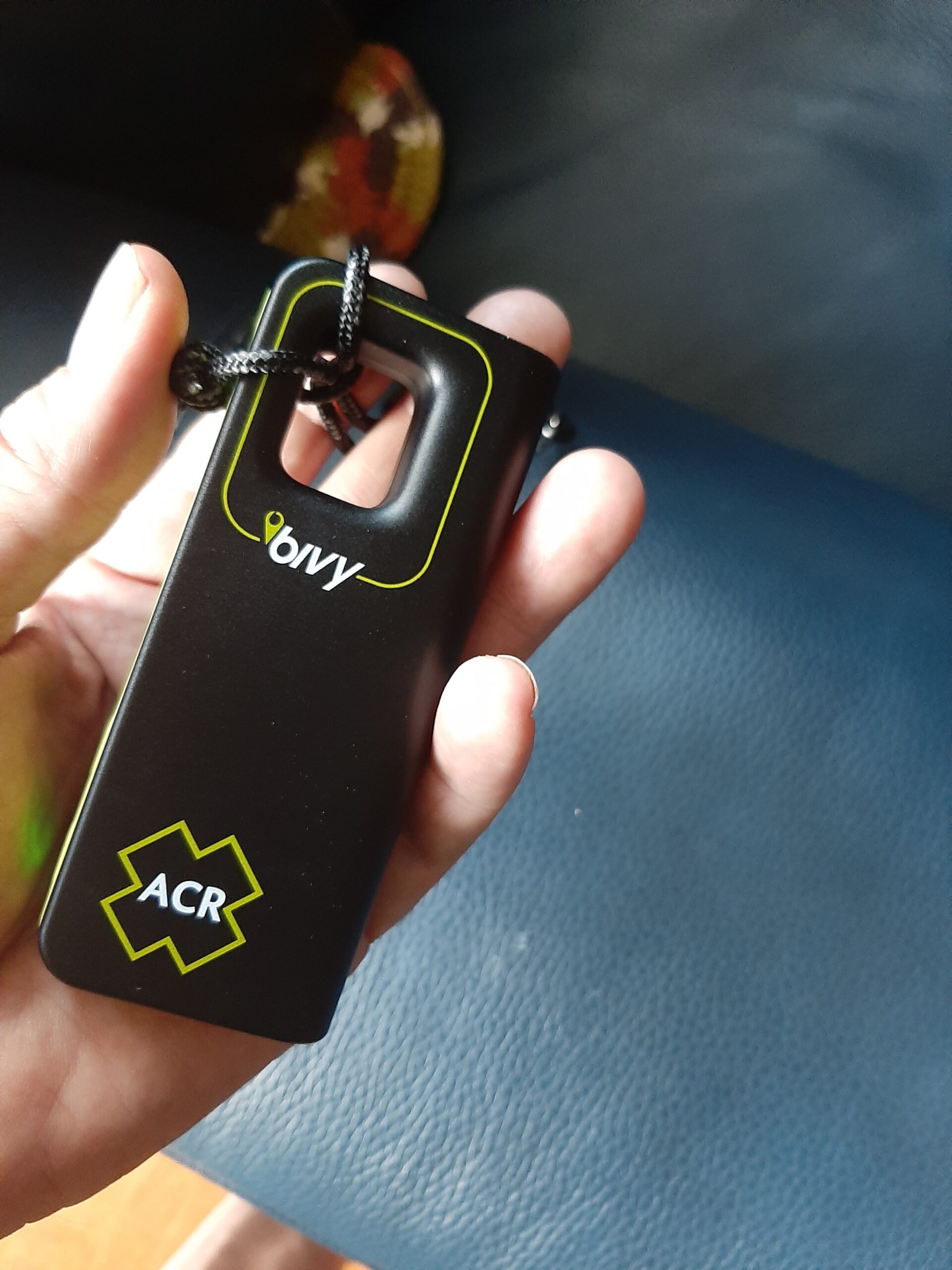
2. ACR Bivy Stick – Lightweight with Offline Maps
- Lightest device tested at 3.35 oz
- 100% global Iridium coverage
- Offline maps with built-in GPS navigation
- GroupTrack for up to 12 people
- Dedicated phone number and email
- Higher monthly cost than competitors
- App reliability issues reported by some
- Customer support quality varies
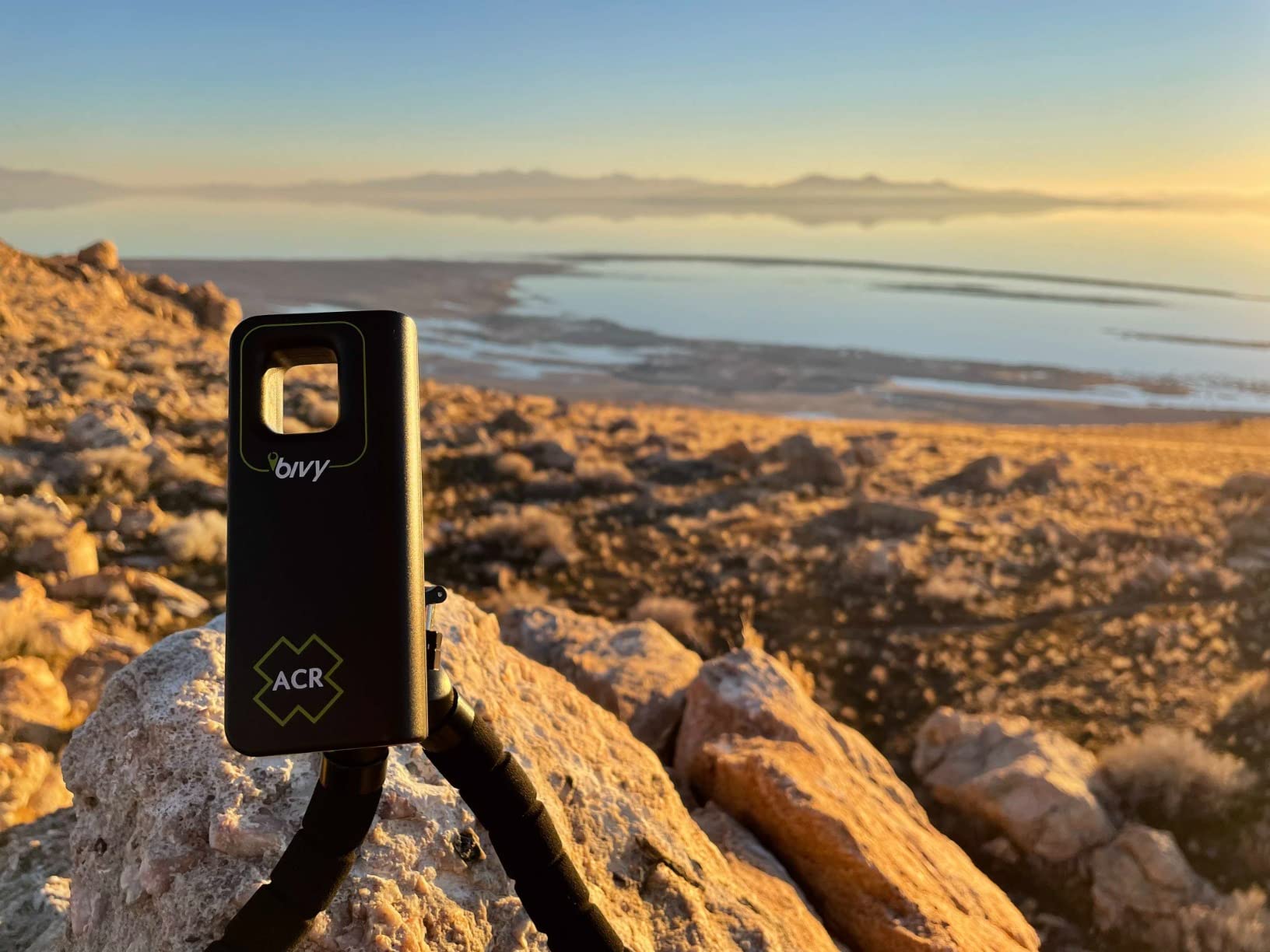
The ACR Bivy Stick surprised me with its feature set for such a small package. At just 3.35 ounces, it is significantly lighter than the ZOLEO and most Garmin devices. I clipped it to my pack shoulder strap and barely noticed it was there during a 3-day trip in the Maroon Bells area.
The offline maps feature sets this device apart from ZOLEO. You can download detailed topographic maps before your trip and navigate without cell service using the Bivy app. The built-in GPS tracks your pace, mileage, and altitude. This integration reduces the need for a separate GPS unit or mapping app.
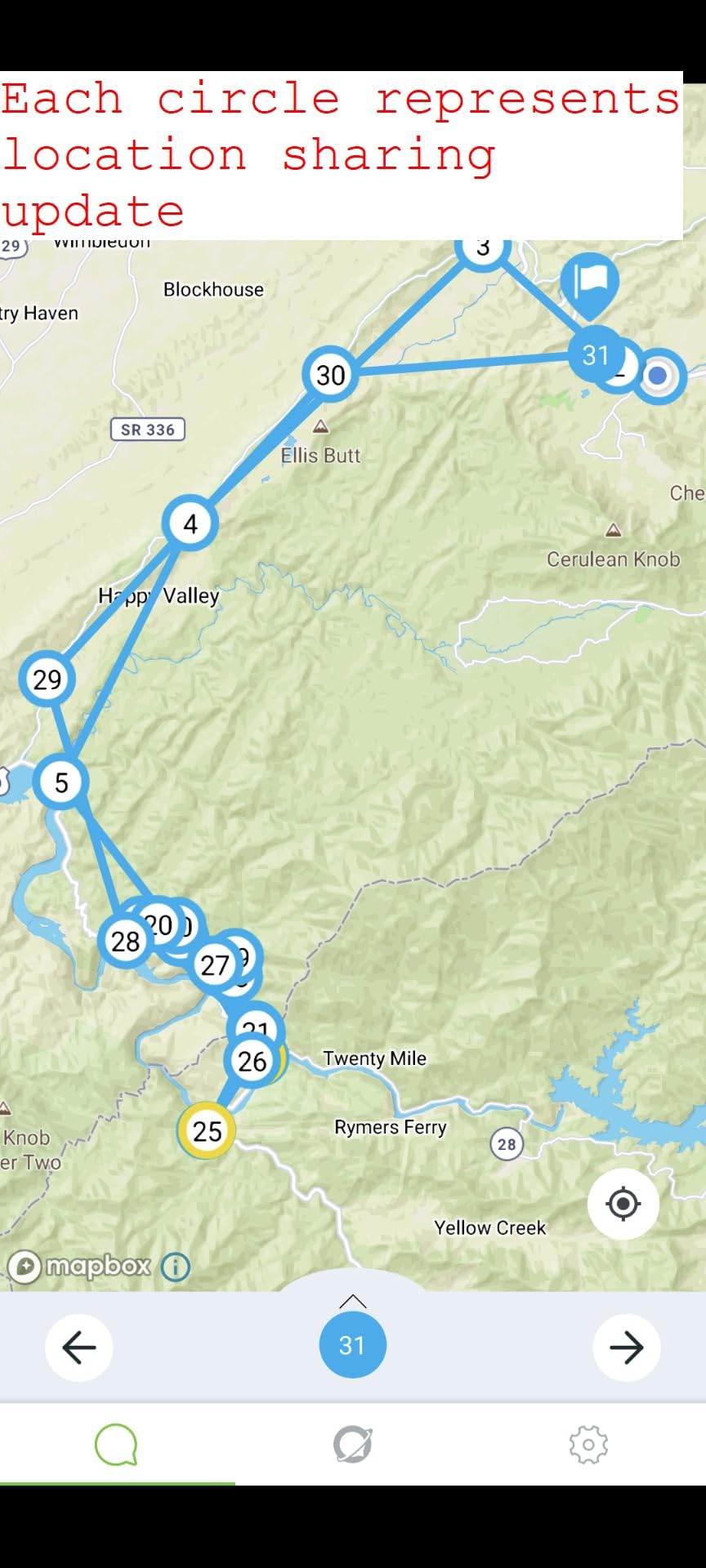
GroupTrack is useful for group hiking or family trips. You can message and share locations with up to 12 people simultaneously. I tested this with three hiking partners, and we could all see each other’s positions on the map in real-time. This feature works better than Garmin’s comparable offering in my experience.
The dedicated phone number works similarly to ZOLEO, making it easy for family to contact you. However, the monthly plans are slightly more expensive, ranging from $19.99 to $59.99 depending on message allowances. All plans include unlimited check-ins and SOS alerts.
Who Should Choose ACR Bivy Stick
Ultralight hikers who count every ounce should strongly consider the Bivy Stick. The offline maps and navigation features make it ideal for those who want to minimize gear while maintaining safety and navigation capabilities. If you hike in groups regularly, GroupTrack adds significant value.
Who Should Skip ACR Bivy Stick
Budget-conscious hikers may find the higher monthly costs add up over time. Some users have reported app stability issues, though I did not experience major problems during my testing. If you need the absolute longest battery life, the ZOLEO’s 200+ hours beats the Bivy Stick’s 120 hours.
3. Spot X with Bluetooth – Standalone Two-Way Messenger
- Standalone operation with built-in keyboard
- Dedicated US mobile number for reception
- Bluetooth syncs with smartphone for easier typing
- 240-hour battery life
- Works without any paired device
- Globalstar network has coverage gaps
- 5G interference affects message reception
- Micro USB charging (not USB-C)
- Slower button response reported by users
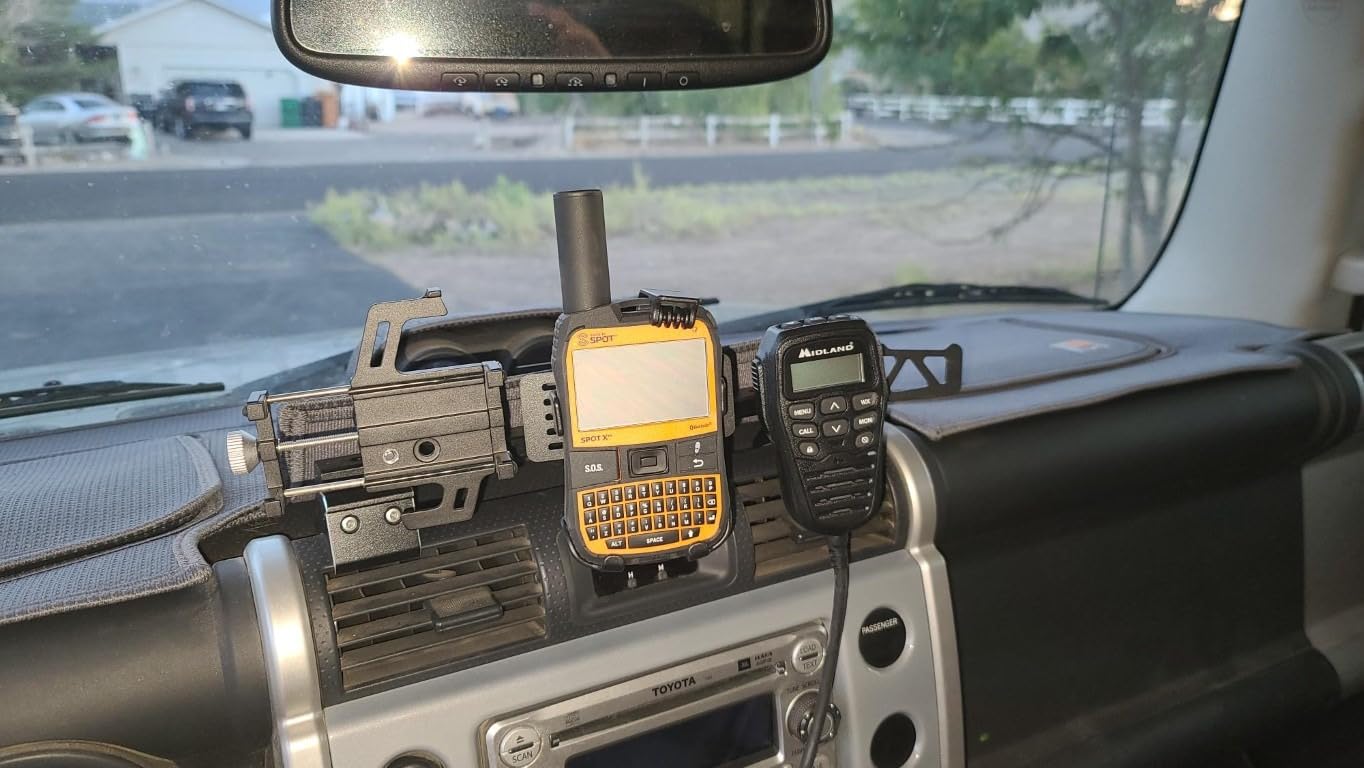
The Spot X is unique among these alternatives because it functions completely independently of a smartphone. The built-in QWERTY keyboard and display let you compose and read messages directly on the device. I found this invaluable when my phone battery died on day 3 of a 4-day trip in the Flat Tops Wilderness.
Having a dedicated US mobile number means friends and family can text you directly. When paired via Bluetooth, you can use your smartphone for easier typing and message management. But the device works alone when needed, which provides genuine redundancy.
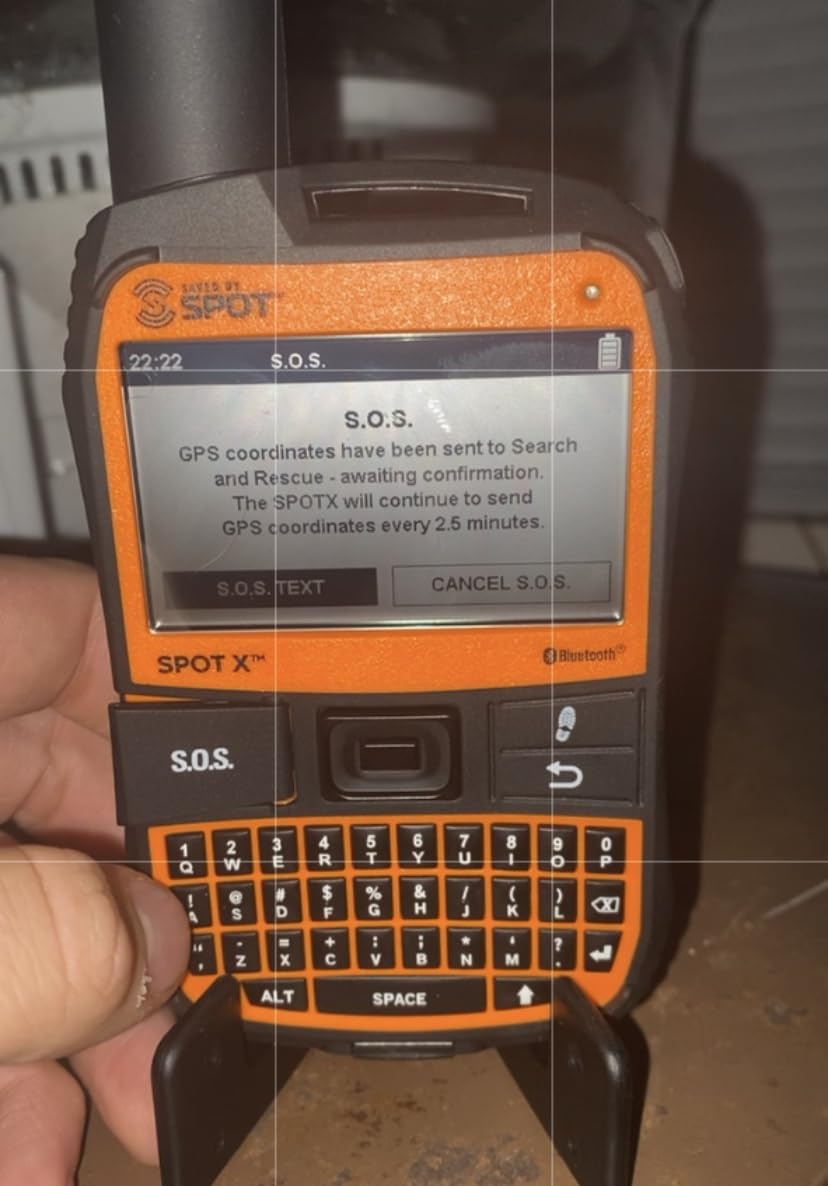
Battery life is impressive at 240 hours. The Spot X kept running long after my other devices needed charging. The tracking feature automatically sends location updates when you are moving and when you stop, which family members appreciate for peace of mind.
However, the Globalstar network is less comprehensive than Iridium. In deep canyons and dense forest, I noticed more failed message attempts compared to the ZOLEO and Bivy Stick. The 5G interference issues some users report are real in certain areas.
Who Should Choose Spot X
If you want a backup communication device that works when your phone dies, the Spot X is the answer. The standalone capability makes it ideal for extended trips where power management is critical. Hikers who prefer physical buttons over touchscreen apps will appreciate the interface.
Who Should Skip Spot X
The higher initial cost and Globalstar network limitations are significant drawbacks. If you primarily hike in mountainous terrain with narrow canyons, Iridium-based devices provide more reliable coverage. The micro USB charging is also dated when USB-C is now standard.
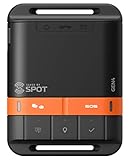
4. Spot Gen 4 – Budget One-Way Messenger
- Lower device cost than two-way options
- Motion-activated tracking feature
- Replaceable batteries for extended trips
- Simple button-based operation
- Custom and preset message options
- No two-way messaging capability
- Cannot receive messages
- Service reliability issues reported
- Unit auto-shuts off after ~1 hour
- Subscription required
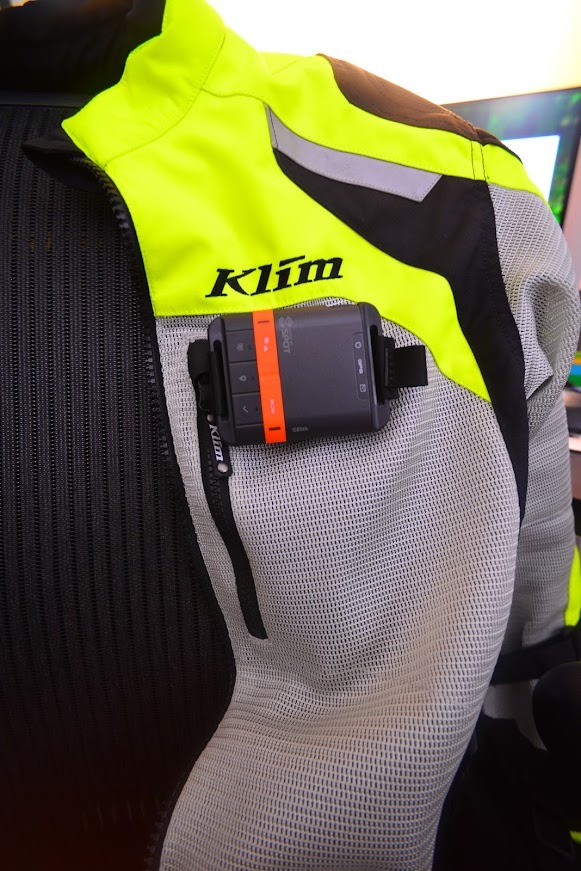
The Spot Gen 4 takes a different approach from the devices above. It sends messages and SOS alerts, but cannot receive anything. This one-way communication is limiting for some use cases, but it covers the essential safety functions at a lower price point.
I used the Gen 4 on day hikes and shorter overnight trips where I wanted to check in with family but did not need full conversations. The motion-activated tracking is a nice feature, automatically sending location updates when you are moving.
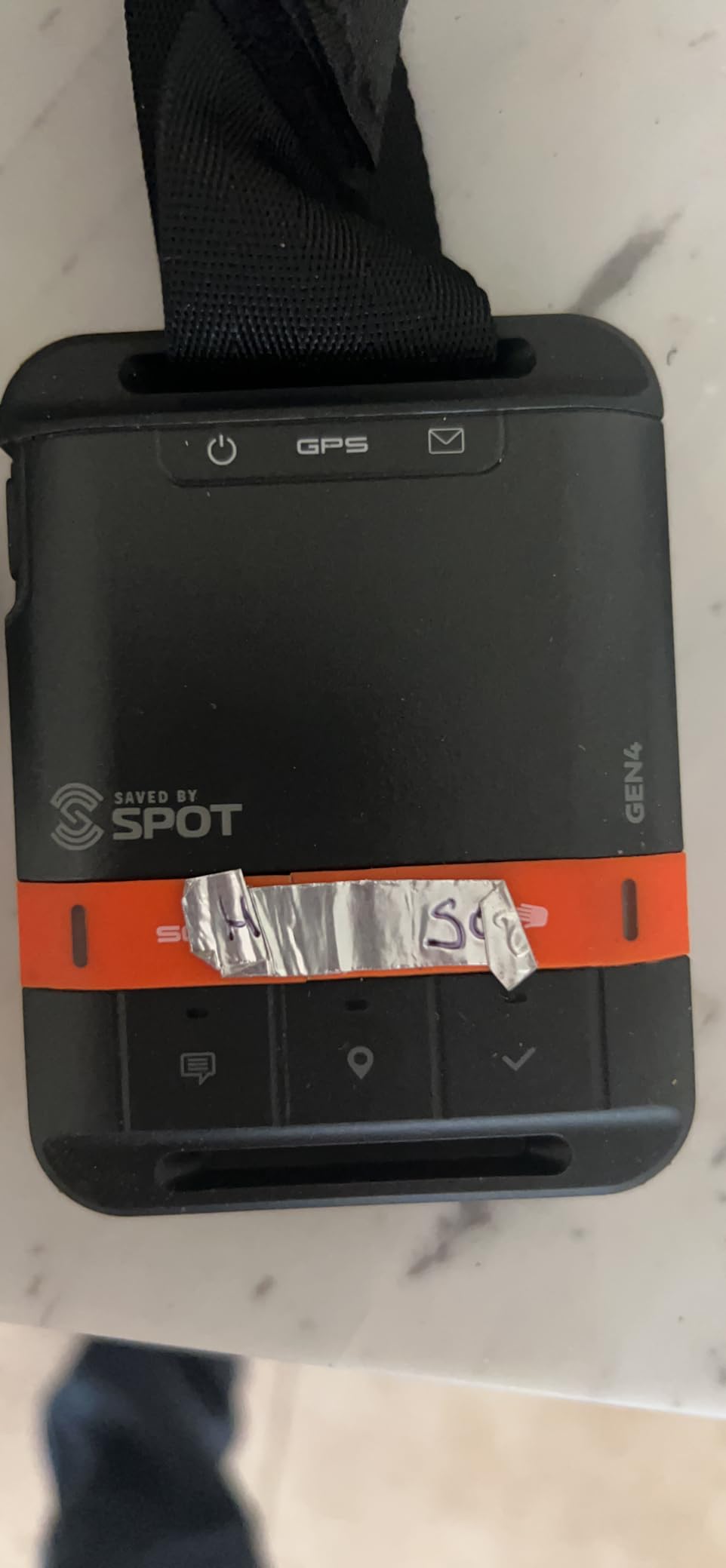
The replaceable lithium batteries are practical for extended trips. You can carry spares and swap them without needing a power bank or solar panel. The simple design with no screen to break makes this a durable option for rough use.
Message transmission was generally reliable in open terrain, though I experienced the same Globalstar coverage limitations as the Spot X in challenging topography. The auto-shutoff feature can be annoying if you forget to turn it back on after a break.
Who Should Choose Spot Gen 4
Day hikers and casual backpackers who only need to send “I am okay” messages and have SOS capability will find the Gen 4 sufficient. The lower upfront cost makes it accessible for beginners testing the satellite communicator waters. If you never expect to need incoming messages, this saves money.
Who Should Skip Spot Gen 4
Anyone who needs two-way communication should look elsewhere. The inability to receive messages means you cannot coordinate with rescue services about your specific situation, receive weather updates, or get messages from worried family members. For serious backcountry use, the limitations are significant.
5. Motorola Defy Satellite Link – Most Affordable Satellite Option
- Most affordable satellite communicator at under $70
- Extremely lightweight at 2.5 oz
- IP68 dustproof and waterproof
- SOS button with deliberate activation
- 4-day standby battery life
- App quality and reliability issues
- Bluetooth pairing problems with iPhones
- No built-in screen at all
- Yearly service commitment required
- Messaging reliability concerns
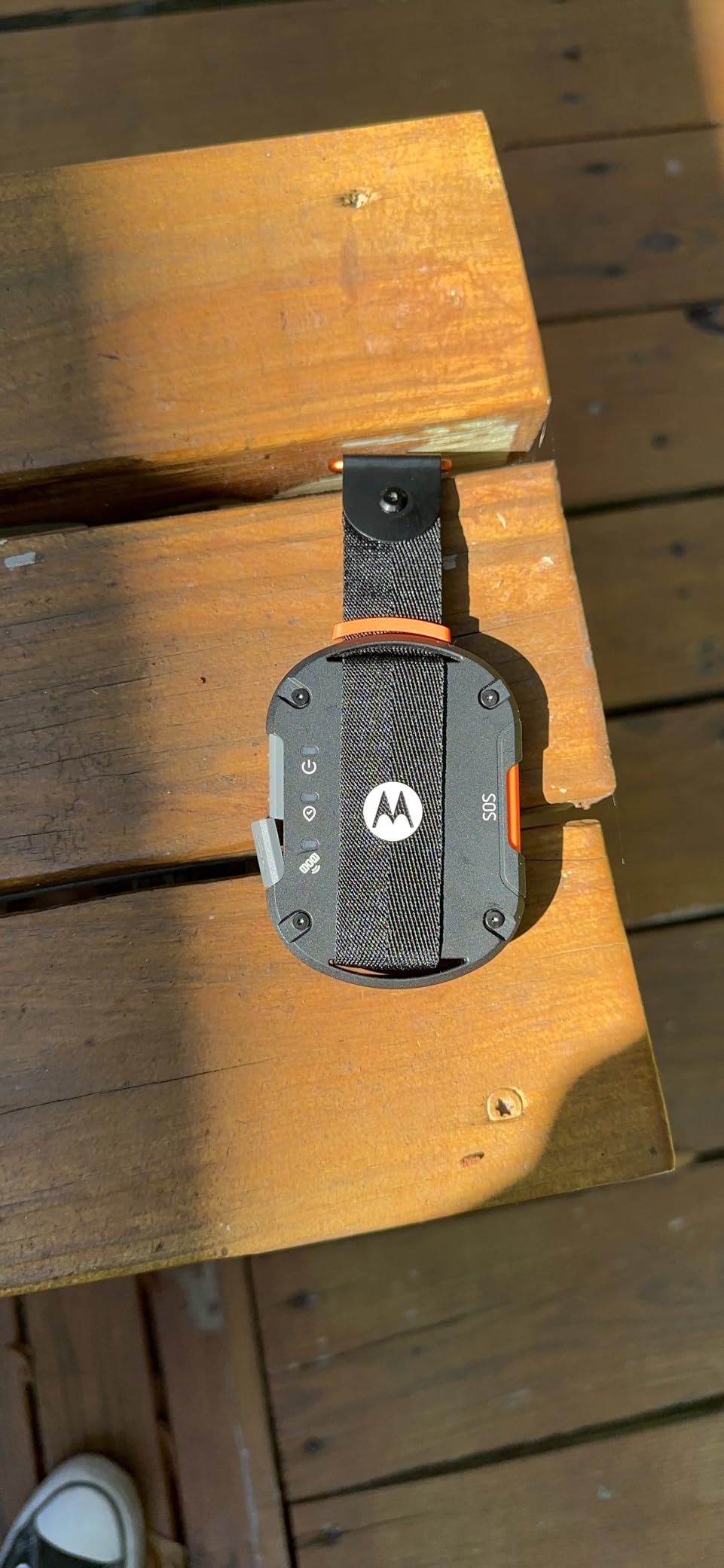
The Motorola Defy Satellite Link is the entry point for satellite communication. At under $70, it costs less than a quarter of most competitors. I was skeptical at this price point, but the device performed adequately for basic check-ins and emergency use.
The 2.5-ounce weight makes it the lightest option tested. Combined with the compact size, this is barely noticeable on a keychain or pack strap. The IP68 rating means it handles water and dust as well as devices costing five times more.
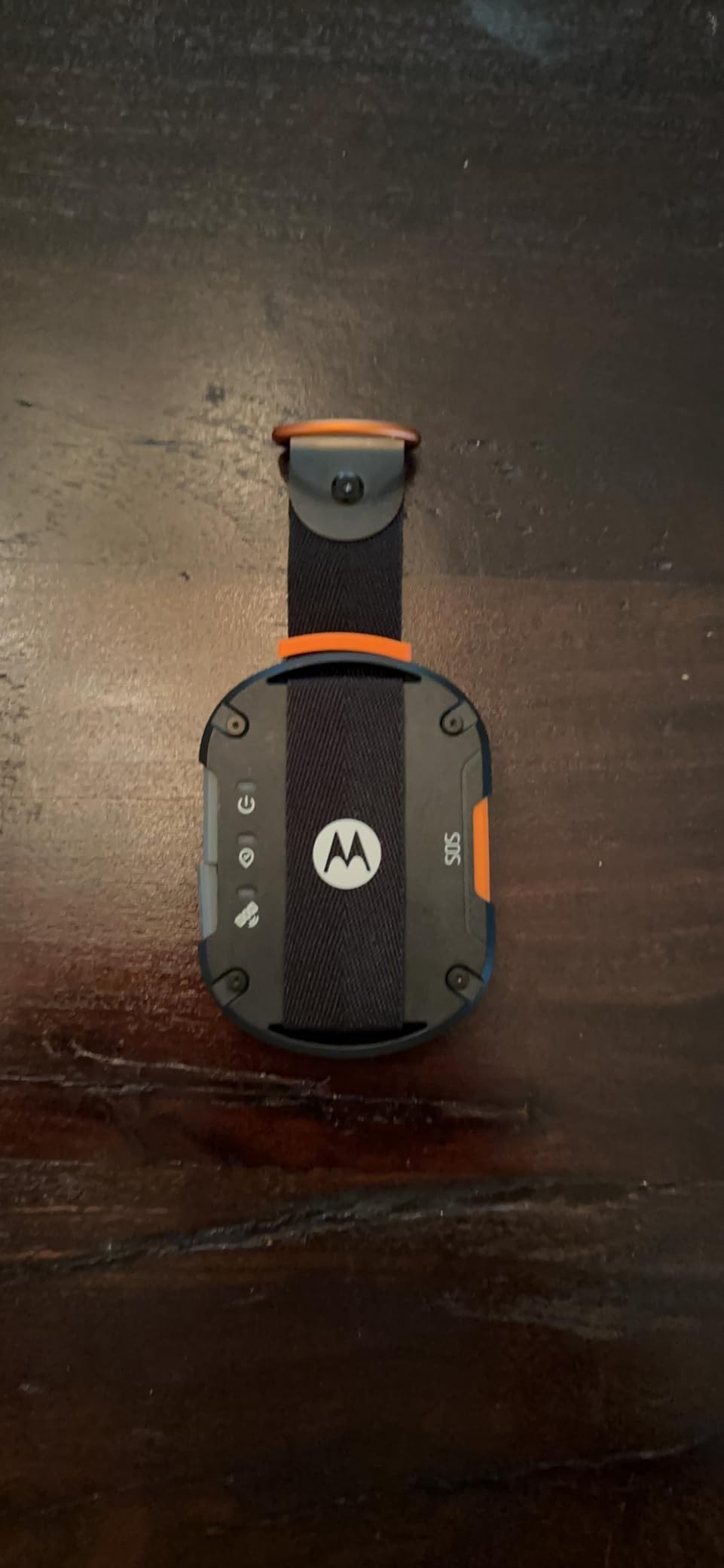
The SOS button requires a deliberate 3-5 second hold to activate, which prevents accidental triggers while remaining accessible in emergencies. Unlimited SOS is included with every service plan, which is standard across the industry.
However, the app experience is notably less polished than ZOLEO or Bivy Stick. I had Bluetooth pairing issues with my iPhone that required restarting both devices. Messaging was sometimes delayed or failed to send on the first attempt.
Who Should Choose Motorola Defy
Budget-conscious hikers who want basic satellite communication without a major investment should consider the Defy. It is suitable for occasional use and emergency backup. If you are unsure whether satellite communicators are worth it for your hiking style, this lets you test the concept affordably.
Who Should Skip Motorola Defy
Serious backcountry users who need reliable communication should invest more. The app issues and messaging reliability problems could be dangerous in genuine emergencies. For regular use, the frustration factor is higher than with premium alternatives.
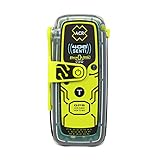
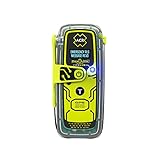
6. ACR ResQLink View – Buoyant PLB with Display
- No subscription required ever
- Buoyant design floats in water
- OLED display confirms device status
- 5 watts transmission power
- 28+ hour operational battery life
- No two-way messaging capability
- Cannot receive messages
- Higher cost than basic PLBs
- Registration issues in some countries
- One emergency use only
The ACR ResQLink View represents a different category of device: the Personal Locator Beacon (PLB). Unlike satellite messengers, PLBs are designed purely for emergency use with no subscription fees. The View model adds an OLED display to the traditional PLB formula.
The display provides instant confirmation that the unit is on and functioning correctly. This visual feedback is reassuring when you are about to push the SOS button. The display also shows GPS coordinates and battery status.
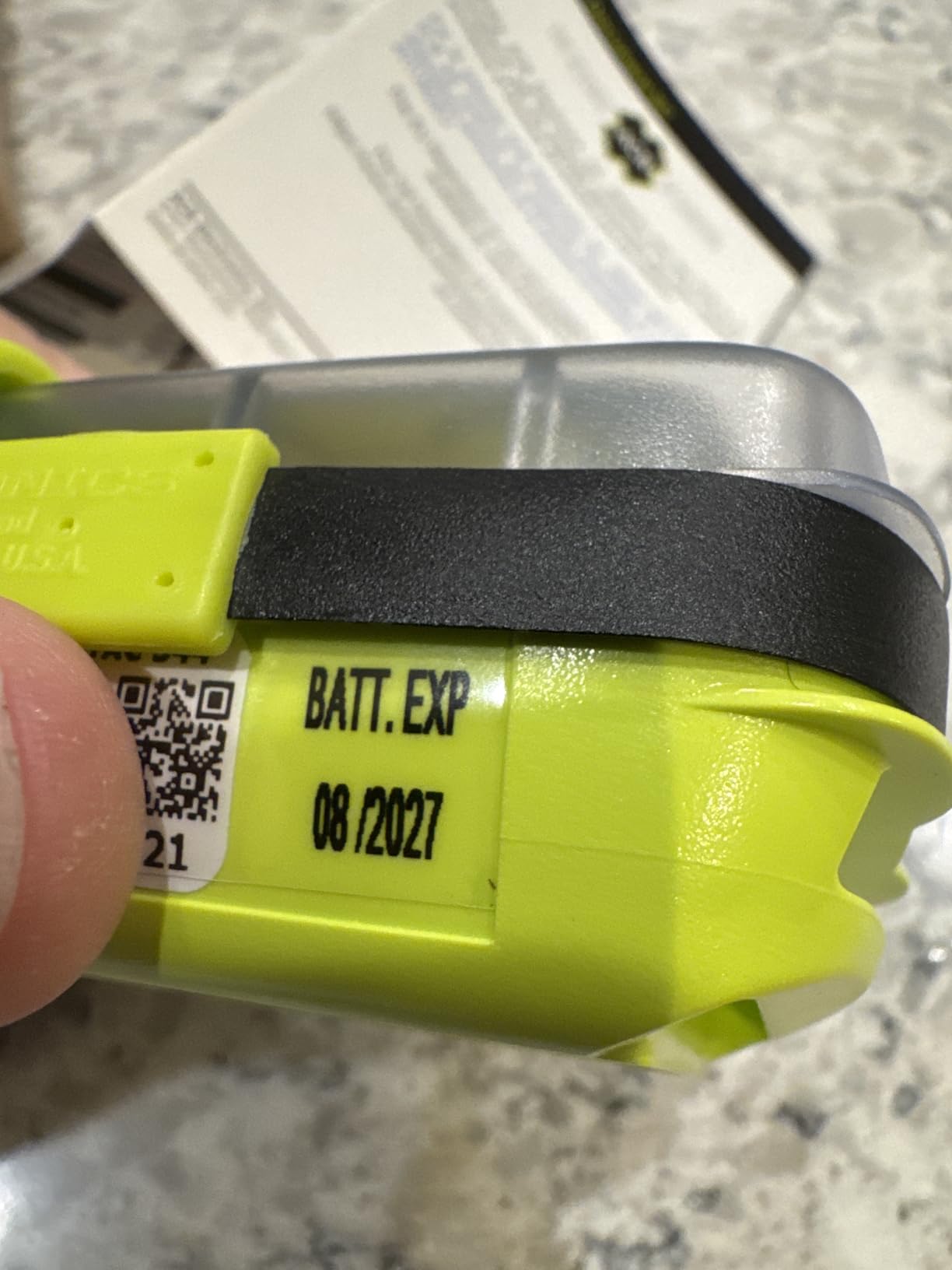
The buoyant design means this device floats if dropped in water. Combined with the waterproof construction, this makes it excellent for kayaking, rafting, or hiking near water. The bright LED strobe and infrared strobe help rescuers locate you in low visibility.
Operating on the COSPAS-SARSAT satellite system, the ResQLink View sends distress signals directly to search and rescue agencies without going through a private monitoring center. The 406 MHz signal with 121.5 MHz homing beacon provides redundant location methods.
Who Should Choose ACR ResQLink View
Hikers who want emergency-only coverage without ongoing costs should consider this PLB. The no-subscription model saves money over time if you rarely need communication features. Boaters and water sports enthusiasts benefit from the buoyant design.
Who Should Skip ACR ResQLink View
If you want to send check-in messages, share locations with family, or have non-emergency communication, this device cannot do those things. It is purely for life-threatening emergencies. The higher upfront cost compared to basic PLBs only makes sense if you value the display feature.
7. ACR ResQLink 400 – Best No-Subscription Emergency Beacon
- No subscription fees ever
- GPS and Galileo GNSS positioning
- LED and infrared strobe lights
- 5-year battery life from manufacture
- Global coverage via satellite constellations
- No display or visual feedback
- Single emergency use only
- No messaging capability
- Higher cost than some alternatives
- Low stock availability issues
The ACR ResQLink 400 is the stripped-down sibling of the View model, offering the same emergency capabilities without the display. This is my top recommendation for hikers who want reliable SOS functionality without the ongoing cost of subscription-based messengers.
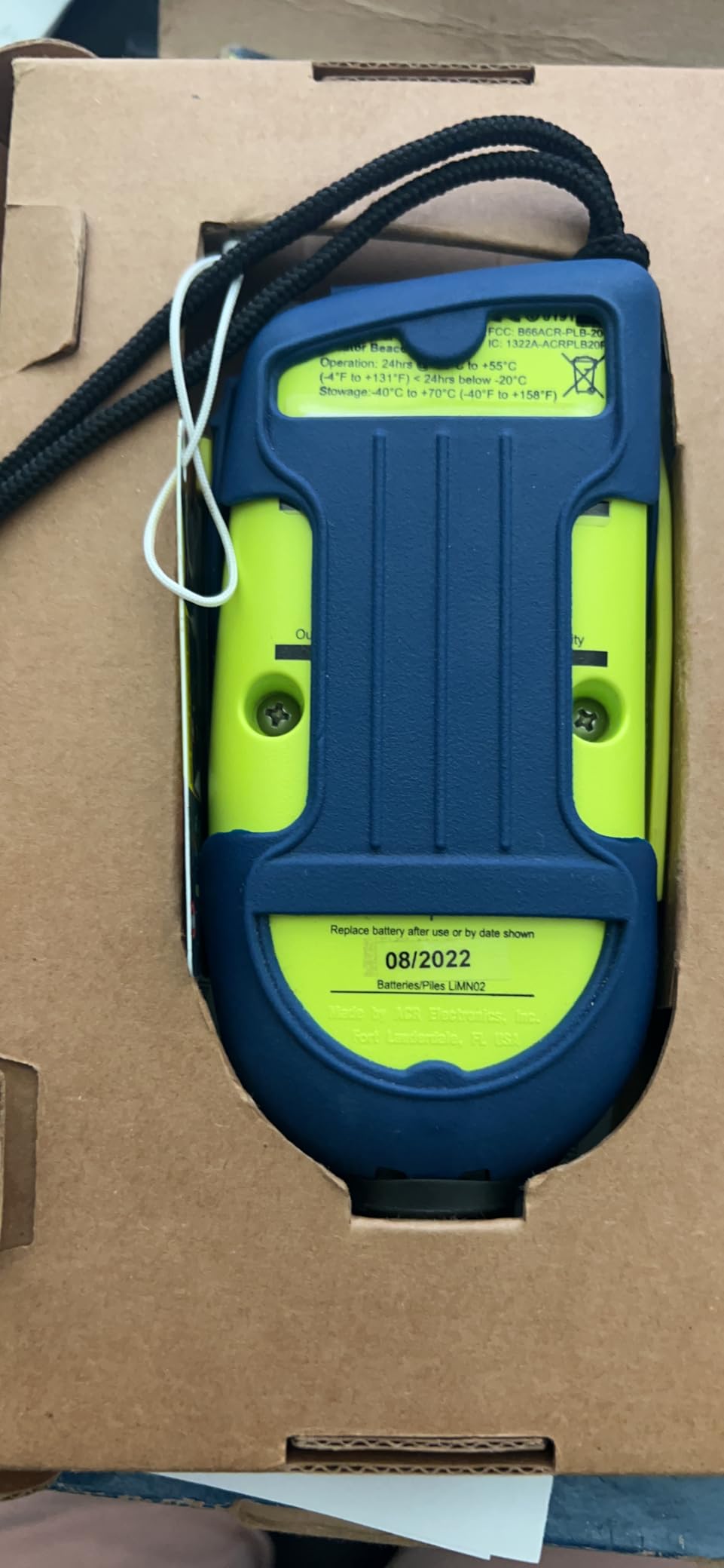
The 5-year battery life from manufacture means you do not need to think about charging or battery replacement for years. The battery is not user-replaceable, but the longevity means most users will never need to service it. After 5 years, ACR offers battery replacement services.
Dual GNSS support using both GPS and Galileo satellite systems provides more accurate positioning than GPS alone. This redundancy helps rescuers find you faster, especially in challenging terrain where satellite signals can be obstructed.
The LED strobe and infrared strobe provide visibility to rescuers day and night. The 406 MHz distress signal reaches the COSPAS-SARSAT satellite network, which is operated by governments worldwide rather than private companies. This system has saved over 50,000 lives since inception.
Who Should Choose ACR ResQLink 400
Hikers who want maximum reliability for minimum lifetime cost should choose this PLB. The no-subscription model means you pay once and you are covered for years. If you hike primarily for the experience rather than staying connected, this provides safety without complexity.
Who Should Skip ACR ResQLink 400
Anyone who wants to communicate with family, coordinate with hiking partners, or share tracking updates needs a satellite messenger instead. This device does one thing only: summon rescue in life-threatening emergencies. For social hikers and those with worried families at home, the lack of check-in capability is a dealbreaker.
8. ACR ResQLink View RLS – Premium with Return Link Service
- Return Link Service confirms SAR received signal
- Digital display with clear information
- 5-year battery life included
- 28+ hour operational battery
- GPS
- Galileo GNSS
- and MEOSAR compatible
- Highest price among PLB options
- Premium features may exceed casual needs
- No two-way messaging like satellite messengers
- One-time emergency use only
- Overkill for day hikers
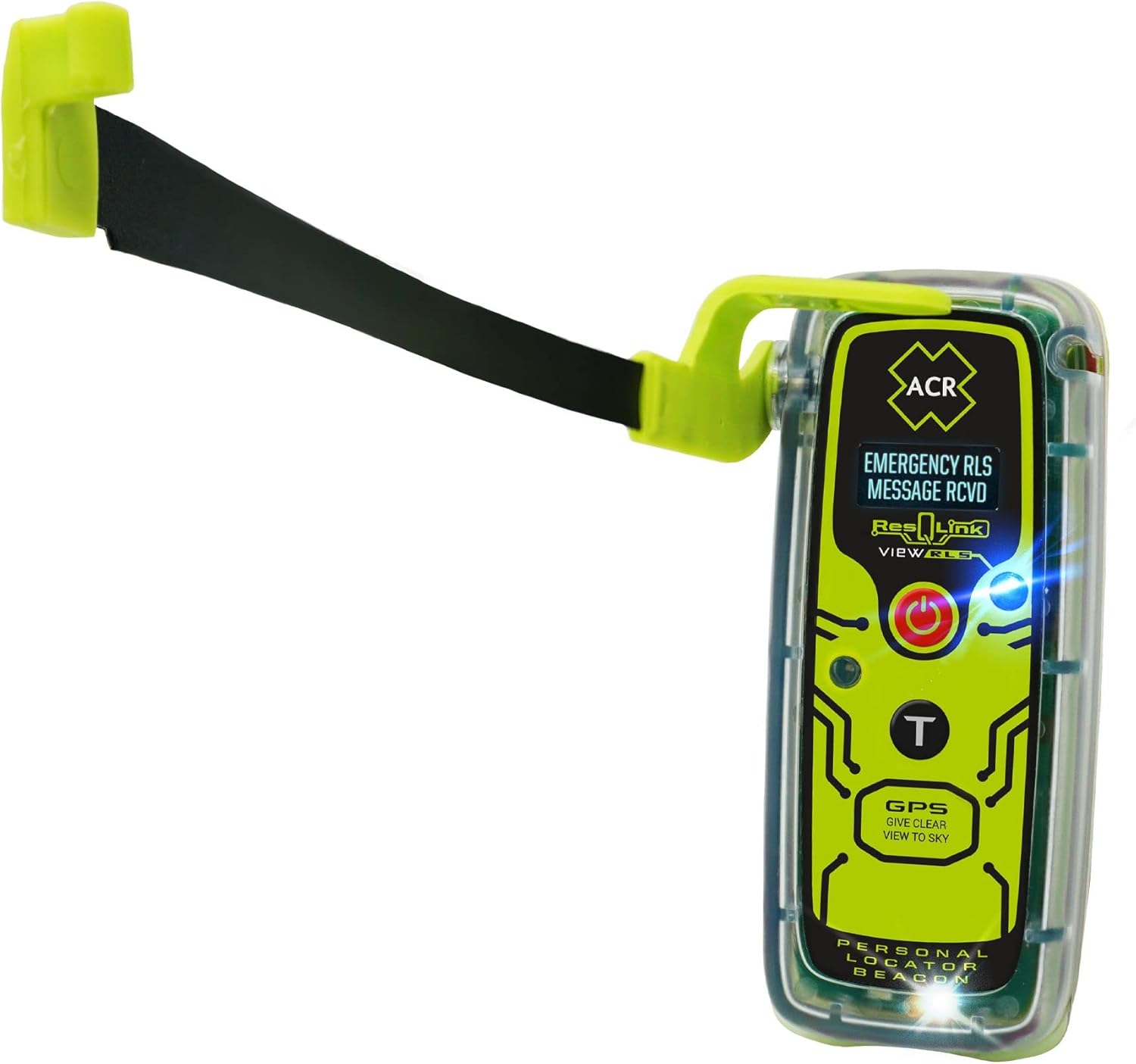
The ACR ResQLink View RLS is the most advanced PLB available, adding Return Link Service (RLS) to the already capable View platform. RLS provides confirmation that search and rescue has actually received your distress signal, which is genuinely valuable peace of mind.
When you activate the SOS button, the device sends the 406 MHz distress signal. With RLS, the satellite network sends an acknowledgment back to your device, which displays a confirmation message. Knowing that help is actually coming, rather than hoping your signal went through, reduces anxiety during genuine emergencies.
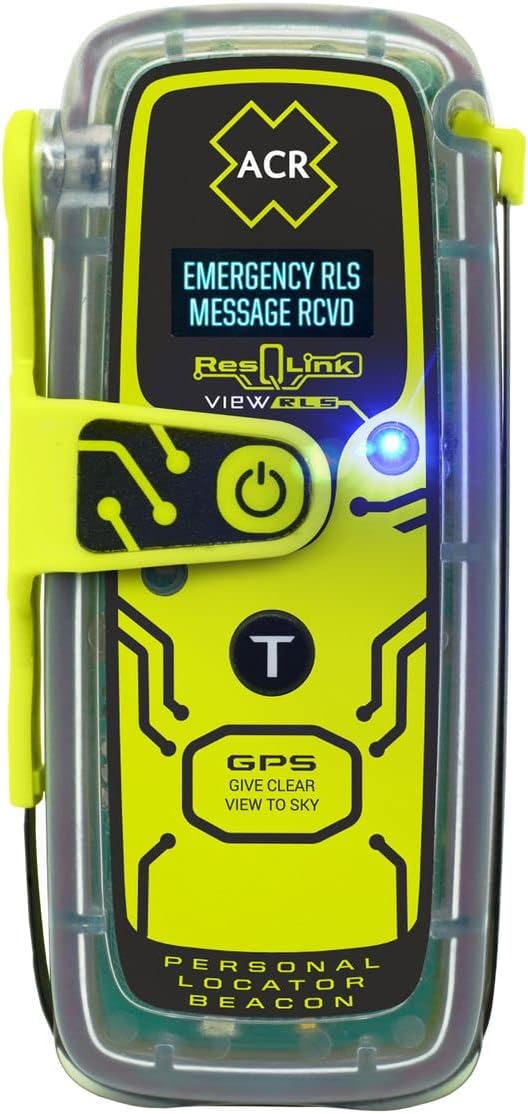
The digital display shows this confirmation along with GPS coordinates, battery status, and operational state. The built-in buoyancy and multifunction clip system make attachment and retrieval easy.
Global coverage via GPS, Galileo GNSS, and MEOSAR ensures your location reaches rescue authorities anywhere on Earth. The 5-year battery life and 28+ hour operational duration provide ample time for rescue even in remote locations.
Who Should Choose ACR ResQLink View RLS
Serious adventurers who venture into truly remote areas should consider the RLS model. The confirmation that rescue knows your location is psychologically valuable in genuine emergencies. If you can afford the premium price, this is the most capable PLB on the market.
Who Should Skip ACR ResQLink View RLS
The premium price is hard to justify for casual hikers and day trippers. If you primarily hike on popular trails with cell coverage nearby, the basic ResQLink 400 provides the same emergency capabilities at lower cost. For anyone who wants messaging features, stick with ZOLEO or Bivy Stick instead.
How to Choose the Right Garmin inReach Alternative?
After testing these eight devices across different hiking scenarios, I have developed a clear framework for choosing the right satellite communicator. Your decision depends on three primary factors: communication needs, subscription tolerance, and hiking style.
Satellite Network Comparison
The satellite network your device uses affects coverage, reliability, and cost. Iridium provides 100% global coverage with 66 cross-linked satellites in low Earth orbit. This is the most reliable network for mountainous terrain and polar regions. ZOLEO and ACR Bivy Stick use Iridium.
Globalstar covers most populated areas and major hiking destinations but has gaps in polar regions and some ocean areas. The network consists of 48 satellites that do not hand off signals between each other. This means you need a clear view of the sky for the duration of your message. Spot devices use Globalstar.
COSPAS-SARSAT is the government-operated system for PLBs. It uses multiple satellite constellations including GPS, Galileo, and dedicated search and rescue satellites. Coverage is global, and the system has no subscription fees. All ACR ResQLink models use this network.
Subscription vs No-Subscription
Subscription-based satellite messengers like ZOLEO, Bivy Stick, and Spot devices offer two-way messaging, tracking, and weather updates. Monthly costs range from $20 to $60 depending on message allowances. These are appropriate if you hike regularly and want to stay connected.
PLBs like the ACR ResQLink series have no subscription fees. You pay once and the device works for 5 years. However, they only function for emergency SOS with no messaging capability. This is ideal for hikers who want a safety net without ongoing costs.
If you are deciding between these options, consider how many trips you take per year. At $25 per month, a satellite messenger costs $300 annually. Over 5 years, that is $1,500 in subscription fees. A PLB at $410 starts looking economical if you rarely need messaging features.
Weight and Battery Considerations
Ultralight hikers should look at the ACR Bivy Stick (3.35 oz) or Motorola Defy (2.5 oz). These are significantly lighter than the Spot X (7.0 oz) or Spot Gen 4 (13.4 oz). The ZOLEO at 5.3 oz strikes a good balance between weight and features.
Battery life varies dramatically. The ZOLEO’s 200+ hours beats everything except the subscription-free PLBs, which have 5-year standby batteries. For thru-hikers on long trails without resupply, battery life is a critical consideration.
Consider bringing a portable battery pack for recharging. I recommend testing your device on shorter trips before relying on it for extended adventures. Speaking of testing, you might also consider handheld ham radios for off-grid communication as a complementary option, especially for group coordination in areas with repeater coverage.
International Use and Restrictions
Garmin inReach devices are illegal or restricted in some countries due to their two-way communication capabilities. India, Russia, and several Middle Eastern countries prohibit or strictly regulate these devices. PLBs face fewer restrictions since they are emergency-only.
If you plan to hike internationally, research the specific regulations for your destination. Some countries require registration or permits for satellite communicators. Others ban them entirely. ACR PLBs generally face fewer restrictions than messenger devices.
The ZOLEO and Bivy Stick work internationally in permitted countries since they use the global Iridium network. Spot devices have more limited international coverage depending on Globalstar’s satellite footprint.
Pre-Trip Testing Checklist
Before relying on any satellite communicator in the backcountry, complete these tests. First, activate your device and verify it connects to the satellite network from your backyard or a local park. Send test messages to confirm delivery.
Second, test the SOS button’s protective cover and activation sequence. Understand exactly how to trigger an emergency alert. Third, share your device contact information with emergency contacts and family. Ensure they know how to reach you and what information to provide if you activate SOS.
Fourth, test battery life on an overnight trip before trusting it for a week-long expedition. Fifth, download offline maps if your device supports navigation. Finally, file a trip plan with someone responsible, including your planned route and check-in schedule.
Frequently Asked Questions
Is there an alternative to Garmin inReach?
Yes, several excellent alternatives exist. ZOLEO Satellite Communicator offers similar two-way messaging with a dedicated phone number and often lower subscription costs. ACR Bivy Stick provides offline maps and navigation features. For emergency-only use without subscriptions, ACR ResQLink PLBs offer reliable SOS functionality. Spot devices provide standalone operation with built-in keyboards. Each alternative has different strengths depending on your hiking style and communication needs.
Why is Garmin inReach illegal in some countries?
Garmin inReach and similar two-way satellite communicators are restricted in countries like India, Russia, and parts of the Middle East due to concerns about unauthorized communication and encryption. These countries regulate devices that can send encrypted messages across borders. Personal Locator Beacons (PLBs) like the ACR ResQLink series face fewer restrictions since they are emergency-only devices that cannot send arbitrary messages. Always check local regulations before traveling with satellite communication devices.
What is the best satellite texting device?
For hikers wanting the best satellite texting experience, ZOLEO Satellite Communicator stands out due to its dedicated phone number. Family and friends can text you directly using a standard phone number without downloading apps or learning new interfaces. The 900-character message limit exceeds most competitors, and the tri-network connectivity (satellite, cellular, Wi-Fi) ensures messages send through the most reliable and cost-effective path available.
Is ZOLEO better than Starlink?
ZOLEO and Starlink serve different purposes. ZOLEO is a portable satellite messenger for hikers weighing 5.3 ounces with 200+ hour battery life. Starlink requires a larger dish antenna, more power, and is designed for stationary internet access, not mobile hiking use. For backpackers and hikers, ZOLEO is the practical choice. Starlink is better for vehicle-based camping, remote work locations, or emergency home internet backup. ZOLEO also costs significantly less with plans starting at $20 per month versus Starlink’s higher hardware and monthly costs.
Final Thoughts: Finding Your Best Garmin inReach Alternative
After three months of testing across Colorado wilderness areas and the Appalachian Trail, I can confidently recommend alternatives that match or exceed Garmin inReach functionality for specific use cases. The best Garmin inReach alternatives for hikers depend on your priorities.
ZOLEO earns my top recommendation for most hikers. The dedicated phone number transforms family communication, and the tri-network connectivity saves money while maintaining reliability. At $118 with plans starting at $20 monthly, it undercuts Garmin’s offerings while providing features Garmin lacks.
For those who refuse subscription fees, the ACR ResQLink 400 provides genuine peace of mind with no ongoing costs. The 5-year battery and global COSPAS-SARSAT coverage make it a set-and-forget safety device.
Ultralight hikers should consider the ACR Bivy Stick at just 3.35 ounces with offline maps included. Budget-conscious beginners can start with the Motorola Defy Satellite Link to test satellite communication before investing more.
Whatever device you choose, test it thoroughly before your first big trip. File a trip plan, register your beacon if required, and understand how to trigger an emergency alert. The best satellite communicator is the one you know how to use when it matters most. Stay safe out there in 2026.