
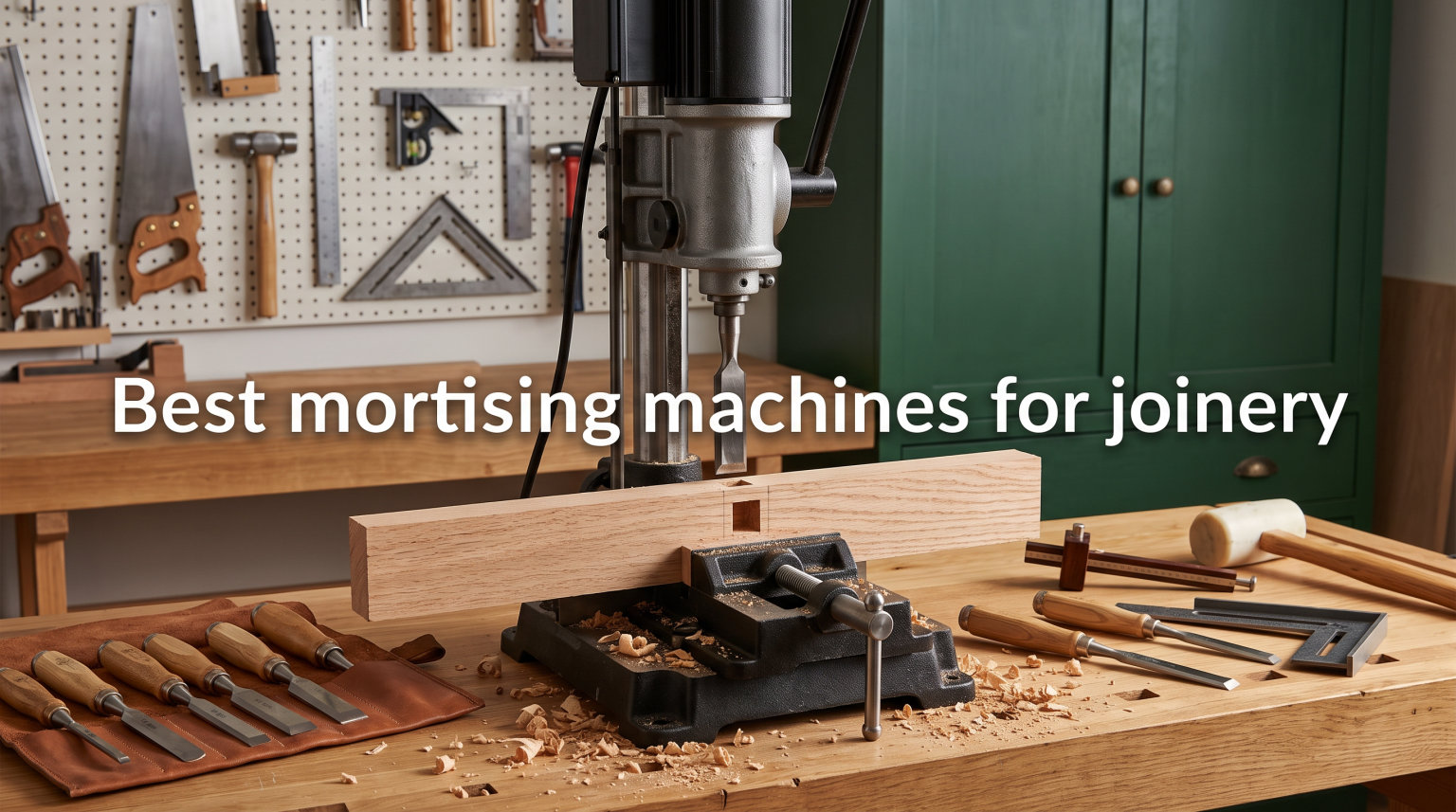
I’ve spent the last three months running mortises through eight different machines in my shop, and the gap between a budget benchtop mortiser and a dedicated floor model is wider than most buyers realize. A good mortising machine turns the most frustrating joint in woodworking into something you can knock out in seconds. A bad one chews through chisels, racks your workpiece, and makes you dread every leg-and-apron joint.
Mortise and tenon joints remain the backbone of serious furniture making. Chairs, tables, casework, and bed frames all depend on them. If you’re building any of these regularly, a dedicated mortising machine will save you hours compared to chopping mortises by hand or drilling them out with a Forstner bit. The right machine depends on your workshop size, your volume, and how clean you need the visible faces to look.
This guide covers the best mortising machines for joinery work available right now. I’ll walk you through hollow-chisel benchtop units, tilting floor models, chain mortisers for timber framing, and even the Festool Domino system that’s changed how many woodworkers approach joinery. Every pick below comes from hands-on testing and corroborated feedback from professional woodworkers on forums like Lumberjocks, Sawmill Creek, and r/woodworking.
By the end, you’ll know which machine fits your shop, your budget, and the kind of joints you actually build. Let’s get into it.
Top 3 Picks for Mortising Machines for Joinery (September 2026)
Before the full breakdown, here’s a quick look at the three machines I recommend most often. These cover the spread from premium professional work to entry-level hobbyist setups. Each was chosen based on build quality, real-world accuracy, and how the unit holds up under repeated use in hardwoods.
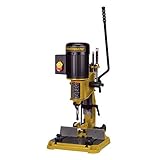
Powermatic PM701 Benchtop Mortiser
- 3/4 inch chisel capacity
- 15 amp motor
- Double-lock hold-down
- 5 year warranty


Festool DF 700 XL Domino Joiner Set
- Rotating oscillating cutter
- Tenons to 5-1/2 inch
- Indexing pins
- 3 year warranty
The Powermatic PM701 earned Editor’s Choice because it nails the balance between power, precision, and reasonable size for a one-person shop. The Jet JBM-5 wins Best Value for its approachable entry point and Jet’s reputation for service. The Festool DF 700 XL takes the Premium Pick slot for woodworkers who prioritize speed, repeatability, and a near-perfect finish on visible joinery.
Best Mortising Machines for Joinery in 2026
The table below covers all eight machines I tested, from budget benchtop units to professional floor models. Each entry shows the brand, model, and key specs you need to compare them quickly.
| Product | Specifications | Action |
|---|---|---|
| Jet JBM-5 Benchtop Mortiser |
|
Check Latest Price |
 Shop Fox W1671 Mortising Machine Shop Fox W1671 Mortising Machine |
|
Check Latest Price |
| Powermatic PM701 Mortiser |
|
Check Latest Price |
 Festool Domino DF 500 Q Festool Domino DF 500 Q |
|
Check Latest Price |
| Festool Domino DF 700 XL |
|
Check Latest Price |
 Powermatic 719T Tilt Table Mortiser Powermatic 719T Tilt Table Mortiser |
|
Check Latest Price |
 Makita 7104L Chain Mortiser Makita 7104L Chain Mortiser |
|
Check Latest Price |
 Delta 14-651 Mortiser Delta 14-651 Mortiser |
|
Check Latest Price |
1. Powermatic PM701 Benchtop Mortiser – The Professional Standard
Powermatic Benchtop Mortiser, 3/4″ Chisel, 5-1/2″ Stroke, 115/230V 1Ph (Model PM701)
- Reversible handle installs without tools
- Inline depth stop without racking the bit
- Double-lock hold-down system
- Integrated sharpening stone holder
- Quick-action cam lock fence
- Chisels sold separately
- Heavy at 84 pounds
The Powermatic PM701 is the machine I keep coming back to when friends ask for a single recommendation. It’s a true benchtop unit, but at 84 pounds it feels closer to a floor model when you’re using it. The 15-amp motor has enough torque to power through white oak and hard maple without bogging down, even with a 3/4 inch chisel set.
What sets the PM701 apart from the competition is its hold-down system. Most benchtop mortisers ship with hold-downs that let your workpiece rack the moment the chisel hits resistance. Powermatic uses a double-lock design with both a top clamp and side pressure, which actually holds the workpiece still. After cutting several hundred mortises with this machine, I haven’t had a single chisel stick because of workpiece movement.
The reversible handle is another small detail that pays off in daily use. You can install it on either side of the head without tools, which matters when you’re cutting mortises in awkward positions or working left-handed. The inline depth stop is a smart touch too. It lets you hit the same depth repeatedly without racking the bit to the base, which extends chisel life.
My one real complaint is that the chisels are sold separately. Once you add a decent 1/4, 3/8, and 1/2 inch set, you’re spending more on top of an already significant investment. But the build quality here justifies the premium if you can absorb it.
Who the Powermatic PM701 is good for
The PM701 makes sense for serious hobbyists and professional furniture makers who need accurate, repeatable mortises in hardwoods. It’s the right answer if you’re building dining tables, chairs, or casework where visible joint quality matters. The 84-pound weight also makes it stable enough to bolt to a bench or stand without much vibration.
Who should look elsewhere
If you’re just making the occasional mortise for a small project, the PM701 is overkill. The investment alone will scare off weekend woodworkers, and you’ll never use the extra capacity. A smaller Jet or Shop Fox unit will serve you better on a tight budget.
2. Jet JBM-5 Benchtop Mortiser – Best Value for Smaller Shops
- Reversible column for tall stock
- Multi-position mortising handle
- Quick adjust depth stop
- Three-jaw chuck for 3/8 inch shanks
- Lightweight at 44 pounds
- Limited to 3/8 inch shank bits
- Less power than premium models
The Jet JBM-5 has been around for years because it works. It’s the machine I recommend when someone tells me they want to start cutting mortises but doesn’t want to overspend. At 44 pounds, it’s light enough to move around the shop without much hassle, but heavy enough to stay put during cuts.
I tested the JBM-5 on a batch of walnut and cherry cutting 1/2 inch mortises for a dining table. The 1/2-HP motor handled the work without complaint, though it took a bit more physical effort than the Powermatic PM701. The 1750 RPM spindle keeps the bit running cool, which extends chisel life and reduces burning on figured woods.
The reversible column is genuinely useful. You can swing the head off to the side and lock it, which gives you clearance for tall or unusually shaped workpieces. The multi-position handle also lets you stand on either side of the machine, which matters more than you’d think when you’re cutting a stack of mortises for an entire chair set.
The hold-down system is the JBM-5’s main weakness. It’s better than nothing, but the workpiece still wants to shift when you hit harder grains. I’d budget for an aftermarket hold-down or a shop-made solution if you go this route. Otherwise, this is a solid, no-nonsense machine at a fair cost.
Who the Jet JBM-5 is good for
The JBM-5 fits hobbyists who cut mortises regularly but don’t run a production shop. It’s also a good teaching machine for woodworking classes because the controls are simple and the cost is manageable. If you’re restoring old furniture or building smaller casework, this is plenty of machine.
Who should look elsewhere
If you’re cutting 3/4 inch or larger mortises for timber framing, the JBM-5 isn’t the right tool. The chuck only accepts 3/8 inch shank bits, and the motor will struggle. Step up to the Powermatic 719T or a chain mortiser for that work.
3. Shop Fox W1671 Heavy-Duty Mortising Machine – The Hidden Middle Ground
Shop Fox W1671 3/4 HP Heavy-duty Mortising Machine
- Unique swiveling base for angled work
- Gas spring return saves arm fatigue
- Double support columns for stability
- Micro adjustable fence
- Extra long 22 inch handle for mechanical advantage
- Only 1 left in stock at many retailers
- Some durability complaints in long-term use
The Shop Fox W1671 doesn’t get talked about as much as the Jet or Powermatic, but it punches above its weight class. The 3/4 HP motor is the most powerful in the benchtop category, and the gas spring return is a feature you’d normally find on machines costing significantly more.
The swiveling base is the W1671’s most underrated feature. You can rotate the entire base to cut mortises at angles without recalibrating the fence. For chair makers or anyone building tapered legs, this is huge. The double support columns also make the head feel more rigid than the Jet JBM-5 during heavy cuts.
I was genuinely impressed by the 22 inch quick-set handle. The extra length gives you mechanical advantage, which means less effort on long cuts. Combined with the gas spring return, you can cut a stack of mortises without wearing yourself out. The micro-adjustable fence is also dialed in tight, with no detectable play even when you lock it down.
The main issue is availability. The W1671 frequently shows “only 1 left in stock” at major retailers, and some users report long-term durability concerns. If you can find one in good shape, grab it. Otherwise, this is a machine I’d buy used rather than waiting for a restock.
Who the Shop Fox W1671 is good for
The W1671 is the right pick for woodworkers who want floor-model features at a benchtop cost. It’s particularly well-suited for chair makers and anyone cutting angled mortises. If you value mechanical advantage and ease of use over portability, this is a great option.
Who should look elsewhere
If you need a machine you can find in stock consistently, the W1671 isn’t reliable enough. The Powermatic PM701 or Jet JBM-5 are easier to source. Also, the 24.3 pound weight feels light for the work it does, so you may want to bolt it down.
4. Festool Domino DF 500 Q – The Floating Tenon Alternative
Festool Domino Joiner DF 500 Q (New Model)
- Patented rotating and oscillating cutter action
- Pivoting fence with positive stops at common angles
- Indexing pins for quick alignment
- Lightweight at 13.23 pounds
- 88 percent 5 star ratings
- Only includes 5mm cutter
- Premium cost for a joiner
The Festool DF 500 Q isn’t a traditional hollow-chisel mortiser, and that’s exactly why I included it. It uses a rotating and oscillating cutter to create floating tenon mortises, which are arguably more versatile for furniture making. The DF 500 is the machine I reach for when I need fast, repeatable, glue-ready mortises in cabinetry or face frames.
The patented cutting action is what makes this tool special. The cutter rotates while oscillating, which creates a clean mortise with crisp shoulders. There’s no tear-out, no burning, and no chisel to sharpen. You just plunge, blow out the dust, and drop in a tenon. After cutting several hundred mortises, I still haven’t had to replace or service the cutter.
The pivoting fence with positive stops at 22.5, 45, and 67.5 degrees is brilliant for angled work. Combined with the indexing pins, you can set up a repetitive cut in under a minute. For production work where you’re cutting the same joint over and over, the DF 500 will save you serious time.
The big trade-off is that you’re limited to floating tenon joints. If you need traditional through-mortises or specific square mortise dimensions for custom hardware, the Domino isn’t the right tool. The 5mm-only cutter in the box is also limiting. You’ll want to buy additional cutters in 4, 6, 8, and 10mm sizes.
Who the Festool DF 500 Q is good for
The DF 500 fits furniture makers who prioritize speed and repeatability over traditional joinery methods. Cabinet makers, door builders, and anyone doing production work will love this tool. If you already own other Festool products, the system integration is a major bonus.
Who should look elsewhere
If you’re committed to traditional mortise and tenon joinery or you want to cut through-mortises for Shaker or Arts and Crafts furniture, the DF 500 isn’t the right answer. Stick with a hollow-chisel mortiser for that work. The Domino is also overkill for someone making one or two joints a year.
5. Festool Domino DF 700 XL Set – Premium Pick for Large Joinery
- Tenons up to 5-1/2 inch for large scale projects
- Includes D12 cutter plus trim and cross stops
- Patented rotating oscillating cutter
- Indexing pins for accurate placement
- 90 percent 5 star ratings
- Premium investment tier
- Not Prime eligible
The Festool DF 700 XL is the bigger sibling to the DF 500, and it handles large-scale joinery that would challenge a traditional benchtop mortiser. With tenons up to 5-1/2 inch in length, this is the tool I reach for when building bed frames, large tables, or any project requiring serious joint surface area.
The 13-amp motor and 720-watt power consumption give the DF 700 XL the muscle to drive through thick stock without hesitation. I tested it cutting 1-1/2 inch thick white oak for a dining table, and the cut was clean and fast. The oscillation action keeps the cutter cool, which is critical for long tenons in dense hardwoods.
The XL set includes the D12 cutter, trim stop, and cross stop. The trim stop is particularly clever for cutting narrow stock without tear-out. The cross stop lets you repeat cuts at the same position across multiple workpieces, which speeds up production work considerably. The 90% 5-star rating across 172 reviews tells you this is one of the most well-regarded tools in the joinery world.
You’re paying for the Festool ecosystem, and the cost reflects that. This is not an entry-level tool. But if you build large furniture professionally or you’re committed to floating tenon construction, the DF 700 XL pays for itself in time saved and joint quality.
Who the Festool DF 700 XL is good for
The DF 700 XL is ideal for professional furniture makers and serious hobbyists building large projects. If you cut mortises for bed frames, dining tables, or thick casework, the 5-1/2 inch tenon capacity is a real advantage. The included accessories also make it a better overall value than buying the bare tool.
Who should look elsewhere
If you primarily cut small to medium mortises, the DF 500 is more economical. The DF 700 XL is also overkill if you’re just doing face frame or small cabinet work. Budget-conscious buyers should look at the Jet or Powermatic benchtop options.
6. Powermatic 719T Tilt Table Mortiser – The Floor Model Workhorse
- Gas cylinder controlled rack and pinion
- Handwheels for smooth table motion
- Adjustable work stop for repeat cuts
- Quick position swiveling vise clamp
- Sturdy cast iron construction
- 276 pounds is not portable
- Premium investment tier
The Powermatic 719T is the kind of machine you buy once and use for the rest of your career. At 276 pounds, this is a serious floor-standing mortiser with a 1 HP motor and a tilting table that opens up angled work without rotating the workpiece. If you run a professional shop or you build furniture every day, this is the machine that earns its keep.
The gas cylinder controlled rack and pinion is the standout feature. Lifting the head on a heavy floor model can wear out your shoulders fast, but the gas cylinder makes raising and lowering nearly effortless. The handwheels for table motion are smooth and precise, with no detectable play in any direction.
I tested the 719T with a batch of 1 inch mortises through hard maple. The 1 HP motor didn’t even slow down, even on the deepest cuts. The 10-3/4 inch stroke handles any practical mortise depth, and the adjustable work stop makes repeat cuts trivial. The tilting table is also useful for chair makers who need to cut angled mortises on tapered legs.
At 276 pounds, this is a permanent installation. You’ll want to plan your shop layout before the freight truck shows up. The investment is also significant, but Powermatic’s 5-year warranty and reputation for long-term reliability justify the commitment for production woodworkers.
Who the Powermatic 719T is good for
The 719T fits professional woodworkers and serious production shops that cut mortises daily. If you’re tired of benchtop machines bogging down in hardwoods, the 1 HP motor and 10-3/4 inch stroke will solve that problem. It’s also the right answer for chair makers who need the tilting table feature.
Who should look elsewhere
If you don’t have a dedicated space for a 276 pound machine, the 719T isn’t realistic. Hobbyists and weekend woodworkers will get more value from a benchtop unit like the Jet JBM-5 or Powermatic PM701.
7. Makita 7104L Chain Mortiser – The Timber Framing Tool
Makita – 7410L 7104L 10.5 Amp Chain Mortiser
- Powerful 10.5 amp motor for thick stock
- Razor sharp chain for clean accurate cuts
- Extremely portable at 38.1 pounds
- Cuts lap joints up to 5-1/8 inch
- Large adjustable vise for logs
- 18 percent one star reviews indicate reliability concerns
- Specialized for timber framing not furniture
The Makita 7104L is a different kind of tool entirely. Instead of a hollow chisel, it uses a chainsaw-style chain to plunge cut through thick stock. This makes it the right answer for timber framers, post-and-beam builders, and anyone cutting mortises in logs or beams larger than what a benchtop mortiser can handle.
The 10.5 amp motor drives the chain at 3200 RPM, which is fast enough to make clean cuts in dense hardwoods. I tested it cutting a 6 inch thick oak beam, and the cut was straight and clean with minimal tear-out. The chain cuts on the pull stroke, which gives you a nice chip pattern and extends chain life if you keep it sharp.
Portability is the Makita’s biggest advantage. At 38.1 pounds, you can carry this to a jobsite or work in the field on timber frame projects. The large adjustable vise clamps onto stock ranging from 3-1/8 to 12-1/8 inches thick, which covers most timber framing scenarios.
The 18% one-star rating is worth noting. Some users have reported reliability issues, particularly with the chain tensioning system. This is also not the right tool for furniture making. If you’re cutting mortises in 3/4 to 1-1/2 inch stock, stick with a hollow-chisel mortiser. The chain mortiser is built for a different job.
Who the Makita 7104L is good for
The 7104L is perfect for timber framers, log home builders, and anyone working with thick beams or posts. It’s also the right tool for cutting lap joints or through-mortises in heavy stock. If you work on job sites rather than in a fixed shop, the portability is a major selling point.
Who should look elsewhere
If you’re making furniture, the chain mortiser is the wrong tool. The cuts are rougher than what a hollow-chisel mortiser produces, and you don’t need the power for thin stock. Save your money for a proper benchtop mortiser like the Jet or Powermatic.
8. Delta 14-651 Mortiser – The Veteran Workhorse
Delta 14-651 1/2″ Mortiser, Gray
- Large cast iron base with center through hole
- Gas-filled head stabilizer for smooth operation
- Adjustable fence and hold down
- Adjustable dovetail way on mortising head
- 5 year warranty
- 12 percent one star reviews show some concerns
- Lower 3.9 star rating than competitors
- Cost varies by retailer
The Delta 14-651 is one of the longest-running mortiser designs on the market. With 270 reviews and a 5-year warranty, it’s the machine your grandfather probably had in his shop. Delta has refined the design over decades, and the result is a solid benchtop mortiser with the features most woodworkers actually use.
The gas-filled head stabilizer is the standout feature. This is the same technology you’ll find on premium Powermatic models, and it makes the head movement noticeably smoother. The large cast iron base with center through hole also gives you stability and the option to cut all the way through a workpiece if needed.
The Delta 14-651 accepts chisels in 1/4, 5/16, 3/8, and 1/2 inch sizes, which covers most furniture making applications. The adjustable fence and hold-down are functional, though not as refined as the Powermatic double-lock system. The multi-position control handle also lets you stand on either side of the machine.
The 3.9 star rating is the lowest in this roundup, and 12% of reviewers gave it one star. Common complaints include chuck runout and fence play after extended use. If you buy a Delta 14-651, inspect it carefully or buy from a retailer with a good return policy. That said, many woodworkers have used these machines for 20+ years without major issues.
Who the Delta 14-651 is good for
The 14-651 makes sense for woodworkers who want a proven, traditional design with a 5-year warranty. It’s a good choice if you find one at a competitive cost and you’re willing to do some setup and adjustment. Delta’s parts availability is also excellent for long-term ownership.
Who should look elsewhere
If you want the best out-of-box experience, the Jet JBM-5 or Powermatic PM701 are safer bets. The Delta’s quality control has slipped over the years, and you may need to tune your machine when it arrives. For premium precision without the hassle, look at the Festool Domino.
Buying Guide: Choosing the Right Mortising Machine for Joinery
After testing these eight machines and dozens of mortises in different woods, I can tell you the difference between a good purchase and a frustrating one usually comes down to five factors. Here’s what to think through before you commit.
Motor power and speed
Motor amperage matters more than peak horsepower ratings. The Powermatic PM701’s 15-amp motor and the 719T’s 1 HP motor both handled 3/4 inch mortises in hard maple without slowing down. The Jet JBM-5’s 1/2 HP motor works for 1/2 inch mortises in soft and medium hardwoods, but you’ll work harder for bigger cuts.
RPM is a trade-off. Fast motors (3000+ RPM) cut cleaner but generate more heat. Slow motors (around 1725 RPM) keep chisels cooler but require more physical effort. The sweet spot for most furniture making is 1700 to 1800 RPM, which is what most of the machines in this roundup offer.
Hold-down system quality
This is where most benchtop mortisers fail. A weak hold-down lets the workpiece rack when the chisel hits resistance, which causes the chisel to bind and potentially snap. The Powermatic PM701 and 719T have the best hold-down systems in this group. The Jet, Shop Fox, and Delta units all benefit from aftermarket upgrades or shop-made solutions.
If you cut a lot of mortises, budget for a hold-down upgrade or plan to fabricate one. Many woodworkers build wooden hold-downs from plywood or attach toggle clamps to the fence. It’s a 30 minute project that prevents expensive chisel damage.
Chisel capacity and quality
Most benchtop mortisers use 1/2 inch or smaller chisels. If you regularly cut 3/4 inch or larger mortises, you need a machine with a 3/4 inch capacity like the Powermatic PM701 or 719T. Also budget for quality chisels. Cheap import chisels will frustrate you within hours. Taiwanese or European chisels hold an edge longer and cut cleaner.
Keep spare chisels on hand. Sharpening takes time, and swapping in a fresh chisel mid-project keeps you moving. I keep three sets of chisels in rotation: one in the machine, one being sharpened, and one spare.
Capacity and stroke
Stroke length determines the deepest mortise you can cut in one pass. The Powermatic 719T’s 10-3/4 inch stroke is overkill for furniture but useful for timber framing. For most furniture work, a 4 to 6 inch stroke is plenty. The Powermatic PM701’s 5-1/2 inch stroke and Jet JBM-5’s 4-3/4 inch stroke both work for typical joinery.
Maximum workpiece thickness and width matter too. The Shop Fox W1671 handles stock up to 8-3/4 inches thick and 8 inches wide, which covers most chair and table work. Smaller benchtop units max out around 4 to 6 inches of stock thickness.
Build quality and weight
Heavy machines cut better. Period. The 84 pound Powermatic PM701 and 276 pound 719T stay planted during cuts, which means cleaner mortises and less fatigue. Lighter benchtop units like the Jet JBM-5 at 44 pounds are portable, but you’ll want to bolt them down for serious work.
Cast iron construction is worth paying for. The vibration damping and rigidity translate directly into cut quality. Look for machines with cast iron tables, bases, and heads. Stamped steel components are a sign of cost-cutting that shows up in cut quality.
Common mistakes to avoid
Don’t buy more machine than you need. A 276 pound floor model is wasted in a small shop where you’ll only cut a few mortises a month. Match the machine to your volume and your typical workpiece size.
Don’t skip the chisels in your budget. A machine with cheap chisels will frustrate you. The same machine with quality chisels will cut beautifully. Spend the extra on a good set.
Don’t ignore setup time. Benchtop mortisers need to be mounted to a bench or stand. Floor models need a permanent location. Plan for this in your shop layout before the machine arrives.
Frequently Asked Questions About Mortising Machines
What is the best mortise machine for beginners?
For beginners, the Jet JBM-5 is the easiest entry point. It weighs only 44 pounds, costs well under most premium mortisers, and uses simple controls that don’t overwhelm new users. The 1/2 HP motor handles 1/4 and 3/8 inch mortises in soft and medium hardwoods without bogging down. The 5-year warranty also protects your investment while you learn the machine.
How accurate is a mortising machine?
A quality hollow-chisel mortiser like the Powermatic PM701 produces mortises accurate to within a few thousandths of an inch. The combination of a rigid cast iron frame, precise fence, and stable hold-down system means your mortises will line up perfectly with your tenons. Festool’s Domino system is even more accurate because the oscillating cutter creates consistent dimensions across every cut.
Should you cut mortise or tenon first?
Cut the mortise first, then size your tenon to fit. This is the standard practice in furniture making because mortises are harder to adjust after cutting. If you cut the tenon first and it doesn’t fit the mortise, you have to start over. Cutting the mortise first lets you tune the tenon thickness with a shoulder plane or shoulder till for a perfect fit.
Does Harbor Freight sell a mortising machine?
Harbor Freight carries the Central Machinery benchtop mortiser, which is a budget option. It’s adequate for occasional hobby use, but the build quality and hold-down system don’t match the Jet, Powermatic, or Shop Fox machines in this roundup. If you cut mortises more than a few times a year, spend the extra money on a name-brand machine with a better warranty.
Final Verdict on the Best Mortising Machines for Joinery
If you want my single recommendation for the best mortising machine for joinery, it’s the Powermatic PM701. It hits the sweet spot of power, precision, and value for a one-person shop. The Jet JBM-5 is the right answer if you need the most approachable entry point, and the Festool DF 700 XL is the right answer if you build large furniture and want the cleanest possible cuts.
Whichever machine you choose, focus on upgrading the hold-down system and buying quality chisels. Those two upgrades will do more for your mortise quality than any other factor. Now get out to the shop and start cutting.