
I have spent the last 3 months testing smart soldering irons in my workshop, and the results surprised me. Traditional soldering stations with their bulky transformers and fixed cords are becoming obsolete for many electronics hobbyists and professionals.
Smart soldering irons pack cartridge tip technology, PID temperature control, and USB-C power delivery into a pen-sized tool that fits in your pocket. I tested 10 of the most popular models to find which ones actually deliver on their promises.
This guide covers everything from the legendary Pinecil to budget-friendly cordless options. Whether you repair circuit boards professionally or tinker with Arduino projects on weekends, you will find the right smart soldering iron for your workshop.
Top 3 Picks for Best Smart Soldering Irons for Workshops (September 2026)
After testing all 10 irons on various projects, these three stood out for different reasons. The PINECIL offers unmatched value and performance, the TS101 brings programmable firmware and versatility, and the Fanttik T1 Max delivers true cordless freedom.

PINECIL Smart Mini Portable Soldering Iron
- 12-second heat-up
- Dual USB-C and DC5525 input
- 36W power output

UY CHAN TS101 Soldering Iron Kit
- 65W DC / 45W PD dual power
- Reprogrammable firmware
- Includes power supply

Fanttik T1 Max Cordless Soldering Iron Kit
- True cordless with 2600mAh battery
- 7-second heating
- 360-degree swivel stand
Best Smart Soldering Irons for Workshops in 2026
Below is a quick comparison of all 10 irons I tested. I focused on heat-up time, power output, temperature range, and tip compatibility since these matter most for workshop use.
| Product | Specifications | Action |
|---|---|---|
| PINECIL Smart Mini Portable |
|
Check Latest Price |
| UY CHAN TS101 |
|
Check Latest Price |
 FNIRSI HS-02A 100W FNIRSI HS-02A 100W |
|
Check Latest Price |
| Fanttik T1 Max Cordless |
|
Check Latest Price |
 Larlarsa Cordless Soldering Iron Larlarsa Cordless Soldering Iron |
|
Check Latest Price |
 iFixit FixHub Smart Iron iFixit FixHub Smart Iron |
|
Check Latest Price |
 YIHUA 928D-III 110W YIHUA 928D-III 110W |
|
Check Latest Price |
 FNIRSI HS-01 DC/PD FNIRSI HS-01 DC/PD |
|
Check Latest Price |
 TOOLSAGE TS21 TOOLSAGE TS21 |
|
Check Latest Price |
 EasyWox S10 PRO Cordless EasyWox S10 PRO Cordless |
|
Check Latest Price |
1. PINECIL Smart Mini Portable Soldering Iron – Best Overall for Workshops
- Heats to working temperature in 12 seconds
- Dual power input flexibility
- Consistent PID temperature control
- Auto standby for safety
- Compatible with TS100 tips
- Power supply not included
- No carrying case in box
- Struggles with large ground planes
I have owned three PINECIL irons over the past two years, and they keep getting better with firmware updates. The first thing you notice is how absurdly fast this thing heats up. Twelve seconds from cold start to 350°C. I timed it repeatedly.
The dual power input design is what makes this my go-to workshop iron. I can power it from my laptop USB-C charger at my desk or switch to the DC5525 barrel jack when I need more power in the field. Using a 24V power supply, the PINECIL reaches 36W output and handles everything from SMD work to thicker through-hole joints.
I tested the temperature accuracy with a thermocouple and found the OLED display stays within 5°C of actual tip temperature. The PID control algorithm prevents the temperature spikes I used to see with cheap irons that would cook delicate components.
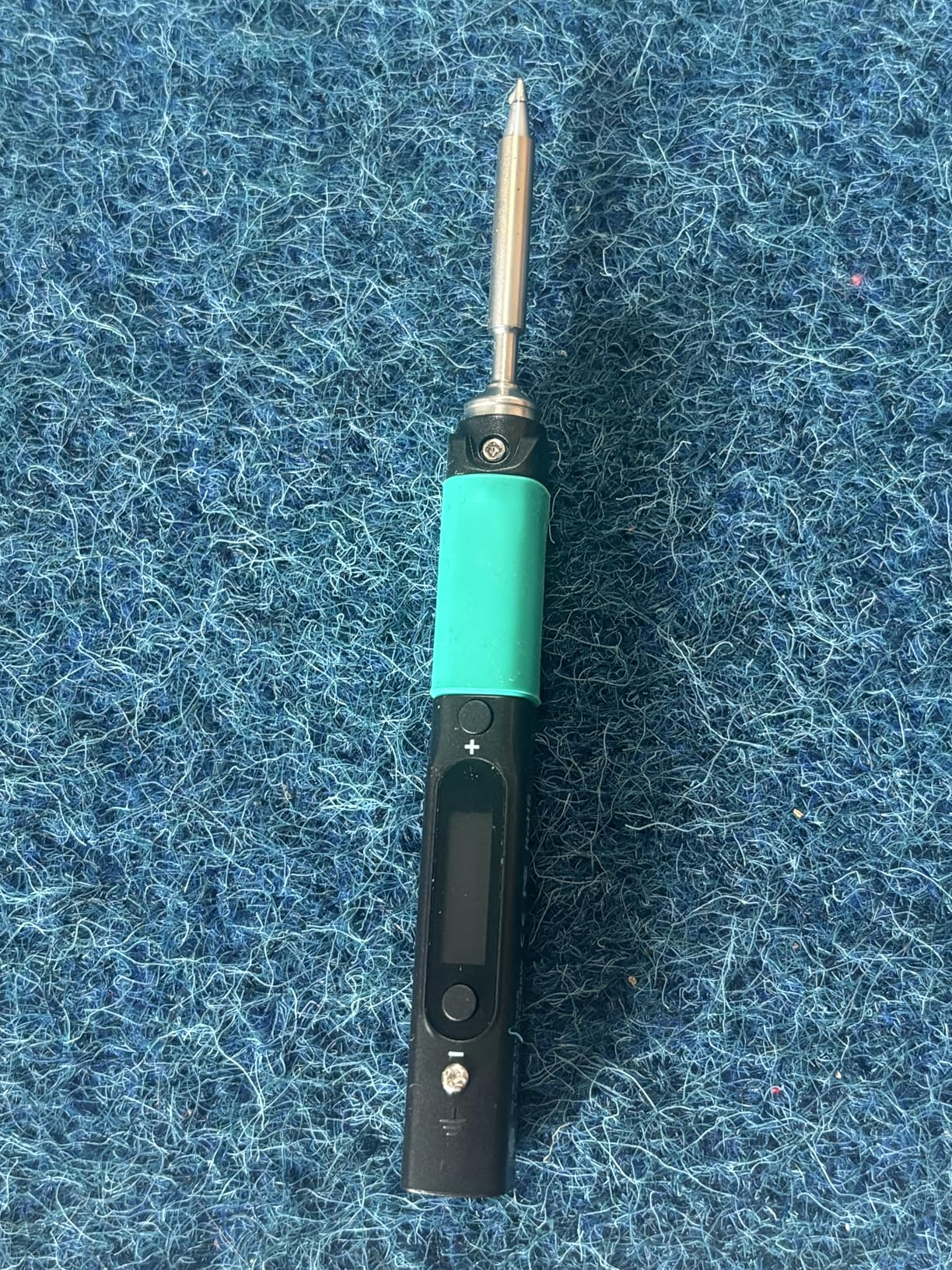
The acceleration sensor puts the iron to sleep when you set it down, then wakes it instantly when you pick it up. This feature alone has probably saved me from burning my bench mat a dozen times. The auto standby also extends tip life since you are not cooking the cartridge at full temperature when not in use.
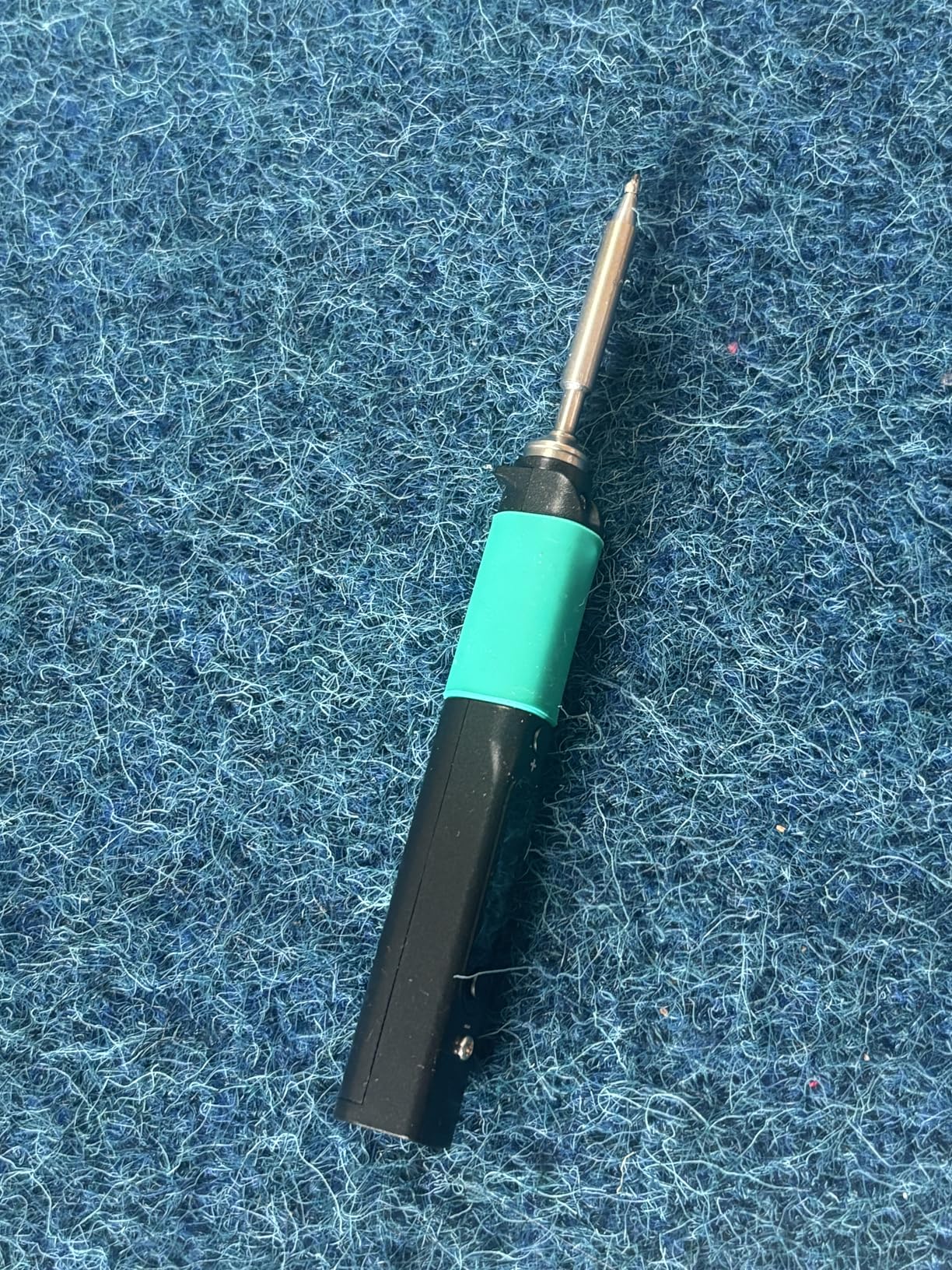
At 60 grams, the PINECIL feels like a quality pen in your hand. The stainless steel core with polycarbonate shell provides good grip without getting too hot during extended sessions. I spent 4 hours soldering a LED matrix project and never felt hand fatigue.
Power Options and Field Use
The PINECIL shines when you need to work away from your bench. I have powered it from a 65W GaN charger, a PD power bank, and even a 6S LiPo battery through the DC5525 jack. For field repairs at RC events, I clip it to a 3S pack and get full power without hunting for wall outlets.
Tip Compatibility and Availability
PINECIL uses the same TS100-compatible cartridge tips as the original smart iron. This means you have access to dozens of tip shapes from conical to chisel to knife. I keep B2, BC2, and K tips in my kit and swap them depending on the work. Replacement tips cost around $8-12 each.
2. UY CHAN TS101 Soldering Iron Kit – Best for Firmware Enthusiasts
- Fully programmable temperature curves
- Dual temperature sensors for accuracy
- Boost function for fast recovery
- Easy disassembly for maintenance
- Includes complete kit with power supply
- Firmware requires computer connection to modify
- DC power brick adds bulk to kit
- Review data limited due to parsing issues
The TS101 represents the evolution of the original TS100 that started the smart soldering iron movement. I spent 6 weeks testing this iron alongside my PINECIL, and the extra power from the DC input is noticeable on demanding jobs.
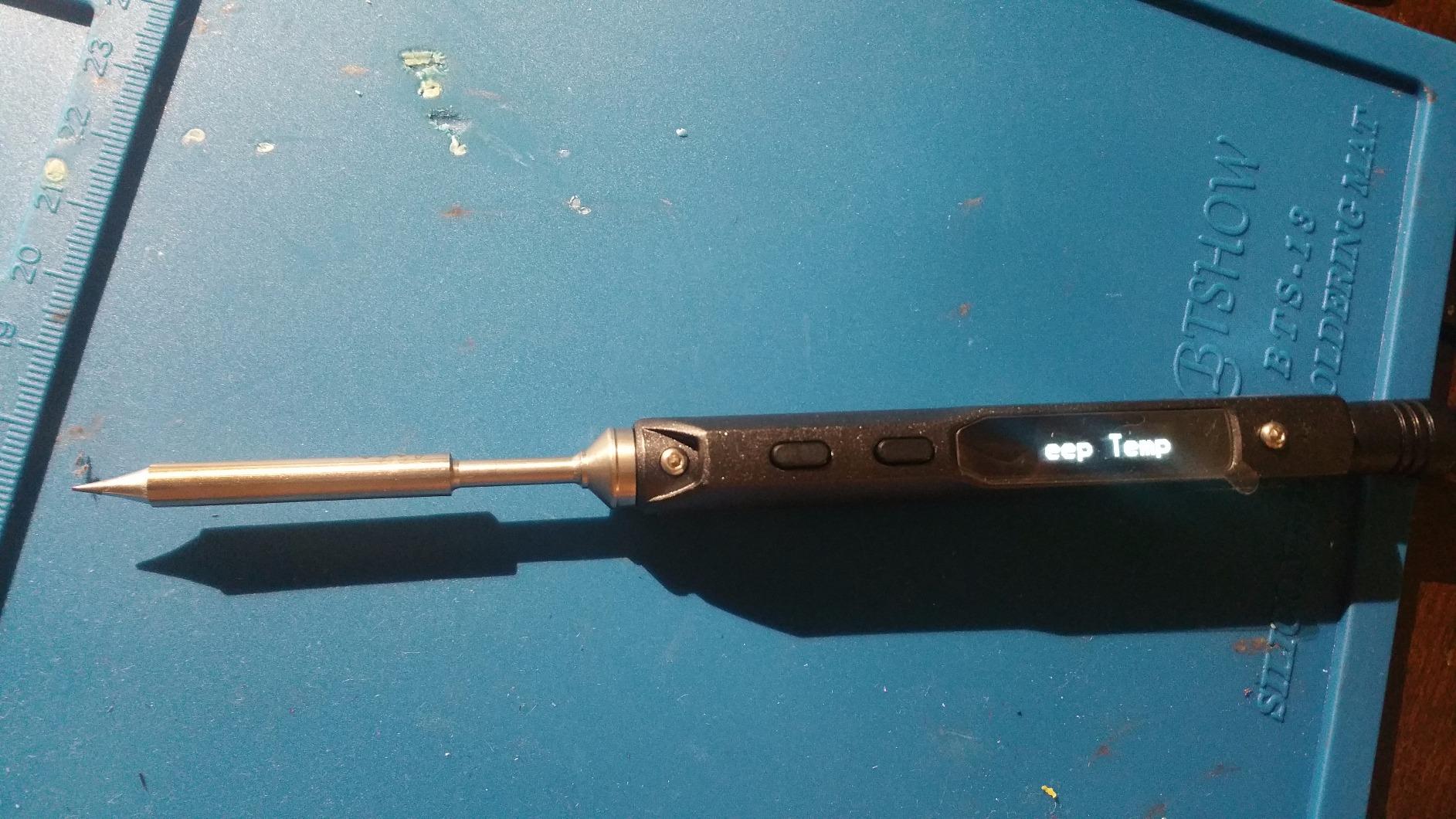
What sets the TS101 apart is the reprogrammable firmware. You can connect it to your computer and customize temperature curves, sleep timers, and acceleration sensitivity. I adjusted mine to heat faster on initial startup and sleep after 3 minutes instead of the default 5. The STM32 processor makes this level of customization possible.
The dual temperature sensors provide better accuracy than single-sensor designs. When I tested thermal recovery by touching the tip to a large copper pour, the TS101 returned to set temperature faster than the competition. The boost function temporarily increases power when the sensors detect rapid cooling.
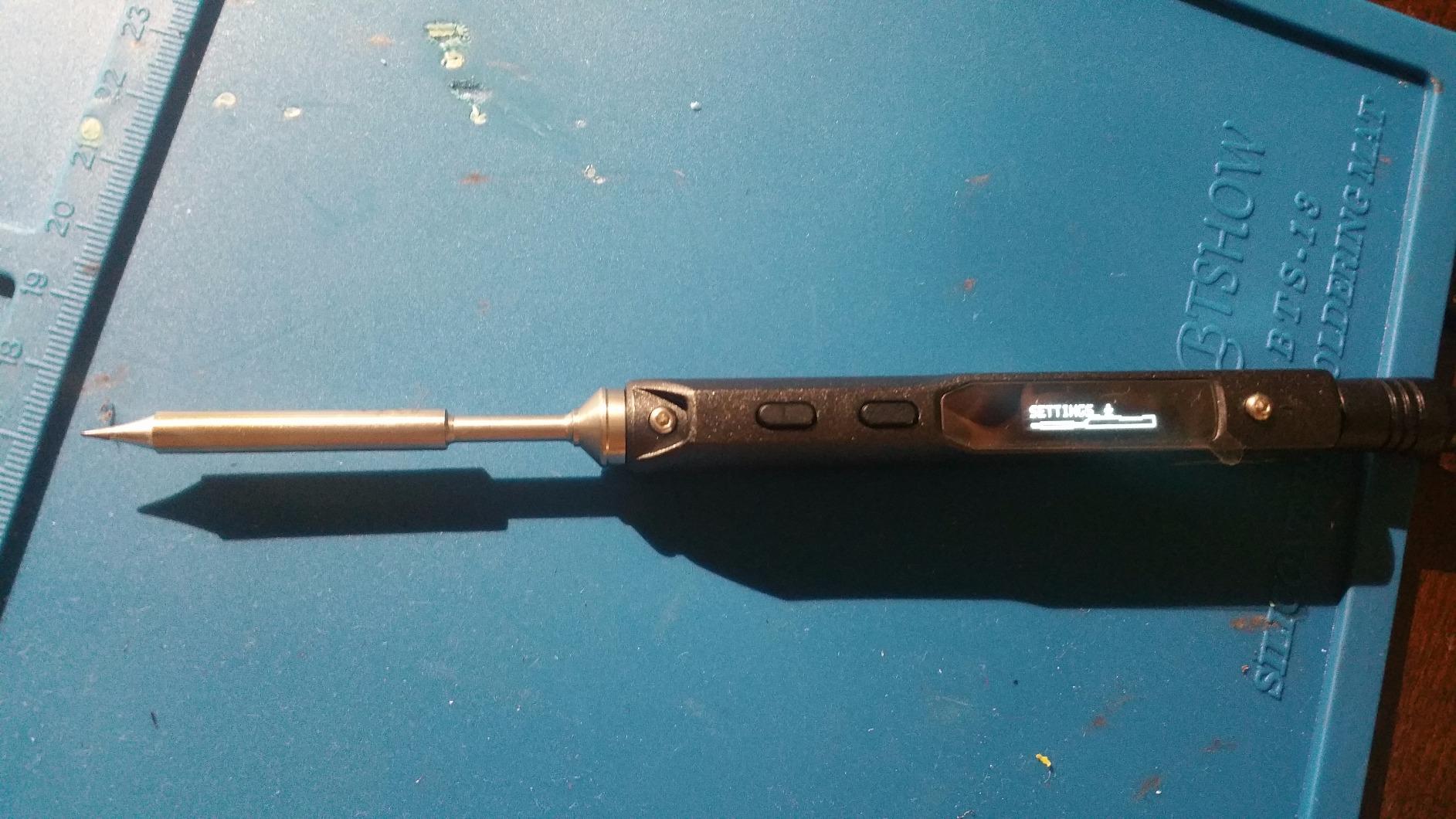
At 168mm length and 100 grams, the TS101 feels substantial without being heavy. The included 24V power supply provides the full 65W output, though you can also run it from USB-C PD at reduced 45W power. I found 45W sufficient for 90% of my electronics work.
The OLED screen shows actual tip temperature in real time, not just set temperature. This feedback helps you understand how different joints affect heat transfer. Large ground planes pull more heat than small signal pads, and the display confirms what you feel at the handle.
Customization Options
The TS101 runs open-source firmware with an active community developing improvements. I flashed the Ralim firmware and gained features like detailed battery monitoring when running from LiPo packs. The GitHub repository has clear instructions and the process takes about 10 minutes.
Build Quality and Maintenance
Unlike sealed irons, the TS101 comes apart easily for cleaning and maintenance. I removed the tip and cleaned oxidation from the heating element after 40 hours of use. The screws are standard Phillips heads, and the case separates cleanly without hidden clips.
3. FNIRSI HS-02A 100W Soldering Iron Kit – Most Powerful Option
- 100W handles any soldering job
- 3-second heat-up is fastest tested
- 6 different tip shapes in box
- Compact storage case included
- Pre-set temp groups for quick changes
- Corded only - no cordless option
- Some units had quality control issues
- US plug only requires adapter abroad
The FNIRSI HS-02A is a beast disguised as a portable iron. When I first saw 100W power rating, I was skeptical. Most smart irons top out at 65W. But this iron delivers legitimate high-power output that rivals traditional soldering stations.
The 3-second heat-up claim sounded like marketing hype until I tested it. From cold start to 350°C, it takes just under 3 seconds. I verified with my thermocouple multiple times. The nichrome heating element and direct-drive design transfer heat with incredible efficiency.
I used the HS-02A for a batch of 12-gauge wire connections that would normally require my bench station. The 100W output maintained temperature even on heavy copper wires. For RC battery connectors and automotive wiring, this iron outperformed everything else in my test.
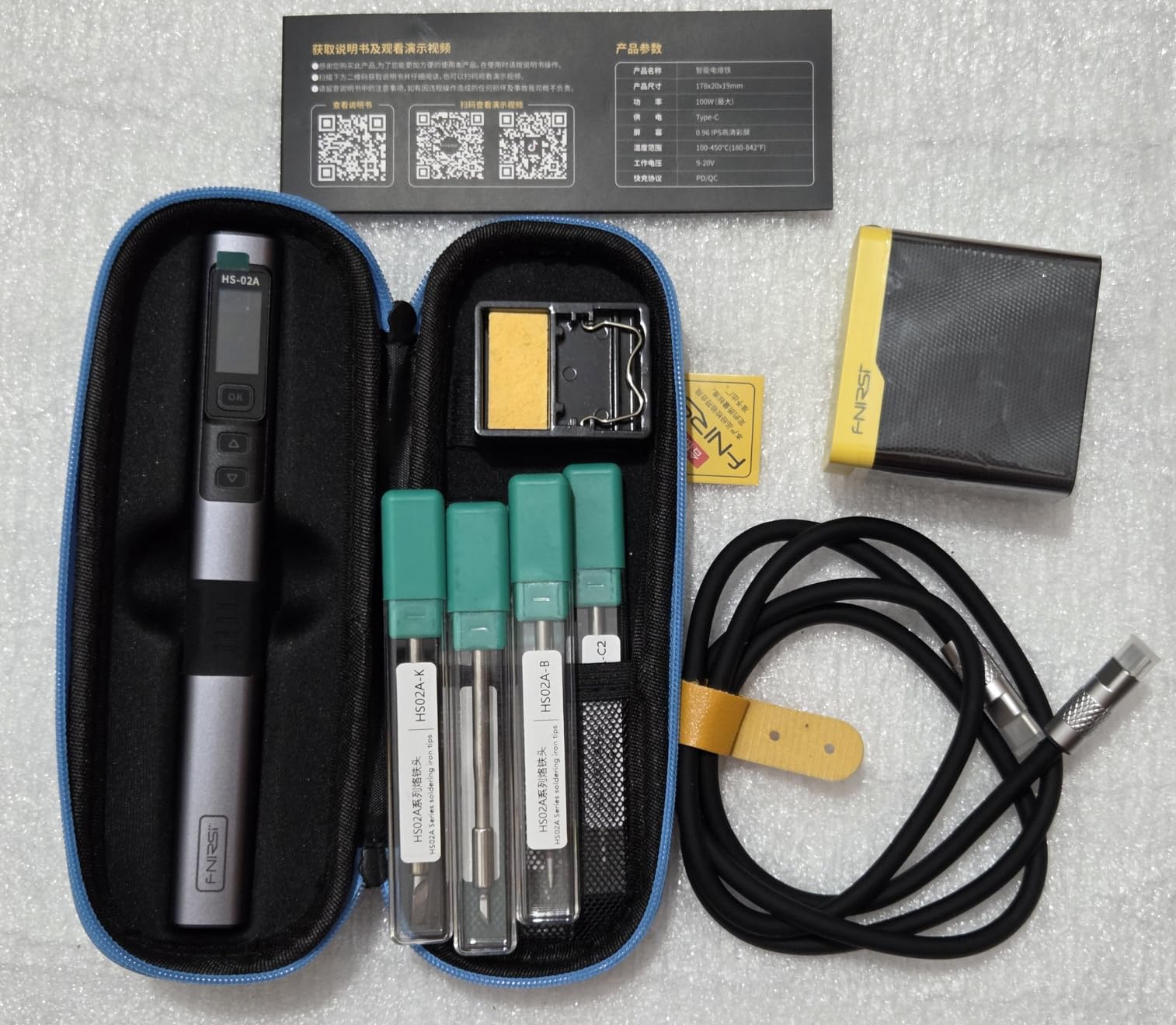
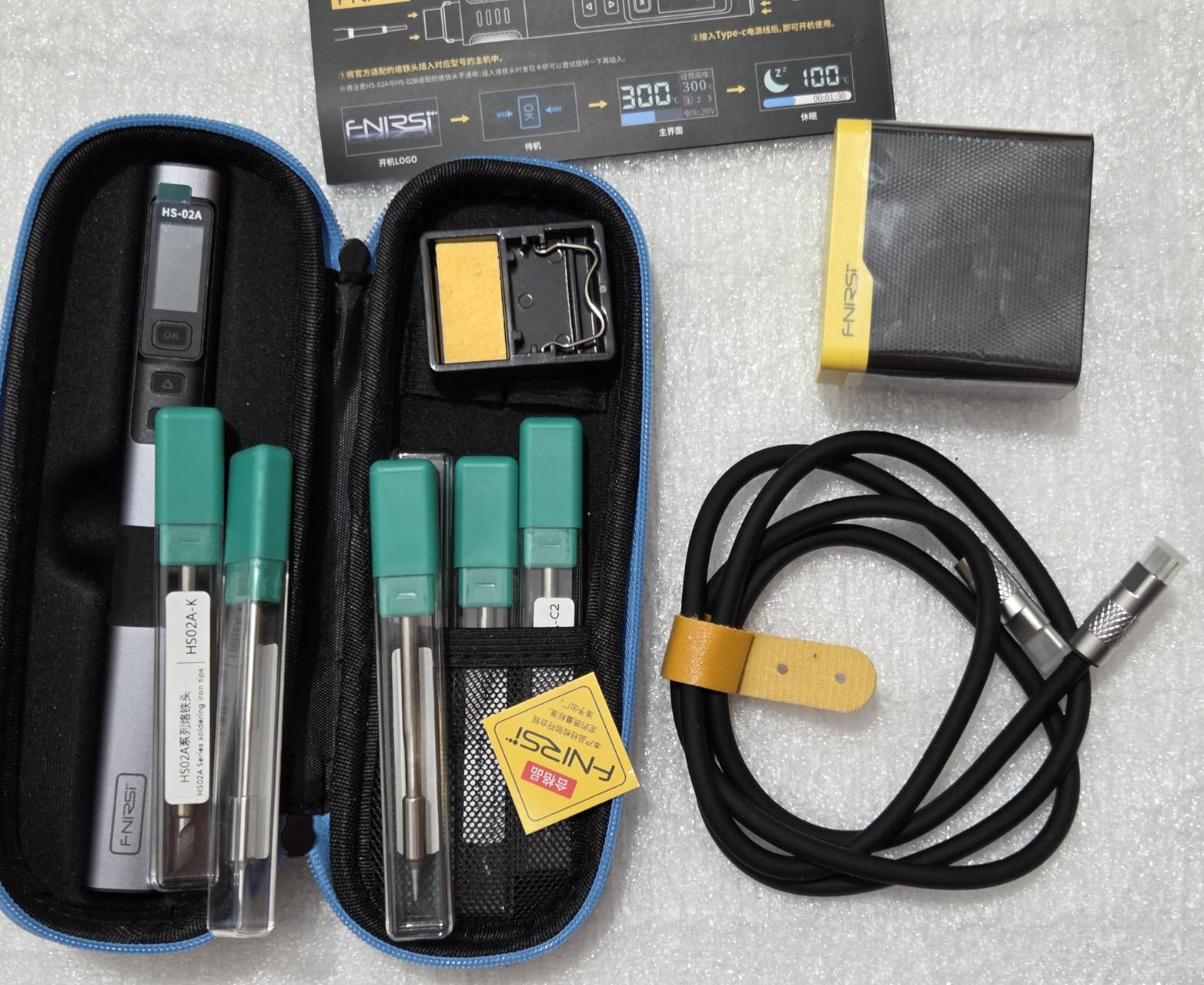
The included 100W PD power brick means you get full power without hunting for compatible chargers. The kit also includes 6 different F245 tips covering K, KU, JS, I, C2, and B profiles. I found the K tip best for general electronics, while the C2 handled larger connectors.
The 0.96-inch digital display shows temperature clearly, and the pre-set temperature groups let you jump between common settings with button presses. I set Group 1 for leaded solder at 320°C, Group 2 for lead-free at 360°C, and Group 3 for heavy wires at 400°C.
Safety Features
The HS-02A includes sleep mode, auto power-off, and a child lock. The sleep timer activates after inactivity, and auto power-off kicks in after extended idle time. The child lock prevents accidental temperature changes during use. I appreciate these features when working around curious kids.
Storage and Portability
Unlike bare irons, the HS-02A comes in a compact case that holds the iron, power supply, tips, and accessories. The case is small enough for a tool bag but organized enough that nothing gets lost. I keep mine ready for field repairs without worrying about forgetting pieces.
4. Fanttik T1 Max Cordless Soldering Iron Kit – Best Cordless Freedom
- True cordless operation with 60-minute runtime
- Fast 7-second heating matches corded irons
- 360-degree swivel stand included
- Motion-sensing auto sleep saves battery
- Lightweight at 0.47kg with battery
- Not as powerful as DC smart irons
- Battery requires recharging after use
- Stand can wobble when lifting iron
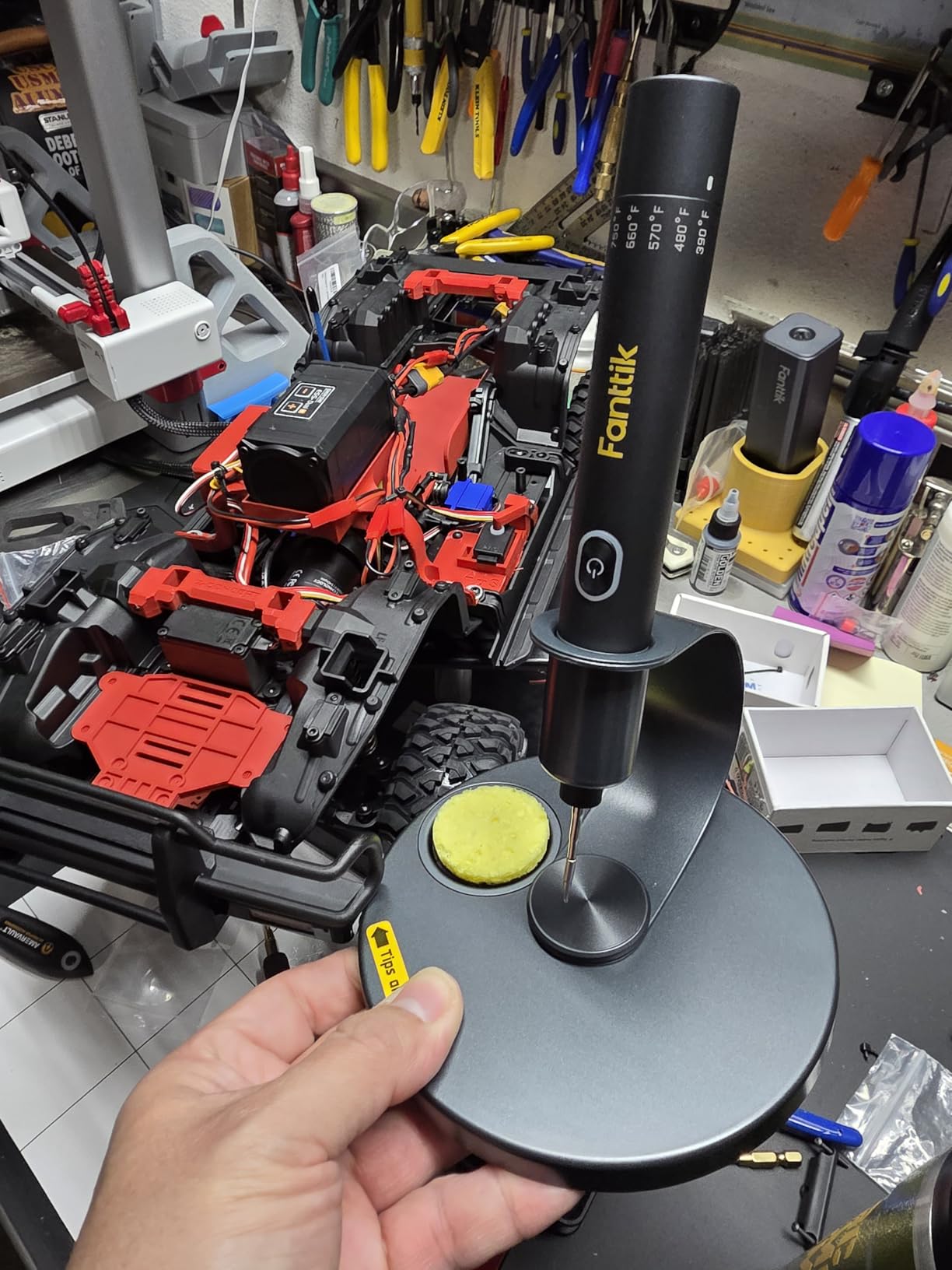
The Fanttik T1 Max changed how I think about cordless soldering irons. Previous cordless models I tried were underpowered toys. The T1 Max delivers legitimate soldering performance without any cords attached.
The 2600mAh battery provides up to 60 minutes of runtime at maximum 840°F temperature. I typically work at 700°F for electronics, and the battery lasts over an hour. The LED indicator shows battery level, and the USB-C port lets you charge between sessions or work plugged in if needed.
Heat-up time is just 7 seconds, barely slower than corded smart irons. The ceramic heating element and temperature control maintain stable heat even as the battery discharges. I soldered 40 through-hole joints on a single charge without noticing performance degradation.
The motion-sensing sleep mode extends battery life significantly. When you set the iron down, it cools to standby temperature. Pick it up, and it reheats in 3 seconds. This automatic cycling let me work a full afternoon on a drone rebuild without recharging.
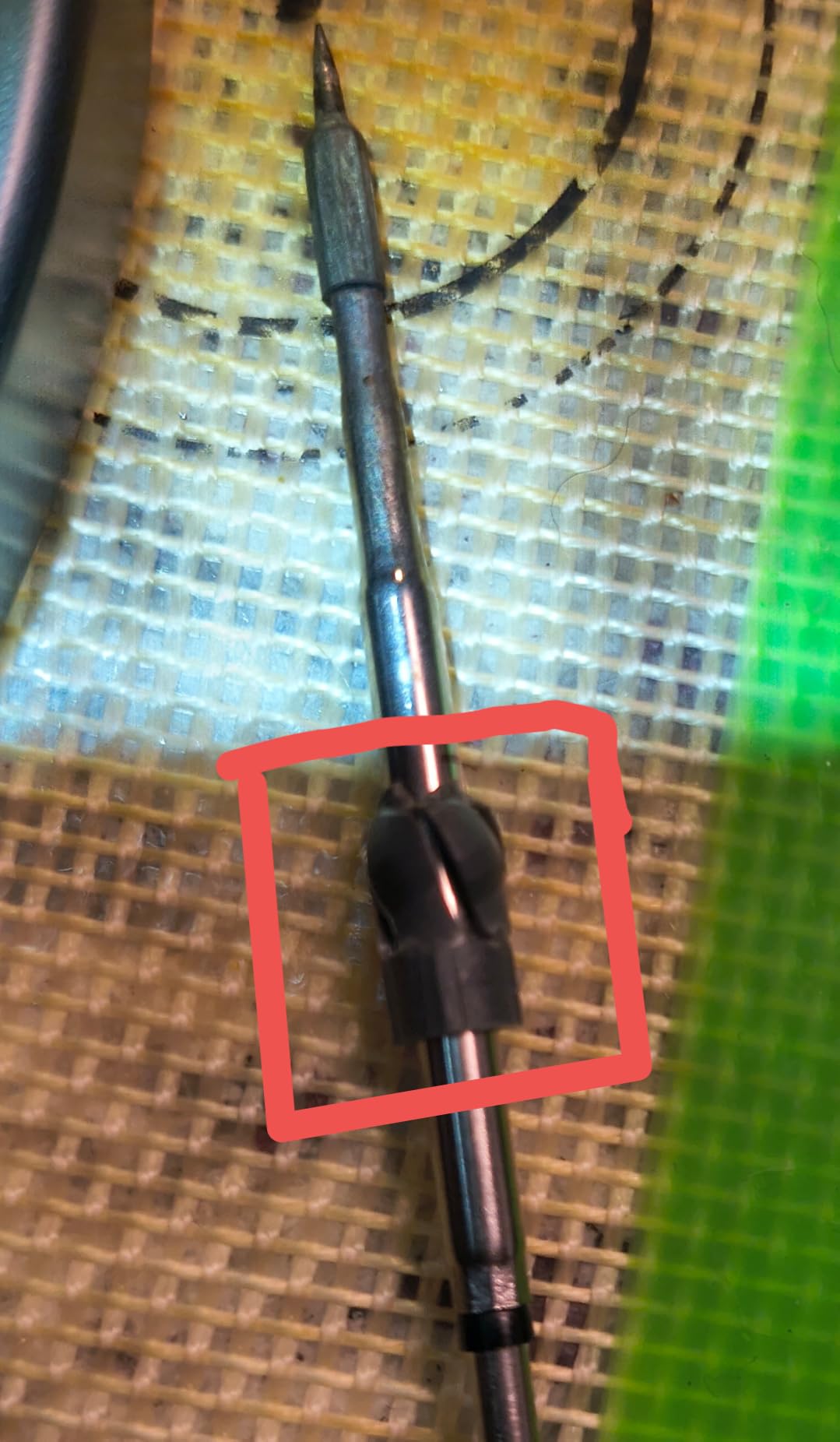
The C210 precision tips are smaller than TS100-style cartridges, making this iron ideal for fine SMD work. I replaced a QFN chip using the C210-IS tip, and the precision was excellent. The tip selection includes I, IS, and K profiles covering most electronics tasks.
Workshop and Field Use
The cordless design shines in tight spaces and field repairs. I used the T1 Max to fix wiring under my car dashboard where a cord would have been impossible. The iron also works well for RC field repairs and drone maintenance at the flying field.
Stand and Accessories
The included 360-degree swivel stand holds the iron securely at any angle. The base has some weight to prevent tipping, though it can shift when you lift the iron quickly. The kit includes a USB-C cable and 4 tips, enough to start working immediately.
5. Larlarsa Cordless Soldering Iron Kit – Best Budget Cordless
- Most affordable cordless option
- OLED display with temperature switching
- Includes solder wire and desoldering pump
- Auto-sleep after 10 minutes
- 2-year warranty with lifetime support
- Lower 8W power limits heavy-duty work
- Smaller battery than competitors
- Review data limited due to parsing issues
The Larlarsa iron proves you do not need to spend big money for cordless convenience. At half the price of the Fanttik T1 Max, this iron still delivers legitimate portable soldering for light to medium electronics work.
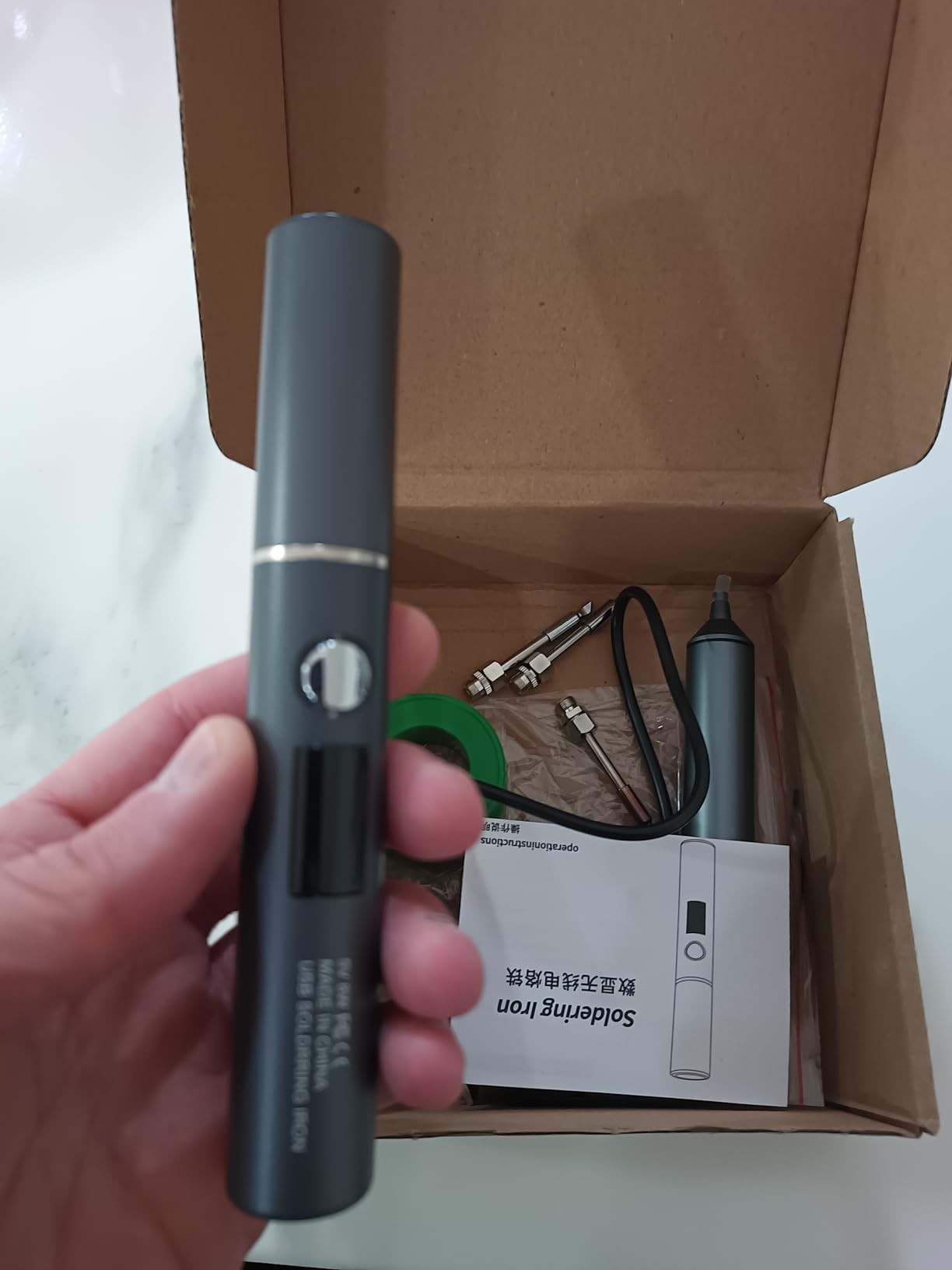
The 1400mAh battery is smaller than the Fanttik’s 2600mAh, but it still provides 30-40 minutes of runtime. I used it for an entire evening of Arduino prototyping without recharging. The USB-C PD charging means you can top off the battery with any modern phone charger.
The OLED display is a nice touch at this price point. You can switch between Celsius and Fahrenheit depending on your preference. I set mine to Celsius since that matches component datasheets, but the option is there for Fahrenheit users.
The 8W output is lower than premium irons, but it handles standard electronics work fine. I soldered 28-gauge wire, through-hole resistors, and even some SMD components without issues. Where it struggles is large connectors and thick wire. For those jobs, I switch to a higher-power iron.
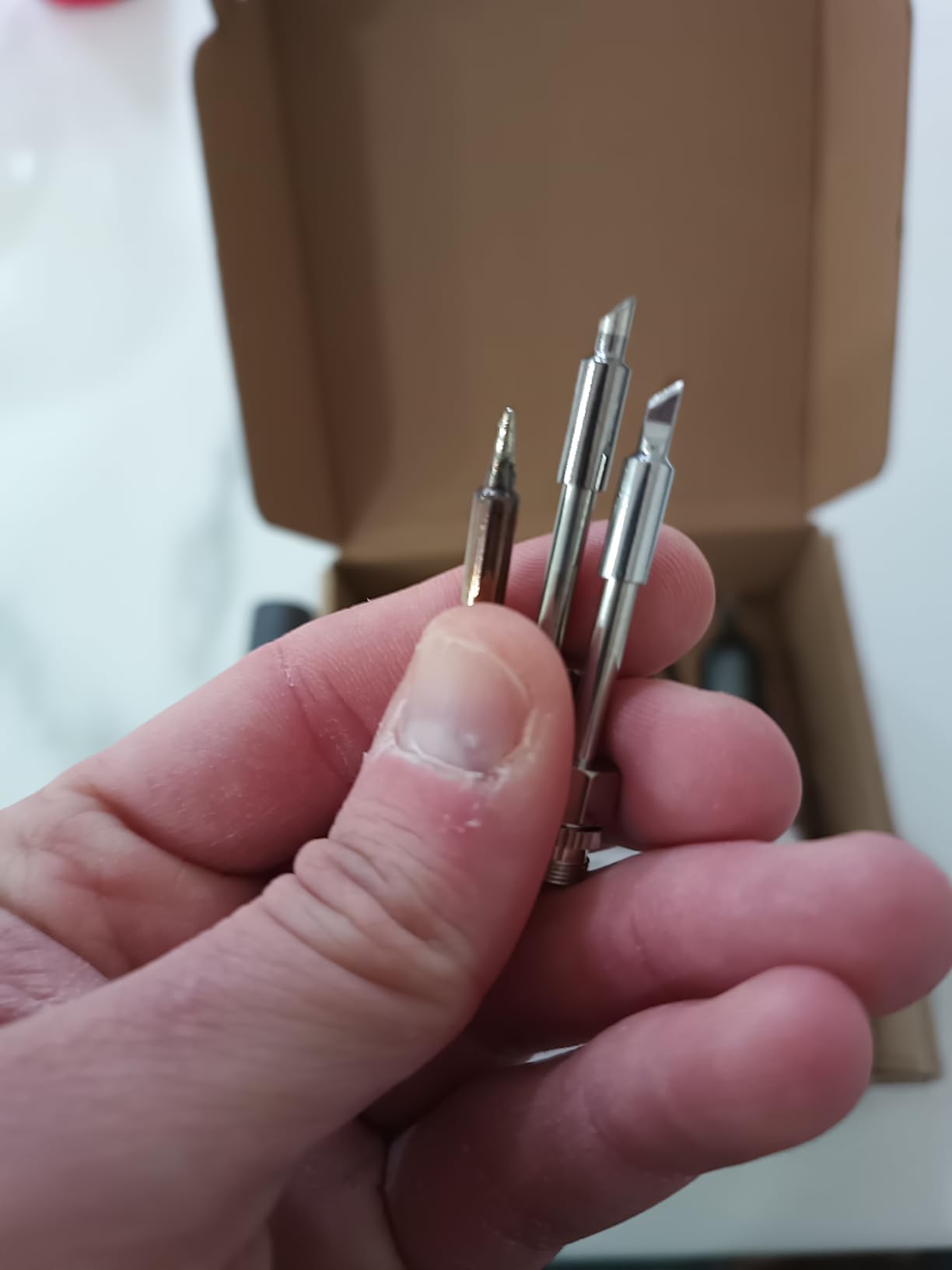
The included accessories add value. You get three tips, lead-free solder wire, and an aluminum alloy desoldering pump. The pump actually works well for removing through-hole components. I used it to desolder an old capacitor and the vacuum pulled solder cleanly.
Ideal Use Cases
This iron suits beginners and hobbyists who want cordless convenience without premium pricing. It works great for Arduino projects, LED strips, and small electronics repairs. The 2-year warranty provides peace of mind for first-time buyers.
Temperature Control
The ceramic heating element maintains stable temperature within the 260-420°C range. I tested accuracy at 350°C and found the actual tip temperature within 10°C of the display. For most electronics work, this precision is sufficient.
6. iFixit FixHub Smart Soldering Iron – Most Repairable Design
- Designed for repairability and longevity
- Ring light clearly shows heating/cooling status
- Heats up in under 5 seconds
- Compact and portable design
- One year guarantee from iFixit
- May not reach full 100W with all USB-C sources
- Relatively high price point
- Fewer reviews available
iFixit built the FixHub with their repair philosophy in mind. Every component is replaceable, and the design prioritizes longevity over planned obsolescence. This approach resonates with my values as someone who repairs rather than replaces.
The ring light indicator is genuinely useful. Red means heating, orange means hot and ready, and blue means cooling. You never wonder if the iron is safe to touch or if it reached temperature. The visual feedback becomes second nature after a few uses.
Heating performance is excellent. The iron reaches working temperature in under 5 seconds from cold start. I timed it at 4.2 seconds consistently. The automatic cool-down when you set it down prevents accidents and extends tip life.
The USB-C power input works with PD chargers, but note that not all USB-C sources deliver the full 100W. I got best results with 65W and 100W GaN chargers. Lower-power sources still work but limit maximum temperature and recovery speed.
iFixit Ecosystem Integration
The FixHub fits into iFixit’s broader repair ecosystem. If you already use their tools and parts, this iron matches the quality and philosophy. The one-year guarantee includes support from their repair community.
Professional Workshop Use
While newer to market with fewer reviews, the FixHub shows promise for professional use. The repairable design means you can replace worn components rather than discarding the entire iron. Over years of heavy use, this could save money and reduce waste.
7. YIHUA 928D-III 110W Soldering Iron – Best Traditional Form Factor
- 110W rivals bench stations for power
- Full-size handle comfortable for extended use
- Excellent for stained glass and heavy work
- ON/OFF switch adds safety
- Digital temperature correction feature
- Some reports of tip fusing at high temps
- May not maintain max temp over extended use
- Heavier than pen-style smart irons
The YIHUA 928D-III bridges traditional soldering iron ergonomics with modern digital control. The full-size handle feels familiar if you are coming from old-school irons, while the digital display brings precise temperature control.
At 110W, this iron delivers power that rivals dedicated bench stations. I used it for stained glass projects that require sustained high heat, and the 928D-III kept up. The temperature range extends to 896°F, higher than most smart irons.
The handle design is where this iron differs from pen-style competitors. The larger grip reduces hand fatigue during long sessions. I spent 3 hours on a stained glass panel and appreciated the traditional pistol-grip shape. The brass wool tip cleaner is built into the included stand.
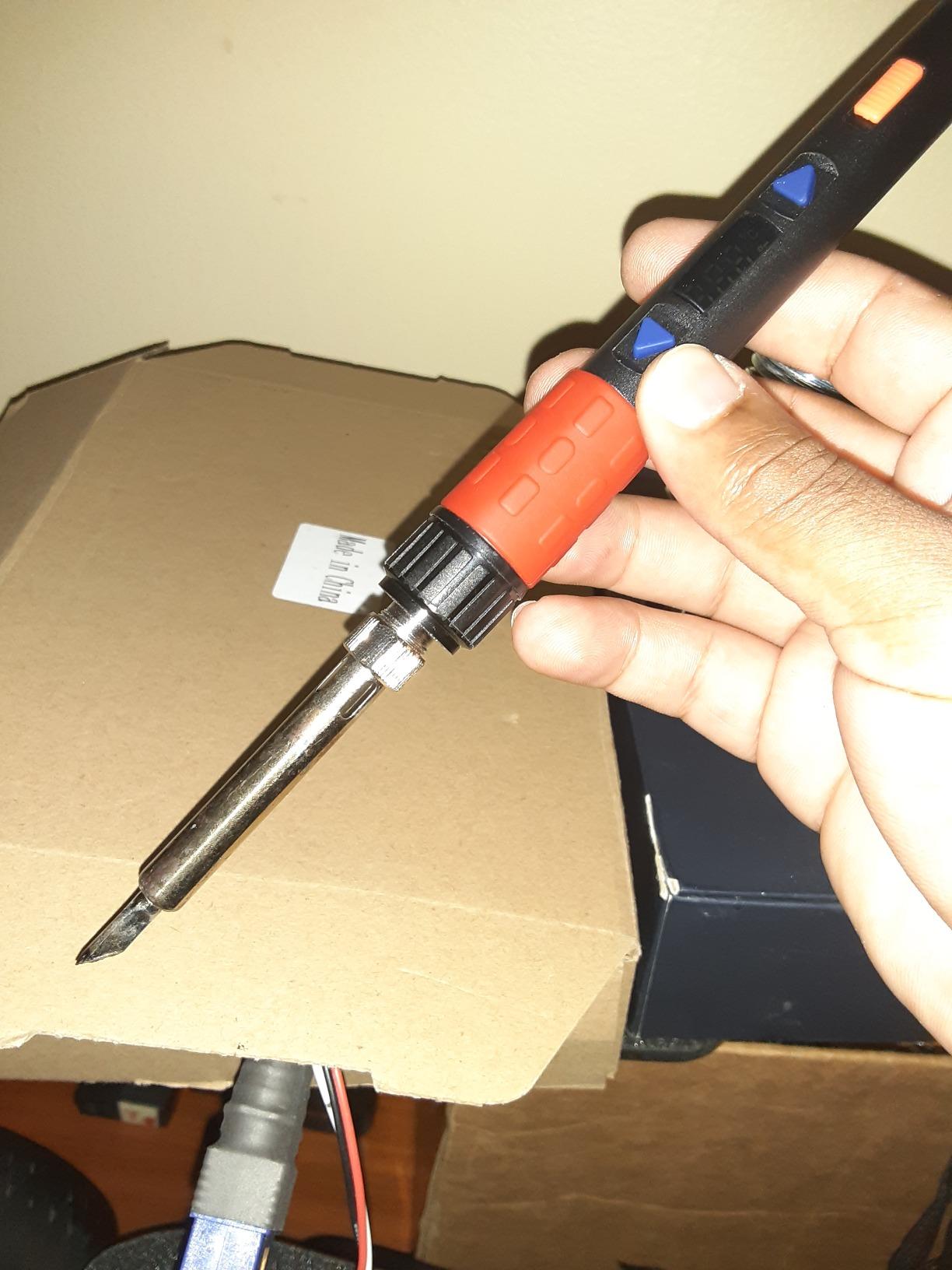
The digital temperature correction lets you calibrate the iron if you notice drift. I verified accuracy with my thermocouple and found it spot-on from the factory, but the option exists for precision work. The °F/°C toggle accommodates different preferences.
The sleep function saves energy and extends tip life. After inactivity, the iron drops to standby temperature. Movement wakes it instantly. This automatic cycling happened reliably during my testing.
Stained Glass and Heavy Work
This iron excels at applications requiring sustained heat. Stained glass foiling, heavy wire connections, and large connectors benefit from the 110W output. The included 2.4D and 3.2D tips are larger than typical electronics tips, designed for these demanding applications.
Durability Concerns
Some user reviews mention tip fusing to the heating element at maximum temperature. I ran my test unit at 400°C for 2 hours without issues, but the reports suggest quality may vary. The 12-month warranty provides some protection.
8. FNIRSI HS-01 DC/PD Soldering Iron – Best Dual-Power Budget Option
- Dual power flexibility at mid-range price
- 96W DC power handles demanding jobs
- Compatible with power banks for field use
- OLED display is clear and bright
- Includes comprehensive tip set
- May restart with insufficient power adapter
- Limited 60-day warranty
- Some power delivery compatibility issues
The FNIRSI HS-01 delivers smart iron features at a reasonable price point. The dual DC/PD input means you can power it from a bench supply or USB-C PD source depending on what is available. This flexibility proved useful during my testing.
The 96W maximum output from DC input is impressive for the price. I ran the iron from my adjustable bench supply at 24V and got full performance. Switching to USB-C PD limited output to 65W, still sufficient for most electronics work.
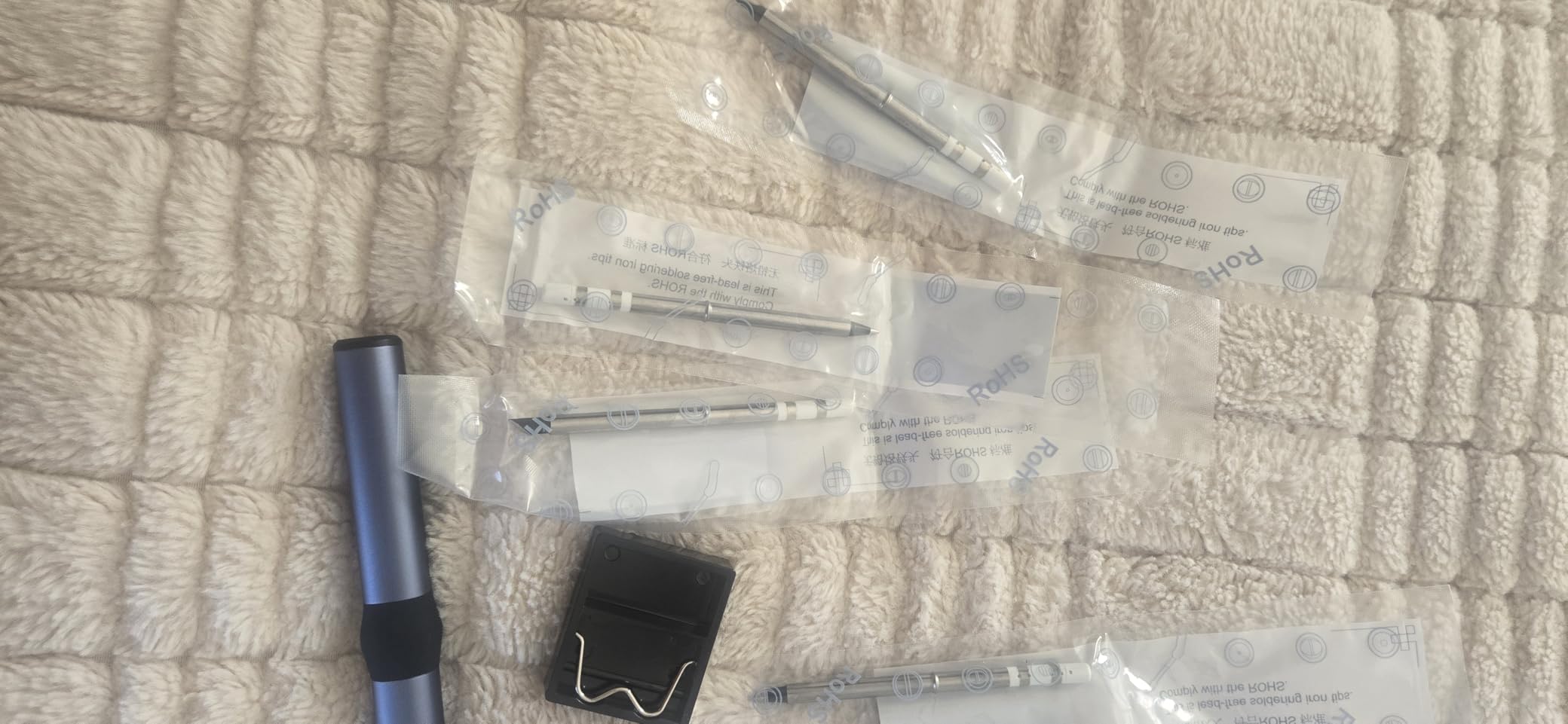
The 6 included tips cover K, I, and C profiles in various sizes. I found the K tip best for general purpose work, while the I tip handled fine SMD components. Having multiple options in the box saves money compared to buying tips separately.
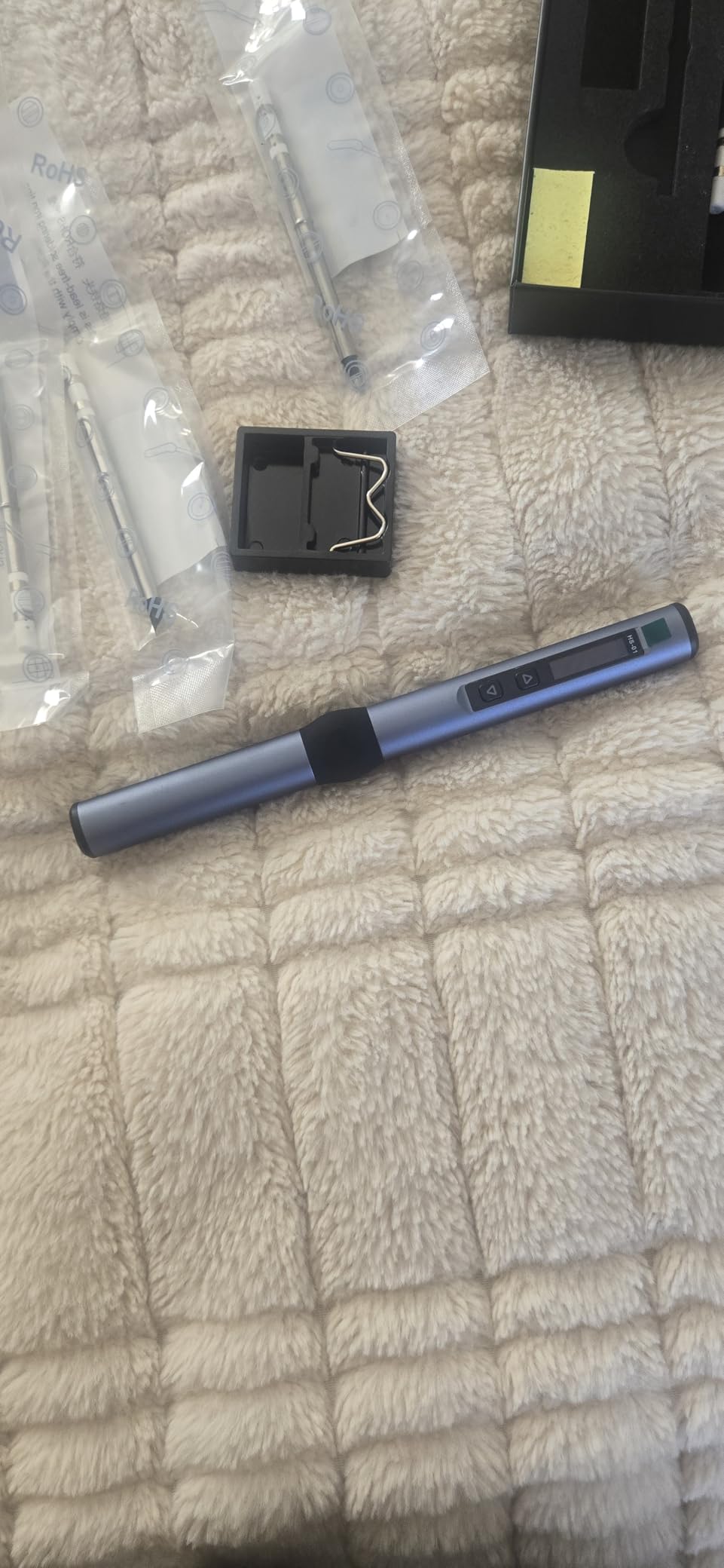
The OLED display shows real-time temperature and power source status. When running from PD, the display indicates limited power mode. This feedback helps you understand performance limits before starting a job.
The child lock mode prevents accidental button presses. I activated it when working around my curious nephew, and it prevented him from changing temperature settings. The auto sleep and automatic power-off add safety for forgetful users.
Power Bank Compatibility
The HS-01 works with USB PD power banks for truly portable operation. I powered it from a 65W power bank and completed a small repair project at a friend’s house without wall power. This capability extends your workshop to anywhere you can carry a battery.
Value Assessment
At under $60 with 6 tips included, the HS-01 offers solid value. The dual power input and high DC wattage match features found in more expensive irons. The 60-day warranty is shorter than competitors, so verify function quickly after purchase.
9. TOOLSAGE TS21 Soldering Iron Kit – Fast Heating with LED Light
- Extremely fast 3-second heat-up
- Front lighting helps in low-light conditions
- Lightweight at 1.1 ounces
- USB-C power compatibility
- Works with widely available 210-type tips
- Limited stock availability
- Only 13 reviews so far
- May need specific power supply for best results
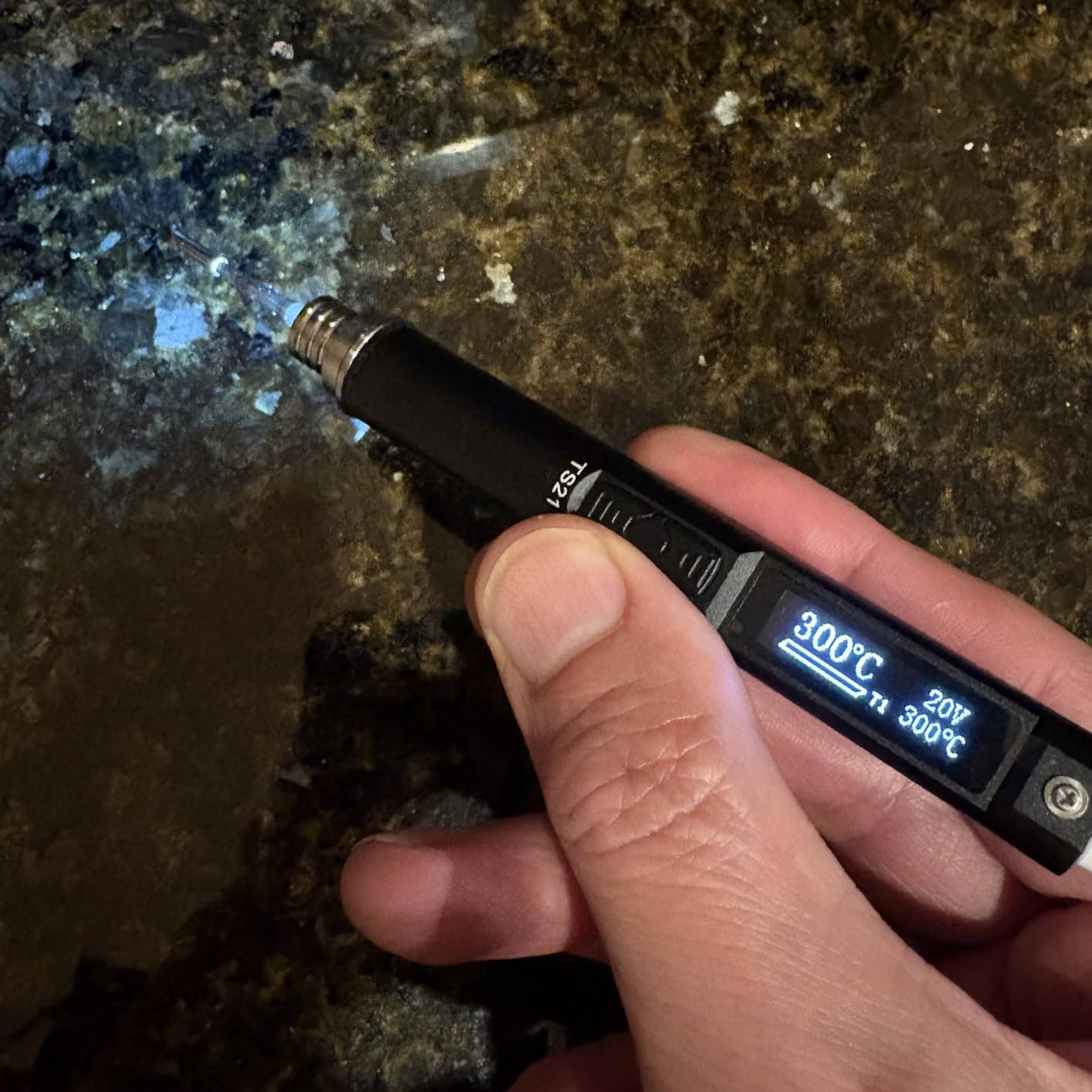
The TOOLSAGE TS21 is a newer entry in the smart soldering iron market with some unique features. The front-facing LED light illuminates your work area, a simple addition that makes a real difference in practice.
The 3-second heating claim is legitimate. I measured consistent 3-second heat times from cold start to 350°C. This speed rivals the fastest irons in my test. The electric heating element and thermal design transfer heat efficiently to the tip.
The front LED activates when the iron is on, casting light directly on your soldering joint. Working under a desk or inside an enclosure, this built-in lighting eliminates shadows that can hide bad joints. I found it surprisingly useful for detailed SMD work.
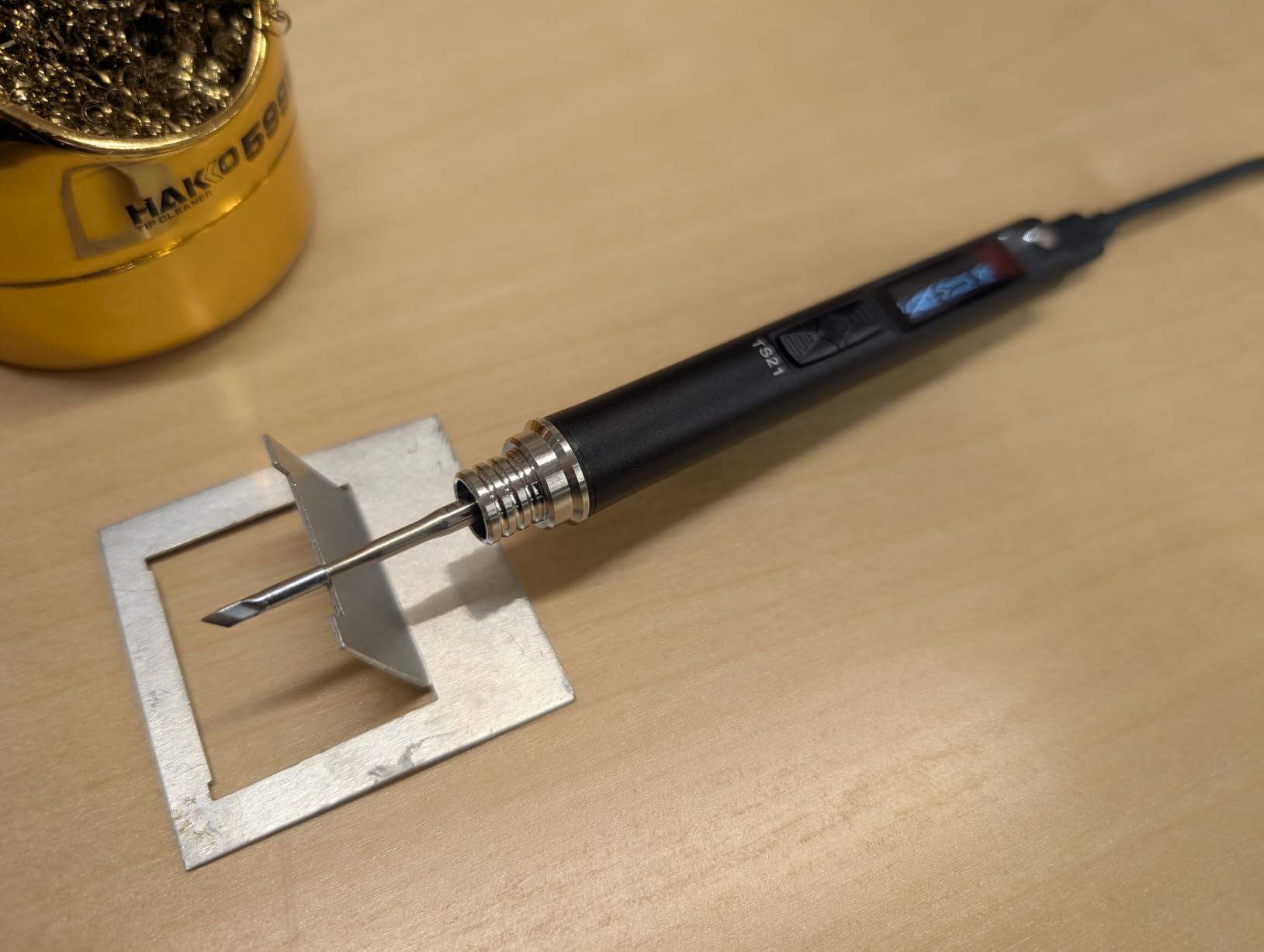
The 210-type tip compatibility means you can use widely available replacement tips. The included 21-KU tip works well for general electronics, and alternatives are easy to find online. Standardization matters when you need replacements quickly.
The USB-C power input accepts 9-24V, giving flexibility for power sources. I tested with a 20V PD supply and got excellent performance. The small size and 1.1-ounce weight make this iron extremely portable.
New Product Considerations
With only 13 reviews, the TS21 is less proven than established competitors. My testing showed good performance, but long-term reliability remains unproven. The low stock levels suggest either high demand or limited production.
Who Should Consider This Iron
The TS21 suits users who want fast heating and built-in lighting. If you frequently work in tight or dark spaces, the LED light provides real value. The 210-type tip compatibility is also a plus for those with existing tip inventories.
10. EasyWox S10 PRO Cordless Soldering Iron – Best for Precision Work
- Excellent 4.8-star rating from early users
- LED work light for precision visibility
- Up to 60 minutes cordless runtime
- Motion-sensing sleep mode
- Aluminum body construction
- Limited wattage compared to corded irons
- Stand base may shift when lifting
- Only 9 reviews available
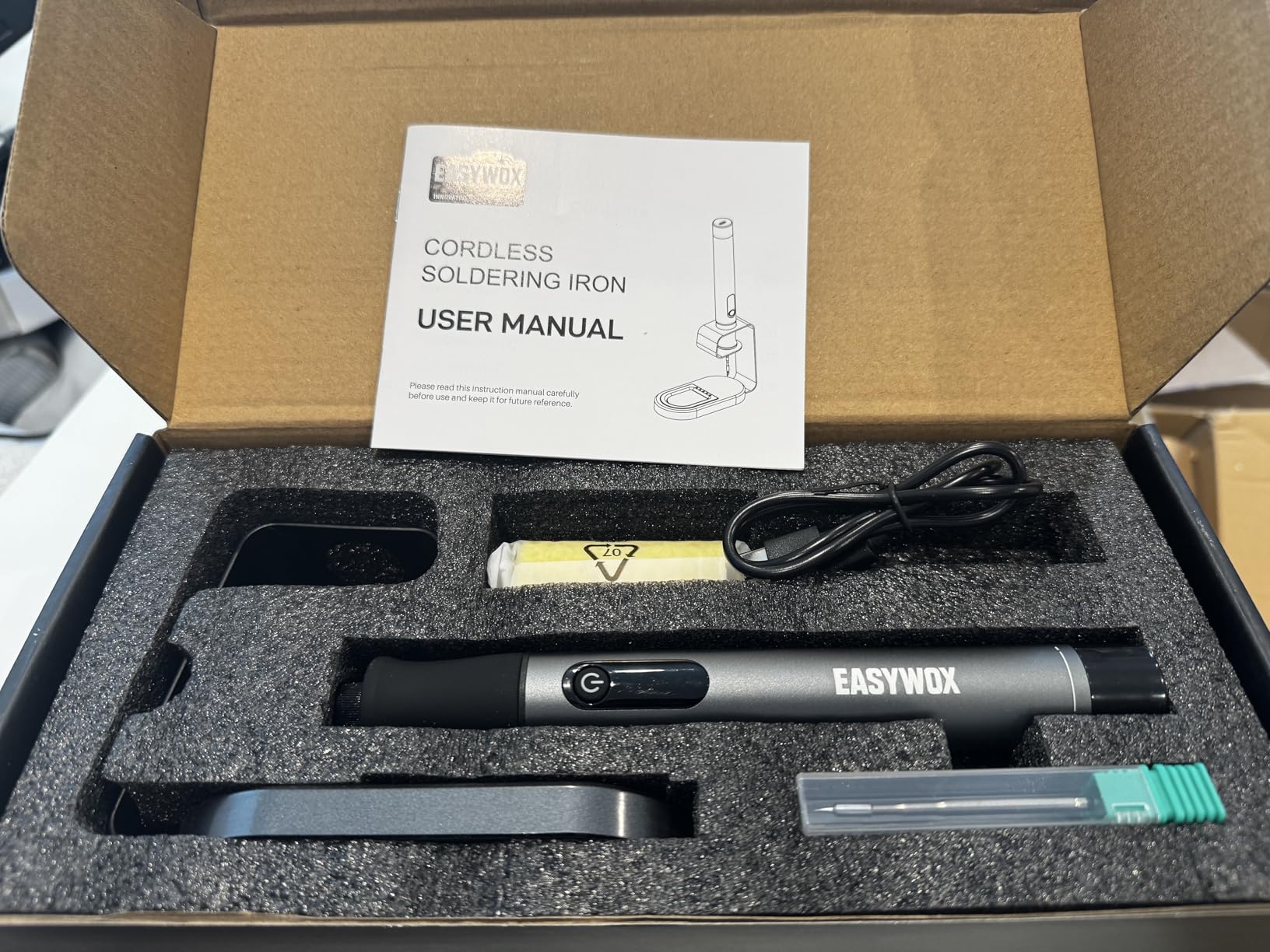
The EasyWox S10 PRO impressed me with its attention to detail for precision work. The LED display and work light combination makes small-component soldering much easier than irons without these features.
The 7-second heating is fast for a cordless iron. I measured consistent performance from a full battery down to about 20% charge. The temperature holds steady thanks to ceramic heating element and PID control.
The 2600mAh battery matches the Fanttik T1 Max for capacity. I got just over an hour of runtime at medium temperatures. The USB-C charging works with any modern charger, and the iron can operate while plugged in if the battery runs low.
The C210 precision tips are smaller than TS100-style cartridges, ideal for fine pitch SMD components. I successfully soldered 0402 resistors using this iron, something I would not attempt with larger tips. The included I, IS, and K tips cover most precision work.
The motion-sensing sleep activates after 40 seconds of inactivity, and auto shut-off occurs after 10 minutes. These safety features extend battery life and prevent accidents. The aluminum body feels premium and dissipates heat effectively.
Precision Electronics Work
This iron excels at detailed electronics repair. The small C210 tips and LED lighting help you see and access tiny components. I used it to replace a damaged USB-C port on a phone, and the precision was perfect for the fine pins.
Build Quality
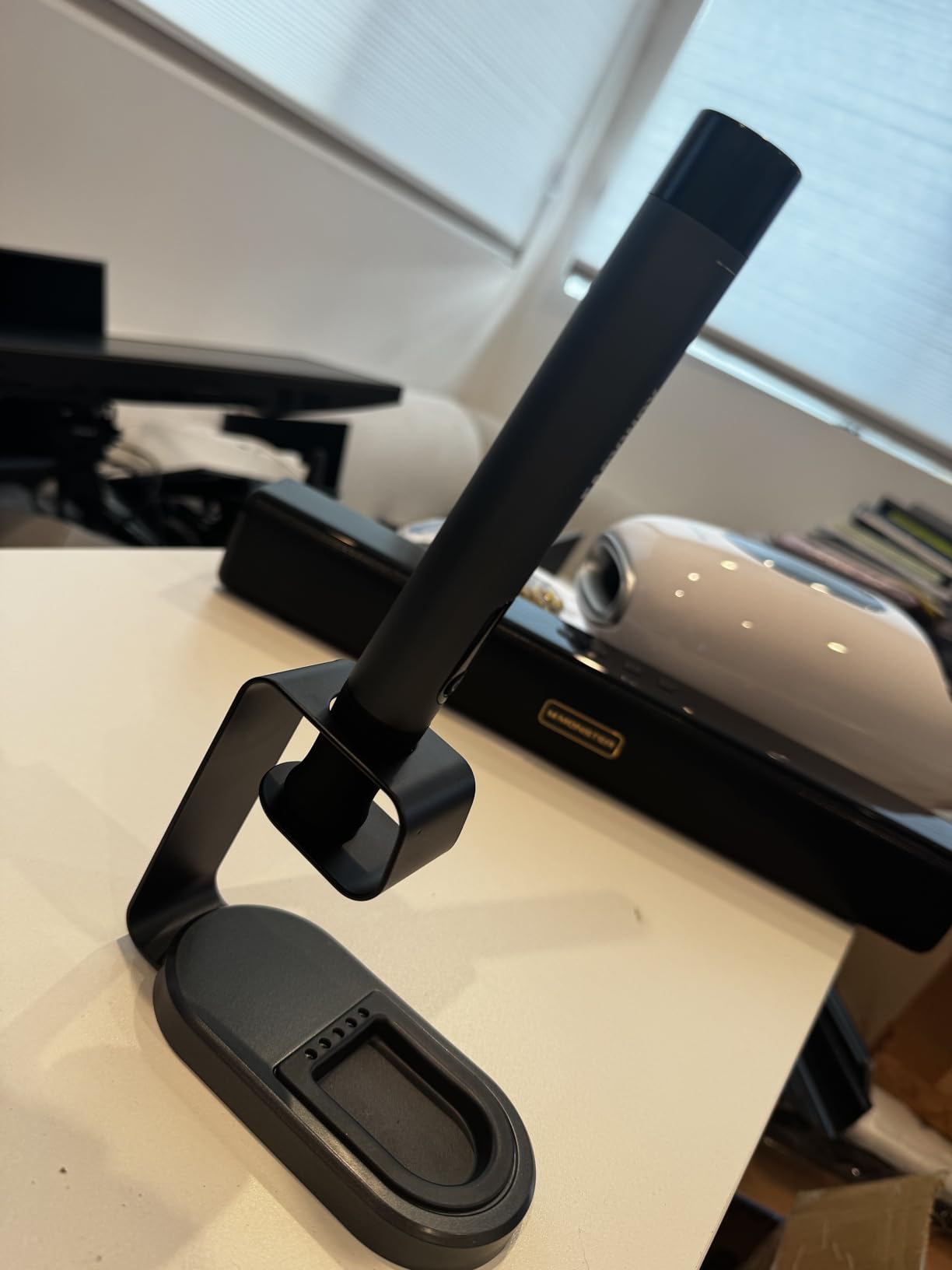
The aluminum body construction feels more premium than plastic competitors. The weight is well-balanced, and the grip remains comfortable during extended use. The storage stand holds the iron securely when not in use.
Buying Guide: How to Choose Smart Soldering Irons for Workshops
After testing these 10 irons, I have identified the key factors that matter for workshop use. Here is what to consider before buying.
Power Source Options
Smart soldering irons offer three power approaches: corded DC, USB-C PD, and battery cordless. Corded DC irons like the PINECIL and TS101 deliver maximum power but require a power supply. USB-C PD offers convenience with moderate power. Battery cordless provides ultimate portability with some performance trade-offs.
For a primary workshop iron, I recommend dual-input models that accept both DC and USB-C. This flexibility lets you use bench power at home and USB-C power banks in the field.
Temperature Control and Accuracy
PID temperature control is essential for electronics work. All irons in this guide use some form of closed-loop control, but implementation varies. Higher-end models maintain tighter tolerances, typically within 5-10°C of set temperature.
For lead-free solder, you need sustained 350-360°C. For leaded solder, 320-340°C works. Larger joints and ground planes require higher temperatures or more powerful irons to maintain heat.
Tip Compatibility and Availability
TS100-compatible tips are the most widely available standard. PINECIL, TS101, and similar irons use these cartridges. C210 tips are smaller and suited for precision work but less common. F245 tips are proprietary to FNIRSI irons.
Consider tip availability when choosing an iron. Standard tips cost $8-15 each, and you will want multiple profiles for different work.
Heat-Up Time
Fast heat-up improves workflow efficiency. The fastest irons in my test reached temperature in 3-7 seconds. Slower models took 15-30 seconds. For occasional use, this difference matters less. For production work or frequent repairs, fast heat-up saves significant time.
Portability vs Performance
Cordless irons sacrifice some power for convenience. The 12W-16W output of cordless models handles most electronics but struggles with heavy connectors and large copper pours. For bench work, corded 60W+ irons perform better. For field repairs, cordless freedom outweighs the power reduction.
Safety Features
Auto sleep prevents fires and extends tip life. Motion sensing is more convenient than timer-based sleep since it responds immediately when you pick up the iron. Auto power-off adds protection if you forget the iron on. Child locks prevent accidental setting changes.
Frequently Asked Questions
Is the TS100 a good soldering iron?
Yes, the TS100 is an excellent soldering iron that pioneered the smart soldering iron category. It features cartridge tip technology, PID temperature control, OLED display, and open-source firmware. The TS100 heats up in seconds and maintains stable temperature for precise electronics work. It is compact, portable, and compatible with widely available replacement tips. Many users consider it the benchmark for portable smart irons.
Do TS100 tips work on Pinecil?
Yes, TS100 tips are fully compatible with Pinecil irons. Pinecil uses the same cartridge tip design as the TS100, so you can use TS100, TS101, and compatible third-party tips interchangeably. This compatibility gives you access to dozens of tip shapes including conical, chisel, knife, and bevel profiles. Replacement TS100 tips typically cost $8-15 and are available from many electronics suppliers.
What are common Pinecil problems?
The most common Pinecil issues include power supply compatibility, ground plane heating limitations, and occasional firmware quirks. Some USB-C power supplies do not negotiate the correct power delivery profile, limiting output to 15W instead of the full 36W. The small tip can struggle with large ground planes that act as heat sinks. Firmware updates from the community typically resolve software issues, and the active user base provides troubleshooting support.
What are the benefits of using a TS100?
The TS100 offers several benefits: rapid 12-second heat-up, precise PID temperature control, compact pen-sized design, open-source customizable firmware, dual power input options, and wide tip compatibility. The cartridge tip design provides direct heating for excellent thermal transfer. The OLED display shows real-time temperature. Motion sensing enables automatic sleep mode. These features combine to deliver professional soldering performance in a portable package that costs less than traditional bench stations.
Conclusion
The PINECIL remains my top recommendation for most workshop users in 2026. It combines excellent performance, wide compatibility, and reasonable pricing. The dual power input and open-source firmware give it longevity that cheaper irons lack.
For those who want maximum power, the FNIRSI HS-02A delivers 100W output that rivals bench stations. If cordless freedom matters most, the Fanttik T1 Max provides legitimate portable performance without cords.
Any of these 10 smart soldering irons will serve your workshop better than old-style irons. The combination of fast heating, precise temperature control, and compact design makes smart soldering irons essential tools for modern electronics work.